Home Blog Page 23

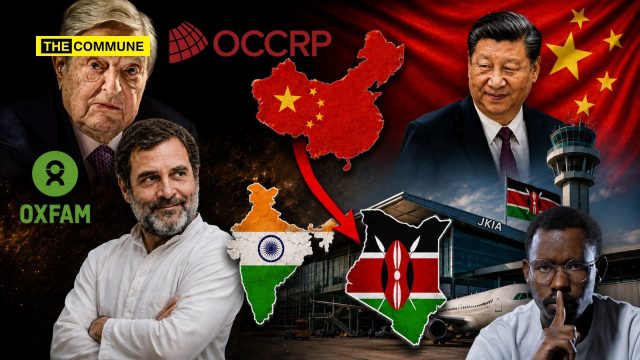
How Anti-Adani Networks Sank India’s Kenya Airport Deal & Handed It To China On A Platter

The Kenyan government’s decision to award a $2.9 billion contract for the expansion of Nairobi’s Jomo Kenyatta International Airport (JKIA) to a Chinese state-owned enterprise has reignited debate over the cancellation of an earlier proposal by India’s Adani Group and the role played by political and activist campaigns that targeted the Indian conglomerate, as reported in OpIndia.

According to reports, Kenya has selected China Communications Construction Co. (CCCC), a Chinese state-owned infrastructure giant, to undertake a major overhaul of the country’s busiest airport. The engineering, procurement and construction (EPC) contract includes terminal expansion, construction of a new 4.5-kilometre runway and upgrades aimed at increasing annual passenger handling capacity to 12 million by 2045.

The development comes less than two years after Kenya scrapped a proposed $2 billion public-private partnership (PPP) agreement with Adani Group for the modernisation and long-term operation of the same airport. The new Chinese-backed project carries a price tag approximately 50% higher than the cancelled Adani proposal, raising questions about the financial implications for Kenyan taxpayers.

Adani’s PPP Proposal And Its Collapse

Between 2022 and 2024, Adani Group was engaged in discussions with the Kenyan government to modernise JKIA through a PPP model. Under the proposal, the Indian company would have financed and operated major airport upgrades, including terminal modernisation and runway improvements, with limited immediate fiscal burden on the Kenyan government.

The project was seen as a significant opportunity for an Indian private-sector infrastructure company to establish a strategic presence in East Africa.

However, the proposal became increasingly controversial within Kenya.

A campaign against the project gained momentum through social media and activist networks, most notably led by France-based Kenyan whistleblower and influencer Nelson Amenya. Amenya published documents and raised allegations regarding the procurement process, claiming that the airport concession lacked transparency and adequate stakeholder consultation.

Among the concerns raised were allegations that the project had bypassed public tender procedures, ignored consultation requirements under Kenyan law, granted favourable tax concessions to the concessionaire and could eventually lead to increased airport charges for passengers.

The Kenya Aviation Workers Union also emerged as a vocal opponent of the proposal, organising protests and threatening industrial action over concerns related to job security and the privatisation of a strategic national asset.

Amid mounting public pressure, Kenyan President William Ruto eventually cancelled the procurement process in November 2024. The decision was also linked to allegations facing Adani Group in the United States at the time, although the company consistently denied wrongdoing and maintained that those allegations were unrelated to the Kenya airport project.

Who Is Nelson Amenya?

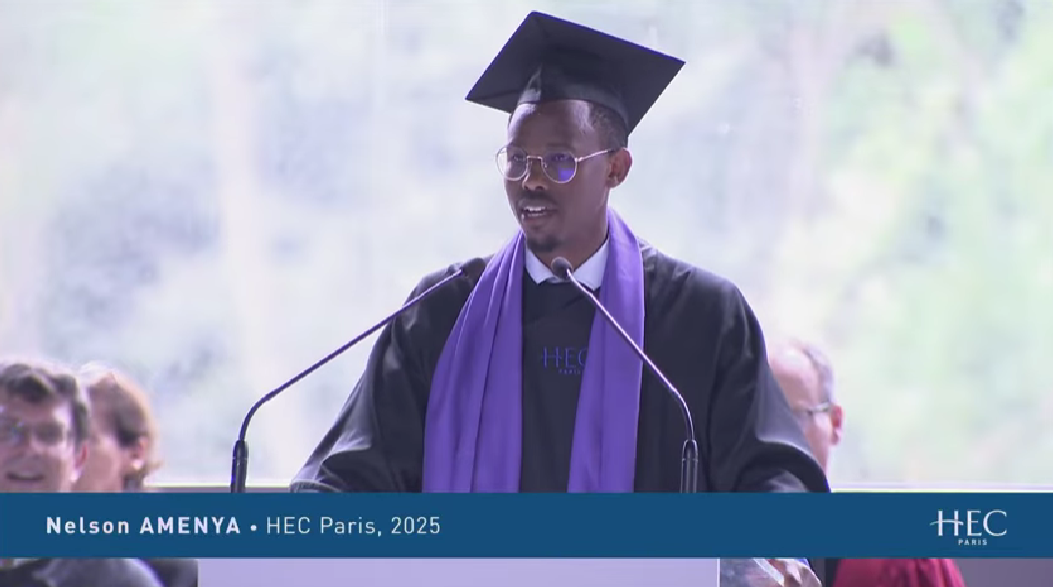
Nelson Amenya is a Kenyan activist, whistleblower, and MBA graduate who rose to prominence in 2024 by leaking and publicising internal documents about the Adani-JKIA deal. While studying in France, he became the face of the campaign against the Indian proposal, framing it as lacking transparency and harmful to Kenyan interests.

Amenya previously participated in a China-funded Africa Technology Challenge sponsored by AVIC International (a Chinese company) in 2015. He received a scholarship and briefly studied at Beihang University in Beijing, gaining exposure to Chinese business and technical training programs.

He later pursued and completed an MBA at HEC Paris (graduating in 2025 as valedictorian). HEC Paris is a founding member of CEMS (Global Alliance in Management Education). CEMS counts Transparency International among its official Social Partners and receives funding/support from it. Transparency International, in turn, has received funding from Open Society Foundations (George Soros’ primary philanthropic vehicle).

Congress Amplified The Anti-Adani Narrative

The controversy was not confined to Kenya.

India’s Congress party repeatedly highlighted the JKIA issue and amplified criticism of the Adani proposal during the period when opposition to the project was gathering momentum.

On 3 September 2024, Congress leader Jairam Ramesh referenced the Kenyan protests in a post on X, warning that public anger surrounding the airport project could evolve into resentment towards India itself.

Ramesh linked the issue to Prime Minister Narendra Modi’s relationship with Adani Group chairman Gautam Adani and compared the Kenyan controversy to debates surrounding Adani-linked projects in Sri Lanka and Bangladesh. He argued that India’s foreign policy and international standing should not become intertwined with the interests of a single corporate group.

After Kenya formally terminated the process, Congress leaders described the outcome as predictable and reiterated their criticism of what they characterised as the government’s close association with the Adani Group.

Adani had reportedly outcompeted several Chinese firms for the airport project and sustained attacks on the company ultimately weakened India’s position while benefiting Chinese interests.

The controversy also witnessed the circulation of a fabricated press release falsely attributed to Adani Group. The fake statement purportedly threatened to expose alleged recipients of bribes in Kenya and was widely circulated on social media.

Adani Group categorically rejected the document, describing it as fraudulent and confirming that no such statement had ever been issued by the company.

How Soros-Funded Anti-Adani OCCRP Added Fuel To The Fire

The Organized Crime and Corruption Reporting Project (OCCRP), a global investigative journalism network heavily funded by George Soros’ Open Society Foundations (along with other Western donors), played a significant role in internationalising and amplifying the campaign against the Adani proposal.

In July 2024, shortly after Nelson Amenya leaked the documents, OCCRP published detailed exposés based on the same internal files. Their reports highlighted alleged lack of transparency, the privately-initiated proposal route, and criticised the Kenyan government for bypassing open tenders. These stories were widely picked up by international media and lent institutional credibility to the local protests.OCCRP’s coverage coincided with the peak of airport worker strikes and civil society pressure, further intensifying scrutiny on the deal. OCCRP’s consistent pattern of targeting Adani Group projects (in India and abroad) reflects the influence of its funding sources, including Soros-linked organisations.

This external amplification turned a Kenyan procurement controversy into a global narrative that ultimately contributed to the cancellation of the Indian proposal — paving the way for the more expensive Chinese contract.

China Steps In With A More Expensive Proposal

With the Adani proposal abandoned, the Kenyan government has now moved ahead with a Chinese alternative.

Unlike the earlier PPP arrangement, the CCCC project is structured as a state-funded EPC contract, meaning the Kenyan government will directly bear the cost of implementation.

The shift from a privately financed concession model to a government-funded project has triggered debate in Kenya regarding value for money, public debt obligations and transparency in infrastructure procurement.

While CCCC has been involved in several major infrastructure projects across Africa, including Kenya’s Standard Gauge Railway, critics have questioned why a project that was previously expected to cost around $2 billion is now projected to cost $2.9 billion.

The issue has fuelled discussion over whether concerns about sovereignty and foreign concessions have ultimately resulted in Kenyan taxpayers carrying a significantly larger financial burden.

The Oxfam Thread

The Oxfam connection runs through India. India’s Income Tax Department and CBI found that Oxfam India. whose FCRA licence was cancelled by the Indian government in 2022, allegedly used foreign funds and coordinated with partner NGOs to stall Adani Group’s coal and infrastructure projects in India.

Meanwhile, Oxfam International had relocated its global secretariat to Nairobi, Kenya, giving it deep roots in Kenyan civil society. As mentioned above, in Kenya, a France-based Kenyan student named Nelson Amenya led the whistleblower campaign against the Adani airport deal, framing it as opaque and against public interest – a campaign that found fertile ground in Kenya’s NGO-heavy civil society ecosystem.

Who Really Won?

The US DoJ dropped the Adani bribery case later, citing lack of conclusive evidence, meaning the very charge that triggered the cancellation was ultimately unproven. China, which already controls Kenya’s railway, stadium, toll road, and convention centre through Belt and Road investments, now adds the country’s main international airport to its portfolio. The pattern – NGO pressure in India, civil society mobilisation in Kenya, a timely US indictment, and a sudden Chinese beneficiary has fuelled a sharp political debate in India about whether coordinated international pressure effectively cleared the field for Beijing, costing Kenya more money and India significant strategic influence in East Africa.

Subscribe to our channels on WhatsAppTelegram, Instagram and YouTube to get the best stories of the day delivered to you personally.

Joseph Vijay’s TVK Functionary From Salem Arrested For Sexually Exploiting Dozens Of Women, Filming Obscene Videos And Blackmailing

A 40-year-old man identified as M. Manikandan, a local functionary and open supporter of Tamilaga Vettri Kazhagam (TVK), has been arrested by Salem City Police following allegations of sexual assault, blackmail, and the possession of obscene videos involving multiple women.

According to a report by Vikatan, the case came to light after an audio recording circulated widely on social media. In the recording, a woman alleged that Manikandan had sexually assaulted her, filmed the act on his mobile phone, and later threatened to release the footage online while also forcing her to have sexual relations with his friends. She also claimed to have discovered numerous intimate videos of other women stored on his device.

According to The Hindu report, she had previously accessed Manikandan’s phone several months ago and deleted dozens of videos that allegedly contained obscene recordings of women. Her allegations prompted police to initiate an inquiry.

Based on the complaint, Salem City Police arrested Manikandan, a resident of Chinna Puthur near Kondalampatti, and produced him before a court, which remanded him to judicial custody. Investigators also seized his mobile phone for forensic examination.

Police sources said an initial examination of the device revealed several objectionable video clips, and efforts are underway to identify the women featured in them. Authorities are also verifying claims that additional recordings may have existed previously. They’re also examining if he had also engaged some women in sex trade.

Investigators are examining allegations that Manikandan befriended financially vulnerable women by offering assistance in securing loans and other forms of financial support. Police suspect that he used these relationships to gain the women’s trust, record compromising videos, and subsequently intimidate them.

Officials are further probing claims that some women may have been coerced using the recordings and that others could have been subjected to broader forms of exploitation. These allegations remain under investigation, and police have not yet disclosed the full extent of the evidence collected.

The investigation is continuing, with authorities attempting to identify potential additional victims and determine whether any other individuals were involved in the alleged activities.

Subscribe to our channels on WhatsAppTelegram, Instagram and YouTube to get the best stories of the day delivered to you personally.
Joseph Vijay’s TVK Becomes A Den For Corrupt, Rapists, Murderers, Drug Smugglers And Other Criminals

Barely weeks after coming to power on promises of clean governance and a break from the political culture of the past, Joseph Vijay’s Tamilaga Vettri Kazhagam (TVK) is already facing mounting embarrassment over a series of controversies involving its functionaries and supporters.

From allegations of sexual offences and crimes against women to cases involving violence, murder accusations, extortion complaints, and other criminal charges, several individuals associated with the party have found themselves at the centre of police investigations and public outrage.

While TVK leaders have repeatedly maintained that the actions of individual members should not be used to judge the party as a whole, critics argue that the growing list of controversies raises serious questions about the kind of people finding space within the organisation.

In this report we will take a look at the crimes committed by members of the TVK in Tamil Nadu since the party took over power.

12 May 2026: Pudukkottai District Crime Branch arrested TVK Central District Executive Committee member Saravanan for allegedly defrauding over 100 people of ₹20–25 crore by promising high returns and citing fake medical emergencies. Victims, including party workers, realized the scale of the fraud only recently. Saravanan was traced and arrested out of state. Following the arrest, over 100 agitated victims gathered at the SP’s office, demanding he be handed over to them.

21 May 2026: Duraippandi, a resident of Pudukkottai, was arrested under the Protection of Children from Sexual Offences (POCSO) Act for sexually harassing an eight-year-old girl.

23 May 2026: Kannan, a resident of the Keelamathur area and an administrator of the TVK, was arrested for sexually harassing a 10th-grade student.

24 May 2026: Muthumani, from the Paravai Power House area, was arrested for sexually harassing a 12th-grade student and committing various sexual offenses against her. Reports indicate that the victim is now seven months pregnant.

30 May 2026: A 76-year-old woman, Muthammal, was killed near Chengalpattu, with her body exhumed after sons suspected foul play over missing gold jewellery. Initially thought to have died from a fall, the post-mortem confirmed she was pushed. Police arrested Vasudevan, a local functionary of Tamilaga Vettri Kazhagam (TVK), who lived opposite her home in Keelamur village. He was charged with murder and theft.

2 June 2026: A Tamilaga Vettri Kazhagam (TVK) functionary stabbed a government bus driver in Madurai district. The driver, Prasad, had asked Dhanushkodi, 45, to move his car blocking the road near Karuppatti on 2 June 2026. An argument escalated, and Dhanushkodi allegedly attacked Prasad with a knife, leaving him unconscious. The driver was hospitalized. The attack triggered protests by over 300 transport workers, halting 55 buses. Following a manhunt, police arrested the absconding TVK functionary on 12 June 2026.

2 June 2026: Two TVK functionaries, Balamurugan, the Thoothukudi West District TVK Youth Group organizer, and Jayapal, the Ramanathapuram District TVK administrator were arrested for their alleged involvement in a gang rape near Thoothukudi. According to police, the victim was lured into a car under the pretext of a job, given a soft drink laced with a sedative, and then assaulted after being drugged in cold air; the Srivaikuntam All-Women Police Station registered a complaint from the victim, conducted an investigation, and arrested the two men based on evidence.

3 June 2026: Police arrested Raja, the Eral Town Secretary of Tamilaga Vettri Kazhagam (TVK), and his wife Pon Deivam for an alleged ₹72 lakh land fraud in Thoothukudi district. Raja reportedly borrowed the amount from Babu to clear a bank loan on his mortgaged property, promising to sell the land. Later, he allegedly refused to return the money or transfer ownership. Following Babu’s complaint, the District Crime Branch investigated and arrested the couple.

3 June 2026: In Tamilaga Vettri Kazhagam’s (TVK) first major scandal since coming to power, two functionaries Balamurugan (Thoothukudi West District youth wing organizer) and Jayapal (Ramanathapuram district administrator) were arrested for allegedly gang-raping a woman after drugging her under pretext of a job. The victim has now directly accused Srivaikuntam MLA Annai VG Saravanan of being the root cause, alleging he sheltered the accused, runs illegal lotteries, and tried to suppress the matter. She demanded Chief Minister Vijay act like his “Theri” film persona. No party response has come to this day.

3 June 2026: In Chennai’s Chettimedu area, a tea shop employee named Salman was allegedly assaulted by a group claiming to be Tamilaga Vettri Kazhagam (TVK) functionaries. The attackers, reportedly supporters of Madhavaram MLA Vijay Prabhu, demanded tea and cigarettes, then dragged the employee out and beat him when he couldn’t serve immediately. CCTV footage of the incident surfaced on social media. Police registered an FIR following Salman’s complaint, but no arrests were announced yet. Investigations are ongoing.

8 June 2026: Railway police in Tiruchirappalli arrested two men, including a TVK functionary, for stealing a laptop at the junction. The accused were identified as Baranidharan (Manikandam Union Executive Committee member of Tamilaga Vettri Kazhagam) and Rohan Dev. The laptop belonged to Miphthin from Kanyakumari district. Following a complaint, police recovered the stolen item. Both suspects already face multiple criminal cases.

9 June 2026: Six men, including TVK functionary Boopathi Raja, were arrested near Sankagiri in Salem district for alleged ganja smuggling. Police seized 12.5 kg of ganja and three two-wheelers during a vehicle check. All six were produced before the Sankagiri Judicial Magistrate and remanded to Salem Central Prison.

12 June 2026: TVK expelled its Alandur North Area Secretary, Vembuli, from all party positions and primary membership following allegations of repeatedly sexually assaulting a widow in Parangimalai, Chennai. A police complaint was filed, and an investigation is underway. Chennai Suburbs District Secretary and MLA Saravanan announced the expulsion, stating Vembuli acted against party discipline and tarnished its reputation. The party clarified he has no further association with TVK and warned cadres against contacting him.

These incidents have occurred just one month of the party being in power. The arrests of multiple party functionaries in cases ranging from sexual offences, gang rape allegations, and POCSO charges to murder, fraud, assault, theft, and drug smuggling have raised uncomfortable questions about the party’s internal culture and vetting processes. While TVK has distanced itself from some of the accused, the frequency and severity of these cases risk undermining Vijay’s promise of a new political culture, exposing the gap between campaign rhetoric and political reality.

Subscribe to our channels on WhatsAppTelegram, Instagram and YouTube to get the best stories of the day delivered to you personally.
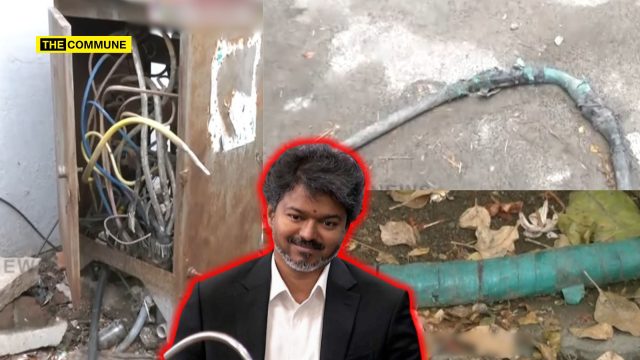
TVK Model: Prolonged Power Fluctuations, Erratic Supply, Exposed Cables Leave Aminjikarai Residents Exasperated

TVK Model: Prolonged Power Fluctuations, Erratic Supply, Exposed Cables Leave Aminjikarai Residents Exasperated

Residents of the Arumbakkam/Aminjikarai locality in Chennai have raised serious concerns over prolonged power supply issues, alleging that they have been facing frequent outages, voltage fluctuations and unsafe temporary electrical arrangements for nearly two months.

According to residents, the problems began after an underground power cable in the area was damaged. Following complaints, electricity officials reportedly installed a temporary overhead cable instead of carrying out a permanent repair. Residents claim the cable currently runs through an area filled with stagnant water, creating fears of a potential accident.

“This issue has been there for over a month. The underground cable was burnt. After that, there was no electricity for an entire day. When residents complained, officials temporarily laid a cable above ground and left. The cable is running over water, and nobody knows what could happen at any moment,” a resident told reporters.

Residents further alleged that an electrical distribution box in the locality has remained in poor condition for nearly a year despite repeated complaints from people living on the street.

“We have complained numerous times asking officials to replace the box. No action has been taken. Whenever power goes off, it takes four to five hours for supply to be restored. Frequent outages are affecting our livelihoods as many of us run shops and businesses in the area,” another resident said.

Several residents stated that power supply has been highly erratic for nearly two months, particularly during the night. They alleged that electricity repeatedly goes on and off, preventing fans and air conditioners from functioning.

“For the past two months, power comes and goes continuously. At night, nobody can sleep because neither fans nor air conditioners work. We have been filing complaints regularly. Sometimes voltage becomes extremely low and then suddenly shoots up. As a result, household appliances have been damaged,” a resident said.

Residents claim that refrigerators and air conditioners in multiple homes have stopped functioning due to repeated voltage fluctuations. They also alleged that there was a period of nearly two days when the area was left without power entirely.

“For almost two days there was no electricity at all. Neighbours had to arrange a generator just to run water pumps. Only one phase was available and connections were shared among households so that people could at least get water,” a resident said.

Locals further accused electricity department officials of failing to respond to complaints. According to them, repeated calls to the local office and officials often went unanswered.

“We continuously called the MMDA Colony office and the Junior Engineer, but nobody answered. Sometimes the phone would keep ringing and other times it appeared as though the receiver had been taken off the hook. When we visit the office, often nobody is available,” a resident alleged.

Residents also expressed concern over the temporary wiring arrangement, claiming that exposed joints and cables pose a safety risk, especially to children moving through the area.

“They have made temporary connections with wires joined at multiple points. Children walk through this area every day. We do not know what might happen,” a resident said.

Several families allege that voltage fluctuations have caused significant financial losses due to damaged appliances. One woman said her washing machine stopped working and had to be taken away for repairs.

“The service technician told me it would cost around ₹10,000 to repair the washing machine. Most of us are daily wage earners. How can we afford such expenses? My child is only four years old and cannot sleep at night because of the power cuts,” she said.

The resident further claimed that a refrigerator in her home had also stopped functioning properly due to the power issues.

“The refrigerator is not cooling at all. A new refrigerator costs around ₹30,000. We have a young child at home and need to store milk. I moved into this area only two months ago, and within that period I have already suffered losses of nearly ₹50,000 because of electrical problems,” she alleged.

According to the resident, technicians who inspected the damaged appliances attributed the failures to voltage fluctuations and advised her to consider relocating to another locality if the situation continued.

Residents have urged the Tamil Nadu Electricity Board to undertake permanent repairs, replace damaged infrastructure and ensure stable power supply before further accidents or losses occur.

Subscribe to our channels on WhatsAppTelegram, Instagram and YouTube to get the best stories of the day delivered to you personally.
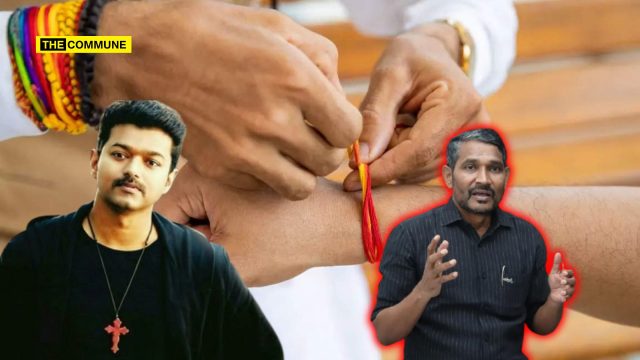
“Police Officers Must Belong To Same Community As Local Majority, Ban ‘Caste-Identifying’ Threads In Schools”: Joseph Vijay Govt’s Minister Vanni Arasu Says

"Police Officers Must Belong To Same Community As Local Majority, Ban 'Caste-Identifying' Threads In Schools": Joseph Vijay Govt’s Minister Vanni Arasu Says

Social Justice Minister Vanni Arasu has said that the TVK government has begun implementing measures aimed at addressing caste-related tensions and promoting social harmony, particularly in the state’s southern districts.

Speaking about caste and social justice issues in Tamil Nadu, the minister recalled his visit to Alangulam, where he met youths who had allegedly been injured and affected by caste-related violence.

“Regarding the situation in Tamil Nadu, specifically in the southern regions and issues concerning caste and social justice: I personally visited Alangulam, met the young men who had been injured and victimized, and on behalf of the government provided financial assistance under the SC/ST Act provisions.”

Vanni Arasu said the government had stressed the importance of implementing recommendations made by former Justice K. Chandru to address caste discrimination and social divisions.

“At that time, we emphasized the need to implement the recommendations made by former Justice Chandru, such as banning the wearing of caste-identifying wristbands or threads in schools and ensuring that police officers appointed in specific areas belong to the same community as the local majority.”

The minister noted that these proposals had already been identified by Justice Chandru and that the government had conveyed its intention to bring about changes in line with those recommendations.

“These were Justice Chandru’s recommendations, and we have stated that changes must be made accordingly.”

Vanni Arasu further argued that economic development and employment generation would play a key role in reducing social tensions and caste-based conflicts in the region.

“Additionally, we urged the establishment of more industries in the region, noting that economic growth would help mitigate such issues, and called for the formation of committees to foster social harmony.”

According to the minister, the TVK government has already initiated steps in these areas and is working to eliminate caste-related problems through administrative and social interventions.

“Our government has now begun taking action on these fronts and is working vigorously to put a complete stop to these problems.”

On the same day, TVK education minister Rajmohan also said school children won’t be allowed to wear ‘any kind’ of thread’ or visible identity marks.

Subscribe to our channels on WhatsAppTelegram, Instagram and YouTube to get the best stories of the day delivered to you personally.
Joseph Vijay’s TVK Minister Rajmohan Says School Children Won’t Be Allowed To Wear ‘Any Kind’ Of Thread’ Or Visible Identity Marks

TVK Education Minister Rajmohan has spoken the same language as the previous Dravidian model government by declaring that students would not be permitted to enter schools displaying any visible symbols associated with religion or caste, including even a simple thread worn on the body.

During an interaction with journalists on measures to tackle caste discrimination and social divisions in educational institutions, the minister asserted that schools must remain spaces exclusively for “science” and “social justice,” insisting that there should be “no room for anything” that promotes religious or caste identities. His remarks have reignited debates over individual religious expression, cultural practices, and the extent to which the state can regulate personal identity markers within educational institutions under the Joseph Vijay-led TVK government.

Responding to a question on the government’s recently launched “Singappen” special task force and whether there were scientifically grounded plans to address criminal behaviour at its roots, Rajmohan stressed that educational institutions would play a central role in shaping future generations.

“That is a good question. There is absolutely no room in our educational institutions for anything that goes against science. We are ready to welcome anyone who champions self-confidence, science, rationalism, and social justice.”

No Place For Religious Or Caste Symbols In Schools

When asked about caste-based tensions among students and whether the government planned to establish monitoring mechanisms or counselling systems to prevent caste clashes in educational institutions, Rajmohan said awareness had already been created among teachers through official educational channels.

He stated that the government had issued strict instructions prohibiting the display of religious or caste symbols on school premises.

“We have already raised awareness among all teachers regarding this through educational channels. We have strictly instructed that no one should enter the school premises displaying symbols associated with religion or caste. No one, let it be even a small thread.”

“Even if I tie a religious thread at our home, I take it off it when I leave the house. So, there is no room for anything. Do you know what is the place for only one thing? Social justice. There’s only room for Science.”

“There’s only one thing here, you know what the goal is? The next generation should be better educated than the previous generation. Glad it is better than other states. But we are going to be better than other countries, so anything that can promote division here, anything that can promote unity, there is no place here.”

Justice Chandru Report To Be Studied By Expert Panel & Implemented

When asked whether he had read the Justice Chandru report commissioned by the previous government on caste discrimination in schools and the role played by teachers and education officials in perpetuating caste biases, Rajmohan said he had met Justice Chandru and that the government intended to examine the report through an expert panel.

“I have met Justice Chandru. We will come up with a panel of experts on the report and see how we can implement it.”

He noted that the report was detailed and that implementation would require careful planning to ensure its recommendations reached the grassroots.

“The report is detailed. How to take it to the grassroots, we have to see. Because whatever project comes up, generally only 40-50% goes to the grassroots.”

“Social justice like this is a sensitive subject. It will take some time for the teachers to come and implement this depending on the mindset of the teachers to prevent things that can cause tension before it happens. But definitely we will come and implement it.”

Subscribe to our channels on WhatsAppTelegram, Instagram and YouTube to get the best stories of the day delivered to you personally.
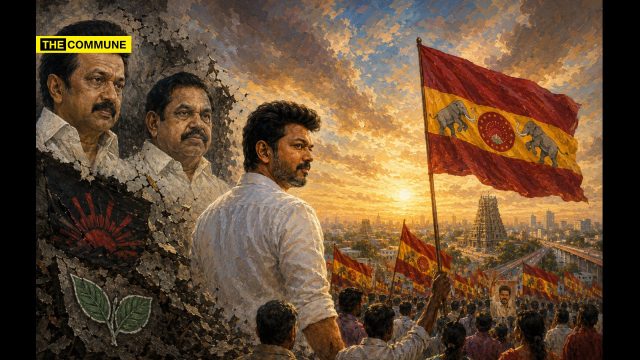
The Election That Ended An Era of Dravidianism: How Joseph Vijay Capitalised On DMK Decline And A Disintegrating AIADMK

The Election That Ended An Era of Dravidianism: How Joseph Vijay Capitalised On DMK Decline And A Disintegrating AIADMK

Tamil Nadu occupies a unique and exalted place in the civilizational consciousness of Bharatvarsha. More than merely a political or geographical entity, it stands as one of the greatest living repositories of Hindu spiritual heritage, temple culture, sacred art, philosophy, music, dance, ritual traditions, and monastic lineages. From the towering temples of Madurai, Chidambaram, Srirangam, Rameswaram, Kanchipuram, and Thanjavur to the innumerable mutts, ashrams, Siddha traditions, and centres of Vedic learning that continue to thrive across the land, Tamil Nadu has for centuries served as a luminous pillar of Sanatana Dharma. The spiritual pulse of this sacred region has profoundly shaped the religious, cultural, and philosophical life of Bharatvarsha itself. Any political transformation in Tamil Nadu, therefore, carries significance beyond electoral arithmetic; it inevitably touches a land deeply intertwined with the Hindu civilizational continuum of India.

Having closely followed Tamil Nadu’s political evolution for over four decades, and as someone whose mother tongue is Tamil, I have witnessed the steady decline of the Indian National Congress alongside the rise and consolidation of Dravidian forces led by the Dravida Munnetra Kazhagam (DMK) and the All-India Anna Dravida Munnetra Kazhagam (AIADMK). For much of this period, the structure of politics in the state remained broadly stable despite shifts in leadership and alliances. The developments surrounding the 2026 election, however, suggest a decisive break from that trajectory indicating a deeper churn in the political consciousness of the electorate, where long-held loyalties are being questioned and new alternatives are being actively explored.

The 2026 Assembly election stands out as one of the most consequential disruptions in Tamil Nadu’s political history. For nearly six decades, power alternated between the DMK and the AIADMK, creating a durable duopoly that shaped governance and political discourse. That equilibrium has now been significantly shaken. The emergence of actor turned politician Joseph Vijay, and his Tamilaga Vettri Kazhagam (TVK) has altered the political landscape, compelling established parties to reassess their strategies. The verdict was not merely electoral; it reflected a broader dissatisfaction with a political culture perceived as stagnant and unresponsive.

The scale of the shift is evident in the numbers. In the 234-member Assembly, TVK secured 108 seats, just short of the 118 required for a majority, yet emerged as the single-largest party. The DMK won 59 seats, the AIADMK 47, the Congress 5, and the Pattali Makkal Katchi (PMK) 4, effectively breaking the long-standing DMK-AIADMK binary.

The results also exposed structural weaknesses across the political spectrum: internal divisions within the AIADMK, a weakening organisational hold of the DMK, an inconsistent strategy by the Bharatiya Janata Party (BJP) in the state, and the Congress party’s opportunistic repositioning. Many observers viewed the outcome as a rejection of entrenched political patterns, marked by arrogance in power, dynastic entitlement, corruption fatigue, and ideological stagnation.

The verdict, in that sense, went far beyond a routine electoral shift. It signalled a deeper rupture in Tamil Nadu’s political order, challenging a system that had dominated the state’s imagination since the late 1960s. Voters appeared to move away from entrenched loyalties and familiar binaries, opting instead for disruption over continuity. What unfolded was not merely a rejection of incumbency, but a broader questioning of a political culture perceived as insular, repetitive, and increasingly disconnected from emerging aspirations.
At the same time, Vijay’s rise has sparked wider debates on identity politics, minority consolidation, the influence of celebrity-driven mobilisation, and the future direction of Tamil Nadu’s politics.
Collapse of the Dravidian Certainty
For decades, politics in Tamil Nadu followed a familiar and emotionally charged pattern. The DMK embodied a strand of Dravidian ideology anchored in linguistic pride, rationalist discourse, and expansive welfare politics, while the AIADMK relied on a more personality-driven model shaped by charismatic leadership and populist delivery. The passing of J. Jayalalithaa and M. Karunanidhi, however, marked a decisive turning point, after which both formations began to lose ideological sharpness and emotional resonance.
Under M.K. Stalin, the DMK retained its organisational strength and alliance network, but criticism mounted over increasing centralisation, bureaucratic functioning, and the perception of entrenched family influence. Allegations of corruption, concerns over law and order, and accusations of an anti-Hindu posture from certain quarters contributed to a gradual erosion of its once formidable aura.
The AIADMK, meanwhile, struggled to regain coherence after Jayalalithaa’s death. Persistent factionalism, leadership disputes, and the absence of a unifying figure weakened its organisational depth and electoral appeal. By the time of the 2026 elections, these vulnerabilities had become starkly visible.
The verdict reflected a clear shift in voter sentiment. The DMK was unable to generate the emotional momentum needed for a renewed mandate, while the AIADMK failed to present itself as a credible alternative. Across constituencies, there was a discernible willingness among voters to look beyond traditional alignments. The emergence of TVK as the single largest party marked a watershed moment, pushing both Dravidian majors onto the defensive and signalling a disruption of long-standing political certainties.

The election underscored what many had begun to sense over the past decade that the emotional and ideological coherence of the Dravidian framework was weakening. The long-standing appeal of identity-driven mobilisation and rhetorical binaries appeared less persuasive to a generation more focused on governance outcomes. Voters increasingly evaluated political choices through the lens of performance, credibility, and responsiveness rather than inherited ideological affiliations.

Cinema Meets Political Vacuum

Tamil Nadu’s political landscape has long been shaped by the crossover appeal of cinema. From MG Ramachandran to J Jayalalithaa, film personalities have successfully translated screen charisma into electoral capital. Against this backdrop, actor Vijay’s political foray was initially dismissed by many analysts as yet another celebrity experiment unlikely to withstand electoral scrutiny. That judgment proved misplaced.

Vijay’s rise was facilitated by a palpable political vacuum and growing public discontent. A broad coalition of support began to take shape – young and first-time voters, sections of the urban middle class, segments of minority communities, and voters disillusioned with the DMK all gravitated towards him as a credible alternative. His campaign effectively fused cinematic appeal with a clear anti-establishment narrative. Moving away from conventional Dravidian idioms, he positioned himself as a reform-oriented leader, emphasising administrative efficiency, anti-corruption measures, job creation, and the promise of a “new political culture.”

Mass rallies drew significant crowds, while social media sharply expanded his outreach. Crucially, his extensive fan base evolved into a disciplined, booth-level mobilisation network, lending organisational depth to what initially appeared to be a personality-driven campaign. Equally significant was the misreading by rival parties. The DMK sought to frame him as inexperienced, the AIADMK underestimated his electoral traction, and the BJP alternated between muted criticism and strategic ambiguity. By the time the scale of the TVK surge became evident, the political ground had already shifted decisively.
More significantly, Vijay’s emergence reflected not just the power of celebrity appeal but the crystallisation of accumulated public discontent. His campaign became a vehicle through which anti-establishment sentiment found expression, cutting across traditional political alignments. In doing so, it disrupted the emotional monopoly that established parties had long exercised over the electorate.

Minority Consolidation and Christian Votes

One of the most debated aspects of the election was the minority consolidation behind Vijay. Political analysts, opposition leaders, and social commentators observed that sections of Christian and Muslim voters appeared more inclined toward TVK in several constituencies, particularly after the Indian National Congress shifted its political positioning and anti-BJP sentiment intensified.
The minority consolidation became politically significant because Vijay himself is a Christian and because TVK increasingly came to be viewed as a viable anti-BJP force capable of challenging both the DMK and the AIADMK in several seats. This perception strengthened after the Congress moved toward supporting Vijay, distancing itself from its ally, the DMK. Political observers accused the party of abandoning ideological consistency for immediate political survival, arguing that the Congress leadership sensed the weakening position of the DMK and saw better future prospects in aligning with the rising force of Vijay. Supporters of Vijay argued that minority voters simply chose the most viable alternative in a changing political environment, while opponents claimed that identity-based consolidation played a significant role in accelerating TVK’s rise; the truth likely lies somewhere in between.

Post-election analysis of the 2026 Assembly elections in Kerala, Tamil Nadu, and Puducherry shows that Christian voters remain electorally important where they are regionally concentrated, institutionally organised, or embedded in coalition politics. Their influence was strong in Kerala and visible in Tamil Nadu and Puducherry. A precise count of Christian winners by party and gender is not officially available, as the Election Commission of India does not classify candidates or MLAs by religion; such identifications are therefore based on public identity and party nominations.

Christian identity carried some weight in Tamil Nadu, where Christians are a small but influential minority in southern districts and within educational networks. Vijay’s Christian background gave TVK greater minority visibility, but his success rested on a broader anti-incumbency wave and a youth-driven appeal.
The number of Christian candidates fielded by TVK has been widely discussed in political circles as significant, though no verified final list by religion is available from official sources. One notable Christian woman winner in Tamil Nadu was Leema Rose Martin, wife of Coimbatore-based businessman ‘Lottery King’ Santiago Martin. Contesting on an AIADMK ticket, she won from the Lalgudi constituency. Her son, who floated his own party in neighbouring Puducherry, also won, while her son-in-law secured victory in Tamil Nadu as a Vijay ally.

Beyond Leema Rose Martin, Tamil Nadu produced no other widely prominent Christian woman political figures in this election, reflecting a broader pattern in which Christian representation in Indian politics remains largely male-dominated and often mediated through parties, church networks, family linkages, and caste-community dynamics.

Compared with previous Assemblies, Christian influence rose in Kerala as the United Democratic Front’s comeback restored Christian-dominated central Kerala to a pivotal role in government formation. In Tamil Nadu, the rise was more symbolic, as Vijay’s TVK gave Christian identity new public visibility without making it sectarian. In Puducherry, however, the influence remained limited. In this election cycle, Christian political weight was clearly significant in Kerala and visible in Tamil Nadu, while remaining minimal elsewhere.

Congress and the Politics of Survival

The role of the Indian National Congress during and after the election drew sharp scrutiny. For years, the party’s presence in Tamil Nadu has been sustained largely through alliance politics, most notably under the umbrella of the DMK. However, as electoral trends began to favour the rising TVK, Congress leaders appeared to swiftly recalibrate their strategy, prompting allegations of abandoning an ally at a politically sensitive moment.

Observers pointed out that the Congress no longer commands an independent mass base in the state capable of securing electoral success on its own. Its relevance, therefore, has increasingly hinged on aligning with formations that demonstrate electoral viability. The party’s post-election positioning reinforced perceptions of opportunism, with critics arguing that strategic survival seemed to outweigh ideological consistency.
For the DMK, the episode proved particularly uncomfortable. A long-standing partner appeared willing to reposition itself as political currents shifted, raising questions about the durability of alliance loyalties in an evolving electoral landscape.
The episode also highlighted a broader pattern in Tamil Nadu politics, where national parties have struggled to sustain independent relevance. In the absence of a strong grassroots base, their strategies have increasingly revolved around aligning with dominant regional forces. This dependence has often blurred ideological distinctions and reinforced perceptions of tactical, rather than principled, political engagement.

A Party Without Direction

The most consequential setback of the election arguably befell the AIADMK. Entering the contest with hopes of capitalising on anti-incumbency against the DMK, the party instead found itself squeezed between an eroding traditional vote base and the rapid ascent of TVK. Its leader, Edappadi K. Palaniswami, struggled to project the kind of statewide charisma needed to galvanise voters at a moment of flux.

The post-election phase proved even more damaging. A trust vote in the Assembly exposed deep fissures within the party, as several MLAs defied the official line to back the Vijay-led government. The episode underscored not just dissent, but a broader uncertainty within the organisation about its political direction.

Multiple fault lines became visible. One faction appeared inclined towards tactical cooperation with Vijay to retain relevance, while another pushed for a more confrontational opposition stance. A third group reportedly remained uneasy with both the party’s alignment with the BJP and the leadership approach of Palaniswami.

The cumulative effect was organisational drift. Once defined by centralised authority and tight discipline under J. Jayalalithaa, the AIADMK now appeared fragmented and vulnerable. Several commentators suggest that the 2026 verdict may, in retrospect, mark not just an electoral defeat but the onset of a deeper structural unravelling.

BJP’s Dilemma in Tamil Nadu

The election outcome once again raised searching questions about the long-term approach of the Bharatiya Janata Party in Tamil Nadu. In recent years, K. Annamalai had emerged as one of the party’s most visible and energetic faces in the South, leveraging an aggressive campaign style, anti-corruption messaging, and strong media presence to expand the BJP’s visibility in the state.
Yet, during the election, sections of the party’s own support base expressed concern that his political trajectory had been inconsistently handled. There appeared to be a lack of clarity over alliances, leadership projection, campaign messaging, and tactical priorities. Reports of internal unease—particularly among those wary of Annamalai’s rapid rise disrupting established equations—added to the perception of drift.

Analysts pointed to a deeper strategic ambiguity: whether the BJP intended to cultivate an independent political identity in Tamil Nadu under Annamalai’s leadership, or continue relying on alliance arithmetic, particularly with the AIADMK. This unresolved question appeared to blunt the party’s effectiveness. The BJP neither consolidated itself as a strong standalone force nor managed to shape the broader electoral narrative in a decisive manner.

Subsequent developments surrounding K. Annamalai’s resignation from the BJP have generated considerable discussion among political observers. However, as eminent thinker and editor of Thuglak, S. Gurumurthy, aptly observed, Annamalai’s resignation should not be viewed as a full stop but merely as a comma in a larger political journey. Significantly, throughout this transition, the BJP’s central leadership displayed remarkable maturity and restraint. Not a single senior leader publicly criticised or spoke disparagingly about Annamalai, reflecting both organisational discipline and respect for a leader who contributed substantially to the party’s growth in Tamil Nadu. Equally noteworthy was Annamalai’s own conduct.

Despite speculation and commentary in various quarters, he refrained from making any adverse remarks against the BJP, Prime Minister Narendra Modi, or the party leadership. This mutual display of dignity and restraint stands in sharp contrast to the acrimonious departures often witnessed in Indian politics and suggests that the relationship between Annamalai and the BJP remains one of shared commitment rather than estrangement. Many within the broader nationalist ecosystem therefore continue to view his current step not as an end, but as a transition to a new phase of public service and political engagement.

Criticism also emerged from within the wider ideological ecosystem, with some questioning the dilution of Annamalai’s assertive positioning at key moments. Others argued that the party underestimated the emotional and cultural resonance of Vijay among younger voters. Ultimately, the BJP’s limited expansion beyond selects pockets underscored the enduring challenge it faces in navigating Tamil Nadu’s deeply entrenched regional political landscape.

The outcome further illustrated the structural challenges faced by national parties attempting to expand in Tamil Nadu. Decades of entrenched regional identity politics have created a political ecosystem that resists external narratives unless they are carefully adapted to local sensibilities. Breaking through this framework requires not only organisational strength but also a calibrated understanding of the state’s cultural and political nuances.

DMK’s Crisis of Confidence

For the DMK, the setback went beyond electoral arithmetic, striking at its long-held psychological dominance in the state’s political discourse. A party that once set the ideological tone of Tamil Nadu politics appeared, during this election, increasingly vulnerable and on the defensive.

As Chief Minister MK Stalin, though regarded by supporters as an experienced administrator, was unable to generate the emotional momentum needed to counter the surge around Vijay. The party’s campaign often seemed reactive, shaped more by the need to respond to public discontent, social media criticism, and anti-incumbency pressures than by a forward-looking narrative.
Observers noted a broader shift in voter sentiment, particularly among younger demographics who appeared less invested in the traditional ideological vocabulary of Dravidian politics. Long-standing binaries that once energised the electorate seemed to carry diminished resonance. Instead, voter priorities increasingly centred on governance, corruption, employment, infrastructure, and leadership credibility.

At the same time, critics accused sections of the party ecosystem of displaying intolerance towards dissent, especially on cultural and religious questions. This perception is believed to have eroded support among segments of Hindu communities and sections of the conservative middle class. Compounding these challenges, the rise of Vijay introduced a new variable, fragmenting the anti-BJP space that the DMK had long sought to consolidate.

Joseph Vijay and the Challenge of Governance

Winning an election is one challenge; governing a state as politically layered and administratively demanding as Tamil Nadu is quite another. Within days of assuming office, the administration led by Vijay began facing criticism from multiple quarters. Opposition parties questioned the circumstances surrounding the trust vote, while concerns were raised over cabinet composition, administrative experience, and policy direction.

Critics argued that the new government appeared overly reliant on personality-driven politics, with insufficient institutional depth. Questions were also raised about the relative inexperience of some ministers and reports of uncertainty within sections of the bureaucracy. A section of commentators suggested that cinematic symbolism continued to shape the leadership’s public posture even after the transition to governance.

At the same time, others urged caution against early judgment, noting that any new administration requires time to stabilise and that entrenched political interests may seek to test or unsettle it in its initial phase.

The larger challenge, however, is structural. Vijay must convert a movement powered by charisma and public enthusiasm into a coherent system of governance. Tamil Nadu’s electorate is both politically aware and exacting in its expectations. Sustained public support will depend less on symbolic appeal and more on administrative delivery. If governance falters, the same electorate that propelled his rise could just as swiftly withdraw its mandate.

Taken together, these developments suggest that the 2026 election may mark a shift not only in political leadership but in the underlying grammar of Tamil Nadu politics. The electorate’s willingness to challenge established formations indicates a transition toward a more fluid and competitive environment, where traditional assumptions can no longer be taken for granted.

The End of an Era

The 2026 election marks a watershed in Tamil Nadu’s political evolution. For the first time in nearly six decades, the state has witnessed a tangible disruption of the entrenched Dravidian power structure dominated by the Dravida Munnetra Kazhagam and the All India Anna Dravida Munnetra Kazhagam. The rise of TVK underscores a growing willingness among voters to explore alternatives when established formations appear fatigued.
Beneath the headline outcome, the election revealed deeper structural shifts: the erosion of automatic loyalty to legacy parties, the growing centrality of personality-driven politics, the fragmentation of traditional alliance frameworks, the expanding influence of youth-led digital mobilisation, and a perceptible weakening in the emotional pull of long-standing ideological narratives.

Yet, the moment raises as many questions as it answers. Can TVK evolve beyond a personality-centric platform into a durable political institution, or will it remain tied to the appeal of Vijay? Is the DMK capable of ideological and organisational renewal? Can the AIADMK navigate its internal fractures and reassert coherence? Will the BJP translate cultural visibility into electoral traction? And does the INC have a future beyond alliance dependence?

The larger question looms over all of these: is Tamil Nadu entering a genuinely post-Dravidian phase, or does this moment represent a temporary disruption within a still fundamentally Dravidian political culture? The answer will unfold over time.
What emerges from this transition is a more unsettled but potentially more dynamic political landscape. The erosion of long-standing certainties has opened space for new actors and ideas, but it has also introduced volatility. For all political formations, the message is clear: adaptability, credibility, and delivery will matter far more than legacy or rhetoric in shaping the next phase of Tamil Nadu’s politics.

For now, one conclusion stands out. Tamil Nadu politics has entered one of its most fluid and unpredictable phases in recent memory. Established certainties have weakened, familiar equations have shifted, and the political map has been redrawn. Across the spectrum, victors and losers alike, there is a growing recognition of a new reality: the electorate is no longer bound by tradition alone and is increasingly willing to recalibrate its choices.

As Tamil Nadu moves through this phase of political transition and uncertainty, the deeper civilizational significance of the state cannot be overlooked. This is a land where centuries-old Hindu practices continue to define the cultural soul of society. Tamil Nadu remains one of the strongest bastions of Hindu civilization preserving an unbroken continuity of sacred traditions that have nourished India’s spiritual identity for millennia.

The future political direction of the state will therefore have implications not merely for governance, but for the preservation, interpretation, and continuity of one of the richest Hindu cultural landscapes in the world. In many ways, the story of Tamil Nadu is inseparable from the larger story of India’s civilizational endurance itself.

Pradeep Krishnan is a multilingual author and journalist whose writings explore faith, society, culture, and public affairs.

Subscribe to our channels on WhatsAppTelegram, Instagram and YouTube to get the best stories of the day delivered to you personally.
Congress Leader Peter Alphonse Frames Joseph Vijay Becoming TN CM As Divine Intervention, Cries ‘Christian Persecution’ On Action Taken Against Forced Conversion In North States, Invokes Manipur To Peddle Propaganda

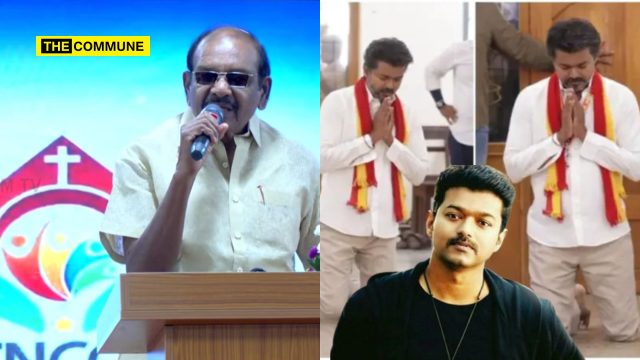
At a meeting or rather felicitation ceremony conducted by the Tamil Nadu Christian Churches Federation on 9 June 2026, former chairman of Tamil Nadu’s State Minorities Commission and ex-Congress MLA Peter Alphonse claimed Jesus performed a miracle and made Joseph Vijay the Chief Minister of the state.

Speaking to the audience, he said, “Pastor Nelson has organized a wonderful event on behalf of the Federation of Christian Churches in Tamil Nadu. It serves as a felicitation ceremony for the Honorable Speaker of the Legislative Assembly and a reception to honor our dear brother Vanniyarasu who serves in the Cabinet representing the Scheduled Castes and oppressed communities. At the same time, it is an occasion to submit a memorandum to the newly elected government, reminding them of our long-standing demands and needs that remain unfulfilled despite repeated representations. I am delighted to meet you all at this excellent gathering. We are closely observing both national and state politics; as members of a minority community, we realize every day the immense challenges involved in living in this country.”

He continued, “Although the nation is described as secular, we see that the prevailing trend across the country is to view every event and issue through the prism of religion. While we in the southern states remain relatively calm, the media fails to bring the events unfolding in the northern states to our attention or to the public eye. This is because fascist, communal forces acting through their allied corporate tycoons, have taken control of the entire media landscape, whether visual or print. They effectively black out information that ought to reach the public, ensuring that details regarding the atrocities committed against minorities in the northern and northeastern states remain untold. Recently, a pastor’s family from Manipur in the Northeast released a poignant audio recording. In it, they clearly explained not only the challenges of ministry but also the grave threat to life involved in simply living as a Christian in that state, highlighting the precarious and unsafe conditions in which their family resides. Typically, during holiday periods, many young people and evangelists from here travel to Northern states to proclaim the Gospel; however, an unwritten rule is now being enforced across many of these states, mandating the immediate arrest and imprisonment of anyone who goes there to preach the Good News.”

Speaking about the ‘miracle’, he said, “It is against this backdrop that a new government has assumed office in Tamil Nadu. In the history of independent India and specifically in the history of Tamil Nadu, God has brought about a monumental miracle at a time when no one could have even imagined that someone named Joseph Vijay would become the Chief Minister. This election has loudly proclaimed many messages; it holds the distinction of shattering the dominance of caste, religion, and money in politics and bringing the true values ​​of democracy to the forefront. Regarding this, consider the “Vijay factor” as a definitive end to such communal politics. Just imagine, as I discussed on a television channel yesterday, what the election results in Tamil Nadu would have looked like without the Vijay factor. How many seats would the BJP or the AIADMK have secured? If the BJP had managed to get even 15 or 20 MLAs, would they have spared Tamil Nadu? This election deserves credit for wiping the BJP out completely in a single contest. Even the single seat won in Ooty was due to internal disarray within the Congress party; otherwise, they wouldn’t have won that seat either. The majority of the people in the Nilgiris did not look at caste or religion; they sought a positive change and voted with the conviction that this young man possesses the capability to bring about that transformation. We are truly blessed to witness such a promising era firsthand.”

He continued, “As our Pastor mentioned, Indian politics is gearing up for a complete, revolutionary transformation—moving away from the era of “established” political parties and long-standing figures who boast, “I have been an MP ten times, an MLA eight times, a minister five times; I am the permanent minister, the permanent leader, the permanent district secretary – if not me, then my son…” Joseph Vijay has completely shattered the status quo leaving no trace of the old order behind. Regardless of caste or religion, across the constituencies where largesse was distributed, the people accepted the money—without letting it dictate their choice—and then went straight to the polling booth to cast their votes for the ‘Whistle’ symbol. Honestly, even I used to wonder and ask my dear friend JCD, why he had made such a decision. But then, isn’t He the Lord who performs miracles? Driven by a deep desire for change – a change that had become inevitable, we have witnessed these election results.”

He added, “For a long time, our singular demand has been the inclusion of Scheduled Caste Christians under the Scheduled Caste category. This cause has gone through various stages; there is even a dedicated movement, the Dalit Christian Movement actively campaigning for this. Every year, we dedicate a specific day to hold demonstrations and protests. We have frequently filed petitions with the Supreme Court regarding this issue. Just as the case was about to be heard, the Modi government, anticipating the proceedings, immediately appointed a new commission led by Justice Balakrishnan. This was done despite the fact that the earlier Ranganath Misra Commission had already submitted a clear report stating that there had been no change in their social status.”

He continued, “The Ranganath Misra Commission report clearly established that while they may have converted to another religion, their social standing remains unchanged; they continue to be viewed and treated as “untouchables” or members of the oppressed classes. The Supreme Court was poised to issue an order based on that report. Benefits meant for Scheduled Castes are available to those who convert to Buddhism or Sikhism, yet they are denied to those who convert to Christianity. The argument raised was based on Article 14 (Equality before the Law): if Sikhs and Buddhists receive these benefits, why shouldn’t I? The core argument, supported by the Ranganath Misra Commission, was that religious conversion does not alter one’s fundamental social position. However, four days before the verdict was due, the Modi government intervened; claiming the Ranganath Misra report lacked certain information, they appointed the Justice Balakrishnan Commission instead. This is the battle that must now be fought in the Supreme Court.
We have also demanded that a resolution regarding this matter be passed in the Legislative Assembly.”

He continued, “While I was serving as the Chairperson of the Commission, I personally reached out to leaders such as Sinthanai Selvan of the Viduthalai Chiruthaigal Katchi, Selva Perunthagai of the Congress party, and heads of other parties; we sought a resolution on this matter in the Legislative Assembly, and that resolution was indeed passed. This matter does not fall within the purview of the State Legislative Assembly; it must be enacted entirely by the Parliament. When I was a Member of Parliament during Vajpayee’s tenure as Prime Minister, Advani and Vajpayee convened a meeting with all parties to seek suggestions prior to the budget presentation; Mr. Chidambaram (former Minister) and I attended on behalf of the Tamil Maanila Congress. When asked about our demands, I outlined them all and finally mentioned that we had one crucial request. Vajpayee remained silent, but Advani looked at me, asking, “What is it?” I replied, “It concerns the issue of Dalit Christians – the converted Scheduled Caste Christians must be considered as Scheduled Caste Christians.” Upon hearing this, Advani immediately sprang up from his chair, No! he said. We are all aware of Advani’s current situation. Since this matter is currently before the Supreme Court, it must be handled effectively; our lawyers are actively working on it there. A lawyer named John Dayal is handling the case excellently. Therefore, we will continue to pursue this matter in the future. Discussing it with our Chief Minister and bringing a resolution before the Assembly once again is a straightforward step.”

He further said, “Resolutions to this effect have already been passed in seven or eight State Assemblies. Let us wait and see what the coming days bring. There is only one thing I would humbly request of you all: we live in a pluralistic society, and within it, we exist as a minority. As a minority, we cannot claim rights that are greater than those enjoyed by the majority population. However, some among us fail to grasp this. Communal political parties exploit the sentiment that “minority rights supersede the rights of the majority” to alter public perception. They sow seeds of hatred among the people by questioning why minorities enjoy so many rights, educational institutions, and concessions asking why the majority does not receive the same and claiming that the government favors only minorities while the majority (comprising 85% of the population) ought to be the ones determining the course of events. It is precisely this sowing of hatred that fuels the growth of communal politics; we must ensure that we do not contribute to the rise of such politics in any way. It is up to our community leaders to provide the necessary guidance in this regard. We ask only for what is rightfully ours; we have never been driven by greed. Ours is a community that lives with integrity and has never lent support to any form of illegality. We must continue to progress as a community that excels in education and upholds the highest human values, and the government will assist us in this endeavor. As for people like us having, as he said, “finished the race”, our role now is to determine how we can help, whom we can assist, and whom we can guide. We remain ever available for this purpose. In the past, whenever a church faced an issue, Brother Nelson would immediately step in; we would promptly speak with the District Collector and the Superintendent of Police to resolve the matter. We can certainly continue this work. Let us all be prepared to lead lives that are just, disciplined, and in accordance with the Constitution; let us remain courageous, knowing that the Divine is with us.”

Subscribe to our channels on WhatsAppTelegram, Instagram and YouTube to get the best stories of the day delivered to you personally.
Checkmate China: Inside India’s Great Nicobar Megaproject

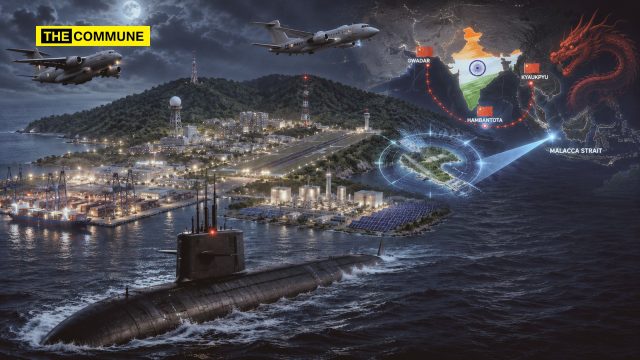
It is midnight in the Indian Ocean. The abyssal waters of the Bay of Bengal are pitch-black, hiding secrets that satellite arrays can only guess at. Beneath the crushing weight of the waves, a hostile nuclear attack submarine glides silently, slipping past international maritime boundaries. Its acoustic signature is muffled, its mission clandestine. For over a decade, this has been the unspoken reality of the geopolitical chessboard. Beijing has been meticulously, ruthlessly weaving its ‘String of Pearls’, pumping billions of dollars into a sprawling network of mega-ports and listening posts across Pakistan’s Gwadar, Sri Lanka’s Hambantota, and Myanmar’s Kyaukpyu.

The objective has always been chillingly clear: encircle India. The plan was to slowly tighten a maritime noose around the Indian peninsula, choke its vital trade routes, and trap the Indian Navy in its own backyard should a full-scale conflict ever erupt. To the rest of the world, looking at the map of the Indo-Pacific, it appeared that New Delhi was cornered. Diplomatic cables whispered that the Indian elephant had been successfully caged by the Chinese dragon.

But wars of the future are not won by those who make the loudest moves; they are won by those who command the shadows. While the world watched the trap ostensibly close, New Delhi was quietly orchestrating a tectonic shift.

The Silent Awakening of an Unsinkable Carrier

The ultimate weapon in India’s modern arsenal isn’t a newly minted hypersonic ballistic missile, nor is it a multi-billion-dollar fighter squadron purchased from the West. It is a dormant, densely forested landmass at the absolute southernmost tip of the Andaman and Nicobar archipelago, a place long forgotten by mainland conversations. It is awakening to become India’s unsinkable aircraft carrier: Great Nicobar.

Look at a nautical map, and the sheer audacity of this geographic weapon becomes apparent. Great Nicobar lies a mere 40 nautical miles from the Strait of Malacca. This narrow, congested waterway is the undisputed jugular vein of the global economy. More importantly, it is China’s greatest vulnerability, the famed “Malacca Dilemma.” A staggering 80% of China’s crude oil imports and the lion’s share of its commercial mega-ships must transit through this 1.5-kilometer-wide chokepoint.

By deciding to militarize and economically hyper-charge Great Nicobar, India is effectively placing a loaded gun directly against the Dragon’s windpipe. Through a staggering ₹72,000-crore mega-project, a forgotten island is being transformed into an impregnable maritime fortress.

The Four Pillars of a Geopolitical Juggernaut

To understand the sheer scale of the Great Nicobar Project, one must look at the four gargantuan pillars being driven into the island’s bedrock. This is not merely a military base; it is a sovereign ecosystem designed to outlast, outgun, and outmaneuver any adversary.

1. The Megaport: International Container Transhipment Terminal (ICTT)

At Galathea Bay, an economic behemoth is rising. The planned International Container Transhipment Terminal is not a standard dock; it is designed to handle an earth-shattering 14.2 million TEUs (Twenty-Foot Equivalent Units) annually. But the true terror for adversaries lies beneath the water line. The terminal boasts a colossal natural draft depth of over 20 meters.

In peacetime, this means the world’s largest commercial leviathans can dock here, wresting India’s supply chains away from foreign transshipment hubs like Colombo or Singapore. In wartime, this deep-water haven transforms into a naval citadel. India’s aircraft carriers and lethal nuclear submarines can dock, rearm, and deploy right at the mouth of the Malacca Strait. They no longer have to retreat thousands of kilometers to the mainland for logistical support.

2. The Fortress in the Sky: The Greenfield Airport

Naval dominance means nothing without absolute air superiority. To that end, an expansive, dual-use Greenfield Airport is being carved out. Designed to initially handle a million passengers and scale up to 10 million, its strategic purpose is far more lethal. In the event of an incursion, India can no longer wait for mainland reinforcements.

This airport will feature runways capable of operating heavy military lifters like the C-17 Globemaster, dropping elite paratroopers and heavy armor within hours. More critically, it will serve as the launchpad for the deadly P-8I Poseidon submarine hunters and advanced fighter squadrons. It transforms the island into a forward-operating watchtower, providing a 360-degree radar and strike umbrella that can neutralize subsurface and aerial threats before they even breach Indian waters.

3. The Unfailing Heartbeat: The 450 MVA Power Plant

The greatest vulnerability of any remote island fortress is its umbilical cord to the mainland. What happens if a full-scale naval blockade severs fuel and supply lines? A base without power is just a concrete tomb.

New Delhi has engineered a failsafe. A mammoth 450 MVA (Megavolt Ampere) gas and solar-based power plant is being established on the island. This ensures that the military command centers, the radar arrays, and the commercial hubs remain fully operational and entirely self-reliant. It is off-grid survival on a geopolitical scale. Even in the darkest hours of a war, the heartbeat of Great Nicobar will not falter.

4. The Shadow City: The 16,610-Hectare Township

To breathe life into this massive military-industrial complex, you need a living, breathing population. A sprawling 16,610-hectare smart township is being meticulously planned. This will not be a temporary camp, but a sovereign Indian city in the middle of the ocean. It will house the military top brass, the maritime experts, the tech infrastructure specialists, and the massive workforce required to keep this geopolitical engine roaring. It establishes a permanent, unshakeable sovereign footprint.

Warcraft Meets Dharma: The Forest and the First Inhabitants

A true warrior does not burn down their own home to defeat an enemy. If the infrastructure represents the muscle of the Great Nicobar Project, its soul lies in its rigorous ethical and ecological framework. The transformation of this island is not a reckless conquest of nature; it is a meticulously balanced ‘Dharma Yuddha’ (righteous war), where national security does not cannibalize the region’s ancient heritage.

The Tribal Shield: Shompen & Nicobarese Welfare

Long before the geopolitical games of the 21st century, these dense tropical rainforests were guarded by the Shompen and Nicobarese tribes. These indigenous communities, who miraculously survived the 2004 tsunami through their ancient understanding of the earth, are the true keepers of the island.
The Indian government has locked the project under an ironclad “Zero Displacement” policy. Not a single tribal member will be relocated from their ancestral lands.

In a remarkable legislative move, the land re-notification process will actually result in a net increase in the legally protected tribal reserve area. Strict buffer zones will ensure that their sacred way of life, their isolation, and their culture remain completely untouched by the roaring jet engines and mega-ships miles away.

The Ecological Armor: Unprecedented Environmental Safeguards

Building a militarized mega-port inside a designated biosphere reserve demands environmental safeguards of unprecedented scale. Great Nicobar is home to the giant Leatherback turtles, Nicobar macaques, and incredibly fragile coral reef ecosystems.
While national defense necessitates the diversion of some forest land, India has triggered a colossal biological counter-offensive. A massive compensatory afforestation drive spanning 97 square kilometers (9,700 hectares) is being executed to replace the lost green cover.

Over 42 stringent environmental conditions have been legally mandated, covering marine acoustic limits to protect whales and dolphins, zero-liquid discharge protocols, and coral relocation programs. Independent scientific committees overseen by the nation’s top ecological institutes will act as the watchdogs. This is not a concrete jungle replacing a natural one; it is a futuristic fortress designed to breathe alongside nature.

The Himalayan Decoy and the Ultimate Checkmate

To truly appreciate the genius of the Great Nicobar Project, one must zoom out and look at the
last five years of global panic. For years, the world’s media, military analysts, and foreign policy think tanks have been obsessively fixated on the snow-capped, bleeding peaks of the Himalayas.

Border skirmishes in the freezing altitudes of Galwan, the standoffs in Pangong Tso, and the muscle-flexing in Tawang convinced everyone that the next great Sino-Indian clash would be a brutal, freezing land war in the mountains. But this was China’s grand illusion. The strategy was to drag India’s political and military gaze up to the icy borders, draining its resources and attention, while Beijing stealthily dominated the Indian Ocean beneath them.

But New Delhi never took the bait. While China forced India to look up at the Himalayan ridges, India quietly reached deep into the ocean and padlocked the only door China needs to survive.
By forging this unsinkable aircraft carrier, India has achieved something rare in modern statecraft: a perfect equilibrium. It has flawlessly balanced Strategic Dominance (choking the Malacca Strait), Economic Sovereignty (reclaiming billions in transshipment trade), Environmental Preservation (protecting a biosphere through massive afforestation), and Tribal Welfare (honoring the first inhabitants with zero displacement).

The Dragon thought it had successfully strangled the Elephant with a String of Pearls. It didn’t realize that while it was busy showing off its fangs in the mountains, the Elephant had calmly reached out, taken the most crucial pearl, and shoved it right down the Dragon’s windpipe. The checkmate is complete, and the waters of the Indian Ocean will never be the same again.

Shri Venkateshwaran is the Chief of Thuglak Digital.

Subscribe to our channels on WhatsAppTelegram, Instagram and YouTube to get the best stories of the day delivered to you personally.
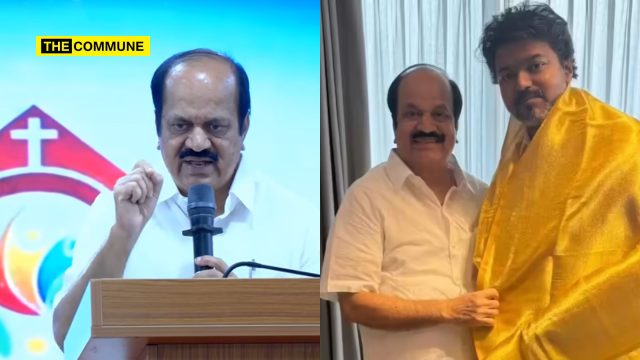
“This Govt Was Elected By The Majority, But It Cares For Minorities – Make Full Use Of It”: Joseph Vijay’s TVK Leader & TN Assembly Speaker JCD Prabhakar Makes Communal Speech At Churches Federation Event

At a meeting or rather felicitation ceremony conducted by the Tamil Nadu Christian Churches Federation on 9 June 2026, Assembly Speaker and TVK MLA JCD Prabhakar indicated that the elected government was leaning towards the minorities and that the people of that community must make best use of it.

Starting his speech, he said, “Peter Alphonse is someone who treats me with the affection of a family member. Before the election, when I was contesting from the Thousand Lights constituency, many people asked me, “Why did you choose to stand there?” and questioned whether I could actually win. Even a priest at the Sacred Heart Church asked me how I would manage it. When I said I would win, he was surprised. Brother Peter Alphonse expressed his confidence that I would succeed and become a minister. I told him that the Lord performs wonders and accomplishes great things that are beyond human comprehension; we are but dust and ashes, knowing nothing, yet the Lord guides us in every way. I must also speak about our beloved Leo Nelson; it was he who brought me here. During the election period, when many others had disappeared, Nelson Leo stood by me. He, along with Reverend Devanesan who is also present here worked hard to secure a significant number of votes in the Thousand Lights constituency. Despite the hardships, humiliations, barrage of questions, and mockery from others, they remained undeterred. They treated me with love and helped elevate this campaign from humble beginnings to a position of strength.”

He said, “We spoke about the ‘Independent Church’ initiative; we have organized many such gatherings. In doing so, we are not against anyone. Please bear this in mind first: we are Indian citizens who abide by the Constitution of India, yet we also possess the right to question anyone who acts against that Constitution. As for Tamil Nadu, we have a good government in place. Thalapathy Vijay is the first person in Tamil Nadu’s history to have 234 candidates stand on stage, raise their hands, and pledge to fulfill the promises made to the people – all while aiming for a government that is honest, transparent, and completely free of corruption. You witnessed that at the time; it demonstrated the steadfastness of his resolve. Furthermore, before the election, there was all sorts of speculation labeling him as ‘Team B,’ ‘Team A,’ ‘Team Z,’ or ‘Team Y.’ You must not forget his true identity: a leader who stood firm, feared God, respected his conscience, and honored the promises made to the people. He continues to enjoy the support of people from all walks of life and is driven by a desire to do good for everyone. He is working with a determined zeal to set a new benchmark for how a Chief Minister occupying that high office should conduct themselves. I urge you to pray for him daily in this endeavor.”

He continued, “Tamil Nadu has faced numerous challenges – issues that were unwanted by the people, unacceptable, and even abhorrent. Yet, rising above all these, our Honorable Chief Minister is striving to restore Tamil Nadu as a haven of peace; I earnestly request you to stand firmly in support of all the efforts he is undertaking to achieve this. Next, regarding the requests presented here on behalf of the Federation of Independent Christian Churches: a demand that has been consistently raised for some 40 or 50 years, to my knowledge, is that members of the Christian community belonging to ‘Backward Classes’ should be granted access to the same government benefits and concessions available to Scheduled Castes (SC). I recall the days when our leader, Moopanar, and others including Brother Peter Alphonse strove to have this enacted in Parliament. Later, the late Chief Minister ‘Puratchi Thalaivi’ Amma wrote a lengthy, four-page letter, a strongly worded missive unlike any other written by an Indian Chief Minister advocating for this cause. Despite enduring various stages of struggle, including protests, demonstrations, and hunger strikes, it is disheartening that this demand remains unfulfilled. However, we have heeded the counsel to remain patient and restrained, trusting that He will uplift us in the right way and at the right time. I believe that the day when this demand is finally met is drawing near. Furthermore, you have requested a simplified process for obtaining a No Objection Certificate (NOC) from the District Collector to construct, expand, or renovate the infrastructure of independent churches on your own land. I will certainly bring this matter to the attention of the Honorable Chief Minister and endeavor to secure an order mandating that the NOC be issued within a specific, expedited timeframe. Finally, there has been a long-standing request for dedicated burial grounds for independent churches across all districts of Tamil Nadu; I well remember this. There are ongoing debates regarding the feasibility of constructing multi-story buildings for this purpose. Since government-owned land is scarce, we are observing the opposition that arises when attempting to acquire private land for such projects. Therefore, I will certainly urge District Collectors across every district to convene meetings inviting representatives from all denominations, including our own Independent Church to identify available land and immediately initiate the necessary arrangements.”

He read out the next set of demands:

  • Police officials must immediately grant permission for the evangelistic meetings and gospel gatherings conducted by the church in your areas;
  • Allow the continued functioning of the Welfare Board for Christian Evangelists and Church Workers,
  • Allow a monthly stipend of ₹3,000 to be allocated to its registered members
  • Give a subsidy of ₹37,000 for holy pilgrimages to Israel.

Recalling his days in the AIADMK, he said, “Speaking of holy pilgrimages, when I rejoined the AIADMK party after a long hiatus, I wrote a letter to ‘Amma’ [Jayalalithaa]. I expressed my happiness that she was participating in Iftar events and suggested that she should similarly host a Christmas celebration. I reminded her of how, when the ‘People’s Leader’ [MGR] first started the party, he had organized a magnificent Christmas celebration at Madras Christian College; I requested her to host a similar event. I offered three suggestions: she could host it at her own residence or visit a home for destitute children to conduct the celebration there. She chose to host it at her residence. We arranged for carols, a prayer led by a priest, and hymns. Her Personal Assistant (PA) insisted that the event should not exceed 20 minutes. However, I insisted that the program should continue for as long as ‘Amma’ wished to stay; ultimately, she sat through the event for a full hour. They listened to everything that was said. At that time, I made a request: just as the Central and State governments provide assistance to Hajj pilgrims for their holy journey, I asked that a similar scheme be introduced for others. He took down all the details regarding this. You surely remember the Christmas celebration held right after the government assumed office – an event at the Light Auditorium where the Bishop and ‘Amma’ shared cake. I still vividly cherish the moment she announced that 500 people would be given ₹20,000 each to undertake a holy pilgrimage. At that time, the MLAs and officials in charge were very helpful. You have mentioned that the amount should be increased further in subsequent periods; I am duty-bound to bring to the attention of the Government—and specifically the Honorable Chief Minister—the request that raising it to one lakh rupees would place it within a comfortable range.
The Seerani Arangam at Chennai’s Marina Beach is currently closed. I consider the request to renovate and rebuild it so that Christian gospel meetings can be held there again to be a valid one.”

He continued, “In the past, whether it was a public meeting of the Dravidian movement or the national movement, a gathering at Seerani Arangam held a special significance. I have personally witnessed the overflowing crowds when gospel meetings were held there, with people coming from abroad to conduct them. I will certainly bring this matter to the Honorable Chief Minister’s attention. You have also raised another request regarding Good Friday – you know which shops I am referring to, don’t you? that liquor shops should remain closed on Good Friday. I recall that this was strongly urged during the previous administration, with a formal letter submitted regarding it. Regarding the Honorable Mr. Leo Nelson of the Tamil Nadu Christian Churches Federation – he is no ordinary person; he knows exactly where to place every dot and how to draw the kolam perfectly. I am deeply committed to ensuring your safety, seeing that you face no issues, and ensuring that these tasks are expedited through him.”

He highlighted, “I reiterate this. Our Chief Minister is deeply committed to ensuring the safety and restoring the rights of our minority communities. You must bear this in mind: although this government was elected by the majority, there are abundant signs demonstrating its genuine concern for the minority population. I urge you to make the best use of this opportunity. The care we show for our brethren – matching the dedication we show toward our own progress will certainly be recorded in history.”

Subscribe to our channels on WhatsAppTelegram, Instagram and YouTube to get the best stories of the day delivered to you personally.