Home Blog

Prakash Raj’s Double Game: Public Atheism, Private Christian Rituals

prakash raj

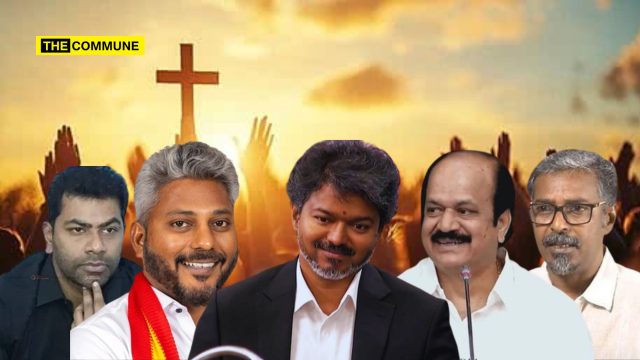
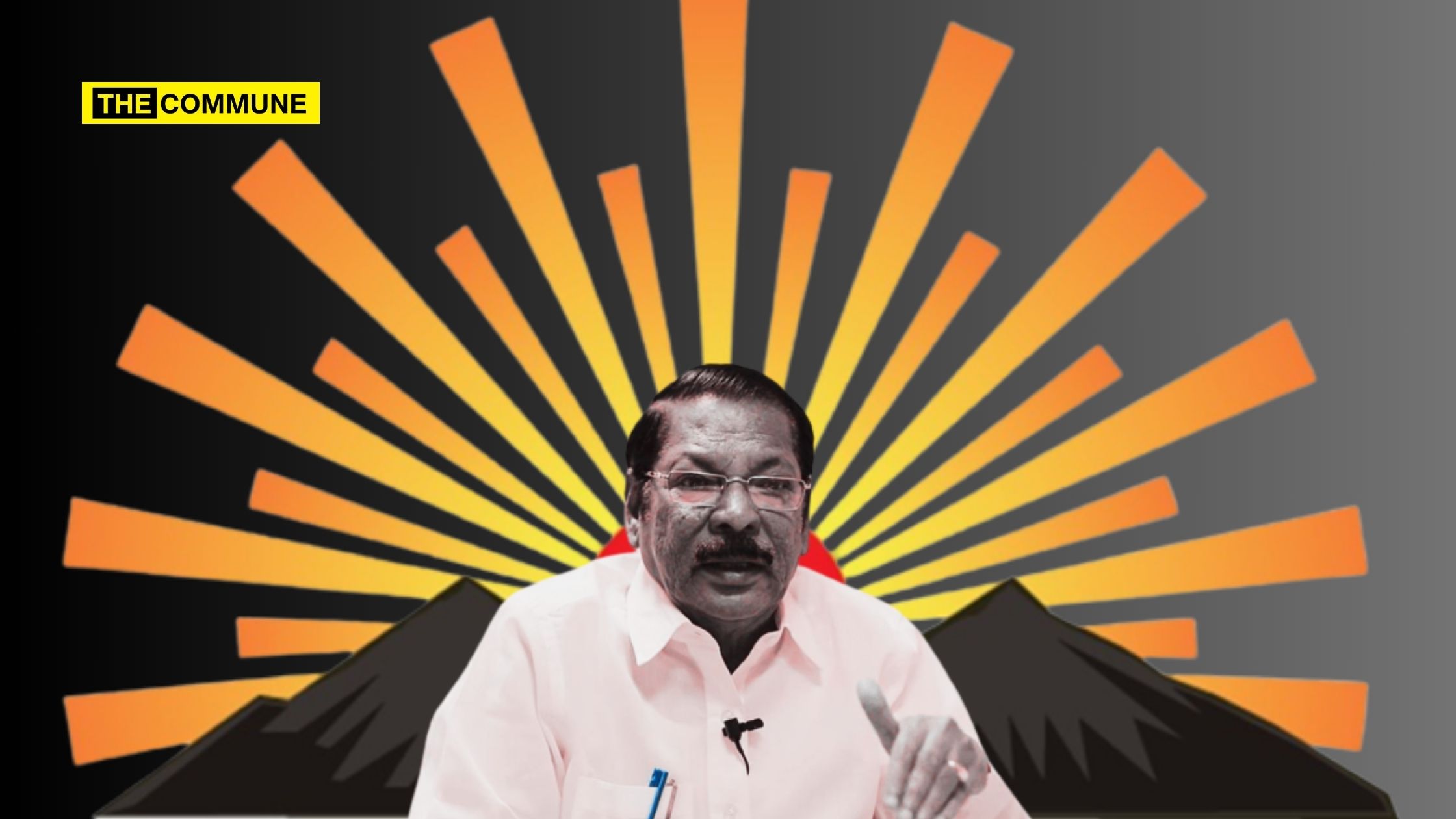
Actor and politician Prakash Raj, who has built a political identity around aggressive secularism, repeated declarations of irreligiosity, and pointed criticism of Hindu religious practices, quietly conducted the Christian funeral and prayer rituals for his mother Swarnalatha Rai at a Bengaluru church on 31 March 2026 – a fact that has reignited sustained public questions about whether his public irreligiosity is a genuine philosophical position or selective political theatre.

The Funeral

Prakash Raj’s mother Swarnalatha Rai passed away on 29 March 2026, at the age of 86 due to age-related ailments in Bengaluru. Her final rites and prayer meet were conducted at a church in Bengaluru on 31 March 2026, following Christian religious customs. Actor Pawan Kalyan was among those who extended condolences.

What He Has Said Publicly – His Own Words

The contradiction lies entirely in Prakash Raj’s own documented statements:

“Education, health and jobs matter more than religion” – a formulation he has repeated across multiple public forums

February 2025, in Mangaluru: “I don’t believe in religion. Mixing politics even in religious matters does not make them real Hindus.”

He has described himself as someone who puts the Constitution above religion as the guiding force of his life.

As recently as March 2026: “India will neither become a Hindi nation nor a Hindu nation” – a statement that sparked fresh online debate


View this post on Instagram


A post shared by Spot On (@spot.newsmedia)

His Anti-Hindu Statements on Record

What gives these contradictions their political edge is that Prakash Raj’s “irreligiosity” has overwhelmingly been directed at Hinduism alone. His documented statements include:

On Sabarimala (2018): Speaking at the Sharjah International Book Fair, Raj said: “I have no respect for the religion which prevents women from worshipping. The religion which doesn’t allow my mother to pray is not a religion. The devotees who don’t allow my mother to worship are not actual devotees and the God who denies her is not the actual God.” It is noted he was referring to the Sabarimala custom involving one temple and one deity misrepresenting it as a blanket Hindu position. At the same time, he applied no equivalent standard to any restriction in Islamic or Christian worship.

On Sanatan Dharma (2023): Addressing an event in Kalaburagi, Karnataka, Raj reportedly stated that “Sanatan Dharma is like dengue fever and must be eradicated” – a remark that drew protests from Hindu organisations across Karnataka.

On Chandrayaan-3 (2023): Raj shared a cartoon mocking ISRO’s historic Chandrayaan-3 moon landing — depicting a chai-serving figure — with the caption “Breaking news: first picture coming from the Moon by Vikram Lander. Wow, just asking.” Hindu organisations filed a police complaint in Bagalkot district of Karnataka over the tweet.

On Hindutva (2018, India Today South Conclave): “I am not anti-Hindu. I am anti-Modi, anti-Amit Shah and anti-Hegde. Those who support killers cannot be called Hindus.” He further declared at the same event that Hindutva is “uncultured and ritualistic and has no place in India.”

In the wake of Udhayanidhi Stalin‘s Hindumisic comments that stirred anger among Hindus across India, Prakash Raj appears to be capitalizing on the same sentiment by making another post insulting Hindu seers as “Tanatanis”, a mockery of “Sanatani” (Hindus). He tweeted on Twitter (X), “Back to the Future ..a #Tanathani parliament.. dear CITIZENS are you okay with this… #justasking”

He shared a photo of the Aadheenams sharing space with Prime Minister Modi during the Sengol ceremony before its installation in the new Parliament premises.

On 3 September 2023, he shared the below meme which said, “Hindus are not #TanaThanis .. Tanathanis are #AntiHumans .. RT if you agree. Happy Sunday to all #justasking” with the image of EV Ramasamy Naicker and BR Ambedkar.

Notably, no comparable statements about Christian theology, Islamic doctrine, or church/mosque practices have been documented in his public record.

His Christian Background – Not Widely Publicised

Prakash Raj’s original surname is Rai, and multiple accounts, including a Facebook post quoting him directly, indicate that he was baptised Catholic. A post from a user who claims to know him personally wrote: “You are Catholic (by baptism). That’s not a crime, but you lie and say that you are a Hindu and pretend to be a spokesperson for the ‘true Hindus’.”

In 2019, photos of him visiting Bethel AG Church in Bengaluru during his election campaign went viral. He defended the visit by saying he also visited temples, mosques, and gurudwaras. His public rhetoric against Hindu religious practices was never matched with equivalent criticism of other faiths.

Source: X

Put together, the picture that emerges is this: a man who declares publicly he does not believe in religion, reserves his sharpest religious criticism exclusively for Hinduism and Hindu practice, calls a centuries-old Sabarimala tradition worthy of “no respect” while never applying the same standard to any other faith, and conducts his own mother’s final rites in a Christian church, with Christian prayer rituals.

His defenders will argue he is a private Christian who opposes the politicisation of religion. While privately practising Christianity and never once publicly criticising Christian or Islamic doctrine is not secularism. It is asymmetry.

Subscribe to our channels on WhatsAppTelegram, Instagram and YouTube to get the best stories of the day delivered to you personally.
Bottle Attack At TVK Meeting: Were The Two Arrested Men The Party’s Own Cadre?

Bottle Attack At TVK Meeting: Were The Two Arrested Men The Party's Own Cadre?

What began as a dramatic moment of outrage at a TVK election rally in Ayanavaram on 30 March 2026 with senior leader Aadhav Arjuna standing on stage, broken glass in hand, furiously accusing DMK of attacking women supporters has taken a deeply embarrassing turn for the party, with emerging reports suggesting the two arrested individuals may have been TVK’s own youth wing members.

The Incident

During a TVK campaign meeting at Villivakkam, the constituency where Aadhav Arjuna is contesting the April 23 Assembly elections, glass and liquor bottles were reportedly hurled from an upper floor of a nearby building, injuring at least one woman cadre. The incident was caught on video and spread rapidly on social media.

Aadhav Arjuna took to the stage visibly enraged, holding broken glass shards in his hand. He directly accused DMK supporters of orchestrating the attack as a deliberate act of political intimidation ahead of the elections. He warned of retaliation, threatened to sit in protest until arrests were made, and called for a firm police response. The video of his speech went viral.

Tamil Nadu Police, for their part, offered an initial explanation that the bottles were thrown by two intoxicated men on the terrace of a building near the venue, who were fighting with each other and accidentally sent bottles flying into the public meeting below. Two individuals were subsequently arrested and taken to Villivakkam police station for questioning.

The Twist: Were They TVK’s Own?

Here is where the story takes a politically significant turn. According to a few posts circulating on X, the two men arrested in connection with the bottle attack are reportedly TVK youth wing members, not DMK supporters.

If accurate, this would mean that TVK’s own cadre, in an apparently drunken state, accidentally hurled bottles at women attending their own party’s rally, while their senior leader stood metres away on stage delivering a fiery speech blaming a political rival for the very act.

It is noteworthy that TVK cadre have been caught on camera consuming liquor in previous party meetings and conferences. So, this angle also cannot be ruled out completely.

If this turns out to be true, then is TVK trying to engineer sympathy for themselves? If not, is the ruling dispensation rattled by the TVK?

Subscribe to our channels on WhatsAppTelegram, Instagram and YouTube to get the best stories of the day delivered to you personally.
TVK Aadhav Arjuna Slams DMK Govt As Broken Bottle Pieces Hit Women In Crowd, Police Says It Was Because Of 2 Drunk Men Fighting

TVK Aadhav Arjuna Slams DMK Govt As Broken Bottle Pieces Hit Women In Crowd, Police Says It Was Because Of 2 Drunk Men Fighting

With the Tamil Nadu Assembly election campaign gathering pace, an incident at a Tamilaga Vettri Kazhagam (TVK) public meeting in Villivakkam has triggered political reactions, even as police maintained that the episode was accidental.

TVK, led by actor-turned-politician Vijay, has entered the electoral fray for the first time and is contesting all 234 constituencies independently. The party launched its intensive campaign this week, with key candidates beginning constituency-level outreach.

In Villivakkam, TVK candidate Aadhav Arjuna conducted a public meeting in the Ayanavaram area on Thursday evening. Senior leaders including Nanjil Sampath and Loyola Mani participated, drawing a sizable crowd comprising women, youth, and local residents, as reported in ABPLive Tamil Nadu.

During the meeting, a glass liquor bottle was hurled into the gathering from a nearby building, injuring a woman and causing panic among attendees. The injured woman was immediately shifted to a hospital for treatment.

Aadhav Arjuna reacted strongly at the venue, alleging that the incident was a deliberate act targeting the party’s campaign and demanded immediate police action. He warned of a protest if those responsible were not identified and held accountable.

However, the Chennai Police, following an inquiry, arrested two individuals from a nearby lodging facility and stated that the incident was not premeditated. According to the police version, the two men were intoxicated and engaged in a fight, during which they threw liquor bottles at each other. One of the bottles reportedly landed in the public meeting by accident, as reported in Maalai Malar.

Police officials said further investigation is underway.

The incident comes amid an intensifying campaign season in Tamil Nadu, with TVK attempting to position itself as a major alternative to the DMK and AIADMK. Party chief Vijay is contesting from Perambur and Tiruchy East, while candidate announcements across constituencies have recently been completed.

Meanwhile, Aadhav Arjuna proceeded to the hospital to assess the condition of the injured woman and gather details about the incident.

Subscribe to our channels on WhatsAppTelegram, Instagram and YouTube to get the best stories of the day delivered to you personally.
Muslim In Vaniyambadi, Christian In Kanyakumari, Gounder In Erode, Brahmin In Mylapore: Joseph Vijay’s ‘Secular’ Politics In Full Display As TVK Fields Candidates Based On Caste And Religion

The official TVK candidate list, released on 29 March 2026 and signed by party president C. Joseph Vijay himself, is a 234-seat document that tells two stories simultaneously. On the cover, it carries the party’s founding slogan “All lives are equal at birth”, a line from Thirukkural invoked endlessly by TVK to project itself as the antithesis of caste politics. Inside, it is a cheap copy of the exact Dravidianist politics it claims to oppose.

Mylapore Gets A Brahmin

Start with constituency 25 – Mylapore. TVK fields P. Venkataraman, M.Com, MBA (Finance), ML, designated as the party’s Treasurer. Mylapore is Tamil Nadu’s most prominent Brahmin-concentrated urban constituency, home to the Kapaleeshwarar Temple belt and a historically upper-caste middle-class voter base. That TVK’s own party Treasurer, not an unknown ward-level worker, is deployed here is a deliberate signal to a specific community.

Muslim Candidates For Muslim-Dominated Constituencies 

Move north to the Vellore belt. Constituency 47, Vaniyambadi, gets S. Saiyad Burhanuddin, and Constituency 48, Ambur, gets P. Imthiyaz. Both are Muslim-majority constituencies in Tamil Nadu’s leather belt, where the Muslim electorate is decisive. TVK, contesting solo without any formal alliance, cannot win these seats without consolidating Muslim votes. The candidate choices make the strategy transparent.

The Muslim community-based placements do not stop there. Madurai Central (193), one of Tamil Nadu’s most Muslim-dense urban constituencies, gets VMS. Mustafa. Ramanathapuram (211) gets EA. Sahul Hameed. Kadayanallur (221) gets RK. Abdul Jaleel. Aranthangi (183) gets J. Mohammed Parvez. Mayyiladuthurai (161) gets S.S. Haroon Rashid. Every placement tracks a Muslim voter concentration with surgical precision.

Colachel, Vilavancode And Palayamkottai Get Christians

In the Kanyakumari-Tirunelveli arc, the pattern repeats without apology. Colachel (231), a Latin Catholic fishing community stronghold, gets Dr. Prem Alex Lawrence, MDS. Vilavancode (233), one of the highest Christian-population constituencies in Tamil Nadu, gets K. Michael Kumar. Palayamkottai (226), home to St. Xavier’s College and a dense Catholic network, gets S. Maria John. Radhapuram (228) gets K. Sathish Christopher, MBBS. Nagercoil (230) gets G. Perwin Kings.

Five consecutive seats. Five Christian names. Five constituencies where Christian voters are electorally decisive. Vijay’s full baptismal name, C. Joseph Vijay, is prominently used in the official party list for both his contesting constituencies, Perambur and Tiruchirapalli East. The secular superstar wants his community known.

Coimbatore-Erode Belt Gets Gounders

K.A. Sengottaiyan, TVK’s most powerful internal operative and former AIADMK minister, contests from Gobichettipalayam (106) – the nerve centre of Gounder political territory. Around him, TVK has stacked the Avinashi, Palladam, Tiruppur North, Tiruppur South, and Coimbatore belt with candidates embedded in Gounder community networks leveraging Sengottaiyan’s caste capital directly.

Sivaganga–Madurai Belt Gets Thevars

In the Mukkulathor heartland, Kuzhandhai Rani Nachiyar contests Sivaganga (186) – a name pattern unmistakably tied to Thevar community identity. Seenivasa Sethupathi contests Sivaganga’s Thirupathur (185) – the Sethupathi surname is historically the Mukkulathor royal designation. Paramakudi (209), Kallal (191 – Madurai North) and Madurai South (192 – J. Joe Peter for the Christian pocket within) all reflect the same community arithmetic.

The Undeniable Conclusion

This is not coincidence, unconscious bias, or administrative oversight. A party with the organisational capacity to field all 234 candidates on a solo run, rejecting alliance offers from both the DMK and the NDA, clearly has the competence to decide who goes where. Every deployment in this list was deliberate.

TVK has spent two years calling the DMK corrupt, caste-driven, and divisive. It has positioned Vijay as a post-caste, post-religion alternative for Tamil Nadu. The candidate list released under his own signature on 29 March 2026, proves that when the votes needed to be gathered, the ideology stayed on the poster and the caste-religion calculator came out of the drawer – just like everyone else.

The slogan says all lives are equal. The list says some communities get their own candidate.

Subscribe to our channels on WhatsAppTelegram, Instagram and YouTube to get the best stories of the day delivered to you personally.
TVK Joseph Vijay’s ‘Sacrifice’ Is A ₹640 Crore Lie

There is a particular kind of political audacity that only Tamil Nadu can produce – the kind where a man worth ₹640 crore stands on a campaign stage in Perambur, thrusts his fist in the air, and declares with a straight face: “I will not touch even one paisa of public money.”

Ladies and gentlemen, welcome to the political debut of Chandrasekaran Joseph Vijay, the actor-turned-messiah of Tamilaga Vettri Kazhagam (TVK), who filed his nomination from Perambur constituency on 30 March 2026 and simultaneously filed the most glaring document of hypocrisy in recent Tamil Nadu electoral history.

The Numbers Don’t Lie 

Let’s look at what this man of the people actually owns, as declared in his sworn affidavit to the Election Commission.

Movable Assets: ₹404.58 crore, in his name alone. His wife Sangeetha adds another ₹15.51 crore, bringing total movable assets to over ₹420 crore.

Immovable Assets: ₹220.15 crore, land and properties spread across Tamil Nadu including two lush estates in Kodaikanal hill station.

Bank Deposits alone: ₹266 crore – a staggering ₹213 crore quietly sitting in Indian Overseas Bank, and another ₹53 crore at Axis Bank.

Gold: 883 grams in his own name and 3,132 grams of gold and 134.91 carats of diamonds in his wife’s name.

Annual Income (FY 2024-25): ₹184 crore. That is ₹15 crore a month, ₹50 lakh a day earned while he was supposedly preparing to “sacrifice everything” for the people of Tamil Nadu.

Vehicles: Five luxury cars; a Toyota Lexus, Toyota Vellfire, and two BMW models among them. And in what may be the most cynical PR exercise in electoral history, a TVS XL moped worth ₹67,000, apparently purchased to remind you that deep down, he is just like you.

Total declared wealth: ₹640.50 crore. That is not a film star’s earnings. That is a conglomerate.

Communism, Social Justice And the Man with ₹213 Crore in One Bank Account

Vijay claims social justice, speaks about communism but look at his wealth! On top of this, he has the audacity to claim, “I have thrown away my rich life and come here only to repay you.” 

One of the ideologues for TVK is Kamarajar. He was so austere as Chief Minister that he left virtually no personal wealth behind when he died. Such men were defined not merely by what they preached, but by what they personally lived and sacrificed.

And here stands their self-declared successor with ₹213 crore idle in a single bank account, ₹220 crore in land and properties, a wife wearing 134 carats of diamonds, and five luxury vehicles telling Tamil Nadu that Periyar/Kamarajar’s path of equality is his guiding light.

The Tax Cheat Who Lectures Accountability

At the rally in Kolathur, he also stated, “I will never cheat you with lies.”

But here’s the irony, he already lied. Let us take a look once again at the history of this tax cheat. They will tell you exactly what kind of man is asking for your vote.

The Rolls-Royce Ghost

Vijay imported a Rolls-Royce Ghost from England. When the state levied entry tax on the vehicle, he refused to pay and challenged it in court. He dragged the litigation for years. In July 2021, the Madras High Court dismissed his petition and imposed a ₹1 lakh fine, directed to the Tamil Nadu Chief Minister’s Covid-19 Public Relief Fund.

The court’s words bear repeating verbatim: “Tax evasion is to be construed as an anti-national habit, attitude and mindset, and unconstitutional.”

The court further stated that a reputed film actor whom fans look up to as a “real hero” is expected to pay taxes promptly and punctually – “he cannot be a mere reel-life hero.”

This is not a political allegation. It is a High Court judgment. On record. Permanent.

The Hidden Income and the ₹1.5 Crore Penalty

On 30 September 2015, Income Tax Department officers conducted a search at Vijay’s residence. What investigators found was that nearly ₹5 crore paid to him in cash as part of his remuneration for the film Puli had not been disclosed in his original tax returns.

Only after the IT department’s search, not voluntarily, not out of conscience, did Vijay file a revised return on 29 July 2016, declaring total income of ₹35.42 crore, now incorporating what had previously been concealed.

The Income Tax Department correctly treated this as a non-voluntary disclosure meaning it was triggered by a search, not by Vijay’s own initiative, and imposed a penalty of ₹1.5 crore under Section 271AAB(1) of the Income Tax Act.

Did Vijay pay and move on? No. He challenged the penalty in the Madras High Court. He fought it for years. Then, on 5 February 2026, just seven weeks before he filed his nomination as Tamil Nadu’s anti-corruption candidate, the Madras High Court dismissed his appeal in its entirety and upheld the full ₹1.5 crore penalty.

Seven weeks. Between a court upholding a penalty for undisclosed income and filing a nomination to govern Tamil Nadu on a platform of zero corruption. Seven weeks.

This is the man who stood before crowds and declared: “If I come to power, I will never do corruption.” He will not touch public money. He apparently preferred to hide his own.

The “Sacrifice” – Measured Against the Evidence

At his Perambur campaign rally, Vijay told supporters: “However comfortable my life was, I have thrown it all aside and come only for you.”

This sentence deserves forensic examination.

He “threw aside” a life that still includes ₹266 crore in bank deposits, two Kodaikanal hill estates, five luxury vehicles, and a ₹184 crore annual income. He has thrown it all away with such conviction that ₹213 crore continues to sit, untouched, in a single bank account.

What he actually gave up was his film shooting schedule. He exchanged acting in front of cameras for speaking in front of cameras. The mansion stays. The jet stays. The bank balance grows. Only the occupation changed.

And his “qualification” to govern? The affidavit confirms: he holds a 12th standard pass certificate and dropped out of a BSc in Visual Communication. This is not a disqualification in itself, but Vijay has not been shy about positioning himself as the intellectual and moral alternative to established Tamil Nadu politics. He lectures on economic policy, health governance, women’s safety, and law and order. He does so while holding an educational qualification that would not clear the basic eligibility bar for most government clerical posts.

Private Jets, No Streets

Here is the simplest test of whether a politician truly connects with the people: does he go to them, or do they come to him?

Every leg of Vijay’s statewide election campaign has been conducted aboard chartered private jets. He flew from Chennai to Trichy, switched aircraft mid-campaign for subsequent legs, and continued this pattern across districts.

Each charter costs lakhs. Multiply it across a statewide 38-district campaign. The transport budget alone for Vijay’s “sacrifice for the people” tour could fund multiple government schools in the constituencies he is contesting. So if at all he becomes the CM, who will pay for this?

He does not walk the streets. He does not take a bus. He does not take an auto from the airport. He descends from a Gulfstream onto a stage, tells you about his sacrifice, and flies home to Neelankarai. That is not a politician building a connection with the public. That is a touring celebrity doing a one-night show.

Karur: When the Poor Had to Travel to the Rich

The most unforgivable indictment of Vijay’s claimed humility is not in any affidavit. It is in what he did or refused to do, after at least 41 people died in a stampede at his own TVK event in Karur on 27 September 2025.

His political ambition created the crowd. His event created the tragedy.

He cowardly flew back to Chennai.

A month later, he arranged a meeting with the victims’ families. But not in Karur, where these families lived and grieved. Instead, those families were transported over 400 kilometres to Mahabalipuram, where Vijay had booked 50 rooms at a resort. The meeting was closed-door, with media and party workers both barred.

When the obvious question was raised: why did you not go to them; his office offered the explanation that he could not get permission from authorities to visit Karur.

This is a man who can charter private jets to cross Tamil Nadu for election rallies whenever he chooses. But he could not arrange a visit to sit with parents who lost their children at his own event.

He could not go to Karur. But those 37 broken families could be loaded onto buses and brought to his resort. That is not humility. That is the instinct of a court, where the people come to the king, not the other way around.

The Perambur Paradox

Vijay chose Perambur, one of Chennai’s densely packed working-class constituencies, as his electoral debut. The symbolism is deliberate. Perambur is a constituency of factory workers, auto mechanics, daily wage earners, and struggling families who have never collectively seen ₹640 crore across generations.

His address in the nomination form? Neelankarai. His campaign address? The same premium coastal locality. After April 23, win or lose, he returns to Casuarina Drive. They stay in Perambur.

Vijay, The Fake

Tamil Nadu has seen political dynasties. It has seen film stars turned politicians. It has seen promises broken and slogans hollowed. But it has never quite seen this – a man who hid ₹15 crore from tax authorities, fought paying luxury car taxes until a High Court called it anti-national, flies on Gulfstreams, makes stampede victims travel to his resort, and then stands before the cameras and says, with tears, that he has given it all up for you.

The curtain is up. The affidavit is public. The verdict is yours.

Subscribe to our channels on WhatsAppTelegram, Instagram and YouTube to get the best stories of the day delivered to you personally.
₹10,000 In Hand, Crores On Display: The Many Contradictions In MK Stalin’s Affidavit

MK Stalin wants you to believe he is a simple man. His sworn affidavit, filed at Kolathur on 30 March 2026, makes that case in numbers: ₹10,000 cash in hand. Zero personal vehicles. Total assets: ₹6.26 crore. Income last year: ₹30.94 lakh.

Simple. Frugal. Man of the people.

Now look at his wrist.

The Watch He Wears To Govern The Poor

Stalin has been photographed repeatedly wearing a Cartier watch – a brand whose entry-level models begin at ₹3 lakh and whose premium pieces cross ₹20 lakh. He has also been spotted in London wearing a Breitling Superocean Heritage dive watch – a timepiece that retails between ₹4 and ₹8 lakh.


View this post on Instagram


A post shared by Sridharan Venkatesan (@wrist.oria)

And it is alleged that Stalin wears a Richard Mille RM 067-01 in Rose Gold – a watch that costs upward of ₹1.5 crore at current market rates.

To be fair, watches can be gifted. They may not appear in affidavits. But that is precisely the point.

He declared ₹10,000 cash in hand. The watch on his wrist is worth more than that by a multiple that does not bear thinking about.

The Glasses He Removes To Wipe His Brow

In a widely noted piece, The Print observed Stalin’s habit of removing his designer Italian glasses — reportedly worth over ₹1 lakh — mid-speech, while lamenting the suffering of the common man.

One lakh rupees. For glasses. From the man who declared ₹10,000 cash. The man who governs Tamil Nadu on a stated personal income of ₹30.94 lakh a year.

The Car He “Doesn’t Own”

Stalin declared zero vehicles in his affidavit. And yet, the internet has not forgotten the charming viral videos, shared approvingly even by DMK supporters, of Stalin behind the wheel of a lovingly maintained vintage Fiat 1100, registration number MER 6172, described by automotive writers as one of the rarest and most well-kept vintage vehicles in any Indian politician’s garage.


View this post on Instagram


A post shared by vintage & rare cars india (@vr_c_i)

Who owns this Fiat? Stalin has been seen driving it personally on morning outings, accompanied by his convoy and security. It is his car in every practical sense – he drives it, he is photographed in it, he uses it for leisure. It appears in no affidavit. Perhaps the paperwork belongs to someone else. The steering wheel, clearly, does not.

And then there is the daily convoy: over 100 vehicles, including two Land Rover Defender 110s worth ₹1.5 crore each, a Toyota Vellfire, multiple bulletproof Toyota Fortuners, and 15+ Innova Crystas – all government property, all in daily use, all invisible in his declared assets, factually they are not his own.


View this post on Instagram


A post shared by Bijender Parmar (@ranvir_raja_rajput)

The House That Is His But Not Quite

The Gopalapuram residence, Tamil Nadu’s most politically famous address, was bought by Karunanidhi in 1955. In a 1968 settlement deed, it was registered in the names of three sons: MK Alagiri, MK Stalin, and MK Tamilarasu. In 2009, those sons handed the document back to Karunanidhi.

Following Karunanidhi’s death in 2018, Stalin has been the family’s occupant of the house. The property is in the heart of Gopalapuram, one of Chennai’s most premium localities, and its current market value, given land rates in that area, runs into several crores at minimum.

It does not appear in Stalin’s declared immovable assets of ₹2.96 crore.

Because it is not reportedly legally in his sole name. Yet he lives there. Tours guests through it. Calls it his father’s legacy.

The affidavit says ₹2.96 crore in immovable property. The house he actually lives in is not in it.

Additionally, MK Stalin rode a Daijo Pedeleze C2 Elite model bicycle, which costs around ₹ 85000. Pedaleze is an Indian E-Bike brand that offers state of art features and technology making it all the more desirable and worth the investment.

Before the 2021 assembly election, CM Stalin was riding a Merida Reacto bicycle that cost ₹178,000.

G-Square: The Real Estate Empire in the Family Circle

In April 2023, the Income Tax Department conducted raids at over 50 locations linked to G-Square Realtors Private Limited, Tamil Nadu’s largest real estate company, which operates in Chennai, Coimbatore, Trichy, Hyderabad, Mysuru, and Bengaluru.

The allegation: G-Square’s revenues grew dramatically after DMK came to power in 2021 and the firm’s founder was reportedly a close personal associate of Stalin’s son-in-law Sabareesan. A shareholder of the firm was the son of DMK MLA MK Mohan, whose house was also raided. IT sleuths also searched Sabareesan’s own auditor’s residence.

The then-BJP state president K. Annamalai alleged, with supporting documentation, that G-Square had received unhindered government support: fast-tracked approvals, preferential treatment from the state housing department throughout Stalin’s time in power.

DMK denied everything. No conviction has followed. But 50 simultaneous IT raids do not happen on rumour alone.

The Declared Income of a Man Who Lives Like a King

For FY 2024-25, Stalin declared total income of ₹30.94 lakh – salary, bank interest, and book royalties. His wife Durga declared ₹5.33 lakh in rental income.

In that same year, Stalin travelled to London on an official delegation. He took multiple domestic trips on government aircraft. He hosted foreign dignitaries. He moved through Chennai daily in a 100-vehicle convoy. He wore a Breitling on one trip and a Cartier on others. He dined at official functions funded by the state. He holidayed — if he holidayed — under security cover paid for by the public.

Not one rupee of this appears in his ₹30.94 lakh income. Because none of it is legally his income. It is the infrastructure of power and Tamil Nadu pays every bill. The rest belong to benamis?

Subscribe to our channels on TelegramWhatsApp, and Instagram and get the best stories of the day delivered to you personally.

“They Wanted To Overthrow Parliamentary System”: Union HM Amit Shah Exposes CPI-M’s Nefarious Agenda Adopted In The Years After Independence

A political exchange has erupted between Union Home Minister Amit Shah and the Communist Party of India (Marxist) (CPI(M)) over the party’s historical role and ideological origins, with competing claims drawing attention to archival material and documented events.

Speaking in Parliament, Union Home Minister Amit Shah said, “In 1969, the Communist Party of India (Marxist), or CPI (Marxist), was established in India. Its primary objective was neither the nation’s development nor the protection of citizens’ rights. Instead, the party’s constitutional aim was to overthrow the parliamentary system through armed revolt, following the examples set by China and Russia. However, unlike those countries, India did not have a monarchy; rather, it had a democratically elected government. “

The CPI(M), in response to Shah’s remarks on its formation and ideological intent, asserted that it carries forward a “glorious legacy of the freedom struggle” and has consistently raised public issues through democratic means. The party also clarified that it was formed in 1964 following a split in the undivided Communist Party of India (CPI). They wrote, “Stop spreading lies! CPI(M), formed in 1964, carries forward the glorious legacy of the freedom struggle. We have been raising people’s issues in Parliament and on the streets through our struggles. We don’t require certificates from betrayers of the freedom struggle, who are today destroying the basic tenets of the Indian Constitution.”

However, historical accounts indicate that the split within the CPI was rooted in deep ideological divisions, particularly influenced by the global rift between the Soviet Union and China, which intensified during the Sino-Indian War. The CPI(M) emerged as a faction seen as aligning more closely with the Chinese line of communism, while the CPI retained a Soviet-oriented approach.

Archival extracts and reports from the period have been cited by critics to question the CPI’s position during key national moments. A declassified intelligence extract referenced discussions among CPI leaders during the late 1950s and early 1960s that reflected positions perceived as sympathetic to China’s claims during the border tensions.

Further, historical literature such as works examining the Quit India Movement have documented tensions between communist leadership and other freedom movement figures. Accounts from that period suggest that sections of the undivided CPI opposed mass movements led by leaders like Subhas Chandra Bose and criticised calls for direct confrontation with British rule.

Media reports have also highlighted internal disciplinary actions within communist ranks during the 1960s. One such case involved criticism of party members for supporting the Indian armed forces during the Sino-Indian War, which was reportedly viewed as deviating from party positions at the time.

Additionally, visual propaganda from CPI-linked publications during the 1940s has been cited in the debate, including illustrations in party mouthpieces portraying nationalist leaders in a critical light during the World War II period.

Subscribe to our channels on WhatsAppTelegram, Instagram and YouTube to get the best stories of the day delivered to you personally.
5 Years, 505 Promises Of DMK: What Was Delivered, Dropped, Recycled For 2026

On 12 March 2021, DMK President M.K. Stalin stood before the cameras and released a 505-point manifesto. The party came to power six weeks later with a slightly larger vote percentage but bigger number of seats, compared to the opposition.

Five years on, with the state preparing to vote again on 23 April 2026, a full accounting of those 505 promises reveals a government that delivered genuinely on welfare transfers for women and a handful of direct benefit schemes but systematically failed on structural commitments, institutional reforms, economic relief, and governance pledges that would have required political will rather than treasury disbursements.

The government itself cannot agree on how many promises it kept. Chief Minister Stalin said 364 of 505 had been implemented. Finance Minister Thangam Thennarasu told a press conference that 206 had been fulfilled and 170 were being implemented, arriving at a 75% figure. By March 2026, a party MLA escalated the number to 404, and a party spokesperson claimed 490 out of 505 – a staggering 97%. Four different figures, from the same government, on the same promises, within months of each other.

When a ruling party cannot agree internally on its own record, the promises deserve independent scrutiny. Here is what that scrutiny reveals.

Fuel and Gas Relief: The Promises That Hit Every Household

No promises in the 2021 manifesto touched more households directly than the relief pledges on fuel, cooking gas, and milk. The outcomes were, at best, partial; at worst, entirely absent.

Promise No. 504 committed the DMK to reducing the price of diesel by ₹4 per litre through a cut in state taxes. As of May 2026, diesel prices have not been reduced by a single paisa under the Stalin government. The state has not touched diesel taxation in five years.

Promise No. 504 (the same clause) and broader campaign rhetoric promised to cut petrol by ₹5 per litre. In August 2021, the government reduced petrol by ₹3 per litre through a state excise cut – a ₹2 shortfall on a ₹5 promise, delivered in the first budget and never revisited. The government declared this a fulfilled promise.

Promise No. 503 guaranteed every ration cardholder a ₹100 subsidy per LPG cylinder – one of the most tangible relief pledges in the manifesto. With over 2 crore ration card families in Tamil Nadu and LPG prices regularly crossing ₹900 per cylinder, this was a promise of real daily consequence. It was never implemented. Not partially, not conditionally, simply not done.

Promise No. 505 on Aavin milk, a ₹3/litre price reduction, was the one relief promise the government delivered on, doing so within days of taking office in May 2021. That solitary delivery only throws the failure on the other three promises into sharper relief.

The Assembly That Barely Sat: Democracy’s Own Broken Promise

If a single data point encapsulates the gap between the DMK’s rhetoric and its governance, it is Promise No. 376. The 2021 manifesto specifically attacked the AIADMK for convening the Assembly too infrequently and gave a firm commitment in writing: “DMK will ensure that the Assembly is convened for at least 100 days or more.”

The 16th Tamil Nadu Legislative Assembly, presided over by Chief Minister M.K. Stalin, met for a total of 155 days across five years – an average of 32 sitting days per year. This is the lowest sitting count for any full-term Tamil Nadu Assembly since 1952, when the first general elections were held in independent India. It is lower than the 40 days averaged by the AIADMK government of 2011–16 and lower than the 34 days averaged by the AIADMK government of 2016-21, the very government the DMK cited in its manifesto as a failure on this count.

The numbers within those 155 days are equally telling. Ministerial statements in the House numbered just 32 in the entire five-year term compared to 185 in the 2011-16 term and 177 in the 2016-21 term. Calling attention motions totalled only 35, against 70 in the previous Assembly. The promise was 100 days per year. The reality was 32. The party that made legislative accountability a manifesto issue delivered the least accountable Assembly in 74 years.

Employment: The 5.5 Lakh Jobs That Did Not Come

Promise No. 179’s commitment to create 5.5 lakh jobs in government departments was arguably the most consequential economic pledge in the manifesto, targeting Tamil Nadu’s large pool of educated unemployed youth. By September 2023, two and a half years into the government’s term, opposition leader and PMK founder Dr. S. Ramadoss stated on record that the government had created only 22,781 jobs, with over 4 lakh vacancies remaining unfilled and no new positions created as promised. The government responded by promising 50,000 more jobs in the remaining two years – a tacit admission that the 5.5 lakh target was never in reach. By March 2026, the DMK’s own 2026 manifesto is again promising to create 1.5 lakh government jobs in the next term, effectively acknowledging the 2021 employment commitment remains unfulfilled.

Promise No. 196 pledged legislation reserving 75% of private sector jobs for locals – a demand with broad popular support in a state with significant migrant labour competition. Not only was this legislation not enacted, it was not even tabled. The government cited legal and administrative complexity, but no serious attempt to navigate that complexity was visible in five years.

Promise No. 179 said priority would be given to first-generation graduates in government recruitment. No structured policy, quota, or administrative order implementing this preference has been notified. The promise was made to students who were the first in their families to earn a degree and it was quietly abandoned.

Education: Committees, Not Outcomes

Promise No. 3 to formulate a separate State Education Policy for Tamil Nadu was partially addressed. The government constituted the Justice Murugesan Committee, which resulted in the Tamil Nadu School Education Policy 2025. However, the Higher Education Policy, covering colleges and universities, remains unformulated. Half a promise is not a promise kept.

Promise No. 160 pledged to get NEET abolished for medical admissions. The government passed legislation to exempt Tamil Nadu from NEET, not once but twice. Both times, the President withheld assent. The promise remains unfulfilled, though not for want of legislative effort by the state. The constitutional and political deadlock with the Centre is real, but the outcome for Tamil Nadu’s medical aspirants is unchanged: NEET continues.

Promise No. 159 to waive education loans for graduates under 30 years of age who are unable to repay within a year was never operationalised. No scheme was announced, no budget allocation made, and no beneficiaries identified under this specific commitment.

Promise No. 332 of a 2.5% reservation in medical colleges for students from government-aided schools – a promise specifically designed to give access to poor students with strong academic records was never enacted. No legislation was introduced, no administrative order was issued.

Institutions Never Built

Promises No. 53 and No. 54 committed the DMK to establishing a Horticulture University in Krishnagiri and an Agriculture University in Madurai. Tamil Nadu is a significant horticultural and agricultural state, and both institutions were intended to provide specialised research and training at the grassroots level. Five years later, neither university has been established. There is no campus, no faculty, no student intake, and no construction timeline. Both remain entirely on paper.

Promise No. 53 companion clause mentioned a Turmeric Research Institute in Erode, recognising Erode’s status as Asia’s largest turmeric trading centre. No such institute has been established or broken ground.

Anti-Corruption Courts: The Promise That Exposed the Limits of Accountability

Promise No. 21 was among the most politically explicit commitments in the entire manifesto. It read: “DMK will establish special courts to handle corruption cases against former AIADMK Ministers and expedite its function.” The DMK came to power with a specific, formal commitment to fast-track accountability for the party it replaced.

The DVAC did register cases against select former AIADMK Ministers. But the promised special courts were never constituted. The cases proceed through ordinary courts at ordinary pace. The PMK noted in its August 2025 assessment: “The government also failed to strengthen the Lokayukta and did not set up special courts to curb corruption, despite firm assurances”. Five years of DMK governance produced no structural change in how corruption cases are prosecuted in Tamil Nadu.

The Old Pension Scheme: A Conditional Future Promise, Not a Delivery
Promise No. 309 called for the restoration of the Old Pension Scheme, abolished in 2003, for government employees — a demand that government employee unions had been pressing for over two decades. The DMK made this a clear, unconditional commitment.

In January 2026 — five years after the promise, three months before the election — Chief Minister Stalin launched the Tamil Nadu Assured Pension Scheme (TAPS). TAPS is not the OPS. It guarantees 50% of the last drawn salary, whereas OPS had no such cap. Crucially, TAPS will take effect only from January 1, 2027 — and only if the DMK wins the April 2026 election. A promise made in 2021 has been converted into a pre-election announcement that will activate only if the party is re-elected, contingent on a future mandate rather than honouring a past one. JACTTO-GEO and government employee unions, who had gone on strike demanding OPS restoration, continue to hold that TAPS is not what was promised.

Monthly Electricity Bills and Kalaignar Canteens: The Routine Unfulfilled

Promise No. 221 pledged to replace Tamil Nadu’s bimonthly electricity billing system with monthly billing, estimating that the change alone would save households up to ₹6,000 annually on their power expenses. As of March 2026, TANGEDCO continues to issue bimonthly bills. A report from August 2025 noted that TANGEDCO was still conducting “exploratory discussions” on the feasibility of monthly billing – four years after the promise was made. This is a promise that required administrative will, not legislative approval or central government cooperation. It was simply never implemented.

Promise No. 331 committed to establishing 500 Kalaignar Canteens – subsidised food outlets for the poor and underprivileged in the first phase of implementation. The government did open canteens under the Kalaignar Unavagam brand in select locations. The 500-canteen target, however, has not been met.

What the Government Did Deliver

A fair accounting requires acknowledging what worked.

The Kalaignar Magalir Urimai Thittam, providing ₹1,000 per month directly to 1.31 crore women heads of families, was implemented and sustained with a special ₹5,000 lump sum credited in one tranche, just before the elections were announced, in February 2026. This was real money in real hands, and it represented a significant welfare delivery. Free bus travel for women, now expanded under the Vidiyal Payanam scheme, transformed mobility for women across urban and semi-urban Tamil Nadu. The Aavin milk price cut of ₹3/litre was delivered within days of the government taking office but the prices kept fluctuating and quality of milk started going down. The separate agriculture budget, a first for Tamil Nadu, was presented as promised.

Beyond the manifesto, the government introduced several schemes it had not announced in 2021: the Chief Minister’s Breakfast Scheme for primary school children, Pudhumai Penn (₹1,000/month for girl students in higher education), Naan Mudhalvan for career guidance, and Illam Thedi Kalvi for post-COVID learning recovery. These were genuine governance contributions. The government has repeatedly cited them to offset its manifesto failures – a rhetorical move that holds limited merit, since voters cast their vote in 2021 based on specific promises, not unannounced future schemes.

The Arithmetic of Accountability

Finance Minister Thennarasu’s official statement acknowledged that 20 promises were dropped as “not feasible,” without identifying a single one. A further 33 were classified as pending with the Union Government, a category that effectively shifts responsibility to New Delhi. Another 40 remained “under consideration” even after five years in office.

By the government’s own admission, more than a third of the 505 electoral promises fall into the categories of dropped, delayed, or unimplemented. The actual figure, based on available evidence, appears to lie somewhere else but closer to the opposition’s estimate than the government’s projection.

The broader governance record reinforces this gap. The Assembly reportedly functioned for fewer than 32 days annually, key welfare assurances such as ₹100 subsidy per LPG cylinder saw no implementation, and commitments to expand legislative oversight remained unmet. Similarly, promises to establish special courts to address corruption have not materialised.

Taken together, the data suggests a pattern: delivery on limited, low-resistance commitments, and inaction where execution required deeper structural decisions.

Subscribe to our channels on WhatsAppTelegram, Instagram and YouTube to get the best stories of the day delivered to you personally.
“Won’t Let BJP Create Another Ayodhya”: Joseph Vijay’s TVK Thirupparankundram Candidate CTR Nirmal Kumar Opposes Lighting Of Karthigai Deepam Atop Murugan Temple Hill?

CTR Nirmal Kumar, a candidate of Tamilaga Vettri Kazhagam (TVK) and a former BJP social media functionary who later joined the AIADMK before shifting to TVK, has alleged that police deliberately created disorder during his party’s campaign events and has sought intervention from the Election Commission.

Addressing reporters, Nirmal Kumar said his party had begun its nomination process following the announcement of candidates across all 234 constituencies, with its leader filing nomination from Perambur and senior leaders following suit.

“See, yesterday our leader announced candidates for all 234 constituencies. And today our leader has started the nomination process, he has filed his nomination for Perambur today. After that, most of our senior leaders have also filed their nominations today. In the coming days, all of our party cadres and candidates will file their nominations,” he said.

He further alleged that the party’s campaign launch was disrupted due to lack of police presence despite prior permission and large crowds.

“Our leader also started his campaign today. And we could see a lot of issues during the campaign, the police created a ruckus there… there were massive crowds but no police available, due to which it became complete chaos,” he said.

Claiming the situation was intentional, he added, “We believe this was deliberately engineered by the police. They wanted issues to happen. And this was completely backed by DMK and DMK-allied officers.”

Nirmal Kumar said the party has submitted complaints to both the Election Commission of India and the State Election Commission seeking transfer of officials concerned.

“Our leader also started his campaign today. And we could see a lot of issues during the campaign; the police created a ruckus there. After the campaign started, none of the police were present at the place, even though there was a huge, large gathering. You should have seen it on live TV, there were massive crowds but no police available, due to which it became complete chaos. We believe this was deliberately engineered by the police. They wanted issues to happen. And this was completely backed by DMK and DMK-allied officers. Condemning this, we sent a strong message and statement to both the National Election Commission and the State Election Commission, asking for a transfer of the officers behind this. When the campaign started, the entire event was left with no police – no one to control or regulate the crowd. They were trying to create an incident. We believe this was backed by DMK. That is why we have sent a complaint to both election commissions, he stated.

He also questioned the rationale behind citing the Chief Minister’s schedule, adding, “And see, he is not the CM now. He is an ex-CM and he is just one candidate. If he is coming at a separate time, they should manage that separately. We had got our time slot approved. They cannot say the CM has a schedule and use that to shift our programme. That creates unnecessary chaos and problems. They wanted to create problems in our campaign, due to which two of our programme points were missed today. They want this to happen at every place. We completely condemn this and want the Election Commission to transfer all these corrupt officers.”

On the Thirupparankundram incident, Nirmal Kumar alleged political motives behind tensions.

“See, Thirupparankundram, you all know… The people of Tamil Nadu, all people of Tamil Nadu, want peace. This was deliberately created by DMK. They made this happen, and it was also organized on one side by BJP. These two parties want to create an emotional issue and run this election on that basis. Nowhere in Tamil Nadu will people allow this. Tamil Nadu people always want peace. We want to go back to how things were in Thirupparankundram two years ago – that same peaceful stand should be maintained. We don’t want any emotional issues to be created. We don’t want BJP to create another Ayodhya here, and we don’t want DMK to create another Manjolai incident here. All these parties should step out of emotional issues. We want peace in Tamil Nadu.”

Responding to a question on campaigning, he confirmed that TVK leader Vijay would campaign in the region.

“Sure, 100% our leader will come. He will definitely come for a campaign there,” he said.

Nirmal Kumar is contesting from Thirupparankundram as a TVK candidate in the upcoming Assembly elections.

Subscribe to our channels on WhatsAppTelegram, Instagram and YouTube to get the best stories of the day delivered to you personally.
‘Stalin Doesn’t Know Hindi Or English, His Aukaat Is With Dravidian People Only’, Says Congress Leader Mani Shankar Aiyar

'Stalin Doesn't Know Hindi Or English, His Aukaat Is With Dravidian People Only', Says Congress Leader Mani Shankar Aiyar

Senior Congress leader Mani Shankar Aiyar has sparked a political controversy after a video clip of his remarks on opposition alliance leadership went viral, drawing sharp reactions across party lines.

In the clip, Aiyar is heard discussing the leadership dynamics within the I.N.D.I. bloc and the prospects of government formation after the next general election.

“Now, Stalin also doesn’t know English or Hindi, his leadership and his standing (aukaat) is only among the Dravidian people. Now if he is made [Prime Minister], then when the alliance wins, who will become Prime Minister? Rahul Gandhi, is he the chief of the alliance or not?”

He further stated: “And I give you a 100% assurance that the I.N.D.I Alliance will form the government under the leadership of Rahul Gandhi. And at that time I would want our Home Minister to be Shri Digvijay Singh.”

The remarks have drawn particular attention for what critics described as a dismissive tone toward Tamil Nadu Chief Minister MK Stalin, with political opponents highlighting the phrase interpreted as questioning his suitability for the Prime Minister’s post.

The comments were reportedly made in the presence of senior Congress leader Digvijaya Singh, whose name was also mentioned by Aiyar in the context of a potential future government.

Subscribe to our channels on WhatsAppTelegram, Instagram and YouTube to get the best stories of the day delivered to you personally.