For years, Vijay’s public image was projected as something organic – a spontaneous wave of mass affection powered by cinema charisma, youthful energy, and anti-establishment sentiment. But after TVK’s dramatic electoral breakthrough in 2026, a different question began circulating across Tamil Nadu’s political and media ecosystem: was this really an organic movement, or was it one of the most sophisticated perception-management operations the state has ever witnessed?
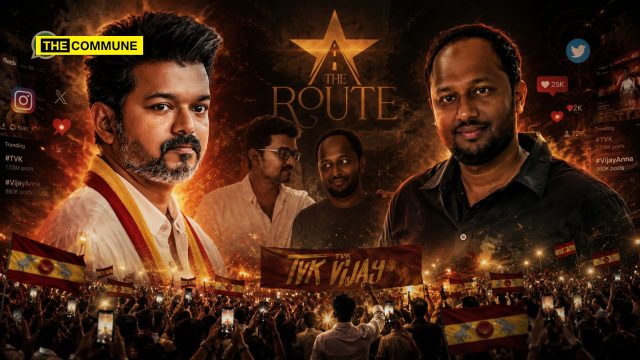
At the centre of that question stands Jagadish Palanisamy and his company, The Route.
Who Is Jagadish? What Is The Route?
Officially, The Route is a celebrity management and film production company. Publicly available material identifies Jagadish Palanisamy as Vijay’s longtime manager and founder of the company in 2020. The Route’s client roster reportedly includes some of the biggest names in South Indian cinema – Samantha, Lokesh Kanagaraj, Atlee, Rashmika Mandanna, Keerthy Suresh, Priyanka Mohan, Kalyani Priyadarshan, Samyuktha Menon, Kathir, and Arjun Das among others.
On the surface, that appears to be standard celebrity management. But it is increasingly alleged that The Route evolved into something much larger: a centralised digital ecosystem capable of manufacturing narratives, coordinating fan behaviour, amplifying propaganda, suppressing criticism, and converting cinematic fandom into political mobilisation.
The allegation is not merely that Vijay had strong publicity. Every major actor has publicity machinery. The allegation is that publicity itself was industrialised into a coordinated influence network.
The Blueprint: A Social Media Operation At Massive Scale
The scale being discussed online is staggering.
According to allegations circulating in political and social-media circles, the operation allegedly involved more than 4,000 coordinated accounts functioning through six digital hubs, with Chennai operating as the headquarters. Each account reportedly maintained at least 250 followers, collectively targeting nearly 70 million minds every day during the election cycle.
The brief blueprint of the biggest social media scam in human history:
4000+ accounts spread across 6 hubs with Chennai as HQ. Each with 250+ followers targeting every single day 70 million minds for a period of 5 months.
The Reach: 1 million+++ daily impressions building…
— Sriram (@SriramMadras) May 8, 2026
The ecosystem generated over one million daily impressions through relentless meme circulation, fan edits, emotional narratives, district-level targeting, and outrage amplification.
The strategy was simple but devastatingly effective:
- Use cinema as the delivery mechanism
- Use emotional attachment as the hook
- Use politics as the payload
Film clips, songs, emotional scenes, punch dialogues, celebrity aesthetics, fan edits, and “underdog” storytelling were allegedly fused with political messaging until the line between entertainment and propaganda effectively disappeared.
This was not conventional campaigning. It was behavioural conditioning through repetition, emotional saturation, and algorithmic visibility.
Cinema As Political Weapon
Vijay’s greatest advantage was not merely popularity – it was the ability to weaponise cinema culture itself.
Unlike traditional political propaganda, the messaging allegedly travelled socially and invisibly:
- Through fan edits
- Meme pages
- Women-centric fandom pages
- Instagram reels
- WhatsApp groups
- TikTok-style short-form content
- Hyper-local district pages
- Cinema nostalgia clips
- Influencer collaborations
- Emotional “Anna” narratives
By the time audiences realised they were consuming political persuasion, emotional loyalty had already formed.
Even mainstream media indirectly acknowledged the scale of Vijay’s digital ecosystem.
An NDTV report after TVK’s breakthrough noted that Vijay’s Instagram audience showed unusually high engagement authenticity and interaction levels despite having fewer followers than celebrities like Virat Kohli. The report also highlighted that Vijay’s account avoided sponsored content entirely, helping cultivate trust and authenticity among followers.
TVK chief Vijay’s digital wave decoded pic.twitter.com/lprRESFzqR
— NDTV (@ndtv) May 8, 2026
According to the report, nearly 64% of Vijay’s Instagram audience was female, while over 71% belonged to the politically crucial 25–34 age group – precisely the demographic where TVK made its biggest gains.
With this strategy, Vijay may have rewritten Tamil Nadu politics for the social-media age: followers became volunteers, engagement became mobilisation, and viral reach became votes.
S.A. Chandrasekhar’s Explosive Allegation
One of the most politically damaging observations came not from rivals but from Vijay’s own father, filmmaker S.A. Chandrasekhar.
In a 2024 interview, Chandrasekhar openly described what he alleged was a highly organised online ecosystem operating around Vijay. According to him, groups allegedly fabricated narratives in the morning, amplified them through coordinated Twitter accounts, and repeated them relentlessly throughout the day until the narrative became accepted as truth.
He said, “They form a group like this – an online group, say a Twitter group. Vijay is also in that group. They have kept Vijay inside an iron enclosure where he does not even know what is happening outside. So what they do in that group is, in the morning they create a news item. Suppose, for example, take Chennai. They make someone put out a post saying, “Yesterday, so-and-so spoke wrongly in this place and damaged your image.” They are creating a false issue. It would not have actually happened, but they make a false thing get posted. Once one person posts it, from morning till evening they use around 100 people to keep sharing it again and again, tweeting it, and making others like it. That is what they do. So, Vijay sees that. If a lie is told ten times, it becomes the truth. These people say it 50 times, 100 times. That is what one person does.”
SAC about Vijay Online Mafia team 👇 pic.twitter.com/l6g8oc06PN
— JAI AKASH #Vote_for_ADMK 🌱 (@JAI_AKASH_007) October 18, 2024
This is probably one of the clearest descriptions of how modern digital propaganda ecosystems function.
From Fan Clubs To Digital War Rooms
Vijay’s fan infrastructure gradually evolved into a digitally disciplined political mobilisation network.
According to allegations circulating online, tens of thousands of WhatsApp groups were allegedly created to coordinate messaging, trends, hashtags, emotional narratives, and political amplification.
These were not random fan communities anymore. They allegedly functioned like decentralised propaganda cells capable of:
- Flooding comment sections
- Coordinating hashtags
- Manipulating visibility
- Manufacturing consensus
- Intimidating dissenters
- Amplifying rumours
- Swarming critics
Even small cultural spaces including local WhatsApp groups and women-centric hobby groups such as kolams and rangoli, suddenly became flooded with TVK-coded visual messaging during polling week.
Personally confirmed. Spouse is there in some pulli kolam group (very small, not big, popular) – but said group was flooded with “Drawing Whistle as Kolam” content during the week of polling.
Twitter folks can’t think such reach. https://t.co/d8GOrHiIZU
— Srikanth.CashlessConsumer | ஸ்ரீகாந்த் (@logic) May 8, 2026
This hyper-local penetration is what made the operation so effective. Twitter alone could never achieve this scale. The messaging allegedly moved through ordinary social relationships and community spaces.
Allegations Of Troll Campaigns & Industry Intimidation
The ecosystem surrounding Vijay came under greater scrutiny after multiple controversies within Tamil cinema.
During the release of Parasakthi, actor and creative producer Dev Ramnath accused a section of Vijay’s fans of attempting to sabotage the film through coordinated negative reviews, manipulated ratings, old videos, and organised hostility online.
Director Sudha Kongara later alleged that Parasakthi faced targeted online attacks involving anonymous handles, intimidation, and bullying campaigns. That the film itself was a poorly made utter disaster is another story.
The pattern is consistent – Identify rivals, then flood social media, manufacture outrage, create emotional tribalism, isolate dissenters, and reward loyalty.
Here is an example of how the ecosystem started barking when VCK was hesitating to join the TVK alliance.
ROUTE Mafia started their work.. pic.twitter.com/92qzySxFoW
— Dr. தீபக் (@nikaran_tn) May 8, 2026
Another controversy that intensified scrutiny around The Route involved actress Priyanka Mohan. Online discussions claimed that after Priyanka reportedly moved away from The Route’s PR ecosystem, she suddenly became the target of disproportionate trolling, meme attacks, body-shaming, and negative narratives across social media. Critics cited this as an example of how powerful digital influence networks can allegedly shape not just celebrity promotion, but also public perception against those who exit the ecosystem. While these claims remain unproven and largely speculative, the episode strengthened the growing perception within Tamil cinema circles that The Route operates as far more than a conventional celebrity management agency.
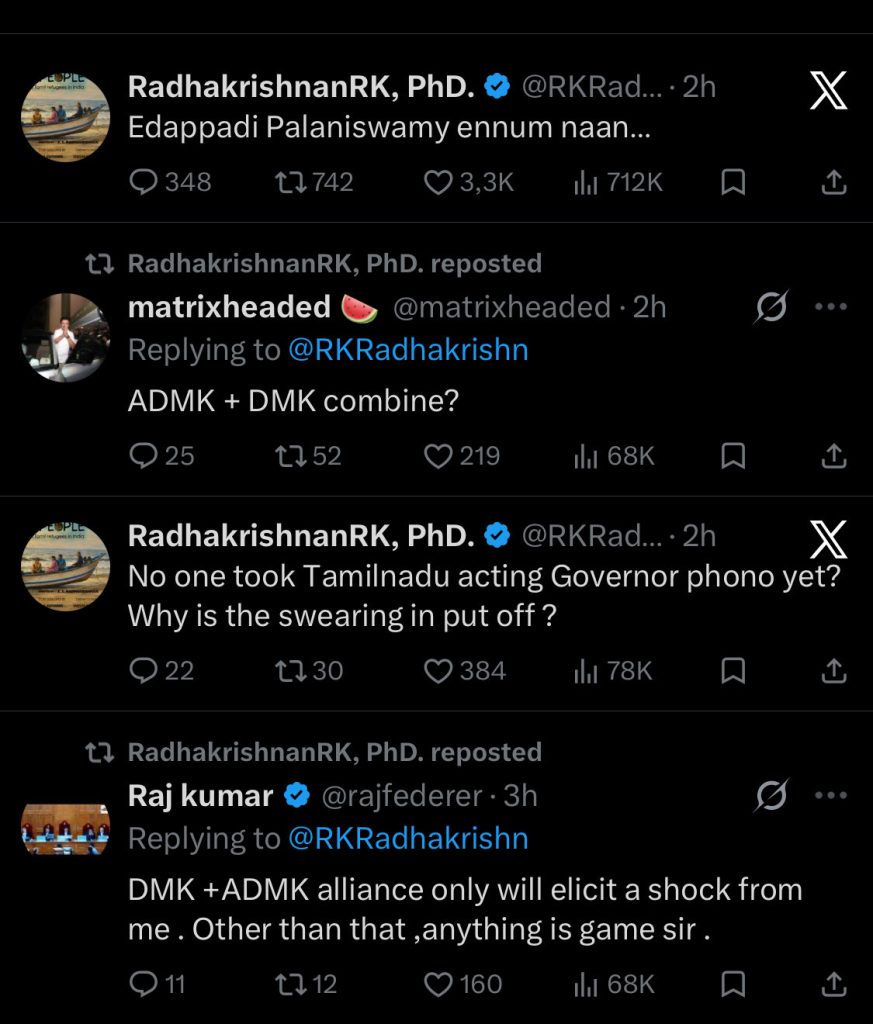
Another example is when the rumours about ADMK and DMK coming together to form an alliance broke. This was also orchestrated.
Overall, The Route became a powerful influence structure within Tamil cinema itself. Aspiring actors, actresses, influencers, and creators increasingly found themselves dependent on this ecosystem for visibility and opportunity.
ஜெகதீஸ் என்ற புரோக்கர் ஜெகதீஸ் ஏன் முதல் குறி?
Fan club control:
ஜெகதீஸ் இவன் விஜய் மேனேஜர்.. இவன் தான் மொத்த சோசியல் மீடியாவில் என்ன எழுத வேண்டும் என்ன பரப்ப வேண்டும் என விஜய் ரசிகர் மன்றம் வழியாக ஆணைகள் கொடுப்பது. அது அரசியலுக்கு வருவதற்கு முன்பே ஆரம்பிக்கப்பட்டுவிட்டது.
இதை… pic.twitter.com/0oYg9lXDmt— Maridhas (@MaridhasAnswers) May 8, 2026
It is alleged that producers, distributors, and theatre owners became reluctant to antagonise Vijay’s network because of its fan mobilisation power and online influence.
The Psychological Dimension
Now, Vijay’s rise through campaigning is not just ordinary political campaigning. It is psychological conditioning.
One can compare the ecosystem to parasocial manipulation – emotional attachment to Vijay was systematically deepened until fans began treating criticism of Vijay as a personal attack on themselves.
The “Anna” narrative became central to the strategy:
- Vijay as protector
- Vijay as victim
- Vijay as saviour
- Vijay as misunderstood outsider
- Vijay as moral alternative
This emotional framework transformed ordinary fandom into emotional dependency.
Politics was no longer being discussed rationally. It is being experienced emotionally through identity, loyalty, and protective attachment.
Here are some ways the psychological conditioning manifested, especially among children.
Vijay and his Route mafia encouraging kids to get emotionally involved in election campaigns. What if some of these kids end up taking an extreme step if Vijay loses? Will TVK blame Vijay, or will they say DMK is the reason? pic.twitter.com/1gnjGmMIKF
— Kokki Kumaru 😉 (@KokkiUpgraded) May 8, 2026
The moment they heard the song, both kids turned around at the same time to watch, looks so super cute..😍🔥
They haven’t even started walking yet, but look at them lying down and dancing..😅🔥
குழந்தைகளின் மன்னன் எம் அண்ணன் @TVKVijayHQ 😍 pic.twitter.com/9yvNeIKUNy
— 🐘Jeevanantham – TVK 🐘🐿️🇪🇸 (@tvk_vijay_sg) May 9, 2026
இப்படி வீடியோ எடுத்து போடும் குழந்தைகளின் பெற்றோர்களை செருப்பை கழட்டி அடிக்க வேண்டும்..!
Don’t encourage it, indha vayasula andha kolandha pesura thoranai and choice of words paarunga 🤦 pic.twitter.com/Y6qpnEhaVp
— Abbishekh Raaja (@abbi0410) May 8, 2026
During the elections, we were witness to several videos where children were abusing parents verbally and physically, they would also threaten the parents and elders in the home to vote for Vijay. All this happened after Vijay called out to them to make them vote for him. It did not happen overnight, it was all planned.
⚠️TVK is targeting children with their Propaganda – FULL STORY
A political + social media firestorm around kids being used in aggressive pro-Vijay campaign content during the Tamil Nadu elections.
Reels started circulating, of children saying the following:
>“I’ll poison your… https://t.co/fSuJXRuL60 pic.twitter.com/kU2Hyk9frz
— SambhavāmiYugeYuge – Healthmaxxing🌞 (@Windsofchange72) May 9, 2026
#TVK distributing whistles to kids in several localities as a strategy. On several pockets of #Trichy, party cadres focusing on kids distributing shawls and whistles, also these kids go with them for few streets sloganeering #TVK Vijay’s name.
While comparatively less children… https://t.co/rzfxDYOpqS pic.twitter.com/wHv6MNKDSc— Pearson abraham/பியர்சன் (@pearsonlenekar) April 18, 2026
This emotional blackmail & weaponising innocent children to blackmail their family members to vote played its role largely. Vijay literally begged for votes using children, those family members that voted succumbed are the brainless, this is demagoguery at its peak. pic.twitter.com/uc4iYjX13U
— Siva (@Siva2305) May 5, 2026
The Underdog Narrative
Perhaps the most important allegation surrounding Jagadish and The Route concerns the “underdog” image itself.
Vijay’s anti-establishment image was never entirely organic. Instead, it was carefully engineered through saturation campaigns, emotional reinforcement, selective victimhood narratives, and relentless digital amplification.
Rumours, speculative narratives, emotional claims, outrage cycles, and sympathy narratives allegedly became recurring political tools.
Even after TVK emerged as the single largest party, waves of rumours spread online regarding alliances, Governor meetings, MLA shifts, and political conspiracies – many later debunked, but not before shaping public perception.
This is the defining power of digital propaganda: the correction never travels as fast as the emotional claim.
The Real Political Question
The concern now being raised in Tamil Nadu is no longer simply about Vijay as an individual politician.
- The deeper fear is about the emergence of a completely new political model:
- Cinema fandom fused with political mobilisation
- Emotional manipulation replacing ideological debate
- Algorithms replacing grassroots structures
- Viral repetition replacing persuasion
- Influencer networks replacing cadre systems
- Perception becoming more important than policy
In this model, Jagadish and The Route are no longer merely celebrity managers.
They increasingly appear as architects of a new political machinery where entertainment, fandom, digital influence, emotional dependency, and political messaging merge into a single self-reinforcing system.
And that is why the debate around Jagadish matters far beyond cinema gossip.
Because if a tightly coordinated digital ecosystem could shape public discourse so effectively before power, Tamil Nadu must now confront a far larger question:
What happens when such a machine operates from within power itself?
The Danger That
The deeper concern surrounding Vijay’s political ecosystem is no longer limited to online propaganda or election-time narrative management. Critics increasingly fear what could happen if such a highly coordinated digital machine is used to emotionally mobilise people beyond the ballot box itself. These concerns intensified after TVK functionary Aadhav Arjuna publicly invoked the idea of a “Gen-Z revolution” similar to the youth-driven unrest seen in countries like Nepal and Sri Lanka.
While the remarks triggered backlash and legal scrutiny, they also revealed something far more significant: the emergence of a political imagination built not around ideology or governance, but around emotionally charged mass mobilisation driven through social media ecosystems.
In environments where millions are already conditioned through fan culture, emotional narratives, viral content loops, influencer amplification, and algorithmic reinforcement, politics can rapidly transform into a form of collective emotional behaviour rather than rational civic engagement. Nepal’s recent youth-led protests demonstrated how meme culture, digital outrage, influencer networks, short-form video virality, and anti-establishment sentiment can spill from online spaces into real-world instability within weeks.
The fear among critics is that a digitally conditioned fandom – one that already treats criticism of Vijay as a personal attack – could become dangerously susceptible to narratives portraying institutions, media, elections, or political opponents as enemies of the people. At that point, social media stops functioning merely as a campaigning platform and begins operating as an emotional mobilisation infrastructure. The danger is not simply propaganda. Democracies have always had propaganda. The danger emerges when fandom, political identity, emotional dependency, and revolutionary rhetoric merge into a single self-reinforcing ecosystem where confrontation itself becomes a form of collective entertainment and moral duty.
Subscribe to our channels on WhatsApp, Telegram, Instagram and YouTube to get the best stories of the day delivered to you personally.