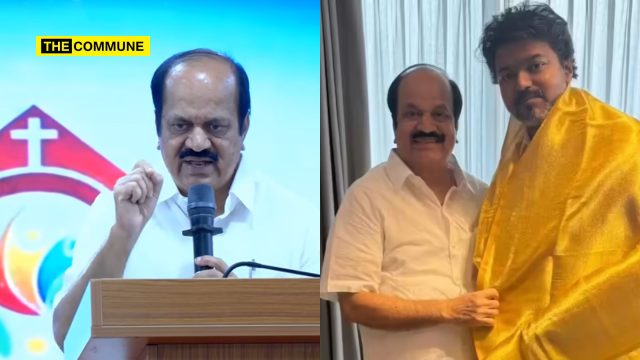
Several DMK candidates have reportedly sent complaints to the party leadership stating that Dravidar Kazhagam (DK) leader K. Veeramani should not campaign in support of them.
According to DMK constituency observers, Veeramani insisted with the party leadership that he would take part in election campaigning and obtained permission after pressing his request. He began campaigning a few days ago from the Alangulam constituency in support of DMK and alliance candidates. He has planned to cover 35 constituencies over a period of 16 days.
As reported in Dinamalar, it is a known fact that Veeramani has consistently expressed views critical of the Hindu religion all the time. Cadre reportedly pointed out that electoral success depends on securing votes from people of all religions, and in that context, candidates are unwilling to have someone perceived as holding an anti-Hindu stance campaign on their behalf.
Concerns have also been raised over campaign messaging. Cadre have reportedly questioned the electoral impact of seeking votes with the image of E.V. Ramasamy displayed on campaign vehicles, asking how such messaging would appeal to voters. Candidates are said to fear that votes expected to come to the DMK may be affected due to Veeramani’s campaigning.
According to sources, similar concerns are said to exist with Chief Minister M.K. Stalin and Udhayanidhi Stalin, which is why Veeramani has not been allowed to campaign in certain constituencies. However, due to his insistence, the party leadership has assigned him to campaign in other constituencies.
Despite candidates strongly urging the leadership not to deploy him, no change has been made. Party sources indicated that Veeramani has been sent primarily to campaign among Muslim and Christian communities, and candidates have been advised to “grit their teeth manage for some time” during his appearances.
At the same time, although Veeramani is campaigning for alliance parties including DMDK, MDMK, MMK, SDPI and the Indian Union Muslim League, he has not campaigned in support of the VCK in any constituency. Similarly, except for Sirkazhi, he has not campaigned in other reserved constituencies.
There is already internal discussion within DMK circles alleging that Veeramani has acted against Scheduled Caste communities. Observers claim that his current campaign has reinforced these concerns, with issues also surfacing within his own organisation.
Subscribe to our channels on WhatsApp, Telegram,Instagram and YouTube to get the best stories of the day delivered to you personally.
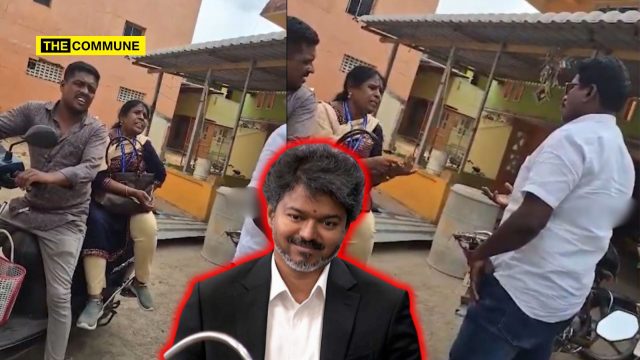
Tamilaga Vettri Kazhagam (TVK) president and actor-politician Joseph Vijay’s campaign tour through Thoothukudi and Tirunelveli on 8 April 2026, turned into a massive show of strength but also sparked fresh controversy after visuals of him holding a photograph of Jesus Christ during his outreach went viral on social media, raising sharp questions about the consistency of his much-proclaimed “secular” ideology.
Using a photo of Jesus during vote canvassing typically violates India’s Model Code of Conduct (MCC).
A photo of Jesus qualifies as a religious emblem or symbol, and its use in posters, banners, or campaign materials during canvassing is strictly regulated or prohibited by the Election Commission of India (ECI) to prevent voter inducement based on faith. Examples of violations include displaying politicians’ images near temples or using deity costumes in roadshows, which courts and ECI have flagged as MCC breaches.
Joseph Vijay arrived in Thoothukudi as part of his continuous statewide campaign blitz ahead of the 2026 Tamil Nadu Assembly elections. The crowds that gathered to receive him were so enormous and uncontrollable that Vijay was forced to leave the venue without delivering his scheduled speech, with party workers and security personnel struggling to manage the surging sea of supporters.
Amid the Thoothukudi campaign, a moment that quickly captured social media attention was Vijay being seen holding a photograph of Jesus Christ, a visual that spread rapidly across social media. Thoothukudi, along with the adjoining Kanyakumari and Tirunelveli districts, has one of Tamil Nadu’s highest concentrations of Christian voters, making the optics of the moment anything but accidental.
Just hours after the Thoothukudi tour, Vijay made his intent explicit. On 8 April 2026, he publicly declared that “minorities are with secular TVK,” directly pitching his party as the natural political home for Tamil Nadu’s Muslim and Christian communities. The statement amounted to an open acknowledgement of TVK’s minority vote consolidation strategy in southern districts ahead of polling.
The optics, however, have not gone unnoticed by political observers. TVK’s founding ideology positions itself as a secular social justice party with Vijay claiming its ideologues are EVR, Ambedkar, Kamaraj, and other community-based icons. There is an apparent contradiction in a party that bases its ideological identity on rationalism and secularism now openly wielding religious imagery to consolidate faith-based voting blocs. TVK’s December 2025 “Samathuva Christmas” event comes to the fore where Vijay addressed a gathering with Christian religious organisations announcing their support for TVK – it is noteworthy that he did not celebrate Pongal but restricted himself to Christmas and Ramzan.
Political analysts tracking the 2026 elections have noted that TVK is strategically focused on the Thoothukudi-Tirunelveli-Kanyakumari belt precisely because of its dense minority voter population. Christians constitute a significant share of the electorate in this region, and with DMK, AIADMK, and BJP all competing for the same votes, even a partial consolidation of minority support behind TVK could prove decisive in several closely contested seats. Vijay’s Thoothukudi visit, with its Jesus photo moment, appears carefully calibrated to send a signal to this voter base in the final stretch before elections.
Subscribe to our channels on WhatsApp, Telegram,Instagram and YouTube to get the best stories of the day delivered to you personally.
There is a pattern; clear, documented, and increasingly hard to ignore. It surfaced after Dhurandhar 2: The Revenge triggered a wave of online digging, with users unearthing old tweets and archived reports on UPA-era decisions. What emerged was a consistent political record, now rapidly vanishing. As the hashtag “Old UPA Tweets” surged, links from major media outlets began returning 404 errors – one after another. Reports on terrorism, Pakistan, and past leadership positions started disappearing.
What the paper trail on Rahul Gandhi’s views on terrorism reveals is not a politician who was merely naive. It is a politician who, for over a decade, systematically deflected blame away from Pakistan-backed Islamic terrorism and redirected it at Hindus.
The Anger Defence
Start with the most charitable interpretation possible. In 2013, Rahul Gandhi, then Congress Vice President and the unchallenged heir apparent of the party that had governed India for nearly a decade offered his theory of terrorism to the nation. “Terrorism happens because anger is instilled,” he said. “Anger is the root cause of terrorist activities.”
This was not a fringe statement buried in a party document. The Indian Express had reported on this from its official handle. No retraction was issued. No clarification followed.
Let the statement sit with its full weight for a moment. While terror organisations like IM, SIMI, and Pakistan’s ISI were actively funding, training, and deploying bombers across Indian cities in Hyderabad, Pune, Mumbai, Delhi – the man who aspired to lead the country offered anger as his diagnosis. Not ideology. Not Pakistani state sponsorship. Not jihadist theology. Anger. A word so vague it could justify every terrorist and condemn every government that dares to call them what they are.
The Confession at Hillary Clinton’s Lunch Table
Four years before that statement, in August 2009, Rahul Gandhi sat next to the US Ambassador at a lunch hosted by Prime Minister Manmohan Singh in honour of US Secretary of State Hillary Clinton. What he said that afternoon was classified under Reasons 1.4(B) and 1.4(D) – the diplomatic equivalent of “handle with care.” It was declassified by WikiLeaks and is now permanently on the public record.
Ambassador Timothy Roemer’s cable to Washington records it with precision: when asked about Lashkar-e-Taiba’s activities and the immediate threat to India; this is the same LeT responsible for 26/11, which had killed 166 people in Mumbai just nine months earlier – Rahul Gandhi acknowledged some Muslim support for the group within India. Then came the pivot.
“However, Gandhi warned, the bigger threat may be the growth of radicalized Hindu groups, which create religious tensions and political confrontations with the Muslim community.”
Wikileaks cable Image Source: X
The cable’s own editorial comment removes any doubt about who Gandhi had in mind: “Gandhi was referring to the tensions created by some of the more polarizing figures in the BJP such as Gujarat Chief Minister Narendra Modi.”
Nine months after 26/11. In front of the American Secretary of State. Rahul Gandhi’s assessment of India’s biggest terror threat was not the organisation that had just slaughtered 166 Indians. It was Hindus. And specifically, the future Prime Minister of India.
The Architecture of Inversion
Taken individually, each of these statements can be explained away – poor phrasing here, political context there. Taken together, they describe a consistent architecture. Rahul Gandhi, across multiple years and multiple platforms, pursued a single ideological project: inverting the terror narrative in India so that Pakistan-backed Islamic terrorism was treated as a symptom of Hindu provocation, and Hindus: their organisations, their leaders, their elected representatives were cast as the true source of violence.
This was not accidental. It had policy consequences. It was the same Congress government that institutionalised “saffron terror” as an official counter-terrorism category, deployed the National Investigation Agency to pursue cases against Hindu sadhus and military officers on fabricated charges, and allowed IB officers to publicly theorize about “Hindutva terror networks” while the actual perpetrators of serial bombings continued operating with impunity.
It was a government that chose to see the enemy within rather than across the border.
What the Deleted Archives Know
The articles covering these statements in real time, the editorial reactions, the opposition fury, the diplomatic fallout, are now returning 404 errors on the same websites that once published them. The WikiLeaks cable cannot be erased; it sits on international servers beyond anyone’s reach. But the contemporaneous Indian media record of how these statements were received, debated, and contextualised is being quietly retired.
History, as someone once said, is written by the victors. In 2026, with India watching, the question is whether it will also be deleted by them.
Subscribe to our channels on WhatsApp, Telegram,Instagram and YouTube to get the best stories of the day delivered to you personally.
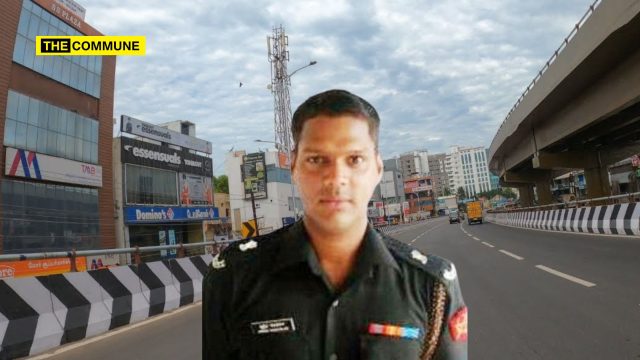
A public meeting organized by the Akhil Bharatiya Vidyarthi Parishad (ABVP) Cuddalore in Chidambaram, aimed at raising awareness on student participation and electoral engagement, was disrupted after a group allegedly associated with the Viduthalai Chiruthaigal Katchi (VCK) entered the venue and engaged in violence.
According to reports, the incident occurred while ABVP State General Secretary Panneerselvam was addressing the gathering on stage. During the event, some individuals allegedly threw chairs and attacked organizers as well as students present at the venue. Several persons, including Panneerselvam and a number of students, sustained injuries in the incident.
It has also been reported that ABVP Central Executive Committee member Vedanjali, a woman, was subjected to verbal abuse during the disruption, with allegations of inappropriate and derogatory remarks being made.
There is a pattern, systematic and increasingly visible across policy, law, and enforcement. It is not confined to isolated measures but emerges from a sequence of legal instruments shaping education, religion, language, and social systems in Tibet. On 19 March 2026, China introduced a policy promoting a unified national identity, placing pressure on Tibetans to adopt Han Chinese language, culture, and state-defined norms. Such incidents reveal a broader pattern where laws on education, religion, surveillance, and social systems collectively enforce assimilation, restrict freedoms, and strengthen centralized control, limiting the preservation of Tibetan identity.
#1 China’s New Law Mandates Assimilation of Tibetans into Han Culture – 19 March 2026
China introduced a policy framework that requires promotion of a unified national identity, pushing Tibetans to adopt Han Chinese culture, language, and social practices. The law mandates institutions, education systems, and communities to align with state-defined cultural norms, reducing space for Tibetan identity. Critics state that such measures aim at cultural assimilation and weaken linguistic, religious, and traditional autonomy of Tibetans.
#2 China Enacts Ethnic Unity Law Promoting Assimilation of Minority Groups – 17 March 2026
China passed the Law on Promoting Ethnic Unity and Progress mandating the promotion of a unified national identity across all ethnic groups, including Tibetans. The law requires the use of Mandarin in education, encourages mixed ethnic communities, and promotes adoption of Han Chinese cultural practices. It extends state control over education, housing, and social life while discouraging distinct linguistic, cultural, and religious identities.
#3 China Moves to Codify Mandarin Dominance, Restricting Minority Language Education – 4 March 2026
China proposed a legal framework to establish Mandarin as the primary language in education and public life, including in Tibetan regions. The law restricts minority languages like Tibetan to secondary or elective status and removes them as mediums for core academic instruction. It strengthens state control over language use in schools and public domains, aiming to promote a unified national identity. This move systematically reduces the functional role of Tibetan language in formal education and reinforces linguistic assimilation through policy design.
#4 China Bars Tibetan Children from Monasteries, Expands Religious Restrictions – 18 February 2026
Chinese authorities enforced new regulations prohibiting children under 18 from entering monasteries or receiving religious education from monks in Tibetan regions. Notices and school directives instruct families and institutions to prevent minors from participating in religious activities, including visits during festivals. The measures expand state oversight of monasteries, impose stricter approval and supervision systems, and restrict traditional religious learning. These rules reduce the role of monasteries in cultural and linguistic transmission and increase state control over Tibetan religious practices.
#5 Chinese Government Continues Highly Repressive Policies in Tibet, Says HRW Report – 4 February 2026
A report by Human Rights Watch stated that Chinese authorities continue to enforce strict and repressive policies in Tibet, restricting freedoms of expression, religion, and association. The report highlighted detentions of Tibetan educators, shutdown of schools promoting Tibetan language and culture, and enforcement of assimilation policies aligned with state ideology. It also pointed to intensified ideological control under the Chinese Communist Party, limiting cultural, linguistic, and religious autonomy of Tibetans through sustained policy enforcement.
#6 China Removes Tibetan Language from College Entrance Exam Core Subjects – 8 August 2025
Chinese authorities announced that Tibetan language would no longer be a core subject in the national college entrance examination system for most students in Tibet. The reform introduces unified exam subjects such as Mandarin, mathematics, and foreign languages, reducing the role of Tibetan to a limited or optional subject. This policy shifts academic priorities and further marginalizes Tibetan language within formal education, reinforcing Mandarin dominance and reducing institutional incentives for preserving linguistic identity.
#7 China’s Boarding Schools Accused of Indoctrinating Tibetan Children – 29 June 2025
Tibetan children, including some as young as four, are placed in state-run boarding schools where they are separated from families and taught primarily in Mandarin. The schooling system enforces state ideology and limits the use of Tibetan language and culture, reflecting broader policies aimed at assimilation and control over Tibetan identity. Religious practices such as prayers and wearing Buddhist symbols are restricted, and students are instructed to promote loyalty to the Chinese Communist Party within structured institutional environments.
#8 Chinese Authorities Shut Down Tibetan Schools Promoting Language and Culture – 5 February 2025
Chinese authorities closed privately run schools in eastern Tibet that promoted Tibetan language and culture, despite some having prior government approval. The closures targeted institutions that combined modern education with Tibetan cultural teaching and were accompanied by detentions of associated religious and educational figures. These actions reflect enforcement of state policies prioritizing Mandarin-language education and ideological control, limiting independent Tibetan educational initiatives and reducing space for cultural and linguistic preservation.
#9 China Accelerates Forced Relocation of Tibetan Villagers Under State Policies – 21 May 2024
Chinese authorities accelerated relocation of Tibetan villagers and herders from rural areas to urban settlements under state-directed programs. While officially presented as voluntary and aimed at development, evidence indicates coercion, pressure from officials, and lack of genuine consent. Entire villages are being moved, disrupting traditional livelihoods such as herding and farming. The policy enforces state control over land use and settlement patterns, weakening Tibetan cultural and social structures and aligning communities with centralized governance and assimilation objectives.
#10 China Imposes New Cybersecurity Rules Tightening Control in Tibet – 1 February 2023
Chinese authorities implemented new cybersecurity rules in Tibet imposing stricter monitoring and harsher punishments for online activities linked to “separatism” or “public disorder.” The regulations expand surveillance over digital communication and restrict how Tibetans use online platforms. These measures limit the ability to communicate freely and enable authorities to monitor, control, and penalize dissenting views, strengthening state control over information and expression across digital spaces.
#11 Tibetans Face Discrimination and Denial of Rights After Returning to Tibet – 2023
Chinese authorities denied or delayed household registration, known as hukou, for Tibetans returning from abroad, sometimes for several years. Without hukou and identity documentation, individuals face restrictions in accessing jobs, travel, and basic social services. Reports indicate that many returnees are blacklisted or deregistered, particularly those who traveled for religious or educational purposes. The policy restricts reintegration and limits civil and economic rights, reinforcing administrative control over movement and access to opportunities.
#12 Chinese Authorities Strengthen Control Over Tibetan Buddhist Reincarnations – 15 December 2021
Chinese authorities intensified enforcement of regulations requiring state approval for recognizing reincarnate Tibetan Buddhist leaders. The law mandates that reincarnations must be approved by government authorities, occur within China, and follow prescribed procedures such as the Golden Urn system. Officials are also pressuring monks and local authorities to endorse these rules and demonstrate political loyalty. These measures expand state control over religious leadership selection and limit traditional Tibetan religious practices.
#13 China Imposes Political Loyalty Requirements on Tibetan Monks and Nuns – 30 October 2018
Chinese authorities introduced political requirements for Tibetan monks and nuns under policies aimed at “Sinicizing” religion. Religious figures are required to demonstrate loyalty to the Communist Party, undergo ideological training, and actively promote state policies within monasteries. Under the “Four Standards” framework, monastics must align with government ideology and discourage dissent. These measures expand state control over religious institutions and reshape Tibetan Buddhist practices to fit official political objectives.
A System Designed To Erase
What emerges from these developments is not a series of isolated policy decisions, but a deliberate and coordinated framework aimed at reshaping Tibet at its core. Through control over language, education, religion, mobility, and even digital expression, the Chinese state is steadily narrowing the space for Tibetan identity to գոյ exist independently. Each law, each restriction, and each institutional reform feeds into a larger objective: to replace a distinct civilizational identity with a state-defined construct of uniformity and loyalty. Over time, this is not merely governance—it is transformation by design, where assimilation is enforced not through a single decree, but through an ecosystem of laws that leave little room for resistance or preservation.
Subscribe to our channels on WhatsApp, Telegram,Instagram and YouTube to get the best stories of the day delivered to you personally.
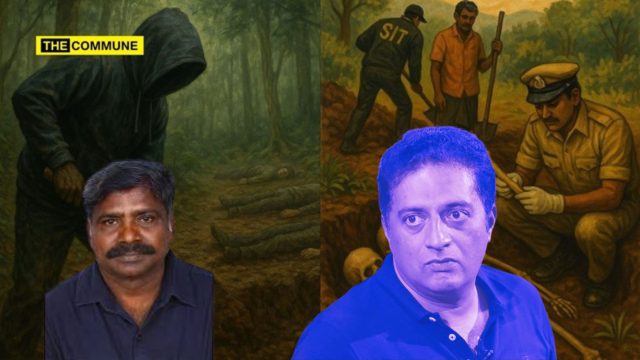
A few weeks ago, we reported on tensions in Thummanayakkanpatti village in Peraiyur taluk of Madurai district after opposition emerged from Muslims to the renovation of the Arulmigu Vinayagar and Karuppannasamy temples, which are around 300 years old and administered under the HR&CE Department. The Madurai Bench of the Madras High Court had permitted the renovation, dismissed objections raised by a group led by Sagul Hameed, and subsequently ordered police protection for the project.
Weeks later, the situation on the ground remains tense. Despite court approval and security directions, renovation work has not commenced. Villagers have alleged that sections of the local Muslim community protested at the site, demanding relocation of the temple. Police intervened and dispersed the gathering. Recent field interactions reveal sharply differing accounts from Hindu residents and Muslim community members, indicating continued mistrust, with residents seeking government intervention to implement the court’s orders.
Hindu Residents Detail Longstanding Grievances Over Land, Access and Renovation
Field interviews with Hindu residents and temple stakeholders revealed a detailed account of long-running tensions, with several villagers stating that the temple has existed for nearly three centuries, dating back to the Zamin period, and has historically functioned as a shared place of worship across caste lines.
Residents said the temple currently stands in a severely dilapidated condition, with vegetation growing through the structure and parts of it on the verge of collapse. According to them, rituals were conducted in 2021, and the idols had been temporarily relocated as part of the process of rebuilding.
Villagers traced the roots of the dispute back several decades, citing major conflicts in 1980 and 1987, and stating that the issue has been ongoing for nearly 50 years. They alleged that the presence of a mosque adjacent to the temple site has been a central factor in the dispute.
Several residents claimed that temple land ranging from approximately 2 acres and 20 cents to nearly 2.80 acres had gradually been encroached upon over time. They alleged that houses belonging to members of the Muslim community had come up within what they consider temple land, leaving only the temple structure itself in their control.
Some residents further stated that the Muslim settlement in the area had initially begun with a small number of families, estimated at around 20 households which, over time, increased to about 60 households. They alleged that the early settlers had gradually established structures after initially seeking informal accommodation, and that this expansion eventually led to what they described as encroachment onto temple lands. According to these accounts, villagers believed that earlier generations, lacking awareness of land rights, had allowed such expansion to take place unchecked.
Some villagers further stated that access to public pathways traditionally used for temple processions, including routes for Vinayagar idol immersion, was being denied. They also alleged that they were being prevented from entering certain areas around the temple and from conducting religious activities, including carrying idols through what they described as public roads.
Residents maintained that they had obtained all required permissions for renovation, including approvals from government authorities and the courts. However, they alleged that attempts to begin reconstruction were obstructed, including instances where structures they had erected were dismantled and rebuilding efforts halted.
They also expressed concern that the dispute was linked to fears among some residents that formal recognition of temple land under government administration could lead to recovery of encroached areas. According to villagers, this fear was driving resistance to the renovation.
Some residents accused sections of the administration and police of acting in a biased manner and failing to enforce court orders effectively. They also alleged that officials had delayed action despite clear directives.
Villagers repeatedly emphasised that the temple was central to their identity and community life, stating that they were seeking only to rebuild a structure that had existed for generations and to reclaim access to associated land and facilities, including a temple well used for rituals.
Muslim Community Raises Concerns Over Land Claims, Trustee Actions And Deviation From Official Orders
Members of the local Muslim Jamaat, however, offered a sharply different account, rejecting claims that they were opposing the temple or its renovation.
Community representatives stated that the temple had indeed existed for centuries and acknowledged that their own ancestors had once worshipped there before converting to Islam generations ago. They said the temple had remained in a neglected state since that time.
According to their account, the temple is associated with approximately 8 acres to 8.70 acres of endowment land, much of which they allege had been sold off decades ago by individuals claiming ownership. They said recent efforts by the HR&CE Department under the Tamil Nadu government were aimed at reclaiming these lands.
They claimed that the present dispute intensified after a local individual, Maheswaran, was appointed as trustee and began asserting control over the temple and surrounding land. According to them, this included claims that the entire area around the temple belonged exclusively to the temple and restrictions on entry for others.
Community members alleged that such claims affected access routes used by residents, including pathways leading to nearby mosques, and that disputes arose when it was asserted that no such right of way existed.
They further stated that the State Expert Committee had recommended renovation without demolition or expansion but alleged that attempts were being made to demolish and rebuild the structure instead, which they said was contrary to official orders.
Another key issue raised by the community was the alleged removal of temple idols several years ago. They claimed that idols from the Karuppannasamy temple were taken away in a vehicle, and that there were inconsistencies in subsequent explanations regarding their status.
They also questioned the role of the current trustee, alleging that he had previously been involved in the sale of temple land and raising concerns about transparency and accountability in temple administration.
Community representatives maintained that they had no objection to the temple being renovated or religious ceremonies being conducted and stated that they had even participated in temple festivals in recent months, including attending events and offering contributions.
They further said that the recent protest was specifically against demolition and expansion, not against restoration itself, and that they had approached the courts to ensure adherence to official guidelines.
In addition, they disputed allegations that they had blocked religious processions, stating that no formal complaints had been filed to that effect and pointing to past instances of communal participation as evidence of coexistence.
They also raised concerns about access to shared resources such as a well near the temple, stating that it had previously been used by all residents but was now restricted.
At the same time, community representatives alleged that a narrative was being deliberately promoted portraying Muslims as opposing the temple’s construction, and claimed that this narrative was being amplified with the backing of the RSS.
Overall, the community maintained that the issue had been framed incorrectly and that their actions were aimed at preventing misuse of land and ensuring that legal and administrative procedures were followed.
Coexistence Amid Rising Mistrust
Despite the sharply divergent claims, the villagers maintain that both communities have historically coexisted and, in many instances, continue to engage with each other in daily life.
Residents from both sides acknowledged that there had been participation across communities in local events, and that tensions had escalated only in recent years.
However, there was a shared concern that the situation could deteriorate further due to external influences, including political intervention and competing narratives.
Subscribe to our channels on WhatsApp, Telegram,Instagram and YouTube to get the best stories of the day delivered to you personally.
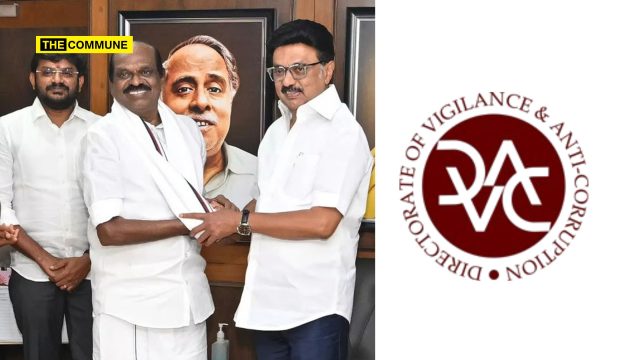
Director Pa Ranjith, long regarded as some sort of sole voice of Dalits in Tamil Nadu, announced that his Neelam Cultural Centre would support Porkodi Armstrong, wife of slain BSP leader K Armstrong, in the Thiru Vi Ka Nagar constituency ahead of the 2026 Tamil Nadu Assembly elections.
எளிய மக்கள் அரசியல் அதிகாரம் பெற வேண்டுமென்பதற்காகவும்,அடித்தள மக்களின் முன்னேற்றத்திற்காகவும் தம் இறுதிக் காலம் வரை
பணியாற்றி வந்தவர் அண்ணன் ஆம்ஸ்ட்ராங்.
கடந்த 2024 ஆம் ஆண்டு அவர் படுகொலை செய்யப்பட்டதை தொடர்ந்து, அவரின் அரசியல் பணியை தொடர்ந்து முன்னெடுக்க
தமிழ் மாநில பகுஜன்… pic.twitter.com/ODVapLqp1B
The announcement triggered a sharp backlash from within the Dravidianist DMK ecosystem and raised uncomfortable questions about Ranjith’s own political consistency.
Porkodi Armstrong is contesting on the AIADMK Two Leaves symbol, under a formal alliance that includes the BJP. Ranjith’s endorsement tweet made no mention of the BJP. He framed his support entirely around justice for Armstrong’s murder and Dalit representation. However, that silence is itself a political choice.
What has sharpened the criticism is Ranjith’s track record under the current DMK government. For the better part of five years, as caste atrocities mounted across the state and Armstrong himself was killed under DMK’s watch, Ranjith’s primary mode of engagement with the ruling establishment was letters and meetings with CM Stalin – not the kind of public or celluloid confrontation which he would’ve done if it happened under AIADMK regime. In February 2025, he wrote to Stalin flagging caste-based violence, offering to compile a report of Dalit atrocities for Dalit MLAs to raise in the assembly. That is the posture of a man negotiating with power, not challenging it.
Ranjith’s endorsement comes at a moment of maximum electoral value – weeks before polling, in a reserved constituency where DMK won by nearly 50,000 votes last time. By endorsing Porkodi without naming the BJP, Ranjith appears to be threading a needle: maintaining credibility with leftist anti-BJP Dalit intellectuals while opening a channel toward the NDA camp. For a filmmaker who consistently invokes Ambedkar’s political philosophy, the move sits uneasily. Ambedkar was explicit that political alliances carry moral weight — that you cannot separate a candidate from the structure that fields her.
The response on X has been telling. Dalit voices that reliably anchored themselves to the DMK-VCK camp are now publicly divided. The VCK has said nothing, which, for a party that never misses a chance to speak on Dalit rights, is itself a statement. Ranjith has cracked open a fault line that the ruling alliance will struggle to seal before polling day.
What the episode ultimately reveals is not just Ranjith’s choices but the DMK’s failure to retain a constituency it long took for granted. By delivering little on Dalit rights over five years, the party created the very vacuum that Ranjith is now stepping into. Whether that makes him a visionary or an opportunist riding a convenient wave is a question Tamil Nadu’s voters will weigh on election day.
Subscribe to our channels on WhatsApp, Telegram,Instagram and YouTube to get the best stories of the day delivered to you personally.
The Madurai Bench of the Madras High Court has granted an interim stay on orders issued in the contempt of court proceedings related to the Thirupparankundram issue.
While passing the order, the Bench emphasised that the matter should not be turned into a political issue and cautioned against its use for political purposes. The judges underscored that all decisions in the case would be taken strictly in accordance with legal provisions.
The court further clarified that the interim stay applies to all orders connected to the Thirupparankundram matter for the time being.
Additionally, the Bench directed the government to present its stand and outline the actions taken in connection with the issue.
The matter is expected to be taken up further after the government submits its response.
Subscribe to our channels on WhatsApp, Telegram,Instagram and YouTube to get the best stories of the day delivered to you personally.
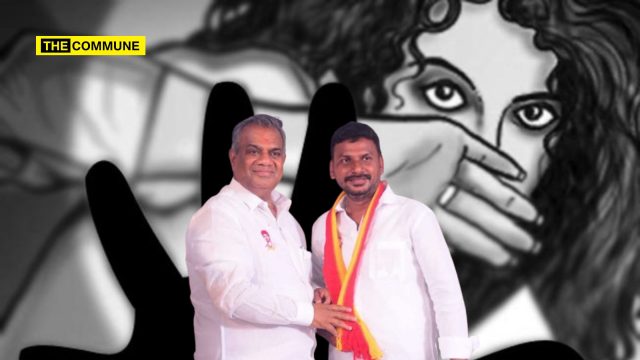
Actor Rajinikanth on Wednesday, 8 April 2026, advised youth to prioritise education, health, and discipline, cautioning them against blindly following actors and falling into harmful habits.
Speaking to reporters at Chennai Airport after returning from Hyderabad, where he was participating in the shooting of Jailer 2, Rajinikanth stressed the importance of focusing on studies during formative years.
Addressing a question on youngsters following actors, he said: “Young people must be extremely cautious. If they suffer any injury, they are the ones who will bear the pain. During their formative years, their age for education, their primary focus must be on their education. If they let that crucial time slip away, they will be left to struggle for the rest of their lives. Their thoughts and actions should be directed solely toward their studies.”
He also underscored the importance of maintaining good health, stating: “First and foremost, they must take care of their physical fitness and health.”
Issuing a strong warning against addiction, Rajinikanth added: “The advice I wish to give to the youth is this: do not become addicted to habits such as drinking alcohol or using substances like ganja. If you go down that path, your life will be ruined. It will not only destroy your life but also turn the lives of everyone connected to you including your parents into a living hell. Do not even go anywhere near such friends.”
When asked about the delay in the release of actor C. Joseph Vijay’s film Jana Nayagan, Rajinikanth declined to comment, stating: “I do not wish to offer any comments on that.”
His remarks come amid the backdrop of Vijay’s entry into Tamil Nadu politics and recent incidents where fans reportedly sustained injuries while following his rallies and roadshows during the ongoing 2026 Assembly election campaign.
Subscribe to our channels on WhatsApp, Telegram,Instagram and YouTube to get the best stories of the day delivered to you personally.
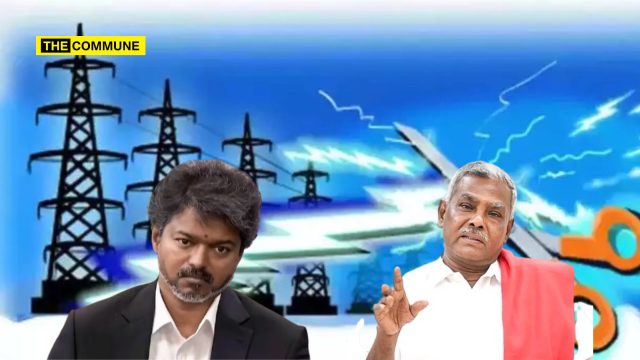
A VCK candidate in Cuddalore district triggered a political storm on Wednesday after making a communally charged remark during an election campaign event – one so inflammatory that the live broadcast was cut the moment it was said.
Abdul Rahman, the Viduthalai Chiruthaigal Katchi (VCK) candidate for the Panruti assembly constituency, stated on camera: “Muslims face problems only because of Dalits.” The remark was made during a live campaign address on 8 April 2026. Those managing the broadcast pulled the feed immediately after the statement, but not before it was captured and began circulating widely on social media.
With Tamil Nadu’s assembly elections just fifteen days away on April 23, the remark directly pits two communities that form the electoral bedrock of the ruling coalition. VCK, led by Thol. Thirumavalavan, was founded explicitly as a party representing Dalit rights and emancipation. That its own candidate in Panruti is now publicly casting Muslims as victims of Dalit behaviour is a contradiction that cuts to the heart of the party’s stated ideology.
Subscribe to our channels on WhatsApp, Telegram,Instagram and YouTube to get the best stories of the day delivered to you personally.