Home Blog Page 25

Rana Ayyub, DMK MP & Congress Spokie, Simp For Pakistan: Hail The Terror Country’s Role As Mediator In US-Iran War

Rana Ayyub, DMK MP & Congress Spokie, Simp For Pakistan Hail The Terror Country's Role As Mediator In US-Iran War

The two-week ceasefire announced in the West Asia conflict between the United States-Israel alliance and Iran has brought a momentary pause to one of the most dangerous military escalations the region has seen in decades. The conflict, which erupted on 28 February 2026 has not only reshaped the geopolitical landscape of West Asia but has also ignited a fierce political storm back home in India.

At the centre of it all is Pakistan’s claimed role as a mediator in facilitating the ceasefire. Initially Pakistan projected itself as a key diplomatic broker, Iran swiftly rejected this framing, refusing to engage with US officials on Pakistani soil and denouncing Islamabad as a ‘betrayer.’ Things kept moving forward and backward and then following US President Donald Trump’s decision to suspend the ongoing “bombing and attack” campaign on Iran, a two-week bilateral ceasefire was announced after Washington accepted a 10-point proposal put forward by Tehran. The Iranian leadership subsequently agreed to the ceasefire framework, including provisions for safe passage through the Strait of Hormuz and a temporary halt to military operations.

Reacting to the development, Pakistan Prime Minister Shehbaz Sharif welcomed the ceasefire and extended an invitation for further talks in Islamabad on April 10, aimed at negotiating a long-term settlement.

This narrative of Pakistani mediation was enough to send India’s opposition into a frenzy of criticism against the Modi government’s foreign policy. Those mocking India included DMK MP Salma, alleged journalist Rana Ayyub, and critical of Vishwaguru – the Congress’ Jairam Ramesh.

DMK Rajya Sabha MP & Spokesperson Salma

In a now-deleted post, DMK Rajya Sabha MP Salma mocked India over ‘Vishwaguru’ stance.

She had written on her X handle, “The war has stopped due to Pakistan’s intervention. What a shame! How are you, the Sanghis, going to digest this?”

Source: Polimer News

Following public backlash, Salma deleted the post.

Congress Spokesperson Jairam Ramesh

Simping for Pakistan is nothing new for the Congress. In a post on X, Jairam Ramesh wrote, “The entire world will cautiously welcome the two-week ceasefire in the West Asia conflict between the US and Israel on the one side and Iran on the other. The conflict had begun on Feb 28th with the targeted assassinations of the topmost echelons of the regime in Iran. These had started just two days after Prime Minister Modi had completed his much-trumpeted visit to Israel, a visit that diminished India’s global stature and standing. Mr. Modi had said nothing about Israel’s genocide in Gaza and its aggressively expansionist policies in the occupied West Bank. The role played by Pakistan in bringing about the ceasefire is a severe setback to both the substance and style of Mr. Modi’s highly personalised diplomacy. The policy to isolate Pakistan for its continuing support to terrorism in J&K and to convince the world that it is a failed state has clearly not succeeded – unlike what Dr. Manmohan Singh had accomplished after the Mumbai terror attacks. That a bankrupt economy dependent entirely on the largesse of external donors and a broken country in so many ways was able to play such a role calls into question Mr. Modi’s strategy of engagement and narrative management. He or his team has also never explained why Op Sindoor was suddenly and abruptly halted on May 10th 2025 – the first announcement of which came from the US Secretary of State and for which the US President has claimed credit almost a hundred times since then. There is a palpable sigh of relief everywhere. The External Affairs Minister dismissed Pakistan as a dalal. But now the self-styled Vishwaguru stands thoroughly exposed, his self-declared 56-inch chest shrunk and shrivelled. His cowardice is demonstrated by his silence not only on Israel’s belligerence, but on the completely unacceptable and disgraceful language being used by his good friend in the White House.”

Alleged Journalist Rana Ayyub

Alleged journalist Rana Ayyub was among the first people to hail Pakistan’s alleged role in the ‘mediation’ and subsequent ceasefire. Taking to her X handle, she wrote multiple posts.

First, she quoted Pakistan PM Shehbaz Sharif’s post and wrote, “Iran and Trump lauding the efforts of Pakistan. We are happy with vishwaguru grandstanding in propaganda films.”

In a subsequent post she wrote, “The world is lauding Pakistan for mediating a ceasefire through a war that could have unleashed the worst kind of catastrophe. Trump who spoke the language of ending the Iranian civilisation till last night is now speaking the language of peace. It is a sobering moment for India that now needs to really work on its foreign policy and instead of pleasing domestic actors needs to think of long term goals and not grandstanding in elections. Propaganda films might win us elections but not elevate our status as vishwaguru in world politics.”

The ceasefire in West Asia may have brought a temporary pause to the guns, but it seems to have activated the noise from Pakistani simps in India. That opposition figures rushed to amplify Pakistan’s alleged role reveals less about Modi’s foreign policy and more about a reflexive instinct to weaponise any global development for domestic point-scoring. These people are celebrating a narrative that flatters Pakistan at India’s expense, regardless of whether that narrative holds up to scrutiny.

Salma’s quiet deletion of her post suggests even she recognised the overreach. The irony is that the opposition’s eagerness to mock the “Vishwaguru” label has led them to do precisely what they accuse Modi of prioritising optics over accuracy. Pakistan’s role in the ceasefire remains disputed by the very party it claims to have helped. That inconvenient fact found no place in the rush to score points. In politics, as in war, the first casualty is always the truth.

Subscribe to our channels on WhatsAppTelegram, Instagram and YouTube to get the best stories of the day delivered to you personally.
“Highly Derogatory, Inflammatory And Communal”: Delhi High Court Seeks Action On Rana Ayyub’s Posts On Hindu Deities And Veer Savarkar

“Highly Derogatory, Inflammatory And Communal”: Delhi High Court Seeks Action On Rana Ayyub’s Posts

The Delhi High Court on Wednesday, 8 April 2026, called for action on posts made by journalist Rana Ayyub on the social media platform X, which are alleged to have insulted Hindu deities and spread anti-India sentiment, as reported in LiveLaw.

Justice Purushaindra Kumar Kaurav was hearing a plea filed by Amita Sachdeva seeking deletion of the tweets, alleging that they are derogatory, inflammatory, and communally sensitive. While issuing notice on the plea, the Court directed the Union of India, X Corp, Delhi Police, and Ayyub to file their responses by Thursday.

The Court observed that the matter required urgent consideration and directed the Delhi Police to transmit the relevant documents to X Corp. It stated, “Action is necessary in view of the highly derogatory, inflammatory and communal tweets by respondent no. 4 (Ayyub) pursuant to which even an FIR is directed to be registered against (Ayyub) on the directions of the court of competent jurisdiction,” the Court said.

The matter has been listed for further hearing on Friday.

According to the plea, Sachdeva alleged that Ayyub, through her tweets, had not only insulted Hindu deities but also defamed Veer Savarkar and the Indian Army. The tweets in question, numbering six, date back to the period between 2013 and 2017.

Sachdeva, who stated that she is a devout follower of Sanatan Dharma, had earlier filed a complaint on the National Cyber Crime Reporting Portal seeking criminal action against Ayyub over the social media posts. Subsequently, an FIR was ordered against Ayyub after a trial court observed that “prima-facie” cognizable offences were made out against her under Sections 153A (promoting enmity between different groups), 295A (deliberate and malicious acts intended to outrage religious feelings), and 505 (statements conducing to public mischief) of the Indian Penal Code, 1860.

In the fresh petition before the High Court, Sachdeva sought deletion of the posts on X, stating that they prima facie disclose the offences in question.

As per the petition, Sachdeva had approached X Corp’s Grievance Appellate Committee, which declined relief on the ground that the matter was sub judice. The plea stated: ”Despite the complete exhaustion of the remedies available under Rules 3(2) and 3A of the IT Rules, 2021, of the IT Intermediary Guidelines, the offending tweets continue to remain publicly accessible worldwide as on date. The continued availability of the impugned content is causing ongoing injury to religious sentiments, disturbing communal harmony, and rendering the judicial directions ineffective,” the plea said.

It was further submitted that in May last year, the Delhi Police had informed the trial court that details of Ayyub’s X account and the alleged tweets were awaited and that the posts were not available on the platform.

Sachdeva also alleged that Ayyub had consistently used her social media platforms to insult Hindu deities, malign the fabric of Indian unity, and promote hostility toward India and its citizens, including the Indian Army. She further stated that despite repeated follow-ups, no action had been taken on her complaint.

Subsequently, she filed an application under Section 156(3) of the Code of Criminal Procedure seeking registration of an FIR against the journalist.

What Did Rana Ayyub Post

In her complaint, Advocate Sachdeva alleged that journalist Rana Ayyub had published multiple objectionable posts on X (formerly Twitter) between 2013 and 2017. These posts were disrespectful towards Hindu deities, carried anti-India overtones, and had the potential to incite communal tensions. She further stated that, given Ayyub’s public influence, the content was inflammatory and capable of disturbing social harmony.

To support her claims, Sachdeva referred to specific posts, asserting that they reflected a pattern of misleading assertions and remarks critical of Hindu beliefs.

In one post in 2015, she derogated Veer Savarkar and wrote (and this post still exists till date), “So Veer Savarkar advocated rape as necessary component of Hindutva nationalism”

Image Source: OpIndia

In another post from 2013, Rana Ayyub derogated Lord Rama and wrote, “Ravana didn’t touch Sita even though he could. Ram didn’t stand for Sita even though he should have. Ravana 1 Ram 0.” 

It is noteworthy that this post still can be accessed on X (at the time of publishing this post).

Image Source: OpIndia

In a post from 2014, Rana Ayyub mocked Sita Mata and Draupadi and wrote, “Gareeb Sita ke ghar pe kab tak rahegi Ravan ki hukmrani, Draupadi ka libas uske badan se kab tak chhina karega.”

Image Source: OpIndia

At the time of publishing this article, the post still exists.

Rana Ayyub also published posts criticising the Indian Army. In one such post from 2016, she wrote, “Dear Indian Army, am guessing this young kid was quite a threat to the sovereignty of India to be blinded for life.”

Image Source: OpIndia

As per the court order, these posts must now be taken down.

Subscribe to our channels on WhatsAppTelegram, Instagram and YouTube to get the best stories of the day delivered to you personally.
Congress MP Karti Chidambaram Calls Assam Police ‘Private Militia’ After Khera Raid; Internet Reminds Him Of 2012 Tweet Arrest

Congress MP Karti Chidambaram Calls Assam Police ‘Private Militia’ After Khera Raid; Internet Reminds Him Of 2012 Tweet Arrest

Assam Police, accompanied by Delhi Police, conducted searches at Congress leader Pawan Khera’s residence in Nizamuddin East, New Delhi on 6 April 2026, in connection with an FIR filed by Riniki Bhuyan Sarma – wife of Assam Chief Minister Himanta Biswa Sarma. The action followed Khera’s public allegation that Riniki held multiple foreign passports, a claim that prompted the FIR against him.

Khera was not present at his home during the search. Assam Police claimed to have recovered “incriminating material,” including electronic devices, from the premises. Congress condemned the move as a brazen “witch hunt,” with party spokesperson Jairam Ramesh accusing the Assam CM of being “disturbed, desperate, and rattled” ahead of the Tamil Nadu assembly elections.

Among the loudest voices condemning the police action was Congress MP Karti P. Chidambaram, who took to X to declare: “Assam Police has become a Private Militia.”

The statement was pointed, indignant, and, for those with a longer memory, deeply ironic. The internet never forgets.

Because in October 2012, it was Karti Chidambaram himself who filed a police complaint that led to India’s first-ever arrest for a tweet.

The man arrested was Ravi Srinivasan, a 46-year-old small-scale industrialist from Puducherry with just 16 followers on Twitter. His offence: posting a message alleging that Karti, son of then-Finance Minister P. Chidambaram had “amassed more wealth than Vadra,” a reference to Robert Vadra, Sonia Gandhi’s son-in-law, who was under scrutiny for land deals at the time.

On Karti’s complaint, Puducherry Police arrested Srinivasan under Section 66-A of the Information Technology Act – a provision designed for cybercrimes like hacking, not political opinion. Srinivasan was granted bail, refused to apologise, and publicly stated that Karti had used the police to silence legitimate criticism.

Section 66-A was ultimately struck down by the Supreme Court in 2015 as unconstitutional for violating free speech. But not before it was repeatedly weaponised by those in power, including, on record, by Karti Chidambaram, against ordinary citizens exercising their right to political expression.

The contrast is stark. In 2012, a man with hardly any followers was arrested under a Congress government on the complaint of a politician’s son for a single tweet. In 2026, that same politician’s son describes state police visiting a colleague’s home as a “private militia.”

The mechanics of power and its use against political opponents have not changed. Only the party holding it has.

Subscribe to our channels on WhatsAppTelegram, Instagram and YouTube to get the best stories of the day delivered to you personally.
“Go Ahead, File Cases Against Me, I’m Not Afraid”: ADMK Chief EPS Hits Back At DMK MP A Raja Over Audio Leak

“Go Ahead, File Cases Against Me, I’m Not Afraid”: ADMK Chief EPS Hits Back At DMK MP A Raja In Salem

AIADMK General Secretary Edappadi K Palaniswami on Tuesday, 7 April 2026, launched a sharp attack on the DMK leadership while campaigning in Salem, asserting that attempts to intimidate him with legal cases would not deter him from raising questions over recent political developments.

Campaigning for the AIADMK candidate in the constituency, Palaniswami referred to reports of cases being filed against him and defended his remarks concerning an audio released by DMK leader A Raja. He also questioned the response of Chief Minister MK Stalin to the issue.

He said, “I saw in the newspapers today that cases are being filed against me – go ahead, file them, whoever wants to. I have come after facing many such cases. Recently, A. Raja released an audio. A Union Minister, former Union Minister, now a Member of Parliament, and the Deputy General Secretary of the DMK – he released an audio. In that audio, a particular point is spreading everywhere – not just to me, not just in Tamil Nadu, but across India, it has become a widely discussed matter. I only spoke about that information. They could not give a bold reply to it. Not only that, they are saying action should be taken against whoever released that information. Because if action is taken, he will release the next audio. If action is taken against A. Raja now, does he have the next audio ready? He might release it. Out of that fear, they are unable to take action against him. What is the use of getting angry with me, Mr. Stalin? The information that came out in that audio, could it not be true? In the same DMK election manifesto of 2021, when you released it, what did you say? Standing next to you, you said there is a mystery in the death of Puratchi Thalaivi Amma and that whoever it is, you will not spare them. I am saying the same thing now. Mr. Karunanidhi may be our political opponent, but he was the Chief Minister of this state. So, should what was said about him be repeated or not? If I say it, he will get angry. The information that came in that audio, we did not release it. Mr. A. Raja released that information. In that, it was said that when Mr. Karunanidhi’s health was fine, he was kept under house arrest. When the AIADMK comes to power, this will be investigated. Legally, action will be taken against whoever is responsible. You spoke about our Amma, saying there was a mystery and that it should be investigated. In the same way, I am asking that this also be investigated. If the information that former Chief Minister Mr. Karunanidhi was kept under house arrest is true, then legal action must be taken against whoever is responsible. It does not matter who they are.”

Subscribe to our channels on WhatsAppTelegram, Instagram and YouTube to get the best stories of the day delivered to you personally.
After Vijay Cutout In Trichy, TVK Kolathur Candidate Uses Vijay Lookalike For Canvassing

After Vijay Cutout In Trichy, TVK Kolathur Candidate Uses Vijay Lookalike For Canvassing

As Tamil Nadu gears up for the 2026 assembly elections, Tamilaga Vettri Kazhagam (TVK) candidates across the state are fighting a lonely battle – armed not with their party founder’s presence, but with life-size cardboard cutouts and hired lookalikes of actor-turned-politician C. Joseph Vijay.

On 6 April 2026, TVK’s Tiruverumbur candidate Navalpattu S. Viji alias Vijayakumar paraded a cardboard cutout of Vijay through streets in Tiruchi district to drum up voter support.

For a party contesting its very first assembly election, this is not the optics its candidates would have hoped for.

The crisis deepened further in Kolathur, where TVK’s candidate VS Babu is taking on none other than DMK chief MK Stalin himself – arguably one of the most high-stakes constituency battle in the state.

In a contest demanding maximum firepower, TVK deployed a Vijay lookalike to stand beside their candidate during canvassing.

The spectacle drew ridicule rather than reverence. While lookalikes are a supplementary cultural fixture for established parties: AIADMK uses Jayalalithaa and MGR stand-ins, DMK invokes Karunanidhi’s image – those parties have decades of organisational muscle to fall back on. TVK does not. For a first-time electoral outfit riding entirely on Vijay’s star power, a lookalike is not a bonus; it is an admission of failure.

Vijay, meanwhile, has canvassed in fewer than ten constituencies statewide, offering vague excuses of scheduling conflicts and security concerns. These explanations ring hollow when grassroots candidates are knocking on doors daily, trusting that the star who inspired them would show up. He has not.

A party built on one man’s celebrity, now substituting that man with cardboard and impostors, signals a fundamental disconnect between TVK’s leadership and its ground reality. Candidates sweat it out in the April heat while their founder remains conspicuously absent, detached from the very voters he asked to believe in him.

Subscribe to our channels on WhatsAppTelegram, Instagram and YouTube to get the best stories of the day delivered to you personally.
“I Couldn’t Do What I Planned For Madurai, There Are Many Reasons… But Can’t Speak Openly”, Says DMK’s PTR Palanivel Thiagarajan

dmk ptr palanivel thiagarajan

As the Tamil Nadu Legislative Assembly election campaign gathers momentum, remarks by DMK candidate and minister P. T. R. Palanivel Thiagarajan have triggered widespread discussion in political circles.

Thiagarajan, the sitting MLA from Madurai Central, is once again contesting from the constituency as the DMK nominee. With the nomination process concluded, candidates across parties have intensified their campaign efforts ahead of the April 23 polling date.

As reported in Dinamalar, during a campaign in Madurai Central on 7 April 2026, Thiagarajan addressed voters and expressed regret over his tenure, stating: “If I have to speak honestly, I had said when I came into politics that I would enter at 50 and retire at 60. Now it has been 10 years, and I should have retired by now. But there have been two unexpected outcomes. One… I never imagined I would gain this level of recognition and identity at the state, national, or even global level. I have received recognition beyond my dreams, that is the good part. The downside is that my main goal was to do a lot for Madurai. I accept this myself; I was not able to achieve as much as I had wished. There may be many reasons for that, but those in politics cannot speak very openly about everything.”

His remarks have since become a subject of debate, with political observers linking them to administrative challenges and past portfolio changes during his tenure.

Thiagarajan is considered to have a significant influence among voters in Madurai Central. However, whether his candid admission will generate sympathy among the electorate or be leveraged by political opponents remains to be seen when results are declared.

Subscribe to our channels on WhatsAppTelegram, Instagram and YouTube to get the best stories of the day delivered to you personally.
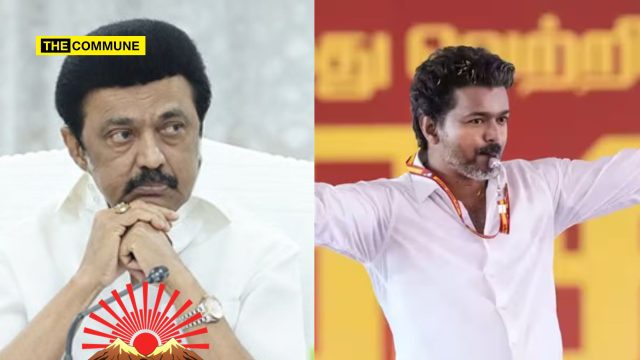
Eradicate Sanatana Dharma: DMK Scion Udhayanidhi Stalin Wipes Off Kumkum From His Forehead

Eradicate Sanatana Dharma: DMK Scion Udhayanidhi Stalin Wipes Off Kumkum From His Forehead

First, he said ‘Eradicate Sanatana Dharma’, then more recently he refused to accept Vel that was offered to him by his cadre. And now, after visiting a temple, he wipes off the kumkum on his forehead. This is none other than DMK scion Udhayanidhi Stalin.

While canvassing for votes for the upcoming Assembly elections, Udhayanidhi has visited a temple and the temple priest applied kumkum on his forehead.

Staying true to his Dravidianist roots, Udhayanidhi wiped off the kumkum on his forehead almost instantaneously.

It is noteworthy that he offered special prayers at the Sengeni Amman temple near his constituency before launching his election campaign in the Chepauk-Thiruvallikeni Assembly constituency, from where he is seeking re-election in the upcoming 2026 Tamil Nadu Assembly elections.

Subscribe to our channels on WhatsAppTelegram, Instagram and YouTube to get the best stories of the day delivered to you personally.
From UPA Ministries To Meta’s Policy Rooms: How Congress-Linked Individuals Came To Control What India Sees On Facebook, Instagram And WhatsApp

Scrutiny over individuals associated with Meta has unravelled a lot of connections to the Congress party. A detailed examination of Meta India’s public policy leadership reveals a pattern that goes well beyond coincidence. Individuals who have shaped or currently shape content policy, regulatory compliance and public affairs at Meta India all carry documented associations with the Indian National Congress, its leaders and its ecosystem. Together, they occupied or occupy roles that decide what content is suppressed, what is amplified, what counts as misinformation, and how platform rules are applied to 500 million Indian users.

Prianka Rao-Khan – The Oxford Activist Who Became Meta’s Policy Gatekeeper

Prianka Rao-Khan served as Public Policy Manager at Meta Platforms India from June 2022 to March 2026. An alumna of NUJS Kolkata, the University of Oxford and the Blavatnik School of Government, she spent her Oxford years not only studying policy but actively participating in anti-CAA and anti-government protests.

Her LinkedIn activity showed her tagging her husband in political legal updates, including a post about Supreme Court proceedings against Shashi Tharoor.

That husband is Muhammad Khan, who identifies himself on his own X profile as: “Advocate in the Supreme Court of India, Media Team- Indian National Congress, Author ‘Legislating for Justice’ (OUP, 2015).”

He is not a passive sympathiser – he is a functioning member of the Congress Media Team. When this connection was reported online, Khan responded in comments: “Oye you cowardly piece of garbage. This is my wife. Let’s see how brave you are when faced with a criminal investigation for harassment.”

Aman Jain – UPA Government Advisor, Sam Pitroda Associate, Now Meta’s Top Policy Executive

Aman Jain was appointed Senior Director and Head of Public Policy for Meta in India in December 2025 – the highest public policy position in the country for the platform.

​What his official Meta bio omits is what his career trail reveals. Between July 2013 and June 2014 – the final year of UPA-II’s rule, Jain served as Advisor at the Ministry of Youth Affairs and Sports, Government of India. This was a Congress-run ministry during Congress-led government. He did not merely brush past it; it was a substantive advisory role.

His closeness to Sam Pitroda – the Congress ideologue, confidant of Rahul Gandhi and Chairman of the Indian Overseas Congress is evidenced by a repost on his own social media: Jain amplified a March 2013 tweet from Pitroda promoting the UPA’s 12th Plan hackathon at data.gov.in. This is not a neutral policy-professional retweet. Sam Pitroda is one of the most politically identified figures in the Congress ecosystem.​

More damning still is the now-deleted post in which Jain called an article “interesting” – the piece was titled “Two nightmares foretold” by James Manor, and the quote he highlighted read: “Modi will be an unyielding narcissist among unyielding narcissists. That is no recipe for survival in power.” This was December 2013 before Modi had even become Prime Minister.

Image Source: X

 The post has since been deleted but screenshots are in wide circulation.

Shashank Shah – LAMP Fellow To Congress Law Minister, Now Meta’s Content Policy Manager

The third name to surface is Shashank Shah, who serves as Content Policy Manager for Regulatory Compliance at Meta India.

His LinkedIn profile reveals that between June 2014 and May 2015, he was a LAMP Fellow – a prestigious Parliamentary Assistantship awarded by PRS Legislative Research assigned to Dr. Ashwani Kumar, a senior Congress leader and former Union Law Minister from the Rajya Sabha. His own description of the role states: “I served as LAMP Fellow to Dr. Ashwani Kumar, a former Union Law Minister and senior parliamentarian from India’s Upper House or Rajya Sabha. I delivered research inputs for his speeches in Parliament, op-eds in national dailies and speaking engagements at international conferences.”

He further describes managing Kumar’s Twitter and YouTube debut and relaunching his official website. Shashank Shah did not just work near Congress – he worked for a Congress leader, writing his speeches, crafting his media presence and building his digital brand. That individual now manages content policy and regulatory compliance at the platform that determines what 500 million Indians can and cannot say.


View this post on Instagram


A post shared by Amit Sharma (@omkaar8)

In 2020, Congress Pressured Facebook – And Won

This controversy does not exist in a vacuum. In 2020, Congress reportedly pressured Meta India, which led to the exit of Facebook India’s Managing Director Ajit Mohan. What followed, critics now argue, was the systematic replacement of neutral policy professionals with individuals carrying Congress ecosystem credentials – laundered through Oxford fellowships, UPA ministries and Parliamentary assistantships.

The question that Indian users, 500 million of them, are now asking is not complicated: How are individuals with documented Congress affiliations, who wrote speeches for Congress ministers, advised Congress-run ministries, and married Congress Media Team members, entrusted with roles that demand absolute political neutrality over India’s largest information infrastructure?

Subscribe to our channels on WhatsAppTelegram, Instagram and YouTube to get the best stories of the day delivered to you personally.
How Congress Used India’s Foreign Policy To Bury The Bofors Scam Trail

During the Congress regime, India witnessed one of its most brazen political cover-up attempts — one that forced an External Affairs Minister out of office, rattled Parliament, and left permanent questions about whether the Congress government of the time had weaponised India’s foreign policy to protect itself from one of the biggest corruption scandals in the country’s history.

On 30 March 1992, External Affairs Minister Madhavsinh Solanki confessed before Parliament that he had personally handed over a note to Swiss Foreign Minister René Felber during a visit to Davos in February 1992.

Solanki claimed the note had been given to him by a private lawyer, but in a stunning admission, acknowledged that he did not remember the lawyer’s name. He expressed regret over the matter in a written statement to Parliament.

The Note That Shook Parliament

The document handed to Swiss authorities was what diplomats call a “non-paper” – an unsigned, unofficial memorandum. Its content, however, was explosive. According to court records from Delhi High Court, the note urged Switzerland to go slow on sharing bank details linked to the ongoing Bofors investigation.

The timing could not have been worse or more revealing. At the very same time, India’s CBI had formally submitted a court-issued Letter Rogatory to Switzerland, legally requesting cooperation and banking documents connected to the alleged ₹64 crore kickback trail from the 1986 Bofors howitzer deal. A baffled Swiss federal justice department, receiving both a court-backed CBI request and Solanki’s informal note contradicting it, handed the note directly to the CBI, effectively blowing the cover on the entire operation.

The Indian Express then published details of the note, triggering immediate pandemonium across both Houses of Parliament on 31 March 1992.

Why the Bofors Case Was So Politically Sensitive

The Bofors scandal centred on alleged kickbacks paid by Swedish arms manufacturer AB Bofors to unnamed Indian middlemen in exchange for securing a ₹1,437 crore deal to supply 155mm howitzers to the Indian Army. The scandal had already cost the Congress party the 1989 general election, with then-Prime Minister Rajiv Gandhi at the centre of the controversy.

Under Prime Minister P.V. Narasimha Rao’s Congress government, rather than pursuing the investigation aggressively, the government was now seen as actively interfering with its own, court-directed probe – a detail that enraged the opposition and shocked legal observers.

Parliament Erupts

The Rajya Sabha debate record of 30 March 1992 confirms that opposition members demanded Solanki’s resignation, calling his conduct “gross misdemeanour” and “outrageous.”

A subsequent Rajya Sabha debate on 2 April 1992 further established that a CBI delegation which was scheduled to travel to Switzerland cancelled its visit after Solanki had handed over the letter – directly impeding an active investigation.

PM Narasimha Rao’s own statement to Parliament confirmed: “I was not aware of the note handed over by Shri Solanki, nor did I authorise any note being handed over to the Swiss Foreign Minister.”

Resignation and Unanswered Questions

Madhavsinh Solanki resigned on 31 March 1992. The legal battle, however, dragged on for decades. The CBI registered an FIR against Solanki in April 2003 for producing false evidence under IPC. In 2018, a Delhi court ordered criminal prosecution of Solanki for handing over a “fabricated” and “misleading” memorandum to Swiss authorities — 26 years after the original offence. The court stated plainly: “This court will not allow anyone to interfere with judicial proceedings, whosoever he or she may be.”

Solanki fought the FIR all the way to the Delhi High Court, arguing the note was given to him by a lawyer and that no facts in it were false. The High Court rejected his plea to quash the FIR in 2014. He died in January 2021 without ever revealing the lawyer’s identity.

The Question That Lingers

The Solanki affair remains a defining case study in institutional betrayal. A sitting External Affairs Minister used an international diplomatic forum to privately undermine a court-directed criminal investigation – on Indian soil, against Indian interests, at a time when India’s judicial machinery was formally and correctly pursuing evidence abroad.

Was India’s foreign policy being deployed to defend the nation’s interests or to bury a scandal? The courts said it was the latter. Parliament said it was the latter. And Solanki never said otherwise.

Subscribe to our channels on WhatsAppTelegram, Instagram and YouTube to get the best stories of the day delivered to you personally.

When UPA Govt Blocked Twitter Handles For Being “Right Wing”

Looking back to August 2012, India saw one of its first major confrontations between government power and social media, when the UPA‑II regime ordered a sweeping block on Twitter handles and web links, including those of journalists and right‑wing groups, even as then Home Minister Sushilkumar Shinde insisted nothing more than “objectionable” content was being targeted.

The Night The Handles Went Dark

Between August 18 and 21, 2012, internet service providers quietly received directions from the Centre to block roughly 250–300 URLs: individual tweets, images, videos and several full Twitter accounts. The stated trigger was the exodus of people from the North-East after Assam violence, which the government blamed on morphed images and incendiary rumours circulating online.

In the dragnet fell accounts of journalists and commentators such as Kanchan Gupta and Shiv Aroor, along with right‑wing websites and handles associated with Sangh‑Parivar circles and portals like Haindava Keralam. Economic Times’ headline captured the mood: “Government blocks Twitter handles of journalists, right-wing groups.”

Shinde’s Defence: ‘Only Objectionable Accounts Blocked’

As outrage grew over what many saw as a digital gag order, Sushilkumar Shinde stepped out to calm tempers. His line of defence has since become part of India’s free‑speech folklore: “Only those social media accounts which have posted objectionable and inflammatory content are being blocked.”

Shinde insisted there was “no censorship at all”, arguing that the state was merely acting against rumours and provocative posts using doctored images from Myanmar and elsewhere to inflame tensions in India. Ordinary users, he said, had nothing to fear if they were not spreading hate.

Opposition parties like the BJP condemned the move as “Emergency‑style” suppression and demanded restoration of journalists’ accounts. Digital‑rights groups pointed out that entire accounts, not just specific tweets, had been blocked, and that many directives did not clearly cite the legal grounds under the IT Act.

And today, the Congress cries that there is no ‘freedom of expression’ – irony died a million deaths.

Subscribe to our channels on WhatsAppTelegram, Instagram and YouTube to get the best stories of the day delivered to you personally.