Home Blog Page 26

MMK Leader Jawahirullah Reportedly Visited Sikkal Singaravelar Temple

MMK Leader Jawahirullah Reportedly Visited Sikkal Singaravelar Temple

A controversy has arisen over the visit of Manithaneya Makkal Katchi (MMK) leader Jawahirullah to the Sikkal Singaravelar Temple near Nagapattinam, with Hindu Tamizhar Katchi leader Rama Ravikumar alleging that proper procedures were not followed during the visit, as reported in Dinamalar.

In a statement, Ravikumar said that Jawahirullah, who is contesting from the Nagapattinam constituency as part of the DMK alliance, was taken to the temple by DMK members. He alleged that Jawahirullah, who follows the Islamic belief that “God is one,” does not traditionally recognise the Sikkal Singaravelar deity in the same manner as Hindu devotees.

Ravikumar further criticised what he described as a “photo shoot” conducted at the temple, stating that it was done for political purposes and was disrespectful to the sentiments of devotees who worship at the temple with faith.

He also alleged that established practices regarding entry of non-Hindus into temples had been violated. According to him, individuals from other religions are required to declare their faith in the temple deity in a register and provide their signature before entering. He questioned whether Jawahirullah had complied with this procedure during his visit.

The Hindu Tamizhar Katchi leader also called for action against the temple’s executive officer for allegedly permitting entry without ensuring that due procedures were followed.

Subscribe to our channels on WhatsAppTelegram, Instagram and YouTube to get the best stories of the day delivered to you personally.

DMK Minister & Tiruchendur Candidate Anitha Radhakrishnan’s Nomination Put On Hold Over 10th Pass Claim

DMK Minister Anitha Radhakrishnan’s Nomination Put On Hold Over 10th Pass Claim

The nomination of DMK candidate and Minister Anitha Radhakrishnan from the Tiruchendur constituency has been put on hold during the scrutiny process following a complaint over discrepancies in her educational qualifications.

According to officials, objections were raised regarding contradictory information in the nomination papers concerning Anitha Radhakrishnan’s 10th standard qualification. The complaint alleges that in the affidavit submitted along with the nomination, she stated that he had passed her 10th standard examination, while opposing candidates claim that he had not actually passed it.

The complaint was reportedly filed on behalf of candidates from the All India Anna Dravida Munnetra Kazhagam (AIADMK), who flagged the inconsistency in the affidavit and sought action.

Following the objection, the Returning Officer has placed the scrutiny of Anitha Radhakrishnan’s nomination in abeyance. Officials indicated that the nomination will not be immediately cleared or rejected and instead will be taken up for consideration after the scrutiny of all other candidates’ nominations is completed.

The Returning Officer further stated that once the review of other nominations is concluded and results are announced, the complaint regarding Anitha Radhakrishnan’s educational qualification will be examined in detail before a final decision is taken.

Subscribe to our channels on WhatsAppTelegram, Instagram and YouTube to get the best stories of the day delivered to you personally.
Congress President, Knighted By British, Was Among Judges Who Sentenced Veer Savarkar To Life, Later Jailed In Cellular Jail

There is a historical irony so sharp it cuts through decades of political spin: one of the judges on the tribunal that sentenced Vinayak Damodar Savarkar to ‘transportation for life’ – one of the harshest sentences ever handed to an Indian freedom fighter, was himself a former President of the Indian National Congress. Yet today, it is that same Congress party and its intellectual ecosystem that brands Savarkar a “British loyalist” and a traitor to the freedom movement. The audacity of this position deserves to be examined closely.

The Judge: A Congress President In British Robes

Justice Narayan Ganesh Chandavarkar was no ordinary colonial judge. He had been elected President of the Indian National Congress at its Lahore session in 1900. He was a Chitpavan Brahmin lawyer, social reformer associated with the Prarthana Samaj, and a vocal moderate voice within Indian public life. He was also knighted by the British Crown in 1910 – the very year of Savarkar’s trial and sentencing.

In December 1910, Chandavarkar sat on a Special Tribunal of the Bombay High Court alongside Chief Justice Basil Scott and Justice Heaton in the Nasik Conspiracy Case.

Image Source: Bombay High Court

The tribunal convicted Savarkar on charges of sedition, abetment of murder, and waging war against the King-Emperor.

So, what were the cases against him? Savarkar faced prosecution in two major proceedings that led to his twin life sentences. The first was the Nasik Conspiracy Case, arising from the 1909 assassination of Collector A.M.T. Jackson by Anant Laxman Kanhere. British authorities linked Savarkar to the broader revolutionary network behind the act, including allegations of abetment and conspiracy against the Crown. He was tried before a Special Tribunal (as above) of the Bombay High Court and sentenced to transportation for life.

The second case related to his wider revolutionary activities, including his role in organising nationalist networks, circulating anti-colonial literature, and alleged involvement in procuring arms. These activities were prosecuted under provisions dealing with waging war and conspiracy against the British Empire. In this separate proceeding, Savarkar was again convicted and awarded a second sentence of transportation for life. Together, the two transportations for life began to be widely cited “50-year” imprisonment.

A Congress president, knighted by the British, was part of the tribunal that was locking away one of India’s most fearless revolutionaries for half a century.

Who Was Savarkar Before He Was Jailed?

The Congress attack on Savarkar is built almost entirely on his mercy petitions written from prison. What they erase is who Savarkar was before the prison gates shut.

By the time of his arrest in London in March 1910, Savarkar had emerged as a prominent figure in revolutionary nationalist circles. He also:

  • Founded Abhinav Bharat, a pan-India revolutionary secret society, in 1904
  • Authored The Indian War of Independence 1857 – a book so dangerous the British banned it before publication
  • Was associated with organised armed revolutionary networks stretching from Pune to London to Paris

His arrest followed investigations into the Nasik Conspiracy Case, linked to the assassination of Collector A.M.T. Jackson in 1909, as well as his broader involvement in anti-colonial activities.

While being transported to India aboard the SS Morea on 8 July 1910, Savarkar escaped at Marseilles, swam to reaching French soil before being recaptured by authorities. This incident triggered a diplomatic dispute between France and Britain, eventually referred to the Permanent Court of Arbitration at The Hague, which ruled against his claim. Savarkar was subsequently tried in India and sentenced in multiple proceedings to transportation for life.

The Cellular Jail: What Congress Doesn’t Tell You

From 4 July 1911, Savarkar endured the Cellular Jail in the Andamans – not as a political prisoner but classified as a dangerous “seditionist” by the British. He spent years performing brutal oil-pressing labour, suffered 6 months of solitary confinement, was subjected to standing handcuffs as punishment, and was systematically isolated from other political prisoners.

It was from within this living hell that Savarkar wrote his clemency petitions – in 1911, 1913, 1917, and 1920. Congress has weaponised these petitions for decades, with Rahul Gandhi in 2022 unfavourably comparing Savarkar to Bhagat Singh in the middle of an election campaign in Maharashtra. The petitions, stripped of context – stripped of the oil press, the solitary cell, the standing handcuffs, are presented as proof of cowardice and collaboration.

What Congress never asks is this: how many Congress leaders endured even a fraction of what Savarkar did inside the Cellular Jail?

Congress: The Real British Bootlicker

So, let’s be clear. Savarkar endured decades of colonial torture and thus wrote a petition seeking conditional release. While it was a man who was Congress President and knighted by the British who was instrumental in pushing one of the greatest freedom fighters to Andaman’s Cellular jail. And this Congress has the audacity to defame Savarkar for writing mercy petition.

The real traitor is there for the people to see.

Subscribe to our channels on WhatsAppTelegram, Instagram and YouTube to get the best stories of the day delivered to you personally.
Madras High Court Seeks ECI Response On Religion Converted Candidates Contesting In Reserved Constituencies Based On IMK Arjun Sampath’s Plea

PIL In Madras High Court Seeks Rejection Of Converted Candidates In Reserved Constituencies

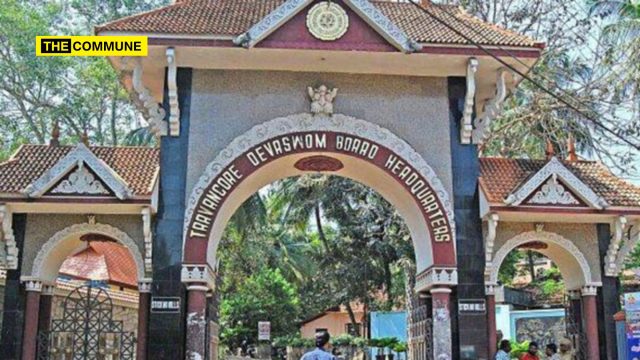
The Madras High Court on Tuesday, 7 April 2026, issued notice to the Election Commission of India and Tamil Nadu electoral authorities on a plea seeking directions to ensure that only those professing Hinduism, Sikhism, or Buddhism are permitted to contest elections from constituencies reserved for Scheduled Castes (SC), as reported in Bar and Bench.

The plea was filed by Hindu Makkal Katchi (IMK) leader Arjun Sampath in the case titled Arjun Sampath vs Chief Electoral Officer.

A Bench comprising Chief Justice SA Darmadhikari and Justice Arul Murugan permitted advocate Niranjan Rajagopalan, appearing for the Election Commission, to accept notice and seek instructions.

The Court directed that the matter be listed after two days for further hearing.

During the hearing, the Bench raised concerns over the practical enforceability of the relief sought, particularly questioning how Returning Officers could verify a candidate’s religion at the stage of scrutiny of nomination papers.

“Returning Officer has to go by the certificate and declaration filed,” the Bench observed, noting that candidates declare their status through caste certificates and sworn statements at the time of filing nominations.

The Court further questioned how authorities could go beyond such declarations.

“How will you test it?” the Bench asked, referring to situations involving conversion or reconversion, which may require evidence and adjudication beyond the scope of election officials.

It also noted that if a declaration is later found to be incorrect, it would give rise to a dispute requiring appropriate legal proceedings.

“If ultimately it is found that the certificate is not rightly used, it is a dispute,” the Court remarked.

The Bench additionally flagged the constitutional bar under Article 329(b), which limits judicial interference in electoral matters once the election process is underway.

The petitioner relied on the Constitution (Scheduled Castes) Order, 1950, arguing that Scheduled Caste status is confined to persons professing Hinduism, Sikhism, or Buddhism.

The plea also cited a recent judgment of the Supreme Court of India holding that persons professing other religions cannot be treated as members of Scheduled Castes, terming the disqualification “categorical and absolute.”

The petitioner contended that Returning Officers must be directed to strictly scrutinise nomination papers and reject ineligible candidates at the threshold.

However, the Court questioned whether such directions would effectively require a “roving enquiry” by election officials into candidates’ religious identity.

The Bench declined to grant any interim relief, observing that nothing irreversible would occur in the next 48 hours and that the issue could be examined in detail on the next date of hearing.

The matter will now be taken up after two days, when the Election Commission and other authorities are expected to place their responses on record.

Subscribe to our channels on WhatsAppTelegram, Instagram and YouTube to get the best stories of the day delivered to you personally.
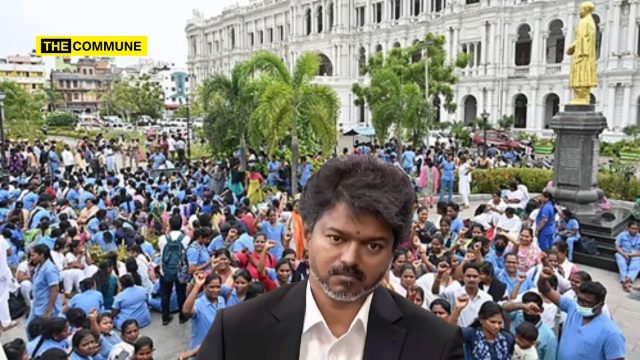
You Can Be In Govt, But System Is Ours: Delhi HC Restores X Account Of Nimo Yadav Who Derogated Indian Army While Vijay Gajera Remains Suspended

Pro-Congress Pro-Islamist X Handle ‘Dr Nimo Yadav 2.0’ Claims Livelihood Gone After Govt Withholds Account

In a striking display of selective justice, the Delhi High Court on Monday ordered immediate restoration of the parody account “Dr. Nimo Yadav”, run by petitioner Prateek Sharma, despite its history of derogating the Indian Army and defaming PM Narendra Modi, while accounts like Vijay Gajera’s remain suspended without relief. Justice Purushaindra Kumar Kaurav passed the order amid backlash over perceived government favoritism, effectively signaling: “You can be in government, but the system is ours.”

As reported in LiveLaw, the court directed X to restore Sharma’s entire “Dr. Nimo Yadav” account immediately, while keeping specific allegedly objectionable tweets under temporary block. It issued a similar directive for Kumar Nayan’s “Nehr Who” account, one of 12 blocked under MeitY’s directives. The bench further ordered petitioners to appear before MeitY’s Review Committee, where the ministry must demonstrate if tweets were correctly blocked under Section 69A of the IT Act, ensuring “principles of natural justice shall be followed.” A detailed order copy is awaited.

This comes as parody accounts like Nimo Yadav, known for Army insults and AI-manipulated anti-Modi content, get fast-tracked relief, contrasting the ongoing suspension of Vijay Gajera’s account, blocked for exposing Pakistani supporters without comparable judicial intervention.

Advocate Vrinda Grover, for Sharma, blasted the process: “What is the legal scheme? The legal scheme cannot be that you violate my fundamental rights, when I move a constitutional court then in order to avoid judicial scrutiny you quickly send me…that can never be the scheme in this country…Reasons have to be in the order, and blocking is of information. Blocking order passed by Respondent No.1 (UOI) is to withhold my entire account, not information…This is a totally illegal arbitrary order. To ask me now, after you have blocked my account (not url) on March 19, you say now that ‘you come to the Review Committee’.”

She noted Sharma filed on March 25 after X’s March 19 notification of withholding, with zero prior Union communication: “petitioner received no communication at all from the Union Government. She said that the communication from Union had come after the petitioner had filed a petition before the high court.”

ASG Chetan Sharma countered: “Let her appear today, because we sent another email on 4th (April)…that exercise is necessary…there are three things, her March 19 communication states that till date no government authority has contacted me issued notice or provided opportunity to be heard, so this basically on pnj (principles of natural justice). Rule 14 is on PNJ.” He cited Rule 14 of Blocking Rules, claiming emails were sent for Review Committee appearance.

X Corp had informed the court the blocks stemmed from MeitY orders for “controversial posts and defaming Prime Minister Narendra Modi.” An affidavit detailed “defamatory posts” using photographs, videos, and AI content questioning the government and PM. On 19 March 2026, X objected to MeitY, stating the March 18 order fails Section 69A compliance: “the vast majority of the content in each of the X accounts does not appear to fall within the grounds specified under Section 69A and thus the Blocking Order issued is not proportionate.” X added no hearing opportunity was granted, and reasonable efforts for identifying blocked persons were absent.

Grover argued the order fell outside Section 69A domain, demanding full reopening. The ruling restores access pending review, fueling cries of two-tier justice where anti-Army, anti-India parody thrives but people like Gajera languish.

Subscribe to our channels on WhatsAppTelegram, Instagram and YouTube to get the best stories of the day delivered to you personally.
Fake Passports, Broken Timelines, Dubious IDs: Congress’s Attack On Himanta Biswa Sarma Crumbles In No Time

In the middle of a heated Assam election, the Congress party tried to hit Chief Minister Himanta Biswa Sarma with a blockbuster allegation: that his wife Riniki Bhuyan Sarma holds three foreign passports and is linked to a shell company in the United States holding assets worth Rs 52,000 crore. Within days, glaring inconsistencies in the documents brandished at the press conferences have turned the spotlight back on Congress itself.

What Congress Alleged at the Press Conference

At a press briefing in Guwahati on 5 April 2026, Congress spokesperson Pawan Khera and MP Gaurav Gogoi unveiled what they claimed was evidence of a massive offshore scam.

They made three core charges:

Multiple passports and foreign IDs – They alleged that Riniki Bhuyan Sarma holds three passports, from Egypt, Antigua & Barbuda and India in violation of Indian law.

They displayed photocopies or screenshots of an Egyptian passport, an Antigua & Barbuda passport, and a UAE “Golden Card” ID, claiming these showed undisclosed foreign citizenships and assets.

US shell company with Rs 52,000 crore in assets – Khera and Gogoi said a company named “HrinikiNandi LLC” in Wyoming belonged to the Sarma family and controlled 3.4 billion dollars (about Rs 52,000 crore) worth of assets.

They highlighted the name itself: “H” for Himanta, “Riniki” for his wife, and “Nandi” for their son Nandil, arguing that this was a family vehicle for parking money abroad.

Undeclared overseas properties in Dubai/UAE – Congress leaders also pointed to property “title deeds” and IDs linked to the UAE, claiming these proved hidden real‑estate holdings not declared in official affidavits.

Based on this, Congress demanded explanations from the CM, asked whether he had informed Indian authorities about alleged foreign passports, and framed the entire episode as a “Rs 52,000‑crore scam” involving his family.

What Public Records and Basic Forensics Actually Show

When journalists, independent researchers, and the Assam government started checking the documents, several hard facts emerged that badly undercut the Congress narrative.

The timeline problem: HrinikiNandi LLC

Wyoming Secretary of State records show HrinikiNandi LLC was incorporated on 3 April 2026 at 10:33 am local time.

Khera’s press conference showcasing this company as proof of a long‑running scam took place on 5 April 2026.

Congress’s own “minutes” document notes that the same company is shown as a member at a board meeting dated months before its official incorporation – a chronological impossibility.

In other words, there is no public record of HrinikiNandi LLC’s existence until two days before the allegations were made – yet it appears in Congress’s paperwork as if it had been operating long before.

The filing also lists Andrew Pierce of “Wyoming LLC Attorney” as organiser – a professional agent whose business is to register companies for anyone willing to pay a few hundred dollars online. That confirms how easy it is for any third party, not necessarily the Sarma family, to create such a vehicle.

Basic Document Errors in the “Three Passports”

Multiple media outlets have flagged extensive inconsistencies in the images Congress displayed. Key problems include:

Name and photo issues – Across different pages, the surname oscillates between “Sarma” and “Sharma”, even though her official surname is “Sarma” in Indian records.

The photograph used appears to be a publicly available picture, not a secure, original passport‑office image.

UAE ID card (Golden Card) – A standard UAE ID number encodes the year of birth in the second block. For a 1973 birth year, this should read “1973”. In the contested ID, it shows “1996”, which does not match the printed date of birth.

The card text lists nationality as Egypt, but the machine‑readable zone (MRZ) at the bottom encodes the country code “ATG”, which is for Antigua and Barbuda – a completely different country.

Antigua & Barbuda passport – The printed expiry date is 25 August 2031, while the MRZ line encodes the expiry year as 2025.

Fact‑checkers note that genuine passports and their MRZs are generated together, so such a mismatch is a textbook sign of tampering.

Egyptian passport – The visible passport number on the main page is A20799883, but the MRZ line reads A207998834, with an extra digit.

The English text lists nationality as “Egyptian,” but the Arabic text references Beheira, which is a state in Egypt, not a nationality.

Netizens and media outlets describe these as “glaring inconsistencies” that render the documents highly suspect.

The Title Deed and QR Code

The “title deed” shown as evidence of Dubai property also raises red flags:

The QR code, when checked by journalists and online sleuths, does not lead to any verifiable government record and instead throws up a generic image‑search‑type result.

Formatting and language issues in the deed further undermine its credibility, according to the same analyses.

The Ashraf Hussein ID trail

Internet users quickly linked one of the ID images used in the political material to an earlier “lost ID – please help”–type post, relating to a person named Ashraf Abdelkader Abdelsamad Hussein with a UAE ID number 784‑1996‑5557498‑8.

This strongly suggests that at least part of the visual material was scraped from social media and repurposed – which again supports the view that these are assembled digital composites, not authentic source documents.

Sarma’s Response: “Fake Documents” and the Pakistan Angle

Assam CM Himanta Biswa Sarma has flatly denied the existence of any foreign passports for his wife and called the entire dossier a fabrication. He has announced that his wife Riniki Bhuyan Sarma has filed an FIR against Pawan Khera over the allegations. He also stated that he intends to pursue civil and criminal defamation cases, arguing that presenting allegedly forged documents to influence an election could attract severe penalties under provisions corresponding to former IPC sections 420 and 468, and even stricter election‑related clauses.

Sarma has also alleged that a Pakistani social‑media group supplied the material used by Congress and that Pakistan‑based TV shows have recently run several debates openly hoping for a Congress win in Assam.

Later in the day, Sarma also shared a video recording of how they identified the actual owners of the two Dubai apartments cited in the Congress’ allegations – Md. Ahmad and Fatima Sulaiman, revealing that the Congress sourced the documents from Scribd, a claim that can be independently verified.

For a very long time, Himanta Biswa Sarma has been attacking the Congress and exposing their lies and connections, especially those of Gaurav Gogoi and his wife to Pakistan. The Congress seems to have failed yet again to push Sarma to a corner with their lacklustre ‘project’ that unravelled even before it could make any impact.

Subscribe to our channels on WhatsAppTelegram, Instagram and YouTube to get the best stories of the day delivered to you personally.
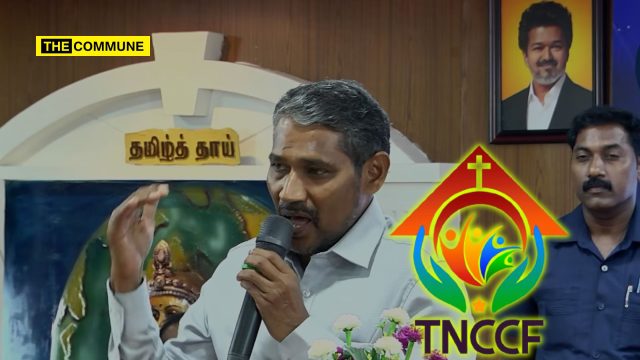
Tharkuri Vijay Kazhagam For A Reason: Joseph Vijay Missing, So TVK Candidate Uses Cardboard Cutout Of Vijay For Canvassing

Joseph Vijay Missing, Cardboard Cutout Campaigning: TVK Candidate Takes Actor’s Photo For Vote Canvassing

A cardboard cutout of Tamilaga Vettri Kazhagam (TVK) chief and actor C. Joseph Vijay became the centerpiece of candidate Navalpattu S. Viji alias Vijayakumar’s campaign in Tiruverumbur constituency, Tiruchi district, on Monday, 6 April 2026, highlighting the party founder’s notably sparse ground presence ahead of Tamil Nadu’s 2026 assembly elections.

Viji paraded the life-size cutout through streets to rally supporters, a tactic underscores Vijay’s absence from the political canvassing ground. While candidates like Viji sweat it out door-to-door, Vijay has confined appearances to just a handful of constituencies, citing vague reasons like scheduling conflicts and security concerns – excuses that are “silly” and evasive.

The Hindu captured visuals of the prop, which went viral with detractors mocking TVK as a “cardboard party,” a jab echoing DMK leader Udhayanidhi Stalin’s 2025 barb.

Despite TVK fielding candidates across Tamil Nadu, Joseph Vijay has canvassed fewer than 10 spots, including brief Trichy visits, avoiding broader tours. Observers see this as “too lazy, detached, and afraid” to face voters directly, eroding morale among local hopefuls who trusted his star power.

Viji’s effort reflects wider TVK challenges: leveraging Vijay’s fame remotely while building organizational depth.

Subscribe to our channels on WhatsAppTelegram, Instagram and YouTube to get the best stories of the day delivered to you personally.

Blood For Me, Tomato Ketchup For You: Fair Use Preacher Dhruv Rathee Issues Copyright Strike Against 12-Year-Old Aryan Tiwari After Getting Debunked

YouTuber Dhruv Rathee is under fire for issuing copyright strikes against DS Education, a channel run by 12-year-old Aryan Tiwari, after the boy factually challenged Rathee’s claim that Lord Ram consumed meat. Rathee’s action reek of hypocrisy, especially since his past advocacy against aggressive copyright enforcement.

The Ramayana Dispute Ignites

The controversy began when Aryan Tiwari uploaded videos around first week of April 2026, directly refuting Rathee’s interpretation of Valmiki Ramayana shlokas suggesting meat consumption by Ram. Using Rathee’s signature analytical style, Aryan presented Sanskrit verses and translations, arguing they refer to roots or herbs, not meat, amassing 1.8 million views.

Aryan titled his video “Shri Ram EAT MEAT? Shocking Shlokas from Valmiki Ramayan.” The video went viral, with supporters praising the child’s scholarly rebuttal.

Image Source: Saffron Charges X handle

Strikes Hit Aryan’s Channel

By 6 April 2026, YouTube notified Aryan of three copyright strikes from Rathee, triggered by brief clips (under 10 seconds) of Rathee’s original video.

Image Source: Saffron Charges X handle

Hindi notices warned of potential channel termination, prompting Aryan to post: “Dhruv Rathee has issued strikes against three of my videos,” sharing appeal screenshots.

Image Source: Saffron Charges X handle

Echoes of ANI Hypocrisy

Rathee’s actions clash with his May 2025, tweet decrying ANI’s “extortion racket” via strikes, urging YouTube to allow creators a deletion chance for short clips before penalties. Social media erupted, branding it “hypocrisy at its peak,” especially against a minor. Aryan appealed, pleading implementation of Rathee’s suggested policy.

This episode has turned into a textbook case of hypocrisy that Dhruv Rathee cannot easily explain away. The same creator who once attacked harsh copyright strikes as an “extortion racket” is now using the very tactic to silence a 12-year-old who challenged him with evidence. The contradiction is stark: when large agencies issued strikes, Rathee framed it as an attack on free speech; when faced with criticism himself, he allegedly responded with strikes over seconds-long clips.

What has intensified the backlash is not just the act, but the target – a minor presenting a structured rebuttal in Rathee’s own analytical style. This flips Rathee’s long-standing narrative on its head, raising a blunt question: was his stand against copyright misuse a principle, or just convenience?

In trying to curb a small critic, the question to Rathee is whether he practices the very freedoms he publicly champions.

Subscribe to our channels on WhatsAppTelegram, Instagram and YouTube to get the best stories of the day delivered to you personally.

Joseph Vijay TVK Cadres Harass And Threaten Old Man To Vote For Their Party

Joseph Vijay TVK Cadres Harass And Threaten Old Man To Vote For Their Party

In a video clipping that has gone viral on social media, a few cadre of the Tamilaga Vettri Kazhagam of actor-turned-politician Joseph Vijay are seen bullying an old man because he refused to entertain them.

In the video, the old man is seen asking the cadre to not come to the village or speak to him. In response, the cadre are seen saying, “Should we come or not? Should Tamilaga Vettri Kazhagam come or not?”

Another is heard saying, “Sir, do not talk about our Thalapathy. We will become the CM. We are challenging you. You’re saying TVK people should not enter this street? Thalapathy will win in Trichy and Perumbur. ”

The old man patiently says he is not interested in them entering the street and canvassing. But the cadre bully him instead.


View this post on Instagram


A post shared by Theekkathir (@theekkathir)

Subscribe to our channels on WhatsAppTelegram, Instagram and YouTube to get the best stories of the day delivered to you personally.
“Kill The Poisonous Snakes – RSS, BJP”, Congress President Mallikarjun Kharge Instigates Muslims

Congress 'President' Mallikarjun Kharge's Son Gives Up 'Ownership' Of Land Amid MUDA Row

Congress president Mallikarjun Kharge sparked a major political controversy during a rally in Nilambazar, Assam, ahead of the 2026 Assembly elections, after making remarks comparing the Rashtriya Swayamsevak Sangh (RSS) and Bharatiya Janata Party to a “poisonous snake.”

Addressing the gathering, Kharge said: “If a poisonous snake is going in front of you and you are doing namaz, stop your namaz and kill that poisonous snake, this is mentioned in the Quran. And I would say this that it is ok to break the Namaz, the poisonous snakes are RSS and BJP. If you do not kill them, you will never be safe.”

The remarks quickly triggered sharp reactions from all corners, alleging that the statement amounted to open incitement to violence against BJP and RSS workers. Several social media users and political commentators called for action by the Election Commission of India, demanding that the poll body take cognisance of the speech.

It is noteworthy that the reference cited by Kharge does not originate from the Quran, but is instead drawn from Hadith traditions, which are sayings and practices attributed to Prophet Muhammad.

Subscribe to our channels on WhatsAppTelegram, Instagram and YouTube to get the best stories of the day delivered to you personally.