Home Blog Page 27

“You Were Reposting At 2 AM, We Saw Whose Legs You Were Looking At”: EPS In Full Form; Once Again Roasts Udhayanidhi Stalin

EPS Roasts DMK Scion Udhayanidhi Stalin For 'Liking' Photos Of Actress On His Official Instagram

After taking a dig at MK Stalin by referring to him as ‘Thiruttu Rail’ and then saying ‘Paldayil is mouthing punch dialogues’ referring to DMK scion Udhayanidhi Stalin, AIADMK chief Edappadi K Palaniswamy is on a roll yet again.

This time, he once again referred to Udhayanidhi Stalin’s action that had left him redfaced once.

EPS had, a few months ago, mentioned this incident but he decided to up the ante against the DMK and once again repeated it to his audience.

Speaking at the meeting, he said, “While canvassing for votes for a fellow candidate, EPS said, “Today Udhayanidhi is Tamil Nadu’s deputy CM. But at 2AM, what does he do? He makes a repost on Instagram. Whose legs are you looking for and making reposts on Instagram? Do we not know how to ask? And not just that, already you went looking for such legs and drank paldayil and escaped once. If you drink paldayil again, your body will not be able to handle it, brother. Our body is a strong one, I am a farmer. A farmer who does not see night or day and works hard. Udhayanidhi speaks derogatorily about such a farmer. Control your tongue. Your father and your grandfather have given you this post. Will I get such a post from my father and grandfather? If you were born like me in a village, in a farming family, grow from being a Branch secretary and rose to this level, you would have understood the value of that post. But Udhayanidhi Stalin is someone who does not know its value.”

What Did Udhayanidhi Stalin Do?

On 21 October 2025, Tamil Nadu Deputy Chief Minister Udhayanidhi Stalin faced widespread social media scrutiny after reposting photos from actress Nivaa’s Instagram account and subsequently deleting them amid criticism.

The incident sparked memes and critiques questioning the minister’s priorities, particularly at a time when the state gears up for the north-east monsoon. While DMK supporters defended the reposts as an attempt to humanize his public image, him resharing photos of actresses has become a political controversy with members of TVK, AIADMK and BJP slamming Udhayanidhi Stalin.

Who is Nivaashiyni?

Nivaashiyni Krishnan or ‘Bigg Boss’ Nivaa describes herself as a Model, Social Media Influencer, Digital Content Creator, and also an entrepreneur. She is a Chennai-based actress who made her Tamil film debut with the recent Tamil film “Oho Enthan Baby.”

Subscribe to our channels on WhatsAppTelegram, Instagram and YouTube to get the best stories of the day delivered to you personally.
DMK-Linked Druglord Jaffer Sadiq Used ‘Ganesha’, ‘Krishna’, ‘Sakthi’ Firm Names As Cover For ₹2,000 Crore Drug Network

Ex-DMK Functionary Jaffer Sadiq's Global Drug Syndicate Modus Operandi: From Using Indian Front Companies Like 'Ganesh Chemicals' And 'Krishna Chemicals' To Recruiting Drivers With International License To Move Drugs

On Monday, 6 April 2026 – just weeks before Tamil Nadu goes to the polls – Income Tax officials descended on more than 10 locations across Chennai linked to expelled DMK functionary and alleged drug kingpin Jaffer Sadiq. The locations raided include his JSM Residency in Crescent Road, his Pattinapakkam residence, his Egmore and Purasawalkam lodges, and the home of Tamil film director Ameer – a co-accused in the Enforcement Directorate’s chargesheet.

Reports suggest officials carried away documents in bundles, with raids extending to as many as 40 locations across the city. This is not a new story. But the April 6 raids, timed against the election backdrop, are a reminder that the Jaffer Sadiq case is far from over – and that one of its most quietly troubling dimensions has barely received the attention it deserves.

Look carefully at the companies through which the alleged Rs 2,000-crore pseudoephedrine trafficking network was routed, and you will notice something striking. The New Indian Express, in its November 2024 report on the ED chargesheet, listed the front firms that investigators say Sadiq used to move drugs, park money, and launder proceeds across 12 countries. The names on that list read like a directory of a Hindu business district: Aventa, Ganesha Chemicals, Krishna Chemicals, Samy Stores, Cube Impex, Sakthi Enterprises.

Image Source: The New Indian Express

A man named Jaffar Sadiq Abdul Rehman, running front firms called Ganesha Chemicals and Krishna Chemicals. It is not a coincidence. It is a strategy.

The Art Of Borrowed Identities

India is a country where a firm name carries cultural weight. In Tamil Nadu especially, names invoking Ganesha, Krishna, Sakthi or Samy signal deep roots in the Hindu trading community. They evoke trust. They suggest a Tamil business family, a decades-old local enterprise, the kind of shop you deal with because your father dealt with them. When a narcotics network needs to move goods across borders without attracting suspicion, names like “Ganesha Chemicals” or “Sakthi Enterprises” serve as camouflage. They blend in. They don’t raise red flags.

This is not paranoia or selective reading. The ED’s own chargesheet states that Sadiq used these outfits as “front or cover businesses” to route proceeds from the drug trade. The NCB too has noted that consignments were sent under cover of legitimate exports from these firms – pseudoephedrine hidden in desiccated coconut, health-mix powder and similar items. The names of the companies were part of the cover.

A Pattern With Historical Precedent

The use of a borrowed religious or cultural identity to deflect scrutiny is not new to India’s security calculus. The most chilling example is perhaps the most famous.

When Pakistani terrorist Ajmal Kasab landed on Mumbai’s shores in November 2008 with his Lashkar-e-Taiba team to carry out the most devastating terror attack on Indian soil, he was wearing a kalava – the sacred red thread that Hindus tie on the wrist after prayer. The intention was transparent: if anything went wrong, a kalava on the wrist was to peddle the Hindu terror narrative. But Kasab was caught alive. We know his name, his faith, his country and his handlers. Had he not been caught alive, had no other evidence survived, the kalava on his wrist would have fed conspiracy theories for decades.

The kalava trick and the “Ganesha Chemicals” trick are separated by scale and context but rooted in the same instinct: wear a Hindu mask to move more freely in Hindu India.

We have seen umpteen number of examples – Shop name Ram juice centre but the QR code reveals an Islamic identity.

The Jaffer Sadiq Network: A Brief Anatomy

For those coming to this story fresh, here is the trail. The NCB arrested Jaffer Sadiq in March 2024 after a raid at the Delhi godown of his company Aventa yielded 50 kg of pseudoephedrine. Further investigation uncovered what investigators described as one of the largest drug trafficking operations run from Tamil Nadu: approximately 3,500 kg of pseudoephedrine – a key precursor for crystal methamphetamine – dispatched in 45 consignments to Australia, New Zealand, Malaysia, Dubai and other countries, with an estimated street value of over Rs 2,000 crore.

The ED followed up with a money-laundering investigation, filing a chargesheet in September 2024 that named 12 individuals and eight companies as accused, including film director Ameer. Laundered proceeds are alleged to have been parked in movies, hotels and real estate, with Sadiq’s film ‘Mangai‘ described as “entirely funded” by drug money.

The Madras High Court granted Sadiq conditional bail in April 2025 after he spent over a year in custody. But the cases – both NDPS and PMLA – are still pending trial.

Six Firms, Six Hindu Names

Returning to that TNIE infographic from November 2024 – the six firms listed as the operational backbone of this alleged drug-and-money network are:

  • Aventa – the Delhi godown where the first NCB seizure happened
  • Ganesha Chemicals
  • Krishna Chemicals
  • Samy Stores
  • Cube Impex
  • Sakthi Enterprises

Of the six, at least four carry names that carry unmistakable Hindu/Tamil cultural resonance. Ganesha, Krishna, Samy (a common colloquial form of Swami, used widely in Tamil Nadu), Sakthi – these are names of Hindu deities. They are the kinds of names that populate every street of every Tamil town. Nobody would look twice.

That is precisely the point. Here is a man who was the NRI wing organiser of DMK’s Chennai West district. A man who chose, when setting up his alleged front companies, to give them the names of Hindu gods and Tamil Hindu cultural symbols. A man who was protected by DMK’s political umbrella long enough to allegedly run 45 drug consignments across five countries over nearly a decade before arrest.

The borrowed Hindu business names were not incidental. They were infrastructure.

Investigators reportedly acted on inputs about possible cash distribution linked to Sadiq’s network in parts of Chennai. Even while out on bail, the alleged financial structures he built – the front firms, the properties, the hospitality businesses, the film investments – continue to be scrutinised. JSM Residency, raided on April 6, was already attached by ED in September 2024 and remains under probe.

For voters in Tamil Nadu heading to the polls, the question is straightforward: how did a man with this alleged network operate for so long, so openly, within the structures of a ruling party?

The Mask Always Slips

Ajmal Kasab’s kalava did not save him. The sacred thread on a terrorist’s wrist fooled no one once the guns started firing and the cameras caught his face. Jaffer Sadiq’s Ganesha Chemicals and Krishna Chemicals did not ultimately save him either. The godown in Delhi’s Basai Darapur, the 50 kg of pseudoephedrine, the financial trail through eight companies and 12 individuals, the documents seized in bundle after bundle in four Chennai locations on April 6 – all of it has stripped the mask away.

Subscribe to our channels on WhatsAppTelegram, Instagram and YouTube to get the best stories of the day delivered to you personally.
“BSNL Cable Thief”: BJP Leader Annamalai Slams DMK Mouthpiece Sun News For Peddling Fake News About Tamil Teachers In Kendriya Vidyalaya

A claim by Sun News that there are “zero Tamil language teachers” in PM SHRI schools (Kendriya Vidyalayas) in Tamil Nadu has been refuted with official Ministry of Education data, prompting BJP Tamil Nadu president K. Annamalai to accuse the channel of repeatedly spreading misinformation.

On April 6, Sun News posted a breaking news graphic on X stating: “தமிழ்நாட்டில் உள்ள கேந்திரிய வித்யாலயா பள்ளிகளில் நிரந்தர தமிழ் ஆசிரியர்கள் இல்லை என அண்ணாமலை ஒப்புதல்” (No permanent Tamil teachers in Tamil Nadu’s Kendriya Vidyalaya schools, as admitted by Annamalai). The post included a graphic showing 522 Hindi teachers, 15 Sanskrit teachers, and 0 Tamil teachers, citing “Kendriya Vidyalaya websites.”

Annamalai responded directly on X, calling Sun News a “cable-thieving” channel aligned with the DMK that specialises in peddling falsehoods. He explained that Kendriya Vidyalayas were established primarily for children of transferable central government employees, making multilingual teaching – including Tamil – standard based on student preferences. He noted that after initial reports of 31 Tamil teachers working in these schools surfaced, Sun News shifted its narrative to claim they were not “permanent.”

DMK Members of Parliament, who have been submitting recommendation letters for admissions to Kendriya Vidyalaya schools for those they wanted over all these years, are also well aware.“, he said.

Official records confirm Tamil language instruction is actively provided. According to a Ministry of Education reply to Lok Sabha Question 1233 dated March 17, 2025, there are 34 Tamil language teachers across 34 PM SHRI Kendriya Vidyalayas in Tamil Nadu. The data also lists 69 Hindi teachers and 50 Sanskrit teachers in the same set of schools. A separate July 2025 parliamentary reply on general Kendriya Vidyalayas (not limited to PM SHRI) stated that Tamil is taught in 40 out of 46 KV schools statewide, with 31 schools employing contractual Tamil teachers following public demand.

Annamalai further highlighted the hypocrisy, pointing out that approximately 10,000 temporary teachers currently serve in Tamil Nadu’s state government schools. He questioned whether Sun News would similarly dismiss them as “not teachers.” He also criticised DMK-run private schools for reportedly fining students who speak Tamil in classrooms while the party projects “fake Tamil pride” externally.“

Publishing fake, inauthentic & unverified information is basically the DMK IT Wing’s full-time job. The Gopalapuram family-run news channel is behaving like an extension of that IT wing. Get your facts right,” Annamalai posted.

Subscribe to our channels on WhatsAppTelegram, Instagram and YouTube to get the best stories of the day delivered to you personally.
“State Has No Role In Defining Religion”: Jainacharya Yugbhushansuriji Challenges Supreme Court In Sabarimala Case

Sabarimala Review: Jain Acharya Seeks Shift From Individual Rights To Religious Autonomy

A fresh intervention has been made in the ongoing Sabarimala case, adding a new dimension to the legal and constitutional debate surrounding religious freedom. On 23 March 2026, Gitarth Ganga, a spiritual research institute led by Jainacharya Yugbhushansuriji, filed a review petition before the Supreme Court.

The institute, which has been active for over three decades, has urged the Court to revisit the framework through which religious rights are interpreted. In its petition, it has called for the restoration of religious freedom, recognition of religions and religious groups as legal entities, and a contextual interpretation of Articles 25 and 26 that reflects India’s civilisational ethos.

The development comes ahead of April 7, 2026, when a nine-judge Bench of the Supreme Court is scheduled to hear review petitions challenging the 2018 Sabarimala verdict. In that judgment, the Court had allowed the entry of women of all age groups into the Sabarimala temple, including those between 10 and 50 years.

In its submission, Gitarth Ganga has argued that courts should refrain from determining what constitutes “essential religious practice.” It has maintained that questions of faith and tradition must be decided by the communities that follow them, rather than through judicial scrutiny.

The petition also raises a broader structural concern, pointing out that religions originating in India — including Hinduism, Buddhism, Jainism, and Sikhism — lack formal recognition as legal entities. According to the institute, this absence prevents such religions from holding property in their own name, asserting legal rights, or approaching courts as independent entities.

Describing this as a significant gap in the legal framework, the institute has urged the Court to address the issue by granting clear legal status to religious institutions, thereby strengthening their ability to protect their interests.

The petitioner has further emphasised the need to maintain a clear separation between the domains of the state and religion, arguing that both operate in distinct spheres and should not encroach upon each other’s functions.

Here is a detailed conversation with the petitioner, offering deeper insight into these arguments and the broader implications of the case.

Q: How do you view the Supreme Court’s 2018 verdict, and what is your take on the 50–60 review petitions that have been filed since then?

A: During the review proceedings, the Apex Court chose to step back and frame a set of broader constitutional questions, seven larger issues, instead of limiting itself only to the matter of entry into the Sabarimala temple. Because of this wider scope, many parties have already stepped in and several new stakeholders have also shown interest. There is clearly an ongoing effort to identify and accommodate representative viewpoints so that the final judgment is both balanced and comprehensive. Naturally, a process of this nature takes time, and the Court will need that time to do justice to the issues involved.

When viewed through a civilisational lens, India’s religious traditions call for a more nuanced understanding. India has never been a theocratic state in the past, nor is it one today and there is little reason to believe it will become one in the future. At their core, Indian religions recognise a clear distinction between the domains of religion and the state.

It is neither appropriate for religion to step into the functioning of the state and assume its authority, nor for the state to intrude into the sphere of religion. This balance becomes even more important in a society like India, which is deeply pluralistic and home to multiple faiths rather than a single religious identity. A theocratic model, which elevates one religion above others, simply does not align with this diversity.

Politics, by its very nature, operates within the framework of governance and power. ‘Dharamniti’, or the ethical framework rooted in religion, is inherently wider in scope and is guided by the idea of justice for all. The state’s role is to function as a governing authority and ensure social justice for its citizens, that is its primary responsibility. Religion, on the other hand, is anchored in a more universal vision of justice, one that extends concern to all forms of existence. In that sense, when it comes to justice, the scope of religion is broader than that of the state.
Historically, the institution of the state is relatively recent, whereas religion has existed for thousands of years, long before the modern state took shape. This makes it essential to maintain a clear demarcation between the two. It is our expectation that, in the Sabarimala case, the Apex Court’s eventual verdict will clearly articulate and reaffirm this principle.

Q: If the Court does go ahead and define what constitutes “essential religious practices”, even though, in your view, it ideally should not, how do you see that playing out?

A: Why draw a line between what is “essential” and what is not in the first place? Even practices labelled as non-essential should not become the subject of definition or regulation by the State. If a particular matter does not adversely affect the State, there is no reason for it to step in without clear and sufficient cause. Those who follow a religion are already willing participants in its traditions and practices. Religions have existed and sustained themselves long before the Constitution came into being; they rest on their own foundations. The State has neither granted religion its existence nor its legitimacy. It has, instead, found its place in public life naturally, through its own relevance and acceptance among people.

That being the case, it is not the State’s role to tell religions what they should or should not practice. Questions of rituals, forms of worship and religious observances should remain outside the State’s reach. Why, then, create a framework that separates “essential” from “non-essential” practices as a basis for stepping in?

It is worth noting that Articles 25 and 26 of the Constitution do not explicitly use the term “essential” at all. The expectation, therefore, is that the State should stay away from religious matters, except under the six clearly recognised constitutional grounds: public health, morality, public order, social reform, other fundamental rights, and secular activities associated with religion.
Within these six boundaries, the Constitution does allow the State to regulate or intervene where necessary. However, relying on an “essential versus non-essential” test as a justification for interference goes beyond this mandate and does not stand on firm constitutional ground or is not a legitimate approach.

Q: In a city like Bombay, where migrants, or even those with criminal or hostile intent, may enter and operate, non-interference might seem reasonable in the context of Indian-origin religions. But could it become problematic if the State follows the same approach when it comes to Abrahamic religions as well?

A: The State certainly has the authority to act. Wherever there is a social crime, the State has full power to take necessary action. For instance, if someone commits a murder and then takes refuge inside a temple, it does not mean that the State cannot act against them. Law and order must always prevail.
Just as under the Indian constitutional framework, foreign embassies are treated as sovereign spaces; this principle is well-established in international law and recognized through the Vienna Convention, and there exists a comparable conceptual understanding.

However, in practice, religious institutions or places of worship have not been accorded the status of sovereign spaces within the constitutional framework. We believe that religious institutions should be granted a certain degree of sovereign recognition. At the same time, the State must retain the authority to take action in cases of crimes affecting society at large.

Q: If “Indian Oriental religions” are to be granted such a status while others are not, there has to be a clear and logical basis for that distinction. If the concern is that certain sections promote fundamentalism, then shouldn’t the focus be on addressing fundamentalism itself, rather than targeting any particular religion?

A: The real concern arises when there is an element of fanaticism, an excessive zeal that begins to breed intolerance. If any religion or its followers start displaying an aggressive, hostile, or confrontational attitude towards others, that is clearly a problem.

It is important to draw a clear line between religion and fundamentalism. Religion, in its true essence, is not the same as fanaticism. But when its principles are interpreted through an extreme or rigid lens, they can easily turn into fundamentalism.
Every religion has the right to express and practice its beliefs. That said, responding with intolerance, aggression, or attempts to silence others is neither justified nor sustainable. If such tendencies take hold, society risks sliding into rigidity and conflict, something that goes against the larger ideals of co-existence and mutual respect.

Q: This boundary… between religious wisdom and fanaticism… is a very thin line.

A: It is, without a doubt, a very meaningful and important boundary. It exists within every religion, and when understood properly, it has the potential to expand in a positive way. Within that space, one should be able to express thoughts, beliefs, and perspectives with clarity and openness.

At the same time, there has to be a conscious effort to ensure that such expression does not slip into imposition or fanaticism. The intent should be to share and deepen understanding, not to dominate or enforce. When this balance is maintained, religion continues to remain a source of ज्ञान (wisdom) rather than drifting into जनून (fanaticism).

One should follow, preserve, and practice their own system of faith with sincerity. But that should never translate into conflict, negativity, or intolerance towards others. Just as the State does not permit acts of disloyalty or rebellion against itself, in a similar way, attitudes or actions that foster hostility in the name of religion should have no place in a civilised society. These views are grounded in, and consistent with, our understanding of the scriptures.

Q: In terms of rights, it is often argued in the Sabarimala case that women do not have the right to enter the temple.

A: Women do have that right. However, there is a restriction that applies only during a specific phase of life. India’s religious landscape is incredibly diverse, with a wide range of traditions and places of worship. Not everyone is permitted to enter every religious space. In some places, even men are not allowed. Similarly, access to the sanctum sanctorum is not always open to all; there are often conditions and traditions that determine who may enter. In certain temples, entry is allowed even during the menstrual cycle, while in others, the practices are different.

This variation reflects the richness and diversity within Indian religious traditions. There are multiple systems of faith and ways of practicing them, all of which have been acknowledged and accommodated over time. At the heart of this is a deeply rooted sense of tolerance, which allows different traditions to coexist.
An individual has the freedom to choose. If someone feels aligned with a particular tradition, they are free to follow it; if not, they can choose another path. That freedom is always there. But then, what role does an outsider, someone with no connection to that specific faith, have in interfering? If those within a tradition are at peace with it, external intervention to decide what is right or wrong is like a stranger walking into a home and telling a content family how they should live.

Q: Within the framework of the modern Constitution, what does the term “Hindu” really mean?

A: In the constitutional context, especially under Article 25 – the term “Hindu” has been interpreted in a fairly broad sense. It is not limited to just one community, but is understood to include Jains, Buddhists, and Sikhs as well. In that way, several indigenous or what are often called “oriental” religious traditions are brought under a common umbrella and are governed accordingly.

It is often suggested that there was a certain inclination within the Constituent Assembly to reform these indigenous traditions. Many believe this approach was shaped, at least in part, by exposure to Western frameworks of thought. As a result, there seemed to be a greater openness to engaging with and reforming oriental religions, while showing a degree of hesitation when it came to similarly intervening in other religious traditions.
There were also intense and detailed debates within the Constituent Assembly on whether the right to propagate religion should be recognised as a fundamental right. At the outset, there was some hesitation about including such a provision. Eventually, however, it was incorporated, with the argument that without the right to propagate, the possibility of religious conversion would not meaningfully exist. All of this reflects the complexity of the discussions and the various pressures at play during the framing of the Constitution.

Q: What is the bridge between Article 25, which deals with religious rights, and Article 14, which speaks about individual fundamental rights?

A: Article 14 guarantees equality before the law and equal protection of laws; it is a core fundamental right. These rights are not limited only to the religious sphere; they extend across the broader social domain as well.
At the same time, the State is essentially a temporal, or worldly, authority, not a spiritual one. Its primary role is to govern society and ensure justice within the social framework. Religion, on the other hand, is rooted in personal belief and spiritual practice, and therefore lies largely outside the State’s direct domain, especially within a secular system.

It is also important to understand that equality does not mean treating every situation in exactly the same way. Real equality is about ensuring fairness among equals, not forcing inherently different situations into an artificial sameness.
Even today, there are several laws that, in practice, seem to raise questions about this principle of equality. Take, for instance, divorce cases, alimony is often viewed as the man’s responsibility towards the woman, while there is usually no equivalent expectation from a woman who is earning. If equality is to be applied in its true sense, then in situations where the woman is financially independent, there could be a case for shared responsibility. However, such a balance is often seen as missing. This is just one example; many similar concerns are raised in public discussions, even as debates around “inequality” continue to grow.

Historically, there was also the concept of Streedhan, or a woman’s own wealth. This referred to assets given to a woman over which she had complete and exclusive control. No one in the family had the right to claim even a part of it. Traditionally, it was also understood that parents gave to their children throughout life without expecting anything in return. In that sense, Stridhan played an important role in ensuring a woman’s financial independence. Even today, millions of women hold assets, whether in the form of jewellery or property, as part of their Streedhan, which continues to support their financial independence. At the same time, it is often argued that such traditional systems were gradually weakened during the colonial period. According to some, this has created a disconnect from cultural frameworks that once helped maintain social and economic balance.

There is, therefore, a need to revisit and better understand these cultural foundations, as they may still hold answers to many of today’s challenges. That said, one principle must remain non-negotiable: no individual should face injustice. Any system we uphold must be fair, balanced, and just for everyone.
The larger goal should always be to move towards a just, fair, and peaceful social order. And when we speak of the welfare of society as a whole, ensuring justice for women has to remain central to that vision. The focus should not be on continuing past inequities, but on building a framework that upholds dignity, fairness, and equal respect for all.

Q: In other constitutions, is the relationship between religion and the State any different, or does it lead to similar debates and tensions?

A: In many Western and European constitutional systems, what is described as secularism does not always translate into a complete separation between religion and the State. In practice, it can sometimes resemble what critics call “pseudo-secularism,” where the divide is not as clear-cut as it appears.

Take the United Kingdom, for instance. In its Parliament, Bishops hold reserved seats in the House of Lords and actively take part in discussions and policy-making. When religious figures are given such institutional roles, it naturally raises questions about how strictly secular the system really is. On the surface, it may seem secular, but a closer look at how it functions reveals a far more layered reality.

Historically, the idea of a codified constitution itself developed in the West. Before that, governance was more directly shaped by political authority. Over time, constitutions were formalised, and lawmaking became more structured. But as the number of lawmakers grew and perspectives began to differ, new complexities emerged. This made constitutional frameworks increasingly important as guiding anchors.

At the same time, a written constitution, by its very nature, is an inert document – it does not have a living consciousness of its own. This is where interpretation becomes critical, and debates around interpretation start to carry real weight. In earlier traditions, authority often rested with individuals or institutions seen as “living sources” of wisdom, which influenced decision-making in a very different way.

The United Kingdom again presents an interesting example, as it does not have a single written constitution. Authority flows from Parliament, and the system runs on a mix of conventions, statutes, and judicial principles. At the same time, the British monarch, such as Charles III, also serves as the Supreme Governor of the Church of England. This creates a unique arrangement where elements of religion and state authority remain historically intertwined.

In contrast, many other countries place a stronger emphasis on the “rule of law” and maintain a clearer institutional separation between religion and the State. The global picture, therefore, is far from uniform; each country reflects its own history and has arrived at its own balance between faith and governance.

Q: Some people say this case is an attempt to dismantle or weaken the Constitution.

A: No, that’s not a fair assessment. An issue like this, by itself, cannot fundamentally alter the Constitution. Changes of that scale require far deeper and more foundational questions to be addressed. Platforms like legal conclaves have, in fact, created space for lawyers and judges to engage in open and meaningful dialogue. The Constitution remains the supreme law of the land, and it is meant to rest on sound and enduring principles. Within its framework, interpretation should stay anchored in constitutional values. At the same time, it is often argued that the Constitution also contains a number of provisions related to administration and day-to-day governance, areas that some believe need not have been part of its core structure.

At its heart, a Constitution is meant to lay down the framework of power and governance, the foundational principles that are meant to stand the test of time. Detailed administrative or execution-related matters, according to some viewpoints, could have been kept outside this core framework, even though they eventually found a place within it. That said, whatever is valuable and relevant within the Constitution should be engaged constructively and upheld without bias. If certain principles serve not just the State but also contribute to the larger good of society and even the world, there should be no hesitation in preserving them. In fact, nations can set examples for others by adopting and demonstrating such positive principles in practice.

The emphasis, therefore, should be on nurturing ideas and guidance that can inspire and offer meaningful direction. It is also worth remembering that Dr. B.R. Ambedkar, one of the principal architects of the Constitution, himself acknowledged soon after its framing that there were gaps and scope for improvement.
As early as 1950, even before the first elected Parliament had fully taken shape and after the Constituent Assembly was dissolved, the First Amendment to the Constitution was introduced. It was a significant moment, and its long-term implications, especially in relation to fundamental rights, continue to be discussed and debated even today.

Q: Many people argue that while you call for the State to stay out of religious matters, there are also voices that believe certain religious traditions themselves need reform and change.

A: Our position is quite clear: if interference is justified, then the State does have the authority to step in. But before that happens, there must be a clearly defined policy framework in place.
If a State calls itself secular, it must act with neutrality and restraint. On the other hand, if it is theocratic, it will naturally lean towards protecting and promoting a particular religion. So the first and most fundamental question is this: are we a secular State or a theocratic one?

At the same time, if an existing tradition is found wanting and there is a genuinely better alternative, we are open to change. There is no rigidity in that sense. Reform is acceptable, but only when it is meaningful and constructive. That said, the larger question remains: what direction are we moving in? Are we aiming for a society with only one religion? Are we looking to erase all religions altogether? Is the intention to establish a theocratic order? Should there be coercion or suppression of belief? Should society be pushed towards conflict between communities? These are not small questions. They go to the very heart of how a society is shaped.

India has, for centuries, functioned as a pluralistic society where multiple faiths have coexisted. The real question is whether that pluralism is to be preserved, or whether it will be replaced by a system that privileges one belief over others or suppresses diversity altogether. Any reform or intervention, therefore, must be legitimate, balanced, and well-justified. If it is not, it will naturally face resistance. The guiding principle should be coexistence, fairness, and respect for diversity, not imposition or conflict.

Q: Apart from legal means, what other steps do you plan to take in this matter?

A: Beyond the legal route, there is a lot that can be done. Efforts can be made to build public awareness, shape informed opinion, and present the facts clearly so that people can understand the issue in its true light. Engaging in reasoned dialogue and constructive conversations is an important part of that process.
With a sincere sense of purpose, we are committed to contributing in this direction as well, using methods that are responsible, appropriate, and rooted in ethical engagement.

Q: Has there been any precedent in India where the Court has intervened in religion in a way similar to Sabarimala?

A: Reforms within religions have certainly taken place over time. But when the Court itself steps in to drive such changes, it can raise concerns about overreach. The judiciary operates within a secular framework, and its role is not to create or alter laws, but to interpret them.

The authority to bring about change ultimately rests with the State, through the legislature and the executive. The Court’s role is more limited; it is meant to interpret the law and ensure it stays within constitutional boundaries.

Q: How should this issue be framed – Religion vs. Social, or Orthodox vs. Progressive?

A: The more meaningful way to look at it is through the lens of justice versus injustice. The starting point should always be what is legitimate in terms of law and principles of justice. The goal is not to seek favour, but to seek what is right. If a claim is valid, it deserves to be recognised and upheld. And if there is injustice, it must be identified and corrected; that is ultimately the Court’s responsibility.

Religion, in that sense, does not need to become the central battleground of this discussion. Even in the Sabarimala case, there are multiple dimensions and stakeholders involved beyond just religion. The arguments, therefore, should be framed in the language of justice, not as a demand for favour.

It is also important to clarify that Acharyashri is not putting forward these views from a purely religious standpoint or to promote any one religion. The effort is to engage with what is appropriate and inappropriate within the framework of governance and public policy. The intention is to align with what is just and consistent with India’s political and constitutional ethos.
For example, when Narendra Modi spoke about “Raj Dharma” during elections, he was invoking a concept deeply rooted in Indian thought. Our scriptures have long discussed the duties and ethical boundaries of governance – what a ruler must do, and what must be avoided. When those boundaries are crossed, injustice follows.

In that context, the idea is to remind the State of its own guiding principles– its Raj Dharma. Similarly, the Court is being urged to interpret matters in a way that remains aligned with these principles.

The position, therefore, is clear. This is not about promoting religion; it is about seeking justice and upholding sound governance. References to scriptures are used only to illustrate principles of governance, for instance, texts like the Arthashastra explore what constitutes good statecraft and what does not. The focus remains firmly on justice, not on religious favour.

Q: You have studied the constitutions of many countries. As an Acharya, what drives you to engage with subjects like the Constitution, society, and civilization?

A: In our Guru-Shishya Parampara (lineage of teachers), I was fortunate to learn under revered Gurus who possessed deep and wide-ranging knowledge. It was, in fact, their insistence that I study these subjects. In the Indian tradition, a Dharmaguru is expected to have an understanding that goes beyond just scripture, because our texts emphasise that a spiritual guide should be able to offer well-rounded and meaningful guidance to society.

If someone approaches with a question related to economics or a social issue, a Dharmaguru should be equipped to guide them thoughtfully, with a clear sense of what is beneficial and what is not. Today, however, there is a growing belief that a religious teacher’s role should be confined strictly to religious matters, and that they should neither speak on nor engage with anything beyond that. In my view, that is a limited and incomplete understanding.

Historically, even kings would seek the counsel of spiritual teachers. When they faced political or administrative challenges, they would turn to Dharmgurus for guidance. That itself shows the broader and respected role such figures once held in society.
So, the idea that a Dharmguru should restrict themselves only to religious texts does not fully capture the tradition. Even Mahavira taught that one should not confine oneself to a single scripture. To truly understand Dharma, one must study different traditions, reflect on them comparatively, and then, with an open and neutral mind, accept what appears to be true.

Over time, and through the opportunities I have received, I have also tried to understand what works and what does not in the social sphere. By the grace of my teachers, this knowledge has been cultivated not for personal gain or any commercial purpose, but with a constructive intent, not to create division, but to contribute in a way that is meaningful and beneficial to society.

Background of the Case

The Sabarimala issue traces back to a writ petition filed before the Supreme Court in 2006, which sought directions to permit the entry of women aged between 10 and 50 into the Sabarimala temple. The petition also challenged Rule 3(b) of the Kerala Hindu Places of Public Worship (Authorisation of Entry) Rules, 1965, contending that it violated constitutional guarantees under Articles 14, 15, and 25.

In September 2018, a Constitution Bench of the Supreme Court, by a 4:1 majority, ruled that women of all age groups must be allowed entry into the temple. The judgment struck down the practice restricting women of menstruating age. Justice Indu Malhotra delivered the sole dissent, holding that the longstanding temple tradition deserved judicial deference.

The verdict triggered widespread protests across Kerala and beyond, with strong opposition from Lord Ayyappa devotees, including sections of women, who argued that the ruling interfered with established religious customs.

Following the backlash, multiple review petitions were filed. In November 2019, a five-judge Bench, by a 3:2 majority, noted that the issues raised in the Sabarimala case could have implications for practices in other religions. The Court therefore referred larger constitutional questions concerning religious freedom and the doctrine of essential religious practices to a nine-judge Bench for authoritative consideration.

With inputs from Vayuveg

Subscribe to our channels on WhatsAppTelegram, Instagram and YouTube to get the best stories of the day delivered to you personally.
DMK Mouthpiece Sun News Peddles Fake ‘Zero Tamil Teachers’ Claim On PM SHRI Schools, Official Data Exposes Lie

Sun News Peddles False ‘Zero Tamil Teachers’ Claim On PM SHRI Schools, Official Lok Sabha Data Exposes Lie

DMK mouthpiece Sun News is at it again – peddling lies with anything remotely related to the Modi government.

In the latest instance, Sun News shared a news card claiming there were ‘zero Tamil language teachers’ in PM SHRI schools in the state.

BJP leader Annamalai called out this lie and shared data debunking their baseless claim.

Official Lok Sabha records contradict the graphic’s blanket “zero” claim. A 17 March 2025, Ministry of Education reply confirms 34 Tamil language teachers across 34 PM SHRI Kendriya Vidyalayas (KVs) in Tamil Nadu, alongside 69 Hindi and 50 Sanskrit teachers.

The Ministry’s annexure to Lok Sabha Question 1233 (2025) explicitly states Tamil teaching provisions exist in PM SHRI KVs. Sanctioned posts prioritize Hindi, Sanskrit, and English, but Tamil is delivered via contractual hires or Tamil Virtual Academy (TVA) modules.

A later July 2025 reply on general KVs (not PM SHRI-specific) noted Tamil instruction in 40 of 46 schools statewide, with 31 using contractual teachers post-public outcry.

Sun News’ news card on the PM SHRI school language teacher numbers tallies 522 Hindi, 15 Sanskrit, and 0 Tamil teachers in KVS schools (sourced vaguely from “Kendriya Vidyalaya websites” as mentioned in the graphic), is furthering DMK narratives on Hindi ‘imposition’. However, it conflates general KVS staffing with PM SHRI schemes, ignoring verified Tamil teacher deployments

Subscribe to our channels on WhatsAppTelegram, Instagram and YouTube to get the best stories of the day delivered to you personally.
“Guy Who Drank Paaldayil Is Mouthing Punch Dialogues”: EPS Ruthlessly Roasts DMK Scion Udhayanidhi Stalin

"Even Paaldail Is Speaking, What To Do", EPS Takes A Dig At DMK Scion Udhayanidhi Stalin

AIADMK chief Edappadi Palanisamy has been mercilessly trolling the DMK first family in the past few days. After what seemed to be a mediocre campaign, EPS has upped the ante with his comments on MK Stalin and now DMK scion Udhayanidhi Stalin.

Speaking at a public meeting in Cuddalore, EPS said, “Udhayanidhi Stalin has started speaking now. All those who drank paldayil are now speaking punch dialogues. He should have gone to the other world long ago, but he’s still here taking our lives.


View this post on Instagram


A post shared by Tamil Janam (@tamiljanam)

This is not the first time EPS has made this reference. In 2025, speaking at a rally in Erode East, the former Tamil Nadu CM said, “When did Udhayanidhi come, we all know what he did. Who is he, Karunanidhi’s grandson, Stalin’s son. What other effort has he put in? Has he given his efforts for DMK? He is talking about me! Even Paaldail is speaking!”

 Why Udhayanidhi Stalin Is Called “Paaldail Babu”?

Udhayanidhi Stalin’s nickname “Paaldail Babu,” stems from two different stories. One theory behind the name involves the term “paaldail,” which is an insecticide, allegedly linked to rumors surrounding Udhayanidhi’s personal life. These rumors reportedly began when he was involved with actress whose name rings with a number. It is said that during the shooting of the film Idhu Kathirvelan Kadhal in 2014, Udhayanidhi and the female actor became romantically involved. The pair reportedly visited the Palani temple together, fueling speculation about their relationship.

Despite Udhayanidhi being married at the time, rumors of his affair with the lady film star spread. His grandfather, former Tamil Nadu Chief Minister Karunanidhi, is said to have warned him, but the relationship reportedly continued. In the film Nannbenda, Udhayanidhi cast one specific heroine as the female lead, further intensifying the rumors.

However, when she allegedly rejected his feelings, Udhayanidhi was reported to have attempted suicide, an incident that was widely spoken about in 2014. His supporters blamed the heroine, leading to a significant backlash against the actress. That is why the “polytoil” part came to the fore.

In 2021, actor-politician Radha Ravi reignited the controversy ahead of the Tamil Nadu Assembly elections by questioning Udhayanidhi Stalin’s relationship with the heroine. He made a derogatory remark about her, which led to Udhayanidhi’s political party temporarily distancing itself from Radha Ravi. Despite the controversy, Radha Ravi stated that he did not care about Udhayanidhi and the heroine’s relationship.

Subscribe to our channels on WhatsAppTelegram, Instagram and YouTube to get the best stories of the day delivered to you personally.
Complaint Filed Against Andhra VRO Alleging Fraudulent Use Of SC Quota After Conversion To Christianity

dalit christians caste discrimination scheduled caste sc conversion christianity

A formal complaint has been submitted to the Chief Commissioner of Land Administration (CCLA), Government of Andhra Pradesh, seeking immediate action against a Village Revenue Officer (VRO) in Bapatla district over allegations of fraudulent availing of Scheduled Caste (SC) reservation despite professing Christianity by NGO watchdog Legal Rights Protection Forum (LRPF).

The complaint pertains to Puli Seethaiah, currently serving as VRO at Champadu in Vemuru Mandal, Bapatla district. It has been alleged that he secured public employment under the Scheduled Caste quota but is no longer eligible to claim such benefits due to his professed adherence to Christianity.

According to the complaint, documentary evidence establishes that Seethaiah solemnized his marriage under Christian rites in accordance with the provisions of the Indian Christian Marriage Act, 1872. It has been stated that he married Smt. Yalavarthi Sri Lakshmi on 25 August 2022, at Jampani village in Bapatla district.

Official records indicate that the marriage was conducted by Pastor Rev. Sandrapati Yohan of the Telugu Baptist Church. A written confirmation dated 12 May 2025, issued by the pastor affirmed that the marriage was solemnized as per Christian customs. This communication was addressed to the District Minority Welfare Officer, Guntur, and was acknowledged through official proceedings dated 14 May 2025, with copies forwarded to relevant state authorities.

Further, as per the proceedings issued by the District Registrar, Bapatla, dated 25 June 2025, confirmed the registration of the marriage. As seen in the official document, the Registrar recorded that the marriage between Puli Seethaiah and Smt. Yalavarthi Sri Lakshmi was solemnized under Sections 32 and 54 of the Indian Christian Marriage Act, 1872, and that the marriage certificate (Sl. No. 43) issued by the Minorities Welfare Department on August 25, 2022, had been formally filed with the Registrar’s office on 7 December 2022.

The complaint asserts that by entering into a Christian marriage and professing Christianity, Seethaiah has voluntarily subjected himself to Christian personal law, thereby rendering himself ineligible to continue availing benefits reserved for Scheduled Castes under the Constitution (Scheduled Castes) Order, 1950.

It has been contended that individuals professing Christianity are not entitled to Scheduled Caste status, and therefore, his continued service in a post obtained under the SC quota constitutes a violation of constitutional provisions and deprives eligible candidates of rightful opportunities.

The complainant has urged authorities to initiate an immediate and time-bound inquiry to verify the caste status of the official. It has been further requested that, upon confirmation of the allegations, Seethaiah be terminated from service for having secured employment under false eligibility and for continuing to avail reservation benefits unlawfully.

In addition to action against the officer, the complaint has also sought accountability from the authorities responsible for issuing the Scheduled Caste certificate. It has called for disciplinary and legal action against officials who may have facilitated the issuance of the certificate despite alleged ineligibility.

The complaint has emphasised that the issue raises serious concerns regarding the integrity of the reservation system and has called for strict and exemplary action to prevent similar instances in the future.

Subscribe to our channels on WhatsAppTelegram, Instagram and YouTube to get the best stories of the day delivered to you personally.
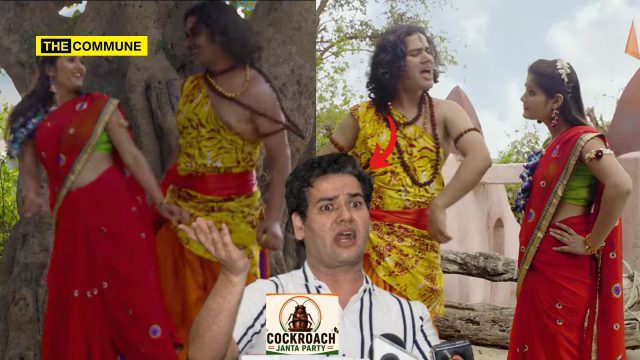
The Guardian Recycles Lies On BAPS Temple In New Jersey, Uses Dalit Angle Despite US Court Closing Case With No Charges

The Guardian Recycles Lies On BAPS Temple In New Jersey, Uses Dalit Angle Despite US Court Closing Case With No Charges

British newspaper The Guardian has published a fresh report reviving allegations related to the construction of the BAPS Swaminarayan Akshardham temple in Robbinsville, New Jersey, months after United States authorities concluded a detailed investigation into the matter without filing any charges.

The article, published on 2 April 2026, stated that the temple’s construction involved serious allegations including worker exploitation, visa-related violations, and medical negligence. It indicated that these claims pertained to the period between 2015 and 2023, during which the temple was being built.

As reported in OpIndia, the Akshardham temple, inaugurated in 2023, is considered the largest Hindu temple in the Western Hemisphere and has been described as a major cultural and spiritual landmark. Its construction spanned over a decade and involved participation from thousands of volunteers across North America and other regions. The organisation behind the temple has consistently maintained that the effort was rooted in seva, or voluntary religious service.

According to the Guardian article, workers associated with the construction had alleged that they were subjected to long working hours, in some cases extending up to 90 hours a week and were paid wages as low as $1.20 per hour. The report further claimed that workers’ passports were allegedly confiscated and that they had limited contact with their families during this period.

The publication also reported allegations that workers were not provided adequate protective equipment while working in dust-heavy environments. It stated that some workers were said to have used cloth or basic surgical masks instead of recommended safety gear such as N95 masks, and that access to proper medical care was allegedly restricted.

The report further claimed that some workers suffered from serious health conditions, including respiratory illnesses such as tuberculosis and chronic bronchitis. It also referred to allegations that at least two individuals, identified as Ramesh Meena and Devi Lal, were believed by some workers to have died due to silicosis linked to prolonged exposure to silica dust during stone carving.

In addition, the article alleged that around 200 workers from Dalit communities in India were involved in the construction and raised concerns regarding their treatment. It further claimed that these workers faced caste-based discrimination, including allegations that they were not allowed to worship in the temple due to their caste status.

The Bochasanwasi Akshar Purushottam Swaminarayan Sanstha (BAPS), the organisation behind the temple, has denied all allegations. The organisation has maintained that those involved in the construction were volunteers engaged in seva, or religious service, rather than employees, and that all activities were conducted in accordance with legal and religious frameworks.

BAPS has also stated that some individuals who were part of earlier legal proceedings later withdrew their participation, claiming that they had been misled into joining the case.

The controversy had previously led to legal action in the United States, including a civil lawsuit filed in 2021 by workers who alleged that they had been brought from India under religious visas and forced to work under exploitative conditions. Federal authorities had also conducted a raid at the construction site the same year as part of their investigation.

Following an investigation that lasted nearly four years, the United States Department of Justice and the US Attorney’s Office for the District of New Jersey closed the case in September last year without filing any charges.

Despite this, The Guardian report has brought the allegations back into public discussion, reviving a controversy that had largely subsided after the conclusion of official investigations.

The issue has also been the subject of earlier international media coverage, including reports by The New York Times, which had similarly highlighted allegations related to labour conditions and caste discrimination. However, no charges were ultimately established following official scrutiny in the United States.

Subscribe to our channels on WhatsAppTelegram, Instagram and YouTube to get the best stories of the day delivered to you personally.
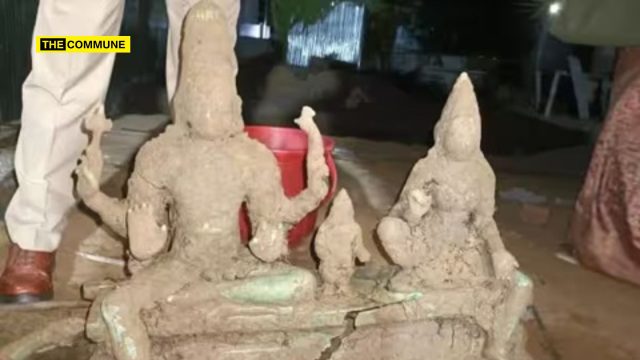
“They Called The Kerala Story, The Kashmir Files, Dhurandar ‘Lies’; They Are Experts In Lying”: PM Narendra Modi Takes Aim At Congress

“They Called The Kerala Story, The Kashmir Files, Dhurandar ‘Lies’; They Are Experts in Lying”: PM Narendra Modi Takes Aim at Congress

Prime Minister Narendra Modi on Saturday, 4 April 2026, strongly criticised the Congress and other opposition parties, accusing them of consistently spreading false narratives on a range of issues, including films and central government policies.

Addressing a public event, Modi alleged that opposition parties such as the Congress, the UDF, and the LDF routinely mislead the public.

“The Congress, the UDF, the LDF, they lie about everything as if it is their nature. They mislead the country as if it is their nature,” he said.

The Prime Minister specifically referred to controversies surrounding films such as The Kerala Story, The Kashmir Files, and Dhurandar, accusing opposition parties of dismissing them as false.

“They are experts in lying. When The Kerala Story came, they started saying that everything is a lie. When The Kashmir Files came, they started saying that everything is a lie. When the Dhurandar film came, they started saying that everything is a lie,” he said.

Modi also referred to past criticism of the Citizenship Amendment Act, reiterating his stance that opposition parties had misled the public on the issue.

“When the CAA came, they lied to the country so much. Today the CAA has come, the country has not suffered any loss,” he said.

Continuing his attack, the Prime Minister accused opposition parties of spreading misinformation about multiple policies, including the Foreign Contribution Regulation Act (FCRA) and the Uniform Civil Code (UCC).

“Whatever you do, you spread lies. The same lies are being spread about the FCRA. The same lies are being spread about the UCC. The UCC is in Goa. It has been there for decades,” he said.

“Their business is to spread lies, spreading lies about the FCRA, spreading lies about the CAA, spreading lies about Dhurandar, spreading lies about The Kerala Story, spreading lies about The Kashmir Files,” he added.

Subscribe to our channels on WhatsAppTelegram, Instagram and YouTube to get the best stories of the day delivered to you personally.
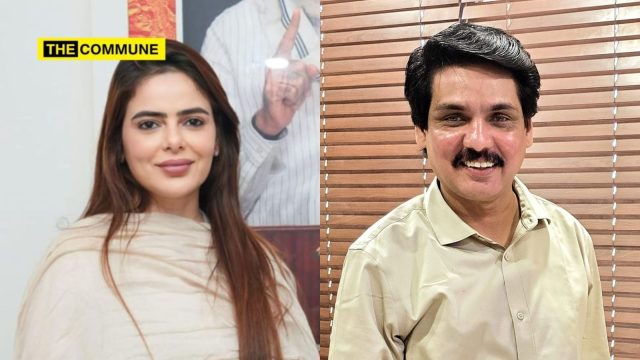
Tamil Nadu Elections 2026: Aravakurichi, Manachallur, Andipatti, Tiruchendur DMK MLAs Face Public Ire During Campaigning

Aravakurichi, Manachallur, Andipatti, Tiruchendur DMK MLAs Face Public Ire During Campaigning

With the 2026 Tamil Nadu Assembly elections approaching, several sitting MLAs of the Dravida Munnetra Kazhagam are facing visible public anger during campaign outreach, as voters across constituencies confront candidates over unmet promises and lack of basic amenities.

Public Anger Surfaces in Multiple Constituencies

Incidents of voter backlash have been reported from constituencies including Manachanallur, Aravakurichi, Andipatti, and Tiruchendur, indicating growing dissatisfaction at the grassroots level.

Aravakurichi: “No Roads, No Water-Why Should We Vote?”

In Aravakurichi, DMK MLA Elango, who has been renominated, faced sharp questioning from residents during a campaign visit to Pappanayakkan Patti in Velampadi Panchayat.

Locals confronted him over lack of basic infrastructure, asking, “Have you actually done anything at all? Nothing – no roads, no access to drinking water, no basic amenities whatsoever. So, how can I possibly cast my vote for you?”

Residents further alleged that he had not visited the area regularly, stating, “You haven’t provided us with a single amenity—be it roads, streetlights, or drinking water. Yet, here you are again, showing up only to ask for our votes. You only bother to visit this side of town once every five years!”

Elango was reported to have responded that he had visited frequently, but was unable to address the questions and eventually left the spot amid continued questioning.

Andipatti: Heated Exchanges Over Civic Issues

In Andipatti, sitting MLA Maharajan also faced public anger during campaign visits to villages including Kothampatti, Maniyarampatti, and Sithai Koundanpatti.

Residents gathered in large numbers and questioned him over lack of drinking water, poor roads, and inadequate drainage facilities. They stated that repeated complaints had not resulted in any meaningful action.

The situation reportedly escalated into heated arguments, with voters expressing frustration over what they described as prolonged neglect of basic civic needs.

Manachanallur: Candidate Faces Hostility

In Manachanallur, MLA Kathiravan reportedly encountered resistance from residents, who refused to engage with him during campaigning. Locals were reported as saying that Kathiravan, “kidney thirudan” had no right to enter their area, in reference to allegations linking him to a kidney trafficking scandal.

Tiruchendur: Contest Intensifies Amid Political Stakes

In Tiruchendur, sitting MLA Anitha Radhakrishnan has been fielded again by the DMK. When he went for campaigning in Thoothukudi area, he faced protests during campaigning in Kalvilai village near Mengnanapuram. Over 50 women blocked his vehicle, questioning unfulfilled promises made over the past 25 years and alleging that no development work had been carried out. As tensions escalated, the minister’s vehicle moved away from the spot. Some women also confronted DMK supporters, with one grabbing a party functionary’s shirt and demanding answers. DMK executive Umari Shankar attempted to pacify the crowd by assuring temple reconstruction after elections, but women rejected the offer, saying they would handle it themselves.

The DMK, which is contesting 164 seats as part of a broader alliance of over 20 parties, has introduced more than 60 new and young candidates this election, including professionals such as lawyers, doctors, and engineers.

With polling scheduled for April 23, 2026, these developments indicate that on-ground dissatisfaction could play a crucial role in shaping electoral outcomes across Tamil Nadu.

Subscribe to our channels on WhatsAppTelegram, Instagram and YouTube to get the best stories of the day delivered to you personally.