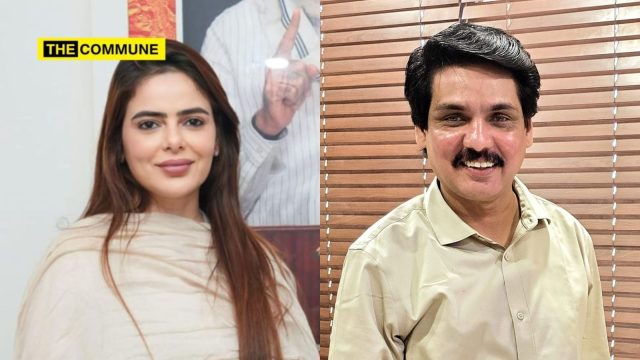
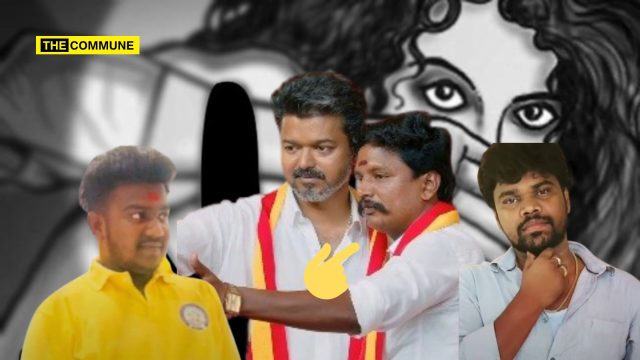
The Cyber Crime Wing of the Chennai City Police has arrested YouTuber Mukthar from a hideout in Mysuru, Karnataka, in connection with a case involving alleged derogatory and obscene remarks made against former BJP functionary and motorsport racer Alisha Abdullah and her newborn twin children during a YouTube interview.
The arrest comes days after BJP leader Tiruchi Surya Siva was taken into custody in the same case. Police had earlier stated that Mukthar was absconding and launched a search operation to trace him.
TIRUCHI SURYA ARRESTED
YOUTUBER MUKTHAR IS ON THE RUN
Tiruchi Surya Siva arrested by the cybercrime wing of the Chennai city police on Thursday for making derogatory remarks on BJP functionary Alisha Abdullah. A hunt is on for the YouTuber Mukthar.
According to police sources, the case originated from a complaint filed by Alisha Abdullah, who sought criminal action against Mukthar and Tiruchi Surya Siva for allegedly making defamatory, obscene and insulting remarks about her and her family through content published on a YouTube channel.
Alisha Abdullah submitted a complaint to the Chennai Police Commissioner on 3 June 2026, which was subsequently forwarded for investigation. In her complaint, she alleged that offensive remarks had been made against her and her newborn twin children in a podcast uploaded on the “My India 24×7” YouTube channel.
Alisha, who served as the State Secretary of the Sports and Skill Development Cell of the Tamil Nadu BJP, stated that she had been associated with the party since September 2022. She also identified herself as India’s first woman national racing champion in motorsports and the founder of the Alisha Abdullah Racing Academy. She subsequently resigned from the party.
According to the complaint, the controversy stemmed from an interview conducted by Mukthar in 2024. Alisha alleged that she had been repeatedly targeted because of her political affiliation and that personal attacks against her continued through public discussions and online platforms.
She further stated that after giving birth to twin children in March 2026, she shared a family photograph on social media featuring herself, her husband Naveen Devanraj, their children and senior BJP leader K. Annamalai. Following the post, she alleged that Mukthar and Tiruchi Surya Siva made remarks questioning the paternity of her children and made insinuations about her personal life during a podcast discussion.
The complaint alleged that the statements were false, malicious and deliberately intended to tarnish her reputation. Alisha stated that the comments caused severe mental distress, humiliation and reputational damage to both her and her family, particularly during the postpartum period following the birth of her children.
She further alleged that the remarks formed part of a sustained campaign of harassment and personal attacks intended to generate publicity and attract online viewership.
Based on the complaint, the Chennai Cyber Crime Wing registered a case and initiated an investigation. Police subsequently arrested Tiruchi Surya Siva. However, Mukthar allegedly went into hiding after the case was registered.
Investigators traced Mukthar to Mysuru in Karnataka and arrested him on Wednesday. Police officials stated that he had been evading arrest since the registration of the case.
YouTuber Mukthar has been arrested by the cybercrime wing from a hideout in Mysuru, Karnataka for making derogatory remarks against the BJP functionary Alisha Abdullah in an YouTube interview.#CrimeSelvarajpic.twitter.com/COACWGn34i
Police sources said the case relates to allegations of defamation, obscene content, derogatory remarks against a woman, and comments targeting minor children. Investigators also stated that the accused had allegedly made repeated objectionable remarks about women through online platforms.
Mukthar has now been taken into custody by the Cyber Crime Wing for further investigation. Police said additional legal procedures and interrogation are underway and that further action will be taken based on the findings of the investigation.
Subscribe to our channels on WhatsApp, Telegram,Instagram and YouTube to get the best stories of the day delivered to you personally.
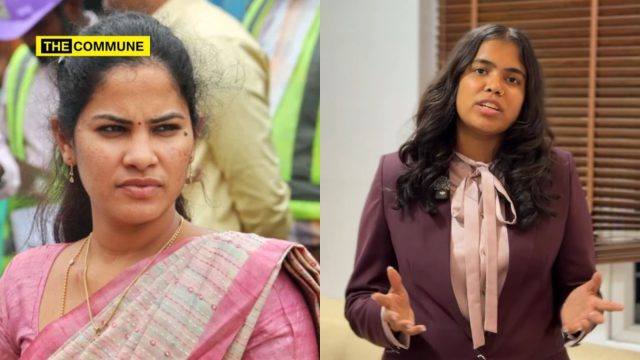
DMK Chennai Mayor Priya has criticized Industries Minister Keerthana’s ongoing visit to South Korea, alleging that the public came to know about the minister’s foreign trip only through social media posts and questioning the TVK government’s commitment to transparency.
The remarks come amid Minister Keerthana’s visit to South Korea, her first overseas trip since the TVK government assumed office in Tamil Nadu. During the visit, the minister met senior officials of Hyundai Heavy Industries and reportedly held discussions regarding a proposed shipbuilding facility in Thoothukudi.
However, the visit has generated political attention after questions were raised over the absence of any official announcement regarding the trip. Information about the minister’s visit emerged only after photographs and videos were shared through her social media accounts.
Addressing reporters, Mayor Priya said that despite the significance of the visit, no formal communication had been issued by the government explaining its purpose, agenda or expected outcomes.
She remarked that discussions had recently been held regarding industrial investments allegedly leaving Tamil Nadu under the TVK government, while the Industries Minister appeared to be focused on producing social media content. Referring to Keerthana’s online posts, Priya said the minister had not only been sharing dance videos but had now suddenly surfaced in South Korea without any prior information being made available to the public.
The Mayor argued that overseas visits undertaken by ministers for the purpose of attracting investments are typically accompanied by detailed announcements and interactions with the media. According to her, governments usually present investment plans, objectives and schedules before such visits take place.
She pointed out that in this case, no press briefing or official explanation had been issued and that the public learned about the trip only through the minister’s Instagram posts and reels.
Drawing a comparison with the previous DMK government, Priya said that whenever former Chief Minister MK Stalin travelled abroad to attract investments, detailed information was shared with journalists, including statistics and investment-related data. She described that approach as transparent governance and questioned whether the TVK government’s handling of the minister’s trip reflected the transparency it had promised before coming to power.
The Mayor further stated that the government had failed to issue even a basic announcement regarding the minister’s overseas visit and said that the public was entitled to know the purpose and expected outcomes of such official engagements.
Priya also used the opportunity to respond to recent allegations made by ruling party leaders regarding power outages and civic administration.
Rejecting attempts to link electricity-related issues with the Chennai Corporation, she said the Electricity Department and the Corporation function independently and have no administrative connection with one another.
She argued that electricity supply falls under the jurisdiction of the Electricity Department and not the Corporation, and therefore questions regarding power outages should be directed to the minister responsible for that department rather than civic authorities.
According to Priya, the ruling party has been attempting to blame the DMK and local body representatives for a range of issues simply because DMK members continue to hold positions in local government institutions.
She further pointed out that the Municipal Administration Department itself remains under the state government’s control and noted that the Chennai Corporation and the Chennai Metropolitan Water Supply and Sewerage Board are separate entities with distinct responsibilities.
Questioning the government’s approach, Priya asked how it could be justified to blame the Chennai Corporation for issues that fall outside its jurisdiction.
ஒரு அமைச்சர் வெளிநாட்டு பயணம் மேற்கொள்வதற்கு முன் எதற்காக செல்கிறோம் என்று ஒரு ப்ரஸ் ரிலீஸ் கூட வெளியிடவில்லை, அவர்கள் ரீல்ஸ் போட்டு தான் வெளிநாடு சென்றதே தெரியும்..
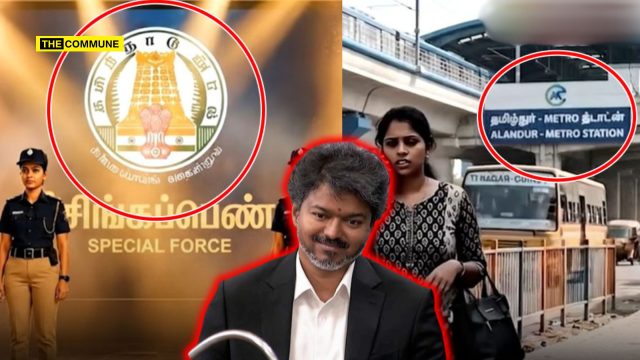
An AI-generated explanatory video screened during the launch of the Singapenn Special Force by Chief Minister Joseph Vijay on Tuesday, 9 June 2026, has come under criticism after viewers spotted multiple Tamil spelling and grammatical errors in the presentation.
The video was played during the official launch of the Singapenn Special Force at Chennai’s Rajarathinam Stadium, where the Chief Minister formally inaugurated the all-women special unit intended to strengthen the safety of women and children across Tamil Nadu.
However, instead of highlighting the objectives of the newly launched force, the AI-generated video quickly became the subject of discussion on social media after screenshots showing numerous Tamil language errors began circulating online.
The mistakes have triggered criticism, with many questioning how an official government presentation screened in the presence of the Chief Minister could contain such basic linguistic errors. The issue reflected a lack of quality control and inadequate review mechanisms within the departments responsible for preparing the presentation.
இன்று முதலமைச்சர் திரு. விஜய் அவர்கள் தொடங்கி வைத்த சிங்கப்பெண் சிறப்பு அதிரடிப்படை நிகழ்ச்சியில் ஒளிபரப்பப்பட்ட ஏஐ காணொளியில் இடம்பெற்றிருந்த தமிழ் வார்த்தைப் பிழைகள் தமிழ்நாட்டையே வெட்கப்பட வைத்துள்ளன.
The errors were particularly embarrassing given that the video was part of a high-profile government event focused on women’s safety and public outreach. Questions were also raised about whether the AI-generated content was properly vetted before being approved for public display.
While AI tools can assist in content creation, responsibility for ensuring accuracy ultimately rests with the officials approving the final output.
If a flagship government event attended by the Chief Minister could feature such errors, it raises questions about the level of scrutiny being applied to public-facing material produced by state departments.
Subscribe to our channels on WhatsApp, Telegram,Instagram and YouTube to get the best stories of the day delivered to you personally.
Chennai’s Perambur constituency, represented by Chief Minister Vijay, continues to face persistent power outages, with the latest disruption forcing three private schools attended by over 2,000 students to declare a holiday.
The situation escalated after a transformer in Erukancheri’s MKB Nagar reportedly caught fire and exploded on Tuesday (9 June 2026) night, causing extensive damage and plunging the locality into darkness. Residents said power supply had not been restored even several hours after the incident, leaving households without electricity and water.
According to local residents, the transformer located on 18th West Cross Street in MKB Nagar caught fire allegedly due to poor maintenance. The blaze spread rapidly, damaging a nearby auto-rickshaw and household items inside an adjacent residence. Firefighters from the Vyasarpadi Fire and Rescue Services Station rushed to the spot and brought the fire under control.
The fire reportedly destroyed an auto-rickshaw and several household belongings, including a sewing machine. With the transformer rendered inoperative, electricity supply to the locality remained disrupted through the night and into the following day.
The prolonged outage had a cascading impact on daily life. Residents complained that the lack of electricity also affected water supply, making it difficult for families to carry out basic household activities. Students preparing to attend schools and colleges, office-goers and senior citizens were among those affected.
As power supply remained unavailable, three private schools in the area, attended by more than 2,000 students, declared a one-day holiday.
Residents alleged that power cuts have become a recurring problem across several parts of Perambur, including Vyasarpadi, Sharma Nagar, MKB Nagar, Mullai Nagar and Sathiyamoorthy Nagar. They claimed that frequent and unannounced outages have become a daily occurrence, particularly during the night, causing severe inconvenience and loss of sleep.
The latest incident has further intensified public frustration, with residents questioning why such prolonged disruptions continue in the Chief Minister’s own constituency.
Locals also alleged that repeated attempts to contact Electricity Board officials often go unanswered. According to residents, despite being informed immediately after the transformer fire, officials took considerable time to respond to the situation.
They further claimed that only a few personnel visited the site on Wednesday morning, inspected the damaged transformer and left, while restoration work progressed slowly despite the large number of affected residents.
The incident comes amid growing complaints from residents of Perambur regarding recurring power cuts and infrastructure issues.
Subscribe to our channels on WhatsApp, Telegram,Instagram and YouTube to get the best stories of the day delivered to you personally.
The launch of the Tamil Nadu government’s Singapenn Athiradi Padai, a special all-women police force constituted to enhance the safety of women and children, has sparked controversy after the Tamil Nadu Police band performed songs from Chief Minister Vijay’s films during the official government function.
The event, held on 9 June 2026, marked the formal inauguration of the specialized force, for which the state government has allocated ₹354 crore. However, instead of the focus remaining on the new police initiative and its objectives, attention shifted to the music played during the ceremony.
Videos circulating on social media showed the Tamil Nadu Police band performing popular songs associated with Chief Minister Vijay’s film career, including “Singapennae” from Bigil and “Aala Poraan Tamizhan”, during the government-organized event.
The use of film songs linked to the Chief Minister at an official state function has drawn criticism from political observers and social media users, who questioned whether a government event intended to showcase a public safety initiative was being transformed into an exercise in personality projection.
The function was neither a private celebration nor a fan-organized gathering, but an official state event conducted using government resources and personnel. The deployment of the police band to perform songs from the Chief Minister’s movies blurred the distinction between public administration and political or personal glorification.
Police bands traditionally perform ceremonial music, marching tunes, national songs and official compositions during state functions. Against that backdrop, the decision to include film songs associated with the Chief Minister attracted scrutiny.
The controversy was further amplified after media criticism emerged over the role assigned to the police band. The state of the Tamil Nadu Police band was seen to have been reduced to playing film songs.
It is argued that institutions meant to function with neutrality and professionalism increasingly appear to be used for image-building exercises centered around the Chief Minister’s film persona.
Against this backdrop, the latest episode reinforces concerns that governance is increasingly being overshadowed by optics and fan culture.
The controversy has also led to questions about whether the significance of the Singapenn Special Force itself was diminished by the focus on the Chief Minister’s cinematic identity. The force was launched as a dedicated women’s police unit aimed at strengthening safety mechanisms for women and children across Tamil Nadu. The spotlight should have ideally remained on the personnel joining the force and the public safety objectives of the initiative rather than on songs celebrating the Chief Minister’s film career.
The episode symbolizes a larger transformation of the state’s administrative culture and that institutions such as the Secretariat are increasingly being used as stages for political image-building rather than solely as centers of governance and public service.
Subscribe to our channels on WhatsApp, Telegram,Instagram and YouTube to get the best stories of the day delivered to you personally.
Three Tamil news channels that have frequently carried reports critical of the TVK government’s handling of issues such as power outages, governance failures and public grievances have found themselves unavailable on sections of the Tamil Nadu Government Cable TV Corporation (TACTV) network, triggering accusations of censorship and political vendetta.
The controversy erupted after viewers reported that Polimer News, News Tamil 24×7 and Tamil Janam were no longer accessible through government cable connections. Questions were immediately raised over why only these three channels had been affected and whether the disruption was linked to their editorial coverage of the government.
We have reported earlier that Tamil Janam has been consistently blocked by the DMK government in the previous regime and now it continues in the TVK regime too.
Initial claims circulating on social media alleged that the channels had effectively been removed from the government cable network and that the disruption was linked to payment disputes involving the cable distribution system.
However, the Tamil Nadu government’s Fact Check Unit moved swiftly to dismiss these reports as misinformation.
In a statement, TN Fact Check said, “False Information Circulating About Removal of 3 News Channels From Government Cable Network.
Circulating Claim
False information is being circulated on social media claiming that the news channels Polimer News, News Tamil 24X7, and Tamil Janam have been removed from the Tamil Nadu government’s cable television network.
What Is the Truth?
This claim is false.
Reports stating that Polimer News, News Tamil 24X7, and Tamil Janam News have been removed from the Tamil Nadu Government Cable TV Corporation’s broadcasting network are incorrect.
Due to technical issues, the three channels could not be broadcast temporarily on only some set-top boxes. The concerned television channels have already been informed about the issue.
Work to rectify the problem is being carried out on a war footing through the contracted company, Mantra Industries Limited.
The claim that the disruption in transmission was caused by outstanding payments owed to the set-top box company is also false.
Do not spread misinformation.”
அரசு கேபிள் ஒளிபரப்பிலிருந்து 3 செய்தி சேனல்கள் நீக்கம் என பரவும் தவறான தகவல்
பரவும் செய்தி
தமிழக அரசு கேபிள் ஒளிபரப்பிலிருந்து பாலிமர், நியூஸ் தமிழ் 24X7 மற்றும் தமிழ் ஜனம் ஆகிய செய்தி சேனல்கள் நீக்கப்பட்டுள்ளதாக சமூக வலைதளங்களில் தவறான தகவல் பரவி வருகிறது.
TVK Education Minister Rajmohan subsequently echoed the same explanation, stating, “The reports claiming that the three channels have been removed are false. Due to technical issues, the three channels could not be broadcast temporarily on only some set-top boxes. The concerned television channels have been informed about the issue. Full-scale efforts are currently underway through the contracted company, Mantra Industries Limited, to rectify the problem.”
மூன்று சேனல்கள் நீக்கப்பட்டுள்ளன என்ற செய்தி தவறானது. சம்மந்தப்பட்ட மூன்று சேனல்களை தொழில்நுட்ப பிரச்சனைகள் காரணத்தால் தற்காலிகமாக சில செட் ஆஃப் பாக்ஸ்களில் மட்டும் ஒளிபரப்பு செய்ய இயலவில்லை. இது தொடர்பாக சம்பந்தப்பட்ட தொலைக்காட்சி சேனல்களுக்கு தகவல் தெரிவிக்கப்பட்டுள்ளது. இதனை…
While both the Fact Check Unit and the minister denied that the channels had been removed, their explanation effectively acknowledged that the broadcasts of the three channels had indeed been disrupted on at least some set-top boxes.
This has raised a fundamental question: if the issue is merely technical, why were only these three channels affected?
The explanation has been met with skepticism, particularly because the affected channels are among those that have consistently reported on power outages, governance issues and other matters reflecting poorly on the TVK government. Observers have questioned how a technical fault could seemingly impact only media outlets that frequently highlight the government’s shortcomings.
The episode has also renewed scrutiny of the TN Fact Check Unit itself. It has been long argued that the platform functions less as an independent fact-checking mechanism and more as a government communication arm tasked with defending the ruling establishment. The TN Fact Check Unit, which was created during the previous DMK government, continues to play the same role under the TVK administration by dismissing politically inconvenient allegations as misinformation.
குறிப்பிட்ட மூன்று ஊடகங்களின் ஒளிபரப்பும் தடைப்பட்டுள்ளது என்பதை ஒப்புக்கொண்டமைக்கு முதலில் நன்றி. அது எப்படி, தவெக ஆட்சியின் அவலநிலையை வெளிப்படுத்தும் ஊடகங்களுக்கு மட்டும், செட்டாப் பாக்ஸில் தொழில்நுட்பப் பிரச்சினைகள் வரும்?
A newborn died and a pregnant woman remained in critical condition after she was allegedly unable to receive immediate medical attention at the Kannagi Nagar Community Health Centre (CHC), where relatives and residents claimed no doctor was available when she arrived in labour. The incident triggered protests by local residents and drew criticism from anti-corruption activist and Arappor Iyakkam coordinator Jayaram Venkatesan.
In a statement issued on Tuesday, Venkatesan alleged that the woman had visited the Kannagi Nagar Community Health Centre after experiencing labour pains. According to him, no doctors were present at the facility when she arrived. He claimed that hospital staff arranged an ambulance and referred her to the Government Kasturba Gandhi Hospital for Women and Children (Gosha Hospital) after about an hour.
It was alleged that by the time the woman reached Gosha Hospital, the baby had died and that the mother was battling for her life.
He stated that a similar incident had allegedly occurred about a year ago, when another woman lost her life under comparable circumstances. According to him, residents had protested then and were continuing to raise concerns now, but there had been no significant improvement in healthcare services at the facility.
Stating that the Kannagi Nagar CHC was projected as a 24-hour maternity care centre, Venkatesan questioned how residents continued to face difficulties due to the alleged non-availability of doctors. He urged the Tamil Nadu government to explain the circumstances leading to the incident and take corrective action.
The incident also sparked protests by residents outside the health centre, with relatives of the affected woman alleging lapses in medical care.
கண்ணகி நகர் சமுதாய நல வாழ்வு மருத்துவமனையில் டாக்டர்கள் இல்லாததால் மேலும் ஒரு உயிரிழப்பு. இன்று காலை பிரசவ வலியுடன் ஒரு பெண் கண்ணகி நகர் CHC சென்றுள்ளார். அங்கு டாக்டர்கள் இல்லை. ஒரு மணி நேரம் கழித்து அவரை கோஷா ஹாஸ்பிடல் செல்ல ஆம்புலன்ஸ் ஏற்பாடு செய்துள்ளனர் அங்குள்ள மருத்துவமனை… pic.twitter.com/oDfRuqDqhj
According to the woman’s relatives, she had visited the hospital on the previous morning for a routine antenatal check-up. They alleged that hospital staff informed her that her expected delivery date was the following month and advised her that everything appeared normal.
The family stated that later that night, around 9 pm, she began experiencing abdominal tightness and discomfort. They took her to the health centre, where, according to them, staff checked the baby’s heartbeat and assured them that the pregnancy was progressing normally. Relatives alleged that she was given medication and sent home after being told that such symptoms were common during the later stages of pregnancy.
The following morning, her condition reportedly worsened. Family members said she experienced severe abdominal and pelvic pain and contacted them for help. She was then taken back to the Kannagi Nagar Community Health Centre.
Relatives alleged that no doctor was available when they arrived. They claimed that she was taken upstairs for examination and attended to by support staff while the family waited for further instructions. According to the family, they were asked to wait for an ambulance rather than being immediately informed of the seriousness of her condition.
The pregnant woman’s husband works as an auto-rickshaw driver, reportedly told relatives that he would have transported her himself had the family been informed that the situation was critical.
Family members further alleged that she remained at the health centre for nearly 45 minutes while arrangements were made for the ambulance. During that period, they claimed her condition deteriorated significantly and that she suffered heavy bleeding.
After she was transferred to Gosha Hospital, relatives said doctors informed them that efforts were focused on saving the mother’s life. The family stated that they received little information regarding her condition for several hours and were informed that she remained in a serious condition.
During the protest, residents questioned the functioning of the health centre and alleged that despite displaying boards indicating 24-hour services, the facility lacked adequate medical staffing during emergencies.
Some residents also raised concerns over the role of non-medical support staff in attending to patients and demanded an inquiry into the circumstances surrounding the incident.
NEWBORN DIES PREGNANT WOMAN REFERRED FROM KANNAGI NAGAR COMMUNITY HEALTH CENTRE
RESIDENTS PROTEST OVER LACK OF DOCTORS
A newborn died and its mother remained in critical condition after a pregnant woman who arrived in labour at the Kannagi Nagar Community Health Centre was… pic.twitter.com/bcxogjdko3
The protests revived longstanding complaints about healthcare services at the Kannagi Nagar Community Health Centre. Residents alleged that earlier demands for improved staffing, better emergency care and strengthened maternity services had not been adequately addressed.
They urged the Tamil Nadu government and health department authorities to conduct a detailed investigation into the incident, determine whether medical protocols were followed and take measures to prevent similar tragedies in the future.
No official statement from the health department or hospital authorities was immediately available regarding the allegations made by residents and relatives.
Subscribe to our channels on WhatsApp, Telegram,Instagram and YouTube to get the best stories of the day delivered to you personally.
At a time when the Tamilaga Vettri Kazhagam (TVK) government is facing mounting criticism over law-and-order issues and a series of crimes against women, reports have emerged suggesting that Chief Minister C. Joseph Vijay is considering relinquishing control of the Home Department and transferring the crucial portfolio to another minister, as reported by Junior Vikatan.
According to reports from within the government, Vijay has discussed the possibility of assigning the Home Department to another senior minister. While senior bureaucrats are said to have pointed out that the Home portfolio has traditionally remained with the Chief Minister, sources indicate that Vijay remains serious about the proposal.
If implemented, the move would mark one of the most significant political decisions taken by the Chief Minister since assuming office.
The reported development comes against the backdrop of growing public concern over law-and-order issues across Tamil Nadu. In recent weeks, incidents involving crimes against women, sexual offences, murders, narcotics-related crimes, and other serious offences have increasingly become subjects of political debate.
Opposition parties have repeatedly targeted the TVK government over the state’s law-and-order situation, arguing that the administration has failed to deliver on promises of stronger governance and public safety.
The Home Department occupies a unique position in any state government. The department directly oversees the police force, internal security, criminal investigations, intelligence gathering, prison administration, and overall law-and-order management.
For decades in Tamil Nadu, Chief Ministers have generally retained control of the Home portfolio themselves, considering it one of the most politically sensitive and strategically important departments in government.
This is why reports of Vijay considering handing over the department have attracted attention within political circles.
If this becomes a reality, this move can be interpreted as an acknowledgement that the government is struggling to contain growing concerns over law and order.
Nevertheless, the timing of the reported deliberations is significant.
The TVK government came to power promising a new style of administration and repeatedly criticised the previous DMK government over governance failures and public safety concerns. Less than a year into office, the government now finds itself facing similar scrutiny over crime, policing, and public security.
Political observers note that any decision to transfer the Home portfolio would inevitably be viewed through this larger political lens.
If the move goes ahead, a senior cabinet minister could soon assume responsibility for one of the most powerful departments in the Tamil Nadu government.
The larger political question, however, remains unavoidable: if law-and-order concerns have reached a stage where the Chief Minister is reportedly considering surrendering direct control of the Home Department, will the public view it as administrative reform or as an attempt to distance himself from growing criticism over the government’s handling of crime and public safety?
Subscribe to our channels on WhatsApp, Telegram,Instagram and YouTube to get the best stories of the day delivered to you personally.
The Enforcement Directorate (ED) has taken over the case against alleged international drug trafficking kingpin John Britto, who is currently absconding abroad in connection with multiple narcotics smuggling cases. Fresh revelations emerging from the investigation have reportedly brought his sister Leema Rose Martin and her daughter Daisy Aadhav Arjuna under scrutiny in connection with drug-related money laundering allegations in a report by Dinakaran.
The developments have sparked political controversy because Daisy is the wife of Tamil Nadu Minister Aadhav Arjuna, leading to allegations that the case has created pressure for the TVK government.
Drug Routes Through India and Sri Lanka
According to investigators, large quantities of high-grade narcotics are being smuggled into India from countries including Myanmar and Denmark through land routes. While central anti-narcotics agencies continue monitoring such activities, traffickers are allegedly using exports of food products and grains as cover to move narcotics into India.
Authorities believe that narcotics worth hundreds of crores are transported by rail through Chennai before being moved to Ramanathapuram and Mandapam, from where they are allegedly smuggled to Sri Lanka by fishing boats. Investigators claim that trafficking networks have been diverting the attention of central agencies while routing narcotics through Tamil Nadu and then onward to Sri Lanka before shipment to various international destinations.
Officials reportedly believe this network has been functioning for several years.
₹108-Crore Drug Seizure Exposes Alleged Network
According to the report, on 5 March 2024, the Central Narcotics Control authorities received intelligence that high-grade narcotics originating from countries such as Myanmar and Denmark were being transported through the Gulf of Mannar towards Sri Lanka.
Acting on the information, officers of the Central Narcotics Control Bureau and the Indian Coast Guard conducted a joint operation at around 5 a.m. and seized 99 kilograms of high-grade ganja valued at ₹108 crore that was allegedly being smuggled to Sri Lanka through fishing boats.
Interrogation of those arrested reportedly led investigators to John Britto (57), a resident of Thiruvalluvar Nagar, Sivanandhapuram, Sathyamangalam in Coimbatore district. Authorities allegedly identified him as a key figure with direct links to international drug trafficking syndicates.
Investigators claim that Britto headed drug trafficking operations into India and coordinated onward shipments to Sri Lanka.
Allegations of Operations Across 15 Countries
Authorities allege that narcotics were trafficked to as many as 15 countries through the network and that Britto accumulated thousands of crores of rupees through illegal operations. The investigation reportedly found that these funds were invested in various businesses through relatives and associates.
Officials claim that for several years Britto operated as a major international narcotics trafficker, moving large quantities of drugs into Ramanathapuram and Mandapam through trucks and cars before using fishing networks to transport them across international maritime boundaries to Sri Lanka.
Investigators have also alleged that narcotics were sold within Tamil Nadu through the same network.
Madurai Railway Station Methamphetamine Seizure
The report further states that acting on instructions allegedly issued by John Britto, three individuals from Chennai’s Vyasarpadi area – Yesuraj (35), Monisha Sheila and Philoman Prakash were involved in transporting narcotics by train in 2024.
During a surprise inspection conducted by Central Narcotics Control officers at Madurai Railway Station, authorities seized 37.645 kilograms of methamphetamine valued at ₹150 crore.
Investigators reportedly identified John Britto as a key accused in that case as well.
Fishermen Allegedly Used for Sri Lanka Operations
Authorities claim that narcotics brought into India were subsequently routed through Ramanathapuram, where fishermen identified as Remisthan, Ramesh, Johnson and Prathap allegedly received large sums of money to facilitate transport to Sri Lanka using fishing vessels.
The investigation reportedly found that payments were made through hawala channels.
John Britto is currently wanted in narcotics cases registered in Kerala and Gujarat. Authorities believe he has fled India and is hiding in countries including Myanmar and Denmark. He has been declared a wanted accused by central narcotics authorities.
ED Enters the Case
While the narcotics cases are currently being heard before special NDPS courts, investigators have also focused on alleged illegal financial transactions connected to the trafficking network.
The Enforcement Directorate subsequently registered money laundering cases against John Britto, his relatives and associates.
On 26 May 2026, ED officials conducted searches at five locations in Chennai and Ramanathapuram in connection with two cases involving the alleged smuggling of narcotics worth ₹258 crore to Sri Lanka.
According to information emerging from the searches, investigators allegedly recovered documents indicating that proceeds generated from drug sales had been invested in businesses operated by Britto’s close blood relatives.
ED Investigation Names Relatives
The report states that an earlier ED investigation dating back to 2018 found that money allegedly generated through drug trafficking had been invested in companies operated by relatives abroad and in assets held in their names.
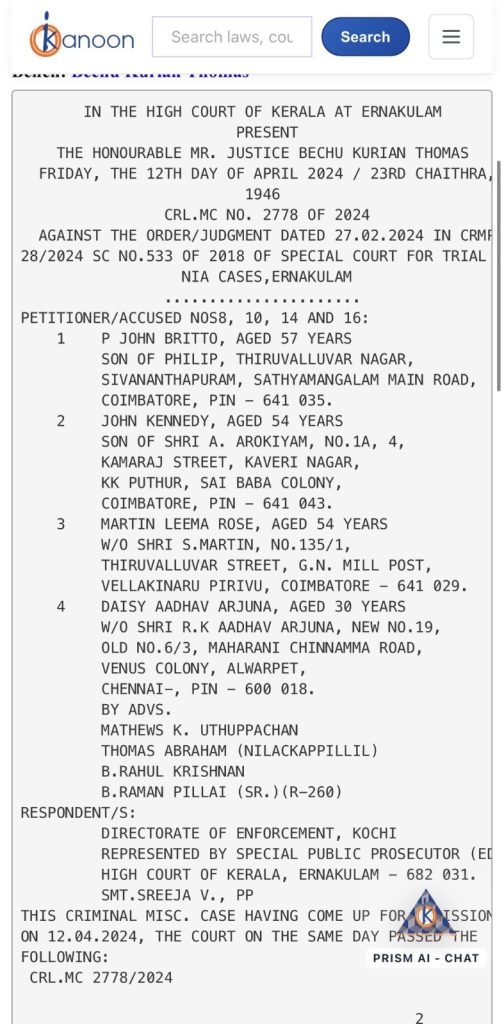
Investigators reportedly found documents suggesting that Britto’s sister, Leema Rose Martin (54), her daughter Daisy Aadhav Arjuna (30), who resides in Venus Colony, Alwarpet, Chennai, and relative John Kennedy allegedly acted as benamis in financial transactions linked to him.
Ernakulam Court Proceedings
The money laundering case was subsequently heard before a court in Ernakulam, Kerala.
According to the report, investigators informed the court that John Britto, his sister Leema Rose Martin, Daisy Aadhav Arjuna and relative John Kennedy were connected to the case.
Following this, the Ernakulam Special Court reportedly ordered the freezing of their passports to prevent them from leaving the country.
The report further states that Leema Rose Martin and Daisy Aadhav Arjuna obtained anticipatory bail after depositing substantial security amounts.
The court also reportedly authorised the Enforcement Directorate to arrest them if they violated bail conditions by travelling abroad without permission.
The court had further directed that any overseas travel for urgent purposes would require prior permission and the payment of a ₹1 lakh security deposit.
Political Connections
Leema Rose Martin subsequently contested the Assembly election from the Lalgudi constituency as an AIADMK candidate and won.
Her son-in-law, Aadhav Arjuna, contested from Chennai’s Villivakkam constituency on behalf of TVK and was elected.
He currently serves in the cabinet led by Chief Minister Vijay and holds the portfolios of Minor Ports, Highways and Public Works, according to the report.
Passport Petition Reveals Family Links
The report states that Leema Rose Martin and Daisy Aadhav Arjuna approached the Ernakulam Special Court seeking release of their passports in order to travel abroad.
It was during those proceedings, according to the report, that details of their blood relationship with John Britto became public.
The report also notes that while filing her election nomination papers, Leema Rose Martin declared that four criminal cases were pending against her.
Among them, she reportedly listed Crime No. 533 of 2018 registered under money laundering laws involving her brother and daughter.
The report claims this officially establishes the connection between John Britto, Leema Rose Martin and Daisy Aadhav Arjuna.
Questions Raised Over Anti-Drug Claims
The report points out that Chief Minister Vijay has repeatedly stated that a dedicated anti-narcotics wing was established to combat the spread of drugs across Tamil Nadu.
However, it notes that Daisy Aadhav Arjuna, the wife of Minister Aadhav Arjuna, and her mother Leema Rose Martin, the AIADMK MLA from Lalgudi, have been named in the ED’s money laundering case related to alleged proceeds from drug trafficking.
Social activists cited in the report have questioned how the state government intends to eradicate narcotics when individuals linked to a serving minister are facing such allegations.
Political Motive Alleged Behind Revival of Cases
The report further alleges that because the BJP-led Union government and the TVK-Congress alliance are political rivals, authorities have revived the John Britto narcotics and money laundering investigations after they had remained inactive for nearly two-and-a-half years.
According to information cited from Delhi sources, the ED’s money laundering investigation could potentially lead to the arrest of Daisy Aadhav Arjuna and Leema Rose Martin at any time.
Subscribe to our channels on WhatsApp, Telegram,Instagram and YouTube to get the best stories of the day delivered to you personally.
In a detailed and harrowing account, the TVK women’s wing functionary who has alleged gang rape by two Tamizhaga Vettri Kazhagam (TVK) functionaries has now directly accused Srivaikuntam TVK MLA Saravanan of continuous threats and has demanded legal action against him.
“I know how much I have suffered and how much I have been tormented. I am constantly being threatened by the MLA. They are asking me if I am in my village or not,” the victim said. “Legal action needs to be taken against the MLA. I need to know who is supporting Bala. I need justice.”
The two accused – TVK cadres Jayabal and Balamurugan have already been arrested for allegedly luring the woman under the pretext of securing a job, getting her into a car, drugging her soft drink, and gang-raping her. The victim has also previously stated that another woman was sexually assaulted alongside her on the same day, though she has refused to disclose that woman’s name publicly, sharing the information only with police and a magistrate.
In a detailed statement, the victim reconstructed the sequence of events leading up to the assault. She said the accused initially told her they would travel to Ramanathapuram to meet an agent who could get her a job. They also offered to help arrange an advance for her loan.
“He told me we will leave by 4 pm and reach by 8:30 or 9 pm. He said he would drop me back at my house by then,” she recounted. The group left at 4 pm. En route, at Thoothukudi, they bought her tea. Later, at Sayalkudi, they purchased Limca juice for her – several bottles, which were kept in the car.
She was then given a large bottle with a yellow lid. “He mixed grape juice in it and asked me to drink it. He said it would be good for dehydration and tiredness.” She drank because she considered him a friend. Twice more, she was told to drink from the same bottle so as not to waste it. “Since he was my friend, I didn’t have any doubt on him.”
Shortly after the third drink, she felt dizzy. She was told to lie down in the back of the vehicle.
When she woke up, she saw a large vehicle parked behind a dargah. A man named Jai was standing there. He told her about a festival in his village and said they could not return that night. He asked her to stay in another room, promising to take her to Thoothukudi in the morning, and added that Saravanan and Jay would be there. He told her not to lock the door.
“When I was lying down, he came into the room. In a short while, he started sexually abusing me,” she said.
The next morning, she confronted him, mentioning Saravanan’s name. She was told to go ask Saravanan himself whether what had happened was fair. “He threatened me that he will kill me if I go and ask him,” she alleged. Even when she was sober, she said, she was pushed into another room where Bala was sitting, and forced upon again.
“Only I know how much I suffered,” she said, adding that she has been continuously threatened by the MLA. “I have to take legal action against the MLA.”
The victim has demanded a thorough investigation into who supported the accused and has reiterated her call for justice.