Home Blog Page 43

Dravidian Model Data Privacy Scandal: How DMK Is Using ‘Unga Kanava Sollunga’ Scheme To Profile Voters

On 17 March 2026, AIADMK MP C. Ve. Shanmugam (CVS) sparked a controversy by mocking CM MK Stalin’s flagship survey scheme – “Unga Kanava Sollunga” (Tell Your Dream) saying at a public event, “I want Nayanthara, will you fulfil?” The remark drew widespread condemnation for being sexist. The backlash consumed Tamil Nadu’s media cycle entirely on March 17–18.

But on 18 March 2026, recently affected by DMK’s cyber goons, Dravidian Stockist ‘writer’ Meena Kandasamy posted a detailed thread arguing that the CVS controversy, while condemnable, had completely eclipsed a far more serious issue: that the Ungal Kanavu Sollunga (UKS) scheme is one of the largest data privacy violations ever carried out by an Indian state government. The following morning, digital rights and fintech policy researcher Srikanth Lakshmanan who had flagged this same issue when the scheme was first announced in January, published a thread demonstrating this was not an isolated lapse but the culmination of a four-year pattern of DMK data extraction and surveillance of Tamil Nadu’s population.

What Is the ‘Unga Kanava Sollunga’ Scheme?

Launched by CM Stalin on 9 January 2026 at Ponneri, Tiruvallur, the scheme was presented as a welfare outreach programme to assess government scheme effectiveness and collect citizens’ “dreams” for future policy. The operational structure:​

  • 1.91 crore households covered across Tamil Nadu
  • 55,000–73,336 SHG (Self Help Group) members deployed as field surveyors — private citizens, not government employees​
  • Each surveyor visited 30 households per day, collected filled forms, and uploaded data via a dedicated mobile app developed by Tamil Nadu e-Governance Agency (TNeGA)​
  • Each family received a unique Dream Card with a tracking ID
  • Survey ran from January 9 to February 10, 2026
  • Total taxpayer cost: ₹43.52 crore, of which ₹21 crore was allocated to Tamil Nadu Corporation for Development of Women (TNCDW)

What Data Was Collected?

The four-page survey form demanded:​

  • Ration card number, district, taluk, residential address, mobile number
  • Caste category – SC, ST, MBC, DNC, BC, OC
  • Name, age, gender, educational qualification and occupation of every family member
  • Which of 65 government welfare schemes the household benefits from
  • Feedback on scheme delivery effectiveness
  • The family’s top 3 personal aspirations
The Core Allegation: Mass Pre-Election Data Extraction

The substantive allegation, stated by both Meena Kandasamy and Srikanth Lakshmanan — is not merely about data privacy in the abstract. It is specific: ₹43.52 crore of public money was used to build a granular voter profiling database of 1.91 crore Tamil Nadu families, using private SHG volunteers with no statutory data protection obligation, timed precisely to the pre-election mobilisation window ahead of the 2026 Tamil Nadu Assembly election.

As Srikanth Lakshmanan put it in January 2026, when the scheme was announced: “Household surveys in AP, TS were common. Also had data malpractices of leaking this data to the ruling party. What was also common was incumbent govt was never re-elected. (Naidu, Jagan, BRS). So ₹43 Crore of taxpayer money to leak data to IT Cell?”

The specific structural risk: 55,000 private individuals now hold, on their phones, via the UKS app, the caste identity, ration card numbers, mobile numbers, welfare dependency status, and personal aspirations of nearly 2 crore Tamil Nadu families, with no law governing what they can do with that data after the survey concluded.

Srikanth Lakshmanan’s Thread Exposes A Four-Year Pattern of DMK Data Abuse

What makes the X thread especially significant is that it does not treat UKS as an isolated incident. It documents a systematic and escalating pattern of data extraction under the DMK government since 2021, which the UKS survey is merely the latest and largest expression of. Here is the full documented timeline he presents:​

1. June 2021 – The TNPDS Hack: Zero Accountability
The Tamil Nadu Public Distribution System (TNPDS) database was hacked and defaced. The hacker had access for 15 full days, during which he exfiltrated personal data: UID, ration card number, mobile number at 36 paise per record. The state government issued zero response and no audit was ordered.

​2. August 2021 – Budget Rewards More Data Collection Despite Hack

Rather than funding cybersecurity following the TNPDS hack, the DMK’s first budget increased funding to the State Farmer Database (SFDB) and DeTN (Digital Tamil Nadu); the same surveillance architecture under the guise of “data-driven welfare delivery.” The TNPDS hack was not mentioned once in the budget.

3. 2021 Onwards – SFDB: The ‘State Farmer Database’ as Mass Surveillance Spine

The SFDB is identified by Srikanth as the core surveillance infrastructure that UKS is built upon. He flags that it has been used to collect 360-degree citizen profiles, and that its household data was shared with JPAL (Abdul Latif Jameel Poverty Action Lab) researchers with Tamil Nadu’s population, in his words, being treated as “rats” for Nobel-linked research experimentation, without adequate public consent or data governance.

4. November 2022 – TANGEDCO Aadhaar Linking: Unconstitutional GO, Then Data Loss

The DMK government issued a GO mandating Aadhaar linking to electricity meters which Srikanth calls “grossly unconstitutional.” The implementation was so incompetent that citizens who completed the mandatory linking in December 2022 were asked to do it again in January 2023 because TANGEDCO had lost the data.

5. 2022-2023 – Tamil Nadu Becomes India’s Most Aggressive Aadhaar-Linking State

Through a systematic survey of gazette notifications, Srikanth documented that Tamil Nadu under DMK became more aggressive than any other state in mandatory Aadhaar linking to welfare schemes, education records, electricity, and more. He coined the term #DataSanghi for what he describes as the DMK being “more regressive on data than the BJP central government” while performing progressiveness in its anti-BJP rhetoric.

6. May 2024 – Tamil Nadu Police Data Breach: 800,000+ Records Exposed

A breach by a hacker named “Valerie” exposed over 800,000 Tamil Nadu police records -FIRs, police officer IDs, 54,000+ officer photographs, home addresses. Srikanth wrote to IT Minister PTR Palanivel Thiagarajan demanding an independent audit. Again: zero response.

7. 2024 – Telangana Model Warning Ignored

Srikanth had explicitly warned IT Minister PTR Madurai in February 2024 that Telangana’s similar “360-degree beneficiary database” model had collapsed with fraudsters exploiting it to siphon money from PM-KISAN and Rythu Bandhu schemes. He urged Tamil Nadu to shut SFDB and conduct a third-party audit. No action was taken.

8. September 2025 – Chennai One App Tender Fraud

Srikanth filed a detailed request for an independent audit of the Chennai One app implementation by CUMTA (Chennai Unified Metropolitan Transport Authority), alleging tender fraud in vendor selection. No response from TNeGA or the IT Ministry.

9. October 2025 – Zoho/CM Cell Tender Violation

Zoho was found to be hosting the Tamil Nadu government’s CM Helpline content management system in violation of tender requirements – a matter reported by Medianama. Srikanth flagged this as another instance of TNeGA’s structural inability (or unwillingness) to identify and act on vendor fraud.

10. January 2026 — UKS Survey: The Culmination

Against this backdrop of unaddressed hacks, unconstitutional data mandates, ignored warnings, and repeated data losses, the UKS survey was launched using executive orders alone, with no legislative authorisation, and no law governing the privacy of the data collected. As Srikanth notes: “It’s with this baggage, the Unga Kanavu Sollunga lacking legislation required to violate privacy under Puttaswamy was implemented using volunteers through executive orders.”

The Legal Violation At The Heart Of UKS

The Puttaswamy judgment (2017) of the Supreme Court declared privacy a fundamental right. For any state action that involves collection and processing of personal data especially sensitive categories like caste, welfare dependency, and household economic status, there must be a law passed by the legislature authorising it, not merely an executive order.

The UKS survey was authorised by an executive order from the Revenue and Public Administration departments. It was implemented through a mobile app by TNeGA. And the data was collected by 55,000 private SHG members – none of whom are government employees, none of whom are bound by official secrecy provisions, and none of whom face any legal consequence for misusing the data they now hold on their phones.

The Media Failure

The Dravidianist mainstream Tamil media gave DMK a complete free pass on data governance because DMK fluently speaks the language of anti-BJP federalism. Even mainstream media interviewed people like PTR Palanivel Thiagarajan but never touched upon this issue. ​

The CVS controversy is the perfect illustration: a reportedly sexist remark consumed 48 hours of airtime, while ₹43.52 crore spent on what can be called a constitutionally impermissible mass data extraction operation affecting 1.91 crore families went entirely unexamined.

What stands out most in this episode is not just the scale of the ‘Unga Kanava Sollunga’ exercise, but the near-total silence of large sections of the media that have historically been vocal on data privacy concerns.

The silence of The News Minute on the ‘Unga Kanava Sollunga’ exercise is not just conspicuous—it is telling. This is the same platform that once positioned itself as a watchdog on data privacy and electoral integrity, running strong, alarmist coverage when similar allegations emerged elsewhere. But when a state-backed operation in Tamil Nadu involves the collection of granular personal data from nearly two crore families through non-state actors, that outrage seems to evaporate. The standards haven’t just shifted—they appear to have collapsed entirely. What was earlier framed as a grave threat to democracy now struggles to merit even basic scrutiny. At some point, this stops being an editorial choice and starts looking like selective vigilance dressed up as journalism.

The Government’s Own Admissions

The government inadvertently confirmed the data concerns through its own actions. In January 2026, DT Next reported that residents were hesitating to share mobile numbers, ration card details, and caste data with surveyors, and the government had to issue instructions telling field workers not to compel reluctant households. This is an implicit admission that the public did not trust the data collection process and for good reason.​

School Education Minister Anbil Mahesh confirmed the full operational structure: 50,000 SHG volunteers fanned out to 1.91 crore homes, pushed four-page forms asking families to declare every welfare benefit and list their top three “dreams,” collected the completed forms days later, and uploaded everything via the app.

Bottom Line

The UKS scheme is not a welfare initiative with a poorly chosen name. It is, on the available evidence, the largest pre-election data extraction operation conducted by any Indian state government in recent memory – collecting the caste identity, economic status, welfare dependency, mobile numbers and personal aspirations of 1.91 crore Tamil Nadu families through private volunteers, with no statutory authorisation, no data protection framework, and no accountability mechanism. It sits atop a four-year documented pattern of DMK data governance failures that include a major PDS hack with zero accountability, unconstitutional Aadhaar mandates, police data breaches, ignored expert warnings, and serial tender violations. The CVS controversy was a distraction. This is the story.

Subscribe to our channels on WhatsAppTelegram, Instagram and YouTube to get the best stories of the day delivered to you personally.
The Truth Behind DMK’s Viral ‘Japanese-Speaking Students’ Claim

A few days ago, DMK Supporting YouTuber Senthilvel shared a video on his X handle stating, “This video is a creation of our Tamil Kelvi. It has received an overwhelming response, which brings immense happiness. Last week, we captured and released the contributions made by the DMK to Chennai’s development. That too received a massive response from lakhs of people. Now, this video explaining the Dravidian model’s achievements in education and industrial growth has also been widely appreciated. I have been consistently participating in media debates, presenting data and arguments in support of the Dravidian model government being formed again under the leadership of the Hon’ble Chief Minister M.K. Stalin. I also wrote the book “Why Dravidam 2.0? What for?”, which was released by the Hon’ble Deputy Chief Minister Udhayanidhi Stalin. Through the Tamil Kelvi YouTube channel, I continue to upload videos regularly. Through public meetings, seminars, and interviews on YouTube platforms, I am contributing in whatever way I can to ensure that this government returns to power. I will continue to do so with even greater intensity. This is not just another election. It is a great ideological battle. In this battle, Dravidam must win. For that, we must unite.

Stalin should continue.
Tamil Nadu should win.

Thank you 🙏
 T. Senthil Vel”

What Was The Video About?

Senthil Vel’s video constructed this narrative through a fictional short film format:

  • A Japanese car company executive visits a Tamil Nadu government school
  • A North Indian official named “Mukesh Chaudhary” speaks Hindi to the students; they don’t understand
  • A student suddenly greets the Japanese officer in perfect Japanese – “Konnichiwa”
  • The reveal: Tamil Nadu government sent students on an educational tour to Japan, where they learned the language
  • The punchline: CM MK Stalin gets the credit, patriotic music swells

They wanted this to mean: Tamil Nadu students don’t need Hindi because they’re learning Japanese; the Dravidian Model is producing internationally competitive students

Let us now explore the core lies that Senthilvel is making through his propaganda video.

DECEPTION 1: The Japan Trip Was Evidence Of Educational Excellence

The Japan trip did happen. In November 2023, the Tamil Nadu School Education Department took 24 government school students on an educational tour to Japan from November 3-9, accompanied by six teachers and two officers. They visited Miraikan (National Museum of Emerging Science and Innovation) and the University of Tokyo.

But here is what Senthil Vel deliberately omitted: the students were selected through a competition, not academic merit. Student Selva confirmed on camera: “Through a short film competition, the education department had taken us to Japan.” Student Poorvika from Annavasal Government Girls Higher Secondary School, Pudukkottai, confirmed: “After winning the state level short film competition, I was taken to Japan.”

No, they did not make/direct/produce/write short films – This was an extra-curricular activity award, a state-sponsored incentive trip for winners of a film analysis competition, not a programme for academic achievers, science champions, or mathematically gifted students. The students who went to Japan were not chosen because Tamil Nadu’s government school system had made them internationally competitive. They were chosen because they could analyse cinematography in a competition. These are entirely different things.

DECEPTION 2: Students Learned Japanese From The Trip

Senthil Vel’s video implies that a 10-day trip to Japan was sufficient for government school students to achieve conversational Japanese fluency. The trip lasted November 3-9, 2023, approximately one week. A student saying “Konnichiwa” (the most basic Japanese greeting, equivalent to “hello”) after visiting Japan is presented as proof of language acquisition at a functional level. This is straightforwardly dishonest. This is a scripted dramatisation, not a documentary claim. Children learn far more Japanese by watching Anime these days!

DECEPTION 3: This Proves Tamil Nadu Government Schools Are World-Class

This is the most damaging part of the debunk, and it is backed by hard numbers from two independent national surveys:

Evidence 1 – ASER 2024 (Annual Status of Education Report)

Conducted by Pratham Education Foundation, cited by World Bank, UNICEF, UNESCO, and Indian Parliament, surveyed 876 villages, 30 districts, 17,000 homes, 29,000 children aged 3–16 in Tamil Nadu in 2024. The Commune has a detailed report on ASER 2024 – Read here.

The findings for Tamil Nadu government schools:

  • Class 3 students: Only 13.2% can read a Class 2-level text. This means 86.8% of Class 3 students cannot read the textbook from the grade they just completed.
  • Class 5 students: Only 35.6% can read a Class 2-level text, meaning 64.4% of Class 5 students cannot read a textbook three grades below their current level.​

For comparison: Bihar, the state DMK supporters routinely cite as a symbol of educational backwardness, had 20.1% of Class 3 students reading at Class 2 level. Uttar Pradesh had 27.9%. Tamil Nadu at 13.2% is below both.

Evidence 2 – State Level Achievement Survey (SLAS), cited in Times of India

This survey of Class 3, 5, and 8 students by District Institutes of Education and Training found:

  • Class 8 students scored an average of 43.3 out of 100 in English and 44.7 out of 100 in Mathematics​
  • A district secretary of the Tamil Nadu Primary School Federation confirmed that many rural government schools operate with only two teachers for the entire school
  • New teacher appointments are made only when student strength crosses 70, meaning a single teacher often handles Classes 1 through 5 simultaneously​
  • The State Vice President of Tamil Nadu Primary School Teachers Federation confirmed that retired-age teachers who should have been relieved 12 years ago are still in service because the government cannot afford fresh appointments
DECEPTION 4: The Hindi-Resistance Framing

Senthil Vel deliberately embedded the Hindi imposition controversy into his narrative – the “Mukesh Chaudhary” character who insults Tamil students for not knowing Hindi, set against a Tamil student who triumphantly speaks Japanese. This is political microtargeting through fiction: it weaponises a genuine and legitimate political grievance (opposition to Hindi imposition) to manufacture emotional support for a false claim about Tamil Nadu’s educational quality.​

The anti-Hindi sentiment is real and has a legitimate political history but using it as an emotional wrapper to hide fabricated claims about government school quality is manipulation, not journalism.

What Is Legitimately Praiseworthy 

We can acknowledge two genuinely positive aspects that Senthil Vel embedded in his propaganda:

The school film festival scheme itself is a good idea. Exposing rural government school students to world cinema and building film literacy and analytical thinking is valuable especially for children who have never had access to OTT platforms or urban cultural exposure. The government deserves credit for this initiative. ​

The Japan trip itself is a good motivational incentive. Taking students who won a competition abroad is an excellent way to encourage participation and reward achievement. It is the misrepresentation of its significance that is the problem, not the trip itself.

The Bigger Story Nobody Has Reported: What Is Kalvi Suttrula?

​The Japan trip is not a stand-alone PR exercise. It is one episode in a formally named, annually expanding, multi-country, multi-crore programme called Kalvi Suttrula (Education Tour), introduced in 2022–23 by School Education Minister Anbil Mahesh Poyyamozhi.

2022–23 (First batch)

  • Malaysia and Singapore: Inaugural trips under the scheme​

2023–24

  • Japan (November 2023): 24 students, 6 teachers, 2 officers, visited Miraikan museum, University of Tokyo, Japan Tamil Sangam​
  • South Korea: 24 students from the children’s film club; 25 students each from quiz and rainbow clubs also went to South Korea

2024–25

Singapore (December 2024) – students visited Gardens by the Bay and other sites; Anbil Mahesh personally accompanied and posted updates​

Malaysia (February 2025) – 52 students from grades 6–9 accompanied by 4 teachers and officials, visited Kuala Lumpur for 5 days


View this post on Instagram


A post shared by Market Spoon (@market_spoon)

  • Germany (May 2025) – 22 students on a week-long tour to Munich under Kalvi Suttrula at a cost of ₹3 crore, visited BMW Museum, Dachau, Deutsches Museum, Swarovski Crystal Worlds​
  • Japan – 22 students from the sports club​
  • Hong Kong – also visited in this cycle​

2025–26 (Current academic year)

  • Malaysia (February 9–13, 2026) – 40 students with 2 teachers and 2 Chief Education Officers, the 8th international trip under the scheme

By May 2025, the School Education Department officially confirmed that 323 students had travelled abroad through Kalvi Suttrula across all batches. Countries visited to date: UAE, Japan, Malaysia, South Korea, Singapore, Hong Kong, Germany – seven countries across three continents.​

The Germany trip alone cost ₹3 crore for 22 students. Extrapolating across all 323 students and 8 trips, the total taxpayer expenditure on this programme across three years runs into tens of crores with no consolidated public accounting published anywhere.

​Every trip also sends senior officials abroad: Joint Directors, District Primary Education Officers, Chief Education Officers at additional undisclosed cost, with Minister Anbil Mahesh either accompanying or video-calling in, generating photos for his personal campaign website anbilmaheshforever.com.

DMK’s propaganda ecosystem specialises in using emotional storytelling, music, and identity politics to bypass factual scrutiny is well-established by this single case study. A government whose Class 3 students score below Bihar in reading levels, whose rural schools run with two teachers, whose Class 8 students average 43 out of 100 in English, is producing a viral cinematic short film about those same students speaking Japanese. That gap between reality and representation is not a communication failure but propaganda disguised as deception.

Subscribe to our channels on WhatsAppTelegram, Instagram and YouTube to get the best stories of the day delivered to you personally.
Self-Styled Film Critic Sucharita Tyagi Tries To Cope And Cover Her Meltdown Over Dhurandhar 2

Dhurandhar: The Revenge has clearly broken some people’s brains, and this 8‑minute rant by alleged film ‘reviewer’ Sucharita is Exhibit A.

The review is less a film critique and more an ideological tantrum dressed up in English and references. She opens by announcing that to talk about this movie is to talk about “the very face of contemporary Hindi cinema” and immediately positions herself as a noble dissenter surrounded by brainwashed stars, filmmakers and trolls. For a film that she claims is “critic‑proof”, she spends a remarkable amount of time anxiously trying to prove her own courage for criticising it.

Instead of basic criticism – what works, what doesn’t in terms of script, staging, editing, she treats a commercial spy‑action sequel as a human‑rights case file. The most revealing line is when she suggests that someone “better versed in the finer details of international humanitarian law” should comment on the ethics of the backstory, because a death‑row convict is recruited as an undercover agent. This is where the review collapses into self‑parody. This “film critic” needs IHL experts to examine a genre trope that has been used for decades across world cinema. Governments using condemned prisoners as assets is practically a cliché; to suddenly discover a moral crisis here only because the film’s politics offend her is laughable.

Her political discomfort bleeds into every frame. She cannot get over “New India, very male, very angry, very ready to wage war”, repeats that everyone else is “weak and incompetent”, and then declares the whole thing “unfazed propaganda”. The fact that the movie has a disclaimer, caricatured versions of real figures, obvious Easter eggs and heightened villains is acknowledged and then ignored because she needs it to be sinister, not pulpy. Modi’s speeches, demonetisation references, Dawood‑like dons, Atiq‑like gangsters: all of this is read not as deliberate, provocative masala but as proof of some dangerous project that must be resisted.

When she briefly concedes that the hair–makeup is excellent, the casting sharp, Ranveer competent, Arijit’s “Phir Se” beautiful, it’s almost accidental. She immediately runs away into detours about Triangle of Sadness, Iron Claw, Just Mercy – anything to signal that she belongs to a higher, more civilised cinema, not this vulgar, angry, massy world that actual audiences are flocking to. By the end she’s not analysing Dhurandhar; she’s policing it. If the film is “clap‑trapping” propaganda, her review is pure performative outrage: overblown, humourless, and so desperate to score political points that it forgets the first duty of criticism – engage honestly with the work on its own terms, not as a prop in your culture‑war monologue.

It is noteworthy that just a few months ago, when Dhurandhar (part 1) was released, held a group therapy session with her woke peers. She could not stop whining about the volume of negative comments that far exceeded her video’s views, leading her to question whether some responses were coordinated. At one point, she suggested, then quickly walked back, the possibility that people may have been “deployed” to target critics, clarifying she did not believe the filmmakers were involved. She also asked whether director Aditya Dhar should address aggressive fan behaviour. The therapy session or rather a group rant session was due to the backlash from viewers over genuine disagreement rather than organised trolling.

Subscribe to our channels on WhatsAppTelegram, Instagram and YouTube to get the best stories of the day delivered to you personally.
Tension At Thirupparankundram As Muslims Argue With Police Over ID Checks For Entry To Sikandar Dargah And Conduct Eid Prayers Atop Hill

Tension prevailed at Thirupparankundram hill in Madurai ahead of the Ramzan festival after police imposed entry conditions on devotees visiting the Sikandar Badhusha dargah.

According to visuals from the spot, Muslim devotees who had gathered to offer prayers questioned the police for stopping them and delaying their access to the hill, stating that prayers were scheduled for the morning and that such restrictions had not been imposed in previous years.

Police personnel deployed on security duty stated that only after recording the name, address and other particulars of each person would they be allowed to proceed up the hill. Devotees and representatives of Islamic organisations objected to the measure, stating that prayers had been conducted peacefully every year and that collecting personal details on the day of the festival hurt their sentiments.

Large numbers of people had begun arriving at the hill from early morning to participate in the Ramzan prayers, leading to congestion at the entry point where the verification process was being carried out. The situation escalated into a heated argument between the police and the devotees.

Following the development, Thirupparankundram Assistant Commissioner of Police Sasi Priya reached the spot and stated that the procedure being followed was routine and applicable to all visitors, adding that no new restrictions had been introduced and urging the public to cooperate.

However, several devotees maintained that being held back in large numbers on a religious occasion was inappropriate and warned that such measures could affect communal harmony. The standoff between the police and the devotees led to a tense situation in the area.

Subscribe to our channels on WhatsAppTelegram, Instagram and YouTube to get the best stories of the day delivered to you personally.
Dravidian Model: 24×7 TASMAC Liquor Sales Alleged Near IIT Madras, Residents Sound Alarm

24x7 TASMAC Liquor Sales Alleged Near IIT Madras, Residents Sound Alarm

Residents of Sriram Nagar, located near IIT Madras in the Saidapet Assembly constituency, have alleged that a TASMAC liquor outlet in the area is operating in violation of prescribed norms, with sales reportedly taking place round the clock.

According to local residents, the shop is said to open even before the legally permitted hours, with liquor allegedly being sold continuously throughout the day and night. They claim that such illegal operations have contributed to a rise in disturbances and criminal incidents in the neighbourhood.

Residents further expressed concern over the impact on students, noting that school and college-going boys and girls frequently pass through the area and are being exposed to an unsafe environment due to the alleged activities around the outlet.

Subscribe to our channels on WhatsAppTelegram, Instagram and YouTube to get the best stories of the day delivered to you personally.
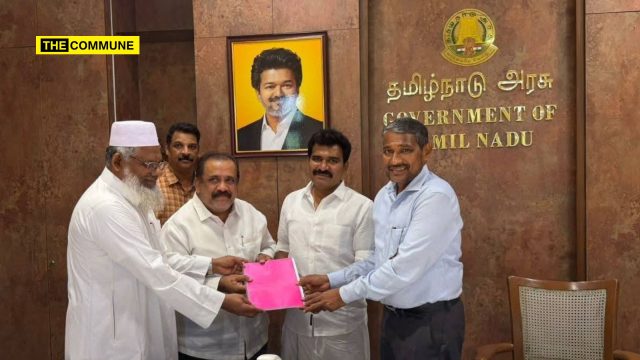
Dravidian Model Disaster: Fire In Purasaiwalkam Corporation Hospital Leaves Newborn Critically Injured

Fire In Purasaiwalkam Corporation Hospital Leaves Newborn Critically Injured

A fire triggered by an alleged electrical short circuit at a Corporation Hospital in Purasaiwalkam in Chennai has left a newborn baby with burn injuries, prompting an official investigation and raising concerns over safety protocols in public healthcare facilities, as reported in Tamil Getlokal.

According to initial reports, the incident occurred shortly after the infant’s delivery. The newborn, only hours old, sustained burns on the back and thigh. The baby has since been shifted to the Institute of Child Health for specialised treatment. Authorities have not yet released a detailed medical bulletin on the infant’s current condition.

Police have launched an inquiry into the cause of the fire, with preliminary indications pointing to an electrical fault within the hospital premises.

The child’s mother, who had delivered at the facility, described a sequence of events that has intensified scrutiny of hospital response and communication.

She stated that she had been under treatment for a prolonged period and chose the hospital based on the assurance of a senior doctor known to her. According to her account, the delivery procedure initially proceeded without complications, and she was briefly shown the baby following birth.

However, during the post-operative phase, she reported hearing panic among hospital staff. She stated that she witnessed the newborn sustaining burn injuries but was reassured by staff that the baby was safe.

The mother further stated that she has not been given clear information about her child’s condition. She expressed distress over being asked to proceed with discharge formalities without being informed about the baby’s status and demanded accountability from the hospital authorities.

The incident has sparked concern over emergency preparedness and electrical safety in government-run hospitals. Officials indicated that a detailed probe is underway to determine the exact sequence of events, including whether established safety protocols were followed.

Authorities are also expected to examine staff response during the incident and the communication provided to the patient’s family.

Further updates on the baby’s condition and the findings of the investigation are awaited.

Subscribe to our channels on WhatsAppTelegram, Instagram and YouTube to get the best stories of the day delivered to you personally.
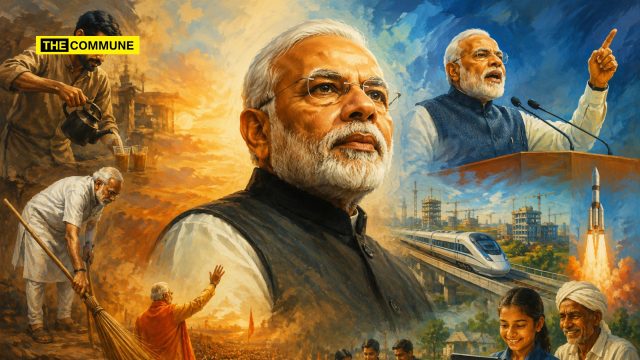
Fringe Dravidian Separatist Outfit Cadre Vandalizes Railway Station Nameboard With Hindi Names, Jumps In Front Of A Train And Dies, MK Stalin Hails Him As A Martyr

The death of May 17 Movement activist Siva Thileepan, who succumbed to injuries after jumping in front of a train during a protest against alleged Hindi imposition, has triggered political reactions and sharp criticism over the Chief Minister MK Stalin’s response.

Tamil news channel Sun News first reported on 18 March 2026 that Thileepan had died despite undergoing treatment for severe injuries sustained during the incident.

On 11 March 2026, during an anti‑Hindi protest at Park station, Thileepan was caught on camera taping over the Hindi portion of a nameboard and then, moments later, jumping in front of an oncoming train, reportedly declaring that his “body should become the weapon” against Hindi imposition. He had earlier posted on his Facebook saying, “Long live Tami! Down with Hindi!
My body belongs to the earth; my life belongs to Tamil!”

He was rushed to Rajiv Gandhi Government General Hospital with grievous injuries and died on March 17 despite intensive treatment, a development Sun News reported on March 18 as a “language martyrdom”.

Stalin quickly moved to frame the incident in lofty rhetoric. In a long condolence post, he described Thileepan as a “brother” whose sacrifice weighed on everyone’s hearts, folded the death into a heroic lineage of anti‑Hindi agitations, and addressed May 17 leader Thirumurugan Gandhi and the family in the language of ideological comradeship. At the same time, he added a carefully worded appeal against future suicides and self‑immolation, urging cadres to use “innovative, peaceful, far‑reaching methods of struggle” made possible by technology.

He wrote, “No more lives should be lost from now on! During the struggle against Hindi script imposition, brother Mr. Siva Tileepan, overwhelmed with emotion, rushed in front of a train, and his passing despite intensive treatment weighs heavily on our hearts. The lives we have sacrificed in the language struggle are enough! No more lives should be lost from now on! With the help of technology, we have gained many innovative, peaceful, and far-reaching methods of struggle! We must defeat this Hindi imposition through our intellect, mental resolve, and love for Tamil! In this battle, our lives must not fall. Think about how Mother Tamil would survive if Tamil warriors like us perish. There are other ways to express our emotions; self-immolation is unnecessary—I earnestly plead and request this. I extend my deepest condolences and solace to Comrade Thirumurugan Gandhi, who mourns the loss of brother Siva Tileepan, to the members of the May 17 Movement, and to his family—including his two daughters filled with Tamil consciousness and his spouse.

#StopHindiImposition #SaveTamilLives”

The Chief Minister’s remarks have drawn criticism for the messaging risks politicising a tragic act of self-harm.

While Stalin formally advised against such extreme actions, his reference to “lives sacrificed in the language struggle” effectively frames the incident within a larger ideological narrative, potentially lending it symbolic legitimacy.

The act involved vandalism of public property followed by a fatal attempt on a railway track, raising concerns about law and order as well as public safety – issues that were not directly addressed in the political messaging.

The incident has reignited debate over the nature of protests surrounding language policy and the responsibility of political leadership in shaping public response.

While the State government has consistently opposed what it describes as “Hindi imposition,” critics argue that rhetoric around linguistic identity must be carefully calibrated to avoid encouraging extreme forms of protest.

At the same time, Stalin’s statement explicitly discouraged self-harm and called for non-violent, technology-driven forms of dissent, reflecting an attempt to balance political positioning with public caution.

Subscribe to our channels on WhatsAppTelegram, Instagram and YouTube to get the best stories of the day delivered to you personally.
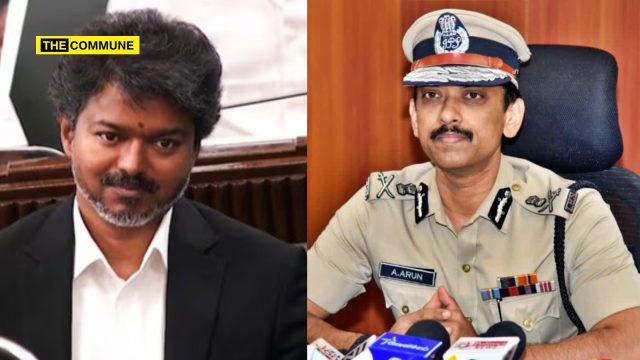
‘Jesus Calls’ Head Paul Dhinakaran, Son Booked Under Maharashtra’s Black Magic Act Over Faith-Healing Event

The Sangli Rural Police cancelled permission for the “Maharashtra Prayer Festival–2026,” a Christian missionary event organised at Kavalapur near Miraj, citing violations of conditions and allegations of misleading claims related to miraculous healings.

The programme, scheduled from March 13 to 15, was organised by the religious group Jesus Calls. The listed speakers included Paul Dhinakaran and Samuel Dhinakaran, along with other associates.

As reported in Sanatan Prabhat, according to police sources, the organisers allegedly promoted claims that serious and incurable illnesses could be cured through prayer. Authorities stated that such representations violated conditions imposed for the event.

Investigators noted that individuals were invited to share testimonies on stage. One participant reportedly claimed recovery from stage-four cancer after prayer, while another individual identified as Suji stated that a blood-related illness had been cured and that she achieved significant academic success following prayer intervention.

Police stated that these claims were presented in a manner that could mislead attendees into believing that medical conditions could be treated without professional healthcare.

The event also drew strong objections from local Hindu organisations, including Sakal Hindu Samaj, which alleged that the programme was aimed at religious conversion through inducement and unverified miracle claims.

Following both the reported violations and public opposition, Sangli Rural Police ordered the cancellation of the event. Police Inspector B. A. Talekar confirmed the action in an official communication.

FIR Registered Under Anti-Superstition Law

A case was registered against multiple individuals, including Dr. Dilip Bhore, Dr. Raosaheb Waghmare, Suji, and the event speakers. The charges relate to allegedly spreading misleading claims about curing serious illnesses through prayer alone.

The FIR was filed under provisions of the Maharashtra Prevention and Eradication of Human Sacrifice and other Inhuman, Evil and Aghori Practices and Black Magic Act, 2013, which criminalises exploitative practices and false claims of supernatural cures.

Subsequently, the Bombay High Court intervened after a petition challenged the police action. A bench comprising Madhav Jamdar and Pravin Patil held that the late-night cancellation of the event was procedurally improper and lacked sufficient evidence of law-and-order concerns or inflammatory content.

The court set aside the cancellation order, subject to conditions. The organisers were directed to comply strictly with the provisions of the anti-superstition law and submit a formal undertaking. Additionally, the State was instructed to appoint a vigilance officer to monitor the remaining sessions of the event.

 The Maharashtra Anti-Superstition Act, enacted in 2013 following the assassination of activist Narendra Dabholkar, aims to prevent exploitative practices involving claims of supernatural powers or miracle cures.

Officials indicated that similar regulatory frameworks are under consideration in other States, including Tamil Nadu, amid increasing scrutiny of events involving faith-based healing claims.

Authorities stated that enforcement actions will continue where organisers are found to violate legal provisions or mislead the public.

Subscribe to our channels on WhatsAppTelegram, Instagram and YouTube to get the best stories of the day delivered to you personally.
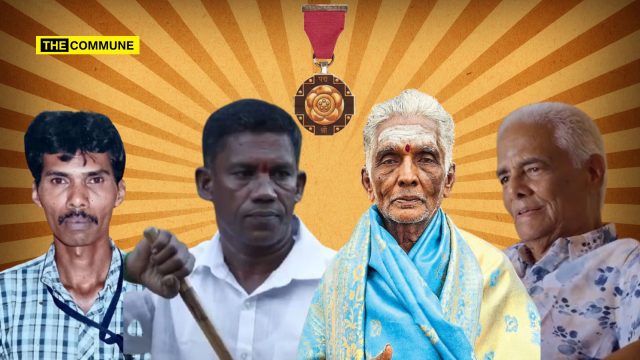
33 Illegal Bangladeshi Nationals Deported From Tamil Nadu, Sent To West Bengal For Repatriation

illegal bangladeshi nationals arrested dindigul textile mill tamil nadu

Authorities in Tamil Nadu on Friday, 20 March 2026, initiated the deportation process of 33 Bangladeshi nationals who had been detained in Salem district for residing in India without valid documentation, as reported in The Hindu.

According to police officials, the group was transported from Tiruchirappalli Railway Station aboard the Tiruchi–Howrah Super Fast Express. A separate coach was attached to the train for the detainees, who are being escorted by a special team of the Tamil Nadu Police, with logistical support from the Railway Protection Force.

Officials stated that upon arrival in West Bengal, the detainees will be handed over to the Border Security Force, which will oversee their repatriation to Bangladesh through designated border points.

The deportation forms part of an ongoing nationwide exercise initiated by the Union Ministry of Home Affairs to identify and remove foreign nationals residing in India without valid travel documents. Railway authorities indicated that coordination had been established with security personnel along the route to ensure the secure transfer of the detainees.

Tamil Nadu has, in recent years, intensified efforts to detect and deport undocumented foreign nationals. The State government constituted a Special Task Force to address the issue, following directives from the Union Home Ministry to all States and Union Territories to establish district-level mechanisms for identification and deportation.

Three detention centres are currently operational in the State at Tiruchirappalli, Cheyyar, and Attur, where suspected undocumented migrants are housed pending verification and deportation procedures.

Sources indicated that enforcement activity gained momentum following Operation Sindoor, a coordinated initiative under which several undocumented Bangladeshi nationals identified across multiple States were detained and transferred to border authorities. A significant number of such individuals had reportedly been residing in States along the India–Bangladesh border, including Assam, Tripura, Meghalaya, and Gujarat.

In Tamil Nadu, officials estimate that several thousand undocumented migrants, primarily from Bangladesh and Sri Lanka, may be residing in western districts such as Erode, Namakkal, Tiruppur, Coimbatore, Salem, and Karur. Investigations have indicated that some individuals had secured employment in local industries and obtained identity and address proofs through forged documentation facilitated by intermediaries.

Authorities stated that verification drives and enforcement actions will continue as part of the broader effort to address illegal immigration.

Subscribe to our channels on WhatsAppTelegram, Instagram and YouTube to get the best stories of the day delivered to you personally.
DMK-Linked Drug Case Accused Dravidianist Director Ameer Sultan Insults Former ISRO Scientist Nambi Narayanan

Ameer Sultan, a man linked to DMK and Islamist groups who has been accused of money laundering through drug trade has peddled baseless allegations about former ISRO scientist Nambi Narayanan.

The Dravidianist director was ranting about the increasing number of films coming sympathetic towards the Hindutva cause and said that that ever since Narendra Modi and the Bharatiya Janata Party came to power in 2014, cinema has increasingly been leveraged for political messaging rather than pure entertainment.

Targeting Nambi Narayanan, Ameer said “We also see films being made that depict Nambi Narayanan, who was accused of leaking military secrets‌, as a noble figure.”

It is to be noted that Ameer is a man who shares close ties with Jaffer Sadiq, a former DMK NRI Wing official accused of running an international drug-trafficking network. Dubbed Sadiq’s “bestie,” Ameer was named in an ED chargesheet alleging money laundering through films and was summoned by the NCB in April 2024 in connection with the smuggling of pseudoephedrine worth ₹2,000 crore. In October 2024, a special court summoned both Ameer and Sadiq as part of the ongoing money-laundering case.

Many on social media have slammed Ameer for insulting Nambi Narayanan.

Nambi Narayanan Case Timeline

In November 1994, Narayanan and his other scientist collegues in charge of the cryogenic technology transfer from Russia, were arrested by the Kerala Police on false charges of espionage. They were physically under the custory of IB officers. The case was eventually transferred to the CBI which concluded that the case was a sham.

Although the CBI submitted a closure report in 1996 stating that the espionage case was fabricated, the Communist government in Kerala had kept the issue lingering for decades.

The then CPI(M)-led government ordered more investigations which was struck down by the Supreme Court in in May 1998.

In September 1999, the National Human Rights Commission (NHRC) passed strictures against the government of Kerala for having damaged Narayanan’s distinguished career in space research along with the physical and mental torture to which he and his family were subjected.

The Supreme Court in 2018 ruled that Narayanan was not guilty of any of the espionage charges as accused by the Kerala Police and the bench called the case was “unnecessary” and that “he was implicated.” It also appointed a three-member panel headed by a former Supreme Court judge DK Jain  to probe the arrest and torture of former space scientist Nambi Narayanan in the ‘ISRO spy scandal’ that turned out to be fake.

On 14 April 2021 the Supreme Court of India ordered a CBI probe into the involvement of police officers in the conspiracy after the DK Jain Committee report pointed out a conspiracy.

The Nambi Narayanan episode marks the darkest chapter in the history of Indian space as it curtailed India’s emergence as a space power by atleast two decades.

Subscribe to our channels on WhatsAppTelegram, Instagram and YouTube to get the best stories of the day delivered to you personally.