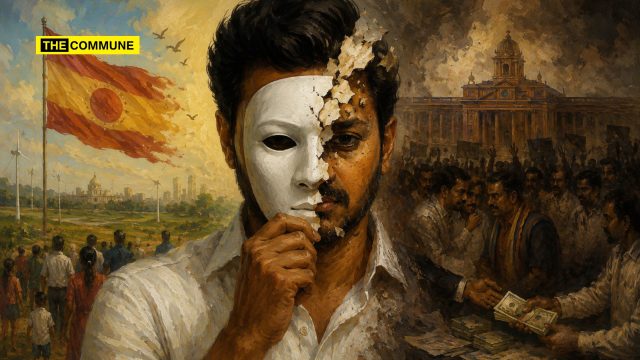
TVK branded itself as the ‘change’ Tamil Nadu needed – a state it described as plagued by corruption, law-and-order failures, unsafe conditions for women and children, environmental destruction, and more. But within weeks of assuming power through a coalition, that promise of ‘change’ already appears to be fading.
TVK campaigned aggressively on the promise of delivering a clean, transparent and radically different style of governance. But a series of political, administrative and publicity-related controversies have triggered growing criticism from opposition parties, journalists and even sections within the ruling alliance, with many arguing that the party’s carefully cultivated “anti-corruption” and “system change” image is beginning to unravel at remarkable speed.
Horse-Trading Allegations Rock TVK Government
One of the biggest flashpoints has been the growing allegations of “horse-trading” and political poaching. Following the formation of the TVK-led coalition government, multiple opposition MLAs, such as the AIADMK and AMMK shifted support to the ruling alliance. Three AIADMK MLAs formally resigned and joined hands with the government, intensifying accusations that TVK was engineering defections despite projecting itself as a morally superior alternative to traditional Dravidian politics.
The controversy escalated further after Congress MP Jothimani publicly stated that the Congress party would not support “horse-trading politics” in Tamil Nadu, despite being part of the ruling alliance. Her remarks were widely interpreted as a direct warning to TVK and a sign of discomfort within the coalition itself.
Tender Controversy Triggers Early Governance Embarrassment
TVK’s early governance decisions have also drawn heavy criticism. The government was forced into an embarrassing retreat after a controversial tender issued by the Rural Development Department in Kancheepuram allowed only a six-hour submission window for contractors bidding for a water tank project.
IT was alleged the unusually short deadline was designed to favour a pre-selected contractor, forcing the government to cancel the tender amid mounting backlash.
Meanwhile, leaked audio clips from Viluppuram allegedly suggested that important local appointments including posts linked to Aavin and government legal offices were being discussed in exchange for massive bribes. The allegations fuelled accusations that the “new politics” promised by TVK was quickly beginning to resemble the very system it had campaigned against.
Bureaucratic Appointments Of “Tainted” Officials
The appointment of former Chennai Police Commissioner A. Arun as Additional Director General of Police and Director of the Directorate of Vigilance and Anti-Corruption (DVAC) has triggered significant political and civil liberties concerns, particularly because the Vijay-led TVK government had campaigned on promises of clean governance and institutional neutrality.
Arun, a 1998-batch IPS officer, was previously placed on “compulsory wait” before being brought back to head Tamil Nadu’s premier anti-corruption agency. To facilitate his appointment, the government reportedly downgraded the DVAC chief’s post from DGP rank to ADGP rank, further fuelling criticism over the move. Arun’s tenure as Chennai Police Commissioner was already mired in controversy. During the 2026 Assembly elections, both TVK itself and the BJP complained to the Election Commission that Arun was allegedly restricting Vijay’s campaign rallies in Chennai by curtailing routes and timings.
He was accused of intimidating independent YouTubers and online journalists through repeated police summons linked to the Savukku Shankar case, calling it an attempt to chill free speech during elections. The Election Commission subsequently transferred Arun out of the Commissioner’s post and barred him from election-related work.
His policing style also attracted criticism from rights groups after he publicly declared that police would “speak to rowdies in their language,” remarks later linked by activists to alleged encounter killings and custodial abuse concerns. The Madras High Court had also summoned him in a habeas corpus case related to a controversial Goondas Act detention, adding to the growing list of controversies surrounding his appointment.
“Revolutionary Governance” PR Campaigns
Beyond governance controversies, TVK’s publicity machinery has also become a major target of ridicule. The party’s social media ecosystem has focused excessively on manufacturing symbolic “revolutionary moments” out of ordinary administrative behaviour.
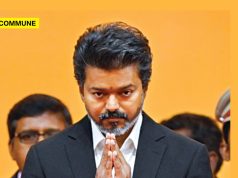
One such example involved viral campaigns celebrating Vijay for removing the traditional white towel from the Chief Minister’s official chair at the Secretariat, with supporters portraying it as a historic break from “VIP culture”. It can be pointed out that several leaders, including former Chief Minister Jayalalithaa and Prime Minister Narendra Modi, had long abandoned the practice, mocking the attempt to market it as transformative governance.
Office Lunch Videos And “Simple Living” Optics
TVK supporters also heavily promoted videos of Vijay carrying home-cooked food in a simple lunchbox and eating inside his office, presenting it as proof of humility and simplicity.
The campaign was dismissed by netizens as superficial image-building, arguing that ordinary working people do the same every day without requiring orchestrated social media amplification.
Rebranding Existing Schemes As “New Governance”
The government also faced backlash for allegedly rebranding pre-existing schemes as original TVK initiatives. The administration had repackaged earlier welfare and skill-development programs, including the already existing schemes such as free IAS coaching, and presenting them as fresh governance breakthroughs under Vijay’s leadership.
Secretariat Turns Into PR Stage?
Further criticism emerged over the increasing use of official government spaces for social media optics. TVK’s heavily publicized “digital transparency” push inside the Secretariat backfired after videos surfaced showing visitors and officials recording reels and promotional content during official meetings.
View this post on Instagram
High-security administrative spaces were being turned into PR stages instead of functioning as serious governance centres.
“Change Politics” Narrative Fails
The problem for TVK is not merely the controversies themselves, but the speed at which they have emerged after the party rose to power promising a total break from conventional political culture.
The contrast between the party’s lofty “change politics” branding and the controversies now surrounding defections, tenders, publicity stunts and governance decisions has allowed rivals to aggressively push the narrative that TVK’s carefully crafted image is beginning to collapse almost immediately after assuming office.
Subscribe to our channels on WhatsApp, Telegram, Instagram and YouTube to get the best stories of the day delivered to you personally.