Home Blog Page 17

ED Urged To Probe Foreign Funding Received By Madurai-Based ECGM From Christian Missionary Orgs The Timothy Initiative And Gospelink, Amid ₹95-Crore Naxal Funding Case

ED Urged To Probe Foreign Funding Received By Madurai-Based ECGM From Christian Missionary Orgs The Timothy Initiative And Gospelink, Amid ₹95-Crore Naxal Funding Case

NGO watchdog, Legal Rights Protection Forum (LRPF), has approached the Directorate of Enforcement (ED) seeking a detailed investigation into foreign contributions received by the Madurai-based Evangelical Church Growth Mission (ECGM) from two United States-based missionary organisations – The Timothy Initiative Inc. and Gospelink Inc. in light of a recent Enforcement Directorate-linked FIR registered in Bengaluru.

In its complaint to the ED, LRPF alleged that ECGM, an FCRA-registered organisation based in Madurai, received substantial foreign contributions over several years from The Timothy Initiative Inc. and Gospelink Inc., two US-based Christian missionary organisations that it claims are linked through common leadership and similar missionary objectives.

According to the complaint, Evangelical Church Growth Mission is registered under the Foreign Contribution (Regulation) Act (FCRA) and operates from Pasumalai in Madurai. LRPF cited FCRA returns filed by ECGM as well as Form 990 filings submitted by the two American organisations to the United States Internal Revenue Service (IRS).

The complaint points to the role of David Nelms, who is identified in the organisations’ US filings as the founder and director of The Timothy Initiative and also a director of Gospelink. It is alleged that the common leadership structure and overlapping missionary objectives raise questions about whether funds intended for similar purposes were channelled through multiple interconnected entities.

According to figures compiled from FCRA returns, The Timothy Initiative allegedly transferred approximately ₹32.79 lakh to ECGM between 2014-15 and 2017-18. The contributions cited in the complaint include multiple transfers across four financial years, with the total amounting to ₹32,79,137.

The larger share of foreign funding cited by LRPF came from Gospelink Inc. The complaint alleges that Gospelink transferred approximately ₹4.16 crore to ECGM between 2010-11 and 2018-19. The listed transactions span nearly a decade and total ₹4,16,34,771.

Based on these figures, it is alleged that ECGM maintained a long-standing and substantial financial relationship with both organisations and has urged enforcement authorities to scrutinise the purpose, nature and utilisation of the funds received.

The complaint further alleges that Rev. J. Joshua Vijaykumar, also referred to as Joshua Vijay Kumar, the Secretary of Evangelical Church Growth Mission, has been closely associated with the activities of The Timothy Initiative in India. While not making specific allegations regarding wrongdoing by him, LRPF has requested authorities to examine the nature and extent of his association with the organisation, including any leadership, coordination or operational role.

The FIR filed last week by the ED names The Timothy Initiative USA among the accused entities and individuals. According to the complaint cited by LRPF, the FIR alleges the existence of a nationwide network that used foreign-issued debit cards to withdraw and distribute funds across India. The FIR alleges that approximately ₹92.55 crore was utilised through this mechanism, that over 1,000 foreign-issued debit cards were deployed across the country, and that nearly ₹44 crore was withdrawn and distributed in multiple states. The complaint also references alleged withdrawals in Left Wing Extremism-affected areas, recovery of foreign-issued debit cards from accused persons, expenditure records exceeding ₹95 crore and deletion of operational data following enforcement action.

Against this backdrop, LRPF has urged the Enforcement Directorate to investigate whether any foreign contributions received by ECGM from The Timothy Initiative or Gospelink have any nexus with the activities currently under investigation.

The organisation has specifically requested the ED to conduct a comprehensive investigation into foreign contributions received by ECGM from The Timothy Initiative, examine the role of Rev. Joshua Vijaykumar in relation to the organisation’s activities in India, scrutinise the utilisation of foreign contributions received from the two US-based entities, and initiate appropriate action under the Foreign Contribution (Regulation) Act, 2010 and other applicable laws if any violations are established.

Stating that the matter involves substantial foreign funding from organisations now facing scrutiny in a major Enforcement Directorate-linked investigation, LRPF has sought immediate intervention and action by the central agency.

Subscribe to our channels on WhatsAppTelegram, Instagram and YouTube to get the best stories of the day delivered to you personally.
TVK Model: Hours Of Power Cut, No Action From Electricity Board, Angry Tambaram Residents Take To The Streets

TVK Model: Hours In Darkness, No Action From Electricity Board, Angry Tambaram Residents Take To The Streets

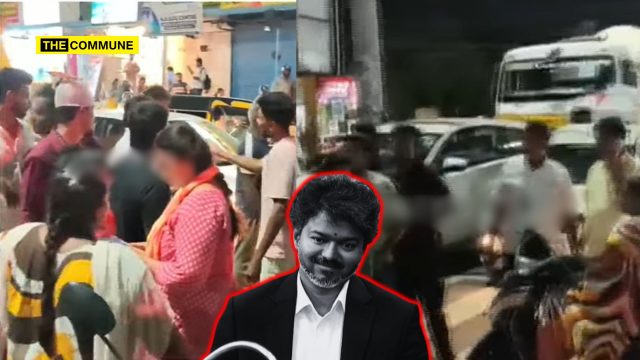
Residents of several neighbourhoods near Tambaram staged a road blockade on the Velachery Main Road at Kamarajapuram on Thursday (18 June 2026) evening, protesting prolonged and recurring power outages that they say have disrupted daily life for weeks.

According to local residents, power supply had been interrupted for more than four hours in areas including Sembakkam, Samraj Nagar, Karageshwari Nagar, VGP Ponnagar and Manavalan Nagar, triggering anger among the public.

More than 50 residents reportedly gathered on the Velachery-Tambaram arterial road and launched a sudden road blockade, parking their two-wheelers across the carriageway and preventing the movement of vehicles. The protest led to significant traffic congestion on the busy stretch, with commuters stranded for nearly half an hour.

Residents stated that heavy rain and strong winds had lashed the area earlier in the evening, causing electric poles and power lines to be damaged in several locations. However, they alleged that electricity board officials failed to restore power even after several hours, leaving entire neighbourhoods in darkness.

Protesters complained that the outage had severely affected access to basic necessities. With no electricity, residents said they were unable to operate water pumps, disrupting drinking water supply and other essential household requirements.

The aggrieved residents further alleged that officials of the Tamil Nadu Electricity Board were unresponsive to repeated complaints. According to the protesters, calls made to register complaints were either not attended to or not acted upon. Some residents claimed that even when they approached officials directly, their grievances were ignored.

Locals also alleged that the current outage was not an isolated incident. They claimed that residents of the affected localities had been facing frequent power disruptions over the past 15 days, with little effort made to permanently resolve the issue.

Several protesters expressed concern over the impact of the outages on students and working families. With schools functioning and examinations underway, residents argued that repeated power cuts were causing serious inconvenience to children and affecting normal household activities.

Despite efforts by police to clear the protest, residents initially refused to disperse and demanded that a senior electricity board engineer visit the spot and provide assurances regarding restoration of power and a long-term solution to the recurring outages.

Personnel from the Selaiyur Police Station and Traffic Police rushed to the location and held negotiations with the protesters. Following discussions and assurances from officials, the residents eventually withdrew the road blockade and dispersed.

Subscribe to our channels on WhatsAppTelegram, Instagram and YouTube to get the best stories of the day delivered to you personally.

Kolathur TVK MLA VS Babu’s Son Threatens Journo For Shooting Video

Kolathur TVK MLA VS Babu's Son Threatens Journo for shooting video

An incident involving the son of Kolathur MLA VS Babu has sparked controversy after a News7 Tamil reporter was allegedly threatened while covering a public safety issue in Chennai.

The incident occurred on Pallavan Salai in Kolathur after a tree collapsed due to strong winds, obstructing traffic and damaging a few parked two-wheelers. While no injuries were reported, local residents faced inconvenience as the fallen tree blocked part of the roadway.

According to reports, there was a delay in the arrival of Fire and Rescue Services personnel and officials from the Greater Chennai Corporation to clear the obstruction. During this period, local party cadres and volunteers reportedly stepped in to remove the debris and restore normal traffic movement.

Following the incident, Kolathur MLA VS Babu visited the location and inspected the affected area. However, the visit soon became the subject of controversy after allegations surfaced that the MLA attempted to take credit for the clearance work and project the efforts as his own achievement.

As the developments unfolded, News7 Tamil reporter arrived at the scene to gather information and cover the incident. During the course of the reporting, Satheesh, the son of MLA VS Babu, allegedly confronted the journalist and objected to the recording of video footage.

According to the channel’s report, Satheesh demanded that the reporter stop filming and questioned why videos were being recorded. The confrontation was captured on camera and later broadcast by the news channel.

He is also heard asserting that he and others had worked hard to obtain their positions and questioning the reporter’s actions while the journalist continued covering the event.

Subscribe to our channels on WhatsAppTelegram, Instagram and YouTube to get the best stories of the day delivered to you personally.
Is TN Congress Leader A Crypto-Christian? His Daughter’s Wedding Invitation Reveals Details

Is TN Congress Leader A Crypto-Christian? His Daughter's Wedding Invitation Reveals Details

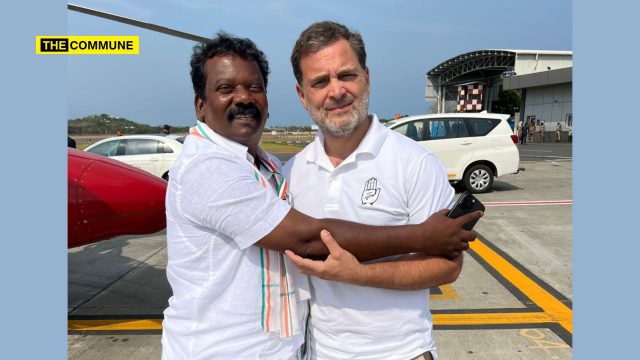
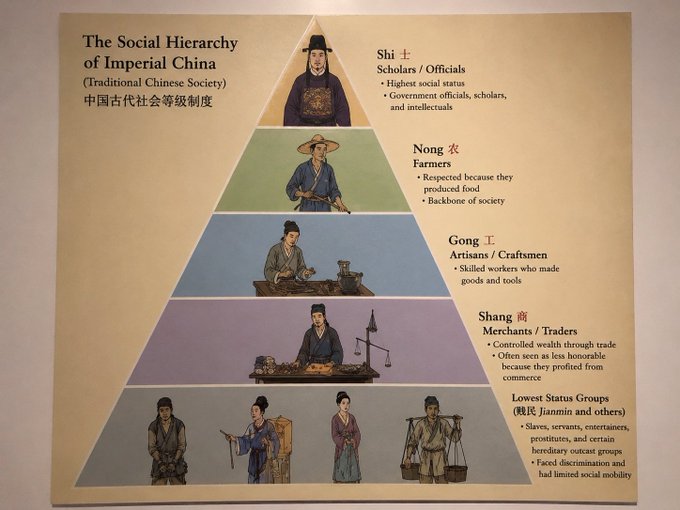
A wedding invitation reportedly belonging to the family of Tamil Nadu Congress Committee (TNCC) president Selva Perunthagai has triggered renewed debate on the issue of alleged “crypto-Christians” and the continued access to Scheduled Caste reservations by individuals accused of having converted to Christianity while retaining caste-based benefits.

The controversy erupted after an image of the wedding invitation for Selva Perunthagai’s daughter began circulating widely on social media ahead of the marriage ceremony held on June 18, 2026. The explicitly Christian language used throughout the invitation raises questions about the TNCC chief’s religious identity.

The invitation opens with Biblical references and Christian expressions such as “Glory be to God,” “By the abundant grace of the Lord,” and “According to God’s will.” It also cites a verse from the Bible, which leaves little ambiguity regarding the family’s Christian faith.

The wedding invitation further states that the ceremony is being conducted under Christian religious customs and prominently references Christian clergy and church-related figures associated with the event.

Questions Over Scheduled Caste Status

The circulation of the invitation has revived a long-running political and legal debate surrounding individuals who are accused of practising Christianity while continuing to avail themselves of Scheduled Caste reservations that are constitutionally restricted to Hindus, Sikhs, and Buddhists under the Constitution (Scheduled Castes) Order, 1950.

Just a few months ago, the Supreme Court ordered that if a person has genuinely embraced Christianity, they should not continue to claim benefits meant for Scheduled Castes within Hindu society. Such cases amount to a misuse of reservation policies and deprive eligible beneficiaries of opportunities in education, employment, and politics.

The invitation can be cited as evidence that Selva Perunthagai is a practising Christian while continuing to be identified politically as a Scheduled Caste leader.

“Crypto-Christian” Allegation Resurfaces

The term “crypto-Christian” is often used to describe individuals who practise Christianity privately while officially retaining a Hindu Scheduled Caste identity to access reservation benefits.

Following the circulation of the invitation, one can accuse Selva Perunthagai of being a “crypto-Christian” and it is also noteworthy that leaders belonging to this category are unfairly benefiting from constitutional safeguards intended for Hindu Scheduled Castes.

The controversy is politically significant because Selva Perunthagai has emerged as one of the Congress party’s most prominent Dalit faces in Tamil Nadu. Any ambiguity regarding his religious identity raises questions about eligibility for benefits and political representation reserved for Scheduled Castes.

The debate also comes amid recurring demands from various Dalit and Hindu organisations for stricter scrutiny of alleged religious conversions among Scheduled Caste beneficiaries.

Subscribe to our channels on WhatsAppTelegram, Instagram and YouTube to get the best stories of the day delivered to you personally.
How Joseph Vijay Is Wasting Taxpayer Money By Travelling 3 Hours From His Home To Secretariat

How Joseph Vijay Is Wasting Taxpayer Money By Travelling 3 Hours From His Home To Secretariat

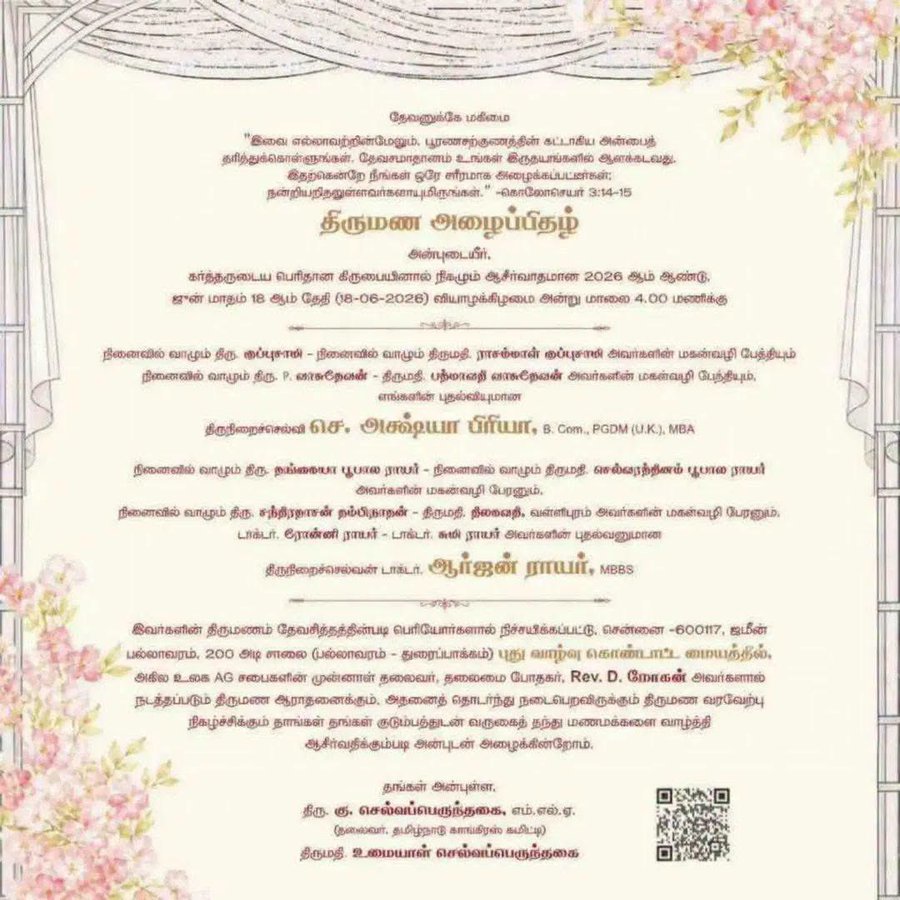
Tamil Nadu Chief Minister Joseph Vijay’s daily commute from his residence to the State Secretariat has increasingly come under scrutiny – about how the elaborate security arrangements surrounding his travel are resulting in an unnecessary drain on public resources and police manpower.

Ever since assuming office, Vijay’s decision to continue residing at his private residence instead of moving closer to the Secretariat has been portrayed by supporters as a sign of accessibility and normalcy. Social media posts by his fans and followers frequently celebrate the Chief Minister’s daily journey of approximately 17 kilometres through Chennai’s roads, presenting it as evidence that he remains connected to ordinary citizens.

However, this ignores the enormous logistical and security burden imposed on the state machinery every single day.

The security protocol for the Chief Minister’s convoy requires extensive traffic management operations along the entire route between his residence and Fort St. George. Police personnel are reportedly stationed at regular intervals across both sides of the road to facilitate traffic clearance before the convoy passes.

The deployment is not limited to the few minutes during which the Chief Minister’s vehicle moves through the route. Traffic diversions, restrictions and police positioning begin well in advance of the convoy’s movement and continue even after the passage is completed, affecting thousands of commuters travelling during Chennai’s peak morning and evening hours.

Now, one wonders whether such a large deployment of police personnel is justified at a time when Tamil Nadu continues to face growing concerns over law and order.

It is noteworthy that hundreds of officers and traffic personnel are effectively tied up twice every day merely to ensure the smooth movement of the Chief Minister’s convoy. The same manpower could instead be utilised for crime prevention, traffic regulation, neighbourhood patrolling and strengthening public safety across the state.

Another important question that arises is the opportunity cost of maintaining such an extensive security operation. With Chennai and several other districts witnessing frequent reports of theft, chain-snatching, assaults, drug-related offences and crimes against women, police resources should ideally be deployed where they are needed most rather than being concentrated on a daily VIP movement.

The issue has also reignited a broader debate about VIP culture and the burden it places on ordinary citizens.

A more practical solution would be for the Chief Minister to either operate from an official residence closer to the Secretariat or adopt alternative arrangements that would reduce the need for such extensive traffic management and security deployment.


View this post on Instagram


A post shared by Tamil Janam (@tamiljanam)

Joseph Vijay frequently reiterates that the government is for the people, so it would be ideal for a public servant to not be a hinderance to the public.

Subscribe to our channels on WhatsAppTelegram, Instagram and YouTube to get the best stories of the day delivered to you personally.
How Indian Netizens Penetrated The Great Chinese Firewall And Exposed Them

How Indian Netizens Penetrated The Great Chinese Firewall And Exposed Them

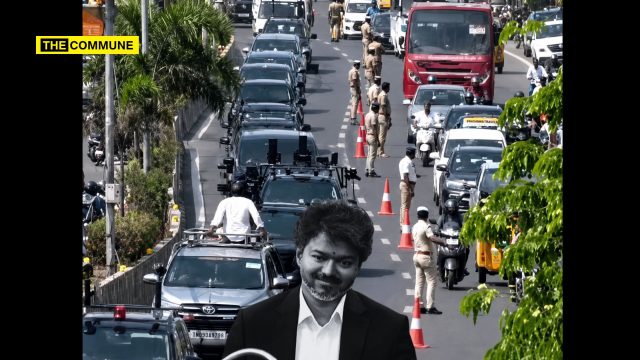
For years, China has carefully projected itself as a clean, prosperous, disciplined and futuristic society, shielded by one of the world’s most restrictive digital firewalls. But a wave of Indian social media users has now turned the spotlight back on Beijing, circulating videos and posts that expose the poverty, filth, inequality, censorship and social decay that China has long tried to hide from the world.

The campaign gained traction after Indian netizens began sharing videos showing cramped living spaces, dirty streets, unhygienic food practices, homeless people sleeping in public spaces, exploitative treatment of children, and manipulated visuals used to present China as cleaner and more developed than it actually is.

China’s Own Social Hierarchy Comes Under Scrutiny

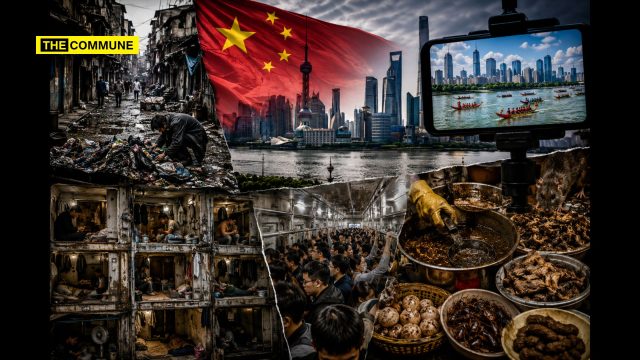
Indian netizens also pointed out that China, which often amplifies narratives about caste and social division in India, has its own long history of social hierarchy. Viral posts referred to traditional Chinese social categories such as officials, farmers, artisans, merchants and outcast groups, arguing that Beijing has no moral authority to lecture India while hiding its own internal divisions.

Image Source: X

Videos showing poor Chinese citizens living in extremely cramped spaces were widely circulated, with netizens arguing that these visuals rarely make it to global platforms because China tightly controls its image.

The Polished Image Versus The Ground Reality

One viral example showed a boat race being presented on television with clean blue water, while another angle showed the same event taking place in muddy, polluted water.

Indian netizens pointed out that this reflected how China manufactures visual perfection for global consumption.

Another commonly cited example is the fantastic trains and railway network with clean coaches in China. But reality is very different. It is worse than an unreserved compartment in India.

Other videos showed dirty backstreets, neglected food markets, garbage-filled public spaces and people sleeping inside bus stations. Netizens argued that these visuals puncture the myth that China has no poverty, homelessness or sanitation problems.

Food Practices And Hygiene Debates

The campaign also highlighted controversial Chinese food practices, including use of gutter oil, cockroach-based products, cow-dung hotpot, urine-soaked eggs and other unusual food items that have previously been reported or discussed online.

Indian netizens argued that while China-linked propaganda often mocks India’s street food and sanitation, Beijing’s own food and hygiene issues remain hidden behind censorship and selective branding.

There were some videos of Chinese even eating dung, weird animals and insects.

They even ate babies!

Vulnerable Children And Content Exploitation

Another disturbing set of videos showed children, including physically disabled children, being used insensitively for online content. One wonders how far China’s content machinery goes for views, engagement and propaganda, and what may be happening off-camera if such treatment appears on camera.

Hidden Poverty And Cramped Living Conditions

One of the most widely shared aspects of the campaign involved videos showing the living conditions of China’s poorer communities. Indian netizens circulated footage purportedly showing people living in extremely cramped cubicle-like accommodations, with some individuals confined to spaces barely large enough to sleep in.

The visuals stood in sharp contrast to the gleaming skyscrapers, high-speed rail networks and futuristic cityscapes that dominate China’s international image. While Beijing aggressively markets modern urban centres such as Shanghai, Shenzhen and Beijing, far less attention is given to the conditions faced by millions of lower-income workers and migrant labourers.

These cramped accommodations resembled “cage homes” and micro-apartments, with multiple occupants sharing extremely small living spaces. Such realities rarely appear in official Chinese media or in the carefully curated content promoted globally through state-controlled narratives.

Why This Matters For India

The campaign is being seen as a counterattack against years of negative propaganda about India. Indian netizens argued that China and its allies have repeatedly pushed content portraying India as poor, dirty, caste-ridden and backward, while hiding similar or worse issues inside China.

The backlash is also being described as a “soft revenge” moment after years of Chinese information warfare, including narratives around Covid, Galwan, poverty, caste, street food and sanitation.

China’s Firewall Cracks

China’s internet firewall has long protected Beijing from global scrutiny by controlling what Chinese citizens can see and what the world can see from inside China. But Indian netizens appear to have found and amplified content that escaped this control.

China’s polished online image had cracked earlier during Covid lockdown videos and Galwan-related footage. The latest campaign, however, appears broader and more sustained.

Chinese Panic And Anti-India Sentiment

Some viral Chinese posts complained about Indian immigrants, Indian businesses and Indian workers, exposing what Indian netizens described as racist hostility within Chinese society. This reaction revealed China’s own insecurity and prejudice.

India’s Open Acknowledgement Versus China’s Cover-Up

Many netizens contrasted China’s censorship with India’s open acknowledgement of its problems. They noted that India publicly launched Swachh Bharat to address sanitation issues, while China later launched its own “toilet revolution.” India admits its shortcomings and works on them, while China hides them behind propaganda.

A Digital Pushback

The campaign shows that ordinary Indian netizens are no longer willing to passively consume anti-India narratives. By using the same social media battlefield that has often been used to mock India, they have turned the scrutiny back on China.

The message from Indian netizens is clear: if China wants to weaponise India’s flaws, Indians will expose the realities Beijing hides behind its firewall.

Subscribe to our channels on WhatsAppTelegram, Instagram and YouTube to get the best stories of the day delivered to you personally.
‘Thooya Sakthi’ TVK Functionary Arrested For Harassing Woman At Bus Stand In Tiruvarur

'Thooya Sakthi' TVK Functionary Arrested For Harassing Woman At Bus Stand In Tiruvarur

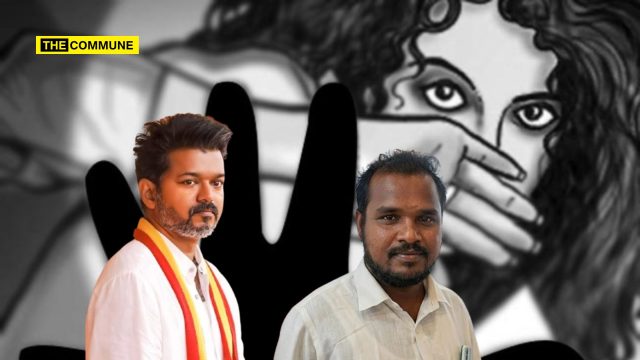
A 27-year-old woman’s wait for her father at the Tiruvarur New Bus Stand took an ugly turn yesterday when she was subjected to harassment by two men, including a local functionary of the Tamizhaga Vettri Kazhagam (TVK).

The accused have been identified as Anand, a native of Karumbiyur near Ananthambadi in Thiruthuraipoondi who serves as the TVK’s Thiruthuraipoondi North Union Secretary, and his friend Ashok.

According to police, the woman was standing alone at the bus stand when the duo approached and engaged in harassing behaviour. The situation escalated when her father arrived at the scene. He promptly confiscated the motorcycle keys belonging to Anand and Ashok, secured his daughter, and proceeded to the Tiruvarur Town Police Station to file a formal complaint.

Acting on the complaint, police have registered a case against both men under three sections, including charges related to harassment. They have been arrested and are currently in custody as investigations continue.

Subscribe to our channels on WhatsAppTelegram, Instagram and YouTube to get the best stories of the day delivered to you personally.
Amazon Prime’s ‘Raakh’ Distorts Ranga-Billa Case To Push Leftist Social-Justice Narrative

Amazon Prime's 'Raakh' Distorts Ranga-Billa Case To Push Social-Justice Narrative

Amazon Prime Video’s latest crime series Raakh, marketed as being inspired by one of India’s most shocking criminal cases – the 1978 kidnapping and murder of siblings Geeta and Sanjay Chopra by Kuljeet Singh alias Ranga and Jasbir Singh alias Billa is facing criticism for allegedly replacing key historical figures and facts with fictional identities designed to fit a contemporary social-justice narrative.

While filmmakers often take creative liberties when adapting real-life events, Raakh goes beyond dramatization and fundamentally alters the identities of the people who investigated, reported on and helped solve one of independent India’s most infamous crimes.

One of the biggest points of contention concerns the police officers who led the investigation.

Historically, the hunt for Ranga and Billa was led by Hindu officers of the Delhi Police, Inspector V.P. Gupta, assisted by Sub-Inspector Ram Chander. The Delhi Police Commissioner during the final stages of the investigation was J.N. Chaturvedi.

In Raakh, however, these real-life figures have been replaced by entirely fictional characters. The series centres around Jayprakash Jatav, a rookie Dalit Sub-Inspector played by Ali Fazal, who is portrayed as battling caste discrimination and institutional bias while pursuing the case. His key associate is depicted as SI Javed Murtaza, a Muslim police officer, while another recurring character is a Brahmin hawaldar portrayed as lazy and incompetent.

None of these caste or communal dynamics formed part of the actual Ranga-Billa investigation and the show effectively rewrites the historical record by replacing the real officers with characters designed around contemporary identity politics.

The controversy doesn’t stop there.

The journalist most closely associated with reporting on the case was originally Prabha Dutt, one of India’s pioneering women journalists and the mother of veteran journalist Barkha Dutt. Her reporting helped keep public attention focused on the case and the investigation.

Yet in the series, Prabha Dutt’s role has been transformed into a fictional journalist named Nisar, altering the identity of one of the most important media figures connected to the case.

Similarly, Babulal, the civilian who played a crucial role by attempting to help the victims and assisting police efforts, has been recast as a fictional character named Saleem, again the do-gooder is a Muslim.

These changes are not merely cosmetic. By systematically altering the identities, backgrounds and social characteristics of key individuals connected to the case, the series creates an alternate version of history that many viewers unfamiliar with the original events may mistake for fact.

The issue is not that Raakh is fictionalised, but that it is presented as being inspired by real events while simultaneously replacing documented historical figures with invented characters and social conflicts that were never central to the original case.

Subscribe to our channels on WhatsAppTelegram, Instagram and YouTube to get the best stories of the day delivered to you personally.
Sewage Reportedly Mixed In Holy Theerthams, Broken Pathways, And Inadequate Pilgrim Facilities Plague HR&CE-Administered Rameswaram Ramanathaswamy Temple

Sewage Reportedly Mixed In Holy Theerthams, Crumbling Infrastructure Plague HR&CE administered Rameswaram Ramanathaswamy Temple

Rameswaram, home to the revered Ramanathaswamy Temple and one of Hinduism’s holiest pilgrimage destinations, attracts lakhs of devotees every year from across India and abroad. However, growing complaints from pilgrims and local residents have highlighted a range of concerns involving environmental pollution, temple maintenance, infrastructure deficiencies, and alleged disruptions to long-standing religious traditions.

Sacred Waters Under Threat

One of the most serious concerns relates to Agni Theertham, the sacred seashore where devotees traditionally bathe before entering the Ramanathaswamy Temple. Pilgrims have repeatedly complained about foul odours, sewage contamination, drainage overflow, discarded waste and unhygienic conditions around the shoreline.

Environmental concerns have also been raised regarding the discharge of untreated sewage into the sea, with reports of failures in underground drainage systems and delays in sewage treatment projects. The issue has attracted the attention of the Madras High Court, which has questioned civic authorities regarding sewage discharge near the sacred site. For devotees, the pollution of Agni Theertham is not merely an environmental issue but an affront to the sanctity of one of Hinduism’s most important pilgrimage rituals.

Concerns Over The 22 Sacred Theerthams

Inside the temple, devotees traditionally proceed through 22 sacred theertham wells before taking darshan. However, concerns have emerged regarding water quality, maintenance and structural conditions around the wells.

Earlier scientific studies reportedly detected contamination in some of the theerthams, raising fears about sewage intrusion and deteriorating water quality. More recently, devotees have complained that water from certain wells emits an unpleasant smell.

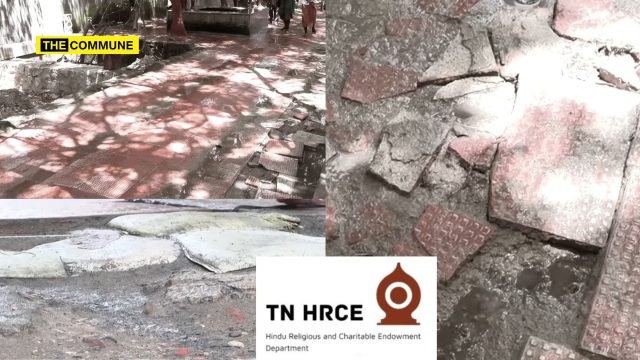
Pilgrims have also raised alarm over damaged flooring surrounding the theerthams. Loose stones, potholes, uneven surfaces and slippery patches have reportedly caused injuries, particularly among elderly devotees. Some pilgrims claim that falls have become increasingly common, with reports of visitors sustaining fractures and head injuries.

Ritual Traditions And Administrative Changes

Another source of controversy has been the decision to alter traditional movement routes associated with the 22 theerthams. Temple authorities have maintained that revised pathways were introduced to improve crowd management. However, many devotees argue that the sequence and route followed during the theertham ritual form an integral part of centuries-old temple traditions and should not be modified for administrative convenience.

Concerns have also been raised regarding crowd-control arrangements that allegedly force pilgrims through anticlockwise movement patterns in certain sections. Critics argue that such arrangements conflict with traditional Hindu practices that favour clockwise circumambulation around sacred spaces.

Poor Facilities And Heritage Concerns

Devotees have also highlighted inadequate changing facilities, claiming that privacy remains insufficient for pilgrims changing clothes after completing the sacred bath rituals. Complaints have additionally been raised regarding the presence of stray dogs within the temple premises.

Several pilgrims have criticised the overall condition of pathways leading to the sanctum, citing broken flooring, damaged walls, overgrown vegetation and litter accumulation. Questions have also been raised about the quality of certain renovation works, with critics arguing that repairs do not adequately respect the temple’s historic architectural heritage.

A Pilgrimage Centre Facing Civic Challenges

Residents further point to the lack of adequate healthcare infrastructure in Rameswaram despite the enormous number of pilgrims visiting annually. During emergencies, many patients are reportedly forced to travel to Ramanathapuram or Madurai for specialised treatment. Concerns have also been raised regarding the availability of basic public amenities and essential services.

Temple authorities have stated that repair work around the theerthams is currently underway and that much of the work can only be carried out during night hours due to heavy pilgrim traffic. Nevertheless, devotees continue to urge the HR&CE Department and civic authorities to address the growing list of concerns and restore the standards expected of one of India’s most sacred pilgrimage centres.

Subscribe to our channels on WhatsAppTelegram, Instagram and YouTube to get the best stories of the day delivered to you personally.

TVK Model: Woman Admitted For Sinus Problem Dies After Month-Long Treatment; Family Alleges Medical Negligence, Lays Siege To Ramanathapuram Govt Hospital

TVK Model: Woman Admitted For Sinus Problem Dies After Month-Long Treatment; Family Alleges Medical Negligence, Lays Siege To Ramanathapuram Govt Hospital

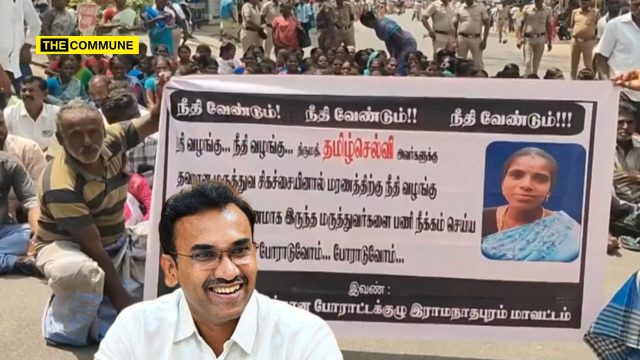
Tension prevailed at the Ramanathapuram Government Medical College Hospital for a second consecutive day as the relatives of a 34-year-old woman who died while undergoing treatment refused to receive her body, alleging medical negligence and demanding action against the doctors involved.

The deceased, identified as Tamil Selvi from the Palkarai area of Ramanathapuram, had been admitted to the Government Medical College Hospital on 17 May 2026 for treatment of a sinus-related ailment. According to hospital sources, she remained under treatment for nearly a month. However, doctors informed her family on Wednesday (17 June 2026) morning that she had passed away despite medical intervention.

Following her death, family members accused the hospital of providing improper treatment and alleged that medical negligence was responsible for her death. Relatives claimed they had repeatedly raised concerns with hospital authorities as early as 26 May 2026, alleging that Tamil Selvi’s condition was not improving and that adequate treatment was not being provided.

Demanding strict action against the doctors who treated her, the family refused to accept the body and launched a road blockade protest on the Madurai–Rameswaram National Highway in front of the Ramanathapuram Government Medical College Hospital on Tuesday evening.

Senior officials later intervened and held discussions with the protesters, following which the agitation was temporarily withdrawn. However, on Thursday (18 June 2026) the relatives once again refused to receive the body and resumed their protest for a second day.

The situation escalated when police attempted to remove the protesters, leading to a scuffle between police personnel and some of the relatives. Following the confrontation, the protesters entered the hospital premises and continued their agitation.

The protesters have demanded the dismissal of the doctors who treated Tamil Selvi as well as action against the Dean of the Government Medical College Hospital. They maintain that accountability must be fixed for the circumstances that led to her death.

The issue has since been brought to the attention of Ramanathapuram District Collector Sivaguru Prabhakaran. Officials said discussions between the Collector and the deceased woman’s relatives were scheduled for around 4 p.m. on Thursday. The outcome of the talks is expected to determine whether the family agrees to receive the body and bring the protest to an end.

Police personnel remain deployed at the hospital premises as a precautionary measure to prevent any further escalation of tensions.

Subscribe to our channels on WhatsAppTelegram, Instagram and YouTube to get the best stories of the day delivered to you personally.