Home Blog Page 18

Lottery Martin Back In Business In TN? Illegal Lottery Sales Thrive Under Joseph Vijay’s TVK Government

Lottery Martin Back In Business In TN? Illegal Lottery Sales Thrive Under Joseph Vijay's TVK Government son-in-law

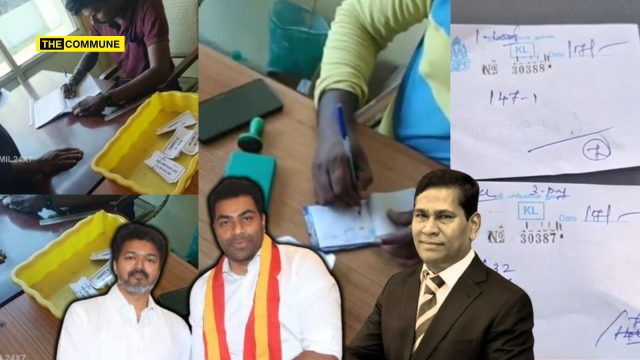
Ever since the TVK government came to power, there have been concerns whether banned lottery will make a comeback owing to the fact that TVK’s Aadhav Arjuna is the son-in-law of lottery baron Santiago Martin.

It is noteworthy that Tamil Nadu banned lottery sales years ago amid concerns over gambling addiction and financial exploitation. However, a news report has raised fresh questions over whether illegal lottery networks continue to operate across the state despite the ban.

The report indicates that illegal lottery sales are happening with full force across the state. The report was from Dharmapuri and shows people buying tickets from the sales agents who are seen advising the people about the slots.

படுஜோராக நடந்து வரும் கள்ள லாட்டரி விற்பனை.. கைது செய்யப்பட்டவர்கள் ஜாமீனில் வெளியே வந்து மீண்டும் அதே செயலில் ஈடுபடுவதால் நடவடிக்கை எடுக்க மக்கள் கோரிக்கை#Newstamil24x7 #IllegalLottery #CrimeNews #PoliceAction #PublicDemand pic.twitter.com/kRaTWza9LC

The revelations have reignited public debate over the influence of lottery baron Martin and his family’s alleged political connections.

While no direct evidence has yet emerged linking the minister to the alleged activities captured in the sting operation, the development has fuelled political criticism and demands for a transparent investigation into whether banned lottery networks are once again gaining ground in Tamil Nadu.

Additionally, one must note that the Thoothukudi gang-rape victim was allegedly lured with the promise of a job by Srivaikuntam TVK MLA Saravanan who reportedly runs an extensive network involved in the sale of Nagaland-based lottery products through hundreds of WhatsApp groups across Tamil Nadu.

If illegal lottery sales are once again flourishing across Tamil Nadu despite a longstanding ban, is it merely an enforcement failure or evidence that powerful interests are operating with impunity?

Subscribe to our channels on WhatsAppTelegram, Instagram and YouTube to get the best stories of the day delivered to you personally.

TVK’s Political Indoctrination In Schools? Parent Alleges Child Was Taken To Party-Branded ‘Thalapathy Talent’ Exam Posing As Govt Event

TVK's Political Indoctrination In Schools? Parent Alleges Child Was Taken To Party-Branded Exam Posing As Government Event
Image Source: Tamil Janam video

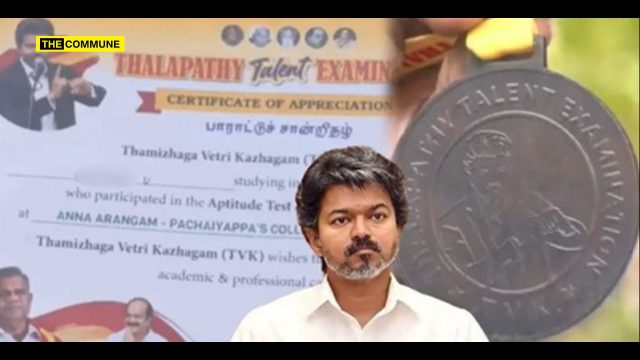
A parent has alleged that school students were made to participate in an examination linked to the ruling Tamilaga Vettri Kazhagam (TVK) without proper disclosure to parents and that children were subsequently issued certificates carrying the party’s name and branding.

Speaking to the media, the father of a student studying in Class 12 at Karnataka Sangha School in T. Nagar said that information regarding an examination was circulated on June 13. He stated that he was unaware of the nature of the programme and assumed it was a regular academic activity after seeing the sample question paper provided to students.

According to him, he personally dropped his child at school on the day of the examination. However, when he later returned to pick up the child, he was informed that the examination was not being conducted on the school premises but at another venue, Pachaiyappa’s College.

The parent said he questioned a teacher regarding the programme and showed the sample question paper that had been distributed. He claimed that the question paper carried a circular logo containing the letters “TVK” and that when he sought clarification about it, the teachers allegedly told him they were unaware of the details.

He further stated that after making additional enquiries at the school, he was provided with a contact number of the HM and asked to speak to them. According to the parent, the HM apologised during the conversation and allegedly told him that the school had permitted participation after being informed that it was a government function. The parent claimed to possess an audio recording of the conversation.

Questioning how the programme had been presented to schools, the father asked whether school authorities had failed to notice the TVK logo on the sample question paper or whether information regarding the programme had been conveyed to them in a different manner.

The parent said he had sent his child in school uniform believing it to be a school-related event. However, after the examination, the child allegedly received a certificate issued in the name of the Tamilaga Vettri Kazhagam.

He claimed that the certificate did not indicate that it was a government programme and instead explicitly mentioned TVK. According to him, if the intention had been to conduct a general knowledge examination for students, it could have been organised either as a government programme or openly as a party event without involving schools in the manner alleged.

The father also raised questions over the participation of Assembly Speaker J.C.D. Prabhakar in the programme, stating that photographs of the Speaker attending the event had been circulated publicly.

Expressing concern over what he described as the political branding of a student event, the parent questioned whether children were being exposed to party propaganda through such programmes. He alleged that medals, certificates and other materials distributed to students prominently carried the TVK name and symbol.

The father stated that his objection was not limited to his own child but extended to all students who had participated in the event. He said he was speaking out on behalf of hundreds of children and argued that political parties should not use school students for partisan activities.

He further claimed that when he raised objections, those involved apologised and maintained that the programme had been presented to schools as a government-related function.


View this post on Instagram


A post shared by Tamil Janam (@tamiljanam)

Subscribe to our channels on WhatsAppTelegram, Instagram and YouTube to get the best stories of the day delivered to you personally.
DMK, ADMK Govts Left TNCSC Buried Under ₹27,181-Crore Debt To Fund Freebies, Pongal Cash Gifts: White Paper Reveals

DMK, ADMK Govts Left TNCSC Buried Under ₹27,181-Crore Debt To Fund Freebies, Pongal Cash Gifts: White Paper Reveals

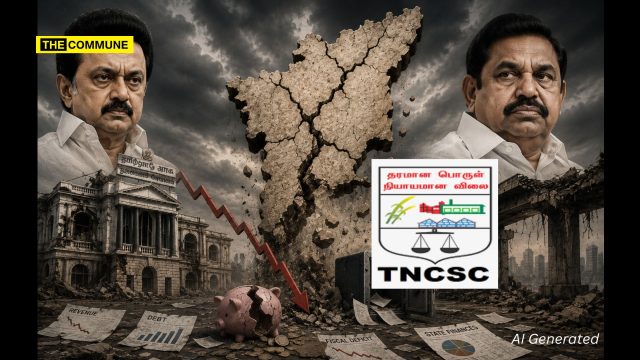
Years of welfare populism and election-season cash handouts under successive AIADMK and DMK governments have pushed the Tamil Nadu Civil Supplies Corporation (TNCSC) into a debt burden of ₹27,181 crore, according to the White Paper on Tamil Nadu’s finances released by the TVK government, as reported in The New Indian Express.

The report reveals that bank borrowings used to fund Pongal cash gifts, gift hampers and subsidised Public Distribution System (PDS) schemes have accumulated into a massive liability, with governments repeatedly failing to fully reimburse the corporation for expenditures incurred on their behalf.

TNCSC, the state agency responsible for procuring essential commodities and implementing food subsidy schemes, has increasingly relied on loans to finance welfare commitments as budgetary allocations failed to keep pace with rising costs.

According to the White Paper, TNCSC’s outstanding debt rose sharply from ₹17,500 crore in 2021-22 to ₹27,181 crore as of March 2026.

The report attributes the growing financial strain to two major factors: the mounting subsidy burden under the special PDS scheme and repeated Pongal cash assistance programmes rolled out by successive governments.

Between 2016 and 2026, Tamil Nadu spent ₹24,023 crore on Pongal cash assistance and gift hampers alone. The report notes that except for 2015, 2021 and 2025, Pongal cash assistance and gift packages were distributed almost every year.

The size of the payouts increased significantly over time. In 2019, the cash assistance component was raised from ₹100 to ₹1,000. In January 2022, gift hampers containing 21 items were distributed to beneficiaries.

Cash assistance of ₹1,000 was again provided in both 2023 and 2024.

The highest expenditure came in January 2026, ahead of the Assembly elections, when the state spent ₹6,688 crore to distribute ₹3,000 each to 2.23 crore ration card holders.

Similarly, ahead of the 2021 Assembly elections, the distribution of ₹2,500 to rice ration card holders resulted in an expenditure of ₹5,560 crore.

The White Paper argues that while welfare commitments expanded, the state failed to adequately compensate TNCSC for the resulting expenditure, forcing the corporation to bridge the funding gap through borrowings.

More than 90% of TNCSC’s total liabilities are owed by the state government, while the remainder relates to dues from the Union government.

The report also highlights the growing burden created by Tamil Nadu’s special PDS scheme, under which tur dal and cooking oil are supplied at heavily subsidised rates through ration shops.

When the scheme was launched in 2007, tur dal was procured at around ₹50 per kilogram and cooking oil at ₹45 per litre. These were supplied to beneficiaries at subsidised rates of ₹30 per kilogram and ₹25 per litre, respectively.

Today, procurement costs have more than doubled. Tur dal is now purchased at around ₹109 per kilogram, while cooking oil costs approximately ₹143 per litre.

Despite the dramatic rise in procurement costs, selling prices under the scheme have remained unchanged.

As a result, the annual subsidy burden on these two commodities alone has increased to nearly ₹4,800 crore per year, according to the report.

The growing dependence on loans has also sharply increased TNCSC’s interest obligations.

The White Paper states that the corporation’s annual interest burden has surged from ₹736 crore in 2021-22 to ₹1,795 crore in 2025-26.

“The interest burden has grown from ₹736 crore in 2021-22 to ₹1,795 crore in 2025-26. Interest now consumes a significant and rising share of TNCSC’s annual payments – a cost that is entirely unproductive,” the report noted.

Officials cited in the report said TNCSC routinely borrows funds to procure paddy from farmers on behalf of the Food Corporation of India (FCI), paying farmers within ten days and later receiving reimbursement from the Union government.

However, they noted that reimbursements from the Centre are sometimes delayed or partially paid, with a portion carried forward to subsequent years.

At the state level, officials acknowledged that TNCSC’s expenditure on food subsidies and cash distribution schemes has not always been fully reimbursed.

According to the report, instead of increasing budgetary support proportionately, successive governments directed the corporation to finance the shortfall through borrowings, causing the debt burden to accumulate year after year.

The White Paper identifies this pattern as part of a broader deterioration in Tamil Nadu’s finances.

It notes that the state’s fiscal position has worsened significantly in the post-Covid period, with outstanding liabilities approaching ₹10 lakh crore, revenue deficits reaching record levels, and Tamil Nadu’s own tax collection effort declining relative to Gross State Domestic Product (GSDP).

The report argues that while the pandemic represented a one-time shock, much of the subsequent fiscal deterioration stemmed from policy decisions taken by successive administrations.

The state currently bears the subsidy cost for supplies distributed to approximately 1.11 crore Non-Priority Household (NPHH) ration card holders, while the Centre fully funds food grains distributed to around 1.17 crore Priority Household (PHH) ration card holders.

During 2025-26, the Tamil Nadu government allocated approximately ₹17,500 crore to the Food Department, including around ₹14,300 crore towards food subsidy.

However, according to the White Paper, the gap between welfare commitments and budgetary support has continued to widen, leaving TNCSC saddled with a mounting debt burden that the TVK government now says is one of the clearest examples of the fiscal legacy inherited from both AIADMK and DMK administrations.

Subscribe to our channels on WhatsAppTelegram, Instagram and YouTube to get the best stories of the day delivered to you personally.
Environmental Clearance For ₹2,000-Crore Housing Project On Pallikaranai Ramsar Wetland Revoked After Construction Began Without Mandatory Approval

Environmental Clearance For ₹2,000-Crore Housing Project On Pallikaranai Ramsar Wetland Revoked After Construction Began Without Mandatory Approval

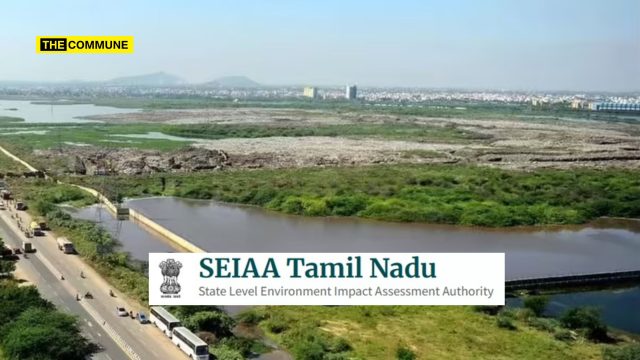
The State Environment Impact Assessment Authority (SEIAA) has revoked the Environmental Clearance (EC) granted to Brigade Enterprises Ltd. for its proposed large-scale residential project within the Pallikaranai marshland Ramsar site after finding that the company had allegedly commenced construction activities without obtaining mandatory permission from the Tamil Nadu State Wetland Authority, as reported in The Hindu.

The decision was taken during the 1,005th meeting of the SEIAA held on 8 May 2026, according to the minutes of the meeting and official records.

The action followed a communication from the Principal Chief Conservator of Forests (PCCF) and Member Secretary of the Tamil Nadu State Wetland Authority, who informed SEIAA that Brigade Enterprises had failed to comply with a project-specific condition attached to the environmental clearance granted to the project on 20 January 2025.

According to the records, the environmental clearance had been issued subject to a specific condition requiring the project proponent to obtain due permission from the Tamil Nadu State Wetland Authority before commencing any construction work, wherever applicable.

However, the Wetland Authority informed SEIAA that construction activities had already begun and that the company had not secured the required approval from the Wetland Authority prior to starting the project.

SEIAA observed that the failure to obtain mandatory permission before commencing work constituted a violation of the conditions attached to the environmental clearance.

The minutes of the meeting record that the Wetland Authority had specifically brought to SEIAA’s attention that the condition requiring prior permission from the Wetland Authority had not been complied with and that the project proponent had proceeded with construction activities before securing the necessary approval.

The Authority further noted that the Principal Chief Conservator of Forests had requested immediate action against the project under the environmental clearance conditions.

SEIAA recorded that non-compliance with the condition could result in withdrawal of the environmental clearance and attract action under the provisions of the Environment (Protection) Act, 1986.

After examining the communication and the alleged violations, SEIAA resolved to revoke the environmental clearance granted to the project.

The clearance withdrawn by SEIAA pertained to the Brigade Morgan Heights residential development proposed by Brigade Enterprises Ltd. The project envisages the construction of approximately 1,250 residential units spread across nearly 14.7 acres in Perumbakkam, an area that falls within the boundary of the internationally recognised Pallikaranai marshland Ramsar site.

The project has been at the centre of environmental concerns and legal challenges due to its location within the ecologically sensitive wetland region.

Environmental activists welcomed the SEIAA decision, describing it as a significant step towards protecting the Pallikaranai marshland ecosystem.

Anti-corruption and public interest organisation Arappor Iyakkam said it had raised complaints regarding approvals granted to the project before multiple authorities in October 2025. This project was alleged to be worth ₹2,000 crore.

The organisation maintained that construction activities had begun without obtaining clearance from the Tamil Nadu State Wetland Authority and argued that the revocation validated concerns raised by environmental activists.

Arappor Iyakkam also called upon the Chennai Metropolitan Development Authority (CMDA) to cancel the planning permission granted to the project.

Environmental group Poovulagin Nanbargal also welcomed the cancellation of the environmental clearance and urged the State Environment Department not to entertain any fresh application from Brigade Enterprises seeking a renewed environmental clearance for the project.

The organisation further called on the Tamil Nadu government to accelerate the identification, mapping and notification of wetlands across the State in accordance with the provisions of the Wetlands (Conservation and Management) Rules, 2017.

Subscribe to our channels on WhatsAppTelegram, Instagram and YouTube to get the best stories of the day delivered to you personally.
DMK Cries As National Anthem Is Sung In Tamil Nadu Assembly After Years Of Being Skipped Under DMK Regime

DMK Cries As National Anthem Is Sung In Tamil Nadu Assembly After Years Of Being Skipped Under DMK Regime

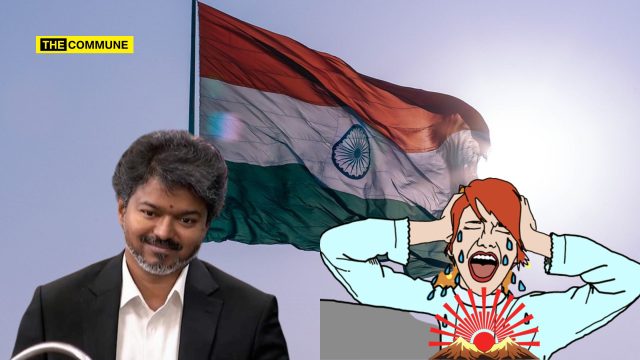
The TVK government today began the assembly by singing the anthem following the Tamil Thaai Vaazhthu at the beginning of the Assembly session.

This is a pleasant departure from the Dravidianist hate for the national anthem as they have repeatedly skipped singing the national anthem during the sessions whenever the governor was present in the past 5 years.

Every single time this happened; former Governor of TN (present West Bengal Governor) RN Ravi staged a walkout owing to the disrespect the state government exhibited to the national anthem. This led to him not being able to address the Assembly. This did not happen once or twice but 5 times.

In this session that began today, 18 June 2026, the Tamil Thaai Vaazhthu was sung before the national anthem.

This caused a lot of Dravidianists and DMK members to cry out of desperation. Here are some reactions.

The DMK IT Wing took to the X platform and wrote, “It has been a long-standing tradition of the Tamil Nadu Legislative Assembly to play the Tamil Thai Vazhthu at the beginning of the Governor’s address and the National Anthem at the conclusion. In the past, Governor R.N. Ravi acted and spoke arbitrarily, insisting that the National Anthem be played both at the start, alongside the Tamil Thai Vazhthu and at the end of the address, contrary to this established practice. However, the DMK stood firm in upholding the Assembly’s traditions, as always.

Yet, the current “Dummy CM” government has deviated from the Assembly’s tradition by singing the National Anthem right at the beginning, alongside the Tamil Thai Vazhthu. How can you having come to power promising “Change” shamelessly and brazenly compromise the Assembly’s traditions like this? Is this the “change” you spoke of? These slaves of the Union BJP government, who have insulted Mother Tamil from the very beginning, persist in trying to chop down the very tree that sustains them; even though they fall flat on their faces time and again, they climb back up only to resume the same destructive behavior. The “Dummy CM,” who remains silent, must correct himself and his conduct!”

Subscribe to our channels on WhatsAppTelegram, Instagram and YouTube to get the best stories of the day delivered to you personally.
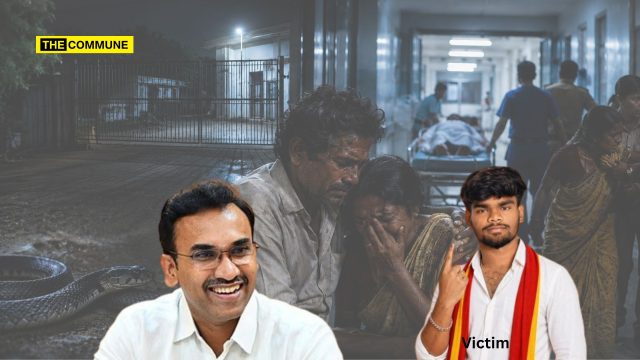
TVK Model: Snakebite Victim Travelled Over 110 Km For Treatment After Two GHs Allegedly Failed To Open Gates; Teen Dies; Govt Orders Probe

TVK Model: Snakebite Victim Travelled Over 110 Km For Treatment After Two GHs Allegedly Failed To Open Gates; Teen Dies; Govt Orders Probe

The family of a 19-year-old Tamilaga Vettri Kazhagam (TVK) functionary from Surandai, who died following a snakebite after allegedly facing hours of delay in receiving treatment, has petitioned the Tenkasi District Collector seeking action against staff at two government hospitals for allegedly refusing to open their gates during a medical emergency, as reported in The New Indian Express.

The deceased, identified as K. Akash, died at the Tirunelveli Medical College Hospital (TvMCH) after battling complications arising from a snakebite. Following complaints from the family, the district health department has initiated an inquiry into the circumstances surrounding his treatment and death.

According to a petition submitted to the Collector by Akash’s father, A. Krishnan, the teenager had to be taken to multiple government healthcare facilities and a private clinic across a distance of more than 110 kilometres before he could receive proper treatment.

The incident reportedly occurred on the night of June 3, when Akash and his 14-year-old cousin Chinnadurai were sleeping at a relative’s house in Surandai. During the night, both began experiencing severe stomach pain and discomfort.

Believing it to be a medical emergency, relatives rushed the two boys on a two-wheeler to the nearby VK Pudur Government Hospital, located about three kilometres away. However, the family alleged that the hospital’s compound gate was closed and that despite repeated attempts to attract the attention of hospital staff, the gate was not opened.

Unable to secure treatment there, the family transported the boys to the Government Hospital at Alangulam, situated approximately 20 kilometres away. According to the petition, the compound gate at Alangulam Government Hospital was also found closed. Family members alleged that staff did not initially permit them entry, resulting in further delay.

The two boys were then taken to a private clinic in Alangulam, where they were administered an injection. They were subsequently brought to the Primary Health Centre (PHC) in Surandai for further treatment.

Doctors at the Surandai PHC referred both patients to the Tenkasi District Government Headquarters Hospital (GHQH) and arranged for their transfer in an ambulance.

At the district hospital, doctors reportedly informed the family that both boys had likely been bitten by a snake. Following this, relatives inspected the room where the boys had been sleeping and allegedly discovered a common krait, one of India’s most venomous snakes.

As the condition of both patients deteriorated, they were referred to the Tirunelveli Medical College Hospital for advanced treatment.

While Chinnadurai recovered and was later discharged from hospital, Akash’s condition remained critical. Despite undergoing treatment for nearly a week, he failed to respond and died at TvMCH on June 10.

In his petition, Krishnan alleged that proper treatment for his son began only after a delay of nearly five hours because staff at the two government hospitals failed to open their gates during the emergency.

Following the complaint, the district administration ordered an inquiry into the incident. Acting on the Collector’s instructions, the district health department has begun investigating the allegations and the sequence of events leading to the teenager’s death.

In a further development, the Directorate of Medical and Rural Health Services (DM&RHS) has deputed an Additional Director of Medical Services (ADMS) from Chennai to conduct a detailed inquiry into the treatment provided to Akash at the various government health institutions where he was taken after the snakebite. According to an official communication issued by the Directorate, the inquiry is scheduled to be conducted on June 19, 2026, and will examine the sequence of events at all healthcare facilities involved in the case.

An FIR was also registered.

Responding to the allegations, a senior health department official said explanations had been sought from doctors attached to both hospitals.

According to the official, staff at VK Pudur Government Hospital claimed that the relatives left before the duty doctor could reach the casualty ward. Officials at Alangulam Government Hospital reportedly stated that the family had approached the old hospital block instead of the new one.

The official also said that CCTV footage from VK Pudur Government Hospital was unavailable, while footage from Alangulam Government Hospital had been sought for examination as part of the inquiry.

Meanwhile, Surandai police have registered a case of unnatural death and further investigations are underway.

Subscribe to our channels on WhatsAppTelegram, Instagram and YouTube to get the best stories of the day delivered to you personally.
Blot On Joseph Vijay’s TVK Govt: Custodial Death Victim’s Parents Fought For Justice For Over 100 Days; Son Forcefully Cremated, Parents Detained, Accused Yet To Be Punished

Blot On Joseph Vijay's TVK Custodial Death Victim's Parents Fought For Justice For Over 100 Days; Son Forcefully Cremated, Parents Detained, Accused Yet To Be Punished

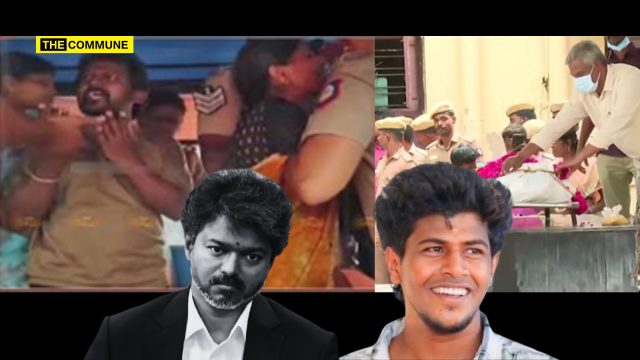
The cremation of 26-year-old Dalit youth Akash Delison under police protection on Wednesday, 17 June 2026, has emerged as one of the most controversial law-and-order issues confronting Chief Minister Joseph Vijay’s Tamilaga Vettri Kazhagam (TVK) government, with the administration failing to deliver justice to a family alleging custodial murder, as reported in DT Next.

More than 100 days after Akash’s death, his body was finally cremated at an electric crematorium following directions issued by the Madurai Bench of the Madras High Court. The final rites were conducted amid tight security and emotional scenes, with family members continuing to insist that justice had not been served.

As police officials carried out the court’s order, Akash’s grieving mother reportedly threw a handful of soil towards the policemen and cursed those she held responsible for her son’s death, underscoring the anguish that has defined the family’s struggle over the past three months.

Akash, a resident of Manamadurai in Sivaganga district, was arrested by local police on March 6 in connection with an assault case. Police initially claimed that he sustained a leg fracture while attempting to escape from custody.

However, according to reports, Akash later gave a statement before a judicial magistrate alleging that police personnel had brutally assaulted him and broken his leg while in custody. He died on 8 March 2026 while undergoing treatment at the Government Rajaji Hospital in Madurai.

The controversy deepened after the post-mortem examination reportedly found around 28 injuries on his body, raising serious questions about the circumstances leading to his death.

Following public outrage, the investigation was transferred to the Crime Branch-CID on 9 March 2026. Six police personnel, including an inspector and a sub-inspector, were subsequently placed under suspension.

The Madras High Court took suo motu cognisance of the matter and, on 13 March 2026, directed the CB-CID to register a murder case and invoke relevant provisions of the Scheduled Castes and Scheduled Tribes (Prevention of Atrocities) Act against the accused police personnel.

Despite the court’s intervention, the victim’s family maintained that justice remained incomplete. Akash’s father, Rajesh Kannan, approached the High Court seeking ₹50 lakh compensation and the immediate arrest of all 16 police personnel allegedly connected to the custodial death.

The family also staged a continuous protest near the old bus stand in Manamadurai, refusing to receive the body until all those responsible were arrested.

The prolonged standoff eventually prompted judicial intervention. On 15 June 2026, the Madurai Bench directed that if the family failed to accept the body by 5 p.m. on the same day, the district administration should proceed with a dignified disposal of the remains.

When the family continued its refusal, authorities moved ahead with the cremation process under heavy police deployment.

The episode has now triggered criticism of the TVK government, which came to power promising transparent governance and a people-centric administration. While the custodial death itself occurred before the current government’s tenure, the handling of the aftermath falls squarely within its responsibility.

The family’s primary demand was the arrest of all police personnel allegedly involved in the custodial death. Instead, the administration allowed the situation to drag on for months before ultimately deploying police personnel to enforce the court-ordered cremation.

The image of grieving parents protesting for over 100 days and watching their son’s body cremated without their consent has become a symbol of the state’s failure to provide timely accountability in a custodial death case.

Subscribe to our channels on WhatsAppTelegram, Instagram and YouTube to get the best stories of the day delivered to you personally.
“Only A Handful Of Christian Families, Yet A Large Church Proposed Near Temple; Mala Fide Intentions Cannot Be Ruled Out”: Madras High Court Halts Construction In Coimbatore

'Church Properties Meant For Uplifting Underprivileged': Madras HC Reiterates Call For Regulatory Framework Like HR&CE For Church Assets.

The Madras High Court has granted an interim injunction restraining the president of the CSI Christ King Church on Kalapatti Main Road in Coimbatore city from constructing a church in close proximity to a Mariamman Temple and on a piece of land classified as a public road in revenue records, as reported in The Hindu.

A Division Bench comprising Justices GR Swaminathan and V. Lakshminarayanan made the observations while hearing a writ petition filed by N. Balasubramaniyam challenging orders issued by district authorities in connection with the proposed church construction.

In its order, the Bench observed, “If a large church is proposed to be constructed in the vicinity of a temple, mala fide intentions cannot be ruled out. Since India is a secular nation and a pluralistic society, religious amity has to be preserved, especially when an overwhelming majority of Hindus oppose the construction of a church in close proximity to the temple.”

The court also recorded submissions made by the petitioner’s counsel, D. Baskar, during the course of arguments. According to the order, the counsel claimed that “certain fundamentalist organisations have become emboldened” following the change of government headed by Chief Minister Joseph Vijay and that posters had appeared across the State calling for the construction of churches in every village.

The counsel further submitted that Legislative Assembly Speaker JCD Prabhakar, who claims to have distributed thousands of free copies of the Bible, quoted biblical verses in his inaugural address to the Legislative Assembly. He also pointed out that the ruling Tamilaga Vettri Kazhagam (TVK) did not object when Leader of the Opposition Udhayanidhi Stalin called for “the annihilation of Sanatana Dharma” during his address in the Assembly.

Referring to these submissions, the Bench stated. “Since there has been a disruption in the political ecosystem, according to the petitioner’s counsel, the construction of a church which was put on hold has been resumed recently… The political scenario may change. But so long as the position of law remains what it is, it is our duty to give effect to the same.”

The Bench noted that the Mariamman Temple in Kalapatti has existed for more than 100 years. It recorded that of the nearly 1,000 families residing in the locality, around 950 are Hindus, 15 are Muslims, and only a very small number are Christians.

The dispute traces back to 2010 when the Coimbatore Collector granted permission for the construction of a church on land situated close to the existing temple. In response, temple worshippers filed a civil suit before the Coimbatore District Munsif Court in 2011 challenging the proposed construction.

While the civil suit remained pending, the Coimbatore Collector and the Coimbatore North Revenue Divisional Officer issued orders in May 2023 granting police protection for the construction work. However, after law and order concerns emerged, the Collector issued a stop-construction order in June 2023.

Subsequently, the Church of South India (CSI) approached the High Court in 2024 challenging the Collector’s order. On 28 April 2026, Justice M. Dhandapani disposed of the writ petition and granted liberty to CSI to file a fresh application seeking permission for construction after the disposal of the 2011 civil suit.

Following that order, N Balasubramaniyam filed the present writ petition in May 2026 challenging the 2023 orders issued by the Collector and the Revenue Divisional Officer.

In his order, Justice GR Swaminathan emphasised that the constitutional right to practise, profess and propagate religion is subject to public order considerations.

The judge observed, “Coimbatore is a communally sensitive city. It witnessed bomb blasts and bloody religious riots. The proposed church would come up within a stone’s throwaway distance from the existing Mariamman Temple. There are only a handful of Christian families. If a large church is proposed to be constructed in the vicinity of the Mariamman Temple, mala fide intentions cannot be ruled out.”

He further stated, “The counsel for the petitioner hints at the possibility of the new building being a centre of conversion activity. We are a secular nation. We are a pluralist society. Religious amity has to be preserved. If a religious right is established, then it is the duty of the State to aid in its enforcement… When Hindus constitute an overwhelming majority and they vigorously oppose the construction of a church in the immediate vicinity of the temple, then the authority must not casually brush the objection aside.”

The Bench also clarified that the circumstances of the present case were unique and influenced by multiple factors.

The judges noted, “The considerations could have been different if the construction were on patta (private) land whose title is beyond dispute and there is no religious structure belonging to other communities in the immediate vicinity or if there is no opposition. In the case on hand, the revenue record indicates that the site is a public road. The location is too close to an old temple. There is also vigorous opposition.”

At the same time, the court cautioned that opposition alone cannot be the basis for denying a religious right.

The Bench said, “We should not be understood as holding that if there is opposition, the State must submit to it. Far from it. If right is established or if the opposition is found to be unreasonable, then the State should go to any extent to uphold the right.”

Subscribe to our channels on WhatsAppTelegram, Instagram and YouTube to get the best stories of the day delivered to you personally.
NHRC Seeks Action Taken Report From Eluru Officials On Complaint Alleging Pastor, Wife Drugged Minors To Influence Custody Inquiry In Andhra Pradesh

NHRC Seeks Action Taken Report From Eluru Officials On Complaint Alleging Pastor, Wife Drugged Minors To Influence Custody Inquiry In Andhra Pradesh

The National Human Rights Commission (NHRC) has taken cognizance of a complaint filed by NGO watchdog, Legal Rights Protection Forum (LRPF), alleging that a religious preacher and his wife in Andhra Pradesh’s Eluru district administered country-made drugs to two minor siblings during a child custody-related inquiry, causing severe mental distress to the children.

Acting under Section 12 of the Protection of Human Rights Act, 1993, a bench of the Commission headed by Member Priyank Kanoongo observed that the allegations, on the face of it, appeared to involve violations of the children’s human rights. The Commission has directed the District Magistrate and Superintendent of Police, Eluru, to conduct an inquiry into the allegations and submit an Action Taken Report within seven days.

According to the complaint placed before the Commission, the case dates back to 2020 when the West Godavari Child Welfare Committee (CWC) reportedly ordered an inquiry into allegations that a pastor and his wife had administered country-made drugs to two minor children during proceedings concerning their custody and welfare. The complaint alleged that the children subsequently suffered mental disturbance and that the matter attracted provisions of the Juvenile Justice (Care and Protection of Children) Act.

The complainant further alleged that despite a CWC probe order issued on 8 January 2020, and a subsequent notice issued by the National Commission for Protection of Child Rights (NCPCR) on 17 February 2020, authorities failed to furnish a proper Action Taken Report. It was also alleged that repeated attempts to obtain information through the Right to Information Act were unsuccessful, leading to suspicions that material facts had been suppressed and that influential individuals were being protected.

The complaint submitted to the NHRC stated that district authorities had failed to provide details regarding the investigation, findings, prosecution status, or departmental action allegedly taken in the matter. It further sought intervention by the Commission, including directions for a comprehensive status report from district authorities and an impartial investigation into the allegations.

The NHRC, while not expressing any conclusion on the merits of the allegations, noted that the allegations raised concerns relating to the rights and welfare of minor children and warranted examination. The Commission has therefore sought a detailed report from the Eluru district administration and police authorities for further consideration of the matter.

Subscribe to our channels on WhatsAppTelegram, Instagram and YouTube to get the best stories of the day delivered to you personally.
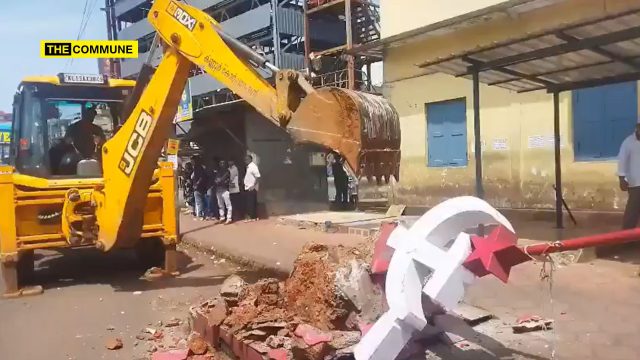
Bulldozers Roll Into CPM Bastion: Illegal Party Structures Removed From Public Spaces In Kannur

Bulldozers Roll Into CPM Bastion Illegal Party Structures Removed From Public Spaces In Kannur

Kannur Corporation authorities have launched a drive to remove unauthorized political flagpoles, boards, and monuments erected in public spaces and along roadsides within the corporation limits, drawing significant political attention in a district widely regarded as a stronghold of the Communist Party of India (Marxist) (CPM).

The operation is being carried out by employees of the Corporation’s Health and Revenue Departments as part of an ongoing effort to clear public land encroachments and enforce civic regulations. Officials stated that the structures being removed were installed without the necessary permissions and were found occupying public roads, pavements, and other common areas.

According to corporation authorities, the action aims to prevent encroachment of public spaces, improve road safety, facilitate the smooth movement of pedestrians and vehicles, and preserve the city’s aesthetic appearance. Officials emphasized that the drive is being conducted in accordance with existing laws and regulations governing public property.

The removal of political symbols and structures has attracted considerable attention because it is taking place in Kannur, a district where the CPM has traditionally maintained a strong political presence. Images and videos of corporation workers dismantling flagpoles and monuments have circulated widely on social media platforms, triggering political discussions and debates among supporters and critics alike.

The development comes amid a broader push by local bodies across Kerala to regulate unauthorized political and commercial structures erected in public spaces. In previous instances, local authorities in corporations such as Kochi and Kollam had issued notices and imposed penalties for illegally erected flagpoles, flex boards, and other structures linked to political events. Those actions were undertaken following directions from the Kerala High Court, which has repeatedly stressed the need to keep public roads and spaces free from unauthorized encroachments.

Corporation officials have indicated that the removal drive will continue against all illegal structures regardless of political affiliation, as part of efforts to ensure compliance with civic laws and protect public infrastructure.

Subscribe to our channels on WhatsAppTelegram, Instagram and YouTube to get the best stories of the day delivered to you personally.