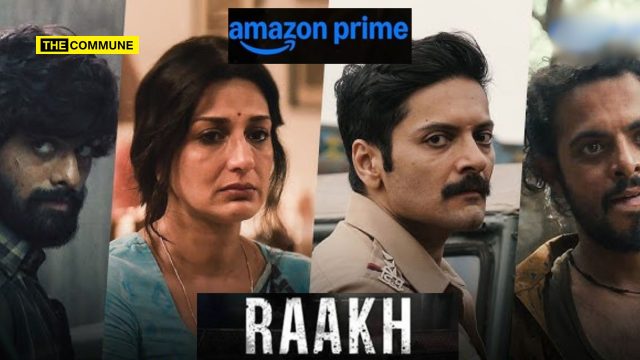
Amazon Prime Video’s latest crime series Raakh, marketed as being inspired by one of India’s most shocking criminal cases – the 1978 kidnapping and murder of siblings Geeta and Sanjay Chopra by Kuljeet Singh alias Ranga and Jasbir Singh alias Billa is facing criticism for allegedly replacing key historical figures and facts with fictional identities designed to fit a contemporary social-justice narrative.
While filmmakers often take creative liberties when adapting real-life events, Raakh goes beyond dramatization and fundamentally alters the identities of the people who investigated, reported on and helped solve one of independent India’s most infamous crimes.
One of the biggest points of contention concerns the police officers who led the investigation.
Historically, the hunt for Ranga and Billa was led by Hindu officers of the Delhi Police, Inspector V.P. Gupta, assisted by Sub-Inspector Ram Chander. The Delhi Police Commissioner during the final stages of the investigation was J.N. Chaturvedi.
In Raakh, however, these real-life figures have been replaced by entirely fictional characters. The series centres around Jayprakash Jatav, a rookie Dalit Sub-Inspector played by Ali Fazal, who is portrayed as battling caste discrimination and institutional bias while pursuing the case. His key associate is depicted as SI Javed Murtaza, a Muslim police officer, while another recurring character is a Brahmin hawaldar portrayed as lazy and incompetent.
None of these caste or communal dynamics formed part of the actual Ranga-Billa investigation and the show effectively rewrites the historical record by replacing the real officers with characters designed around contemporary identity politics.
The controversy doesn’t stop there.
The journalist most closely associated with reporting on the case was originally Prabha Dutt, one of India’s pioneering women journalists and the mother of veteran journalist Barkha Dutt. Her reporting helped keep public attention focused on the case and the investigation.
Yet in the series, Prabha Dutt’s role has been transformed into a fictional journalist named Nisar, altering the identity of one of the most important media figures connected to the case.
Similarly, Babulal, the civilian who played a crucial role by attempting to help the victims and assisting police efforts, has been recast as a fictional character named Saleem, again the do-gooder is a Muslim.
There should be proper censor board for Ott platforms now pic.twitter.com/Npc5Tp5G8h
— Maithili (@SuvarnBharat) June 17, 2026
These changes are not merely cosmetic. By systematically altering the identities, backgrounds and social characteristics of key individuals connected to the case, the series creates an alternate version of history that many viewers unfamiliar with the original events may mistake for fact.
The issue is not that Raakh is fictionalised, but that it is presented as being inspired by real events while simultaneously replacing documented historical figures with invented characters and social conflicts that were never central to the original case.
Subscribe to our channels on WhatsApp, Telegram, Instagram and YouTube to get the best stories of the day delivered to you personally.