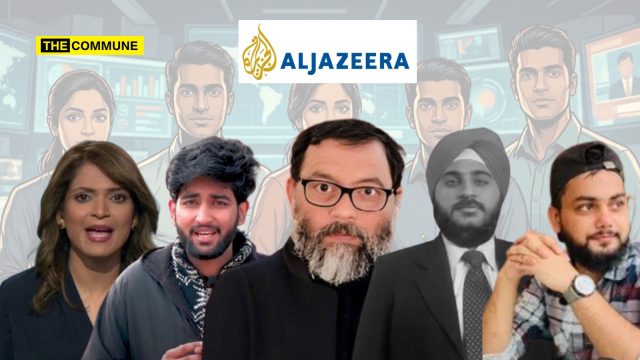
Al Jazeera, the Qatar government-funded news network, has faced mounting criticism over its coverage of India, with observers pointing to a consistent pattern of reporting that portrays the country negatively regarding its treatment of Muslim communities and its political direction.
The network’s Indian correspondents have repeatedly produced reports that distort facts and promote a specific narrative about religious tensions in the country.
Coverage Patterns and Specific Cases
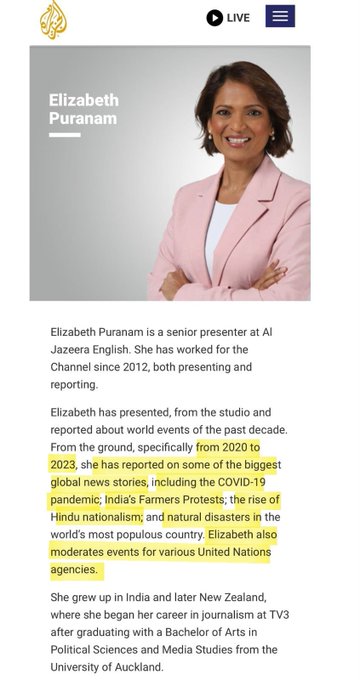
Elizabeth Puranam’s Reporting
During the COVID-19 pandemic, correspondent Elizabeth Puranam produced stories that focused exclusively on India’s failures in managing the health crisis, presenting a one-sided picture of the country’s response to the global emergency without adequate context about its efforts and successes.
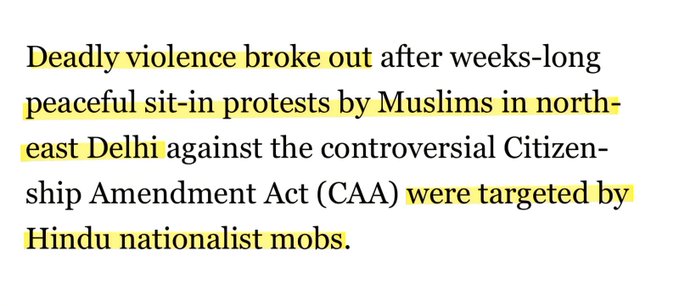
Additionally, Puranam’s reporting on the Delhi riots omitted key details from the police charge sheet, specifically regarding the involvement of Umar Khalid in inciting violence, a significant omission that skewed the narrative.
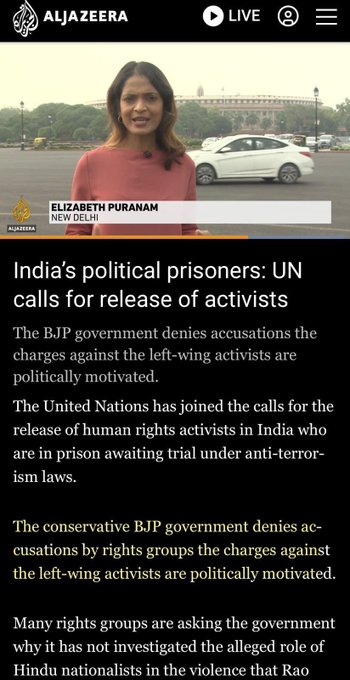
In coverage of the Bhima Koregaon case, Puranam referred to individuals facing serious charges as “activists,” a characterization that downplayed the severity of the allegations against them.
Yashraj Sharma’s Reporting
Correspondent Yashraj Sharma’s background includes association with “Kashmir Walla,” an independent magazine whose editor was booked under the Unlawful Activities (Prevention) Act. This connection is indicative of a broader pattern.
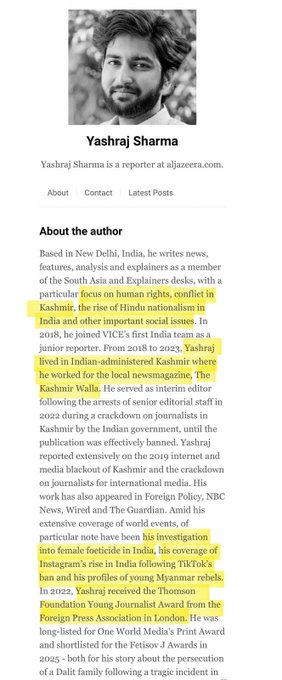
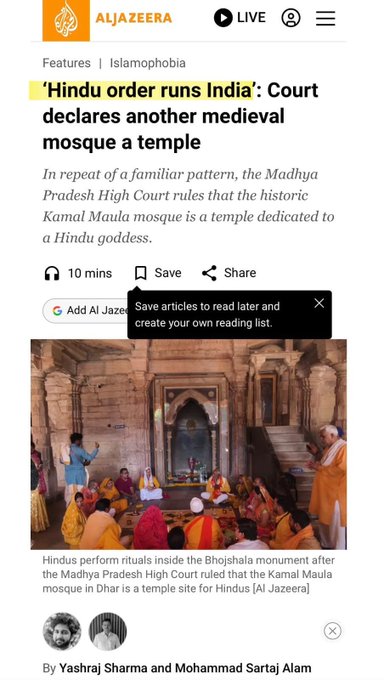
Sharma’s reporting consistently frames stories around themes of Muslim subjugation, presenting issues through a lens that highlights alleged oppression rather than providing comprehensive context, according to the allegations.
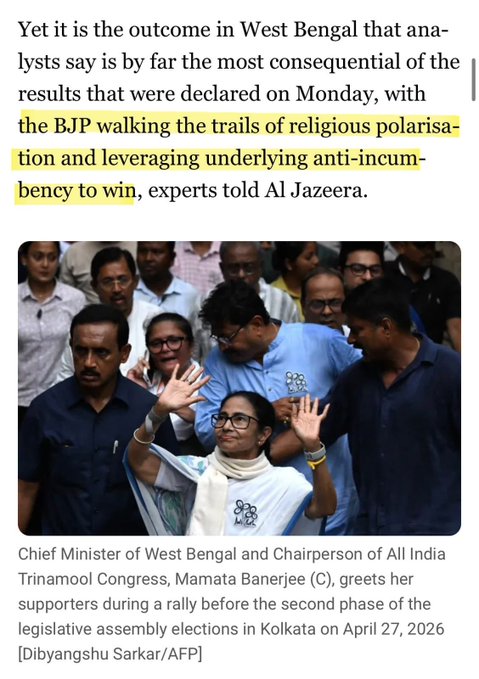
Following the West Bengal elections, Sharma attributed Bharatiya Janata Party’s victory primarily to religious polarization, a framing that was reductive and unsupported.
Security-related stories from India have also been flagged for containing false information.
In a report on social media content creation in India, Sharma claimed that Instagram content was “heavily dominated” by upper caste and class individuals, a framing that was injecting an unnecessary casteist angle into coverage of a platform enjoyed by millions of Indians across social strata.

Gurvinder Singh’s Reporting
Correspondent Gurvinder Singh also follows the same editorial line as his colleagues, producing stories that emphasize Muslim victimization without providing alternative perspectives.
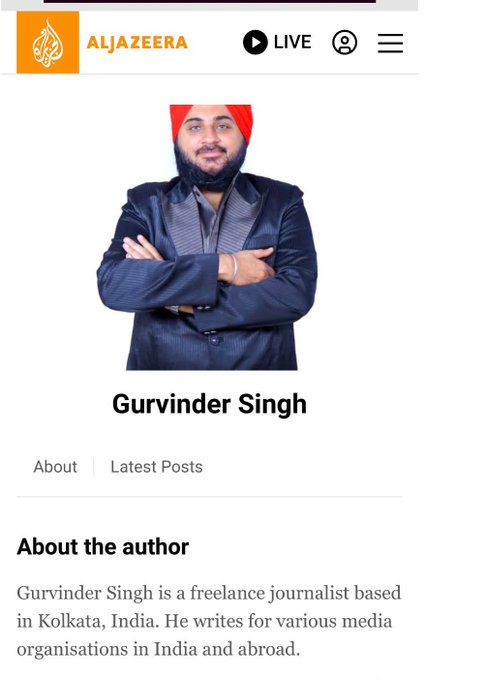
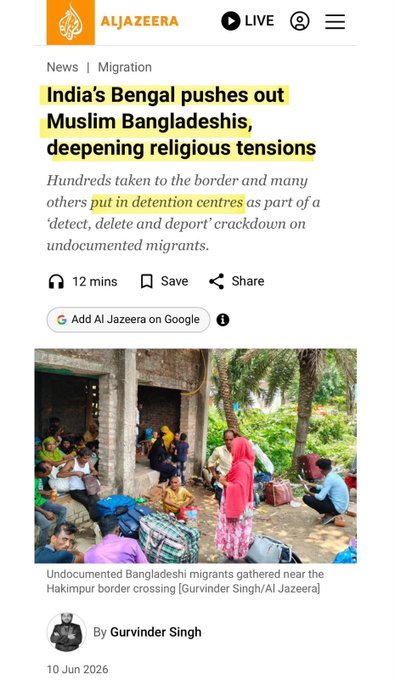
In coverage of deportation issues, Singh fails to note that individuals being returned to Bangladesh are illegal immigrants, instead framing the stories exclusively around Muslim concerns, an omission that are misleading.
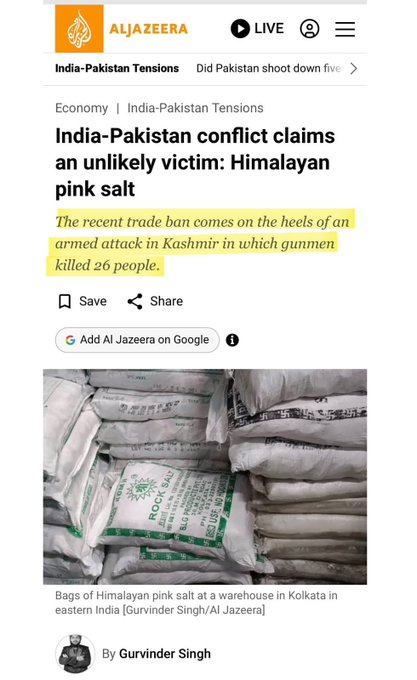
His coverage of terrorism-related incidents uses sanitized terminology playbook of Al Jazeera, such as referring to militants or terrorists as “gunmen,” which softens the nature of violence and those responsible.
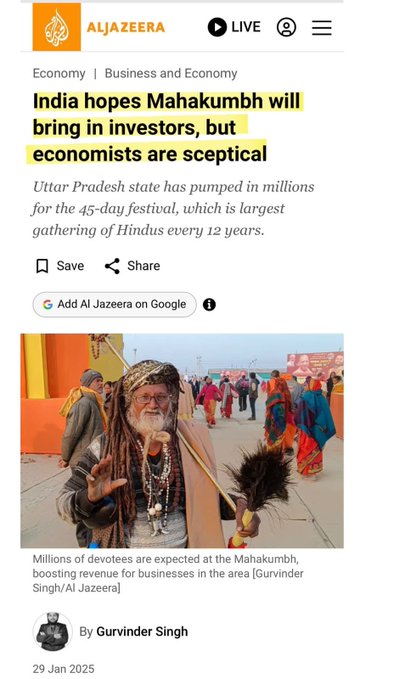
He also presentes outright falsehoods as factual reporting – Gurvinder just serves blatant lies to international audiences.
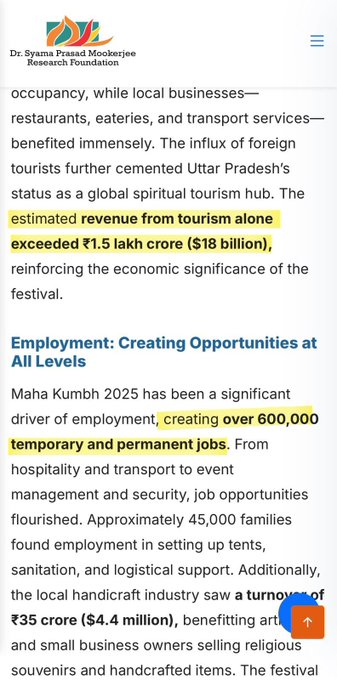
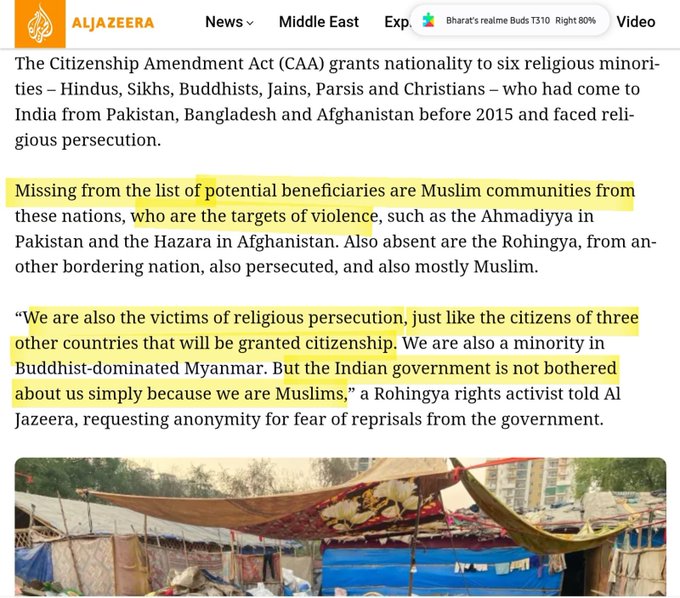
The pattern across all correspondents appears consistent: stories are framed around narratives of Muslim victimhood, with the intended message being that Muslims are systematically oppressed by the Indian state.
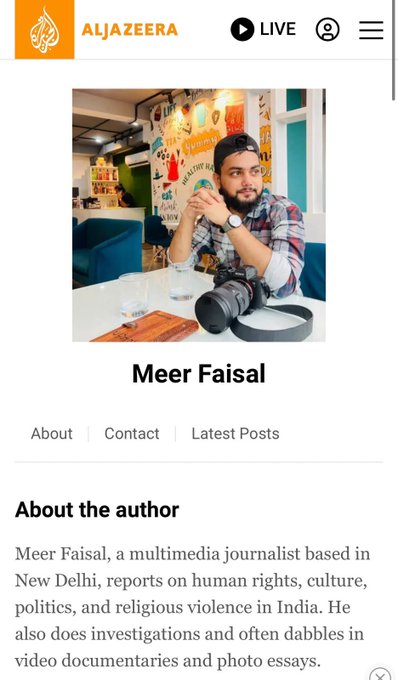
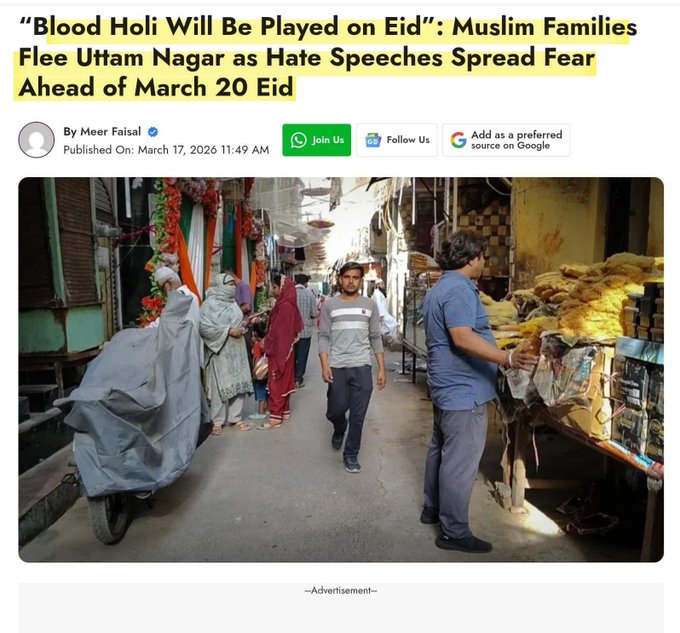
Meer Faisal And His Victimhood Card
No story filed by correspondents such as Meer Faisal is independent of a Muslim context, proving that an editorial priority shapes all coverage from India.
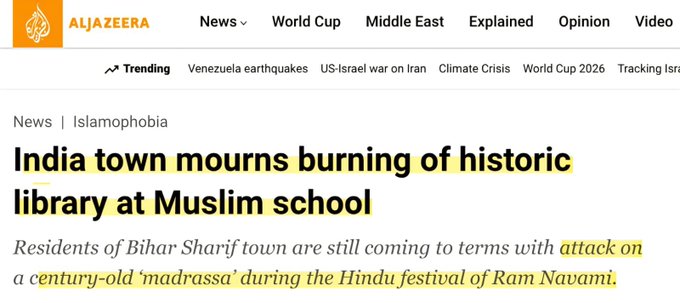
The Uttam Nagar Holi murder case, which involved violence against a Muslim individual, received extensive coverage from Al Jazeera, but similar incidents affecting other communities do not receive comparable attention, pointing to selective outrage.
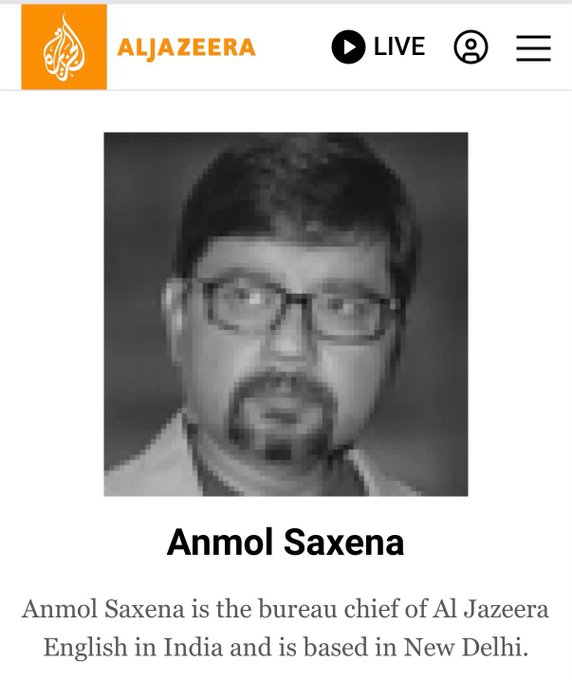
Bureau Chief Anmol Saxena
A major editorial lapse involved the publication of an incorrect map of India concerning Kashmir, an issue that bureau chief Anmol Saxena defended rather than acknowledging the error. This defense is indicative of the network’s broader editorial stance.
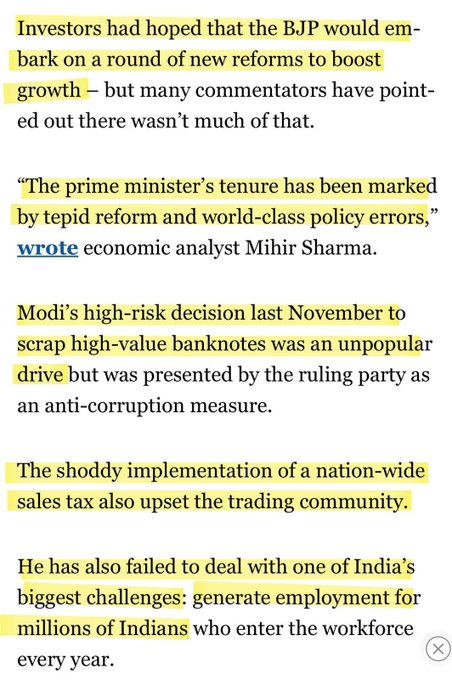
These brown sepoys function as instruments for disseminating anti-India and anti-Hindu narrative to global audiences. Correspondents from the region themselves are contributing to a negative portrayal of their own country.
This narrative is subsequently amplified by other international outlets and actors seeking to portray the Modi government as a failure and India in a negative light, creating an echo chamber of one-sided reporting.
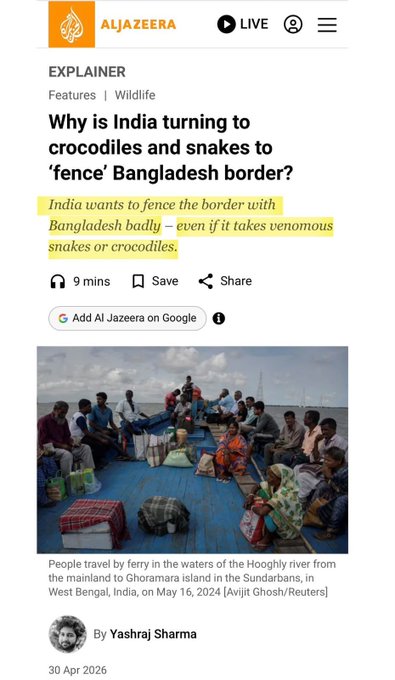
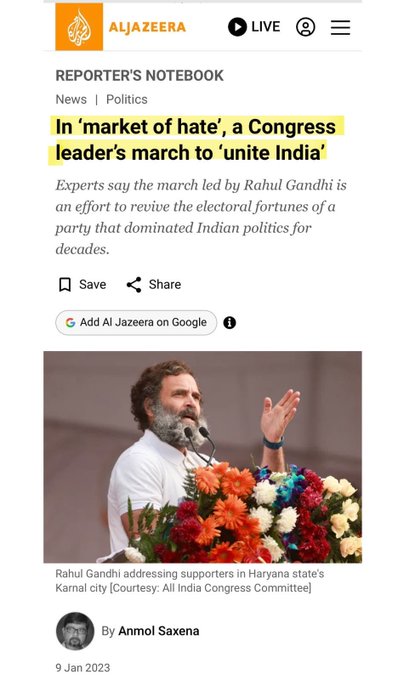
Headlines such as these are indicative of the bias in their ‘journalism’.
Al Jazeera has previously defended its editorial independence, asserting that the Qatari government does not influence its news operations. The network claims its coverage meets professional journalistic standards and provides balanced reporting from the region.
However, Al Jazeera’s coverage reflects legitimate concerns about minority rights and democratic institutions in India – issues that warrant international media scrutiny.
This article is based on an X thread by Brown Sepoys.
Subscribe to our channels on WhatsApp, Telegram, Instagram and YouTube to get the best stories of the day delivered to you personally.