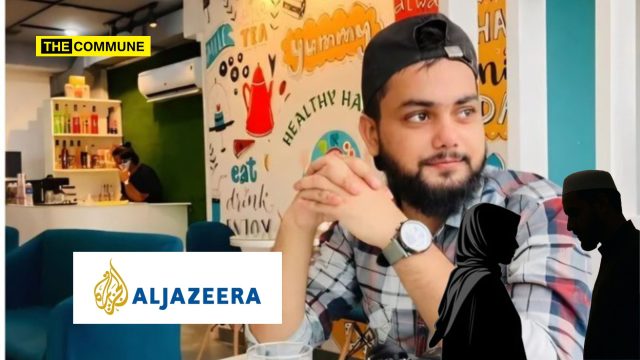
He calls himself a crime and justice reporter, but Meer Faisal’s journalism has one unshakeable rule: the criminal is always Hindu, and the victim is always Muslim. A review of every byline filed by the New Delhi-based freelance journalist for Al Jazeera and other international outlets reveals a pattern so consistent it appears less like reporting and more like advocacy dressed as journalism.
Faisal, who also writes for DW, TRT World, The Wire, and Maktoob Media, lists his professional coverage areas as “crime and justice.”
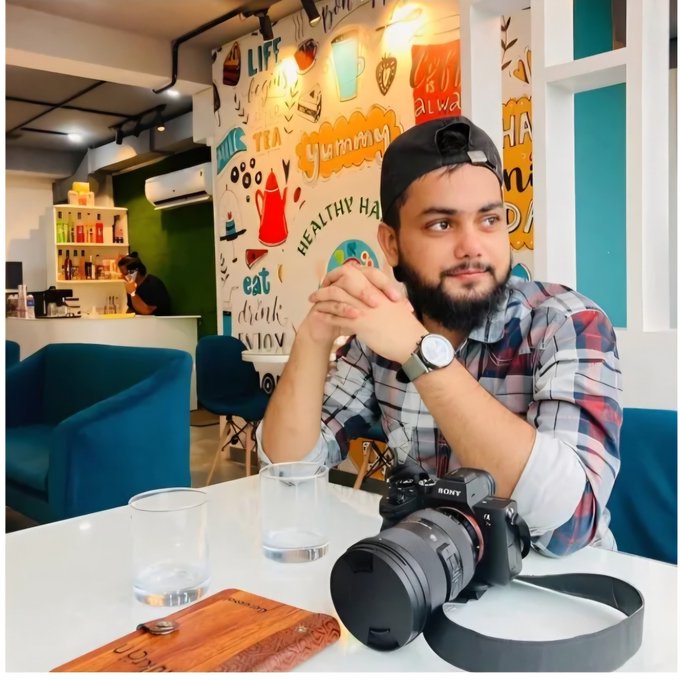
However, an examination of his articles shows that crimes are only covered when they involve Muslim victims. Indian stories that do not fit this template go unreported, while exclusively Muslim issues remain his core concern.
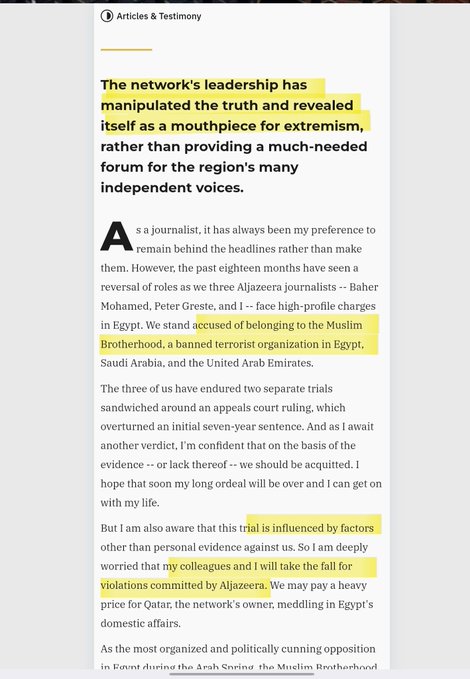
Al Jazeera, the primary platform for Faisal’s work, is funded by the Qatar government. The channel has a history of internal dissent regarding its editorial stance. Its Washington Bureau Chief resigned in 2003, citing the channel’s “Islamist drift,” and 22 journalists from its Egyptian bureau quit in 2013, citing pro-Muslim Brotherhood bias.
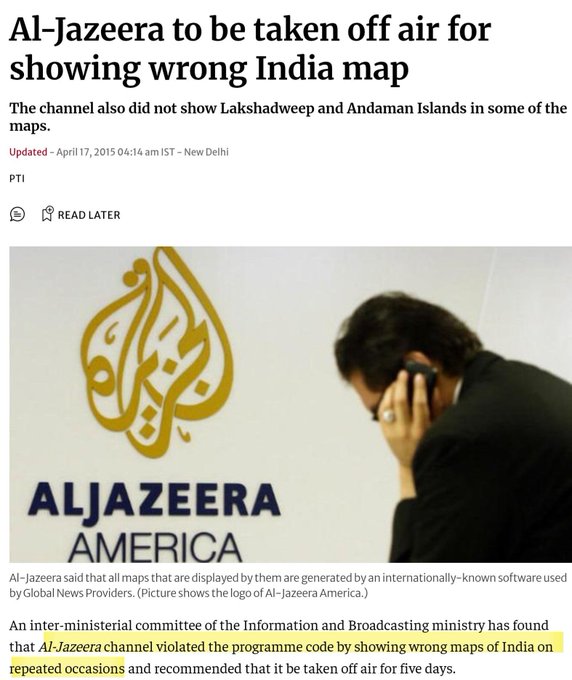
Al Jazeera’s India coverage has also been noted for using incorrect maps of Jammu and Kashmir, referring to Pakistan-occupied Kashmir (PoK) as “Pakistan-administered Kashmir,” and framing India through a particular lens. Meer Faisal is one of its regular contributors.
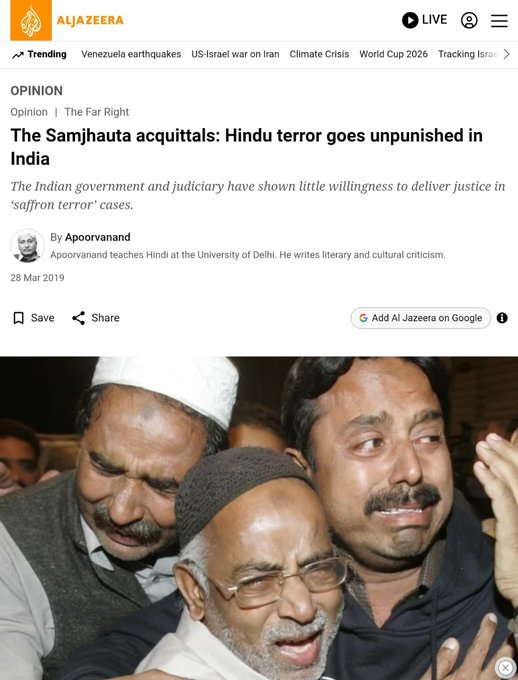
A review of Faisal’s articles highlights the following patterns:
Article: “Why Muslims Are Fleeing a Small Town in India’s Uttarakhand State” (2023)
The article framed the situation as helpless Muslims being driven out by “far-right Hindu groups,” with state complicity, and prominently named the VHP and Bajrang Dal, as well as the RSS and Prime Minister Modi. However, the incident was triggered by the alleged kidnapping of a 14-year-old Hindu girl, leading to the arrest of two men. Faisal’s article did not provide a follow-up on the status of the girl.
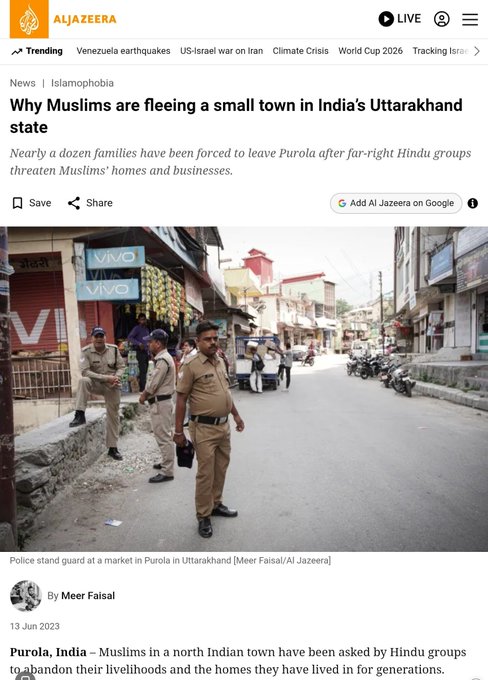
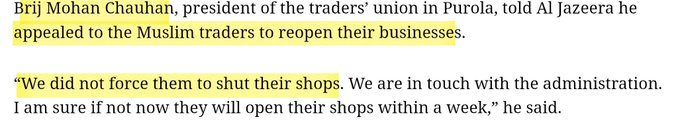
Furthermore, the Uttarakhand government and police publicly stated there was no mass exodus, and the Purola Traders’ Union president himself told Al Jazeera that Muslim traders were not forced out and would return.
Article: “India Town Mourns Burning of Historic Library at Muslim School” – Bihar Sharif, Ram Navami 2022
The headline framed the incident as a Hindu festival leading to the destruction of a Muslim institution.
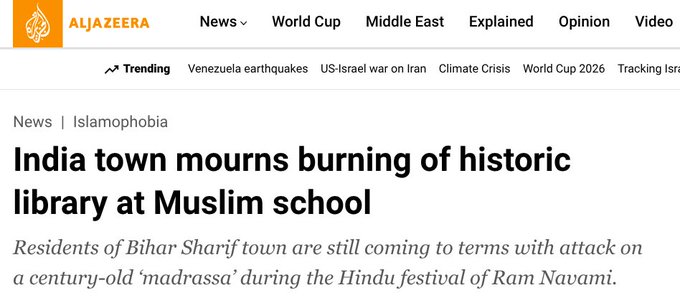
While the madrasa fire was real, Faisal’s article did not inform global readers that a Hindu man was killed in the same violence, shops belonging to both communities were destroyed, and a Hindu-owned marriage hall was burned. Bihar Police filed FIRs against members of both sides and arrested over 130 people. The article mourned only one community and blamed the other.
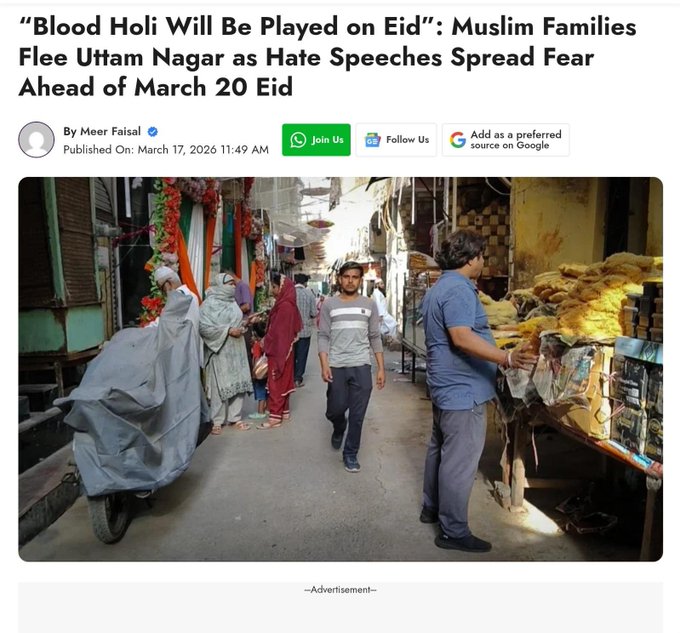
Article: “Blood Holi Will Be Played on Eid: Muslim Families Flee Uttam Nagar” – Delhi, Holi 2026
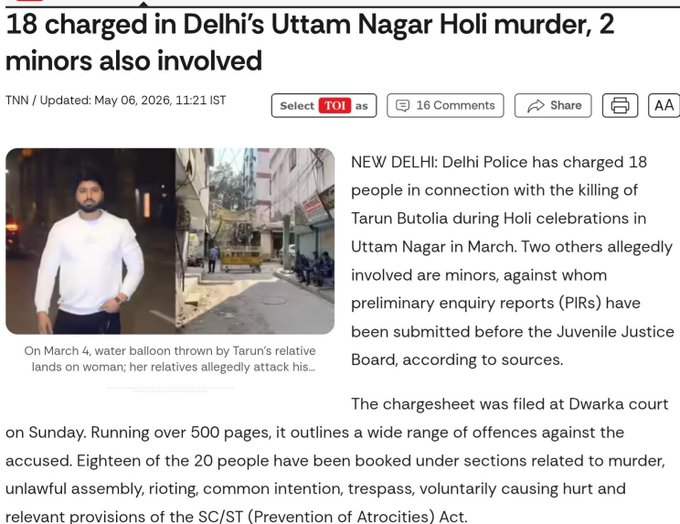
On 4 March 2026, during Holi, an 11-year-old boy accidentally splashed a water balloon on a Muslim woman while playing on her terrace. The family apologized. That evening, Tarun Kumar, a 26-year-old resident of Uttam Nagar who had no involvement in the earlier argument, was riding home on his bike when a mob of 15-20 people intercepted him, beating him with iron rods, bricks, and stones. He died in the hospital the next day.
Delhi Police arrested 14 individuals, detained two juveniles, and filed an FIR naming 22 accused. Courts denied bail citing a risk to public peace. Tarun’s own mother stated: “Our issue was only with that one family. Other Muslims are not at fault.”
Faisal’s headline for the story focused on the Muslim families fleeing, making the community of the killers the subjects of the narrative. The article did not mention the 22 arrests, the mother’s plea for calm, or local residents’ statements that it was a family dispute given communal color by outsiders.
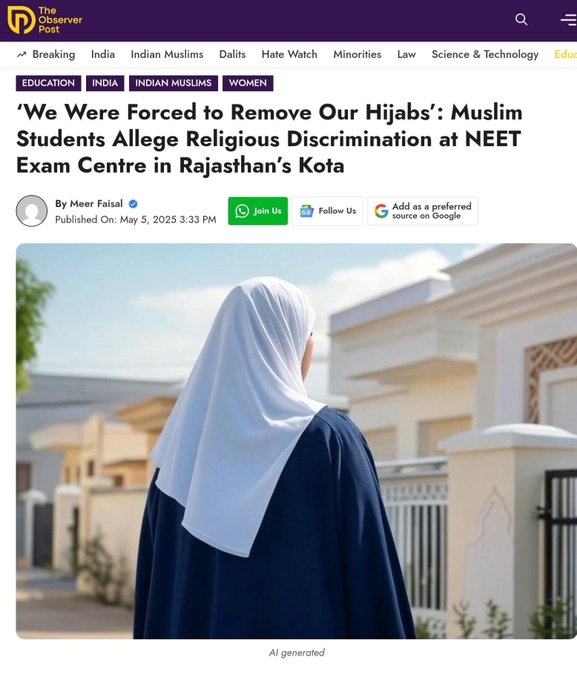
Article: “‘We Were Forced to Remove Our Hijabs’: Muslim Students at NEET Centre”
Faisal’s article presented the allegations of Muslim students being forced to remove their hijabs. However, the report did not present the NEET administration’s response, quote the exam centre, or provide any evidence beyond the students’ testimony. The article relied on a single source and presented only one side of the story.
Pattern of Reporting
Across every byline, a consistent pattern emerges:
- Muslims are always presented as victims.
- Muslim perpetrators are never covered.
- Hindu victims are absent from the narrative.
- State action against accused individuals is minimized.
- Context that complicates the narrative is omitted.
Thre review of his article raises a question as to why a journalist who claims to cover “crime and justice” in India only ever finds one community being wronged. A journalist whose entire body of work reflects only one community’s suffering is not reporting but promoting a biased narrative. The output consistently presents one community as always being wronged and the other community as always acting against them. This is not simply a case of bias but a system that projects a distorted image of India on a global stage.
This article is based on an X thread by Brown Sepoys.
Subscribe to our channels on WhatsApp, Telegram, Instagram and YouTube to get the best stories of the day delivered to you personally.