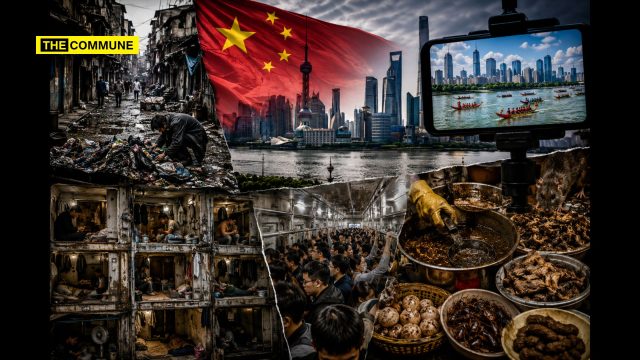
For years, China has carefully projected itself as a clean, prosperous, disciplined and futuristic society, shielded by one of the world’s most restrictive digital firewalls. But a wave of Indian social media users has now turned the spotlight back on Beijing, circulating videos and posts that expose the poverty, filth, inequality, censorship and social decay that China has long tried to hide from the world.
The campaign gained traction after Indian netizens began sharing videos showing cramped living spaces, dirty streets, unhygienic food practices, homeless people sleeping in public spaces, exploitative treatment of children, and manipulated visuals used to present China as cleaner and more developed than it actually is.
The CCP propaganda machine thought it was running head strong one sided campaign against India.
Unfortunately for them, it collided with Indian Twitter.
What followed was a masterclass in fact-checking, trolling, meme warfare, and public humiliation. If you’re pushing… pic.twitter.com/AIQbZT21vW
— Indian Diary (@IndianDiaryy) June 18, 2026
China’s Own Social Hierarchy Comes Under Scrutiny
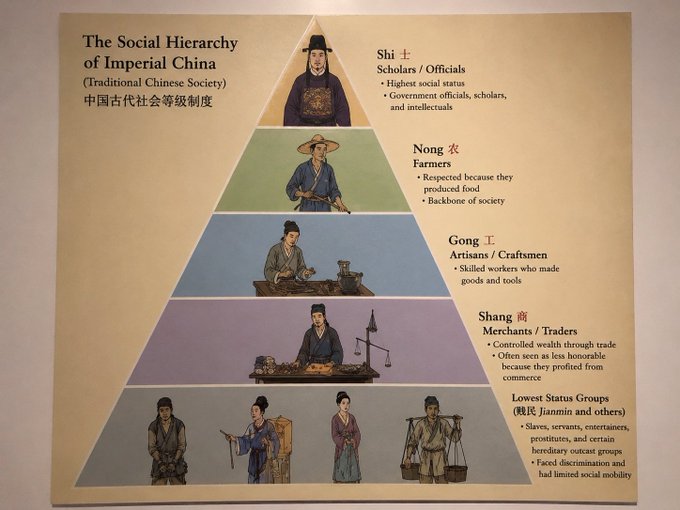
Indian netizens also pointed out that China, which often amplifies narratives about caste and social division in India, has its own long history of social hierarchy. Viral posts referred to traditional Chinese social categories such as officials, farmers, artisans, merchants and outcast groups, arguing that Beijing has no moral authority to lecture India while hiding its own internal divisions.
While China was busy peddling narratives against India, Indians are now exposing the other side of China.
Behind the image of a shining superpower lie scenes of garbage-filled streets, slums, and communities struggling with extreme poverty.
For the first time, China is getting… pic.twitter.com/akMspEDOP7
— OpIndia.com (@OpIndia_com) June 17, 2026
China is 100 years ahead of India
— Kreately.in (@KreatelyMedia) June 16, 2026
Videos showing poor Chinese citizens living in extremely cramped spaces were widely circulated, with netizens arguing that these visuals rarely make it to global platforms because China tightly controls its image.
The Polished Image Versus The Ground Reality
One viral example showed a boat race being presented on television with clean blue water, while another angle showed the same event taking place in muddy, polluted water.
China 🇨🇳 : State contorlled CCTV after all! A Sichuan netizen discovered that the river water at their doorstep had turned yellow due to heavy rain, yet in CCTV’s live broadcast footage, the river water appeared crystal clear and blue couldn’t help but be utterly floored with… pic.twitter.com/DOPbEY3Uee
— Tanya Dave (@TanyaaDave) June 16, 2026
Indian netizens pointed out that this reflected how China manufactures visual perfection for global consumption.
The real China hidden behind The Great Firewall. 🇨🇳 pic.twitter.com/59fJPztXQH
— Sharroh (@Sharroh45) June 18, 2026
Another commonly cited example is the fantastic trains and railway network with clean coaches in China. But reality is very different. It is worse than an unreserved compartment in India.
China 🇨🇳 has influenced the entire world through TikTok propaganda that they are 30 years ahead of the World, but this is what China’s daily trains Journey actually look like. pic.twitter.com/xJHzIkKBLB
— Sharroh (@Sharroh45) June 13, 2026
Other videos showed dirty backstreets, neglected food markets, garbage-filled public spaces and people sleeping inside bus stations. Netizens argued that these visuals puncture the myth that China has no poverty, homelessness or sanitation problems.
Food Practices And Hygiene Debates
The campaign also highlighted controversial Chinese food practices, including use of gutter oil, cockroach-based products, cow-dung hotpot, urine-soaked eggs and other unusual food items that have previously been reported or discussed online.
This is what a Peasant (Nońg caste) Family’s Wedding feast looks like in rural China. 🇨🇳🤢
Would you eat this food if you are invited to such a wedding? 🤮 pic.twitter.com/U9COBD5nxV
— Pseudo Prophet (@Pseudo_Prophet_) June 18, 2026
This is what a popular Chinese Food Street looks like. 🤢
Garbage and chopsticks thrown everywhere on the ground. 😑 pic.twitter.com/AfmCVCSdDm
— Pseudo Prophet (@Pseudo_Prophet_) June 13, 2026
🇨🇳 A Lower Caste “Shang” Chinese Guy Washing his vegetables in the most Hygienic way before eating them. Indeed China is 100 Years Ahead. #China pic.twitter.com/EjHTGrDsH7
— Cockroach Killer (@60FPSHub) June 17, 2026
During festivals, Chinese 🇨🇳 people put food into a swimming pool or a big fountain and eat together.
Disgusting #China pic.twitter.com/5Ebcn0tz0G— Sharroh (@Sharroh45) June 12, 2026
Indian netizens argued that while China-linked propaganda often mocks India’s street food and sanitation, Beijing’s own food and hygiene issues remain hidden behind censorship and selective branding.
There were some videos of Chinese even eating dung, weird animals and insects.
Shii people force low class Shang to breed & eat Cockroaches as they aren’t allowed to buy or enter a Vegetable Market 💔
Low Class Shang people have accepted their fate & they say they don’t mind anymore eating dirty cockroaches as Shii people have forced them to adapt in this… pic.twitter.com/oFU05man9w
— Royal Singh 🦁 (@Royalsinghz3) June 18, 2026
There are literally events being organized for cultural poop eating in China, you don’t get to mock india for it. Sit down ding dongpic.twitter.com/I6PoXKcrqW https://t.co/EPXJoebLu0
— Acyuta (@AgniVesa_07) June 18, 2026
Chinese “Little Pink” bots are attempting to deceive us by claiming that they don’t consume rats 🐀 in China.
However, it’s a widely known fact that the Chinese eat everything, and they are not averse to consuming even the most repulsive things.
” Chinese Eating Rats” https://t.co/uJUhAj3JBk pic.twitter.com/FOQ4pQHcOG
— Pseudo Prophet (@Pseudo_Prophet_) June 14, 2026
CHINA BRUTALLY EXPOSED :
Eating bats , live rats, frogs, live insects, live cockroaches and live worms is their prime delicacies. I never blame them since its their culture and a cultural shock for us.Special Note : Majority of Indian People who eat vegetables, lentils and… https://t.co/Hvf0VMnlKk pic.twitter.com/zl6TSKCqyW
— Pattern Preacher (@chanakyaspeakss) June 17, 2026
They even ate babies!
mr pandey that’s nothing. They feed on babies, and make soup with the placenta of the mother. https://t.co/xC2qM7AQSC pic.twitter.com/0oSCYWpVUs
— The Observer (@theatheistboi) June 17, 2026
Vulnerable Children And Content Exploitation
Another disturbing set of videos showed children, including physically disabled children, being used insensitively for online content. One wonders how far China’s content machinery goes for views, engagement and propaganda, and what may be happening off-camera if such treatment appears on camera.
Hidden Poverty And Cramped Living Conditions
One of the most widely shared aspects of the campaign involved videos showing the living conditions of China’s poorer communities. Indian netizens circulated footage purportedly showing people living in extremely cramped cubicle-like accommodations, with some individuals confined to spaces barely large enough to sleep in.
This is the condition of a college hostel in China 🇨🇳. pic.twitter.com/Ra7sdqNn4C
— Sharroh (@Sharroh45) June 16, 2026
In China 🇨🇳 , people even sleep in gutter tunnels. pic.twitter.com/dKDMWq631V
— Sharroh (@Sharroh45) June 15, 2026
The visuals stood in sharp contrast to the gleaming skyscrapers, high-speed rail networks and futuristic cityscapes that dominate China’s international image. While Beijing aggressively markets modern urban centres such as Shanghai, Shenzhen and Beijing, far less attention is given to the conditions faced by millions of lower-income workers and migrant labourers.
Breaking News: Chinese high-speed rail passengers achieve new milestone in “civilizational excellence” — turning a modern train carriage into a post-apocalyptic garbage pit within hours. pic.twitter.com/oVBBW2VBTH
— Dude 😎 (@i_yourdude) June 16, 2026
🇨🇳 China shows the clean front side of buildings in its social media propaganda but never shows the back side of building, and this is the reason why pic.twitter.com/I5C2lUYsht
— Sharroh (@Sharroh45) June 15, 2026
These cramped accommodations resembled “cage homes” and micro-apartments, with multiple occupants sharing extremely small living spaces. Such realities rarely appear in official Chinese media or in the carefully curated content promoted globally through state-controlled narratives.
Why This Matters For India
The campaign is being seen as a counterattack against years of negative propaganda about India. Indian netizens argued that China and its allies have repeatedly pushed content portraying India as poor, dirty, caste-ridden and backward, while hiding similar or worse issues inside China.
The backlash is also being described as a “soft revenge” moment after years of Chinese information warfare, including narratives around Covid, Galwan, poverty, caste, street food and sanitation.
China’s Firewall Cracks
China’s internet firewall has long protected Beijing from global scrutiny by controlling what Chinese citizens can see and what the world can see from inside China. But Indian netizens appear to have found and amplified content that escaped this control.
China’s polished online image had cracked earlier during Covid lockdown videos and Galwan-related footage. The latest campaign, however, appears broader and more sustained.
Indian researchers and digital warriors didn’t just scroll – they infiltrated Chinese propaganda networks, exposed how the CCP hires vloggers to whitewash reality and pulled back the curtain on China’s carefully curated global image.
They highlighted the draconian hukou system -… pic.twitter.com/vILnktyn0t— Mahicasm 👽 (@ItsMahicasm) June 18, 2026
Chinese Panic And Anti-India Sentiment
Some viral Chinese posts complained about Indian immigrants, Indian businesses and Indian workers, exposing what Indian netizens described as racist hostility within Chinese society. This reaction revealed China’s own insecurity and prejudice.
India’s Open Acknowledgement Versus China’s Cover-Up
Many netizens contrasted China’s censorship with India’s open acknowledgement of its problems. They noted that India publicly launched Swachh Bharat to address sanitation issues, while China later launched its own “toilet revolution.” India admits its shortcomings and works on them, while China hides them behind propaganda.
A Digital Pushback
The campaign shows that ordinary Indian netizens are no longer willing to passively consume anti-India narratives. By using the same social media battlefield that has often been used to mock India, they have turned the scrutiny back on China.
The message from Indian netizens is clear: if China wants to weaponise India’s flaws, Indians will expose the realities Beijing hides behind its firewall.
Subscribe to our channels on WhatsApp, Telegram, Instagram and YouTube to get the best stories of the day delivered to you personally.