Home Blog Page 936

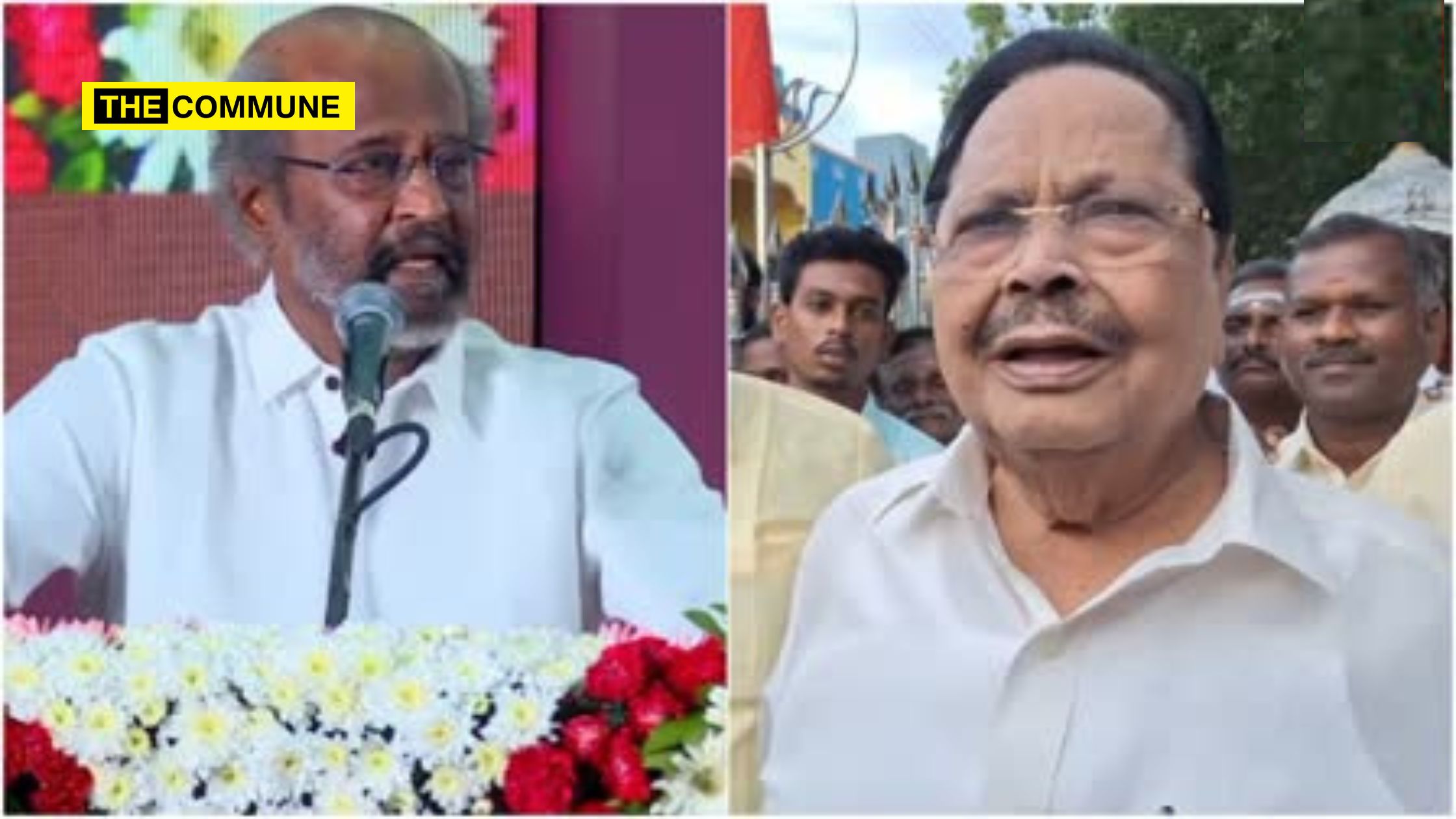
“Youngsters Miss Opportunities Due To Old Teethless Actors Who Are About To Die”: Rajini Who Simped For DMK Gets Trolled By DMK Min Durai Murugan For His ‘Old Students’ Comment

In a sharp exchange of words, Tamil Nadu Water Resource Minister Durai Murugan mocked Rajinikanth as he accused veteran actors of clinging to roles and stifling young talent. His comments came after Rajinikanth’s remark about Chief Minister M.K. Stalin managing senior DMK leaders like the former.

On 25 August 2024, senior DMK leader Durai Murugan poked fun at actor Rajinikanth for calling him an unmanageable student at DMK. The DMK leader denounced Rajinikanth, saying some veteran actors persist in their careers even after their prime. This remark followed Rajinikanth’s comment about Durai Murugan at the launch of a book about former Chief Minister M. Karunanidhi on 23 August 2024.

The ruling Dravida Munnetra Kazhagam (DMK) is already facing internal tensions over Tamil Nadu Chief Minister M.K. Stalin elevating his son, Sports Minister Udhayanidhi Stalin, as the party’s next face. A few ministers and MPs have been aligning with Udhayanidhi, pushing for his promotion to Deputy Chief Minister whenever possible and assuring him of their support.

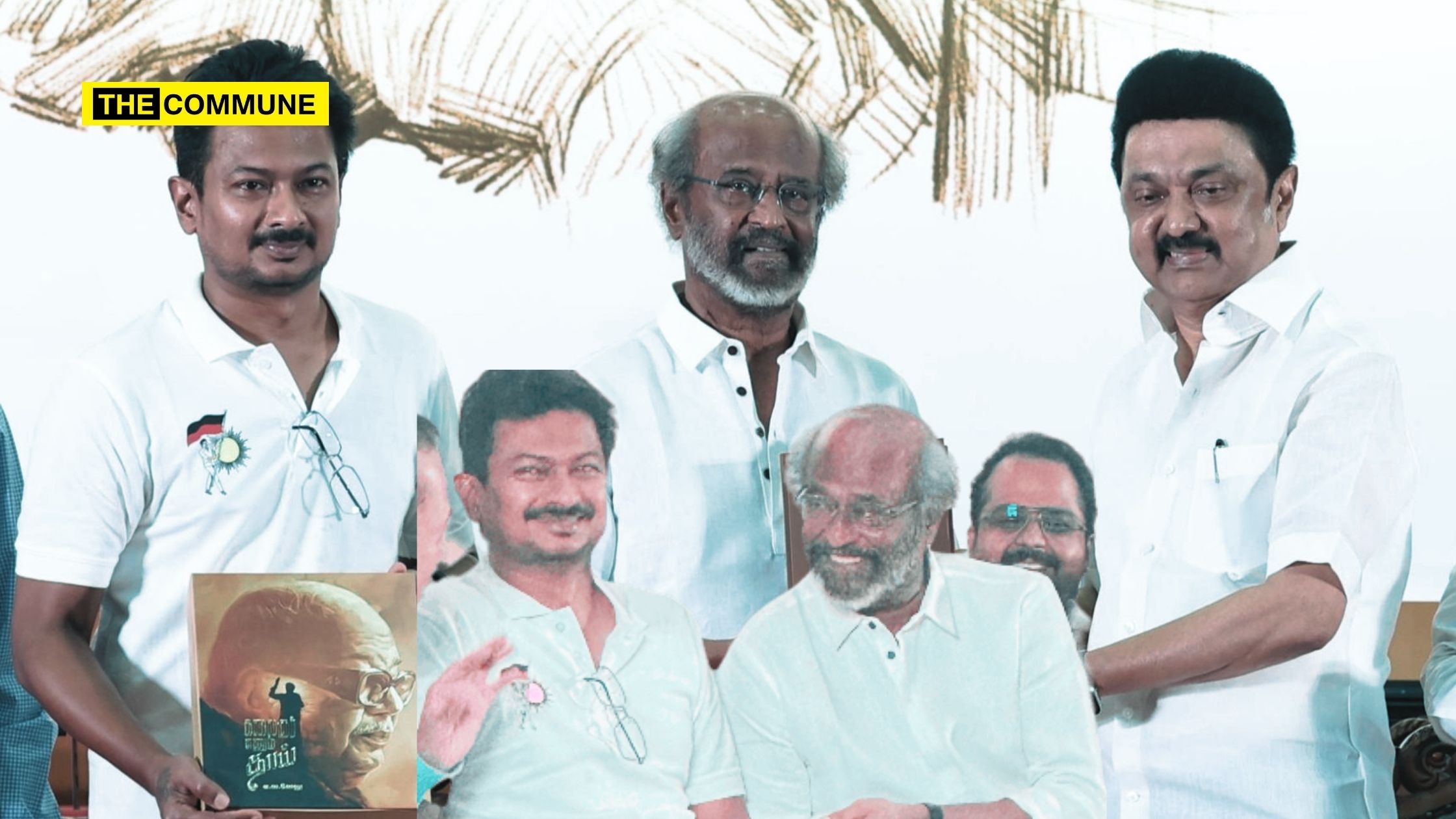
In this context, film actor Rajinikanth has stirred the pot by praising Udhayanidhi and warning Stalin to be watchful of people within the party. This occurred at the launch of a book by DMK Minister E.V. Velu, titled “Kalignar Enum Thaai” (Kalaignar, The Mother), about the late DMK patriarch Karunanidhi.

Rajinikanth jibe at Durai Murugan

Speaking at the event Rajinikanth said, “One astonishing thing is… whenever a schoolteacher comes, the new students won’t be of any problem. They can be easily managed. It is no ordinary feat to manage the old students. There are so many old students (senior leaders) here. So many of them. And they’re no ordinary old students. They’re extraordinary. They are not failed students. They’re rank holders who refuse to leave the class. Those who Kalaignar has raised since young, do you think managing them is easy? No one else, take Durai Murugan. He’s a man who had hoodwinked Kalaignar himself. When you say something to him, he’ll reply – ‘Is it? Good! We don’t know if he meant good in a good way or a bad way. Stalin, sir, hats off to you!” with this comment, the audience burst into laughter.

MK Stalin responded, “I have taken note of everything he mentioned. Rest assured, I am committed to ensuring success and will always remain vigilant.”

It should be noted that the DMK scion and minister Udhayanidhi Stalin also commended the actor for delivering a speech that received significant applause. He remarked, “The youth are eager to support us; we just need to provide them with opportunities and guidance. Superstar Rajinikanth’s speech was met with enthusiastic applause, as you all must have witnessed.”

Durai Murugan Reacts

Reacting to comments of Rajinikanth, senior DMK leader Durai Murugan took a jab at Rajinikanth, remarking that young actors struggle to find opportunities due to older actors clinging to their roles. When a reporter asked how he saw Rajinikanth’s comment about Stalin struggling with senior Ministers, Durai Murugan said, “Likewise, young artists are not getting any chances because old actors are still clinging to their roles, even after losing all their teeth, growing beards and are about to die. It’s easy to say anything man!”

Subscribe to our channels on Telegram and WhatsApp and get the best stories of the day delivered to you personally.

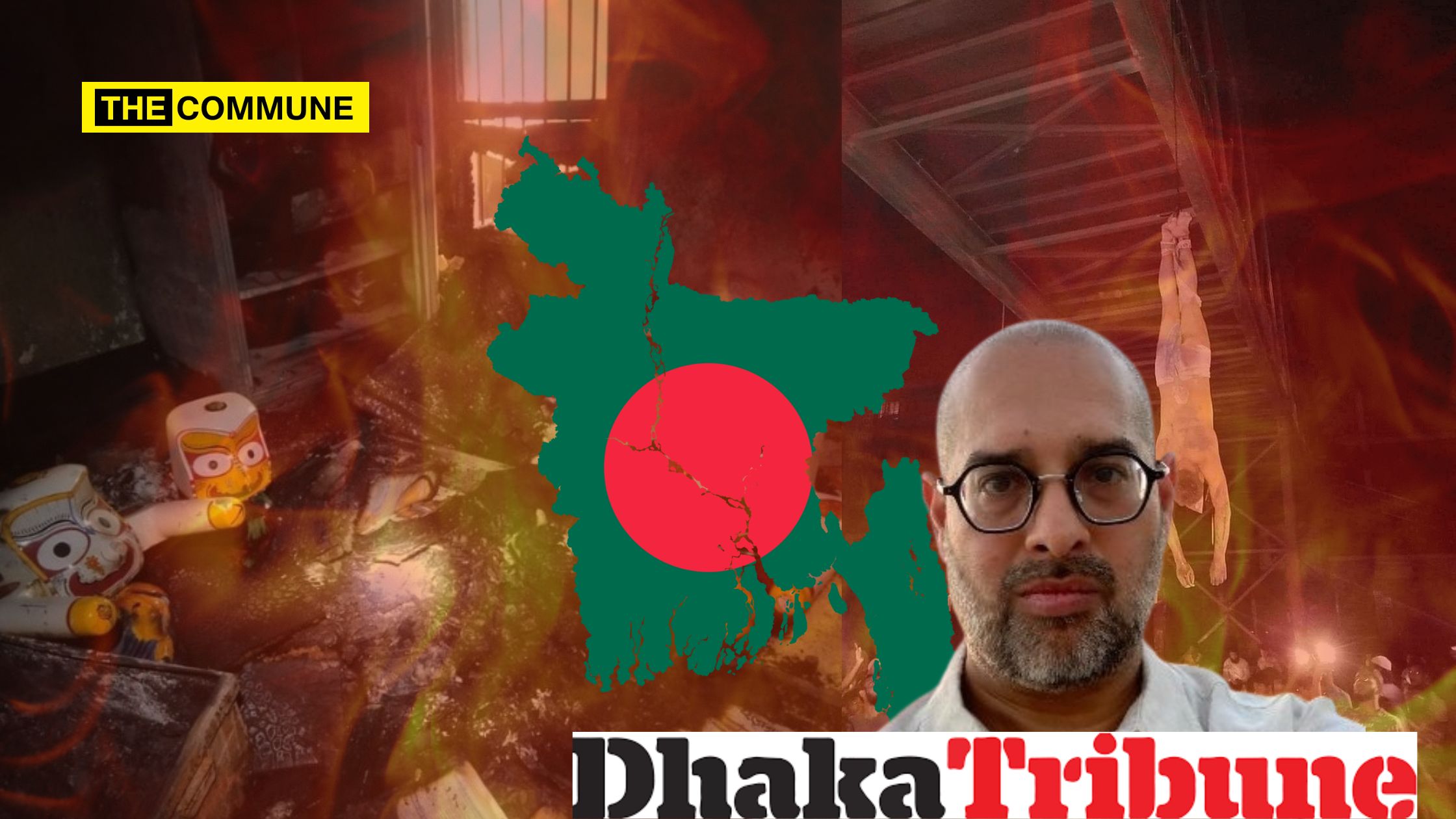
Dhaka Tribune Editor Claims Bangladeshi Hindus Are Not In Danger And Gaslights Hindus In India, Here Are Several Instances That Shows Otherwise

In a recent article published in the Dhaka Tribune, Editor Zafar Sobhan downplayed the persecution faced by the Hindu community in Bangladesh since the ouster of Prime Minister Sheikh Hasina. Sobhan’s piece paints a picture of a peaceful, democratic movement in Bangladesh, emphasising the role ofcommitted, conscientious patriotswho are supposedly far from being Islamists or militants. However, his narrative starkly contrasts with the reports on the ground, where Hindus are the targets of violence, looting, and arson.

Sobhan’s Misleading Narrative

Sobhan’s portrayal of the situation is problematic. He asserts that Bangladeshis, including the students leading the movement, are God-fearing, law-abiding men and women who simply want to live their lives in peace and harmony with their neighbours.Yet, the reality for many Hindus in Bangladesh is anything but peaceful. We have reported the situation in Bangladesh ever since the 5 August 2024 coup took place – Hindu temples being vandalised, homes being torched, and members of the community living in fear for their safety.

Here are a few of those instances.

On 5 August 2024, the Bangladesh Hindu Buddhist Christian Unity Council published a report. This report details a series of attacks on Hindu temples, homes, and businesses across the country amid ongoing political unrest. According to the Voice of Bangladeshi Hindus on social media platform X, these assaults occurred within a five-hour window. However, the actual number of incidents might be higher than those listed.

Reports of Hindu Persecution

  • Sherpur: The residence of the president of the Sribardi Upazila Youth Unity Council was attacked, vandalised, and looted.
  • Khulna: Multiple properties were targeted, including the homes of Shyamal Kumar Das, Swajan Kumar Das, Biman Bihari Amit, Animesh Sarkar Rinku, and Jayanta Gain. Properties in Darpara, Koyra, were also attacked.
  • Feni: The Durga Temple was attacked, and in Dinajpur, the Fulthala cremation ground was forcibly occupied by Islamist mobs. Five temples, including the Kali Mandir in Parbatipur, were vandalised, and homes in Setabganj Bochakganj and Dhalla village were looted.
  • Lakshmipur: The house and office of Deepak Saha, leader of the Puja Celebration Council, were attacked and looted. Additionally, homes in Agarupur village and Rauzan, Chattogram, were burned and attacked.
  • Jashore: Three homes in Dhopaidi Palpara village were set on fire, and 22 shops, including Babul Saha’s warehouse, were vandalised in Narikel Bariya, Bagharpara.
  • Satkhira: Shops belonging to minorities in Kolaroa were looted, and the homes of Biswajit Sadhu and Dr. Subrata Ghosh were attacked and burned.
  • Shayestaganj Bazaar, Habiganj: Asit Baran Das’s shop was vandalised and looted. Minority homes in Lohagara, Narail, faced similar violence.
  • Bogra: Several minority shops in Tilpatti and Bargola were vandalised and looted, and Islamists targeted Dr Gautam Kumar Mondal’s home in Sahapukur.
  • Patuakhali: The Radha Govinda Temple in Kuakata was attacked, and Ananta Mukherjee’s house was vandalised and looted. Similar attacks occurred in Panchagarh’s Sadar.
  • Noakhali: The house of Sahadev Roy in Sonadia, Hatiya, was attacked and looted. Minority homes in Thakurgaon’s Sadar and Pirganj’s cremation temple were also targeted.
  • Jhenaidah: Ongoing violence affected ten minority families in Chaklapara municipality, with shops in Kotchandpur also attacked.
  • Hathuria, Bera Thana, Pabna: Multiple minority homes were attacked, vandalised, and looted.
  • Nilphamari: Minority homes in Bamunia Union, Domar Upazila, faced attacks, vandalism, and looting, including an attempted attack in Barakali Bari.
  • Shariatpur: The Dhanuka Temple in the Sadar area was vandalised, with nearby minority homes also affected.
  • Lalmonirhat: Amiya Prasad’s house in Panchagram Union was attacked, and in Mymensingh, Shyamal Pal’s home in Ward 32 of Shambhuganj was assaulted.
  • Netrokona: The Ramakrishna Mission and ISKCON temple in the Sadar area were attacked, along with nearby minority homes.
  • Faridganj Upazila, Chandpur: Haripada Das’s house was attacked and looted, and an attempted attack was reported at Ram Doctor’s house in Araihazar, Narayanganj.

Bangladeshi Hindus Send Indians Distress Messages

It was so distressing that Hindus in Bangladesh sent distress messages to people in India via social media.

Just recently, Hindu professors were forced to resign by their Islamist students.

Sobhan’s claim that the violence against Hindus was a mere consequence of a brief period of anarchy is a gross understatement of the terror faced by the minority community.

Furthermore, Sobhan attempts to dismiss the severity of the attacks on Hindus. He suggests that the reports of Muslims and Hindus teaming up to protect temples and neighbourhoods werefar more typical, widespread, and noteworthy– well, who are they protecting the communities and temples from?

Sobhan is either too naive or pretends the world doesn’t exist because he has closed his eyes.

His assertion ignores the gory violence and the deep-seated religious intolerance that has led to repeated attacks on Hindus. These attacks occurred not just in the recent chaos. They have happened historically in Bangladesh, be it 1946 Direct Action Day, the Noakhali Hindu genocide, the 1947 partition, the 1971 genocide, and the 1992 – post-Babri riots. They happened as recently as 2021, when lies were spread about blasphemy.

Gaslighting India

One of the most disturbing aspects of Sobhan’s article is his attempt to shift blame onto India. He accused New Delhi of being complicit in the misrule of Sheikh Hasina’s government. He states that the Bangladeshi people hold India responsible for theautocratic Awami League misruleand alleges that India’s support for Hasina encouraged her to commit atrocities. The article not only deflects attention from the real issues at hand but also fosters anti-India sentiment, which can further endanger the already vulnerable Hindu community in Bangladesh.

Sobhan insists that India is stillbatting for Hasinaand that it has failed to come to terms with the reality of the situation in Bangladesh, which is another attempt to vilify India while downplaying the crisis facing Hindus. Sobhan asserts that Bangladeshis prefer the current situation to the previous government’srampant criminality and corruption“. However, he fails to address the fact that for many Hindus, the problem remains dire, with their lives and livelihoods under constant threat.

A Dangerous Denial Of Reality

Zafar Sobhan’s article is not just misleading but dangerous. By downplaying threats faced by Hindus and blaming ‘external forces’, he is ignoring the plight of the minority community. He is also contributing to a narrative that could further endanger them.

Sobhan seems to be following the playbook of the ‘far-left western media’. They, too, have been downplaying the atrocities committed against the Hindus in Bangladesh.

**Improved text:**

“It is imperative to acknowledge the genuine threats Hindus face in Bangladesh. We cannot dismiss their suffering as a mere byproduct of temporary unrest or shifting blame elsewhere.

The international community has largely remained silent. It is time that it recognizes these attacks as targeted acts of violence against a vulnerable minority. And respond decisively to safeguard those at risk.

Subscribe to our TelegramWhatsApp, and Instagram channels and get the best stories of the day delivered to you personally.

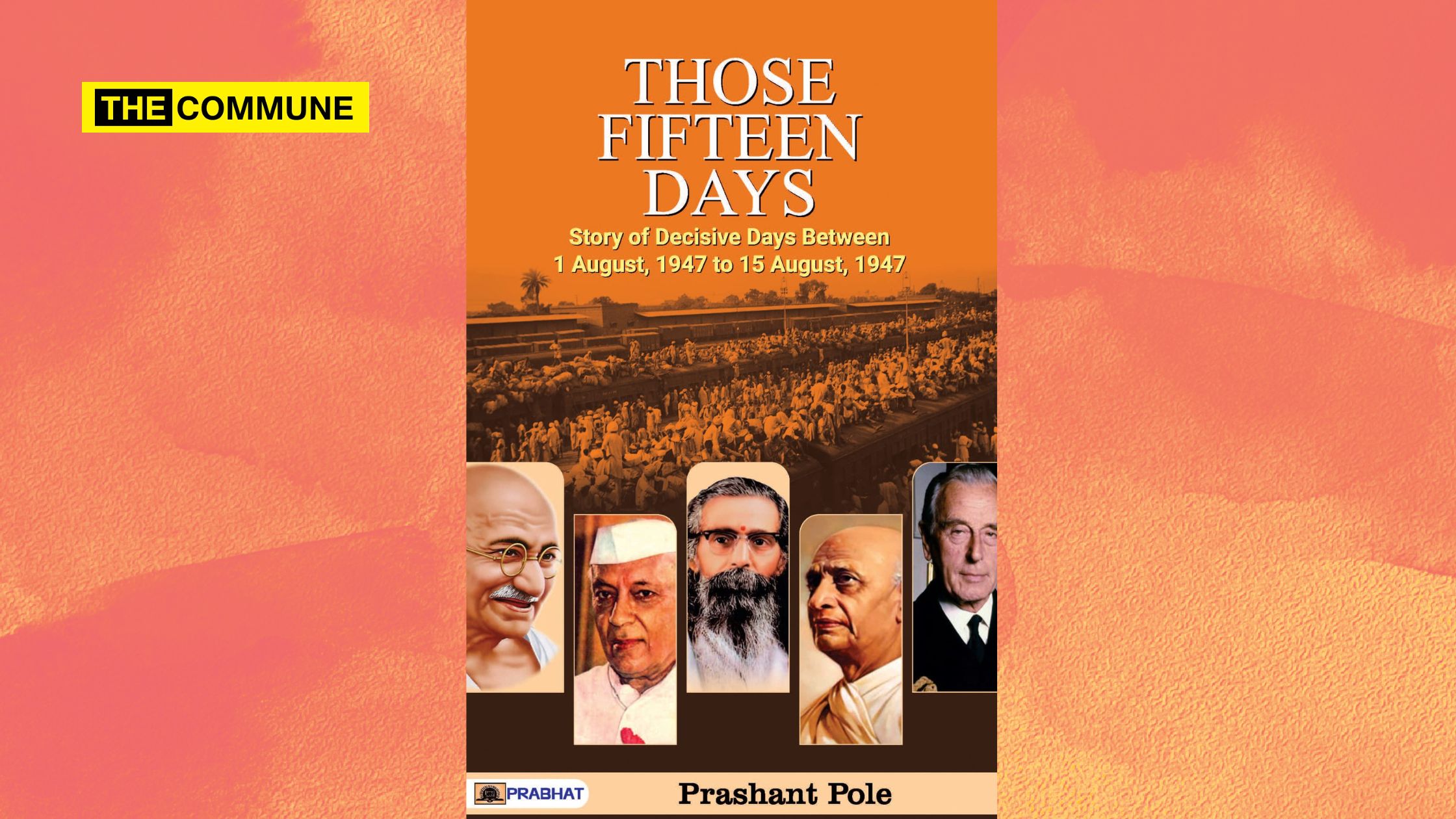
Book Review: “Those 15 Days” By Prashant Pole – A Revealing Look At India’s Path To Independence

Book Review: "Those 15 Days" By Prashant Pole

Prashant Pole’s book “Those 15 Days” takes readers on an eye-opening journey through the final days before India’s independence. The book vividly captures the chaos, political manoeuvres, and everyday struggles leading up to August 15, 1947. It also highlights the critical role of the RSS during this turbulent time, from protecting leaders to aiding families caught in the violence of partition. With rare photos and gripping details, Pole uncovers shocking truths about leaders and the ground-level horrors of partition, offering a fresh perspective on this pivotal moment in history. It’s a must-read for anyone who wants to learn about the real stories behind India’s fight for freedom.

Why Is It An Important Read?

One of the most controversial, yet revered figures from world history, Sir Winston Churchill, famously said, “Those who fail to learn from history are doomed to repeat it”. History serves as a living witness to the realities and brutalities of the past. As a country proceeds down the path of technological evolution and overall upliftment of the wide populace, it becomes imperative that we study our history and derive lessons from it. For if one fails to understand the psyche and psychological factors that impact a society, as Churchill said, we will repeat the same old story. Indian Independence is well documented by many luminaries, nationally and internationally.

However, one does grapple with a question: What exactly was happening on the ground in the run-up to the main day i.e. 15 August 1947? What were the country’s leaders, political or otherwise, involved in? What were the issues being faced by the common people?

Prashant Pole effectively answers such questions in “Those 15 Days.” It was originally written in Marathi as a series of articles (later published as a book titled Veh Pandrah Divas) and translated to English and nine other languages.

This book details the 15 days from the start of August, culminating with the declaration of Indian Independence on the 15th. It vividly describes the political machinations and shocking ground realities across the complete spectrum of undivided India.

Prashant Pole Highlights the Role of RSS During Partition

Prashant Pole has made a wonderful effort to provide a balanced perspective with a critical view of the incidents of those 15 days. This fulfils a need to rewrite history with strict objectivity, a requirement that is perhaps the need of the hour. Pole is a journalist, who is also associated with RSS. The book outlines the RSS’s efforts during the partition, and their response to those harsh ground realities.

His earlier book “Treasure Trove of Indian Knowledge” was a fantastic read with very deep insights into the rich cultural and scientific history of Bharatha. Considering such a rich background, this book had set some very high expectations, and it shouldn’t be a surprise that it achieves much more than what was set.

The book opens with a beautiful and illuminating foreword by Dr. Vinay Sahasrabuddhe. His articulation of the subject and the author’s efforts in sketching out a picture in front of the reader is exemplary. Apart from the deeply researched and widely referenced materials, the book also benefits from rare photographs and news articles. These augment the reading experience by enabling the user to connect the dots with the incidents being described – definitely, one of the book’s highlights.

What Happened During Those 15 Days?

As the title suggests, the book outlines the events and incidents occurring from 1 to 15 August 1947. It details the critical events across the undivided country comprising Pakistan, Bangladesh, and India. During this informative and sometimes disturbing journey, the author provides some fascinating information that provides a fresh understanding of modern geopolitical realities.

The handing over of Gilgit province to the Maharaja of Kashmir, Hari Singh, on 1 August 1947 is one such incident detailed in the book. The demographical make-up of these various military and paramilitary forces and the subsequent challenges multiple entities face during the coming days make for a horrifying read.

Pole’s keen eye for detail is reflected in a refined manner at various junctures of the book. In a specific scenario where the situation is turning grim considering the impact of Sir Cyril Radcliffe’s announcement on the line of partition, the author takes a moment to highlight that Mandi, a village that was caught in the crosshairs of the conflict, is actually named after Sage Manu.

The read becomes emotionally challenging and draining as we get closer to 15 August. The petrifying tales of women being carried out as trophies, multiple rapes, and murders do evoke deep pain within oneself. During these challenging times, the conduct of some of the leaders of international repute is quite startling.

Congress During The Partition

One of the astonishing incidents was Mahatma Gandhi’s refusal to visit the Wah refugee camp. One can only speculate on the future if he had visited the same.

Some other incidents make for interesting and, quite frankly, astonishing reads. Lahore being the base of Motilal Banarasidas (famous publisher), Jawaharlal Nehru’s acquiescence to Lord Mountbatten’s request to fly the Union Jack on specific days even after the independence are some of the thought-provoking incidents. However, a more surprising one is related to Jawaharlal Nehru’s rally in Hyderabad (within Pakistan). It is quite revealing to note that RSS provided security for the national leader at the behest of INC. Perhaps it is an incident that has washed away throughout history and time.

Adversity brings out the character of humans and, more specifically, the leaders. An ordinary man would look up to the leaders during turmoil and generational adversity. However, the book reveals some very shocking incidents. It will make us ponder: Do we really know the reality of the past?

An example would be the suggestion to “… face death along with dying Lahore rather than flee and save one’s lives”.  In another case, Sucheta Kripalani, wife of Congress president J. B. Kripalani, guilt trips the women by stating that “… they wear low neck blouses and transparent sarees that attracted the goons. Hence, they should consider the age-old Rajput practice of Jauhar”.

Reading such horrifying realities at various junctures in the book is mind-numbing. One can only wonder, what more is left to be discovered and brought in front of the world.

Secrets Unveiled By ‘Those 15 days’

The author reveals appeasement in the form of fear of retaliation to Direct Action Day. While Calcutta transitions from a raging fire to an uneasy calm, the underlying simmering anger is palpable with the slogans against Mahatma Gandhi. This is not a one-off incident but a part of a series of such episodes across history. The hatred towards Subash Chandra Bose’s INA is obvious as the government refused to release INA political prisoners on the eve of Independence.

The book highlights the selfless and courageous service rendered by Swayamsevaks across the borders during these tumultuous times. Whether it is to provide security to Nehru or Guruji during his visit to Sindh or to ensure the safety of every Hindu and Sikh family across the border, the Sangh’s dedication towards the nation and the common populace is quite well highlighted with relevant details and events.  The book ends with the August 14th and 15th events in the two new nations carved out of undivided India. T

The picture of the Times of India article is stimulating.

The book also brings out some of the darkest times of our past. The mass murders of people arriving on trains, the rapes and taking away women as ‘war trophies’, the murders of Nihang Sikhs guarding a Gurudwara make for a blood-curling, deeply drenching read. When the reader envisions these incidents, the horrifying nature of the same is definite to shake the core fundamentals of a being.

To summarise the book review, Prashant Pole’s ‘Those 15 Days’ is a disconcerting read about one of the darkest episodes of our history. It is highly recommended.

Gee Vee is an engineer and avid fan of itihasas, puranas and books.

Subscribe to our TelegramWhatsApp, and Instagram channels and get the best stories of the day delivered instantly.

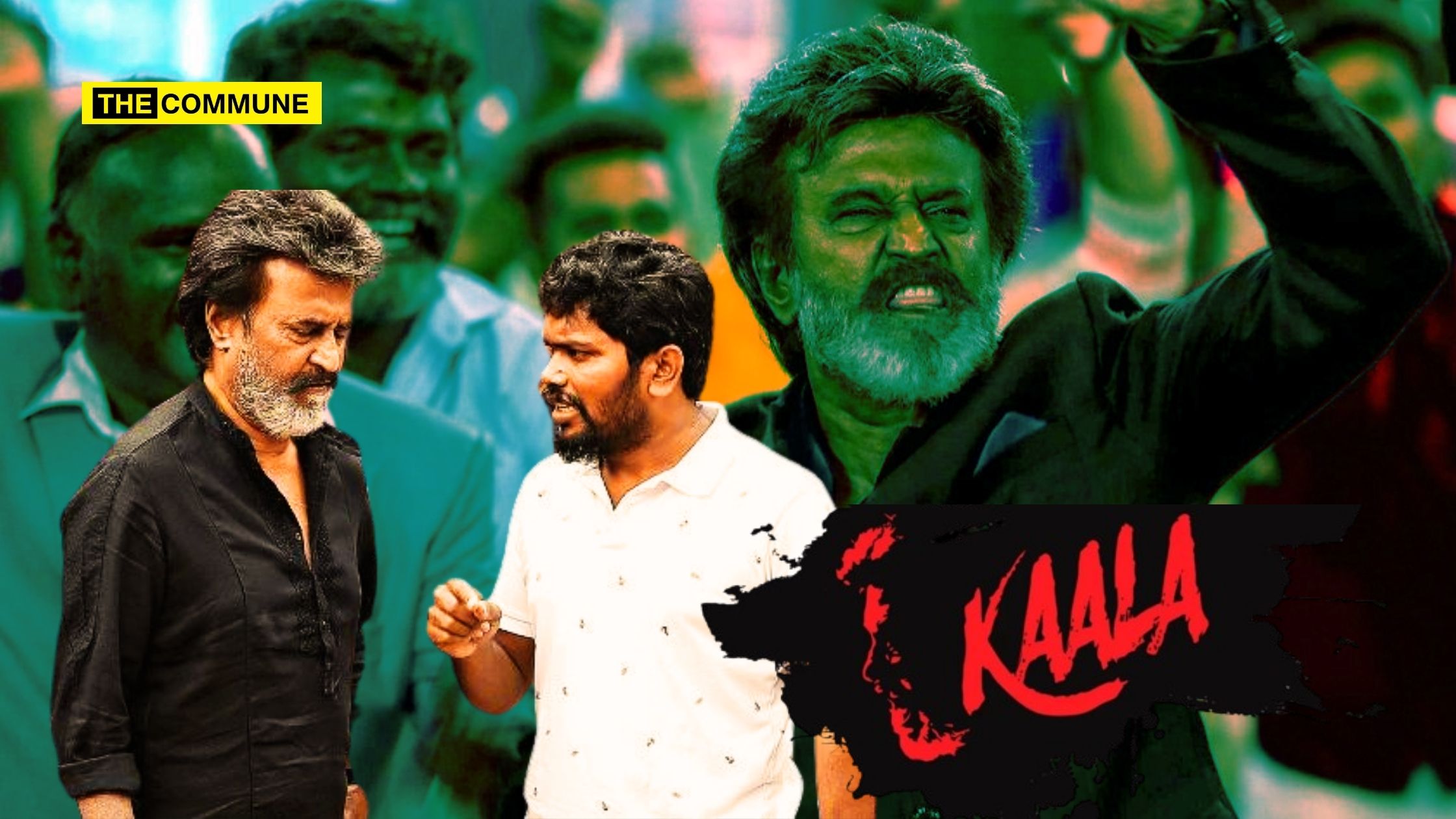
The Unabashed Hindu-Bashing In Pa. Ranjith’s Kaala Featuring The ‘Spiritual’ Rajinikanth

While Actor Rajinikanth may be hailed as a pious Hindu devotee off-screen, his on-screen choices raise suspicions over the authenticity of his devotion, particularly in films like Kaala (2018) by Pa Ranjith. Is Rajinikanth’s spirituality merely a carefully constructed mask designed to appeal to a broader audience?

Kaala is Ranjith’s most brazen passion project, in which his ideology is infused both brazenly and in covert subtexts. While the core plot concerns land rights for the urban poor living in Dharavi, the Rajinikanth-starring film is needlessly Hinduphobic from the start to the end.

Hidden Hindumisia of Kaala.

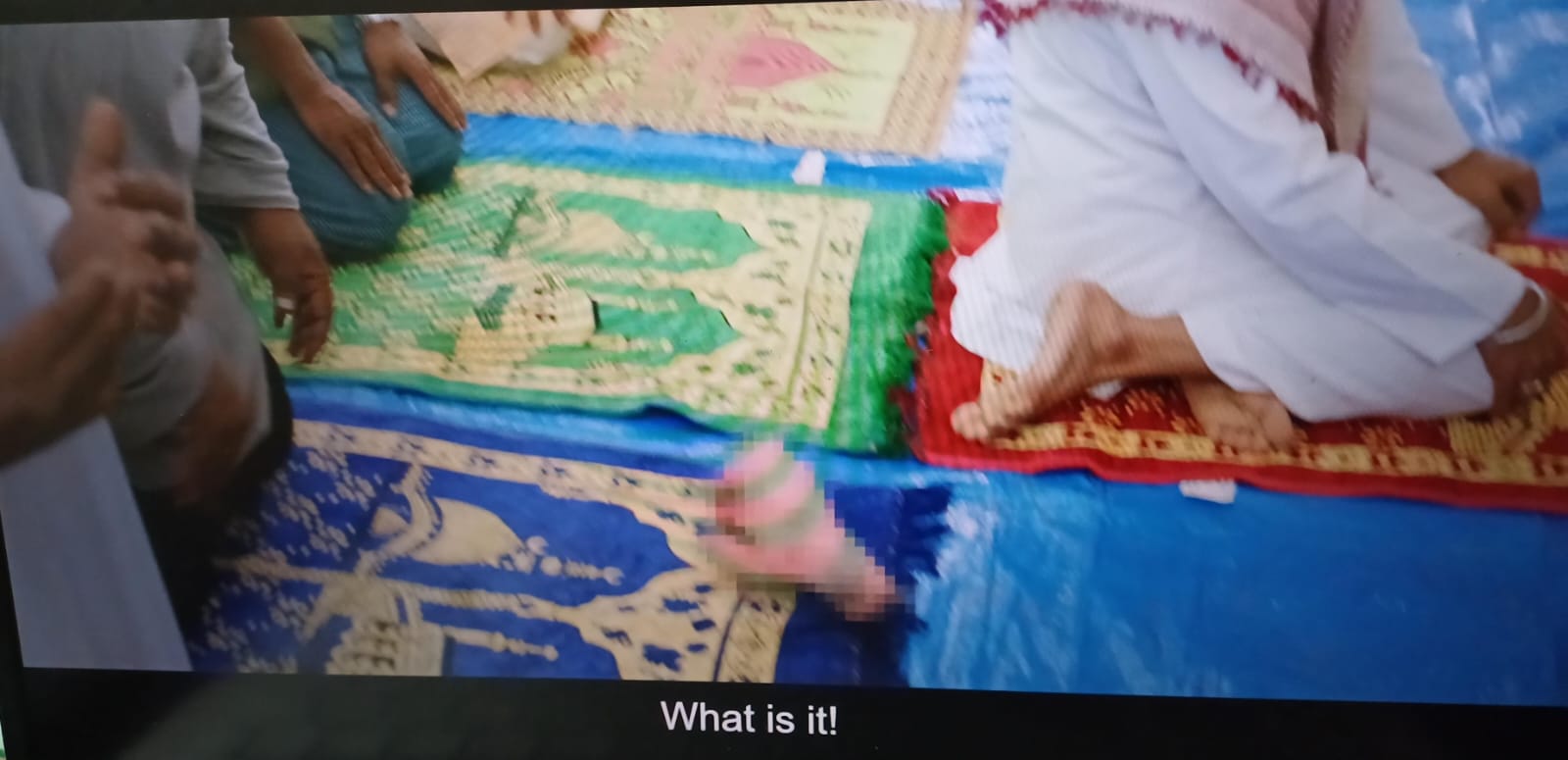
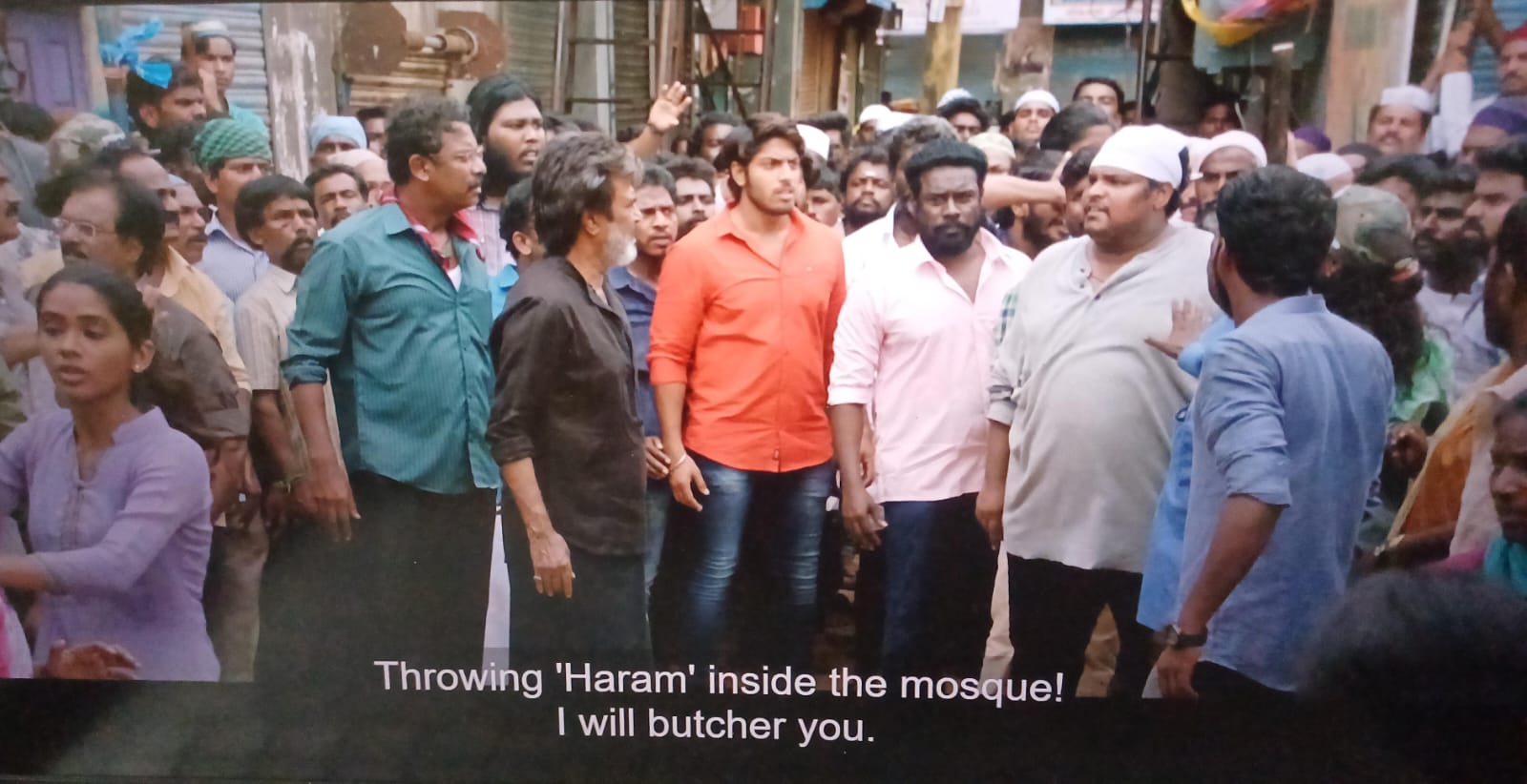
While batting for the land rights of slum dwellers of Dharavi is noble, Ranjith uses this theme in Kaala to spread his misguided Hinduphobic ideology and politics. For instance, the film respects pork as haram but normalizes eating beef.

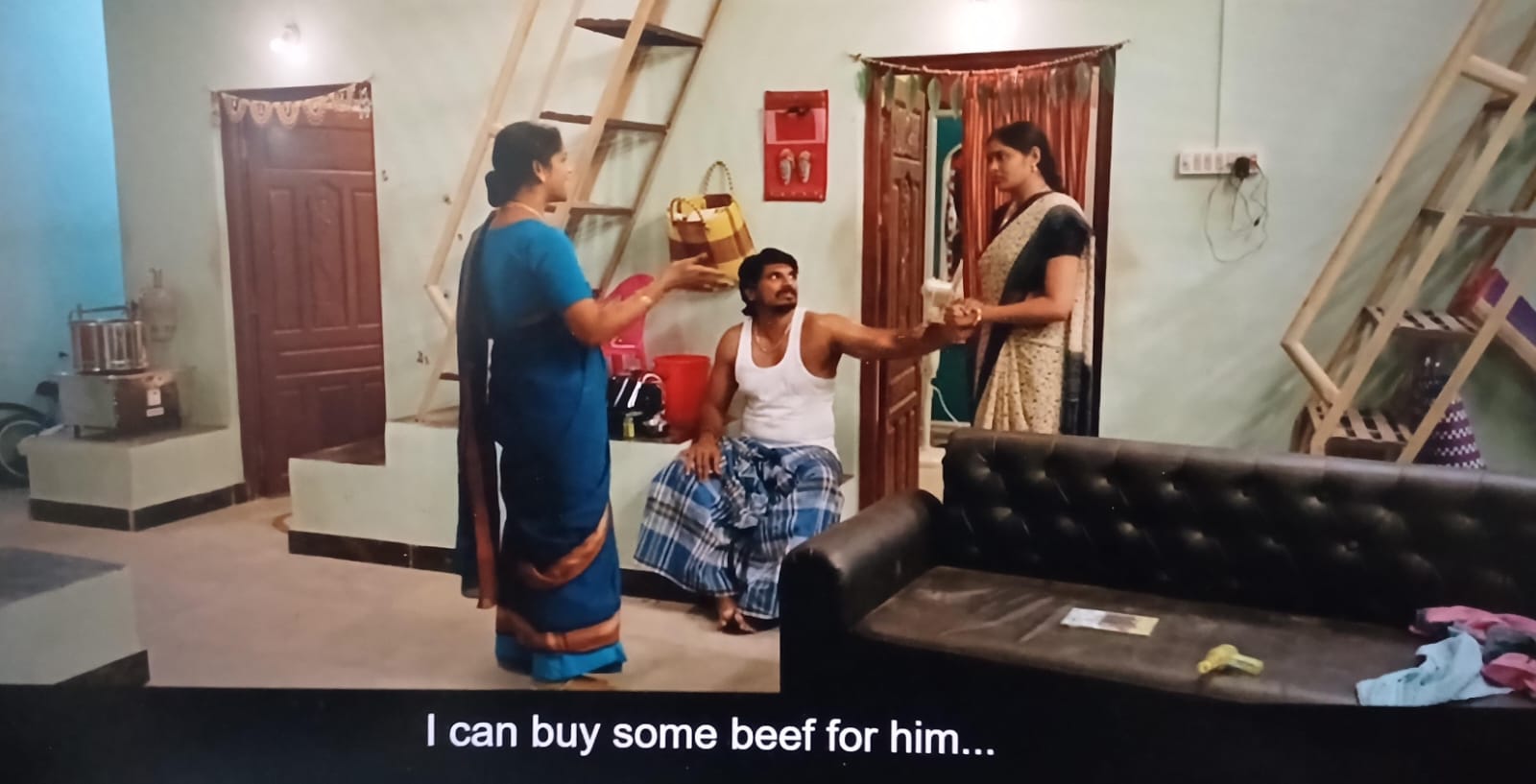
See the shop name, which is just opposite Kaala’s house. Kaala’s wife openly states that she’d feed her husband beef but looks down upon her son, who is a “vegetarian”.

Choice of Names – Villain Hindus, Heroes Communists

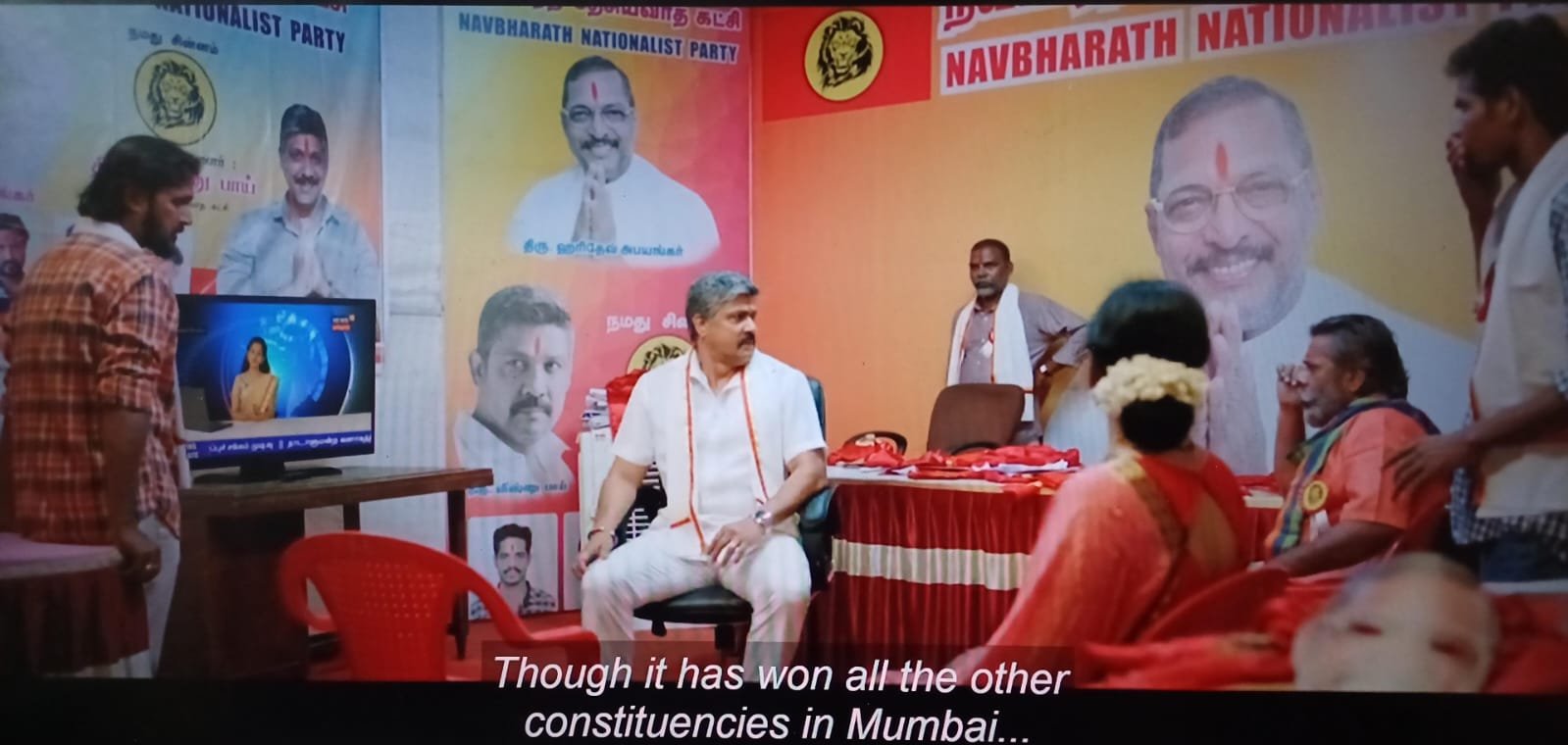
The villains’ names are telling – the betraying slum dweller is a Hindu named Perumalsami. The brutal police antagonist is Pankaj Patel. The greedy politician is Vishnu Pai. Finally, the ultra-egoistic, power-hungry main villain is a practising Hindu named Haridev Abhyankar. Ranjith carefully chose these first and last names.

Contrast this choice with the names of people on the good side. Kaala, played by Rajinikanth, hails Lenin as a revolutionary. He even names his son after him.

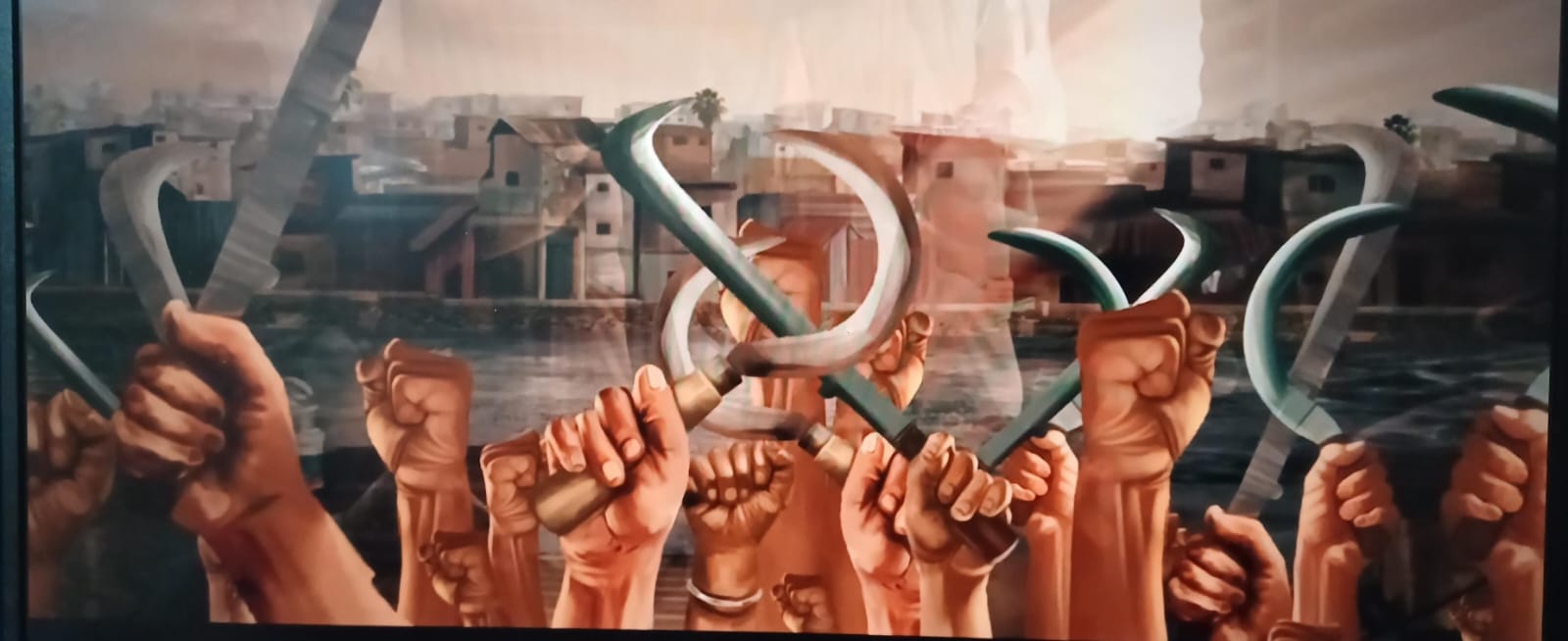
Historically, Lenin’s revolution, the resulting civil war and famines, and the domestic repression that he led against dissidents and scapegoats directly led to the deaths of over 8 million citizens of the Russian Empire, many by starvation, torture, or summary execution. Yet the film freely employs Marxist symbology – notice the Hammer and Sickle in the animation flashback.

Even though these names have a subconscious influence of viewers, Ranjith is well within his rights to name his characters in Kaala as he deems it fit – as do other filmmakers. Politically, the bad side belongs to – Navbharat National Party (a proxy for BJP), wins all of Maharashtra except for Dharavi. Hari supports this party by speaking to people in a format titled ‘Dil Ki Awaaz’ (a proxy for Man Ki Baat).

Dig At Political Hindus

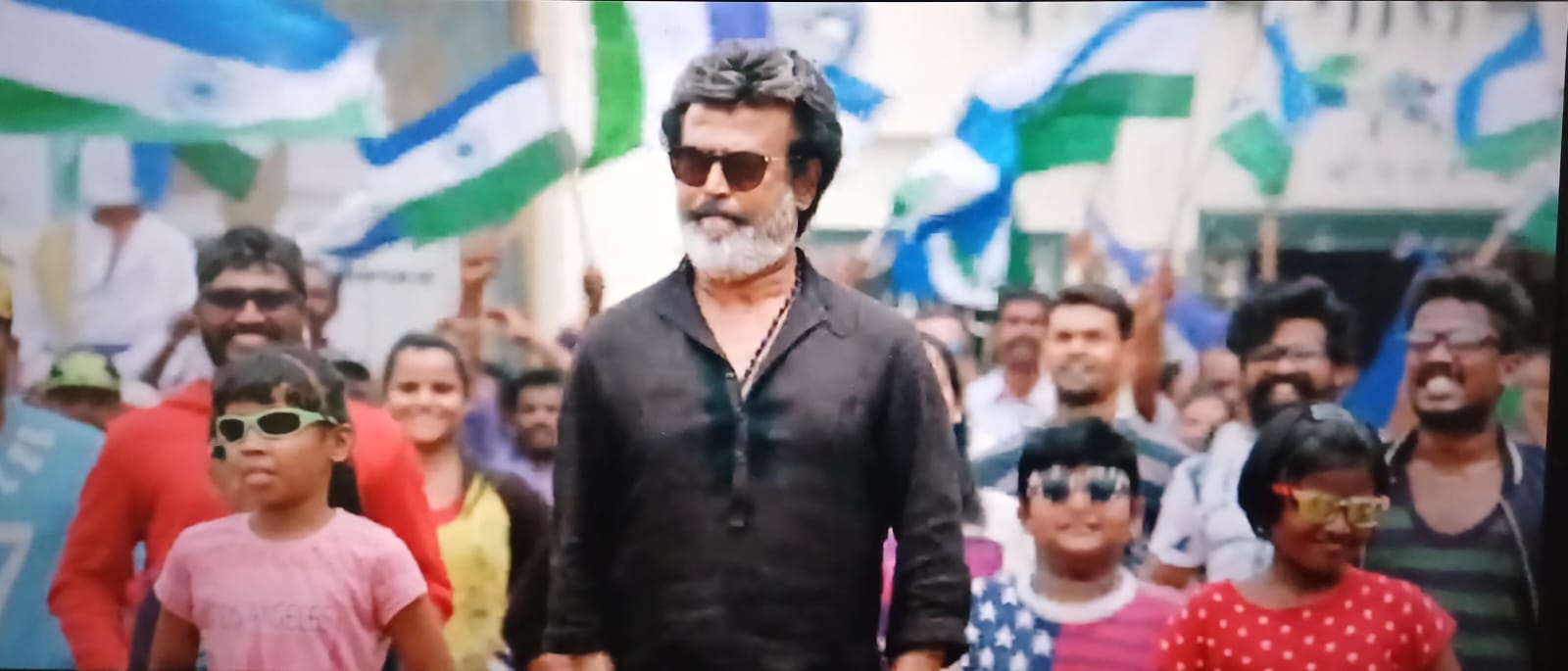
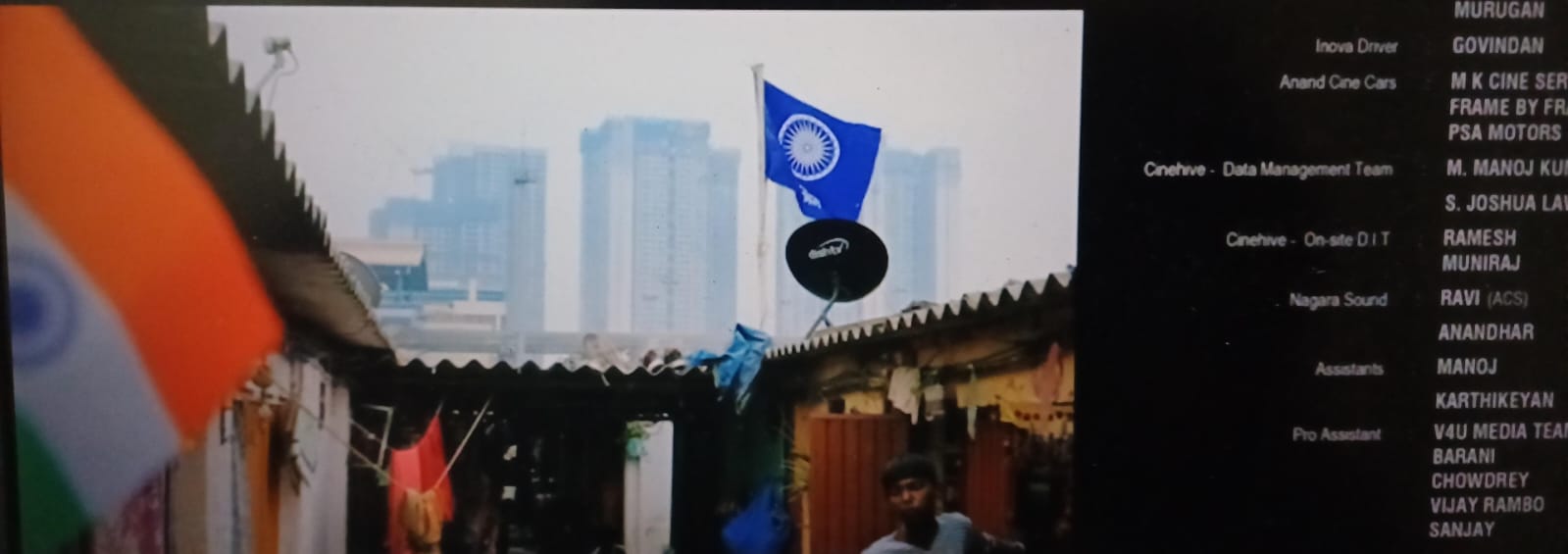
The good side belongs to the oppressed people’s Republic Party, which won the Dharavi elections. The area is an impregnable “Kaala Kila” that the nationalists cannot win over. The party’s flag is basically the tricolour Indian flag, with the saffron replaced by Blue.

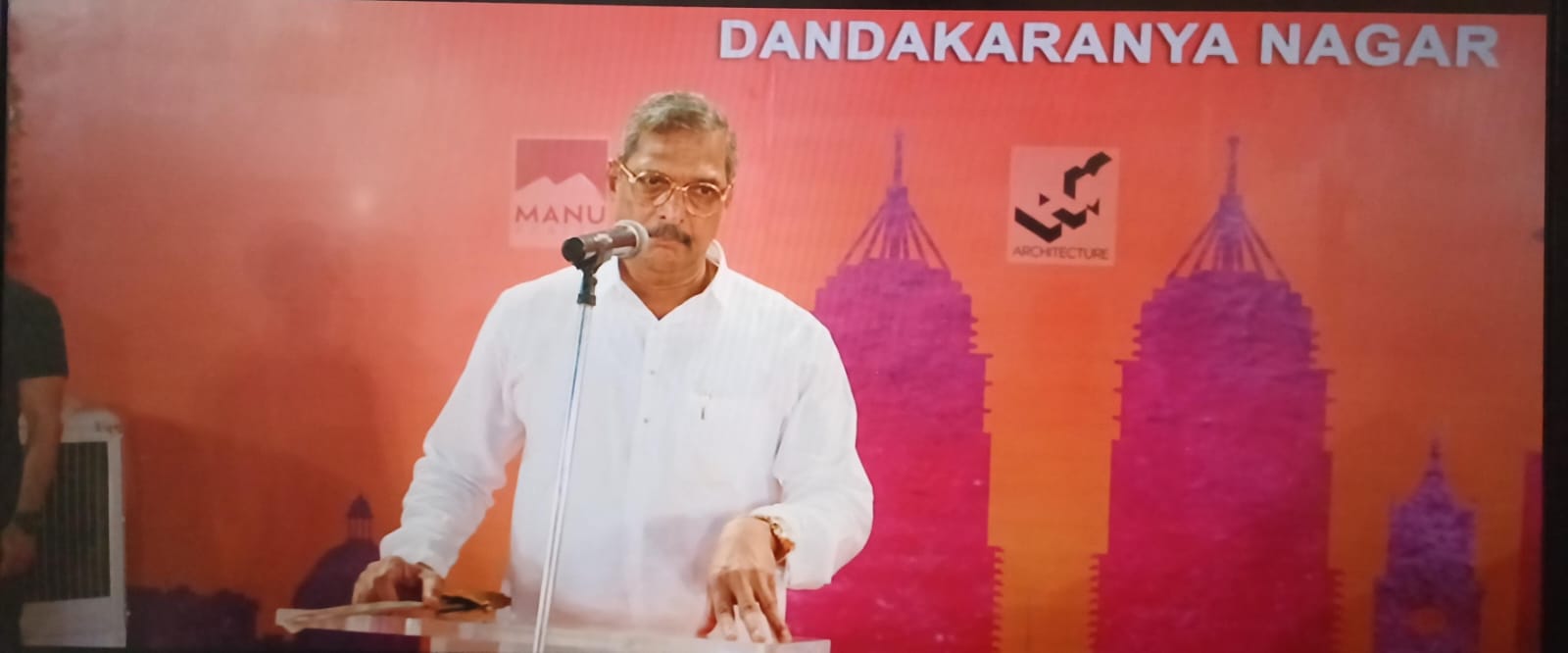
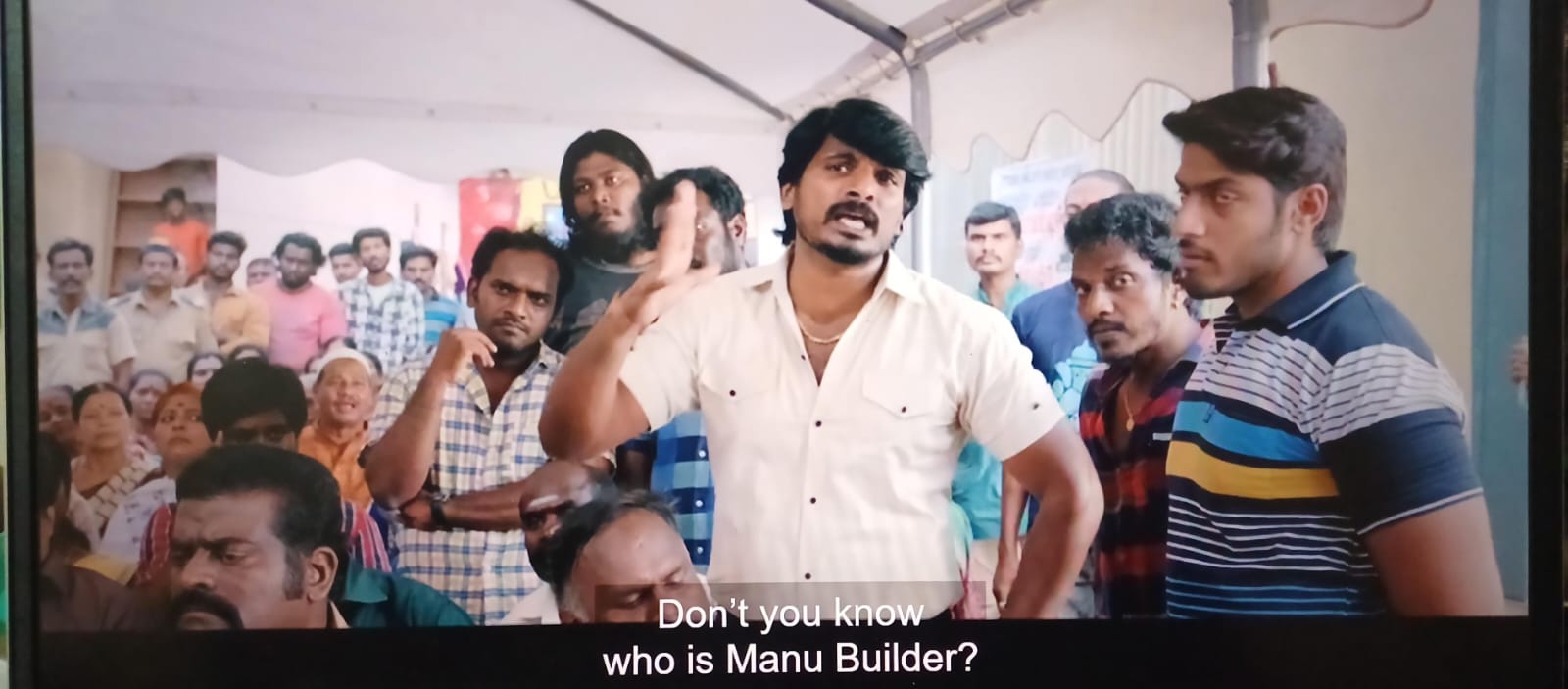
Where Ranjith overdoes his indulgence is in his display of brazen Hinduphobia. The evil builders who plan to steal the slum dweller’s land is ‘Manu Realty’ and they intend to rename Dharavi to Dandakaranya Nagar.

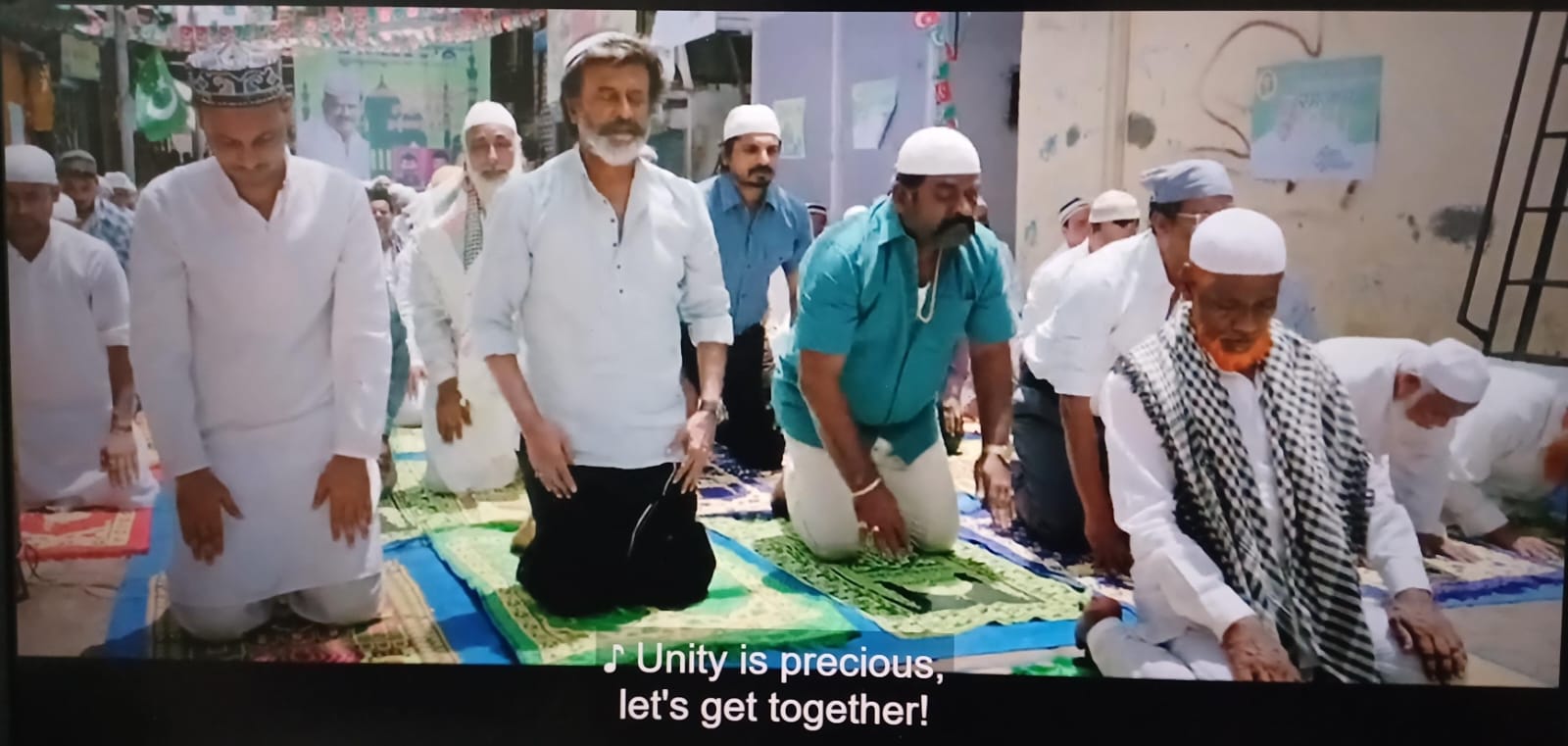
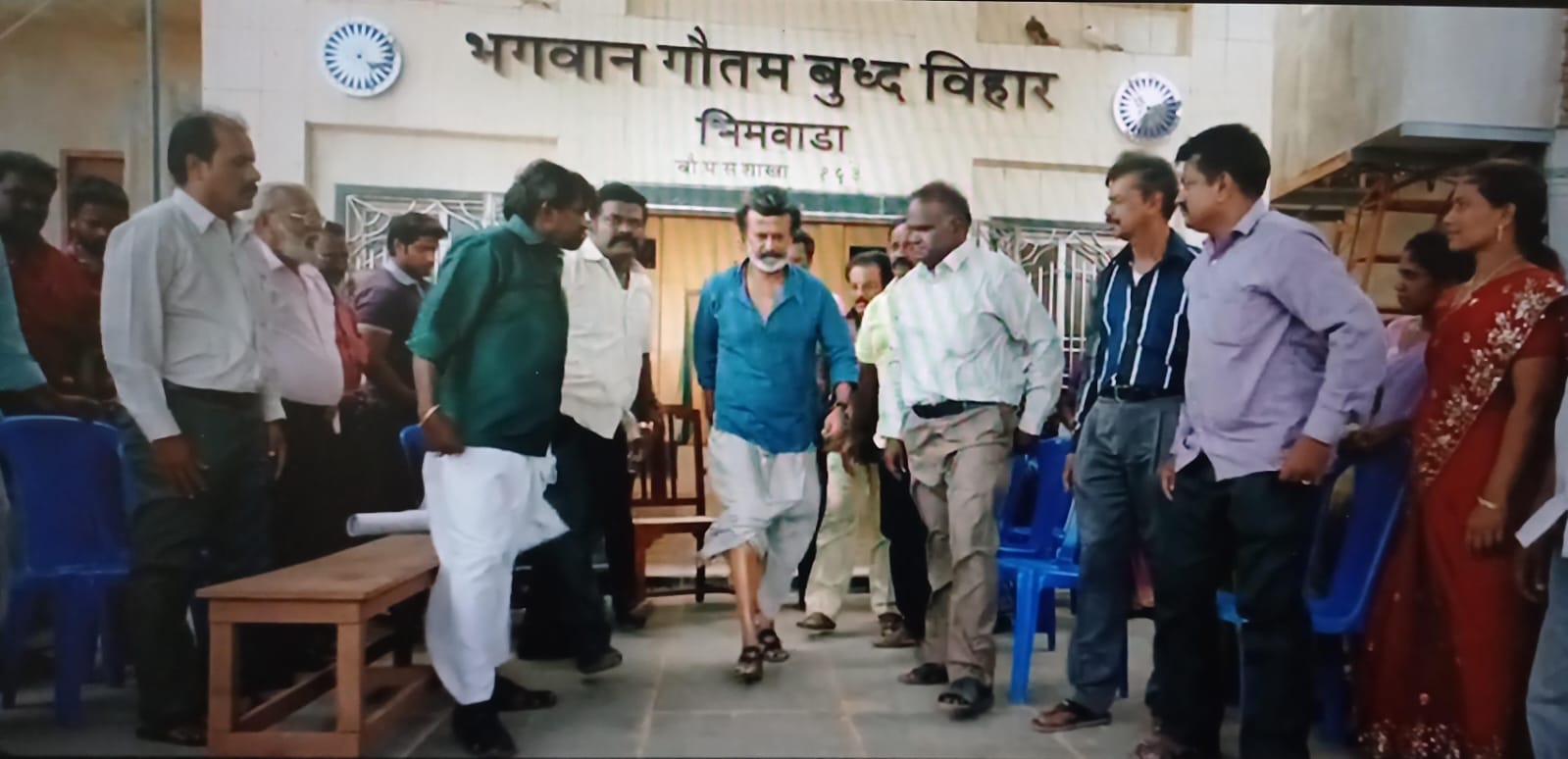
Kaala meets his aides at Bhagavan Gautam Buddha Vihar. His house is full of Buddha idols, and there are no visible Hindu idols. Kaala offers Dua in the local mosque. Yet he doesn’t partake in Ganesh Chaturthi and even uses the festival crowd to meet his ex-lover, Zareena, privately at her home.

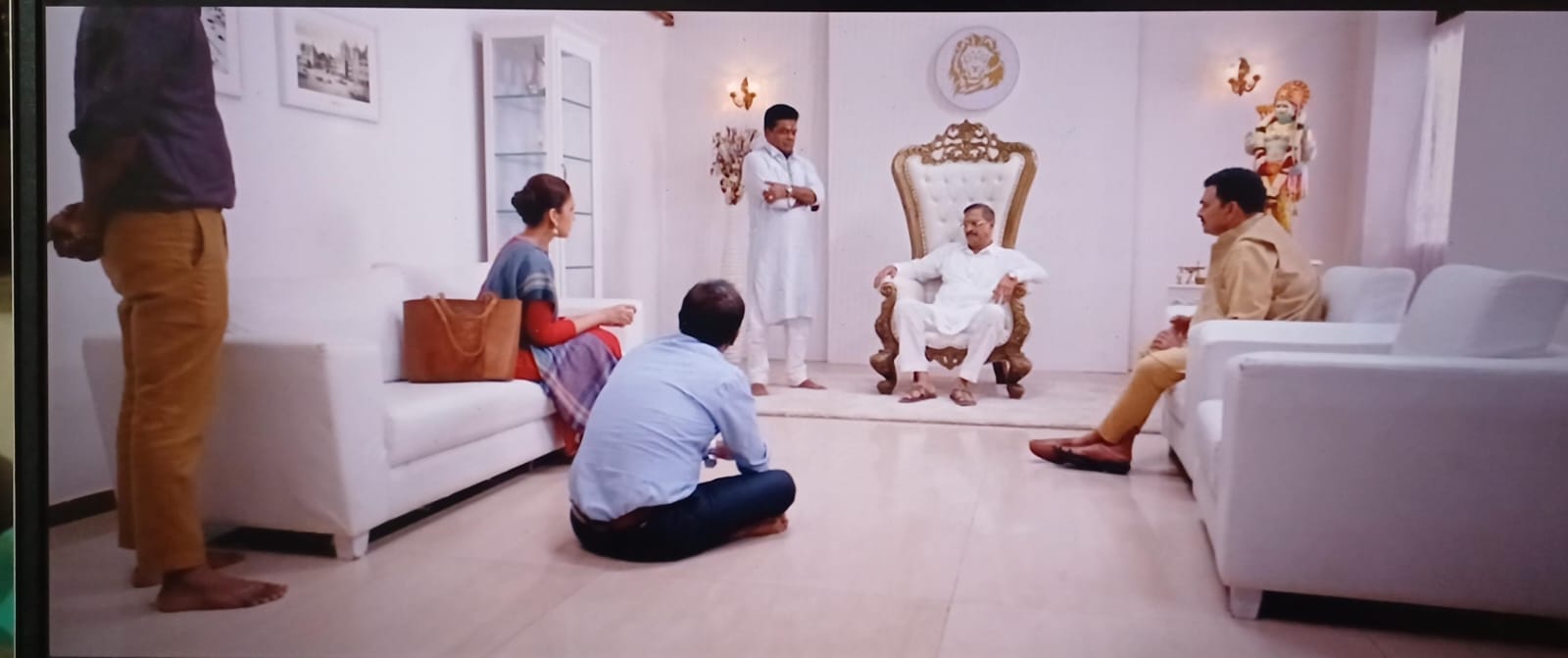
Hari Abhyankar (always adorned in white) is a devotee of Ram (notice the idol) and Krishna. He treats people based on some hierarchy—some must stand, some must sit on the floor, and guests must fall on his feet before leaving. He is also misogynistic and judges single mothers. In this single scene, the passionate Zareena and Lenin turn from the bad side to the good Kaala’s side. This is patchy writing.

Ranjith considers shaking hands as equality and doesn’t like falling on anyone’s feet. But charan sparsh is not merely a Hindu tradition – it is Buddhist too. In Theravadin countries such as Sri Lanka, when one goes before one’s teacher, in order to “open one’s mind up to receive instructions,” one bows and recites the phrase, “Okāsa ahaṃ bhante vandāmi” (“I pay homage to you venerable sir”) Ranjith will now become pro-prostration as it is a Buddhist practice too?

Kaala Extolls EVR

The irony is that Ranjith idolizes EVR in Kaala. The film shows an EVR chowk and statue in his Dharavi set piece. This film plot clearly shows how Ranjith has not read much of what EVR had to say about Ambedkar, questioning his integrity, the Keelvenmani massacre, etc.

His biggest Hinduphobic gesture compares the hero Kaala to Ravana and the villain to Ram. The book on Kaala’s desk is Raavana Kaaviyam, and Kaala is addressed as the leader of the Asura clan.

The climax is intercut with a Ramayana discourse organized at Hari Dada’s house while his men brutally massacre the innocent slum-dwellers of Dharavi who are compared to Ravana’s heads. As one head of Ravana falls, another rises. The great Hindu epic is used as a metaphor for their resistance with a role reversal.

The film offers no real solution to the redevelopment of Dharavi—Asia’s largest slum—except asking people to resist any efforts that may interfere with their landholding rights. Aspirations for a better life and more space for the urban poor are relegated to the side lines as minor points.

Why Kaala flopped?

The film largely romanticizes slums, poverty, and people’s existence in squalid conditions. Its lyrics question the need for any high-rise building.

The government must allot housing units fairly. It is crucial to oppose corruption in such allotment. But Rajinikanth in Kaala opposes the redevelopment plans themselves.

Under the guise of the core theme, a lot of Hinduphobic ideology was pushed into the film, which barely had any engagement quotient in the second half. Land rights for the urban poor are okay, but pushing Hinduphobia under this guise is not okay.

The film flopped due to lack of a proper story and engaging screenplay. It didn’t fail because scheming casteists plotted against Ranjith to boycott the film (even though the movie encourages protests). The film’s closing image has a blue flag with the Buddhist Chakra and the words “Jai Bheem” on top. Meanwhile, the camera relegates the tricolour to the sidelines. This is an indelible Kaala mark on Rajinikanth – the nationalist.

This article is based on a thread by Tamil Labs on the same topic.

Tamil Labs provide high quality Tamil Content written interestingly in English.

Subscribe to our TelegramWhatsApp, and Instagram channels and get the best stories of the day delivered to you personally.

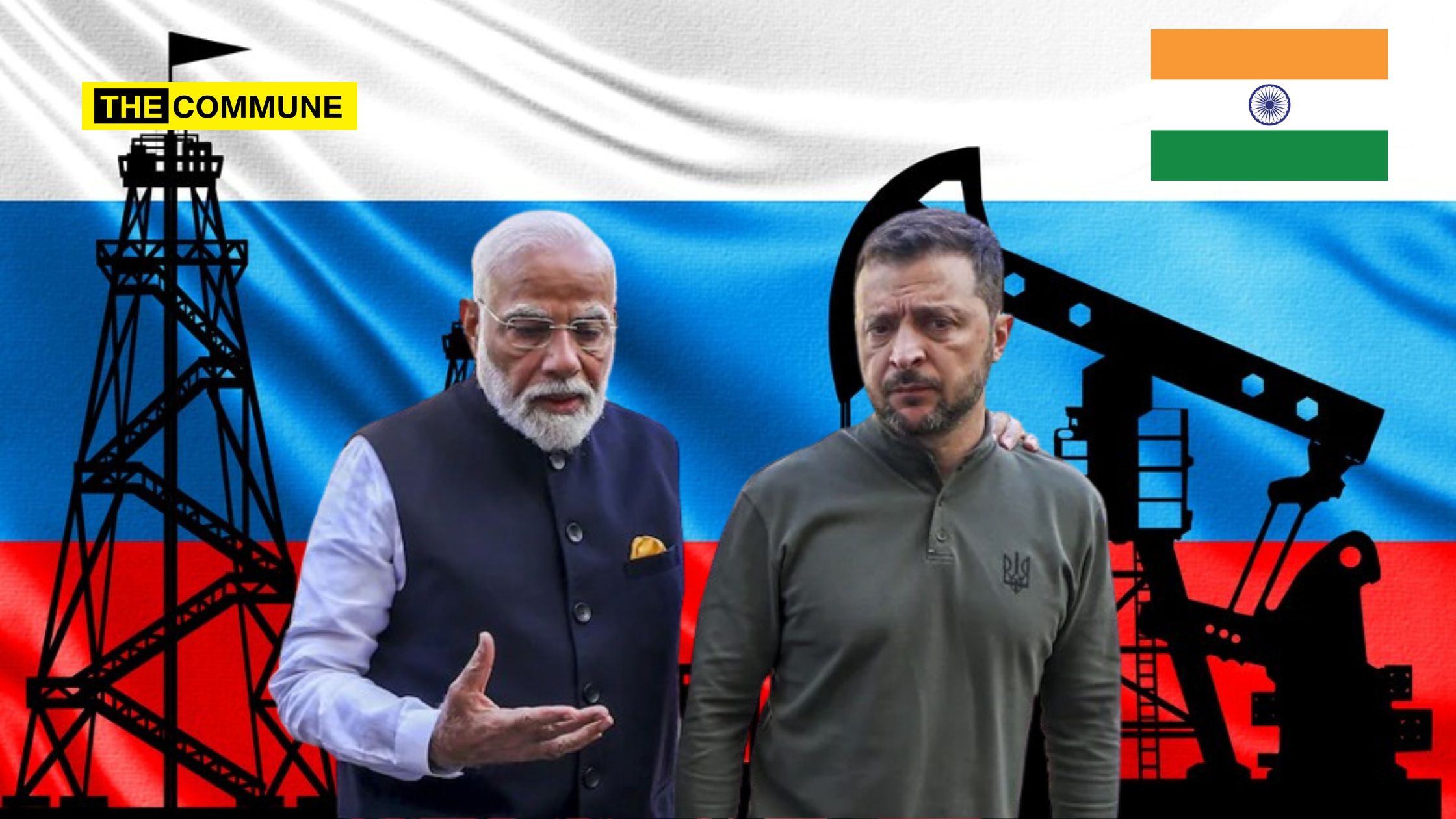
PM Modi in Ukraine: Zelensky Must Ask His Friends In The West To Cut Down Russian Oil/Gas Purchase Instead Of Lecturing India, Here’s Why

Zelensky Must Ask His EU Friends To Cut Down Russian Oil/Gas Purchase Instead Of Lecturing India.

Even as Prime Minister Narendra Modi visits Kyiv on a historical visit, Ukrainian President Volodymyr Zelensky urged India to stop importing Russian oil, as per EU embargoes, to help end the war. His expectations towards New Delhi are hypocritical since many European nations bypassed these EU sanctions to continue purchasing Russian crude.

India’s External Affairs Minister, S. Jaishankar, underscored that market needs, not political pressures, drive India’s oil purchase decisions.

Modi’s Historical Trip to Ukraine

Prime Minister Modi took a train journey from Warsaw to Kyiv, becoming one of the rare international leaders to visit Moscow and Kyiv. Modi has consistently championed diplomacy and dialogue as the means to resolve the conflict between Russia and Ukraine. In a direct conversation with President Putin during their meeting in Uzbekistan in September 2022, Modi asserted that the current era is not one of war.

Zelensky Wants India To Abandon Neutral Position

On 23 August 2024, Zelensky met PM Modi and described India as a “significant country” with considerable influence over the Russian economy. He emphasized that the war could end if India altered its stance towards Russia, specifically by halting its purchase of discounted Russian oil and aligning closely with the EU. He said this decision could prompt Russian President Vladimir Putin to cease hostilities.

However, Zelensky’s call for India to abandon its neutral position and support EU sanctions against Russia highlights an ongoing issue.

Is the EU Adhering to Its Sanctions?

Interestingly, even after meeting PM Modi, Zelensky expects India to take a firmer stance against Russia. India has consistently shown unwavering commitment to its neutral position in the Russia-Ukraine conflict. New Delhi is resolute in its decision to purchase Russian oil.

Meanwhile, several European countries that oppose Russia are circumventing EU sanctions to continue importing Russian oil. Even then, Zelenskyy remains tight-lipped about their sanctions violations.

For example:

  • Bulgaria: Although temporarily exempt from the embargo, it has received limited quantities of Russian crude oil.
  • Germany: Some German companies have procured Russian oil through third-party traders.
  • Netherlands: There have been accusations that the Netherlands allows Russian oil to enter through intermediaries.
  • Poland: Despite its strong criticism of Russia, Poland has reportedly allowed Russian oil to enter the country through third-party traders.
  • Czech Republic: Reports indicate that the Czech Republic imports Russian oil through intermediaries.
  • Greece: Some Greek firms are said to be buying Russian oil from third-party sources.

Additionally, certain American companies reportedly purchase Russian oil from third-party traders, who blend or process it to obscure its origin. This circumvention of sanctions raises questions about the effectiveness of measures by Western countries to not “fund the war with Russian oil”.

India Defends Market-Driven Oil Strategy

India is unequivocal about one point. As one of the world’s largest consumers of crude oil, India’s purchase decisions are driven by market considerations alone. The Narendra Modi-led government in New Delhi follows an oil strategy focused on securing supplies based on market dynamics, not geopolitical motives.

Speaking at a press conference in Kyiv, shortly after PM Narendra Modi met Zelensky, EAM S. Jaishankar emphasized that India’s oil purchasing decisions are driven by market conditions rather than political strategies.

Minister Jaishankar said, “India is a big oil consumer… we are a big oil importer because we don’t have oil. Now, it is not like there is a political strategy to buy oil… there is an oil strategy to buy oil… there is a market strategy.” Highlighting the current tightness in the market, he said, “So the figures for where we import oil from will go up and down… it depends on the market. But definitely, I think it depends, or is decided by, a tight market… one in which big supplies, like Iran and Venezuela, who used to supply to India, are now constrained from operating freely.”

The EAM also reiterated India’s position on purchasing Russian oil, stressing that this approach has been crucial given the current market constraints. “We have discussed the market conditions with Ukraine. The sanctions imposed on various producers have made the market particularly tight,” he noted, adding that stable and reasonable oil prices benefit the global economy.

India’s Unwavering Neutral Stance

In February, Jaishankar defended India’s stance on preferring Russian crude supply. He argued that Middle Eastern suppliers prioritized Europe due to higher prices. This preference risked leaving India without energy or forcing it to pay even more.

Our approach has helped stabilize the global energy market, as high prices would have been unsustainable for Indian consumers,” he said in an interview with German daily Handelsblatt.

Before the Ukraine conflict, India rarely bought Russian crude due to high transportation costs. By 2023, however, Russian crude imports to India had risen to about 1.66 million barrels per day, up from less than 700,000 in 2022. India is now the world’s third-largest oil importer and consumer. It has become a significant buyer of seaborne Russian crude, especially following Western sanctions. They purchase Russian oil in rupees, dirhams, and Chinese yuan.

Reliance Industries, the world’s largest refining complex, signed a one-year agreement with Russia’s Rosneft in May to purchase at least three million barrels of oil monthly, with payments in roubles. This arrangement allows Russia to bypass additional sanctions on transactions through Western financial institutions. Despite pressure from the West, including the US, to make India adhere to a price cap on Russian oil, New Delhi has continued buying from Russia to manage its energy needs effectively.

So, instead of lecturing India to reduce its Russian oil purchases, Zelenskyy must ask his friends in the West to follow the rules they made.

(With Inputs From Rahul Shivshankar)

Subscribe to our TelegramWhatsApp, and Instagram channels and get the best stories of the day delivered to you personally.

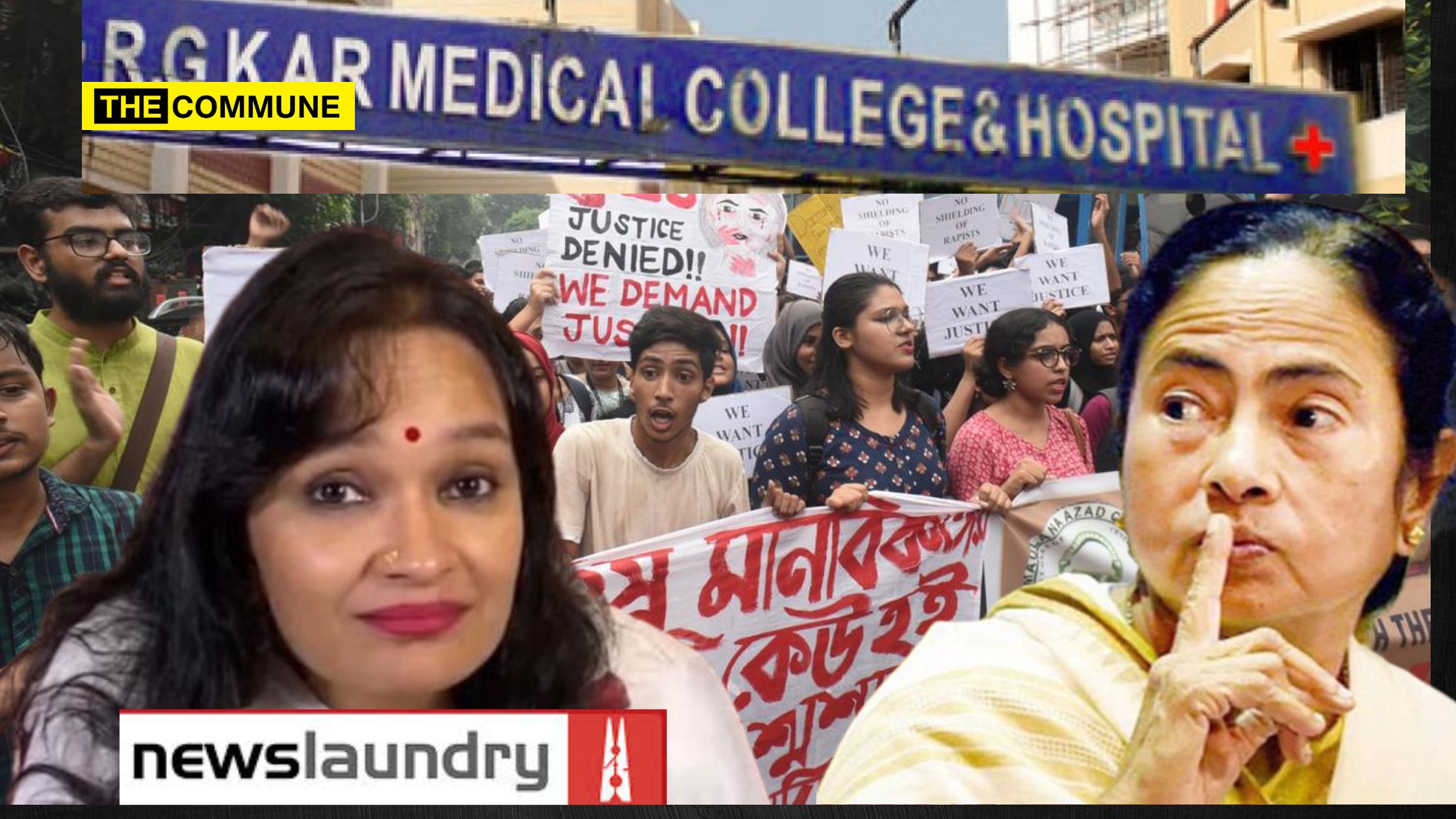
Hypocrisy Much? Propaganda Outlet Newslaundry Anchor Rants About Sensationalism In Kolkata Rape-Murder Case, Here’s How They Reacted For Hathras

Even though most media outlets are focussing on the tragic Kolkata rape case and the government’s alleged attempts to suppress evidence, Newslaundry has taken a different approach. The left-leaning propaganda news platform seems to be barking on other media outlets of sensationalizing the Kolkata tragedy for the sake of higher ratings, or TRPs.

The news outlet is generally known for its extensive biased reporting on opposition party scandals. However, they are unwilling to hold West Bengal government accountable for the brazenly savage crime. It raises a crucial question of whether there is any limit to such simping. It is disheartening to witness such a stark contrast in their approach to similar incidents based on political affiliations.

Newslaundry Worried About Sensationalism, Not Justice

The Newslaundry’s position in uncovering the truth and holding the powerful accountable seems to be subjective. They seem to be taking a backseat if that power clout involves Congress and its alliance. What a shameful pursuit of justice!

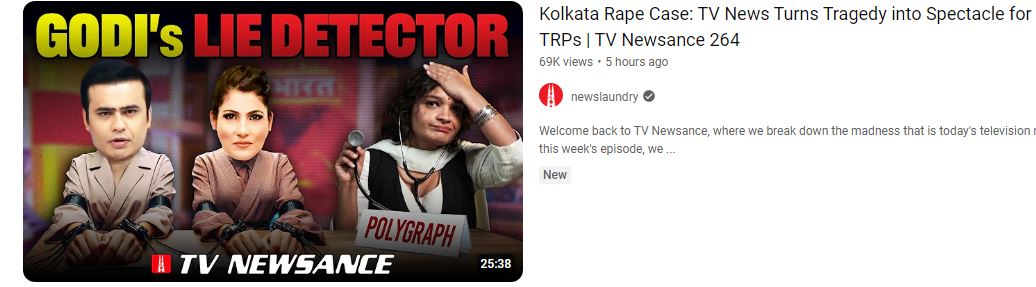
On 24 August 2024, Newslaundry posted a 25-minute YouTube video titled “Kolkata Rape Case: TV News Turns Tragedy into Spectacle for TRPs.” This post was a biased attempt to vilify the news agency that dared to call out the government’s suppression of information. This supression was later criticized by the Kolkata High Court too. The hypocrisy of these so-called liberal media entities is glaring when one considers that their outrage seems selective. When the atrocity unfolds in a state governed by a party they oppose, such as the BJP, they are at the forefront of the narrative. They vocally demand justice and accountability from the ruling party. However, when the incident occurs in a state ruled by a Congress ally like the TMC, their response is muted. It is almost as if the suffering of the victim holds less significance.

The reporters at Newslaundry seem more incensed by the “godi media” for daring to report on the Kolkata rape case. They seem less worried about the government’s failures or the horrific act itself. This standard is pathetic. In the video, the anchor states, “In the world of 24/7 news, it’s not enough to simply report the facts of a horrific crime. Since the facts might be old news within an hour, you need to milk even a rape case for TRPs with drama, suspense, and thriller-style reporting.”

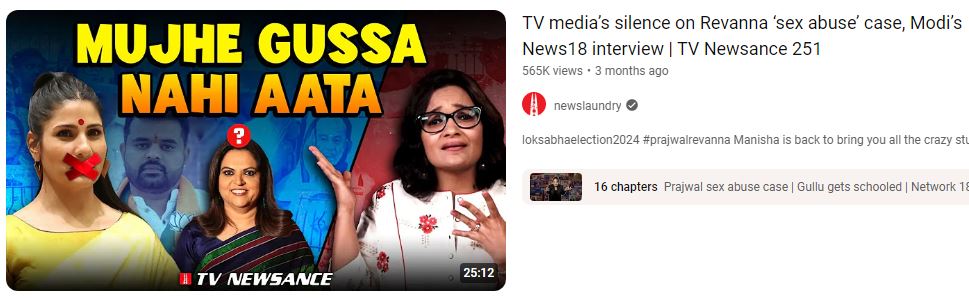
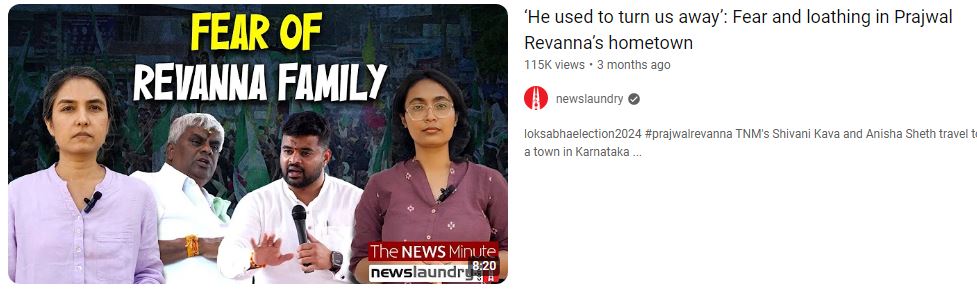
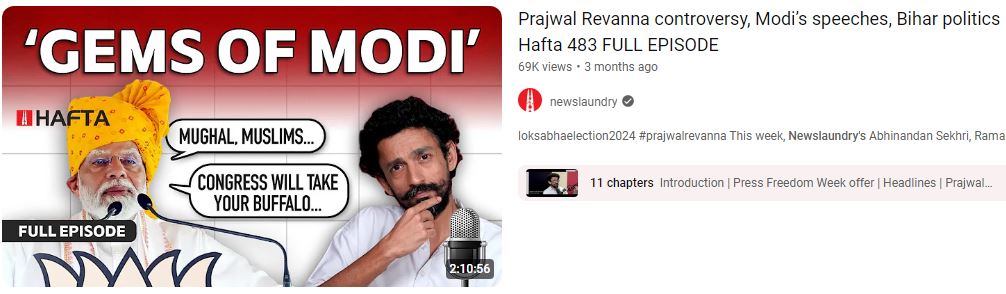
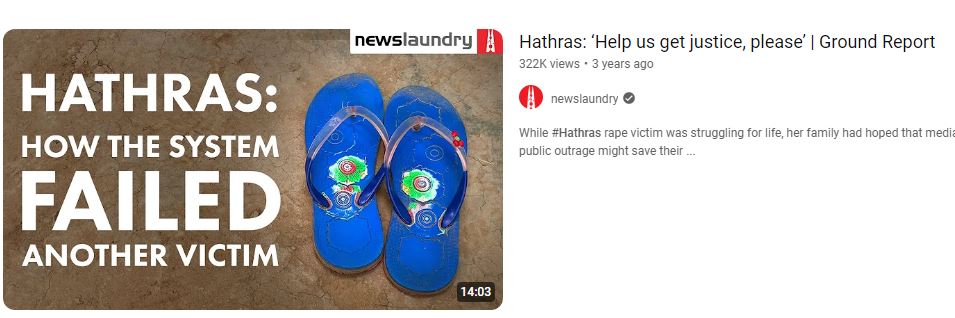
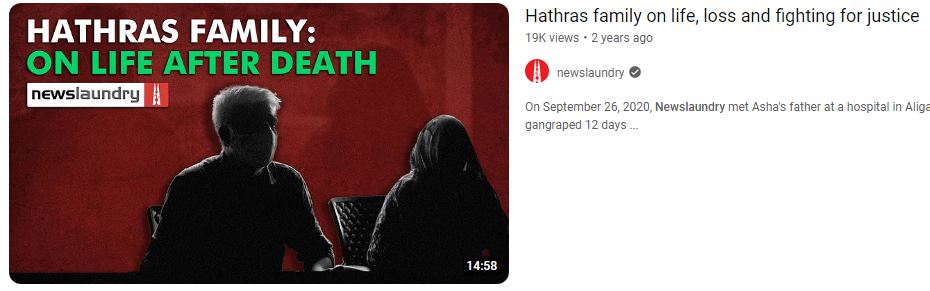
Notably, this approach was evident in their coverage of the Prajwal Revanna scandal and the Hathras rape case.

How did Newslaundry reacted to Prajwal Revanna scandal?

In Hathras rape case?

During the Hathras case, Newslaundry begged for support to cover the facts and even milked some aspects of the news. But now…

And What are they saying now? 

Despite consistently soliciting funds from their audience, these so-called independent media outlets often fail to provide comprehensive coverage of critical news stories.

Subscribe to TelegramWhatsApp, and Instagram channels and get the best stories of the day delivered personally.

“My Beloved Brother, Hardworker With A Great Reputation Among People”: Rajinikanth Hails Udhayanidhi Stalin Who Called For “Eradicating Sanatana Dharma”, Calls Karunanidhi A “Mahaan”, Takes Dig At ADMK

Rajinikanth Hails Udhayanidhi Stalin Who Called For "Eradicating Sanatana Dharma", Calls Karunanidhi A "Mahaan", Takes Dig At ADMK

Famous Tamil actor Rajinikanth showered praise on the ruling DMK, particularly Tamil Nadu Chief Minister MK Stalin and his son Udhayanidhi Stalin, “a rising star in Tamil Nadu politics”. He made these comments at the launch of a new book on party patriarch Kalaignar MK Karunanidhi. Rajinikanth’s remarks about the DMK leaders are notable, particularly given his recent political activities and past statements.

Praise For Udayanidhi Stalin

Rajinikanth attended the launch of the book “Kalaignar Enum Thaai” (Kalaignar, The Mother), written by Dravida Munnetra Kazhagam (DMK) Minister EV Velu about the late party patriarch and five-time state CM, Kalaignar MK Karunanidhi.

DMK President and Tamil Nadu Chief Minister MK Stalin launched the book, while Rajinikanth received the first copy.

In his speech, Rajinikanth went on to praise DMK scion Udhayanidhi Stalin, who shot to national fame after he called for eradicating Sanatana Dharma (aka Hinduism), comparing the religion to diseases like mosquitoes, dengue, corona, and flu.

Respectable, honourable and affectionate… Having just recently entered politics, after having worked hard, and developing a signature style of speech, having earned a great reputation and pride among people and the cadres, a man who has been proving that he has a great future in politics, my beloved brother Udhayanidhi Stalin”, Rajinikanth began his speech.

Praise for N Ram

He also praised The Hindu’s N. Ram and called him a good friend for a long time.

I don’t have to say anything about The Hindu. A newspaper with a legacy of more than 100 years. I don’t think anyone in India wouldn’t be knowing about ‘The Hindu’. If something comes in The Hindu paper, it resembles Supreme Court judgement. We can talk many things about how they research and publish about something. And Ram belongs to that (S. Kasturi Ranga Iyengar) family. He is a man of courage. As EV Velu said, he has his ideology, and he speaks and writes what he thinks is right.” Rajinikanth said.

It is an open secret that N Ram has nothing but contempt for the BJP and hatred for Prime Minister Narendra Modi. He has been a vocal supporter of DMK and the newspaper has been functioning like a party’s mouthpiece. N Ram’s credibility as the publisher of ‘The Hindu’ came down after the newspaper published doctored information about the so-called Rafale jet scam.

Praise for Karunanidhi

Praising DMK Minister EV Velu, Rajinikanth said, “Kalaignar had called him a man who works hard without the need to launch. I’ll talk about him later.” In the later part of his speech, he said that the DMK minister had taken great care of him during the shooting of his film Lal Salaam by accommodating him in the guest house of his engineering college in Tiruvanamalai.

In August 2023, EV Velu called Bharat a “distant north Indian country” and even called for creating a separate “Dravida Nadu.”

Rajinikanth said he was hesitant to speak to such an august audience of intellectuals. It seemed like an attempt to apologize for his remarks a few years earlier at Thuglak’s 50th anniversary when he said,Those who read Murasoli can be identified as a DMK person. But those who read Thuglak are intelligent“.

He said that as he prepared for his speech, he was clear about what to say and what not to say.

The actor then praised MK Stalin, saying, “After Stalin sir became Chief Minister, all the elections he faced, including the Parliament elections and getting a thumping victory, are enough to talk about his leadership, hard work, and political knowledge.

Mocking ADMK

Taking a sly jibe at ADMK, Rajinikanth said “You must’ve seen how after the demise of a party founder or its leader, the next-rung of leaders who come after that, the struggle they go through to save that party, the many people who fail and how they’re suffering. You must have seen and heard about all this. But look at how he (Stalin) has done it easily.

Rajinikanth then praised Stalin for managing and deftly handling senior leaders in the party.

One astonishing thing is.. whenever a school teacher comes, the new students won’t be any problem. They can be easily managed. There are these old students, managing them is no ordinary feat. There are so many old students (senior leaders) here. So many of them. And they’re no ordinary old students. They’re extraordinary. They are not failed students. They’re rank holders who refuse to leave the class. Those who have been raise by Kalaignar since young, do you think managing them is easy? No one else, just take Duraimurugan. He’s a man who had hoodwinked Kalaignar himself. When you say something to him, he’ll reply – ‘Is it? Good!“. We never know if he meant good in a good way or a bad way. Stalin sir, hats off to you!”, Rajinikanth said as the audience burst into laughter.

He also went on to praise EV Velu and his book about Karunanidhi. “The Only thing is that the book is priced at ₹1000. Definitely, the quality of the book deserves the price, but the book has to be read by a lot of people.

He then went on to adulate Karunanidhi, saying that he was a man who fought for a race and the welfare of society.

“Karunanidhi is a Mahaan”

Speaking about the criticisms faced by Karunanidhi, Rajinikanth said “Criticisms are required. It should be like rain, not like a storm. If it is like a storm, even large trees would fall. But this (Karunanidhi) is a banyan tree whose roots are strong. His brethren – those roots are very deep and very strong. Nothing can shake that tree.

He further said, “Can someone save a party despite not being in power for 12-13 years? Those who haven’t been in power for 5 years are scrambling.” This was an apparent dig at AIADMK.

He can even be called a ‘mahaan’. Even after their death, their fame only keeps growing. When Bharathiyar died, not even 15 people were there for his funeral. But today? Like that, the fame [of Karunanidhi] will keep increasing by the day. Many books should be written about him. A movie has to be made; that is my request.“, Rajinikanth said.

This is not the first time Rajinikanth has praised the DMK and its late patriarch, Karunanidhi.

Earlier in February 2024, during the inauguration of the revamped Karunanidhi memorial in Marina Beach, Chennai, Rajnikanth said, “Yes, sir, I have seen all the mausoleums. It is amazing and charming, more like a Kalaingar’s Taj Mahal than a Kalaingar’s mausoleum.”

Before that, in October 2023, he penned an emotional article in the DMK mouthpiece ‘Murasoli‘ to honour the late CM, as part of the centenary celebrations. Ironically, the same Murasoli had ridiculed him a couple of times.

About Karunanidhi

Karunanidhi, born Dakshinamurthy,  became the DMK president after its founder, CN Annadurai. He was a close follower of anti-Hindu bigot EV Ramasamy Naicker, who was hailed as “Periyar” by his followers.

On several occasions, Karunanidhi has kept the flame of a separate “Dravida Nadu” alive. He led DMK’s Kovilpatti conference 1951, outlining plans for a prolonged fight for an independent Dravida Nadu or South India.

During the centenary celebrations of the Dravidian movement in 2012, Karunanidhi asserted that the Dravidian ideology would be strengthened, and a Dravidian State would be achieved if possible.

Karunanidhi’s ascension to the top post made the DMK a dynastic party under his family’s stranglehold. Karunanidhi has made several controversial statements regarding Hindus and Hinduism. In one such remark in 2002, he referred to Hindus as ‘thieves’.

At that time, Karunanidhi argued that all he said was that even those who supported the Hindu religion interpreted the word Hindu as a thief. “Maybe it means someone who steals the heart.”, he had said during the controversy.

Karunanidhi had called for the Sethusamudra project, which involves demolishing Ram Setu, which runs from Rameswaram in India to Mannar Island in Sri Lanka.

In 2007 the Sethusamudram project was withdrawn due to technical difficulties of shallow water. Against this backdrop, Karunanidhi rhetorically asked, “Who is this Raman? In which engineering college did he study and become a civil engineer? When did he build this so-called bridge? Is there any evidence for this?”

He also wrote short stories and sometimes employed Hindu deities as characters in his stories, often distorting and misrepresenting them with sexual perversion.

He has also abused his political opponents.

There are several instances where the late former Chief Minister Karunanidhi insulted and mocked Kamaraj. During his tenure as Chief Minister, he mandated that all panchayat council chiefs be addressed as “Perunthalaivar.”

However, this directive was rescinded on 3 April 1987 after MG Ramachandran (MGR) assumed power. Murasoli published several cartoons mocking Kamarajar (sometimes with racist and casteist insinuations).

Subscribe to our Telegram and WhatsApp channels and get the best stories of the day delivered personally.

Reviving The Glory Of Unsung Heroes Of Bharat: Rethinking Historical Narratives And Their Impact On National Pride

Reviving The Glory Of India’s Unsung Heroes

While extolling foreign invaders, our history books surreptitiously pass on a silent message that the rulers of Bharat were feeble failures, not heroes. They create a permanent impression of fatalism in the fledgling fresh minds. This message negatively impacts young students, shaping them as sullen and forlorn future citizens. They become utterly unsuited to lead a positive personal life and incapable of contributing anything constructive to the country’s progress.

But does that nefarious narration resonate with the actual events in Bharat’s history? We have enough resources to help us delve deeper into our history. If we do so, we can find many dynamic and daring emperors we can boast of. These heroes of Bharat are either wholly absent or, at best, lackadaisically mentioned in some remote corner.

Most of these heroes had gallantly fought several battles in Bharat and had remained unconquered during their entire regime. In a few stray cases, if the emperor lost, it was invariably due to a traitor’s betrayal, not the opponent’s intrinsic dominance. Should we not, therefore, focus more on such portions in our history? Shouldn’t we present positive historical facts to the impressionable schoolchild, portraying the prowess of such powerful monarchs?

The victors write history. As the African proverb goes, “Until the lions have their historians, tales of the hunt shall always glorify the hunter.” Also, the invaders and our pseudo-historians have perfidiously either suppressed or twisted many events of the native victory. We now have only a few remnants that have managed to escape their erasers.

Valourous Heroes of Bharat

For the sake of brevity, we furnish a few examples of heroes of Bharat below.

Chandragupta Maurya:

The Founder and first emperor of Mauryan dynasty Samrat Chandragupta Maurya fought Selucus Nicator, one time General of Alexander in 305 BC. and he defeated Seculus and married his daughter Helena as part of his treaty with the loser. In fact, that lucky Alexander narrowly escaped facing the might of Chandragupta since he fled away earlier from the scene fearing for his life and then died. He left India in 325 BCE whereas Chandragupta ascended only in 321 BCE.

Bappa Rawal:

Bappa Rawal’s power, prowess and penchant for combats are beyond the ken of our imagination. Not content with just defending and defeating the invading foes he chased them well beyond and triumphantly entered the Arab nations upto to banks of Euphrates in Central Asia! For an amazing details of the exploits of Bappa Rawal, readers are requested to refer to the following article in The Commune: ‘Bappa Rawal: The Indomitable Hindu King Who Invaded And Defeated The Arabs.’

Maharaja Chhatrasal:

He fought as many as 52 major battles and won all of them. His resilience and strategic brilliance are unmatched, earning him the title ‘Bundela Kesari’ (The Lion of Bundelkhand).

Rana Kumbha:

Rana Kumbha 1433-1468 A.D, ruler of Mewar belonging to Sisodia clan fought as many as 56 battles and won all of them. He crushed Turk sultanates and expanded his regime. He built as many as 32 fortresses for defending Mewar and the Kumbhalgarh fort was the highest.

Maharana Pratap:

Maharana Pratap, a symbol of Rajput pride, was one of the strongest warriors in the country, with a height of 7 feet 5 inches. He carried 360 kg of weight, including a spear weighing around 80 kg, two swords weighing 208 kg and armour of nearly 72 kg. His own weight was over 110 kg. He had defeated Mughal emperor Akbar thrice 1577, 1578 and 1579.

He led his army on his own whereas Akbar did not participate in the battles. They were lead by commanders like Maan Singh, again a Rajput! And our history books brazenly boast that impuissant, imbecile Akbar, as ‘Akbar, the Great!’

Lachit Borphukan:

We read extensively about the Moghul dynasty. But how much do we know about the mighty Ahom dynasty in Assam, which lasted for as long as six centuries? They defeated the Moghuls 17 times. Their famous general, Lachit Borphukan, was a haunting nightmare for Aurangzeb. Lachit’s exploits can be categorised under ‘Believe it or not’ legends.

There are some greats that, if we start describing their glory, each will require volumes like Harshavardana, Bhoja, Rajendra Chola, Bimbisara, Chatrapati Sivaji etc. How much do we know about them?

Bharat’s Women Were Warriors, Not Backward

A false narrative was perpetuated by pseudo-historians who painted Indian women as backward, uneducated, and defenceless. However, this is far from the truth.

Bharat has a rich history of warrior women who fearlessly fought alongside men, battling invaders from the Mughals to the British and Portuguese. Some of these remarkable women remained unconquered throughout their lives.

Maharani Ahilyabai Holkar.
Maharani Tarabai Bhonsle.
Rani Raj Kaur of Sick empire
Rajmata Jijabai Bhonsle.
Rani Avantibai of Ramgarh
Rani Abbakka Chowta
Jhansi Ki Rani Lakshmibai.
Rani Keladi Chennamma.
Rani Kittur Chennamma.
Gondwana Rani Durgavati.
Veeramangai Rani Velu Nachiar

History Education In Other Countries

Now, let us observe how history is taught in other countries. The Romans invaded Britain several times starting with the mighty Julius Caesar in Kent in 55BC. In AD 43 the Romans once again attacked under the emperor Claudius. The history books in the schools in Britain display a deafening silence on all those events. Barbarous Mongol bandit Chinggis Khan demoniacally decimated China. We can’t a single mention about him in Chinese history books. The chinese chronicler carefully concealed those disconcerting details while recording history saying that such facts will generate defeatist disposition in their future generation.

Their historians meticulously ensured that their future generation was kept insulated from such gloomy defeatist details. They justified this selective transmission by saying it would interfere with their policy of planting in them a positive spirit of patriotism, pride, chutzpah, and courage.

Our own vicious pseudo counterparts have scrupulously screened out all successful heroic conquests of our gallant warriors. Instead of correcting them, at least now, we continue to feed our future generations with the same nonsense.

If we delve deep into history, we can identify hundreds of such brave heroes and heroines in each region of Bharat. Let us stop glorifying the villainous invaders and start proudly singing paeans on our own paladins.

Parasuram Sharma is a retired bank officer and an octogenarian whose interests include Sanathana Dharmam, Samskritam, history and politics.

Subscribe to our TelegramWhatsApp, and Instagram channels and get the best stories of the day delivered to you personally.
The Endless Rants Of Pa. Ranjith Who Is Playing Victimcard For The Failure Of His Mokka Films

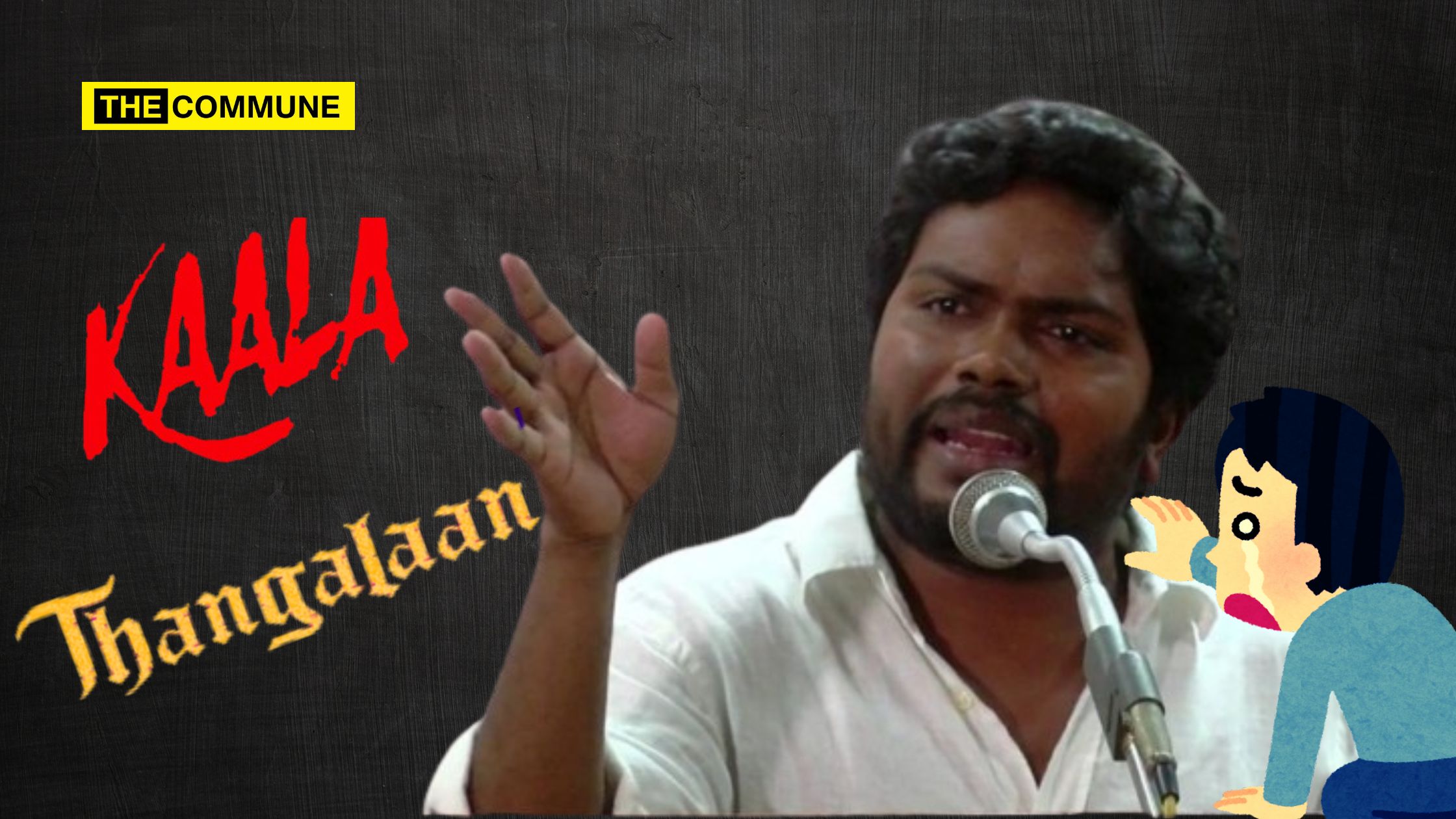
Endless Rant of Pa Ranjith, Kaala, Thangalaan

After a series of disappointing movies with repetitive plots centred on his personal ideology, Pa Ranjith has become increasingly defensive about his failures. He blames both audiences and movie critics for his lack of success. With the release of his latest film, “Thangalaan,” he has taken a more extreme stance. Ranjith is now playing a victim card, criticizing everyone who found the film confusing and artificial as “anti-Dalit”.

He didn’t stop there. His “performance anxiety” is driving his claim that his work is unfairly targeted by anti-Dalit elements. Instead of constructively addressing criticism from respected film reviewers, Ranjith has defended his films by invoking his “Dalit” victim card as a shield against further critique.

Pa Ranjith – Victim Or Lousy Filmmaker

In a recent interview, Ranjith discussed his most recent movie, “Thangalaan.” While the plot was simple and mystical, he intentionally added layers of complexity. He blended themes of oppression, Buddhism, and other elements. He also believes that this blend left the audience overwhelmed and unable to comprehend the film entirely.

But when he speaks on stage, Ranjith seems to imagine that he is the victim of some imaginary group (read the evil Brahminical group) or conspiracy (read Brahminical conspiracy) undermining his success. However, this isn’t the case. Unlike in the past, when films were released primarily during festivals like Pongal and Diwali and had long runs in theatres, today’s technology allows audiences to enjoy intricate and imaginative plots from foreign and Indian films in their homes. Ranjith’s claim of pioneering magical, mystical cinema now seems misplaced, akin to Aishwarya Rajinikanth’s exaggerated assertion that “Kochadaiyaan” was a hundred times better than “Baahubali.”

First, Ranjith should know the audience’s pulse. When audiences see a trailer hinting at a mystic goddess and an ancient plot, they typically expect a captivating storyline enriched with mystical and mythological elements. They look forward to visually striking scenes featuring elaborate costume details, ancient settings, and special effects that enhance the film’s magical and historical themes. A strong narrative should solve what, when, how and why that evokes strong emotions, whether through awe, inspiration, or dramatic conflict. But all we get in The Thangalaan Nightmare is a weak story with a weak screenplay and underwhelming visual effects.

No Lessons Learnt From Kaala

In the past, let’s consider Ranjith’s film “Kaala,” which featured Rajinikanth.

Despite the high-profile cast, the film had a poor opening with negative reviews. It had disappointing collections in the Tollywood trade, earning only ₹6.33 crores during its first weekend in Telugu states. It is a significant shortfall compared to the ₹33 crores spent on its theatrical rights, indicating the film was likely to incur heavy losses. Although the film had a somewhat better opening in Tamil Nadu, the film’s business dwindled because of Ranjith shoving his ideology down people’s throats. Despite a total pre-release business of ₹60 crores in Tamil Nadu, “Kaala” managed to recover only ₹25 crores in its first weekend. The film’s poor performance and reasons highlight the disparity between expectations and actual results.

Why is that? Ranjith intentionally crafted “Kaala” as an antithesis to Mani Ratnam’s “Nayakan,” reimagining it from a Dalit perspective. However, it failed to capture the depth of Ratnam’s character, Vellu Nayakar. Ranjith’s approach, which leaned towards delivering subtle messages rather than engaging plots, missed the mark. Instead of developing a compelling narrative, “Kaala” became overly dramatic and preachy. The movie was didactic, particularly in the second half, which bored many viewers. While audiences tolerate slow-paced films, excessive emphasis on political messages makes it difficult for them to remain engaged throughout the film.

Now, he confronts the general audience at the theatre. He displays arrogance by insisting he will deliver his message in the film. If the audience ignores him, they are “casteists.” If they criticize him, they are “suppressing a Dalit director.”

Conclusion

It remains a question of what kind of person he is, as he seems to view everything through a caste lens. Let us presume Ranjith wants to avoid criticism or his films becoming flops. In that case, he should probably make documentaries for leftist dens of TISS, JNU or The News Minute‘s office. He may get all the simping he expects from audiences in such places.

That may be a better solution for him rather than complaining on stage. Nothing will come out of blaming the audience and seeking sympathy by playing the victim card for the failure of his films.

Subscribe to our TelegramWhatsApp, and Instagram channels and get the best stories of the day delivered to you personally.
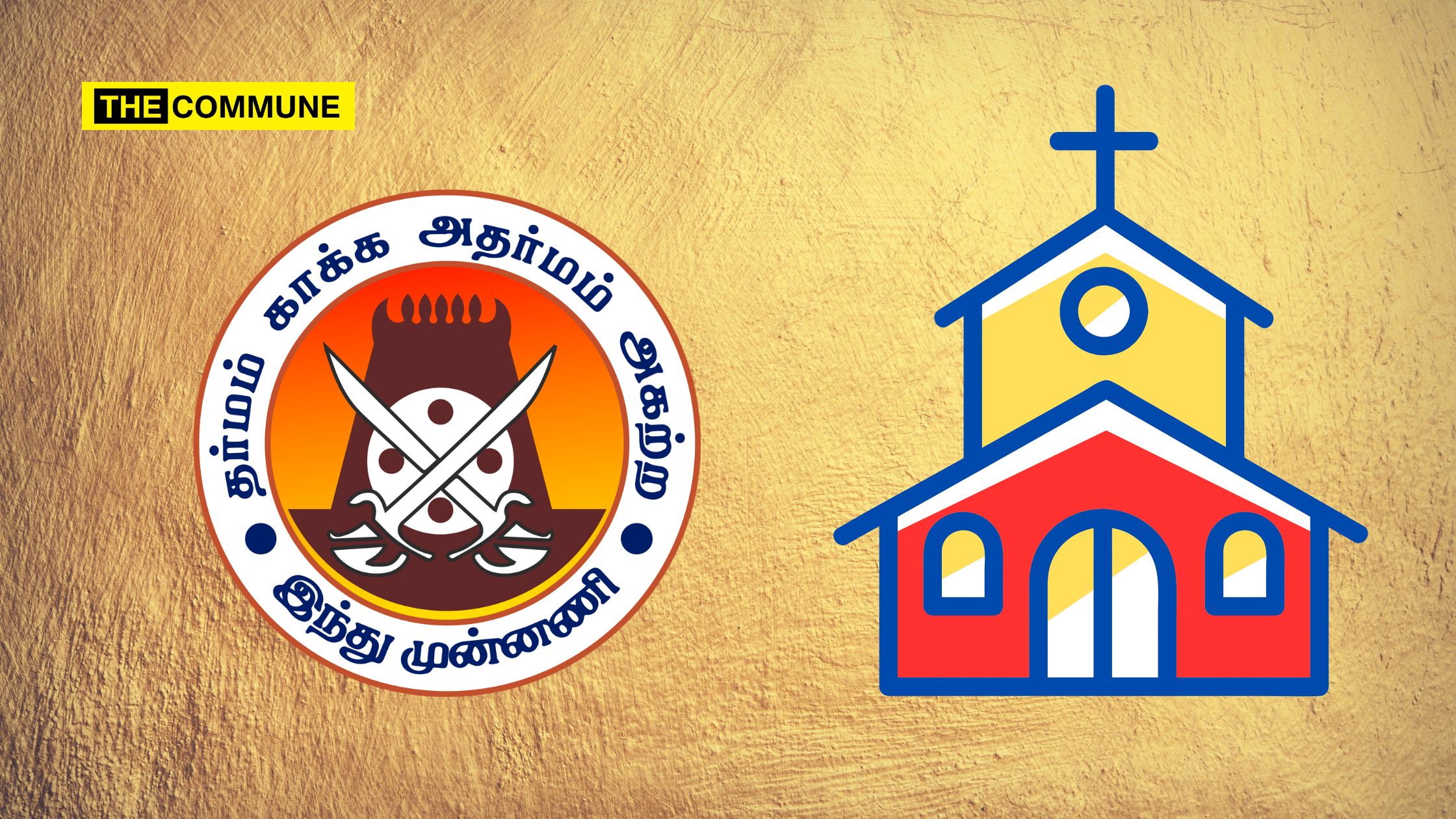
Hindu Munnani Files Complaint Against Alleged Inaction Over Illegal Construction Of Church Over Water Body In Mayiladuthurai District

Swaminathan, the district secretary of the Mayiladuthurai Hindu Munnani, has lodged a complaint with the district collector concerning the tehsildar and circle inspector of Villiyanallur village in Courtallam Taluk. The complaint asserts that these officials failed to address a request to remove a Christian missionary house of worship constructed on a water body, violating National Green Tribunal directives.

It further alleges that the officials invited both parties and then abruptly cancelled peace talks without prior notice and showed sudden support for the Christian proselytizing group. Hence, the Hindu Munani called for action against the Courtallam circle Police Inspector and the tehsildar.

The letter submitted to the collector states, “On 27 March 2024, I filed a complaint at the Courtallam Circle Police Station regarding the unauthorized occupation of the Vannan Thital drainage canal in Villiyanallur village, Courtallam taluk, Mayiladuthurai district. This construction was carried out without government permission and contravened the National Green Tribunal guidelines.

The police have cited they have no jurisdiction over this matter, and promised that efforts will be made to mediate through peace talks led by the Courtallam tehsildar. Instructions were given to both parties to refrain from using loudspeakers for religious activities until the peace talks were concluded.

An invitation was issued for peace talks on 22 August 2024, at 3 PM, under the leadership of the Courtallam tehsildar. However, at 2:50 PM on the same day, I received a phone call from the police station informing me that the talks were postponed and a new date would be provided later.

When asked about the postponement in person, the tehsildar gave inconsistent and unsatisfactory responses. It appears that the Courtallam tehsildar is abusing his power by supporting the opposition party and postponing the matter. I request departmental action against both the Courtallam tehsildar and the Courtallam police inspector.”

Subscribe to our channels on TelegramWhatsApp, and Instagram and get the best stories of the day delivered to you personally.