Every year, as Onam approaches, one repeatedly encounters the claim that it is merely a “harvest festival” of Kerala and not a “Hindu festival”. In fact, there has been a concerted effort in recent years to rebrand several Hindu festivals primarily in secular terms, and Onam was among the earliest to be presented in this way.
The historical evidence, however, tells a very different story. Onam certainly acquired agrarian and seasonal dimensions over time, as many Indian festivals did, but to describe it merely as a secular harvest celebration, detached from Hindu tradition, is historically untenable. Ancient Tamil literature, the hymns of the Azhvars, Chera-period inscriptions and the records of Kerala’s Vishnu temples clearly place Onam within a sacred Hindu framework going back many centuries.
At the heart of the festival is Thiruvonam, the Shravana Nakshatra. Onam refers to the Nakshatra itself, while the honorific prefix ‘Thiru’ reflects its ancient sacred association with Mahavishnu. The very name of the festival, based on a Nakshatra recognised in the Hindu calendar and scriptural tradition, itself makes its Hindu roots unmistakable.
Sangam Literature
One of the earliest references to the festival comes from the Sangam classic Madurai Kanchi, composed more than two thousand years before. While describing celebrations in Madurai, the poet refers to
“கணம்கொள் அவுணர்க் கடந்த பொலந்தார்
மாயோன் மேய ஓண நல் நாள்”
the auspicious day of Onam associated with Māyon, (the ancient Tamil name for Thirumal or Vishnu) who overcame the Asuras.
This reference is extremely important because the text does not speak of an anonymous agricultural festival. It explicitly associates Onam with Māyon. It also comes from ancient Tamilakam, long before the modern linguistic and political distinction between Tamil Nadu and Kerala took shape. Onam therefore belongs to a much older cultural world shared across the Tamil-Chera region.
Several centuries later, the great Vaishnava saint Periyazhvar provides another striking testimony. In one of his hymns he sings,
“எந்தை தந்தை தந்தைதம் மூத்தப்பன் ஏழ்படி கால்தொடங்கி வந்து வழிவழி ஆட்செய்கின்றோம் திருவோணத் திருவிழவில்.”
The significance of this verse lies not merely in the reference to the Thiruvonam festival, but in the phrase “வழிவழி”, generation after generation. Periyazhvar speaks of his forefathers having participated in the sacred observance over many generations. In other words, even by the early medieval period, Thiruvonam was not seen as a newly introduced festival. It was already remembered as an inherited religious tradition associated with Vishnu worship.
Inscriptions
The inscriptional evidence from Kerala strengthens this picture further. During the reign of the Chera ruler Sthanu Ravi in the ninth century, one of his copper plate inscriptions record arrangements connected with an Avani Onam feast at Thiruvatruvay temple. The relevant portion states:

“ஸ்ரீ கோத்தாணு இரவிக்கு செல்லாநின்ற யாண்டுபதினேழு இவ்வாண்டு திருவாற்றுவாய் ஸபையுமடிகள்மாரு மவிரோதத்தால் கூடி செய்த கச்சம் புன்செய்ப்படகாரத்து சேந்தஞ்சங்கரன் ஆவணியோணமடுவான் கொடுத்த பூமி.”
The record refers to land donated by Chenthan Sankaran for the Avani Onam observance and the arrangements made by the temple assembly and religious authorities for the festival, during the 17th regnal year of Sthanu Ravi.
The evidence becomes even stronger when we turn to other temple records in Kerala. The Thiruvalla copper plates preserve elaborate information about temple worship, endowments, offerings, food distribution and festival arrangements. This is particularly significant because Thiruvalla was a celebrated Vishnu shrine associated with the Azhvar tradition.

The copper plates associated with this temple were once preserved in the Huzur Treasury. They were studied and published by the renowned archaeologist T. A. Gopinatha Rao, and are now preserved in the Thiruvananthapuram Museum. The collection consists of 44 plates and is generally dated to the 10th–11th centuries.
The inscriptions are written in Vattezhuthu and Grantha scripts. These copper plates provide a wealth of information about donations made to the temple at different times, the names of the donors, their native places, temple festivals, and various other aspects of temple administration and ritual life.
Significantly, one of these copper plates also contains a reference to the Onam festival:
“ஸ்வஸ்தி திருவல்லவாழப்பனு ஆவணி யொணத்தினாள்ச் செல்லுஞ் செ
லவாவிது இடைச்செரிச் செந்நங் கெசவன் தன்னுடைய வெளியனார்காட்டுப் பூமியில்
தனக்கொள்ளதில் எண்பது புறை நெல்ப்பொரு மிடமும் முஞ்ஞிநாட்டில்க் திருவொணக் கரியால்க் கொள்ளும் வித்து நூற்றிருபத்தைம்பறை ஆவணி ஓணத்தினாள் செலவு செலுத்துமாறாவிது
அன்று ஒரு திருவிளக்கெரிவா னெய்யுரி…..”
The inscription records the arrangements and expenditure for the worship of Thiruvallavazhappan, Mahavishnu of Thiruvalla, on the day of Avani Onam. It refers to provisions including paddy and ghee for a sacred lamp, thereby providing direct inscriptional evidence of ritual observances conducted for Mahavishnu on the Onam day.
Such inscriptions reveal how festivals in premodern Kerala were deeply integrated into temple institutions. Onam existed within this world of ritual, charity, annadana, temple administration and sacred observance. The festival was important enough for rulers, donors and local assemblies to make permanent endowments for its celebration.
Thrikkakara offers perhaps the most powerful example of this religious continuity. The ancient temple there is dedicated to Vishnu in his Vamana-Trivikrama form and has long occupied a central place in Kerala’s Onam tradition. Inscriptions from the Chera period, including those associated with Bhaskara Ravi Varman, record donations and ritual arrangements at the shrine from the Nakshata Purvashada to Onam.
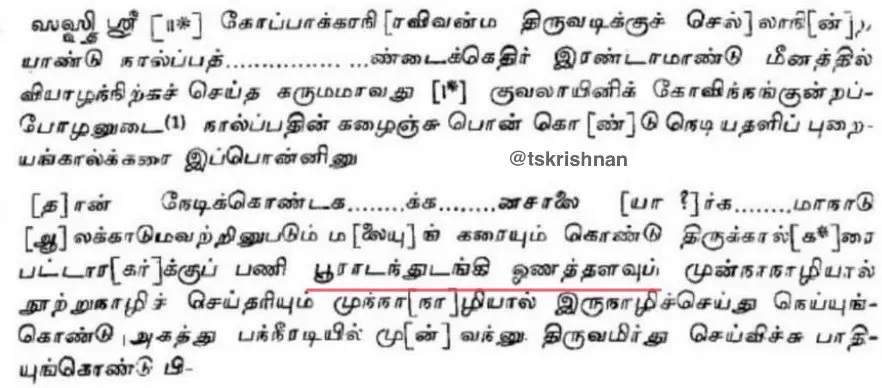
The inscription reads as
ஸ்வஸ்தி ஸ்ரீ கோபாக்கரநி ரவிவன்ம திருவடிக்குச் செல்லா நின்ற யாண்டு நால்ப்பத்…..ண்டைக் கெதிர் இரண்டாமாண்டு மீனத்தில் வியாழந்நிற்கச் செய்த கருமமாவது….திருக்கால்கரை பட்டாராகர்க்குப் பணி பூராடந்துடங்கி ஓணத்தளவும் முன்நாழியால் நூற்றுநாழிச் செய்தரியும்….
… செய்விச்சு பாதியுங் கொண்டு பிராம்மணருஞ் சிரிவைண்ணவரையும் அமிர்து….
The connection is unmistakable: an ancient Vishnu temple associated specifically with Vamana stands at the centre of the region’s Onam observances. This cannot be brushed aside as a modern reinterpretation.
Association with Mahabali
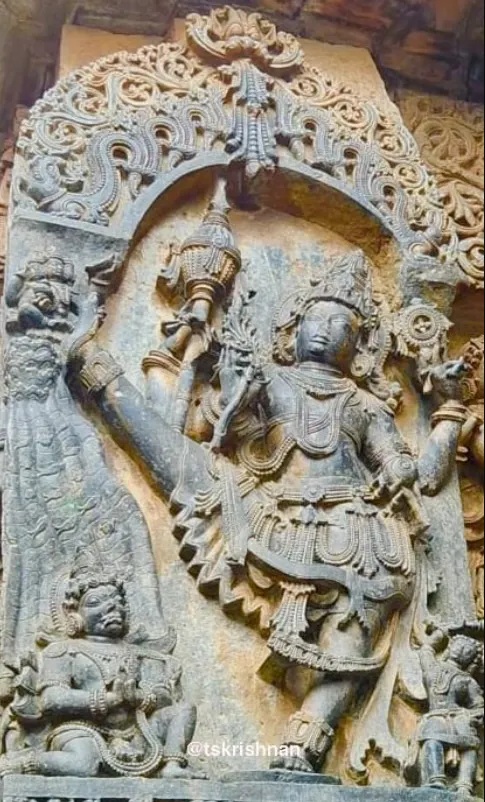
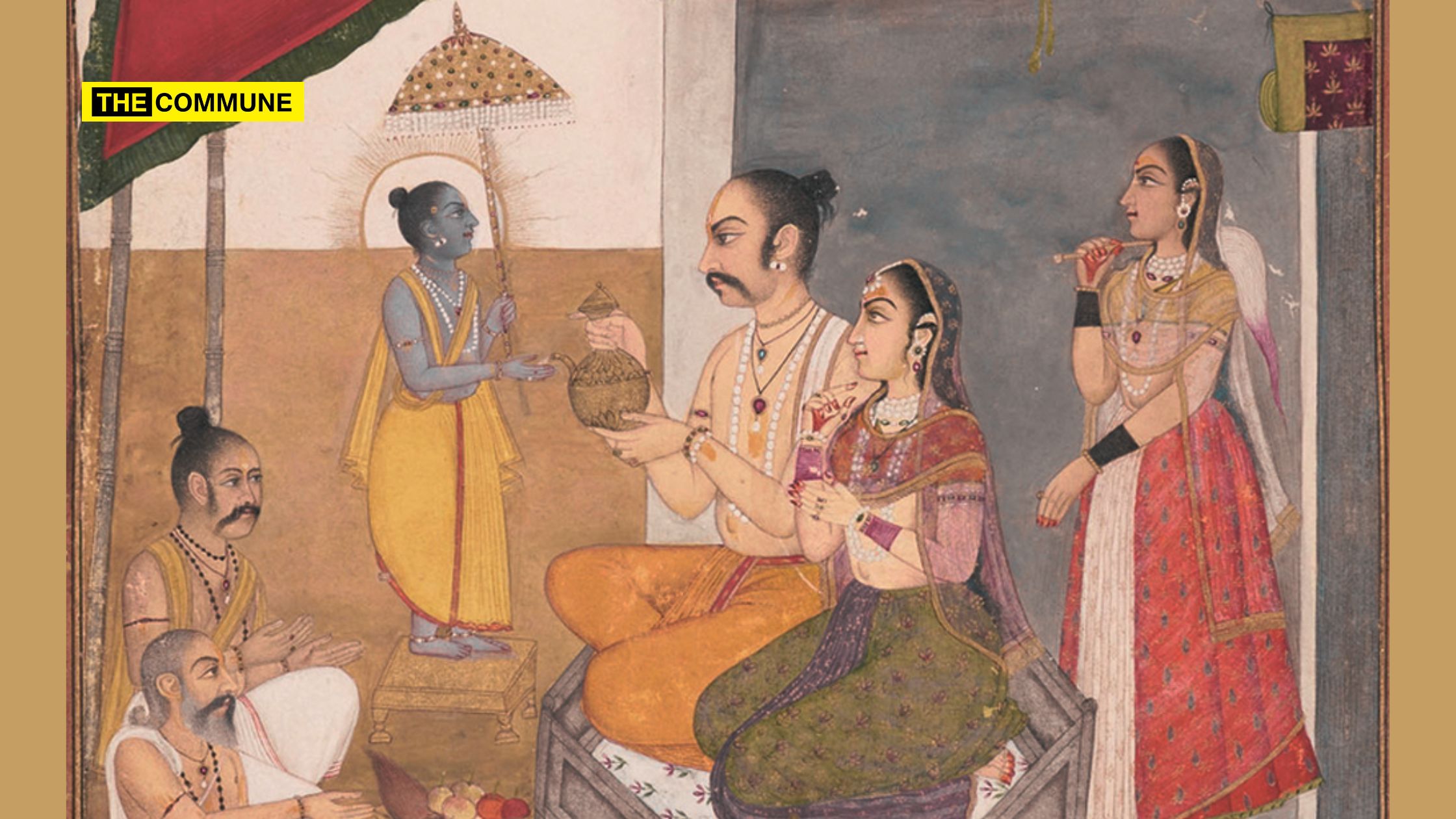
The association with Mahabali does not make Onam somehow “non-Hindu,” as is occasionally suggested in modern polemics. Mahabali’s story itself is part of the Hindu scriptures such as Srimad Bhagavatam. Mahabali, Prahlada, Vamana and Trivikrama belong to the same Puranic universe. The story is not simply that of an evil ruler being destroyed by a deity. Mahabali is remembered as a generous and righteous king who remains steadfast to his word even when Vamana reveals his cosmic form. His surrender becomes an act of devotion, and he receives divine grace. Kerala’s cherished tradition that Mahabali is permitted to return periodically to visit his people is entirely embedded within this Hindu theological framework. Vamana and Mahabali are therefore not rival symbols representing opposing civilisations. Both are part of the same religious memory.
This does not mean that Onam had no agricultural dimension. The Onasadya, floral decorations, festive gatherings and the emphasis on abundance fit naturally within that social world. But the presence of agrarian customs does not cancel the festival’s religious foundations. Indian festivals have rarely existed within the rigid modern categories of “religious” and “secular.” Pongal is connected with harvest and is also deeply religious. Makara Sankranti combines astronomical, agricultural and sacred meanings. Vishu is at once calendrical, cultural and devotional. Deepavali carries different theological associations in different parts of India while also functioning as a broad social festival. Onam should be understood in the same civilisational context.
The real problem, therefore, is not in calling Onam a harvest festival. It is in reducing it to ONLY a harvest festival and denying its deep and well-documented connections with Hindu tradition. Such a claim cannot withstand the historical evidence. Madurai Kanchi associates Onam with Māyon. Periyazhvar speaks of generations participating in the Thiruvonam festival. Ninth-century Chera records document Onam feasts connected with a Vishnu shrine. Later Kerala temple inscriptions preserve further evidence of ritual observances and endowments. Thrikkakara, one of the most important centres of Onam celebration, is an ancient Vamana temple. And the central legend remembered throughout Kerala is the story of Mahabali and the Vamana avatara of Mahavishnu.
There may have been changes in the way Onam was celebrated over the centuries. Regional customs may have developed, local traditions may have been absorbed and agrarian themes may have become increasingly prominent. That is how living civilisations function. Festivals grow, change and acquire new layers without losing their older foundations. Onam today has also become a powerful marker of Malayali cultural identity and is joyfully celebrated by people across communities. But none of this requires us to erase its historical Hindu roots.
Onam can be Kerala’s great cultural festival and a Hindu festival at the same time. There is no contradiction between the two. Over centuries, religion and culture become deeply intertwined. Onam is a perfect example of this process.
Onam is not Hindu because someone chose to label it so today. It is Hindu because its earliest surviving literary memory, its devotional traditions, its temple inscriptions and its sacred geography all tell us so.
This article was first published in this Substack page and has been reproduced here with permission.
TS Krishnan is a Tamil scholar, historian and author.
Subscribe to our channels on WhatsApp, Telegram, Instagram and YouTube to get the best stories of the day delivered to you personally.