Home Blog Page 51

Muslim Mayor Zohran Mamdani Throws Open New York City Hall Govt Building For Islamic Ceremony

On 11 March 2026, New York City Mayor Zohran Mamdani hosted an official Ramadan iftar inside New York City Hall, described by his own team as welcoming Ramadan into “the people’s house”. The event was covered warmly by Western media, celebrated on social platforms, and framed as historic, inclusive, and progressive.


View this post on Instagram


A post shared by Muslim Girl (@muslimgirl)

No outrage. No op-eds about the separation of church and state. No articles about religion being “weaponised” inside a government building.

That standard is reserved exclusively for Narendra Modi.

What Mamdani Did – In a Government Building

Mamdani did not merely observe Ramadan privately. He converted New York City Hall, a government institution, into a venue for an official religious ceremony, hosted on behalf of his faith. His senior aide confirmed he planned multiple iftar dinners with firefighters, delivery workers, and Muslim communities – all using City Hall and his mayoral platform. He publicly stated: “Ramadan is my favourite month of the year,” and fasted while conducting official government duties.

​By any definition applied to Modi, this is a head of government using public office to publicly practice and promote religion.

What They Said About Modi

When PM Modi presided over the Ram Temple consecration in Ayodhya on January 22, 2024, India’s liberal commentariat, the same voices who applaud Mamdani, had their knives out.

Rana Ayyub told TIME Magazine: “His entire career has been based on Ayodhya because he realized early on that the only way to become a favourite of the masses is to endear them through the Ram Temple movement. This is the ultimate moment of Modi as a Hindu nationalist leader, and this is the ultimate moment of creating the Indian Muslim as a second-class citizen.” Rana Ayyub further described the Ram Temple as an act of deliberate communal aggression, “rubbing salt into an already existing wound” and framed Hindu celebration of the consecration as an ‘act of Muslim erasure’.

Arfa Khanum Sherwani of The Wire and Zohran Mamdani’s biggest cheerleader has repeatedly framed Modi’s public religious practice, from the Ram Temple groundbreaking to Ganga puja ceremonies, as “Hindu nationalist consolidation” and electoral mobilisation, rather than a PM practising his faith.

The pattern is consistent: a Hindu PM being a Hindu, practicing Hinduism, consecrating India’s most sacred temple = communalism, nationalism, Muslim oppression. A Muslim mayor hosting a religious ceremony in a government building in New York = historic, beautiful, inclusive. The same three names have not published a syllable of scrutiny about Zohran Mamdani and City Hall.

The Indian National Congress officially framed the Pran Pratishtha as a “political drama” – a characterisation that later prompted Ayodhya seers to demand Rahul Gandhi be barred from entering the Ram Temple.

Hindus for Human Rights called it “weaponizing faith” and an “electoral stunt”. The Conversation wrote that Modi “exploits religious differences” and uses religion for political purposes. The Cato Institute framed Modi’s religious conduct as an assault on minority freedoms. East Asia Forum warned that Modi’s “Hindu agenda” was “damaging” to democracy.

Not one of these voices has published a comparable critique of Mamdani hosting a religious ceremony inside City Hall using his office as mayor.

Be it in India or abroad, they all sang the same tune when it came to PM Modi.​

The Selective Secularism Argument

The critics who attacked Modi were not defending secularism. They were selectively applying it. Secularism, if applied consistently, would require the same scrutiny of a Muslim mayor hosting religious dinners inside City Hall as it does of a Hindu PM consecrating a temple. The praise or silence on Mamdani is not a revealed preference: religion in public office is fine, as long as it is not Hinduism.​

This is not a new pattern. Western academia, activist groups, and media have spent a decade producing a steady pipeline of anti-Modi, anti-Hindu content while treating equivalent or greater expressions of Islamic identity in Western public office as celebrations of diversity.

The Bottom Line

Zohran Mamdani can fast, host iftars, practice his faith and be celebrated for it. That is his right and if he does that as a democratically elected leader and praised for it, the same courtesy must be extended to a Hindu prime minister in a Hindu-majority nation; it doesn’t become authoritarianism, communalism, or a threat to democracy.

Subscribe to our channels on WhatsAppTelegram, Instagram and YouTube to get the best stories of the day delivered to you personally.

A Global Energy Shock But Reuters Made It An ‘India Failure’ Story With Its 3 Brown Sepoys

A Global Energy Shock But Reuters Made It An ‘India Failure’ Story With Its 3 Brown Sepoys

On 11 March 2026, Reuters published a piece titled “Kitchens Across India Ditch Hot Food Due to Cooking Gas Shortage” – bylined by three Indian journalists: Praveen Paramasivam, Chandini Monnappa, and Haripriya Suresh.

The headline tells you everything about the intent. Not “India responds to global LPG crisis.” Not “Iran war disrupts South Asian gas supply.” Just: Indians can’t cook their food. Humiliation, packaged as journalism.

The Crisis They Chose Not to Explain

The LPG disruption affecting India in March 2026 has a clear, documented cause: the ongoing US-Israel-Iran war severely disrupted shipping through the Strait of Hormuz, through which nearly 90% of India’s LPG imports transit. This is a global geopolitical crisis – not an Indian governance failure. Every nation dependent on Middle Eastern LPG faced the same shock. Reuters buried this context and led instead with the image of cold kitchens and helpless households.​

What Reuters Deliberately Ignored

By the time Reuters published their piece on March 11, the Indian government had already been in full crisis response mode for five days:

  • March 6: Emergency powers invoked, all refiners ordered to maximise LPG output​
  • March 9: Anti-hoarding measures activated; re-booking interval increased to 25 days​
  • March 10: IOCL, HPCL, BPCL all running at full capacity, domestic output boosted by 25%​
  • March 10: Reliance Industries confirmed it was maximising LPG production​
  • March 10: Government officially stated India was “in a better position than several other nations”

None of this was Reuters’ angle. None of this made the headline. A wire agency that had any genuine interest in informing its global readers would have written the story of an effective emergency response. Instead, Reuters chose the image of cold food and distressed families.

The Reuters India Playbook

This piece did not exist in isolation. Reuters had been systematically escalating its India-negative LPG coverage all week – on 10 March 2026, they published “Indian Restaurants Warn of Shutdowns”, and separately framed India’s Essential Commodities Act activation using the loaded legal term “force majeure” – a phrase that implies contractual distress and helplessness. It was deliberate. It was a pattern. Reuters got maximum international syndication out of India’s temporary difficulty while aggressively minimising the recovery narrative.

The Three Brown Sepoys

And then there are the bylines – three Indian journalists writing for a British-American wire service headquartered in London. This is the most corrosive element of the piece. Praveen Paramasivam, Chandini Monnappa, and Haripriya Suresh did not stumble into bad journalism. They delivered exactly what Reuters’ editorial machinery rewards: an India-struggling story with Indian names attached, providing the piece a false credibility of insider authenticity.

This is digital continuation of a colonial-era tradition – the native informant who supplies the empire with evidence of the natives’ incapacity. Western media has long understood that negative India narratives land harder when an Indian name is on the byline. It outsources the optics of bias while keeping the editorial agenda intact.

These three journalists had the same facts available to them as every Indian outlet. So many media houses reported the disruption and the government’s swift response. The choice to omit the response, amplify the chaos, and publish it under a globally circulated wire agency was calculated.

The Bottom Line

Reuters manufactured a narrative of Indian helplessness during a crisis triggered entirely by forces outside India’s control and it did so with the three Indians, better off as Brown Sepoys, to sign it. Sharp editors, convenient bylines, and zero accountability. That is the Reuters India formula.

Subscribe to our channels on WhatsAppTelegram, Instagram and YouTube to get the best stories of the day delivered to you personally.
Madurai: Muslims Oppose 300-Yr-Old Temple Renovation Despite Madras High Court Order

Madurai: Muslims Oppose 300-Yr-Old Temple Renovation Despite Madras High Court Order

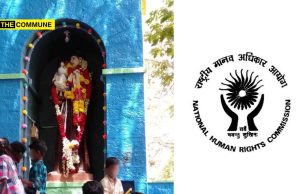
Tension has emerged in Thummanayakkanpatti village in Peraiyur taluk of Madurai district after Muslims from the area opposed renovation work at a 300-year-old Vinayagar and Karuppannasamy temple that is under the control of the Hindu Religious and Charitable Endowments Department.

The Arulmigu Vinayagar Temple and Arulmigu Karuppannasamy Temple are located on about 2 acres and 40 cents of land in the village. According to temple authorities, the temples are around 300 years old and are administered by a hereditary trustee and temple management under the HR&CE Department.

Permission to carry out renovation work at the temple had been obtained from the state and district expert committees, as reported in Dinamalar. The Madras High Court (Madurai Bench) also granted approval for the renovation work.

However, a man identified as Sagul Hameed filed a case last year before the Madurai Bench seeking to prevent the renovation. In January, the court dismissed the objections and permitted the temple renovation to proceed.

Subsequently, another petition was filed before the Madurai Bench seeking continuous police protection during the renovation work. On 18 February 2026, the court directed that police protection be provided.

Following the court orders, the temple’s hereditary trustee Maheswaran and residents of the village submitted a petition to the Madurai Superintendent of Police requesting security until the renovation work is completed and the kumbabhishekam ceremony is conducted.

Villagers said that a mosque had been built near the temple about 100 years ago. According to them, when local residents recently attempted to begin the renovation work based on the court’s order, Muslims from the area entered the temple premises and staged a protest, insisting that the temple should not be renovated and should instead be relocated to another place.

Police officials intervened and persuaded the protesters to disperse. However, due to the opposition, renovation work at the temple has not yet begun.

Local residents also stated that Hindus are a minority in the village and argued that Muslims blocking the renovation despite a court order was unfair and amounted to contempt of court. They urged the Tamil Nadu government to intervene and resolve the issue.

Reacting to the development, Rama Ravikumar, leader of Hindu Tamilar Katchi, said it was shocking that Muslims had entered the temple premises and staged a protest against the renovation of the centuries-old Vinayagar and Karuppannasamy temple.

He alleged that whenever Hindus in the area attempted to take steps for the welfare of the temple, Muslims were obstructing the efforts, claiming that the temple should not be renovated because a mosque existed nearby. He further stated that since Muslims were numerically larger in the locality, it was not fair to hurt the sentiments of Hindus.

Subscribe to our channels on WhatsAppTelegram, Instagram and YouTube to get the best stories of the day delivered to you personally.
‘Aadhav Arjuna Was Sent As A Sleeper Cell To TVK By DMK’, Says Lottery Martin’s Son Jose Charles Martin

'Aadhav Arjuna Was Sent As A Sleeper Cell To TVK', Says Lottery Martin’s Son Jose Charles Martin

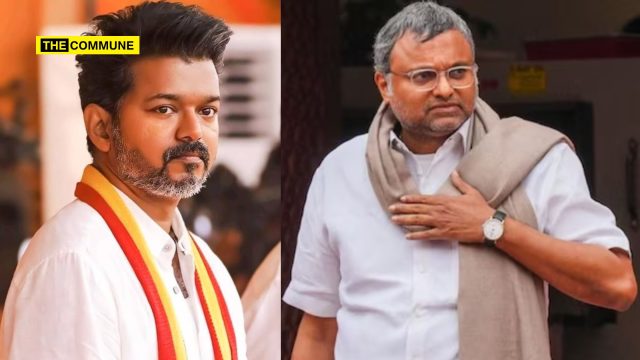
A social media post by Jose Charles Martin, son of Lottery Martin and the brother-in-law of TVK leader Aadhav Arjuna, has triggered discussion in political circles after he levelled a series of allegations against the political strategist in relation to Tamilaga Vettri Kazhagam (TVK).

In a post addressed to Vijay and the party’s official handle on X, Charles claimed that since Aadhav Arjuna joined TVK, he had been warning that Arjuna was acting against the interests of the party.

Charles alleged that Aadhav Arjuna was responsible for creating obstacles that could prevent other political parties from forming alliances with TVK, claiming that such actions were driven by personal ambition and a desire for power.

He further alleged that Arjuna had been sent as a “sleeper cell” by an influential leader in the Dravida Munnetra Kazhagam (DMK) with the intention of weakening Vijay and his party from within. According to the post, Arjuna was attempting to divert the public support that TVK might receive and turn it to the advantage of rival political forces.

Charles also linked Arjuna to what he described as the “Karur tragedy,” in which 41 people reportedly died, alleging that Arjuna had played a behind-the-scenes role in the events. He claimed that a Central Bureau of Investigation probe would expose Arjuna’s involvement.

In the post, Charles further stated that Arjuna had played a significant role in bringing Senthil Balaji into the DMK in the past. He also claimed that Arjuna had a pattern of attempting to position himself as a leader wherever he went.

Charles referred to Arjuna’s earlier association with Viduthalai Chiruthaigal Katchi (VCK) and alleged that party leader Thol. Thirumavalavan had removed him after recognising this tendency.

Describing his remarks as coming from personal experience, Charles alleged that Arjuna had previously attempted to create divisions within his own family and warned that similar tactics could be used to undermine Vijay’s political movement.

He concluded by urging Vijay to remain vigilant and to identify what he described as “betraying forces” within the party, stating that decisive action taken in time would determine the future of the organisation.

Subscribe to our channels on WhatsAppTelegram, Instagram and YouTube to get the best stories of the day delivered to you personally.
Dravidian Model Tamil Nadu: 16-Year-Old Boy Hacked With Sickle Near Ambasamudram; Class 11 Student Under Probe; Opposition Slams DMK

Boxer Hacked To Death In Triplicane, Chennai, Investigation Underway Dravidian Model: Six-Member Gang Goes On Violent Rampage Across Chennai, Six Injured In Night Of Attacks

A 16-year-old boy was seriously injured after he was allegedly attacked with a sickle by a Class 11 student near Ambasamudram in Tirunelveli district.

According to reports, the incident occurred in the Munnarkoyil area near Ambasamudram in Tirunelveli district. The victim, a 16-year-old boy who had dropped out of school, was reportedly working in the flower business.

Police sources said the boy was involved in a verbal altercation with a Class 11 student from the same locality. The argument reportedly escalated, after which the student allegedly went home, returned with a sickle, and attacked the 16-year-old boy multiple times before fleeing the scene.

Local residents rushed to the spot after the attack and rescued the injured boy, who was bleeding heavily. He was first admitted to a nearby government hospital and later referred to the Tirunelveli Government Medical College Hospital for further treatment.

A case has been registered in connection with the incident, and the Ambasamudram Police Station has launched an investigation to trace the accused student and determine the circumstances that led to the attack.

Subscribe to our channels on WhatsAppTelegram, Instagram and YouTube to get the best stories of the day delivered to you personally.
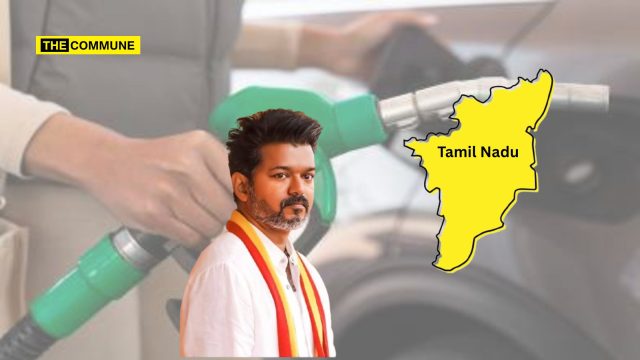
People Start Panic Filling Fuel In Chennai After Congress Simp Sumanth Raman And D Stock Media Peddle Fears Of Shortage

Scenes of chaos and long queues were witnessed at petrol pumps across Chennai as residents rushed to fill their tanks amid viral rumours of an impending fuel shortage. The panic, however, was largely manufactured, driven by irresponsible social media posts by Dravidianists, most notably by Congress simp and all-in-all commentator Sumanth Raman and doom-peddling Dravidian stock media accounts.

On the night of 9 March 2026, Sumanth Raman quote-retweeted a post by journalist Nagarjun Dwarakanath, which flagged LPG supply disruptions at hotels and restaurants in Mumbai, Bengaluru, and Chennai. Instead of adding context or urging calm, Sumanth Raman amplified the fear by writing, “A similar crisis could happen with petrol and diesel in a few days. Guess people simply need to take precautions themselves. Companies can announce WFH and industry can start thinking of all possible ways to save fuel. The Modi Govt has proved particularly inept at handling any crisis in the past and so to expect it to be different this time is to deceive ourselves.”

In a follow-up post the next day, he doubled down, writing, “And we need to start saving NOW” quoting another handle that was pushing rumours about cooking gas shortage, further stoking fear with zero factual basis for a fuel crisis.

Within a short time of these posts circulating, panic buying of petrol and diesel was reported at fuel stations across Chennai. The Hindu’s Chennai bureau documented motorists thronging a Velachery fuel outlet on Wednesday night (March 11), with long queues forming.

Here are a few such posts from Dravidian stockists and the subsequent panic buying reports.

Here are some scenes of panic buying in Tamil Nadu.


View this post on Instagram


A post shared by Chanakyaa (@chanakyaa_tv)

The underlying trigger was a genuine but limited LPG supply disruption affecting commercial establishments, hotels and restaurants in metros, linked to India’s exposure to West Asia oil supply chains amid the ongoing Iran conflict. However, this was a commercial LPG issue, not a petrol or diesel crisis. There has been no official warning or shortage of retail automotive fuel at any point. Instead, the government has been assuring the public that there is enough fuel for the next 3 months.

What began as a legitimate concern over commercial LPG availability in a few cities was weaponised into a full-blown petrol panic by politically motivated social media commentary. The result, long queues at Chennai fuel stations, was entirely self-inflicted, caused by viral misinformation rather than any actual supply crisis.

Subscribe to our channels on WhatsAppTelegram, Instagram and YouTube to get the best stories of the day delivered to you personally.
Dravidian Model Law & Order: Student Abducted, Sedated, And Raped Twice By Gang In Chennai

Govt College Canteen Master Arrested for Sexual Abuse of 22-Year-Old Woman Dravidian model TN

Just as the news of sexual assaults, gang-rapes from the past few days spread, we hear of another crude assault on a student in Chennai.

A deeply disturbing case has come to light in Chennai, where a college student who had travelled from Tiruchirappalli for project work at the Central Leather Research Institute (CLRI) in Adyar was allegedly abducted by a gang, sedated, and sexually assaulted, not once, but twice. A formal complaint has been filed at the Abiramapuram All Women Police Station, sending shockwaves across the state.

The victim had travelled from Tiruchirappalli to Chennai on 14 February 2026 to complete college project work at CLRI, as reported in OneIndia Tamil. She was residing at a private hostel in Adyar during her stay. Within days of her arrival, unknown persons began morphing her photographs and circulating them via WhatsApp.

While she was on her way to CLRI, a gang of four individuals allegedly forced her into a car, applied sedative powder to her face, and transported her to an unknown location. Approximately an hour later, she was dropped off at a different location in a disoriented state.

Following this, the student began noticing changes in her physical health. On the evening of 10 March 2026, she was admitted to a private hospital in Adyar for treatment. It was during this time that the full extent of what had happened to her came to light.

In a particularly harrowing development, when the student was discharged from the hospital and stepped outside, the same gang intercepted her again, abducted her in a car, and allegedly raped her a second time, explicitly threatening to kill her if she reported the incident to police.

Traumatised and in tears, the student confided in her boyfriend, recounting the entire ordeal. Following his support, she gathered the courage to officially lodge a complaint at the Abiramapuram All Women Police Station in Chennai.

Chennai Police have registered the complaint and launched an investigation. As part of standard procedure, officers are currently verifying the factual accuracy of the allegations before proceeding with arrests.

Subscribe to our channels on WhatsAppTelegram, Instagram and YouTube to get the best stories of the day delivered to you personally.
Welcome To Dravidian Model Tamil Nadu: We’ll Oppose A Neutrino Observatory But Will Allow Illegal Quarrying

neutrino observatory tamil nadu dmk illegal quarrying

In February 2022, the Tamil Nadu government filed an affidavit in the Supreme Court. The message was unambiguous: the state would not permit the India-based Neutrino Observatory inside the Bodi Hills of Theni district. CM MK Stalin personally wrote to Prime Minister Modi asking the Centre to drop the project entirely.

The reason given? The Western Ghats were too precious to disturb.

On 17 January 2025, a man named K. Jagabar Ali left the Kattubhava mosque in Thirumayam taluk, Pudukkottai, after Friday afternoon prayers. He was on his motorcycle, heading home. A tipper lorry rammed into him. He died on the spot.

The police filed it as an accident.

It was not an accident.

Police later confirmed it was a premeditated murder, planned and executed by individuals associated with an illegal stone quarry. The same quarry Jagabar Ali had been exposing for months. The same quarry that was operating on permits that had expired on 13 November 2023. The same quarry against which he had filed complaint after complaint with Pudukkottai district administration, provided GPS-stamped evidence, and even obtained a High Court order for investigation, to which the administration responded by asking for “more time.”

In his last media interaction on 13 January 2025 – just four days before his death, Jagabar Ali stood outside the Pudukkottai collector’s office and told reporters that authorities had been protecting the quarry operators. He said he had no choice but to organise a public protest. Four days later, a lorry killed him.

The photographs in the image below, GPS-tagged sites across Meyyapuram, Kathvapallivasal, and Thulaiyanur in Pudukkottai, are the evidence he had collected. Published in the PUCL Bulletin. Documented at personal risk. Paid for with his life.

This is what the DMK government’s relationship with Tamil Nadu’s ecology actually looks like – not in rhetoric, but in practice.

What the INO Actually Was

Let us be precise about what was killed in 2022, because the activists who opposed it were never precise about what it actually was.

The India-based Neutrino Observatory was a ₹1,500 crore underground science laboratory proposed inside the Bodi West Hills in Theni district – a cavern carved inside a mountain, approximately 2 km from the nearest village, with zero surface industrial footprint. Its purpose was to study neutrinos, which are subatomic particles that pass through the entire Earth without reacting with anything. No radiation. No emissions. No chemical discharge. No surface mining. Just physicists, instruments, and darkness inside a mountain.

The project had cleared multiple environmental reviews. It had the backing of TIFR and the Institute of Mathematical Sciences. Nobel laureates Arthur McDonald and Takaaki Kajita, both winners of the Nobel Prize in Physics for neutrino research, personally appealed to Tamil Nadu to allow it. Padma awardees, national science academies, and hundreds of researchers urged CM Stalin to support it.

And then there was Dr APJ Abdul Kalam.

India’s most beloved scientist-president wrote extensively in support of the INO. He gave the project team permission to use his statements publicly. He called INO a dream that would take India forward. He personally asked Tamil Nadu’s people and its government to embrace it and to “defeat the forces of ignorance” opposing it through rational thought.

The DMK said no anyway.

Vaiko, a DMK alliance partner, began a padayatra from Madurai to Cumbum against the project, flagged off by MK Stalin himself. Nobel laureates on one side. A padayatra on the other. The Tamil Nadu government chose the padayatra.

The Fear That Was Manufactured

What exactly did protesters claim the INO would do to the Western Ghats?

The arguments shifted constantly, as they always do when the goal is obstruction rather than engagement. Vibrations from controlled underground blasts would damage the ecosystem. The project was “near” a tiger corridor. The Western Ghats were too fragile for any human activity.

DMK’s own Supreme Court affidavit solemnly declared that the Bodi Hills “forms part of a significant tiger corridor” and that the Western Ghats is “a global biodiversity hotspot.”

Sacred language. Serious-sounding. Completely selective in application.

Because while Tamil Nadu was filing Supreme Court affidavits about biodiversity, the hills of Pudukkottai, the same district whose soil was “protected” from supervised energy extraction at Neduvasal, were being torn apart by illegal quarry operators. And the man who tried to stop them was run over by a lorry.

What the Quarry Mafia Did to Pudukkottai

Jagabar Ali was not a famous activist. He was a 58-year-old AIADMK functionary from Vengalur village in Thirumayam taluk – a man who ran a hollow block manufacturing unit and spent his spare time filing complaints. He had no political backing from the ruling party. He had no media handlers. He had a phone, a GPS camera, and the conviction that someone should document what was happening to his district’s hills.

What was happening was this: stone quarry operators in Thirumayam area were mining on expired licenses, extracting minerals far beyond permitted limits, causing massive revenue losses to the government. When Jagabar Ali provided evidence to the Tahsildar, officials leaked his information back to the quarry operators, who used 40 lorries overnight to dump extracted material back into the quarry to hide the evidence.

He complained to the district administration. He went to the High Court. He got an order. Nothing happened.

In his last press interaction, four days before his death, he said openly: “If we attempted to intervene, they would have nearly a hundred men with weapons, and we can’t do anything. We’re left with no choice but to meet officials, and if that doesn’t work, we have no other option but to gather people and protest.”

On 17 January 2025, the quarry mafia gave him their answer. A lorry. A roadside ditch. A staged accident scene.

Four persons were arrested, including a stone quarry owner. The CB-CID took over the case. The key conspirator, quarry owner S. Ramaiya of RR Sand Crushers, went missing. As of the last reports, he had not been found.

Jagabar Ali had exposed an ₹840 crore illegal mining scam in Pudukkottai. He was killed for it. His family lives in fear. The main accused is still missing.

This is Pudukkottai. The district the DMK protected from ONGC’s supervised engineers.

The Scale of the Statewide Destruction

Pudukkottai is not an exception. It is a window.

Across Tamil Nadu, 1,439 mineral quarries reportedly operated illegally between 2020 and November 2025 under DMK rule, according to the government’s own court admissions cited by PMK president Anbumani Ramadoss. In Tirunelveli, 53 out of 54 stone quarries inspected were found to be operating illegally. Four workers died when one of those quarries collapsed. Penalties of ₹262 crore were levied. Nobody went to jail.

On sand mining: the government permitted 7.51 lakh units. The Enforcement Directorate told the High Court that 27.70 lakh units were mined – nearly four times the sanctioned amount. Minerals are being smuggled across the border into Kerala. The Madras High Court warned of a CBI investigation into illegal mining on the slopes of the Western Ghats as recently as September 2024.

This is the Western Ghats the DMK was protecting from a neutrino observatory.

The Geometry of Selective Outrage

Hold these facts side by side:

Fact One: The INO proposed a sealed underground laboratory inside a mountain in Theni, with no surface mining, no emissions, no ecological footprint. Dr. Kalam supported it. Nobel laureates pleaded for it. The DMK killed it, citing Western Ghats ecology.

Fact Two: In Pudukkottai, the very district whose ecology was “protected” from supervised hydrocarbon extraction at Neduvasal, illegal quarries operated openly. A man who documented them was murdered. The main accused is missing. Officials who received his complaints leaked them to the operators.

Fact Three: Across Tamil Nadu, 1,439 illegal quarries functioned under DMK rule. Hills have been blasted open. Four times the permitted sand was mined. Workers have died. Activists have been killed. Nobody has gone to jail.

There is only one conclusion: the Western Ghats were never the concern. The ecology was never sacred. The tiger corridors were never the reason.

Supervised science was blocked. Unsupervised looting was permitted. And the man who tried to stop the looting was silenced with a tipper lorry.

What India Lost

The INO was India’s entry ticket into one of the most consequential fields of 21st century physics. Countries with neutrino observatories- Japan, the United States, Canada, Italy are at the cutting edge of research that feeds directly into nuclear energy science, medical technology, and national security applications. India had none of this. The INO would have been the foundation.

Dr. Kalam wrote that INO was a dream that would take India forward and asked Tamil Nadu to “defeat the forces of ignorance.”

The forces of ignorance won. And in Pudukkottai, they also killed the man who was fighting them with a camera and a complaint register.

Subscribe to our channels on WhatsAppTelegram, Instagram and YouTube to get the best stories of the day delivered to you personally.
Separatist And DMK Stooge Thirumurugan Gandhi Vandalizes Railway Station Name Boards Having Hindi Names

Separatist And DMK Stooge Thirumurugan Gandhi Vandalizes Railway Station Name Boards Having Hindi Names

Separatist and DMK stooge Thirumurugan Gandhi along with members of his May 17 Movement vandalised Hindi lettering at Chennai Park railway station on Wednesday, 11 March 2026, as part of a protest against what they described as the imposition of Hindi in railway signage.

The ‘protest’ was led by the movement’s coordinator Thirumurugan Gandhi, who entered the station premises along with supporters and removed or defaced Hindi letters displayed on signboards. Police personnel present at the location attempted to stop the group but were reportedly ‘unable’ to prevent the activists from damaging the signage.

During the protest, activists raised slogans such as “Down with Hindi domination” and “Long live Tamil.” Some members of the public present at the location also joined the slogans opposing the alleged imposition of Hindi.

Speaking to the media after the incident, Thirumurugan Gandhi said the protest was part of an ongoing campaign against Hindi signage in railway stations. He stated that the group had earlier organised demonstrations on International Mother Language Day demanding that Hindi be removed from railway signboards in Tamil Nadu.

He alleged that railway authorities had replaced Tamil with Hindi in certain places and claimed that the use of Hindi in recruitment examinations and administration was disadvantaging Tamil-speaking candidates in sectors such as the railways, banking, and public sector institutions.

Gandhi further argued that the ‘dominance of Hindi in government examinations and signage’ would affect employment opportunities for Tamil-speaking youth and said the movement would continue to oppose what it described as “Hindi imposition.”

Subscribe to our channels on WhatsAppTelegram, Instagram and YouTube to get the best stories of the day delivered to you personally.
Vinayagar Temple Demolished In Tirunelveli Amid Police Security

Vinayagar Temple Demolished In Tirunelveli Amid Police Security

A Vinayagar temple located at Siddamalli in Tirunelveli district was demolished on Monday, 10 March 2026, by officials from the revenue department with police security, triggering anger among local devotees.
According to reports, the temple had been visited daily by devotees from the surrounding area, who regularly conducted poojas, abhishekams, and religious festivals at the site.

On 10 March 2026, officials from the revenue department, accompanied by police personnel, arrived at the location and began demolishing the temple structure. The demolition was carried out despite strong objections from local residents and devotees who gathered at the spot and attempted to stop the action.

Police personnel present at the site reportedly removed the protesters and continued the demolition under heavy security arrangements.


View this post on Instagram


A post shared by ShreeTv (@shreetvmedia)

Following news of the demolition, members of Hindu Munnani rushed to the spot and joined devotees in protesting against the action. Devotees led by Manikanda Mahadevan, Tirunelveli district general secretary of the advocate wing of the organization, opposed the demolition.

Subscribe to our channels on WhatsAppTelegram, Instagram and YouTube to get the best stories of the day delivered to you personally.