In the dynamic world of Indian politics, the departure of a key figure can send ripples throughout the landscape. Tamil Nadu has seen many such departures in the past, the most memorable and successful being the departure of Maruthur Gopalan Ramachandran, the man who is still fondly referred to as Puratchi Thalaivar (The leader of the rebellion), Vathiyaar (Our Teacher), or simply as MGR. In 1972, Puratchi Thalaivar MGR walked out of the DMK (some say he was removed) and founded the ADMK. It is history that Karunanidhi’s DMK couldn’t return to power until MGR was alive. There were other walkouts, too.
But there is only one MGR.
SD Somasundaram, one of the first people to leave the DMK with MGR, had his differences with MGR and founded his own party, “Namathu Kazhagam” (Our Party). He folded his party and joined the ADMK of Amma Jayalalitha era because his party lacked mass appeal. It is another story: he left Amma again to form “Puratchi Thalaivar ADMK”, which, as expected, had no impact, and he passed away in political obscurity.
There is Su. Thirunavukkarasar, who was MGR’s favourite youth leader at one point in time. He left ADMK twice, both because of differences with Jayalalitha, and started his own party. The first time, his party Anna Puratchi Thalaivar Thamilga Munnetra Kazhagam, which had won two assembly seats, was merged back with ADMK. The second time, MGR Anna Dravida Munnetra Kazhagam, which again had won two assembly seats, merged with the BJP. He later became the Union Minister of State for Shipping and then Communication and Information Technology. Now he is in Congress, enjoying what looks like his political sunset unless he presses the reset button and moves again.
“Valartha Kada” – The Sheep I Reared
The most famous departure isn’t Annamalai. That distinction arguably belongs to Vaiko or V. Gopalsamy, the current leader of MDMK. He was once seen by many as Karunanidhi’s successor. Dubbed the “Lion of the Parliament” by DMK supporters, Vaiko was said to manage the parliament while Karunanidhi took care of Tamil Nadu. He left the DMK after an ugly fallout with Karunanidhi in 1994. He was seen as a threat to MK Stalin, Karunanidhi’s son and (then) heir apparent. Nine of the thirty-one district secretaries left with Vaiko. Many influential second-rung leaders left, leaving the DMK in shambles. Many commentators credit four things with rescuing the DMK from this situation: corruption in Jayalalitha’s government, Cho. Ramaswamy, GK Moopanar and Superstar Rajinikanth. But for these four, many still believe that Vaiko might have dented the DMK. Had that break-up happened now, in the social media era, it would probably have beaten this Annamalai wave hands down because it was the DMK’s roots that were shaken by Vaiko’s exodus. (Many ballads were written and sung by the court poets and singers of the DMK about Vaiko’s exit. The most famous was, “The Sheep I reared is now aggressively ramming my heart.”)
No Doubt, This Is A Seismic Event
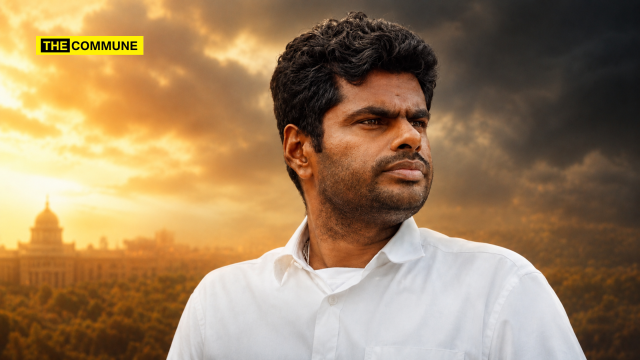
Annamalai’s departure is a seismic event that exposed the intricate dynamics and ambitions simmering beneath the surface of the state’s political landscape. The narrative is one of ambition, ideological tussles, and the perennial quest for influence. In the grand theatre of Indian politics, hero worship is often seen as an essential ingredient for a party’s success. From Jawaharlal Nehru to India Gandhi to Sanjay Gandhi to Rajiv Gandhi to Narendra Modi Ji, at the national level or Annadurai to Karunanidhi to MGR to Jayalalitha to Joseph Vijay, at the state level, this phenomenon, deeply entrenched in the fabric of the nation’s political history, is a double-edged sword that has propelled some to great heights while hindering others.
The ones who succeeded not only had grassroots connections, but also the organisational structure that came with them. A very good example to illustrate this point is Su Thirunavukarasar. While he could succeed in his pocket borough, his party failed at the state level. The result was that he had to fold his party and join a larger organisation that could fuel his personal ambition.
The Annamalai Game
One of the most insightful observations on political communication came from the late Pramod Mahajan in one of his speeches. He was a great orator. In a workshop he conducted for BJP workers, called Bhashan Kala (The art of speaking), he talks about how he completed an MA in Political Science while incarcerated during the Emergency. He mentions a paper titled “Power Politics” from that course. Saying that, while he doesn’t remember all of what was in those big books prescribed for this paper, he does vividly remember 3-4 sentences in the opening paragraphs of one of those books. Here are those three lines:
- Politics is always power politics.
- What is power?
- Power to rule over the minds of others.
The purest form of politics is to rule over the minds of the people. Let us ask ourselves: has Annamalai begun to rule people’s minds? Maybe he has started to. Many readers may take umbrage at the use of the word “maybe” instead of the emphatic “yes” they might have expected. The other part might say, “No way,” and wave off Annamalai’s popularity as social media humbug.
Let us call a spade a spade. Rightly or wrongly, the BJP projected him as their face in an unprecedented way. We all saw how it paid dividends during the “En Man, En Makkal” Yatra (My land, My people). We saw that he started to connect with people, rich, poor, urban, rural, this caste and that. But then, did that enthusiasm and support translate into votes for the BJP in elections? Ok, forget BJP, did it translate into votes for him? Not really. It is a fact that he contested in two elections, one for the assembly and another for the parliament and lost both. There are murmurs that he strategically avoided contesting the recent assembly elections that were swept away by the Joseph Vijay wave.
Riding The Neo-Dravidian Wave
While many learned commentators are talking about the space in Tamil Nadu politics and how it can accommodate one more party, the fall of the Dravidian parties, etc., they are forgetting one thing. Joseph Vijay’s TVK is a neo-Dravidian party. And therefore, the Dravidian politics isn’t dead yet.
There are indications that Annamalai may be attempting to ride the neo-Dravidian wave that Joseph Vijay has mounted as its first mover. His questioning NEET and the three-language policy, and his not-so-subtle statement linking an unfortunate crime to migrant workers from North India, etc., are the beginning.
He has clearly shifted gears at the 39th convention of the Federation of Tamil Sangams of North America (FeTNA) in New Jersey, USA, a couple of days back. The secularism bugle he blew there has outed a sweet Tamil nationalism tune.
“We see Tamils everywhere, from a hawker in the street to the Vice President of our country. Let us not box the Tamil race in a small circle called religion. There shouldn’t be any Hindu, Muslim or Christian. We should all unite in the larger circle of the Tamil race.”, he said.
Ironically, he quotes song 182 from Purananuru, a Sangam Tamil literary work, to make his point. A Pandian king, Kadalul Maindha Ilamperuvazhuthi, wrote this poetry.
Here is what this poetry says: The world functions thanks to people who care for every fellow living being. These are their qualities
- Even if they get their hands on the divine nectar, they wouldn’t have it alone (they will want to share it with everyone)
- Destructive qualities such as laziness and anger don’t touch them
- They are people who wouldn’t hesitate to die for a good cause. But wouldn’t go anywhere near something bad even if the whole world is offered as compensation
This song from the Purananuru speaks to the world’s well-being. It talks about the Bharatiya tradition of “Loka Samasta Sukino Bhavantu” and “Paropakarartham Idam Sareeram” (“May all the people in the world live happily ever”, and “my being is to do good for others.”). This Purananuru song isn’t about regionalism and linguistic chauvinism.
Many Annamalai supporters have, in a very soft voice, started saying that it was wrong of them to do the “rice bag or mullah” characterisation of a group of people while they were in the BJP. There is a very strong population among Annamalai supporters who have started to openly abuse the Brahmin community in the way the Dravidian forces are used to. The same Brahmin community whom Annamalai, not long ago, in the national media, called the Jews of modern India. The great political commentator and journalist Cho. Ramaswamy once said that the crowd that turns up to listen to a political speech doesn’t necessarily translate into votes. Maybe Annamalai should be wary. This is probably what happened when Annamalai lost in Aravakuruchi and Coimbatore. At least then, he had a national party to bank on. Now, he is on his own. One misstep or loss will make him the next SDS or Su. Thirunaukkarasar. He might have to take refuge with an established party. It remains to be seen whether he has the patience and perseverance of Seeman. Neither are his supporters made of the same material as the core Naam Tamilar supporters.
Where Does BJP Stand In Tamil Nadu?
History suggests that writing off the Tamil Nadu BJP at this stage would be premature. Many forget that the BJP is what it is because of what it stands for. Who would have thought Article 370 would be repealed or a beautiful Rama Temple in Ayodhya would come up in their lifetimes? It is with this belief that the people of Padmanabhapuram assembly constituency voted for an independent supported by Hindu Munnani, Sri. V. Balachandran, as their MLA in 1984. It is the same constituency that gave Tamil Nadu its first BJP MLA, Sri. C. Velayudham in 1996. It was another story that Sri. V. Balachandran thought he had outgrown Hindu Munnani and left it with a bunch of good leaders, almost like how Annamalai did now. He started his own party, Hindu Desam. In the 1989 assembly elections, Sri. Sivathanu from Hindu Desam got 2,400 votes in the Nagarcoil assembly constituency. In the same elections, in the same constituency, the BJP candidate, Sri. M. R. Gandhi got 1,900 votes. It is another story that Balachandran later returned to Hindu Munnani, and M. R. Gandhi won a term as a BJP MLA from Nagarcoil in the previous assembly elections (2021-2026).
The BJP didn’t do anything to sustain or replicate the momentum of contesting alone and winning Padmanabhapuram across Tamil Nadu in the last 36 years. They have been opportunistically seeking to win two or three seats by riding on the back of one of the Dravidian parties. Probably, they learned this easy way to sustain and make a living from the Tamil Nadu Congress, which has thrived by exploiting this model since 1967.
Now is the chance for the BJP in Tamil Nadu to get its act together and focus on strengthening its party and finding winning ways, rather than eking out a living by mocking and ridiculing Annamalai and his new organisation. The central party office should step in to shut a few loose cannons up and ask them to mind their business of growing the party in Tamil Nadu.
In the dynamic world of Indian politics, the departure of a key figure can send ripples through the landscape, but nothing is irreparable. It just needs some intent and a lot of hard work. The sooner the BJP realises this, the better for them and the future of Tamil Nadu.
உடைத்தம் வலியறியார் ஊக்கத்தின் ஊக்கி
இடைக்கண் முரிந்தார் பலர்.
Udaiththam Valiyariyaar Ukkaththin Ukki
Idaikkan Murindhar Palar
(Thirukkural, Judging of Strength, 473)
“Many there have been who, in the sanguineness of their heart, overestimated their strength and adventured, but were cut off in the middle” – The Kural or The Maxims of Thiruvalluvar by VVS Aiyar.
Whether Annamalai avoids the political trajectory of leaders such as SDS, R. M. Veerappan, Su. Thirunavukkarasar or Vaiko remains to be seen. History and his own electoral track record aren’t too inspiring as of now. We will have to wait and watch if the wind blows in his direction and at what velocity. Let us all wish him the very best.
Raja Bharadwaj is a marketing communications professional who is currently working with a leading technology multi-national company. He is an avid reader, a history buff, cricket player, writer, Sanskrit & Dharma Sastra student.
Subscribe to our channels on Telegram, WhatsApp, and Instagram and get the best stories of the day delivered to you personally.
Subscribe to our channels on WhatsApp, Telegram, Instagram and YouTube to get the best stories of the day delivered to you personally.