Home Blog Page 50

‘Why Have You Come Only Now?’, After 17-Year-Old’s Rape & Murder, DMK MP Kanimozhi Faces The Heat From Villagers In Thoothukudi

Not a day passes by in DMK-ruled Dravidian Model Tamil Nadu without the news of a girl or woman being raped/murdered. We just heard of the brutal rape and murder of a Class 12 girl in Thoothukudi which happens to be DMK MP Kanimozhi’s constituency.

Just days ago, a 17-year-old Class 12 student was allegedly sexually assaulted and murdered near Vilathikulam in Thoothukudi district, triggering outrage across Tamil Nadu. The girl, who had been reported missing earlier in the week, was found dismembered on Wednesday (11 March 2026), with her remains recovered by police and sent for post-mortem examination.

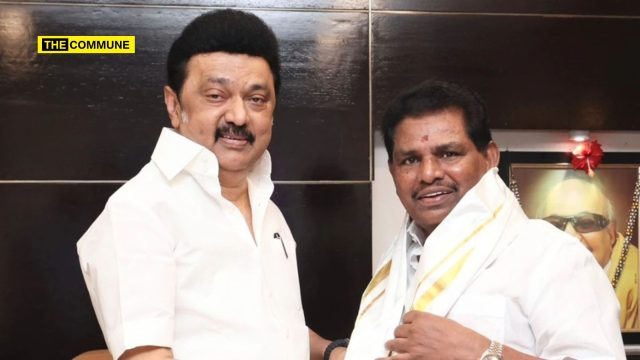
Tension ran high in the Vedanatham village after a group of women and youth blocked and surrounded DMK MP Kanimozhi, who had arrived to offer condolences to the family of a 17-year-old schoolgirl who was allegedly raped and murdered.

The incident has sparked widespread outrage, with villagers accusing the police of negligence. Locals claim that the police failed to act on a complaint filed by the girl’s parents when she first went missing. In protest against the police handling of the case, residents had been staging a road blockade on the Thoothukudi-Madurai National Highway for over 12 hours a day for the past two days.

As reported in Tamil Samayam, against this backdrop of unrest, DMK MP Kanimozhi and DMK Minister Geetha Jeevan visited the village on 13 March 2026 to meet the victim’s family.

However, as they were leaving, the local residents confronted them. A large crowd, including many women and young people, blocked their path and engaged in a heated argument, questioning the purpose of their visit.

Specifically, voices questioning “Where were you all yesterday? Why have you come only now?” grew louder. They also questioned, “Why haven’t those responsible been arrested yet?, expressing their anger that no arrests had been made in the case.

With the situation turning confrontational, a police team led by District SP Madan intervened. They managed to disperse the agitated crowd and safely rescue MP Kanimozhi and Minister Geetha Jeevan, escorting them out of the area.


View this post on Instagram


A post shared by Dr.SG Suryah (@suryahsg)

Subscribe to our channels on WhatsAppTelegram, Instagram and YouTube to get the best stories of the day delivered to you personally.
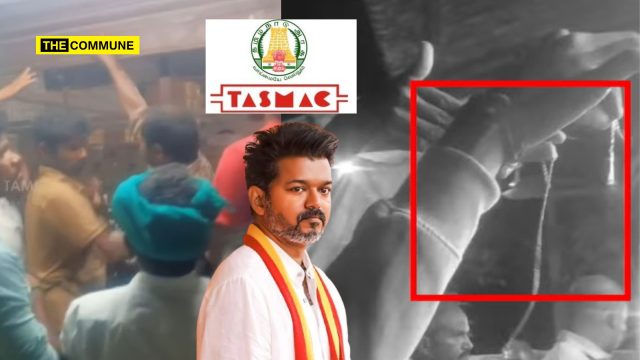
“Brazen Lies, Dishonest And Delusional As Always”: Sandy Nara Calls Out Arivu Over Enjoy Enjaami Song Credits

Santhosh Narayanan Calls Out Arivu As “Enjoy Enjaami” Song Credit Dispute Flares Up Again

A fresh public dispute has erupted between rapper Arivu and music composer Santhosh Narayanan over the authorship, ownership and credit for the viral 2021 Tamil song “Enjoy Enjaami.” The exchange unfolded on social media after a user accused singer Dhee and her stepfather Santhosh Narayanan of “stealing” the song from Arivu, reigniting a controversy that first surfaced in 2022.

The issue started when a handle shared a clipping of the popular song. This led to someone accusing the singer Dhee and Santhosh of ‘stealing’ the song from Arivu.

This led to Santhosh responding to the allegations explaining who gets the credit, “Konjam rest edunga thambi. Some useful info already available everywhere if you only look for it . This song idea was conceived by Dhee and also has some of her tunes in it . The core storyline and concept of the song was done by director Manikandan who was working on Kadaisi Vivasayi with me at the time. I composed , produced and created all the melodies in the song . Arivu wrote almost all the words and also performed . Some traditional Oppari lines were also adapted by Arivu.. I only suggested the word Enjaami like I always suggest for most of my songs like Rakitaa , Kanimaa etc. Thankfully we live in a digital domain and every claim can and should be proven.”

Replying to a comment asking Naraynanan to ask Arivu to belt out another hit, he said, “I think it is unfair to expect someone to prove their worth as proof for something else completely. Having said that it is very sad that the guy jumped on a stupid political
bandwagon after the song started to get extremely popular , which we did never expected in the first place. Slowly the narratives started shifting in interviews . I have many before / after interview clips which can be part of a nice standup comedy routine “

In this situation, Arivu, the rapper who was at the centre of the controversy wrote a long thread saying, “For clarity regarding “Enjoy Enjaami” (released 5 years ago):

The beat was sent to me. I wrote the lyrics, composed the main vocal melody and performed the song based on my own cultural history and lived experience. Music is collaborative. But credit and compensation must also be fair. The song was shot in my village, with stories from my land and my people. I shared that history believing it would reach the masses. But I was placed only as a “featuring artist” — despite writing the full song and composing the main melody. Back then I did not understand what that meant. Five years later, the collaborators hold the rights and receive royalties, while I received no payment and no ownership for my work. This is not about sympathy.
It is about credit, rights and dignity of labour. Independent artists: protect your work.
Have agreements. Know your rights.

– Arivu
Valliamma Perandi.”

Santhosh Narayanan, the producer of the song, responded reminding Arivu that he had blocked him a while ago, “You can have your own opinions man. Pretty much every single one of your technical/ownership/legal claims are dishonest and delusional as always. Are you open to debate this in any medium/channel of your choice with all the proofs of your claims ?? As your esteemed self has blocked me everywhere else, you can reply here and I shall be available anytime .”

Arivu replied to this saying, “My statement on credit, ownership and compensation is already public. I tried multiple times to resolve this privately — even visiting your home. Those efforts went nowhere. This isn’t a social media debate. Facts speak for themselves. Appropriate channels exist.”

Santhosh further replied to this comment saying, Yes this should never been a social media talking point until you made it one with brazen lies. Again a beautiful fabrication of deceit when you say you tried to resolve this. You never responded once during all those trying times when I had to stay silent. Also you came home once last year to invite me for your marriage (I was abroad and my staff told me later). This was after you had blocked me and made a song about it. Anba dhan pesuven I promise let’s debate this man .”

The renewed clash between Arivu and Santhosh Narayanan has once again brought the long-running “Enjoy Enjaami” credit dispute back into public view. While Arivu maintains that he wrote the lyrics, composed the main vocal melody and was unfairly credited only as a featuring artist without ownership or royalties, Narayanan strongly disputes those claims, insisting the song was conceived as a collaborative effort involving Dhee, director Manikandan and himself, with Arivu contributing the lyrics and performance.

With both sides standing firmly by their versions and challenging each other’s claims, the disagreement has moved beyond a simple creative dispute into questions of credit, ownership and compensation in collaborative music projects.

Subscribe to our channels on WhatsAppTelegram, Instagram and YouTube to get the best stories of the day delivered to you personally.
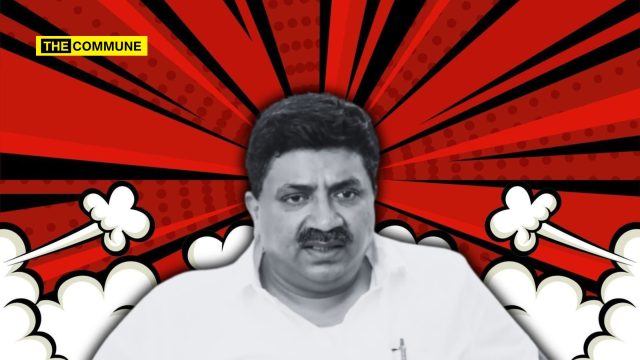
Congress’ Assam Plan? Pawan Khera Says Deport “Hindu Infiltrators” Too

Congress’ Assam Plan? Khera Says Deport “Hindu Infiltrators” Too

Congress spokesperson and AICC media chairman Pawan Khera, while appearing on a discussion by Aaj Tak – Panchayat Assam, ahead of the state’s assembly elections, said that illegal residents must be removed regardless of religion, stating: “Any infiltrator, whether Hindu or Muslim, if living illegally, that is wrong, whether Hindu or Muslim.”

He added that a Congress government in Assam would take all decisions “on the basis of the 1985 Accord”.

The 1985 Accord Vs. The 2019 Law

When pressed by the anchor on whether Congress would remove infiltrators if it came to power, Khera replied: “We take all decisions on the basis of the 1985 Accord”.

The Assam Accord sets a cut-off of 24 March 1971 – any illegal immigrant arriving after that date is subject to detection. Khera’s insistence on governing by the 1971 cut-off, while making no acknowledgement of CAA, means a Congress government in Assam would apply the same deportation standard to Hindu refugees that Parliament has already granted statutory protection. The CAA’s cut-off, moreover, was extended to 31 December 2024 by the MHA in September 2025 specifically to protect Hindus who fled the anti-minority violence that followed Sheikh Hasina’s fall in Bangladesh.

In October 2024, the Supreme Court (4:1 majority) upheld Section 6A of the Citizenship Act, the legal embodiment of the Assam Accord, reinforcing the 1971 cut-off as Assam’s special citizenship framework.

Assam Accord vs CAA

When asked about deporting infiltrators, Pawan Khera said a Congress government in Assam would take decisions “on the basis of the 1985 Assam Accord,” which sets 24 March 1971 as the cut-off for detecting illegal migrants.

However, Parliament later created a statutory exception through the Citizenship Amendment Act (CAA) for persecuted minorities from Bangladesh, Pakistan and Afghanistan. In September 2025, the Union Home Ministry extended the eligibility window to migrants who entered India up to 31 December 2024.

Khera’s reliance solely on the 1971 Accord framework, without acknowledging the CAA, raises a basic question: would a Congress government treat Hindu refugees fleeing persecution the same as illegal economic migrants, despite Parliament having created a legal distinction between the two?

What the Law Distinguishes, Khera Does Not

Khera’s framing collapses a crucial legal distinction: a Bangladeshi Hindu fleeing religious persecution is not considered an infiltrator and is protected under the Citizenship Amendment Act (CAA) with eligibility for Indian citizenship, whereas a Bangladeshi Muslim entering India as an illegal economic migrant is classified as an infiltrator and is subject to detection and deportation.

By treating both identically, Khera is either arguing that Parliament’s CAA should not apply in Assam, or that the religious persecution of Hindus in Bangladesh does not warrant a different legal treatment from economic illegal migration. Neither is a position the law supports.

The Appeasement Calculus

When Khera insists on the 1985 Accord as the sole governing framework, he is, knowingly or not, arguing that Bangladeshi Hindu refugees should receive no more protection than Muslim illegal migrants. He is arguing that Parliament’s CAA, passed with a constitutional majority, should not apply. He is arguing that the religious persecution that drove Hindus out of Bangladesh is legally irrelevant.

And he is doing all of this while carefully never saying the words “Muslim infiltrator” because that would cost Congress votes. Instead, he symmetrises: “Hindu or Muslim, same standard.” It sounds fair. It is actually a political manoeuvre that uses the language of equality to deny protection to a persecuted minority – one that Indian law has already recognised.

Subscribe to our channels on WhatsAppTelegram, Instagram and YouTube to get the best stories of the day delivered to you personally.
Goondas Act Invoked Against Two In Madurai For Hoarding 398 LPG Cylinders

Goondas Act Invoked Against Two In Madurai For Hoarding LPG Cylinders
Image Source: Tamil Janam

Madurai authorities have invoked preventive detention laws against two men accused of hoarding and illegally selling large quantities of LPG cylinders, marking the first instance in Tamil Nadu where such action has been taken in connection with gas cylinder hoarding.

As reported in The New Indian Express, officials from the Civil Supplies Criminal Investigation Department (CSCID) conducted a raid on Wednesday at a vacant site near Kovilpappakudi Athalai in Madurai. During the operation, they seized 209 LPG cylinders, including 100 subsidised domestic cylinders and 109 commercial cylinders.

Palani, 46, the son of Mayan, was arrested at the spot during the raid.

Following the initial seizure, CSCID officials carried out a further search near the residence of V Madhankumar, 27, in Anandam Nagar. This operation led to the confiscation of another 189 cylinders, consisting of 63 subsidised domestic cylinders and 126 commercial cylinders.

In total, officials seized 398 LPG cylinders from the two locations.

Separate cases were registered against the accused under the Essential Commodities Act, after which both individuals were arrested.

Based on recommendations from CSCID officials and a proposal submitted by Superintendent of Police Srinivasa Perumal, Madurai District Collector KJ Praveenkumar ordered their preventive detention under the Prevention of Blackmarketing and Maintenance of Supplies of Essential Commodities Act.

Officials reported that Palani and Madhankumar were lodged in Madurai Central Prison on Thursday following the detention order.

Authorities stated that this marks the first time in Tamil Nadu that preventive detention provisions commonly referred to as the Goondas Act framework have been applied in a case involving the hoarding of LPG cylinders.

Subscribe to our channels on WhatsAppTelegram, Instagram and YouTube to get the best stories of the day delivered to you personally.
The Freebie Trap: How Welfare Politics Is Eating India’s Future

The Freebie Trap: How Welfare Politics Is Crowding Out India’s Future

India is borrowing money to give it away and the bill is coming due in sectors that actually build nations: research, infrastructure, health, and education.

The Freebie Explosion Is Documented

This is not an opposition talking point. India’s own Economic Survey 2025-26, tabled by Finance Minister Nirmala Sitharaman, is the source. State-level unconditional cash transfers (UCTs): free cash with no conditions, no outcomes, no accountability, ballooned more than fivefold between FY23 and FY26, reaching ₹1.7 lakh crore this year alone. At least half the states running these schemes are already in revenue deficit – meaning they are borrowing money to give it away

What Is Being Sacrificed: The Numbers

India spends more on food subsidy alone (₹2,28,154 Cr) than on all of education (₹1,28,650 Cr) at the central level as of 2025. India’s R&D investment at 0.64% of GDP is less than one-fifth of South Korea’s, less than one-third of China’s.

  • US: 3.48%
  • China: 2.43%
  • S.Korea: 4.91%

These are not abstract statistics – they represent the gap between a nation building its future and one consuming it.

The Fiscal Trap States Are Falling Into

The Economic Survey explicitly warns: “Unless deficits widen further, additional spending will crowd out resources for critical social and physical infrastructure”. The numbers back this up:

  • States’ combined fiscal deficit has risen from 2.6% of GDP in FY22 to 3.2% in FY25
  • 62% of state revenues are already locked into salaries, pensions, interest payments, and subsidies leaving barely a third for anything developmental
  • 16 states have budgeted a gross fiscal deficit exceeding 3% of GSDP for 2025-26; 13 states exceed 3.5%
  • States’ outstanding debt stands at 28.1% of GDP and a significant share of that debt is financing consumption, not assets​

Thus, excessive spending on freebies reduces the funds available for essential infrastructure by shifting resources away from long-term capital investment.​

What Productive Spending Looks Like – And Why India Isn’t Doing It

Brazil’s Bolsa Família, the model the Economic Survey itself recommends India study, gives conditional cash transfers: you receive support only if your children attend school and complete health check-ups. The outcome: human capital is built simultaneously with welfare delivery. India’s UCTs attach no such conditions. Cash goes out, nothing comes back.​

The result is what the Survey describes as welfare that “substitutes rather than complements” investment in skilling, nutrition, and infrastructure. You get a vote. The state gets a deficit. The child gets neither a good school nor a good road.

The R&D Gap Is a National Security Issue

India’s ₹33,337 Cr R&D budget, already embarrassingly small, is now being further squeezed. The Economic Survey flags that India’s 0.64% of GDP R&D spend sits far below the global average, with the private sector contributing only 41% compared to 75-79% in the US, China, and South Korea. Meanwhile, the government has announced a new ₹1 lakh crore RDI Fund over six years, but this ambition sits in direct tension with the fiscal space being consumed by unconditional transfers every single year.​

You cannot build semiconductor fabs, quantum computing capacity, and green hydrogen infrastructure on the fiscal scraps left after the freebie bill is paid.

The Bottom Line

The Economic Survey 2025-26, the Indian government’s own economic document, puts it plainly: “The expansion of unconditional cash transfers across several states has contributed to rising revenue expenditure, with implications for fiscal space and public investment at the state level.”

India is not too poor to invest in education, R&D, healthcare, and infrastructure. It is choosing not to – one election cycle at a time. Freebies win votes in the short term. They cost nations in the long term. The data is in. The question is whether any politician is willing to say it out loud.

Subscribe to our channels on WhatsAppTelegram, Instagram and YouTube to get the best stories of the day delivered to you personally.
How Reuters Portrayed The Same Festival In India & Pakistan Differently To Suit Its Narratives

Amid the LPG shortage news that was ballooning across Indian media, western media outlet Reuters ably aided by its brown sepoys turned it into an ‘India failure’ story.

The story, bylined by three Indian journalists: Praveen Paramasivam, Chandini Monnappa, and Haripriya Suresh, quickly circulated across international media platforms.

The headline alone framed the narrative: India as a country where households could not cook food.

What the headline omitted was the most important fact. The LPG disruption affecting India in March 2026 was triggered by geopolitical turmoil in West Asia, particularly the disruption of shipping routes through the Strait of Hormuz during the ongoing Iran–Israel conflict. Nearly 90% of India’s LPG imports pass through that corridor, meaning any disruption would inevitably affect supply chains.

In other words, the situation was the consequence of a global conflict, not an Indian governance collapse. Yet the Reuters framing led readers elsewhere.

How Reuters Covered The Same Festival In 2 Different Countries

Now compare that approach with how Reuters covered a similar cultural event in India and Pakistan.

When Pakistan celebrated the lifting of an 18-year ban on the Basant festival kite festival in Lahore, Reuters’ tone was celebratory.

The report described “extravagantly coloured kites duelling above Lahore,” rooftops filled with families, drums beating through the night, and the jubilant cries of “bo-kata!” as kite strings were cut in mid-air. The narrative emphasised the economic boost, hotel bookings, food sales, and festive crowds celebrating the return of a cultural tradition.

Even when safety measures were mentioned, including past injuries from kite strings, they appeared as secondary details within an otherwise vibrant portrait of celebration.

Now look at Reuters’ reporting on the Makar Sankranti kite festival in Ahmedabad.

The headline did not describe colour, celebration, or cultural tradition.

Instead, it read: “Birds injured by kites during the Makar Sankranti festival.”

The focus shifted instantly from celebration to harm. Instead of rooftop festivities or economic activity, the central image presented to global readers was wildlife injury.

Two festivals. The same activity – kite flying.

Yet the narrative framing could not have been more different.

In Pakistan: colour, music, rooftops, tradition, and economic vibrancy.

In India: damage, injury, and environmental harm.

How Western Media Use Brown Sepoys To Peddle Specific Narratives Against India

Over the years, we have been consistently observing how Western media has portrayed the Indian state – first it was through poverty porn and such. Then disaster porn, then when COVID hit, it became funeral porn.

The LPG story portraying Indians unable to cook carried three Indian reporters lending it insider credibility. The same pattern appears in cultural coverage. Pakistan’s Basant festival in Lahore gets colour, celebration and economic vibrancy. India’s Makar Sankranti in Ahmedabad becomes a headline about “birds injured by kites.” Same festival activity, opposite framing – are there no birds that got injured in Pakistan during the same festival? DDo kite strings suddenly become dangerous only when Indians fly them? This is a narrative template – Western editorial agendas packaged with Indian names to legitimise them.

Subscribe to our channels on WhatsAppTelegram, Instagram and YouTube to get the best stories of the day delivered to you personally.
How Congress Simp Sumanth Raman Is Fueling Fears About Fuel Shortage Leading To Panic Stocking

As tensions continue to escalate in West Asia, India has witnessed a wave of rumours on social media warning of imminent shortages of LPG, petrol, and diesel. While the government and petroleum authorities have repeatedly clarified that there is no shortage of fuel, some social media commentators have continued to amplify panic narratives. Among the most prominent of them is all-in-all commentator Sumanth Raman.

Sumanth Raman, a Congress simp and an arm-chair commentator who weighs in on virtually every issue under the sun, has repeatedly posted messages that have been fuelling public panic rather than calming it.

The specific behaviour began on 9 March 2026, when reports circulated that hotels and restaurants in cities such as Mumbai, Bengaluru and Chennai were facing temporary disruptions in commercial LPG supplies due to logistical pressures linked to the ongoing Iran-Israel tensions affecting shipping routes in West Asia.

Some industry associations warned that if the supply disruptions persisted, hospitality businesses could face operational challenges. Chennai’s hotel industry, representing more than 10,000 establishments, even wrote to Prime Minister Narendra Modi flagging possible cascading impacts on hospitals, college hostels and railway catering services.

Instead of urging restraint or waiting for official confirmation, Raman took to X (Twitter) to speculate about a broader fuel crisis. In a post responding to journalist Nagarjun Dwarakanath’s report about LPG disruptions, Raman wrote, “A similar crisis could happen with petrol and diesel in a few days. Guess people simply need to take precautions themselves. Companies can announce WFH and industry can start of thinking of all possible ways to save fuel. The Modi Govt has proved particularly inept at handling any crisis in the past and so to expect it to be different this time is to deceive ourselves.”

In a follow-up post the next day, he doubled down, writing“And we need to start saving NOW” quoting another handle that was pushing rumours about cooking gas shortage, further stoking fear with zero factual basis for a fuel crisis.

These posts appeared despite the fact that the central government had already issued clarifications on the evening of 9 March stating that there was no shortage of fuel in the country and no immediate plan to increase petrol or diesel prices.

Government sources informed ANI that India had adequate petrol, diesel and aviation fuel stocks. Officials also explained that the country had diversified crude sourcing routes beyond the Strait of Hormuz to reduce vulnerability to geopolitical disruptions.

Authorities also clarified that retail fuel prices were expected to remain stable unless global crude prices crossed roughly USD 130 per barrel, while global projections suggested prices would likely remain closer to the USD 100 range.

Despite these assurances, panic buying scenes were witnessed at petrol pumps in Chennai as rumours of fuel shortages spread rapidly online. Long queues formed as residents rushed to fill tanks and stock fuel.

Such panic behaviour is often triggered by irresponsible speculation on social media, particularly when influential commentators amplify worst-case scenarios without verification.

Raman’s latest post on 12 March 2026 again appeared to mock the situation, writing: “To know how much people trust the Central Govt all you need to do is drive past a nearby petrol pump today.”

Sumanth Raman seems to be heavily indulging in a pattern that first amplifies fears and then uses the resulting panic as political commentary.

In moments of geopolitical uncertainty, the role of public commentators should be to inform responsibly and avoid fuelling panic. When rumours spread faster than facts, even a few speculative posts can have real-world consequences – from panic buying to unnecessary public anxiety.

And in this episode, Sumanth Raman’s posts demonstrate exactly how social media commentary can aggravate a crisis rather than contribute to calm.

Subscribe to our channels on WhatsAppTelegram, Instagram and YouTube to get the best stories of the day delivered to you personally.
India Abuser Laura Loomer Invited To Speak At India Today Conclave

The decision to invite far-right American activist Laura Loomer to speak at the India Today Conclave has triggered sharp criticism after her long record of inflammatory remarks about India and Indians resurfaced online. Many posts claimed she had deleted the posts, but till the time of publishing this article, she had not deleted the anti-India, racist posts and they continue to be present on her timeline on X.

Loomer announced her participation on X, writing: “See you soon, India! Looking forward to speaking at the India Today Conclave 2026 conference this week!”

The same story is available on India Today’s Instagram page as well.


View this post on Instagram


A post shared by India Today (@indiatoday)

The announcement immediately prompted questions about why a figure known for repeatedly insulting Indians would be given a platform at a high-profile Indian conference.

A Record Of Abusive Remarks About India

Over the past several years, Loomer has posted a series of remarks targeting India, Indians, and Indian immigrants.

In one post, she wrote: “The average IQ in India is 76.”

In another, she mocked basic infrastructure in India, writing sarcastically that the country “does have running water. It just runs out of people’s asses.”

She seemed to have a problem with the availability of water in India and made several posts mocking India for it.

She also targeted Indian immigration to the United States. Responding to a post by Indian-American Congresswoman Pramila Jayapal, Loomer wrote: “Please go back to India.”

She did the same with another Congressman.

Her rhetoric has frequently extended into broader attacks on Indian culture and immigrants. In one widely criticised post she wrote: “Stop watching Boy Meets World and turn on Bollywood so you can watch rape culture steal your job culture.”

She has also repeated the claim that Indians still “bathe and drink from the same water they defecate in,” a statement widely condemned online as racist and defamatory.

In another tweet about immigration and the US political landscape, Loomer claimed that Democrats were “outsourcing their Presidential candidate from India,” referring to former US Vice-President Kamala Harris and invoking the conspiracy-laden “Great Replacement” narrative.

In another post, Laura Loomer wrote that the United States was “built by white Europeans” and not by what she called “third world invaders from India.”

She also mocked an interaction between Narendra Modi and Donald Trump at the White House, suggesting that an Indian reporter speaking English needed translation “back into English.”

Anti-Immigrant Activist With MAGA Links

As reported in Financial Express, Loomer, born in Tucson, Arizona in 1993, built her profile through right-wing media platforms and activist groups such as Project Veritas, Rebel News, and InfoWars. She has described herself as a “proud Islamophobe” and has repeatedly drawn criticism for anti-Muslim rhetoric.

She is closely associated with the political movement surrounding former US president Donald Trump and has often positioned herself as an aggressive defender of the “America First” agenda.

Loomer has twice run for Congress in Florida as a Republican losing to Democrat Lois Frankel in 2020 and later losing a Republican primary to Daniel Webster in 2022.

Her confrontational activism and conspiracy-driven commentary have also led to suspensions or bans from several major platforms over the years.

Hostility Toward Indian Workers

Loomer has been particularly vocal against the US H-1B visa programme, frequently portraying Indian professionals in the United States as job-stealers in the technology sector.

She also criticised the appointment of Sriram Krishnan as an AI adviser in the Trump orbit, claiming that Indian professionals symbolised outsourcing and foreign worker influence.

Ironically, Loomer earlier sought donations through the crowdfunding platform Buy Me a Coffee, which was founded by Indian entrepreneurs.

Loomer’s proximity to Trump has alarmed some figures within the Republican Party itself. Reports in US media have also suggested she attempted to influence personnel decisions during Trump’s political resurgence, though Trump himself denied that she had any direct role.

Questions Over The Invitation

The invitation to Loomer has therefore raised questions about the judgement of organisers at the India Today Conclave. Inviting a figure who has repeatedly mocked India’s people, culture, and infrastructure sends a contradictory message for an event that often positions itself as a platform for national dialogue and global engagement.

Subscribe to our channels on WhatsAppTelegram, Instagram and YouTube to get the best stories of the day delivered to you personally.
DMK Family Kavya Maran’s IPL Team Sunrisers Buys Islamist Terror Sympathizing Pakistani Player

The Sunrisers cricket franchise, owned by media baron Kavya Maran of the Sun TV Network and daughter of media baron Kalanidhi Maran, has come under intense backlash on social media after acquiring Pakistani spinner Abrar Ahmed in the men’s player auction of The Hundred.

Abrar Ahmed was signed by the franchise for USD 255,000 (£190,000), becoming the first Pakistani player to be picked by an Indian-owned team in The Hundred. The acquisition was made by the Leeds-based team formerly known as Northern Superchargers, which is now controlled by the Sunrisers group following the Sun TV Network’s takeover.

During the auction, Kavya Maran was seen seated at the team table alongside head coach Daniel Vettori. The signing of Abrar Ahmed came after the franchise outbid Trent Rockets for the player.

 The purchase has triggered widespread criticism online, with several users accusing the franchise of ignoring national sentiment by signing a Pakistani cricketer at a time when sporting ties between India and Pakistan remain frozen.

As reported in Hindustan Times, the Sun TV conglomerate had completed a full takeover of the Leeds franchise last year, acquiring a 49% stake from the England and Wales Cricket Board (ECB) and the remaining 51% from Yorkshire County Cricket Club.

They announced this on their X handle too.

Image Source: X

But just hours after the acquisition was announced, the official Sunrisers Leeds account on X was suspended. When users attempted to access the account, the platform displayed a message stating “Account suspended.” No official reason was provided for the suspension, though the platform generally enforces such action when accounts are found to have violated its rules.

Image Source: Hindustan Times

No official reason was provided for the suspension, though the platform generally enforces such action when accounts are found to have violated its rules.

Ahead of the auction, the four Indian-owned teams participating in The Hundred had faced scrutiny over whether they would bid for Pakistani players, amid speculation about a potential informal restriction. However, all eight franchises had publicly committed to selecting players solely based on “performance, availability, and the needs of each team.”

The Sunrisers group operates multiple cricket franchises globally, including Sunrisers Hyderabad in the Indian Premier League and Sunrisers Eastern Cape in the SA20 league. Neither of those teams has previously signed an active Pakistani international player.

While several Pakistani cricketers have appeared in overseas T20 leagues owned by Indian franchise groups, Pakistani players have not featured in the Indian Premier League since 2008, following escalating geopolitical tensions between India and Pakistan.

Following the announcement, netizens lashed out at Sunrisers franchise and Kavya Maran of disregarding public sentiment in India by signing a Pakistani player. It is noteworthy that Abrar Ahmed had previously mocked India and Indian Air Force pilot Wing Commander Abhinandan Varthaman.

The tea gesture to mock Abhinandan was not just a one-off occurrence, it has happened quite a few times.

In the backdrop of the Pahalgam terror attack and subsequent Operation Sindoor, in June 2025, in an interview with TV host Sara Baloch, Abrar Ahmed said: “I’d love to step into the ring and square off against Shikhar Dhawan”.

This comment was made after Dhawan had publicly refused to play against Pakistan at the World Championship of Legends. The clip went viral in October 2025 after Asia Cup tensions, drawing widespread condemnation.

During the Asia Cup, where India beat Pakistan three consecutive times, including the final, Abrar Ahmed’s on-field celebratory antics became a flashpoint. After India won the title, Jitesh Sharma, Arshdeep Singh, and Harshit Rana openly mocked his celebration on the field, a rare public rebuttal by the Indian team.

Subscribe to our channels on WhatsAppTelegram, Instagram and YouTube to get the best stories of the day delivered to you personally.
TVK Vijay’s Right Hand Man Aadhav Arjuna Belittles Rajinikanth, Says He’s Acting For Red Giant After Being Threatened By DMK Family To Not Enter Politics

Aadhav Arjuna, a functionary of Tamilaga Vettri Kazhagam (TVK), alleged that the Dravida Munnetra Kazhagam (DMK) family threatened actor Rajinikanth when he attempted to enter politics in Tamil Nadu.

As reported in Times of India, Arjuna made the remarks during a protest organised by TVK at district headquarters across Tamil Nadu on Thursday (12 March 2026), accusing the state government of failing to maintain law and order. A demonstration was also held in Chennai, where TVK functionaries including N Anand, Aadhav Arjuna and Arun Raj participated.

Speaking at the protest, Arjuna said that after MG Ramachandran (MGR), Rajinikanth had been one of the most popular figures who had intended to enter politics in Tamil Nadu.

“After MGR, Rajinikanth wanted to emerge as a prominent leader in Tamil Nadu. He wanted to change the system, do everything needed through politics. But this very DMK family issued multiple threats and made sure he never got to launch a political party. See what happened to him in the end – he went and acted in a Red Giant (Udhayanidhi Stalin’s production house) film. There is no personal criticism of him. I am putting it on record that the mental strength, that resolve, exists in our leader,” Arjuna said.

Arjuna added that Tamil Nadu required political change and proceeded to refer to several leaders who, according to him, had attempted to challenge the DMK but eventually aligned with it.

“Tamil Nadu needs a change. Let me go one by one through all the leaders who said they would bring change and what happened to them. MDMK leader Vaiko, when he started his party, stood tall speaking out about many problems within the DMK. Today? Four seats and even in that, three seats with the Rising Sun symbol and one with their own symbol. What kind of alliance is this? We don’t understand it at all. Today, brother Thol. Thirumavalavan campaigned hard against DMK in 2014. Even he couldn’t do it. In the end, he too joined the alliance. Similarly, all leaders including brother Kamal Haasan, he started a party, smashed TVs and everything. But even he couldn’t do it. We are not belittling him, he too went back, joined DMK, and started acting in a Red Giant film. Then there’s O. Panneerselvam, he was Chief Minister, he was Amma’s most loyal follower, a man who was CM three times; today he has joined Stalin sir. Look at the power of their money. Everyone can be bought. Everyone can be threatened. But in Tamil Nadu, there is one leader who cannot be threatened, who cannot be bought, one uncompromised leader and that is our leader Vijay, and only him,” Arjuna said.

Arjuna also asserted that Vijay had the mental strength to withstand criticism and political pressure.

“Even when personal criticism was directed at Vijay, he did not remain silent at home in fear,” he said.

The remarks drew criticism from several quarters, including among Rajinikanth’s fans. S. Ravi, a fan club member from Sholingur, said Rajinikanth had not withdrawn from politics due to fear.

“Rajinikanth is not someone who fears threats — everyone knows that. At a time when the coronavirus was spreading severely, he stepped away from politics considering the infection risk that gatherings could pose to the public and to avoid loss of lives due to the virus,” Ravi said.

He added that political leadership could not be determined merely by the ability to attract crowds.

Subscribe to our channels on WhatsAppTelegram, Instagram and YouTube to get the best stories of the day delivered to you personally.