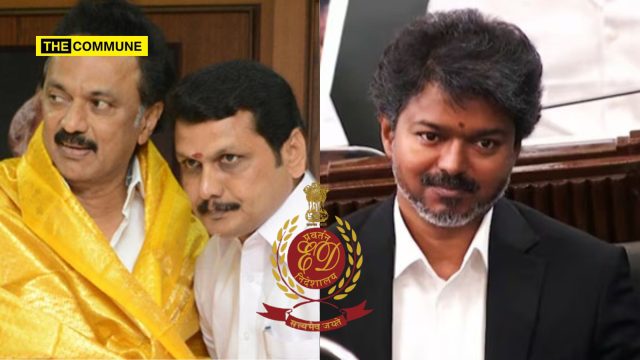
The Enforcement Directorate (ED) has approached the Tamil Nadu government headed by Chief Minister C Joseph Vijay seeking sanction to prosecute former DMK minister V Senthil Balaji in the alleged cash-for-jobs scam linked to appointments in the transport department, as reported in Times of India.
In a fresh communication sent to Tamil Nadu Chief Secretary M Sai Kumar, the ED not only sought prosecution sanction under the Prevention of Money Laundering Act (PMLA) but also alleged that the outgoing DMK government had “deliberately delayed” granting sanction because Senthil Balaji was part of the council of ministers.
Scoop: Enforcement Directorate writes to TN government under CM Vijay, seeks sanction to prosecute ex-DMK minister Senthil Balaji in cash-for-jobs scam.
ED also alleges outgoing DMK govt “deliberately delayed” sanctioning this, as Senthil Balaji was part of the govt.
Stay tuned. pic.twitter.com/LOWdvLsKXf
— Siddharth Prabhakar (@Sidprabhakar7) May 18, 2026
The development marks a significant escalation in the long-running money-laundering case that has politically haunted the DMK for years.
According to sources, the Chennai Zone of the ED wrote to the state government on May 15, enclosing all relevant evidence collected during the investigation, including a secret investigation note and a copy of the prosecution complaint in digital format.
The ED stated that its earlier request for sanction, sent on May 14, 2025 to the then Governor of Tamil Nadu, had been returned earlier this year following directions from the state government.
The agency said the then chief secretary had informed the governor in October 2025 that only the state government was competent to grant prosecution sanction against a public servant and that the ED should have directly approached the chief secretary instead of the governor.
Following that communication, the ED has now formally resubmitted the request directly to the Tamil Nadu government under the new TVK administration.
The central agency has also reportedly alleged that the previous DMK government intentionally prolonged the sanction process because Senthil Balaji continued to remain a minister in the government despite facing serious corruption and money-laundering allegations.
The alleged scam pertains to recruitments in the Tamil Nadu transport department between 2011 and 2016, when V Senthil Balaji served as transport minister in the AIADMK government.
The ED had registered a money-laundering case against Senthil Balaji, his brother R. V. Ashok Kumar and former aides B Shanmugam and M Karthikeyan. The agency accused them of collecting illegal gratification from candidates seeking government jobs in the transport department.
Senthil Balaji was arrested by the ED in June 2023 in a dramatic operation that triggered a prolonged confrontation between the DMK government and central agencies.
Although the Supreme Court granted bail to Senthil Balaji in September 2024, the ED later filed a prosecution complaint before the special PMLA court in Chennai.
However, the trial has remained stalled because sanction from the state government is mandatory since Senthil Balaji was a minister at the time of the alleged offences.
Subscribe to our channels on WhatsApp, Telegram,Instagram and YouTube to get the best stories of the day delivered to you personally.
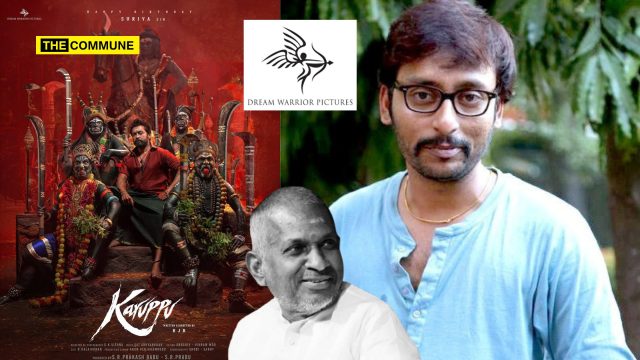
Dream Warrior Pictures on Tuesday, 19 May 2026, issued a carefully worded press statement expressing “sincere respect and admiration” for legendary composer Ilaiyaraaja after facing backlash over a controversial dialogue in the film Karuppu starring Suriya.
The statement came only after the dialogue triggered outrage among fans and music lovers who accused the makers and actor-director RJ Balaji of disrespecting one of India’s most celebrated composers under the guise of satire.
In its statement as reported in Hollywood Reporter India, Dream Warrior Pictures claimed that the makers had “no intention to offend, hurt, or disrespect Mr Ilaiyaraaja, his contribution, or his rights in any manner. The reference formed part of a broader satirical context and was not conceived as a personal remark directed at him.”
However, the production house also effectively acknowledged the seriousness of the backlash by announcing that the controversial portion would be removed from future versions of the film.
“We deeply value and respect his feelings and, as a gesture of our regard, we have decided to remove/modify the concerned portion in future versions and subsequent exploitations of the film. We extend our sincere regards and continue to hold him in the highest respect,” the statement read.
The apology-like clarification has now intensified criticism against the film’s makers, with many questioning why the dialogue was included in the first place if they truly respected Ilaiyaraaja’s stature and legacy. Repeatedly targeting legendary cultural figures through sarcastic or “satirical” dialogues and then issuing diplomatic statements after backlash seems to have become a recurring pattern in sections of the Tamil film industry.
The controversy has also placed RJ Balaji under scrutiny. Though often projecting himself as socially conscious and culturally sensitive in public appearances, he is allowing cheap humour and dismissive references toward an iconic composer whose contribution to Indian music spans decades.
Ironically, the controversy erupted even as the film was celebrating commercial success at the box office.
The film stars Suriya in the lead role of Karuppuswamy, while Trisha Krishnan plays lawyer Preethi. RJ Balaji appears in a key role. The supporting cast includes Indrans, Natty Subramaniam, Swasika, Sshivada and Supreeth Reddy.
The technical crew includes music composer Sai Abhyankkar, cinematographer G. K. Vishnu and editor R. Kalaivanan.
While the makers may now be attempting damage control by removing the dialogue, the controversy has already sparked a larger debate over how casually legendary artists are mocked or referenced in commercial cinema – only for filmmakers to retreat into statements about “respect” once public outrage erupts.
Subscribe to our channels on WhatsApp, Telegram,Instagram and YouTube to get the best stories of the day delivered to you personally.
Tamil Nadu’s new School Education Minister TVK’s A Rajmohan has firmly declared that the TVK government will not compromise on the state’s two-language policy, even if the Union government continues to withhold PM SHRI education funds. But the minister’s own past statements, along with the educational model followed by institutions associated with the TVK ecosystem, are now raising sharp questions about political hypocrisy and double standards, as reported in Deccan Herald.
Speaking to reporters after a departmental review meeting, Rajmohan reiterated that the TVK government would continue Tamil Nadu’s long-standing policy of Tamil and English alone in schools.
“Two-language policy is not just a policy of the Tamil Nadu government, it is also one of the fundamental principles of the TVK. We are clear that the state will continue to follow the two-language policy and there is no change in that,” he said.
When asked about the PM SHRI scheme and the Centre’s insistence on the three-language formula, Rajmohan accused the Union government of using funds as pressure tactics against Tamil Nadu.
“For the past two years, that fund has not reached us, and that is a huge sorrow. That money is not for us; it is not for the officials. That money is for the students, for the girl students. Blocking it for any reason is deeply painful, and it is unacceptable. At the same time, we will not yield to any indirect pressure. As I said at the beginning, just as land rights and women’s rights are basic rights of the Tamilaga Vettri Kazhagam, the bilingual policy is also a declared policy of our party. There is no question of any change in that.”
He then invoked Singapore’s development model to justify the government’s stand.
“This is not only here; even in Singapore, Lee Kuan Yew did the same thing. He transformed a country from scratch into a first-world nation. To connect with the world there, he used English. He said other languages like Chinese can be used locally, but English is sufficient for global communication. So we will not submit to any indirect pressure. There is no place here for compromise on policy. We are not compromising on our principles. There is no question of policy compromise here.”
The remarks came shortly after SFI representatives met Chief Minister C Joseph Vijay, who reportedly assured them that the TVK government would never dilute the two-language formula of Tamil and English.
However, Rajmohan’s latest position has now collided head-on with his own past statements from his days as a YouTuber and political commentator, where he openly praised key aspects of the National Education Policy and argued in favour of multilingual learning.
In a video clip that has now gone viral across social media platforms, Rajmohan had earlier stated: “When a child is at a learning age, only if you speak to that child in its mother tongue and introduce knowledge through that mother tongue will the child develop a good mindset to learn it. Many scholars have said this. According to the new education policy, we must provide mother-tongue-based education to the child at least till the fifth standard. Both public and private schools should not deny this.”
He had also strongly endorsed the NEP’s emphasis on Indian languages and multilingual education.
“No matter how many lakhs you charge as fees in a private school, if you are in Tamil Nadu you must teach Tamil as a language. This is a very, very important point. Another important aspect they have mentioned is about Tamil. They have said that Tamil and the other seven classical languages must be offered as options in all schools across India. If a student wants to learn Tamil, they should be able to do so not only in Tamil Nadu but even in Uttar Pradesh if they wish to learn Tamil there.”
Rajmohan had further welcomed the inclusion of additional Asian languages in schools.
“You must teach Tamil because it is one of the classical languages. Just as they emphasize giving importance to Indian languages, they have also said that Asian languages must be offered, such as Korean.”
The resurfaced video has now triggered accusations that Rajmohan has dramatically reversed his own position after entering electoral politics under TVK.
The controversy has also drawn attention to Vijay Vidhyashram Senior Secondary School in Padur, Chennai, an institution associated with actor-turned-Chief Minister Joseph Vijay’s family. The school, affiliated with the CBSE system, recently released recruitment advertisements seeking teachers for multiple subjects including Hindi.
The advertisement specifically lists vacancies for “TGT – Hindi” alongside other teaching positions, directly highlighting that Hindi instruction already exists within the institution operating under the CBSE framework.
Now, one wonders how the TVK government can publicly oppose the three-language formula and accuse the Centre of imposing Hindi while institutions linked to the same political ecosystem continue functioning under a CBSE structure that accommodates multilingual education, including Hindi teaching. This is exactly what the DMK did – ministers and MLAs owned CBSE schools where 3 language policy was implemented but opposed the NEP for the state.
The issue has also reignited debate over whether Tamil Nadu’s continued refusal to join the PM SHRI scheme is ultimately costing students access to central education funds while other states, including Left-ruled Kerala, have chosen to participate despite political differences with the Union government.
💡The problem is not for DMK or TVK. The loss is for the students of Tamil Nadu. Even Kerala has agreed to PM Shri.
— Saikiran Kannan | 赛基兰坎南 (@saikirankannan) May 19, 2026
The controversy has further exposed what can be described as a glaring contradiction within the TVK ecosystem itself. While the government publicly attacks the three-language formula and rejects any policy associated with multilingual education, institutions linked to the same ecosystem continue operating under the CBSE framework where Hindi and additional language instruction are already part of the system. Ordinary government school students are being denied opportunities that remain available in elite private and CBSE institutions.
Subscribe to our channels on WhatsApp, Telegram,Instagram and YouTube to get the best stories of the day delivered to you personally.
A 35-year-old woman with speech and hearing impairment was allegedly abducted by two middle-aged men in a car, taken to a cashew farm, and raped on 16 May 2026 in Pudukottai. While the police have arrested one of the accused, the other remains at large.
The victim’s relatives staged a protest on Tuesday (19 May 2026) demanding the immediate arrest of the second accused.
According to police reports, the incident took place on Sunday when the woman, employed at a rice mill near Alangudi in Pudukottai, was waiting for a bus. Two men identified as Sekar (56) and Marimuthu (55) arrived in a car and offered her a lift. Although she refused, the duo allegedly forced her into the vehicle.
When the woman realized the car was heading in a different direction, she raised an alarm. The accused reportedly attacked her and drove her to a cashew farm in Manakkollai, where they sexually assaulted her before leaving her at the spot and fleeing.
The woman managed to walk to the main road, where passersby rescued her and took her to Alangudi General Hospital. She was later referred to Pudukottai Government Medical College Hospital and subsequently shifted to Raniyar Government Reproductive and Child Health Hospital, where she is currently undergoing treatment.
Based on a complaint, the Malaiyur police registered a case and arrested Marimuthu. Searches are ongoing for Sekar, who is absconding.
On Tuesday, the victim’s relatives and members of the public protested in front of the Malaiyur police station, demanding the immediate arrest of the second accused and proper compensation for the woman.
Subscribe to our channels on WhatsApp, Telegram,Instagram and YouTube to get the best stories of the day delivered to you personally.
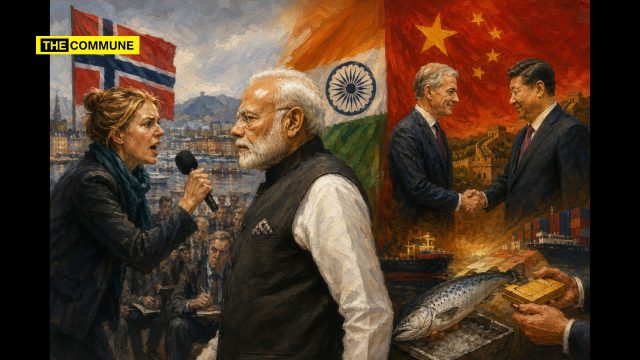
When a Norwegian journalist shouted at Prime Minister Narendra Modi in Oslo asking why he would not take questions from “the freest press in the world”, India’s opposition ecosystem instantly elevated the moment into an international morality play.
But before Norway lectures India on democracy, press freedom and human rights, perhaps Oslo should first explain its own record especially its extraordinary willingness to bend before Beijing whenever trade and diplomatic interests are at stake.
The viral moment itself was misleading from the very beginning. PM Modi was not walking away from a press conference. It was a joint statement with Norwegian Prime Minister Jonas Gahr Støre where questions were never scheduled. A separate Ministry of External Affairs briefing was already planned later that evening, and the Indian Embassy publicly invited the Norwegian journalist, Helle Lyng, to attend and ask questions there.
She did attend. She asked her questions. And MEA Secretary Sibi George answered them in detail. But none of that mattered to the outrage industry because the objective was never journalism. The objective was spectacle.
Norway’s Own China Record Destroys Its Moral Posturing
The irony becomes impossible to ignore once one examines Norway’s actual conduct toward China.
Norway Formally Agreed Not To Challenge China’s “Core Interests”
In 2016, Norway signed a normalization agreement with China after diplomatic ties had frozen for six years. The deal included an extraordinary pledge from Oslo stating that Norway “attaches high importance to China’s core interests and major concerns” and “will not support actions that undermine them.”
Why was Norway punished in the first place? Because the Norwegian Nobel Committee awarded the Nobel Peace Prize to Chinese dissident Liu Xiaobo in 2010.
China retaliated aggressively. Diplomatic ties froze. Trade talks stopped. Norwegian salmon exports suffered. And eventually, Norway folded.
Norway did not meet the Dalai Lama in 2014 so as to not anger China.
Even Norway’s own youth political organizations criticised the agreement as a surrender of Oslo’s moral independence and its willingness to avoid criticism of Beijing in exchange for restored trade relations.
So the same establishment now invoking “the freest press in the world” against India had no problem formally reassuring an authoritarian state that it would respect Beijing’s “core interests”.
Norway Claimed Ignorance About Xinjiang In 2018
The hypocrisy deepened further in 2018 when Norway’s King Harald and Queen Sonja visited China.
At that point, international reporting on Xinjiang’s internment camps was already widespread. Documentation regarding mass detention, surveillance systems, and re-education camps had become a global issue.
Yet Norway’s royal family reportedly claimed they were unaware of the Xinjiang camps.
This was not ignorance. It was diplomatic convenience.
When trade and state relations are involved, “human rights” suddenly become flexible, vague and selectively applied.
Norway Ignored Calls To Pressure China Over Xinjiang
In 2022, Norway’s own Helsinki Committee urged the government to take a stronger stand against China over Xinjiang abuses.
The Norwegian government did not comply.
There were no dramatic confrontations. No viral performances. No moral grandstanding at podiums. No public lectures directed at Beijing.
The contrast with the performative outrage directed at India could not be sharper.
PM Støre Praised China In Beijing In 2024
The same Norwegian Prime Minister whose government now presides over lectures on democracy travelled to Beijing in September 2024 and met Chinese President Xi Jinping.
The visit ended with China granting 15-day visa-free access to Norwegian citizens.
The official Chinese readout quoted PM Støre praising China’s development as being “full of vitality” and possessing “significant successful experience.”
Norway once again reiterated respect for China’s “core interests.”
Human rights concerns reportedly received little more than a token mention.
Apparently, “critical questioning” becomes optional when sitting across from Beijing.
Even Norwegian Media Faced Chinese Pressure
Norway’s own newspaper of record, Aftenposten, acknowledged that China blocked its website whenever it published articles critical of Beijing or supportive of Taiwan.
The paper reportedly stated that its website would become inaccessible in China for roughly two weeks after such coverage.
Did Norway escalate the matter diplomatically? Did Oslo launch a global campaign on press freedom? Did Norwegian journalists publicly confront Chinese leaders demanding answers about censorship? No. Because everyone understood the geopolitical realities involved. Yet the same ecosystem expects India to accept theatrical heckling as some sacred democratic test.
The Manufactured Anti-India Spectacle
The controversy itself appeared carefully stage-managed for virality.
Helle Lyng, who worked for the lesser-known Norwegian publication Dagsavisen, had barely discussed India in her previous reporting. Her X account had minimal activity before the Oslo episode suddenly transformed her into a celebrity within India’s opposition ecosystem.
Within hours, Congress leaders, left-liberal influencers, propagandists and anti-Modi commentators amplified the clip across social media as proof of democratic decline in India.
But the actual sequence of events told a very different story.
The Indian Embassy publicly invited Lyng to the official press briefing. MEA Secretary Sibi George answered her questions extensively, speaking about India’s constitutional framework, democratic processes, Covid vaccine assistance, G20 leadership, Global South outreach and the inclusion of the African Union into the G20 framework.
When Lyng repeatedly interrupted him and attempted to dictate the format of his answers, George firmly pushed back, reminding her that she had asked a question and he had the right to answer it properly.
The exchange ultimately exposed the gap between performative activism and actual journalism.
Norway’s journalist invoked the ‘freest press in the world’ at PM Modi in Oslo. Before Oslo lectures New Delhi on accountability, take a look at their own record.
-In 2016, Norway signed a normalization pact with China that included a formal government pledge that it “attaches…
Press freedom is not a geopolitical prop to be waved selectively against countries one dislikes while remaining silent before powerful authoritarian states.
A journalist from a country whose government formally pledged not to challenge China’s “core interests”, whose royal family pleaded ignorance about Xinjiang, whose Prime Minister praised Xi Jinping’s governance model, and whose media institutions adjusted themselves around Chinese pressure, invoking press freedom as a unilateral moral standard against India is hypocrisy of the highest order.
India is not above criticism. No democracy is. But before Oslo lectures New Delhi about accountability, Norway must first explain why its own principles seem to disappear whenever Beijing enters the room.
Subscribe to our channels on WhatsApp, Telegram,Instagram and YouTube to get the best stories of the day delivered to you personally.
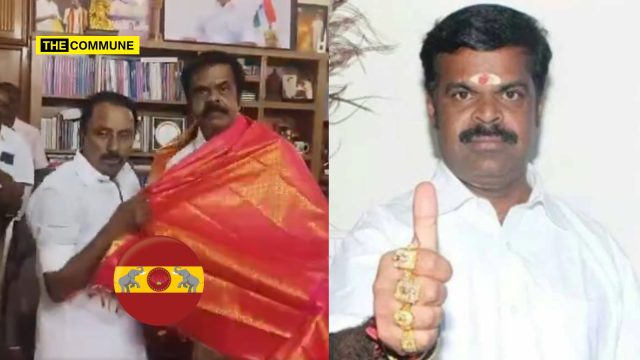
The TVK has formed the government and KA Sengottaiyan, the state’s finance minister and TVK senior leader today welcomed a notorious figure to the TVK.
While Vijay claims his party is a ‘thooya sakthi’ (pure force), it seems to be attracting all the ‘theeya sakthi’ (evil force). In this situation, KA Sengottaiyan welcomed Winstar Sivakumar into the TVK – a man who was involved in a major ponzi scheme case that affected thousands of middle-class investors.
நிதி அமைச்சர் செங்கோட்டையன் முன்னிலையில் தேடப்படும் குற்றவாளி தவெகவில் இனைந்தார்
300 கோடிக்கு மேல் மோசடி செய்து தேடப்படும் குற்றவாளியான சேலத்தை சேர்ந்த ரியல் எஸ்டேட் அதிபருக்கு நிதி அமைச்சர் செங்கோட்டையன் பொன்னாடை அணிவித்து கௌரவித்த சம்பவம்
R Sivakumar, popularly known as Winstar Sivakumar, was arrested by the Salem Economic Offences Wing (EOW) in 2017 in connection with an investment fraud linked to Winstar India City Developers. Investigators alleged that the company cheated investors by promising lucrative returns through ponzi-style investment schemes.
According to police records, the case initially involved allegations that around 1,686 investors were cheated of nearly ₹74 crore. Police arrested 29 people in connection with the case, and all of them later secured bail. The matter is currently under trial before the Special Court for cases under the Tamil Nadu Protection of Interests of Depositors (TNPID) Act in Coimbatore.
The case drew national attention because of the scale of the chargesheet filed by investigators. In 2019, the Salem EOW filed a chargesheet reportedly running into nearly 50,000 pages before the Coimbatore special court, as reported in The New Indian Express.
Police sources then stated that the Tamil Nadu government sanctioned nearly ₹14 lakh for printing 33 copies of the chargesheet. The copies, amounting to nearly 15 lakh pages in total, were distributed to the 29 accused persons, lawyers, the court, and police officials. Officials said the printing cost worked out to around 85 paise per page.
While we expect experienced leaders to improve how new government is run Tamil Nadu’s senior most politician @KASengottaiyan has done the exact opposite.
Immediately after taking over as Finance Minister, he welcomed Winstar Sivakumar into the TVK party.
The hearing in the case was later adjourned after one of the accused reportedly failed to receive the copy of the chargesheet.
Investigators also stated that more than 300 additional complaints had subsequently been received in connection with the alleged fraud. Police officials said they expected the total number of complaints to cross 2,500 and estimated that the total amount involved in the case could exceed ₹200 crore. Authorities further stated that efforts were under way to identify and attach the properties linked to the company.
Legal experts cited practical difficulties in relying entirely on digital documentation in such large-scale financial fraud cases. Senior advocate A Pandiaraj reportedly stated that electronic chargesheets could create logistical complications because all parties involved would need access to digital devices. He also noted that, in an earlier instance, the same court had declined permission to accept documents through a pen drive due to administrative overload.
TVK Is Another DMK
All the claims of TVK being a clean and transparent party are falling like a house of cards. TVK is turning out to be another DMK and becoming a theeya sakthi itself.
Subscribe to our channels on WhatsApp, Telegram,Instagram and YouTube to get the best stories of the day delivered to you personally.
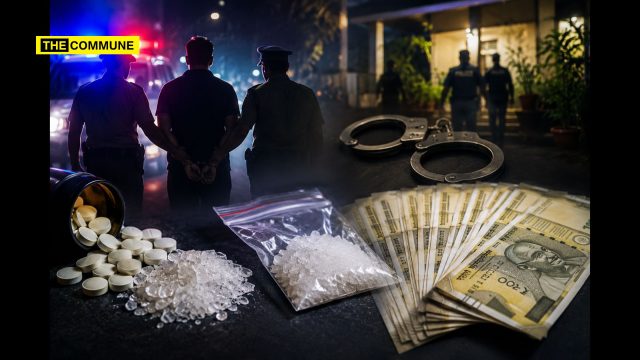
Three men were arrested by the city police on Sunday night for allegedly possessing drugs and counterfeit currency notes at a house in the Kurichi Housing Unit area, as reported in Times of India.
The arrested individuals were identified as Satham Hussain, 28, of Kurichi Housing Unit, Faisal, 38, of Mettur in Podanur, and Hakkim, 51, of Karumbukadai. Police said the arrests were made following a raid conducted by a special team led by Deputy Commissioner of Police (South) K Karthikeyan.
According to police sources, the raid was carried out at the residence of Satham Hussain, who was stated to be running a plant nursery business. During the search operation, the police allegedly recovered potent drug pills, methamphetamine, and 184 counterfeit ₹200 currency notes from the house. The contraband items and fake currency notes were subsequently seized.
Preliminary investigation reportedly revealed that Sahabudeen, alias Khaja Moideen, of Karumbukadai, had allegedly procured and supplied the counterfeit currency printing machine used by the accused.
Police officials said further interrogation of the arrested trio was under way to determine whether a larger counterfeit currency and narcotics network was involved in the case. Investigators also stated that a manhunt had been launched to trace and arrest Sahabudeen, who was said to be absconding.
Subscribe to our channels on WhatsApp, Telegram,Instagram and YouTube to get the best stories of the day delivered to you personally.
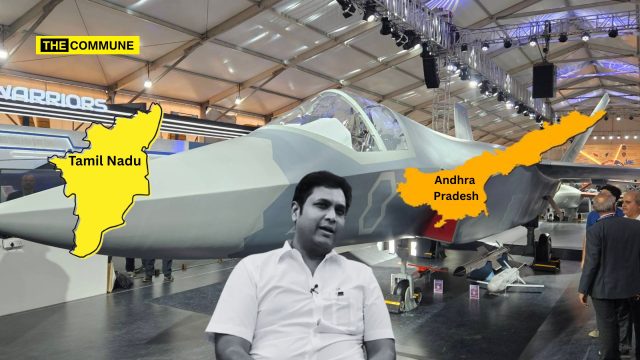
Following the announcement of the AMCA flight-testing hub going to Andhra Pradesh, former DMK minister TRB Rajaa expressed outrage over losing it. It has now snowballed into a political controversy, but official records and published reports now raise uncomfortable questions about the timeline behind his claims.
Rajaa had alleged that Tamil Nadu lost the project to Andhra Pradesh due to political reasons and claimed that he and his team had “worked day and night for three years” to bring the project to Hosur.
What we feared is happening !
And we MUST NOT allow it !
Tamil Nadu has reportedly lost the AMCA flight testing and integration project despite offering what the story itself describes as technically superior infrastructure conditions.
However, a closer look at Defence Ministry documents and multiple national media reports shows that the AMCA programme itself formally entered execution mode only in May 2025 – making Rajaa’s sweeping “three-year” narrative appear far more complicated than his social media post suggested.
AMCA Execution Cleared Only Last Year
The Advanced Medium Combat Aircraft (AMCA), India’s proposed fifth-generation stealth fighter programme, was formally cleared for execution only in late May 2025.
According to a Defence Ministry press note and coverage by DD News, Defence Minister Rajnath Singh approved the AMCA execution model in May 2025, with the Aeronautical Development Agency designated to execute the programme through an industry partnership model at an estimated cost of around ₹15,000 crore.
Until then, AMCA largely existed as a developmental and conceptual programme rather than a fully sanctioned industrial project with finalized infrastructure decisions.
That distinction now lies at the heart of the controversy.
The immediate trigger for the row was the decision to establish the AMCA Aircraft Integration and Flight Testing Complex at Puttaparthi in Andhra Pradesh’s Sri Sathya Sai district.
In the first week of May 2026, Moneycontrol reported that Andhra Pradesh had effectively secured the project after discussions between the state government and the Centre.
The report detailed Andhra Pradesh’s aggressive package: around 350 acres of land, including 150 acres adjoining the runway for the complex and another 200 acres for a township and satellite facilities.
The state also reportedly committed to extending the runway to 10,000 feet and building aviation infrastructure including an air traffic control tower and navigation systems.
Around the same time, The Week published a report stating that Andhra Pradesh had emerged as the selected host for the AMCA testing complex and explicitly noted that the Defence Ministry had approved the AMCA execution model only in May 2025.
On 15 May 2026, Rajnath Singh and N. Chandrababu Naidu laid the foundation stone for the project at Puttaparthi, formally sealing Andhra Pradesh’s victory.
What Tamil Nadu Actually Offered
Tamil Nadu’s version of events emerged through a report in The New Indian Express titled “TN loses mega defence flight testing hub to Andhra amid regional rivalry.”According to the report, TN had pitched Hosur for the project and that the government had been in talks with DRDO “for the past three years” to anchor the facility there.
But the same report also spelt out the limits of the Tamil Nadu offer. The state was prepared to provide 100 acres of land near Hosur airport, on the edge of its defence corridor, and pushed the site on the strength of its industrial ecosystem. Andhra’s counter‑offer – 350 acres plus a major runway extension and extensive ancillary infrastructure was on a very different scale.
In other words, Tamil Nadu did lobby and did put land on the table. It simply did not match Andhra’s package.
Where TRB Rajaa’s Claim Breaks Down
Against this backdrop, Rajaa’s statement that he and his team “worked day and night for three years” for the AMCA project is only partially grounded in fact.
There is evidence that Tamil Nadu has been lobbying DRDO for several years to bring additional aerospace and defence facilities into its corridor, including at Hosur. The New Indian Express itself uses the “three years” formulation in precisely this lobbying context.
However, the sanctioned AMCA execution model dates only to May 2025, and Andhra was publicly identified as the hub state by early May 2026. Read literally, Rajaa’s words suggest a fully approved AMCA test‑hub project has existed and has been under Tamil Nadu’s active stewardship since 2023. The documentary record does not support that reading.
Equally, while it is politically tempting to attribute the final decision solely to “Delhi’s bias” or post‑election manoeuvring, none of the official releases or detailed reports link the allocation to explicitly political criteria. They stress land, runway length and infrastructure commitments – factors where Andhra objectively outbid Tamil Nadu.
Rajaa’s post is also carefully framed to fit the DMK’s larger campaign line that Tamil Nadu will inevitably suffer under the new C. Joseph Vijay–led government. He opens with the ominous “What we feared has happened,” then pivots to accuse the Union government of handing the project to Andhra Pradesh on political grounds and urges Vijay to “act” and write to Delhi, as if the loss occurred on the new Chief Minister’s watch.
In the same breath, he dramatises his own role, declaring that his team “shed blood” and worked for three years on the project – a formulation that invites sympathy for the outgoing regime and anger at both the Centre and its perceived regional ally, while skirting the awkward fact that Andhra’s superior 350‑acre offer and runway package, not a last‑minute betrayal by Vijay, is what the available documents actually show.
திமுகவினர் எப்பேர்ப்பட்ட திருடர்கள் என்பதற்கு இந்த பிராடு பதிவே சாட்சி.
AMCA எனப்படும் நடுத்தர போர் விமான சோதனை மற்றும் ஒருங்கிணைப்பு மையம் அமைப்பதற்கான ப்ராஜக்ட் ஆந்திர மாநிலம் புட்டபர்த்தியில் அமைவிருக்க்கிறது. இதற்கான அடிக்கல் நாட்டு விழா நேற்று நடைபெற்றிருக்கிறது. நன்றாக… https://t.co/xdd4PgPFMypic.twitter.com/HCJhz3Vnjo
The picture that emerges is less dramatic, but more instructive. Tamil Nadu identified a major defence opportunity early and lobbied hard. When the project finally moved into a formal execution phase, Andhra Pradesh put together a bigger, faster package and won. Rajaa’s frustration is understandable, but his three‑year claim papers over the crucial distinction between years of lobbying and a one‑year‑old, sanctioned project and that blur is now feeding a backlash he can’t dismiss as mere propaganda.
Subscribe to our channels on WhatsApp, Telegram,Instagram and YouTube to get the best stories of the day delivered to you personally.
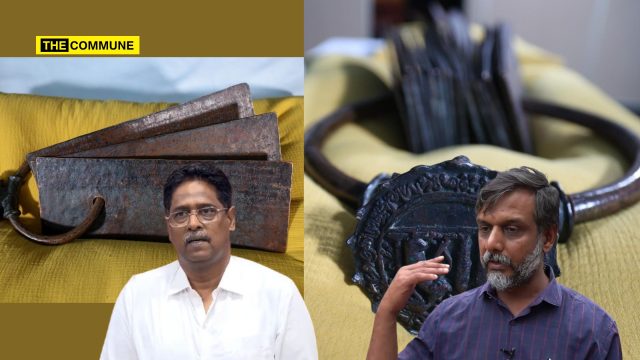
Just as the news of the return of the the historic Leiden/Anaimangalam copper plates of Rajendra Chola I from Leiden University in the Netherlands to India hit the headlines, the Dravidianist ecosystem began getting busy claiming credit for it.
DMK Rajya Sabha MP NR Elango shared a video of his earlier statement in the upper house regarding the Chola-era Leiden (Anaimangalam) copper plates as well as the Pandya-era Velvikudi plates.
Supporting his claim, separatist Thirumurugan Gandhi shared ‘proof’ of the unstarred question from November 2024. Gandhi claimed, “They are now running false propaganda claiming that it was Modi who brought back the Anaimangalam copper plates from the time of Rajendra Chola I, which were preserved at Leiden University in the Netherlands, to India. But it was actually N. R. Elango, Rajya Sabha MP of the Dravida Munnetra Kazhagam, who consistently raised his voice in Parliament about the importance of these copper plates and the need to bring them back to India, thereby drawing the attention of the Modi government to the issue. I have shared his parliamentary speech. His demand did not stop there. He also urged the government to bring back the “Velvikudi Copper Plates” from the London archives — Pandya-era copper plates dating back to 769–770 CE during the reign of Nedunjadaiyan Varaguna Pandiyan. The Modi government has retrieved only the Chola-era copper plates from Leiden University because it suits the RSS-style “Akhand Bharat” narrative they seek to build using Chola history. But they have shown no interest in recovering the Pandya-era copper plates, which are among the oldest surviving Tamil copper plate inscriptions predating the Chola period. It was N. R. Elango who raised questions in Parliament as early as 2024 regarding the retrieval of these Pandya copper plates as well. It is only because of his sustained pressure that these copper plates have now reached India. He is the one who deserves appreciation for this effort. Instead, propaganda is being spread claiming that they were recovered because of Modi’s foreign visit. The Sanghis, who push Hindi through the three-language policy and display hostility toward Tamil language and Tamil identity, did not recover these copper plates out of concern for Tamil heritage. We must strengthen our pressure keeping in mind that the Velvikudi copper plates lying in London could provide us with invaluable historical information. Most importantly, both the Chola and Pandya copper plates must immediately be sent to Tamil Nadu. Neither the Cholas nor the Pandyas fought for the dream called India. This history belongs to the Tamils, and has nothing to do with the Brahminical-Indian combine. The Sangh Parivar has no legitimacy to appropriate and claim ownership over it.”
நெதர்லாந்து நாட்டின் லெய்டன் பல்கலைக்கழகத்தில் உள்ள இராஜேந்திரசோழன் காலத்து ஆனைமங்கல செப்பேடுகளை இந்தியாவிற்கு கொண்டு வந்தவர் மோடி என பொய்-விளம்பரத்தைச் செய்துகொண்டிருக்கிறார்கள். ஆனால், இந்த செப்பேடுகளின் முக்கியத்துவம் குறித்தும், அதை இந்தியா கொண்டு வந்து சேர்க்கும் பணி… https://t.co/DNi2VZylWhpic.twitter.com/XE7VPidCrs
However, documents from the Union government show that the Modi administration had already initiated the international restitution process for the Leiden plates months before Elango raised the issue in Parliament.
Two Different Copper Plates, One Political Narrative
At the centre of the controversy are two separate sets of historically important Tamil copper plate inscriptions that are now being politically mixed together.
The first are the famous Leiden or Anaimangalam copper plates from the reign of Rajendra Chola I, preserved for decades in Leiden University. These are the plates that have now been formally returned to India.
The second are the far older Velvikudi copper plates from the Pandya period, associated with Nedunjadayan Varaguna Pandiyan and currently housed in London. These have not been returned and, according to government records, no active repatriation proposal existed for them as of late 2024.
Dravidianist narratives seems to have merged these two separate issues in order to create the impression that the Modi government acted only after DMK pressure.
Government Records Show Process Began Before Elango’s Intervention
The strongest contradiction to the current Dravidianist claim comes from Rajya Sabha Unstarred Question No. 347 answered by the Ministry of Culture.
On 28 November 2024, NR Elango asked the Union government about efforts to retrieve both the Leiden Chola plates and the Velvikudi Pandya plates.
However, the government’s written reply explicitly states that the Leiden issue had already been raised at the UNESCO Inter-Governmental Committee for Promoting the Return of Cultural Property on 30 May 2024.
சரியாக படிக்காமல் உண்மையை அப்படியே ஆதாரத்துடன் பகிர்ந்துவிட்டார்,
திமுக எம்பி @nrelango_dmk இளங்கோ அவர்கள் கேள்வி கேட்டது 28.11.24
அதற்கு பதில் அளித்த மத்திய அரசு 30.05.2024 அன்றே நெதர்லாந்து அரசிடம் கோரிக்கை வைக்கபட்டதாக உறுதி செய்துள்ளது.
This timeline is politically significant because it establishes that the Government of India had already formally initiated the international process for retrieving the Leiden plates nearly six months before Elango’s parliamentary intervention.
In the same reply, the Ministry also clarified that no proposal for repatriation of the Velvikudi plates was under consideration at that point.
The official record therefore directly contradicts the social media narrative claiming that “only because Elango raised the issue” did the Modi government begin efforts to retrieve the plates.
Dutch Institutional Process Played Central Role
The return of the Leiden plates was also linked to developments within the Netherlands itself rather than being solely triggered by domestic Tamil Nadu political pressure.
According to Leiden University’s own statements, the restitution process followed recommendations by the Netherlands’ Colonial Collections Committee, which advised unconditional return of certain colonial-era artefacts.
Subsequent negotiations involving Leiden University, Dutch authorities and the Government of India eventually led to the formal handover.
The Ministry of External Affairs later confirmed that the plates were officially handed over in the presence of Narendra Modi and Dutch Prime Minister Rob Jetten during Modi’s Netherlands visit.
Dravidianists Push Political Narratives
If the question is who started the Leiden restitution process, the answer, on the state’s own documentation, is the Government of India acting by May 2024, not a November 2024 parliamentary question. Elango’s role is that of a late but vocal participant – significant in political messaging, but not the origin point the current Dravidianist propaganda suggests.
Subscribe to our channels on WhatsApp, Telegram,Instagram and YouTube to get the best stories of the day delivered to you personally.
Barely days into the new government, the online machinery surrounding Joseph Vijay and the Tamilaga Vettri Kazhagam appears to have settled into a familiar pattern: present ordinary administrative continuity as revolutionary governance, aggressively amplify symbolic optics, and repackage long-existing schemes under fresh stickers carrying Vijay’s branding.
Across Instagram reels, YouTube shorts, X handles, fan pages and coordinated hashtag campaigns, TVK’s digital ecosystem has been projecting Vijay as if he has fundamentally transformed governance overnight. But a closer look at many of the celebrated “achievements” shows that several are either existing welfare schemes continued from previous governments, temporary policy tweaks exaggerated into historic reforms, or old programmes simply relaunched with new names and visuals.
Rebranding Existing Schemes As “Historic Firsts”
TVK supporter ecosystem branded all the existing schemes as historic firsts. Here is a look at a few of them.
200 Units Free Electricity
One of the clearest examples is the “200 units free electricity” narrative heavily promoted by pro-TVK handles. Online propaganda projected the move as though Tamil Nadu had never seen free electricity support before Vijay assumed office.
In reality, Tamil Nadu already had a long-running free electricity subsidy system well before TVK entered power. The earlier 100-unit free electricity model was introduced during the AIADMK era under J. Jayalalithaa and continued later by the DMK government. What TVK announced was not the invention of free electricity itself, but a modified extension with several conditions attached.
What Vijay promised was 200 units of free electricity per month but what was given as the ‘first signature’ was 200 units free per billing cycle (of 2 months) and if the consumption went beyond 500 units, then only the existing 100 free units was applicable.
TVK’s online ecosystem deliberately flattened the details of the current implementation, including billing cycle limits and conditional applicability, to market it as a sweeping revolutionary giveaway personally delivered by Vijay.
Singapenn Special Task Force
A similar pattern is visible in the much-publicised women’s safety patrol initiative. TVK supporters promoted “Singapenn” special task force/patrol branding as if 24-hour women’s safety squads began only after Vijay became Chief Minister. Yet Tamil Nadu had already operated women-focused patrol systems such as Amma Patrol under the AIADMK government and Pink Patrol under the DMK government. Several viral videos even pointed out that many patrol vehicles now showcased online were essentially existing police jeeps with fresh stickers and renamed branding.
அதிமுக ஆட்சியில Amma Patrol பெரிய விளம்பரமின்றி தொடங்கப்பட்டது..
திமுக ஆட்சியில் PINK PATROL என பெயர் மாற்றி அது தொடரப்பட்டது !
இப்போது சிங்கப்பெண் Patrol என்று பெயர் மாற்றி பெரிய சாதனை செய்தது போல் ரீல்ஸ் போட்டு மக்களை ஏமாற்றிக் கொண்டிருக்கிறது அந்த கட்சி.. pic.twitter.com/dpDFeqEoOw
The actual change was largely cosmetic, while the online narrative deliberately implied that women’s 24-hour safety patrols themselves began only after TVK formed the government.
TASMAC Closures Presented As Moral Revolution
TVK’s online ecosystem also aggressively marketed the closure of 717 TASMAC liquor outlets as though Vijay had launched an unprecedented moral cleansing operation across Tamil Nadu.
The online mafia framed the move as proof that Vijay alone possessed the courage to act against liquor proliferation near schools, temples and bus stands.
But the actual order largely followed a long-established regulatory pattern already used by previous governments.
Successive administrations under AIADMK and DMK had repeatedly shut down, relocated or rationalised TASMAC outlets based on court rulings, public pressure and distance regulations. The 500-metre logic itself was the only thing that was probably new.
If such rules were implemented literally in dense urban areas like Chennai, very few TASMAC outlets could function at all due to the concentration of schools, hospitals and religious institutions. Earlier governments therefore used phased relocations and selective enforcement.
But TVK’s online propaganda converted a continuation of an existing administrative policy approach into a dramatic morality play where Vijay was portrayed as single-handedly “saving Tamil society.”
Several handles even took pictures of TASMAC outlets reportedly ‘shut down’ but only to find them being fact checked that they took the pictures before the opening hours and they opened as usual later in the day.
“First Woman”, “First Dalit” Claims Ignore Tamil Nadu’s Political History
Another striking pattern has been the inflation of routine political appointments into fake “historic firsts.”
TVK-aligned handles celebrated certain appointments by claiming Vijay had delivered Tamil Nadu’s “first woman minister” or “first Dalit representation” in governance.
தமிழ்நாட்டின் முதல் பெண் அமைச்சர் கீர்த்தனா.
தமிழ்நாட்டின் முதல் தலித் அமைச்சர் ராஜ்மோகன்.
தமிழ்நாட்டின் முதல் முதலமைச்சர் விஜய்.
தமிழ்நாட்டின் முதல் தேர்தல் 2026 சட்டமன்றத் தேர்தல்.
The problem is that Tamil Nadu has already had women Ministers, even two women chief ministers and Dalit ministers across multiple governments for decades.
The Post claim this lady is the 1st Woman Minister!
5,17,000+ people liked it with even verifying the fact..
But the facts are:
#1
Rukmini Lakshmipathi (also spelled Rukmani Lakshmipathi) was the first woman minister in the Madras Presidency (precursor to Tamil Nadu), serving… pic.twitter.com/qgYDyq1qkB
From J. Jayalalithaa to several women ministers under both AIADMK and DMK, female political representation in Tamil Nadu predates TVK by generations. Similarly, a Dalit minister for education have already been seen in earlier governments as well – ADMK had Benjamin and DMK had Govi Chezhian.
Fake news alert.
Benjamin was appointed by Jayalalithaa as the first Dalit Minister of School Education in Tamil Nadu.
Ko .vi Chezhiyan was appointed by M.K. Stalin as the first Dalit Minister of Higher Education in Tamil Nadu. https://t.co/nS3EHRTELL
TVK’s digital ecosystem deliberately blurs the distinction between “first inside TVK” and “first in Tamil Nadu history,” allowing fan networks to create the illusion that social justice representation itself began only after Vijay entered Fort St. George.
Free Coaching Schemes Already Existed Long Before TVK
TVK propaganda also celebrated “free coaching for TN youth” as though the state had never previously supported competitive exam preparation.
Misinformation mafia/ cartel
From day 1 till now its working like a cartel. Who are they?
First woman minister in Tamil Nadu
CM giving evil smile at the AIADMK camp after they extended support
Big move: CM launched new free coaching classes for UPSC aspirants
— Pearson abraham/பியர்சன் (@pearsonlenekar) May 16, 2026
In reality, Tamil Nadu has operated free coaching centres for UPSC, TNPSC and other government examinations for years through state-run agencies and district-level programmes.
The official Tamil Nadu Career Services site (under the employment department) states that Study Circles have been functioning at all District Employment and Career Guidance Centres since 1999, “with a view to assist aspirants of various competitive examinations by rendering them free coaching and guidance.”
What TVK largely appears to be doing is expanding, renaming or reorganising existing structures while marketing them as entirely original welfare inventions of Vijay’s administration.
This can be described as “sticker politics” which was practiced by the DMK during their regime – existing schemes continue functioning, but with fresh logos, slogans and social media packaging designed to emotionally associate every state activity with Vijay personally.
Even A White Towel Became “Historic Governance Reform”
Perhaps the clearest example of optics overpowering substance was the viral campaign surrounding Vijay removing the traditional white towel from the Chief Minister’s chair.
Some digital news desks today are so desperate for clicks that if a paperweight goes missing from the Secretariat tomorrow, they may declare it a silent revolution against colonialism.( all major digital desks throughout the Nation)
— Pearson abraham/பியர்சன் (@pearsonlenekar) May 16, 2026
TVK supporters and several national media outlets projected the move as a revolutionary anti-VIP reform symbolising the collapse of political elitism.
Tamilnadu CM Joseph Vijay removed the white towel from his chair after climate activist Licypriya Kangujam urged him to end the “white towel culture” on VIP chairs. pic.twitter.com/bBoYninO7e
But such gestures have virtually no impact on governance, administration or state hierarchy. Political observers also noted that earlier leaders had not always strictly followed identical symbolic traditions either.
Since yesterday, Joseph Vijay fans and TVK supporters have been celebrating, saying, “Look, Vijay removed the white VIP towel from behind the chair.”
Yes, it is good that it was removed. But those claiming that Vijay is the first CM to do this should know that India’s PM… pic.twitter.com/xQAlJvcw4u
Yet online propaganda transformed a furniture-related symbolic choice into a civilisation-level political reform narrative.
The same happened with convoy videos. Posts claiming it was Vijay who introduced the ‘no traffic halt’ rule for convoy allowing traffic movement were circulated as though Tamil Nadu had never previously seen controlled convoy movement under earlier administrations.
Fans of actor-turned-politician Vijay have taken to social media to brag about positive policy changes the new Chief Minister of Tamil Nadu has… pic.twitter.com/RJBHXIA4zX
AI-Generated Images And Manufactured “Simple Man” Branding
The propaganda ecosystem surrounding Vijay has also faced scrutiny over manipulated or AI-generated visuals designed to build a carefully curated “people’s leader” image.
Several viral images showed Vijay allegedly bringing food from home, eating modest meals with his hands, or living with extreme simplicity. Some of these visuals were later flagged by fact-checkers as digitally manipulated or AI-generated.
Vijay is gaining attention online for his simple daily routine as Chief Minister. 🍱🇮🇳
According to reports, CM Vijay carries home-cooked food to the Secretariat, works long hours, and prefers eating simple meals by hand inside his office just like an ordinary employee.
But by the time corrections emerged, the emotional branding had already spread across social media ecosystems.
This reflects a broader shift where governance itself increasingly becomes secondary to image engineering. Instead of discussing policy execution, budgetary sustainability or administrative performance, online discourse becomes centred around constructing a mythological “simple CM” persona.
Olive Ridley Turtle Release Became A Vijay Achievement
One of the most outrageous examples involved viral TVK narratives around Olive Ridley turtle hatchlings being released into the sea.
Pro-TVK pages circulated visuals implying Vijay had spearheaded a major environmental conservation initiative almost immediately after becoming Chief Minister.
Fake news is being spread as if “CM Vijay ordered turtles to be released.”oh wow..
Please pause
But turtle conservation in Chennai is not new at all. This initiative has existed for many years through the work of volunteers and environmental activists.
But conservationists quickly pointed out that Olive Ridley hatchling releases have been taking place annually for decades under routine forest department and volunteer conservation programmes along the Tamil Nadu coastline.
Social media propaganda simply repackaged the annual ecological exercise into a personalised Vijay achievement story.
Vijay & His Online TVK Mafia
In the end, the criticism against Tamilaga Vettri Kazhagam is not that it promotes its leader aggressively – every party does that. The accusation is that TVK’s online machinery appears determined to manufacture a political mythology around Joseph Vijay by converting ordinary governance into cinematic heroism. Existing schemes are rebranded as revolutionary breakthroughs, symbolic gestures are sold as systemic reforms, and decades-old government programmes are projected as if they began the day Vijay took oath. Tamil Nadu is increasingly witnessing “sticker governance” where changing the logo and flooding social media matters more than delivering genuinely original policy transformation.
Subscribe to our channels on WhatsApp, Telegram,Instagram and YouTube to get the best stories of the day delivered to you personally.