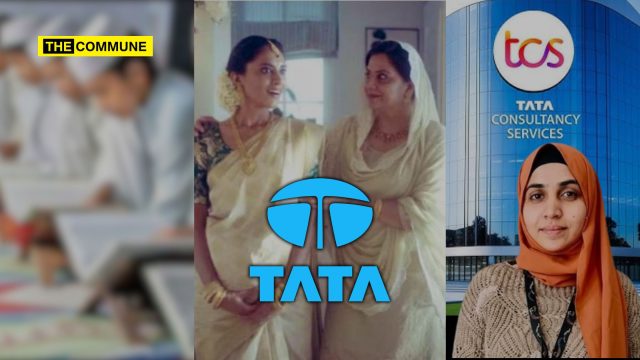
The Tata Group, long celebrated as the conscience of Indian capitalism, is facing a reckoning. Its days of being an exemplary brand seems to have disappeared. The TCS Nashik sexual harassment and religious coercion case just opened the Pandora’s box to reveal what Tata Group could have been hiding all this while. The revelations force a question – whose values, exactly, does India’s most powerful conglomerate reflect?
Tata Trusts’ Madrasa Programme: Philanthropy or Preferential Treatment?
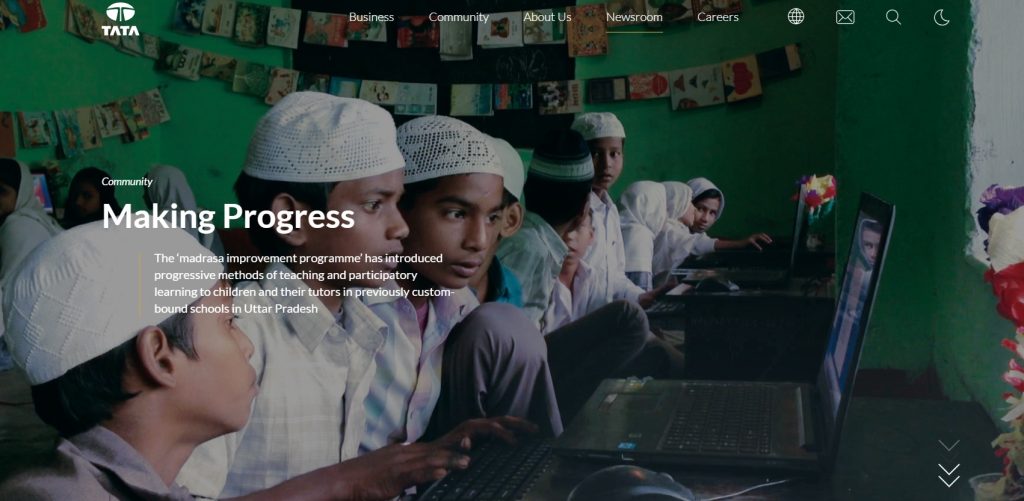
The Tata Trusts, the philanthropic arm of the Tata Group, has been running a Madrasa Improvement Programme (MIP) since 2005 – a fact confirmed on the Trust’s own official website. The programme, initially launched in Varanasi and Jaunpur in Uttar Pradesh and later expanded to Bihar and Jharkhand, currently covers 50 madrasas and has reached over 1 lakh children, a majority of them girls.
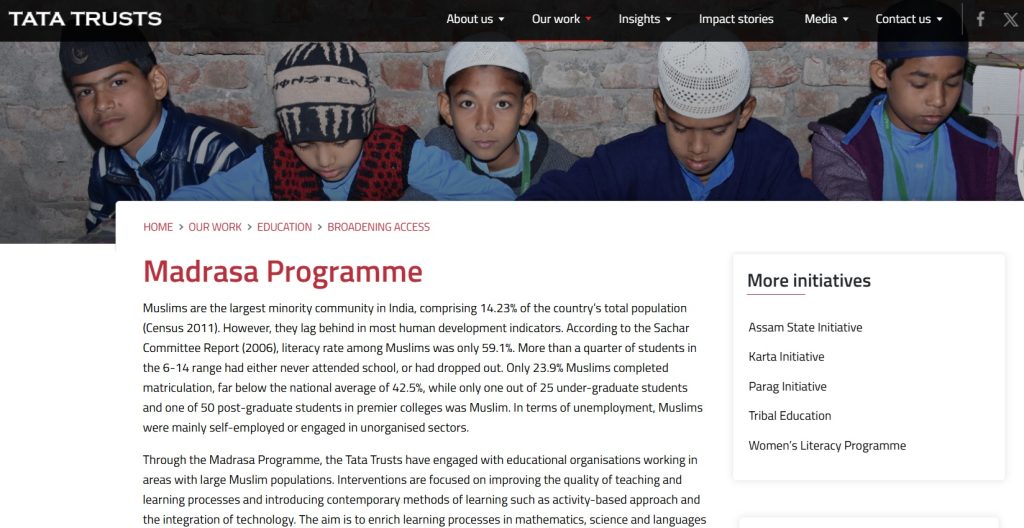
The stated objective is modernisation: improving the teaching of mathematics, science, and languages, introducing activity-based learning, and facilitating the transition of madrasa students into mainstream schools. The programme is part of Tata Trusts’ broader education access initiatives for underserved communities.
One wonders why a comparable programme does not exist for students in Hindu religious institutions such as pathshalas or gurukuls. Tata Trusts has not issued a fresh statement in response to the renewed criticism.
Tanishq’s ‘Ekatvam’ Ad: Interfaith, But Only In One Direction
In October 2020, Tanishq, the Tata Group’s jewellery brand, released a 43-second advertisement titled “Ekatvam” (Oneness) as part of a broader campaign promoting unity. The ad depicted a Hindu bride whose Muslim in-laws organise a traditional baby shower for her – a ceremony not customary in Muslim households.
The ad drew immediate backlash on two grounds: first, that it portrayed a Hindu woman assimilating into a Muslim family – never a Muslim woman in a Hindu household; and second, that it romanticised interfaith relationships in what critics characterised as a “one-directional” narrative. Tanishq withdrew the advertisement within days, citing “divergent and severe reactions” and expressing concern for the safety of its employees and store staff.
The directional bias in the ad’s premise was a legitimate editorial concern that warranted scrutiny regardless of its political optics.
TCS-Linked BPO in Nashik: FIRs Filed, SIT Constituted in “Corporate Jihad” Case
The most serious and legally active controversy involves a TCS-associated BPO campus in Nashik, Maharashtra, where a criminal case of sexual harassment and alleged religious coercion came to light in April 2026.
According to FIRs filed with Nashik police and statements by victims, Hindu women employees at the facility were allegedly subjected to:
- Sexual harassment by male Muslim colleagues and supervisors
- Forced namaz participation and attempts at religious conversion
- Intimidation and coercion, including alleged forced consumption of beef
- A sustained pattern of grooming and exploitation described as “corporate jihad” by Hindu groups filing complaints
As of mid-April 2026, 9 FIRs have been registered, and a Special Investigation Team (SIT) has been constituted to probe the case. A bail application by key accused Danish Sheikh is listed before the Nashik Road Sessions Court, with the next hearing scheduled for 2 May 2026.
The Tata Group, in a formal response, called the allegations “anguishing” and announced an internal investigation led by a senior executive.
Air India’s Dress Code: No Sindoor, No Mangalsutra, No Bindi
The fourth controversy broke in the third week of April 2026, when screenshots from what is purportedly Air India’s official Cabin Crew Handbook circulated widely on social media. The handbook explicitly lists the following as prohibited for female cabin crew:
- Bindi of any colour
- Sindoor
- Tikka of any colour
- Mangalsutra
- Choora (bridal bangles)
It appears that this problem runs much deeper.
Here are some pictures from the Air India Cabin Crew Handbook. Bindi, Sindoor, Tilak etc not allowed.
Why are they doing this so blatantly?#SocietyFromStreet pic.twitter.com/uqVRbXBwwF
— Pranav Mahajan (@pranavmahajan) April 18, 2026
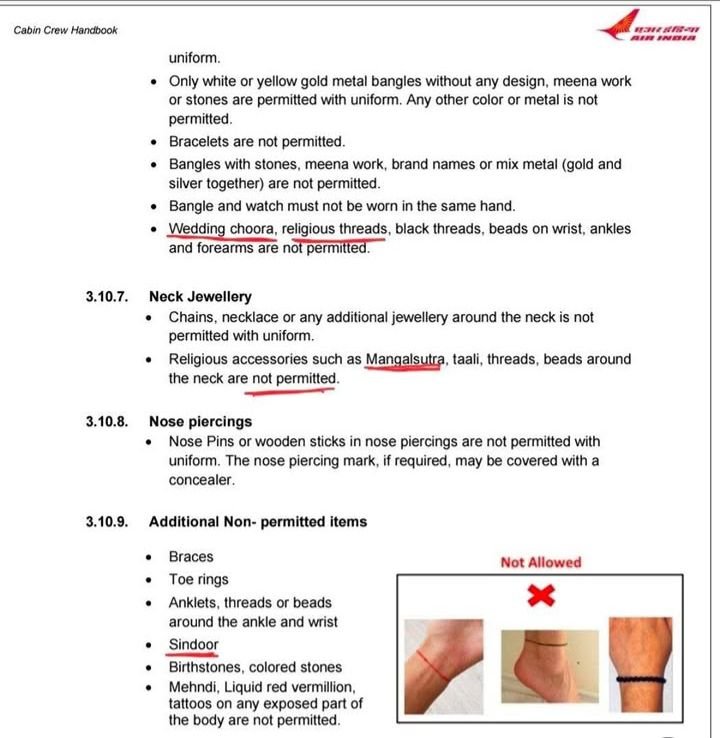
Air India confirmed the existence of the handbook but stated the document was “outdated” and that grooming standards were under review to meet international aviation norms following the Tata Group’s acquisition of the airline. The airline did not clarify when the policy would be formally revised or whether a revised version had already been put in place.
The prohibitions exclusively target markers of Hindu married women’s identity, and that no equivalent restrictions on Islamic religious symbols or markers were visible in the leaked document. The controversy followed a similar uproar over grooming policies at Lenskart, which broke in the same week.
Tata Group Has Fooled Hindus
Four controversies. Four different companies under Tata Group. One consistent thread. Whether by design or institutional culture, the Tata Group has – funded one religion’s schools while ignoring another’s, glamourised interfaith assimilation in a single direction, allowed a workplace to become a site of alleged religious predation, and told its Hindu married women that their sacred markers have no place in its aircraft. By pretending to be an icon, Tata Group has fooled an entire nation. And in a country where 80% of the population is Hindu, that selectivity deserves to be named for what it is.
Subscribe to our channels on WhatsApp, Telegram, Instagram and YouTube to get the best stories of the day delivered to you personally.