Home Blog Page 4

DMK Stooge Actor Sathyaraj Praises Udhayanidhi Stalin’s ‘Eradicate Sanatana Dharma’ Speech, Calls It ‘Gethu’

DMK Stooge Actor Sathyaraj Praises Udhayanidhi Stalin’s ‘Eradicate Sanatana Dharma’ Speech, Calls It ‘Gethu’

A day after DMK scion and Leader of the Opposition Udhayanidhi Stalin reignited national controversy by calling for the abolition of Sanatana Dharma on the floor of the Tamil Nadu Assembly, veteran actor and known DMK stooge Sathyaraj released a video message praising the remarks, describing Udhayanidhi’s delivery as “gethu” (swagger) and signing off with “Hats off, Uday.”

The Assembly Remarks

On 12 May 2026, delivering his maiden speech as Leader of the Opposition in the Tamil Nadu Legislative Assembly, Udhayanidhi Stalin stated: “Sanatana Dharma, which divides people, must certainly be abolished.” The remark was a deliberate reiteration of his September 2023 statement, which had drawn nationwide outrage, triggered multiple court cases from pro-Hindu organisations, and was subsequently declared hate speech against the Hindu community by the Madras High Court in January 2026. Despite the legal history of the remark, Udhayanidhi chose to repeat it in the very first speech of his tenure as LoP.

Sathyaraj’s Video Statement

In a video that quickly went viral, Sathyaraj addressed Udhayanidhi directly, saying: “My dear brother, I heard the maiden speech of self-respecting Udhayanidhi Stalin as LoP. He remained unfailing in his duty, unwavering in his dignity, and unyielding in his discipline.”

Sathyaraj specifically singled out the Sanatana remark for praise: “Sanathanam, who divides the people, must certainly be eradicated. His swagger (gethu), to use a term that only Gen Z and the ‘2K kids’ would truly grasp, was on full display when he asserted that the divisive force of caste must be unequivocally eradicated.”

He further framed the call to abolish Sanatana Dharma as synonymous with social justice: “The call to abolish Sanatanam encompasses the imperative to uphold social justice.” Sathyaraj then invoked a song from actor-politician MGR to draw a parallel with Udhayanidhi’s defiance: “Even if a thousand hands rise to obscure it, the Sun never fades from view; Even if decrees are issued to restrain them, the waves never cease their motion.”

Subscribe to our channels on WhatsAppTelegram, Instagram and YouTube to get the best stories of the day delivered to you personally.

“Brahminical Patriarchy, Varnashrama Dharma, Caste Hierarchy”: DMK Supporter Goes On A Rant As NDTV Anchor Padmaja Joshi Grills Him On Udhayanidhi Stalin’s “Eradicata Sanatana Dharma” Remarks

On 12 May 2026, Udhayanidhi Stalin, making his maiden speech as Leader of the Opposition in the Tamil Nadu Legislative Assembly, repeated a now-familiar line: “Sanatana Dharma, which divides people, must certainly be abolished.” It was a deliberate echo of his 2023 remarks, when he had compared Sanatan Dharma to dengue and malaria and called for its outright eradication. The repetition was a statement of ideological identity.

That evening, NDTV’s The Buck Stops Here, anchored by Padmaja Joshi, brought in DMK-aligned political analyst Hareesh Mohamed Ibrahim to defend the remark. What followed was about 7 minutes of evasion, slogan shouting, deflection and ideological jargon, but not a single source.

When asked directly by Padmaja Joshi why there was a need to once again call for the eradication of Sanatana Dharma during his debut speech as Leader of Opposition, Hareesh Mohamed Ibrahim attempted to defend the remarks by claiming that Sanatana Dharma represented “divisiveness with caste hierarchy” and “Varnashrama Dharma.”

But when Joshi repeatedly asked him to quote a source, any source, where Sanatana Dharma itself was defined as caste hierarchy, he simply could not answer.

The debate reached a telling moment when Ibrahim accused Joshi, a Hindu woman anchoring a national news programme, of conducting a one-sided interview and told her she needed to “first learn” how to conduct a debate. Joshi’s response was sharp:

“I will be damned if I take instructions from anyone who makes statements without quoting a single source, is defending a statement asking for the eradication of an entire religion and then decides to play victim by saying ‘we have withstood threats.’ You are the ones threatening.”

When Ibrahim ran out of road on the sourcing question, he pivoted. He argued that “Brahmanical patriarchy” still dominates every institution in India, including the Supreme Court, because its judges disproportionately come from one community that “hails from the head.” Joshi noted the irony immediately: “It’s so amusing; whenever you don’t have an answer, these same big words. You have gone around the world in the last 180 seconds, but you haven’t answered my question.”

Ibrahim’s response, “I can’t answer”, was the most honest thing said in the exchange. Joshi was withering: “Right now I am being subjected to Brahmanical patriarchy and patronization because you refuse to answer my one simple straightforward question.”

A Muslim man invoking “Brahmanical patriarchy” to deflect a Hindu woman’s demand for a source citation – the debate had, at that point, illustrated its own thesis.

That moment perfectly captured what the DMK ecosystem has increasingly become: an ideological structure where Hindu traditions can be endlessly demonised, caricatured and attacked in the name of “social justice,” while even basic questions demanding evidence are treated as oppression.

Padmaja Joshi’s question was not complicated. She did not ask for a philosophical dissertation. She asked for one source. One text. One citation. One authority that explicitly defines “Sanatana Dharma” as equivalent to caste hierarchy.

No answer came.

Instead, Hareesh Mohamed Ibrahim repeatedly shifted the discussion toward “Brahmins from the head,” “Shudras from the feet,” the judiciary, patriarchy, and broad social grievances. But even after multiple opportunities, he failed to establish the central claim underpinning the DMK’s rhetoric that Sanatana Dharma itself is nothing more than caste oppression.

Because what Udhayanidhi Stalin said was not a criticism of caste discrimination alone. He did not say “eradicate caste hierarchy.” He said, “eradicate Sanatana Dharma.” There is a vast difference between criticising social evils and calling for the eradication of a civilisational faith tradition followed by millions.

And this is precisely where the DMK ecosystem repeatedly reveals its selective standards.

Throughout the debate, Padmaja Joshi pointedly asked whether Udhayanidhi Stalin had ever called for the eradication of any other religion or “Dharma” because of hierarchies or discrimination within them. Hareesh Mohamed Ibrahim could not provide a single example.

That silence was revealing.

The DMK and its ideological defenders routinely present themselves as fearless critics of oppression everywhere. But in practice, their aggression appears overwhelmingly directed at Hindu traditions, Hindu symbols and Hindu religious identity. The same language, tone and rhetoric is almost never applied toward other religions with similar intensity.

What made the exchange particularly striking was the inversion at play. A Hindu woman anchor asking for evidence was framed as embodying “Brahmanical patriarchy,” while a male political panellist refusing to answer basic questions positioned himself as the victim.

Within sections of the Dravidian ideological framework, terms like “Brahmanical patriarchy” are often deployed less as analytical concepts and more as rhetorical weapons – labels used to delegitimise dissent, shut down questioning and morally corner opponents without engaging substantively with the argument being raised.

The NDTV exchange inadvertently exposed how fragile the intellectual foundation behind the “eradicate Sanatana Dharma” slogan actually is. Once pressed for textual basis, definitional clarity or philosophical grounding, the argument collapsed into emotional rhetoric and ideological catchphrases.

And that is perhaps the most significant takeaway from the debate.

For years, the DMK ecosystem has attempted to frame attacks on Sanatana Dharma as merely progressive anti-caste activism. But the moment someone calmly asks for sources, definitions and consistency, the conversation rapidly shifts from evidence to intimidation, from scholarship to slogans, and from debate to accusation.

Subscribe to our channels on WhatsAppTelegram, Instagram and YouTube to get the best stories of the day delivered to you personally.
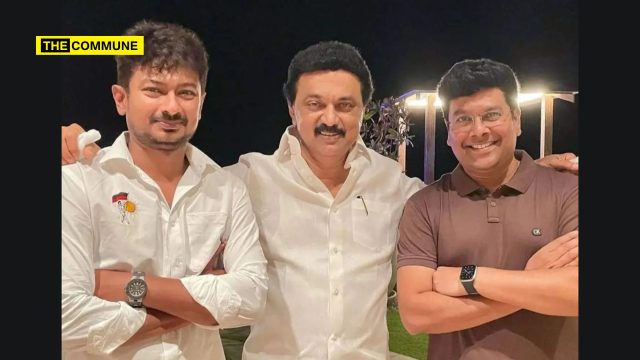
500 DMK Cadres Join TVK In Kolathur, Leaders Claim ‘Beginning of Bigger Shift’

500 DMK Cadres Join TVK In Kolathur, Leaders Claim ‘Beginning of Bigger Shift’

A fresh political stir unfolded in Chennai’s Kolathur constituency after more than 500 DMK functionaries, led by local youth wing functionary Dileep, joined the Tamilaga Vettri Kazhagam (TVK) in the presence of party district secretary MTC Thaniga. During the event, the defectors accused the DMK of internal issues and claimed that many more cadres were preparing to leave the ruling party in the coming days.

Speaking at the gathering, Dileep said he had worked “sincerely and with commitment” in the DMK but had become disillusioned with “local politics.” He clarified that he had no grievance against the party leadership but decided to join TVK under the leadership of actor-turned-politician Vijay. He claimed that he could bring in even more supporters from Kolathur in the future and promised to work “100 percent” for TVK.

The speakers at the event repeatedly asserted that the current influx was only the “beginning,” claiming that more DMK members were continuing to contact them expressing interest in joining TVK. They also alleged that future induction programmes would be held on a much larger scale in the coming weeks.

Responding to criticism and videos circulating online showing emotional reactions from some cadres in Kolathur, the speakers dismissed the backlash and said political shifts were inevitable. One of the speakers remarked that “if good is done, good will happen,” comparing politics to sowing seeds in farming, and argued that the public would ultimately judge political parties based on their actions.

The event also featured praise for TVK leader Vijay, with speakers highlighting his statements against extravagance in political functions and public inconvenience. They said the meeting had been organised inside a hall in line with party instructions to avoid causing traffic disruptions on roads.

During the programme, the speakers also attacked remarks allegedly made by Deputy Chief Minister Udhayanidhi Stalin regarding “horse-trading” fears in politics. Rejecting the allegation, one speaker questioned why a party with a clear majority would fear defections, and claimed that several alliance parties, including Left parties and the Indian Union Muslim League, were already backing the ruling alliance. The speaker further alleged that accusations of horse-trading were baseless attempts to tarnish TVK’s growth.

The speakers further described both the DMK and AIADMK as “corrupt parties” and claimed that TVK was increasingly attracting younger voters and cadres. They argued that youth participation in the party would continue to grow in the coming years and asserted that as long as TVK chief Vijay remained in politics, “he will become Chief Minister.”

Subscribe to our channels on WhatsAppTelegram, Instagram and YouTube to get the best stories of the day delivered to you personally.

‘Forget Wayanad’: Posters Targeting Rahul, Priyanka Gandhi Crop Up Amid Kerala CM Power Struggle

‘Forget Wayanad’: Posters Targeting Rahul, Priyanka Gandhi Crop Up Amid Kerala CM Power Struggle

As the suspense over the selection of Kerala’s next Chief Minister continued, with the Congress leadership still unable to arrive at a final decision even ten days after the Assembly election results were declared, posters targeting Congress leaders Rahul Gandhi and Priyanka Gandhi Vadra surfaced in Wayanad and Kozhikode districts, exposing growing tensions within sections of the party rank and file. This comes amid the ongoing power struggle within the United Democratic Front (UDF), as reported in Times of India.

The posters appeared on the name board of Rajiv Bhavan, the District Congress Committee (DCC) office in Kalpetta, as well as near Priyanka Gandhi’s MP office at North Karassery in the Thiruvambady Assembly constituency of Kozhikode district.

Printed in English, the anonymous posters carried sharp warnings directed at the Gandhi siblings. One poster read, “Mr Rahul and Priyanka forget Wayanad. You won’t win again from here.” Another stated, “RG and PG, this is not a warning, Kerala never forgive you for this blunder.” A third poster directly targeted Congress general secretary K. C. Venugopal, saying, “Mr Rahul, KC might be your bag bearer but people of Kerala never forgive you.”

Residents and party workers noticed the posters on Wednesday (13 May 2026) morning. It is believed that unidentified persons pasted them during the night hours on Tuesday (12 May 2026). Similar posters appearing nearly 50 kilometres apart in Kalpetta and Karassery triggered speculation that the same group or individuals were behind both incidents.

Following the controversy, the District Congress Committee leadership intervened and removed the posters from both locations. Party leaders reportedly obtained CCTV footage showing the person who pasted the posters and initiated an internal enquiry to determine whether any Congress workers were involved in the incident.

DCC leaders said such actions would not be tolerated and warned that strict disciplinary action would be taken if any party member was found responsible for putting up the posters.

The latest episode comes amid intensifying factional tensions within the Congress over the choice of Chief Minister following the UDF’s decisive victory in the Kerala Assembly elections. Internal differences have reportedly sharpened between supporters of opposition leader V. D. Satheesan and those backing K C Venugopal for the top post.

Last week, protests were staged by local Congress workers at North Karassery against attempts to project Venugopal as Chief Minister instead of Satheesan, who had led the UDF campaign and played a central role in the alliance securing victory in 102 Assembly seats.

Satheesan had earlier staked his political future on the election outcome, publicly declaring that he would quit politics if the UDF failed to cross the 100-seat mark in the Assembly election.

The ongoing flex and poster war within the Congress has also taken a curious political turn after a CPM worker was found allegedly putting up a flex board supporting Venugopal in Thrissur district earlier this week.

At Vadanappally in Thrissur on Monday, a flex board carrying the slogan “Let KC Lead” along with Venugopal’s photograph appeared in public and was attributed to a group calling itself the “Save Congress” faction.

However, CCTV footage later showed that the flex board had allegedly been installed by A Mohammed, a local committee member of the CPI(M). The incident gained widespread attention after the CCTV visuals surfaced publicly, raising further questions over the political messaging and internal power struggle unfolding within the Congress camp even after the UDF’s electoral victory.

Subscribe to our channels on WhatsAppTelegram, Instagram and YouTube to get the best stories of the day delivered to you personally.
IUML Refuses To Give Up Kerala Education Portfolio, Plans ‘Super Ministry’ For Greater Control

IUML Refuses To Give Up Kerala Education Portfolio, Plans ‘Super Ministry’ For Greater Control

The Indian Union Muslim League (IUML) has once again made it clear that it considers Kerala’s education department its political stronghold, refusing to give up control of the powerful portfolio in any future United Democratic Front (UDF) government and triggering renewed concerns among critics over the growing communalisation of the education sector in the state, as reported in The New Indian Express.

Senior IUML leader and likely ministerial candidate K M Shaji openly declared that the League would not compromise on the department under any circumstances and was instead planning to further consolidate its influence by merging the General Education and Higher Education departments into one super ministry under the next UDF government.

The statement comes amid reports that the Congress leadership had internally explored reclaiming the education portfolio this time by offering the IUML another major department in exchange. However, the League has now firmly shut the door on any such possibility.

The controversy intensified after BJP leader and newly elected Kazhakoottam MLA V Muraleedharan warned that once again handing over the education department to the IUML would have “far-reaching consequences” and would further strengthen “communal interests” within Kerala’s education system.

Muraleedharan’s remarks struck at a long-running criticism in Kerala politics – that the education sector, which shapes generations of students, should not remain under the prolonged political influence of a party openly rooted in community-based identity politics.

However, instead of softening its stand, the IUML doubled down. Responding sharply, Shaji claimed that Muraleedharan’s criticism had only strengthened the League politically within the UDF alliance.

Drawing a comparison with former SNDP Yogam general secretary Vellappally Natesan, Shaji said every attack from Natesan in the past had only increased public support for the IUML and that Muraleedharan was now playing a similar role.

Shaji further revealed that even before Muraleedharan’s remarks, the League had already internally decided that the education portfolio would not be exchanged with the Congress under any formula. He also confirmed that the IUML intended to unify both school and higher education under one ministry, thereby centralising even greater control over Kerala’s education sector.

Sources inside the League said the party leadership had internally debated whether continuing to hold such a politically sensitive department could become a burden amid repeated allegations of community-driven influence in education. Despite this, the IUML leadership reportedly concluded that surrendering the portfolio would weaken the party’s long-standing institutional grip within the UDF power structure.

The party is now finalising its list of five ministerial nominees for a future UDF cabinet. Shaji categorically stated that there was “no question” of the IUML accepting fewer than five cabinet berths.

The education department has historically remained closely tied to the IUML ever since the formation of the UDF coalition in Kerala. Over the decades, this arrangement has repeatedly triggered accusations from rival parties and sections of civil society that a critical public institution was being steadily transformed into a political and ideological sphere of influence for a community-based party.

The repeated control of the education sector by the IUML raises larger questions about the secular functioning of educational administration in Kerala, particularly when curriculum influence, institutional appointments and educational policy shape the cultural outlook of future generations.

C H Mohammed Koya was among the earliest IUML leaders to control the education portfolio between 1967 and 1973 under the governments led by E. M. S. Namboodiripad and C. Achutha Menon. Decades later, P. K. Abdu Rabb handled the department during the last UDF government between 2011 and 2016.

The renewed debate has also reopened historical discussions about Muslim leaders handling India’s education ministry after Independence.

Maulana Abul Kalam Azad was India’s first Education Minister from 1947 to 1958 who was trusted personally by Jawaharlal Nehru during the formative years of the Republic.

Additionally, figures like Humayun Kabir, M. C. Chagla and Syed Nurul Hasan also held education-related roles at different points. Now whether these appointments can be viewed as part of an organised community-based political bargaining structure is something that must be debated.

Overall, the IUML’s present insistence on permanently retaining Kerala’s education portfolio reflects a far more explicit attempt to preserve political and institutional influence over one of the state’s most sensitive sectors.

Subscribe to our channels on WhatsAppTelegram, Instagram and YouTube to get the best stories of the day delivered to you personally.
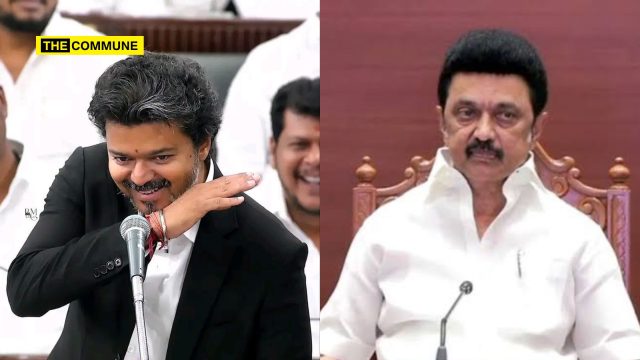
Karnataka Congress Govt Revokes 2022 Hijab Ban, Permits Students To Wear ‘Limited Traditional & Faith-Based’ Symbols

Karnataka Congress Govt Revokes 2022 Hijab Ban, Permits Students To Wear 'Limited Traditional & Faith-Based' Symbols

The Karnataka government on Wednesday (13 May 2026) issued a major order withdrawing with immediate effect its February 2022 directive that had effectively banned the wearing of hijab and other religious symbols in aided and private schools and pre-university colleges across the state, as reported in LiveLaw.

In a fresh circular issued by the Department of School Education and Literacy, the government permitted students to wear limited traditional and faith-based symbols along with the prescribed uniform. The order specifically allows the use of hijab, turban (Pete), sacred thread (Janivara), Shivadara, Rudraksha and other similar symbols, provided they do not interfere with institutional discipline, safety requirements or student identification procedures.

The move formally nullifies the Government Order dated 5 February 2022, which had directed all government, aided and private educational institutions in Karnataka to strictly enforce prescribed uniforms, thereby prohibiting students from wearing the hijab and other visible religious symbols inside classrooms. The 2022 order had triggered nationwide protests, political controversy and prolonged legal battles before the Karnataka High Court and the Supreme Court.

In March 2022, the Karnataka High Court had upheld the state’s position and ruled that wearing the hijab was not an Essential Religious Practice under Islam and therefore did not receive constitutional protection under Article 25. Subsequently, a two-judge Bench of the Supreme Court delivered a split verdict on petitions challenging the 2022 order, resulting in the matter being referred to a larger Bench. That reference remains pending before the apex court.

The latest order also comes shortly after the Karnataka High Court issued notice to the state government in a public interest litigation challenging the alleged denial of entry to students wearing sacred thread during the Common Entrance Test (CET) 2025 conducted by the Karnataka Examination Authority. The PIL sought a declaration that preventing such students from appearing for the examination was unconstitutional.

Referring to provisions of the Karnataka Education Act, 1983 and Rule 11 of the Karnataka Education Institutions (Classification, Regulation and Prescription of Curricula etc.) Rules, 1995, the government stated that educational institutions may permit limited use of traditional and practice-based religious symbols as long as they do not obstruct orderliness or institutional functioning.

The preamble to the government order also laid out the constitutional reasoning behind the withdrawal of the earlier ban. It stated that secularism under the Constitution does not mean opposition to individual faith or belief systems, but instead requires equal respect for all religions, institutional impartiality and non-discriminatory conduct by the state.

The order further stated that the government was of the view that “institutional discipline and orderliness can be preserved without mandatorily prohibiting limited traditional and practice-based symbols that students commonly wear.”

The circular specifically directed that no student wearing such permitted symbols should be denied admission, academic progress, examinations, competitions or participation in educational activities. It also stated that no student shall be compelled to remove such symbols and that no institution or authority may forcibly remove them.

At the same time, the order carved out a limited exception for examinations, stating that national and state-level dress code regulations prescribed by competent authorities may still apply wherever necessary.

The government further directed that implementation of the revised policy must remain uniform and free from religious or communal discrimination. School Development and Monitoring Committees (SDMCs), College Development Committees (CDCs), governing bodies and heads of institutions were instructed not to humiliate, insult, demean or subject students to derogatory treatment for wearing permitted symbols.

The order also invoked the teachings of 12th century social reformer Basavanna, quoting the phrase “Iva Nammave” (“They are ours”) and directing educational institutions in Karnataka to follow the principle in their conduct towards students.

Subscribe to our channels on WhatsAppTelegram, Instagram and YouTube to get the best stories of the day delivered to you personally.
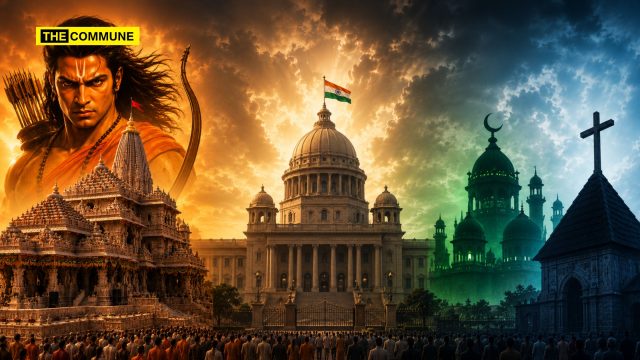
“We’ll Eradicate Sanatanam”: Joseph Vijay’s TVK MLA Mustafa Repeats Udhayanidhi Stalin’s Hate Speech Against Sanatana Dharma/Hinduism

V.M.S. Mustafa (Madhar Badurudeen) the founding president of the Tamil Nadu Muslim League (TNML) and the TVK MLA from Madurai Central has declared that his party has entered the political field to eradicate Sanatana Dharma.

Speaking to reporters, he said “We also have Periyar, Ambedkar and we’ve entered the field to eradicate Sanatana (Dharma).

Ironically he’s the MLA of Madurai Central where the world-famous historic Madurai Meenakshi Amman Temple is located.

Moving on to comment on the TVK government’s move to close liquor shops near schools, hospitals and religious places, he said “First we’ve closed the liquor shops. No government has done this before. We’ve assured protection for women, temple, church, schools, bus stands. Especially the wish of Tamil Nadu women has been fulfilled by closing 217 shops.”

Joseph Vijay Doesn’t Object To Eradicate Sanatana Dharma Hate Speech

On 12 May 2026, leader of opposition and DMK scion Udhayanidhi Stalin once again triggered controversy after reiterating remarks against Sanatana Dharma during his speech in the Assembly, while Chief Minister Joseph Vijay was looking on in the House.

“Victory to Tamil. Long live Tamil Nadu. Sanatanam, which divides the people, must certainly be eradicated. Thank you, greetings.”, Udhayanidhi Stalin said.

However, Vijay nodded and greeted Udhayanidhi with his hands folded as the latter concluded the speech.

This is Udhayanidhi Stalin reiterating that he stands by his hateful ‘eradicate Sanatana Dharma’ comments which he made as Deputy CM of the state back in 2023 in a conference titled ‘Eradicate Sanatana Dharma’ conference.

Subscribe to our channels on WhatsAppTelegram, Instagram and YouTube to get the best stories of the day delivered to you personally.
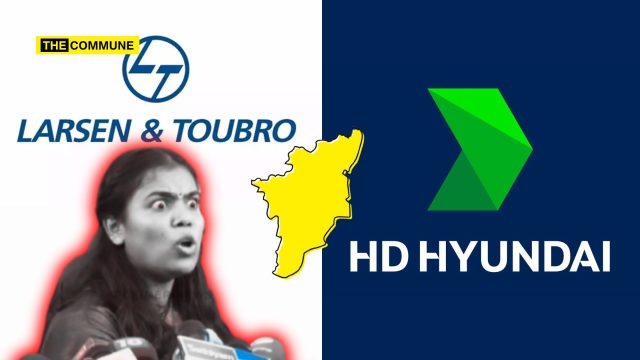
From A Self-Styled ‘Astrologer’ To Almost Becoming OSD On Taxpayer Money: Who Is Vijay’s Trusted Advisor Radhan Pandit?

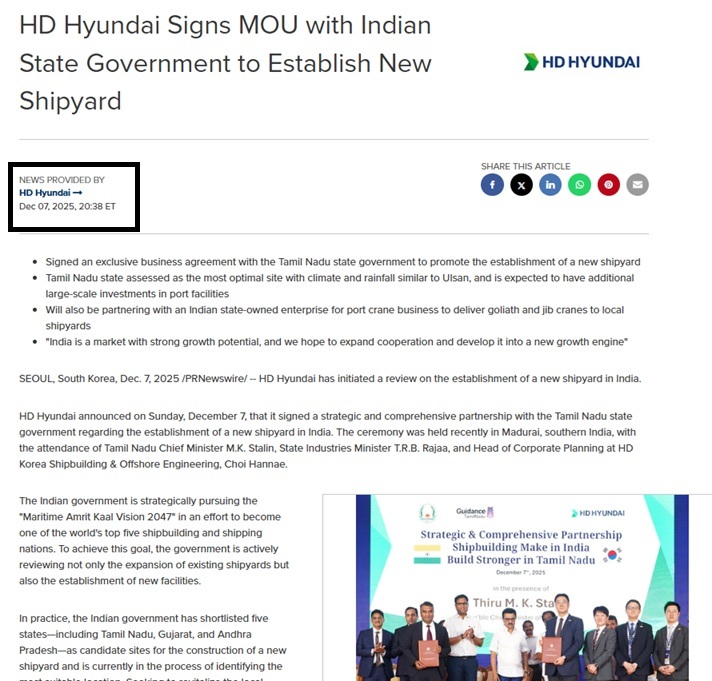
On 12 May 2026, Tamil Nadu CM Joseph Vijay appointed his personal astrologer Rickey Radhan Pandit Vettrivel as ‘Officer on Special Duty’ to Chief Minister but within 24 hours, the order as revoked.

The news of Joseph Vijay’s in-house astrologer being made an OSD was met with skepticism and anger among the public. This is especially since the OSD is a taxpayer funded role and people questioned why an astrologer and in what capacity he was needed in that role.

After massive backlash on social media and from his own alliance parties, Joseph Vijay’s TVK government revoked the appointment.

Who Is Radhan Pandit?

Born as Vettrivel in Erode, Radhan Pandit has publicly claimed close associations with former Tamil Nadu Chief Minister J. Jayalalithaa, V. K. Sasikala and several senior political figures across India.

Vikatan states he is from Oothukuli in Tiruppur. About 30 years ago, he reportedly started as a small-time astrologer in Tiruppur district.

He got his first big break through a local AIADMK ‘VIP’ after predicting a bright future post-election loss in 1996. Post-1996, he was introduced to Erode Muthusamy, then to Jayalalithaa and Sasikala – both of whom placed extraordinary faith in astrology.

In 2001, after Jayalalithaa returned to power, he reportedly became the court astrologer of Poes Garden – the official residence and nerve centre of AIADMK power. Following the Sasikala fallout, a serious rift developed between him and Sasikala and thus the “doors of Poes Garden were closed” to him. After falling out with Sasikala, he reportedly left Tamil Nadu for Delhi, changed his name to Rathan Pandit, and reinvented himself as a North Indian-style astrologer.

During his Delhi years, he reportedly worked with senior BJP leaders including L.K. Advani and M.M. Joshi, and with the Sharad Pawar family. He also had a business stint in Singapore.

In 2020, he is said to have established contact with actor Vijay.

On his website and in interviews, he describes himself as a “spiritual mentor” who guided leaders, ministers, governors, business executives and influential personalities through astrology, meditation and numerology.

He has a YouTube channel with over 8 lakh subscribers.

Claims Of Advising Jayalalithaa

His website (down at the moment) gives an elaborate description. Among his most controversial claims are assertions that he advised Jayalalithaa on election timing, legal strategies, candidate selection and even changes to the spelling of her name from “J. Jayalalitha” to “J. Jayalalithaa” for numerological reasons. He further claimed that court dates, advocate selections and political decisions during her tenure were influenced by his astrological guidance. He also stated that he altered Sasikala’s public name to “V. K. Sasikala” and played a role in naming entities such as “Jaya TV” and “MIDAS Distilleries.”

In some of his interviews, he claims that he must have had 2000 meals with her.

From 2001 to 2006, she would have coffee and biscuits with me daily every morning and then only leave for office. I’ve had most of the lunches with her.“, he claims.

Radhan Pandit additionally claimed that he successfully predicted Jayalalithaa’s 1991 electoral victory as well as her political setbacks and possible imprisonment during the mid-1990s. According to accounts cited in political circles, his relationship with Jayalalithaa reportedly deteriorated after he allegedly assured her she would avoid imprisonment in the disproportionate assets case, only for her to later be jailed in 2014. Sources familiar with the episode claim she subsequently distanced herself from him, after which he relocated abroad, including spending time in Singapore and Delhi.

During his Delhi phase, the astrologer reportedly reinvented himself under the name “Radhan Pandit,” adopting a more North Indian public identity in an effort to expand his reach among national and international clientele. His website states that he has advised “senior officials from the Prime Minister’s Office,” chief ministers, ministers, governors, university leaders and global corporate executives. He also claims to have over 950 clients worldwide and says he has travelled extensively across India, Dubai, Sri Lanka and other countries.

During the time former CM J Jayalalithaa was alive, Radhan Pandit who then called himself Dakshinamurthy Vetrivel, claimed to have been providing astrological consultations at her residence for nearly 15 years; he submitted a complaint petition to the Chennai City Police Commissioner alleging that he and his family had been receiving repeated death threats. In the petition, Vetrivel reportedly claimed that unidentified individuals were continuously threatening to kill him along with his family members, prompting him to seek police protection and request immediate action from the authorities.

It is reported that in 2008, he gave an interview to Junior Vikatan alleging that Sasikala obtained his signature on blank stamp papers, and threatened to destroy his family.

Other Claims

Before becoming closely associated with Vijay, Radhan Pandit had repeatedly spoken about actor Ajith Kumar in astrological terms during interviews. In one widely circulated appearance, he described Ajith as possessing a “Chief Minister horoscope” and compared his public stature to legendary actor-politician N. T. Rama Rao. He praised Ajith’s intellect, personality and public appeal, while also claiming the actor had astrological combinations suitable for political leadership in the future. However, observers note that Ajith never publicly entertained the astrologer’s political overtures, following which Radhan Pandit increasingly aligned himself with Vijay’s political rise.

In another interview, he says, “He is a hugely lucky man, no doubt at all. I really approached him. But his people said since he met with many accidents and he was not keen on all this (astrology). So I retreated.”

Predictions For 2019

In 2019, he reportedly predicted a massive Congress victory as can be seen from his video. He said, “The 2019 election is not easy for BJP; Congress is the one in favour. In February this year, I had said the same thing in a similar video clip back in February 2012. In the 2019 election, Congress has the chance to come to power. The reason is that both Rahul and Priyanka Gandhi are in a very good period astrologically, while Modi sir is to some extent in an unfavourable period.”

And we know how that ended for Rahul Gandhi, a humiliating defeat for the Congress party for the second time.

In a more recent post, he claims he is 60 years old and that he wants a life partner. He also describes some secret meditation technique capable of making people extraordinarily wealthy and successful, saying he would teach it only to selected individuals after analysing their horoscopes and in exchange for 10% of their future earnings. He further stated that he intended to train a limited number of people globally, warned that the method could become “dangerous” in the hands of “bad people,” and claimed that those taught by him could eventually dominate lists of the world’s richest individuals. But the whole video ends up sounding more like a Ponzi scheme rather than a real technique.

After the Karur stampede, here is what he said: “He made the whole country turn back and look at him. Over 40 people died in the stampede. And this news is flashed in Chinese newspapers, in newspapers in South Africa. Everyone is watching. Everyone is not paying attention to the people who died after they came to see an actor. It is more on the actor who the people went to see. They were present right up until the very moment of death. So they only look at the grace that he had.”

Explaining why Vijay would win, he said, “Vijay will cross the bad time in December. I am boldly giving you this interview. Call me back on January 31st. But before that it will be clear that he is the next CM. That is because the people’s mentality will change. Read psychology books. Do you know why Hitler couldn’t win? Many people think they are Hitler. They are tormented by Hitler. Lakhs of jews are massacred. Somehow this spreads everywhere. Everyone thinks and fears that Hitler will destroy the world. That fear makes him keep thinking, now everyone’s mental power goes there. If 10 people think of you, you will gain their energy. Because of this incident, about 500 crore people would have thought about Vijay.” 

For more than a year, Radhan Pandit has functioned as one of TVK’s most visible unofficial defenders in television debates, interviews and online discussions. He frequently predicted Vijay’s political ascent and publicly projected confidence that TVK would emerge as a major political force in Tamil Nadu. According to sources, he also advised Vijay on symbolic and astrological aspects of his political campaign, including recommending that he contest from a constituency beginning with the letter “V.”

It is also alleged that the astrologer maintains extensive investment and business connections in Singapore and Malaysia, with links to entrepreneurs, investors, software firms and diplomatic circles. Sources claim his role within the broader TVK ecosystem goes beyond astrology and symbolism, extending into facilitating investment discussions and development proposals connected to Tamil Nadu. Diplomatic representatives from Singapore were reportedly present during multiple meetings with Vijay and also attended his swearing-in ceremony, according to sources familiar with the interactions.

Vijay’s decision to appoint Rickey Radhan Pandit Vettrivel as Officer on Special Duty has raised larger questions about judgment, transparency and the use of public office. The controversy is not merely about one astrologer’s personal beliefs, but about whether a taxpayer-funded administrative role is being used for political loyalty, symbolism or private influence rather than governance.

Subscribe to our channels on WhatsAppTelegram, Instagram and YouTube to get the best stories of the day delivered to you personally.
Christutva Peaked Here: Bible Verses, ‘Minority’ Govt, Attacks On Sanatana Dharma Is The Message From Tamil Nadu’s Three Highest Offices

Will Tamil Nadu’s Power Centres Becoming Soft Platforms For Christian Missionary Expansion?

In a development without precedent in Tamil Nadu’s political history, the three most consequential positions in the State’s constitutional and political order – the Chief Minister, the Speaker of the Legislative Assembly, and the Leader of the Opposition are simultaneously held by men who openly and publicly identify as Christians. What makes this development more than a statistical coincidence is what each of these three men has said and done in the very first week of the new government’s existence.

The Speaker: Bible Verses From The Chair

John Christian Devavaram Prabhakar, whose full name is itself a declaration of faith, was unanimously elected as Speaker of the Tamil Nadu Legislative Assembly on 12 May 2026, with Chief Minister Joseph Vijay himself proposing his name. He is a devout Christian and an active lay evangelist who has spent over two decades running a personal Bible distribution ministry across Tamil Nadu, beginning in 2004 with 50 Bibles distributed on Chennai buses and beaches, a mission that grew to 5,000 Bibles a month.

On taking the Chair, Speaker Prabhakar addressed the House and quoted three passages directly from the Bible. He cited Job 9:10 – “He performs great deeds that cannot be fully investigated, and wonders that cannot be fully counted” – followed by Proverbs 3:27, “When you have the capacity to do good, do not refrain from doing good to those who deserve it” and concluded with the Great Commandment from Mark 12:31 – “Love your neighbour as yourself.” He added that these words have never left his heart for a single day.

An old picture of Prabhakar with Mother Teresa also started making the rounds on the internet.

Source: X

His shirt pocket also had a picture of Jesus Christ unlike his political counterparts who had a picture of their party leader.

So, adding up the Bible distribution and his meeting with missionary agent Mother Teresa, one can deduce that he is pretty much committed to spreading the ‘word of God’ to ‘reach the unreached’.

The Chief Minister: Joseph Vijay’s Promise To Minorities

Joseph Vijay was sworn in as Tamil Nadu’s Chief Minister on 10 May 2026, becoming the first non-Dravidian leader to hold the post in 59 years. His oath ceremony at the Jawaharlal Nehru Indoor Stadium in Chennai was attended by Congress leader Rahul Gandhi as chief guest, alongside senior party leaders and political figures.

In his maiden address after taking oath, Vijay made a pointed assurance about minorities. He promised a “transparent administration focused on secularism and social justice” and explicitly signalled that the welfare of minorities would be a priority of his government. “Our uncompromising fundamental principle is equality for all births and all living beings. My minority brothers and sisters, the TVK government will stand firmly with you. You need not have any doubts about that,” he told the crowd, projecting a personal bond with the minority communities.

The name on every official document he signs is Joseph Vijay – a fact his government has made no attempt to obscure.

On 13 May 2026, during his speech after the floor test, he once again said he was with the minorities.

Speaking to the Assembly after the vote, Vijay said, “We received 34.92% votes that translate to 1.72 crore votes of the public. They sent us to the Assembly as the single largest party. Within 3 years of forming the party, we have missed forming a majority government by hair’s breadth. So, if anyone considers this as a minority government, we are happy about it. We ourselves are saying, this is a minority government. A government that genuinely upholds the protection of minority communities.” 

The Leader Of Opposition: Udhayanidhi Repeats The Call For Sanatana Dharma’s Eradication

Leader of Opposition and DMK scion Udhayanidhi Stalin, who has on multiple occasions publicly identified as a Christian, used his very first address as LoP in the newly constituted Assembly to repeat his now-infamous call for the eradication of Sanatana Dharma. Addressing the House on 12 May 2026, he said, “Sanathanam, which separated people, should be eradicated.”

This was not a new statement – it was a deliberate repetition. In September 2023, Udhayanidhi had first made the remark at a conference, comparing Sanatana Dharma to malaria, dengue and coronavirus and calling for its destruction rather than mere opposition. The Madras High Court’s Madurai Bench, while adjudicating a related case in January 2026, held that his remarks amounted to hate speech, with Justice S. Srimathy noting that the expression he used was not Sanatana ethirppu (opposition) but Sanatana ozhippu (eradication). The Supreme Court had previously ordered in March 2024 that no fresh FIR be registered against him without its permission over these remarks, and a contempt petition in the matter is pending before the apex court.

Despite all of this, the Supreme Court’s pending proceedings, the High Court’s hate speech finding, and a contempt petition listed for hearing on 19 May 2026 – Udhayanidhi repeated the identical statement on the floor of the Assembly on 12 May 2026, fully aware that Article 194(2) of the Constitution shields legislative speech from judicial scrutiny.

The Pattern

These three events – a very Christian Speaker quoting the Bible from the Chair, a Christian Chief Minister pledging special care for minorities at his swearing-in, and an Opposition leader who claims repeatedly claims he is Christian and has repeatedly called for the eradication of the majority community’s faith did not occur in isolation. They occurred within the same week, in the same Assembly, involving three men who all identify as Christians, in a State where Hindus constitute the majority of the population.

Will TN Now See Acceleration Of Missionary Work?

The simultaneous occupation of Tamil Nadu’s three highest political positions by openly Christian leaders raises an important question: does the concentration of State power in the hands of a religious minority accelerate the pace of religious conversion? The concern is structural. When a Chief Minister’s first speech singles out minorities for special protection, the Speaker quotes Biblical scripture from the constitutional Chair, and the Leader of the Opposition calls for the eradication of the majority community’s faith while himself being a professing Christian, the institutional conditions for an emboldened conversion ecosystem are arguably in place. Access to State machinery – bureaucratic sympathy in welfare delivery, land clearances for churches, and the soft power of a political class that signals which identity is favoured has historically been the most effective accelerant of conversion activity, far more potent than individual missionary effort alone. Tamil Nadu already has active evangelical networks and a documented history of targeted religious conversion activity. With political power, police command, legislative authority and the Speaker’s Chair all now aligned under openly Christian leadership, will the State’s institutional guardrails against coercive or inducement-based conversion become thinner than they have ever been?

Subscribe to our channels on WhatsAppTelegram, Instagram and YouTube to get the best stories of the day delivered to you personally.
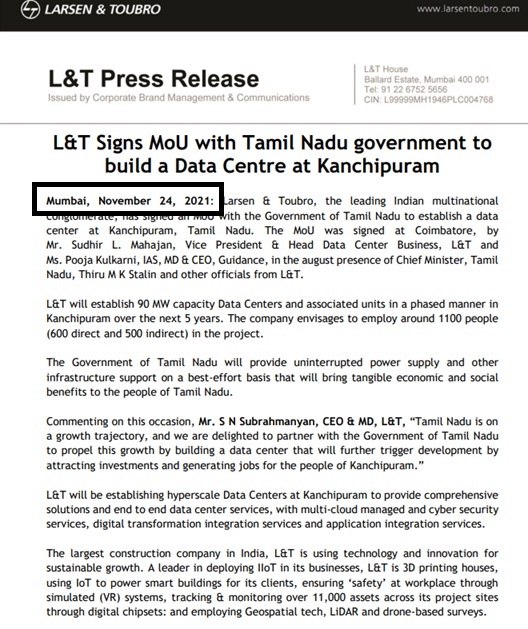
Fascism Payasam: Madras High Court Stays TN Police Move To Block Posts Critical Of TVK Govt

Madras High Court Stays TN Police Move To Block Posts Critical Of TVK Govt

The Madras High Court on Wednesday granted an interim stay on the operation of a takedown notice issued by the Cyber Crime Wing of the Tamil Nadu police directing X Corp to suspend or block 18 URLs and social media posts, including content shared by YouTuber Maridhas.

A Division Bench comprising Justices L. Victoria Gowri and N. Senthilkumar passed the interim order while hearing a writ petition filed by Vishwa Hindu Parishad (VHP) office-bearer P. Chockalingam, who challenged the legality of the notice issued by the Cyber Crime Wing.

The disputed notice had been issued by the Tamil Nadu police on May 8 under intermediary liability provisions of the Information Technology Act and the Information Technology (Intermediary Guidelines and Digital Media Ethics Code) Rules, 2021. X Corp was directed to suspend or block the flagged URLs/posts within three hours.

According to sources familiar with the matter, a majority of the posts targeted by the notice allegedly contained criticism of the ruling Tamilaga Vettri Kazhagam (TVK) government and Chief Minister C. Joseph Vijay. The inclusion of posts shared by political commentators and YouTubers, including Maridhas, triggered widespread debate online over freedom of speech and the use of cybercrime provisions against government critics.

The police action had drawn sharp criticism from several netizens and free speech advocates, who alleged that the takedown order amounted to suppression of dissent and criticism directed at the newly formed government.

During the hearing, the petition challenged the validity of the police notice and raised concerns over the scope of powers exercised under the IT Rules for directing content removal on social media platforms.

Following preliminary submissions, the Bench granted an interim stay on the operation of the notice, effectively halting enforcement of the takedown directions issued to X Corp until further proceedings in the case.

Subscribe to our channels on WhatsAppTelegram, Instagram and YouTube to get the best stories of the day delivered to you personally.