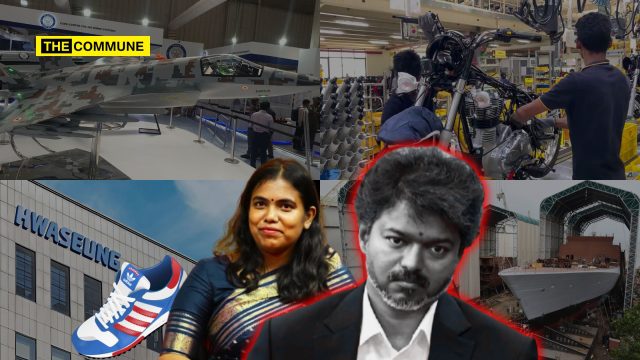
A series of major investment setbacks for Tamil Nadu has happened under Joseph Vijay’s TVK regime. Serious political questions over whether Tamil Nadu is merely losing out in an aggressive inter-state industrial race, or whether confidential information from the State’s Industries Department is allegedly being leaked to benefit neighbouring Andhra Pradesh.
From the AMCA aerospace project to Royal Enfield’s expansion, from Mazagon Dock Shipbuilders’ proposed Thoothukudi shipyard to Hwaseung’s footwear manufacturing unit, multiple projects either linked to Tamil Nadu, pursued by Tamil Nadu, or expected to materialise in Tamil Nadu have either moved to Andhra Pradesh or are now being aggressively courted by the neighbouring State.
The pattern has become impossible to ignore.
It is alleged that Andhra Pradesh appears to be repeatedly arriving with better, bigger, and more targeted offers after Tamil Nadu has already done the groundwork. This has raised uncomfortable questions about whether details of Tamil Nadu’s industrial negotiations, incentives, land offers, and project pipelines are somehow reaching Andhra Pradesh.
AMCA Project: Tamil Nadu Offers Hosur, Andhra Pradesh Offers Puttaparthi
The first major alarm came in mid-May 2026, just days after the TVK government was sworn in.
For years, Tamil Nadu had positioned itself as one of India’s top three manufacturing hubs and had been actively pursuing the Advanced Medium Combat Aircraft project. The previous DMK government had reportedly chased the project for nearly three years.
Tamil Nadu’s proposal included 100 acres of land in Hosur offered free of cost, a 3.5-km runway, and proximity to Bengaluru’s established aeronautical ecosystem. On paper, Tamil Nadu had a strong technical case.
Yet, reports suggested that the project had shifted towards neighbouring Andhra Pradesh due to political and strategic considerations.
Former Industries Minister TRB Rajaa reacted sharply, calling the shift “grossly unfair” and a blow to cooperative federalism. He demanded an explanation from the Union Government, arguing that Tamil Nadu’s infrastructure was technically superior.
But Andhra Pradesh, under Chief Minister N Chandrababu Naidu, appears to have played a far more aggressive game.
While Tamil Nadu relied on its existing industrial strength, Andhra Pradesh reportedly made a lightning-fast pitch. Instead of merely offering land, Naidu’s government proposed a 650-acre dedicated aerospace hub in Puttaparthi – nearly six times the size of Tamil Nadu’s initial offer.
Andhra Pradesh also pitched faster approvals, single-window clearances, and a speed-driven business environment that would bypass bureaucratic delays.
More importantly, Andhra Pradesh reportedly proposed an integrated defence corridor by grouping the AMCA hub with naval systems facilities in Anakapalli and an ammunition plant in Madakasira. This created a larger defence manufacturing ecosystem that Tamil Nadu’s standalone Hosur proposal could not match.
The question now being raised is whether Andhra Pradesh merely outplayed Tamil Nadu, or whether it had access to information that helped it craft a superior counter-offer.
Royal Enfield’s ₹2,500 Crore Andhra Facility Deepens The Debate
By the end of May 2026, another major announcement added fuel to the controversy.
Royal Enfield, a company deeply associated with Tamil Nadu’s manufacturing ecosystem, announced a ₹2,500 crore manufacturing facility in Andhra Pradesh.
For decades, Royal Enfield has been part of Tamil Nadu’s industrial identity, with Chennai, Oragadam, and surrounding auto clusters forming a critical part of its manufacturing story. The company continues to operate four world-class manufacturing facilities in Tamil Nadu, with a projected capacity of 20 lakh units annually.
It was a matter of pride for Chennai that one of the best bikemakers had the sticker “The Enfield India Ltd. Madras”.
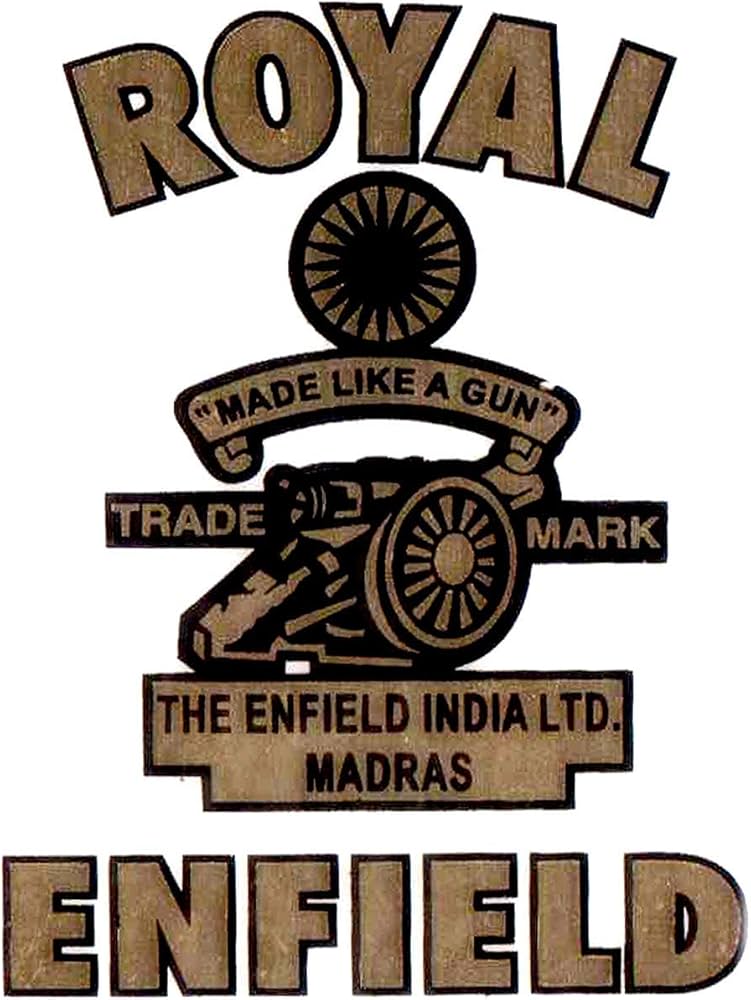
But Royal Enfield is also going to Andhra now.
Th company has clarified that the Andhra Pradesh facility was not a shift away from Tamil Nadu but part of future expansion plans. The company said the new investment would augment existing capacity and support its next phase of growth, subject to board approval and future market demand.
The company also pointed out that earlier in 2026, it had announced a ₹958 crore expansion in Tamil Nadu. What made them choose Andhra for expansion all of a sudden?
Royal Enfield’s case is not one of exit. Tamil Nadu remains central to the company’s operations.
But the political question remains: why is Andhra Pradesh repeatedly becoming the destination for fresh expansion?
Reports suggest that the new facility will come up in Tada near Tirupati, close to the Tamil Nadu border. This allows companies to remain connected to Chennai’s supplier ecosystem while expanding operations into Andhra Pradesh.
This has triggered criticism that Andhra Pradesh is cleverly positioning itself to benefit from Tamil Nadu’s mature industrial base while offering faster approvals, larger land banks, and aggressive incentives.
Thoothukudi Shipbuilding Cluster: Did Tamil Nadu Sideline MDL For HD Hyundai?
The most serious controversy now surrounds the proposed greenfield shipbuilding cluster in Thoothukudi.
On 19 September 2025, state-owned Mazagon Dock Shipbuilders Limited signed an MoU with Guidance Tamil Nadu to establish a greenfield shipyard on India’s eastern coast.
During the Government of India’s “Samudra se Samriddhi” event in Bhavnagar, both Mazagon Dock Shipbuilders Limited and Cochin Shipyard signed agreements with the Tamil Nadu government for greenfield shipyard projects in Thoothukudi, with a combined proposed investment of around ₹30,000 crore.
In November 2025, during its Q2 FY26 earnings call, MDL publicly referred to its proposed Thoothukudi shipyard project and stated that it envisaged an investment of ₹15,000 crore to ₹18,000 crore.
The project was planned as a 1,050-acre greenfield shipyard to be developed over 10 to 12 years. It was expected to target very large crude carriers of up to 3,00,000 deadweight tonnage.
MDL had reportedly secured board approval and was awaiting further action from the Tamil Nadu government, including the issuance of an Expression of Interest process through the Special Purpose Vehicle expected to oversee the shipbuilding cluster.
But developments took a controversial turn in December 2025.
On 7 December 2025, South Korean shipbuilding giant HD Hyundai announced that it had signed an “Exclusive Business Cooperation Agreement” with the Government of Tamil Nadu for developing a new shipyard in Thoothukudi.
The announcement was made during the TN Rising Investment Conclave in Madurai in the presence of then Chief Minister MK Stalin.
HD Hyundai described the project as an effort to create a “second Ulsan” in Tamil Nadu. Reports placed the potential investment between $2 billion and $4 billion.
The controversy arises from the timeline.
The Union Government’s Shipbuilding Development Scheme Guidelines had not yet been formally notified when HD Hyundai signed the agreement.
The Ministry of Ports, Shipping and Waterways notified the Shipbuilding Development Scheme Guidelines only on 26 December 2025 – nineteen days after HD Hyundai signed the exclusive cooperation agreement with Tamil Nadu.
These guidelines laid down the process for developing greenfield shipbuilding clusters, including the mechanism through which anchor shipyards would be selected.
One wonders how HD Hyundai was allegedly selected as the anchor shipyard before the governing framework was even in place.
The questions do not end there.
In January 2026, the National Shipbuilding & Heavy Industries Park Tamil Nadu was formally incorporated as a 50:50 joint venture between the V.O. Chidambaranar Port Authority and SIPCOT.
This means HD Hyundai was allegedly chosen before the SPV that was supposed to oversee such a selection process had even been incorporated.
This has triggered allegations that the DMK government brought in a foreign company without properly taking MDL into confidence.
Commentators have asked why HD Hyundai was allegedly given exclusive positioning as the anchor shipyard before the rules governing selection existed and before the institution required to conduct such a selection process had even been formed.
MDL Now Looks To Andhra Pradesh With ₹29,000 Crore Plan
The Thoothukudi controversy has become even more serious because MDL has now reportedly turned towards Andhra Pradesh.
Having failed to secure the Tamil Nadu project, MDL is said to have expressed interest in becoming the anchor investor for a proposed mega shipbuilding cluster in Andhra Pradesh.
The company is now reportedly considering an investment exceeding ₹29,000 crore and is expected to undertake a feasibility study for developing shipbuilding capacity of approximately 1.2 million tonnes at the proposed Andhra cluster.
This has intensified allegations that Tamil Nadu may have lost a massive public-sector shipbuilding opportunity after choosing to move ahead with HD Hyundai under a process now being questioned.
Thoothukudi had been identified by the Government of India as one of the country’s premier locations for a greenfield mega shipbuilding cluster. The location has extensive coastal land availability, natural cyclone shielding, lower atmospheric salinity, proximity to international shipping routes, and an existing deep-water port.
The proposed cluster was expected to create approximately 1.2 million gross tonnage per annum of shipbuilding capacity with substantial support from both the Union and State governments.
At a time when the Government of India is emphasising indigenous manufacturing under Maritime Amrit Kaal Vision 2047, one wonders whether Indian shipyards were given a fair and transparent opportunity to compete.
The Tamil Nadu government was reportedly approached with detailed questions regarding the project, selection process, and timeline, but no response was received.
Hwaseung: ₹1,720 Crore, 20,000 Jobs Lost From Tirunelveli To Kuppam
The Hwaseung episode is one of the sharpest examples of Tamil Nadu losing a major employment-heavy project to Andhra Pradesh. While this move took place during the DMK regime, one wonders if there is a problem with the Industries ministry in itself.
In August 2025, South Korean footwear manufacturer Hwaseung Enterprises, a major contract supplier for Adidas, signed an MoU with the Tamil Nadu government to set up its first India plant in Tirunelveli.
The proposed investment was around ₹1,720 crore and was expected to generate nearly 20,000 jobs.
For a southern district like Tirunelveli, this was not a minor project. Footwear manufacturing is labour-intensive and has the potential to create large-scale direct and indirect employment, especially for women and rural youth.
However, by November 2025, the project had shifted to Kuppam in Andhra Pradesh, the constituency of Chief Minister Chandrababu Naidu.
According to reports, Andhra Pradesh offered faster land facilitation, free land, higher resource subsidies, skilled manpower availability, and better long-term alignment with Hwaseung’s expansion requirements.
Tamil Nadu was reportedly asked to match the package but declined.
Then Industries Minister TRB Rajaa defended the State’s position by saying Tamil Nadu would not join a “race to the bottom” by matching aggressive incentives offered by Andhra Pradesh. He argued that Tamil Nadu prioritised high-value jobs and that land in the State carried different economic pressures.
But this explanation sounded defensive and dismissive.
The question raised by opposition voices and industry observers was simple: how can a 20,000-job manufacturing project for Tirunelveli be casually dismissed as a low-value incentive battle?
The project was not Adidas itself leaving Tamil Nadu. Hwaseung is an independent supplier that manufactures for Adidas. Adidas continues to have a major presence in Tamil Nadu through other suppliers and through its Chennai Global Capability Centre.
Tamil Nadu has also secured Adidas-linked manufacturing through the Evervan Kothari/Shoe Town joint venture, a ₹5,000 crore non-leather footwear manufacturing investment in Karur and Perambalur, expected to generate over 50,000 jobs. Pou Chen Corporation, another global supplier for Adidas and Nike, also operates a ₹2,302 crore mega-facility in Ulundurpet, Kallakurichi district.
Yet, the loss of Hwaseung remains politically significant because the project had first come to Tamil Nadu, signed an MoU with Tamil Nadu, and then moved to Andhra Pradesh.
This is why it seems that something is going wrong in Tamil Nadu’s investment handling process.
TVK Govt Repeatedly Saying No To Parandur Airport
The TVK leadership has consistently opposed the proposed Parandur Greenfield Airport, both before and after coming to power. During his January 2025 visit to Parandur, then TVK president Vijay extended support to protesting farmers and accused the DMK government of pursuing an “anti-people” project that would allegedly affect farmland and water bodies.
Even after assuming office as Chief Minister, the government’s position appeared unchanged, with Electricity Minister CTR Nirmal Kumar publicly stating that there would be no Parandur airport.
Against this backdrop, a meeting held on 18 June 2026, between Chief Minister Vijay and senior representatives of the GMR Group has attracted attention. The delegation included Airports Chairman GPS Raju, Business Head PVN Rao, and Senior Vice President (Corporate Affairs) G. Sridhar Babu.
மாண்புமிகு தமிழ்நாடு முதலமைச்சர் திரு.ச.ஜோசப் விஜய் அவர்களை இன்று (18.6.2026) தலைமைச் செயலகத்தில், GMR குழுமத்தின் தலைவர் (Airports) திரு. ஜி.பி.எஸ். ராஜு, வணிகத் தலைவர் திரு.பி.வி.என். ராவ், முதுநிலை துணைத் தலைவர் (Corporate Affairs) திரு. ஜி. ஸ்ரீதர் பாபு ஆகியோர் சந்தித்துப்… pic.twitter.com/fyO0tPj0dn
— CMOTamilNadu (@CMOTamilnadu) June 18, 2026
The meeting comes at a time when major investment projects are moving to neighbouring Andhra Pradesh. One wonders what the purpose of the GMR delegation’s visit and whether the government intends to revisit its opposition to the Parandur airport project or discuss alternative aviation infrastructure plans for Tamil Nadu. Is he once again folding to a brand from AP?
The Keerthana Question: Why Are All Fingers Pointing To The Industries Department
While some of these developments began during the DMK regime, the issue has now landed squarely on the TVK government’s desk.
Whether the DMK or TVK is in power, the repeated pattern of projects slipping towards Andhra Pradesh points to a possible leak or structural vulnerability within the Industries Department.
The allegations have now begun to focus on TVK Industries Minister Keerthana because 2 projects are no longer with TN now.
It is noteworthy that only the Industries Department would normally be privy to sensitive information such as land offers, incentive discussions, investor requirements, negotiation gaps, and project-stage vulnerabilities.
If Andhra Pradesh repeatedly appears with better-timed and more attractive offers, is it possible that information about Tamil Nadu’s proposals is being informally passed on.
The suspicion has been sharpened by Keerthana’s past professional association with Showtime Consultancy, the election management organisation that has worked with multiple political parties, including the Telugu Desam Party.
Andhra Pradesh Minister Nara Lokesh, son of Chandrababu Naidu, publicly came out in support of Keerthana when she was trolled over her reels-style pitch to businesses and entrepreneurs.
Dear Keerthana garu, appreciate your proactive outreach to investors. Every Industries Minister today has to actively market their state, engage with investors, and build confidence among job creators. Hon’ble PM Shri @narendramodi ji himself has repeatedly encouraged states to… https://t.co/OHCymFWE4U
— Lokesh Nara (@naralokesh) May 28, 2026
Thus, joining the dots, one wonders whether these are mere coincidences or indicators of a deeper political comfort between individuals connected to Tamil Nadu’s Industries Department and Andhra Pradesh’s ruling establishment.
There are also allegations being circulated about suspicious individuals around the minister who are perceived to be non-native to Tamil Nadu and allegedly close to Telugu political networks.
These allegations remain unproven. No documentary evidence has yet established that Keerthana, her department, or anyone associated with her leaked information to Andhra Pradesh.
However, the questions have gained traction because of the repeated pattern of investment outcomes.
Tamil Nadu Is Losing Jobs, Revenue, And Strategic Advantage Because Of An Incompetent CM
The consequences of these project losses are not abstract.
Hwaseung alone represented 20,000 potential jobs. MDL’s Thoothukudi shipyard involved a proposed ₹15,000 crore to ₹18,000 crore investment. Its Andhra Pradesh exploration is reportedly worth over ₹29,000 crore. The AMCA ecosystem would have brought strategic aerospace value. Royal Enfield’s Andhra expansion, though not a relocation, still signals that future industrial capacity is increasingly being distributed outside Tamil Nadu.
Each such project creates direct jobs, indirect jobs, vendor networks, tax revenue, logistics demand, housing activity, and long-term industrial clustering.
Tamil Nadu is already facing questions over its debt situation. The recently published white paper pointed to a heavily debt-ridden State, while the Finance Minister has said the government must find revenue-generating avenues to fund new social welfare schemes.
In such a situation, how Tamil Nadu can afford to lose projects that were expected to create employment and revenue?
The allegation now being raised is direct: are facilities, benefits, and internal calculations offered by Tamil Nadu being secretly passed on to Andhra Pradesh, enabling AP to offer a better deal?
And if such leakage exists, is it happening from within the Industries Department?
TVK Government Faces First Major Industrial Test
The timing is politically significant.
The TVK government led by Chief Minister Vijay came to power promising a new era. Yet, within weeks of assuming office, it has been confronted with a series of industrial controversies that began under the previous regime but now require answers from the present one.
The AMCA issue emerged in mid-May 2026, shortly after the TVK government took office. Royal Enfield’s Andhra investment followed by the end of May 2026. By June 2026, the MDL-Andhra shipbuilding angle had surfaced.
The new government can blame the DMK for decisions taken in 2025, especially in the Hwaseung and HD Hyundai-MDL controversies. But it cannot avoid responsibility for ensuring that future projects do not slip away.
The question before Chief Minister Vijay and Industries Minister Keerthana is no longer just whether Tamil Nadu can attract investments.
The question is whether Tamil Nadu can protect its investment pipeline, safeguard confidential negotiations, counter Andhra Pradesh’s aggressive industrial pitch, and ensure that the State does not continue losing jobs and revenue to its neighbour.
Until the government gives a detailed explanation on each of these cases, the allegations of an information leak within the Industries Department are unlikely to die down.
For now, Andhra Pradesh appears to be repeatedly winning projects that were either pursued by Tamil Nadu, linked to Tamil Nadu, or expected to benefit Tamil Nadu.
And that is why the uncomfortable question: is Tamil Nadu merely being outcompeted, or is someone from within helping Andhra Pradesh play a better game?
Subscribe to our channels on WhatsApp, Telegram, Instagram and YouTube to get the best stories of the day delivered to you personally.