Home Blog Page 177

Madras High Court Stays DMK Govt Order Exempting Religious Buildings From Collector’s NOC

NOC-Requirement-For-Religious-Structures dmk madras high court

The Madras High Court, Madurai Bench, on Friday stayed the operation of a Government Order (G.O.) issued by the Tamil Nadu Housing and Urban Development Department on 8 January 2026, which exempted certain religious buildings from obtaining a No Objection Certificate (NOC) from the district collector for planning approval.

The interim stay was granted by a Bench comprising Justices G Jayachandran and N Senthilkumar, while hearing a Public Interest Litigation (PIL) filed by Kalanithi, a real estate businessman from Madurai. The Bench observed that the G.O. appeared to grant retrospective relief, which could not be done through an executive order.

The G.O., issued by the Housing and Urban Development Department and signed by its Secretary Kakarla Usha, stated that religious buildings which began functioning between 2019 and 2024 need not obtain a collector’s NOC for planning permission, provided they complied with the Tamil Nadu Combined Development and Building Rules, 2019.

Under the order, buildings that had originally received approval for non-religious purposes such as residential use or auditoriums but were later used for religious activities during the period from 4 February 2019 to 6 March 2024, could be retrospectively regularised without insisting on a collector’s NOC. The exemption was also extended to applications for religious buildings that had been kept pending for want of an NOC during the same period. Further, even applications submitted after 7 March 2024, were permitted to receive planning approval without seeking an NOC from the district collector.

The background to the G.O. includes growing complaints from several parts of Tamil Nadu about religious buildings being constructed or operated in densely populated residential areas in violation of approved building norms. In many cases, structures sanctioned as residential buildings were allegedly being used as prayer halls or places of worship. Although courts had ordered the demolition of such unauthorised constructions in some cases, officials were accused of hesitating to take action despite confirmed violations.

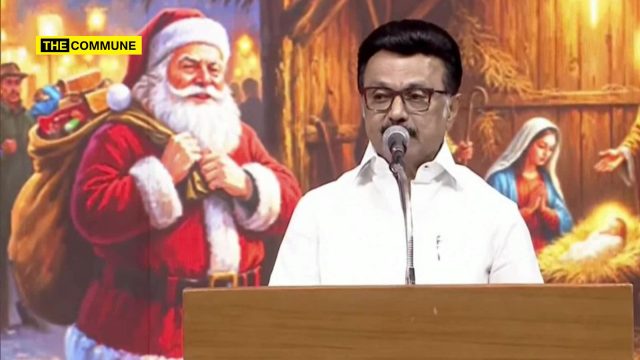
The policy shift was first announced by Chief Minister MK Stalin during a public event in Chennai in December 2025, where he stated that planning permission for religious buildings would be granted without insisting on a collector’s NOC.

In his petition, Kalanithi contended that under the Tamil Nadu Combined Development and Building Rules, 2019, no planning permission could be granted for the construction of any religious building without a No Objection Certificate from the district collector. He argued that the NOC was a statutory safeguard meant to assess communal sensitivity, law and order concerns, suitability of the proposed location, and other public interest considerations.

He further alleged that the January 8 G.O. effectively sought to retrospectively validate religious buildings that had come into existence in violation of the law. Such regularisation, he claimed, would endanger public order, peace, and communal harmony. The petitioner urged the court to quash the G.O. and direct district collectors to examine issues of public order and morality before granting permissions for religious buildings.

According to the State government, although the relevant building rules came into force in 2019, standard operating procedures (SOPs) for the speedy disposal of applications seeking collector’s NOC were framed only in 2024. Citing this delay, the Chennai Metropolitan Development Authority (CMDA) and certain religious institutions had represented to the Chief Minister, seeking exemption from the NOC requirement for religious buildings that had been functioning between 2019 and 2024.

The court adjourned the matter to 20 February 2026, for further hearing.

Source: The New Indian Express

Subscribe to our channels on TelegramWhatsApp, and Instagram and get the best stories of the day delivered to you personally.

“Panaiyur Pannaiyar, You Earned Crores Selling Tickets In Black Market”: AIADMK Brutally Slams Part-Time Politician Actor Vijay Over Corruption Charge

Panaiyur-Pannaiyar-You-Earned-Selling-Black-Tickets-AIADMK-Brutally-Slams-Part-Time-Politician-Actor-Vijay-Over-Corruption-Charge

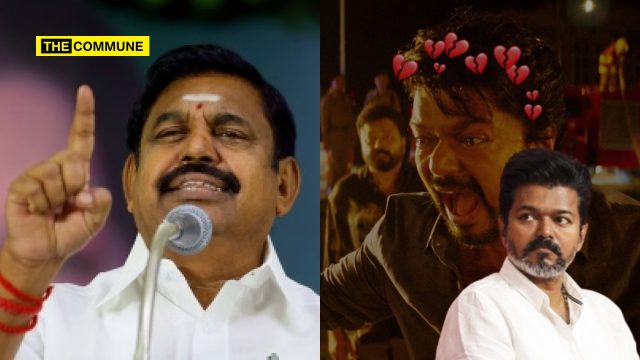
The AIADMK IT Wing on Sunday, 25 January 2026, launched a sharp attack on actor and TVK leader Vijay, accusing him of corruption and hypocrisy, following his recent criticism of the AIADMK at a party cadre meeting in Mamallapuram.

In a post shared on X, the IT Wing described Vijay as “the massively corrupt person”, alleging that he had earned several crores of rupees through the illegal sale of movie tickets on the black market.

The post stated, “Panaiyur landlord, Corruption is the act of earning money illegally. By that definition, you—actor Vijay (@actorvijay), who allegedly earned several crores by continuously selling tickets on the black market in violation of the law—are the massively corrupt person of all. “Being a slave to the Central government” is not something that exists anywhere in the history of the AIADMK. Whenever there has been a challenge to the welfare and rights of the state, our great movement—the AIADMK—has fought for Tamil Nadu’s rights, secured them, and argued for and obtained benefits for the people. That is the historical record. Shall we name the film for whose release you stood with folded hands for five hours outside the then Chief Minister’s house? Or can you name the Chief Minister who helped you without expecting anything in return? Corruption is not just about making money through politics. Bowing before power centres to increase one’s income through undue influence also falls under the same category, Panaiyur man. You call the AIADMK government corrupt, yet you seat Sengottaiyan, who was the Education Minister in that very government, right beside you as your coordinator. Is that your explanation of “purity” and “clean power”? Whether you do it or not, but aren’t you also one of the reasons for the death of 41 people in Karur? Without making any atonement for that, didn’t you hide in Panaiyur for over 72 days out of fear of what case might come, and even keep the party office closed for 15 days? That itself is the answer to how “brave” you are. In world history, for the first time, instead of going to the homes of the deceased to offer condolences, you made them come to Panaiyur to console you. That’s next-level landlord arrogance! For this, you could even be awarded a Doctorate! Without going to Karur to wipe away tears, you staged a token condolence event with glycerine tears and photographs, and even there, without the slightest sense of guilt, indulged in self-promotion. Such narcissistic behaviour is a very dangerous sign in politics. In politics, one may be good, one may be capable, but one should never be someone who understands nothing, deceives even his own fans, and continues to be just a director-actor, like the TVK leader. Every single argument you reel off about our party, as if memorised and recited, is nothing but top-class garbage. Along with the garbage of Anna Arivalayam, let us also throw out the garbage of Panaiyur. DOT.”

The remarks came in response to Vijay’s first-ever direct and aggressive attack on the All India Anna Dravida Munnetra Kazhagam (AIADMK), where he accused the party of being subservient to the Central government.

Subscribe to our channels on TelegramWhatsApp, and Instagram and get the best stories of the day delivered to you personally.
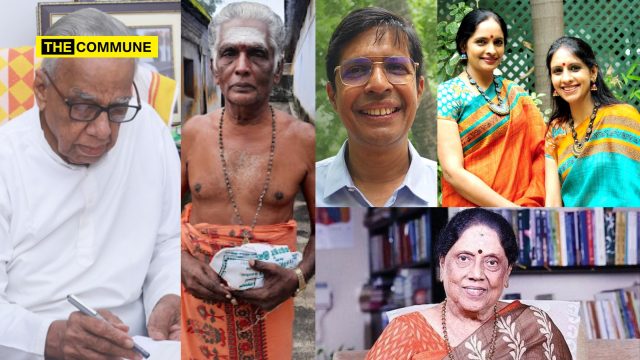
Padma Awards 2026: Ranjani-Gayatri, Dr. Kamakoti, HV Hande, Othuvaar Thiruthani Swaminathan, And 9 Others From Tamil Nadu Honoured

The Government of India has announced the Padma Awards 2026 on the eve of Republic Day, recognizing exceptional contributions across art, medicine, public service, and other fields. Among the distinguished recipients are several eminent personalities from Tamil Nadu, including the renowned Carnatic vocalists duo Ranjani-Gayatri, former IIT Madras Director Dr. V. Kamakoti, veteran medical professional Dr. H.V. Hande, traditional arts exponent Rajastapathi Kaliappa Goundar, and nine others from the state, highlighting Tamil Nadu’s strong representation in this year’s honours.

The Padma Awards, one of India’s highest civilian recognitions, include the Padma Vibhushan, Padma Bhushan, and Padma Shri. This year, a total of 131 awards were approved, comprising 5 Padma Vibhushan, 13 Padma Bhushan, and 113 Padma Shri (with some counted jointly, such as duos). Tamil Nadu features prominently, with 13 recipients from the state overall.

Ranjani-Gayatri (the duo of sisters Ranjani and Gayatri Balasubramanian) have been honoured with the Padma Shri for their outstanding contributions to Carnatic music. Widely acclaimed for their soulful renditions, innovative presentations, and efforts in preserving and popularizing classical Carnatic traditions, the sisters have inspired generations of musicians and audiences worldwide through performances, teaching, and recordings.

Dr. V. Kamakoti, a distinguished academic and former Director of IIT Madras, has been recognized for his pioneering work in technology, education, and innovation. His leadership in advancing technical education, research in areas like cybersecurity and indigenous computing, and contributions to national policy have earned him widespread respect.

Dr. H.V. Hande, a respected figure in medicine, receives the Padma Shri for his lifelong dedication to healthcare, particularly in public health initiatives and service in Tamil Nadu.

Rajastapathi Kaliappa Goundar has been conferred the Padma Shri in the field of Art for his mastery and promotion of traditional Tamil performing arts and cultural heritage, helping keep ancient practices alive in contemporary times.

Shri Kallipatti Ramasamy Palaniswamy: Eminent gastroenterologist honoured with the Padma Bhushan for his pioneering contributions to medicine and healthcare advancements.

Shri S K M Maeilanandhan: Veteran social worker recognized with the Padma Bhushan for his lifelong dedication to education, community development, and social welfare initiatives.

Shri K Ramasamy: Distinguished agricultural scientist and former Vice-Chancellor of Tamil Nadu Agricultural University, awarded the Padma Shri for advancements in science, engineering, and agricultural research.

Shri K Vijay Kumar: Former CRPF Director General and 1975-batch IPS officer (Tamil Nadu cadre) famed for leading the operation against forest brigand Veerappan, conferred the Padma Shri for distinguished service in civil service and law enforcement.

Shri Othuvaar Thiruthani Swaminathan: Devoted exponent of Tamil Saiva musical traditions (Othuvar), honoured with the Padma Shri for over six decades of preserving and promoting classical devotional music and Tamil Saiva heritage.

Dr. Punniamurthy Natesan: Respected medical professional recognized with the Padma Shri for his contributions to medicine and healthcare services.

Shri R Krishnan (Posthumous): Noted figure in the arts, awarded the Padma Shri posthumously for his distinguished contributions to the field.

Ms. Sivasankari: Veteran Tamil writer and litterateur honoured with the Padma Shri for her influential work in literature, Tamil literary discourse, and cultural enrichment.

Shri Thiruvaarur Bakthavathsalam: Renowned exponent of traditional Tamil percussion (mridangam) and Carnatic music, conferred the Padma Shri for his mastery and efforts in preserving classical performing arts.

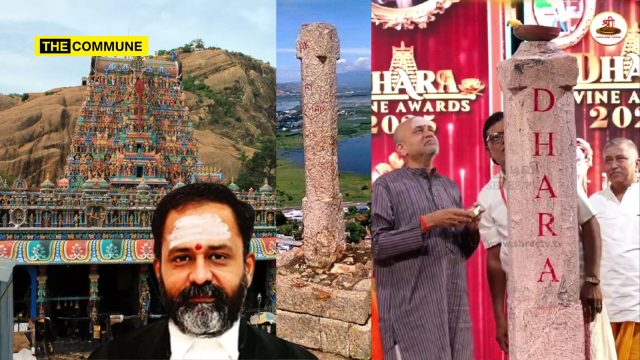
“This Isn’t Survey Stone Right?”: Justice GR Swaminathan Lights Thiruparankundram Deepathoon Replica

The DMK government and anti-Hindu Dravidian Stockists are once again going to suffer a serios meltdown as Madras High Court Judge Justice GR Swaminathan lit a lamp resembling the Deepathoon of Thirupparankundram Hil at an event organized in Chennai by Dhara Foundation.

Giving more heartburns to the Dravidian Model government, Justice GR Swaminathan said “I’ve only one doubt. That is not a survey stone right?

Taking a sly jibe against those who moved impeachment motion against him, Justice GR Swaminathan made it clear that he intends to carry out his judicial duties independently and faithfully for the remainder of his tenure, which extends roughly another four and a half years.

I think that I still have 4.5 years of service. I don’t think they will remove me before that. In these 4.5 years that I am going to stay, I want to show excellence, keep Sanatana Dharma in heart. This event has given me the energy for that.“, he said.

The Thirupparankundram Deepam Case

Thirupparankundram is a historic hill in Madurai that hosts the Arulmigu Subramaniya Swamy Temple and, higher up, the Sikandar Badusha Dargah. Traditionally, the Karthigai Deepam ritual — a festival flame lit during the Tamil month of Karthigai — has been observed at a lower shrine (Uchipillaiyar), not atop the hill. Over time this became an accepted practice tied to local custom and concerns over communal sensitivity.

In December 2025, a petitioner sought judicial directions to permit the Deepam lamp to be lit at an ancient stone pillar (Deepathoon) on the hilltop — terrain the petitioner argued belonged to the temple and historically linked to the ritual. Justice Swaminathan, on a single-bench ruling, ordered that proper arrangements be made for the lamp to be lit at that hilltop shrine and emphasised that the land is temple property and ritual rights must be respected.

When the Tamil Nadu government and temple authorities did not immediately comply, instead following the conventional practice at the lower shrine, Swaminathan initiated contempt proceedings, quashed prohibitory police orders, and directed that security be provided to ensure the ritual could be carried out at the hilltop location.

Subscribe to our channels on TelegramWhatsApp, and Instagram and get the best stories of the day delivered to you personally.
Muslim Political Party In Rome Promotes Arabic In School Curriculum, Catholic Leadership Silent

A newly formed political group seeking to influence Rome’s 2027 municipal elections has triggered widespread controversy after endorsing the inclusion of Arabic in the curriculum of a public high school in the Italian capital, drawing allegations of ideological Islamisation and raising questions over the silence of Catholic leadership.

The group, Muslims for Rome 2027 (MuRo2027), was founded in November by Francesco Tieri, a left-wing activist who later converted to Islam. The organisation has publicly stated that it aims to mobilise Muslim voters in Rome and shape local politics in line with what it describes as its religious identity.

In its founding statement, MuRo2027 said it was inspired by the electoral success of Zohran Mamdani in the United States and claimed that his victory demonstrated the growing political relevance of Muslim communities. Tieri stated that Muslims should no longer be treated as “political objects” but as active political subjects, and that the group intended to advance proposals aligned with its religious affiliation ahead of the Rome local elections.

The group attracted immediate attention after posting an image on Instagram depicting Rome’s Colosseum topped with an Islamic crescent, imagery that critics described as a symbolic assertion of Islamic dominance over Italian civilisation. Jewish and conservative publications warned that the visual messaging appeared to go beyond civic participation and veered into ideological provocation.

Arabic in Roman Schools Sparks Political Row

The controversy intensified on 14 January 2026 when MuRo2027 promoted the decision of the Eugenio Montale Linguistic High School in Rome to introduce Arabic as a third language option, alongside Chinese, French and German. The group publicly defended the move, stating that Arabic was spoken by tens of thousands of residents in Rome and that offering the language reflected inclusive public education.

In its statement, MuRo2027 criticised those opposing the move, arguing that even private Catholic schools offered Arabic and framing opposition as driven by hostility toward foreign-origin communities. The school itself stated that its language offerings were intended to promote engagement with other cultures.

The endorsement drew a strong response from Rossano Sasso, a Member of Parliament from the Lega party, who said he would raise the issue in Parliament. Sasso stated that if an Islamic political group was influencing curriculum choices in public schools, it could represent what he described as creeping Islamisation of Italian society.

Experts Warn of Ideological Drift

Security and counter-terrorism analyst Giovanni Giacalone said Islamist groups appeared to be organising politically to support the left in upcoming elections. He stated that the political left was seeking the Muslim vote and that Islamist networks were becoming increasingly aggressive in political mobilisation and street activism.

Analysts and commentators also cited past warnings by Daniel Pipes, who has argued that Arabic language programmes in public education, particularly when influenced by external organisations, have in other countries served as vehicles for ideological indoctrination rather than neutral language instruction.

Catholic Silence Draws Attention

Amid the growing controversy, the Catholic Church’s leadership in Italy has remained notably silent. No statement has been issued by senior Catholic authorities in Rome or the Vatican addressing the political messaging, symbolism, or the broader implications of a religiously driven political movement asserting itself in the capital of Catholicism.

Italian Jewish publication Bet Magazine Mosaico observed that the slogan “Let’s take Rome” no longer appeared merely rhetorical, warning that the imagery and rhetoric used by MuRo2027 conveyed a clear ideological message. Journalists and analysts noted that the group declined to participate in national television debates while dismissing public scrutiny as excessive.

Calabrian journalist Vincenzo Campanella stated that the Colosseum image represented a symbolic appropriation of one of Italy’s most iconic monuments and conveyed the assertion of Islamic symbols over national heritage.

Political and Security Concerns

Author and publisher Francesco Giubilei said Islamist political movements in Italy appeared to be seeking to replicate models seen in Northern Europe and France, driven by demographic changes. He warned that such movements sought to marginalise Christian symbols, normalise Sharia-influenced politics, and erode Western cultural foundations.

Former Monfalcone mayor and current MEP Anna Maria Cisint stated that MuRo2027 promoted an ideological vision that aspired to replace constitutional principles with Islamic law, posing a direct threat to freedoms, particularly those of women. Fratelli d’Italia MP Federico Mollicone said the group appeared inspired by Islamic law and argued that Quranic injunctions were incompatible with Italian legal principles.

Further scrutiny followed after MuRo2027 issued a statement criticising the arrest of Hamas operative Mohammad Hannoun by Italian police. Italian media reported that Tieri had links to Rome’s Al-Huda Mosque, which has been associated with pro-Hamas clerics.

MuRo2027 Responds

Responding to criticism, Tieri stated that public expressions of religious identity were consistent with Italian secularism and argued that Italy had historically been governed by parties inspired by Catholic values. He claimed that MuRo2027 was not a Muslim lobby but a civic movement seeking to contribute to local politics and the common good and said Muslims’ rights were not fully protected in Italy.

Despite these assurances, critics argue that the group’s rhetoric, symbolism, and political positioning point to a deeper ideological project. As MuRo2027 continues to gain visibility ahead of the Rome elections, observers note that while political and security experts have raised alarms, Catholic leadership has yet to publicly respond.

Source: MeForum

Subscribe to our channels on TelegramWhatsApp, and Instagram and get the best stories of the day delivered to you personally.
Here’s How MK Stalin As Opposition Leader Criticized Governor’s Address For Parroting Govt’s Stance

stalin rn ravi

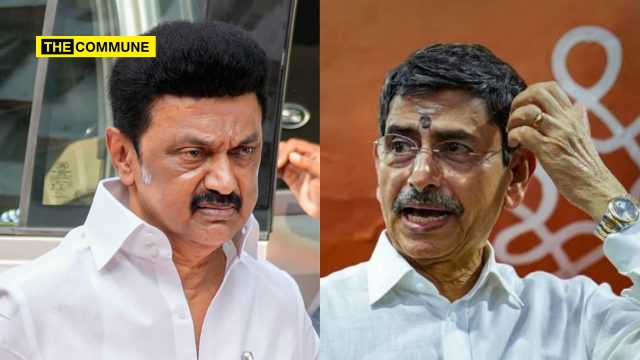
Tamil Nadu Governor RN Ravi walked out of the State Legislative Assembly during the opening of the first session of the year, yet again, after objecting to the National Anthem not being played following the rendition of Tamil Thaai Vaazhthu. Declaring that the National Anthem had been insulted, the Governor declined to deliver his customary address, triggering yet another confrontation between Lok Bhavan and the ruling Dravida Munnetra Kazhagam (DMK).

Soon after the walkout, Lok Bhavan issued a statement alleging that the Governor’s microphone was “repeatedly switched off” and that he was not allowed to speak. The statement further stated that the speech prepared by the State government contained “numerous unsubstantiated claims and misleading statements” and had bypassed several serious issues affecting the people, including claims of ₹12 lakh crore in investments and concerns relating to women’s safety.

Chief Minister MK Stalin responded sharply, accusing the Governor of having “disrespected and insulted 100-year-old traditions of the House.” He said, “Once again, the Hon’ble Governor has acted in violation of constitutional provisions and established conventions and has left the Assembly. Rather than merely saying he went out, it must be stated that he walked out. Such conduct does not befit the high office held by the Governor.”

Citing Article 176 of the Constitution, Stalin said, “Under Article 176 of the Constitution of India, the Governor’s Address is prepared by the State government and is required to be read in full by the Governor. The Constitution does not provide any scope under Article 176 for the Governor to express personal views or to delete portions of the address prepared and submitted by the elected State government.”

He further said that despite the Governor writing to the State government and receiving a reply, the walkout amounted to a “deliberate” constitutional violation and an affront to the dignity of the Assembly. He said, “Despite this, the Governor cited certain explanations, wrote a letter to the State government yesterday, and a reply was duly sent to him. In this situation, the Hon’ble Governor has deliberately committed an act that violates the Constitution. I consider the Governor’s action to be an affront to the dignity of this House, which carries a tradition spanning over a century and represents the sovereignty of the people.”

Recalling a speech he delivered on 10 April 2023, Stalin said, “I would like to recall here a portion of the speech I delivered in this very Assembly – ‘Why does a goat need a beard… and why does a state need a Governor?’, although Perarignar Anna had once remarked this even though this view was echoed by Muthamizh Arignar Kalaignar, while that office exists, they never failed to accord it the respect it deserved during their tenures as Chief Ministers. Following that tradition, I too have not deviated from it even by a fraction. This government has also not faltered in that regard. This is what I stated on that day.”

However, the DMK’s current defence of the sanctity and dignity of the Governor’s address stands in stark contrast to Stalin’s own statements when the party was in opposition.

In 2018, referring to the Governor’s address, Stalin had remarked: “So, as I mentioned in the beginning, the Governor’s address is like ‘muscoth halwa’.”

In 2019, he went further, stating: “It is a shameful act that the Governor’s address, prepared on behalf of the government, is being presented in the Legislative Assembly today. Therefore, the Governor is now reading out the failure papers that the government has written for him. Hence, we condemn this and have staged a walkout from the Assembly, boycotting his address, on behalf of the Dravida Munnetra Kazhagam.”

Again, in 2020, Stalin justified another boycott by saying: “We decided to boycott this Governor’s address, which was prepared by the ruling party, and have walked out in protest.”

Subscribe to our channels on TelegramWhatsApp, and Instagram and get the best stories of the day delivered to you personally.
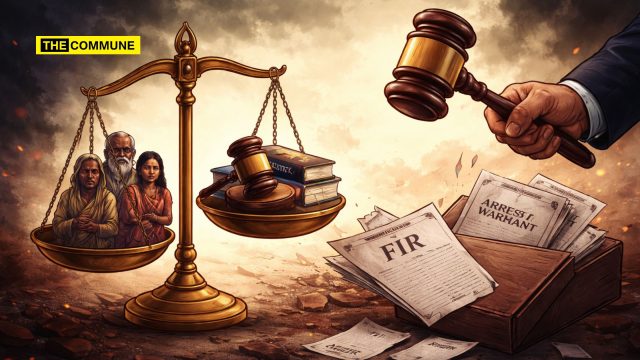
When A Shield Becomes A Weapon: The Supreme Court’s Fight Against Farcical Use Of SC/ST Act

When A Shield Becomes A Weapon: The Supreme Court's Fight Against Farcical Use Of SC/ST Act

The Supreme Court of India has once again intervened to clarify the application of the Scheduled Castes and Scheduled Tribes (Prevention of Atrocities) Act, 1989, a crucial piece of legislation that safeguards the rights of marginalized communities. This latest ruling signals a persistent judicial effort to strike a balance between the Act’s protective intent and concerning instances of its “farcical” or “vexatious” misuse.

Another Clarion Call from the Apex Court

In its significant judgment in the case of Keshaw Kumar Mahto v. State of Bihar & Anr. (2026), the Supreme Court quashed criminal proceedings where the First Information Report (FIR) and chargesheet lacked specific allegations of caste-based insult. The Court reiterated that for an offense under the SC/ST Act to be established, the insult or intimidation must be motivated by the victim’s caste identity. It cannot be a general act of abuse. This ruling reinforces the principle that the Act is designed to combat systemic discrimination, rather than serving as a tool for personal vendettas or unrelated disputes.

The 2018 Ruling and the Government’s Legislative Response

This is not the first time the SC has addressed the potential for misuse. In its earlier landmark case of Subhash Kashinath Mahajan v. State of Maharashtra (2018), the Court highlighted concerns that the Act has been, at various instances, used to “blackmail” innocent citizens and public servants. To prevent arbitrary arrests and ensure due process, the SC had introduced safeguards, including a mandatory preliminary inquiry before the registration of an FIR and the requirement of prior approval for the arrest of public servants.

However, this ruling sparked widespread protests from those who argued it diluted the Act’s essence. In response to public pressure, the Government of India introduced the Scheduled Castes and the Scheduled Tribes (Prevention of Atrocities) Amendment Act, 2018. This amendment, specifically Section 18A, effectively nullified the 2018 judgment by removing the requirements for preliminary inquiries and prior approval for arrests. It also reaffirmed the “no anticipatory bail” clause, restoring the Act’s procedural stringency and emphasizing immediate action upon a complaint.

Documented Instances of “Farcical” Use

Despite the noble intentions behind the Act, its procedural power has occasionally led to documented instances of misuse. The judiciary has intervened in several key areas:

Private vs. Public Spaces: In Hitesh Verma v. State of Uttarakhand (2020), the Supreme Court clarified that an offense is not established if the incident occurs within a private space. The Act requires the offense to be committed in “public view,” meaning personal altercations in private settings do not automatically fall under its purview.

Delayed and Frivolous Allegations: In Aznan Khan v. State of U.P. (2025), the Allahabad High Court granted bail in a case involving delayed allegations, observing that the rights granted to victims “should not be misused and abused.” The court warned that frivolous complaints risk eroding the credibility of genuine atrocity cases.

Property and Workplace Disputes: Numerous rulings have highlighted cases where civil land ownership disputes or professional rivalries were maliciously reframed as criminal cases under the Act to pressure opponents into settlements or to bypass standard bail procedures. A casual Google search would give us multiple such instances.

A Counter-Perspective: The Reality of Atrocities

It is equally vital to consider the perspective of activists and scholars. NCRB Crime in India Data (2025) indicates over 50,000 registered cases of atrocities against SC/ST communities, marking a rise from previous years. Dalit rights groups argue that under-reporting remains a significant issue and that low conviction rates, often around 30%, are frequently caused by systemic biases and inadequate investigations rather than frivolous filings.

Notwithstanding claims and counterclaims, what remains true and real is the need for an impartial application of such “stringent” laws, without letting personal vendetta and bias come into the picture. The law is meant to be used in a very specific instance, and invoking its provisions because it makes for an easy tool to harass and humiliate your adversaries and extort unreasonably from them is neither fair nor serves the intent of the legislation.

Conclusion

The Supreme Court’s latest ruling in Keshaw Mahto (2026) serves as a crucial check against the arbitrary invocation of the law. By demanding a higher threshold of evidence regarding caste-based intent, the Court seeks to protect innocent individuals from malicious prosecution while preserving the integrity of the Act for genuine victims.

The true spirit of the SC/ST Act can only be upheld through collective responsibility. While the government must ensure the law remains a strong shield for the vulnerable, the common people must understand and recognize that making false allegations is a severe act of slander that harms both the accused and the moral authority of a vital social justice framework.

G Saimukundhan is a Chartered Accountant.

Subscribe to our channels on TelegramWhatsApp, and Instagram and get the best stories of the day delivered to you personally.
Whose B-Team Is TVK? The Media Baron And The Political Rise Of Vijay

Actor Vijay’s rise to the top of Tamil cinema has been steady rather than meteoric. He did not start as the “star” he is today. His ascent in the entertainment industry resulted from several factors, most notably his transition into the action-comedy genre. By moving away from the staid “romantic family hero” trope, previously the exclusive domain of family audiences, he successfully targeted Tamil Nadu’s growing youth population. He owes his success as much to the demographic transition Tamil Nadu underwent over the past three decades as to the efforts of directors to market him as a larger-than-life icon.

From Cinema Spotlight To Political Dogfight

Vijay’s rise in political circles has been nothing short of meteoric, and this has occurred even before an election has been contested or a single vote cast. Rarely has any Indian state seen such a phenomenon, where a new political entrant stands on the cusp of a tectonic shift. The great MGR was active in politics from the late 1930s before venturing out to set up his own party in the 1970s. Similarly, the “Captain” of Tamil cinema, Vijayakanth, saw a slow and steady entry into politics, reaching his peak in 2011 before eventually fading away.

Among more recent instances, the Aam Aadmi Party (AAP) reached power more rapidly than most. Yet Arvind Kejriwal’s transformation from an award-winning activist to a politician did not happen overnight; it was a calculated, carefully calibrated process that unfolded over years. (It perhaps requires a separate article to discuss why almost all Ramon Magsaysay awardees eventually align against India’s interests or if that alignment is a precondition for the award.)

The closest historical parallel to Vijay is N.T. Rama Rao (NTR) and his sudden formation of a party to win the 1983 election. However, that rise occurred on the back of what was perceived as the abject humiliation of the Telugu people by then-PM Rajiv Gandhi.

The Curious Case Of Being Everyone’s “B-Team”

Vijay’s case is entirely different. His launch has led critics to label him the “B-Team” of the BJP or the “B-Team” of the DMK, depending on the observer’s own camp. Those who call him the DMK’s B-Team argue that he targets only the DMK’s rivals, thereby splitting the anti-incumbency vote. Conversely, those who label him a BJP proxy point to his attempt to usurp the legacy of a particular “bearded feudal playboy” – a figure notorious for foul-mouthing Brahmins and insulting Tamil poets and leaders.

These attempts to brand Vijay’s TVK as a “B-Team” are essentially efforts to identify who is actually funding his political escapade. In doing so, I believe we have missed an angle that, while seemingly outlandish, possesses a more solid logic than any other theory.

The Case Of Mir Jafar And His Financial Architect

To understand my suggestion, one must look at Mir Jafar (1691-1755). His story is the ultimate historical blueprint for how a commander’s personal greed can be leveraged to dismantle a kingdom. While he is often remembered simply as a “traitor,” the mechanics of his betrayal involved a sophisticated financial arrangement between an ambitious general, a colonial corporation, and a powerful banking house.

It is important to remember that his reign marked the starting point for the expansion of British control over the Indian subcontinent. I am not interested in his betrayal of Nawab Siraj-ud-Daulah at the infamous Battle of Plassey itself that was the result. I am interested in the event that preceded it: the collusion and the financial backers who empowered Mir Jafar to do what he did.

The Financial Architect: Jagat Seth

Mir Jafar did not act alone; he was bankrolled by the Jagat Seths, the “Bankers of the World.” This Jain Marwari family was so wealthy they functioned as the central bank of the Mughal Empire’s richest province, Bengal. The Nawab, Siraj-ud-Daulah, had alienated the Seths by reportedly insulting them and demanding a massive contribution of ₹30 million. Consequently, the Jagat Seths effectively “invested” in regime change. They helped Robert Clive bribe Mir Jafar and other disgruntled nobles, viewing the British East India Company (EIC) as a more reliable business partner than the volatile Nawab.

In effect, a business house threatened by an overzealous and greedy ruler fueled a regime change by joining hands with whoever could oust that ruler. To reduce this to a simple matter of “treachery” is an insult to the genius Machiavellian gameplay the Jagat Seths set in motion.

An Example From Independent India: Fueling The Alternative To Congress

It is well-documented that Jawaharlal Nehru’s economic policies did more long-term harm to India than good. The party that grew on the financial support of business houses eventually propagated policies that threatened to ruin those very houses. This created significant opposition within the business community, which began searching for an alternative to the Congress.

The Swatantra Party (1959–1974) remains the most significant historical example of an Indian political movement funded and driven by the business community to protect their interests against state-led economic strangulation. A direct response to Nehru’s “License-Permit Raj,” the party was funded by a coalition of “old money” industrialists, Parsi business titans, and princely families who viewed the state’s growing monopoly as a threat to private enterprise.

The intellectual and financial backbone of the Swatantra Party came from Bombay’s Parsi business community and the Tata Group. JRD Tata was the party’s most notable strategic supporter; he was a vocal critic of Nehru’s statism. In 1961, he famously wrote to Nehru, arguing that a healthy democracy required a strong opposition. He informed Nehru that while the Tata Group would continue to fund the Congress, it would also contribute to the Swatantra Party to ensure “India’s political life develops in a truly democratic way.”

AD Shroff, the ideological architect of the party, co-founded the Forum of Free Enterprise, which served as the intellectual laboratory for the movement. Alongside Homi Mody, a prominent industrialist and banker, he mobilized the banking and insurance sectors (before nationalization) to support the party. Additionally, the party was supported by former royalty, such as Maharani Gayatri Devi of Jaipur, who fought to protect their lands and “Privy Purses” from socialist land reforms.

Lessons And Application To The Current Political Scenario

It is a known fact that business houses prefer to remain apolitical as long as their interests are protected. True business leaders rarely dabble in active politics; they focus on building empires and multi-generational wealth. They want to be seen as “inspirational” or “philanthropic” rather than as political stooges. Many are party-agnostic, contributing to both the incumbent and the principal opposition.

This is a global phenomenon. In the US, companies like Apple and Google fund both Republicans and Democrats. This “hedging” or “double-giving” ensures access and influence regardless of who wins.

However, if a specific party threatens the very existence of their business, these houses will do more than just “fund” an election, they will fund a “regime change,” regardless of whether that regime helped them grow in the past. This is where my view on the funding of Vijay’s political journey fits in.

The Baron & The Business

In the 1970s, a small magazine was published in Tamil Nadu. In the late 1980s, the publication house recruited a family member as a management consultant on a paltry salary. Until the early 1990s, the wife of a former CM of Tamil Nadu served as a Director; evidently, the CM’s family owned the publication. In the late 1990s, when that family was in power, this former consultant was appointed as a Director. Under his leadership, the company turned around, clocking significant turnover. Whether this was due to political patronage, personal astuteness, or both, the result was the meteoric growth of a house that eventually launched television channels.

As the company grew, share realignments occurred. This family member, harboring bigger aspirations, became the principal shareholder and Managing Director, eventually buying out the CM’s family’s stake for ₹100 crores. He then listed the company, which has since become one of the largest media houses in India. It is well known that the ruling CM’s family felt cheated, believing their stake was acquired for what, in hindsight, was a minuscule value.

Over the past twenty years, his wealth has grown unabated to a staggering USD 3 billion. His control over the media and film industry remained rock-solid, until the disgruntled CM’s family decided to replicate his recipe. They launched their own television channel, production house, and distribution network in direct competition. Over the past five years, the family’s control over the media industry has become near-absolute, threatening the Baron’s business itself. This is compounded by the fact that the final bridges with the CM’s family seem to have been burned following a feud involving his own brother.

The Hedge

The Media Baron, the “Connoisseur”, who had the tact to navigate family politics and sideline even a mercurial past CM, knows how the future of his business depends on political outcomes.

Currently, the only way forward seems to be an attempt to gain influence over the ruling dispensation, not with the old ruler, but with a potential new one. This is where we connect the dots. The biggest hedge for the Media Baron is Vijay and the TVK.

Gaining control over large, established players is difficult. Vijay, however, is the “lowest-hanging fruit,” possessing an enormous following and the potential to shape Tamil Nadu politics for decades. They can both feed off each other’s success.

The implication? Much like the Jagat Seth family funding Mir Jafar, or the industrialists who wanted to counter the statist policies of Congress with the Swatantra Party, this Media Baron has every reason to fund a new political dawn through Vijay’s TVK.

Is there a public declaration of support by either of them? No. Is there tangible evidence? No. Is it all conjecture? Perhaps. But the greatest political manoeuvres rarely happen in the spotlight. They happen in the background, until they hit you like a ton of bricks. And they will, in the coming months.

Conclusion

The political stage is set, and the players have taken their positions, but the true script is being written in the quiet darkness by the powerful. History teaches us that when economic survival is at stake, the most significant political shifts are not born of ideology, but of necessity. Whether it is the Jagat Seths securing their fortunes or the titans of industry seeking a voice against monopoly, the “Financial Architect” most likely has always been the silent partner of the “Commander.” In Tamil Nadu, the rise of Vijay and the TVK may appear to be a spontaneous cinematic transition, but beneath the surface, it bears all the hallmarks of a masterfully funded hedge, a calculated strike by a Connoisseur who knows that in the game of power, the most enduring empires are those built before the first vote is even cast.

G Saimukundhan is a Chartered Accountant.

Subscribe to our channels on TelegramWhatsApp, and Instagram and get the best stories of the day delivered to you personally.
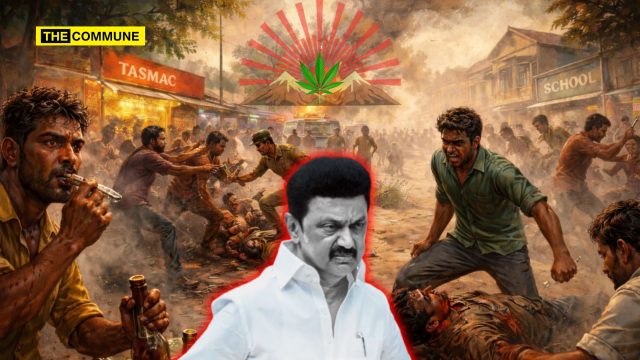
How Tiruvallur Has Become A Hotspot Of Drug-Related Crimes Under DMK Govt

tiruvallur drugs dmk

Tiruvallur has been in the news for all the wrong reasons, in the past few months. Right from drug busts to ganja-addicted youths brutally assaulting a migrant worker, Tiruvallur is turning into a drugs-driven crime hotspot under the Dravidian Model DMK government.

Reports show Tiruvallur is a critical “gateway” district for ganja and synthetic drugs entering Chennai from Andhra Pradesh and other states; in 2022 alone, Tiruvallur police seized about 1,263 kg of ganja, more than double the 590 kg seized in 2021, as part of Tamil Nadu’s record overall seizures that year. Reports state that as ganja supply chains were hit, traffickers increasingly shifted to pharmaceutical and synthetic drugs like methamphetamine, using Tiruvallur’s highways and migrant corridors as transit routes into Chennai.

In this report, we take a look at all the law-and-order related incidents that occurred in Tiruvallur along with the drug busts in the district.

Law & Order Incidents

#1 Schoolgirls Harassed By Intoxicated Youths At Bus Stop In Tiruvallur – February 2026

A group of 13 Class 12 girls in Tiruvallur were harassed and assaulted by youths allegedly under the influence of ganja on 3 February 2026. The verbal abuse turned physical, with the accused’s parents also reportedly blaming the victims. Traumatized, the students blocked the Chennai-Tirupati Highway in protest, demanding security and justice. They further alleged police bias during the inquiry at Kanakamma Chathiram station, where one accused was arrested and another is absconding. A student described ongoing harassment, stating, “He can’t even stand properly… Stones were thrown. One girl’s leg was badly injured.”

#2 Intoxicated Youths Attack College Students in Tiruttani – January 2026

Two college students travelling home on a motorcycle were allegedly attacked by intoxicated youths armed with a machete. The incident occurred when the students were on their way home, police said. Two youths, identified as Rahul (19) and Vishwa (18), allegedly assaulted the students in a drunken state using a machete, in what police described as a murderous attack. The injured students were taken to hospital for treatment. Preliminary inquiry confirmed that the attackers were intoxicated.

#3 Double Murder Over Road Rage Shocks Tiruvallur – January 2026

Tiruvallur witnessed a shocking double murder after two youths were beaten to death with stones following a road rage altercation in Manavalanagar. The victims were Parthiban (32), a private bank employee from Ondikuppam, and Sukumar (31). After returning from Andhra Pradesh post-Pongal celebrations, Parthiban and his friends questioned two bikers for rash driving near the Poonamallee–Tiruvallur Highway around 7 pm. The argument escalated later that night when the bikers returned with associates and attacked them. Parthiban died on the spot, while Sukumar succumbed to injuries at hospital. Police said intoxication, ganja or alcohol, would be confirmed after medical reports.

#4 Ganja-Fuelled Rampage at Irular Colony in Tiruvallur Leaves Man Critically Injured – January 2026

In a separate incident, a gang of six youths allegedly under the influence of ganja vandalised houses, street taps, and streetlights at an Irular colony in Thazhavedu near Tiruttani. They reportedly abused women residents using obscene language and attacked a 50-year-old man, Ramasamy, with an iron rod when he questioned them. Ramasamy was initially admitted to the Tiruttani Government Hospital and later referred to the Rajiv Gandhi Government General Hospital in Chennai for advanced treatment.

#5 Migrant Worker Attacked Gruesomely By Ganja-Addicted School Dropouts In Tiruttani – December 2025

Tiruttani Town police on Sunday, 28 December 2025, detained four 17-year-old boys for attacking a 20-year-old youth from Odisha, identified as K Suraj, with sickles near the Old Railway Quarters. Police said the assault stemmed from a drunken argument on a Chennai–Tiruttani EMU local and was filmed by one juvenile to post as an Instagram reel. The minors allegedly carried sickles in their bags to record such videos. After following Suraj off the train at Tiruttani, they took him to an abandoned area, where three attacked him while the fourth recorded the act. Suraj, who suffered serious injuries, is reportedly stable. The juveniles were sent to an Observation Home while one was allowed to go on bail.

#6 Man Assaulted By Allegedly Intoxicated Youth In Tiruttani Station – December 2025

A man was seriously injured after being assaulted by a four-member gang at Tiruttani railway station, raising renewed concerns over passenger safety. The victim, Jamaal, a silk saree trader from Nehru Nagar, Tiruttani, was attacked on the station premises and suffered severe head injuries. Bystanders intervened and alerted police, who rushed him to the Tiruttani Government Hospital, where his condition remained serious. Police registered a case and were probing whether the attackers were under intoxication.

#7 Ganja-Fuelled Murder Suspected in Tiruvallur – March 2025

A 19-year-old youth was brutally hacked to death and his body dumped near bushes at Thiruvalangadu in Tiruvallur district on Friday, with police suspecting ganja abuse as a key factor behind the crime. The victim, identified as Lokesh of Poondi village, was found with deep cut injuries on his head, hands, and legs. Police said Lokesh had earlier clashed with a group of youths over ganja-related issues. He had gone missing on Thursday night after visiting his grandmother in Narthavada. Investigators believe the assailants were under the influence of drugs at the time of the attack.

Drug Busts In Tiruvallur

Tiruvallur police, tasked with preventing drug inflow from Andhra Pradesh, have regularly intercepted ganja consignments on two‑wheelers and trucks, contributing significantly to the state’s 26,000‑kg ganja seizure figure in 2022. ​

#1 12 Held With Drugs Worth ₹20 Lakh in Tiruvallur – April 2022

In April 2022, Tiruvallur police arrested 12 persons and seized narcotics worth ₹20 lakh. Acting on a tip-off, a special team intercepted four youths near Kadambathur railway station and seized 26 narcotic tablets, one gram of drug powder and 26 intoxication strips. Based on their information, police recovered two kg of ganja near Tiruvallur railway station and seized 1,590 narcotic tablets from multiple accused near Egattur railway station. All 12 were arrested and booked by Kadambathur police.

#2 200 kg Ganja Seized in Interstate Smuggling Bust Near Tiruvallur – October 2024

The Central Intelligence Unit (CIU) of the Enforcement Bureau CID, Chennai, arrested four persons for interstate ganja smuggling and seized 200 kg of the contraband, valued at about ₹20 lakh. The operation was carried out on October 17 following a tip-off, leading to the interception of a vehicle near the Elavur check post in Tiruvallur district. Police recovered 10 parcels of ganja hidden in a secret chamber of a mini load carrier. A car and the carrier, both registered in Andhra Pradesh, were confiscated.

#3 Two Arrested With 22 kg Ganja in Tiruvallur – July 2025

In July 2025, acting on the directions of Avadi Police Commissioner Shankar and under the supervision of senior officials, prohibition enforcement teams carried out searches in Minjur, Sengundram, Manali, Athipattu and Ennore areas. During vehicle checks at Mondiyamman Nagar and near the Nallur toll plaza, police intercepted two men from Dindigul district. On inspection, officers seized 22 kg of ganja (11 kg each) from their bags. Both accused were arrested, produced before the Sengundram court, and remanded to Puzhal Central Prison.

#4 Five Held With 2,006 Narcotic Pills Near Tiruvallur Railway Station – August 2025

The Tiruvallur Town Police arrested five persons for the possession and sale of narcotic pills near the Tiruvallur railway station. Acting on a tip-off received by Vivekananda Shukla, a police team conducted a vehicle check on Karkuvel Street late Monday night, according to a Daily Thanthi report. During the operation, five individuals standing suspiciously were detained and questioned, following which police seized 2,006 narcotic pills from them. The accused were identified as Premkumar (37), Srinivasan (32), Vignesh (24), Gowtham (24), and Veera (32).

#5 NCB Seizes 590 kg Ganja Worth ₹3 Crore in Gummidipoondi, Six Arrested – September 2025

In a major breakthrough against drug trafficking, the Narcotics Control Bureau seized 590 kg of ganja worth about ₹3 crore in Gummidipoondi, Tiruvallur district, on August 31, 2025. Six persons involved in the smuggling operation were arrested, and two vehicles used to transport the contraband were confiscated.

#6 Interstate Drug Cartel Busted in Tiruvallur; 13 Arrested Including Foreign Nationals – November 2025

The Tiruvallur District Police dismantled an interstate synthetic drug cartel, arresting over a dozen suspects, including foreign nationals from Nigeria, DR Congo, and Senegal. The operation began on October 14 with the arrest of two men in Manavalanagar with 55 grams of methamphetamine, leading to multiple NDPS cases. Investigations revealed a Delhi-based kingpin operating via WhatsApp, using bank accounts across eastern and northeastern states and GPS-based drug drops in Chennai and Bengaluru. The alleged kingpin, Bende, was arrested in Noida with multiple phones containing supply-chain data.

#7 Two More Held With Meth in Tiruvallur Drug Probe; Arrest Count Rises to 10 – November 2025

The Tiruvallur District Police arrested two more persons in connection with an interstate drug trafficking case and seized 75 grams of methamphetamine from them near the Chennai–Bengaluru highway. The accused were identified as Prathap (27) of Tirupattur and Mohammad Afrath (23) of Kanyakumari. The arrests follow the November 8 detention of Bende, a 43-year-old Senegal national alleged to be the kingpin, who was tracked for 10 days and arrested in Delhi with multiple mobile phones containing interstate drug route details. The probe began with meth seizures by Manavalanagar police and later led to the arrest of Chennai-based influencer Sibiraj (22).

#8 Seven Arrested After 400 Narcotic Pills Seized from House in Tiruvallur – November 2025

Police in Tiruvallur district have seized 400 narcotic pills that were stashed inside a house in Puzhal and arrested seven persons, including a woman, in connection with the case. The action followed a complaint from a college student who was admitted to Stanley Government Hospital and later shifted to a private hospital after suffering health complications. The student told police that a friend had dissolved narcotic pills and injected the substance into him using a syringe. Based on the complaint, police registered a case and conducted a search, leading to the recovery of the pills from a nearby house.

#8 Tiruvallur Police Step Up Crackdown on Synthetic Drug Networks – December 2025

The Tiruvallur District Police intensified their drive against synthetic drug trafficking. Superintendent of Police Vivekananda Shukla said sustained operations have led to the arrest of nearly two dozen accused so far. Police have seized about 373 grams of methamphetamine, 48 MDMA tablets weighing 30 grams, and 2.8 grams of cocaine. In the latest operation, five men were arrested near Gummidipoondi with 56 grams of meth and eight MDMA tablets. Police said the accused were part of an inter-State cartel sourcing drugs from Bengaluru.

​Drug Hotspot Tiruvallur

The pattern that emerges from these incidents is unmistakable: Under the Dravidian Model governance, Tiruvallur is no longer dealing with sporadic crime, but a sustained breakdown driven by narcotics infiltration and weak deterrence. From ganja-fuelled street violence and attacks on migrant workers to repeated large-scale seizures of ganja, meth, and synthetic pills, the district has become both a transit hub and a consumption zone.

Enforcement actions, though frequent and sometimes successful, appear reactive rather than preventative, failing to stem the flow or protect vulnerable communities. What is unfolding in Tiruvallur is not an isolated law-and-order problem but a systemic failure of the ruling DMK government.

Subscribe to our channels on TelegramWhatsApp, and Instagram and get the best stories of the day delivered to you personally.
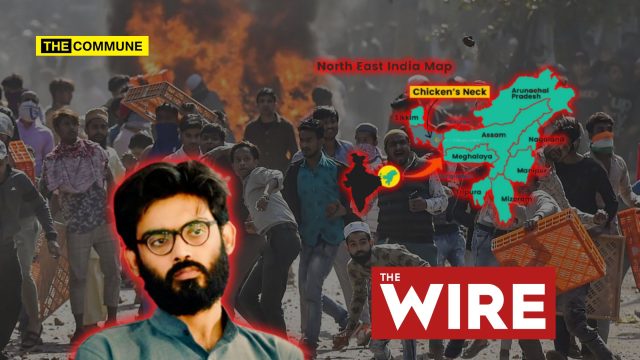
Pro-Congress Leftist Rag The Wire Whitewashes Terror Accused Sharjeel Imam Who Called For Cutting North East From India

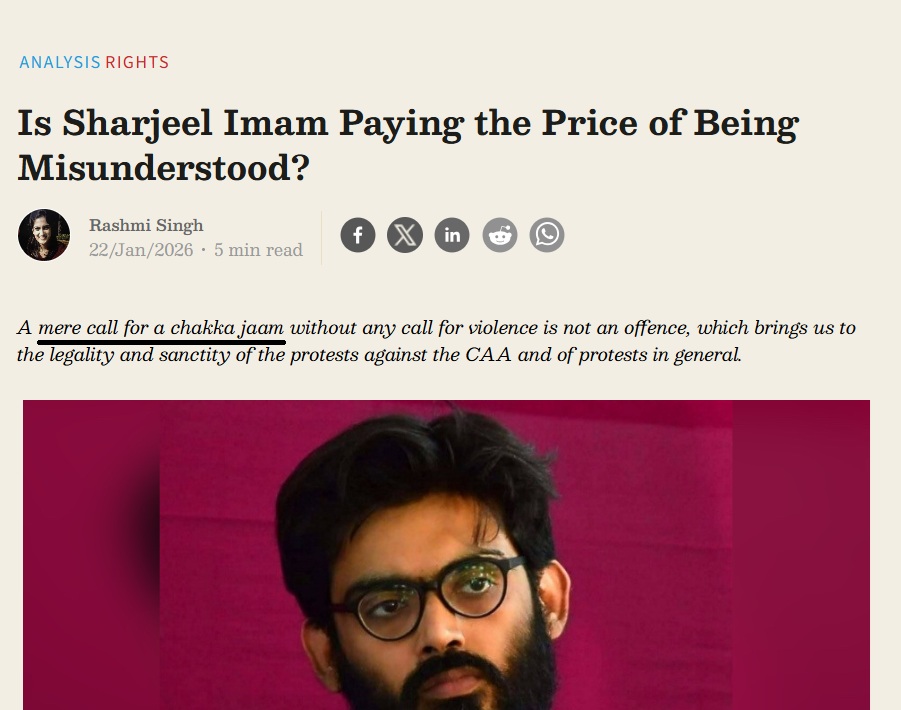
On 22 January 2026, leftist rag The Wire published a long article titled “Is Sharjeel Imam Paying the Price of Being Misunderstood?” trying to portray Sharjeel Imam as a saint and scholar and that his words meant nothing wrong.

The problem with the article is that it systematically sanitises the substance of Imam’s speech by collapsing it into the innocuous vocabulary of protest, most notably by repeatedly characterising his call as a “mere chakka jam”.

The piece, titled “Is Sharjeel Imam Paying the Price of Being Misunderstood?”, is a lengthy treatise that leans heavily on emotion, legal technicalities, and a curated portrayal of Imam as a “brilliant scholar” wronged by the state. It painstakingly details his academic credentials – IIT, JNU, fellowships, as if a resume is a get-out-of-jail-free card for actions that threaten national integrity. This is a familiar, tired tactic: humanize the accused to the point where their alleged crimes are relegated to a secondary footnote.

But let’s strip away the glossiness and examine the basic, raw facts that the article conveniently leaves out.

What Did Sharjeel Imam Say?

In the January 2020 speech at AMU, he says, “They have been doing for 70 years. Now the time has come to tell non-Muslims that if you are a supporter, then stand up for our terms. If they cannot stand up to our conditions.”

This is followed by chants of Nara-e-takbeer, Allahu Akbar.

He continues, “I saw this in Bihar, let me give you an example of Bihar. There were many rallies held there. Every day 1-2 big rallies takes place there. Look at Kanhaiya’s rally. There were 5 lakh people in that rally. Now the problem is only that, I have already mentioned it, if we had 5 lakh people organized, then we can permanently cut India and North-east. Not permanently, but atleast for about a month. It would take them more than a month to remove us from all the roads. It is our responsibility to separate Assam. Assam and India should get separated, only then they will listen to us. Do you know the condition of Muslims in Assam? CAA has been implemented there, people are being put in detention camps. A massacre is taking place over there, in a few months we will come to know they have killed off all the Bengalis, whether Hindus or Muslims. If we want to help Assam, we will have to shut off the route to Assam for the army, for the supplies that go from here, etc. And we can do it. Because the chicken neck corridor is a Muslim dominant area. What will politicians like Kanhaiya do? They will get people to chant slogans of Inqalab, they will get a few photographs clicked and they will leave. The claps will be of our people, the face will be theirs. Not one productive thing has come out of that till today, not one productive thing, we need to remember this as well. If the masses are angry, then it is the responsibility of politicians, scholars and community leaders to use that anger productively rather than wasting it on photo sessions.”

He adds, “Let us understand one more thing. Sensitisation is not in our control. It is in the control of those who worship the Indian nation. Whether that be the left or the congress, all of them are guilty of the same thing. It will come in our control if we make a group of Muslim scholars and within that group we don’t debate whether we are nationalists or not. It is one thing to construct a facade for the outside world because we have to stay shut for some days due to the so-called conditions in India.”

The article’s central pivot is to reduce Imam’s incendiary speeches to a simple “call for chakka jam.” This is a staggering act of trivialization. In that speech, Sharjeel Imam did not call for a temporary roadblock. He explicitly called for mobilizing five lakh people to cut off the Siliguri Corridor, India’s vital “chicken neck”, permanently. This is a secessionist blueprint. The intent was not to inconvenience the government but to sever a geographic artery, economically and physically annexing the Northeast. To label this a “chakka jam” is like calling an armed rebellion a “vigorous debate.”

The Wire spends paragraphs arguing the legality of road blockades, citing historical judgments on peaceful assembly. This is a red herring. The issue is not the right to protest but the objective of the protest. The Unlawful Activities (Prevention) Act (UAPA) defines a terrorist act as one done with intent to threaten India’s unity, integrity, and sovereignty.

Can anyone, in good faith, argue that a call to permanently cut off a region from the rest of the country does not fit this definition? The Supreme Court, in denying bail, did not punish Imam for protesting the CAA. It identified a prima facie case that he played a “foundational role in a calibrated conspiracy” aimed at massive disruption and violence. The Court rightly distinguished between participating in a protest and being its “ideational driver” with secessionist goals.

The article’s reverent listing of Imam’s degrees is perhaps its most insidious argument. It implies that a man of such learning could not possibly mean what he said or that his intellect somehow mitigates the severity of his actions.

This is a dangerous fallacy. Education does not confer moral immunity. Osama bin Laden was an engineer. The 9/11 hijackers were university graduates. The perpetrator of the 2022 Coimbatore blast was an engineer. Qualifications are irrelevant when the speech is a clear incitement to violence and disintegration.

The Wire asks, “Can we fault Sharjeel Imam… for dreaming of a better world?” The question is disingenuous. One dreams of a better world through reform, dialogue, and constitutional means, not by rallying crowds to cut the country in two. What he did was sedition.

The article meticulously catalogs alleged hate speeches by BJP leaders to create a false equivalence. Yet, it completely divorces Imam’s speeches from the February riots, despite the prosecution’s timeline of a conspiracy. More importantly, it refuses to acknowledge that two wrongs do not make a right. Incitement from one side does not legitimize incitement from another, especially when that incitement targets the very map of India.

Not Misunderstood, Just Accurately Called Out

Sharjeel Imam is not “paying the price of being misunderstood.” He is facing the legal consequences for actions and words that, as per the investigating agencies and the courts, crossed the bright red line from dissent to secessionist conspiracy.

A free press is essential, and criticism of the government is the lifeblood of democracy. But freedom comes with responsibility. When a media outlet engages in wordy gymnastics to dress up a call for territorial dismemberment as a noble act of protest, it exposes where its loyalties lay – to the seditionists and not to the nation. It is providing intellectual cover for ideas that strike at the foundation of the Republic.

The people of India understand the difference between a chakka jam and a call to break the country. It is a pity The Wire seems so determined not to.

Subscribe to our channels on TelegramWhatsApp, and Instagram and get the best stories of the day delivered to you personally.