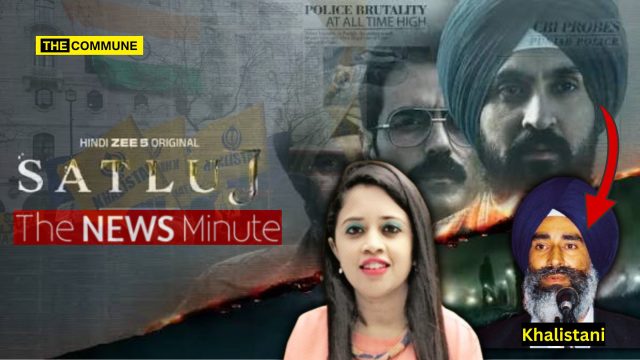
The removal of Diljit Dosanjh’s film Satluj (formerly Punjab ’95) from ZEE5 within 48 hours of its release has caused leftist liberals and Khalistani sympathisers into a frenzy. The film, based on the life of Jaswant Singh Khalra, was taken down following a government directive citing national security concerns under the Information Technology Rules, 2021.
Leftist rags such as The News Minute (TNM) has inserted itself into the picture by presenting a one-sided, sympathetic portrait of Khalra as a mere “human rights activist” while downplaying or omitting his documented pro-Khalistan ideology thereby whitewashing a Khalistani sympathizer with videos and elaborate explainers.
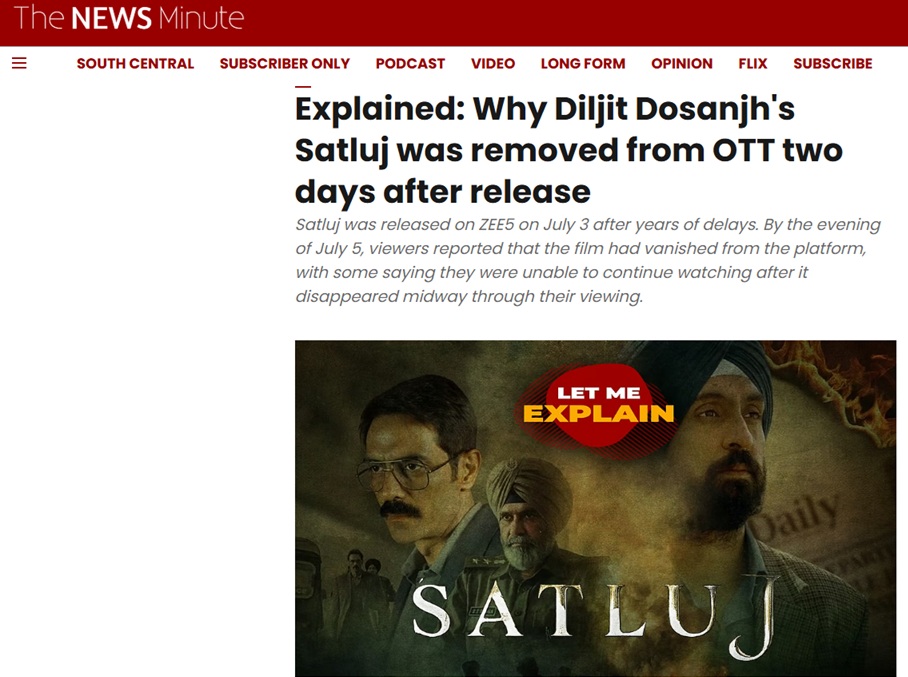
Here are other reports that potrays Khalra as a mere human rights activist.
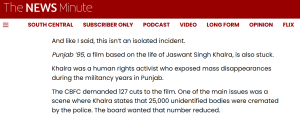
In Episode 33 of South Central, TNM’s Editor-In-Chief Dhanya Rajendran platformed the film’s director Honey Trehan where he said “challenging Khalra’s story is akin to challenging the Constitution itself”.
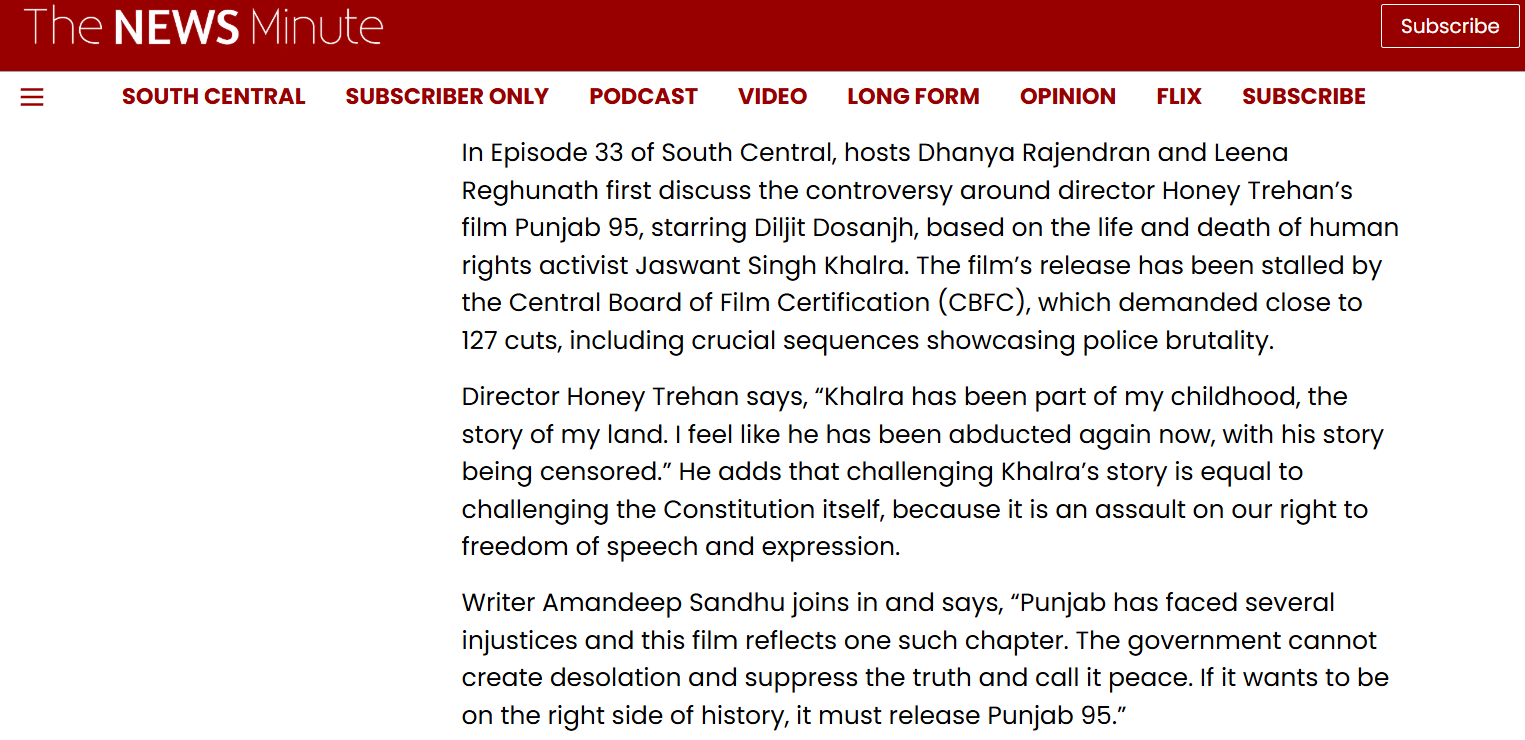
The Core Issue: Whitewashing A Separatism Sympathiser
The News Minute focuses on Khalra as a human rights activist who exposed police excesses, without adequately addressing his clear and documented support for the Khalistan movement. The video calls him a “human rights activist” and frames the film’s controversy around censorship of his investigation, neglecting a key part of his identity.
What TNM Won’t Tell You
What TNM will conveniently leave out is that Khalra was the founder and editor of a magazine called Liberation Khalistan. This wasn’t a fringe newsletter; it was a platform where he explicitly laid out his ideology.
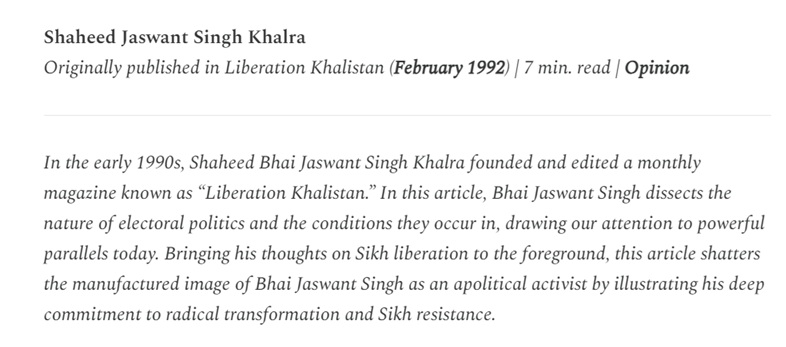
In its pages, he called India a “Hindu state” that was “waging war against Sikhs.” He referred to Khalistani militants as “freedom fighters” who had made the “ultimate sacrifice.” He compared them to Indian revolutionary icons like Bhagat Singh. He outright rejected the Indian Constitution and argued that Sikhs should not participate in Indian elections because swearing an oath to the Constitution was a moral compromise.
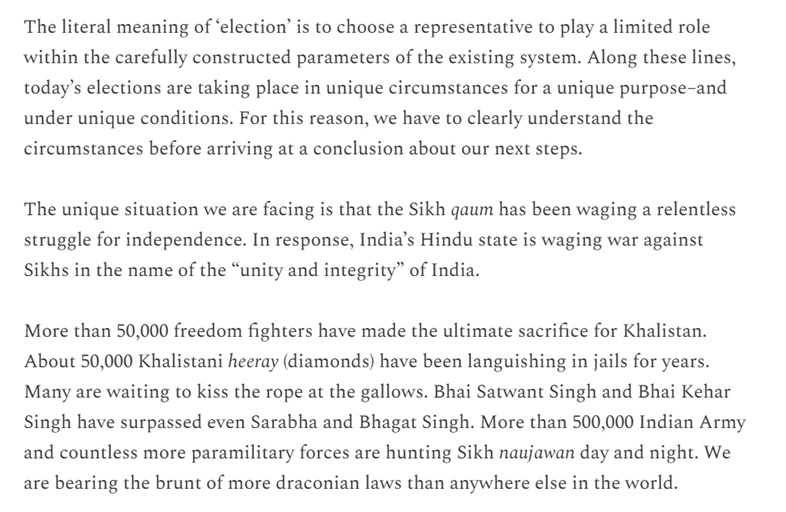
Here’s what he said about his dream for Khalistan.
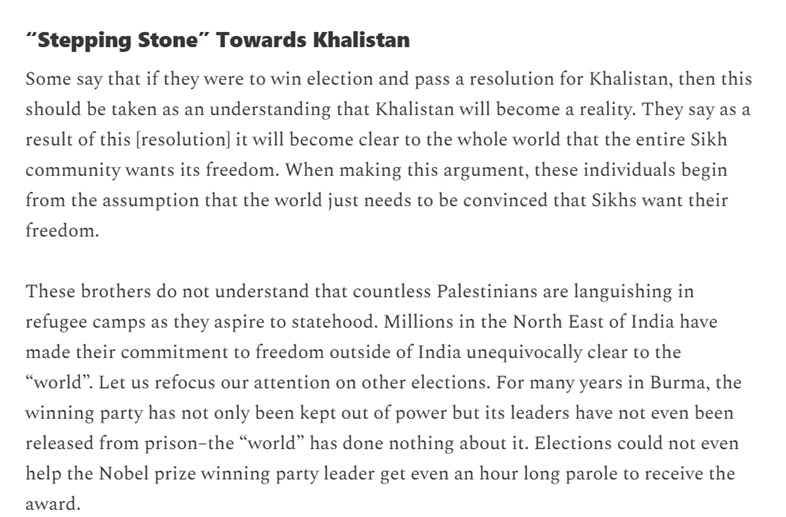
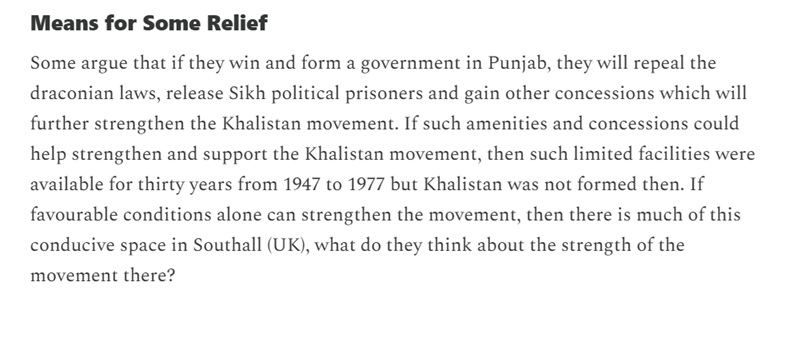
He argues that “the Khalsa is fighting to establish the principles and value of dharam.”
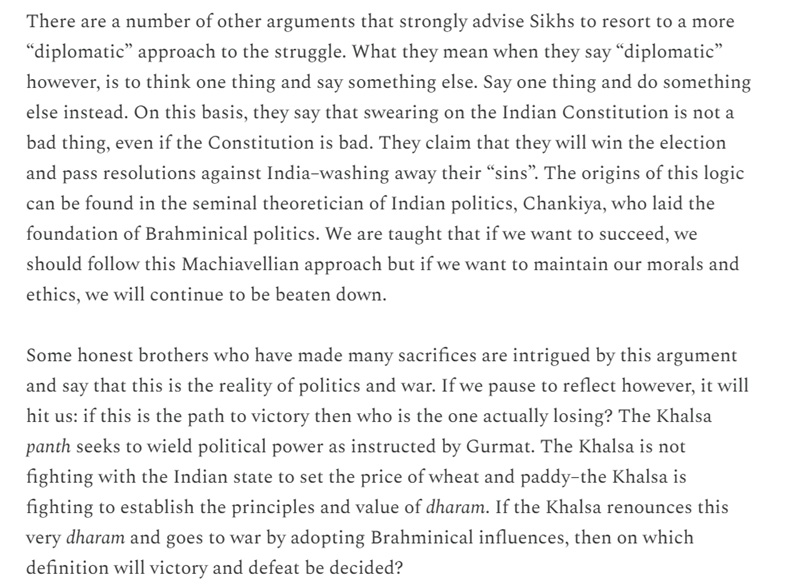
These are Khalra’s own words that have been republished in Baaz News.
Jaswant Singh Khalra was an advocate for a Khalistan state, and even ran a magazine called Liberation Khalistan.
In 1992, state elections.were announced. Khalistani ideologues like Khalra took extreme positions about it. Here are some snippets of what he wrote about it. 🧵 pic.twitter.com/8BjtDRuK89
— Ambalagonda (@i_mandhata) July 6, 2026
The Historical Context The News Minute Ignores
The film, and The News Minute’s glowing defence of it, treats Jaswant Singh Khalra’s work on secret cremations like it dropped out of thin air — as if the only monsters in Punjab were men in uniform. That’s not just incomplete. It’s dishonest.Anyone who lived through the late ’80s and early ’90s knows what actually happened. Khalistani militants had turned huge parts of the state into a Taliban-style hellhole. They banned music, shot dogs so their barking wouldn’t give away their movements at night, beat women for wearing jeans, kicked Hindi out of schools, and held guns to journalists’ heads if they didn’t print militant propaganda. All India Radio officers were murdered for not sounding “Punjabi enough.” Just in 1990-91, over 5,000 civilians were slaughtered. Punjab wasn’t under “police excess” — it was bleeding out from a full-blown, Pakistan-backed insurgency.
The state’s response was brutal, no doubt, but it was a response to a full-blown armed insurgency that had turned Punjab into a graveyard. The News Minute presents one bank of the river while pretending the other doesn’t exist. They show you the police excesses but hide the Khalistani terrorism that provoked them.
Khalra Wasn’t Some Neutral Saint
The movie paints him as this pure-hearted human rights activist. Reality check: he openly called Jarnail Singh Bhindranwale a “saint” and edited the Khalistani magazine Liberation. He wasn’t just documenting abuses — he was deeply tied to the separatist cause that wanted to rip Punjab out of India. His own words make that crystal clear.
Hatred for PM Modi has eaten brains of Indian liberals
Here is Jaswant Singh Khalra
Watch him call Bhindranwale a “saint” and a hero!
Does Khalra sound like a human rights activist to you?
Have Indian liberals gone completely crazy? pic.twitter.com/xV7jPCgYOJ
— Abhishek (@AbhishBanerj) July 11, 2026
The Missing Slaughter Of Innocents
Where is even a whisper in this film about the massacres carried out by Babbar Khalsa, Khalistan Commando Force, Bhindranwale Tiger Force and the rest? The 1991 train massacre near Ludhiana where around 125 Hindus were pulled out and killed? The 1986 bus attack where 14 Hindus were separated and shot? The 1987 Lalru killings that took another 38 lives? Those victims don’t fit the narrative, so they simply disappear.
Turning Heroes Into Villains
Beant Singh and KPS Gill finally broke the back of this Pakistan-sponsored war. The film repackages Gill as the big bad and frames Beant Singh’s assassination as some kind of poetic justice for “state excesses.” That’s not nuance — that’s disgusting inversion. They ended the nightmare, and this movie treats them like the ones who started it. And the icing on the cake is the celebratory background score while showing a Chief Minister’s assassination.
The Ulterior Motive Of The Film
The Film’s Removal Portrayed As State Excess
The News Minute frames it as an act of state censorship against a courageous piece of art. But the government’s position, reported through official sources, was that the film contained “pro-Khalistani content” that threatened the sovereignty and integrity of India. Under the Information Technology Rules, 2021, the government has the authority to remove content that poses a national security risk. Whether you agree with that law or not, the action wasn’t arbitrary, it was based on a clear legal framework. The film wasn’t banned because it told a human rights story; it was pulled because it told that story in a way that glorified a separatist figure without any of the necessary counter-context.
The News Minute also makes a disingenuous comparison to films like The Kerala Story, arguing that it faced criticism but still got certified. But The Kerala Story went through the CBFC process, received cuts, and had a disclaimer attached. Satluj bypassed certification entirely and was released uncut on OTT. The comparison is apples and oranges. Certification isn’t about whether a story is true; it’s about how that story is presented. A film about Khalra could absolutely be made. But a film that frames him as a pure hero while erasing his ideology and the context of the insurgency is bound to run into trouble.
What TNM is doing here is not journalism, but propaganda peddling. They are doing a major disservice to the real victims of Punjab separatism and insurgency and erasing their history by selectively talking about those who sympathised separatism.
Subscribe to our channels on WhatsApp, Telegram, Instagram and YouTube to get the best stories of the day delivered to you personally.