Lord Murugan has never belonged to a single land or language. From the snow-capped peaks in the Himalayas to the shores of Kanyakumari, from the sacred verses of the Skanda Purana to the ancient hymns of the Sangam to the more recent Kanda Shashti Kavacham. He is worshipped as Kartikeya, Subrahmanya, Kumara Swamy, Skanda and Murugan. His temples dot the subcontinent and stretch far beyond India’s borders. He is the eternal commander of the celestial armies, the son of Shiva and Parvathi, the pride of the cosmos.
But a Dravidianist ideological project now seeks to shrink that divine expanse into a narrow regional frame.
The timing is no coincidence. Jr NTR is preparing to bring the divine Lord Muruga to the pan-Indian cinematic canvas as the ultimate god of war, a “tale destined to belong to the universe.” And immediately, from the Dravidianist stable, comes a counter, not a celebration of shared heritage, but an aggressive attempt to deny divinity itself.
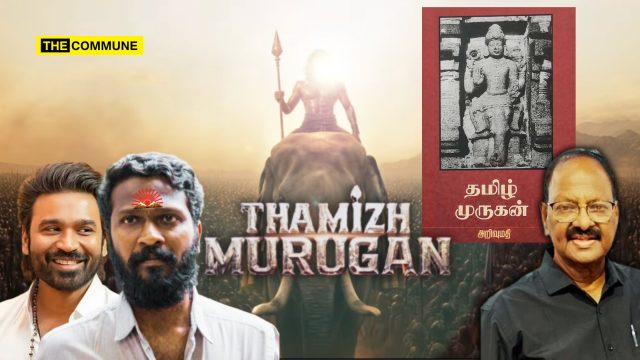
Dhanush and Vetri Maaran’s Thamizh Murugan has been unveiled not as a mythological epic, but as an anthropological and historical project. Dhanush’s caption leaves no room for ambiguity. He calls the character “The Eternal Protector, warrior, THE KING & LEADER of the Thamizh people and lands,” with the hashtag “#sonofkottravai.” There is no Shiva, no Parvathi, no celestial armies – only a mortal king of a specific land and people. The goal is clear: strip the deity of his divinity, deny his pan-Indian identity, and claim him exclusively for the Dravidian race.
The Eternal Protector, warrior, THE KING & LEADER of the Thamizh people and lands.#sonofkottravai
தமிழ் முருகன் 🙏🙏🙏
THAMIZH MURUGAN https://t.co/3wjGHGfAjG— Dhanush (@dhanushkraja) July 10, 2026
The Book – Tamizh Murugan & Arivumathi’s Argument
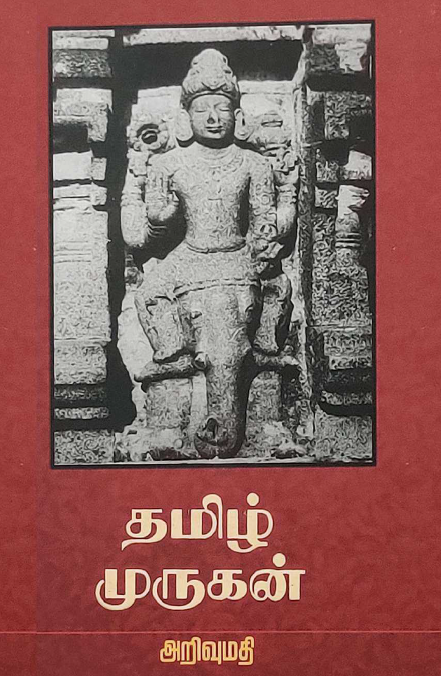
The film is reportedly based on a 66-page book titled Thamizh Murugan, carrying the subtitle “This Murugan is not a fabricated story… but a living history.” First published in print in May 2018 and January 2019, the book claims to present Murugan as a Tamil tribal deity of the Kurinji landscape, a warrior king from the mythical lost continent of Kumari Kandam, and the son of Kotravai. Arivumathi (born Mathiyazhagan), a Dravidian activist, poet and film lyricist, is the author.
The Cherrypicked Distortions
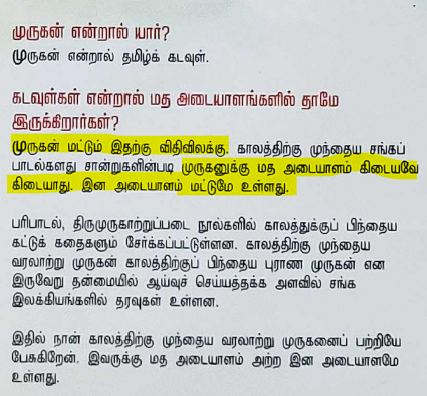
Arivumathi begins by claiming Murugan is a “Thamizh Kadavul” who has only ethnic identity according to Sangam poems “before time.”
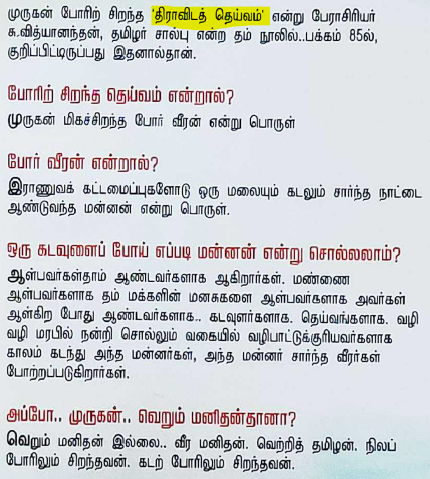
He defines “Dheivam” as “warrior”, a mortal man, not God. He argues rulers become “remembered with gratitude” and deemed worthy of worship over time.
But by this logic, Tamils should be worshipping other brave warrior kings like Karikalan, Rajaraja, and Senguttuvan in temples. Yet such temples are not found, only temples built to Gods by these noble Tamil kings exist.
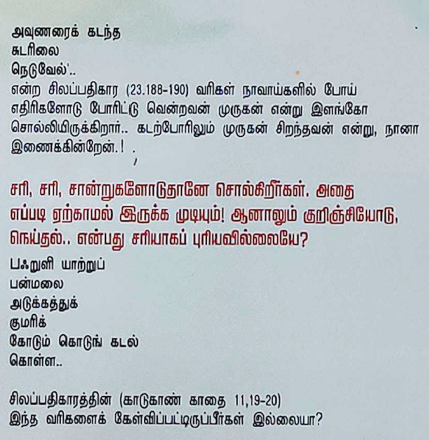
He quotes Silapadhigaaram 23.188 to claim Murugan was also a Lord of Neithal (coast) replacing Varunan. However, the verse describes Kannagi walking on shores of Vaigai to reach a sacred hill of Neduvel. This Muruga tore out bowels of sea to vanquish Asuras – the exact story and phrase used in Sangam Literature Paripaadal, describing Muruga whose Vel (spear) defeated the magical Avunars.
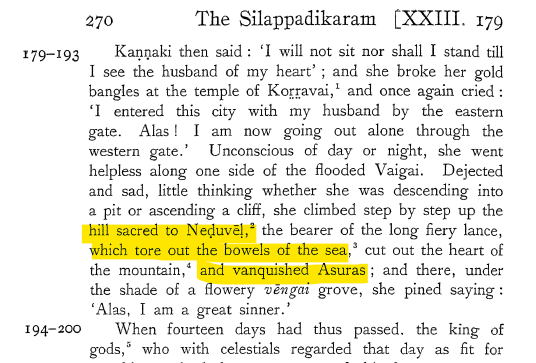
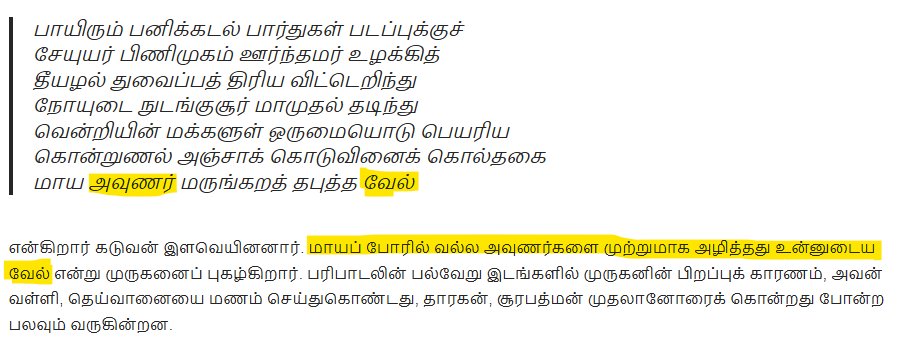
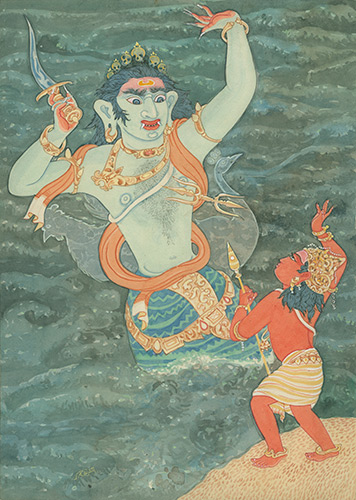
This matches the Skanda Purana imagery of Murugan vanquishing Surapadman who retreated to the sea.
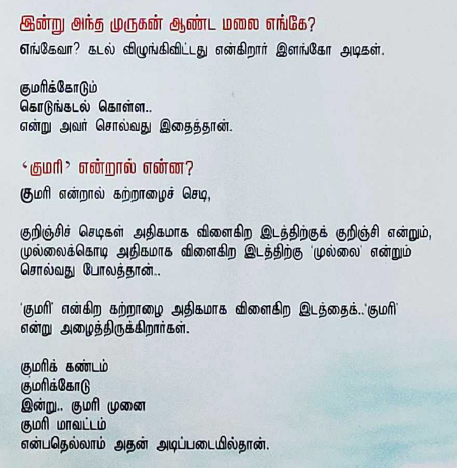
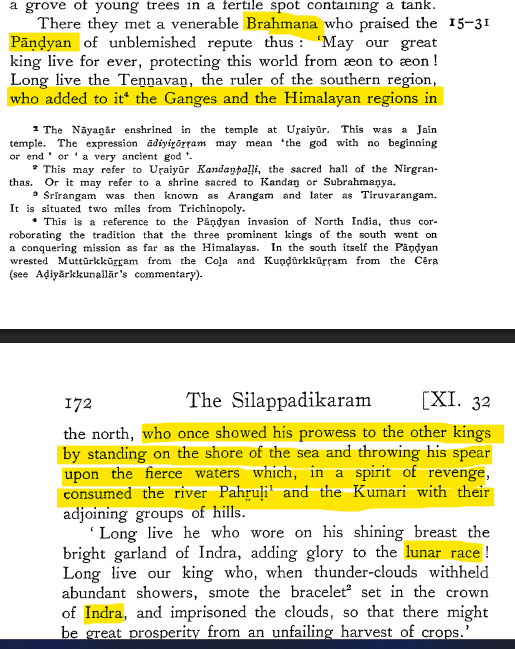
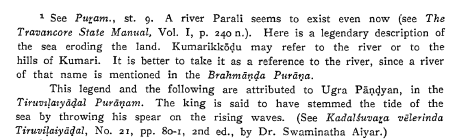
He further distorts Silapadhigaaram 11,19-20 to claim this is a sea submerged hill “Kumari Kandam.” The verse is actually a poem sung by a Brahmin in praise of a Pandya king, describing Ugra Pandyan’s legend of stemming the tide with his spear, not Murugan. If Arivumathi distorts this as King Murugar who ruled Kumari Kandam, does he also accept Murugar as a Chandravanshi Pandya king who wears the garland of Indra from the same verse?
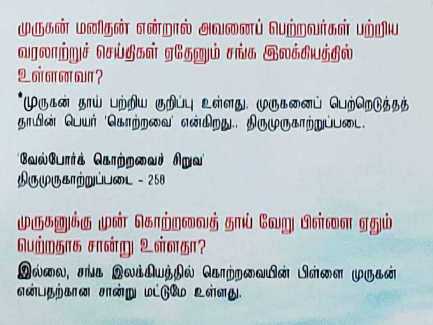
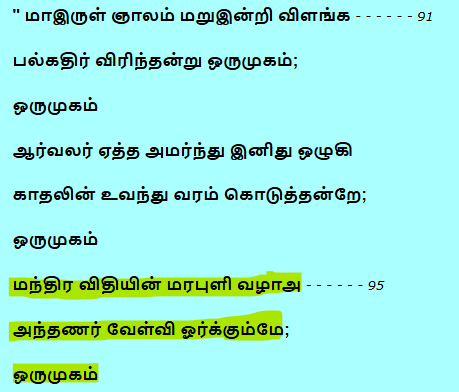
He quotes Thirumurugaatrupadai Nakkeerar to claim Murugan was born as the only son to Kotravai. Yet the same Nakkeerar explains the six-faced Muruga with one face rejoicing in accepting Yagnic offerings chanted by traditional Brahmins. Does Arivumathi also accept this?
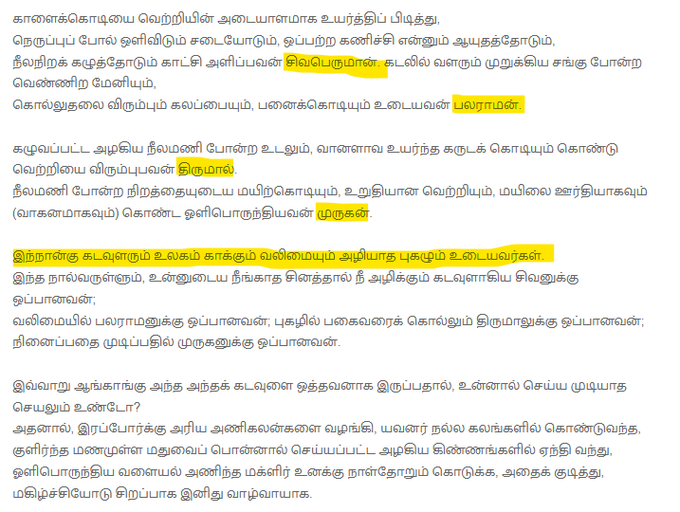
The same Nakeerar mentions a festival procession at Aavinankudi with temples for Vishnu, Shiva, Balarama and Muruga in that order, overseen by four-faced Brahma. What “irreligious secular non-Hindu” procession is this Nakeerar describing?
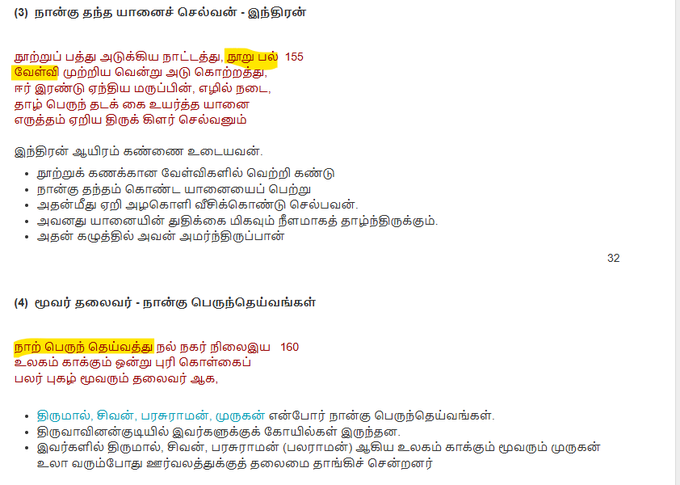
In Purananooru 56, poet Nakeerar mentions attributes of four Gods – Shiva, Balarama, Vishnu and Murugan and compares the Pandya king with them. If Muruga was a king turned God, what about Shiva, Thirumaal and Balarama?
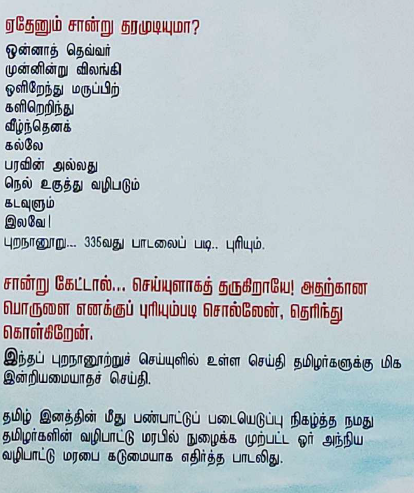
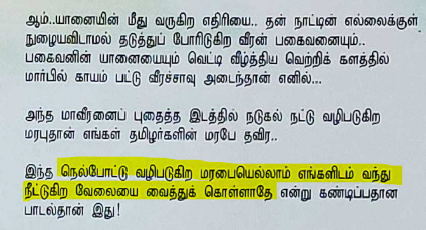
He quotes Purananooru 335 about Nadukal worship, portraying it as a “rebel poet” opposing “Aryan” invaders and their use of Nel for worship. The poet actually says the opposite: “What better way to worship our fallen warrior heroes than putting Nel on their hero stones?”
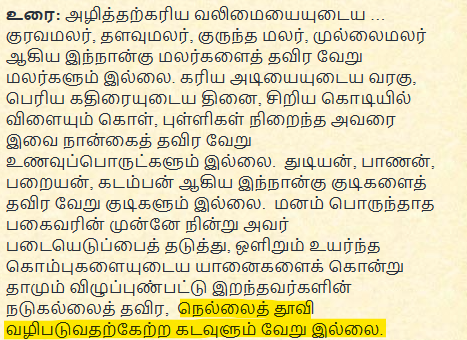
Plenty of Sangam Literature poems and Silapadhigaram mention using Nel for worship. Kannagi’s wedding was conducted by a Vedic Brahmin on Rohini Nakshatra day, where she did a ritual with “Paaligai mulai kudam nirathal” – a tradition where nine grains including wheat are filled in small pots.
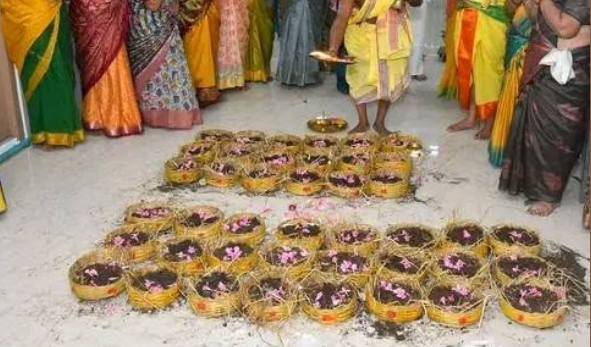
Arivumathi acknowledges this but claims all these were “later day distortions.” He cherrypicks what he wants from the same Silapadhigaaram and calls the rest distortions.
His Thesis Summary
Arivumathi’s thesis is as follows:
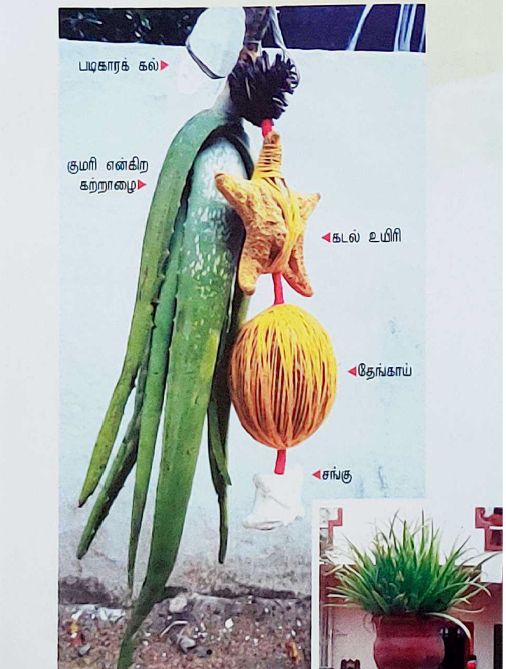
Muruga was a warrior king who ruled over Kumari Kandam, he has only “Dravidian” ethnic identity, no religious identity. He was born to Kotravai as the only son. He was a brave warrior who protected his clan and won over an enemy clan head named Sooran. He was not a God but raised to Godly status by people. His places were called Arupadai Veedu (houses) not temples. He was a Lord of Neithal (coast) more than Kurinji (hill). Tamils keep aloe vera plant in front of their house as first aid when tsunami strikes. Tamils keep coconut in front of their houses not for Drishti, but for using coconut milk in the absence of mother milk after a Tsunami. Taking Kavadi is to remember the painful memory of ancient Tamils carrying leftover items when migrating out of Kumari Kanda. Tamils store grains in temple gopuram to prepare for a disaster like tsunami. Muruga became Subramanya and all of the 6 Arupadai Veedus today have become “Sanskrit Murugan” with no semblance of the ‘original’ “Tamil Murugan.”
Pseudoscience, Sacrilege and Cherrypicked Distortions
Does any of this withstand intellectual scrutiny? The answer is a resounding no.
Kumari Kandam belongs in the same realm as the mythical Meru mountain – a fantastical construct with no basis in geological or historical reality. Credible scientists have long dismissed the Lemuria connection as pseudoscience. Yet this mythical lost continent forms the cornerstone of Arivumathi’s thesis.
The claim that Murugan was not a God, but a mortal king elevated to divine status is not just historically inaccurate, it is sacrilege. Sangam literature consistently lists Murugan alongside Shiva and Vishnu as one of the great deities. He was never a mere mortal. The assertion that he was a Lord of Neithal (coast) rather than Kurinji (hill) is a desperate force-fit to prop up the Kumari Kandam fantasy. The Sangam texts are unambiguous: Seyon Murugan is the Lord of the hills, and Varuna rules the seas. Arivumathi’s attempt to swap these designations is a distortion of the highest order.
Kotravai, too, is no prehistoric queen. She is the Goddess of the Paalai desert, and her description in Silapadhigaram matches verbatim with Durga. To reduce her to a tribal mother goddess from a lost continent is to ignore the textual evidence staring one in the face.
Every source Arivumathi cites is cherrypicked. Verses that support his narrative are quoted with reverence; verses from the very same texts that contradict him are dismissed as “later interpolations.” This is not scholarship; it is ideological manipulation. His motivations are transparent: a deep-seated hatred for Sanskrit and Tamil Brahmins, a prejudice inherited from colonial theories that divided Indians into imaginary racial categories with no evidence whatsoever.
The Dangerous Precedent
Is there nothing of value in what he says? To be fair, he does correctly identify certain tribal modes of worship associated with Murugan – the Veriyaatams, the non-vegetarian offerings. But what he conveniently discards is the co-existence of Brahmanical modes of worship mentioned in the very same Sangam texts. Because acknowledging that would dismantle his entire thesis.
Even Shiva was worshipped by Kapalikas in their own austere and harsh ways, with patronage from Tamil kings. Those practices eventually faded. Different modes of worship do not mean different deities. The attempt to reduce the immortal Gods of the Hindu pantheon to mortal kings is a tired playbook, one that has been deployed for over 1,800 years by forces hostile to Sanatana Dharma. Do not let your love for Tamil or Murugar blind you to this disrespectful sacrilege for what it is.
Lord Murugan is dear to all Hindus. His worship may indeed have ancient roots in Tamil soil, and the sacred towns of Tiruchendur and Thirupparankundram hold special significance. But he is not a regional property. He is a pan-Indian God of war, worshipped in various languages such as Kannada, Malayalam, Telugu, Hindi, English and even Russian and across the world, in fact His temples dot the subcontinent from the Himalayas to the deep south.
Lord Murugan needs no “ancestry” certificate from those who do not worship him, nor from atheist comrades who seek to reduce him to a historical artifact.
This article is based on an X thread by Tamil Labs.
Subscribe to our channels on WhatsApp, Telegram, Instagram and YouTube to get the best stories of the day delivered to you personally.