Home Blog Page 176

BBC Top Excutives Resign After Leaked Memo Alleges Documentary Misled Viewers By Editing Trump’s Capitol Riot Speech

BBC Top Excutives Resign After Leaked Memo Alleges Documentary Misled Viewers By Editing Trump’s Capitol Riot Speech

Two of the British Broadcasting Corporation’s (BBC) top executives have stepped down following allegations that the broadcaster’s flagship documentary programme misleadingly edited a speech by former US President Donald Trump delivered before the January 6 Capitol riot.

Director General Tim Davie and BBC News Chief Executive Deborah Turness resigned days after The Daily Telegraph reported on a leaked internal memo suggesting that the BBC’s Panorama documentary, Trump: A Second Chance?, had spliced Trump’s remarks to make it appear that he had explicitly encouraged the attack on the US Capitol on 6 January 2021.

Announcing his resignation, Davie stated that while the BBC continued to perform well overall, recent controversies surrounding BBC News had contributed to his decision to step down. “Like all public organisations, the BBC is not perfect, and we must always be open, transparent and accountable,” he said in a statement posted on the BBC website. “While not being the only reason, the current debate around BBC News has understandably contributed to my decision. Overall, the BBC is delivering well, but there have been some mistakes made, and as director-general I have to take ultimate responsibility.”

The Daily Telegraph Report

According to The Daily Telegraph, concerns were first raised last summer in a memo on editorial impartiality written by Michael Prescott, who had served until June as an independent external adviser to the BBC’s Editorial Standards Committee. The memo, later leaked, alleged that the Panorama documentary broadcast the week before last year’s US election had combined footage from different points in Trump’s speech to suggest that he had urged supporters to march to the Capitol and “fight like hell.”

Prescott said that in reality, the two remarks were made about 50 minutes apart, and that in the original footage, Trump had said supporters should walk to the Capitol to “cheer on our brave senators and congressmen and women.”

At the time of the speech, Trump was still disputing the outcome of the 2020 election, in which he lost to President Joe Biden. Prescott also accused the BBC of avoiding coverage of stories that raised difficult questions about transgender rights and claimed that BBC Arabic had provided a platform to a journalist who had made antisemitic comments.

Reactions and Political Fallout

The Daily Telegraph report prompted strong reactions from both sides of the Atlantic. White House Press Secretary Karoline Leavitt accused the BBC of being “purposefully dishonest” in its depiction of Trump’s speech and the Capitol riot.

Trump also responded, alleging bias among journalists and calling them “very dishonest people who tried to step on the scales of a Presidential Election.”

In the United Kingdom, Culture, Media and Sport Minister Lisa Nandy described the allegations as “incredibly serious.” Speaking to BBC Television, Nandy said that the Panorama edit was one of several concerns about editorial standards at the broadcaster.

“It isn’t just about the Panorama programme, although that is incredibly serious,” she said. “There are a series of very serious allegations made, the most serious of which is that there is systemic bias in the way that difficult issues are reported at the BBC.” Nandy also expressed concern that the BBC’s reporting standards and language varied inconsistently depending on the subject, including issues related to “Israel, Gaza… trans people or on this issue about President Trump.”

Following the resignations, Leavitt posted on X a screenshot of the BBC website announcing the leadership changes, appearing to celebrate the news.

The BBC’s Wider Controversies

The latest resignations add to a series of editorial controversies for the BBC this year. Earlier in 2025, the broadcaster issued multiple apologies for “serious flaws” in the making of its documentary Gaza: How to Survive a Warzone, aired in February.

In October, the BBC accepted a sanction from the UK’s media regulator, Ofcom, for a “materially misleading” programme that had used a child narrator later revealed to be the son of a former Hamas deputy agriculture minister.

With over 21,000 employees, the BBC remains one of the world’s largest public service broadcasters, funded primarily through licence fees paid by UK households and supplemented by commercial revenue. The organisation has faced increasing scrutiny in recent years over its impartiality, editorial independence, and global reputation for trustworthiness.

(Source: NDTV)

Subscribe to our channels on WhatsAppTelegram, Instagram and YouTube to get the best stories of the day delivered to you personally.
J&K Police Busts Transnational Terror Module Linked To JeM And Al-Qaeda Affiliate; 2,900 kg Explosives Recovered From J&K Doctors’ Residences Near Delhi

J&K Police Busts Transnational Terror Module Linked To JeM And Al-Qaeda Affiliate; 2,900 kg Explosives Recovered From J&K Doctors’ Residences Near Delhi

In a major breakthrough, the Jammu and Kashmir Police have uncovered an inter-state and transnational terror module linked to Pakistan-based Jaish-e-Mohammed (JeM) and the Ansar Ghazwat-ul-Hind (AGuH), an al-Qaeda-affiliated group active across Jammu and Kashmir. The investigation has led to the recovery of 2,900 kilograms of bomb-making material, including 350 kilograms of suspected ammonium nitrate, timers, weapons, and ammunition from multiple locations, including a hospital locker near Delhi.

The recoveries were made following coordinated raids across Srinagar, Anantnag, Ganderbal, Shopian, and Faridabad (Haryana) by J&K Police and central intelligence agencies. Investigators say the network represents a growing trend of “white-collar radicalisation,” with several professionals, including doctors, allegedly working under the direction of handlers in Pakistan and other countries.

Explosives and Weapons Found Near Delhi

The investigation began after the arrest of Dr. Adil Ahmad Rather, a doctor from Kulgam, accused of putting up posters supporting Jaish-e-Mohammed in Srinagar on 27 October 2025. CCTV footage from the area led to his arrest in Saharanpur, Uttar Pradesh, in a joint operation by J&K and UP Police.

During questioning, Rather revealed information leading to Faridabad, where police recovered 350 kilograms of ammonium nitrate, 20 electronic timers, a pistol, three magazines, a walkie-talkie set, and an assault rifle. The materials were found at the residence of Dr. Mujammil Shakeel, a Pulwama native employed at Al-Falah Hospital, and inside Rather’s hospital locker at the Government Medical College, Anantnag.

Faridabad Police Commissioner Satender Kumar Gupta confirmed the seizure and said forensic teams were examining the explosive material, believed to be used for manufacturing IEDs. The explosives were initially feared to be RDX before forensic analysis identified them as ammonium nitrate.

Both doctors were arrested and booked under the Unlawful Activities (Prevention) Act (UAPA) and the Arms Act. A woman doctor from the same hospital has also come under scrutiny after police discovered an assault rifle inside her car.

Arrests Across Jammu & Kashmir

According to intelligence sources, at least seven people have been arrested so far. In addition to Dr. Rather and Dr. Shakeel, the others are Arif Nisar Dar, Yasir-ul-Ashraf, and Maqsood Ahmad Dar from Srinagar; Molvi Irfan Ahmad from Shopian; and Zameer Ahmad Ahanger from Ganderbal.

The police said these individuals were part of a broader radicalised network that not only disseminated propaganda such as pro-JeM posters but also participated in logistical operations, including weapons storage and coordination with handlers abroad.

Investigators recovered incriminating documents, booklets on IED assembly, and a large cache of guns and ammunition, including an Italian-made Beretta pistol and a Russian-made Krinkov assault rifle, a compact variant of the AK-74.

2,900 kg of Explosives and Bomb-Making Materials

Officials said that across all linked locations, a total of nearly 2,900 kilograms of IED-making materials were recovered. This includes explosives, chemicals, electronic circuits, remote-control devices, wires, batteries, and timers. More than one-third of this haul – the 350 kg ammonium nitrate was recovered from Faridabad.

Authorities believe this stockpile was part of an ongoing effort to prepare for coordinated terror strikes, though the precise targets and timelines remain under investigation.

Senior police officials said the cache’s proximity to the national capital poses a serious security concern, and agencies are examining how such a large quantity of explosives was transported and stored undetected.

Pakistan-Based Network and Handlers

Sources told NDTV that intelligence inputs point to Pakistani handlers directing these operatives via encrypted communication platforms. These handlers are believed to be coordinating multiple modules within India, providing both ideological guidance and operational instructions.

Recent intelligence assessments have highlighted a renewed mobilisation by Pakistan-backed groups, including Jaish-e-Mohammed and Lashkar-e-Taiba, to intensify infiltration and cross-border logistics in the aftermath of Operation Sindoor, India’s military response to the Pahalgam attack in April 2025.

Reports have also indicated that Pakistan’s Inter-Services Intelligence (ISI) has been engineering a covert alliance between Lashkar-e-Taiba and the Islamic State Khorasan Province (ISKP), particularly within Balochistan, to expand terror operations against India.

White-Collar Radicalisation: A New Threat

Officials said the involvement of medical professionals including doctors, represents a troubling trend of “white-collar terror,” where educated individuals are radicalised online or through ideological indoctrination and then recruited into terror networks.

Authorities are also tracking the flow of funds to and from these operatives and their backers abroad. According to investigators, both doctors were allegedly in touch with ISI-linked intermediaries in Pakistan and Afghanistan, and had been communicating via secure, encrypted messaging applications.

This news comes at the heels of the Gujarat ATS arresting three members including an MBBS doctor for allegedly conspiring to carry out mass-casualty terrorist attacks across India. The suspects were apprehended while supplying sophisticated weapons and were in the advanced stages of producing Ricin, a deadly chemical poison.

(Source: NDTV)

Subscribe to our channels on WhatsApp, Telegram, Instagram and YouTube to get the best stories of the day delivered to you personally.
“Most Passengers Are Christians, Can’t Go Inside Valliyur Just For You,” Bus Conductor Antony Allegedly Insults Hindu Priest In Tirunelveli District

“Most Passengers Are Christians, Can’t Go Inside Valliyur Just For You,” Bus Conductor Antony Allegedly Told Hindu Priest

Tension prevailed in Valliyur on Monday morning after a government bus conductor allegedly made religiously biased remarks toward a Hindu temple priest traveling with his family, prompting locals to stage a protest.

According to reports, a government bus (registration TN-74 N-2120) operating from Vivekanandapuram Depot in Kanyakumari district picked up passengers near Naalumavadi Christian Church in Thoothukudi district around 4:50 AM. The bus later reached Tirunelveli’s new bus stand and departed toward Nagercoil at around 5:00 AM.

Among the passengers was Subramanian, a temple priest from Valliyur, who was traveling with his wife and two sons. Witnesses said Subramanian, dressed in traditional attire – without a shirt but wore a Rudraksha mala, was told by the conductor, identified as Antony, who told them that the bus would not enter Valliyur and would stop only at the bypass.

When Subramanian protested, saying the bus regularly entered Valliyur, the conductor allegedly replied that “most passengers were Christians from Naalumavadi” and that the bus would not go through Valliyur “just for him.”

The exchange led to tension among passengers. The priest refused to alight, following which the bus eventually entered Valliyur. On arrival, Subramanian and his family staged a sit-in protest in front of the bus. Residents gathered at the scene and joined the protest.

Police from Valliyur station reached the spot and held talks with the protesters. After about an hour, the bus continued its journey to Nagercoil.

Speaking to local reporters, Subramanian alleged that several passengers sided with the conductor on religious basis and that such incidents had occurred earlier as well.

Subramanian stated, “Most passengers in the bus supported the conductor, behaving in a religiously discriminatory way. The bus was not hired solely for the Christians from Naalumavadi. All of us had bought tickets. The conductor also spoke offensively. I recorded this on video.”

He said a similar issue took place on 31 August 2025, when the same bus skipped Valliyur, leading to the suspension of its driver and conductor at the time.

The incident took place in Radhapuram Assembly constituency, represented by Speaker M Appavu. Local residents claimed that government buses frequently skip Valliyur despite regulations requiring all Tamil Nadu State Transport Corporation (TNSTC) buses, except “one-to-one” express services, to pass through the town.

Residents have urged strict disciplinary action against conductor Antony , accusing him of religious bias and misconduct. Officials from the Nagercoil Transport Department said a departmental inquiry has been ordered and appropriate action will be taken based on the findings.

(Source: Dinamalar)

Subscribe to our channels on WhatsAppTelegram, Instagram and YouTube to get the best stories of the day delivered to you personally.

CBI-Led SIT Finds TTD Received Adulterated Ghee From Fake Uttarakhand Dairy Between 2019 & 2024

Ancient Inscriptions Reveal Tirupati Temple's Strict Food Quality Traditions Amid Beef In Tirupati Prasadam Controversy CBI-Led SIT Finds TTD Received Adulterated Ghee From Fake Uttarakhand Dairy Between 2019 & 2024

The Central Bureau of Investigation (CBI)-supervised Special Investigation Team (SIT) probing the Tirumala Tirupati Devasthanams (TTD) ghee adulteration case has uncovered that the temple trust received adulterated ghee for over five years from a fake dairy unit in Uttarakhand.

According to the SIT’s remand report submitted to the ACB Court in Nellore, the supplier, Bhole Baba Organic Dairy, located at Bhagawanpur in Uttarakhand, supplied an estimated 68 lakh kilograms of ghee worth ₹250 crore to the TTD between 2019 and 2024, despite not procuring a single drop of milk or butter during the entire period.

The findings came to light following the arrest of Ajay Kumar Sugandh, listed as A-16 in the case, who allegedly supplied chemicals such as monodiglycerides and acetic acid ester used in the production of adulterated ghee.

Investigators found that Bhole Baba Dairy was operated by Pomil Jain and Vipin Jain, who established a shell manufacturing unit and forged milk procurement and payment records. Local cattle rearers confirmed that they had never supplied milk to the company. The promoters reportedly bought a defunct dairy facility nearby and sourced palm oil and kernel oil under the name Harsh Fresh Dairy from a Delhi-based importer of Malaysian palm oil. These oils were then blended with chemicals to produce spurious ghee intended exclusively for TTD contracts.

The SIT stated that the dairy used acetic acid esters in the final product to manipulate the Reichert-Meissl (RM) value, a key measure used in TTD’s quality control tests for ghee. Between 2022 and 2024, Bhole Baba Dairy purchased acetic acid ester worth ₹7 crore from Ajay Kumar, the chemical supplier based in Delhi.

Despite being blacklisted by the TTD in 2022, Bhole Baba Dairy continued supplying adulterated ghee by routing bids through other dairies, including Vyshnavi Dairy (Tirupati), Mal Ganga Dairy (Uttar Pradesh), and AR Dairy Foods (Tamil Nadu).

The SIT also found that four tankers of ghee adulterated with animal fat, originally supplied by AR Dairy and rejected by the TTD in July 2024, were reintroduced into the TTD supply chain by Bhole Baba Dairy through Vyshnavi Dairy. During inspections by FSSAI officials and SIT teams at AR Dairy’s Dindigul plant, it was discovered that the rejected tankers never returned to the plant. Instead, they were diverted to a local stone crushing unit located near Vyshnavi Dairy.

In August 2024, Vyshnavi Dairy, which remained an approved supplier within the Andhra Pradesh circle category, allegedly changed the labels on the tankers, modified the consistency of the synthetic ghee, and resupplied it to the TTD. Investigators said that this ghee was later used in preparing the Tirupati Laddu prasadams.

The controversy surfaced in September 2024, after Andhra Pradesh Chief Minister N. Chandrababu Naidu alleged that TTD laddus were being made using ghee adulterated with animal fat during the previous administration. Following his remarks, a court-directed SIT investigation began examining procurement records, supply chains, and quality testing protocols.

The probe revealed that Ajay Kumar Sugandh had supplied monoglycerides, acetic acid, and esters for nearly seven years to Bhole Baba Dairy directors Pomil Jain and Vipin Jain. The chemicals were imported from South Korea by a Delhi-based distributor and later purchased and resold by Sugandh under his company’s name.

Investigators also found that over 90 per cent of the ghee used in laddu preparation was blended with palm oil. The SIT collected evidence of financial transactions and chemical supplies linking Sugandh directly to Bhole Baba Dairy’s promoters.

Ajay Kumar was detained in Delhi, brought to Tirupati for interrogation, and produced before the Nellore ACB Court, which remanded him to judicial custody until 21 November 2025. The investigation into the alleged ₹250-crore ghee adulteration racket and its network of shell dairies remains ongoing under the supervision of the CBI.

(Source: Times of India)

Subscribe to our channels on WhatsAppTelegram, Instagram and YouTube to get the best stories of the day delivered to you personally.
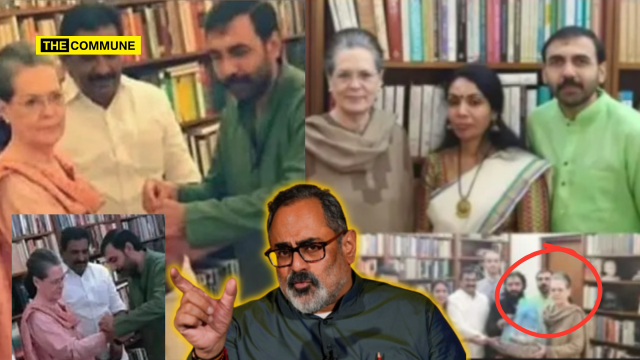
Rana Ayyub Claims She’s Being Threatened After Not Accepting To Write Article Glorifying Khalistanis Who Killed Indira Gandhi

Alleged journalist Rana Ayyub, who writes for The Washington Post, has alleged that she received death threats from an international number after she declined a demand to write an article praising the assassins of former Prime Minister Indira Gandhi.

According to reports, Ayyub received several calls and messages on November 2 from a Canadian number that displayed the name “Harry Shooter” and a profile picture of gangster Lawrence Bishnoi. The messages allegedly threatened to kill her and her father if she did not comply. The caller is said to have shared Ayyub’s residential address, revealed knowledge of her father’s travel location, and made four video calls to her WhatsApp number.

Ayyub, who resides in Navi Mumbai, has been a journalist for over two decades and is known for her flawed ‘investigative’ work on the 2002 Gujarat riots which was trashed by the courts. Her book Gujarat Files was also trashed by the same courts.

Over the years, she has been called out for her lies and has been investigated by the Enforcement Directorate and Income Tax Department for the allegedfraud she committed during COVID-19.

During the COVID-19 pandemic, she tried to raise funds for “slum dwellers, COVID relief etc. However, it turned out to be an alleged fraud. In 2023, the Enforcement Directorate (ED) presented allegations against her before the Supreme Court, stating she misused funds raised for COVID-19 relief, slum dwellers, and aid in Assam for personal luxuries. The ED stated that Ayyub collected over Rs 1 crore in donations, transferred Rs 50 lakh to a fixed deposit, and continued to receive funds after the campaign ended. The ED’s investigation also suggested that Ayyub used fake bills to justify expenses for luxury items. Ayyub’s counsel, Vrinda Grover, argued that the Ghaziabad court lacked jurisdiction, as her client resides in Navi Mumbai, and challenged the legality of the summons.

She was also arrested by UP Police but was let out on conditional bail.

Coming back to the recent threats, police sources said Ayyub has filed multiple complaints over threats in the past, but no substantial action has been taken apart from the registration of a few First Information Reports (FIRs). The only proactive step taken earlier was the offer of a revolver licence after the murder of journalist Gauri Lankesh, according to Ayyub’s account.

The latest threats came shortly after Ayyub posted on Instagram on the anniversary of the 1984 anti-Sikh pogrom, where she reflected on her childhood during the 1992 Mumbai riots and commented on the ‘cycle of injustice that leads to communal violence’.

Rana Ayyub Instagram

Following the messages and calls, Ayyub reportedly contacted the Navi Mumbai Police, expressing concern that the caller appeared to be tracking her and her family. She alleged that despite her insistence, police had not registered an FIR and instead recorded a non-cognisable offence (NC), which restricts direct investigation without a court order.

Police officials stated that a forensic examination had been initiated to trace the origin of the VoIP-based international calls. Deputy Commissioner of Police Pankaj Dahane confirmed that permission had been obtained to investigate the NC, while Police Commissioner Milind Bharambe said the case posed challenges due to the call’s foreign origin.

The Committee to Protect Journalists (CPJ) has expressed concern for Ayyub’s safety and urged authorities to provide security and investigate the threats thoroughly. Ayyub has stated that she remains anxious about the safety of her family and fears that she is under surveillance.

According to local reports, the police have begun examining the technical details of the calls, though no arrests or identifications have been made so far.

(Source: The Hindu)

Subscribe to our channels on WhatsAppTelegram, Instagram and YouTube to get the best stories of the day delivered to you personally.
Dravidian Model Law & Order: Man Hacked To Death Inside Police Quarters In Trichy

Dravidian Model Law & Order: Policeman Hacked To Death In Front of Family Inside Trichy Police Quarters

In a shocking incident that unfolded inside the police quarters in Bhima Nagar, Trichy, a 30-year-old man was chased and hacked to death by a four-member gang on Monday morning, in full view of a police officer’s family.

The victim, identified as Thamaraiselvan, a resident of Keelatharai in Bhima Nagar, had married a year ago and was employed with a private company in Thiruvanaikaval. The attack took place around 9 AM on Old Post Office Road in Bhima Nagar.

According to preliminary reports, Thamaraiselvan was riding his two-wheeler when two motorcycles carrying four assailants intercepted and rammed into his vehicle, causing him to fall. The gang immediately attacked him with sickles, prompting him to flee towards the nearby police quarters in a desperate attempt to save his life.

He entered the residence of a police officer from the Thillai Nagar locality, whose family was inside at the time. The door was reportedly open as the officer’s daughter had stepped out to dispose of garbage. Thamaraiselvan ran inside and hid near a grinder in the kitchen, but the gang followed him and repeatedly struck him with machetes on the head, hands, and legs, killing him on the spot.

Police personnel from Palakkarai Police Station and the Assistant Superintendent’s office rushed to the scene soon after the incident. Forensic teams and sniffer dogs were deployed to collect evidence.

Witnesses said nearby policemen tried to stop the attackers by throwing stones but were forced to keep a distance as the gang was heavily armed. Both the officer and his family, who were inside the house during the attack, were left stunned and unable to intervene.

The attackers fled the scene before reinforcements arrived. One suspect has reportedly been detained for interrogation. Police are investigating possible motives, including personal enmity or revenge, and are examining whether the attackers had links to individuals from the Samayapuram area.

CCTV footage from the vicinity is being reviewed to trace the gang’s movements, their vehicles, and escape route. Senior officers have formed special teams to track down the suspects involved in what is being described as one of the most alarming murders in recent years within Trichy city limits.

Subscribe to our channels on WhatsAppTelegram, Instagram and YouTube to get the best stories of the day delivered to you personally.
Indian Army Establishes Three New Military Garrisons Near Siliguri Corridor To Bolster ‘Chicken’s Neck’

Indian Army Establishes Three New Military Garrisons Near Siliguri Corridor To Bolster 'Chicken's Neck'

The Indian Army has established three new military outposts along the Bangladesh border to strengthen security around the strategic Siliguri Corridor, also known as the Chicken’s Neck – the narrow stretch connecting mainland India with the northeastern states.

According to reports, the new military installations have been set up at Bamuni near Dhubri in Assam, Kishanganj in Bihar, and Chopra in West Bengal. The move is part of India’s broader effort to bolster defences in the eastern sector and ensure a rapid military response in the event of any threat to the corridor.

Lachit Borphukan Military Station in Assam

On Thursday, Eastern Army Commander Lieutenant General R.C. Tiwari laid the foundation stone for the Lachit Borphukan Military Station in Assam’s Dhubri district, marking the first major Army base near the Bangladesh border in the state. The station is being established at Bamuni Part 1 and Part 2 villages on government-owned land previously occupied by illegal encroachers. The encroachments were removed as part of an ongoing eviction drive by the Assam government.

The new base will come under the jurisdiction of the Tezpur-based GOC 4 Corps. Defence PRO Lt Col M. Rawat said the creation of the station represents “a significant step in further strengthening the operational capabilities and infrastructure of the Indian Army in the region.”

The establishment of the base was initially proposed by Assam Chief Minister Himanta Biswa Sarma, following communal tensions in Dhubri during Eid earlier this year.

Lt Gen Tiwari thanked the Assam Government and the Civil Administration for their assistance in speeding up the project’s implementation and commended all ranks of the Gajraj Corps for their efforts in making the base operational at the earliest.

New Camps in Kishanganj and Chopra

In addition to the Dhubri base, the Army has set up new facilities at Kishanganj and Chopra, both located near the Bangladesh border and within the Siliguri Corridor. These have been established under a “minimal timeframe” objective to enhance India’s immediate operational readiness.

The Chopra Defence Land in North Bengal lies less than a kilometre from Tetulia in Bangladesh’s Panchagarh district, under the Rangpur division. This facility will operate under the Brahmastra Corps.

The foundation stone for the Kishanganj Military Camp was also laid recently by Lt Gen R.C. Tiwari. In social media posts, the Eastern Command said the Commander visited both the Kishanganj and Chopra military camps to review operational preparedness and ongoing infrastructure development.

Strategic Context

Officials said the step comes amid changing geopolitical dynamics in the region. India’s security agencies are closely monitoring developments in Bangladesh, where the new interim leadership under Chief Adviser Muhammad Yunus has reportedly increased engagement with Pakistan and China. Reports of Yunus’s meeting with Pakistan’s military leadership have drawn attention from Indian intelligence and defence circles.

To counter potential risks from the eastern front, the Indian Army has moved swiftly to fortify its defences in and around the Chicken’s Neck corridor, which is only 22 kilometres wide at its narrowest point.

The newly established military outposts are expected to improve surveillance, inter-force coordination, and ground mobility across the corridor. Officials said the deployments will ensure that “every move of the enemy will be foiled at the Chicken’s Neck”, adding that the new infrastructure adds another layer of strength to India’s border management.

Existing Defence Infrastructure

The Tri-Shakti Corps, responsible for guarding the Siliguri Corridor, is already deployed in the region along with advanced military assets, including Rafale fighter jets, BrahMos missile systems, and air defence units such as S-400 and Akash systems. Together, these form a comprehensive security shield over the eastern corridor.

Senior Army officials have reiterated that the Chicken’s Neck is not a weak point, but rather one of India’s strongest links, capable of mobilising coordinated forces from West Bengal, Sikkim, and the Northeast whenever required.

(Source: OpIndia)

Subscribe to our channels on WhatsAppTelegram, Instagram and YouTube to get the best stories of the day delivered to you personally.
Sri Sri Ravi Shankar Conferred With 2025 World Leader For Peace And Security Award

Sri Sri Ravi Shankar Conferred With 2025 World Leader For Peace And Security Award

Spiritual leader Gurudev Sri Sri Ravi Shankar, founder of the Art of Living Foundation, has been conferred with the 2025 World Leader for Peace and Security Award by the Boston Global Forum (BGF) and the AI World Society (AIWS). The award was presented on Monday (3 November 2025) in recognition of his decades-long work in peacebuilding, conflict resolution, and humanitarian leadership.

Previous recipients of the award include French President Emmanuel Macron, Ukraine’s President Volodymyr Zelenskyy, and former United Nations Secretary-General Ban Ki-moon, among others.

While presenting the award, Nguyen Anh Tuan, Co-founder and CEO of the Boston Global Forum, said, “In honouring Gurudev, we celebrate a spiritual luminary who bridges the wisdom of the East and the innovation of the West. His work exemplifies moral courage and humanity in the AI age.”

According to a statement from the Boston Global Forum, Gurudev’s peace interventions have extended far beyond dialogue. He has personally mediated conflicts in Colombia, Iraq, Sri Lanka, Venezuela, and Kashmir, bringing together opposing sides through non-violent dialogue and reconciliation efforts.

The BGF said the award recognises Gurudev’s “decades-long commitment to peace-building, conflict resolution, and humanitarian leadership across 180 countries.”

The Art of Living Foundation’s Global Work

Founded by Gurudev in 1981, the Art of Living Foundation has spearheaded humanitarian initiatives in multiple sectors. The organisation has:

  • Rehabilitated over 800,000 prisoners through spiritual and emotional education programs.
  • Revived more than 70 rivers across India through community-led water conservation projects.
  • Educated over 100,000 children in rural and tribal areas through its free schools.

The Foundation’s Sudarshan Kriya (SKY Breath Meditation) technique has reached millions globally, helping people manage stress, trauma, and anxiety. The BGF noted that Gurudev’s approach “makes peace a tangible experience rather than a distant ideal.”

Gurudev’s Message on Peace and Spiritual Leadership

In his acceptance speech, Gurudev emphasised the need to integrate spirituality into governance, education, and global policy-making.

“Peace cannot come by words; it has to translate into action. We often say ‘peace and security’ in one breath. A lot is done for security; but very little attention is given to peace,” he said.
He added, “Peace building is essential. A moral and spiritual force is essential to quell the distrust and distress our societies face today. Let us dream of a stress-free, violence-free world — a society where peace, compassion, and creativity flourish.”

Bridging Science and Spirituality

Beyond his humanitarian and peace work, Gurudev continues to explore the interface between science and spirituality. His newly established Institute of Absolute Intelligence in Los Angeles brings together neuroscientists, philosophers, and AI experts to study the relationship between consciousness and technology, aiming to guide the development of ethical and human-centered innovation.

The Boston Global Forum described Gurudev’s recognition as a milestone for spiritual leadership in the modern era, noting that his “vision of global peace aligns moral wisdom with technological progress.”

(Source: Hindustan Times)

Subscribe to our channels on WhatsAppTelegram, Instagram and YouTube to get the best stories of the day delivered to you personally.
Dravidian Model Law & Order: Retired Revenue Officer Hacked To Death Near Trichy Over Land Dispute

A retired district magistrate–level official was hacked to death on Thursday evening allegedly over a long-standing dispute related to temple land cultivation near Thayanur, in Trichy district.

The deceased has been identified as M Subramani (65), a retired taluk officer and resident of Thayanur Upper Street. Police said Subramani had been cultivating crops on leased temple land in the area. Another farmer, Ashok, was also cultivating land leased from the same temple, and the two had reportedly been involved in a prolonged quarrel over cultivation rights.

According to police sources, while Subramani was working in the field on Thursday evening, Ashok and his son allegedly attacked him with an earthen axe, killing him on the spot before fleeing the scene.

Upon receiving information, the Somarasampettai police reached the spot, recovered the body, and sent it to the Tiruchirappalli Government Hospital for post-mortem examination. A case has been registered, and a search operation is underway to trace the accused.

Police said Subramani is survived by his wife, a son, and a daughter.

The incident has sparked concern among residents over rising incidents of violence in the district.

This murder has occurred at a time when Chief Minister MK Stalin, was in Tiruchirappalli at the time and despite his presence, law and order has failed severely.

(Source: Dinamani)

Subscribe to our channels on WhatsAppTelegram, Instagram and YouTube to get the best stories of the day delivered to you personally.

60 Years After Battle Of Rezang La, Param Vir Chakra Hero Major Shaitan Singh’s Family Still Awaits Full Pension

60 Years After Battle Of Rezang La, Param Vir Chakra Hero Major Shaitan Singh’s Family Still Awaits Full Pension

The trailer of 120 Bahadur, a Bollywood film based on the 1962 India-China war, has been released. Among the many stories from that conflict, one of the most remembered is that of Major Shaitan Singh, who, along with his men, fought to the last breath against a vastly larger Chinese force. Despite being severely under-equipped and undersupplied by the then Nehru government, which continued to promote the slogan “Hindi-Chini bhai bhai”, Major Singh and his troop displayed extraordinary courage in the face of impossible odds.

Nearly six decades after Major Shaitan Singh Bhati, a Param Vir Chakra awardee, laid down his life in the 1962 India-China war, his family continues to fight a prolonged legal battle to receive the full pension and gratuity owed to them.

After the officer’s death in the Battle of Rezang La on 18 November 1962, his wife Sugan Kanwari was sanctioned only the normal family pension, even though she was entitled to the special family pension, which amounts to 60% of the deceased soldier’s salary.

According to records, Sugan Kanwari was first paid ₹1,392 in December 1963, implying that she had been sanctioned a monthly pension of only ₹116 despite her husband’s death in combat.

In 1963, the government granted a gratuity of ₹4,000, but the amount was recovered from her pension the following year. Even after the revision of pension rules in 1972, which introduced the liberalised family pension applicable to the next of kin of battle casualties, Sugan Kanwari continued to receive the older, lower pension rate.

Under the revised scheme, she was entitled to 60% of Major Singh’s last drawn salary as special pension and a family gratuity of ₹9,500, but she did not receive these benefits until 1996, and arrears for the period 1972 to 1995 were not paid.

Despite multiple representations, the dues remained unsettled, forcing the family to approach the Armed Forces Tribunal (AFT) in Jaipur. However, the matter continues to remain pending.

Advocate Colonel S.B. Singh (Retd.), representing the family before the AFT, told The Times of India, “In a normal pension, the next of kin is given 30% of the salary while in a special pension it is 60%. In a liberalised pension it is 100% (of the salary). However, Sugan Kanwari, wife of Major Shaitan Singh, was given only the normal pension. Moreover, she was entitled to family gratuity of ₹9,500 as per the announcement made in 1972. But it was not paid to her till her death, or later to her son.”

Sugan Kanwari passed away in 2015, still receiving the older pension rate. Her son, Narpat Singh, who was a teenager when his father was killed, has continued the legal fight to obtain the arrears and gratuity.

Col Singh said that Sugan Kanwari was unaware she was being underpaid until an official from the Sainik Kalyan Board visited her. “The deceased Major’s wife did not realise that she was being given lesser dues than that has been authorised until an official of the Sainik Kalyan Board visited her. In 1996, she started receiving the liberalised pension. The current case is for arrears from 1972 to 1995 as well as the gratuity amount. After her death in 2015, her son should have been given the arrears. But there is no judge in Jaipur AFT since 2016 due to which the case is pending.”

Narpat Singh said, “We did not know anything about the financial aspects. I was very young. We only came to know later and, now, I am waiting for the court’s decision.”

Major Shaitan Singh was initially commissioned into the Jodhpur State Forces on 1 August 1949, after completing training at the Officers Training School (OTS), Pune, from August 26, 1947, to July 31, 1949. He was later granted a Short Service Regular Commission on 1 April 1951, and a Permanent Regular Commission on 25 May 1954, with the Kumaon Regiment.

During the 1962 war, Major Singh commanded a company of the 13 Kumaon Regiment at Rezang La in eastern Ladakh, where he and his 123 soldiers fought against overwhelming Chinese forces. Major Singh and 114 of his men were killed in action after a fierce defence that remains one of the most celebrated episodes in Indian military history.

He was posthumously awarded the Param Vir Chakra, India’s highest gallantry award, for his leadership and bravery.

However, despite his supreme sacrifice, the legal process to settle his family’s dues remains unresolved. With no judge appointed to the AFT Jaipur since 2016, the case continues to be delayed as of 2021, leaving the war hero’s family still waiting for justice after nearly 60 years.

(Source: Times of India)

Subscribe to our channels on WhatsAppTelegram, Instagram and YouTube to get the best stories of the day delivered to you personally.