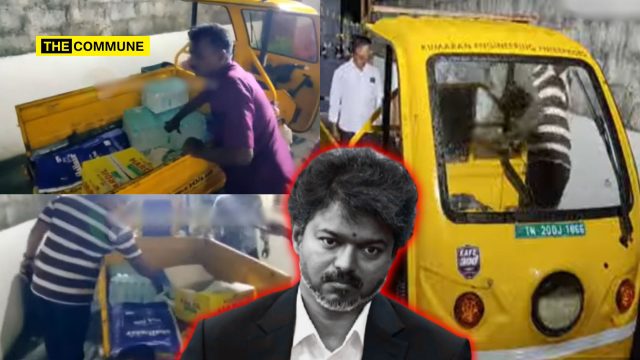
A fresh controversy has erupted in Tamil Nadu’s Tiruvallur district after food and drinking water meant for migrant workers affected by the recent ammonia gas leak were allegedly transported in a garbage collection vehicle.
The incident comes in the aftermath of the ammonia leak at a seafood processing and export unit located at Kannigaipair village near Periyapalayam in Tiruvallur district. The gas leak left several workers dead and dozens hospitalised, prompting authorities to evacuate and temporarily shelter workers who had been staying at the factory premises.
According to reports, around 145 migrant workers from states including Jharkhand, Odisha and West Bengal were moved to a private marriage hall near the factory and accommodated there as a precautionary measure. The workers included women and even some minors who were residing in the labour quarters attached to the facility.
As the displaced workers were being provided food, water and medical assistance, a new controversy emerged when drinking water bottles and food packets were allegedly transported to the relief camp in a garbage collection vehicle belonging to the local panchayat.
Visuals from the site reportedly showed packaged food items, including curd rice and tomato rice, along with bottled drinking water being carried in the vehicle typically used for waste collection. The incident triggered criticism and raised questions about the manner in which relief materials were being supplied to workers already affected by a major industrial accident.
The workers had been shifted to a marriage hall owned by the Govinda Bhavan Trust, where authorities arranged temporary accommodation and medical screening. Officials also conducted health checks on the evacuated workers while treatment continued for those hospitalised following exposure to the ammonia gas.
This raises questions about whether adequate care was taken while managing relief operations for those displaced by the industrial accident.
Subscribe to our channels on WhatsApp, Telegram,Instagram and YouTube to get the best stories of the day delivered to you personally.
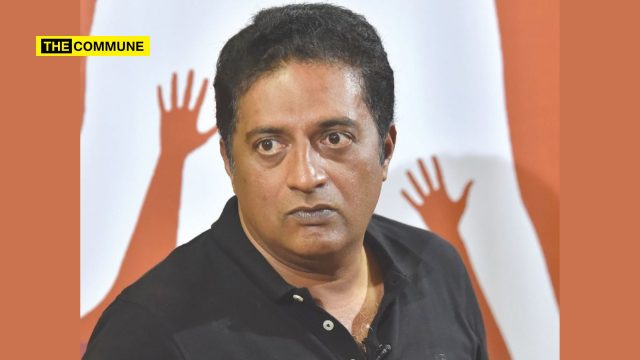
Radical leftist and ‘actor’ Prakash Raj has been issued a non-bailable warrant by a Bengaluru court in connection with allegations that he possessed voter identity cards in multiple states, a matter that has been under legal scrutiny since 2019.
Under Indian election laws, possessing voter registrations in more than one constituency is prohibited. Section 17 of the Representation of the People Act, 1950, states that a person cannot be enrolled as a voter in more than one constituency. Further, Section 31 provides for imprisonment of up to one year, a fine, or both if a person is found to have furnished false information to electoral authorities in order to obtain multiple voter registrations.
The controversy began after allegations surfaced that Prakash Raj held voter identity cards in four states – Karnataka, Tamil Nadu, Telangana and Andhra Pradesh.
In 2019, advocate Dileep Kumar lodged a complaint at Bengaluru’s Halasuru Gate Police Station alleging that the actor had obtained multiple voter registrations. When no action was reportedly taken, the complainant escalated the matter to the Bengaluru City Police Commissioner. Subsequently, a complaint was also submitted to the Election Commission.
After alleging inaction from the authorities, the complainant approached a special court in Bengaluru seeking legal intervention. The court took cognisance of the complaint and issued summons to Prakash Raj on two occasions, directing him to appear before it.
However, according to reports, the actor failed to appear before the court despite repeated summons. Taking note of his absence, the court has now issued a non-bailable warrant against him.
The latest order means that Prakash Raj could face arrest if the warrant is executed by the authorities.
Earlier, when allegations regarding multiple voter identity cards surfaced, Prakash Raj had strongly denied the charges. He maintained that he possessed only one voter identity card registered at his residence in Adyar, Chennai, where he has been living for more than two decades.
The actor had also alleged that the case against him was based on incorrect information and was motivated by political considerations.
However, it is noted that the immediate trigger for the non-bailable warrant appears to be his repeated failure to comply with court summons and appear before the court during the proceedings. The case is expected to come up for further hearing in the coming days.
Subscribe to our channels on WhatsApp, Telegram,Instagram and YouTube to get the best stories of the day delivered to you personally.
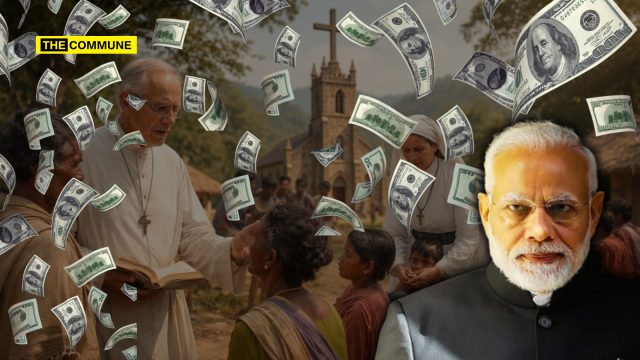
The proposed Foreign Contribution (Regulation) Amendment Bill, 2026 has sparked fresh debate in India and abroad, with evangelical organisations and foreign-funded civil society groups expressing concern over stricter monitoring mechanisms and expanded government powers over foreign-funded entities.
The controversy gained international attention on 15 June 2026, when lawmakers from both the Republican and Democratic parties in the United States criticised the proposed amendments, arguing that the changes could place additional restrictions on foreign-funded organisations, including Christian groups, and empower authorities to take control of assets belonging to organisations whose registrations are cancelled or not renewed.
What Is The Foreign Contribution Regulation Act?
The Foreign Contribution (Regulation) Act (FCRA) is India’s primary law governing the receipt and utilisation of foreign contributions by individuals, trusts, societies, companies and non-governmental organisations.
The legislation was first introduced in 1976 during the Emergency period under the government of Prime Minister Indira Gandhi. The original objective was to regulate foreign money entering India and prevent external influence over the country’s political, social and religious affairs.
The current framework is governed by the Foreign Contribution (Regulation) Act, 2010, which replaced the earlier law. The legislation was passed by the Lok Sabha on 21 September 2010, approved by the Rajya Sabha on 23 September 2010, received Presidential assent on 26 September 2010, and came into force on 1 May 2011. The Act has subsequently been amended in 2016, 2018 and 2020.
Under the existing framework, organisations receiving foreign contributions must obtain FCRA registration or prior permission from the Ministry of Home Affairs. Foreign funds must be received only through designated bank accounts and can be used solely for the purposes for which they were granted.
The Act prohibits recipients from transferring foreign contributions to unauthorised entities and prescribes penalties ranging from fines to imprisonment for violations, including obtaining registration through fraud or concealing material facts.
What Does The FCRA Amendment Bill 2026 Propose?
The Foreign Contribution (Regulation) Amendment Bill, 2026 was introduced in the Lok Sabha on 25 March 2026, during the Budget Session by Union Minister of State for Home Affairs Nityanand Rai on behalf of the Ministry of Home Affairs.
According to the government, the Bill seeks to curb misuse of foreign funds and improve transparency in the functioning of organisations receiving overseas contributions. Opposition leaders, however, have criticised the legislation as excessively centralised and “draconian.”
One of the most significant provisions in the proposed legislation is the creation of a “Designated Authority” empowered to take control of foreign-funded assets when an organisation’s FCRA registration is cancelled, surrendered, expires, or is not renewed.
Under the proposal, assets created using foreign funds can be temporarily managed by the authority. If registration is not restored, the assets may be transferred to government departments or sold, with the proceeds deposited into the Consolidated Fund of India.
The Bill also centralises investigative powers by requiring law enforcement agencies and state governments to obtain prior approval from the Central Government before initiating inquiries or investigations under the FCRA framework.
At the same time, the legislation proposes reducing the maximum imprisonment for certain FCRA offences from five years to one year, while tightening regulatory oversight in several other areas.
Government Justifies Tougher Controls
The Union Government has defended the proposed amendments by arguing that stricter controls are necessary to prevent foreign funds from being used for activities considered detrimental to national security, social harmony and public order.
Foreign funds channelled through NGOs have, in some cases, allegedly been linked to separatist activities, extremist networks, militancy, conversion campaigns and organised protest movements.
Some foreign-funded organisations have conducted evangelical outreach programmes among tribal and vulnerable communities, while others have allegedly funded protests targeting major industrial and infrastructure projects.
One example is the CBI’s allegation that Environics Trust diverted foreign-funded disaster relief resources to support protests against a JSW Steel project in Odisha.
The proposed amendments are intended to create a comprehensive mechanism for managing foreign-funded assets, regulating their use during suspension periods, streamlining penalties and ensuring closer monitoring of foreign contributions.
However, the measures are seen as part of an increasingly restrictive approach towards civil society organisations by the missionaries.
FCRA Enforcement And Cancellation Of Registrations
According to Ministry of Home Affairs data, approximately 20,700 FCRA licences have been cancelled to date. Many organisations have opted not to seek renewal of their registrations.
Government figures indicate that around 16,000 organisations currently hold valid FCRA registrations and collectively receive approximately ₹22,000 crore in foreign contributions annually.
Why Evangelical Organisations Depend On Foreign Funding
Evangelical and mission-linked organisations often depend heavily on foreign funding because their outreach activities, religious networks and welfare programmes require financial resources that domestic donations alone may not provide.
Many Christian organisations maintain links with international churches, mission boards and charitable networks based in wealthier countries, which provide financial support for activities in developing nations, including India.
Activities such as camp-based programmes, door-to-door outreach, literature distribution, training programmes and community engagement initiatives require sustained funding for staff salaries, transportation and operational expenses.
Foreign private donors often provide funding with fewer restrictions than government or corporate sources, allowing greater flexibility for organisations conducting religiously-oriented activities.
NGOs Facing FCRA Action In Tamil Nadu
Here are a few instances in which Christian or church-linked organisations operating in Tamil Nadu faced complaints, investigations, suspension of FCRA registrations or cancellation of licences.
Jesus Redeems
On 17 March 2024, the Ministry of Home Affairs suspended the FCRA license of Jesus Redeems, an organisation led by evangelical preacher Mohan C. Lazarus and in January 22025, the license was permanently suspended.
The action followed a complaint filed by the Legal Rights Protection Forum (LRPF) in November 2023 alleging that the organisation violated FCRA provisions by receiving foreign contributions from its United States-based affiliate, Jesus Redeems Ministries Inc., while Lazarus served as a key functionary in both organisations.
The complaint also alleged that foreign funds were used for large-scale religious conversion activities in Tamil Nadu villages.
Tamil Nadu Social Service Society (TNSOSS)
On 5 February 2024, the Ministry of Home Affairs cancelled the FCRA registration of the Tamil Nadu Social Service Society (TNSOSS), a Catholic-affiliated organisation functioning under the Tamil Nadu Catholic Bishops’ Conference.
The ministry cited regulatory and compliance-related violations connected to foreign funding operations.
World Vision India
World Vision India, one of the country’s largest Christian voluntary organisations, also faced FCRA action.
Its registration was suspended in November 2022 for 180 days and the suspension was subsequently extended before its licence was ultimately cancelled in January 2024.
The Ministry of Home Affairs alleged that foreign funds were utilised in ways inconsistent with the organisation’s stated objectives and cited compliance violations under the FCRA framework.
Tuticorin Diocesan Association
The Tuticorin Diocesan Association, which operates child welfare institutions and social service programmes under the Catholic Diocese of Tuticorin, faced FCRA action following adverse intelligence reports.
Authorities alleged misuse of foreign funds and involvement in activities characterised as anti-national. The organisation’s registration was suspended and later cancelled, resulting in the freezing of bank accounts and loss of eligibility to receive foreign contributions.
Shekina Prophetic Mission Trust
In October 2023, the FCRA registrations of Shekina Prophetic Mission Trust in Tamil Nadu and Holy Berachah Ministries in Karnataka were cancelled over alleged violations of FCRA rules.
Bethanya Vision Trust
Bethanya Vision Trust (BVT), an FCRA-registered Christian NGO operating children’s homes and community support centres in Tamil Nadu and Andhra Pradesh, became the subject of complaints filed by the Legal Rights Protection Forum.
The complaints alleged that vulnerable children from Scheduled Caste, Scheduled Tribe and nomadic communities were being targeted for religious conversion activities.
New Hope Foundation and Holy Spirit Ministries
On 17 December 2021, authorities cancelled the FCRA registrations of New Hope Foundation in Tamil Nadu and Holy Spirit Ministries in Karnataka.
The Ministry of Home Affairs alleged that both organisations received foreign funding through or in connection with a previously banned organisation, resulting in violations of FCRA regulations.
Serve India Ministries
Serve India Ministries, headed by Ebenezer Samuel, became the subject of a complaint submitted by the Legal Rights Protection Forum to the Ministry of Home Affairs on 26 May 2020.
The complaint alleged illegal conversions, hate speech, inducements and FCRA violations.
Caruna Bal Vikas
In February 2020, the CBI registered a case against Chennai-based Caruna Bal Vikas.
Investigators alleged that the organisation received crores of rupees from Colorado-based donor Compassion International and used the funds for religious conversion activities. The case was registered under provisions of the FCRA, 2010.
Florence Home Foundation
In 2017, Florence Home Foundation, based in Cuddalore and associated with Emmaus International of France, had its FCRA registration cancelled after authorities alleged misuse of foreign grants and violations of accounting requirements under the Act.
The organisation was accused of depositing foreign contributions into local fund accounts instead of maintaining separate FCRA-designated accounts and failing to maintain records in the prescribed manner.
Tuticorin Multipurpose Social Service Society
The Tuticorin Multipurpose Social Service Society became one of the earliest organisations to face major FCRA action.
Authorities alleged that foreign funds were used for anti-national activities. The organisation’s FCRA registration was cancelled, and its bank accounts were frozen in 2015.
Need Of The Hour For Demographic Security
In an era of intensifying geopolitical competition and ideological warfare, demographic security has emerged as one of the most critical pillars of national sovereignty. India’s unique civilizational identity, rooted in its ancient culture, pluralistic traditions, and hard-won unity, cannot be taken for granted. Unregulated foreign funding flowing into evangelical and conversion-centric activities, particularly among vulnerable tribal and rural populations, represents a systematic challenge to this demographic equilibrium.
The proposed Foreign Contribution (Regulation) Amendment Bill, 2026 is not merely an administrative reform — it is a timely and necessary instrument for safeguarding India’s internal stability.
By tightening oversight, preventing misuse of foreign money, and ensuring that religious and social activities remain within the framework of Indian laws and constitutional values, the nation can protect its social fabric from externally driven demographic shifts.
The hour demands clarity and resolve. India must assert its right to regulate foreign influence in sensitive domains such as religion, culture, and demography, just as any sovereign nation would. Strengthening FCRA mechanisms, promoting transparency in foreign-funded NGOs, and encouraging indigenous social service initiatives free from conversion agendas are no longer optional — they are existential necessities.Demographic security is national security.
Only a vigilant, self-reliant, and culturally confident India can secure its future as a civilizational state.
Subscribe to our channels on WhatsApp, Telegram,Instagram and YouTube to get the best stories of the day delivered to you personally.
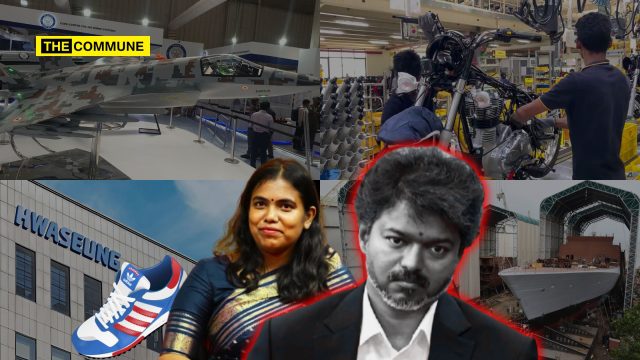
A series of major investment setbacks for Tamil Nadu has happened under Joseph Vijay’s TVK regime. Serious political questions over whether Tamil Nadu is merely losing out in an aggressive inter-state industrial race, or whether confidential information from the State’s Industries Department is allegedly being leaked to benefit neighbouring Andhra Pradesh.
From the AMCA aerospace project to Royal Enfield’s expansion, from Mazagon Dock Shipbuilders’ proposed Thoothukudi shipyard to Hwaseung’s footwear manufacturing unit, multiple projects either linked to Tamil Nadu, pursued by Tamil Nadu, or expected to materialise in Tamil Nadu have either moved to Andhra Pradesh or are now being aggressively courted by the neighbouring State.
The pattern has become impossible to ignore.
It is alleged that Andhra Pradesh appears to be repeatedly arriving with better, bigger, and more targeted offers after Tamil Nadu has already done the groundwork. This has raised uncomfortable questions about whether details of Tamil Nadu’s industrial negotiations, incentives, land offers, and project pipelines are somehow reaching Andhra Pradesh.
AMCA Project: Tamil Nadu Offers Hosur, Andhra Pradesh Offers Puttaparthi
The first major alarm came in mid-May 2026, just days after the TVK government was sworn in.
For years, Tamil Nadu had positioned itself as one of India’s top three manufacturing hubs and had been actively pursuing the Advanced Medium Combat Aircraft project. The previous DMK government had reportedly chased the project for nearly three years.
Tamil Nadu’s proposal included 100 acres of land in Hosur offered free of cost, a 3.5-km runway, and proximity to Bengaluru’s established aeronautical ecosystem. On paper, Tamil Nadu had a strong technical case.
Yet, reports suggested that the project had shifted towards neighbouring Andhra Pradesh due to political and strategic considerations.
Former Industries Minister TRB Rajaa reacted sharply, calling the shift “grossly unfair” and a blow to cooperative federalism. He demanded an explanation from the Union Government, arguing that Tamil Nadu’s infrastructure was technically superior.
But Andhra Pradesh, under Chief Minister N Chandrababu Naidu, appears to have played a far more aggressive game.
While Tamil Nadu relied on its existing industrial strength, Andhra Pradesh reportedly made a lightning-fast pitch. Instead of merely offering land, Naidu’s government proposed a 650-acre dedicated aerospace hub in Puttaparthi – nearly six times the size of Tamil Nadu’s initial offer.
Andhra Pradesh also pitched faster approvals, single-window clearances, and a speed-driven business environment that would bypass bureaucratic delays.
More importantly, Andhra Pradesh reportedly proposed an integrated defence corridor by grouping the AMCA hub with naval systems facilities in Anakapalli and an ammunition plant in Madakasira. This created a larger defence manufacturing ecosystem that Tamil Nadu’s standalone Hosur proposal could not match.
The question now being raised is whether Andhra Pradesh merely outplayed Tamil Nadu, or whether it had access to information that helped it craft a superior counter-offer.
Royal Enfield’s ₹2,500 Crore Andhra Facility Deepens The Debate
By the end of May 2026, another major announcement added fuel to the controversy.
Royal Enfield, a company deeply associated with Tamil Nadu’s manufacturing ecosystem, announced a ₹2,500 crore manufacturing facility in Andhra Pradesh.
For decades, Royal Enfield has been part of Tamil Nadu’s industrial identity, with Chennai, Oragadam, and surrounding auto clusters forming a critical part of its manufacturing story. The company continues to operate four world-class manufacturing facilities in Tamil Nadu, with a projected capacity of 20 lakh units annually.
It was a matter of pride for Chennai that one of the best bikemakers had the sticker “The Enfield India Ltd. Madras”.
But Royal Enfield is also going to Andhra now.
Th company has clarified that the Andhra Pradesh facility was not a shift away from Tamil Nadu but part of future expansion plans. The company said the new investment would augment existing capacity and support its next phase of growth, subject to board approval and future market demand.
The company also pointed out that earlier in 2026, it had announced a ₹958 crore expansion in Tamil Nadu. What made them choose Andhra for expansion all of a sudden?
Royal Enfield’s case is not one of exit. Tamil Nadu remains central to the company’s operations.
But the political question remains: why is Andhra Pradesh repeatedly becoming the destination for fresh expansion?
Reports suggest that the new facility will come up in Tada near Tirupati, close to the Tamil Nadu border. This allows companies to remain connected to Chennai’s supplier ecosystem while expanding operations into Andhra Pradesh.
This has triggered criticism that Andhra Pradesh is cleverly positioning itself to benefit from Tamil Nadu’s mature industrial base while offering faster approvals, larger land banks, and aggressive incentives.
Thoothukudi Shipbuilding Cluster: Did Tamil Nadu Sideline MDL For HD Hyundai?
The most serious controversy now surrounds the proposed greenfield shipbuilding cluster in Thoothukudi.
On 19 September 2025, state-owned Mazagon Dock Shipbuilders Limited signed an MoU with Guidance Tamil Nadu to establish a greenfield shipyard on India’s eastern coast.
During the Government of India’s “Samudra se Samriddhi” event in Bhavnagar, both Mazagon Dock Shipbuilders Limited and Cochin Shipyard signed agreements with the Tamil Nadu government for greenfield shipyard projects in Thoothukudi, with a combined proposed investment of around ₹30,000 crore.
In November 2025, during its Q2 FY26 earnings call, MDL publicly referred to its proposed Thoothukudi shipyard project and stated that it envisaged an investment of ₹15,000 crore to ₹18,000 crore.
The project was planned as a 1,050-acre greenfield shipyard to be developed over 10 to 12 years. It was expected to target very large crude carriers of up to 3,00,000 deadweight tonnage.
MDL had reportedly secured board approval and was awaiting further action from the Tamil Nadu government, including the issuance of an Expression of Interest process through the Special Purpose Vehicle expected to oversee the shipbuilding cluster.
But developments took a controversial turn in December 2025.
On 7 December 2025, South Korean shipbuilding giant HD Hyundai announced that it had signed an “Exclusive Business Cooperation Agreement” with the Government of Tamil Nadu for developing a new shipyard in Thoothukudi.
The announcement was made during the TN Rising Investment Conclave in Madurai in the presence of then Chief Minister MK Stalin.
HD Hyundai described the project as an effort to create a “second Ulsan” in Tamil Nadu. Reports placed the potential investment between $2 billion and $4 billion.
The controversy arises from the timeline.
The Union Government’s Shipbuilding Development Scheme Guidelines had not yet been formally notified when HD Hyundai signed the agreement.
The Ministry of Ports, Shipping and Waterways notified the Shipbuilding Development Scheme Guidelines only on 26 December 2025 – nineteen days after HD Hyundai signed the exclusive cooperation agreement with Tamil Nadu.
These guidelines laid down the process for developing greenfield shipbuilding clusters, including the mechanism through which anchor shipyards would be selected.
One wonders how HD Hyundai was allegedly selected as the anchor shipyard before the governing framework was even in place.
The questions do not end there.
In January 2026, the National Shipbuilding & Heavy Industries Park Tamil Nadu was formally incorporated as a 50:50 joint venture between the V.O. Chidambaranar Port Authority and SIPCOT.
This means HD Hyundai was allegedly chosen before the SPV that was supposed to oversee such a selection process had even been incorporated.
This has triggered allegations that the DMK government brought in a foreign company without properly taking MDL into confidence.
Commentators have asked why HD Hyundai was allegedly given exclusive positioning as the anchor shipyard before the rules governing selection existed and before the institution required to conduct such a selection process had even been formed.
MDL Now Looks To Andhra Pradesh With ₹29,000 Crore Plan
The Thoothukudi controversy has become even more serious because MDL has now reportedly turned towards Andhra Pradesh.
Having failed to secure the Tamil Nadu project, MDL is said to have expressed interest in becoming the anchor investor for a proposed mega shipbuilding cluster in Andhra Pradesh.
The company is now reportedly considering an investment exceeding ₹29,000 crore and is expected to undertake a feasibility study for developing shipbuilding capacity of approximately 1.2 million tonnes at the proposed Andhra cluster.
This has intensified allegations that Tamil Nadu may have lost a massive public-sector shipbuilding opportunity after choosing to move ahead with HD Hyundai under a process now being questioned.
Thoothukudi had been identified by the Government of India as one of the country’s premier locations for a greenfield mega shipbuilding cluster. The location has extensive coastal land availability, natural cyclone shielding, lower atmospheric salinity, proximity to international shipping routes, and an existing deep-water port.
The proposed cluster was expected to create approximately 1.2 million gross tonnage per annum of shipbuilding capacity with substantial support from both the Union and State governments.
At a time when the Government of India is emphasising indigenous manufacturing under Maritime Amrit Kaal Vision 2047, one wonders whether Indian shipyards were given a fair and transparent opportunity to compete.
The Tamil Nadu government was reportedly approached with detailed questions regarding the project, selection process, and timeline, but no response was received.
Hwaseung: ₹1,720 Crore, 20,000 Jobs Lost From Tirunelveli To Kuppam
The Hwaseung episode is one of the sharpest examples of Tamil Nadu losing a major employment-heavy project to Andhra Pradesh. While this move took place during the DMK regime, one wonders if there is a problem with the Industries ministry in itself.
In August 2025, South Korean footwear manufacturer Hwaseung Enterprises, a major contract supplier for Adidas, signed an MoU with the Tamil Nadu government to set up its first India plant in Tirunelveli.
The proposed investment was around ₹1,720 crore and was expected to generate nearly 20,000 jobs.
For a southern district like Tirunelveli, this was not a minor project. Footwear manufacturing is labour-intensive and has the potential to create large-scale direct and indirect employment, especially for women and rural youth.
However, by November 2025, the project had shifted to Kuppam in Andhra Pradesh, the constituency of Chief Minister Chandrababu Naidu.
According to reports, Andhra Pradesh offered faster land facilitation, free land, higher resource subsidies, skilled manpower availability, and better long-term alignment with Hwaseung’s expansion requirements.
Tamil Nadu was reportedly asked to match the package but declined.
Then Industries Minister TRB Rajaa defended the State’s position by saying Tamil Nadu would not join a “race to the bottom” by matching aggressive incentives offered by Andhra Pradesh. He argued that Tamil Nadu prioritised high-value jobs and that land in the State carried different economic pressures.
But this explanation sounded defensive and dismissive.
The question raised by opposition voices and industry observers was simple: how can a 20,000-job manufacturing project for Tirunelveli be casually dismissed as a low-value incentive battle?
The project was not Adidas itself leaving Tamil Nadu. Hwaseung is an independent supplier that manufactures for Adidas. Adidas continues to have a major presence in Tamil Nadu through other suppliers and through its Chennai Global Capability Centre.
Tamil Nadu has also secured Adidas-linked manufacturing through the Evervan Kothari/Shoe Town joint venture, a ₹5,000 crore non-leather footwear manufacturing investment in Karur and Perambalur, expected to generate over 50,000 jobs. Pou Chen Corporation, another global supplier for Adidas and Nike, also operates a ₹2,302 crore mega-facility in Ulundurpet, Kallakurichi district.
Yet, the loss of Hwaseung remains politically significant because the project had first come to Tamil Nadu, signed an MoU with Tamil Nadu, and then moved to Andhra Pradesh.
This is why it seems that something is going wrong in Tamil Nadu’s investment handling process.
TVK Govt Repeatedly Saying No To Parandur Airport
The TVK leadership has consistently opposed the proposed Parandur Greenfield Airport, both before and after coming to power. During his January 2025 visit to Parandur, then TVK president Vijay extended support to protesting farmers and accused the DMK government of pursuing an “anti-people” project that would allegedly affect farmland and water bodies.
Even after assuming office as Chief Minister, the government’s position appeared unchanged, with Electricity Minister CTR Nirmal Kumar publicly stating that there would be no Parandur airport.
Against this backdrop, a meeting held on 18 June 2026, between Chief Minister Vijay and senior representatives of the GMR Group has attracted attention. The delegation included Airports Chairman GPS Raju, Business Head PVN Rao, and Senior Vice President (Corporate Affairs) G. Sridhar Babu.
மாண்புமிகு தமிழ்நாடு முதலமைச்சர் திரு.ச.ஜோசப் விஜய் அவர்களை இன்று (18.6.2026) தலைமைச் செயலகத்தில், GMR குழுமத்தின் தலைவர் (Airports) திரு. ஜி.பி.எஸ். ராஜு, வணிகத் தலைவர் திரு.பி.வி.என். ராவ், முதுநிலை துணைத் தலைவர் (Corporate Affairs) திரு. ஜி. ஸ்ரீதர் பாபு ஆகியோர் சந்தித்துப்… pic.twitter.com/fyO0tPj0dn
The meeting comes at a time when major investment projects are moving to neighbouring Andhra Pradesh. One wonders what the purpose of the GMR delegation’s visit and whether the government intends to revisit its opposition to the Parandur airport project or discuss alternative aviation infrastructure plans for Tamil Nadu. Is he once again folding to a brand from AP?
The Keerthana Question: Why Are All Fingers Pointing To The Industries Department
While some of these developments began during the DMK regime, the issue has now landed squarely on the TVK government’s desk.
Whether the DMK or TVK is in power, the repeated pattern of projects slipping towards Andhra Pradesh points to a possible leak or structural vulnerability within the Industries Department.
The allegations have now begun to focus on TVK Industries Minister Keerthana because 2 projects are no longer with TN now.
It is noteworthy that only the Industries Department would normally be privy to sensitive information such as land offers, incentive discussions, investor requirements, negotiation gaps, and project-stage vulnerabilities.
If Andhra Pradesh repeatedly appears with better-timed and more attractive offers, is it possible that information about Tamil Nadu’s proposals is being informally passed on.
The suspicion has been sharpened by Keerthana’s past professional association with Showtime Consultancy, the election management organisation that has worked with multiple political parties, including the Telugu Desam Party.
Andhra Pradesh Minister Nara Lokesh, son of Chandrababu Naidu, publicly came out in support of Keerthana when she was trolled over her reels-style pitch to businesses and entrepreneurs.
Dear Keerthana garu, appreciate your proactive outreach to investors. Every Industries Minister today has to actively market their state, engage with investors, and build confidence among job creators. Hon’ble PM Shri @narendramodi ji himself has repeatedly encouraged states to… https://t.co/OHCymFWE4U
Thus, joining the dots, one wonders whether these are mere coincidences or indicators of a deeper political comfort between individuals connected to Tamil Nadu’s Industries Department and Andhra Pradesh’s ruling establishment.
There are also allegations being circulated about suspicious individuals around the minister who are perceived to be non-native to Tamil Nadu and allegedly close to Telugu political networks.
These allegations remain unproven. No documentary evidence has yet established that Keerthana, her department, or anyone associated with her leaked information to Andhra Pradesh.
However, the questions have gained traction because of the repeated pattern of investment outcomes.
Tamil Nadu Is Losing Jobs, Revenue, And Strategic Advantage Because Of An Incompetent CM
The consequences of these project losses are not abstract.
Hwaseung alone represented 20,000 potential jobs. MDL’s Thoothukudi shipyard involved a proposed ₹15,000 crore to ₹18,000 crore investment. Its Andhra Pradesh exploration is reportedly worth over ₹29,000 crore. The AMCA ecosystem would have brought strategic aerospace value. Royal Enfield’s Andhra expansion, though not a relocation, still signals that future industrial capacity is increasingly being distributed outside Tamil Nadu.
Each such project creates direct jobs, indirect jobs, vendor networks, tax revenue, logistics demand, housing activity, and long-term industrial clustering.
Tamil Nadu is already facing questions over its debt situation. The recently published white paper pointed to a heavily debt-ridden State, while the Finance Minister has said the government must find revenue-generating avenues to fund new social welfare schemes.
In such a situation, how Tamil Nadu can afford to lose projects that were expected to create employment and revenue?
The allegation now being raised is direct: are facilities, benefits, and internal calculations offered by Tamil Nadu being secretly passed on to Andhra Pradesh, enabling AP to offer a better deal?
And if such leakage exists, is it happening from within the Industries Department?
TVK Government Faces First Major Industrial Test
The timing is politically significant.
The TVK government led by Chief Minister Vijay came to power promising a new era. Yet, within weeks of assuming office, it has been confronted with a series of industrial controversies that began under the previous regime but now require answers from the present one.
The AMCA issue emerged in mid-May 2026, shortly after the TVK government took office. Royal Enfield’s Andhra investment followed by the end of May 2026. By June 2026, the MDL-Andhra shipbuilding angle had surfaced.
The new government can blame the DMK for decisions taken in 2025, especially in the Hwaseung and HD Hyundai-MDL controversies. But it cannot avoid responsibility for ensuring that future projects do not slip away.
The question before Chief Minister Vijay and Industries Minister Keerthana is no longer just whether Tamil Nadu can attract investments.
The question is whether Tamil Nadu can protect its investment pipeline, safeguard confidential negotiations, counter Andhra Pradesh’s aggressive industrial pitch, and ensure that the State does not continue losing jobs and revenue to its neighbour.
Until the government gives a detailed explanation on each of these cases, the allegations of an information leak within the Industries Department are unlikely to die down.
For now, Andhra Pradesh appears to be repeatedly winning projects that were either pursued by Tamil Nadu, linked to Tamil Nadu, or expected to benefit Tamil Nadu.
And that is why the uncomfortable question: is Tamil Nadu merely being outcompeted, or is someone from within helping Andhra Pradesh play a better game?
Subscribe to our channels on WhatsApp, Telegram,Instagram and YouTube to get the best stories of the day delivered to you personally.
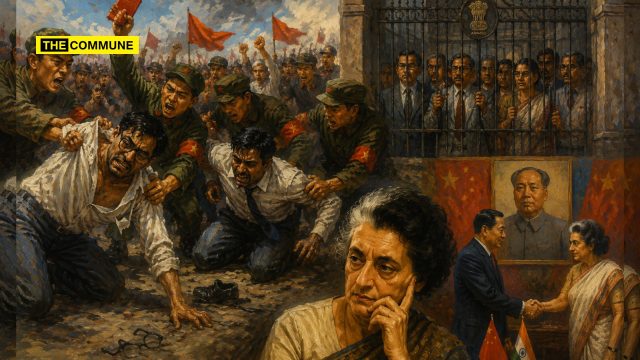
On 14 June 1967, two Indian diplomats stationed in Beijing found themselves at the centre of a diplomatic crisis that would expose the depths of Maoist China’s hostility towards India and raise uncomfortable questions about the response of the Congress government led by Prime Minister Indira Gandhi.
What began as a routine visit to photograph temple architecture ended with Indian diplomats being publicly humiliated, assaulted by Chinese Red Guards, dragged across an airport runway, and ultimately placed under house arrest along with the entire Indian Embassy staff in Beijing.
The episode, largely forgotten in contemporary discussions of India-China relations, unfolded during the height of China’s Cultural Revolution and came just five years after the 1962 Sino-Indian War.
False Espionage Charges Against Indian Diplomats
The incident centred around two Indian diplomats – K. Raghunath, Second Secretary at the Indian Embassy in Beijing, and P. Vijay, Third Secretary.
Chinese authorities accused the two officials of espionage after they were seen photographing temple architecture in the Western Hills area outside Beijing.
According to contemporary reports, the location was neither a military installation nor a prohibited zone. Nevertheless, a group of Chinese youths surrounded the diplomats, seized their camera and film, and accused them of spying.
The accusation soon escalated into a public spectacle.
Chinese authorities organised what amounted to a “people’s trial” in Beijing, placing the Indian diplomats before a hostile crowd estimated at around 15,000 people. The proceedings reflected the revolutionary fervour of Mao’s Cultural Revolution, where public humiliation and denunciation sessions had become routine tools of political intimidation.
Assault At Beijing Airport
The situation deteriorated further when the diplomats were expelled from China.
As the two officials were being deported via Beijing airport, they were attacked by Red Guards in full public view.
Contemporary reports described how the diplomats were physically assaulted, dragged by their necks, stripped of their clothes and subjected to repeated humiliation.
One report stated that Raghunath was struck repeatedly and forced to bow his head to the ground before a hostile crowd.
Vijay reportedly suffered similar treatment. Accounts from the period described him being dragged by the neck and assaulted before being forced onto an aircraft.
Far from being an isolated altercation, the assault appeared to be a deliberate public demonstration organised by Chinese authorities and Red Guard groups.
The images and reports emerging from Beijing shocked many in India.
Parliament Demands Action
The treatment of Indian diplomats sparked outrage across the political spectrum.
Members of Parliament demanded that the government respond strongly to what many saw as a direct attack on India’s sovereignty and dignity.
However, the response from the Congress government was widely criticised as weak and indecisive.
When the matter came up in Parliament, Prime Minister Indira Gandhi stated that it was “not possible at this stage to outline the steps the government might take.”
The statement immediately drew criticism from opposition parties, which accused the government of failing to protect Indian officials serving abroad.
The issue was not merely the assault itself but the apparent inability or unwillingness of New Delhi to impose meaningful diplomatic costs on Beijing.
Jan Sangh Launches Nationwide Protests
Public anger quickly spilled onto the streets.
The Bharatiya Jana Sangh, led by Hardayal Devgun in Delhi, organised large demonstrations outside the Chinese Embassy.
Protesters carried placards, raised anti-China slogans and demanded a stronger response from the government.
One of the most widely reported incidents involved demonstrators pasting notices on the embassy gates carrying a blunt warning: “Apologise or wind up.”
Effigies of Mao Zedong were also burnt during the protests.
Jan Sangh leaders argued that China’s treatment of Indian diplomats represented a grave national insult and accused the Congress government of passivity.
The protests attracted significant public attention and became one of the largest anti-China demonstrations in the country during that period.
China Escalates Further
Rather than de-escalating the dispute, Beijing retaliated.
Chinese authorities reportedly placed the entire Indian Embassy compound in Beijing under a strict form of house arrest.
Indian diplomats and their families were prevented from leaving the premises.
Movement outside the embassy was heavily restricted.
The Chinese action effectively turned the embassy into a diplomatic prison, creating a situation unprecedented in India-China relations.
The siege further intensified criticism of the Congress government, with opposition leaders arguing that New Delhi was failing to protect its own diplomatic personnel.
The Delhi Hospital Incident
Even as tensions mounted, another bizarre episode unfolded in India.
Following the protests in Delhi, Chinese Embassy personnel claimed they had been injured and sought treatment at Willingdon Hospital.
According to reports from the period, Chinese Charge d’Affaires Chen Chao-yuan created a scene at the hospital by demanding that Chinese staff be treated exclusively by a Pakistani doctor.
When hospital authorities refused the request, the Chinese diplomat reportedly protested aggressively and asserted diplomatic privileges.
The incident became another flashpoint in the deteriorating diplomatic relationship between the two countries.
A Pattern That Continued
The 1967 episode is an example of what can be described as a long-standing pattern of softness of the Congress towards China.
Despite the public humiliation of Indian diplomats and the effective siege of the Indian Embassy in Beijing, New Delhi failed to impose serious diplomatic consequences on the Chinese government.
Look at later developments, including the 2008 Memorandum of Understanding signed between the Congress party and the Chinese Communist Party during the UPA era.
The agreement, signed when Sonia Gandhi headed the Congress party, has remained controversial because of its lack of public transparency.
Photographs from the signing ceremony showed senior Congress leaders, including Rahul Gandhi, present during the event.
India must never forget this: on 7 August 2008, the Congress signed a formal MoU with the Communist Party of China, in Beijing. It wasn’t “India to China”. It was a political party in India signing an understanding with the ruling party of an adversarial state.
The contrast is striking: from the diplomatic crisis of 1967 to the party-to-party engagement of 2008, they see a continuity in Congress’s approach towards China.
A Forgotten Chapter In India-China Relations
The events of June 1967 occupy a relatively obscure place in public memory despite their significance.
Indian diplomats were falsely accused of espionage, subjected to public humiliation, physically assaulted, and then watched as their embassy came under effective confinement.
The incident unfolded at a time when India was still recovering from the trauma of the 1962 war and trying to redefine its relationship with a hostile neighbour.
Whether one agrees with the political conclusions drawn from the episode or not, the historical record remains clear: in 1967, Indian diplomats faced one of the most humiliating episodes in the history of India’s foreign service, and the incident triggered a debate that continues to resonate in discussions about India’s approach to China even today.
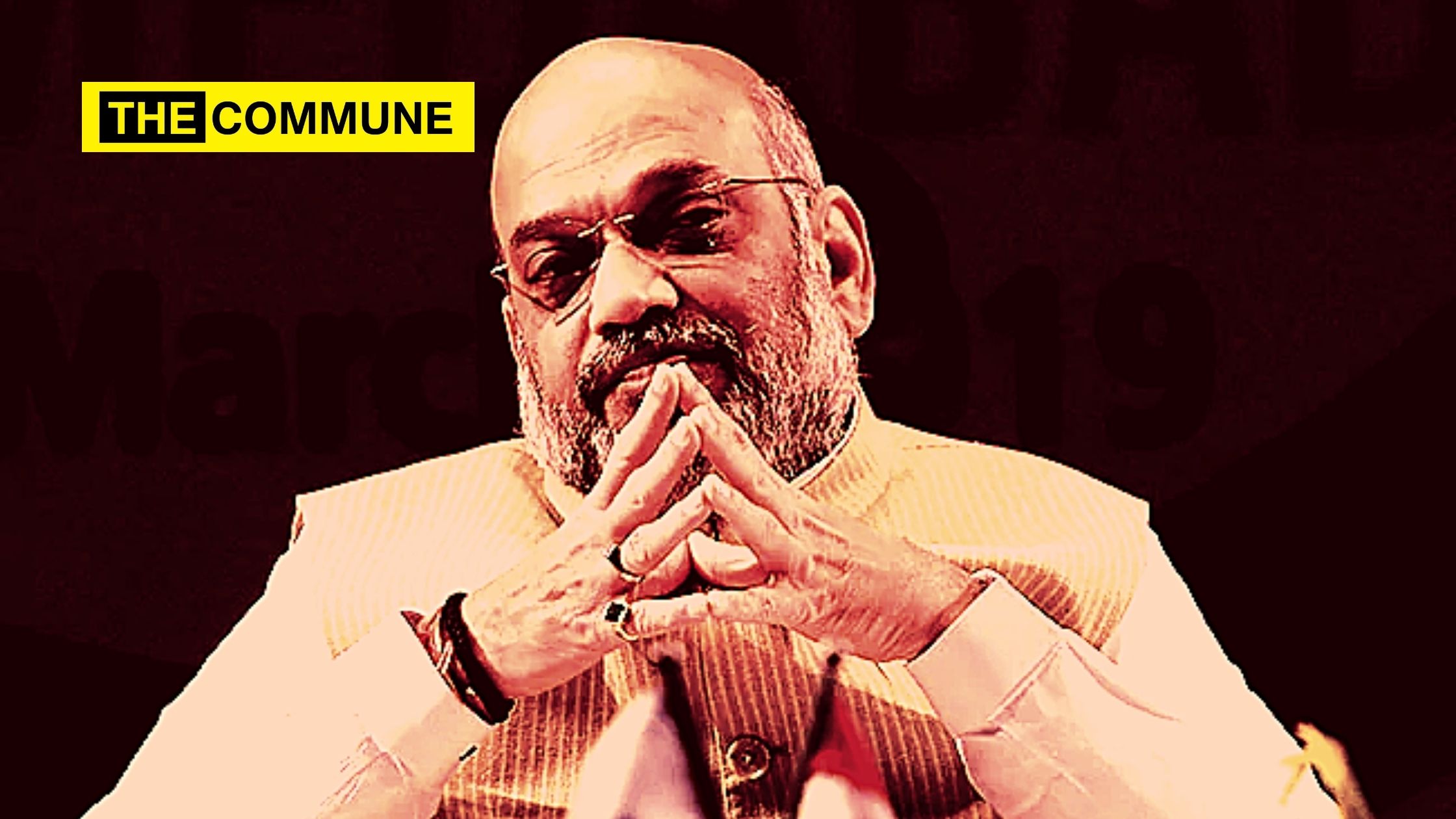
In the complex and often unpredictable world of Indian politics, few leaders have engineered as remarkable a rise as Amit Shah. From his early years as a young stockbroker in Ahmedabad to becoming one of the most powerful figures in Indian politics, Shah’s journey is a story of organizational mastery, political calculation, resilience, and relentless ambition. Today, he is widely regarded as the chief strategist behind the Bharatiya Janata Party’s (BJP) electoral machine and is often described as the modern-day “Chanakya” of Indian politics.
His career has not been without controversy or challenge. He has faced legal battles, public scrutiny, political setbacks, and periods when his future in politics appeared uncertain. Yet each time, he managed to rebuild his position and expand his influence. It is this combination of strategic thinking and political resilience that has made Amit Shah one of the defining figures of contemporary India.
As India looks towards the future, questions are increasingly being asked: Could Amit Shah one day emerge as a contender for the country’s highest political office? While such discussions remain speculative, there is little doubt that he occupies a central place in the BJP’s leadership structure and in the story of modern Indian politics.
Humble Beginnings in Gujarat
Born on 22 October 1964, in Mumbai and raised in Gujarat, Amit Shah grew up in a business-oriented family. His early life was far removed from the corridors of political power. After completing his education in biochemistry, he entered the world of business and reportedly worked as a stockbroker in Ahmedabad.
The financial markets taught Shah lessons that would later define his political style: risk assessment, patience, timing, and an understanding of human behavior. Associates from those years often describe him as disciplined, analytical, and intensely focused – traits that would become hallmarks of his political career.
Unlike many future politicians who begin with grand ideological ambitions, Shah’s rise was built on an appreciation for systems, numbers, and organization. These skills would later prove invaluable in the increasingly data-driven world of electoral politics.
Entry into Politics
Shah’s political journey began through grassroots activism. He became associated with the Rashtriya Swayamsevak Sangh (RSS) at a young age of 14 years and later joined the BJP. During the 1980s and early 1990s, Gujarat was witnessing significant political change, creating opportunities for ambitious young leaders.
It was during this period that Shah developed a close working relationship with Narendra Modi, then an emerging BJP organizer. The partnership would eventually become one of the most consequential political alliances in modern Indian history.
While many politicians sought visibility through speeches and public rallies, Shah concentrated on organizational work. He built networks, managed campaigns, and developed a reputation as a behind-the-scenes strategist capable of converting political plans into electoral victories.
Building a Reputation: The Early Victories
Long before he became a national figure, Amit Shah was earning a reputation within the BJP as an exceptionally effective political organizer. His focus was not on public attention but on the mechanics of winning elections – voter outreach, cadre development, booth management, and campaign coordination.
His first significant breakthrough came through his involvement in Gujarat’s cooperative sector. During the 1990s, he became active in influential cooperative institutions, including the Ahmedabad District Cooperative Bank. At a time when cooperative bodies held considerable social and economic influence, Shah demonstrated an ability to build alliances, manage organizations, and consolidate support among diverse stakeholders.
Within the BJP, his strategic abilities quickly became apparent. Senior leaders increasingly relied on him to oversee difficult constituencies and strengthen local party structures. Shah developed a reputation for meticulous planning, often studying constituencies in extraordinary detail and identifying opportunities that others overlooked.
One of his notable contributions during this period was helping strengthen the BJP’s grassroots machinery. He emphasized booth-level organization, ensuring that party workers remained connected to voters throughout the year rather than only during election campaigns. This model would later become a defining feature of the BJP’s electoral strategy nationwide.
In 1997, Shah entered electoral politics directly by winning a by-election from the Sarkhej Assembly constituency in Gujarat. The victory marked the beginning of a long and successful electoral career. He would go on to win the constituency repeatedly and by substantial margins, demonstrating both organizational strength and voter appeal.
As his influence grew, Shah was entrusted with greater responsibilities within the Gujarat BJP. By the early 2000s, he had become one of the party’s most trusted political managers in the state. Many political observers believe that the organizational systems he helped develop in Gujarat later became templates for the BJP’s expansion across India.
Trials, Controversies, and Political Comebacks
No account of Amit Shah’s rise can be complete without examining the controversies and setbacks that threatened to derail his political career.
The late 2000s and early 2010s marked perhaps the most challenging phase of Shah’s public life. As his political influence in Gujarat expanded, he became the subject of intense scrutiny and multiple investigations related to allegations surrounding police encounter cases. These developments transformed him from a rising political strategist into one of the most controversial figures in Indian politics.
In 2010, Shah was arrested by the Central Bureau of Investigation (CBI) in connection with the Sohrabuddin encounter case. He spent time in judicial custody before being granted bail. The proceedings attracted nationwide attention and generated fierce political debate. People who talk about CBI being misused by the central government today must go back and read about these events.
The period was personally and politically difficult. The allegations raised serious questions about governance and accountability, while Shah and his supporters maintained that the cases were politically motivated attempts to weaken a rising BJP leader.
For a period, bail conditions prevented him from entering Gujarat, effectively distancing him from his political base. For many politicians, such a setback could have ended a career. Instead, Shah used the time to expand his understanding of the BJP’s national organization and build relationships beyond Gujarat.
Over time, courts delivered rulings that brought relief to Shah in several of the cases against him, enabling his gradual return to active politics.
What is undeniable, however, is the political comeback that followed. By the time the BJP was preparing for the 2014 general election, Shah had re-established himself as one of the party’s most trusted strategists. Many observers regard this recovery from adversity as one of the defining chapters of his political life.
Architect of the BJP’s National Expansion
The turning point came in 2014.
As the BJP prepared for a historic national campaign led by Narendra Modi, Amit Shah was entrusted with managing Uttar Pradesh, India’s most politically significant state. The assignment was considered one of the most challenging in Indian politics.
The result was extraordinary. The BJP secured a sweeping victory in Uttar Pradesh, providing the foundation for its majority in Parliament. Shah’s success transformed him from a powerful state-level strategist into a national political force.
Following the election, he was appointed BJP National President.
What followed was one of the most ambitious organizational expansions in Indian political history. Under Shah’s leadership, the BJP aggressively expanded beyond its traditional strongholds and established itself across large parts of the country. State after state witnessed intensive membership drives, organizational restructuring, and disciplined electoral preparation.
Political rivals frequently found themselves outmaneuvered by a party machine that appeared several steps ahead.
Membership expanded dramatically, the party strengthened its presence in new regions, and the BJP emerged as the dominant force in national politics. Shah’s reputation as the architect of this expansion became firmly established.
Why He Is Called the Political Chanakya
The comparison with Chanakya, the ancient strategist who helped build the Mauryan Empire, is not accidental.
Amit Shah is viewed as a master planner capable of converting difficult political situations into opportunities. His approach emphasizes long-term preparation, organizational discipline, and strategic flexibility.
Several characteristics define his political style:
Deep attention to electoral mathematics.
Strong focus on grassroots organization.
Ability to identify and nurture local leadership.
Centralized decision-making combined with decentralized execution.
Long-term political planning rather than short-term reactions.
Extensive use of data and voter analytics.
Capacity to transform electoral setbacks into future opportunities.
These qualities have earned him a reputation as one of the most formidable election strategists in contemporary India.
From Party Strategist to National Leader
As India’s Home Minister, Shah moved from the role of political organizer to that of a national policymaker.
His tenure has been associated with major policy decisions, including the abrogation of Article 370 in Jammu and Kashmir, the reorganization of the state into Union Territories, efforts aimed at strengthening internal security, and initiatives related to citizenship and governance reforms.
The Campaign Against Naxalism
Among Amit Shah’s most significant achievements as Union Home Minister has been the government’s intensified campaign against the Naxalite or Maoist insurgency.
For decades, Naxalism represented one of India’s most serious internal security challenges, affecting large parts of central and eastern India. The insurgency claimed thousands of lives, disrupted development, and created governance challenges across several states.
Under Shah’s leadership, the Ministry of Home Affairs adopted a multi-pronged strategy that combined security operations with infrastructure development, improved connectivity, financial inclusion, and expanded government presence in previously inaccessible areas.
Security forces increased their operational reach, while roads, mobile towers, banking facilities, schools, healthcare services, and welfare programs were expanded into remote regions that had long been vulnerable to extremist influence. The government also emphasized coordination between the Centre and state governments, intelligence sharing, and modernization of security forces.
According to government figures, districts severely affected by extremism declined significantly, while incidents of violence and casualties fell sharply compared with earlier decades. Areas once considered Maoist strongholds witnessed increased administrative presence and development activity.
These developments can be regarded as one of Shah’s most notable contributions to India’s internal security landscape. While challenges remain in certain pockets and that long-term success depends on sustained governance and development, the weakening of extremist influence has become a major component of Shah’s record as Home Minister.
These decisions demonstrated decisive leadership and a willingness to tackle long-pending issues. Regardless of perspectives, few dispute Shah’s central role in shaping contemporary government policy.
His transition from election strategist to one of the country’s most powerful administrators further expanded his political stature.
The Modi–Shah Partnership
Any account of Amit Shah’s rise would be incomplete without examining his partnership with Prime Minister Narendra Modi.
Over more than three decades, the two leaders have developed one of the most influential political partnerships in modern India. While Modi has often served as the party’s principal public face, Shah has frequently been viewed as the organizational architect behind many electoral successes.
The combination of Modi’s mass appeal and Shah’s strategic execution has played a major role in the BJP’s transformation from a party with regional strengths into a dominant national force.
This partnership has become a defining feature of Indian politics in the twenty-first century.
The Question of Prime Ministership
Indian politics is often shaped by discussions about succession, and Amit Shah’s name frequently appears in conversations about future leadership within the BJP.
Several factors contribute to such speculation:
His long-standing partnership with Narendra Modi.
His deep understanding of the BJP’s organizational structure.
His influence over electoral strategy and governance.
His extensive experience in both party management and government.
His ability to command respect within the party cadre.
His reputation as one of the BJP’s most effective political managers.
At the same time, Indian politics remains highly dynamic. Leadership transitions depend on electoral outcomes, party consensus, public support, and evolving political circumstances.
For now, Amit Shah remains one of the BJP’s most influential leaders. His position within the party ensures that his name will continue to feature prominently in discussions about India’s political future.
Legacy in the Making
Whether history ultimately remembers Amit Shah as a master strategist, a transformative political organizer, a powerful administrator, or perhaps even a future national leader, his impact on Indian politics is already profound.
The young stockbroker who once studied market trends in Ahmedabad now helps shape the political trajectory of the world’s largest democracy. His rise reflects not merely personal ambition but also the growing importance of organization, data, strategy, and discipline in modern electoral politics.
In an era often dominated by personality-driven politics, Amit Shah has demonstrated the power of political architecture. He built his reputation not through dramatic speeches alone but through patient organization, relentless execution, and a deep understanding of how power is acquired and sustained.
From cooperative institutions in Gujarat to the highest levels of national governance, his journey represents one of the most significant political transformations in contemporary India. It is a story of ambition, adversity, controversy, recovery, achievement, and influence.
He is the strategist who helped redefine the BJP’s fortunes and reshape India’s political landscape. He also remains one of the most consequential and polarizing figures of his generation. For historians, he may ultimately be remembered as the man who transformed political organization into one of the most powerful instruments of democratic politics in modern India.
Whatever verdict history delivers, Amit Shah’s rise from a young stockbroker to a political Chanakya has already secured him a place among the most influential political figures of twenty-first-century India. Whether his journey culminates in the office of Prime Minister or not, his role in shaping the BJP’s rise and India’s political landscape is likely to remain a subject of study for decades to come.
M. Ananth Narayan is a political commentator.
Subscribe to our channels on WhatsApp, Telegram,Instagram and YouTube to get the best stories of the day delivered to you personally.
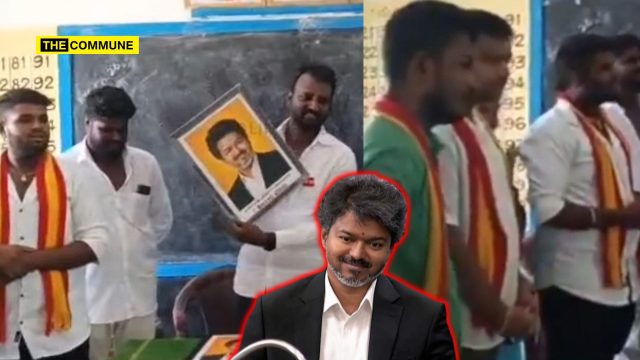
A controversy has erupted in Kanchipuram district after Tamilaga Vettri Kazhagam (TVK) functionaries entered a government school classroom, hung a portrait of Chief Minister Vijay, interacted with students and released social media reels from inside the campus.
The incident took place at a government school near Uthiramerur in Kanchipuram district. According to reports, more than 20 TVK functionaries entered the school premises and placed a portrait of Chief Minister Vijay on the wall of a classroom.
Videos circulating on social media show party functionaries inside the classroom along with students. The group is also seen recording videos and creating reels from within the school campus, which were later shared on social media platforms.
Reports further state that the functionaries conducted a session with students inside the classroom after installing the portrait.
The controversy has also raised questions about whether political functionaries should be permitted to enter classrooms and undertake such activities within government school campuses. Classrooms are meant for academic purposes and should remain free from political symbolism and promotional activities.
Subscribe to our channels on WhatsApp, Telegram,Instagram and YouTube to get the best stories of the day delivered to you personally.
The Enforcement Directorate (ED) on 18 June 2026 carried out searches across Kerala in connection with an alleged organ trafficking racket that investigators believe generated substantial illegal proceeds through forged documents, middlemen and unlawful kidney transplant arrangements, as reported in The Hindu.
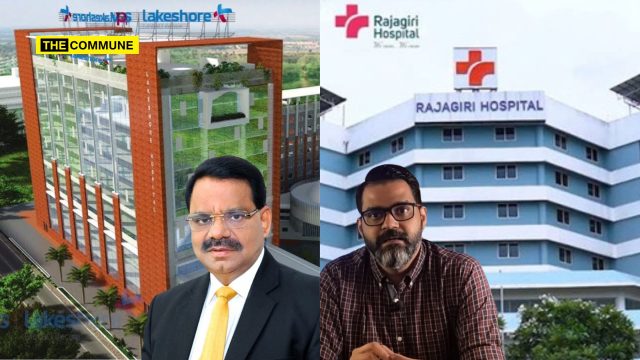
Simultaneous searches were conducted at nine locations spread across Thiruvananthapuram, Kollam, Alappuzha, Kottayam, Ernakulam and Kasaragod districts. Among the institutions searched were some of Kerala’s largest private hospitals, including Aster Medcity in Cheranalloor, VPS Lakeshore Hospital in Maradu, Medical Trust Hospital in Kochi, Rajagiri Hospital in Aluva, Caritas Hospital in Kottayam and Gokulam Hospital in Thiruvananthapuram.
The raids form part of the ED’s money laundering investigation into an organ trafficking syndicate allegedly headed by Mohammed Najeeb Kallatra, a 53-year-old native of Kasaragod who was arrested earlier this year in Ghaziabad following a month-long manhunt.
Alleged Multi-Crore Organ Trafficking Network Under Scanner
According to investigators, Najeeb and his associates allegedly exploited financially distressed individuals and facilitated illegal kidney transplants through forged documentation and fabricated relationships between donors and recipients. Police have alleged that the network forged kinship certificates, medical tourism records and recommendation letters purportedly issued by elected representatives to circumvent safeguards under the Transplantation of Human Organs and Tissues Act (THOTA).
Investigators suspect transplant recipients were charged between ₹20 lakh and ₹25 lakh, while donors allegedly received only ₹5 lakh to ₹10 lakh. The remaining sums are suspected to have been distributed among agents, intermediaries and facilitators involved in arranging the transplants.
The ED is examining donor registries, transplant records, approval documents and financial transactions at hospitals that allegedly handled transplant procedures connected to the racket. Investigators are also probing whether any hospital personnel colluded with external agents or failed to detect forged documents used during the approval process.
How The Racket Was Uncovered
The case first emerged from an investigation by the Kollam City Police, which led to the arrest of agents Sreeja, 40, and Sudheer, 31, for allegedly arranging organ donations for financial gain. A donor identified as Vinod was also arrested. Mobile phones, forged Aadhaar cards and other incriminating documents were recovered during the investigation.
Police later alleged that digital evidence recovered from one of the accused exposed details of additional transplant procedures carried out in Ernakulam district, significantly widening the scope of the probe. Investigators believe Najeeb’s company, Kallatras Medical Tourism Pvt Ltd, may have facilitated nearly 40 illegal transplant procedures over the past five years.
Rajagiri And Lakeshore Hospitals Draw Attention
The inclusion of both VPS Lakeshore Hospital and Rajagiri Hospital among the institutions searched has attracted particular attention because of the role of veteran gastroenterologist Dr. Philip Augustine in the history of both hospitals.
Dr. Philip Augustine was the founder, chief promoter and Managing Director of Lakeshore Hospital, one of Kerala’s most prominent private healthcare institutions. He later moved to Rajagiri Hospital, where he currently heads the Centre of Excellence in Gastrointestinal Sciences. His son, Dr. Cyriac Abby Philips, popularly known on social media as “The Liver Doc”, is the hepatologist associated with Rajagiri Hospital – this hospital is owned and managed by the Rajagiri (CMI) group of institutions. On checking who this CMI group belongs to, it becomes clear that CMI stands for Carmelites of Mary Immaculate.
An Earlier Organ Transplant Controversy – Dr Philip Augustine Was Allegedly Involved
The searches have also revived discussion surrounding another organ transplant controversy dating back to 2009 involving Lakeshore Hospital when Dr Philip Augustine was associated with them. The case related to the death of Abin V.J., a motorcycle accident victim who was declared brain dead before his organs were harvested and transplanted, including a liver transplant involving a Malaysian recipient.
The matter later became the subject of legal proceedings after complaints alleged irregularities in the declaration of brain death, procedural violations during organ retrieval and possible breaches of transplantation laws. Court proceedings were initiated against Lakeshore Hospital and several doctors, including Dr. Philip Augustine.
Augustine has consistently maintained that the transplant was conducted lawfully, with the consent of the family and in accordance with applicable regulations.
ED Focuses On Financial Trail
While the ED’s ongoing investigation is focused on the alleged money laundering aspects of the current organ trafficking racket, the searches at both Lakeshore and Rajagiri have once again placed Kerala’s organ transplantation ecosystem under intense scrutiny.
Officials said the investigation remains ongoing and is aimed at identifying the full financial trail behind the alleged racket, the role of agents and facilitators, and whether proceeds of crime were routed through legitimate businesses or institutions. Further questioning of hospital administrators, doctors and intermediaries is expected as investigators continue analysing documents and financial records seized during the raids.
The Same Names Surface As Kerala’s Organ Trade Scandal Deepens
The latest ED raids have thrown up a striking coincidence: some of the very same hospitals and personalities that surfaced during Kerala’s earlier organ transplant controversies are once again in the spotlight. VPS Lakeshore Hospital, which figured prominently in the controversial 2009 organ transplant case, now finds itself among the institutions being searched in a fresh organ trafficking investigation, while Dr. Philip Augustine’s association spans both Lakeshore and Rajagiri Hospital, another hospital under the ED scanner. Though the two cases are separated by nearly two decades and involve different allegations, the re-emergence of the same institutions and familiar names is certain to invite renewed scrutiny and uncomfortable questions.
Subscribe to our channels on WhatsApp, Telegram,Instagram and YouTube to get the best stories of the day delivered to you personally.
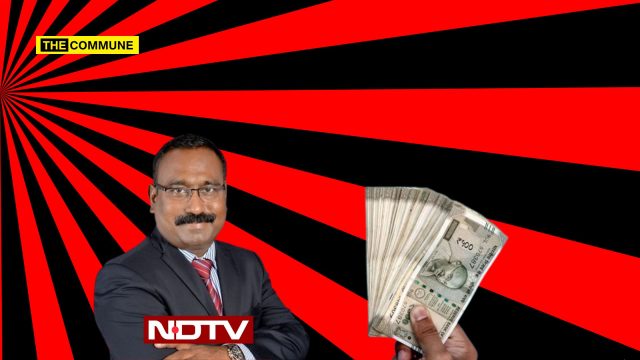
NDTV journalist Sam Daniel found himself at the centre of a political controversy after a social media post in which he complained about an alleged ₹800 bribe demanded by electricity board employees drew sharp reactions from netizens who questioned his record during the previous DMK government.
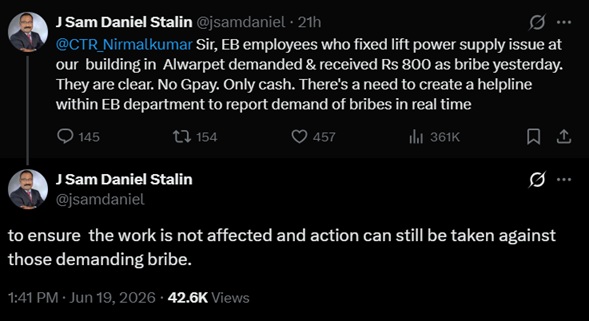
On 19 June 2026, Daniel tagged TVK Electricity minister CTR Nirmal Kumar on X and alleged that electricity board staff had demanded and received a bribe while attending to a power supply issue at his residential building in Alwarpet.
In his post, Daniel wrote, “@CTR_Nirmalkumar Sir, EB employees who fixed lift power supply issue at our building in Alwarpet demanded & received Rs 800 as bribe yesterday. They are clear. No Gpay. Only cash. There’s a need to create a helpline within EB department to report demand of bribes in real time. to ensure the work is not affected and action can still be taken against those demanding bribe.”
The post quickly attracted attention on social media, with several users welcoming the complaint and calling for action against corruption within government departments.
However, others used the occasion to question what they described as the selective outrage of sections of the media. It seems as if journalists who are now publicly highlighting instances of corruption under the present government were in deep slumber during the DMK regime and did not show the same level of scrutiny towards allegations of corruption during the previous government.
You are a senior journalist. How many stories you did on DMK corruption in the past five years ?
You are tagging EB Minister for 800 rupee bribe. Haven’t you paid a single rupee bribe in the past five years ? Whom did you tag ? Did you even whisper ?
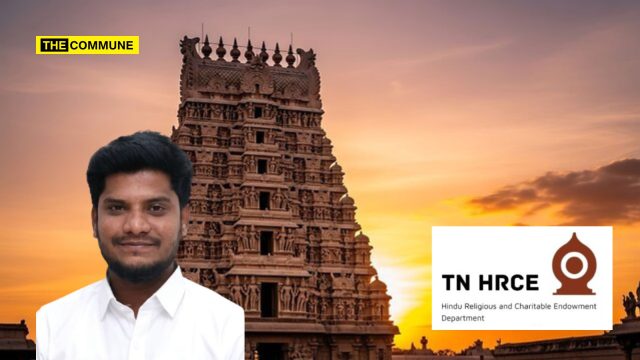
The TVK government’s Hindu Religious and Charitable Endowments (HR&CE) Department has cancelled 46 temple-linked infrastructure projects worth ₹245.85 crore that were proposed during the previous DMK government, citing legal hurdles, court-related issues and concerns over the financial burden such projects would impose on temples, as reported in Times of India.
The state government has issued two Government Orders (G.O.s) formally withdrawing administrative approvals granted for the projects, which included the construction of marriage halls and commercial complexes using temple lands and funds.
According to the HR&CE Department, the cancelled projects comprise 29 marriage halls estimated at ₹115.77 crore and 17 commercial complexes worth ₹130.08 crore. While approvals had been granted, many of the projects had not progressed beyond the planning stage and had not entered execution.
Officials stated that several projects faced legal complications, including court proceedings and judicial orders affecting their implementation. Concerns were also raised regarding the financial viability of investing substantial temple funds into commercial infrastructure projects.
Among the cancelled projects are proposed marriage halls in Palani, Oddanchatram and Pudukottai, as well as a commercial complex in Tiruvannamalai.
An HR&CE official said that several of the proposed projects had remained on paper and had not entered the execution stage. The official added that legal issues, including court orders affecting some projects, and the financial implications for temples were among the reasons behind the decision.
The department further announced that the ₹245.85 crore earmarked for these projects would instead be redirected towards initiatives focused on improving temple infrastructure, maintenance and facilities for devotees.
Officials noted that while marriage halls and commercial complexes had long been promoted as revenue-generating assets for temples, concerns had repeatedly been raised about whether such ventures justified the financial commitments required from temple administrations.
With the cancellation of the projects, the HR&CE Department is expected to unveil a fresh set of initiatives aimed directly at benefiting temples and worshippers. Details of the alternative projects are likely to be announced in the coming months.
The decision has been welcomed by several temple activists and litigants who have been challenging such projects before the courts for years.
Temple activist TR Ramesh, who has been involved in legal efforts to stop commercial constructions on temple lands and the use of temple funds for such purposes, described the government’s decision as a significant development.
According to him, a group of petitioners had been fighting the issue in courts for nearly five years. He pointed out that on 19 June 2025, the First Bench of the Madras High Court had granted a major interim stay order against commercial constructions using temple funds. He alleged that despite the court order, the HR&CE Department under the previous DMK government did not fully comply with the directions.
I had deactivated my X account two days ago. I was not feeling elated with my daily feeding Hindus who, in general, do NOT care about their Temples and Dharma – with victory news from Court actions or about the violations of Dharma and Law by the instrumentalities of the… pic.twitter.com/bDVV17NtrX
It is noteworthy that Tamil Nadu Governor Rajendra Vishwanath Arlekar, in his Assembly address, announced structural reforms in the Hindu Religious and Charitable Endowments (HR&CE) Department. He stated that temple funds and offerings will be used exclusively for sacred purposes, such as temple maintenance and development, rather than diversion.
Subscribe to our channels on WhatsApp, Telegram,Instagram and YouTube to get the best stories of the day delivered to you personally.