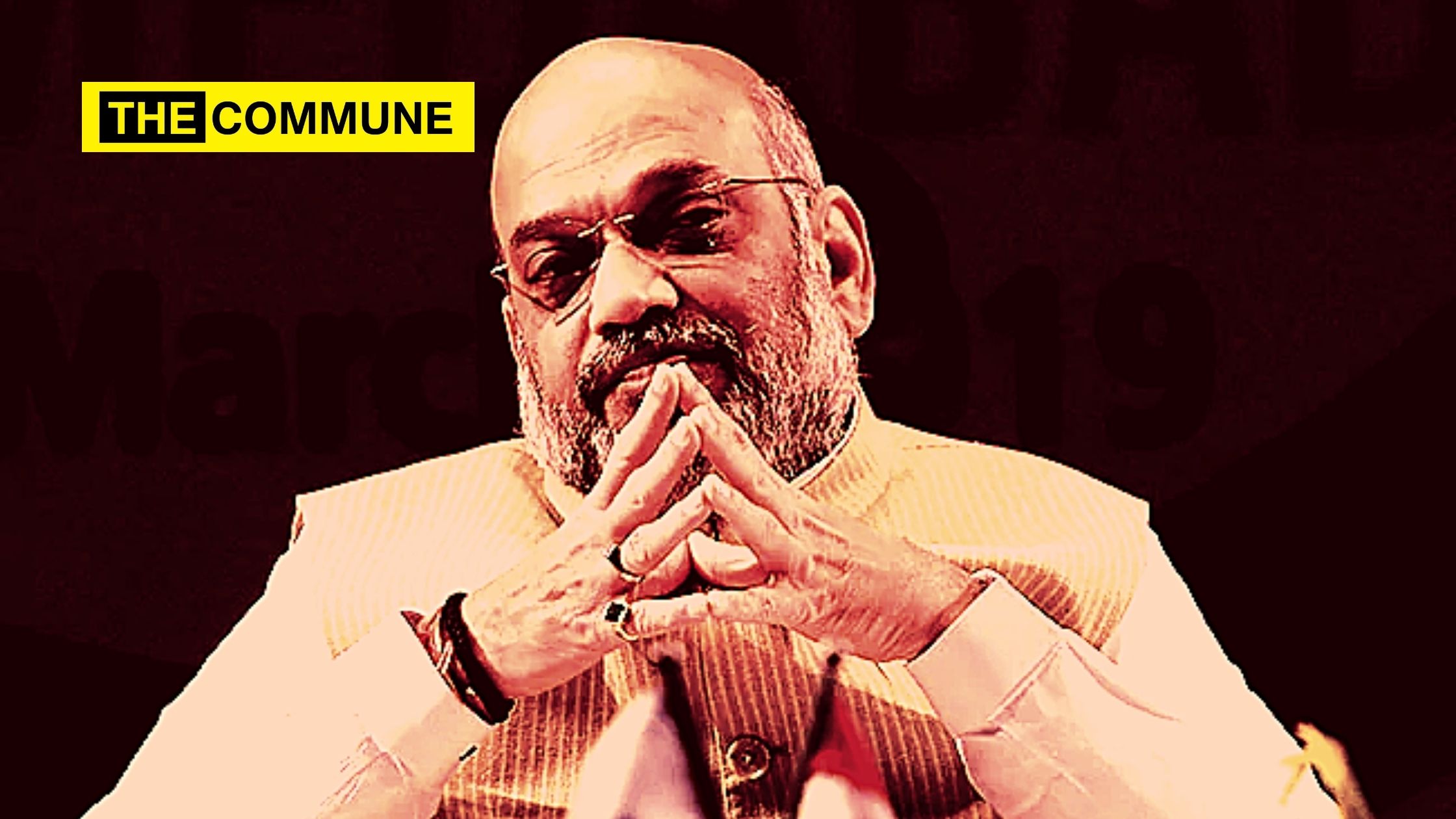
In the complex and often unpredictable world of Indian politics, few leaders have engineered as remarkable a rise as Amit Shah. From his early years as a young stockbroker in Ahmedabad to becoming one of the most powerful figures in Indian politics, Shah’s journey is a story of organizational mastery, political calculation, resilience, and relentless ambition. Today, he is widely regarded as the chief strategist behind the Bharatiya Janata Party’s (BJP) electoral machine and is often described as the modern-day “Chanakya” of Indian politics.
His career has not been without controversy or challenge. He has faced legal battles, public scrutiny, political setbacks, and periods when his future in politics appeared uncertain. Yet each time, he managed to rebuild his position and expand his influence. It is this combination of strategic thinking and political resilience that has made Amit Shah one of the defining figures of contemporary India.
As India looks towards the future, questions are increasingly being asked: Could Amit Shah one day emerge as a contender for the country’s highest political office? While such discussions remain speculative, there is little doubt that he occupies a central place in the BJP’s leadership structure and in the story of modern Indian politics.
Humble Beginnings in Gujarat
Born on 22 October 1964, in Mumbai and raised in Gujarat, Amit Shah grew up in a business-oriented family. His early life was far removed from the corridors of political power. After completing his education in biochemistry, he entered the world of business and reportedly worked as a stockbroker in Ahmedabad.
The financial markets taught Shah lessons that would later define his political style: risk assessment, patience, timing, and an understanding of human behavior. Associates from those years often describe him as disciplined, analytical, and intensely focused – traits that would become hallmarks of his political career.
Unlike many future politicians who begin with grand ideological ambitions, Shah’s rise was built on an appreciation for systems, numbers, and organization. These skills would later prove invaluable in the increasingly data-driven world of electoral politics.
Entry into Politics
Shah’s political journey began through grassroots activism. He became associated with the Rashtriya Swayamsevak Sangh (RSS) at a young age of 14 years and later joined the BJP. During the 1980s and early 1990s, Gujarat was witnessing significant political change, creating opportunities for ambitious young leaders.
It was during this period that Shah developed a close working relationship with Narendra Modi, then an emerging BJP organizer. The partnership would eventually become one of the most consequential political alliances in modern Indian history.
While many politicians sought visibility through speeches and public rallies, Shah concentrated on organizational work. He built networks, managed campaigns, and developed a reputation as a behind-the-scenes strategist capable of converting political plans into electoral victories.
Building a Reputation: The Early Victories
Long before he became a national figure, Amit Shah was earning a reputation within the BJP as an exceptionally effective political organizer. His focus was not on public attention but on the mechanics of winning elections – voter outreach, cadre development, booth management, and campaign coordination.
His first significant breakthrough came through his involvement in Gujarat’s cooperative sector. During the 1990s, he became active in influential cooperative institutions, including the Ahmedabad District Cooperative Bank. At a time when cooperative bodies held considerable social and economic influence, Shah demonstrated an ability to build alliances, manage organizations, and consolidate support among diverse stakeholders.
Within the BJP, his strategic abilities quickly became apparent. Senior leaders increasingly relied on him to oversee difficult constituencies and strengthen local party structures. Shah developed a reputation for meticulous planning, often studying constituencies in extraordinary detail and identifying opportunities that others overlooked.
One of his notable contributions during this period was helping strengthen the BJP’s grassroots machinery. He emphasized booth-level organization, ensuring that party workers remained connected to voters throughout the year rather than only during election campaigns. This model would later become a defining feature of the BJP’s electoral strategy nationwide.
In 1997, Shah entered electoral politics directly by winning a by-election from the Sarkhej Assembly constituency in Gujarat. The victory marked the beginning of a long and successful electoral career. He would go on to win the constituency repeatedly and by substantial margins, demonstrating both organizational strength and voter appeal.
As his influence grew, Shah was entrusted with greater responsibilities within the Gujarat BJP. By the early 2000s, he had become one of the party’s most trusted political managers in the state. Many political observers believe that the organizational systems he helped develop in Gujarat later became templates for the BJP’s expansion across India.
Trials, Controversies, and Political Comebacks
No account of Amit Shah’s rise can be complete without examining the controversies and setbacks that threatened to derail his political career.
The late 2000s and early 2010s marked perhaps the most challenging phase of Shah’s public life. As his political influence in Gujarat expanded, he became the subject of intense scrutiny and multiple investigations related to allegations surrounding police encounter cases. These developments transformed him from a rising political strategist into one of the most controversial figures in Indian politics.
In 2010, Shah was arrested by the Central Bureau of Investigation (CBI) in connection with the Sohrabuddin encounter case. He spent time in judicial custody before being granted bail. The proceedings attracted nationwide attention and generated fierce political debate. People who talk about CBI being misused by the central government today must go back and read about these events.
The period was personally and politically difficult. The allegations raised serious questions about governance and accountability, while Shah and his supporters maintained that the cases were politically motivated attempts to weaken a rising BJP leader.
For a period, bail conditions prevented him from entering Gujarat, effectively distancing him from his political base. For many politicians, such a setback could have ended a career. Instead, Shah used the time to expand his understanding of the BJP’s national organization and build relationships beyond Gujarat.
Over time, courts delivered rulings that brought relief to Shah in several of the cases against him, enabling his gradual return to active politics.
What is undeniable, however, is the political comeback that followed. By the time the BJP was preparing for the 2014 general election, Shah had re-established himself as one of the party’s most trusted strategists. Many observers regard this recovery from adversity as one of the defining chapters of his political life.
Architect of the BJP’s National Expansion
The turning point came in 2014.
As the BJP prepared for a historic national campaign led by Narendra Modi, Amit Shah was entrusted with managing Uttar Pradesh, India’s most politically significant state. The assignment was considered one of the most challenging in Indian politics.
The result was extraordinary. The BJP secured a sweeping victory in Uttar Pradesh, providing the foundation for its majority in Parliament. Shah’s success transformed him from a powerful state-level strategist into a national political force.
Following the election, he was appointed BJP National President.
What followed was one of the most ambitious organizational expansions in Indian political history. Under Shah’s leadership, the BJP aggressively expanded beyond its traditional strongholds and established itself across large parts of the country. State after state witnessed intensive membership drives, organizational restructuring, and disciplined electoral preparation.
Political rivals frequently found themselves outmaneuvered by a party machine that appeared several steps ahead.
Membership expanded dramatically, the party strengthened its presence in new regions, and the BJP emerged as the dominant force in national politics. Shah’s reputation as the architect of this expansion became firmly established.
Why He Is Called the Political Chanakya
The comparison with Chanakya, the ancient strategist who helped build the Mauryan Empire, is not accidental.
Amit Shah is viewed as a master planner capable of converting difficult political situations into opportunities. His approach emphasizes long-term preparation, organizational discipline, and strategic flexibility.
Several characteristics define his political style:
- Deep attention to electoral mathematics.
- Strong focus on grassroots organization.
- Ability to identify and nurture local leadership.
- Centralized decision-making combined with decentralized execution.
- Long-term political planning rather than short-term reactions.
- Extensive use of data and voter analytics.
- Capacity to transform electoral setbacks into future opportunities.
These qualities have earned him a reputation as one of the most formidable election strategists in contemporary India.
From Party Strategist to National Leader
As India’s Home Minister, Shah moved from the role of political organizer to that of a national policymaker.
His tenure has been associated with major policy decisions, including the abrogation of Article 370 in Jammu and Kashmir, the reorganization of the state into Union Territories, efforts aimed at strengthening internal security, and initiatives related to citizenship and governance reforms.
The Campaign Against Naxalism
Among Amit Shah’s most significant achievements as Union Home Minister has been the government’s intensified campaign against the Naxalite or Maoist insurgency.
For decades, Naxalism represented one of India’s most serious internal security challenges, affecting large parts of central and eastern India. The insurgency claimed thousands of lives, disrupted development, and created governance challenges across several states.
Under Shah’s leadership, the Ministry of Home Affairs adopted a multi-pronged strategy that combined security operations with infrastructure development, improved connectivity, financial inclusion, and expanded government presence in previously inaccessible areas.
Security forces increased their operational reach, while roads, mobile towers, banking facilities, schools, healthcare services, and welfare programs were expanded into remote regions that had long been vulnerable to extremist influence. The government also emphasized coordination between the Centre and state governments, intelligence sharing, and modernization of security forces.
According to government figures, districts severely affected by extremism declined significantly, while incidents of violence and casualties fell sharply compared with earlier decades. Areas once considered Maoist strongholds witnessed increased administrative presence and development activity.
These developments can be regarded as one of Shah’s most notable contributions to India’s internal security landscape. While challenges remain in certain pockets and that long-term success depends on sustained governance and development, the weakening of extremist influence has become a major component of Shah’s record as Home Minister.
These decisions demonstrated decisive leadership and a willingness to tackle long-pending issues. Regardless of perspectives, few dispute Shah’s central role in shaping contemporary government policy.
His transition from election strategist to one of the country’s most powerful administrators further expanded his political stature.
The Modi–Shah Partnership
Any account of Amit Shah’s rise would be incomplete without examining his partnership with Prime Minister Narendra Modi.
Over more than three decades, the two leaders have developed one of the most influential political partnerships in modern India. While Modi has often served as the party’s principal public face, Shah has frequently been viewed as the organizational architect behind many electoral successes.
The combination of Modi’s mass appeal and Shah’s strategic execution has played a major role in the BJP’s transformation from a party with regional strengths into a dominant national force.
This partnership has become a defining feature of Indian politics in the twenty-first century.
The Question of Prime Ministership
Indian politics is often shaped by discussions about succession, and Amit Shah’s name frequently appears in conversations about future leadership within the BJP.
Several factors contribute to such speculation:
- His long-standing partnership with Narendra Modi.
- His deep understanding of the BJP’s organizational structure.
- His influence over electoral strategy and governance.
- His extensive experience in both party management and government.
- His ability to command respect within the party cadre.
- His reputation as one of the BJP’s most effective political managers.
At the same time, Indian politics remains highly dynamic. Leadership transitions depend on electoral outcomes, party consensus, public support, and evolving political circumstances.
For now, Amit Shah remains one of the BJP’s most influential leaders. His position within the party ensures that his name will continue to feature prominently in discussions about India’s political future.
Legacy in the Making
Whether history ultimately remembers Amit Shah as a master strategist, a transformative political organizer, a powerful administrator, or perhaps even a future national leader, his impact on Indian politics is already profound.
The young stockbroker who once studied market trends in Ahmedabad now helps shape the political trajectory of the world’s largest democracy. His rise reflects not merely personal ambition but also the growing importance of organization, data, strategy, and discipline in modern electoral politics.
In an era often dominated by personality-driven politics, Amit Shah has demonstrated the power of political architecture. He built his reputation not through dramatic speeches alone but through patient organization, relentless execution, and a deep understanding of how power is acquired and sustained.
From cooperative institutions in Gujarat to the highest levels of national governance, his journey represents one of the most significant political transformations in contemporary India. It is a story of ambition, adversity, controversy, recovery, achievement, and influence.
He is the strategist who helped redefine the BJP’s fortunes and reshape India’s political landscape. He also remains one of the most consequential and polarizing figures of his generation. For historians, he may ultimately be remembered as the man who transformed political organization into one of the most powerful instruments of democratic politics in modern India.
Whatever verdict history delivers, Amit Shah’s rise from a young stockbroker to a political Chanakya has already secured him a place among the most influential political figures of twenty-first-century India. Whether his journey culminates in the office of Prime Minister or not, his role in shaping the BJP’s rise and India’s political landscape is likely to remain a subject of study for decades to come.
M. Ananth Narayan is a political commentator.
Subscribe to our channels on WhatsApp, Telegram, Instagram and YouTube to get the best stories of the day delivered to you personally.