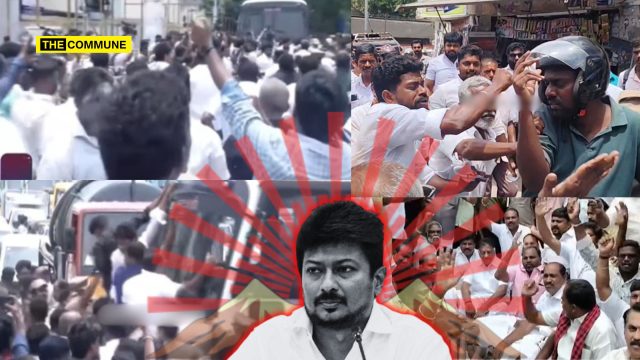
The arrest of Leader of Opposition and DMK scion Udhayanidhi Stalin on August 4 did not merely trigger political protests, it unleashed widespread public disruption across Tamil Nadu, with DMK leaders and cadres bringing roads, traffic and normal civic life to a standstill over a criminal investigation.
Neelankarai Turned Into A Political Siege
Even before Udhayanidhi was taken into custody, his residence in Chennai’s Neelankarai became the epicentre of chaos.
Hundreds of DMK cadres descended on the residential neighbourhood after police arrived to execute the arrest. Roads leading to the house were completely blocked as supporters surrounded police vehicles, preventing officers from carrying out their duties.
View this post on Instagram
Senior DMK leaders, including former minister Ma. Subramanian, joined Udhayanidhi’s wife Kiruthiga Udhayanidhi in heated confrontations with senior IPS officers, arguing on the streets and attempting to delay the arrest. As more party leaders, lawyers and supporters poured in, the locality witnessed severe traffic congestion, with residents forced to bear the consequences of a political spectacle.
“ஒரு 10 நிமிஷம் மட்டும் டைம் கொடுங்க, காலைக்கடனை முடிக்காமல் உதயநிதியால் எப்படி வர முடியும்?”
“10 நிமிஷம் 10 நிமிஷம்னு எவ்ளோ நேரம் சொல்லுவீங்க உடனே வந்து அவர கைதாவ சொல்லுங்க..” உதயநிதியை கைது செய்ய வந்த இணை ஆணையர் விஜயகுமாரிடம் கிருத்திகா, மா.சுப்பிரமணியன் பேச்சுவார்த்தை#DMK |… pic.twitter.com/85TqNOtRet
— Polimer News (@polimernews) August 4, 2026
Road Blockades Across Tamil Nadu
The disruption was not confined to Chennai.
Within minutes of the arrest, coordinated road blockade protests erupted across multiple districts including Chennai, Kanchipuram, Mayiladuthurai, Vellore, Coimbatore, Karur, Namakkal, Erode, Tirunelveli, Thoothukudi, Madurai, Sivagangai, Trichy, Ariyalur, Perambalur and Cuddalore.
DMK workers occupied highways, staged sit-ins and attempted to obstruct police vehicles transporting Udhayanidhi to Thanjavur. Police were compelled to conduct preventive detentions of hundreds of protesters, including district functionaries, former ministers, former MLAs and sitting legislators, to restore order.
Former Chief Minister O. Panneerselvam was also detained while participating in a road blockade protesting Udhayanidhi’s arrest.
Public Life Disrupted For Political Optics
For ordinary citizens, the protests translated into traffic snarls, delayed emergency movement and disruption of daily life.
Instead of allowing the legal process to take its course, DMK cadres repeatedly chose street mobilisation that inconvenienced commuters and residents who had no role in the political controversy.
உதயநிதியை கைது செய்ததால் ஆத்திரம்..! போராட்டத்தின் போது வழியில் சென்ற பொதுமக்களை தாக்கிய தி.மு.கவினர்..!#Tirunelveli | #DMK | #GeneralPublic | #Police | #PolimerNews pic.twitter.com/GvE6V1AjkZ
— Polimer News (@polimernews) August 4, 2026
Effigies were burnt on public roads, slippers were hurled during demonstrations and repeated attempts were made to obstruct police operations, forcing authorities to deploy additional personnel across sensitive locations.
Thanjavur Became Another Flashpoint
Tension escalated further in Thanjavur, where police established heavy security around the East Police Station and along transit routes anticipating clashes.
Supporters of the ruling TVK and local Vijay fan clubs gathered demanding stringent legal action against Udhayanidhi, creating the possibility of direct confrontation between rival political groups.
The situation only began to stabilise after the Madras High Court intervened, directing Udhayanidhi to cooperate with the investigation while ordering that he be released on station bail after questioning, thereby preventing the law-and-order situation from deteriorating further.
It is reported that schools will be given a holiday in some parts of Thanjavur.
A Familiar DMK Playbook?
Political parties are entitled to protest. But there is a clear distinction between peaceful dissent and paralysing public life.
The scenes witnessed across Tamil Nadu raised uncomfortable questions. Should an investigation into a political leader become justification for blocking roads, disrupting traffic, confronting police officers and inconveniencing lakhs of ordinary citizens?
For a party that frequently speaks about constitutional values and democratic institutions, the response to Udhayanidhi’s arrest appeared less like a legal challenge and more like a show of street strength – one in which the biggest victims were ordinary commuters caught in the middle of a political power struggle.
Subscribe to our channels on WhatsApp, Telegram, Instagram and YouTube to get the best stories of the day delivered to you personally.