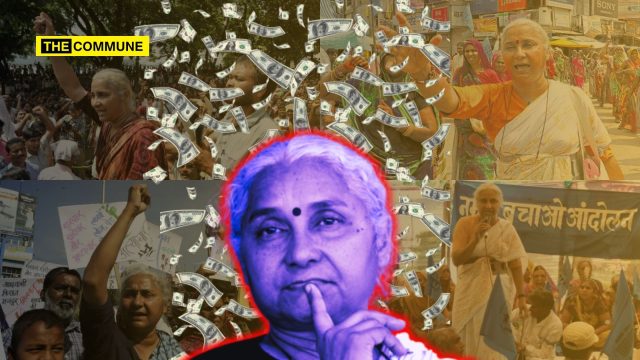
For over three decades, Medha Patkar has masqueraded as a crusader for the marginalized, while in reality, she has functioned as one of the most persistent obstacles to India’s infrastructure expansion. Far from being a benevolent activist, she is now increasingly exposed as a career protester whose campaigns have cost the nation billions, delayed lifeline projects for millions, and diverted funds meant for the poorest tribal children. A growing trail of government reports, intelligence alerts, and criminal proceedings has stripped away her carefully crafted public image, revealing a figure entangled in financial irregularities, foreign-funded agitation networks, and a recent criminal defamation conviction that the court itself branded as “deliberate and malicious.” Patkar is no longer just a controversial activist, she is a proven liability to India’s developmental ambitions.
The Sardar Sarovar Project: 20 Years Of Denying Water To Gujarat
Patkar first rose to national prominence through the Narmada Bachao Andolan (NBA), which organized mass protests and fasts against the construction of the Sardar Sarovar Dam on the Narmada River. The movement led to years of litigation and procedural delays, stalling the project for an extended period.
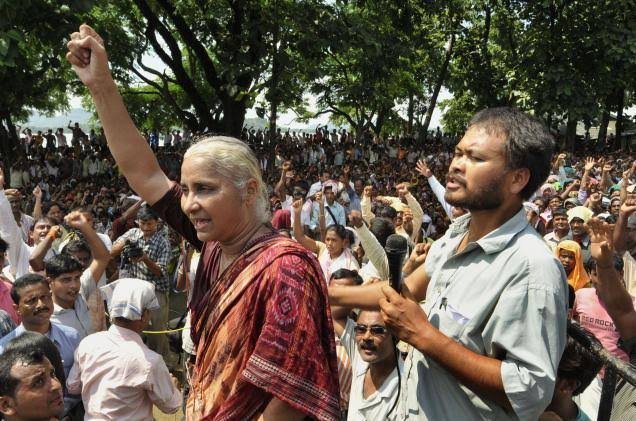
While Patkar mobilized opposition, millions in Gujarat and Rajasthan suffered through severe droughts, waiting for the irrigation water and drinking supply that the dam promised.
The human cost of Medha Patkar’s activism is quantified in the parched lands of Kutch and Saurashtra in Gujarat. For decades, these regions faced severe water scarcity. The Sardar Sarovar Dam project was the definitive solution, designed to provide drinking water and irrigation to millions and generate hydropower for four states.
Patkar’s NBA waged a relentless war against raising the dam’s height from 121.92 meters to 138.68 meters, claiming it would displace 40,000 families and destroy tribal culture. Despite comprehensive rehabilitation packages offered by the government, the opposition continued, often turning violent with reports of government surveyors being attacked.
Patkar’s sustained opposition to the Sardar Sarovar Project resulted in catastrophic consequences:
A 20-Year Delay: The project was stalled for over two decades due to agitations and political apathy from the Congress-led UPA government at the Centre.
Escalating Cost: The project’s cost ballooned from ₹4,400 crore to a staggering ₹44,000 crore, a financial burden borne by the Indian public.
Denied Basic Rights: Crores of people in Gujarat were denied their fundamental right to clean drinking water for a generation.
Project Timeline and Delays
1987: Construction began with 1997 completion target
1997: Original completion date missed due to NBA agitation
2009: Project 5 years behind schedule, new target set for 2014
2014: Modi government clears final approvals
2017: Narmada water finally reaches Kutch
2022: Project reaches its furthest extent, vindicating its utility
Human Cost Of Delays
The delay caused by Patkar’s movement had devastating humanitarian consequences:
- Crores of people in drought-prone areas continued suffering water scarcity
- Agricultural productivity remained constrained for decades
- Economic development of Gujarat’s arid regions was severely hampered
- Electricity generation for four states was postponed
The recent emergence of explosive documentary evidence has shed new light on the controversial career of Medha Patkar. Through a combination of confidential email exchanges, court documents, and investigative findings, a disturbing pattern of foreign interference, judicial manipulation, and anti-national activities has come to the forefront. This detailed investigation examines the serious allegations against one of India’s most prominent activists.
The Berkeley Address: A Direct Appeal For Foreign Intervention
The most damning evidence comes from Patkar’s own words during her address at Berkeley University in California, where she made a direct appeal to her foreign audience for support against Indian national projects. In the recorded video, Patkar explicitly states that their movement “requires the support of you all in many ways, somewhat similar to what happened in the case of Narmada”.
Listen to this blatant anti national appeal of @medhanarmada to her foreign funders in America at Berkeley.
Asks for foreign meddling in India and also admits that they supported her in opposing Sardar Sarovar Project that had a national political consensus in its favor.
They… pic.twitter.com/gxM367dzdw
— BALA (@erbmjha) September 8, 2025
Her speech reveals several troubling aspects:
- Direct solicitation of foreign interference in Indian infrastructure projects with national consensus
- Admission that foreign supporters had previously helped in opposing the Sardar Sarovar Project
- Portrayal of Indian government as an adversary requiring international pressure to counter
- Misrepresentation of herself as speaking for India when she was actually representing her NGO funded by World Bank.
Patkar’s statement that “across India, almost every dam is challenged today” demonstrates a systematic campaign against India’s infrastructure development, often with foreign backing. Her reference to the “National Alliance of People’s Movements” organizing conventions in the Narmada Valley further reveals the coordinated nature of these anti-development activities.
Explosive Email Evidence: Supreme Court Manipulation Exposed
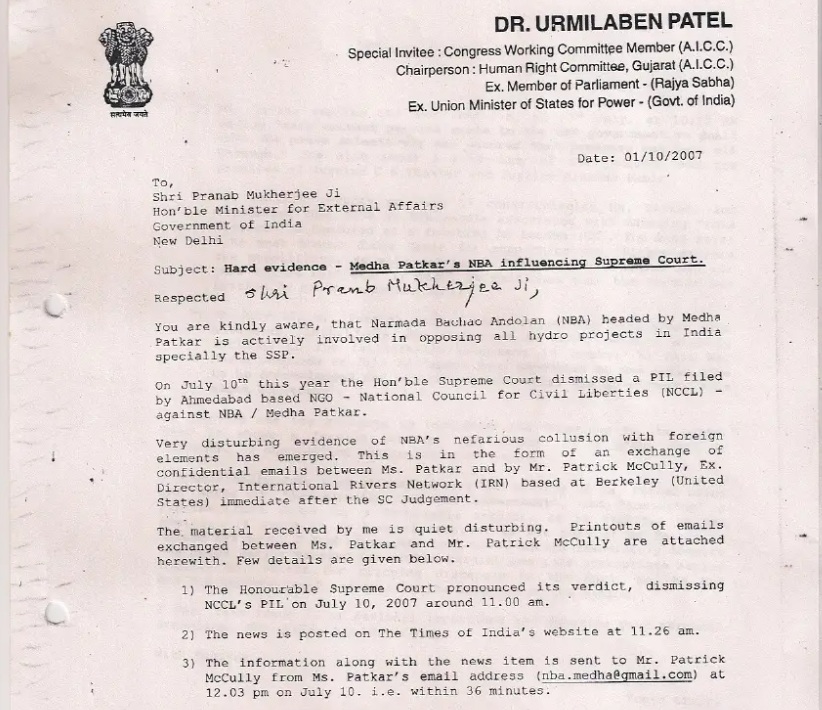
The most shocking revelations come from confidential email exchanges between Patkar and Patrick McCully of the International Rivers Network (IRN), a Berkeley-based organization. These emails, submitted to External Affairs Minister Pranab Mukherjee in 2007 by Congress leader Dr. Urmilaben Patel, reveal a deeply disturbing pattern of judicial manipulation.
Timeline Of Judicial Interference
The email evidence shows a systematic attempt to influence Supreme Court proceedings:
July 10, 2007, 11:00 AM: Supreme Court dismisses PIL against NBA seeking CBI probe
11:26 AM: News posted on Times of India website
12:03 PM: Patkar sends judgment details to Patrick McCully within 36 minutes of verdict
McCully’s Telling Response
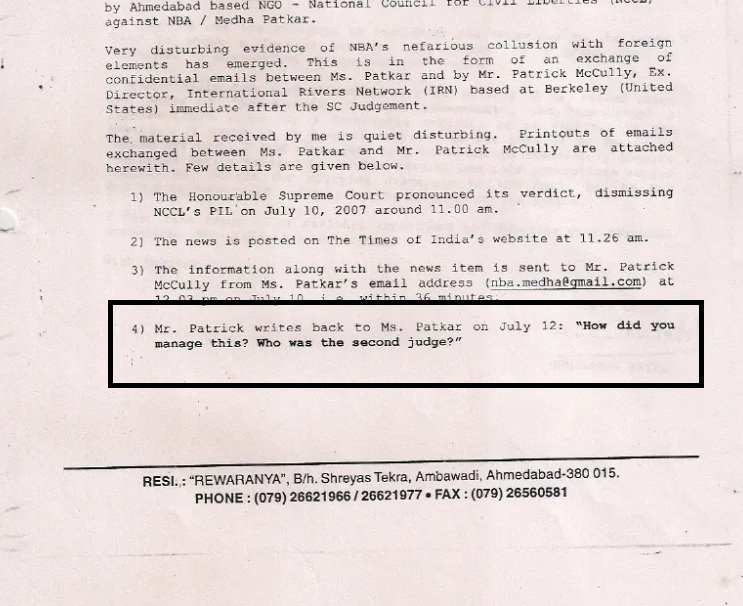
Patrick McCully’s reply on July 12 reveals the shocking nature of their operation: “How did you manage this? Who was the second judge?” This question clearly implies advance knowledge of judicial manipulation.
Patkar’s Confession Of Pressure Tactics
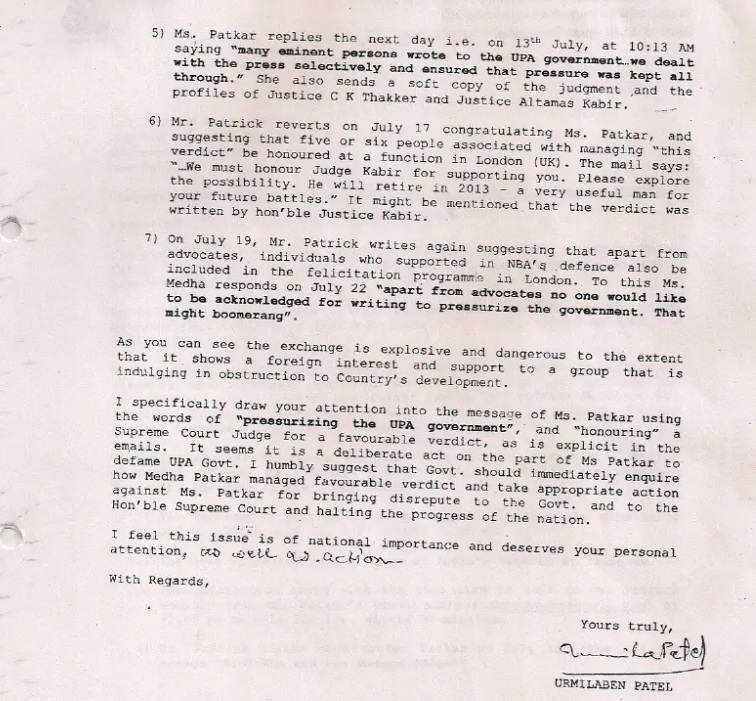
Patkar’s response on July 13 is perhaps the most damaging admission: “Many eminent persons wrote to the UPA government…we dealt with the press selectively and ensured that pressure was kept all through”. This constitutes a clear confession of orchestrating pressure campaigns to influence judicial outcomes.
Plans To “Honor” Supreme Court Judge
The most scandalous aspect emerges in McCully’s July 17 email suggesting they “honor Judge Kabir for supporting you” and noting he “will retire in 2013 – a very useful man for your future battles”. This reveals a calculated strategy to cultivate and reward judges for favorable verdicts.
Patkar’s response acknowledges the sensitivity: “apart from advocates no one would like to be acknowledged for writing to pressurize the government. That might boomerang”, clearly indicating awareness of the impropriety of their actions.
Financial Irregularities And Money Laundering
The Enforcement Directorate filed an FIR against Patkar in April 2022 for money laundering during her Narmada Bachao Andolan activities. The investigation revealed:
₹1.2 crore received by Narmada Navnirman Abhiyan within a single year of formation in 2004
20 identical donations of ₹5,96,294 each received on a single day (18 June 2005)
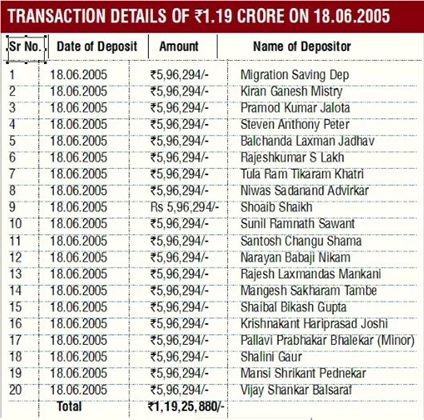
One donor was a minor at the time of fund transfer (No.17 in above image)
₹13.5 crore collected over 14 years with unclear sources and expenditures
Misrepresentation Of Financial Status
During court proceedings, Patkar declared her annual income as merely ₹6,000, while investigations revealed ₹19 lakh in her savings account. This deliberate misrepresentation of financial status constitutes perjury and fraud.
Missing Educational Funds
The most serious allegation involves ₹13 crore supposedly collected for tribal children’s education that remains unaccounted for. Despite claims of providing residential educational facilities, investigations found no proper audit trail for these substantial funds.
The Anti-National Testimony
Perhaps the most blatant act was Patkar’s testimony before the US House of Representatives in the 1990s. She presented herself as a representative of the Indian people, claiming the World Bank and the Government of India were together against the people of the Narmada Valley. She sought international intervention against the Sardar Sarovar Project, an essential national infrastructure project, effectively inviting a foreign power to meddle in India’s internal affairs. This act alone, exposed point-by-point by V.K. Saxena in Indian courts, stands as a testament to an agenda that prioritized foreign validation over national interest.
None exposed and brought to book the fraud Medha Patkar as effectively as the current @LtGovDelhi, VK Saxena did. Calling out her testimony to the US House of Representatives, point by point, Saxena put the facts before Courts and got her punished even by the Supreme Court.
She… https://t.co/7yY4quyTeN pic.twitter.com/xzMgcpiG76
— BALA (@erbmjha) September 2, 2025
2014 Intelligence Bureau Report
In June 2014, India’s Intelligence Bureau (IB) released a 21-page report alleging that foreign-funded NGOs, including Greenpeace, Amnesty International, ActionAid, and CORDAID, were systematically obstructing India’s economic development.
The report, written by Joint Director S.A. Rizvi, claimed these organizations disguised their donations as humanitarian work while actually funding protests against nuclear plants, coal-fired power stations, hydroelectric dams, mining, and mega-industrial projects like POSCO and Vedanta. The IB estimated this activism had reduced India’s GDP by 2–3% annually.
The report specifically linked anti-nuclear activism at Koodankulam to foreign funding from Ohio State University and named AAP candidate S.P. Udayakumar as part of a broader network aimed at undermining India’s nuclear programme. It also accused Greenpeace of leading a “coal network” to block 455 proposed power stations, targeting NTPC’s Singrauli expansion. On GMOs, the IB blamed six NGOs and five activists including Vandana Shiva and Prashant Bhushan for the moratorium on Bt Brinjal. European NGOs were cited for stalling POSCO and Vedanta, while Dutch-funded groups were said to be shifting focus from Kashmir to northeast India’s extractive industries.
Looking ahead, the IB warned of future campaigns against palm oil imports, e-waste disposal by Indian IT firms, and the Gujarat model of development including river-linking projects and the Statue of Unity. It also flagged Medha Patkar’s planned agitation against the Delhi-Mumbai Industrial Corridor.
Sabotaging Energy Security and Industrialization
The IB report also revealed that Patkar co-founded the National Alliance of People’s Movements (NAPM), which was described as part of a pan-India network coordinating anti-nuclear protests. The report specifically implicated NAPM in organizing opposition against the Kudankulam Nuclear Power Project and the Jaitapur nuclear plant, arguing that the activism actively worked to deprive India of clean, cheap energy.
The NAPM’s opposition extended beyond energy. Under this banner, Patkar campaigned against job-creating industrial projects, including the Tata Nano plant in Singur, West Bengal, and filed litigations to stall modern urban developments like the Lavasa Megacity near Pune. Opponents charge that this strategy reflects a goal of keeping India rural and impoverished rather than fostering economic growth.
The ₹13.5 Crore FIR and Financial Irregularities
Patkar’s legal troubles intensified in 2022 when Madhya Pradesh Police registered a First Information Report (FIR) against her and 11 others for the alleged misappropriation of ₹13.5 crore. The funds were collected by her Mumbai-registered trust, Narmada Navnirman Abhiyan, which was mandated to finance the education of tribal children.
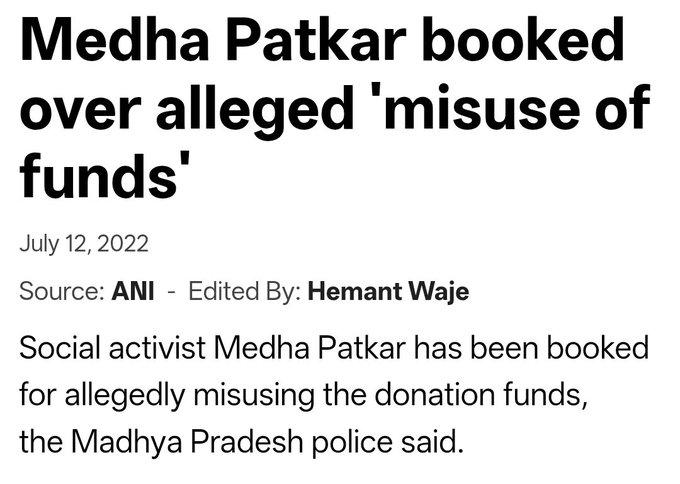
During the investigation, authorities recovered over ₹4 crore from 10 different bank accounts linked to the trust. The FIR further accused Patkar of misleading the courts by officially declaring an annual income of just ₹6,000, while investigators reportedly found ₹19 lakh sitting in her savings account.
The allegations took a more serious turn when the FIR claimed that the educational funds were not used for their intended purpose but were instead diverted for “political and anti-national agendas.” In response to the allegations, Patkar maintained that her accounts were fully audited and denied accepting foreign money for the trust.
Criminal Defamation Conviction (May 2024)
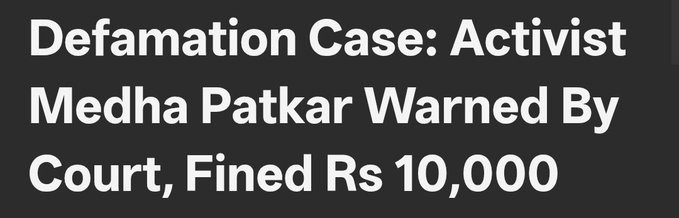
Adding to her legal burdens, in May 2024, a Delhi court convicted Patkar of criminal defamation against Delhi Lieutenant Governor V.K. Saxena. The court sentenced her to five months in jail, stating that her actions were “deliberate, malicious,” and constituted a direct attack on Saxena’s loyalty to the nation.
Pattern Of Anti-National Activities
Patkar’s career shows a consistent pattern of opposing infrastructure projects vital to India’s development:
- Sardar Sarovar Dam: 20-year delay causing massive cost escalation
- Kovvada Nuclear Project: Opposition to clean energy initiatives
- Various hydroelectric projects: Systematic campaign against power generation
- Tata Singur Plant: Patkar also protested against the setting up of the Tata Nano plant in Singur, WB
- JSW Steel project in Odisha: Patkar opposed the JSW steel project in Odisha citing environmental reasons.
Foreign Funding And International Lobbying
Circumstantial evidence suggests there is significant foreign hand and international lobbying that is supporting Patkar’s protests:
- International Rivers Network support from Berkeley
- Appeals to US House of Representatives misrepresenting India’s position
- Goldman Prize money under scrutiny by US authorities
- Coordination with foreign anti-dam networks as revealed in emails
Research Contradicts Patkar’s Claims
Studies have indicated that Patkar’s claims are not essentially true. Here are a few:
National Bureau Of Economic Research Study
Research by the NBER found that tribal families resettled from Sardar Sarovar were significantly better off than those who remained in forest areas. The study specifically contradicted Patkar’s claims about cultural and economic damage, showing:
- Better socio-economic conditions for resettled families
- Intact cultural traditions despite relocation
- Desire among non-resettled families to now seek resettlement after seeing improved living standards
Project Success Vindicated
The eventual completion of Sardar Sarovar has conclusively proven the project’s benefits:
- Water reaching the tail-end of Kutch in July 2022
- 4 crore people receiving water and electricity as promised
- Agricultural transformation in previously arid regions
- Industrial development enabled by reliable power and water supply
Patkar’s Political Connections And Continuing Influence
Patkar has survived all these years because of her political connections, let’s take a look at them:
AAP
Despite her controversial record, the Aam Aadmi Party (AAP) fielded Patkar as their Lok Sabha candidate in 2014 and reportedly considered projecting her as a Chief Ministerial candidate for Gujarat.
Congress
She was seen joining hands and walking with Congress scion Rahul Gandhi.
But the fact is that Congress leader Dr. Urmilaben Patel formally submitted evidence of Patkar’s judicial manipulation to the External Affairs Ministry demonstrates concerns even within opposition parties about her activities.
The Modus Operandi
There is a consistent pattern in Patkar’s activism: the weaponization of Public Interest Litigations (PILs) in courts, invitations for international intervention (including pressuring the World Bank to withdraw its funding from Indian dam projects), and staging endless protests. The ultimate victims of this model are India’s infrastructure, its energy security, and the very rural poor she claims to represent.
A New Era
As India continues its trajectory of rapid development, officials and economic analysts suggest that the era of unaccountable NGOs dictating the nation’s infrastructure policies is coming to an end. With her recent conviction and the ongoing probes into her trust’s finances, Medha Patkar remains a polarizing figure – revered by a few as a staunch environmentalist but increasingly viewed by the state and public as a significant roadblock to the nation’s growth.
This article is based on an X thread by India First Post.
Subscribe to our channels on WhatsApp, Telegram, Instagram and YouTube to get the best stories of the day delivered to you personally.