Home Blog Page 977

What Congress And Its Propagandist Like Sumanth Raman Won’t Tell You About Electoral Bonds

On 15 February 2024, the Supreme Court issued its long-awaited verdict on the electoral bonds case, declaring that anonymous electoral bonds infringe upon the right to information as outlined in Article 19(1)(a) of the Constitution. Consequently, the scheme has been deemed unconstitutional and has been invalidated.

Congress leader Rahul Gandhi wrote after the verdict was pronounced, “Another proof of Narendra Modi’s corrupt policies is in front of you. BJP had made electoral bonds a medium for taking bribe and commission. Today this matter has been approved.”

Neutral but pro-Congressi commentator Sumanth Raman found himself in a foot-in-mouth situation when he simped for the Congress leader Rahul Gandhi, yet again over the recent ruling on electoral bonds. 

Sumanth Raman wrote on his X handle, “Huge setback for Govt. Not only has the SC said that Electoral Bonds scheme is unconsituitional, it has also asked for details of bonds sold since April 2019 to be put out by the Election Commission on its website by 13th March 2024.”

While the Congressis and their propagandists were painting a picture as if it was the BJP was the one that would suffer because of this verdict, the reality is far different. 

What Congress & Its Propagandists Won’t Tell You

While on the surface it may seem like a setback for the ruling party, in reality, it is the opposition parties that have more problems in handling this. As per ADR reports, parties other than the BJP have been relying more on electoral bonds for their donations. Here is a break up of the percentage of donations that parties received through electoral bonds for the 6 years – 2016/17 to 2021/22:

  • BJP – 52% (5271.9751 cr)
  • Congress – 61.54% (952.2955 cr) 
  • TMC – 93.27% ( 767.8876 cr)
  • DMK – 90.703% (431.50 cr)
  • BJD – 89.81% (Rs 622 cr.)
  • TRS – 80.45% ( Rs 383.6529 cr)
  • YSRCP – 72.43% ( Rs 330.44 cr )

For the years 2021-22, the percentage of donations received through electoral bonds along with donations in cash below Rs. 20,000, etc. are as below:

  • TMC – 96.77%
  • Congress – 71.84%
  • BJP – 60.56%

DMK which was not in power until 2021 received the second-highest amount in electoral bonds. Furthermore, a noteworthy detail is that 90% of the total donations received by the DMK are attributed to electoral bonds.

Those propagandists reacting enthusiastically to the verdict as if these bonds were equivalent to illegal money fail to comprehend that electoral bonds are legitimate funds directed towards political parties.

The Supreme Court has asked the State Bank Of India to stop the issue of the bonds and provide comprehensive details on electoral bonds purchased from the court’s interim order on 12 April 2019, until the present date to the Election Commission of India (ECI). The court also mandated that the information should include the purchase date, purchaser’s name, and bond denomination. Additionally, the court instructed SBI to furnish details on political parties that have received contributions through electoral bonds within the same time frame, specifying the date of encashment and the denomination of each bond. This information has to be submitted by the SBI to the ECI by 6 March 2024. The ECI, in turn, is obligated to publish the received data on its website by 13 March 2024. 

Once these details are made public, it will be interesting to see who donated how much and to whom.

Subscribe to our channels on TelegramWhatsApp, and Instagram and get the best stories of the day delivered to you personally. 
Madurai: BJP OBC Morcha Leader Sakthivel Brutally Attacked & Killed In Broad Daylight

Image Credits: Puthiya Thalaimurai

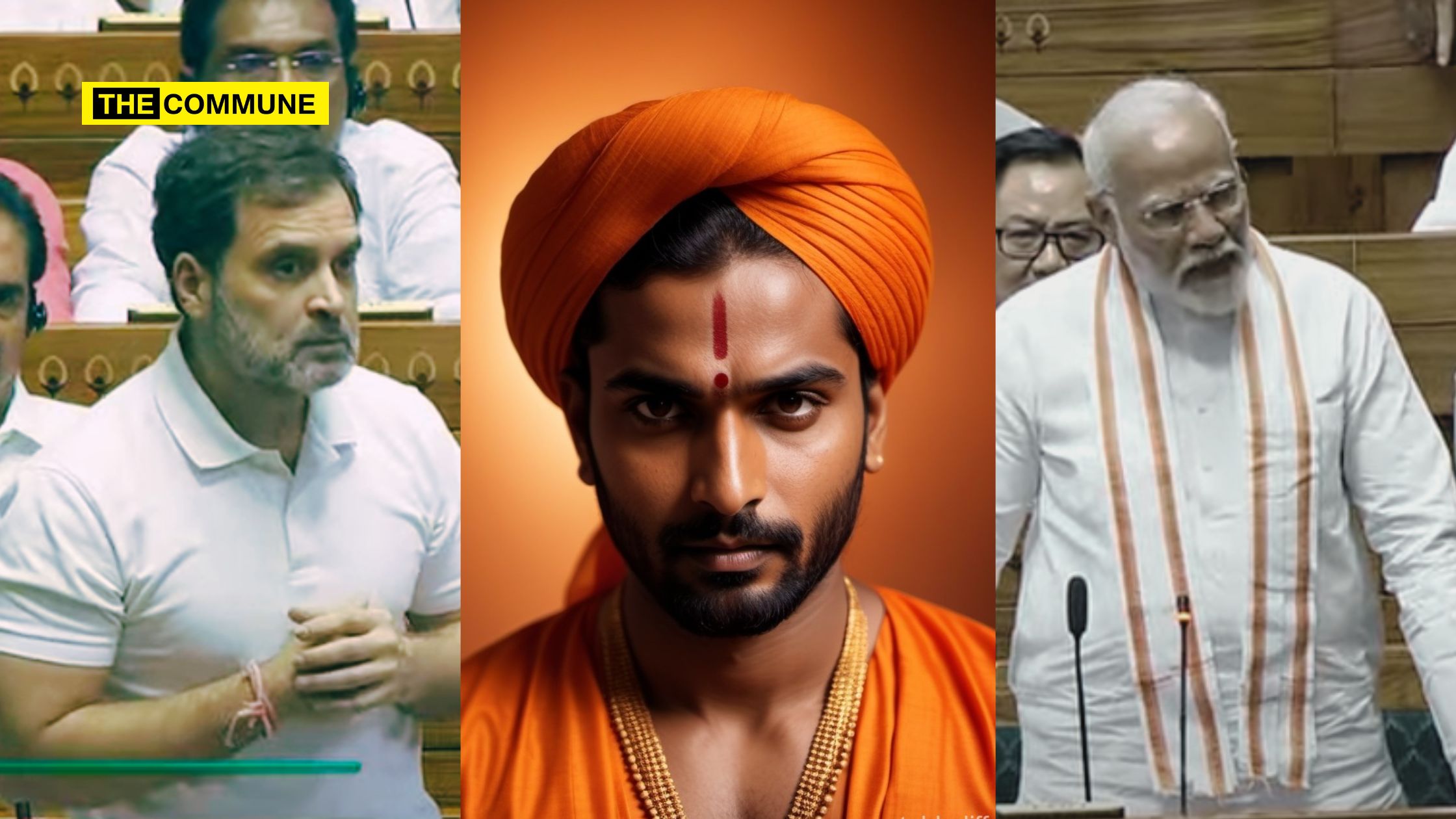
In a shocking incident that has left the city of Madurai in dismay, Sakthivel, a 34-year-old district secretary of the BJP in Madurai, was brutally murdered by an unidentified gang near the Vandiyur tollgate. The incident occurred as Sakthivel was on his way to his rice mill godown in the Sangu Nagar area early in the morning of 15 February 2024. 

Sakthivel, a resident of the Vandiyur Devar Kurinji Nagar area in Anna Nagar, also managed a rice mill in Chintamani. Additionally, he was known to be engaged in the finance business. Maalai Malar reports that there had been ongoing animosity, particularly concerning his rice mill, which is now being scrutinized by investigators.

The harrowing sequence of events unfolded when Sakthivel encountered a mysterious mob on motorcycles near the Vandiyur tollgate. Despite attempting to inquire about their identity and purpose, the gang remained silent. Matters took a grim turn when they brandished deadly weapons, causing Sakthivel to attempt an escape. Unfortunately, the assailants pursued him, cornered him, and unleashed a vicious attack with power sickles, resulting in his untimely death.

The Anna Nagar police were promptly alerted to the scene, and the body of Sakthivel was seized and sent to the Madurai Government Hospital for post-mortem examination. A case has been registered, and a special task force has been assembled to apprehend the perpetrators who swiftly fled the crime scene on motorcycles.

Initial investigations suggest that the murder may be linked to longstanding disputes, both in the context of the rice mill business and a recent disagreement over the sale of a cargo vehicle. Authorities are also exploring potential connections to financial dealings, adding layers of complexity to the ongoing probe.

The news of Sakthivel’s demise has drawn a crowd of BJP executives and volunteers at the government hospital, where the police have increased their presence to manage the heightened tension. As the city grapples with the shock of this brutal incident, authorities are diligently examining surveillance footage from major roads in the hope of shedding light on the identity and motive of the assailants.

Subscribe to our channels on TelegramWhatsApp, and Instagram and get the best stories of the day delivered to you personally. 
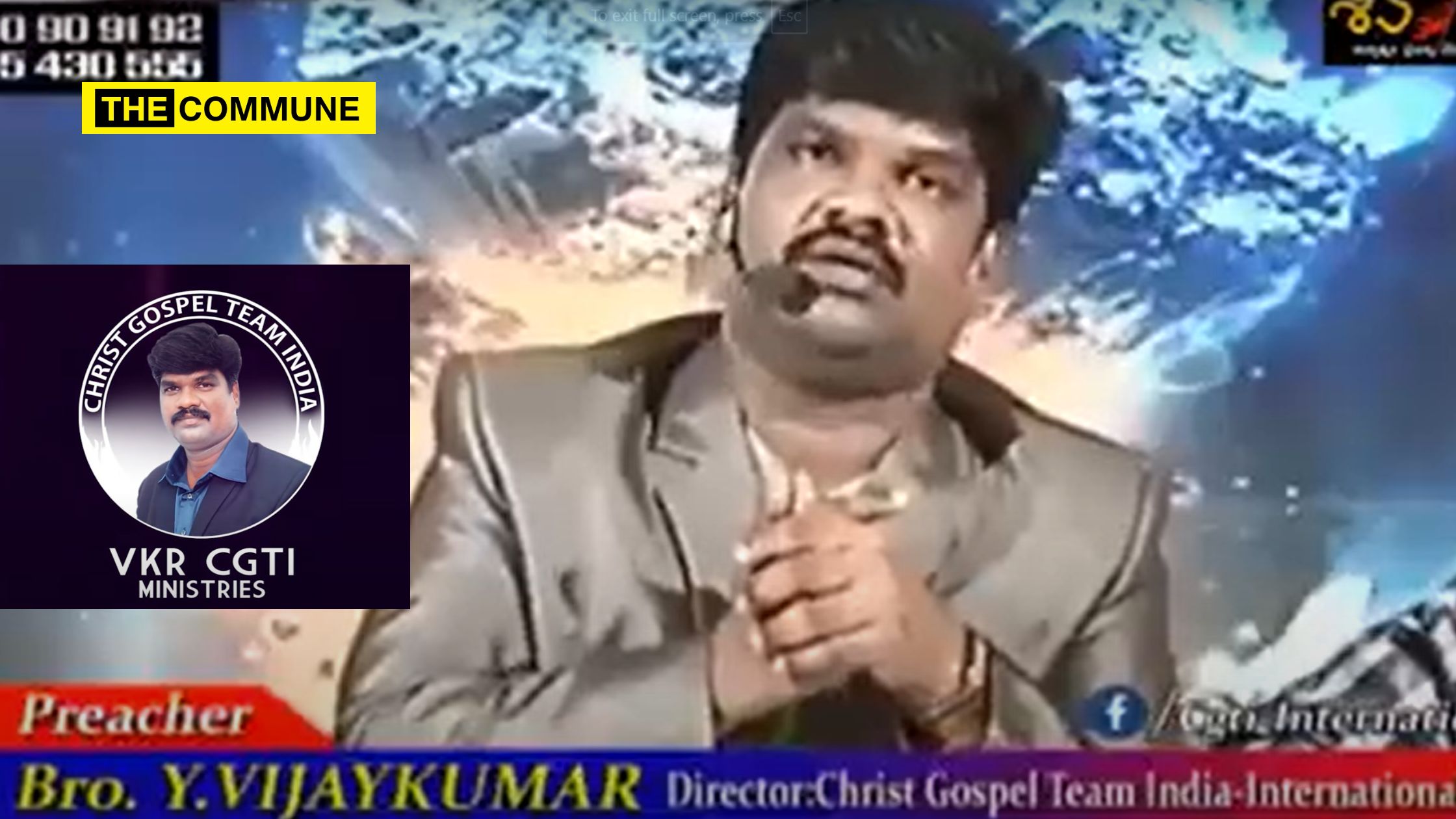
“You’ve Arrested People From Only One Religion, Arrest Others Also”: Ex Police Officer Reveals How Karunanidhi Played Appeasement Politics During 1998 Coimbatore Blast

The 1998 Coimbatore bomb blasts are still a very harrowing memory for the people of Coimbatore and Tamil Nadu. The recent release of three convicts involved in the blasts by the Tamil Nadu government, led by the Dravida Munnetra Kazhagam (DMK), just days before the anniversary of the tragic event on 14 February 2024, has reignited the pain, leaving a sense that the wounds are being reopened instead of allowed to heal.

A video of former police officer R Varadharajan who also hosts a YouTube channel named Netaji TV has surfaced in the backdrop of the Coimbatore blasts anniversary. In the video, Varadharajan narrates how former TN CM Karunanidhi refused to listen to the recommendations of the intelligence wing which ultimately led to the horrific blasts and what happened subsequently in the state in terms of minority appeasement.

Varadharajan starts by stating how the intelligence wing was aware of the possibility of the blasts much before 1998. He said, “When Jayalalithaa was the Chief Minister of Tamil Nadu (between 1991 and 1996). The police department handed over a report to Jayalalithaa. The report indicated that there was a risk of a bomb blast in Tamil Nadu. And that this blast can occur in Coimbatore at any point in time. Jayalalithaa immediately called the police department and asked how this was possible. So the intelligence department handed over the evidence to the then CM. She asked them to tell what could be done to prevent this. The intelligence department informed her that gelatin sticks that were used in the bomb preparation were being smuggled into TN from Kerala by terrorists. So a check post must be built between the two states to check the entry of these gelatin sticks. Only if that is done can we prevent the blast. They also advised that check posts were also necessary inside Coimbatore. Additionally, they asked her to arrest a few people (5-6) under the Goondas Act because if they were free, the chances of the blasts were higher.”

He further added, “Upon hearing the input from the intelligence department, Jayalalithaa ordered the DGP to action all the requests. A few people were arrested under the Goondas Act. A check post was erected between Kerala and TN so also inside the Coimbatore town to check for gelatin sticks smuggling.”

Here’s what happened after Jayalalithaa lost the 1996 Assembly elections and Karunanidhi came to power. Varadharajan said, “As soon as he (Karunanidhi) took the reins, he instructed for the release of those who were arrested under the Goondas Act. He also asked for the removal of all checkposts. The intelligence department warned him of the fact that the gelatin sticks were being smuggled into TN through the border, the blasts could occur, and that the check posts needed to remain. But he (Karunanidhi) looked at it as an election ploy and asked for the removal of the check posts.”

He added, “An IG-Intelligence wrote a note to Karunanidhi saying it was a dangerous thing that he had done and that there would surely be blasts in Coimbatore. Karunanidhi rejected it saying it was not necessary. Then the blasts occurred in 1998. What he did after the blasts was, he transferred the officer who warned him of the consequences of his actions (of removing check posts, releasing prisoners jailed under Goondas, etc).”

“When the officer questioned why he was being transferred despite giving him a clear warning of the consequences, Karunanidhi asked him to stay away for a while to manage the situation,” he further stated.

Varadharajan states, “Terrorists belong to a certain religion. Criminals do not have caste, creed, or religion. Based on the recommendation of the intelligence wing, the police department arrested 20 people in Coimbatore. Many do not know what happened. Overruling the intelligence department, Karunanidhi said, you have arrested 20 people belonging to the same religion. Arrest 20 people from another religion. So the intelligence department said that they could only arrest the offenders, we cannot arrest innocent people for your politics and to gain a name in your political circles, and that they could not accept that. Karunanidhi insisted they do it but the police department refused to accept it.”

He added, “The blasts occurred because he (Karunanidhi) refused to accept the recommendations of the intelligence wing. Police department again arrested those who were arrested (under Goondas) and then released.”

Subscribe to our channels on TelegramWhatsApp, and Instagram and get the best stories of the day delivered to you personally. 
TN BJP Leader SG Suryah Proposes Bus Rapid Transport System To Alleviate OMR’s Traffic Woes

The Old Mahabalipuram Road (OMR) in Chennai, known for its bustling nature with educational institutions, IT parks, and residential complexes, faces severe traffic congestion. With over 1.6 lakh vehicles and 3 lakh people commuting daily between Madhya Kailash and Tiruporur, the 20-km stretch encounters significant delays, especially during peak hours.

With many entertainment zones like malls, theatres, parks and other recreational activities coming along this region, it has made things worse. The recent congestion that happened during the AR Rahman’s Marakkuma Nenjam concert exposed how inadequate and encroached the road has become.

Frustrated residents report spending up to two hours traveling from Madhya Kailash to Siruseri.

Numerous calls for solutions have been made, emphasizing the lack of grid-road connectivity and delays in proposed flyovers and an elevated road.

Speaking on the problem, BJP leader SG Suryah said that implementing the Bus Rapid Transport System (BRTS) is the way to go to streamline vehicular traffic in the route.

“This system is already in there in cities like Surat, Ahemdabad, Delhi, Pune, etc. Even a smaller city like Amritsar has this system. I wonder what prevents those in power today to implement BRTS in a huge metropolitan city like Chennai which is much needed.”, Suryah said.

Suryah has also released a video of how the proposed project would look like and its impact for people residing in South Chennai.

The dedicated bus corridor would run from Saidapet to Sholinganallur, covering a 22-km stretch with stops at important points like – Madhya Kailash, Thiruvanmiyur, Perungudi, Thoraipakkam.

The implementation of BRTS, according to estimates, is expected to significantly reduce travel time from 1.5 hours to just 30 minutes and decrease private vehicle usage by 43%. This reduction in traffic congestion will have broader environmental benefits by lowering emissions.

Suryah emphasizes the impact on residents during the sweltering summer months, noting that the air-conditioned buses with well-ventilated stops will provide a comfortable travel experience

The BJP leader also said “It’s not just about congestion. Chennai gets extremely hot in summer and people get baked under the sun in sweltering heat. We hear about so many people suffering sun stroke. An ordinary middle class working person travels in that heat to go to their work place to earn a decent living. I can’t even fathom the pressure they through in summers. Since these buses will be airconditioned and the stops will have good ventilation, people will feel comfortable to travel.”

“I think the people of this city deserve better.”, Suryah said.

Subscribe to our channels on TelegramWhatsApp, and Instagram and get the best stories of the day delivered to you personally. 
Hindu Munnani Along With Villagers Prevent Proselytization By Christian Missionaries Near A Temple In Kanchipuram District

Christian missionaries belonging to the Apostolic Christitian Church who were indulging in proselytization near a temple at a village in Kanchipuram were driven away by residents and members of the Hindu Munnani.

Over 50 individuals associated with the Apostolic Christian Church in the Purisai region of Kanchipuram District were observed going from house to house, distributing pamphlets, and actively involved in conversion activities. Members of the Hindu Munani, along with local residents, collectively thwarted the group of individuals who were attempting to convert the village.

In a video shared on social media by Hindu Munnani, the resident capturing the footage exclaimed loudly. “Sir, sir please do not do this in front of our temple. Do not do this in front of our temple. Do not do this in front of our temple! This is a temple! Doesn’t this look like a temple to you? Should we come to your church and Ayyo Amma Andavare!?”

One of the missionary man can be heard saying “Call Emmanuel” to which the resident replies “call him

Without hesitation, the missionary man swiftly pulled out his phone to capture the incident and chuckled “How many people like you have we seen before this? to which the villagers reply “Yes this is your duty”

The missionary man further says “go and correct murderer and robbers”

An angry resident goes on to shout saying “You correct them. Who has asked you to come here? What you are doing here is wrong!”

This occurrence is not unfamiliar in Tamil Nadu. In the past, there have been numerous incidents similar to this one, where Hindu Munnani along with local residents took it upon themselves to expel missionaries involved in conversion activities.

In October 2023, Saravanan Joseph, the head of the Christian Munnani, sparked a controversy by proposing a change in the name of Chennimalai, a revered Hindu site dedicated to Lord Murugan, to ‘Yesumalai’. A massive protest by Hindu Munnani, BJP and other Hindu outfits led to his arrest.

In March 2022,  there were allegations that Christian missionaries were involved in forcible conversion by setting up a prayer hall in front of a private school in Velampatti of Krishnagiri district, which was later resisted by locals and Hindu Munnani.

A Christian woman was accused of proselytization and converting people, in the Gudalur area of Theni which was thwarted by Hindu Munnani members.

An attempt to open a Christian prayer hall, ‘Grace Assembly Hall’ in front of Sakthi Kaliyamman temple in Seelanaickenpatti, Salem, was successfully stopped by the Hindu Munnani in December 2021.

Hindu Munnani plunged into action when construction of an illegal Christian prayer hall near the Sugreeswarar temple in Tirupur district came to light.

In October 2021, members belonging to the Hindu Munnani successfully stopped proselytization attempts by Christian missionaries at a village in Tiruvallur district, Tamil Nadu.

In the district of Kanchipuram in May 2023, the Hindu Munnani successfully intervened in a reported Love Jihad incident near Uthiramerur. The individual at the center of the incident was Selvi, an 18-year-old who had recently completed her schooling. She had been enticed by a Muslim man named Imran and had been pressuring her to convert and marry him. Under the name Asma Fathima, her Muslim marriage (nikkah) was scheduled for June 1, 2023. The victim herself provided a written statement, revealing that Imran had used persuasive tactics and coercion to compel her into the marriage and disclosed that her name was changed to Asma Fathima without her family’s consent.

Subscribe to our channels on TelegramWhatsApp, and Instagram and get the best stories of the day delivered to you personally. 
Kerala: Communists Prevent Ganapati Homam At School Premises; School Manager Arrested

Image Credits: TrueVision News

A Ganapathi puja (homam) was taking place at night at the Nedumannur LP school in Kayakkody district in Kozhikode, Kerala. The puja took place at 8 pm on 13 February 2024. Villagers reached the premises after witnessing several cars outside the school. That was when they realised it was a Ganapathi homam that was taking place in the school. Around this time, members of the SFI and DYFI also reached the premises. It turned out to be a protest in a big way.

When the cadre reached, the homam/puja was underway. The cadre alleged that under the supervision of the BJP, the school manager and his son were indulging in these pujas. Subsequently, Thottilpalam police reached the premises and took the school manager into custody.

The villagers also gathered in large numbers and stopped the puja. DYFI cadre said that since these pujas are not allowed on school premises, they will intensify their protest against the manager and the ones supervising the conduct of the pujas.

It is noteworthy that the Ganapathi Pooja was conducted to mark the inauguration and Bhumi puja of the new school building. As per Hindu customs, commencing any sacred endeavour starts with the observance of Ganesha Pooja. Ganapati pooja serves as the fundamental ritual conducted to remove hindrances, mitigate difficulties, and promote prosperity.

Another important point to note is that it is crucial to acknowledge that the management of the school aligns with individuals supportive of the Congress, and the BJP had no involvement in coordinating this ceremony.

Subscribe to our channels on TelegramWhatsApp, and Instagram and get the best stories of the day delivered to you personally. 
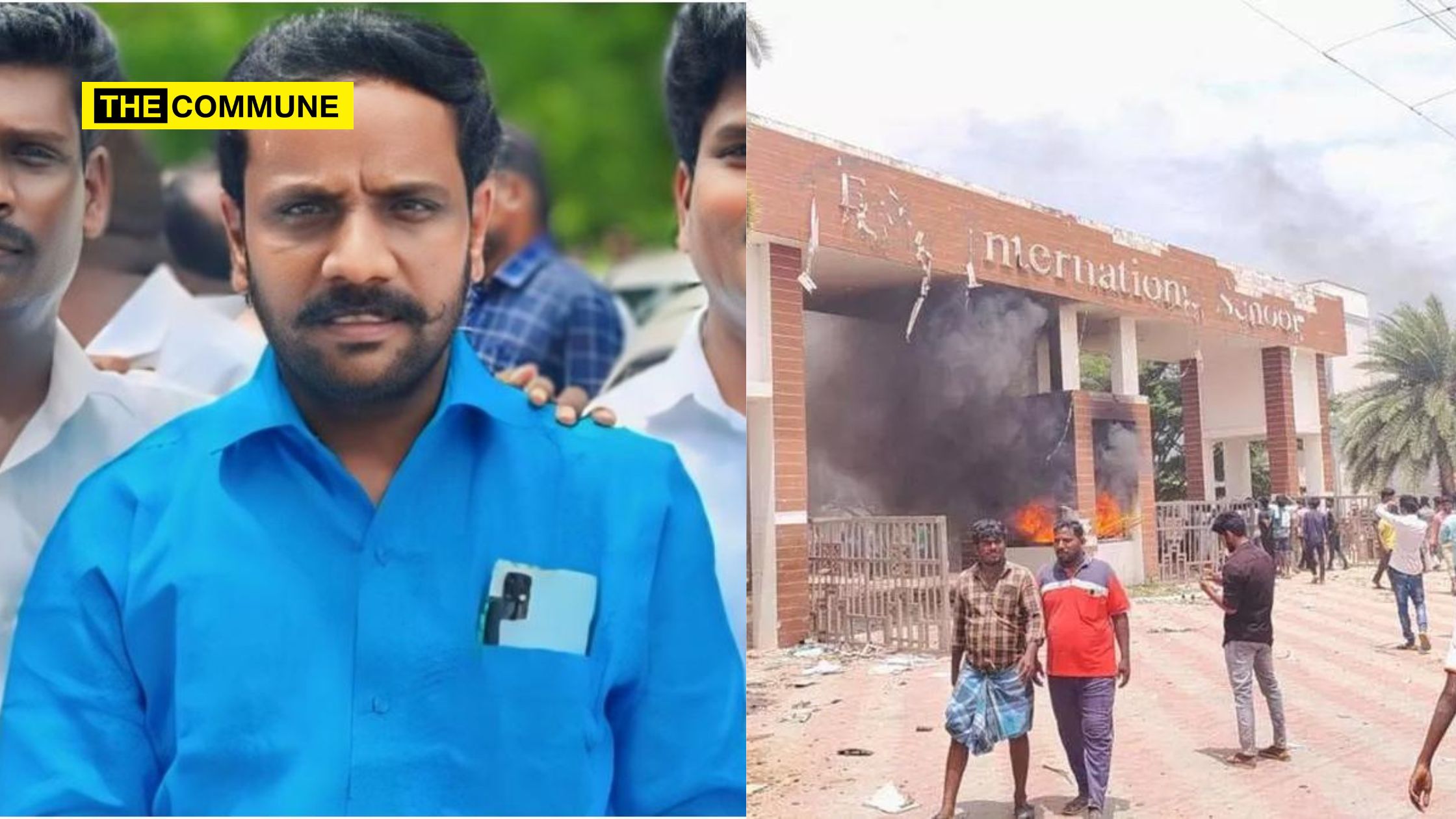
After Jan Ki Baat’s Ground Report On Raebareli, Sonia Gandhi Files Rajya Sabha Nomination From Rajasthan

The Commune conversation on December 2023  with Pradeep Bhandari, the founder of Jan Ki Baat that specializes in election surveys and predictions, the discussion revolved around the upcoming elections and future predictions. When we asked Pradeep Gandhi if Sonia Gandhi would win in Raebareli, Pradeep confidently said, “I wouldn’t be surprised if the Congress loses Raebareli this time as well.”

Pradeep’s foresight proved accurate, with Sonia Gandhi, Chairperson of the Congress Parliamentary Party, opting for a Rajya Sabha seat on 14 February 2024 just a month before the expected Lok Sabha election schedule announcement. This surprising move comes as a departure from seeking re-election from Raebareli, a constituency she has held since 2004, leading to speculation and astonishment within the party.

Pradeep Bhandari also carried detailed reports from ground zero (Raebareili) where it was revealed that Sonia Gandhi had visited her constituency only once. The state of the roads in the constituency were telling.

After the prediction becoming viral, Sonia Gandhi decided to compete from Rajasthan that too on a Rajya Sabha ticket. It is said that Rajasthan is a state where the Congress stands a strong chance of securing one of the three available seats in the elections scheduled for 27 February 2024.

Despite suggestions from the Karnataka and Telangana units of the party for Sonia’s candidacy in the Rajya Sabha polls in their respective states, the party opted against it due to the presence of Congress president Mallikarjun Kharge in Karnataka and Rahul Gandhi serving as an MP from Kerala. Within the Congress, there is a belief that Sonia’s decision to contest from Rajasthan is intended to affirm the Gandhi family’s connection to the Hindi heartland, particularly in response to the criticism faced by Rahul for contesting from Wayanad and Amethi in the 2019 Lok Sabha elections.

In the 2019 elections, the Congress faced a substantial setback in the Hindi heartland. Rahul Gandhi, the party’s prominent leader, suffered a defeat in Amethi, losing to Smriti Irani. The party encountered a lack of success in securing any seats in Rajasthan, Haryana, Uttarakhand, Himachal Pradesh, and Delhi. It managed to win only one seat each in Madhya Pradesh, Uttar Pradesh, Bihar, and Jharkhand, and secured two seats in Chhattisgarh.  Indian Express reported that Rahul might choose to contest once again from Amethi and Wayanad, while Priyanka Gandhi could potentially take her mother’s place in Raebareli.

Sonia Gandhi’s Electoral Journey

Sonia Gandhi, who initially entered the political arena as an MP from Amethi in 1999 before transitioning to represent Raebareli in 2004, is poised to make history as the second member of the Nehru-Gandhi family to enter the Rajya Sabha, emulating the path of her mother-in-law, the late Prime Minister Indira Gandhi.

Traditionally, the Gandhi family has sought political backing from southern states during challenging periods, yet the Rajya Sabha route has been infrequently chosen. Indira Gandhi herself embarked on this route early in her political career, successfully contesting and winning from Karnataka in 1978. Later, in 1980, she strategically opted for Medak in undivided Andhra Pradesh. Similarly, in 1999, Sonia Gandhi chose Bellary in Karnataka when she made her entry into politics.

(With inputs From IndianExpress)

Subscribe to our channels on TelegramWhatsApp, and Instagram and get the best stories of the day delivered to you personally. 
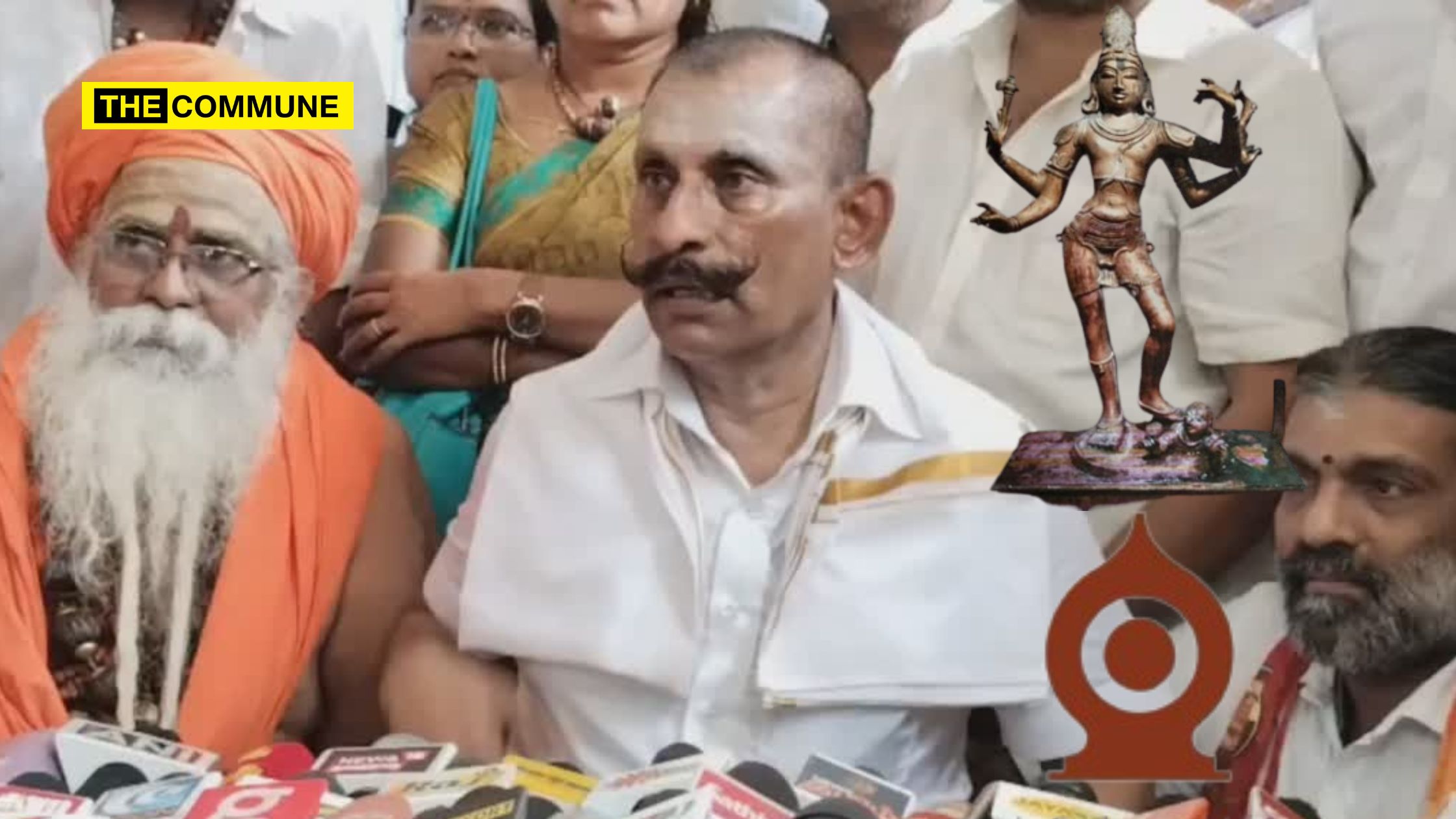
I.N.D.I Ally VCK MP Says RSS Killed Gandhi, BJP’s SG Suryah Condemns

During a recent interview on the Hindu Tamil Thisai news channel with host Nivetha Thanimozhi, Viduthalai Chiruthaigal Katchi leader and Lok Sabha MP Thirumavalavan repeated the baseless claim that RSS was responsible for the assassination of Gandhi.

The Hindu Tamil Thisai YouTube channel posted the interview on February 10, 2024, where Nivetha questioned various aspects of Thirumavalavan’s strategy and his party’s stance. Thirumavalavan elaborated on his and his party’s views. However, when the host inquired about the potential scenario if the BJP were to win and return to power, Thirumavalavan expressed skepticism about the BJP’s chances of returning to power. He voiced concerns about the party’s possible impact on India’s secular identity, emphasizing that Hinduism’s emphasis on birth-based hierarchy does not promote brotherhood. Thirumavalavan asserted that leaders like Nehru, Ambedkar, and Gandhi collectively decided on India being a secular country. He alleged that the RSS, initially formed for Brahmin welfare, assassinated Gandhi due to his secular stance. Thirumavalavan warned against the BJP’s agenda and predicted potential erosion of states, elections, and religious diversity if the party regains power.

When asked about his thoughts on how the situation will be if the BJP wins and comes back to power. Thirumavalavan replied, “We are in such a situation where we have to face unimaginable harm. Modi and the RSS that runs Modi, are planning to the extent that it is impossible to imagine what they will do and what decisions they will take. Because their ultimate aim is to name it Hindu Rashtra and throw away the Constitution. Their main question is why there should not be a religious government here. Their logic is that when Pakistan is an Islamic nation, Sri Lanka is a Buddhist nation, Bangladesh is an Islamic nation, China is a Buddhist nation, why should India not be a Hindu nation?”

“But within India it can be declared that as a country depending on Hinduism and it can declare as Hindurashtra, and that too Hinduism does not approach the people with brotherhood, birth-based system is its lifeblood. That is why during Pandit Jawaharlal Nehru’s period all the leaders like Ambedkar decided to be secular after a long and detailed discussion and Gandhi also agreed with it. Gandhi was also a great devotee of Rama. He is the one said that he wanted Rama Rajyam and was the one who accepted Sanatana Dharma, accepted varna system, accepted caste, but refused untouchability,” he said

“Gandhi was akin to an RSS member – had intense feelings and faith like them but one important thing he believed was secularism. That’s why he was killed. The RSS is a Brahmin movement that killed him because he held it high. Today it is potrayed and projected as a movement for Hindus. It is a Brahmin association named as RSS like Mudhaliar association, Mukkulathor association, Vanniyar association and there was no Brahmin association on a pan-India level, this is RSS. Why should they kill Gandhi, he was a devotee of Rama. He is the one who said “Ram Ram” at every breath, even when Nathuram Godse was shot with a gun, he fall down saying ‘Hare Ram’, why should they kill him? He was a non-violent person, he did not want to dissect the country even he was not armed, only thing he does not want a religious government,” he further said.

SG Suryah, the State Secretary of Bharatiya Janata Party Tamil Nadu, strongly refuted the misinformation. Suryah provided a detailed account of the court verdict from the trial of Godse, specifically citing the Atma Charan judgment.

Suryah posted a video message on his official X handle replied, “I read your interview with The Hindu. You have once again started the legendary lie that RSS members killed Gandhi. In 2016, Rahul Gandhi, who is your leader now, said that only RSS killed Gandhi. A case was filed on behalf of RSS in the Supreme Court and your leader Rahul Gandhi apologized in the Supreme Court and said, “I didn’t say RSS organization killed Gandhi” he flipped his stance as always. Now that you are repeating the same lie over and over again, it is our duty once again to tell people the truth.”

“We are in a bad situation where we have to come and reason in the Tamil community which says you are an intellectual but you do not even have the basic knowledge about reservation or GST. Hence we are trying to bring you the truth,” he said.

“A single judge trial bench was constituted under Nehru to try the Gandhi assassination case headed by a retired IAS officer named Atma Charan. He was also from Congress background and that is why Nehru appointed him as a judge,” he added.

“The history of this case is that on 4 May 1948, this single judge bench was constituted by Nehru, and on 27 May 1948, Gandhi’s assassination trial began, and witnesses were heard from 24 June to 6 November 1948. Arguments weere heard from 1 December to 30 December 1948. On 10 January 1949, the Congress-backed Atma Charan ruled that Veer Savarkar and the RSS had nothing to do with Gandhi’s assassination. Verdict was not just heard and then written, 149 testimonies were examined, 326 pages of statements are taken from the witnesses. Testimony and statements are taken from all the 8 accused persons. The judgement is a 110-page verdict in total,” he added.

“Now in the recent parliament John Brittas, a Communist MP who is also in your coalition says ‘Sardar Patel banned RSS on 4 February 1948, such a bad organisation’. The same John Brittas or Thirumavalavan would never quote the same Sardar Patel saying that RSS organization has nothing to do with Gandhi’s assassination,” he further said.

“That is, they say that you are the greatest intellectual being in this Tamil society, such intellectual beings what should do? We must debate with truth, we must reason with truth. In the session of the single judge, they said that the RSS was innocent and Savarkar was innocent. At that time, Nehru was the Prime Minister Congress ruled in all states, the Congress party was omnipotent, Nehru was in power and he also appealed the then Punjab Court which was the jurisdictional court. In the Punjab High Court, Nehru appealed Gandhi assassination case and tried to show the RSS organization and Savarkar as convicts. But there too, they said that the verdict given by Atma Charan was final,” he further added.

“If you really had the power at that time, shouldn’t you have taken this case to the Supreme Court? It was not taken because there was no evidence in the case to incriminate Veer Savarkar and the RSS organization. Now we can file a case against you, like Rahul Gandhi who went to the Supreme Court and asked apology, but we didn’t see you worthy of it. So I think this answer is enough for you. Please learn to tell the truth by keeping those who are knowledgable and knows their stuff,” he added.

Subscribe to our channels on TelegramWhatsApp, and Instagram and get the best stories of the day delivered to you personally. 
1998 Coimbatore Blasts: Unravelling The Congress-DMK Nexus In Supporting Terrorism

The hashtag #RahulLovesTerrorists surfaced on Twitter when Rahul Gandhi addressed Masood Azhar as “Masood Azhar ji.” Despite this, the Congress party’s substantive pro-terrorist policies overshadow a mere honorific. Sam Pitroda’s minimization of the Pulwama attack and disapproval of airstrikes seem comparatively insignificant in the face of other perilous actions and statements by the Congress Party, its leaders, and allies like the DMK.

Following the destructive Coimbatore bomb blasts on 14 February 1998, claiming 58 lives and endangering L K Advani, Congress President Sitaram Kesri shockingly accused the RSS. Despite legal action from the RSS, Kesri persisted in the allegation, revealing a lack of sensitivity.

Moreover, the Congress party openly endorsed Kesri’s claim, with the Tamil Nadu unit president suggesting a deliberate delay in Advani’s meetings. Despite the perpetrators’ links to Al-Umma and TNMMK, the Congress formed alliances with TNMMK in 2004 and 2006, overlooking its role in the tragic incident. Subsequently, TNMMK established the Manithaneya Makkal Katchi (MMK) in February 2009.

The 1998 Coimbatore blasts were a result of the pro-terrorist policies of the DMK Government. Preceding the blasts, clashes occurred in November 1997. Initially, a police constable named Selvaraj was killed by Muslim fanatics, and subsequent riots led to the death of 18 Muslims. Even the Communist magazine Frontline reported on these incidents.

 “The killing of Selvaraj was one singular incident that led to the polarisation of Coimbatore on communal lines. Al Umma cadres stabbed Selvaraj on the night of November 29 when he was regulating traffic at Kottaimedu, a Muslim-majority area…Earlier that day, Sub-Inspector M. Chandrasekaran of Bazaar police station near Kottaimedu detained Jehangir, an Al Umma office-bearer, and two other Muslim youth for riding on a motorcycle without a driving licence. Mohammed Ansari, who was then Al Umma State secretary, went to the police station and demanded their release. A row broke out between the S.I. and Ansari, with the latter threatening to “break Coimbatore in two”.

About an hour later, four Muslim youth stabbed 31-year-old Selvaraj, who was totally unconnected with the earlier incident. Al Umma men wanted to target a policeman because its members had been detained at the police station and Ansari was “humiliated” at the police station. Ironically, Selvaraj had stepped in to relieve another traffic constable.

The death of Selvaraj infuriated the police force. They struck work the following day and demanded the arrest of the assailants. They alleged that the Dravida Munnetra Kazhagam (DMK) government did not allow them to take action against Al Umma. They were also infuriated by the fact that four policemen and prison officers had been stabbed or murdered in Coimbatore and Madurai by Muslim extremists in the 18 months preceding the murder of Selvaraj. The policemen’s families also staged dharnas, demanding security for the law-enforcers. The situation was so grave that the government called out the Army and the Rapid Action Force to bring back normalcy to the city (Frontline, December 26, 1997).”

Hence, the DMK meddled in the police operations, restraining them from taking stringent action against Al-Umma, which was not banned by the DMK Government until the Coimbatore blasts on February 14, 1998. The DMK Government imposed a ban on Al-Umma only after the blasts. Following the Coimbatore clashes of November 1997 and the subsequent blasts, the Gokulakrishnan Commission was appointed to investigate. In its June 2000 report, even Frontline magazine acknowledged the findings.

  “The Gokulakrishnan Commission of Inquiry blames security lapses for the explosions.

The report comes down heavily on the police for their failure to search the Babulal Complex building on Tirumal Street before the blasts even though they had information about the clandestine movement and storing of bombs by “terrorist groups” at an abandoned building near Saravana Metal Mart. If they had searched and combed the nearby area, they would have unearthed the plot by Al-Umma men, arrested the terrorists and seized the bombs prior to February 14. This would have aborted the conspiracy, the report says.

Swift action by the police in the early hours of February 15 led to the unearthing of the plot to create terror in Coimbatore, the arrests of Al-Umma cadres and the seizure of detonators and lethal weapons. “The major part played in this storming operation” by Sub-Inspector M. Chandrasekaran “at the risk of his life” not only saved the lives of police personnel and the public but became “an eye-opener to the Special Investigation Team to nab the terrorists and unearth the concealed bombs”, the report says. “

The Police were eager to take action but were restrained by the DMK Government before the blasts. Even Frontline held the DMK Government responsible for not averting the Coimbatore blasts, stating, “The crackdown initiated by the Tamil Nadu Government following the blasts was doubtless effective, but it could not absolve it of the criticism that it had failed to prevent the terrorist attack by acting on intelligence reports and following up on earlier seizures of explosives. It seems fair to state that the DMK Government failed to differentiate between the large mass of innocent Muslims and the small number of fundamentalist Muslim leaders who have exploited and preyed on the feelings of insecurity among innocent Muslims. It should have shown a greater sense of urgency in isolating the hardcore of Muslim fundamentalists and taking action against them.”

India Today, in an article by L. R. Jagadheesan and K. M. Thomas, reported shortly after the Coimbatore blasts:

 “The Opposition has accused the Government of failure to anticipate the violence and the blasts and take preventive steps…Stung by criticism, the Government took some decisive, though belated, action against those suspected to be behind the blasts. It ordered a ban on two Muslim fundamentalist organisations, Al Umma and the Jehad Committee. Some of their leaders, including Al Umma President S.A. Basha were detained. The chief minister’s (Karunanidhi’s) stern warnings to them were followed by raids on several extremist hideouts on February 15. Eight people arrested in the raid were later identified as Al Umma activists. Post-blast violence too was swiftly contained with the deployment of the Army and paramilitary forces.

Intensified patrolling proved fruitful on February 16, when the police found 60 kg of explosives in a car in a residential area. It took two days to defuse the bombs…The extremists’ menace had been looming large for quite some time in the state, but political compulsions prevented the state Government from taking decisive action. Police sources in Coimbatore say the Government was well aware of the movement of Muslim fundamentalists, but fearing a minority community backlash during the polls, it delayed action against them.

The charges seem to have rattled the ruling combine in the state, and fearing electoral repercussions, it has roped in actor Rajnikanth for damage control. In repeated telecasts on the DMK-owned Sun TV, the celluloid superstar has blamed the BJP and Jayalalitha for fomenting trouble. He said the blasts were the handiwork of those interested in an AIADMK-BJP government at the Centre. Congress President Sitaram Kesri has squarely blamed the RSS for the blasts. Denying the charge, however, the RSS has filed a defamation suit against Kesri.”

The sequence of events leading to the Coimbatore blasts, including the delayed police action, recovery of a substantial amount of arms and explosives, and arrests of Islamic radicals, is detailed here. The timeline reveals that the DMK government could have taken preventive measures well before the blasts but allowed terrorist organizations like Al-Umma to operate due to its pro-Muslim policies.

While the DMK Government eventually banned Al-Umma and took action post-blasts, the Congress Party persisted in defending the terrorists and, remarkably, accused the RSS of orchestrating the blasts.

While most political leaders and parties expressed shock and revulsion over the blasts, the then President K.R. Narayanan and Prime Minister I.K. Gujral conveyed their dismay. DMK president and TN Chief Minister M. Karunanidhi attributed the blasts to a conspiracy by foreign forces to disrupt the electoral process. Union Home Minister Indrajit Gupta and CPI(M) general secretary Harkishan Singh Surjeet also suspected a foreign hand behind the blasts, with Gupta blaming the ISI for attempting to disrupt the election process in India. However, even in this case, the Congress descended to an unimaginably low level.

The DMK assumed power in Tamil Nadu in May 1996. Towards the end of 1996, G. Bhoopalan, a warder in the Coimbatore Central Prison, was killed by Muslim militants in a petrol bomb attack within the prison. During the AIADMK rule, the RSS office bomb blast in Chennai in August 1993, which claimed 14 lives, led to a crackdown on fundamentalist organizations, particularly Al-Umma. However, under DMK rule, 16 Al-Umma individuals detained under TADA for their alleged involvement in the August 1993 RSS office blast and possession of weapons were released on bail in January 1997, as the DMK Government prosecutor did not oppose their bail.

The lax policy persisted even after Tamil Nadu police commandos, acting on a tipoff, confiscated a substantial arsenal including gelatin sticks, detonators, iron pipes, PVC pipes, alarm clocks, cables, wires, soldering equipment, saws, and testers – all materials used in bomb-making. This seizure occurred on March 11, 1997, from a house in Kodungaiyur, a suburb of Chennai. Two fundamentalists affiliated with the Al-Umma group, Mohammed Khan alias Sirajuddin (26) and Shahul Hameed alias Aftar (22), were arrested. Mohammed Khan is the brother of S.A. Basha, one of the founders of Al-Umma.

A series of bomb explosions shook Tamil Nadu in November-December 1997, just two months before the Coimbatore blasts. On 6 December 1997, the anniversary of the Babri Masjid demolition, explosions targeted the Cheran Express, Pandyan Express, and Alleppey Express trains, claiming nine lives. The police attributed these explosions to the Islamic Defence Force of Kerala, a clandestine outfit.

On 10 January 1998, a blast occurred under the Anna flyover in Chennai, with the Islamic Defence Force claiming responsibility. Subsequently, a powerful blast occurred in a rice mill at Saliyamangalam, near Thanjavur, on 8 February. The police seized a significant cache of explosives and detonators from the mill. Investigation revealed the connection of Abdul Khader, the son of the mill owner Abdul Hameed, to Muslim fundamentalist organizations. Both were arrested, with Abdul Khader seriously injured in the blast. The police later seized hundreds of detonators from Vepery and Tambaram in Chennai, connected to two Muslims associated with militant organizations. This seizure included approximately 84 gelatin sticks, 50 kg of sulphur, 11.5 kg of ammonium nitrate, 100 detonators, two country pistols, and bottles containing nitric and sulphuric acid.

Despite the series of blasts and incidents, there was no crackdown, let alone a ban, on Al-Umma, not even after the significant blast on 8  February. The State Government’s failure to take decisive action despite indications and warnings of potential trouble represents a significant lapse in preventive measures.

The president of the banned fundamentalist outfit Al-Umma, SA Basha, openly threatened to kill the then Gujarat Chief Minister Narendra Modi if he visited Coimbatore in July 2003. This threat was made by Basha and eight others while speaking to journalists in the Coimbatore court premises after their conviction and life imprisonment in a case related to the murder of a Hindu Munnani leader. It is noteworthy that Al-Umma and its leader were allowed to operate openly by the DMK Government until the Coimbatore blasts on 14 February 1998.

Diehard anti-RSS magazines like Outlook and Frontline also acknowledged the role of the Tamil Nadu Muslim Munnetra Kazhagam (TNMMK) in these blasts. In March 1998, Frontline reported, “Within hours of the blasts, the Tamil Nadu Government banned Al-Umma and the Jihad Committee. Al-Umma founder-president S.A. Basha and 12 other members of the organization were arrested in Chennai; explosive materials and weapons were seized from his house in Triplicane, Chennai. Leaders of the Jihad Committee and the Tamil Nadu Muslim Munnetra Kazhagam (TMMK) were arrested in a State-wide crackdown. Among those arrested were Jihad Committee president R.M. Haniffa, general secretary Mohammed Haniffa, student wing secretary Akram Khan, TMMK president and college lecturer M.H. Jawahirulla, and treasurer G.M. Pakkar. Over the next few days, over 100 activists of the three organizations were arrested at Keezhakkarai, Devakottai, Dindigul, Nagapattinam, Thanjavur, Nagercoil, Melapalayam, and Udumalpet. About 1,000 others were detained as a precautionary measure…”

Even Outlook acknowledged TNMMK’s involvement in the Coimbatore blasts. It said:

 “As the crackdown following the February Coimbatore blasts continues, it is disturbingly clear that the ordinary Muslim is becoming increasingly alienated. Every day the police recover quintals after quintals of explosives hidden by the ‘fringe’ Islamic fundamentalist group, Al Umma—which, as it now turns out, is in fact a rather well connected terrorist outfit…

Initially the Muslim groups were splintered into as many as 10 major outfits. However, after the November riots in Coimbatore most of them started working in tandem. The most significant groups are: the Tamil Nadu Muslim Munnetra Kazhagam, All India Jihad Committee, Al Umma, Tamil Islamic Peravai, Sunnath Al Jammath Youth Front, SIMI (Students Islamic Movement of India), Students Organisation of Islam, Muslim Protection Force and the JAQH (Jamiathul Ahle Quaran Wal Hadis).

…According to arrested members of the Al Umma, the ISI had suggested the elimination of the Hindu Munnani leader, Rajagopal, in Madurai in 1994. And the RDX used to blast the RSS office (August 1993) and the Hindu Munnani office (1995) was supplied by the ISI.

…By December 15, they (Al Umma men) also managed to get the support of the People’s Democratic Party chairman Abdul Nasser Mahdani—a radical Islamic figure of Kerala—in mobilising additional explosives. According to police sources, explosives weighing nearly 1,000 kg were accumulated in four weeks.”

The DMK, Congress, and Left parties supported Abdul Mahdani and the TNMMK, despite evidence of their involvement in the Coimbatore blasts. The Congress and DMK continued their association with Mahdani and TNMMK, raising concerns about their stance on terrorism.

Upon returning to power in Tamil Nadu in May 2006 after a five-year rule by AIADMK from 2001-06, the DMK faced criticism for reportedly providing favorable treatment to the Coimbatore terror accused. The Indian Express, on 24 July 2006, reported in an article titled: “DMK turns the jail into a spa for Coimbatore terror accused.”

“Introduction: Ayurvedic massages for Abdul Nasser Mahdani paid for by taxpayer, wife facing arrest warrant has free access, no checks

One man has reason to laugh at all the tough talk on the need to crack down on terror: Abdul Nasser Mahdani, key accused in the 1998 Coimbatore serial blasts that targeted BJP leader L K Advani and killed 58 people and left several more injured.

For, ever since he (Karunanidhi) was sworn in as Chief Minister, the atmosphere has been upbeat in the high-security prison here, housing Mahdani and 166 Al Umma prisoners, mostly arrested for the Coimbatore blasts. Thanks to Karunanidhi, a team of 10 masseurs and four senior Ayurvedic doctors began their “high quality treatment” on Mahdani, who has been housed in the prison’s hospital wing since 2001…

While the prison manual says that a prisoner pays for the cost of any private medical treatment he avails, the Tamil Nadu government is using taxpayers’ money to pick up the bill for Mahdani’s “dhara” and “pizhichil” (the ayurvedic massages)…

But what has infuriated investigating officers in the blast case is the move by the Chief Minister’s Office to quietly lift the ban under Section 268 CrPC, restricting Mahdani’s movements within the prison.

“Soon after the DMK came to power, there were attempts to move him out of the prison and get him treatment outside, preferably in Kerala. We strongly resisted such a move. With a friendly government in Kerala, we can never hope of seeing him again, particularly when the trial (in a special court) is likely to end in three months’ time and a verdict is expected soon,” pointed out a senior police officer on the condition that he be not named…In fact, in the pre-blast days, the DMK, then ruling Tamil Nadu (1996-2001), was accused of flirting with Muslim militancy and turning a blind eye to the activities of Jehadi groups like the Al Umma.”

While the DMK initially took action against Islamic radicals following the Coimbatore blasts and temporarily deviated from an openly pro-terrorist policy during its alliance with the BJP at the Centre from 1999 to 2003, it reverted to its original stance from 2004 onwards. In the 2004 Lok Sabha polls and the 2006 Assembly polls in Tamil Nadu, the DMK once again secured the support of TNMMK, ultimately winning the latter.

Barely two weeks after being sworn in for its term starting May 2006, Tamil Nadu’s DMK government ordered the dropping of cases against 12 Muslim fundamentalists, all followers of Kichaan Buhari, an Al-Umma sympathizer and a key accused in the Coimbatore serial blasts. The Indian Express reported on 8 August 2006.

“…Senior Policemen in Thirunelveli were shocked by what they termed the DMK Government’s ‘blatant sympathy’ for the Muslim fundamentalists. Obviously, the accused committed the offence with the grave intention to create law and order problems and disrupt peace in Tirunelveli district, known to be communally sensitive. Also, all of them have links with Muslim fundamentalist outfits. The government should have allowed the law to take its natural course. For a new government to resort to such a move is rather demoralising for the police force,” said a senior police officer in Tirunelveli.

Police officials say that in one of the cases, Crime No. 15 of 2001 registered at the Melapalayam police station, while two of the five accused were juveniles and let off given their age, the other three, including M S Syed Mohammed Buhari, Sheik Hyed and Jafer Ali had “admitted to the offence”. “Despite this, the government ordered the withdrawal of cases against them,” an officer said… There are also allegations that the ruling DMK was bending backwards to appease its electoral ally, the Tamil Nadu Muslim Munnetra Kazhagam (TMMK). A section of the police believe that the dropping of the six cases by the DMK government could be part of a pre-poll deal with the TMMK.”

The TNMMK wasn’t just an alliance partner of the DMK; it was also affiliated with the Congress. The Congress, as part of the Democratic Progressive Alliance (DPA) alliance in Tamil Nadu with the DMK, had the TNMMK as a partner as well. While forming alliances with mainstream parties with a few members linked to past terrorism involvement might be one thing, aligning with a radical pro-terrorist party and yielding to pressure by releasing terrorists and withdrawing cases against them is another.

At that time, the DMK had 97 MLAs out of 234 in the Tamil Nadu Assembly, with the Congress holding 33. The DMK-Congress alliance had a comfortable majority without needing the support of any other allies, and the TNMMK did not have a single MLA, although it supported the DMK-led Congress-affiliated DPA.

This misplaced sympathy for the sake of vote banks was evident in the DMK government’s refusal to appeal against the acquittal of Abdul Nazar Mahdani in the 1998 Coimbatore blasts case.

In 2006, the Congress Legislature Party in the Kerala Assembly passed a resolution advocating the release of Abdul Mahdani, who had been in a Coimbatore jail since 1999. This resolution gained unanimous support from the Left, as the Kerala Legislative Assembly passed it without a single MLA opposing it on 16 March 2006. It’s worth noting that Mahdani later faced accusations in the 2008 Bangalore bomb blasts, which occurred during an IPL game. Despite a resolution demanding his release in March 2006 (before his acquittal), Abdul Mahdani was eventually released on 1 August 2007 after being acquitted in the Coimbatore blasts case. Subsequently, he became involved in another attack in 2008.

The Indian Express reported on 25 July 2006: “While the DMK government in Tamil Nadu is facilitating Ayurvedic massages for Abdul Nasser Mahdani, an accused in the 1998 Coimbatore blast, the Left and the Congress in Kerala have been figuratively prostrating at his feet.”

Subsequently, the DMK-Congress Government released Coimbatore blast convicts prematurely in 2009, drawing criticism from the BJP.

In September 2005, the TNMMK openly demanded the lifting of the ban on SIMI, even though SIMI was proven to be involved in bomb blasts across the country at that time. Remarkably, the TNMMK was an ally of the Congress in Tamil Nadu. According to a Times of India report from May 2006:

“Terming the AIADMK as a “proxy” to the BJP, Tamil Nadu Muslim Munnetra Kazhagam (TMMK) on Monday said it has decided to extend its support to the DMK-led Democratic Progressive Alliance (DPA) in the May 8, 2006 assembly polls. TMMK activists would work in all the 234 constituencies in the state to ensure the victory of the DPA, TMMK President M H Jawahirullah and its General Secretary S Haider Ali, told reporters in Chennai.”

This party announced a boycott of the 1998 Lok Sabha polls in Tamil Nadu on 4 Feb 1998, just a few days before the Coimbatore blasts, citing the ‘communal riots of 1997 in Coimbatore.’ In the 1999 Lok Sabha, 2001 Assembly, and 2004 Lok Sabha polls, TNMMK was aligned with the Congress alliance. In 2001, AIADMK was also with the Congress. After the deadly bomb blasts in Mumbai on 11 July 2006, which claimed 187 lives, then BJP President Rajnath Singh criticized the Congress and DMK for their associations with the TNMMK.

Even today, after numerous years, the Congress has not offered an apology for its unfounded and audacious accusation that the RSS was responsible for the 1998 Coimbatore blasts. Neither has it condemned the TNMMK nor explained its alliance with the party or the specific connection between them.

It is essential to explicitly ask Rahul Gandhi and the Congress to apologize for their false charges against the RSS or, at the very least, provide a clear stance on the perpetrators of the 1998 Coimbatore blasts. More than using respectful terms like ‘Ji’ for terrorists, the Congress and its allies, such as the DMK, should be exposed comprehensively for such actions.

(with inputs from OpIndia)

Subscribe to our channels on TelegramWhatsApp, and Instagram and get the best stories of the day delivered to you personally. 
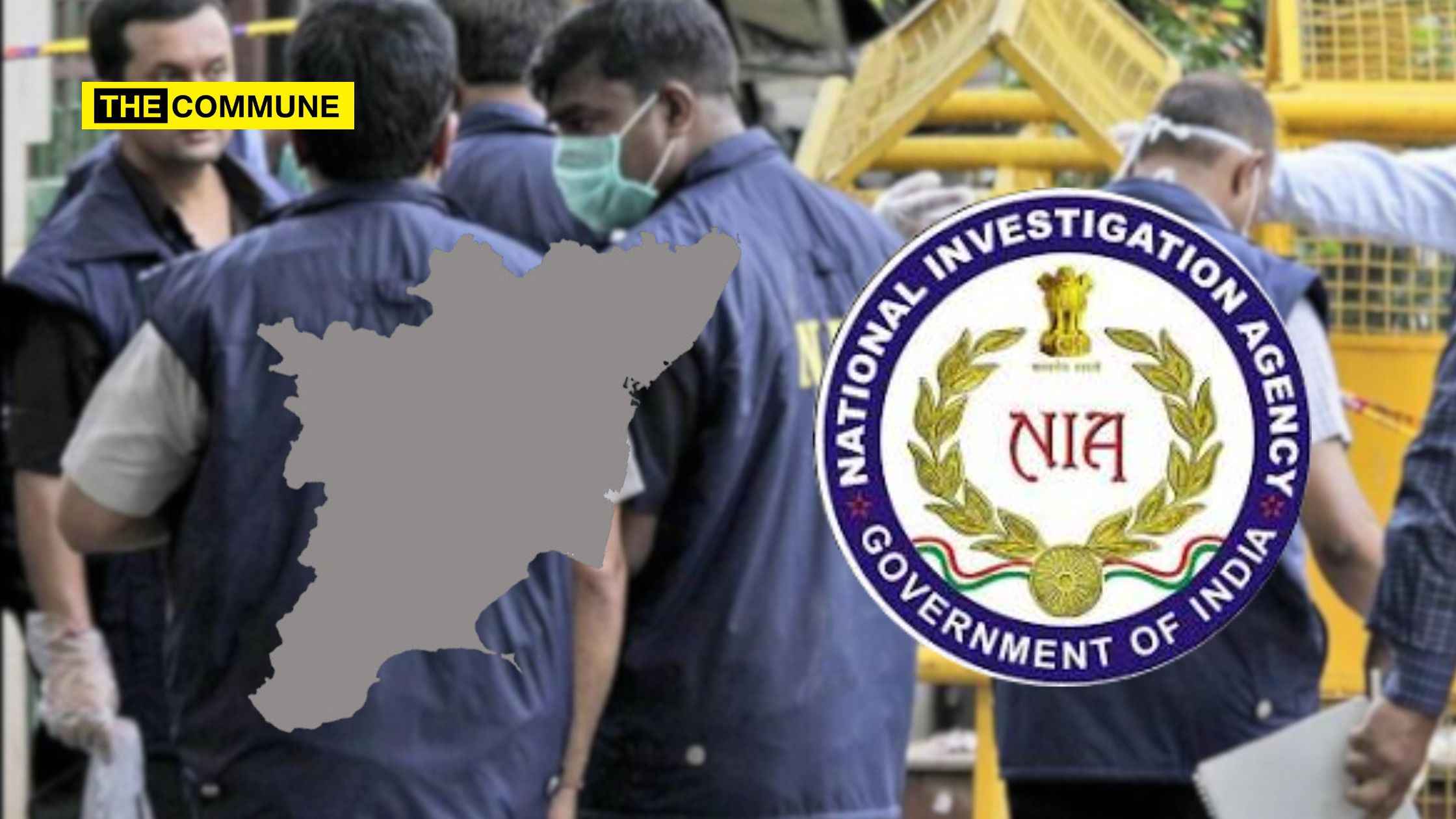
Hindu Munnani Slams A. Raja’s Slanderous Speech On Indian Freedom Fighter VO Chidambaram Pillai, Questions Stalin’s Silence

In a press statement, Hindu Munnani State President Kadeshwara C. Subramaniam censured DMK President and Tamil Nadu Chief Minister MK Stalin’s lack of response to A. Raja’s disrespectful remarks about Indian freedom fighter VO Chidambaram Pillai.

A video of A. Raja saying VO Chidambaram Pillai had “begged” EV Ramasamy Naicker (hailed as ‘Periyar’ by his followers) has been going viral on social media.

Condemning these remarks by the DMK MP, the Hindu Munnani in a press release stated, “The Nilgiris MP and a notable figure within the DMK, A. Raja, recently spoke about VO Chidambaram Pillai aka Kappalotiya Thamizhan in a slanderous manner. Whether Tamil Nadu Chief Minister and DMK leader MK Stalin is aware of this remains uncertain. Last year, during a conversation with his party members, Stalin expressed his unease, stating that he wakes up each morning feeling anxious about the statements his party leaders might make. He indicated to the nation that he lamented his difficulty in sleeping at night.

He added, “As a result, there is speculation that indecent remarks of the DMK leaders regarding national leaders are being shielded from him. Lately, DMK leaders have been overly vocal, particularly with a focus on various segments of Hindu society.

He highlighted,”Kappalottiya Thamizhan V.O.C., a trailblazer in the Swadeshi Movement, demonstrated remarkable philanthropy. He sacrificed his own property to provide sustenance to impoverished laborers who were advocating for their rights and enduring hardship during the oppressive British Christian regimes. Despite actively participating in the freedom struggle, managing a Swadeshi shipping enterprise, and devoting his entire being to the nation, he endured poverty without harboring any regrets until the end of his life.

He added, “In a move aimed at tarnishing his integrity, simplicity, and sacrifices, A. Raja spoke as if VOC “begged” EVR for his son’s employment. Raja’s statement has deeply wounded the sentiments of patriots”

He ended the statement with, “The DMK, known for its derogatory remarks towards the Brahmin and Scheduled Caste communities, has extended its insults to encompass all segments of the Hindu community and their religious beliefs. Hindu Munnani respectfully urges Tamil Nadu Chief Minister and DMK President Stalin to take decisive action against A. Raja and to implement measures preventing DMK members from making further derogatory remarks in the future.


Subscribe to our channels on TelegramWhatsApp, and Instagram and get the best stories of the day delivered to you personally.