Home Blog Page 978

Dravidianist And DMK-Supporting Kissflow CEO Suresh Sambandam Endorses Abuse Against Brahmins, Concerns Raised About Fair Treatment Of His Employees

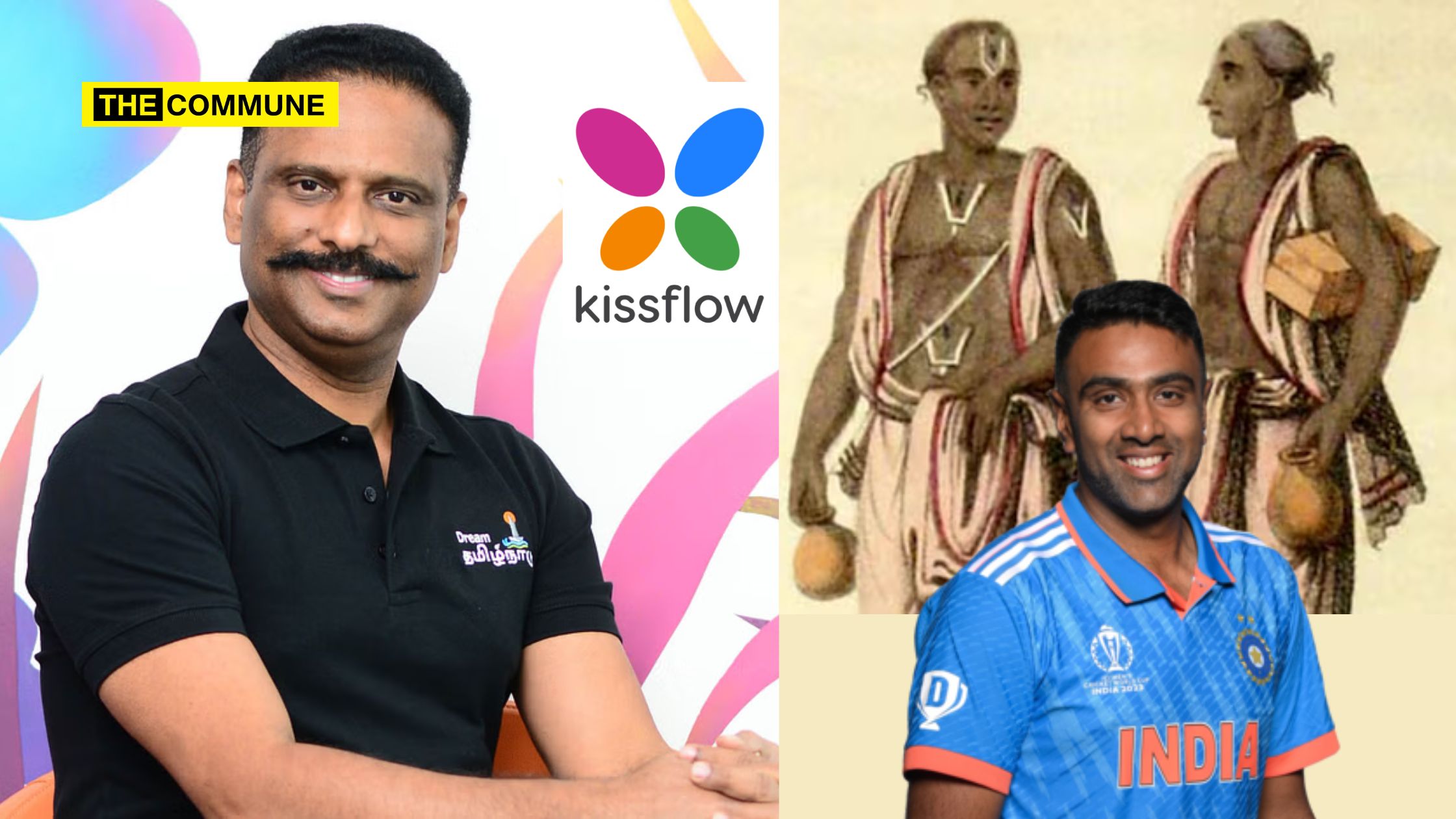
In yet another instance of Dravidianists unleashing their hatred for the Tamil Brahmin community, a Dravidianist X handle named “We Dravidians” called Brahmins as traitors which was openly endorsed by the CEO of Kissflow Suresh Sambandam, who is known being DMK’s unofficial brand ambassador and peddling fake news.

Recently, Indian cricketer Ravichandran Ashwin, launched his book titled “I Have the Streets: A Kutty Cricket Story.” During the event, he said that “Not knowing Hindi can be proudly expressed as ‘Hindi Theriyadu Poda‘. Alternatively, it can be viewed as ‘If we don’t learn it, it could be difficult‘, a mindset that can lead to significant personal growth.

In this context, Dravidianists circulated videos showing foreigners conversing in English with street vendor teens on beaches, highlighting their ability to communicate in English. They criticized the cricketer, suggesting that learning any language when necessary is crucial.

The post published by a verified Dravidianist handle “We Dravidians” which peddles DMK propaganda targeted Ravichandran Ashwin’s caste identity and made abusive remarks against Brahmins community calling them as ‘traitors’.

We learn any language if it is needed! #Ashwin like ‘B’ traitors must close their trap tight & stay away from commenting on Hindi in Tamil Nadu. This video is the answer!! Just watch! Thank you Periyar Anna Kalaignar & M.K.Stalin Thank you Chris #DravidianModel”, said the propaganda handle.


Even more concerning was Suresh Sambandam, a DMK sympathizer known for frequently spreading misinformation, endorsing the hate speech against made against Ravichandra Ashwin and calling Brahmins as traitors.

Suresh Sambandam in his official X account wrote, “Wow !!! This is tooooooo goooooood!”

This endorsement is troubling, especially since he runs a company named Kissflow, a Software-as-a-Service (SaaS) firm based in Chennai. This has raised concerns of caste discrimination and fair treatment of employees in his company who may be Brahmins.

Suresh Sambandam, who previously asserted on social media that caste names derived from surnames were removed and attributed credit to Dravidian ideologue E.V. Ramasamy Naicker, portraying Tamil Nadu as progressive and a land of ‘Periyar’, now paradoxically endorses another Dravidianist who targets people based on their caste. This shift represents a significant contradiction in Suresh Sambandam’s stance, reflecting hypocrisy.

Earlier in an X post, the Steve Jobs mimcking, self-styled ‘entrepreneur’ took to disparage people for using the phrase “Om Shanti” saying that while “normal people” use the phrase RIP, “Sanghis” say “Om Shanti”.

Suresh Sambandam’s controversial post smacks of borderline Nazism as it goes on to incite hate towards a group using social markers. Many called out the problematic tweet as it comes across as inciting hate towards Hindus. It also raises concerns about whether Kissflow is a safespace for those who don’t agree with its CEO’s ideology.

Suresh Sambandam is also a serial fake news peddled and has been caught peddling lies and half-truths several times. Earlier, he had fudged data about the number of doctors available in different states of India to its population.

Prior to that he exposed his shallow knowledge on history, politics and economy in an interview with ‘Neeya Naana’ Gopinath to Behindwoods YouTube channel.

Subscribe to our channels on TelegramWhatsApp, and Instagram and get the best stories of the day delivered to you personally.

 

Vijay’s Fans Harassed By ‘Dubai Bouncers’ At Recent Students Greeting Event Organised By TVK

Once again, tensions flared between Vijay’s fans and the security bouncers assigned to protect him at a recent special meet-and-greet event hosted by the Tamilaga Vettri Kazhagam party on 28 June 2024. The event, held at the Ramachandra Convention Center in Thiruvanmiyur, Chennai, was organized to honor students who excelled in the 10th and 12th-grade examinations.

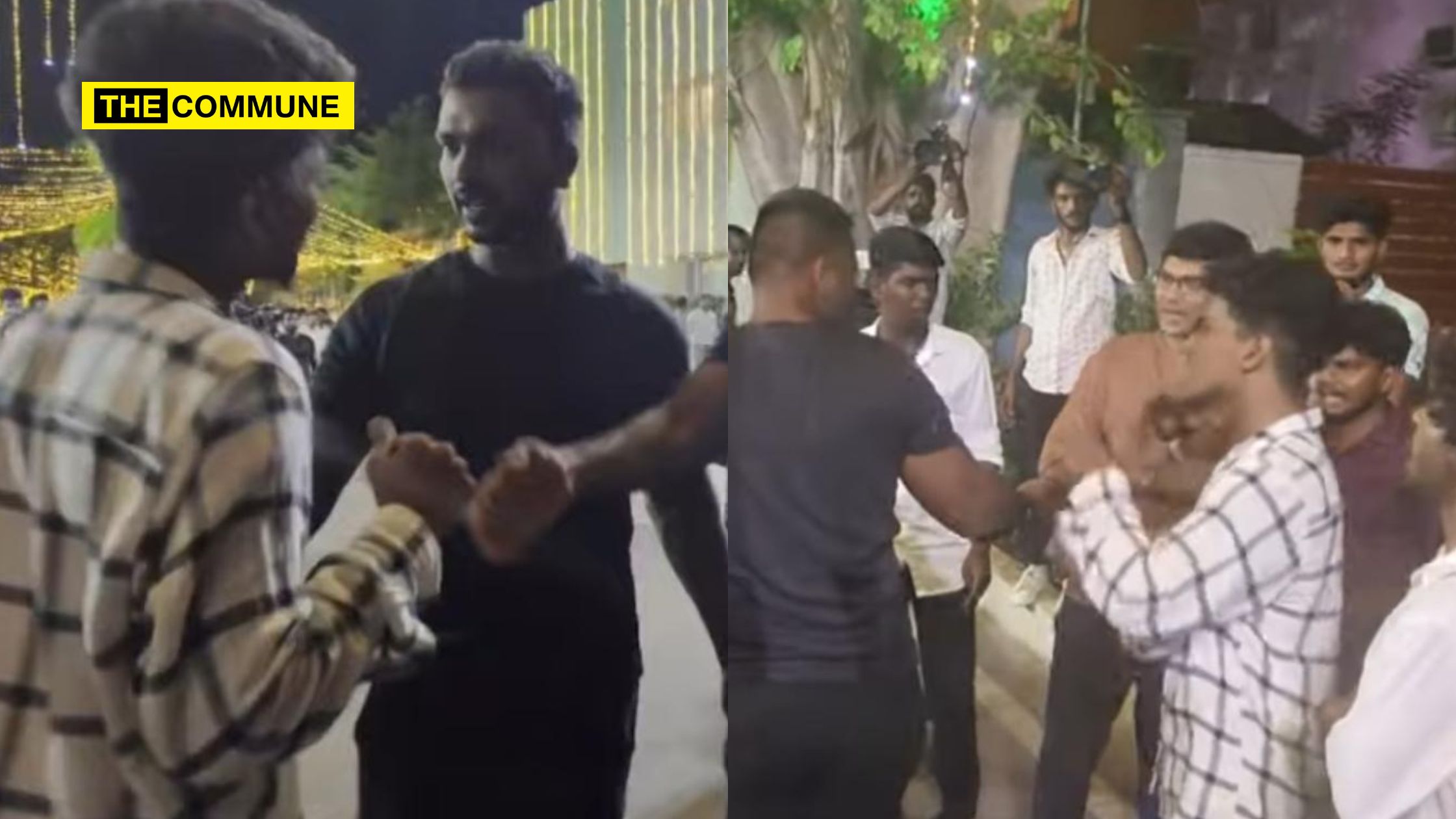
The event spanned over 10 hours during which Vijay patiently met with all the students, took photos, and offered them advice for their future. Later in the evening, as Vijay’s fans gathered at the venue to catch a glimpse of him, a conflict arose between them and the security bouncers, who were specifically chosen to provide VIP security for the actor.

The situation escalated when some fans attempted to enter the venue to see Vijay, but the bouncers prevented them from doing so. This led to a heated confrontation as the fans thought this was a harassment, during which one of the bouncers lost their temper and exchanged harsh words and asked him to ‘come out’ to settle the issue. News reporters present at the scene captured the incident, which further intensified when the bouncer approached a reporter in an aggressive manner, resulting in a brief skirmish until other reporters intervened.

Following the actor’s departure from the event, the news reporters staged a protest at the Ramachandra Convention Center. Eventually, TVK officials intervened, prompting the particular bouncer involved to apologize, which led to the conclusion of the protest.

Even prior to this incident, a video depicting bouncers striking Vijay fans at the 2022 music launch of “Varisu” movie had gone viral on social media.

The music launch of the movie “Varisu” took place at the Nehru Indoor Sports Arena in Chennai. Many fans had gathered in anticipation of seeing Vijay. Fans from various locations crowded the Nehru Stadium in hopes of catching a glimpse of Vijay. While only ticket holders were permitted inside the event, many non-ticketed fans waited outside. During the event, a video surfaced showing a bouncer striking a fan who attempted to get closer to Vijay. This incident sparked viral attention on social media. In the video, several fans approached Vijay out of curiosity, only to be unexpectedly struck by bouncers.

During the time many people questioned the handling of fans at such events.

Subscribe to our channels on TelegramWhatsApp, and Instagram and get the best stories of the day delivered to you personally.
Intense Electoral Battle Unfolds In Vikravandi By-polls; ADMK Likely To Transfer Its Votes To NTK To Push PMK To Third Place

The electoral contest in the Vikravandi assembly constituency is intensifying among the Dravida Munnetra Kazhagam (DMK), the Bharatiya Janata Party (BJP) ally Pattali Makkal Katchi (PMK) from the NDA alliance, and the Naam Tamilar Katchi (NTK). The nomination period has closed, and vigorous campaigning by the candidates is underway for the by-election.

On 16 June 2024, the AIADMK declared its boycott of the Vikravandi Assembly bypoll, citing concerns about potential unfair conduct. AIADMK’s general secretary Edappadi K. Palaniswami expressed apprehensions that the ruling DMK and its ministers might misuse state resources and engage in irregularities, raising speculation about where their supporters might now align.

In the recent Villupuram Lok Sabha constituency elections, DMK’s ally, Viduthalai Chiruthaigal Katchi (VCK), secured 72,000 votes in Vikravandi. ADMK obtained 65,000 votes, while NTK received 8,000 votes. All three contenders—DMK, PMK, and NTK—have fielded candidates from the Vanniyar community, which constitutes the majority in the constituency. This situation could potentially fragment the Vanniyar votes. If PMK, aligned with BJP, emerges victorious, it could regain influence among the Vanniyar community and pose a challenge to AIADMK’s electoral prospects in 2026.

Hence, AIADMK general secretary Edappadi K. Palaniswami is concerned that AIADMK’s share of Vanniyar votes might diminish significantly, impacting their chances in future elections.

There are reports indicating that AIADMK is planning to maneuver PMK into third place while covertly supporting Seeman. This strategy reportedly stems from Seeman’s support of AIADMK during his recent fast in Chennai.

Adding complexity to the situation, Naam Tamilar Party Treasurer R Ravanan endorsed Palaniswami during his Chennai fast, purportedly under Seeman’s direction. Palaniswami acknowledged this support without public rebuttal. In response to these developments, it is alleged that NTK and AIADMK volunteers are reportedly working closely together in campaign efforts across various locations in the Vikravandi constituency.

(With Inputs From Dinamalar)

Subscribe to our channels on TelegramWhatsApp, and Instagram and get the best stories of the day delivered to you personally.
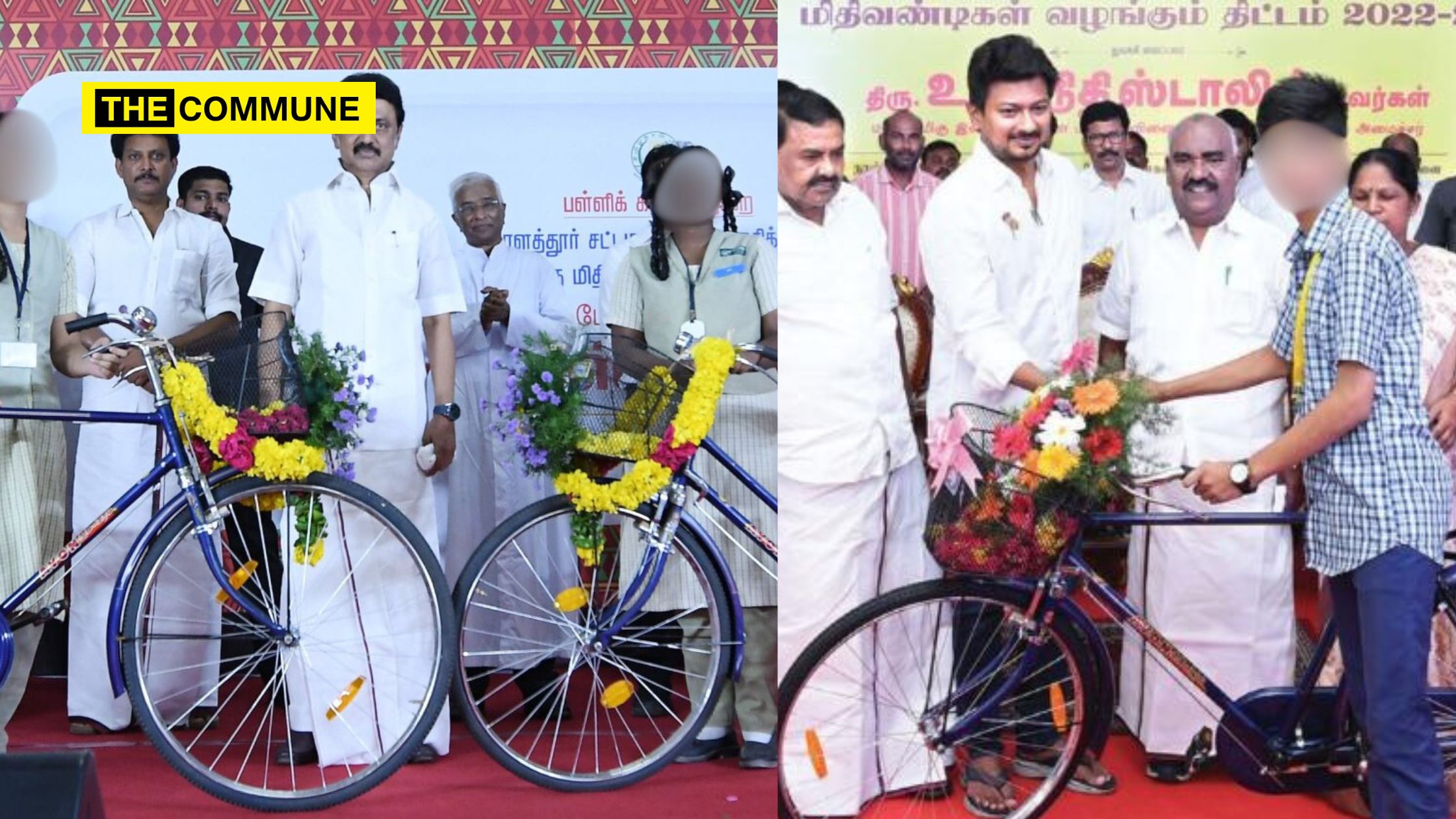
Pedalling Backwards: DMK Govt’s Free Bicycles End Up In Resale Shops, Students Cite Poor Quality

Over a year after receiving free bicycles from the DMK government in Tamil Nadu, many Class 11 students have sold them off due to alleged poor quality. Parents in need of money have also been found selling the bicycles, as reported by The New Indian Express (TNIE).

Shops on Selvapuram and Chetty Street in Coimbatore were found displaying numerous government-issued bicycles for resale; these included both boys’ and girls’ models. The male model bicycles were priced between ₹2,000 and ₹2,300, while the female models ranged from ₹1,800 to ₹2,000.

A shop owner, preferring to remain anonymous, told TNIE that the bicycles were of substandard quality, leading students to sell them instead of paying for repairs. “Many bicycles had faulty brakes, misshapen wheel rims, torn tubes, and improperly fitted seat covers. The accessories were of poor quality. Students would need to spend ₹500 to ₹700 on repairs to make them safe to ride,” he explained.

Instead of repairing the bicycles, many students opted to sell them for ₹800 to ₹ 1,000. The shop owner suggested that if the government had provided better quality bicycles, fewer students would have sold them.

An employee at another shop mentioned to TNIE, “We buy these bicycles from students for a maximum of Rs 900 since we need to refit them, change tire tubes, and make other repairs. We then sell them for Rs 1,800 to Rs 2,300 depending on their condition.” He added that some fathers struggling with alcohol addiction had sold their daughters’ bicycles to purchase liquor.

A Class 12 student at Corporation Higher Secondary School in Selvapuram shared his experience with TNIE. “I received a bicycle in February last year when I was in Class 11, but it was of substandard quality. The repair costs were too high, so I sold it for Rs 900 and used the money as pocket money,” he said.

The headmaster of a government higher secondary school emphasized that the objective of the cost-free bicycle scheme is to encourage regular school attendance, especially for students from rural areas. However, the poor quality of the bicycles has led many students to sell them instead. “Shop owners are benefiting from this situation, and it should be stopped immediately. In our school, most students come by walking or by bus,” he noted.

As reported in TNIE, R Ramkumar, President of the Tamil Nadu Teachers and School Protection Association, highlighted that this issue is prevalent across the state. He urged the school education department to ensure that students receive good-quality bicycles.

A senior official in the school education department acknowledged the problem, stated that selling the bicycles is illegal, and assured that they would look into this matter immediately.

(with inputs from TNIE)

Subscribe to our channels on TelegramWhatsApp, and Instagram and get the best stories of the day delivered to you personally.
Reading Between The Lines Of Vijay’s First Speech After Political Entry

Actor Vijay’s TVK to hold first state meet on October 27

On 28 June 2024, Actor turned politician Vijay convened his first public speech after the announcement of his party the Tamizhaga Vettri Kazhagam (TVK). Even though it was not a political stage but a special meet and greet to honour students who topped in the recently held 10th and 12th-grade examinations, this event was very much anticipated by the fans and the party cadres and the event was held at the Ramachandra Convention Center in Thiruvanmiyur, Chennai.

Beginning his address at the event, Vijay extended congratulations to the students and offered advice to carefully consider the career paths they are preparing to embark upon. Vijay said, “Some of you have clear picture in your mind that what are we going to become a doctor, a engineer, a pilot and some might be a bit sag or confusion in making decisions about your career. To all of them, I would like to say that all vocations are good; all that matters to be successful is choosing a field of work and giving your 100% to it, whoever be the victory is yours. So, choose on your interest; understand the options available, talk to your parents, teachers and career counsellors to help you make the decision.” 

Then actor Vijay encouraged students to aspire to leadership roles in their chosen fields, emphasizing that there are numerous career paths beyond just medicine or engineering. Vijay urged,  “Many consider only medicine or engineering as viable professional fields; in Tamil Nadu, we already have world-class doctors, engineers and lawyers in abundance. What we are currently lacking is and what we need more is good leaders. By that when I say leader, I didn’t just mean by political leaders, if you are getting into a field and achieve better you can easily climb the ladder to become a leader,” While encouraging students to dream of their future, he also suggested that politics could be a viable career option for educated youth. “Why can’t be politics an career option in the future? It is my wish that it should come like that. Should well educated people join politics or not? I’m asking you all”

After that hitting on the propagandists, Vijay said that news medias feed opinionated news hence the students fact-checking news to understand and by that they can be involved in politics “Read newspapers regularly, and you will realize how a single news is report in a news paper and the same news another news paper report in different ways. A news will be reported on a front page in headlines and the same news will not even be reported in the last page in another newspaper. Here, you will come to know about news is different from opinion. If you see now, many social media channels have become equivalent to mainstream media, creating an opinion on good and bad, if you see them carefully they can project by creating gossip convert good as a bad and bad as a good.” Continuing Vijay urged, “See all but learn to realize which is true and false, only then you will cultivate the right worldview to choose the leaders.” 

In his final remarks on friendship, Vijay emphasized that students should avoid negative influences from friends. He strongly advised youngsters against drug use, vices, and unethical behavior. This message was particularly poignant following the continuous drug busts and linkages to Tamil Nadu and the latest Kallakuruchi hooch tragedy just a week prior. Vijay concluded his speech by emphatically stating, “Say no to temporary pleasures and say no to drugs.

Key Insights From Vijay As TVK Chief

As previously noted, Vijay’s appearance at this event following the launch of his party in February 2024 was eagerly anticipated, especially regarding his remarks on politics. While he didn’t delve extensively into politics, Vijay’s speech was laden with politics particularly targeting the DMK. Actor Vijay skillfully maneuvered through the speech, effectively hitting at the DMK by highlighting issues of mismanagement, deteriorating law and order, corruption and dynastic politics in Tamil Nadu.

Criticizing The DMK

  • In contrast to the DMK’s approach of stoking students’ emotions with promises like NEET bans and shortcuts, Vijay opted to advise students to explore diverse career options.
  • Despite the DMK ruling for three years, Vijay hinted at a necessity for strong leadership, pointing out a perceived political vacuum in Tamil Nadu, expressing the state failed in severe administration failure like past ones.
  • Expressing a desire for capable leadership, Vijay indirectly referenced political corruption which is again targeted at the ruling DMK, noting that three ministers face corruption charges and one former minister has been jailed for a year.
  • He also criticized dynasty politics, suggesting that future politicians should be judged on their education and merit rather than familial ties, emphasizing the importance of making informed choices in elections.
  • Regarding propagandist media, he brought attention to how a few media houses report the same news differently. This must definitely be read as to how Dravidianist journalists and media outlets such as Sun News, a mouthpiece for the DMK report half-truths and peddle propaganda. Following the Lok Sabha election results, Sun News targeted Vijay in a manner that undermined his political stature, reducing him to a mere figure known for posting congratulatory messages on social media rather than being recognized as a serious political leader.
  • Initially reluctant to directly blame the ruling DMK, Vijay later criticized the prevalent drug culture in Tamil Nadu, referencing seizures of methamphetamine, ganja, and drug pills since the arrest of former DMK figure Jaffer Sadiq and the tragic hooch incidents in 2023 that claimed 22 lives initially and now 63.

Balancing The Political Wheel With The Saffron Party BJP & AIADMK

All the above issues resonate closely to the politics played by the Tamil Nadu BJP and the AIADMK. Led by its current president K Annamalai, the BJP meticulously addressed these concerns through initiatives like the “En Mann En Makkal” campaign, bringing awareness to citizens about the prevalent mismanagement, corruption, dynasty politics, and poor law and order in the state under the current regime.

TVK chief Vijay’s resounding declaration of “Say no to drugs” was a direct attack on the DMK which was already weaponized by both the BJP and ADMK. While ADMK had made it their campaign slogan for the 2024 elections, Annamalai on the other hand had called for “Saying no to Drugs and Dravidam”.

Another intriguing aspect was the Hindu symbol, or ‘Tilak’ between Vijay’s eyebrows, which surprisingly was not in red (Kungumam) but in saffron, a rare occurrence where a women put on his head as a symbolism on his forehead, usually requiring prior approval at VIP events. The political parlance surrounding saffron and the connotations that come with it is well known and Vijay is no child to not be aware of it. He knows how people and political analysts note intricate details – what you say, what you don’t say, how you portray yourself, the colour of your shirt, and what not. When there are so-called ‘Superstars’ who have a problem with the colour saffron, the fact that Vijay has chosen to embrace the much maligned colour is welcome.

Sathish is a political writer.

Subscribe to our channels on TelegramWhatsApp, and Instagram and get the best stories of the day delivered to you personally.
Yet Another Alleged Illicit Liquor Incident In TN Under DMK Rule: Two Dead, Five Hospitalized; Tiruppur Police Calls It Fake News

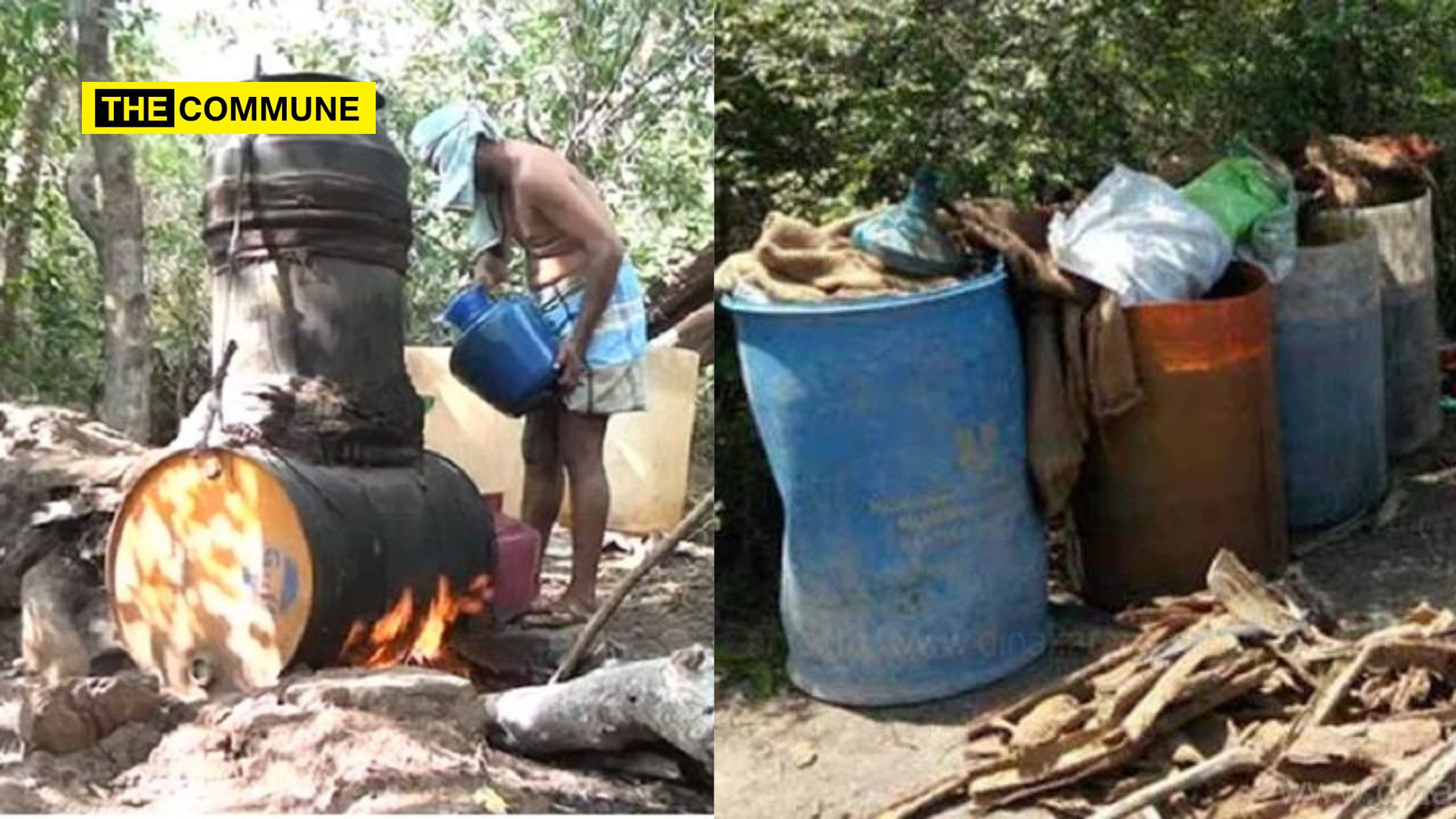
Two weeks after the tragic hooch incident in Kallakurichi, which claimed 65 lives, Tamil Nadu has witnessed a third incident involving illicit liquor under Chief Minister Stalin’s DMK rule. In the latest occurrence, two people have allegedly died and five others are hospitalized due to the consumption of illegal liquor in Udumalai.

The recent incident occurred in the Mavadu tribal settlement, located under the Udumalai Forestry within the Anaimalai Tiger Reserve. Reports indicate that liquor was brewed and sold in the area, leading to the severe illness of five individuals. These victims, hailing from Manja Naikkanur village, are currently receiving intensive treatment at a private hospital in Coimbatore.

This new incident follows the devastating Kallakurichi tragedy, where 65 people succumbed to illicit liquor, shocking the entire state. The Crime Branch Criminal Investigation Department (CBCID) police are investigating the Kallakurichi incident, which has so far led to over 20 arrests and the destruction of thousands of liters of bootleg liquor. Efforts are also being made to dismantle gangs selling illegal liquor across the Southeast.

Despite this, conflicting reports have emerged regarding the Udumalai incident. The Tiruppur District Superintendent of Police Office has denied the severity of the situation, declaring that the social media claims about five people being in critical condition due to illegal liquor consumption in the Udumalai forest area are false. The police have urged the public not to believe these rumors.

However, other sources indicate that individuals from Manjanayakanur village, who consumed the tainted liquor, are indeed in critical condition and undergoing treatment. An investigation is underway to ascertain the exact circumstances and the possibility of mixing counterfeit substances with the liquor.

The repeated incidents of illicit liquor consumption and the resulting fatalities raise serious concerns about the effectiveness of measures to control the illegal liquor trade in Tamil Nadu.

Subscribe to our channels on TelegramWhatsApp, and Instagram and get the best stories of the day delivered to you personally.
West Bengal Terror Suspect Arrested In Chennai For Alleged Links To Terror Outfit Al-Islam

A West Bengal native, Anwar Sheikh, has been arrested by the Special Task Force (STF) of the West Bengal police for his alleged association with the terrorist organization Al-Islam. The arrest took place in Virugambakkam, Chennai, with the assistance of the Koyambedu Police.

The police acted on information provided by Habibullah, another terror suspect arrested last year. A case against Habibullah has been registered at the Kanksha police station in West Bengal.

Anwar was allegedly involved in a terrorist attack (bomb blast) that happened in Burdwan, West Bengal in October 2014.  According to police sources, Anwar is a supporter of religious fundamentalist movements and has connections with a terrorist organization in Bangladesh. He faces charges under the Unlawful Activities Prevention Act (UAPA).

Anwar’s association with Al-Islam, a group supporting Al-Qaeda, led to his arrest. The West Bengal Police have been conducting raids at his place of stay in Chennai as part of the investigation. This arrest is part of a broader effort to dismantle terror networks operating in India, especially those with links to Bangladesh-based organizations.

The investigation has revealed that Anwar had been hiding in Chennai, working as part of the laundry staff at a three-star hotel in Koyambedu for the past few months to avoid detection, as reported in Times Of India. His arrest follows the earlier detention of Habibullah, whose information proved crucial. Anwar faces charges under various sections, including engaging in illegal activities against the government.

The West Bengal Police are completing the necessary procedures to transfer Anwar to Kolkata, where he will face further legal action. This development underscores the ongoing efforts by Indian law enforcement to combat terrorism and ensure national security.

Subscribe to our channels on TelegramWhatsApp, and Instagram and get the best stories of the day delivered to you personally.
DMK Councillor And Goons Attempt To Oust Agastheeswar Temple’s Hereditary Trustee Allegedly At The Behest Of Sekarbabu

The Sri Agastheeswarar Temple in Pozhichalur, Chennai, is at the center of a heated controversy involving allegations of expropriation attempts by local DMK goons.

Reports suggest that Vanaja Dayalan, the DMK President of the Pozhichalur Panchayat Council, is a key player in the efforts to replace the temple’s hereditary trustee with a Dravidian Model government loyalist. This move is allegedly done at the directives of PK Sekar Babu, the Minister of Hindu Religious and Charitable Endowments (HR&CE) department.

An audio recording of Vanaja’s conversation with the temple’s hereditary trustee has circulated widely, revealing her aggressive approach. She is heard urging the trustee to meet urgently to resolve the matter, warning of potential unrest if a decision is not made promptly. Vanaja allegedly used intimidation tactics, including the involvement of goons, to coerce the trustee.

Vanaja Dayalan informs the hereditary trustee that they are coming to see him. The trustee responded that he would come to the office downstairs at 5 o’clock. When Dayalan sought clarification about the location, the trustee reiterated that he meant the office downstairs.

Vanaja Dayalan then explained that a decision needed to be made that day, as per Sekar Babu’s instructions. She mentioned that they had come without informing anyone else. She recalled their earlier attempt to meet in the morning, which was unsuccessful due to a death-related absence. Vanaja grew impatient and can be hear stating, “Now we have come, we should speak and take a decision, now you should take the decision what it is.” 

When the trustee asked about the nature of the decision, Vanaja insisted that they needed to discuss it in person. The trustee claimed he wouldn’t know unless told, to which Vanaja responded that speaking over the phone wouldn’t suffice and that they needed to meet in person to discuss the problem directly.

The trustee then inquired about the connection between them, Sekar Babu, and the problem at hand. Vanaja replied that they would discuss this in the evening. She then made a significant statement saying, “It has been one and a quarter year since we have come  to power. Is it our duty to only clean, and lay roads and install lights? Are we brokers? By evening 5 PM, everything should be settled for us or else there will be riots, mind it.”

After these threats, the temple’s hereditary trustee apparently filed a complaint against the goons, which was reportedly ignored. In contrast, complaints from individuals opposing the trustee were acknowledged by the police. There were also claims that goons associated with Vanaja were seen removing CCTV cameras within the temple premises to prevent the collection of evidence.

It is to be noted that, a no-confidence motion was passed in May 2023 by 13 councilors, including members of the DMK, against Vanaja Dayalan. The motion cited her involvement in serial malpractices within the Pozhichalur Panchayat Council, particularly concerning tax matters. Despite these allegations and the support from various councilors, Vanaja continued to hold her position.

Another interesting character who was present at Agastheeswarar Temple along with Vanaja was Karunakaran, who earlier involved in another temple related issue in the same locality. He is a DMK cadre who was earlier jailed for possessing ganja. But he claimed to be the manager of a Saibaba temple built by an orphaned woman who had mysteriously died. He was instrumental in getting her body cremated. Investigations indicated that her death may have been exploited to unlawfully seize her property, particularly due to her unmarried status and absence of immediate heirs.

Adding to the complexity of the Agastheeswarar temple issue, the DMK-affiliated newspaper Dinakaran published a report on 20 March 2024 suggesting that the temple’s recent expropriation was conducted under a Madras High Court order. The report claimed that the temple had been privately managed for 30 years, prompting local residents and devotees to call for government intervention. The court allegedly ordered the temple’s transfer to the Hindu Religious Charities Department.

Following this alleged court order, the temple was taken over by the Charity Department. Officials, including Charity Commissioner Muralitharan, Kanchipuram District Joint Commissioner Vanmathi, and Chengalpattu District Assistant Commissioner Letsumikanthan Bharathidasan, led the takeover. The temple’s funds were sealed, and banners announcing the Charity Department’s control were displayed.

(With inputs from Maridhas)

Subscribe to our channels on TelegramWhatsApp, and Instagram and get the best stories of the day delivered to you personally.
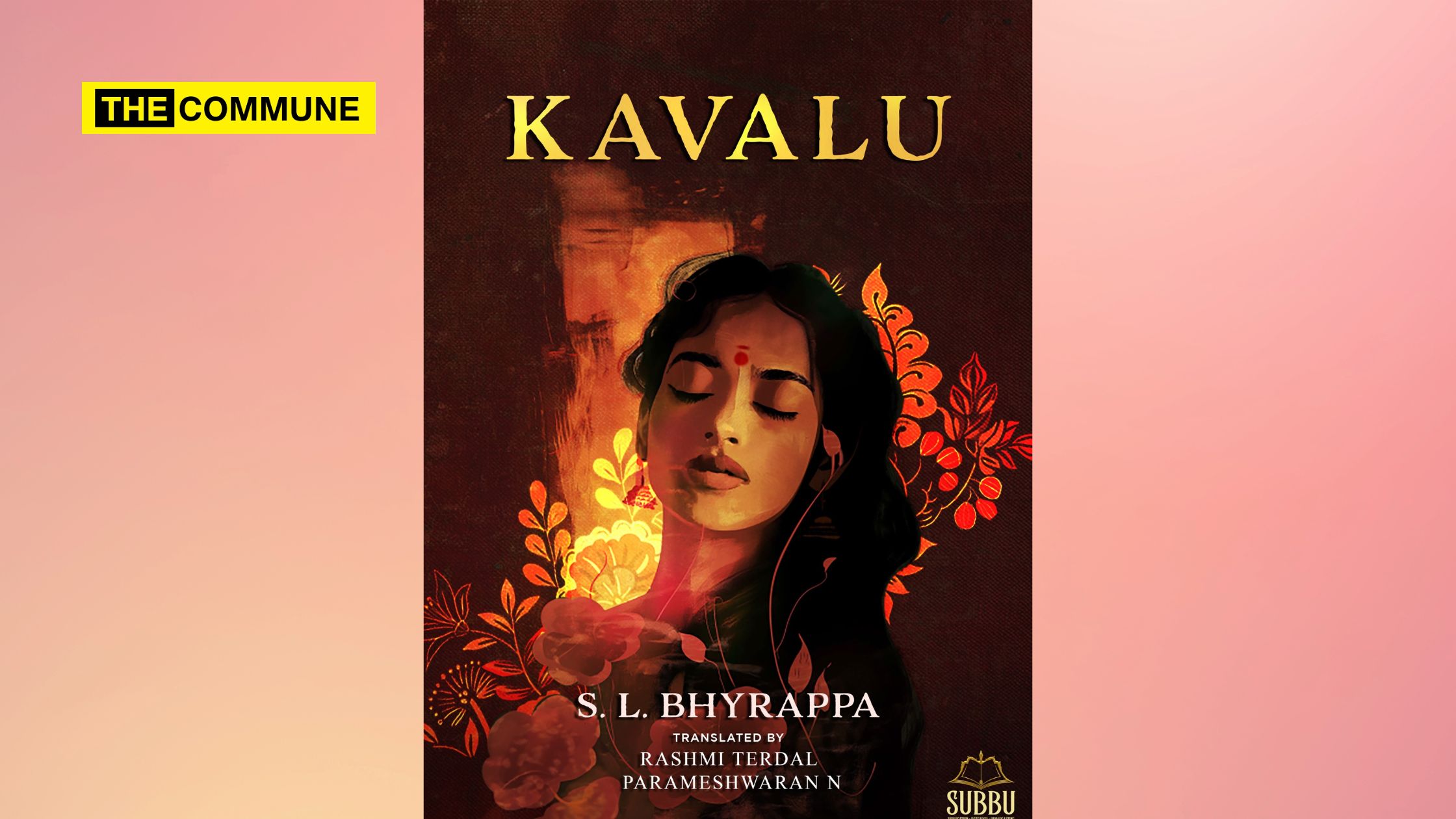
Book Review: Kavalu By S.L. Bhyrappa – Unmasking Modern India: Marriage, Morality, And The Mirage Of Liberation

Kavalu or Divergent Paths as captured in the title of the English version, translated by Rashmi Terdal and Parameshwaran N, is a very poignant tale of modern society, reflecting on some of the most common issues pertinent to the times we live in. The original book was released in Kannada and had sold out like hotcakes in a matter of hours. Rated as one of the top 10 books of 2010, it shouldn’t be a surprise that this poignant tale by the master writer is highly sought after even now. The English version of the book is well done, taking S. L. Bhyrappa’s works to a wider audience.

Kavalu narrates multiple tales with overlapping storylines dealing with multiple facets of modern society, especially related to marriages, divorces, women’s liberation, and the legal intricacies thereof. The happenings are narrated by one of the central characters in each chapter, essentially presenting their perspectives.

Broadly, there are 4 major characters Jayakumar – Mangala and Vinay – Ila. The story captures their journey through the plots of life, as each one of them armed with their own preferences and self-convictions, make choices that have far-reaching and perhaps, life-altering ramifications. This is not limited to only these central characters, but also to some of the adjoining characters in the narrative.

This book is perhaps one of the boldest books from the revered author that I have read in some time. Set in the post-liberalisation Indian period with an affluent middle class with perhaps modern/foreign education, the author presents an interesting slice of reality as he describes the potential weaponisation of sex or physical intimacy to achieve one’s materialistic goals, as a psychological weapon to demoralise or demonise a man, as a justification or rather a true representation of women’s liberalisation. Weaving these complex concepts into the narratives that run parallel to each other, the author’s genius needs to be understood in the underlying message.

Taking a critical view of some of the ills of modern society where liberalisation is used as a garb by some, the author leaves no room for confusion and leaves the reader to interpret the harsh reality at its face value. The book also addresses some of the other common challenges of a society grappling with change, like Dowry. However, even though the metaphysical concepts are not highlighted in bold, their presence is undeniable.

Dowry as a concept links 2 characters linked to Jayakumar and in an interesting twist of fate, acts as a rejoinder of Karma theory. One can’t escape from the fruits of Karma over the life.

I will not delve into the story but would like to highlight some of the key messages from the narrative. In the first 100 pages of the book, the author exposes the user to the world of women’s liberalisation, Sigmund Freud as a sign of modernity, lesbian relationships, sex as a control tool, etc. Early on in the 2nd chapter, one of the statements shakes the inners of readers where a father is accused of satisfying his pervert desires, just because he hugs his differently-abled daughter. It definitely makes one think about the way relationships have evolved in the modern context. When a daughter transitions from a young girl to a wonderful woman, does the father lose all his rights over her? Can’t he express his love by hugging his daughter? Should society view everything through the lens of perversion? Quite serious, probing questions!!

One of the other standout phrases from the book serves as a reminder of the deep influence of modernity on some of the most core areas of life.

“Is your desire to have a child borne out of your love for the child, or do you want to be a social revolutionary?”. This concept of social reformers being the ones to go against every norm of the centuries-old society is a recurring theme throughout the book. While the author doesn’t preach any specific angle, the book does make the readers introspect deeply on the true meanings of modernity / modern outlook, the pros and perhaps limitations in life.

Hypocrisy is another undercurrent that is on ample display throughout the book. Arguments are made to establish gender equality at one’s own convenience. A case in point is the statements by Mangala justifying her mother’s stay at her home while blaming her spouse for being a male chauvinist.

The same hypocrisy is on ample display during the interactions between Ila and Doreraja, where the latter questions the objectives of Ila when she tries to pressure him to legitimise their relationship. While these are straightforward instances, there are many subtle examples where the reader could feel shocked by the behaviour of a few characters. For example, the use of activism to pressurise the industrialist to a marriage with the sole intention of the same being a true feminist accomplishment is interesting. All along the book, the esteemed lawyers have their own views and use every opportunity to further their own agenda, while never considering the other perspectives. The harsh reality of life!!!

The characters are etched out with great detail and a strong internal framework. They do get introspective about their actions at various junctures. For example, Jayakumar’s reflections on the sacredness of sexual relationships are another case in point, where he fights multiple battles internally about his subdued sexual urges vs the memory of his loving wife.

The book has some very interesting philosophical tenets embedded in the conversations of the characters. One of the characters, a lady of the evening, asks one of the central characters if the latter considers her work as “low, immoral, and sinful?”. An innocuous statement, but with very deep consequences. It challenges the reader to reflect upon their own internal value framework and how one views the various professions of the world, especially the judging aspect of the same. Do any have the moral high ground to condescendingly look down upon another’s choice of profession? These questions continue to haunt the reader as they journey through the book.

Extending the concept of women’s liberalisation with modernity, the author also introduces the reader to the prevailing colonial hangover that persists in society. Self-promotion and selfish motives outweigh the underlying objectives of establishing the long-forgotten colonial superiority. The fact that one of the central characters considers this to be perfectly normal is a perfect mirror to us.

While the central character is considered to be Jayakumar and to some extent Vinay Chandra, I find that the main theme of the book is about women and their roles in society, along with some of the most pertinent and perhaps important questions of life. I also feel that the maverick author chose to describe the various facets of “Shadripus“ – 6 vices of life through various characters of the book. While Vyjayanthi shines as the true jewel of the book and perhaps is the best example of women’s empowerment and upliftment, the other characters serve as a stark reminder of what we shouldn’t be. Rajamma’s anger (Krodha) leads to her to jail. While she does make amends later in life, she is still representative of what one could face in life.

Mangala is a very interesting character whose greed (lobha) and ego of being a modern woman (mada) changes many lives irreversibly including her own. Using her sexuality and lust (kama) as a tool, she isn’t shy of any steps to achieve her own goal, no matter how hypocritical it is. In one of the junctures of the book, her conscience does ask probing questions but is silenced due to the overpowering nature of her personality.

Dr. Ila, coincidentally Mangala’s teacher and another champion of women’s liberation, is also a combination of the aforementioned attributes along with jealousy (matsarya). Driven solely by her individual desires, she doesn’t even feel disturbed that her teenage daughter learns about her affair, while not agreeing to divorce her legally wedded husband. Her choices at some junctures could come across as deeply disturbing.

One of the standout features of this book is that all characters are shown to be made of various shades of grey. Except for Vyjayanti and Vatsala, everyone else is shown to have their own chinks in their characters, some larger than others. The conflicts, debates, and challenges faced by every one of the characters are etched out beautifully. As one concludes the book, they are left with some really haunting, germane questions.

What is the true meaning of women’s liberation? Is sexual freedom the only meaning of women’s liberation? Beyond these civilisational queries, there is one statement that is so wonderfully interlaced within the narrative: “Love is not just about words; those who struggle to express themselves often have the deepest feelings”.

Hard-hitting reality check of life. MUST READ.

Gee Vee is an engineer and avid fan of itihasas, puranas and books.

Subscribe to our channels on TelegramWhatsApp, and Instagram and get the best stories of the day delivered to you personally.
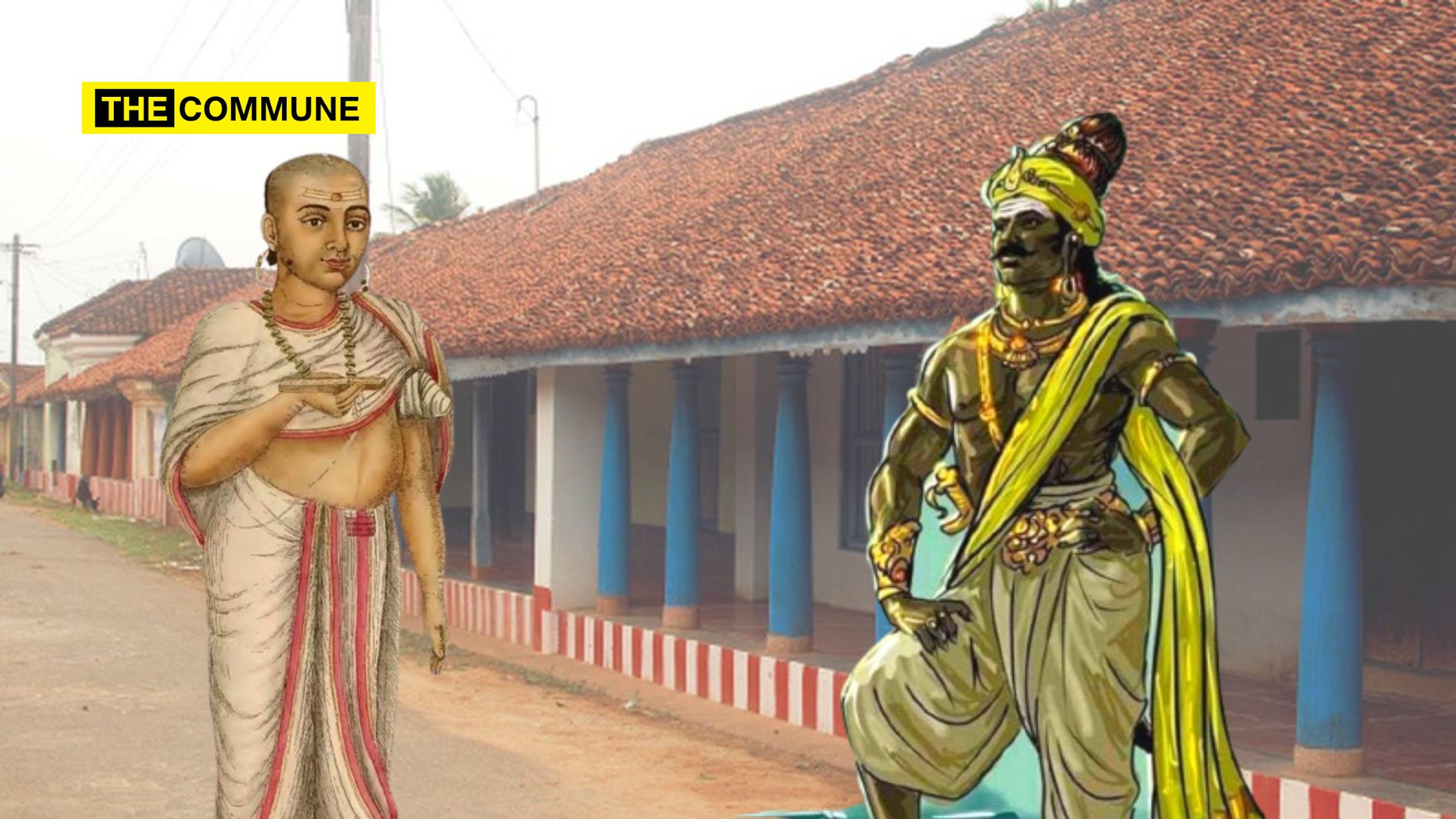
Chola Grants: Setting The Record Straight On Brahmadeyas/Chaturvedi Mangalam To Brahmins

One of the most abused subjects (especially of D stocks) is the granting of Brahmadeya/Chaturvedi Mangalam to Brahmins by Cholas. Cholas were called names because of these grants. The fact is such grants have been in vogue since Sangam times and Pandyas & Cheras were the forerunners for granting the Brahmadeyas. These grants were twisted as if they were given free and the Brahmins enjoyed the privilege without paying any tax. There is also another fake theory that only Brahmins lived in Brahmadeyas. Is this true? What is the way Brahmadeyas are structured? Let us analyse this using one of the large Brahmadeyas given by Cholas which was documented in Karandai copper plates (1020 CE).

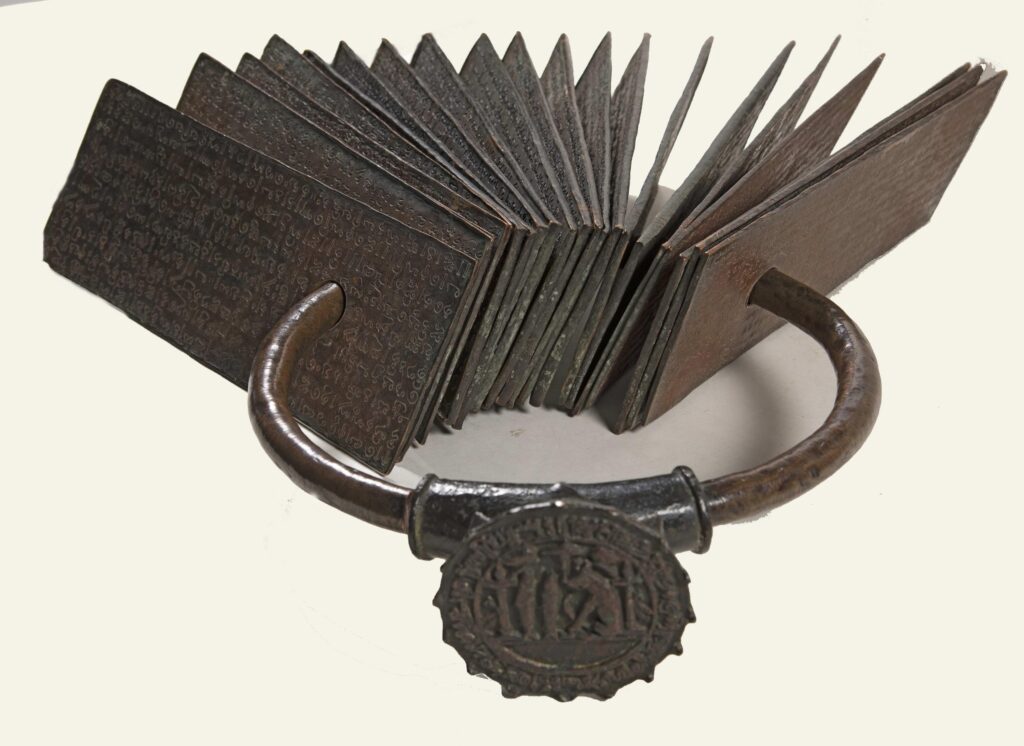
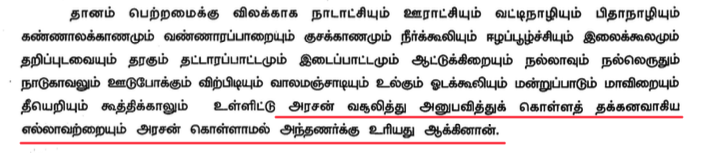
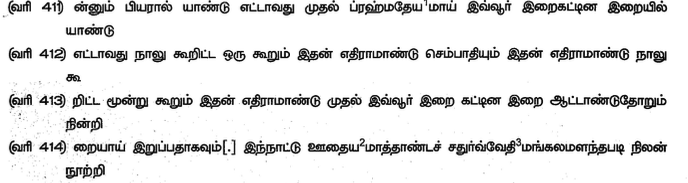
Karandai plates mention creating a Chaturvedi Mangalam called Tribhuvanamadevi Chaturvedi Mangalam by combining 51 villages and the land was given to 1080 Brahmins. This means an average of 21 Brahmins get the land in a village where approximately some thousand people live. The total land measured like this, which belongs to the government (அரசன் அனுபவித்துக் கொள்ளத்தக்கனவாகிய) is 3135 Veli +. Of this, 619 Veli were subtracted as they belong to common land like temples, the centre of the village, etc. Only the remaining land of 2516 Veli is split and given to 1080 Brahmins, approx 2 Veli per person. The revenue from this land will be approximately 100 Kalam Paddy per year. Compare this with the income of those who worked in Thanjavur Brihadeeswarar temple. They range from 200 Kalam – 500 Kalam.

Even this 200 Kalam is not free of tax. The copper plates clearly mention that from the eighth year, they had to pay tax from this revenue proportionately. In the eighth year, 25% is the tax levied needs to be paid, next year 50% of the tax and subsequently complete tax needs to be paid on the revenue earned. It is also important to note that even this staggered tax paying is only available to those Brahmins who are granted land from these copper plates. Those Brahmins who were living in the villages early will continue to pay the tax as before. Hence, let us be clear that the Brahmadeya lands were NOT tax-free, and they were NOT an exclusive place where only Brahmins lived.

The details of the grant can be found in the book ‘Chozhar Seppedugal’ by Pulavar V. Mahadevan & Prof. G. Sankaranarayanan.

TS Krishnan is a Tamil scholar and author.

Subscribe to our channels on TelegramWhatsApp, and Instagram and get the best stories of the day delivered to you personally.