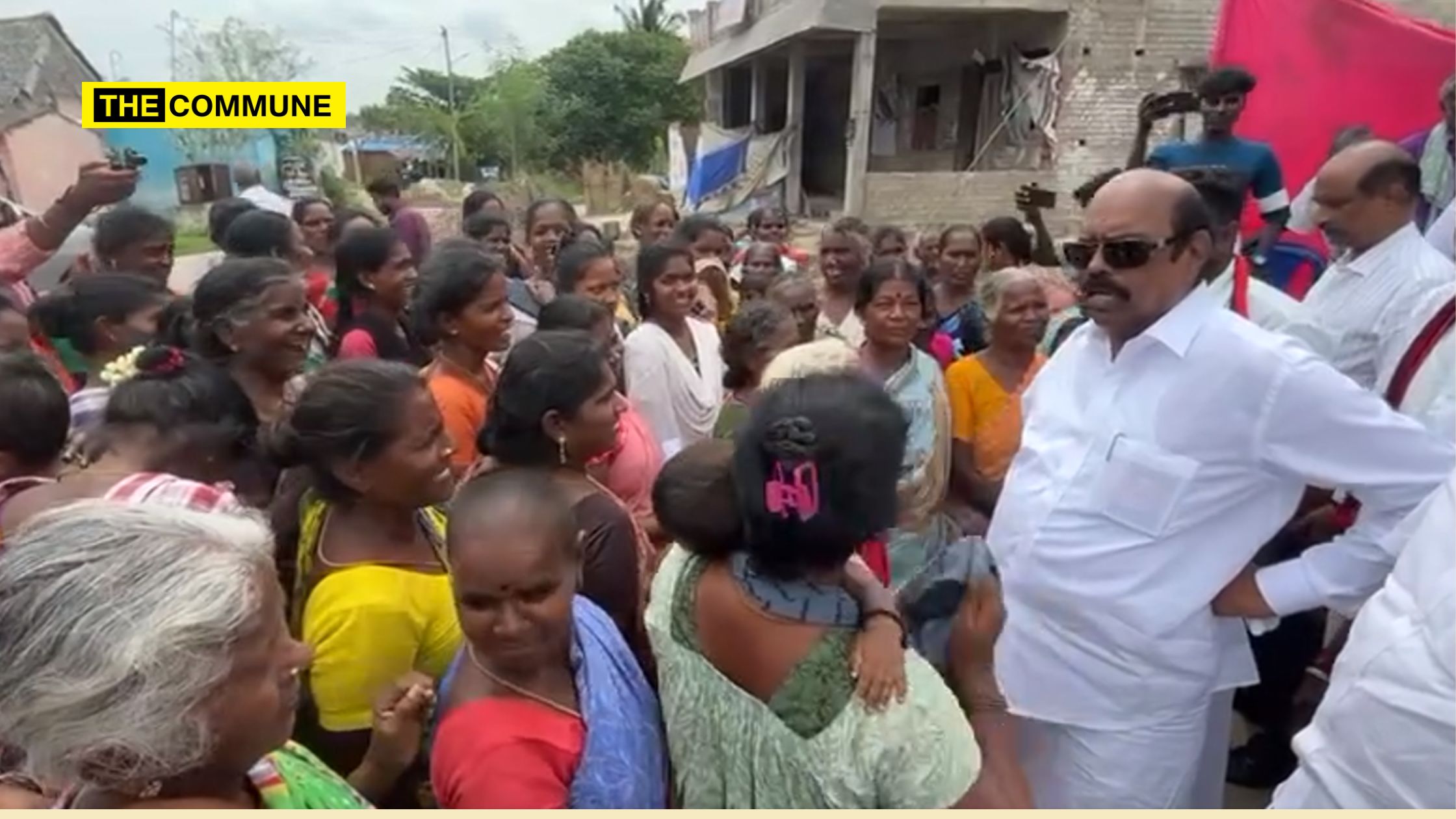
In what could be a covert move to counter the BJP’s growth in Tamil Nadu, both the Dravida Munnetra Kazhagam (DMK) and the All India Anna Dravida Munnetra Kazhagam (AIADMK) have devised a secret strategy, states Dinamalar. Despite strong opposition from former Chief Minister O Panneerselvam, AIADMK General Secretary Edappadi Palaniswami appointed former minister Udayakumar as the Deputy Leader of the Opposition, a position the party had been vying for over a year.
Panneerselvam, on the other hand, was designated the seat of Deputy Leader of the Opposition in the Assembly. The sudden allocation of the position of opposition vice-president to Udayakumar the following day, with Chief Minister Stalin citing the consideration of ADMK’s request, has raised eyebrows in political circles.
Since the passing of Jayalalitha, DMK and its allies, including Congress, Communist Party, and VC, have openly discussed the BJP’s attempts to fill the void left by ADMK.
Tensions between ADMK and BJP escalated after Annamalai assumed the presidency of Tamil Nadu BJP in 2021, leading to the BJP contesting alone in the urban local body elections held in February 2022.
Former Minister KP Munusamy emphasised in the assembly that the ADMK should not criticise the government beyond a certain level, advocating a partnership between the ruling and opposition parties while preventing external forces from gaining ground.
Sengottaiyan, another former minister, echoed this sentiment, stating in the assembly that either DMK or ADMK should govern Tamil Nadu, with no room for others. In this “collaborative effort” to thwart BJP’s ascent to the second position in Tamil Nadu politics, Palaniswami and ADMK seem to have slowed down on pursuing corruption cases against former ministers, Kodanad murder, and robbery cases, the report states.
In recent weeks, Chennai has been adorned with numerous “Road Raja” awareness campaign boards aimed at promoting responsible driving behavior and reducing road violations. However, the initiative has sparked concerns among residents regarding the source of funding and the safety of these installations on major roads.
The widespread presence of these boards on main roads has raised safety concerns, with some expressing worries about the stability of the installations, citing instances where they appear to be tethered to poles with seemingly flimsy materials.
An example – this board appears to be tied up to the streetlight pole using a flimsy piece of rope/material…
The safety of motorists is a paramount concern, as there have been reports of accidents caused by flagpoles and banners falling onto the roads. Critics argue that the real “Road Raja” – referring to rule violators and those endangering public safety – should be the Chennai Traffic authorities and their leadership.
The real "Road Raja" (Rule violator and person endangering public safety is the @ChennaiTraffic and their leadership)
How do they justify erecting 100s or 1000s of boards on major roads… ? Is it legal?
Addressing wrong-side driving and stop-line violations, the Greater Chennai Traffic Police (GCTP) has launched a series of short films directed by Vignesh Shivan. The first film, titled ‘Neenga Road Raja Va?’ (Are You the King of Road), emphasises responsible driving behaviour and urges motorists to report wrong-side drivers to the police.
While the awareness campaign has its merits, concerns linger over the safety of the boards erected on major roads. The method of securing these boards to streetlight poles with potentially hazardous materials raises questions about the overall consideration for public safety.
It is noteworthy to remember that in 2019, a young woman, identified as R. Subasri, 22, from Nemilicheri, Chromepet, was run over by a water tanker when a banner fell onto her two-wheeler as she was riding on the Pallavaram-Thoraipakkam Radial Road in Pallikaranai.
In response to the mounting criticism, the Metropolitan Chennai Traffic Police has clarified that these awareness banners aim to ensure that people follow traffic rules diligently. Moreover, it aligns with the ongoing Road Safety Month, marked by a recent rally led by Transport Minister Sivashankar, emphasizing the need for road safety in light of the high number of accidents and fatalities each year.
Promotional posters accompanying the films have been strategically placed in major junctions across the city to maximise outreach. Additional Commissioner of Traffic R. Sudhakar commended the GCTP’s efforts in reducing fatal accidents through initiatives like e-challans automation and awareness campaigns, resulting in a notable decline in fatality rates.
With over 60,000 cases booked for wrong-side driving in 2023, the GCTP encourages citizens to contribute to road safety efforts by reporting violations, emphasising the collective responsibility to ensure safer roads for all.
Subscribe to our channels on Telegram, WhatsApp, and Instagram and get the best stories of the day delivered to you personally.
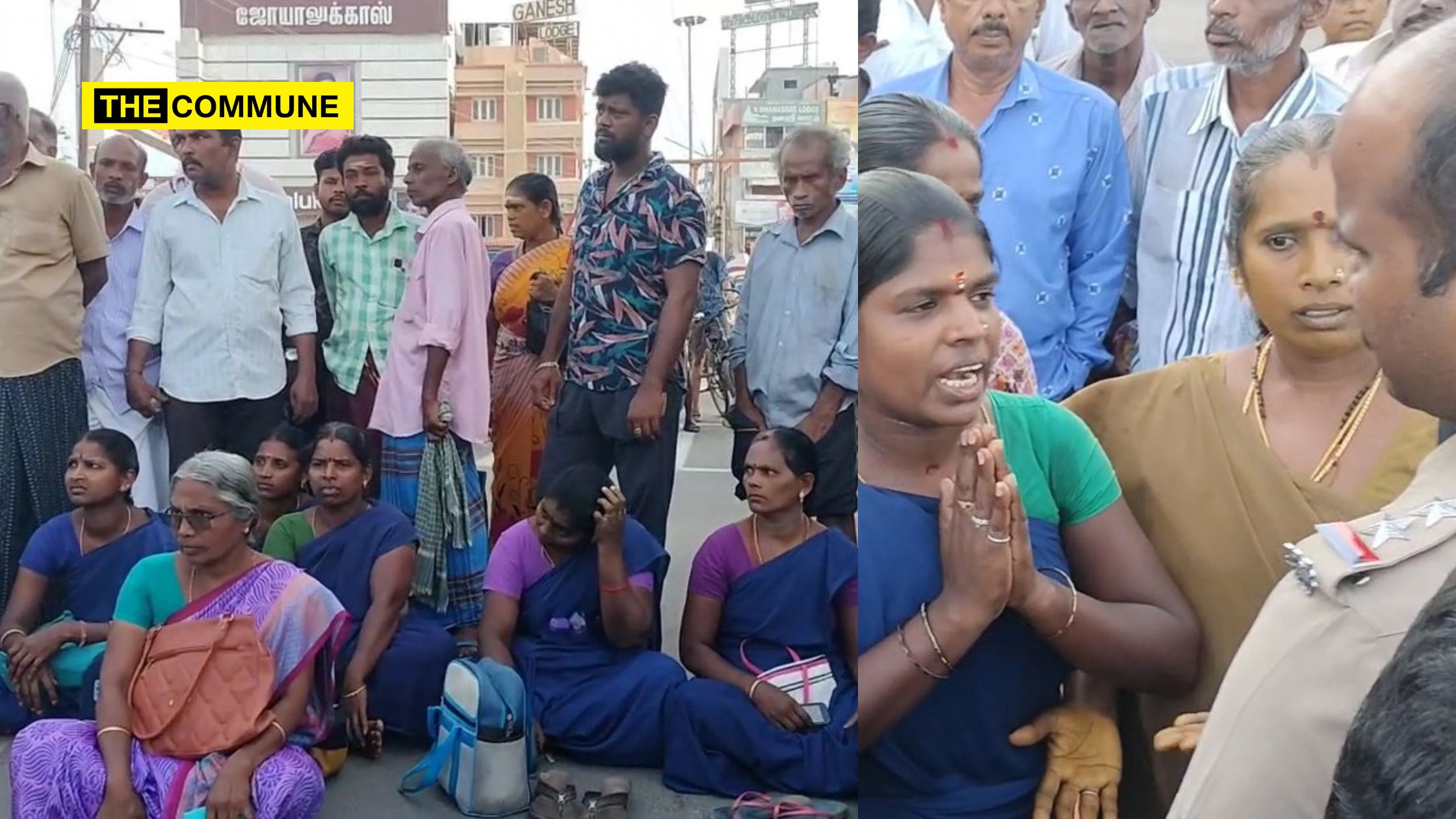
In a scathing post on social media platform X, former Tamil Nadu Chief Minister and All India Anna Dravida Munnetra Kazhagam leader O Panneerselvam (OPS), called Edappadi Palaniswami a mouthpiece of the Dravida Munnetra Kazhagam.
The X post on OPS’s official handle read, “I strongly condemn the double stand taken by Edappadi Palaniswami, acting as the mouthpiece of the DMK on the One Nation One Election policy. Puratchi Thalaivi Amma in 2016 in the Tamil Nadu Legislative Assembly said, ‘No matter how many centuries come after me, the All India Anna Dravida Munnetra Kazhagam will work for the people,’. Mr. Edappadi Palaniswami has acted contrary to this. He has surrendered to the DMK for selfish reasons. The identity of the party has been lost. I would like to inform you that in the upcoming Lok Sabha elections, the treacherous group will be chased by the people to the fourth place.”
The AIADMK had supported the One Nation One Election proposal of the Modi-led NDA government. However, after the AIADMK parted ways from the alliance, Edappadi stated that they were not in favour of the proposal.
In his press release, OPS stated that the TN Assembly had passed a resolution that they would not support the One Nation One Election policy. However, he added that ADMK member and MLA Thalavai Sundaram had stated, “We made almost 10 requests for 10 years starting in 2024 and ending in 2034. When the committee considers them, accepts them, sends it to the central government, and sees our advantages and disadvantages through it, we are “One country, one election”. When the situation arises, if the group fulfills our demands, we will definitely support it,” he said half-heartedly and vaguely.”
OPS also added that the resolution put forth by the DMK was passed unanimously with the support of the ADMK. He also alleged that with this, EPS had joined hands with the DMK, the party that Puratchi Thalaivar MG Ramachandran broke away from and fought against and AIADMK was a party raised by Amma (Jayalalithaa) to fight against the ‘evil power’. He also alleged that EPS had made a secret agreement with them and it was a sign of them going down.
This statement from OPS comes at a time when Edappadi Palaniswami appointed former minister Udayakumar as the Deputy Leader of the Opposition, a position the party had been vying for over a year.
Panneerselvam was designated the seat of Deputy Leader of the Opposition in the Assembly. The sudden allocation of the position of opposition vice-president to Udayakumar the following day, with Chief Minister Stalin citing the consideration of ADMK’s request, has raised eyebrows in political circles.
ஒரே நாடு, ஒரே தேர்தல் என்ற கொள்கையில் இரட்டை நிலைப்பாட்டினை எடுத்து தி.மு.க.வின் ஊதுகுழலாக செயல்படும் திரு. எடப்பாடி கே. பழனிசாமிக்கு கடும் கண்டனங்கள்.
எனக்குப் பின்னாலும் இன்னும் எத்தனை நூற்றாண்டுகள் வந்தாலும் அனைத்திந்திய அண்ணா திராவிட முன்னேற்றக் கழகம் மக்களுக்காகவே இயங்கும்”… pic.twitter.com/4hZOgabQAU
Tamil Nadu Bharatiya Janata Party President K Annamalai addressed medical students at ACS Medical College in Chennai on 13 February 2024.
In what was an apolitical speech that centered around topics relating to the country and how it could achieve greater heights in the future with the participation of the youth, especially as they were new voters, he spoke about the Ram Mandir in Ayodhya. He asked the students if the construction of the temple was indeed correct. When the students answered yes, he elaborated on why he asked the question. He said, “The number of people who visit Tirupati every year is 2.5 crores. From the 2.5 crores footfall, Lord Balaji earns ₹1,200 crores. The number of people who visit Mecca every year is 2 crores. Mecca earns about $12 billion. The number of people who visit the Vatican is 80 lakhs, the Vatican earns about $315 million. These are the world’s largest footfalls from different communities to their places of worship. Now the State Bank of India in its research report says next year Ayodhya is going to beat all the record where 5 crore people will visit Ayodhya in one year. They are going to bring money to UP next year which is ₹4 lakh crores. The government of UP is going to earn a tax of ₹25,000 crore.”
He further elaborated, “Don’t look at it as just a temple. There are six countries – top economies in the world, which run their budget only with tourists – Italy, Switzerland, just to give a couple of countries for your understanding. They run the whole country’s budget where the tourism revenue is the single most income sheet in the government. We are talking of one Rama Temple which is a matter of faith for more than 80% of Indians next year is going to attract 5 crore footfall which is going to help the various stakeholders earn up to ₹4 lakh crores and the government of UP in its taxation is going to earn ₹25,000 crores.”
However, this information was misinterpreted by the supporters of the DMK and ADMK as well as self-proclaimed “neutral” commentators like Sumanth Raman who went on and on about it questioning the claim. It is ironic that political commentators like Sumanth Raman fail to stay updated with the news when these exact facts were published in leading newspapers.
Where are these numbers coming from? How does this even make sense? ₹4 lakh crore over what period of time?? https://t.co/n1uLcjXVeI
Total earnings of worlds richest Temple Tirupati is around 4000crs but this pompous idiot is predicting ram temple in Ayodhya will earn 4 lakh crores yearly. I seriously doubt he’s an IIM graduate 🤦♂️😀 I feel pity for his allakais who are struggling day in day out for muttu 🤦♂️ https://t.co/txJyglX0k2
Sir how can you question the novice ? He’s from IIM 😂 don’t you know Varanasi with 13 crore tourists generated 12 lakh crores and that’s why people from Uttar Pradesh come to Tn to invest and work as contract labourers. 😂 pic.twitter.com/NptRxYzeXC
When presented with facts, the same neutral commentator and DMK/ADMK supporters start shifting goalposts. The below post is from the State Bank Of India report that Annamalai mentions in his speech.
Dear @siddusayss, Mr.@annamalai_k, the proud IIM Alumni is right & he quoted #SBI’s research findings. International Stock Market Research Firm #Jefferies also vouched the same.
A mob of protesters attacked an ANI cameraperson, Sikander, and damaged his camera while he attempted to film the downing of a police drone using kite strings near the Shambhu border on 14 February 2024.
Sikander, accompanying ANI Chandigarh reporter Karan Verma, suffered a head injury and a fracture in his right arm. Protesters, using kite strings to bring down police drones firing tear gas, assaulted Sikander and Verma around 6 pm.
It is noteworthy to remember that self-styled fact-checker had been dog-whistling about ANI and its founder Smita Prakash for quite some time now.
Responding to this allegation by the X user that the ANI journalist was attacked because of Mohammed Zubair, the alleged fact-checker replied, “No. This is a direct result of the News Agencies Pro-Govt narrative. Reporters on the ground have to unfortunately face this for the fault of their bosses in news rooms.” justifying the attack and blaming ANI for its “pro-govt” stance.
No. This is a direct result of the News Agencies Pro-Govt narrative. Reporters on the ground have to unfortunately face this for the fault of their bosses in news rooms. pic.twitter.com/reQh1D5a6k
It is also important to remember how Nupur Sharma received fatwas because Zubair selectively edited the segment where a Muslim speaker used derogatory language towards the Shivlingam. The video began with Nupur cautioning against the use of offensive language towards the Hindu religion and its deities. Nonetheless, in his tweet, Zubair implied that only Nupur had made derogatory remarks, distorting the context of the situation.
It is also noteworthy that Zubair had mocked the Prime Minister over the death sentence awarded to the 8 Indian Navy veterans back in October 2023. He has not put out any posts after the news of their release.
Subscribe to our channels on Telegram, WhatsApp, and Instagram and get the best stories of the day delivered to you personally.
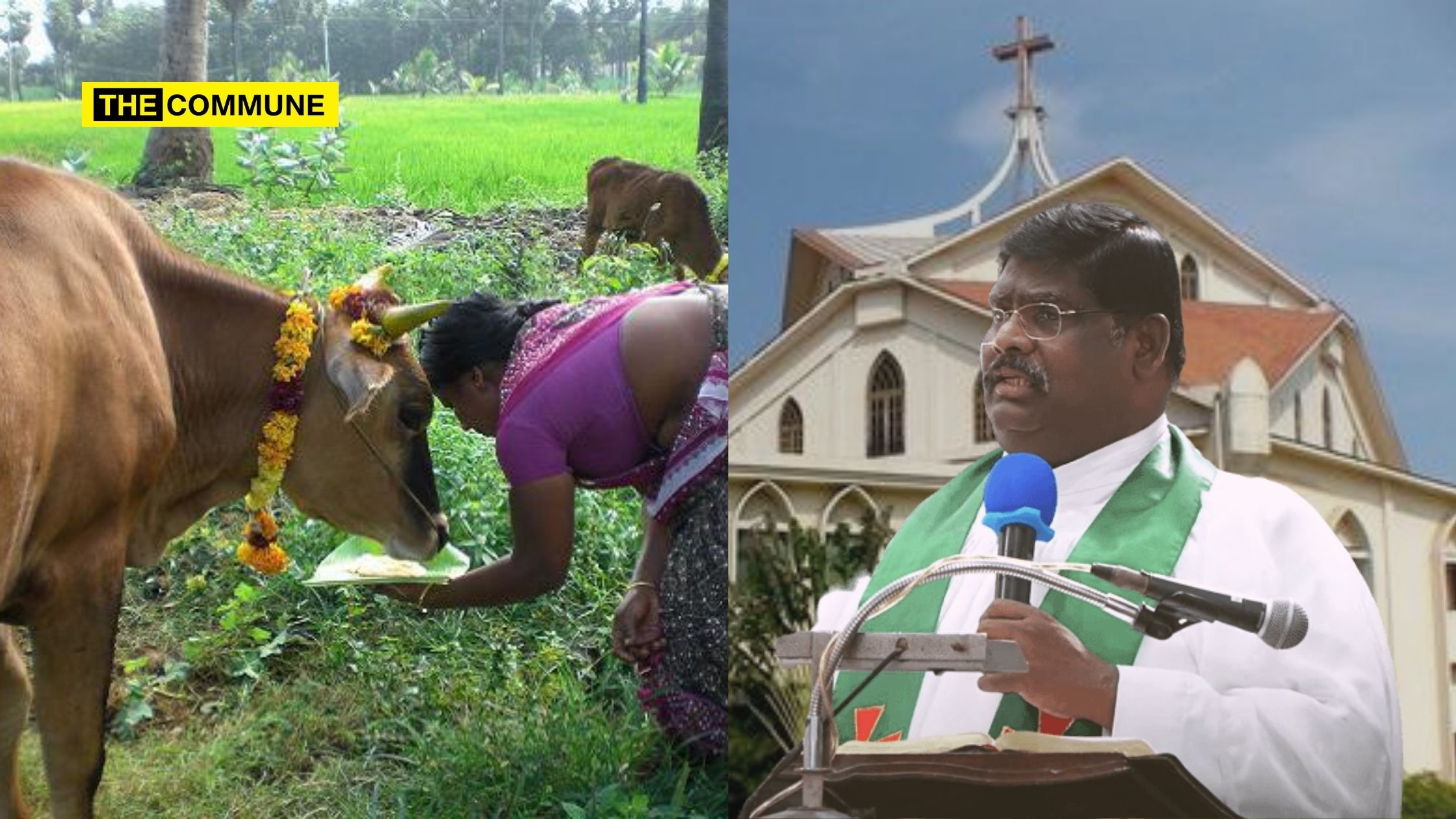
In what can be seen as another move towards minority appeasement, Tamil Nadu Chief Minister MK Stalin has stated that the DMK government is open to contemplate extending reservations to individuals from the Backward Classes (BCs) and Most Backward Classes (MBCs) who have embraced Islam.
On 15 February 2024, Stalin addressed the Legislative Assembly and expressed the State government’s willingness to explore the extension of reservations to individuals from the Backward Classes, Most Backward Classes, and de-notified communities who had embraced Islam.
This came in response to Manithaneya Makkal Katchi (MMK) floor leader M.H. Jawahirullah’s plea highlighting the denial of reservations to converted members of these communities.
Chief Minister Stalin assured that the government would consult legal experts and take necessary steps. He acknowledged the DMK government’s commitment to enhancing the socio-economic and educational status of Adi Dravidar, Backward Classes, Most Backward Classes, and de-notified communities, emphasising their protection.
In 2023, the Tamil Nadu Assembly, led by Chief Minister MK Stalin, passed a resolution urging the Centre to amend the Constitution for statutory protection, rights, and concessions, including reservations, for Scheduled Caste members who converted to Christianity. BJP opposed, walked out. Stalin defended the move, emphasising the need for social justice. BJP accused the resolution of being a diversion from recent issues targeting Scheduled Castes.
The Madras High Court in 2022 ruled that individuals who convert to another religion cannot retain their original caste or community for the purpose of claiming reservations. In the case of U Akbar Ali v The State of Tamil Nadu and another, the court clarified that caste-based reservations cannot be sought post-conversion.
It is noteworthy to remember that just a few days ago before the anniversary of the 1998 Coimbatore blasts, the DMK government had released 3 convicts involved in the blasts.
The Dilli Chalo March started by the farmers in Punjab commenced on 13 February 2024 . In contrast to previous demonstrations that primarily opposed three agricultural laws, the current protest, labelled under the banner of “Dilli Chalo,” incorporates a broader spectrum of demands.
These include securing legal assurances for the Minimum Support Price (MSP) for all crops, implementing the recommendations of the Swaminathan Commission, providing comprehensive debt relief for farmers, establishing pensions for farmers and withdrawal of cases against demonstrators involved in the 2021 protests. The leadership of the Farmers’ Protest 2.0 is held by the Samyukt Kisan Morcha and Kisan Mazdoor Morcha.
Farmers are also advocating for penalties against those engaged in the sale of counterfeit seeds, pesticides, and fertilizers. They are pushing for an increase in the number of work days in the rural employment guarantee scheme to 200 days. Additionally, the protesters are calling for India to withdraw from the World Trade Organization (WTO) and nullify all existing free trade agreements.
The agricultural community is requesting guaranteed floor prices, known as Minimum Support Price (MSP) for over 20 crops annually, to enable them to sell the majority of their produce at government-controlled wholesale markets or mandis. They are also urging the government to fulfill its commitment to doubling farmers’ income. They argue that cultivation costs have surged in recent years while incomes have stagnated, making farming economically unsustainable. With the new wheat crop ready for harvest in about a month, the farmers are well-prepared for sustained protests, reinforcing tent camps along highways while tending to their crops.
Union Minister for Agriculture Arjun Munda has expressed the Centre’s willingness to engage in further discussions with protesting farmers, provided a conducive environment is ensured. The protests, originating mainly from Punjab, Haryana, and parts of Uttar Pradesh, have entered their second day on 14 February 2024, with demands including legislation guaranteeing a minimum support price for agricultural produce.
BJP national spokesperson and MP Sudhanshu Trivedi stated that the government cannot enact new legislation at the moment as the Lok Sabha session has concluded. He highlighted the government’s sensitivity to farmers’ issues and noted that many of their demands have already been addressed. Trivedi deemed the demand for a new law at this juncture as technically unfeasible, given the adjournment of the Lok Sabha session, and emphasized the limitations on legislative action at this time.
On 7 June 2023, the Union Cabinet approved an increase in the Minimum Support Price (MSP) for Kharif crops for the marketing season 2023-24. Union Minister Piyush Goyal, addressing a press conference, stated that this decision aims to guarantee profitable prices for farmers and promote crop diversification. The overall Kharif crop estimate for the current year is 330 million tonnes, a notable increase from the 285 million tonnes recorded in 2018-19.
The MSP for the common grade variety of paddy has been raised by Rs 143 to Rs 2,183 per quintal for the 2023-24 crop year, up from Rs 2,040 in the previous year. The most significant increase in MSP is observed in moong, with a 10.4% rise to Rs 8,558 per quintal for the 2023-24 crop year, compared to Rs 7,755 per quintal in the previous year. Other pulses see an increase in MSP ranging from 6-7%. In cotton crops, the MSP hike ranges from 8.9% to 10%, linked to specific grades.
Over the past four years, there has been a 25% increase in pulses production and a 30% increase in oilseed production. The decision to raise MSP for Kharif crops aligns with the Union Budget 2018-19 announcement, aiming to set the MSP at a minimum of 1.5 times the All-India weighted average Cost of Production, ensuring reasonably fair remuneration for farmers. The anticipated margin to farmers over their cost of production is projected to be highest for bajra (82%), followed by tur (58%), soybean (52%), and urad (51%). For other crops, the margin to farmers over their cost of production is estimated to be at least 50%.
The government has been actively promoting the cultivation of crops beyond cereals, such as pulses, oilseeds, and Nutri-cereals, by offering an increased Minimum Support Price (MSP) for these crops. Moreover, various schemes and initiatives, including the Rashtriya Krishi Vikas Yojana (RKVY) and the National Food Security Mission (NFSM), have been launched to incentivize farmers to diversify their crop choices.
The Third Advance Estimates for 2022-23, the total foodgrain production in the country is projected to reach a record 330.5 million tonnes. This represents a substantial increase of 14.9 million tonnes compared to the previous year, 2021-22, marking the highest growth in the last five years.
But Reuters reported that state agencies only purchase rice and wheat at MSP, benefiting merely 7% of farmers who cultivate these crops. And suggested remedy to ease tensions, the government might consider offering a bonus above the minimum support price for 2024 as a concession to the protesting farmers.
Rahul Gandhi who is on his Bharat Jodo Nyay Yatra has indicated that he will join the protest. With regard to the protests, in what seems as if he is instigating the crowds, he wrote on his official X handle, “Our legal guarantee on MSP will bring 3 big changes in the lives of farmers. By getting the right price for the crop, the farmer will get rid of the problem of debt. No farmer will be forced to commit suicide. Farming will be a profitable business and farmers will become prosperous. And a prosperous farmer will change the destiny of the country.#KisaanNYAYGuarantee”
हमारी MSP पर कानूनी गारंटी किसानों के जीवन में 3 बड़े बदलाव लाएगी।
– फसल के सही दाम मिलने से किसान कर्ज़ की मुसीबत से छुटकारा पा जाएगा।
– कोई भी किसान आत्महत्या को मजबूर नहीं होगा।
– खेती मुनाफे का व्यवसाय होगा और किसान समृद्ध बनेगा।
In another post, he also mentioned “Modi, who ‘cultivates lies’ day and night, has only cheated the farmers in the last 10 years. By promising double the income, Modi also made the farmers yearn for MSP. Due to inflation, farmers’ debts increased by 60% due to not getting fair prices for their crops – as a result, about 30 farmers lost their lives every day. The one whose USP is deception, can only do politics with the farmers in the name of MSP, not justice. Those who put obstacles in the path of farmers are not worthy of trust, uproot them from Delhi, Congress will provide justice and profit to the farmers.”
दिन रात ‘झूठ की खेती’ करने वाले मोदी ने 10 वर्षों में किसानों को सिर्फ ठगा है।
दो गुनी आमदनी का वादा कर मोदी ने अन्नदाताओं को MSP के लिए भी तरसा डाला।
महंगाई तले दबे किसानों को फसलों का सही दाम न मिलने के कारण उनके कर्ज़े 60% बढ़ गए – नतीजा, लगभग 30 किसानों ने रोज़ अपनी जान…
On 13 February 2024, he wrote, “Farmer brothers, today is a historic day! Congress has decided to give legal guarantee of MSP to every farmer on crops as per Swaminathan Commission. This step will change the lives of 15 crore farmer families by ensuring their prosperity. This is the first guarantee of Congress on the path of justice.”, thus making a promise to the farmers.
किसान भाइयों आज ऐतिहासिक दिन है!
कांग्रेस ने हर किसान को फसल पर स्वामीनाथन कमीशन के अनुसार MSP की कानूनी गारंटी देने का फैसला लिया है।
यह कदम 15 करोड़ किसान परिवारों की समृद्धि सुनिश्चित कर उनका जीवन बदल देगा।
He has been writing multiple posts about the protests and utilizing the opportunity to target Prime Minister Modi. Here’s another post he wrote. It said, “Modi, his propaganda machinery and friendly media are the enemies of the poor and farmers. When it comes to the interests of those who built India, ‘government experts’ start worrying about the budget, but it is not about the budget, it is about the intentions. Silent on loans and tax waivers worth lakhs of crores of industrialist friends, silent on water, forests and land being gifted to them, silent on PSUs being sold at throwaway prices. But on the issue of guarantee of MSP to farmers, respect to householders and pension to firefighters – questions only questions. History is witness to the fact that Congress has never been afraid of taking big and revolutionary steps. Be it the Green Revolution, bank nationalization, creation of public sectors or economic liberalization, our decisions have always laid the foundation for the future of the country. Today, providing MSP to every farmer is the need of the hour and this decision of Congress will also prove to be a milestone. This will change the lives of crores of farmer families of the country including the rural economy. We take decisions not for politics, but for the country.”
मोदी, उनका प्रचारतंत्र और मित्र मीडिया गरीबों और किसानों के दुश्मन हैं।
जब बात भारत बनाने वालों के हित की आती है तो ‘सरकारी एक्सपर्ट्स’ को बजट की चिंता सताने लगती है, पर बात बजट की नहीं, नीयत की है।
उद्योगपति मित्रों के लाखों करोड़ों के ऋण और टैक्स माफी पर चुप, उन्हें जल, जंगल…
But Sarwan Singh Pandher, the General Secretary of the Punjab Kisan Mazdoor Sangharsh Committee, stated during a press conference, “Congress party does not support us, we consider Congress equally responsible as much as the BJP. These laws were brought by Congress itself. We are not in favor of anyone, we raise the voice of farmers.”
Welfare Schemes For Farmers In The Modi Regime
During this crucial period, it is essential to recognize the various farmer welfare schemes implemented by the Modi-led Government aimed at empowering and uplifting the agriculture sector. Under Prime Minister Modi’s guidance, these initiatives have sought to enhance the lives of farmers by providing financial security, alleviating their financial burdens, fostering skill development, ensuring market access, and promoting sustainable agricultural practices.
Paramparagat Krishi Vikas Yojana (PKVY): Launched in 2015, PKVY promotes organic farming practices and the adoption of traditional methods, encouraging farmers to pursue organic farming certification and contributing to sustainable agriculture, improved soil fertility, and healthier farming practices.
Pradhan Mantri Kaushal Vikas Yojana (PMKVY): Launched in 2015, PMKVY aims to provide skill training to farmers and rural youth, empowering over 40 million individuals with essential agricultural skills, improving productivity, and generating employment opportunities.
Pradhan Mantri Krishi Sinchai Yojana (PMKSY): Introduced in 2015, PMKSY aims to enhance water efficiency and promote sustainable irrigation practices, positively impacting agricultural productivity and water conservation across the nation.
Soil Health Card Scheme: Introduced in 2015, this scheme provides personalized soil health reports to farmers, offering insights on soil nutrients and recommendations for balanced fertilization. By promoting proper soil management practices, it optimizes yields, reduces input costs, and enhances soil health across agricultural lands.
Pradhan Mantri Fasal Bima Yojana (PMFBY): Initiated in 2016, PMFBY offers comprehensive crop insurance coverage to farmers at affordable premiums, ensuring timely compensation for crop losses due to natural calamities, pests, or diseases. This scheme has brought financial security and stability to millions of farmers, safeguarding their livelihoods.
e-NAM (National Agriculture Market): Launched in 2016, e-NAM is an electronic trading portal that integrates agricultural markets throughout India, revolutionizing agricultural trade by enabling farmers to sell their produce online, discover competitive prices, and connect with buyers across the nation.
PM Krishi Sampada Yojana: Launched in 2017, this scheme focuses on modernizing the food processing sector and creating robust infrastructure for the agro-industry. It aims to reduce post-harvest losses, improve processing capabilities, and promote value addition, generating employment opportunities and enhancing farmers’ income.
Pradhan Mantri Kisan Samman Nidhi (PM-KISAN): Launched in 2019, PM-KISAN is an income support scheme designed to assist small and marginal farmers. Eligible farmers receive direct financial assistance of Rs 6,000 annually in three equal installments, significantly boosting their income and improving their quality of life, benefiting over 120 million farmers.
Pradhan Mantri Atmanirbhar Bharat Abhiyan (ABHA): Initiated in 2020, ABHA focuses on making India self-reliant in agriculture and food production through components such as crop diversification, productivity enhancement, and value addition, thereby increasing farmers’ income and fostering sustainable agricultural practices.
Subscribe to our channels on Telegram, WhatsApp, and Instagram and get the best stories of the day delivered to you personally.
Is it fair to juxtapose two states with disparate beginnings and then censure one for its pace of progress?
In his thinkpiece titled, ‘Has Uttar Pradesh’s Economy Surpassed Tamil Nadu?’, published in Frontline on 7 February 2024, Palanivel Thiaga Rajan (PTR), Tamil Nadu’s Minister for Information Technology and Digital Services, presents the states as competitors, without acknowledging that Tamil Nadu enjoyed a head start from the outset.
The unfair comparison has to be countered.
Comparison of the Key Indices of Uttar Pradesh and Tamil Nadu
A. Growth Rates Within HDI
For instance, in the fiscal year 2004-05, while 22.5 percent of the total population of Tamil Nadu was below the poverty line, the corresponding figure for Uttar Pradesh stood at 32.8 percent.
Not only did Uttar Pradesh exhibit a higher percentage of the population below the poverty line than Tamil Nadu, but in absolute terms, the total population of Uttar Pradesh also exceeded that of Tamil Nadu by over 60 percent.
Thus, the population below the poverty line in Uttar Pradesh surpasses Tamil Nadu by a substantial margin, not by a mere ‘10 percent’, as one might think in the first instance.
While Tamil Nadu has indeed experienced a noteworthy 50 percent reduction in the proportion of multidimensional poverty between 2015-16 and 2022, it is crucial to evaluate the recent performances of both states in absolute terms.
PTR rightly highlights that Uttar Pradesh’s Gross State Domestic Product (GSDP) has not yet reached the level of Tamil Nadu’s; however, one must not overlook the significant transformative impact that the state’s development initiatives may have in the coming years.
Under the leadership of Yogi Adityanath, the Uttar Pradesh government facilitated the escape of 3.38 crore individuals from poverty between 2015-16 and 2021-22, a figure much larger than that of Tamil Nadu.
Prima facie, this accomplishment not only underscores the earnest efforts of Uttar Pradesh but also indicates an increase in tax revenue, reflecting a positive trajectory in the state’s economic landscape.
B. Economic Growth Trends
Between 2010-11 and 2021, foreign direct investment (FDI) into Uttar Pradesh surged by 131.18 percent. This is not to discredit Tamil Nadu’s commendable performance, as its FDI inflow in equity soared by 169 percent. Rather, it illustrates Uttar Pradesh’s trajectory of catching up with Tamil Nadu, a comparison that might have seemed outlandish even a decade ago.
In 2016, Tamil Nadu was amongst the top five states with 49 registered startups, while Uttar Pradesh was nowhere close to it with only 27 registered start-ups. However, the tables have completely turned since Yogi Adityanath assumed power in Lucknow.
UP today ranks fourth when it comes to registered startups and has already crossed Tamil Nadu’s number by a significant margin The impact of the same can be seen in the employment the start-up ecosystem generates in the two states with 67,694 direct jobs being created in UP between 2019-23, 69 per cent more than Tamil Nadu. These are publicly available facts that PTR ignores in his article.
To revisit our stance, we believe that it was never a competition amongst states to begin with but a marathon effort by all states resulting in a win for India. In fact, Tamil Nadu and Uttar Pradesh have been leading India’s electronic export journey and have been consistently among the top three exporter states for years.
How A Good Decade Can Make All The Difference
The economic transformation of Indian states in merely a decade is not unheard of, with Chhattisgarh being the biggest example of such a turnaround. At the time of its formation in 2000, Chhattisgarh accounted for just 1.4 percent of India’s total output and lagged most states on several development indicators.
However, under 15 years of the Raman Singh-led BJP regime, the state’s economy grew steadily. Between 2000-01 and 2014-15 (using data from the 2004-05 series), the Chhattisgarh economy grew at a compound annual growth rate (CAGR) of nearly 8 percent.
A similar economic transformation is already underway in Uttar Pradesh.
Uttar Pradesh has experienced a significant Foreign Direct Investment (FDI) surge in recent years. Data from the DPIIT and RBI indicate a fourfold increase in FDI between 2019 and June 2023 compared to the period from 2000 to 2017.
In just five years, FDI has soared from Rs 3,000 crore to approximately Rs 11,000 crore. Hence, if it took only five years for UP to surpass 22 other states, then it will definitely take less than 60 odd years to become one of the most industrialised and developed states. PTR’s 64-year wager is up for anyone’s contention.
Even on the social front, in Uttar Pradesh, the Infant Mortality Rate (IMR) has decreased from 61.0 in 2010 to 38.0 in 2020, showcasing how right intentions yield substantial rewards. Such transformation is remarkable when one reflects on the handicapped start that UP had had. Even after a decade post-independence, when Tamil Nadu had a literacy rate of over 30 percent, UP was below 25 percent.
It is through mutual learning and drawing inspiration from each other that Indian states can collectively lead India towards a brighter future. The crucial 25-year period between now and 2047 calls for sharing best practices and working together to achieve developmental goals, and not for getting into a squabble over ‘who did it better’.
The GSDP Question
With the stable government in Uttar Pradesh, post-COVID-19, the economy has grown more than that of Tamil Nadu.
Since 2016, the GSDP has increased at an average of 10.13 percent yearly for Tamil Nadu – while Uttar Pradesh has kept pace with an average of 10.49 percent. CM Yogi Adityanath has laid a strong foundation of infrastructure development, pro-poor welfare policies, and focus on manufacturing and all-round development of institutions. This is sure to herald a period of monumental growth for Uttar Pradesh in the coming decades.
Cooperation, Not Competition
We see merit in PTR’s proposition that there should be a population factor while assessing the progress of the state. As per the budget estimates for 2022-23, Tamil Nadu has the highest outstanding debt in the country, closely followed by Uttar Pradesh. But let’s compare the Per Capita Debt of both Tamil Nadu and Uttar Pradesh.
In fact, the declining state of Tamil Nadu’s finances makes every citizen in Tamil Nadu shoulder more debt than ever before.
The pervasive corruption within the state of Tamil Nadu, acknowledged in audio tapes said to be of PTR himself, is bound to derail the state’s chartered growth patterns. Despite having a head start, Tamil Nadu’s trajectory is marred by a series of setbacks, largely attributed to the flawed policies and reckless freebies and protests of the “Dravidian Model.”
If one were to, then, presume that Tamil Nadu is on the path of economic decline and UP on a steep incline, would it really take 64 years for the states to level with each other? As keen observers of the Indian political landscape at this juncture, we would advise against placing such unwise bets. Our money is on the steady and sure rise of a unified economic powerhouse, that is India.
Kritica Bisht, from Lucknow, and Gopinath Vijayaraj, from Chennai, are public policy researchers.
This article was originally published in Swarajya and has been republished here with permission.
Subscribe to our channels on Telegram, WhatsApp, and Instagram and get the best stories of the day delivered to you personally.
In a widely circulated video on social media capturing Tamil Nadu BJP president Annamalai’s press meet in Coimbatore on 14 February 2024, reporters questioned him about DMK Organization Secretary RS Bharathi’s recent statement comparing MGR to Udhayanidhi Stalin. Annamalai responded by sarcastically ridiculing they were currently sloganeering for Udhayanidhi Stalin indicating him as a third-generation politician. He also criticized the DMK for speaking about MGR cheaply during his political tenure and now using him for comparison.
To commemorate the Youth Welfare and Sports Minister and DMK Youth Secretary, Udhayanidhi Stalin’s birthday, a public meeting was organized by the Pudukottai North District DMK. During the event, DMK Organization Secretary RS Bharathi highlighted the significant victory achieved by DMK, attributing prominence to Udhayanidhi Stalin in the elections. Drawing parallels, he noted that just as people lined the streets to welcome MGR in the past, now they eagerly anticipate the arrival of Udhayanidhi Stalin, emphasizing the comparable reception given to both leaders.
While the reporters asked Annamalai about RS Bharathi’s statement that people are looking at Udhayanidhi like MGR. Annamalai responded immediately, “They feel like looking at MGR in the poster? How will it be to look at revolutionary leader MGR in a poster? Today, the situation is such that the slave crowd has increased. He is 80/82, someone who should have been a senior political leader. Someone is saying Utsavar, Moolavar, did you see that in Coimbatore? That Stalin is the Moolavar (main deity). What is the meaning that he is Utsavar? There is a group that thinks that if they lock up Stalin in a room and leave it locked, let go of him in 2024ave 2024, shout slogans praising Udhaynidhi and stick with him – they think they too will grow. How things have turned out in TN is that these slaves have now become Jaalra Goshtis – people who kiss up to their masters,” he said.
“The uniqueness of MGR is that he was a revolutionary leader, he came from the bottom and worked hard to make a place for himself in the film industry and became an individual and came to politics bound by the love of the people. If these people think of MGR when looking at him, then one must remember how badly they have spoken of MGR when he was in politics. Inspite of that, he emerged as a great leader and won the hearts of the people,” he further said.
“What is Udhayanidhi Stalin’s achievement? He was born in Gopalapuram, studied in a college in some family quota. After that, he went on to act in films under family quota, started Red Giant movies through family quota, won a seat through family quota. Post this, he became a minister through this family quota. Is there even 1% comparison between the two? There is not even 1% comparison. So the slave group enjoys watching Udhayanidhi Stalin like they did watching MGR in a poster. On the other hand, to understand the extent of this kissing up slaves over the past two day, you can check out the statements made – Utsavar/Moolavar, comparing MGR and Udhayanidhi,” he criticized.
Tamil Nadu BJP President K Annamalai exposed the Tamil Nadu government’s Fact Check Team for promoting a false narrative with a selectively edited video, specifically concentrating on his press briefing regarding one of the ten lies he exposed, namely the Innuyir Kappom Scheme in which the state government simply rebranded and took credit for a program similar to the Good Samaritan Scheme introduced by the central government..
During the press briefing, Annamalai said, “The Tamil Nadu government’s Innuyir Kaappom Scheme is India’s first ever scheme. This is also a lie, the centre introduced this scheme in 2021, with Good Samaritan status and an incentive of ₹5000 will be provided to those who admit accident victims in hospitals immediately. They are taking credit for the central government scheme.”
On 14 February 2024, the Fact Check Team of the Tamil Nadu government, led by DMK supporter and YouTuber Iyan Karthikeyan, responded to Annamalai’s claims, asserting that “Annamalai made accusations without having any understanding of the ‘Innuyir Kappom’ Project”.
Drawing a comparison between the central government’s Good Samaritan scheme (GSS) and the state government’s Innuyir Kappom Thittam (IKT), the Fact Check Team presented an illogical argument asserting their unrelated and distinct nature. The IKT, implemented by the Tamil Nadu state government on 18 December 2021, aimed to cover the total treatment cost for the initial 48 hours following an accident in any hospital in Tamil Nadu where the injured person is admitted. In contrast, the GSS, introduced by the union government on 3 October 2021, rewards individuals who promptly take road accident victims to the hospital with a sum of ₹5000.
‘இன்னுயிர் காப்போம்’ திட்டம் குறித்த புரிதலே இல்லாமல் அண்ணாமலை குற்றச்சாட்டு
In reaction to this, Tamil Nadu Bharatiya Janata Party President K Annamalai countered with news citations, delivering a fitting response and thanked Fact Check Team for accepting that the Good Samaritan Scheme was not an idea of DMK government through his official X platform. He wrote, “After we exposed the ten lies in the Governor’s address yesterday, here comes another lie from the Fact Check unit of the TN Govt. Thank you for accepting that the Good Samaritan scheme is not the DMK Govt’s idea. But it was announced in Dec 2021 as part of the “Innuyir Kappom Scheme”—link to the article below. https://dinamani.com/tamilnadu/2021/Dec/18/mk-stalin-inaugurates-innuyir-kappom-scheme-in-tn-3757229.html. Now, let me address other elements of your claim. Free hospitalisation for road accident victims is implemented under the PMJAY scheme & Motor Vehicle Accident fund of the Central Government, and it was sent to State Governments for consideration in July 2020 – Link below. https://hindustantimes.com/india-news/govt-plans-scheme-for-cashless-treatment-of-accident-victims/story-bTTxCYZVmAR4BrlrugCLhJ_amp.html Under PMJAY, the TN Govt has received ₹1694 Crores from the Central Govt. We strongly suggest that the TN Fact Check unit read beyond the Murasoli to understand the world’s reality!”
After we exposed the ten lies in the Governor’s address yesterday, here comes another lie from the Fact Check unit of the TN Govt.
Thank you for accepting that the Good Samaritan scheme is not the DMK Govt’s idea. But it was announced in Dec 2021 as part of the “Innuyir Kappom… https://t.co/O6pVDrBgmN
This comes against the backdrop of the Tamil Nadu Governor RN Ravi skipping his inaugural address in the legislative assembly on 12 February 2024 highlighting that the address provided to him by the State government and intended for him to read, included numerous passages with which he vehemently disagreed, citing both factual and moral grounds.
Annamalai, through his official X handle, shared a video containing his press briefing, revealing the falsehoods present in the Governor’s address on 13 February 2024. He highlighted ten falsehoods in the speech, spanning across different schemes and policies. He also spoke of these lies/falsehoods at a press briefing.
Annamalai stated, “First lie that said was “Today the Dravidian model government of Tamil Nadu was the destination for global investors”. Everyone knows that companies are vacating TN. The investments received in the global investors meet are very minimal compared to other states. Tamil Nadu has received only ₹6.6 lakh crore, UP received ₹33 lakh crore, Gujarat received ₹26 lakhs crore and Karnataka received ₹10 lakh crore. Hence Tamil Nadu is not the destination of investors on any basis. There is a SIPCOT in Ulundurpet. Two years ago, the Tamil Nadu government said a footwear company is investing ₹2,000 crore. Not even ₹2 was invested there. We have come across 200 constituencies throughout Tamil Nadu, we have seen the status of SIPCOT and the industries sectors in TN. The power tariff has increased. The TN government has not even refunded the state GST. This alone amounts to over ₹1000 crore pertaining to various industries – this is a blatant lie. How will the Hon. Governor read out this lie?”
“The second lie is praising the ruling DMK government for good handling of the Chennai and south Tamil Nadu floods. When Chennai was gasping for life during the Michuang cyclone and when heavy rains hit south Tamil Nadu, the chief minister was in Delhi for the I.N.D.I alliance meeting. If in the assembly they want to praise themselves let them do so in their party functions. Nothing wrong in it but writing out a blatant lie and expecting the Governor to read it out and praise the CM and the government how will he do that? The governor himself has criticized them for not handling the flood situation in Chennai properly. How will he praise that?” he asked.
“The third lie – Tamil Nadu must be compensated with ₹20,000 crore to make up for the loss due to GST implementation. GST came into effect from 2017. The centre said states will be compensated for the next 5 years for a projected growth of 14%. Accordingly Tamil Nadu has received ₹27,959 crore as GST compensation from 2017-18 for 5 years. On top of it, TN received ₹14,336 crore to manage the deficit during the pandemic. Today the Tamil Nadu government must explain what kind of financial loss they are talking about. Everyone knows about the economy today. Before the GST was implemented, Tamil Nadu’s own tax revenue growth was 3% in 2013-14. It was 7% in 2014-15, 2% in 2015-16 and 7% in 2016-17. After the GST implementation, Tamil Nadu’s own tax revenue growth was 14% in 2018-19, it was 10% in 2019-20 and 2020-21 was pandemic period, in 2021-22 it was 16% and 24% in 2022-23. It is clear that the tax revenue of TN has increased after the implementation of GST. Then on what basis are they claiming that there has been a loss of ₹20,000 crore? Is there any financial paper or white paper on this? How could they expect the Hon Governor to read out something written out of thin air?” he questioned.
“The 4th lie – The state government prioritises maintaining law and order and religious harmony. Won’t people laugh if they say they are maintaining law and order? What is right in their law and order? The law and order situation in TN is in dire straits. The Governor too exception to it last time as well. No one in Tamil Nadu will accept that law and order is maintained. That is the reason governor did not read it out,” he said.
“The 5th lie – The TN government has delivered the election promise by offering the Magalir Urimai Thogai. Is providing the cash benefit to only 40% of women in Tamil Nadu an accomplishment?” he questioned.
“The sixth lie – 2.73 lakh women have benefited from the Puthumai Penn Scheme. They have aborted the Gold for Mangalsutra scheme implemented by the previous government and rechristened old schemes with new names saying people benefitted fron them. The free laptop scheme for students has also been stopped,” he added.
“The seventh lie – The Chief Minister’s morning breakfast scheme is India’s first ever such scheme. The central government introduced this scheme in 2020 with National Education Policy. The centre is also providing funds to states for the morning breakfast scheme. How could the Dravidian model government claim that it is the first state to implement this scheme. That too is a lie,” he added.
“The eighth lie – Tamil Nadu Action Plan 2024 for the Welfare of Adi Dravidar and Scheduled Tribes. The Schedule Caste Special Plan fund of ₹10,000 crore given to Tamil Nadu by the centre has been sent back without spending in 2022. Today how will governor read when they write praising themselves?” he questioned.
“The ninth lie – We will press the central government to conduct the caste census. Correct, the previous government constituted the Kulasekaran committee. But when chief minister MK Stalin came to power, he terminated the committee without providing an extension. What is stopping you from constituting a committee for caste census? Why did you terminate the Kulasekaran committee? They need to answer this rather than blaming the centre,” he stated.
“The tenth lie – The Tamil Nadu governments Innuyir Kaappom Scheme is India’s first ever scheme. This is also a lie. The centre introduced this scheme in 2021. If someone is in an accident, an incentive of ₹5000 will be provided to those who admit accident victims in hospital immediately. The DMK government is claiming credit for this central government scheme. To summarise, the speech given by the government to the governor is chief ministers self-bragging. The governor denied reading out something which has lots of lies and wrong data. Whether the governor’s decision to read or not is a separate debate but the speech written had a lot of lies,” he finally stated.
The Hon Governor’s address prepared by the DMK Government was bundled with lies & addressed the media today, exposing a few of the many lies in that prepared address. pic.twitter.com/a61POhwclO