Home Blog Page 907

Advocate Writes To ASI To Demolish Illegal Structure Near Ancient Bhoganandishwara Temple In Nandi Hills

On 27 May 2024, advocate and Hindu activist Girish Bharadwaj from Karnataka addressed a letter to the Director of the Archaeological Survey of India (ASI), urging action to demolish an illegal structure near the Shri Bhoganandishwara Temple in Nandi Hills, which violates ASI regulations.

In his letter to the Director of ASI Bengaluru, Bharadwaj stated: “I am writing to bring to your attention a matter of significant concern regarding the unauthorized construction of a Masjid near the Bhoganandishwara Temple in Nandi, Chikkaballapura District. As you may recall, I previously communicated my concerns about this issue in a letter dated May 26, 2023, addressed to Shri G. Kishan Reddy, the Honorable Minister for Culture. Despite subsequent efforts, including filing an RTI application on February 22, 2024, and receiving a response from the Ministry of Culture on March 21, 2024, no action has been taken by the Archaeological Survey of India (ASI) to address this matter. Due to the laxity of ASI and procrastination, vested interests despite being served show cause notice not to build the Masjid, have completed the structure in violation of ASI rules.

I would like to apprise you that, Nandi Hills holds immense cultural and religious significance, being situated just 60 kilometers from Bengaluru. The Bhoganandishwara Temple, a Grade-1 ASI protected structure, stands as a testament to the area’s rich heritage. However, the recent construction of a Masjid near the temple, within a mere 70 meters, violates ASI regulations and the Ancient and Historical Monuments and Archaeological Sites and Remains Act, 2010. This unauthorized construction not only disregards established laws but also threatens the sanctity of the Bhoganandishwara Temple. If allowed to persist, it may lead to various activities such as non-vegetarian cooking, loudspeaker usage, and gatherings that could disrupt the peaceful atmosphere and religious practices of the temple and its devotees.

In light of these concerns, I urgently request the ASI to take decisive action to demolish the unauthorized structure. By doing so, we can Preserve the sanctity of the temple and uphold the interests of Hindu devotees who hold the Bhoganandishwara Swamy in high regard. Thank you for your attention to this matter. I trust that swift action will be taken to address this issue and restore the integrity of this sacred site.


On 19 February 2024, Girish Bharadwaj filed an FIR with the Police Sub-Inspector of Nandigram Police Station, and simultaneously sought a civil case directive from the Additional Civil Judge at the JMFC court in Chikkaballapura circle. The activist’s FIR highlights a concerning issue, despite two stoppage notices issued (Notice No. BNG/NOC/21-22/60 dated 05.08.2021 and Notice No. BNG/NOC/21-22/77 dated 25.08.2021), the Masjid Committee has continued construction of a mosque near an ASI-protected monument site.

The Bhoganandishwara Temple, officially notified in the Gazette of India (GOI) No. 55 Part II on 19 November 1951, is a centrally protected monument under the jurisdiction of the Superintending Archaeologist, ASI, Bengaluru Circle. Additionally, the GOI issued another gazette notification No. 13 dated 30 March 2010, under the AMASR Act 2010, which aims to preserve and protect heritage sites, ensuring no construction, including public projects, occurs within the protected areas surrounding monuments of national importance. Despite these regulations and the issued stop notices, unauthorized construction of a first-floor prayer hall and renovation work within approximately 30 meters of the Bhoganandishwara Temple by the Chairman of Masjid-E-Rahimiya has continued.

A show cause notice issued by the ASI Bengaluru Circle on 05/01/2023 stated:

“A SHOW CAUSE NOTICE UNDER SECTION 20A OF THE ANCIENT MONUMENTS AND ARCHAEOLOGICAL SITES AND REMAINS ACT, 1958 AS AMENDED BY THE ANCIENT MONUMENTS AND ARCHAEOLOGICAL SITES AND REMAINS (AMENDMENT AND VALIDATION) ACT, 2010.

WHEREAS it has been brought to the notice of this office that Shri Syed Masood S/o Syed Yak, Masjid Committee Member, Nandi Grama, Nandi-562101 is carrying out illegal construction of a Masjid within the prohibited area of Bhoganandiswara Temple, Nandi, which is a centrally protected monument. Repair/renovation of existing structures within the prohibited area of a centrally protected monument without obtaining an NOC for the same from the Competent Authority (Regional Director (South), Archaeological Survey of India, KSIMC Building, Industrial Estate, Bangalore 43) is illegal under the provisions of the Ancient Monuments and Archaeological Sites and Remains Act, 1958 as amended by the Ancient Monuments and Archaeological Sites and Remains (Amendment and Validation) Act, 2010.

WHEREAS as per the provision of Section 20A of the said Act, every area beginning at the limit of the protected area or the protected monument, as the case may be, and extending to a distance of 100 meters in all directions shall be a prohibited area in respect of such protected area or protected monument for the purpose of repair/renovation.

And whereas subsection (1) of section 20C of the Ancient Monuments Archaeological Sites and Remains (Amendment and Validation) Act, 2010 provides that any person who owns any building or structure, which existed in a prohibited area before the 16th day of June 1992, or which had been subsequently constructed with the approval of the Director General and desires to carry out any repair or renovation of such building or structure, may make an application to the Competent Authority for carrying out such repair or renovation. As per section 30(a) of the said Act, whoever raises any construction in the prohibited area shall be punishable with imprisonment not exceeding 2 years or with a fine which may extend to one lakh rupees or with both.

Now, therefore, you are directed to stop unauthorized constructions/repairs/renovations/reconstructions immediately and intimate this office within seven days from the receipt of this letter to show cause why necessary action should not be initiated against you under the provisions of the Ancient Monuments and Archaeological Sites and Remains Act, 1958 as amended by the Ancient Monuments and Archaeological Sites and Remains (Amendment and Validation) Act, 2010.”


Image

Image

Regarding the unauthorized construction and renovation of the Masjid-e-Rahemiya near ASI-protected monument sites, self-proclaimed narrative peddler Mohammed Zubair posted on his official X account that, “Pic taken is from Inside an ancient temple Bhoga Nandishwara Gudi, The Masjid-e-Rahemiya seen in the pic is accross the road, NOT adjecent. It has been ther for several years. The under constructed dome you see is above Khader Wali Mazaar which is across the road and is old too.” This statement subtly conceals the fact that, according to the aforesaid acts, no structures can be created or renovated in such areas without a No Objection Certificate (NOC) once the site is declared important and protected.

The Bhoganandishwara Temple – Marvel of Cultural Heritage of KN

The Bhoganandishwara Temple is the oldest surviving temple in the Nolambavadi style of Dravidian architecture in Karnataka. The temple, rich in heritage, features a large and intricately carved sabha-mandapa, inscriptions, and artwork dedicated mainly to Shaivism, but also significantly to Vaishnavism (Narasimha, Vishnu), Shaktism (Durga, Lakshmi), and Vedic deities (Surya, Agni). The temples host the history of the eastern regions of south Karnataka that flourished under the reign of the Rashtrakuta, Gangas, Hindu Nolambas—Pallavas, Hoysala and the Vijayanagara dynasties. Hence, the temple is protected and managed as a monument of national importance by the ASI.

Subscribe to our channels on TelegramWhatsApp, and Instagram and get the best stories of the day delivered to you personally. 
Hindu Activist Issues Notices To Remove HR&CE Executives From Management Committees Of Educational Institutes Run By Hindu Temples & Endowments

The seemingly endless string of arbitrary actions by the Hindu Religious and Charitable Endowment (HR&CE) department continues unabated. Adding to an already substantial list of grievances, the department has now appointed its executives to the management committee of Arulmigu Palaniandavar Arts College for Women in Palani. This move blatantly violates both the Tamil Nadu Private Schools (Regulation) Act, 2018, and the Tamil Nadu Private Colleges (Regulation) Act, 1976.

Temple activist TR Ramesh, on 30 May 2024, issued a notice urging the Secretary of the Religious Endowments Department of the Government of Tamil Nadu and the Commissioner to take action. Ramesh demands the removal of the Commissioner and all departmental personnel from the management committees of schools and colleges affiliated with Hindu temples.

In a letter addressed to the Secretary of the Government of Tamil Nadu, Tourism, Religious Endowments, and Culture Department at Fort St. George, Chennai 600 009, and The Commissioner of the Hindu Religious and Charitable Endowments Department at Nungambakkam High Road, Chennai 600 034, TR Ramesh wrote, “Educational Institutions run by Hindu ‘Temples and Endowments and whose management is illegally controlled by the officials of the Hindu Religious and Charitable Endowments Department — these officials are placed in the ‘Management Committees of such schools and colleges without any legal authority to do so – Imparting of instruction in the Hindu Religion, an essential purpose in starting such schools and colleges with temple/endowment funds and properties NOT carried out even after many years of inception of these schools and colleges. You are called upon to

  • (a) remove the Commissioner and all servants of the HR&CE Department from the Management Committees of schools and colleges belonging to Hindu Religious Institutions with immediate effect and leave the constitution of the appropriate management committee of schools and colleges with the trustees of the respective temples/endowments in accordance of the Private School Regulation Act, 2019 and in accordance with the Tamil Nadu Private Colleges Regulation Act, 1976 respectively 
  • (b) Introduce stream of courses that carry out instructions in the Hindu Religion and particularly in the instructions pertaining to the religious denomination of the temples/ endowments to which such schools and colleges belong

Taking this matter to his official X account TR Ramesh stated, “I have today issued notice to Secretary – Religious Endowments Department – Government of Tamil Nadu and the Commissioner of @tnhrcedept to remove the Commissioner and all servants of the Department from the Management Committees of schools and colleges that belong to Hindu Temples. Besides occupying Hindu Temples by FRAUD for more than 70 years another serious violation of law and Hindu Dharma – carried out by the @tnhrcedept is the illegal occupation of the Management Committees of Schools and Colleges belonging to Hindu Schools.”

The instrumentalities of the HR&CE Department control every aspect of these educational institutions which are HINDU schools and colleges. They treat them as SECULAR institutions. According to the Tamil Nadu Private Schools (Regulation) Act, 2018 and the Tamil Nadu Private Colleges (Regulation) Act, 1976 the Commissioner and the HR&CE officials have no authority to be present in the School and College Management Committees. The illegal management committees also get to decide appointment of teaching and non-teaching staff all administrative expenses and tenders for major works and purchases in the schools and colleges.“, he said.

These are naturally Capital Gains for those in power. The main reason of illegal occupation of Hindu schools and colleges by HR&CE officials. Another major fraud carried out by the Department is the denial of teaching HINDU Religion as a prime subject in these schools and colleges. This is a basic requirement in starting this colleges as per the TN HR&CE Act. Hon’ble Division Bench of the Madras High Court in its interim order dated 15.11.2021 in a PIL filed by me clearly stated that the pious purpose of the temples in starting the colleges should not be forgotten while giving general education. But as usual, TN Govt and the @tnhrcedept continue to violate the law and court orders. If they do NOT take appropriate action within 4 weeks, I shall file a Writ Petition seeking to remove the misfits from Management Committees of schools and Colleges of Hindu Temples.“, he further added. 


(Screenshot From Official Page of Arulmigu Palaniandavar Arts College for Women)

Here it is disclosed that the president, correspondent, and all members of the management committee are executives from the HR&CE department. This echo concerns raised in a previous case by former idol wing IG Ponn Manickavel, who warned of widespread corruption when an entire administrative chain is solely managed by the department’s employees. In this instance, the college operates with funds from the Palani Dhandayuthapani Swamy Temple under the HR&CE and having the management committee comprised solely of department personnel goes against the principles of checks and balances and transparency.

Subscribe to our channels on TelegramWhatsApp, and Instagram and get the best stories of the day delivered to you personally.


INDI Ally VCK Leader Comes Out To Defend Terror Recruitment Case Accused, Requests TN CM To Intervene From Transferring Case to NIA

Vanni Arasu, the Deputy General Secretary of Viduthalai Chiruthaigal Katchi (VCK), has once again sparked controversy by defending individuals accused of involvement with the banned international extremist organization Hizb-ut-Tahrir, which is linked to alleged terrorist recruitment and radicalization efforts. Vanni Arasu, on his X platform, claimed that those under investigation by the National Investigation Agency (NIA) are innocent, arguing that they have no ties to terrorism. He urged the Tamil Nadu government to step in and prevent the transfer of the case to the NIA.

The statement has drawn criticism from the online community, with many condemning Arasu’s stance as supportive of terrorist activities. Reports have emerged detailing the detention of Dr. Hamid Hussain from Royapettah, Chennai, a Petroleum Chemical Engineer and Honorary Professor at Anna University. He was arrested under the Unlawful Activities (Prevention) Act (UAPA) along with his father Ahmed Mansoor and brother. Ahmed Mansoor is also the editor of Islamist magazine Suvadu.They had published a Hizb-ut-Tahrir propaganda book compiling sixty hadiths about establishing a Caliphate. The book, promoted by Hizb-ut-Tahrir supporters, was published by Classic Publishers, owned by Mansoor. The Cyber Crime division of the Chennai Central Crime Branch charged them with affiliations to Hizb-ut-Tahrir.

Following this, three more individuals from Chennai were detained for their alleged connections to the initial detainees.

The NIA has since broadened the scope of the investigation, led by a Deputy Superintendent of Police. The agency has stated that the serious nature of the accusations warrants their direct involvement. Dr. Hussain is under suspicion for his role in recruiting for terrorist organizations and his international travel history is being examined. It has been discovered that four associates of Hussain have turned off their mobile phones and are currently evading capture.

The investigation has uncovered that Hussain organized training and meetings to disseminate extremist ideologies in various locations, including Chennai, Karur, and Kanyakumari. Authorities are also looking into the ‘Modern Essential Educational Trust,’ suspected of being created for similar activities, and are attempting to locate those connected to it. The group is known to have used platforms like YouTube to recruit and radicalize youth in Tamil Nadu.


But shockingly, VCK Deputy General Secretary Vanni Arasu came out in defence of the accused men allegedly involved in terror recruitment

In his X post he said,6 people including Suvadu editor Mansoor arrested under UAPA Act: Is this happening with the knowledge of the Chief Minister?

He further added “Mr. Mansoor (A) Ahmed Mansoor, editor of ‘Suvadu’ magazine in Chennai, his sons Dr. Hamid Hussain and Abdul Rahman have been arrested by the Central Crime Branch Cyber ​​Crime Police under the ‘UAPA’ Act. Ahmed Ali, Mohammad Maurice, Qader Nawaz Sharif and 3 others have been arrested in this case. According to media reports, he has been accused of acting against Indian sovereignty, campaigning against the democratic electoral system and for holding meetings and campaigning for the establishment of an Islamic regime. It is also said that the NIA has sought details of the case from the cyber-crime police.

He added that the the YouTube page in the name of ‘Dr. Hameed Hussain’ that is said to have been used for propaganda by the police, can be still see today. “On the page that was launched on November 30, 2023, there are total 33 videos of Dr.Hamid Hussain speaking. Although most of them contain content about Islam, we can learn that some videos contain comments on democracy, electoral system, global Islamic governance, and the current political events.“, Vanni Arasu defended.

He further went on to say “When we watch certain videos, it is clear to us that although Brother Hameed Hussain is well aware of the Indian social structure-political reality, he has a philosophy that emphasizes a very narrow spiritual-political vision as a solution to the reasonable political action to be taken to change it.”

Defending the radical Islamist ideologies peddled by the terror accused, the INDI Ally leader said theo-political doctrine that advocated for Islamic Caliphate were not banned in India so far.

“It is alleged that Suvadu’s Mansoor and his sons were members of an international organization called Hizb-ut-Tahrir (HuT). This organization was started in 1952 in Palestine. It presents a Theo-political doctrine that advocates an Islamic State/Caliphate across national boundaries. This particular system is banned in Russia, Germany, Egypt and Arab countries. It was also recently banned in Britain. It is noteworthy that it has not been banned in India so far.”, he said.

He further added that since 2020, many youths have been arrested by the NIA under the UAPA Act for spreading the ideas of this organization and went on to sing praises for the terror accused saying “Dr. Hameed Hussain’s father Suvadu Mansoor is active in small magazine and publishing platforms. From 2007 to 2012, he ran a monthly magazine called ‘Suvadu’. Since 2020, he has been running an e-magazine and website with the same name. Suvadu Mansoor’s journalistic and publishing work illustrates his staunch Periyar-Ambedkarian policy stance. The books published by Suvadu publishing house are the witness to that. Some of them are: 1. Periyar’s Why women become a slave? 2. Periyar is living, 3. Periyar: Father of Tamil Nationality 4. Periyar and the Maraimalai Adigalar, 5. Hinduism: A Brahmanical fraud, 6. Reservation: Constitution of India and Ambedkar’s Thoughts, 7. Dravidian Traces: Dawns of the Dravidian race: Periyar – Anna, 8. Deceptive public education 9. Kalaignar Anthadi, 10. Thalapathy Virutham. All these are the publications of Suvadu Publishing House.”

He went on to justify the meetings held by in the hall of the Modern Essential Education Trust (MEET) which is said to have been used for secret meetings saying that the topics discussed at the Eid-milan meeting are Islamic Tamil Literature – Marxism and Islam – Tamil nationalism and Islam, Periyar and Islam, Islam and Muslims, Is there a need for common civil code? – Discussion, what’s is going on Manipur? – Seminar etc.

“There is no doubt that the theological theory of Dr. Hamid Hussain’s views is contrary to the political theory presented by the Viduthalai Chiruthaigal. But the Viduthalai Chiruthaigal has been insisting on the stance of complete withdrawal of black laws like UAPA. When the series of arrests were happening in POTA, when everyone was afraid to talk about it, it was our leader Thirumavalavan who formed the first anti-POTA federation in the country.”, he said.

He went on to defend the terror accused saying “So far there is no information anywhere of violent incident or tension situation that leading to violence due to the activities of Dr. Hamid Hussain. His father’s activities have also been within the democratic framework so far. It is unacceptable that Muslim youths are being arrested across the country for supporting a movement that is not banned in India.”

He then made absurd comparisons to Sangh Parivar saying “Isn’t the activities of the Sangh Parivar group, which is talking about establishing a Hindu Rashtra, saying that this is the country of Hindus, and will not accept revolutionary Ambedkar’s secular constitution, and establishing Sanatana Dharma, and taking weapons training for it, be considered terrorism? Will they not harm Indian sovereignty? When they protested against POTA, they threatened that the next arrest will be Thirumavalavan”.

He called for the revoking the preventive detention of the terror accused. He said “Arresting those who oppose Sanatan terrorism by running a publishing house with Dravidian ideology is against the right of expression. The question also arises whether this arrest is being done with the knowledge of the Chief Minister. The charges leveled against them should be transferred to other sections and proper investigation should be conducted. The case should not be handed over to the NIA. Therefore, Tamil Nadu Chief Minister Hon’ble @mkstalin should immediately take steps to cancel the case against 6 people including Mansoor. – Vanni Arasu 29.05.24″


This incident is not unprecedented. Vani Arasu and the VCK have previously encountered criticism for advocating parole for an individual implicated in the Coimbatore bombings until his eventual release, urging the Tamil Nadu government for his release. Vani Arasu declared, “We met elder Badshah who has been released from Coimbatore jail on bail at his residence. He demanded that he should be granted parole till his release. We request Government of Tamil Nadu immediately to take a bold decision without expecting the Governor on the release of life prisoners. Not just a Viduthalai-Islamic community; but Tamil Nadu is waiting.”

Subscribe to our channels on TelegramWhatsApp, and Instagram and get the best stories of the day delivered to you personally.
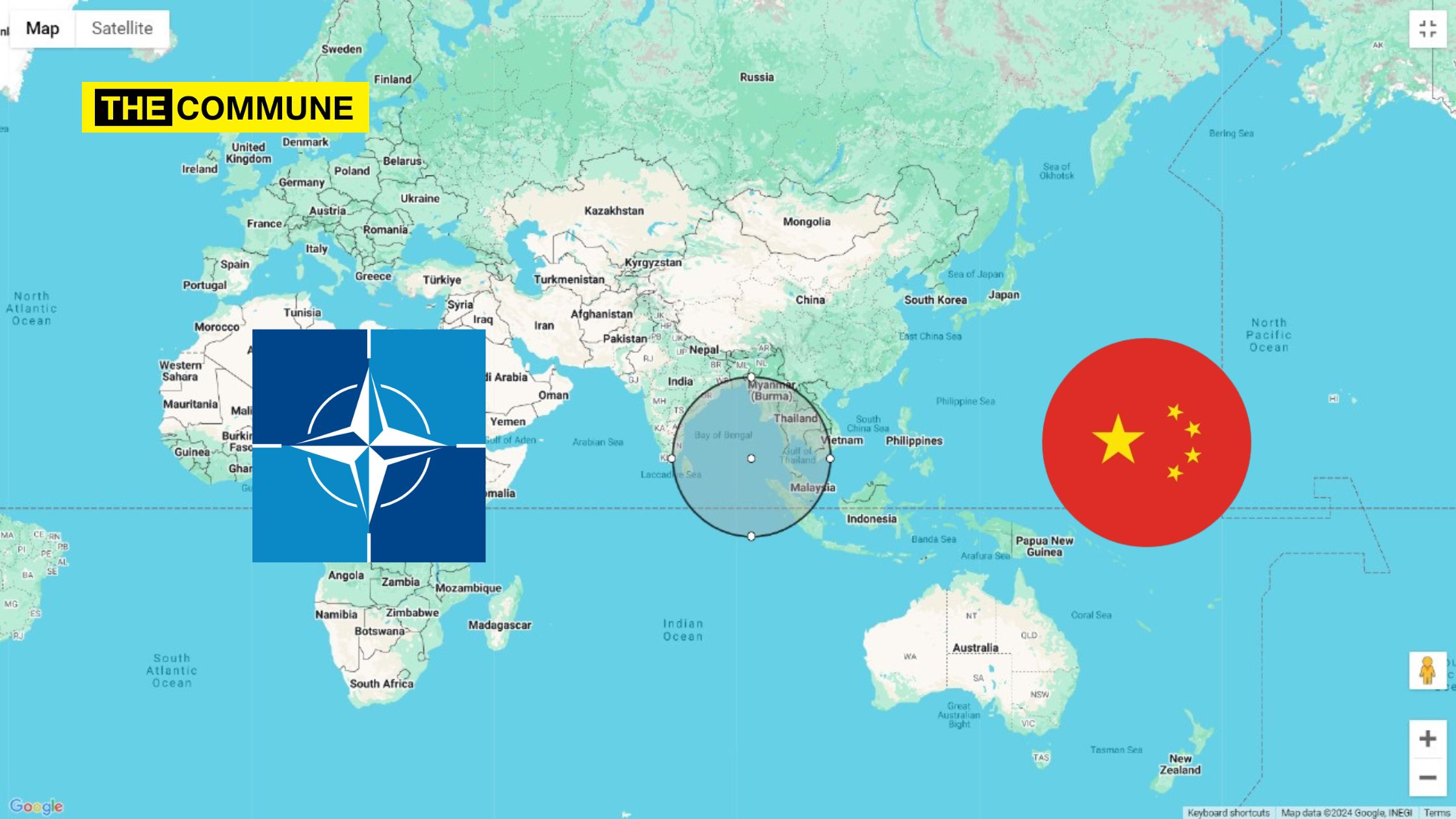
Narendra Modi’s Meditation Retreat To Kanyakumari Rekindles The Struggle For Vivekananda Rock Memorial

The Indian Prime Minister, Narendra Modi, has planned a three-day meditation retreat in Kanyakumari, Tamil Nadu, starting on 30 May 2024, just before the Lok Sabha poll results are announced on 4 June 2024. His intention to meditate at the Vivekananda Rock Memorial Hall for two days, from 30 May to 1 June 2024, has caused quite a stir among the opposition.

The location holds historical significance as Swami Vivekananda, a renowned philosopher and spiritual leader, achieved enlightenment there in 1892 after meditating for three days. Modi has chosen this same location to mark the conclusion of the BJP’s Lok Sabha election campaign.

This is not an unprecedented move by Modi. During the 2019 election campaign, he spent two days in solitary meditation at the Kedarnath shrine in Uttarakhand. In 2014, he visited Pratapgarh in Maharashtra to pay tribute to Chhatrapati Shivaji, who established the Maratha empire, and set the stage for Hindavi Swaraj, after a significant victory in November 1659.

However, the Congress and Trinamool Congress parties have expressed their discontent, claiming this to be a violation of the model code of conduct. Congress delegates led by Abhishek Manu Singhvi argues that either Modi should meditate after polling hours on 1st of June, or there should be no media coverage of the event until voting concludes. West Bengal Chief Minister Mamata Banerjee has also stated that her party will lodge a complaint with the Election Commission if Modi’s meditation is televised. She argues that any publicity of the meditation would be a breach of the Model Code of Conduct.

The Historical Significance Of Vivekananda Rock

Swami Vivekananda, during his meditation on the islet situated approximately 500 meters from Vavathurai beach in Kanyakumari, envisioned a progressive India. This location, at the southernmost point of mainland India, is where the Indian Ocean, Arabian Sea, and Bay of Bengal converge.

After traversing India for four years, Swami Vivekananda developed his philosophy. It emphasized faith in one’s divine nature and advocated for truth, purity, honesty, perseverance, courage, strength, and love.

In a letter to Swami Ramkrishnananda in 1894 (not to be mistaken with his guru, Sri Ramakrishna), he shared his insights. He wrote, “Seated in Mother Kumari’s temple at Cape Comorin, on the final piece of Indian rock, I conceived a plan. We, as Sannyasins, have been wandering and teaching metaphysics to the people, which is sheer madness. Didn’t our Gurudeva assert, ‘Religion is futile for an empty stomach?’ The brutish existence of these impoverished individuals is solely due to ignorance. We have been exploiting them and oppressing them for centuries” (S P Agarwal’s The Social Role of Gita, 1993).

The Journey To Construct Vivekananda Rock Memorial

The memorial, rich in history, faced numerous obstacles during its construction. Let’s delve into its background and the challenges it encountered.

During one of his nationwide journeys, Swami Vivekananda encountered the Raja of Ramanathapuram, Shri Bhaskara Sethupathi, in Madurai. Despite being raised under British influence after losing his parents at a young age, Bhaskara Sethupathi became a fervent Sanatani and contributed significantly to the Hindu cause. His efforts earned him an invitation to the Parliament of World’s Religions in Chicago. During his visit to Madurai to meet the collector regarding this, he was introduced to Vivekananda by his friend Justice Subramaniya Iyer. After interacting with Vivekananda, Sethupathi felt that Swami was the right person to attend the conference in Chicago and requested him to do so. Vivekananda informed him that he would make a decision about it at the end of his journey and left for Kanyakumari.

In Kanyakumari, there is a rock a bit away from the mainland. It is believed that Devi Bhagavathi (Kanyakumari Amman) performed penance on this rock. The rock, which also bears Devi’s Sri Padams (footprints), is revered by Hindus. On hearing this, Vivekananda swam across the rough sea, reached the rock, and meditated for three days. After returning from Kanyakumari, he informed Sethupathi that he would attend the Parliament of World’s religions in Chicago. Sethupathi made the necessary arrangements. Swami’s speech at Chicago is well-known history. On returning from the US, Swami Vivekananda went to Pamban. Bhaskara Sethupathi received him with full honors and installed a slab at that place. The golden words from Upanishads, ‘Satyameva Jayate’ were inscribed on the slab, which later became the slogan of the Indian Government after it gained independence. Fast forward to 1962.

In 1962, during the centenary year of Swami Vivekananda, a few of the prominent leaders at Kanyakumari decided to build a memorial for Swami Vivekananda on the rock where he meditated. They also decided to construct a bridge from the mainland so that people could easily commute to the rock. They formed a committee for this and the news of this spread rapidly. Some sections of the local fishermen (allegedly Christians) opposed this. They claimed that the rock was ‘theirs’ and suddenly a cross appeared on the top of the rock. The Devaswom Board, which managed the Kanyakumari temple, claimed that the rock was their property. Hindus were upset because the rock was holy to them. Tensions rose on both sides. Suddenly the cross disappeared, and things reached a flash point. The police intervened and the rock came under their control. A judicial probe was ordered. It declared that the rock was indeed ‘Vivekananda Rock’.

The then Tamil Nadu CM, Bhakthavatsalam, told the committee that he wouldn’t allow a memorial to be built. But he would allow a tablet to be installed mentioning that it was Vivekananda Rock. To break the impasse, the committee members agreed to this, and a stone tablet was installed on 17 January 1963.

However, the Ramakrishna Mission was firm in building a memorial. In 1963, they requested Eknath Ranade to take up this work. Eknath was an RSS Karyakarta and at that time he had given up the general secretary post. He was 50 at that time and despite health-related issues, he took up the work. He met the TN CM, Bhakthavatsalam who told him that it was the Union Cultural Minister Humayun Kabir who objected to the memorial as it was a ‘cultural place’. Eknath went back to Kolkata, which was the constituency of Humayun Kabir, and addressed a conference. He informed everyone that it was Kabir who was objecting to a memorial for Vivekananda. Facing a lot of criticism from the press, the minister did a volte-face and told everyone that he was not against the memorial.

Now that the issue was sorted, Eknath went to Delhi to meet the TN CM who was camping there. Luckily, he met Lal Bhadur Shastri who was a minister without a portfolio in Nehru’s cabinet. Shastri advised him to take this slow as a ‘No’ from Bhakthavatsalam would put a lot of hardships. He told Eknath to rally public opinion in support of the memorial. Eknath acted accordingly and collected signatures of 323 MPs in support of the memorial and met Shastri. Delighted by this, Shastri took this to Nehru who readily approved the construction. Nehru also told Eknath  that he would speak to Bhakthavatsalam for a go-ahead.

Eknath went back to Bhakthavatsalam who now had no option but to approve the memorial. On the concern of Bhakthavatsalam that the look would be spoiled if there was a bridge from the mainland, Eknath agreed that he would not construct a bridge. The TN CM put another condition that the statue of Vivekananda should be small and also the memorial should also be small with a 15 × 15-foot shrine. He feared that some miscreants might do some damage to the statue/structure and that might lead to a law & order situation. Eknath agreed to that for the time being and approached Kanchi Mahaperiyava with the design. Kanchi Mahaperiyava agreed that the statue should be taller according to the Shilpa Sastra and approved the original design of the memorial which is 130 feet and 1+1⁄2 inches × 56 feet.

Being a devotee of Kanchi Mutt, Bhakthavatsalam couldn’t disagree with this. After a few more struggles and conflicts, the memorial was constructed and declared open in the year 1970. It stands tall as a symbol of Bharath’s national pride, Swami Vivekananda.

In The Words Of Shri Eknath Ranade

The introduction penned by Shri P Parmeswaran, who holds the position of President at Vivekananda Kendra narrates, Eknath Ranade delivered a series of ten discourses on the Rock Memorial, aimed at training the first group of life workers as missionaries of the Kendra. Eknathji’s lectures were divided into two nearly equal parts. The first part dealt with the challenges he faced and how he overcame them to bring the Memorial into existence. The second part focused on his vision for the mission of the Vivekananda Kendra, its philosophy, and ultimate objective.

In the first part, he narrated how he was drawn into the construction of the Vivekananda Rock Memorial (VRM), how various obstacles arose one after another, and how each was overcome until the work was completed and the dream realized. As he narrated incident after incident, the story of the VRM became inseparable from Eknathji’s autobiography. They merged into each other. There was no problem for which he had no solution. To quote his own words: “Every strategy has a counter-strategy, every weapon has a counter-weapon”. This truth was conclusively demonstrated by Eknathji in overcoming the seemingly insurmountable obstacles.

The individuals with whom Eknathji had to contend were not ordinary men. They were leaders in their own right, occupying positions of high power. Bhaktavatsalam was a powerful Chief Minister and Humayan Kabir, a Central Minister. Both were opposed to the monument on the Rock. But Eknathji cleverly outmaneuvered both of them and ultimately won them over to his point of view. He dealt with leaders like Annadurai and Jyoti Basu (not ideological admirers of Swami Vivekananda) successfully and made them partners in the construction of the VRM. This should make even the most experienced experts take a lesson or two from him in the art of human management.

Leaders of every political party, whether in power or in opposition, became willing supporters. Chief Ministers of every state made generous donations toward the VRM. The only Chief Minister who sent Eknathji away empty-handed was the Kerala CM Com. E.M.S. Namboodiripad. Coming out of the interview, Eknathji remarked: “It was like conversing with a sphinx. It was a monologue all the way, on my part. Only an empty stare from the other side”.

It is instructive to know how he made judicious use of various means at his command for the achievement of his end. Both speech and silence were equally effective tools in his hands. To know when to speak and when to keep silent is a rare gift. Eknath Ranade possessed this abundantly. While he raised stormy controversies when necessary, he abstained from them when they served no purpose. He utilized his contact with the Press for raising the right issues at the right time and also not to raise inconvenient issues that would only complicate the situation.

Thus, by bringing into play every God-given quality that he possessed in ample measure, Eknath Ranade was able to successfully accomplish the task that was entrusted to him. While engaged in battle, he was unrelenting and made no compromises – and expected none from the opposite side. But when the battle was over, he saw to it that no bitterness remained. He had the magnanimity to go to his erstwhile opponents and pay compliments to them. He avoided agitations as a matter of principle, because he knew that even if you gain your objective by means of agitations, in the end, there would be no grace in it.

As soon as it became clear to him that the VRM has become an assured fact, he began to think about the second phase. “To put up a Cement & Concrete structure is not the work for which I am born. I am to erect a living & dynamic monument which will be worthy of Swami Vivekananda and which will be capable of bringing into fruition his grand vision of future India” – he began to think. For a close student of the mental make up of Eknathji, it is obvious that the link between the first & second phase, was rooted in organizational & psychological links he had with two great organizations with which he was intimately associated – the RSS & the Ramakrishna Mission. As soon as Guruji Golwalkar expressed to him his desire that it would be good if he took up the challenging task of the construction of the VRM, “from Nagpur I went straight to Calcutta & met with the respected Swami Madhavanandaji to know his mind & seek his blessings”. What did he say? “As a matter of fact, Ramakrishna Mission should have taken up his work, but we can’t deliver the goods. You should certainly take up the work—- you can be rest assured that the entire Mission, will be at your back all the time. Go ahead & Thakur will bless you, Swami Vivekananda will bless you, and you have my blessings also”.

This link had its roots deep in the Psychology of Eknath Ranade. This is clearly evident in his conversation with Sri Govinda Menon, the Home Minister in the Central Cabinet. To a pointed question by the minister as how the work of the RSS could be reconciled with Vivekananda’s philosophy, Eknathji reply was, “It is Vivekananda’s philosophy that made me an RSS worker–. In fact RSS is nothing but an extension of Swamiiji’s work”. The minister was not convinced as it evident from his remark. “It is a very bold statement to make”.

What was the inspiration behind the second phase? What did he actually seek to achieve? It was national reconstruction. Eknathji thought, “If all the religiosity can be converted into activities of public good, there can be all-round national reconstruction”. One very significant dimension of Eknathji’s concept of national reconstruction is that it covered all sections of Hindu society and all parts of the country. He says: “Bhartheeyata in everybody has to be aroused, work should be taken from them.” He firmly believed that “if you scratch sufficiently deep, the Hindu in everybody will be roused, whether one talks of Westernism or Russianism or modernism, he essentially is a child of this soil”.

It is this national vision that took Eknathji to all sections of people during the course of the collection campaign. When the CM of Nagaland questioned him about the wisdom of his spending so much time for a paltry amount, Eknathji’s reply was typical & revealing. He said: “My motive is just not funds. I want your participitation, participation of the Govt and people of Nagaland – because Nagaland is part of the Nation”.

During the course of his campaign for the VRM he had realized that political factionalism & religious sectarianism, had always prevented people from coming together even on issues of national good, about which intrinsically they had no conflicting opinion. Politics being the pursuit of power, could be an instrument of division. But Eknathji was painfully aware that even spiritual movements degenerated into rival sects. As a keen student of history, he found that this had become a national defect with the Hindus and unless it was overcome national reconstruction would remain a mirage. Therefore, he suggested an organization which would be meticulously kept beyond politics & sectarianism.

That was his vision of Vivekananda Kendra. Such an organization could be built up only around a great ideal. Perusing the entire thought of Swamiji, Eknathji discovered that the magic word would be – worship – worship of Man is truly worship of God. But every organization requires Men who are inspired and whose lives are molded by that particular ethos. It is here that Eknathji visualized the creation of a non-sannyasin order of life workers, who will be dedicated to service more than Sadhana. Spirituality must be vibrant. It should be selfless action, rather than simple meditation.

Creation of such an order of life workers was no easy task, considering the prevailing social situation in the country. History of the past many centuries taught Eknathji that the Hindu society has lost its sense of Self-Confidence. They were in the habit of looking for an incarnation to descend save society. What is worse, every great men, who achieved something for the society, was immediately defied and put on a pedestal & worshipped. Eknathji declared that this suicidal trend has to be reversed. He wanted a new generation that believed in themselves, that they can do anything. He accepted Swamiji as an ordinary human being, who raised himself to the highest rung of human evolution, by dint of self-confidence & self-sacrifice.

Eknathji wanted that ideal of Swamiji to be followed by the life workers whom he wanted to man the organization of his dream. So he erected the statue of Swamiji, standing up & starting on his patriotic mission, rather than one, sitting absorbed in deep meditation.

Self-confidence comes from the innate conviction that each man is potentially divine. That was the essence of Hindu heritage from the Vedic times. Eknathji wanted to remind this Vedic mantra – “We are the children of God & immortality”. This realization will automatically give us the super human strength to overcome all fear & weaknesses.

Eknathji realized the importance of teamwork. He reeled off instances after instances from our own history, how a handful of foreign invaders, much inferior to us in every respect, could easily beat us hollow and enslave & rule over us, only because they possessed this great quality of team spirit in abundance, whereas, we Hindus totally lacked this capacity. He pointed out how our Vedic mantras constantly instilled into us this gospel of collective effort – “Yagna”. That made us great in the past.

(With Inputs From esamskriti & X Threads by TS Krishnan)

Subscribe to our channels on TelegramWhatsApp, and Instagram and get the best stories of the day delivered to you personally.
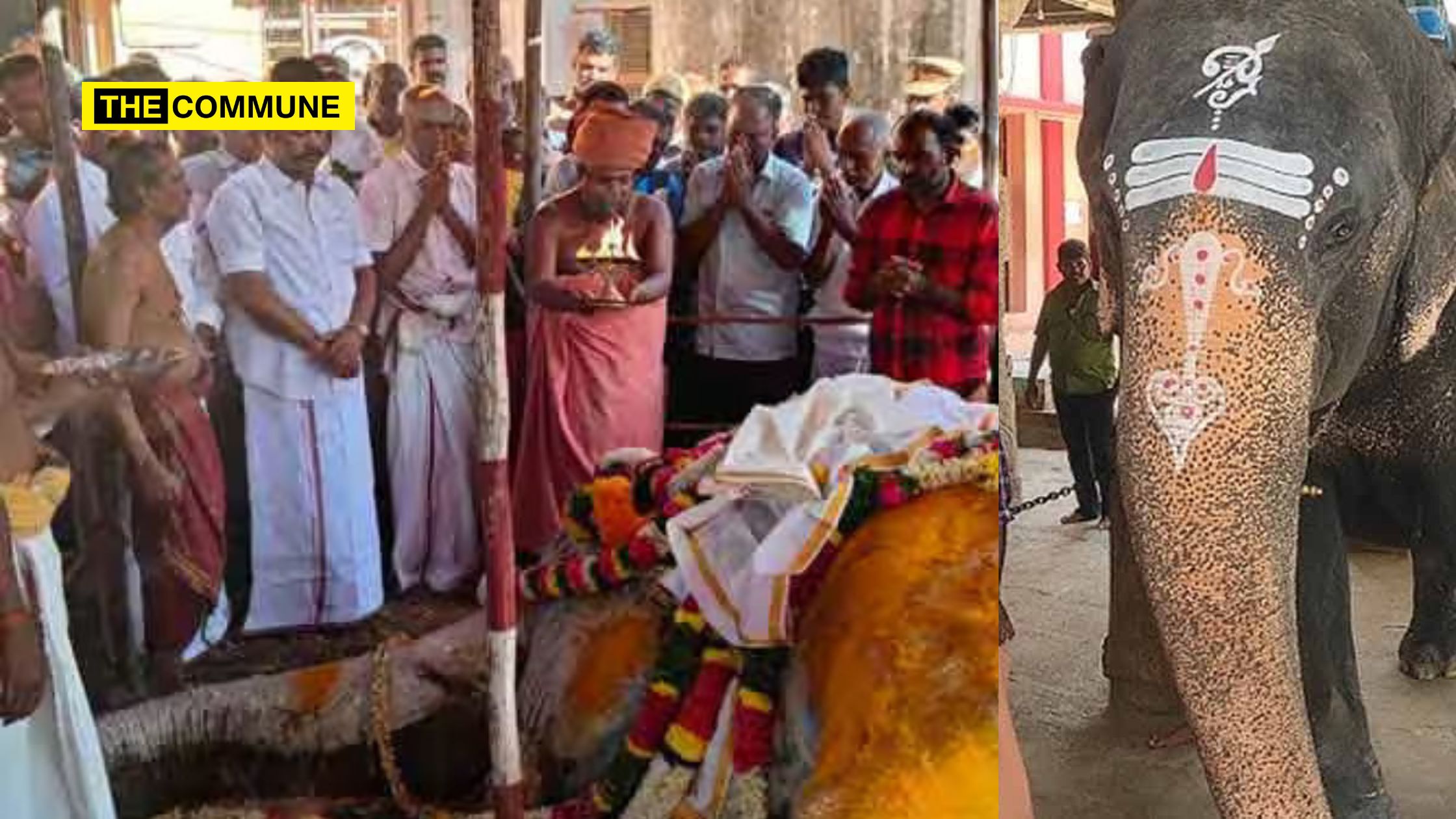
 

“Don’t You Have Shame? They’re Struggling For Life And You Want To Convert Them?” Thanjavur BJP Functionary Thwarts Unlawful Proselytization At Kumbakonam Government Hospital

In yet another brazen proselytization in Tamil Nadu, missionaries were caught openly carrying Bibles in their shoulder bags and targeting the downtrodden and hopeless for conversion to Christianity in broad daylight at the government hospital (GH) in Kumbakonam. The proselytization attempt happened at the hospital despite a board at the Kumbakonam government hospital that reads, “No proselytizing should be done here.

This time, the patients, frustrated by the missionaries spreading the message of Jesus Christ, contacted Thanjavur North District BJP District Secretary Paramaguru. He issued a stern warning to the missionaries and drove them away.

The incident was captured on camera and shared by the Thanjavur North District BJP on social media. Here’s the transcript of the video.

Paramaguru: Bargur? Where is Bargur? Is it in Andhra?

Missionary: No, Marungur

Paramaguru: Oh, you are from Marungur church. Who asked you to come here from Marungur Church? Who sent you?

Missionary: I came by myself.

Paramaguru: Oh, you are coming by yourself. Who asked you to come here from there?

Missionary: No, we come here to do service (Oozhiyam)

Paramaguru: What do you mean by service? Will you recruit, or will you give money? Come let’s give together.

Missionary: We come here to pray

Paramaguru: Pray means, what will you do?

Missionary: Everyone to be healthy (sugamadaya vendum).

Paramaguru: Do we all stand to not get well then? Are you the only one who wants wellness? We also stand here to be well. Give your visiting card or id card. I want to know who you are. If you mix poison in the water and leave, who will we ask?

Missionary: I won’t do it.

Paramaguru: What’s the surety that you won’t do, I have a visiting card, do you have one? We should know who you are right? Why do you do this unwanted job? In which district is Marungur located?

Missionary: In Nagai District (Nagapattinam)

Paramaguru: Is everyone in Nagai district fine? Has the amputee, unwell in the Nagai district got up, started to walk and run? Has Corona in the district recovered? Where did you go during the corona period? Mister, what is your name? First take off your mask Corona has gone, take off your mask. What’s your name?

Missionary: Boaz 

Then, Paramaguru, calmly placing his hands on the missionary, and said, “You are also my brother. I don’t have a problem with that. We are ready to help with whatever you want, but please stop this deceptive conversion work. Brother, I am speaking to you thinking you like me. I will not harm or threaten you, but he (patient) is already suffering lying down in pain. He is not well. His arms, legs and nose are gone. If you also sit and torture him for half an hour adding to his pain, what good does that do? What is your intention here? How did the Kumbakonam GH management allow this within the campus? I warn you; I will sue them.

Paramaguru further inquired about the missionary’s economic situation, asking if he had eaten and offering to buy him food. The missionary responded that he was fasting. When asked about his job, the missionary said he had no job. Paramaguru questioned how he managed to travel and afford food, and who supported him financially. When asked about his business at the hospital, the missionary replied that he came to pray (jebam).

Frustrated, Paramaguru told the missionary he looked pathetic but expressed anger towards the church missionaries driving him. “Either you free yourself from the missionaries, or we will free you from them,” he said.

In the background, the relatives of the patients complained that the missionary was violating the hospital’s policy against conversion. Paramaguru then asked to see what was in the missionary’s bag, finding Bibles inside. Annoyed, he asked, “Don’t you have any shame? These people are struggling for their lives, and you want to convert them here?”

Finally, Paramaguru warned the missionary that having personal faith is an individual choice, but forcing conversions through deceit is wrong, will face a dire consequence.

If you come next time I will take you to the police station. You should never come this side. Get lost from the GH.”, he said.

While Constitution guarantees freedom of religion, it is unlawful to forcefully convert people either through force or enticement.

Subscribe to our channels on TelegramWhatsApp, and Instagram and get the best stories of the day delivered to you personally. 
Dravidian Model: No Electricity, No Toilet, No Drinking Water For Families In Dindigul’s JJ Nagar

In the district of Dindigul, the residents of JJ Nagar village, near Perumal Nagar, are living in dire conditions without essential amenities such as electricity, drinking water, and toilet facilities. Approximately 50 families in this community rely on candlelight and kerosene lamps for illumination, facing daily challenges that severely impact their quality of life.

A long-time resident, a woman who has lived in JJ Nagar since birth, shared her frustration: “I have been living here since birth in the village of JJ Nagar without any basic facilities. There are only huts here. We talk about Digital India, but here, there are no basic facilities. Our school children are struggling a lot. There have been incidents of pregnant women getting aborted due to falling here. Even if we take this issue up to the collector, they are postponing the issue. We have given numerous petitions but suspect that they stopped the issue from reaching the authorities. We don’t know how they can say we have rights to vote. They come here only to ask for votes.

The lack of basic services has had severe repercussions on the residents’ health and education. Another resident recounted a tragic incident: “We have 50 families here. We have no basic facilities. No water, electricity, toilet. Our kids are studying only with candlelight. My wife was pregnant, and as we had no water facilities, she fell while carrying water and had a miscarriage. The government should focus on us and fulfill our basic requests.

The community’s isolation is compounded by the threat of wild animals, which disrupts the children’s schooling and adds to the residents’ sense of insecurity. “The cost of buying candles surpasses the cost of electricity here. We even have a scare of wild animals,” another woman noted.

Despite repeated petitions and appeals to local authorities, the residents feel their plight has been ignored. They suspect that their complaints are being suppressed before reaching higher officials, leading to growing despair and resentment within the community.

Subscribe to our channels on TelegramWhatsApp, and Instagram and get the best stories of the day delivered to you personally. 
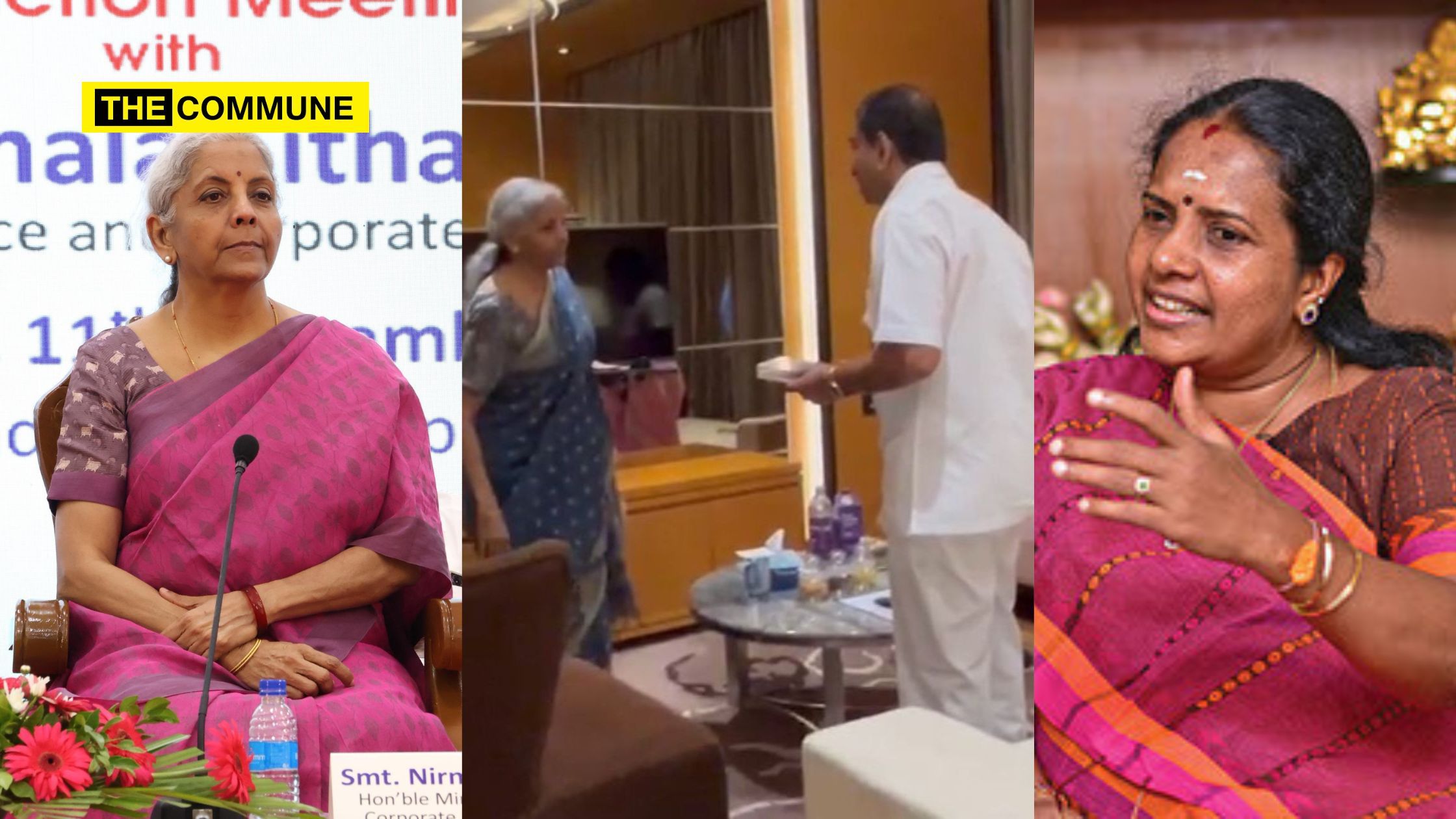
 

“Privileged A**H*le”: When Congress Leader Mani Shankar Aiyar Was Called Out For Being A Communist And Allegedly Raising Funds For China During Indo-China War

Former Union minister and Congress leader Mani Shankar Aiyar has once again sparked controversy with his remarks on China. During a speech at the Foreign Correspondents’ Club of South Asia, Aiyar referred to the 1962 Indo-China war as an “alleged Chinese invasion.

In a video that has gone viral, he is heard saying, “In October 1962, the Chinese allegedly invaded India.” When an audience member questioned his use of “allegedly,” Aiyar apologized, acknowledging he had used the term mistakenly. During the launch event for the book ‘Nehru’s First Recruits‘, Congress leader Mani Shankar Aiyar remarked, “In October 1962, the Chinese allegedly invaded India. On the day that Tawang fell, the foreign service exams began in London. When they were over, the newspapers used to make references to me as being very left wing and a communist”

The Bharatiya Janata Party (BJP) strongly criticized Aiyar’s comments, with BJP IT Cell chief Amit Malviya accusing him of attempting to “whitewash the Chinese invasion.” Malviya pointed to historical actions by Congress leaders, claiming Nehru, Rahul Gandhi, and others had compromised India’s stance on China. He cited Nehru’s decision against a permanent UN Security Council seat in favor of China, a secret MoU signed by Rahul Gandhi, funds accepted by the Rajiv Gandhi Foundation from the Chinese Embassy, and market access granted to Chinese companies under Sonia Gandhi’s UPA government, which hurt Indian MSMEs. Malviya asserted that Aiyar’s recent comments were part of a continued pattern.

Amit Malviya in his official X account stated, “Mani Shankar Aiyar, speaking at the FCC, during launch of a book called Nehru’s First Recruits, refers to Chinese invasion in 1962 as ‘alleged’. This is a brazen attempt at revisionism. Nehru gave up India’s claim on permanent seat at the UNSC in favour of the Chinese, Rahul Gandhi signed a secret MoU, Rajiv Gandhi Foundation accepted funds from the Chinese Embassy and published reports recommending market access for Chinese companies, based on them, Sonia Gandhi’s UPA opened up Indian market for Chinese goods, hurting MSMEs and now Congress leader Aiyar wants to whitewash the Chinese invasion, post which the Chinese have been in illegal occupation of 38,000 sq km of Indian territory. What explains Congress’s love for the Chinese?”

The Congress party quickly distanced itself from Aiyar’s statements with General Secretary Jairam Ramesh emphasized that Aiyar had apologized unreservedly for his “mistaken” use of “alleged invasion” and attributed the error to his age. Ramesh reaffirmed that the Chinese invasion of India in 1962 was real, as were the incursions in Ladakh in May 2020, which resulted in the deaths of 20 Indian soldiers and a disrupted status quo.

Congress General Secretary in-charge of Communications Jairam Ramesh stated in his X official account that, “Mr. Mani Shankar Aiyar has subequently apologised unreservedly for using the term “alleged invasion” mistakenkly. Allowances must be made for his age. The INC distances itself from his original phraseology. The Chinese invasion of India that began on October 20, 1962 was for REAL. So too were the Chinese incursions in Ladakh in early May 2020 in which 20 of our soldiers were martyred and the status quo disturbed. The outgoing PM, however, gave a clean chit publicly to the Chinese on June 19th 2020, seriously weakening our negotiating position. 2000 sq km of territory including Depsang and Demchok remain out of bounds for Indian troops.”

Jairam Ramesh’s initially peddled that 40 Indian soldiers were martyred but later corrected it to 20 in the now-edited tweet.

Jairam Ramesh is currently asserting that the Modi administration exonerated China for its unlawful incursions into Indian territory in 2020. He references a partial video of Prime Minister Modi’s comments from a June 2020 all-party meeting. However, PM Modi did acknowledge the Galwan clashes.

The Prime Minister stated, “Neither have they intruded into our border, nor has any post been taken over by them (China). Twenty of our jawans were martyred, but those who dared Bharat Mata, they were taught a lesson.

Commie Days of Mani Shankar Aiyar:

During his time at Cambridge, Mani Shankar Aiyar was a full-blown Communist. In 1986, Journalist Dhiren Bhagat in the satirical magazine, Private Eye, described Mani Shankar Aiyar as a “privileged asshole” who had “romped” as “general secretary of a local Communist cell” to raise money for the Chinese against the backdrop of the India-China war. This was again republished in his book “The Contemporary Conservative,” in 1990. Here’s the excerpt from the book:

In 1962 China invaded India and while we (ineffectually) fought the yellow bastards and our wives’ knitted sweaters and donated their jewelry for the nation’s defense, this privileged asshole romped about the Backs as General Secretary of the local Communist cell raising money for the Chinese! In a just world he’d have been strung and quartered the day he came back home; the world being what it is, Mani had the gall to apply to join our foreign service. The police — reasonable enough — considered him a security risk and handed the examining authorities the file on him; Aiyar’s family pulled strings and the President finally intervened to ease Mani’s entry to the service.

Although Mani Shankar Aiyar denied that he collected any money for the Chinese on any occasion, he never sued Bhagat or the publication for defamation.

These excerpts from Bhagat’s book have once again resurfaced and gone viral. It is noteworthy that during Mani Shankar Aiyar’s tenure as Petroleum Minister, Shiv Sena chief Bal Thackeray used this narrative to mock Aiyar following a spat over Aiyar’s critical remarks about Vinayak Damodar Savarkar. Aiyar had ordered the removal of a poem by Savarkar from the Cellular Jail in the Andamans, where Savarkar had been imprisoned for 11 years. Shiv Sena has drawn extensively from Bhagat’s book, which highlights Aiyar’s days in the 1960s as a secretary member of the Cambridge unit of the Communist party.


(With Inputs From IE)

Subscribe to our channels on TelegramWhatsApp, and Instagram and get the best stories of the day delivered to you personally. 
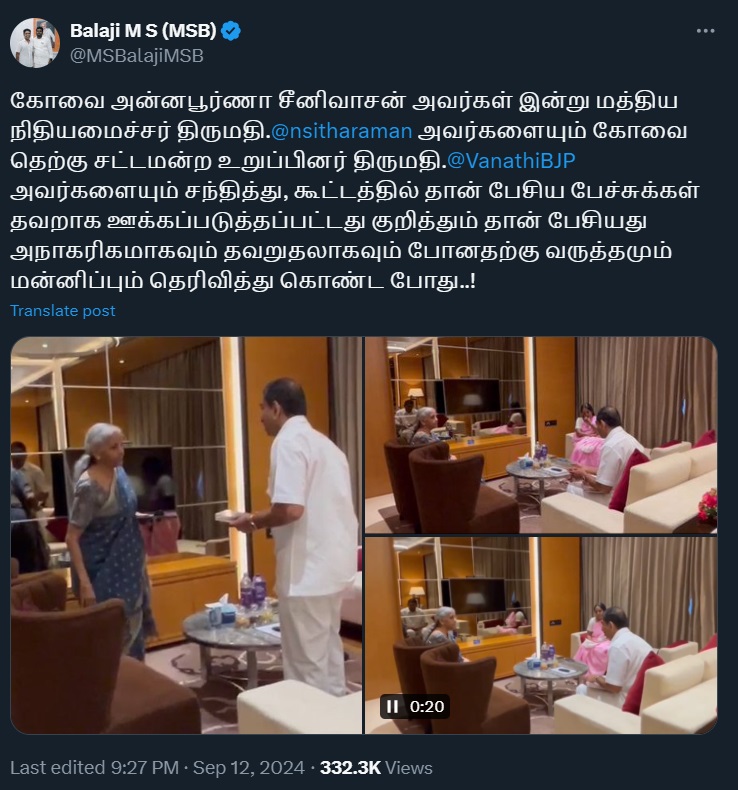
TNM’s Dhanya Rajendran Reportedly Under IB Radar

Article withheld in light of Delhi High Court ordering removal of YouTube videos, articles containing “defamatory” statements against The News Minute founder Dhanya Rajendran.

This note was updated on 22 July 2024 at 10:40 AM.


Tambaram Sees 3 Men Killed In Separate Incidents In 1 Night, TTV Dhinakaran Slams DMK Govt Over Crumbling Law & Order

Three people were killed in separate incidents on 27 May 2024 within the Tambaram police division has sent a shock waves in the society.

Thomas (50), a truck owner from Chromepet, was one of the victims. He had lent ₹28,000 to Sabari (A) Prithvi Rajan (31), who also lived in the area. A dispute arose when Thomas demanded the repayment of the loan. Allegedly, Sabari lured Thomas to the Tiruneermalai Karumariamman temple under the pretense of returning the money, and then attacked him with a sickle, killing him on the spot.

In another incident, Karthik Raja (28), an auto driver from Irumbuliyur near Tambaram, was killed. Known to have a record of assault cases, Karthik Raja was ambushed at the Tambaram bus station while waiting for commuters. He was attacked with a sickle by assailants and died instantly. According to the police, Karthik was not affiliated with any auto stand, but had been driving near the bus stand despite objections from another auto driver, Anandan. Infuriated by Karthik’s persistence, Anandan, along with six others, attacked Karthik. Following the incident, Anandan (42), Sivakumar (A) Ranjith (29), Kevin Raj (21), Ajith Kumar (28), and Samraj (50) surrendered to the Tambaram police. The police are still searching for two additional suspects.

The third victim was Rajesh (30), who worked at a brick kiln in South Malayambakkam near Kundrathur. He was walking near the Sembarambakkam lake on the night when a gang of three men attacked him, stealing his cell phone and money. Rajesh was taken to a private hospital in Kovur, where he succumbed to his injuries the following morning. The Kundrathur police are investigating this case.

In response to these incidents, AMMK Chief TTV Dhinakaran criticized the state of law and order in Tamil Nadu, urging the Chief Minister to take stringent action to address the situation, Dhinakaran in his official X account stated, “3 murders that took place in one night near Tambaram, Chennai – When will the police department wake up from deep sleep to prevent murders and crimes? The news that has come out in the sub-urbs areas of Chennai Tambaram, namely, an auto driver, a brick kiln worker and a person from Chromepet, were killed in a row yesterday, and the that a film photographer was hacked to death and his cell phone stolen in Nungambakkam is very shocking.

He further said “Not only in the capital of Tamil Nadu, but wherever you see daily a murder, robbery, theft, free circulation of drugs and crimes against women have created an environment where people are afraid to move freely. This is the best example of three years of DMK government’s law and order disorders. It is highly condemnable that the police, who are supposed to bring law and order under control, are acting only as a puppet of the ruling party figures, as if they have nothing to do with the crimes.”

Pressing MK Stalin to take action, Dhinakaran said “Therefore, I urge the Chief Minister of Tamil Nadu, Mr. M. K. Stalin, to at least wake up the police now, who are currently in deep sleep, and take measures to eliminate the law-and-order disorders that are completely broken down in Tamil Nadu and to take strict action against those who are involved in crimes without bias.
@CMOTamilnadu”

Subscribe to our channels on TelegramWhatsApp, and Instagram and get the best stories of the day delivered to you personally. 
TN Governor RN Ravi Pulls Up State Univs For Skewed History Syllabus, Says Tamil Contribution To Indian National Movement Overshadowed With Dravidian Movement Stories 

Tamil Nadu Governor RN Ravi, the chancellor of state universities, had recently inaugurated a two-day conference for vice-chancellors of both state-run and private universities at the Raj Bhavan in Udhagamandalam on 27 May 2024. Vice-chancellors from state, private, and central universities or institutions across the state participated in this annual conference.

According to the release from Raj Bhavan, the conference aims to elevate the standards of higher education in the state, covering topics such as research excellence, institutional development, entrepreneurship promotion, faculty capacity building, and the promotion of universal human values.

The conference features four sessions each day, during which vice-chancellors of state universities will present best practices implemented at their institutions. Additionally, students and scholars who have passed the NET or UGC-CSIR tests and obtained Junior Research Fellowships will share their experiences.

In his address the following day, Governor RN Ravi expressed concerns regarding the state universities’ curriculum, which he criticized for focusing solely on the Dravidian Movement while omitting the national freedom movement. He highlighted that the British rule’s impact on Tamil Nadu’s social, economic, and political fabric is completely absent from the curriculum.

Governor RN Ravi said, “There are unacceptable distortions in the history and political science syllabi of state universities. While the Dravidian Movement is an important part of history, it should not overshadow other historical events. In the 19th century, many Tamil people were forcibly taken by the British to work in colonies in Malaysia, Sri Lanka, and Fiji. Ignoring the sacrifices of millions of Tamils in the fight for India’s freedom is an insult. This omission weakens the sense of nationalism among our youth and fosters a disconnect from the national mainstream,” urging for a periodic review of the curriculum.

Ravi also criticized the practice of involving university students in government publicity programs. “Students should be encouraged to participate in social outreach by teaching in schools, not by promoting government programs. Are our students supplementing the state’s district administration and DIPR in publicity outreach? This is not an appropriate role for university students,” he remarked. He also called for universities to reconsider the use of RUSA funds for donations to schools, emphasizing that these funds are meant for higher education, not for providing furniture to schools. Lastly, the Governor pointed out that a 50% vacancy rate in universities is compromising the quality of education.

Governor Ravi expressed concerns that even PhD scholars, who are bright students, are either without any fellowship or get a meager amount of about 75000 per month. He said that due to lack of proper guidance and motivation, they are not able to obtain the UGC run NET-JRF fellowship, which is almost double the salary of our guest lecturers. He urged the Vice Chancellors of the state universities to take serious note of this issue and collaborate with private universities. The Governor highlighted how the severe shortage of teaching faculty in our universities, almost 40-50% shortage has heavily compromised the future of our students.

Deliberating over the curriculum, the Governor flagged unacceptable distortions in History and Political Science syllabuses of B.A and M.A. courses of the state universities. He pointed out that there is a total blackout of the National Freedom Movement in the syllabus. He elaborated how several thousand freedom fighters from Tamil Nadu sacrificed their lives for the freedom of our Nation while several thousand youths from Tamil Nadu joined the Indian National Army of Netaji and fought the British, and many gave their lives.

“The massacre of freedom fighters at Devakottai and Perungamanallur can’t be forgotten. Poligars resistance and popular uprisings at Palayamkottai, in which several thousand Tamils were killed by the British, and just a few to quote, Mahatma Gandhi visited the state more than 16 times. The Swadeshi Movement and Salt Satyagraha had a huge response in Tamil Nadu, and the people of Tamil Nadu played a leading role,” the Raj Bhavan press release stated.

“When the British partitioned Bengal communally, there was a huge uprising in Tamil Nadu, which motivated the great freedom fighter V. O. Chidambaram Pillai to join the National Freedom Movement. The Jallianwala Bagh massacre in Punjab outraged the people of Tamil Nadu and prompted young Kamaraj to abandon his studies and jump into the National Freedom Movement. Tamil Nadu played a crucial role in the framing of the Constitution of Free India. There are just a few illustrations. The impact of British rule on the social, economic and political fabric of Tamil Nadu is totally blacked out from the curriculum. Instead, the curriculum is filled with the stories of Dravidian movement. With respect to social and political awakening, all the movements, to name a few, the Ayyavazhi movement of Ayya Vaikundar, the Sanmarga movement of Vallalar, and the Nandanar movement led by Dalit leader Swami Sahajananda are missed altogether,” it further added.

“In the 19th century, several hundred thousand Tamil people were forcibly taken by the British as indentured labours to their colonies in Malaysia, Sri Lanka, and Fiji, where they were auctioned like slaves to the British landlords. They were treated like animals. Those who resisted were imprisoned, tortured, and even killed. Erasing the sufferings and sacrifices of the millions of Tamil people for the freedom of India and the suffering of countless people at the hands of the British is an insult to our countless martyrs and a denial of the true history and sacrifices of our forefathers. It also weakens the sense of nationalism among our youth and fosters an eco-system that emotionally disconnects our youth from the national mainstream.” it further added.

The Governor emphasized the significance of emerging technologies like Generative Al, Quantum Computing, Advanced Robotics, Ultra Nanotechnology, and Synthetic Biology, highlighting their profound impact on the world and the world order. He stressed the importance of investing in our youth to invest in these technologies so that they are equipped to harness the true potential of these transformative technologies. Earlier, Prof. H.D. Charan, Chairman of the National Committee on Universal Human Values at AICTE, gave a detailed presentation on Universal Human Values, emphasizing their role in Human Education and how institutions can develop into living models of a humane society. He highlighted how these institutions can serve as resource centers for their communities, and how personal and societal transformation can occur in a natural and evolutionary manner Dr. Jayanti Ravi, Secretary of the Auroville Foundation, engaged in insightful discussions with Vice Chancellors about the exciting Opportunities for students across various colleges and universities, aligning with the National Education Policy-2020.

(With Inputs From DT Next)

Subscribe to our channels on TelegramWhatsApp, and Instagram and get the best stories of the day delivered to you personally.