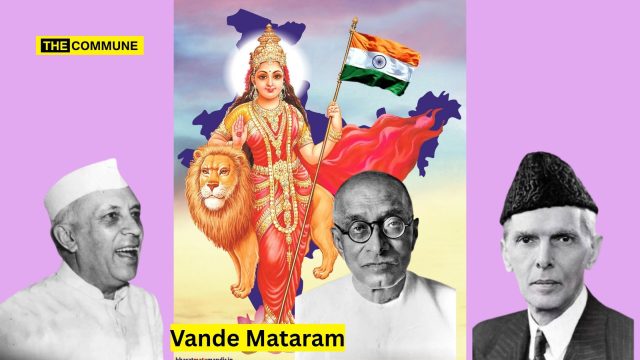
The Congress party’s decision to formally restrict the singing of Vande Mataram to its first two stanzas has brought back into focus a warning issued by C. Rajagopalachari in 1939, when the Congress leadership was grappling with objections from the Muslim League over the song’s later verses.
Writing at the time, Rajagopalachari cautioned against presenting changes to Vande Mataram as concessions to political pressure.
“These concessions will not save the situation… If we set them forth as concessions they will only become points for further agitations and will make no gain for peace. On the other hand, the concessions may give rise to a weakening of Hindu psychology and produce depression all around.”
The passage is cited in Sabyasachi Bhattacharya’s Vande Mataram: The Biography of a Song (2013).
“These concessions [truncating of #VandeMataram under Muslim League pressure] will not save the situation…If we set them forth as concessions they will only become points for further agitations and will make no gain for peace. On the other hand, the concessions may give rise to… pic.twitter.com/2VTxyGs3Ff
— Dr. Anirban Ganguly (অনির্বাণ গঙ্গোপাধ্যায়) (@anirbanganguly) August 20, 2026
The issue arose in the late 1930s as the Congress faced sustained objections from Muhammad Ali Jinnah and the Muslim League to the singing of Vande Mataram at public and political gatherings. The objections centred on the Hindu imagery contained in the song’s later stanzas.
Congress has now formally decided that only the first two stanzas of Vande Mataram will be sung at its official events. The decision followed a meeting of the Congress Working Committee, after which party general secretary K.C. Venugopal said the party would adhere to the position adopted in its 1937 resolution.
Congress has defended the decision on historical and secular grounds. Party leaders have pointed to the 1937 resolution, which they say was supported by prominent leaders of the freedom movement, including Mahatma Gandhi, Jawaharlal Nehru, Subhas Chandra Bose and Rabindranath Tagore.
The party maintains that the first two stanzas primarily describe the beauty, fertility and abundance of the motherland, while the subsequent stanzas contain references and imagery associated with Hindu deities, including Durga and Lakshmi. Congress leaders argue that limiting the song to the first two stanzas therefore preserves the version historically adopted for public use while accommodating the religious diversity of the country.
However, the present decision also places the Congress position in an interesting historical context given Rajagopalachari’s warning nearly nine decades ago.
Rajaji’s 1939 remarks were made in the context of an earlier debate over accommodating objections to the song. His argument was not simply about the wording of Vande Mataram, but about the political consequences of making concessions under pressure.
His warning that concessions could become “points for further agitations” and weaken the confidence of the Hindu community is particularly relevant to the historical debate surrounding the song, even as the Congress today presents its two-stanza position as adherence to a pre-Independence consensus rather than a concession.
Congress communication chief Jairam Ramesh has meanwhile rejected criticism of the decision, describing the controversy as a deliberate attempt to distract from socioeconomic issues.
Subscribe to our channels on WhatsApp, Telegram, Instagram and YouTube to get the best stories of the day delivered to you personally.