On the third day of hearings in the Thiruparankundram Karthigai Deepam case before the Supreme Court, the counsel for the original petitioner, Rama. Ravi Kumar, argued that the Deepam should be lit on land belonging to the temple and not on land owned by the Dargah.
Appearing before a bench headed by Justice Aravind Kumar, the petitioner’s side maintained that it was not seeking permission to enter the 86-cent property claimed by the Dargah to light the Deepam. Instead, the request was specifically to permit the lighting of the traditional Karthigai Deepam on land belonging to the temple administration.
The counsel argued that a substantial portion of the land on Thiruparankundram hill belonged to the temple, while the Dargah’s ownership extended only to a relatively small portion. According to the petitioner’s submissions, the Dargah owned approximately 33 cents, while the area comprising its steps, flagstaff and mandapam extended to around 86 cents. In contrast, the temple reportedly owned approximately 171.17 acres on the hill.
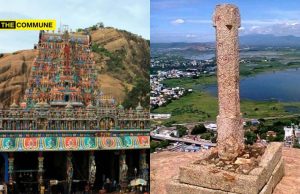
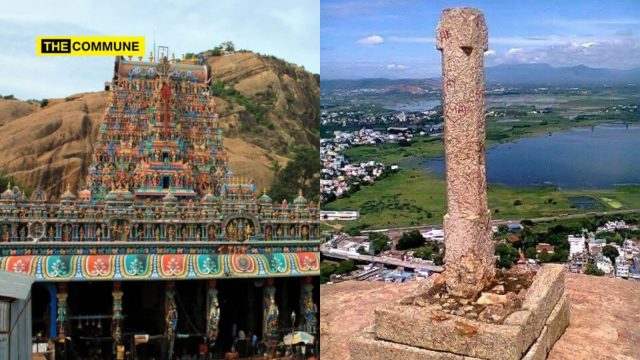
The petitioner’s side also disputed the claim that the stone pillar in question was merely a survey or boundary stone. It maintained that the structure was, in fact, a Deepathoon (traditional lamp pillar), pointing to its concave depression, which could hold ghee and a wick for lighting the lamp. Alternatively, a copper or other metal vessel could be placed on the pillar to hold the flame.
The counsel further submitted that the Deepam could remain lit for approximately two hours and that the ritual would take place only once a year on Karthigai Deepam. It was argued that such a practice would not create any law-and-order problem.
To substantiate the customary nature of the practice, the petitioner’s side cited other prominent Murugan temples in Tamil Nadu, including Marudhamalai, Swamimalai and Palani, where lamps are also lit on elevated portions of temple hills in a similar manner.
Earlier, the Dargah’s counsel had argued that its long-standing religious practices should not be altered and that permitting the Deepam could lead to further demands for permission to conduct worship at the location, potentially creating disputes in the future.
The original petitioner, however, maintained that the request was limited to lighting the Deepam on temple-owned property and did not involve seeking access to or conducting religious activities on land belonging to the Dargah.
The Supreme Court is scheduled to continue hearing the matter on the fourth day, with further arguments expected from the parties.
Subscribe to our channels on WhatsApp, Telegram, Instagram and YouTube to get the best stories of the day delivered to you personally.