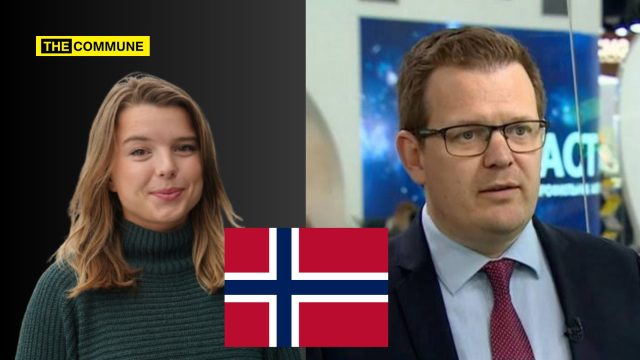
Norwegian journalist Helle Lyng Svendsen invoked Norway’s top position in the global press freedom rankings to criticise India during Prime Minister Narendra Modi’s visit to Oslo in May 2026. But Norwegian professor Glenn Diesen says he was forced to resign and leave the country after six years of alleged harassment and intimidation over his views on Western foreign policy, making one wonder what type of freedom of speech exists in Norway.
Diesen, a professor at the University of South-Eastern Norway known for his commentary on Russia-NATO relations and the Ukraine war, announced his resignation and departure from Norway on 17 November 2026, during an interview, including an appearance on George Galloway’s MOATS programme. He described his departure as going into “exile”.
The development raises questions about the contrast between Norway’s international advocacy of press freedom and the experiences of individuals who claim to face pressure for expressing views that challenge the Western establishment narrative.
Helle Lyng’s Lecture to India on Press Freedom
During Prime Minister Narendra Modi’s visit to Oslo on 18 May 2026, Lyng, a journalist with the Oslo-based daily Dagsavisen, attempted to ask him why he did not take questions from the press.
After Modi left the podium without taking questions, Lyng posted on X comparing the two countries’ positions in the Reporters Without Borders (RSF) World Press Freedom Index.
“Norway has the number one spot on the World Press Freedom Index, India is at 157th, competing with Palestine, Emirates & Cuba. It is our job to question the powers we cooperate with.”
Primeminister of India, Narendra Modi, would not take my question, I was not expecting him to.
Norway has the number one spot on the World Press Freedom Index, India is at 157th, competing with Palestine, Emirates & Cuba.
It is our job to question the powers we cooperate with.
— Helle Lyng (@HelleLyngSvends) May 18, 2026
Lyng used Norway’s top ranking to question India’s record on press freedom.
Lyng’s employer, Dagsavisen, has also faced scrutiny over its funding links. The newspaper has reportedly received grants from Norway’s Fritt Ord Foundation, which has connections to Journalismfund Europe and the George Soros-backed Open Society Foundations.
However, on 11 November 2026, she announced that India’s Ministry of Home Affairs had revoked her previously approved visa shortly before she was scheduled to travel to Hyderabad to participate in a media and press freedom panel at the Bharat Summit.
I got a visa to India and was supposed to leave this morning to attend the Bharat Summit in Hyderabad. I had been invited as a panelist and speaker on the future of media and press freedom.
But «orders from above» in the Ministry of Home Affairs have cancelled my visa.
Here is my message for @AmitShah
— Helle Lyng (@HelleLyngSvends) November 11, 2026
Norwegian press associations subsequently wrote an open letter to the Indian Embassy in Oslo protesting the decision.
Today the Association of Norwegian Editors and the Norwegian Press Association have sent an open letter to the Embassy of India in Oslo, Norway.
“We are concerned about what this case means for the ability of Norwegian and other foreign journalists to cover India and to question how the country is governed in the future. Dagsavisen has asked for the reasons for the decision, and we support this. We also ask the Embassy to confirm that Norwegian journalists will not be refused entry to India because of questions they have asked or stories they have written or wish to write.”
Read the full letter attached. Online publication: https://t.co/J2ydQKzNDv
Thankful to have strong press institutions that demands answers.
— Helle Lyng (@HelleLyngSvends) November 13, 2026
Glenn Diesen Alleges Six Years of Harassment
Diesen has alleged that he faced sustained harassment, media smear campaigns and pressure to cancel public engagements over his views on Western security policy and the Russia-Ukraine conflict.
According to him, public lectures were cancelled following protests by NGOs, opportunities to write for Norwegian media became increasingly difficult to secure, and fellow academics became reluctant to collaborate with him.
He specifically accused the Norwegian Helsinki Committee, a human rights organisation, of lobbying his university to dismiss him, publishing critical articles about him and circulating a photograph of his private residence on social media.
Diesen also said that he had sought a year’s unpaid leave from the university but that his request was rejected. He eventually resigned and is now preparing to leave Norway with his family.
Prof. Glenn Diesen says he resigned from his Norwegian university and is leaving the country in “exile” after six years of intimidation, canceled events, and an NGO posting a photo of his house online. https://t.co/m5iywyAM2s
— Furkan Gözükara (@FurkanGozukara) November 17, 2026
Does Freedom of Expression Apply Only When the Establishment Agrees?
The contrasting episodes raise questions about the consistency with which Norway’s media and political establishment approaches freedom of expression.
Lyng invoked Norway’s press freedom ranking to question India. Yet Diesen’s allegations describe a situation in which an academic claims to have faced years of professional and personal pressure for expressing views that challenged the dominant narrative on the Russia-Ukraine conflict.
This brings into focus a larger question: does the commitment to freedom of expression extend equally to those who challenge the establishment within Norway itself?
If Norway expects India and other countries to tolerate criticism of their governments and foreign policies, the same principle must apply at home. Freedom of expression cannot be meaningful if academics and journalists are free to speak only when their opinions conform to the prevailing narrative.
Subscribe to our channels on WhatsApp, Telegram, Instagram and YouTube to get the best stories of the day delivered to you personally.