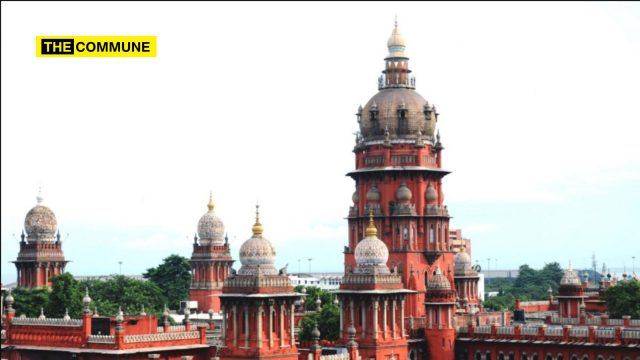
The Madras High Court has reminded police officers and judicial officers across Tamil Nadu and Puducherry that bail is a matter of right in cases involving bailable offences, and that neither magistrates nor sessions judges have the discretion to refuse it, as reported in The Hindu.
Expressing shock over a case in which a metropolitan magistrate and a sessions judge in Chennai had rejected bail in a case involving bailable offences, Justice N. Ramesh said that judicial officers were duty-bound to determine whether the offences invoked against an accused were bailable, even if the accused had cited an incorrect provision of law while seeking bail.
“If the offences are bailable and the accused is prepared to give bail, he shall be released under Section 478(1) of the Bharatiya Nagarik Suraksha Sanhita (BNSS). The police officer, the magistrate, the court of session, or this court would have no discretion to refuse,” the judge wrote.
No Discretion to Refuse Bail in Bailable Offences
Justice Ramesh clarified that considerations such as the gravity of the accusation, the stage of investigation, the pendency of forensic reports, the accused’s antecedents, or the possibility of absconding or tampering with evidence could be grounds for refusing bail only in non-bailable offences. These considerations cannot be invoked to deny bail in cases involving bailable offences.
The judge further observed that while granting bail in such cases, courts could determine the amount of the bond and whether sureties were required but could not impose any additional conditions.
“An accused who is indigent, or who is unable to give a bail bond within a week of his arrest, must be released on his own bond,” the judge added.
He also clarified that bail granted in bailable offences could be cancelled only by the High Court if the conduct of the accused after release was found to be prejudicial to a fair trial. However, an accused who had violated the conditions of a bail bond in an earlier case could be denied bail in a subsequent case, even if the offences in the latter case were bailable.
The judge pointed out that the BNSS and special criminal laws clearly classify offences as bailable or non-bailable, including offences carrying a maximum punishment of three years.
Justice Ramesh directed the High Court’s Registrar General, Deepthi Arivunithi, to circulate a copy of the order to all Principal District and Sessions Judges and Chief Judicial Magistrates in Tamil Nadu and Puducherry. The order is also to be sent to the Director of the Tamil Nadu State Judicial Academy to ensure that judicial officers are made aware of the legal position.
Bail Denied in Case Involving Post Against CM Vijay
The observations came while hearing a bail petition filed by P. Rajagopal, a resident of Thiruvanmiyur, Chennai, who was arrested by the Chennai Cyber Crime police on 22 October 2026.
Rajagopal had allegedly posted an obscene, abusive and derogatory remark against Chief Minister C. Joseph Vijay on his X account on 12 June 2026.
He was booked under Section 296(b) of the Bharatiya Nyaya Sanhita (BNS), relating to the use of abusive words, and Section 67 of the Information Technology Act, 2000. Both provisions invoked against him were bailable. However, Justice Ramesh noted that there was nothing on record to show that the police had informed the accused that the offences were bailable.
As a result, Rajagopal approached the metropolitan magistrate in Saidapet under Section 480 of the BNSS, which deals with bail in non-bailable offences, instead of Section 478, which governs bail in bailable offences.
On 27 October 2026, the magistrate rejected his bail petition, citing “the grave nature of the offence”, the pendency of the investigation and the need to ascertain whether the accused was involved in other cases. The magistrate also apprehended that the accused could abscond or tamper with evidence if released.
However, the magistrate failed to consider that both provisions under which Rajagopal had been booked were bailable.
The Principal Sessions Court in Chennai subsequently rejected his bail plea on 2 November 2026, citing “the gravity of the offence and the nascent stage of the investigation.” A second bail petition was dismissed on 5 November 2026, on the ground that there had been no change in circumstances since the earlier rejection.
Holding that the judicial officers had erred in denying bail despite the offences being bailable, Justice Ramesh observed that their decisions had resulted in the accused remaining in custody for several days despite being entitled to bail.
The High Court consequently ordered Rajagopal’s immediate release on executing a bond of ₹25,000 along with two sureties for a like sum.
Subscribe to our channels on WhatsApp, Telegram, Instagram and YouTube to get the best stories of the day delivered to you personally.