Home Blog Page 75

Democracy On Hold? DMK Govt Leaves Tamil Nadu’s Voters Stranded On Election Eve
Democracy On Hold? DMK Govt Leaves Tamil Nadu's Voters Stranded On Election Eve

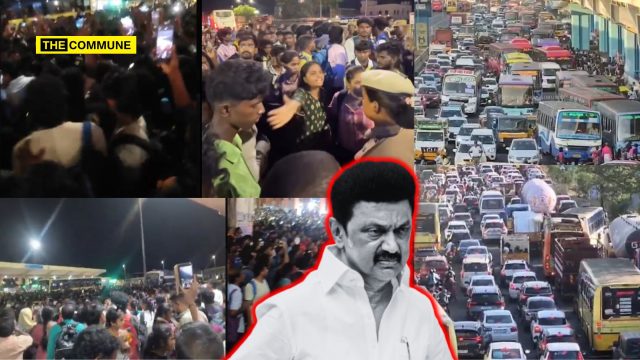
Chief Minister M.K. Stalin spent the final days of the election campaign urging Tamil Nadu’s citizens to fulfil their “democratic duty” but his own government ensured that duty came at the cost of hours stranded on roadsides, exploitative fares, and broken promises. On the night of 22 April 2026, as lakhs of Chennai residents attempted to reach their hometowns to vote, the DMK administration’s transport machinery collapsed under demand it had months to prepare for, triggering road blockades across the state. A government that plastered its Vidiyal Payanam free bus scheme on every election hoarding could not arrange enough buses to get its own voters to the ballot box.

The Crisis at a Glance

Voters across Tamil Nadu were left stranded or faced severe delays in reaching their hometowns to cast their votes ahead of the April 23 Assembly elections, as the DMK government’s much-publicised special transport arrangements fell far short of meeting the demand on the ground. Despite the state government claiming to deploy over 11,323 special buses between April 21 and April 23, commuters reported acute shortages, inflated private bus fares, hours-long waits, and chaotic scenes at major bus terminals.

Highways Turned Into Parking Lots?

Even for those who managed to board a bus or get into a vehicle, the journey was a nightmare of its own making. On the GST Road corridor, one of the primary arteries connecting Chennai to the southern districts, drone footage showed a sea of vehicles stretching for kilometres with no movement, a gridlock that drew comparisons to a car park rather than a national highway.


View this post on Instagram


A post shared by Sun News Tamil (@sunnews)

Commuters reported that it took nearly three hours just to travel from Perungalathur to Kilambakkam, a distance of roughly 10 kilometres, while those who departed from Chennai at midnight were still stuck between Melmaruvathur and Tindivanam by dawn, barely 80 kilometres into a journey that could stretch 500 km or more.

In one particularly damning first-hand account circulating on social media, a commuter who boarded an MTC bus from Koyambedu at 10:40 PM had still not reached Kilambakkam by 3:25 AM – over four and a half hours to cover what should be a 20-minute ride. On the private sleeper buses, the dominant long-distance option across the city, conditions deteriorated into scenes that were nothing short of alarming: angry mobs abusing and attempting to attack drivers, passengers fainting inside stifling cabins, and the full spectrum of travel hardship playing out in real time.

Blockades, Protests, and Broken Promises

Chennai – The mass exodus from Chennai began on Wednesday night (April 22), with lakhs of residents heading to their native places. However, commuters at Kilambakkam bus terminal reported that buses were either absent or severely overcrowded on key routes, particularly those heading to southern districts such as Madurai, Tirunelveli, and Theni. Social media was flooded with posts from frustrated travellers still stuck inside buses hours after scheduled departure.

Poonamallee – Kanchipuram Route: Residents in Poonamallee waiting to reach Kanchipuram staged a road blockade after no buses arrived on their route despite long hours of waiting. Police officials who arrived at the scene negotiated with protesters and promised to arrange additional buses, following which the agitation was called off. The Tiruvallur District Collector Prathap, who visited the spot for an inspection, was surrounded by aggrieved commuters demanding immediate intervention.

Coimbatore – Singanallur: In what was described as comparable to a peak Deepavali rush, hundreds of passengers at the Singanallur bus terminus in Coimbatore staged a road blockade on Trichy Road late Wednesday night, demanding government buses to Madurai, Theni, and Tirunelveli. Passengers stated that the Transport Department had failed to plan for election travel with the same seriousness given to festival seasons like Deepavali or Pongal.

Private Bus Operators Exploit the Situation

With government buses woefully inadequate, private omni bus operators exploited the surge in demand by hiking fares manifold. The Tamil Nadu Transport Commissionerate issued warnings stating that errant operators would face heavy penalties including permit revocation and deployed special teams of RTOs and Motor Inspectors at checkposts across the state. Helpline numbers were also released for passengers to report fare violations.

Scale of the Failure

Despite official claims that approximately 1.89 lakh passengers had used special bus services by the afternoon of April 21, commuters alleged that services remained critically insufficient – especially on corridors heading south from Chennai. With over 6 crore voters enrolled in Tamil Nadu for the 2026 polls, the sheer scale of inter-district movement on election eve exposed a glaring gap between government announcements and actual delivery.

DMK Supporters Claim EC Has To Arrange Transport

The DMK members and its supporters on the other hand claim the reponsibility lies with the Election Commission.

Yes, the Model Code of Conduct is in place once right now but that does not absolve the ruling government from arranging basic necessities for its citizens.

Who Is Responsible for Voter Transport?

Arranging public transport for voters to travel to their hometowns is primarily the State Government’s job, not the Election Commission of India’s (ECI). The ECI’s transport mandate is far more limited in scope. Here is how the responsibilities are clearly divided:

What the ECI Is Responsible For

The ECI’s transport obligations under its Assured Minimum Facilities (AMF) guidelines are narrow and specific:

  • Providing pick-and-drop transport for PwD (Persons with Disability) and senior citizens from their residence to the polling booth and back
  • Ensuring wheelchairs and volunteers are available at polling stations via the SAKSHAM app
  • Arranging transport for election staff and polling officials to reach voting stations
  • Ensuring free public transport passes for senior citizens and PwD voters on poll day

The ECI is responsible for making the voting booth accessible – not for ferrying voters across hundreds of kilometres to their home constituencies.

What Is the State Government’s Responsibility

The deployment of special buses, management of bus terminals, traffic regulation, and coordination of inter-district transport during elections falls squarely on the State Government and its Transport Department. Once the Model Code of Conduct is in force, the state government continues to function as a caretaker administration and retains full operational control over departments like transport, police, and highways. The Tamil Nadu government, not the ECI, announced, planned, and was accountable for the 11,323 special buses.

The Damning Contrast

The cruelest irony of this episode is one the DMK cannot escape: a government that made free bus travel for women the centrepiece of its election manifesto, a scheme worth ₹600 crore in subsidies could not provide basic, functional transport to its own voters on the eve of the election in which it seeks a fresh mandate.

Given how the Stalin-led government operates as a perpetual advertisement machine – more focused on inaugurations, slogans, and branding than on quiet administrative efficiency, voters who anticipated failures and booked early were the only ones who made it home in time. Those who trusted the government’s announcements paid the price. Deliberately or incompetently, the result for thousands of Tamil voters is the same: democracy stranded on the roadside.

Subscribe to our channels on WhatsAppTelegram, Instagram and YouTube to get the best stories of the day delivered to you personally.
Nearly ₹2 Crore Cash Seized From Mylapore DMK Candidate Velu’s Aide Ahead Of Polls

Nearly ₹2 Crore Cash Seized From Mylapore DMK Candidate Velu's Aide Ahead Of Polls

A significant cash seizure from the residence of an aide to a DMK candidate has become a major talking point in the city on the eve of the Tamil Nadu Assembly elections.

With polling scheduled for tomorrow, flying squads deployed by the Election Commission have been conducting intensive checks across the state since the announcement of elections. These teams have been seizing unaccounted cash, gifts, and other materials suspected to be linked to voter inducement.

As part of these ongoing operations, more than 50 flying squads have been actively monitoring and conducting surprise inspections in Chennai to prevent illegal cash distribution.

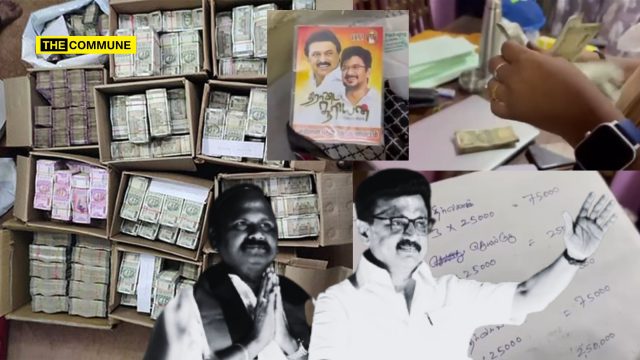
In this context, officials conducted a raid at the residence of Sathyamoorthy, an aide to DMK candidate Tha. Velu from the Mylapore constituency in Chennai. The search was carried out following a complaint alleging that large sums of cash had been stored at the premises for distribution to voters.

During the raid, which took place on the morning before polling day, officials reportedly recovered bundles of ₹500 currency notes concealed beneath a cot inside the house. Preliminary estimates suggest that the seized cash could exceed ₹1 crore, as per iTamil News. In addition to the cash, officials are said to have recovered documents and handwritten notes detailing the distribution of money, including records of recipients and amounts allegedly allocated or already disbursed.

However, as per a report in Kumudam, a total of ₹79 lakh in cash was confiscated and documents pertaining to the distribution of funds amounting to up to ₹2 crore were seized. Chanakya reports that about ₹1.5 crore in cash was recovered.


View this post on Instagram


A post shared by Chanakyaa (@chanakyaa_tv)

Authorities have initiated the process of depositing the seized cash into the treasury. Sathyamoorthy has reportedly been taken to the police station for further questioning as part of the investigation.

Meanwhile, similar seizures have been reported from multiple locations across Tamil Nadu, including vehicles, residences, and offices linked to members of the ruling DMK. These developments have triggered widespread political reactions and raised concerns over alleged attempts to influence voters through illegal cash distribution.

Subscribe to our channels on WhatsAppTelegram, Instagram and YouTube to get the best stories of the day delivered to you personally.
Mallikarjun Kharge Ducks Women Empowerment Question In TN, Hides Behind Congress History Lesson

Congress 'President' Mallikarjun Kharge's Son Gives Up 'Ownership' Of Land Amid MUDA Row

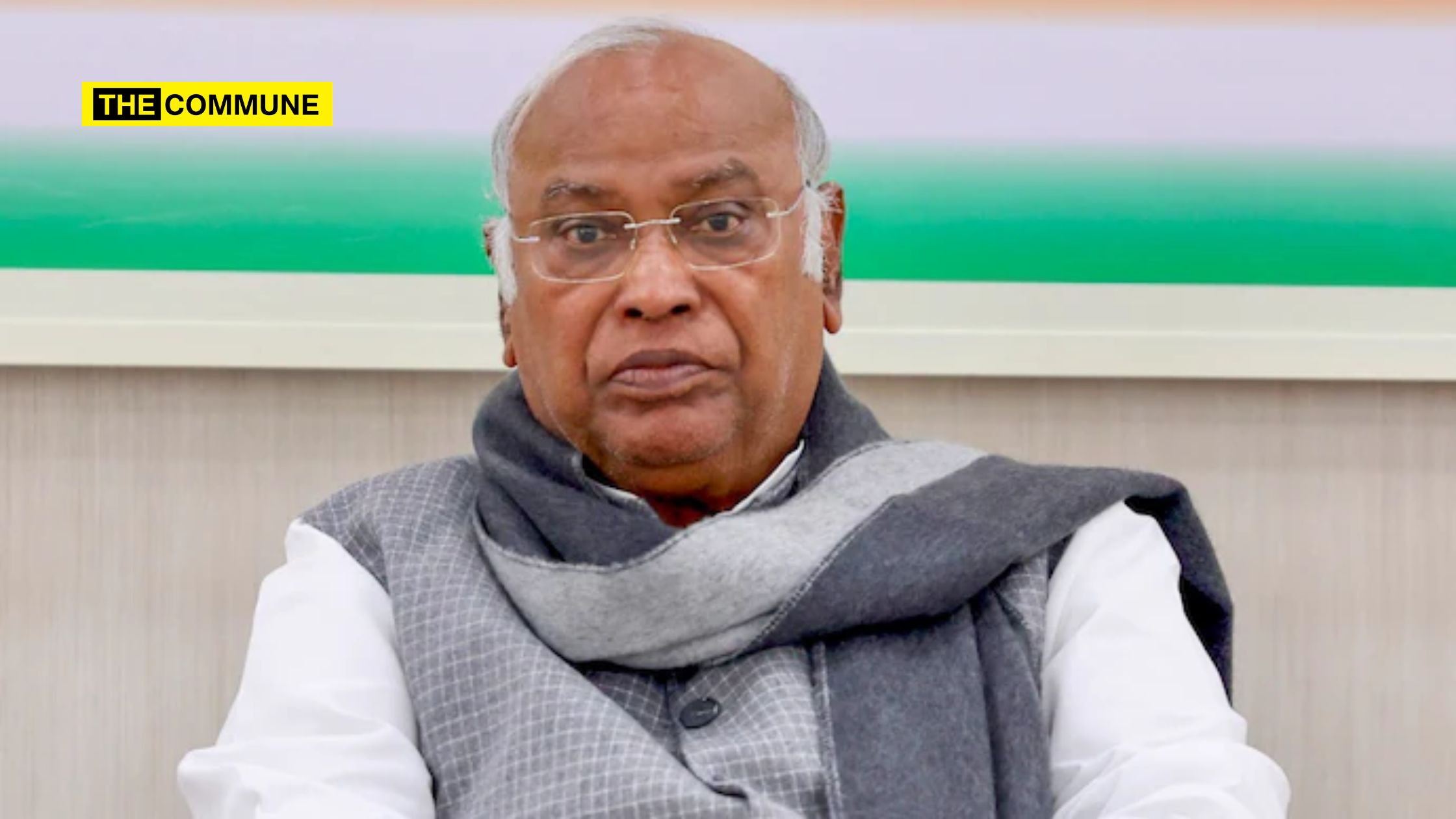
A press interaction in Tamil Nadu, meant to project Congress’s electoral messaging ahead of the state Assembly elections, turned into an uncomfortable moment of reckoning for Congress President Mallikarjun Kharge when a woman journalist posed a pointed and data-backed question – one that Kharge spectacularly failed to answer.

The Question That Hit Home

The journalist’s question was simple, factual, and devastating: BJP has fielded five women candidates in the constituency, Congress only two. If Congress is the champion of women’s empowerment, why does its action not match its words?

It was not a rhetorical trap. It was a straightforward accountability question about the present, about what Congress is doing right now, under current leadership, in the ongoing election.

Kharge’s response was a masterclass in evasion. Here’s what he said, verbatim, “No, we see Congress party always gave importance for women. Our party leader is a woman. Our founder is a woman. The first Congress president Sarojini Naidu is a woman. The first Prime Minister, Indira Gandhi ji, is a woman. Our party built up from scratch and brought to power the UPA government. Srimati Sonia Gandhi ji is our leader. She is a woman. So our party need not learn from others. We have given. Show me any RSS people – have they given any important post for women, or even in their party? Whatever Modi picks up, only such people will get something; otherwise, nothing. So we are for that. We’ll fight – wherever mistakes are there, we’ll rectify it.”

A History Lesson Nobody Asked For

Instead of addressing the present, why Congress has fewer women candidates than BJP in this election, Kharge launched into a history lecture spanning decades:

“Our party leader is a woman” – Kharge himself is the Congress President. Which woman is he referring to? The party’s current president is a man, himself.

“Our founder is a woman” – This is factually incorrect. The Indian National Congress was founded in 1885 by A.O. Hume, a British civil servant, along with Dadabhai Naoroji and Dinshaw Wacha – none of them women.

Sarojini Naidu – He correctly notes she was the first woman Congress president, but that was in 1925, a century ago.

Indira Gandhi – She was indeed India’s first woman Prime Minister, but she served from 1966 to 1984. That is not Kharge’s achievement.

Sonia Gandhi – She led the UPA coalition and is widely credited with reviving the party, but again, this is a Gandhi family legacy, not Kharge’s.

Every woman achievement Kharge cited belongs to the Gandhi era, not to his own tenure as party president since October 2022. The journalist’s question was specifically about what Congress is doing today, in this election, under his watch. Kharge answered by pointing to what others did, decades before him.

RSS vs BJP: A Classic Diversion Tactic

When cornered on BJP’s track record, Kharge pivoted to the RSS – an entirely different organisation. He asked: “Has the RSS given any important post to women?”

But the journalist asked about BJP, not the RSS. And the BJP’s record on women in positions of power in Tamil Nadu alone is hard to ignore:

  • Nirmala Sitharaman – Finance Minister of India, one of the most powerful Cabinet posts in the country, hails from Tamil Nadu
  • Tamilisai Soundararajan – Former Governor and a senior BJP leader from Tamil Nadu
  • Vanathi Srinivasan – President of BJP Tamil Nadu Women’s Wing and a prominent state leader

By deflecting to the RSS, Kharge avoided answering for BJP’s actual record – a record that, inconveniently, has more recent and more powerful examples of women in leadership than what Kharge cited for Congress.

The Conscience Moment: “We Will Rectify”

At the very end of his response, Kharge added: “Wherever mistakes are there, we’ll rectify it.”

This was a telling admission. After spending his entire answer claiming Congress has always been a champion of women, he conceded there are “mistakes” to rectify. It was the kind of afterthought that exposes the contradiction at the heart of his entire answer – if Congress has always stood for women, why are there mistakes to correct in the first place?

The Bigger Accountability Question

The journalist’s question was not merely about candidate count. It reflected a deeper frustration felt by many Congress workers, particularly women, on the ground in Tamil Nadu. Under the current Congress leadership of TNCC President K. Selvaperunthagai, internal party decisions have been widely criticised as unilateral and exclusionary. Workers allege that the roles of Kharge, Priyank Kharge, K.C. Venugopal, Girish Chodankar, and Nivedith Alva in TNCC’s functioning have left genuine, long-serving party workers, especially women, sidelined, their sacrifices unrecognised, and their careers in ruins.

The very Congress that lectures on women empowerment from public stages has, according to these workers, reduced women to props in election rhetoric while making decisions that harm them behind closed doors.

Subscribe to our channels on WhatsAppTelegram, Instagram and YouTube to get the best stories of the day delivered to you personally.
Sabarimala: Kerala Police Flag ₹20 Crore Scam As ‘Nei Thenga’ Offerings Meant For ‘Aazhi’ Fire Pit Diverted & Sold Commercially

Sabarimala: Kerala Police Flag ₹20 Crore Scam As 'Nei Thenga' Offerings Meant For ‘Aazhi’ Fire Pit Diverted & Sold Commercially

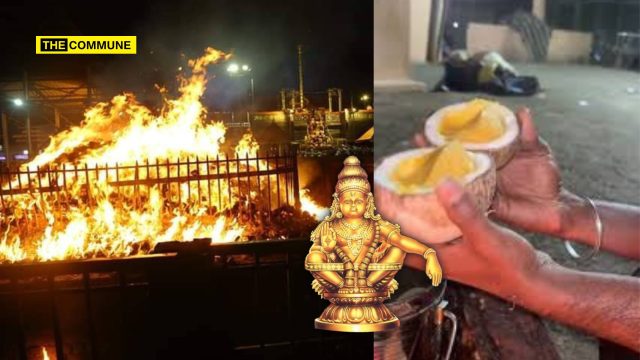
Another day, another scam. Once again in Sabarimala. The Kerala state police’s intelligence wing has flagged alleged large-scale irregularities in the handling of ‘nei thenga’ (ghee-filled coconuts) offered by devotees at the Sabarimala Temple, raising concerns over diversion of ritual offerings meant for the sacred ‘aazhi’ (fire pit), as reported in The New Indian Express.

According to an intelligence report submitted to senior authorities, contractors engaged in the collection of coconuts are suspected of diverting significant quantities to private godowns instead of consigning them to the ritual fire. The report estimated that the alleged illicit trade may have generated up to ₹50 lakh per day and potentially reached ₹20 crore during the last pilgrimage season.

The matter has been escalated to officials of the Travancore Devaswom Board (TDB), including the Sabarimala Special Commissioner and the Executive Magistrate, sources indicated.

As per the report, a Bengaluru-based firm had secured the contract to collect coconut offerings for ₹7.61 crore. The contractor had deployed workers with authorised ID cards in shifts throughout the pilgrimage season, operating both during the day and night.

The intelligence findings cited an incident on April 14, when an individual was intercepted carrying sacks filled with broken ‘nei thenga’ pieces. Upon questioning, the individual reportedly stated that the coconuts had been collected from devotees under the pretext of offering them in the ‘aazhi’, allegedly on the contractor’s instructions, and that he was paid a commission of ₹7 per kilogram.

The report further stated that devotees had confirmed handing over coconuts in good faith, believing they would be used in the prescribed ritual. The individual apprehended was found to be carrying a contractor-issued identification card, and the Sannidhanam police subsequently seized the materials.

Sources indicated that the collected coconut pieces were allegedly being sold to third parties, with oil production units reportedly showing demand for such material due to its ghee content.

Further details from the intelligence inputs suggested that the individual had claimed that around 15 workers were engaged in collecting coconuts from devotees, while approximately 165 personnel were deployed during the previous pilgrimage season. It was reported that an efficient worker could collect up to 500 kg of ‘nei thenga’ in a single day.

Officials involved in the operation also indicated that two additional individuals carrying similar consignments were intercepted on the same day.

The alleged malpractice was reported to have been uncovered by a special unit of the state intelligence wing operating under the supervision of Intelligence ADGP P. Vijayan.

Sources within the Travancore Devaswom Board confirmed that a formal complaint has been placed before the Sabarimala Special Commissioner and the Kerala High Court’s Devaswom Bench, which is expected to review the findings and decide on further action.

Subscribe to our channels on WhatsAppTelegram, Instagram and YouTube to get the best stories of the day delivered to you personally.
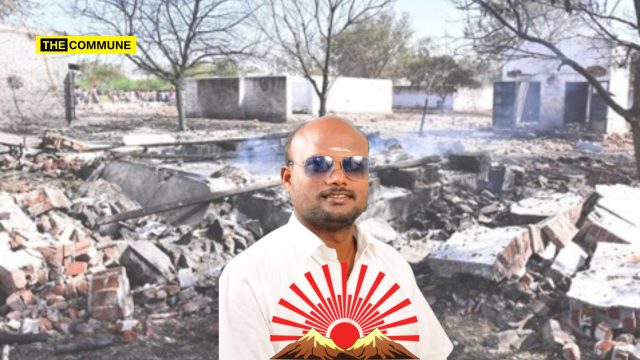
Virudhunagar Cracker Unit Explosion: Owner, Reportedly A DMK Functionary, Surrenders

Virudhunagar Cracker Unit Explosion: Owner, Reportedly A DMK Functionary, Surrenders

The owner of a private firecracker manufacturing unit, reportedly a DMK functionary, in Tamil Nadu’s Virudhunagar district, where a massive explosion claimed at least 25 lives and injured several others, has surrendered before a court, while four of his associates have been arrested, police said.

The explosion occurred on 19 April 2026 at the Vanaja Fireworks unit in Kattanarpatti village, around 550 km from Chennai. According to officials, the blast, which took place when dozens of workers were engaged in production, caused extensive damage, reducing multiple structures to rubble and triggering a prolonged rescue operation, as reported in The New Indian Express.

Police said four special teams were formed to trace the owner, identified as V. Muthu Manickam, who had initially gone absconding. He later surrendered before a judicial magistrate. Four others, S. Muthuraj, T. Vairamuthu, C. Vetrivel, and M.K. Muthu Krishna Kumar were arrested and subsequently released on bail, as reported in Hindustan Times.

Preliminary investigations indicate that the unit held a valid licence issued by the Petroleum and Explosives Safety Organisation (PESO), Nagpur. However, officials noted violations, including overcrowding in workspaces, with around 20 workers allegedly accommodated in a room meant for four during manufacturing activities.

Authorities have registered a case at the Vachakarapatti Police Station, and further investigation is underway to determine the exact cause of the explosion and identify any additional violations.

District officials said that a detailed probe will establish accountability. “After the probe we will know what happened. If there are any violations, we will take action against the owner,” a senior official stated.

The incident also triggered a second explosion during rescue operations, injuring police personnel, media members, and fire and rescue staff.

The tragedy has drawn reactions from national and state leaders, including President Droupadi Murmu, Prime Minister Narendra Modi, and Chief Minister MK Stalin, who expressed condolences to the victims’ families.

Meanwhile, political attention has turned to the ownership of the unit, with reports indicating that the owner is associated with the Dravida Munnetra Kazhagam, though officials have not confirmed any political link as part of the ongoing investigation.

Subscribe to our channels on WhatsAppTelegram, Instagram and YouTube to get the best stories of the day delivered to you personally.
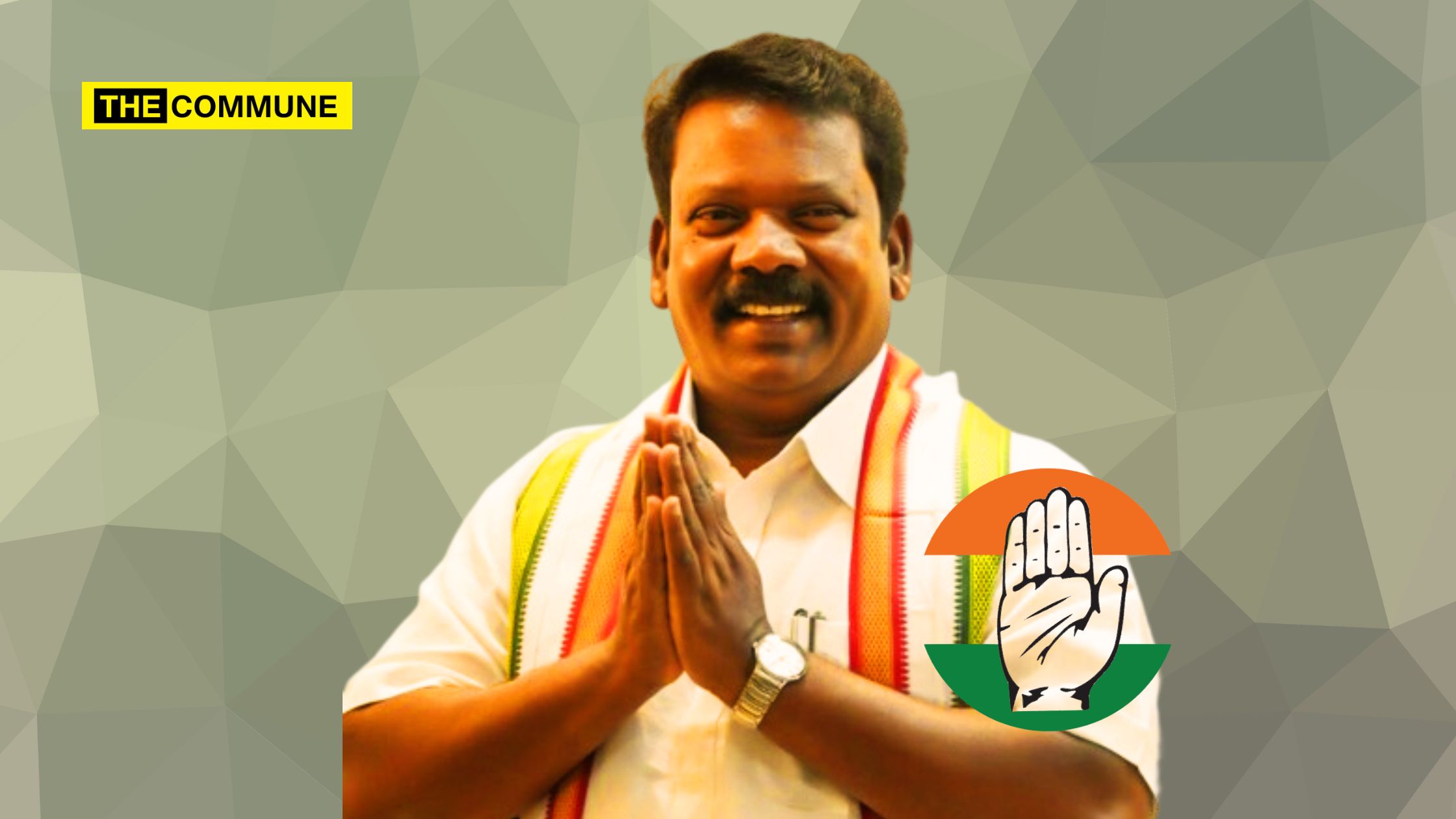
TN Congress Chief Selvaperunthagai Booked Over ‘False IT Raid’ Claim, EC Complaint Filed

selvaperunthagai congress tncc

The Income Tax Department has filed complaints with the police and the Election Commission against Tamil Nadu Congress president K. Selvaperunthagai, alleging that he made false claims about being “detained” during a supposed raid at his residence, as reported in Dinamalar.

The controversy arose after Selvaperunthagai stated that he was being confined at his home under the pretext of an Income Tax search and that Hindi-speaking officials were involved. He also gave media interviews from his residence in Kilpauk claiming that officials were conducting a raid.

In an official statement, the Income Tax Department said these claims were examined and found to be “incorrect and baseless.” It clarified that no searches were carried out at Selvaperunthagai’s residence, office, or any premises linked to him, either recently or on the previous day.

The department further stated that no operation was conducted at the Kilpauk residence or any other location mentioned by him.

According to the statement, officials had conducted limited verification at certain locations in Sriperumbudur based on information regarding the movement of unaccounted cash. These checks were carried out in coordination with local authorities. However, the department emphasised that none of the locations inspected had any connection to Selvaperunthagai.

It also noted that no evidence was found during these verifications, and no further action was initiated.

Following the incident, the Income Tax Department has lodged a complaint with the Election Commission over the alleged dissemination of false information. A separate complaint has also been filed with the police, seeking legal action against Selvaperunthagai for making defamatory allegations against a government agency and spreading misinformation.

Subscribe to our channels on WhatsAppTelegram, Instagram and YouTube to get the best stories of the day delivered to you personally.
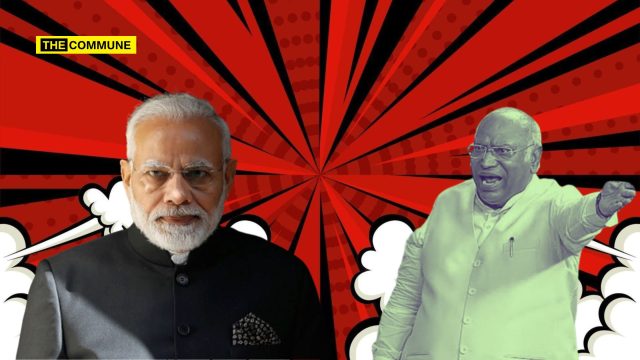
How Congress President Mallikarjun Kharge Has Been Repeatedly Abusing PM Modi

How Congress President Mallikarjun Kharge Has Been Repeatedly Abusing PM Modi

Congress President Mallikarjun Kharge on Tuesday, 21 April 2026, sparked controversy after referring to Narendra Modi as a “terrorist” during a press conference, before later clarifying that he meant the Prime Minister was “terrorising people and political parties.”

The remarks came as Kharge criticised the All India Anna Dravida Munnetra Kazhagam (AIADMK) for aligning with the Bharatiya Janata Party ahead of the Tamil Nadu Assembly elections.

Modi Is A Terrorist

“How these AIADMK people, who themselves put the photo of Annadurai, how can they join Modi? He is a terrorist. His party won’t believe in equality and justice. These people are joining with them; it means they are weakening democracy, they are weakening the philosophy of Annadurai, Kamaraj, Periyar, Kaliagnar, Baba Saheb Ambedkar,” Kharge said.

He further asserted that the Congress-DMK alliance would continue its governance approach, stating, “The Congress-DMK alliance will continue to deliver welfare, inclusive growth, quality, education, accessible healthcare.”

The Congress leader’s comments followed remarks by Prime Minister Modi, who, in a recent address to the nation, accused the Congress and other opposition parties of committing “foeticide” by defeating a bill on women’s reservation in Parliament and state assemblies.

When asked by reporters to clarify his earlier statement, Kharge said, “No, no,” before elaborating on his intent.

“He (PM Modi) is terrorising people and political parties. I never said he is a terrorist…What I mean, I want to clarify, is that Modi always threatens. The institutions like ED, I-T and CBI are in his hands. He wants to take delimitation also into his hands. Therefore I said , in that context, he is terrorising people and political parties. I never said he is a terrorist,” Kharge said.

This is not the first time Kharge has spoken derogatorily of PM Modi. Let us take a look at the past instances of such behaviour.

Modi Is A Poisonous Snake

In April 2023, amid an intense campaign for the Karnataka Assembly elections, Mallikarjun Kharge likened Narendra Modi to a “poisonous snake”. Speaking at the meeting he said, “Modi is like a poisonous snake, you might think it is poison or not. But if you lick it, you are dead.” 

Kharge made the remarks during a public address in Kalaburagi. As the controversy escalated, he later issued a clarification stating that his comment was not directed at Prime Minister Modi personally but at the BJP and its ideology.

In a tweet, Mr Kharge said, “BJP’s ideology is divisive, hostile and full of hatred and prejudice towards the poor and Dalits. I discussed the politics of hatred and malice. My statement was neither for PM Modi personally nor for any other person.”

“But for the ideology he represents. Our fight with PM Modi is not a personal fight. It is an ideological battle. My intention was not to hurt anyone’s feelings and if knowingly or unknowingly someone’s feelings were hurt, then it was never my intention,” he added.

“Nor has it been the conduct of my long political life. I have always followed the norms and traditions of political correctness towards friends and opponents and will do so till the last breath of my life. I don’t make fun of individuals and their problems like people in high positions,” the Congress national president said in another tweet.

“I have also seen and suffered the pain and suffering of the poor and downtrodden. For five decades, I have always been opposed to the divisive ideology of the BJP and RSS and their leaders. My political fight was, is and always will be against his politics,” he added.

Modi Has 100 Heads Like Ravan

In November 2022, days after Narendra Modi responded to a Congress leader’s “aukat” remark, Mallikarjun Kharge targeted the Prime Minister with a “Ravan” reference during the Gujarat election campaign.

Kharge made the remarks while addressing a rally in Ahmedabad ahead of the upcoming state polls, drawing reactions from political opponents and renewed attention to the tone of campaign rhetoric.

“Modi ji is Prime Minister. Forgetting his work, he keeps campaigning in corporation elections, MLA elections, MP elections, everywhere… All the time he’s talking about himself – ‘You don’t have to see anyone else, just look at Modi and vote’. How many times do we see your face? How many forms do you have? Do you have 100 heads like Ravan?” Kharge said, drawing laughter and applause from his audience.

The Congress chief also criticised what he described as the party’s reliance on the Prime Minister’s image across elections, questioning the practice of seeking votes in his name.

“I’ve been seeing that votes are sought in the name of Modiji, be it municipality elections, corporation elections or state elections…Ask for votes in the name of the candidate. Is Modi going to come and work at the municipality? Is he going to help you in times of your need,” Kharge asked.

Will Outlive Modi

In September/October 2024, Kharge drew political attention with remarks made during a rally in Kathua, Jammu and Kashmir, where he said he would not die before Narendra Modi is removed from office.

The Congress president made the statement shortly after experiencing a brief bout of dizziness while addressing the gathering. He received medical assistance on stage before continuing his speech.

At the rally, Kharge reiterated the Congress party’s position on the restoration of statehood to Jammu and Kashmir and accused the Centre of delaying elections and governing the region through “remote control.”

“We will fight to restore statehood. We are not going to leave it. I am 83 years old, I am not going to die so early. I will stay alive until PM Modi is removed from power. I will listen to you. I will fight for you,” he said.

Modi Lives In History

In February 2025, Kharge launched a sharp attack on Narendra Modi following his address in the Rajya Sabha, accusing him of focusing on historical narratives and political attacks rather than present-day issues.

Kharge, who is the Leader of Opposition in the Rajya Sabha, criticised the Prime Minister’s speech in a detailed post on X, questioning his approach to governance and policy priorities.

“How can a person who just lives in history build the present and the future? In the hands of this government, the country’s future is dark,” Kharge said.

Modi Is A Liar

In June 2025, Kharge accused PM Modi of repeatedly misleading the public and avoiding accountability on key national issues.

Speaking to reporters in Kalaburagi as the Prime Minister completed 11 years in office, Kharge alleged that Modi had failed to deliver on promises and relied on deception to secure electoral support.

“I have been saying this in Parliament for a long time, and I have never seen a Prime Minister who lies so much, makes so many mistakes, traps people, deceives the youth, and takes votes by trapping people,” said the Congress president. “He has lied about everything, and not even one has been implemented.”

While Kharge has repeatedly issued clarifications framing his comments as critiques of ideology rather than individuals, the pattern has continued to draw strong reactions and controversy.

Subscribe to our channels on WhatsAppTelegram, Instagram and YouTube to get the best stories of the day delivered to you personally.
Tharkuri Vijay Kazhagam: Joseph Vijay’s 336 Promises Would Cost ₹12 Lakh Crore A Year – Nearly 3x Tamil Nadu’s Entire Budget

Tharkuri Vijay Kazhagam: Joseph Vijay’s 336 Promises Would Cost ₹12 Lakh Crore A Year – Nearly 3x Tamil Nadu’s Entire Budget

Tamilaga Vettri Kazhagam (TVK) chief Vijay released his party’s election manifesto on April 16 ahead of the Tamil Nadu Assembly elections, announcing 336 promises across 10 categories. While the announcements drew widespread attention, financial experts have now warned that fulfilling all of Vijay’s promises would require ₹12 lakh crore per year – nearly three times Tamil Nadu’s total annual budget of ₹4.39 lakh crore for 2025, as reported in Dinamalar.

Headline Promises Targeting Women and Fishermen

While he proclaimed that he is against freebies, they are a prominent part of his 336 commitments:

  • ₹2,500 per month for all women heads of households
  • 6 free LPG gas cylinders annually
  • ₹25,000 assistance for pregnant women
  • ₹5 lakh interest-free loans for women’s self-help groups
  • ₹3,000 per month for the elderly, widows, and differently-abled persons
  • ₹20,000 fishing ban season relief for fishermen
The Fiscal Reality

A closer analysis reveals a staggering fiscal gap. Of Vijay’s 336 promises, just 14 promises, specifically those targeting women voters and fishermen, would alone cost ₹1.82 lakh crore per year to implement. The remaining promises would push the total annual expenditure requirement to ₹12 lakh crore, according to finance experts – a figure that dwarfs the state’s entire budget more than 2.7 times over.

Promise-Wise Cost Breakdown

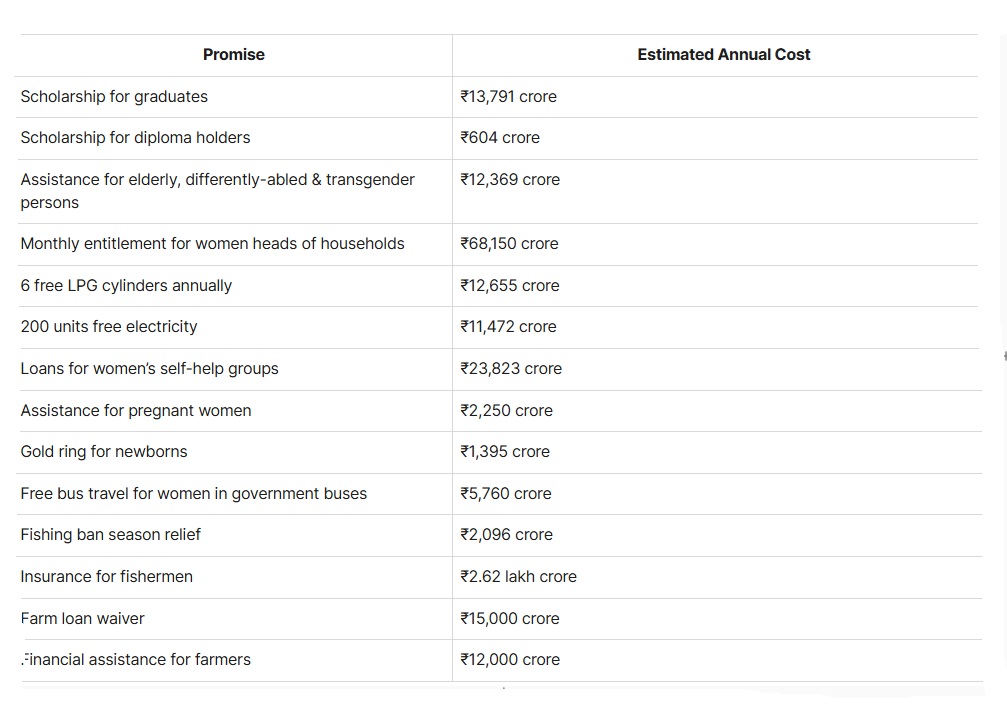
The following is the itemised annual cost estimate for each major promise:

The single most expensive line item is insurance for fishermen, estimated at ₹2.62 lakh crore annually, followed by the monthly entitlement for women heads of households at ₹68,150 crore per year.

Tamil Nadu’s total budget for the year 2025 stands at ₹4.39 lakh crore. Against this backdrop, financial experts have categorically stated that the state’s existing fiscal architecture cannot accommodate the scale of spending that Vijay’s manifesto demands. The manifesto has reignited debate about the economic viability of welfare-heavy election promises ahead of what is expected to be a fiercely contested assembly election.

Subscribe to our channels on WhatsAppTelegram, Instagram and YouTube to get the best stories of the day delivered to you personally.
Inaugural ‘Sindhu Samvad’ Held At Central University Of Jammu, Spotlighting Indus River’s Strategic Legacy

Inaugural 'Sindhu Samvad' Held At Central University Of Jammu, Spotlighting Indus River's Strategic Legacy

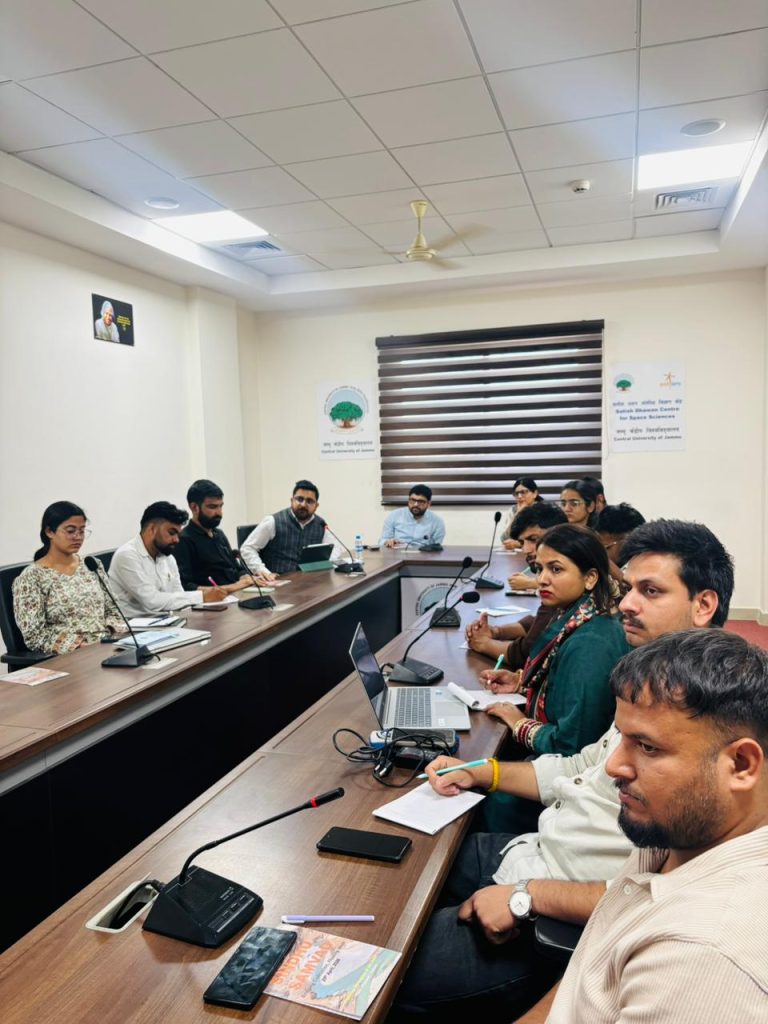
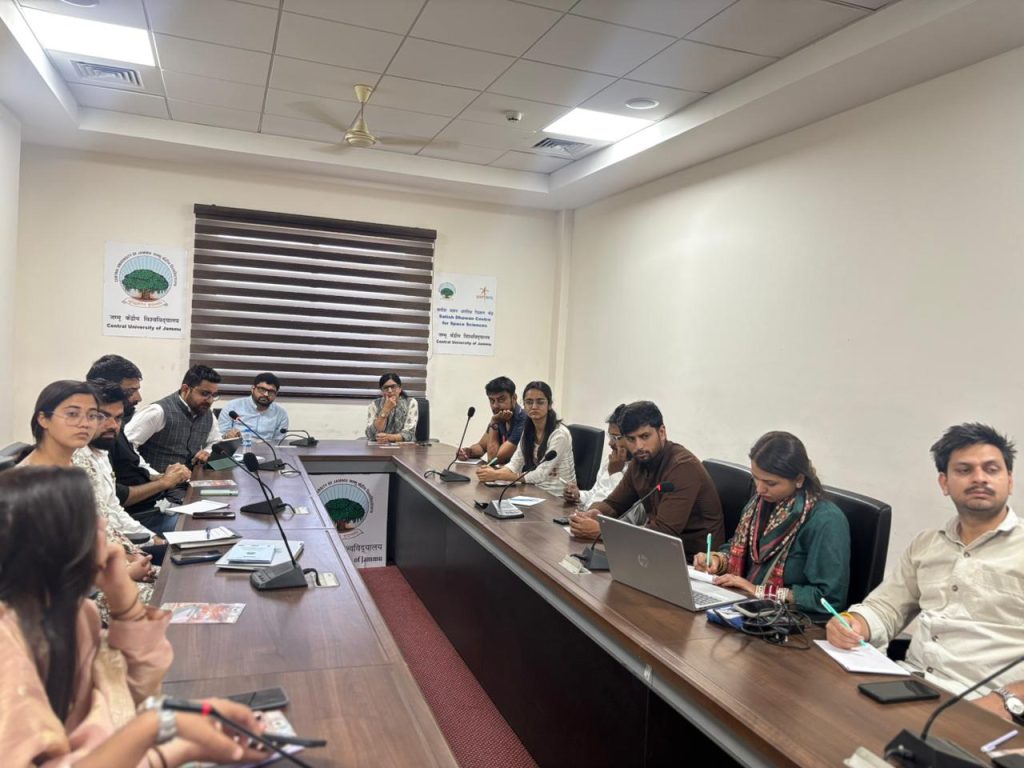
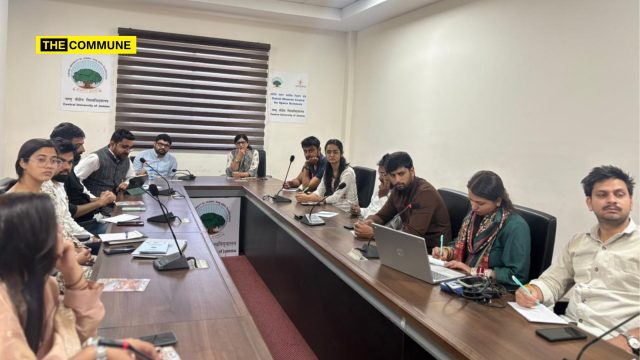
The inaugural edition of Sindhu Samvad, a flagship interdisciplinary dialogue series centered on the civilizational, ecological, and geopolitical significance of the Sindhu (Indus) river system, was successfully conducted at the Central University of Jammu (CUJ) on Sunday.

Organized by the Jammu & Kashmir-based Paramrshniti Foundation, with CUJ and Sindhu Central University as co-host institutions, the event marked the launch of what organizers describe as a nationwide project aimed at fostering structured, cross-disciplinary discourse spanning history, policy, and geopolitics.

The program opened with an address by Prof. Ritu Bakshi, Dean of Students’ Welfare at CUJ, who commended the Paramrshniti Foundation for pioneering the initiative and called Sindhu Samvad “a historic stride forward” in India’s intellectual and cultural dialogue. The event was held with the blessings of CUJ Vice-Chancellor Prof. Sanjeev Jain, who reaffirmed the university’s commitment to knowledge and heritage.

“The Central University of Jammu has remained committed to promoting knowledge, research, and cultural dialogue,” Prof. Jain stated. “We must carry forward the continuity of Indian knowledge and culture, much like the flowing stream of the Indus.”

Civilizational and Ecological Dimensions

Dr. Ajay Singh delivered a detailed presentation on the civilizational significance of the Sindhu River, tracing its role as the lifeline of the ancient Sapta Sindhu civilization, known for its advanced urban planning, extensive trade networks, and rich cultural heritage. He argued that the river was not merely a source of sustenance but a conduit for cultural exchange, agricultural development, and artistic expression whose legacy remains visible in contemporary Indian culture.

Dr. Singh also engaged in an interactive exchange with scholars from multiple disciplines, drawing on recent archaeological findings along the river to illustrate how the Sindhu has shaped successive human societies across millennia.

Dr. Shweta Yadav complemented this perspective by focusing on the ecological dimensions of the Indus river system, stressing the importance of institutional collaboration, particularly with Sindhu Central University, in addressing the river’s environmental challenges.

Strategic Significance Amid IWT Suspension

Dr. Tilak Raj Sharma brought a timely policy dimension to the proceedings, underlining the dual strategic and ecological importance of the Indus River’s tributaries, especially within the context of Jammu & Kashmir. He noted that these watercourses are indispensable for regional biodiversity, water security, and the livelihoods of local communities.

His remarks carried particular weight given the current suspension of the Indus Waters Treaty (IWT). The treaty, which has governed India-Pakistan water-sharing arrangements since 1960, has been placed in abeyance following the terrorist attack in Pahalgam last year, making dialogues such as Sindhu Samvad all the more urgent and relevant in shaping India’s forward policy on the river system.

The first session of the day was moderated by Siddharth Mahajan and Shubham Raina, who guided the discussion across its historical, ecological, and strategic threads.

Organizers indicated that Sindhu Samvad will continue as a recurring national-level forum, with future editions expected to deepen engagement on the culture, climate, and civilizational significance of the Indus, particularly as India navigates the evolving geopolitical and hydrological stakes surrounding one of the subcontinent’s most consequential river systems.

Subscribe to our channels on WhatsAppTelegram, Instagram and YouTube to get the best stories of the day delivered to you personally.
DMK Govt Refused To Implement Court Order For Thiruparankundram Deepam But Shows No Hesitation To Enforce Orders To Demolish Temples

When DMK scion Udhayanidhi Stalin called for the “eradication of Sanatana Dharma,” it signalled an ideological position. What is now visible is how that position reflects in governance—particularly in how the state responds to court orders involving Hindu religious practices versus other cases.

The Thiruparankundram Karthigai Deepam issue is not an isolated incident. It fits into a broader pattern of selective enforcement.

A High Court order permitted the lighting of the Deepam at the Deepa Thoon. Under the Constitution, the executive is duty-bound to implement judicial directions. This is not optional—it is central to the rule of law.

Yet, the order did not translate into immediate action on the ground.

Historical records show that a 1996 agreement relating to the Thiruparankundram hill recorded no objection to Hindu religious practices. Despite this, the state has allowed shifts in usage and narrative around the site without intervention.

In Nellikuppam, public statements regarding animal slaughter saw no administrative response. Only after devotees approached the court did a restraining order emerge in October 2025. The court itself recorded that the state had not objected.

Now examine enforcement in temple demolition cases.

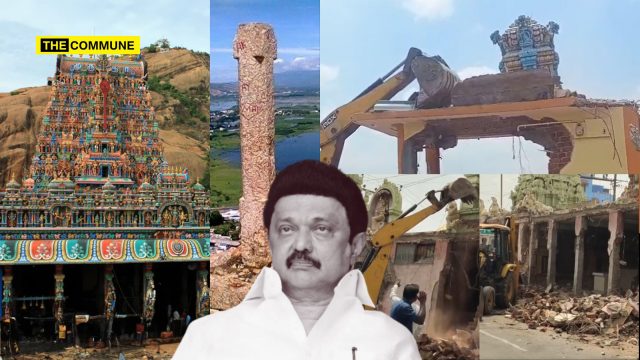
The former BJP state chief alleged that since the DMK came to power on 6 May 2021, more than 161 Hindu temples across Tamil Nadu had been demolished. He cited locations including Muthaanamman Temple in Coimbatore city, Vedavinayagar Temple on Mint Road in Chennai, Vasudevar Temple in Sulur, Kubera Vinayagar Temple in Thanjavur, Adi Mariamman Temple in the Keezhavasal area, Shani Bhagavan Temple in Ariyalur district, and temples in Mettupalayam, Tiruvallur, and Perambur.

Annamalai questioned the basis on which several of these demolitions were carried out, stating that in many cases there were no clear court orders or documented sources authorising the action. He alleged that in some instances, court orders were cited after the fact, and that temples were demolished within hours of judgments being delivered, including demolitions carried out in the early hours of the morning.

Case Pattern: Caution in Non-Temple Structures

In contrast, multiple cases involving mosques, churches, or waqf-linked properties show a different administrative approach—marked by delay, caution, or deferment.

1. Avadi–Pattabiram Belt (Chennai outskirts)

Encroachments involving religious structures, including non-temple sites flagged on government land, have seen prolonged inaction despite complaints and local-level directives. Authorities have repeatedly cited “sensitivity” and law-and-order concerns.

2. Chromepet Church

In 2023, the Madras High Court directed that the India Evangelical Church, located on Hasthinapuram Rajendra Prasad Road in Annanagar, Chrompet be demolished.

The administration challenged this before the Supreme Court, but the appeal was dismissed, leaving the High Court’s demolition order intact.

Since the building remained standing, a contempt petition was later filed. Hearing the matter urgently, the High Court’s writ division bench ordered that the church must be completely demolished by 5 December 2025, warning that if the directive was not carried out, the CMDA Secretary and the Tambaram Corporation Commissioner would be required to appear in person on 8 December 2025.

However, demolition efforts have been stalled due to protests.

2. Vellore & Ranipet District Clusters

Highways and PWD land encroachments involving religious structures have seen staggered enforcement. In several instances, removal drives have been paused or modified after representations, unlike the swift clearance seen in temple cases.

3. Waqf Land Disputes (Statewide)

Disputes involving Tamil Nadu Waqf Board properties frequently enter prolonged legal-administrative cycles. Even where encroachments are acknowledged, resolution is often delayed through negotiations, status quo orders, or extended proceedings rather than immediate enforcement.

4. Tiruchirappalli & Delta Districts

Encroachments involving non-temple religious structures on public land have seen phased or partial action, often spaced over months, citing local tensions.

The Contrast Is Structural

  • Temple cases: Immediate action, rapid demolition
  • Other cases: Delay, negotiation, caution

Article 14 does not permit such selective application of the law. If encroachment is illegal, it must be treated uniformly, irrespective of religion. The response in Madurai during the Deepam issue further reinforces this pattern, with heavy police deployment, arrests, and disruption of normal life, indicating a shift from facilitating compliance with a court order to controlling the situation. The original demand at Thiruparankundram was limited—it did not challenge ownership of the hilltop dargah or reopen settled claims, but merely sought permission to light the Karthigai Deepam at the Deepa Thoon below the hill. Even this required judicial intervention, and even after judicial approval, implementation did not follow.

Subscribe to our channels on TelegramWhatsApp, and Instagram and get the best stories of the day delivered to you personally.