Home Blog Page 76

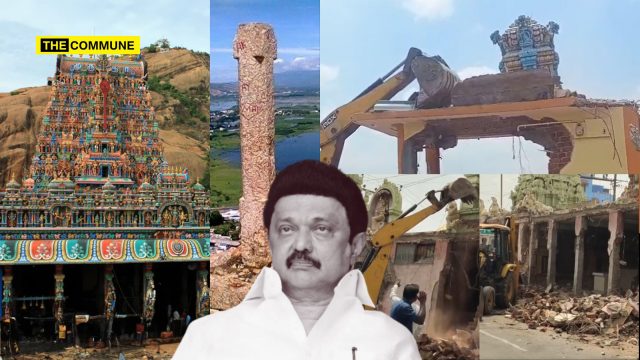
Monumental Disasters Funded By Taxpayer: DMK’s Big-Ticket Projects That Stand As Showpieces

Mega Budgets, Minimal Use DMK’s Big-Ticket Projects Dead On Arrival

As the Tamil Nadu State Budget is unveiled, against the backdrop of the State’s debt burden crossing the ₹10-lakh-crore mark, questions over fiscal priorities are once again coming to the fore.

Even as the government speaks of welfare expansion and fresh capital expenditure, several already-inaugurated multi-crore infrastructure projects, launched with fanfare by the Chief Minister, Deputy Chief Minister, and senior ministers, continue to lie in limbo, with little utilisation and few takers on the ground.

Earlier, The Commune had reported on how taxpayer money has been channelled into what critics describe as monumental white elephants under the so-called Dravidian Model of governance. Ground reports, site visits, and departmental data pointed to infrastructure that was ceremonially opened but operationally hollow.

Several big-ticket projects rolled out by the DMK government across sectors are now facing under-utilisation, low occupancy, or operational bottlenecks:

Kolathur Ornamental Fish Trade Centre (₹53.5 cr): 188 shops built; barely a handful functional.

Mudichur Omni Bus Terminus (₹42 cr): Built for 150 buses; around 15 in use.

Kilambakkam Kalaignar Centenary Bus Terminus – KCBT (₹50 cr): Operational but plagued by congestion and last-mile connectivity gaps.

Tholkappia Poonga Eco Park (₹42.45 cr): Ecological criticism and visitor management concerns.

Tindivanam Mega Food Park (₹120 cr): Low industrial occupancy.

Theni Mega Food Park (₹70 cr): Significant idle capacity.

Alanganallur Jallikattu Stadium (₹63 cr): Limited core-event utilisation.

VOC Park Stadium, Erode (₹7.5 cr): Sparse long-term usage.

In this report, we take a closer look at a few more such “vanity infrastructure” projects, high-budget showpieces that made headlines at inauguration but today stand as costly assets with limited public utility, effectively turning into projects that were, in effect, dead on arrival.

Transport Department Headquarters

The ₹40-crore Transport Department headquarters in Guindy, inaugurated twice in 2025, once by Deputy Chief Minister Udhayanidhi Stalin and again by Transport Minister S.S. Sivasankar, has several vacant sections.

A field visit found the reception desk on the first floor unattended, while rooms designated for the assistant secretary, library, and conference hall were not in use. Multiple rooms on upper floors remained locked, and the proposed road safety museum on the fifth floor has yet to take shape.

Officials said many staff members continue to function from the department’s old offices at Ezhilagam. Consultant appointments for key wings, including the World Bank-aided road safety division and private bus enforcement teams, are still pending. Authorities said steps are being taken to shift remaining personnel.

Ambattur Bus Terminal Commercial Complex

The Ambattur Bus Terminal Commercial Complex, upgraded at a cost of ₹11.81 crore and inaugurated in November 2025, presents a similar picture.

While bus operations function, the commercial block remains largely locked. Ground-floor shops, a senior citizen waiting room, and several public amenities have not been opened. First-floor facilities, including staff rooms, CCTV control room, and administrative spaces, remain unused, though disability-friendly toilets have been built.

Native Dog Breeding Centre

The ₹5-crore Native Dog Breeding Centre in Saidapet, inaugurated in 2025, is yet to become operational. The facility contains 51 kennels, all of which remain locked.

Officials from the Animal Husbandry Department said pedigree dogs have only recently begun to be procured, delaying functional rollout.

Administrative Response

Planning authorities acknowledged delays. Chennai Metropolitan Development Authority Member-Secretary K. Prakash said construction across facilities had been completed, but operational and maintenance models were still being finalised. Tenders have been floated, and contracts are expected to be awarded.

The continued under-utilisation of these high-value public assets has triggered criticism over what observers describe as “vanity infrastructure”, projects inaugurated with fanfare but lacking timely institutional readiness, stakeholder integration, and revenue planning.

Subscribe to our channels on WhatsAppTelegram, Instagram and YouTube to get the best stories of the day delivered to you personally.
“Not Aware Who Runs Loan Company”, DMK MP TR Baalu Pleads Ignorance On Son Link To Loan Firm During Annamalai’s Cross-Examination In DMK Files Case

annamalai tr baalu dmk

DMK MP TR Baalu deposed before a Saidapet court that he had personal loans amounting to ₹1.46 crore and loans of ₹6.60 crore in his wife’s name and stated that he was unaware whether the lending company was owned by his son. The statement came during cross-examination conducted by former Tamil Nadu BJP president K. Annamalai in a defamation case filed by Baalu.

The defamation case initiated by Baalu against Annamalai came up for hearing before the 17th Metropolitan Magistrate Court in Saidapet on Monday.

Cross-Examination Proceedings

During cross-examination, Baalu responded to a series of questions raised by Annamalai regarding past allegations and financial dealings.

Referring to remarks allegedly made by former Union Minister M.K. Alagiri, Baalu said claims that he had purchased 10 large ships during his tenure as Union Minister were politically motivated and unrelated to the present case. He also rejected suggestions that he had misused official position to acquire fishing vessels or to push the Sethusamudram Ship Canal Project for personal business gains.

Baalu further stated that similar allegations had been made during the 2014 election period by former Chief Minister J. Jayalalithaa, which he described as false propaganda.

On Industrial Unit Allegations

When questioned about protests by residents in Vadacheri village in Thanjavur district against an alleged liquor unit run by his family, Baalu denied the claim. He clarified that the facility in question was a chemical factory and that he was only a shareholder in the company. He added that the protests were directed against the company and not against him personally.

Loan Details

Addressing financial queries, Baalu told the court that he had declared loans of ₹1.46 crore in his name and ₹6.60 crore in his wife’s name. He said the loan had been obtained from a firm named “Trion Impex” (as cited in court proceedings) and that he did not know who owned or managed the company. He added that even if his son Rajkumar were connected to the firm, he was not aware of it and did not consider it necessary to verify.

He also rejected suggestions that the loan arrangement amounted to laundering unaccounted money, even though the firm’s GST registration had allegedly been cancelled.

Property-Related Questions

Baalu, in turn, questioned Annamalai’s financial background during the exchange, referring to land purchases made in Annamalai’s wife’s name and asking about the source of funds, noting that Annamalai had only recently retired from government service. He also raised references to business links involving Annamalai’s relatives and a brick kiln unit that had reportedly faced a CBI search.

Annamalai’s Statement Outside Court

Speaking to reporters outside the Saidapet court complex, Annamalai said he had personally conducted Baalu’s cross-examination for nearly three hours, expressing confidence in the corruption allegations he had raised against the DMK leader.

He said the cross-examination covered multiple subjects, including the Sethusamudram project, the industrial unit controversy, and ownership details of vehicles used by Baalu. He added that the questioning had been adjourned as Baalu had to leave for a scheduled flight.

Annamalai further alleged that Baalu made fresh defamatory remarks during the hearing by claiming that Annamalai had acquired properties in his wife’s name. He said Baalu was unaware of his wife’s educational qualifications, income, and tax payments, and announced that he would be filing a fresh defamation case against Baalu over those remarks.

The case has been adjourned for further cross-examination.

Source: Dinamalar

Subscribe to our channels on WhatsAppTelegram, Instagram and YouTube to get the best stories of the day delivered to you personally.
Karti Chidambaram Is Wrong, Sanatana Dharma Doesn’t Mean Caste Hierarchy, Veeramani Clarified On The Same Stage That They Were Talking About Hinduism

A fresh political debate has emerged over the meaning and interpretation of “Sanatana Dharma” following recent remarks by Congress MP Karti Chidambaram, who stated in an ANI podcast that the term, in Tamil Nadu’s popular parlance, refers to caste hierarchy rather than the broader spiritual framework of Hinduism.

During the interaction, Chidambaram argued that “Sanatan” or “Sanatana Dharma” is not a term commonly used in Tamil Nadu’s religious vocabulary. He maintained that Hindu practices, including temple worship, ritual observances, and the wearing of vibhuti or kumkum, remain widespread and uninhibited in the state. He further contended that political controversy around remarks made earlier by Udhayanidhi Stalin stemmed from differing contextual interpretations of the term.

However, one must take a look at statements made at the very same “Eradicate Sanatana” conference where Udhayanidhi Stalin delivered his controversial speech in September 2023.

At that event, Dravidar Kazhagam president K. Veeramani elaborated on what was meant by “Sanatana Dharma,” citing textual references to explain the usage of the term. He referred to the book “Sanatana Dharma: An Elementary Textbook,” published in 1916 by the Central Hindu College, Benares.

According to highlights from the publication, the text explicitly states that Sanatana Dharma came to be known in later times as the “Hindu Religion.”

This clarification, delivered from the same conference stage, directly framed the discourse around Hinduism rather than limiting it to caste hierarchy alone. He had said, “This religion was called Hindu religion. Most importantly, the name Hindu religion and Sanatana Dharma are not different. Everyone has to understand this first.” 

The reference was also reported in the Dravidar Kazhagam mouthpiece Viduthalai (3 September 2023 edition), which reproduced portions of the textual explanation cited during the conference.

Sanatana Dharma & Caste Hierarchy

The word Sanatanam/Sanatana means permanent, or rather eternal, referring to timeless principles of life and dharma, and not inherently caste. It is the common cultural civilizational elements – be it adhering to auspicious timings, praying to a Siva Lingam, tying a lemon or breaking a coconut – that binds Hindus as a society. It can’t be the case that Sanatana Dharma means Hinduism in north India and a “regressive” caste hierarchy practice in Tamil Nadu alone. The contextual association with caste hierarchy is nothing but an attempt to blame all social evils on one particular community.

EV Ramasamy Naicker aka Periyar used Nazi analogies, warning Brahmins to learn from Jews’ fate under Hitler and praising aspects of Nazi rise in his magazine, framing Brahmins as oppressors. His rhetoric mimicked anti-Semitic propaganda amid anti-Brahminism. British colonial policies and missionaries amplified Aryan-Dravidian divides, influencing Dravidian narratives.

Caste hierarchies persist, often perpetuated by dominant non-Brahmin castes in land and politics, while Brahmins (now ~3% of population) face historical blame despite urban migration post-independence. Blaming solely on Brahmins overlooks broader intermediate dominant landed caste power.

So, Karti Chidambaram is wrong in equating Sanatana Dharma with caste hierarchy.

Subscribe to our channels on WhatsAppTelegram, Instagram and YouTube to get the best stories of the day delivered to you personally.
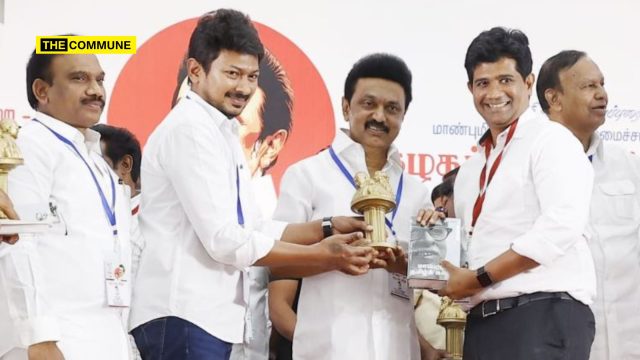
Tamil Nadu’s Debt Soars By 67% To ₹9.52 Lakh Crore In Just 4.5 Years Of DMK Rule

dmk debt

Tamil Nadu’s interim budget for 2026–27, presented in the State Assembly by DMK Finance Minister Thangam Thennarasu, projected a fiscal deficit of ₹1,21,949 crore and a revenue deficit of ₹48,696 crore, while estimating the State’s outstanding debt to reach ₹10,71,770 crore by 31 March 2027 – equivalent to 26.35% of Gross State Domestic Product (GSDP).

As per convention, the Finance Minister refrained from making new policy announcements, noting that a full-fledged budget for 2026–27 would be presented by the new government to be formed after the forthcoming Assembly elections.

Deficit Widens in Revised Estimates

Presenting the interim budget, Thennarasu said the fiscal deficit for the current financial year 2025–26 had risen to ₹1,24,007 crore in the revised estimates, accounting for 3.48% of GSDP.

The revenue deficit for 2025–26 widened sharply to ₹69,219 crore compared to the original estimate of ₹41,635 crore, reflecting mounting expenditure pressures and constrained revenue flows.

The Minister attributed the fiscal strain to multiple factors, including GST rate rationalisation, a reduction in the State’s share of Central taxes, withholding of funds under centrally sponsored schemes, and additional expenditure commitments linked to Union government policies.

These commitments include ₹15,877 crore allocated towards loss funding for Tamil Nadu Power Distribution Corporation Limited and ₹3,087 crore towards contributions to the Guarantee Redemption Fund.

Total Tamil Nadu Debt

2021–22 RE: ₹5.70 lakh crore

2025–26 RE: ₹9.52 lakh crore

Revenue and Tax Projections

For 2026-27, total revenue receipts are projected at ₹3,44,575 crore, marking an 11.26% increase over the revised estimates.

The State’s Own Tax Revenue is expected to reach ₹2,29,579 crore, reflecting a projected growth of 11.15%.

Expenditure Push Continues

Revenue expenditure for 2026-27 is estimated at ₹3,93,272 crore, representing a 3.79% increase over revised estimates.

Capital expenditure is projected to rise significantly by 15.78% to ₹59,562 crore, indicating the government’s continued emphasis on infrastructure creation and growth-oriented investments.

Among sectoral allocations, the government also announced that it would roll out a dedicated shipbuilding policy, with ₹4,282 crore earmarked for the industries sector in the interim budget presented ahead of the elections.

Borrowing and Debt Position

The State plans to borrow ₹1,79,809 crore during 2026-27, while repaying ₹60,413 crore of existing debt.

The government maintained that if ₹9,523 crore relating to the Chennai Metro Rail Phase-II project, which it argued should be accounted for under Union government books, is excluded, the debt-to-GSDP ratio would stand slightly lower at 26.12%.

Medium-Term Fiscal Outlook

According to the Medium Term Fiscal Plan annexed to the budget, Tamil Nadu projects a gradual fiscal consolidation path.

The fiscal deficit is expected to decline to 2.89% of GSDP in 2027–28 and further to 2.80% in 2028–29. The debt-to-GSDP ratio is also projected to moderate to 25.43% by 2028–29.

Source: The New Indian Express

Subscribe to our channels on WhatsAppTelegram, Instagram and YouTube to get the best stories of the day delivered to you personally.
“RTI Data Quoted, Case Filed”: BJP Leader SG Suryah Hits Out At DMK After Case Filed Against Him

sg suryah dmk

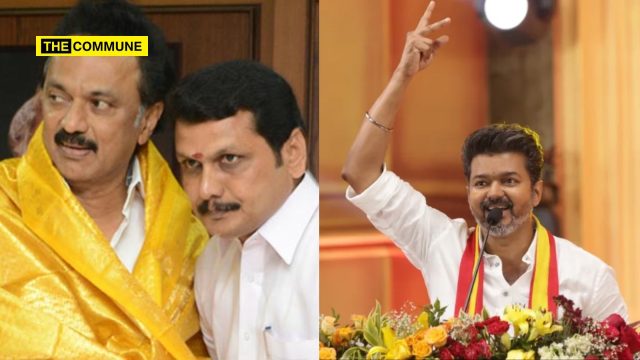
BJP Youth Wing State President SG Suryah on Tuesday, 17 February 2026, alleged that the DMK government in Tamil Nadu was subjecting him to “continuous repression” after a fresh criminal case was registered against him, taking the total number of cases filed over the past four years to 12.

In a statement, Suryah claimed the latest case was filed for citing data obtained through the Right to Information (RTI) Act during a recent protest organised by the party’s women’s wing in Salem. He alleged that the information he quoted had been officially provided by the Tamil Nadu government itself under the transparency law.

The BJP leader further claimed that police were under pressure from the state government to initiate another arrest in connection with the case.

Alleging political vendetta, Suryah said cases and arrests were being used as tools of intimidation against him. He stated that legal action had been initiated against him for speaking in television debates, highlighting alleged governance failures of the DMK, and criticising the ruling party and its alliance partners on public platforms.

He also alleged that even when he had faced physical attacks from DMK members, cases had been registered against him despite what he described as video evidence.

Describing the situation as akin to “authoritarian rule,” Suryah said he would challenge what he termed false and politically motivated cases through constitutional and legal means.

He thanked the Bharatiya Janata Party leadership and party functionaries for extending support to him.

Subscribe to our channels on WhatsAppTelegram, Instagram and YouTube to get the best stories of the day delivered to you personally.

“Unpardonable Crime, Act With Conscience”: Madras High Court Denies Bail To Accused Cops In Ajithkumar Custodial Death Case

custodial death torture ajithkumar temple guard police postmortem report

The Madurai Bench of the Madras High Court rejected the bail petitions filed by police personnel arrested in connection with the custodial death of 29-year-old temple security guard B. Ajithkumar in Thirubhuvanam, Sivaganga district.

Justice S Srimathy dismissed the bail pleas moved by Ananth, Raja, Prabhu, and Sankaramanikandan. The court directed the trial court to complete the entire investigation and trial in the custodial death case within six months.

Background of the Case

Ajithkumar, who worked as a security guard at the Madappuram Badrakali Amman Temple near Thirubhuvanam, was detained on 27 June 2025, based on a jewellery theft complaint filed by a woman identified as Nikitha.

He died the following day, 28 June 2025, while in police custody after being subjected to brutal assault during interrogation.

The post-mortem report documented 44 injuries on his body, pointing to extreme custodial violence. Video evidence that later surfaced also corroborated the violent treatment he was subjected to.

Amid widespread public outrage, the Madras High Court transferred the probe to the Central Bureau of Investigation (CBI), treating the case as a custodial death.

CBI Findings and Charges

During Monday’s hearing, the CBI informed the court that the jewellery theft allegation against Ajithkumar had been closed due to lack of evidence. The missing jewellery had not been recovered, and investigators found no proof linking him to the theft.

The central agency said 94 witnesses had been examined and two charge sheets had been filed in the case.

The CBI charged multiple officials during the probe, including constables Prabhu, Kannan, Sankara Manikandan, Raja, and Anand, along with police driver Ramachandran. Senior officers were also implicated in subsequent filings, including then Manamadurai DSP N. Shanmugasundaram, then Thiruppuvanam Inspector Ramesh Kumar, Sub-Inspector Sivakumar, and Head Constable Ilayaraja, who are currently lodged in prison.

Earlier administrative action included the suspension of the Manamadurai DSP and the transfer of Sivaganga Superintendent of Police Ashish Rawat.

Court Observations

Opposing bail, CBI counsel Moideen Basha told the court that there was sufficient evidence establishing that Ajithkumar was beaten to death in custody and that granting bail could affect the trial.

Recording the submissions, Justice Srimathy made strong observations on custodial violence.

“Police personnel must act with conscience. If a superior officer orders you to assault someone, will you beat him to death? Why can’t you refuse? Tell your superior that you cannot act illegally. If action is taken against you, come to court — the court will protect you,” the judge said.

She further remarked, “The crime committed by the police in this case is an unpardonable offence. The remaining accused must be arrested swiftly. Who instructed the DSP? It appears the officer who gave the order is being protected.”

The judge also questioned whether action would be initiated against the complainant whose allegation led to the arrest, noting that a man had been beaten to death “for no reason.”

Bail Rejected, Trial Fast-Tracked

Stating that bail could not be granted until the investigation and trial concluded, the court dismissed the petitions filed by the arrested police personnel.

The Madurai Bench directed the trial court to complete proceedings in the Ajithkumar custodial death case within six months.

The case continues to draw attention as one of the most serious custodial violence incidents reported in Tamil Nadu in recent years.

Source: OneIndia Tamil

Subscribe to our channels on WhatsAppTelegram, Instagram and YouTube to get the best stories of the day delivered to you personally.
Woman Storms TVK Stage Near Avadi; TVK Deputy General Secretary Rajmohan’s DMK Assault Claim Falls Flat

Woman Storms TVK Stage Near Avadi; TVK Deputy General Secretary Rajmohan’s DMK Assault Claim Falls Flat

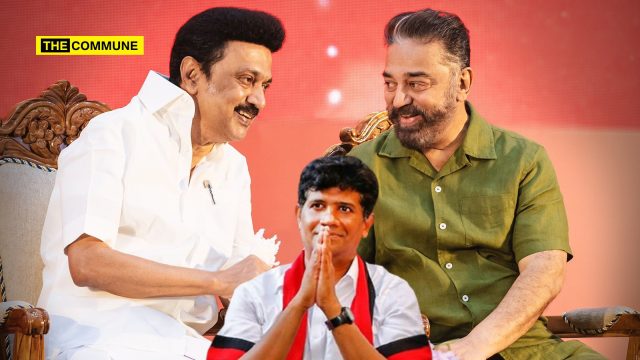
A public meeting of Tamilaga Vettri Kazhagam (TVK) near Avadi witnessed dramatic scenes after a woman unexpectedly stormed the stage, only for initial political allegations made by Deputy General Secretary of TVK Rajmohan Rajmohan to later prove unfounded.

The incident occurred during a women’s wing consultation meeting organised at Thiruninravur in Tiruvallur district. Rajmohan was addressing party cadres when a visibly distressed woman entered the venue crying and moved toward the stage.

As she approached, Rajmohan abruptly announced over the microphone that she was a TVK woman functionary who had been assaulted by DMK members, a claim that instantly created tension and outrage among those present.

However, moments later, the situation took a completely different turn.

The woman broke free from those trying to escort her away, rushed onto the stage, snatched the microphone, and began speaking in English. She identified herself as an IT employee and a gold medallist, held up her thaali, and demanded justice, alleging personal and family-related distress. She stated that she was facing abuse and that no one was addressing her complaints, adding that she did not wish to live with her family.

Organisers, caught off guard, quickly disconnected the microphone to contain the disruption.

Police who arrived at the spot pacified the woman and escorted her away. During this intervention, her relatives stated she had been dealing with mental health issues.

The clarification effectively nullified the assault allegation made from the stage, indicating that the incident stemmed from a personal distress situation rather than any political attack.

Following the commotion, the meeting was wrapped up abruptly, with organisers skipping further speeches and dispersing soon after.

After the event, speaking to reporters, Rajmohan continued to uphold the claim he made earlier on stage. When asked about the lady, he said, “Yes, yes, she said she had been assaulted. This is not the only incident. Recently, I went to Stanley Hospital to visit victims. Six people had been attacked. Among them was a woman associated with TVK who was four months pregnant. This is setting a very bad precedent. Politics must be dealt with politically; it should not go beyond that. On social media too, many so-called virtual warriors target our sisters. They subject them to cyberbullying, insulting their character, dragging their families into controversies. Even if women hide their faces, these people expose them and spread fabricated stories to make them look believable. They attack them in cyberspace, in political space, and even at campaign venues. In one such assault case, when we asked that the affected woman not be discharged without proper observation, problems were created. When questioned, doctors and police officials said, ‘What can we do, sir – there is pressure from above.’ If women face issues, they should be able to go to the police. But at a DMK meeting in Virugambakkam, even a woman police officer on security duty faced assault. From where do they get such courage? There is an arrogance that if one has DMK links, they can commit any wrongdoing and escape. Seeing all this is painful. People will deliver the right verdict. I believe mothers are divine – they will give a fitting judgment in the elections. Just wait and see.”

Subscribe to our channels on WhatsAppTelegram, Instagram and YouTube to get the best stories of the day delivered to you personally.
Dravidianists Are Going Gaga Over Tamil Inscriptions In Egypt, But An Ancient Tamil Inscription At Netrampakkam Gets Little Attention

As Egypt Discovery Trends, Ancient Tamil Inscription At Netrampakkam Netrampakkam Tamil-Brahmi Find Gets Little Attention

The recent excitement surrounding Tamil-Brahmi inscriptions discovered in Egypt’s Valley of the Kings has triggered global interest in the maritime reach of ancient Tamils. Scholars identified around 30 inscriptions, largely in early Tamil script, dating between the 1st and 3rd centuries CE, evidence that Tamil travellers and merchants were present in Roman Egypt. The findings have been widely celebrated as proof of Tamil civilisation’s overseas footprint.

However, even as these discoveries are being hailed, historians point out that an equally significant Tamil-Brahmi inscription from the same period exists within Tamil Nadu itself, one that has received comparatively little public attention.

The inscription was identified in 2016 on a Śiva Lingam at the Shiva temple in Netrampakkam, near Madurantakam. The Lingam, measuring about 3.4 feet in height, features a carved lotus on the Brahma-bhāga, flanked by banner-like motifs. Beneath this carving appears the Tamil-Brahmi inscription “Sēnarumāṉ,” believed to be the name of the sculptor who fashioned the Lingam.

Epigraphists date the artefact to the 2nd century CE, placing it in the same broad historical window as the Egypt inscriptions now being discussed. Significantly, this Lingam is regarded as the oldest identified Śiva Lingam in Tamil Nadu, offering material evidence for the antiquity of organised Śaiva worship in the region.

Researchers say the inscription not only reflects the evolution of Tamil script in sacred contexts but also underscores the continuity of temple traditions and artisan lineages in early historic Tamil society.

While the Egypt findings highlight Tamil mobility across seas, the Netrampakkam inscription stands as a powerful reminder that equally important civilisational markers lie closer home — etched in stone, within living temples, awaiting wider recognition.

Subscribe to our channels on WhatsAppTelegram, Instagram and YouTube to get the best stories of the day delivered to you personally.
ADMK Trolls DMK Ahead Of Tamil Nadu Budget

The opposition All India Anna Dravida Munnetra Kazhagam (AIADMK) on Tuesday, 17 February 2026, took a swipe at the ruling Dravida Munnetra Kazhagam (DMK) government ahead of the presentation of the Tamil Nadu State Budget, releasing a satirical poster that mocked the administration’s fiscal announcements.

The poster, styled as a ceremonial invitation, described the State Budget as a “grand ear-piercing ceremony” allegedly being conducted in the name of financial planning for the people of Tamil Nadu over the past four-and-a-half years.

It listed the date as 17 February 2026, the venue as the Tamil Nadu Legislative Assembly, and the time as 10 AM. It facetiously named Chief Minister MK Stalin as presiding over the event, with Finance Minister Thangam Thennarasu portrayed as the one who would perform the “ear-piercing.”

The satire extended to government schemes, claiming that funds allocated for projects such as Cooum river restoration, Chennai stormwater drains, and Singara Chennai initiatives would be used as pretexts to “pierce the ears” of the public – a Tamil colloquial metaphor suggesting deception.

In a postscript, the poster further alleged that the public would contribute through taxes and charges, including property tax, house tax, drinking water tax, and electricity tariffs.

Subscribe to our channels on WhatsAppTelegram, Instagram and YouTube to get the best stories of the day delivered to you personally.
Congress Spokie Lakshmi Ramachandran Supports Udhayanidhi Stalin’s Call To Eradicate Sanatana Dharma

Congress spokesperson Lakshmi Ramachandran has triggered fresh political debate after publicly backing controversial remarks linked to Tamil Nadu minister Udhayanidhi Stalin on “Sanatana Dharma,” while sharing and endorsing comments made by Congress MP Karti Chidambaram during a recent media interaction.

The row follows statements made by Karti Chidambaram in an ANI podcast, where he addressed the political controversy surrounding the term “Sanatan” and its interpretation in Tamil Nadu.

During the interaction, Chidambaram argued that “Sanatan” or “Sanatana Dharma” is not a term commonly used in Tamil Nadu’s religious vocabulary. He maintained that Hindu religious practice remains widespread and uninhibited in the state, pointing to temple visits, ritual practices such as breaking coconuts, and the wearing of vibhuti or kumkum as part of everyday expressions of faith.

He further stated that, in Tamil Nadu’s popular and political parlance, the term “Sanatana Dharma” is often understood as referring to caste hierarchy rather than the broader spiritual or religious framework of Hinduism. He said the controversy surrounding Udhayanidhi Stalin’s earlier remarks stemmed from this contextual interpretation, asserting that the minister’s comments were directed at caste structures rather than religious belief or worship practices.

Amplifying these remarks, Lakshmi Ramachandran shared the video clip on social media and voiced support for Chidambaram’s position. She stated that “Sanatanam in Tamil Nadu means caste hierarchy” and said she had articulated this interpretation across English television debates.

In her post, she also referenced Udhayanidhi Stalin’s family background, noting that his mother is a devout and practising Hindu, and questioned why he would call for the abolition of a faith closely followed within his own household, suggesting his remarks were aimed at social discrimination rather than religion itself. She wrote, Sanatanam in Tamilnadu means Caste Hierarchy. I have tried to explain this in every English channel I go to. Mr.@Udhaystalin‘s mother is a devout, practising Hindu. Why would he say he will abolish a faith that is so dear to his own mother?”

The renewed discussion has also revived attention on Udhayanidhi Stalin’s September 2023 speech at a conference titled “Eradicate Sanatana Dharma Conference.” At that event, he had called for the eradication of Sanatana Dharma, comparing it to diseases such as dengue and malaria, and argued that certain social practices required elimination rather than reform.

Mosquitoes, dengue, flu, malaria, corona – we should not oppose these things. They’ve to be eradicated completely. Same is the case with Santanam (Hinduism). Our first work should be to abolish/eradicate Sanatanam instead of opposing it. So, my appreciations to you all for giving an apt title to the meeting.“, DMK Minister Udhayanidhi Stalin said.

He also further went on to say “What is Sanatanam? The name Sanatanam itself comes from Sanskrit. Sanatanam is opposed to equality and social justice. What is the meaning of Sanatanam? Eternal or something that can’t be changed. Something that can’t be questioned. That is the meaning of Sanatanam.

It is noteworthy that in the backdrop of this controversy in September 2023, Lakshmi Ramachandran was among those Congress leaders who publicly supported DMK minister Udhayanidhi Stalin following this controversial call to “eradicate Sanatana Dharma”.

Defending his remarks, she stated that “Sanathanam” in the Tamil Nadu context referred to caste hierarchy and what she described as hate-driven, casteist Hindutva. Her comments aligned with other state Congress leaders who argued that Udhayanidhi’s speech targeted social oppression rather than religious belief.