Home Blog Page 77

DMK-Congress Rift Widens: DMK MP Tiruchi Siva Shares Post Marking 50 Years Since Congress-Era Emergency Detention

DMK-Congress Rift Widens: DMK MP Tiruchi Siva Shares Post Marking 50 Years Since Emergency Detention

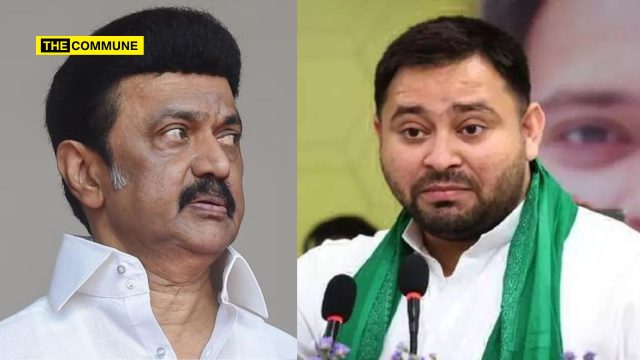
The simmering tensions between the ruling DMK and its alliance partner Congress have sharpened further in the backdrop of Chief Minister and DMK president MK Stalin’s categorical rejection of power-sharing arrangements ahead of the upcoming Tamil Nadu Assembly elections.

Stalin had recently stated that a power-sharing formula with the Congress would not be “suitable” for Tamil Nadu’s political and administrative framework, effectively shutting the door on the Congress party’s long-standing demand for a share in governance should the alliance return to power.

Following this, Congress leaders have stepped up pressure on the DMK leadership, publicly reiterating demands for both ministerial participation in a future government and an increase in seat allocation for the Assembly polls.

Senior Congress figures, including Manickam Tagore and Praveen Chakravarty, have voiced strong responses in recent days. Their remarks come amid continued criticism and political jibes directed at the Congress by certain DMK functionaries. Leaders such as DMK MLA Ko Thalapathy and minister Raja Kannappan have, on multiple occasions, made dismissive or mocking comments about the Congress party’s electoral strength and bargaining position within the alliance.

Adding a fresh political layer to the ongoing friction, DMK MP Tiruchi Siva on 16 February 2026, shared a social media post recalling his arrest during the Emergency period. He noted that on 16 February 1976, exactly fifty years ago, he had been detained under the Maintenance of Internal Security Act (MISA) while he was pursuing his final year MA.

While the post was framed as a personal remembrance of the Emergency era, political observers view its timing as significant, given the Congress party’s historical association with the Emergency imposed between 1975 and 1977.

Subscribe to our channels on WhatsAppTelegram, Instagram and YouTube to get the best stories of the day delivered to you personally.

Photo Of DMK Town Panchayat Chairman Half-Clothed, Surrounded By Liquor Inside Party Office Goes Viral

Photo Of DMK Town Panchayat Chairman Half-Clothed, Surrounded By Liquor Inside Party Office Goes Viral

A photograph purportedly showing a local DMK functionary consuming alcohol inside a party office near Vazhapadi in Salem district has surfaced on social media, triggering criticism and political reactions.

According to information circulating online, the individual seen in the image is Anbazhagan, identified as a Town Panchayat Chairman affiliated with the Dravida Munnetra Kazhagam (DMK). The photo allegedly shows him seated on the floor inside what is claimed to be a DMK party office, with food plates and multiple liquor cans placed nearby.

The image, which appears to show the chairman in a partially clothed state while eating and drinking, has gone viral across digital platforms, drawing sharp responses from political opponents and netizens who questioned the propriety of such conduct within a political office space.


View this post on Instagram


A post shared by Tamil Janam (@tamiljanam)

Subscribe to our channels on TelegramWhatsApp, and Instagram and get the best stories of the day delivered to you personally.
Delhi High Court Dismisses Frivolous PIL Against Activists Who Exposed Turkman Gate Land Encroachment; Mainstream And Islamist Media Twists Verdict

Delhi High Court Dismisses Frivolous PIL Against Activists, Affirms No Encroachments Allowed; Islamist Media Twists Verdict

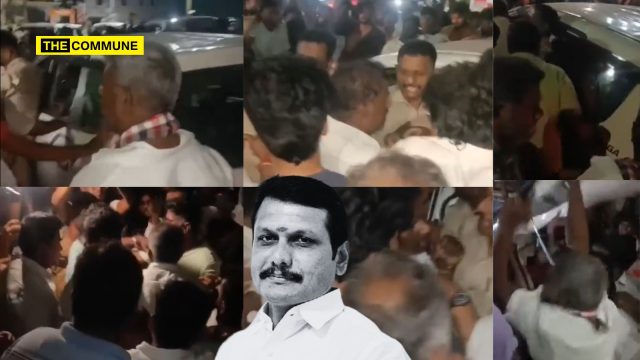
In a resounding victory for civic activists reclaiming public land, the Delhi High Court dismissed a retaliatory PIL filed by Mohammad Kamran against Preet Singh, Sanjeev Newar, Sewa Nyaya Utthan Foundation, and Rashtra Jyoti. The court unequivocally ruled: “No encroachments can be permitted around any religious structure, on govt land, or public land.” The survey confirming illegal mosque committee encroachment at Turkman Gate-Ramlila Maidan has been public for months.

The Real Story: Activists Freed Public Land, Islamists Cry Victim

Kamran’s PIL, filed post-January demolition of Faiz-e-Elahi mosque encroachments (road, footpath, baraat ghar, parking, diagnostic centre), accused activists of “misusing PILs to target Muslim sites” for “communal ends.” Reality: MCD acted on court orders after activists’ documentation exposed massive illegal occupation. No violence from activists, yet 5 rioters (stone-pelting, injuring police) denied bail.

Swati Goel Sharma, activist, shared on her social media handle that the court told the petitioner: “No encroachments can be permitted around any religions structure, on govt land, and land belonging to public….The survey report [official confirmation of encroachment) has been in the public domain since long…”

Media’s Sinister Spin: “HC Raps Hindutva NGO”

Islamist outlets like Times of India, Maktoob Media, Muslim Network TV twisted oral remarks on Save India Foundation (one of the defendants) into “HC raps Hindutva group targeting mosques,” ignoring dismissal and core ruling: Encroachments illegal regardless of religion.

Image Source: Swati Goel Sharma X handle

The Delhi High Court’s dismissal of the petition settles the matter on first principles: public land cannot be encroached upon — not in the name of religion, sentiment, or political convenience. The court’s categorical observation that “no encroachments can be permitted around any religious structure, on government land, or public land” leaves little room for selective outrage.

Yet, parts of the mainstream media chose to spotlight stray oral remarks while downplaying the dismissal itself and the central legal finding on illegal occupation. By reducing a land-use enforcement issue to a communal flashpoint, sections of the press once again framed activism against encroachment as ideological targeting rather than civic intervention.

Subscribe to our channels on TelegramWhatsApp, and Instagram and get the best stories of the day delivered to you personally.
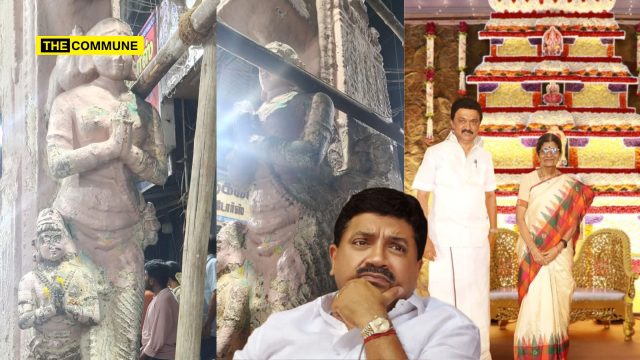
DMK’s Unofficial IT Wing Starts Attacking Rahul Gandhi And Congress

Tensions within the DMK-led alliance in Tamil Nadu escalated further on 15 February 2026, as friction between the Congress party and the ruling DMK spilled from political meetings into the digital space, with pro-DMK social media supporters launching sharp attacks on Congress leaders and the party’s demands.

The latest flashpoint comes amid the Congress party’s renewed push for a share in governance, greater Assembly seat allocation, and 30% representation in local bodies, demands reiterated through a resolution passed at a Congress Working Committee meeting chaired by Manickam Tagore.

While Chief Minister MK Stalin has already ruled out power-sharing within the alliance, Congress leaders have continued pressing for what they describe as “respect” and parity.

Addressing a meeting on 15 February 2026, Manickam Tagore underscored that the party’s demand was rooted in dignity and alliance parity.

“All we ask for is respect and love. The DMK ministers’ talk hurts. Rahul Gandhi calls the Tamil Nadu Chief Minister his brother. Similarly, we expect respect from them. But the ministers are saying that if the Congress can come if it wants, if not let it go. They are talking aggressively about the alliance. All this hurts.”

He further stated that Congress had stood by the alliance despite political costs.

“We are with you and have been carrying the old burden for the mistakes you have made. For us, all we ask for is respect.”

Tagore also criticized the lack of disciplinary action over remarks made by a DMK district secretary.

“The DMK district secretary’s speech is saddening. It has been 20 days since we demanded action against him. Even now, no action has been taken. That is why other district secretaries are also speaking. I am not one to sit idly by and watch this. If we are attacked, we will attack back.”

Reiterating the grievance, he said: “As far as we are concerned, some people are making mistakes. What I mean is, the speech made by Thalapathi while being a district secretary is something that causes regret… it has been about 20 days. No action has been taken, and he hasn’t even expressed regret.”

He warned that Congress would respond politically if provoked.

“If we are not given respect, we will hit back; we will respond in the same language. So, if you give respect to Congress workers, we will give respect – that’s all.”

Tagore also downplayed the importance of electoral posts compared to party loyalty. He said, “If we are not given respect, we will hit back; we will respond in the same language. So, if you give respect to Congress workers, we will give respect, that’s all. Otherwise, some people are posting things saying, “You won MP seat using us (DMK), didn’t you?” I am not going to contest again as MP; I am not going to contest as MP from Virudhunagar. Why? For me, my party is important. As far as I’m concerned, MP, MLA posts, all that is nothing.”

He added, “For Congress, self-respect is what matters. Did I come to Virudhunagar to become an MP on my own? I was sent by my leadership. Rahul Gandhi sent me to become MP from Virudhunagar, I came here for that. For me, Congress party is my life, these MP, MLA posts are nothing else. I might say something worse so I am not saying it. So Congress party is my life; till I die, I will die as a Congressman, that is very clear. Our struggle is only for the respect of Congress workers. We have not asked for anything else; we have not asked for commissions. They said “commission”, we didn’t ask for commissions. We didn’t ask for road contracts; we didn’t ask for anything. How many years has it been? I think 12 years… maybe 13… around 12 years since I became an MP. Let at least one person say that I took commission. Let someone say I demanded commission for a road contract, or for sand work, or for constructing something, we never had such habits. We come in the path of Kamarajar, in the path of Kakkan, in the path of Chellapandian. As far as we are concerned, we have lived honestly. If there is food, we will eat; if not, fine, we will still continue in the party. We never went behind biryani, never attacked neighbours, never tried to build organizations to capture others’ houses, we never had such practices.”

He further said, “A Congressman is one who does not covet another man’s property – first understand that. As far as we are concerned, we stand only for dignity and self-respect. If people like Thalapathi speak like this about Congress workers and no action is taken, it causes deep regret. I even had that video – someone saying, “Is there even a man in the booth?” He then played DMK MLA Thalapathy’s video here he says…. If he spoke at that level and still no action is taken, Tamil Nadu Congress Committee president brother Selvaperunthagai demanded action, but it’s been 20 days and still nothing has happened.”

DMK-Supporting Dravidianists Attack Congress And Rahul Gandhi

Following Congress’ public assertions, pro-DMK social media handles, followed by DMK leaders, began targeting the Congress, invoking past political episodes and corruption controversies to hit at Rahul Gandhi and Congress.

One pro-DMK supporter accused Congress of historically vilifying the DMK during the 1991 elections, writing that Congress had campaigned by pasting posters of former Prime Minister Rajiv Gandhi’s bomb-blast-mutilated body across streets and asking voters whether they would support the DMK, thereby shifting blame for the assassination onto the Dravidian party.

Another supporter wrote that DMK had repeatedly borne political damage because of Congress, stating that Congress had demanded the resignation of a DMK cabinet minister in the 2G spectrum case, a case later argued by DMK sympathisers to be false. The post added that the DMK had lost power at various times, including after the Rajiv Gandhi assassination fallout, during the Emergency period, and again in 2011, and suggested that the political damage caused by Congress to DMK was far greater.

Another argued that Congress had no moral standing to speak about blame-shifting, claiming that in multiple instances, including the 1991 Rajiv Gandhi assassination and the 2G spectrum scandal, the DMK had carried the burden of allegations and political fallout, portraying the party as accustomed to bearing such “political baggage.”

Another supporter listed a series of controversies and legal cases, including the 2G spectrum case, the Commonwealth Games controversy, the arrest and imprisonment of DMK leaders such as Kanimozhi and A. Raja, and the detention of party figures, asserting that the DMK had absorbed reputational damage largely for the sake of its alliance with Congress. The post also referenced the Sri Lankan civil war issue, claiming the DMK had faced blame on that front as well, and questioned what Congress had tangibly contributed in return.

Subscribe to our channels on TelegramWhatsApp, and Instagram and get the best stories of the day delivered to you personally.
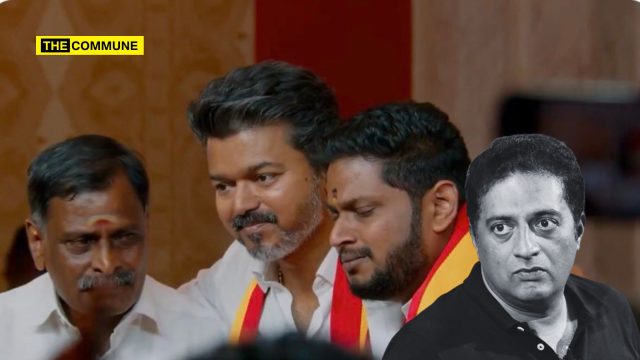
Modi’s Doctrine Of Silence: How Strategic Restraint Became India’s Sharpest Weapon

modi

In the cacophony of modern geopolitics, where leaders often govern by tweet and diplomacy is frequently conducted through megaphone posturing, silence has become a rare commodity. It is often mistaken for weakness, indecision, or submission. However, a deeper analysis of the last decade of Indian governance under Prime Minister Narendra Modi suggests the emergence of a counter-intuitive doctrine: the weaponization of strategic silence and strategic tolerance.

The premise is provocative but compelling: had India adopted the aggressive, “Wolf Warrior” stance favoured by some of its neighbours, it might have found itself isolated, sanctioned, or embroiled in exhausting conflicts. Instead, by absorbing short-term criticism and tolerating the geopolitical eccentricities of allies and adversaries alike, India has not only survived but thrived. As the late Singaporean visionary Lee Kuan Yew famously remarked, statecraft often involves navigating not just the malice of enemies, but the “bloody stupidity of friends.”

This article argues that Modi’s calculated restraint, his refusal to engage in every fight invited upon him, has been the cornerstone of India’s rise, effectively putting the nation on the map in a way that aggression never could.

The Anatomy of Strategic Silence

To understand Modi’s silence, one must distinguish between passive silence (born of helplessness) and active silence (born of strategy). The former is the silence of a victim; the latter is the silence of a predator waiting for the dust to settle.

In the early years of his tenure, critics and opponents frequently baited the Prime Minister to respond to every domestic controversy, every scathing editorial in the Western press, and every provocation from across the border. The expectation was a gladiatorial combat of words. Modi’s refusal to engage in this “noise” was often misread as avoidance. In hindsight, it appears to be a disciplined preservation of political capital.

The Trump Trade War Case Study

A prime example of this occurred during the Donald Trump presidency. Trump, known for his transactional and often abrasive style, frequently publicly harangued India over tariffs, famously dubbing India the “tariff king” and threatening consequences. An aggressive leader might have clapped back, citing US protectionism or initiating a public trade spat.

Instead, New Delhi adopted a posture of strategic silence. There were no angry tweets from the PMO. The response was bureaucratic, dull, and quiet. Behind the scenes, India negotiated, bought American oil to balance the trade deficit, and waited. The result? The relationship survived the volatility of the Trump era intact, and when the administration changed, India was not left with the baggage of burnt bridges. As recent analysis suggests, this silence forced the other side to blink, realizing that India could not be goaded into a disadvantageous public negotiation.

Denying the Oxygen of Publicity

Strategic silence also functions as a denial of legitimacy. When international bodies or celebrity activists criticize India’s internal matters, be it the revocation of Article 370 or the CAA, the Indian state’s highest levels often refrain from direct engagement. By delegating the rebuttal to lower-level functionaries or simply ignoring the critique, the leadership denies the critics the “oxygen” of a Prime Ministerial response. This reduces a potential diplomatic crisis to a mere news cycle, which eventually fades.

Strategic Tolerance: The “Lee Kuan Yew” Protocol

Lee Kuan Yew (LKY), the founding father of modern Singapore, was a pragmatist who understood that a nation, especially a developing one, cannot afford the luxury of emotional foreign policy. His observation that “We have to remember all the time that we are not dealing with an enemy, but the bloody stupidity of a friend” is perhaps the most accurate summary of India’s current diplomatic challenges.

India is surrounded by friends and partners who often act against India’s interests, not out of malice, but out of short-sightedness or internal political compulsion (“stupidity”).

The Maldives and Bangladesh Paradox

Consider India’s neighbourhood. In recent years, regimes in the Maldives and Bangladesh have oscillated between “India First” policies and anti-India rhetoric. When the Maldives recently elected a leader who campaigned on an “India Out” platform, the clamour in Indian social media was for aggression – sanctions, tourism boycotts, or muscular intervention.

Modi’s government, however, chose strategic tolerance. It quietly withdrew military personnel as requested but kept the lines of development aid and trade open. It tolerated the “stupidity” of the anti-India rhetoric, betting that geography and economics would eventually force reality to dawn on Malé.

Had India aggressively punished the Maldives; it would have pushed them permanently into China’s embrace. By tolerating the insult, India remained the “first responder” and the inevitable partner when the political winds shifted.

The Russian Tightrope

The war in Ukraine presented the ultimate test of tolerance. India’s Western “friends”, the US and Europe, exerted immense pressure on New Delhi to condemn Russia. They failed to understand India’s defense dependence and historical ties. This was the “stupidity of friends” in action: demanding India sacrifice its national security for a European war.

An aggressive India might have publicly lashed out at Western hypocrisy (pointing to Iraq or Afghanistan). While External Affairs Minister S. Jaishankar did deliver sharp reality checks, the Prime Minister maintained a stoic, leader-to-leader tolerance. He told President Putin, “This is not an era of war,” appeasing the West, yet refused to sanction Russia, protecting India’s interests. This tolerance of Western pressure, absorbing the lectures without snapping the alliance, allowed India to emerge as one of the few powers capable of talking to both Washington and Moscow.

Why Aggression Would Have Failed

Had Modi taken aggressive stand, India could have been in “great trouble.” Let us try to do a counterfactual analysis:

What if India had adopted the “Wolf Warrior” diplomacy of China?

Economic Isolation: Aggression scares capital. India’s primary goal is economic growth ($5 Trillion economy). Had India aggressively retaliated against every negative report from the US or UK, or militarily engaged in every border skirmish, the risk premium on investing in India would have skyrocketed. Strategic silence projects stability; aggression projects volatility.

The China Trap: China wants India to be aggressive. If India reacts impulsively to border provocations, it plays into a game where China has the military and economic upper hand. By refusing to escalate on the enemy’s timeline (e.g., the quiet but firm mirror-deployment in Ladakh without declaring all-out war), India denied China the casus belli it might have sought.

Loss of the “Vishwaguru” Moral High Ground: India aspires to be a Vishwaguru (Teacher to the World) and a voice for the Global South. Aggression is the language of imperialists; tolerance is the language of civilizational wisdom. By sending vaccines (Vaccine Maitri) even to nations that criticized it, India displayed a strategic tolerance that bought goodwill money cannot buy.

The Domestic Dimension: Silence as Governance

This doctrine applies internally as well. India is a noisy democracy. The “stupidity of friends” also applies to domestic allies and the electorate’s volatile nature.

Modi has often been criticized for not holding press conferences. However, in the age of gotcha-journalism, a press conference is rarely an exchange of information; it is a theatre of conflict. By bypassing this mechanism and communicating directly with the people (via Mann Ki Baat or social media), the leader avoids the trap of having his words twisted to fuel the 24-hour outrage cycle.

Furthermore, strategic silence has allowed the administration to push through contentious reforms. When reforms face backlash (like the Farm Laws), the government’s eventual withdrawal was not a sign of weakness, but a form of tolerance, acknowledging that the social fabric was being stretched too thin, and that preserving internal peace was more strategic than enforcing a specific policy at that moment.

The Power of Pause

Lee Kuan Yew built Singapore by swallowing his pride when necessary and striking only when the iron was hot. He understood that for a nation to rise, it must sometimes endure the indignity of being misunderstood.

Modi’s India seems to have internalized this. The silence is not empty; it is pregnant with intent. The tolerance is not submission; it is the patience of a civilization that thinks in centuries, not news cycles.

  • Aggression makes headlines.
  • Tolerance makes history.
  • Silence makes space for results.

In a world full of noise, the man who speaks less but does more holds the cards. By tolerating the “stupidity of friends” and the “provocations of enemies,” India has avoided the traps that have ensnared other rising powers. It has placed itself on the map not as a disruptor, but as a stabilizer – a “safe harbour” in a geopolitical storm. And in the long game of nations, that is the only victory that counts.

Ganesh Kumar is a geo-political analyst.

Subscribe to our channels on TelegramWhatsApp, and Instagram and get the best stories of the day delivered to you personally.
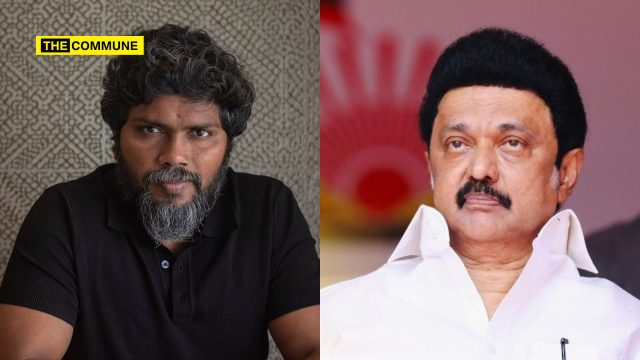
DMK Files: BJP Leader Annamalai Cross-Examines DMK MP TR Baalu For Three Hours In Defamation Case

annamalai tr baalu dmk

Tamil Nadu BJP leader K Annamalai on Monday, 16 February 2026, said he personally cross-examined DMK MP and party treasurer TR Baalu for nearly three hours in an ongoing defamation case linked to the BJP leader’s earlier “DMK Files” allegations, and announced that he would initiate a fresh defamation suit over remarks made against his wife during court proceedings.

The case stems from a press conference held by Annamalai during his tenure as state BJP chief, where he released a document titled “DMK Files,” listing alleged assets of senior DMK leaders, including TR Baalu. Following this, Baalu filed a defamation case against him, which is currently being heard at the Saidapet Court in Chennai.

Appearing in person for the hearing, Annamalai addressed reporters outside the court and said he had chosen to argue the case himself despite having senior legal counsel.

“In the defamation case filed against me by former Union Minister TR Baalu, I got the opportunity today to directly cross-examine him for three hours. In India, only in a few cases do the concerned individuals personally argue their cases. Because I have full confidence in the corruption charges we raised through DMK Files Part 1 and Part 2, and the allegations I levelled against him, I withdrew the affidavit filed by our senior counsel and appeared personally as an ordinary citizen to argue,” he said.

He added that the cross-examination was adjourned as Baalu had to leave to catch a flight scheduled for 2:15 PM. The next round of cross-examination, he said, has been deferred to 7 April 2026 due to Baalu’s parliamentary commitments throughout March.

Questions Raised During Cross-Examination

Annamalai said several questions were put to Baalu during the proceedings but declined to reveal full details as the matter is sub judice.

He, however, indicated that queries related to:

  • The Sethusamudram project
  • Alleged liquor distillery links
  • Companies run by Baalu’s family
  • The ownership of the car in which Baalu arrived at court
  • Financial liabilities and loans

He said more questions would be raised in the next hearing.

Fresh Defamation Case Over Wife Allegation

The BJP leader said a fresh defamation case would be filed after Baalu allegedly accused him in court of purchasing property in his wife’s name through corrupt means.

“Instead of answering my questions, he raised a new allegation that I bought property in my wife’s name through corruption,” Annamalai said, adding that he questioned Baalu on whether he knew his wife’s educational background, employment, or income – to which, he claimed, Baalu responded in the negative.

He said the property in question was agricultural land purchased through legitimate means.

“The land was bought after paying proper income tax, and we obtained a ₹2.5 crore bank loan for it. Without knowing what my wife studied, where she works, or how much she earns, he made defamatory allegations,” he said.

Annamalai stated that through the new defamation case, he would publicly disclose financial records covering the past 15 years, including salaries earned by him and his wife, loans taken, and bank transactions.

He added that his wife is an IIM Bangalore graduate who has worked in companies in Mumbai, Bengaluru, and Chennai.

Chennai Stay, Party Funds Clarification

Responding to another allegation, Annamalai said Baalu had claimed that friends were paying rent for his stay in Chennai — which he termed defamatory.

“I stay in Chennai only because of my responsibility as BJP State President. I have no business or house in Chennai. I moved from my hometown for party work. Funds given by friends for party activities and how the party spent them will also be clarified through the defamation case,” he said.

Parallel Case Against RS Bharathi

Annamalai also noted that a separate defamation case he filed against DMK Organising Secretary RS Bharathi had been adjourned to another date due to Bharathi’s absence.

When asked about the next hearing date, he indicated that Bharathi’s case was expected to come up in March.

“Will Teach DMK A Lesson”

Expressing confidence in the outcome, Annamalai said the litigation would serve a larger political purpose.

“Through this case, we will definitely teach the DMK a lesson. When ordinary citizens speak up for their rights, this incident stands as proof that we can argue our own cases. No matter how big a person is, an ordinary citizen can challenge allegations if he has confidence in what he has said,” he stated.

He said he generally does not file defamation suits but chose to pursue this matter since Baalu had initiated legal action first.

“Our single goal is to defeat the DMK. There must be no distraction from that path. I have full faith in the judiciary. Justice will prevail,” he added.

Annamalai further said that the forthcoming defamation proceedings would provide an opportunity to place all financial details in the public domain, reiterating that he viewed the legal battle as part of a broader commitment to “honest politics.”

Subscribe to our channels on TelegramWhatsApp, and Instagram and get the best stories of the day delivered to you personally.
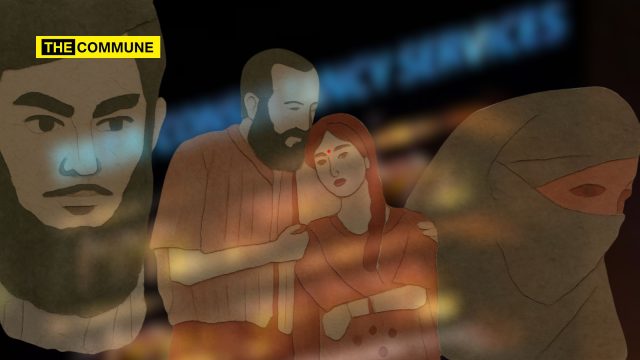
DMK Govt Issues GO For ‘One-Time Regularisation’ Of Illegal Quarrying; Arappor Iyakkam Calls It ‘Legalised Loot’

DMK Govt Issues 'One-Time Regularisation' Scheme GO For Illegal Quarrying; Arappor Iyakkam Calls It 'Legalised Loot'

The DMK government’s decision to introduce a one-time regularisation scheme for excess and illegal quarrying has triggered a major controversy, drawing sharp criticism from anti-corruption activists such as Arappor Iyakkam who allege that the order effectively legitimises large-scale mineral plunder instead of enforcing punitive action under existing mining laws.

The Government Order (G.O.), issued recently, provides retrospective regularisation for excess and illegal quarrying carried out from 6 April 2015. The scheme covers violations both within leasehold areas and in non-leasehold zones, including cases where show-cause or demand notices had already been issued by authorities.

Under the new framework, penalties will be calculated using a weighted average seigniorage fee fixed at ₹25 per metric tonne. For quarrying beyond approved lease limits, operators will be required to pay twice the seigniorage fee as compounding charges along with applicable statutory levies. In cases where quarrying took place in non-leasehold areas, the penalty has been fixed at five times the seigniorage fee. The order further stipulates that failure to pay penalties would attract penal interest at 24% per annum. The regularisation window will remain open for two years from the date of implementation.

The government has also made drone surveys mandatory for all operational quarries to assess violations and mineral extraction volumes. Officials said drone mapping had already been completed in 904 of the state’s 1,845 rough stone quarries, with the remaining surveys to be finished within six months.

The scheme is based on the recommendations of a committee constituted in 2023 under the chairmanship of retired bureaucrat K. Allaudin, following representations made by quarry industry associations who argued that existing penalty frameworks were adversely affecting business operations.

Arappor Iyakkam Cries Foul

However, the scheme has drawn sharp opposition from transparency watchdog Arappor Iyakkam, which has formally petitioned Chief Minister MK Stalin seeking withdrawal of the order and initiation of criminal proceedings against illegal miners.

The organisation’s convenor, Jayaram Venkatesan, alleged that the order was arbitrary and contrary to statutory provisions.

He argued that the Mines and Minerals (Development and Regulation) Act, 1957 mandates full recovery of the cost of illegally mined minerals and permits criminal prosecution carrying imprisonment of up to five years. In contrast, he claimed, the State’s order sought to legalise illegal mining through minimal penalties calculated on what he termed an “abysmally low” seigniorage fee, without recovering the actual mineral value.

He further alleged that the move amounted to abdication of the State’s responsibility to initiate criminal action against violators and described the scheme as an attempt to “enrich and protect the illegal mining mafia.”

The order has also triggered political commentary and public criticism, particularly in southern districts where illegal quarrying has long remained a contentious issue.

Arappor Iyakkam cited past allegations of large-scale quarry violations in regions such as Tirunelveli and Radhapuram, where officials had previously estimated illegal extraction running into crores of rupees. He pointed to instances where local revenue authorities had ordered recovery of mineral costs and penalties amounting to hundreds of crores based on the scale of illegal excavation detected.

Venkatesan argued that under existing legal provisions, authorities are empowered to recover the full cost of minerals extracted, impose penalties running into multiple times the royalty value, and initiate criminal prosecution against violators. He contended that replacing such punitive recovery mechanisms with a compounding framework based on reduced seigniorage calculations would substantially lower the financial liability of those involved in illegal mining.

He further raised concerns about environmental and public safety implications linked to unregulated quarrying activities, including excessive blasting, land degradation, and structural damage to nearby habitations and agricultural fields.

Source: Times of India

Subscribe to our channels on TelegramWhatsApp, and Instagram and get the best stories of the day delivered to you personally.
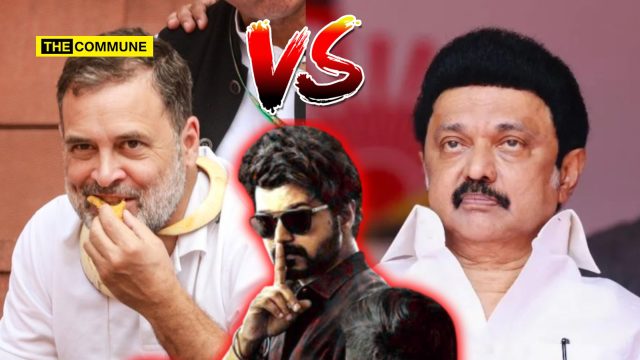
DMK Mulling Rajya Sabha Berth For CM Stalin’s Son-in-Law Sabareesan?

DMK Mulling Rajya Sabha Berth For CM Stalin’s Son-in-Law Sabareesan?

The DMK leadership is reportedly considering fielding Chief Minister MK Stalin’s son-in-law, Sabareesan, for one of the four Rajya Sabha seats from Tamil Nadu that are set to fall vacant soon.

According to party sources, the terms of six Rajya Sabha MPs from Tamil Nadu, including AIADMK’s M Thambidurai, Tamil Maanila Congress leader GK Vasan, and DMK members T Siva, Anthiyur Selvaraj, NR Elango, and Dr. Kanimozhi, will end on 1 April 2026.

Of the four seats expected to go to the DMK based on Assembly strength, the party leadership is said to be planning to allocate two to alliance partners. One seat is likely to be offered to the Congress, while the other may go either to the Viduthalai Chiruthaigal Katchi (VCK) or the Communist Party of India (CPI), sources indicated.

Discussions are reportedly underway within the party on allotting one of the remaining two seats to Sabareesan and the other to the DMK’s current Delhi representative, A.K. Vijayan.

Party insiders said some district secretaries have urged Chief Minister Stalin that if Lok Sabha MP and DMK Deputy General Secretary Kanimozhi were to take on a larger role in Tamil Nadu’s state politics, Sabareesan could be positioned to handle responsibilities in Delhi.

Following these internal consultations, the party leadership is said to be exploring the possibility of nominating Sabareesan to the Rajya Sabha and ensuring his election to represent the party in the national capital.

An official announcement from the DMK is awaited.

Source: Dinamalar

Subscribe to our channels on TelegramWhatsApp, and Instagram and get the best stories of the day delivered to you personally.
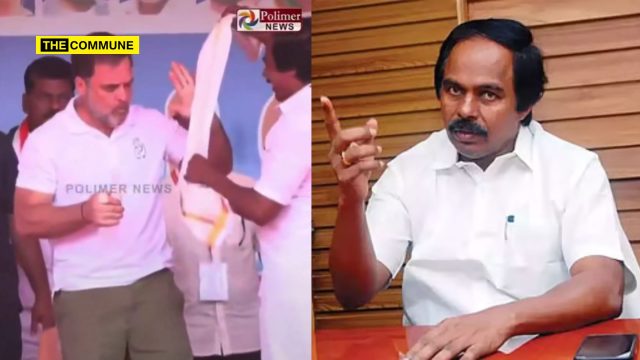
Minors Reportedly Assaulted By Ganja-Addicted Minors; BJP Leader SG Suryah Slams Rising Drug Menace Under DMK Rule

Minors Reportedly Assaulted By Ganja-Addicted Minors; BJP Leader SG Suryah Flags Drug Abuse Among Youth

A video allegedly showing minors assaulting other minors (younger than them) while under the influence of narcotic substances in Ondipulinayakkanur village of Virudhunagar district has surfaced on social media, triggering concern and political reactions.

BJP leader SG Suryah shared the video on his social media handles and condemned the incident. In his post, he expressed shock over the visuals, stating that the footage of school-age children engaging in brutal violence while reportedly intoxicated was disturbing and raised serious questions about the spread of drug abuse among minors.

He alleged that narcotic substances, including ganja, were easily accessible across Tamil Nadu and described the situation as a failure of governance. Referring to a recent controversy involving the growth of a ganja plant within the premises of Stanley Medical College Hospital in Chennai, he argued that such incidents reflected administrative lapses in curbing drug circulation.

Suryah further questioned the functioning of the state police and accused the ruling government of failing to safeguard students and youth from substance abuse. He called upon Tamil Nadu Chief Minister MK Stalin to take responsibility for the situation and to respond on measures being taken to control narcotics and protect the future of young people in the state.

Subscribe to our channels on TelegramWhatsApp, and Instagram and get the best stories of the day delivered to you personally.
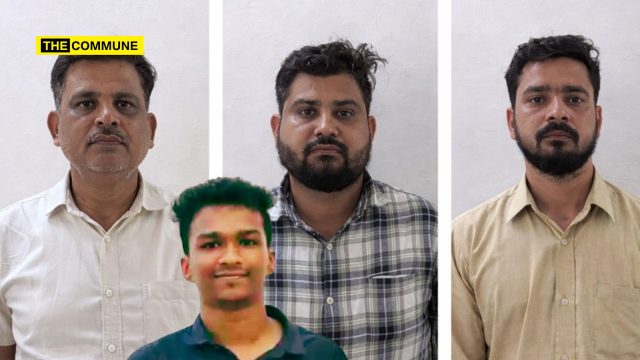
‘Sanskrit Is An Invented Language, Cannot Be Mother Tongue’, Says Dravidian Stock ASI Official Amarnath Ramakrishna

'Sanskrit Is An Invented Language', Says ASI Official Amarnath Ramakrishna, Speaks Like A Dravidianist Hate Monger mother tongue

Senior Indian archaeologist and officer with the Archaeological Survey of India (ASI), Amarnath Ramakrishna, has landed himself under the spotlight for making remarks that resemble a Dravidianist hate monger.

Amarnath Ramakrishna, an ASI officer, speaking at a public programme, referred to research presented by foreign scholars claiming that inscriptions in the ancient Tamil-Brahmi (“Tamili”) script were found in nearly 30 locations inside tombs in Egypt’s Valley of the Kings, dating to the New Kingdom period.

He said, “The script called “Tamili” found in Egyptian tombs was explained to us today. Those who said it are not Indians/Tamilians; foreign scholars said it. Two foreign scholars read the first paper at that seminar. They said: In Egypt’s Valley of the Kings (New Kingdom), Tamili inscriptions are engraved in 30 places on Egyptian tombs. Especially, they read “Sikai Kottran”. That “Kottran” word is found in our Pugalur inscription near Karur in Tamil Nadu. People from here went there for trade and wrote their names. Even today, we write our names—go to any temple, old temple or old building, school; we don’t stay quiet, we write our names with charcoal whether it sticks or not.”

He continued, “Writing names like that happened 2,000 years ago. That’s the news found here in Egypt. Egyptian kings built pyramids around 1800 BCE; they used cuneiform letters. Later, traders from here wrote Greek letters too, about 2,000 Greek letters found. Studying those Greek letters, two foreign scholars discovered Tamili too. They read and showed “Tamili Tamili.” They read “Sikai Kottran.” Seeing that, media went viral calling it “Sikai.” “Sikai” is Sanskrit word, they say. Is there any instance where “Sikai” is a Sanskrit word? I don’t know. Sanskrit is an invented language; Sanskrit cannot be a mother tongue because it is a language a woman cannot speak, so it cannot possibly be a mother tongue. A language originates from a woman; only a language born from a woman goes equally to men and women. Sanskrit is a religious ritual language, compiled solely to praise God. That language can only work for man-to-man and not man-to-woman. There is no chance for it to be a mother tongue. It’s constructed from many languages, possibly including Tamil words, shining as Sanskrit today.”

He continued, “Claiming “Sikai” from that language is wrong. Tamil scholars must research if “Sikai” is Tamil. It will surely confirm as Tamil, that’s the firm answer. Starting such research will greatly help showcase Tamil’s glory worldwide, which I state here.”

Why Amarnath Ramakrishna Speaks Like A Dravidianist Hate Monger

The Dravidianist hate for Sanskrit is well-known. By referring to Sanskrit as an ‘invented’ language and one that allegedly cannot be spoken by women, Ramakrishna has echoed the Dravidianist tropes.

Dismissing Sanskrit as “not a mother tongue” or reducing it to a purely ritual language ignores its vast literary, historical, and inscriptional corpus. It is noteworthy that:

Sanskrit possesses one of the world’s richest classical literatures spanning philosophy, science, poetics, grammar, and statecraft.

It has played a foundational role in decoding India’s ancient history through inscriptions, copper plates, and temple records.

Tamil Nadu’s Sanskrit Epigraphical Record

Historians note that Tamil Nadu itself holds one of the largest corpora of Sanskrit inscriptions in India, found alongside Tamil inscriptions on temple walls, hero stones, copper plate grants, and royal edicts.

For centuries, Tamil dynasties, including the Pallavas, Cholas, and Pandyas, patronised Sanskrit in administration, religion, and royal titulature, often using it in tandem with Tamil. Epigraphists stress that without Sanskrit proficiency, reconstructing large portions of South Indian political, social, and religious history would be severely impaired.

Ramakrishna’s remarks echo Dravidianist talking points, particularly those narratives that frame Sanskrit as alien, imposed, or exclusionary. Such binaries overlook the long history of linguistic coexistence and mutual patronage between Tamil and Sanskrit traditions. Officials occupying institutional positions, especially in archaeology, must maintain academic neutrality and avoid civilisational or linguistic denigration.

Subscribe to our channels on TelegramWhatsApp, and Instagram and get the best stories of the day delivered to you personally.