Home Blog Page 78

MTC Server Glitch Disrupts Ticketing, Commuters Face Inconvenience

MTC Server Glitch Disrupts Ticketing, Commuters Face Inconvenience

Chennai commuters travelling by Metropolitan Transport Corporation (MTC) buses were left stranded and inconvenienced on Monday (16 February 2026) after an unexpected server failure crippled the corporation’s electronic ticketing infrastructure in the city.

Due to the technical snag, ETMs used by conductors became temporarily unavailable, affecting regular ticket issuance. As an interim arrangement, conductors issued manual pre-printed tickets to passengers until the system is restored.

The disruption also affected passengers relying on digital payment modes. MTC said UPI transactions, National Common Mobility Cards (NCMC), and debit and credit card payments could not be accepted at present. The Chennai One app, which facilitates digital ticketing and related services, also remained inaccessible, impacting commuters who use the platform.

The corporation requested passengers to carry cash while availing bus services and expressed regret over the inconvenience caused. It added that technical teams are working to resolve the issue.

MTC clarified that online bus ticket bookings were operating normally and that users of the Chennai One app could continue to book tickets and travel without disruption. Passengers who had purchased ₹1,000 and ₹2,000 bus passes through the app were allowed to travel by entering the OTP. In case of any technical error, commuters were advised to show the valid bus pass displayed on the app to the conductor and continue their journey.

Source: DT Next

Subscribe to our channels on TelegramWhatsApp, and Instagram and get the best stories of the day delivered to you personally.

Islamo-Leftist Alleged ‘Fact-Checker’ Zubair Justifies Assault On Journalist Ruchi Tiwari In Delhi University?

Alleged Fact-Checker Zubair Justifies Assault On Journalist Ruchi Tiwari In Delhi University
Background Image Source: X

A woman journalist, Ruchi Tiwari, who was allegedly assaulted while covering a protest at Delhi University’s North Campus on Friday, 13 February 2026, has stated that she was attacked by a large mob and targeted over her caste identity while performing her professional duties.

Quick to justify her assault, alleged fact-checker shared video clippings of hers to ‘prove’ she wasn’t a journalist but ran a ‘propaganda’ YouTube channel.

What Happened

According to Tiwari, the situation escalated when members of the gathering began questioning her about her name and caste. Speaking to ANI, she said, “Video is everywhere, people can judge by themselves as to who provoked whom… I am a journalist who was there to cover the protest. One of the media personnel said my name to draw my attention. I went up to them, they then asked my full name and caste.”

She alleged that the confrontation quickly turned violent. “The entire crowd came towards me and attacked me. This is clear in the video. About 500 people attacked me. They just have fake narrations and fake allegations. The girls around me whispered rape threats in my ears just because I am a Brahmin; ‘aaj tu chal, tera nanga parade niklega,’ is what they said. The men around me were saying that they would teach me a lesson. The girls had held me by the arms and neck. This is an attempt to murder. I had fallen unconscious, but the Police did nothing,” she stated.

Tiwari further alleged that she was singled out because of her caste background and confirmed that an FIR has been registered in connection with the incident. She identifies herself as a ground reporter and runs a YouTube channel.

Recalling the sequence of events, she said, “A boy there was signalling to others to take me away. Did they want to kidnap me?… My clothes were being torn… I was being improperly touched. They were goons, they cannot be students… I was attacked due to my caste. Nobody supported me, only a few Law Faculties showed humanity, and I came out with their help as well as with that of a few women Police personnel… FIR has been registered, I trust the law… The incident occurred for about half an hour… There was mob lynching there, I escaped somehow is a big deal for me.”

Zubair Justifies Assault

Quoting the ANI video, alleged fact-checker and fake news spreader Mohammad Zubair wrote, “The woman ‘Ruchi Tiwari’ is not a journalist. She runs a propaganda YouTube channel. Here are a few old/new videos of her so called ‘interviews’…”

Zubair seemingly suggested that Ruchi Tiwari should be assaulted and molested because she is a YouTuber and not a journalist.

Source: Economic Times

Subscribe to our channels on TelegramWhatsApp, and Instagram and get the best stories of the day delivered to you personally.

DMK-Congress Rift Widens: ‘Believing Cash Transfer Will Ensure Victory Is Superstition’, Says Congress Leader Praveen Chakravarty

DMK-Congress Rift Widens: ‘Believing Cash Transfer Will Ensure Victory Is Superstition’, Says Congress Leader Praveen Chakravarty

Just as Manickam Tagore upped the ante against the DMK, Congress leader Praveen Chakravarty has also amplified pressure on the DMK, particularly over political messaging surrounding the release of ₹5,000 to 1.3 crore women in Tamil Nadu under the Magalir Urimai Thogai scheme.

What RS Bharathi Said

On 14 February 2026, DMK Organising Secretary RS Bharathi said that following the announcement of the Kalaignar Magalir Urimai Thogai scheme yesterday, demands for a share in governance would no longer be raised.

His remarks came after a consultative meeting of the DMK Legal Wing held at the party headquarters, Anna Arivalayam, in Chennai. Following the deliberations, Bharathi told reporters that opposition parties were already facing fear of defeat. He noted that the women’s entitlement assistance was not a one-time measure but had been provided every month.

He asserted that in the wake of the latest announcement, no one in the Congress party would continue to speak about power-sharing. According to him, the scheme had further strengthened public support for the DMK, and this political reality would deter any further demands for a share in governance.

Bharathi also reiterated that there would be no coalition government in Tamil Nadu, emphasizing that Chief Minister MK Stalin had already made the party’s position clear. While questions from Congress leaders such as Mallikarjun Kharge, Rahul Gandhi, and Selvaperunthagai could be responded to, he added that it was not possible to address every query raised by others.

Praveen Chakravarty Response

In a post on his X handle, Chakravarty stated that the Magalir Urimai Thogai cash assistance scheme alone would not guarantee electoral victory, calling such assumptions misplaced. He argued that believing entitlement transfers alone ensure success is “a superstition,” noting that in the past three years, similar women-focused financial assistance schemes were announced ahead of elections in nine major states. Of those, ruling parties won only four while losing five. His remarks were widely seen as a rebuttal to DMK leader RS Bharathi, who had suggested that after ₹5,000 was credited to women beneficiaries, alliance partners would no longer raise power-sharing demands. By citing comparative electoral data, Chakravarty signaled that welfare announcements cannot substitute alliance strength.

He wrote, “The Magalir Urimai Thogai is an excellent welfare scheme. Its implementation is commendable. However, believing that it alone will guarantee electoral victory is a superstition. In the past three years, among nine major state governments that announced similar schemes ahead of elections, only four won, while five were defeated.”

Despite repeated assertions by Chief Minister Stalin and senior DMK ministers that there would be no power-sharing arrangement, Congress leaders such as Tagore and Chakravarty, have continued to publicly insist on share in governance, greater seat allocation, and institutional recognition within the alliance

With formal seat-sharing talks yet to begin, the exchange of criticisms and counter-statements has triggered fresh speculation over alliance cohesion, even as both parties officially maintain that the DMK-Congress alliance remains intact.

Subscribe to our channels on TelegramWhatsApp, and Instagram and get the best stories of the day delivered to you personally.

DMK-Congress Rift Widens: “If Attacked, We’ll Hit Back”, Says Congress Leader Manickam Tagore

manickam tagore dmk congress

The Congress party has stepped up its demand for a share in governance within the DMK-led alliance in Tamil Nadu, with senior leaders Manickam Tagore and Praveen Chakravarty escalating their public assertions on power-sharing, seat allocation, and alliance respect.

Amid continuing friction, a resolution was passed at a Congress Working Committee meeting chaired by Manickam Tagore, formally reiterating the party’s demand for participation in government. The resolution stressed the need to provide Congress a share in governance, allocate a larger number of Assembly seats, and ensure 30% representation in local body institutions.

This renewed push comes despite Chief Minister MK Stalin having earlier rejected the idea of power-sharing, maintaining that there would be no division of executive authority within the alliance. However, Congress leaders have continued pressing the issue in recent weeks.

Addressing the meeting, Manickam Tagore underscored that the party’s demand was rooted in dignity and alliance parity.

“All we ask for is respect and love. The DMK ministers’ talk hurts. Rahul Gandhi calls the Tamil Nadu Chief Minister his brother. Similarly, we expect respect from them. But the ministers are saying that if the Congress can come if it wants, if not let it go. They are talking aggressively about the alliance. All this hurts.”

He further stated that Congress had stood by the alliance despite political costs.

“We are with you and have been carrying the old burden for the mistakes you have made. For us, all we ask for is respect.”

Tagore also criticized the lack of disciplinary action over remarks made by a DMK district secretary.

“The DMK district secretary’s speech is saddening. It has been 20 days since we demanded action against him. Even now, no action has been taken. That is why other district secretaries are also speaking. I am not one to sit idly by and watch this. If we are attacked, we will attack back.”

Reiterating the grievance, he said: “As far as we are concerned, some people are making mistakes. What I mean is, the speech made by Thalapathi while being a district secretary is something that causes regret… it has been about 20 days. No action has been taken, and he hasn’t even expressed regret.”

He warned that Congress would respond politically if provoked.

“If we are not given respect, we will hit back; we will respond in the same language. So, if you give respect to Congress workers, we will give respect – that’s all.”

Tagore also downplayed the importance of electoral posts compared to party loyalty. He said, “If we are not given respect, we will hit back; we will respond in the same language. So, if you give respect to Congress workers, we will give respect, that’s all. Otherwise, some people are posting things saying, “You won MP seat using us (DMK), didn’t you?” I am not going to contest again as MP; I am not going to contest as MP from Virudhunagar. Why? For me, my party is important. As far as I’m concerned, MP, MLA posts, all that is nothing.”

He added, “For Congress, self-respect is what matters. Did I come to Virudhunagar to become an MP on my own? I was sent by my leadership. Rahul Gandhi sent me to become MP from Virudhunagar, I came here for that. For me, Congress party is my life, these MP, MLA posts are nothing else. I might say something worse so I am not saying it. So Congress party is my life; till I die, I will die as a Congressman, that is very clear. Our struggle is only for the respect of Congress workers. We have not asked for anything else; we have not asked for commissions. They said “commission”, we didn’t ask for commissions. We didn’t ask for road contracts; we didn’t ask for anything. How many years has it been? I think 12 years… maybe 13… around 12 years since I became an MP. Let at least one person say that I took commission. Let someone say I demanded commission for a road contract, or for sand work, or for constructing something, we never had such habits. We come in the path of Kamarajar, in the path of Kakkan, in the path of Chellapandian. As far as we are concerned, we have lived honestly. If there is food, we will eat; if not, fine, we will still continue in the party. We never went behind biryani, never attacked neighbours, never tried to build organizations to capture others’ houses, we never had such practices.”

He further said, “A Congressman is one who does not covet another man’s property – first understand that. As far as we are concerned, we stand only for dignity and self-respect. If people like Thalapathi speak like this about Congress workers and no action is taken, it causes deep regret. I even had that video – someone saying, “Is there even a man in the booth?” He then played DMK MLA Thalapathy’s video here he says…. If he spoke at that level and still no action is taken, Tamil Nadu Congress Committee president brother Selvaperunthagai demanded action, but it’s been 20 days and still nothing has happened.”

Subscribe to our channels on WhatsApp, Telegram, Instagram and YouTube to get the best stories of the day delivered to you personally.
Suvarezhuthu Subbaiya: The Man Who Painted Nazi-Type Graffitis “Brahmins! Get Out Of Tamil Nadu” During Anti-Brahmin Movement

Dravidian propagandists love to peddle the myth that Tamil Brahmins fled their homeland in droves simply chasing “opportunities” and “greener pastures,” as if centuries of so-called privilege suddenly made them pack up and leave.

They conveniently whitewash one of the major drivers: decades of vicious political persecution under hate-fueled Non-Brahmin movement of EV Ramasamy Naicker (hailed as ‘Periyar’ by his followers), where venom was spewed against Brahmins, their sacred symbols desecrated, and their very existence threatened.

We’re talking forced cuttings of the kudumi, the poonal, and other such acts of humiliation straight out of a fascist playbook.

This wasn’t some abstract “anti-caste” crusade; it was targeted terror by a bunch of bigots against a minority community.

And one such bigot was Suvarezhuthu Subbaiah

He’s glorified as a “rationalist revolutionary” by the Dravidianists. But in a sane society, he would be seen as a deranged vandal, who turned Tamil Nadu’s walls into Nazi-style hate boards.

Born in Surakudi near Karaikudi, Subbaiah grew up in a household deeply shaped by EVR’s poisonous ideology. With little formal education and unable to complete his schooling, he drifted through his early years without direction or stability. Accounts describe a life marked by poverty and rootlessness, as he moved from town to town, detached from conventional family and social structures. Popular Tamil lyricist Yugabharathi has documented his life in his Oonjal Tea book.

For a period, he reportedly lived in and around a tea shop in Mayiladuthurai run by Rangasamy, a figure aligned with the Dravidian movement. Subbaiah had agreed to marry and his ideological allies had also apparently raised funds for him. They had asked him to use the funds to buy a roofed house and some furniture. But Subbaiah spent the entire amount for ‘campaigning’ it seems. How convenient!

As an avid follower of EVR, he took to painting hateful graffitis primarily targeting Brahmins as a way of life. He would apparently go from town to town to paint about the anti-Hindu ideology preached by EVR and also information about his public meetings.

Here are some gems that he reportedly painted as graffitis.

நெற்றியில் திருமண், நெஞ்சிலே களிமண்

Transliteration: Nettriyil Thiruman, Nenjile Kaliman

Translation: Thiruman (sacred mark worn by Vaishnavites) on the forehead, Clay in the hearts.

விஞ்ஞானி கண்டது விரைவு ராக்கெட், அஞ்ஞானி கண்டது விபூதிப் பாக்கெட்

Transliteration: Vignyaani Kandadhu Viraivu Rocket, Angnani Kandadhu Vibhooti Packet

Translation: Scientists discovered speedy rocket, the ignorant discovered Vibhooti (sacred ash that Hindus smear) packet.

வித்தகர் கண்டது பறக்கும் விமானம், பக்தர் கண்டது பறக்காத கருட வாகனம்

Transliteration: Vithagar Kandadhu Parakkum Vimanam, Bakthar Kandathu Parakkadha Garuda Vahanam

Translation: The wise invented the flying plane, the devotees found a non-flying Garuda Vahanam (eagle-shaped mount of Lord Vishnu).

He also wrote on public trash bin saying “Puranas to be dumped here” and also temples as dens of thieves.

One anecdote notes him painting a graffiti on the wall of a Brahmin’s house without permission. When the Brahmin confronted asking him “On whose instructions are you writing these?” to which Subbaiah apparently replied “On whose instructions did Ramanujam preach?”

But the most venomous and hate-mongering graffiti that he is known for is this:

பார்ப்பானே தமிழ்நாட்டை விட்டு வெளியேறு

Transliteration: Paarpaane! Tamil Naatai Vittu Veliyeru!

Translation: Hey you Paarpan! Get out of Tamil Nadu

Paarpan is a casteist slur used by Dravidianists to attack Brahmins.

This graffiti was written in places like Thiruvarur during anti-Brahmin agitations.

When countered with the question – Where will they go?, he apparently replied saying – “Brahmins claim there are seven worlds above and seven below. Let them go to one of those worlds then—why are you so worried?“. A call for the death of Brahmins.

This wasn’t a cry for equality; it was naked incitement to ethnic cleansing, ripped straight from the Nazi playbook. Subbaiah’s tar-smeared slogan “பார்ப்பானே தமிழ்நாட்டை விட்டு வெளியேறு” (Brahmin, get out of Tamil Nadu) targeted Brahmin homes and agraharams just as Hitler’s thugs scrawled “Jews Out!” on shop windows in 1930s Germany, or painted “The Jewish parasite sold Norway on the 9th of April” during the 1940 occupation and “The death of the Jews will end the Saarland’s distress” on a Berlin Jewish cemetery wall in 1938—both pieces of a propaganda machine that dehumanized Jews as threats. Periyar’s Dravidian agitators did the same, framing Brahmins as alien oppressors and rallying non-Brahmins with expulsion calls that fractured families and communities. Subbaiah was no revolutionary; he was a hate-monger whose wall “art” sowed division, a crude echo of Goebbels’ tactics.

EVR himself dialed the rhetoric to genocidal levels: “If you see a snake and a Brahmin, beat the Brahmin first” to strip them of humanity; in 1953 he urged followers to “buy petrol and matchsticks and set fire to all agraharams… if we shoot 10, 20 people and are hung for it, what’s wrong?”

As recorded in Viduthalai magazine (6 November 1957), he asked, “What would you do if caste had to be abolished by burning the agraharas and killing at least a thousand Brahmins?”—prompting the crowd to roar, “Let’s burn them! Let’s kill them!” In 1959 at Chidambaram he declared Brahmins must be “eradicated” because “Brahminism grew out of the Brahmins themselves,” and he openly praised Nazi expulsion of Jews in 1938 and 1944 speeches, urging Tamils to show the same zeal in driving out “Aryans” (Brahmins) from India.

This hateful mindset is entrenched among the Dravidian elite even today. In the 2025 film Sakthi Thirumagan starring Vijay Antony, Vaagai Chandrasekhar’s character is based on this vile man, portraying him as a foster figure embodying “Periyarist” values.

Today, in 2026, Dravidianists continue their shameless whitewashing, peddling the comforting lie that Tamil Brahmins voluntarily migrated in search of “economic opportunities” and “greener pastures,” as if centuries of alleged privilege suddenly compelled them to abandon their ancestral homes. They erase the terror—the forced kudumi cuttings, poonal snippings, petrol-bomb threats, agraharam arson calls, and relentless wall graffiti demanding expulsion—that turned Tamil Nadu into a hostile land where being Brahmin meant living in fear. This revisionist sleight-of-hand protects the Periyarist legacy while blaming the victims, allowing the same divisive ideology to masquerade as progressive rationalism even as Hindu unity finally pushes back against decades of engineered exile. The truth is brutal: Brahmins didn’t just leave for better jobs—they fled a state that openly called for their burning, killing, and eradication.

Subscribe to our channels on TelegramWhatsApp, and Instagram and get the best stories of the day delivered to you personally.
Over 250 Converted Tribal And Dalit Families Return To Hinduism At Chhattisgarh Ghar Wapsi Event

In a large public ceremony held at Bargadh Dham in Kharsia (District Raigarh), more than 250 tribal and backward families formally returned to the Hindu fold, in an event led by BJP leader Prabal Singh Judev.

The programme marked what Judev described as the completion of his 18000th ghar wapsi since the passing of his father, the late Dilip Singh Judev, in 2013. Dilip Singh Judev, former MP and Union Minister of State for Forest and Environment, had pioneered the initiative among tribal and Dalit communities in undivided Madhya Pradesh in 1980s and became widely known for washing the feet of returning families as a symbolic gesture of respect.

Continuing that legacy, Prabal Singh Judev conducted a Vedic havan ceremony and personally washed the feet of participating families as a mark of welcome and reconciliation.

Addressing the gathering, Judev said Kharsia holds deep personal and political significance for him. He recalled that his father contested his first Assembly by-election from the region in 1988 against then Chief Minister of undivided Madhya Pradesh, Arjun Singh. During that campaign, he said, his father witnessed conversion activities by missionaries in tribal areas, which shaped his resolve to launch a state-wide movement centred on religious awareness and reconnection with traditional practices.

“Many tribal families stood firmly with my father during that time. Their trust has enabled us to continue this mission,” Prabal Judev said.

The event was organised by Dilip Singh Judev Sanatan Foundation (founded by Prabal Judev) and funded and supported by Delhi-based Sewa Nyaya Utthan Foundation, which has been involved in awareness and activism against unlawful conversions.

Swati Goel Sharma, founder of Sewa Nyaya Utthan, attended the event. She said that vulnerable communities are often targeted through inducements and pressure tactics, and emphasised the need for sustained grassroots engagement to counter such practices.

The ceremony concluded with collective prayers and community participation, and with an announcement that more such events will happen in coming weeks across Chattisgarhi Jharkhand and Odisha.

Subscribe to our channels on WhatsAppTelegram, Instagram and YouTube to get the best stories of the day delivered to you personally. 
Catholic Body Expresses Concerns Over TN Minorities Commission Chairman Joe Arun Allegedly Summoning Church Priests To Campaign For DMK, Flags Money Laundering Charges At Loyola-LIBA

church priest minorities commission dmk aiadmk pastor joe arun

A fresh controversy has erupted around Fr. Joe Arun, Chairman of the Tamil Nadu State Minorities Commission, after the Catholic Minority Welfare Society (CMWS) publicly endorsed allegations that he was involved in partisan political activity and misuse of institutional influence.

Fr. Joe Arun, a Jesuit priest associated with Loyola College, Chennai, currently holds two significant positions — as Chairman of the State Minorities Commission and as Director of the Loyola Institute of Business Administration (LIBA). His dual role has now come under scrutiny amid mounting political and ecclesiastical criticism.

Political Allegations Gain Traction

Earlier, The Commune had reported about how Joe Arun had organized a state-level ‘awareness programme’ in partnership with missionary organizations for Christians, where he asserted that Chief Minister MK Stalin is the only leader capable of providing protection to the religious and linguistic minorities in Tamil Nadu.

Joe Arun had given a clarion call for all Christians and Muslims to vote for DMK in the 2026 Tamil Nadu Assembly elections.

The controversy intensified after Kovai Sathyan, National Spokesperson of the AIADMK, alleged during a TIMES NOW debate on December 23, 2025, that networks linked to Loyola College were being misused for political purposes. He also raised allegations of corruption and laundering of funds through alumni connections.

The issue resurfaced in January following a Dinamalar report claiming that priests were allegedly summoned and trained to campaign in support of the ruling DMK. The report named Fr. Joe Arun in connection with the allegations.

While Fr. Joe Arun has not publicly responded to the specific claims at the time of reporting, the Catholic Minority Welfare Society has stated that the allegations warrant serious attention and cannot be dismissed as routine political sparring.

Church Law And Public Office

Beyond the political dimension, CMWS has framed the issue as one of ecclesiastical propriety. The Society pointed to Canon 285 §3 of the 1983 Code of Canon Law, which prohibits clerics from assuming public offices that involve participation in civil power.

The Chairman of the State Minorities Commission holds a statutory position that exercises civil authority and is expected to function as an independent, non-partisan constitutional office. Critics argue that the combination of a priestly vocation and a government post raises ethical and institutional questions, particularly when allegations of political alignment surface.

Perception Problem For Church Institutions

The controversy has also triggered unease within sections of the Catholic community. According to CMWS, there is growing concern that respected Church-linked educational institutions are being drawn into partisan political narratives, potentially affecting their credibility.

The Society has announced that it will formally submit representations to the Superior General of the Society of Jesus and to the Apostolic Nuncio to India, seeking ecclesiastical attention to the matter.

Subscribe to our channels on WhatsAppTelegram, Instagram and YouTube to get the best stories of the day delivered to you personally. 
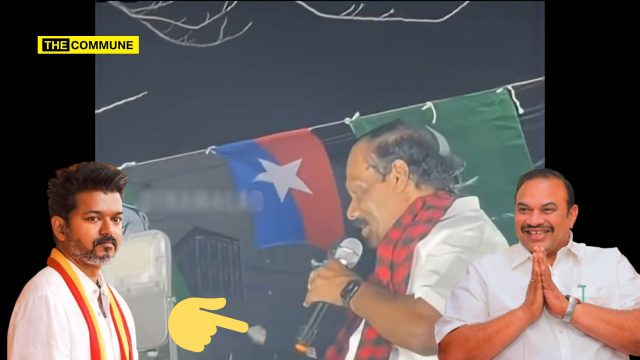
“This Is Atrocious! Vande Mataram Unfit To Be Sung, It Is Full Of Hatred”: DMK-Ally Jawahirullah Says

DMK Ally Manithaneya Makkal Katchi (MMK) president and Tamil Nadu MH Jawahirullah has taken a stance against India’s national song Vande Mataram calling it full of hatred and divisive.

The Government of India had passed a directive that mandates Vande Mataram to be sung in full prior to the National Anthem at official government events, including national flag hoisting ceremonies, Governor’s addresses, and the President’s address.

The original version of Vande Mataram had verses hailing Bharat Mata as Shakti and Goddess Durga which was removed by Jawaharlal Nehru saying it would “irritate Muslims”.

Jawahirullah described the latest move of the Modi government as a departure from long-standing constitutional practice, under which only the National Anthem holds mandatory status at official functions.

We’ve passed a revolution regarding that in this General Council. The Union Govt has resolved that the full Vande Mataram song should be sung soon after the National Anthem. This is atrocious! Vande Mataram song which is part of the Anandmath novel is full of hatred. It is divisive and it is not fit to be sung when we refer to the Constitution of India which embraces all people and we oppose the stance of the Union Government to make it mandatory that it should be sung after the national anthem. It is also belittling the great song “Jana Gana Mana” rendered by the famous poet Rabindranath Tagore.“, said Jawahirullah.


View this post on Instagram


A post shared by Tamil Janam (@tamiljanam)

Subscribe to our channels on TelegramWhatsApp, and Instagram and get the best stories of the day delivered to you personally.
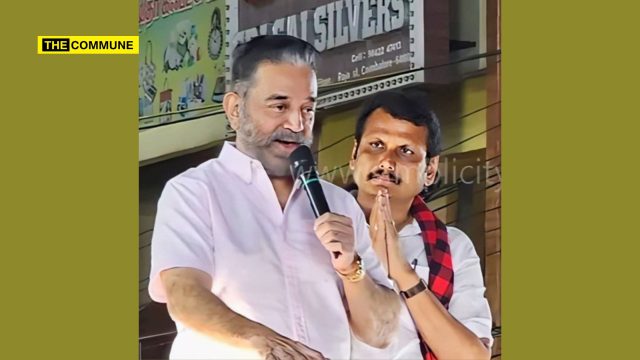
Supreme Court Urges AR Rahman To Credit Dagar Brothers For ‘Veera Raja Veera’ Song From Ponniyin Selvan 2

ar rahman veera raja veera ponniyin selvan 2 delhi high court

The Supreme Court of India has urged composer A.R. Rahman and the producers of Ponniyin Selvan II to formally acknowledge the contribution of the Dagarvani musical tradition to the song “Veera Raja Veera.” The request comes amid a larger legal battle over originality, authorship, and moral rights in a case that probes deeply into how traditional art forms are incorporated into contemporary creativity.

At its core, the dispute revolves around a claim by Faiyaz Wasifuddin Dagar, a Dhrupad vocalist and custodian of the Dagarvani lineage, that “Veera Raja Veera” draws substantially from a classical composition titled “Shiva Stuti” performed and fixed in recording by his late father and uncle — the Junior Dagar Brothers — in the 1970s. Dagar asserts that his family holds the copyright and moral rights in that work, and that Rahman’s track uses protectable elements without adequate acknowledgement or permission.

The bench, led by Chief Justice Surya Kant and Justice Joymalya Bagchi, made an observation that has now become central to the controversy: while establishing authorship requires careful legal examination, mere incorporation of stylistic influence or first performance does not automatically confer ownership. The court clarified that evidence must show whether the composition as used in Veera Raja Veera was independently created or derived from the Dagar tradition’s version.

Yet the court also underscored an important cultural argument. It questioned why, if the Dagarvani lineage had not nurtured and preserved this classical idiom, modern musicians and composers would not have had the material to draw upon. In that vein, the bench suggested that some form of acknowledgement — beyond generic credit to a tradition — ought to be considered, not as an admission of legal liability, but as recognition of cultural debt and artistic lineage. “There should be some acknowledgement… They want respect and recognition,” the court observed.

Rahman’s legal team, led by senior counsel Abhishek Manu Singhvi, defended the originality of “Veera Raja Veera,” arguing that the piece blends multiple musical influences and that reliance on public-domain classical idioms does not establish exclusive rights. They have contended that even if the Dagarvani tradition shaped the track, the song incorporates Western harmonic frameworks and layered orchestration that make it a distinct work.

This hearing builds on earlier twists in the case. In 2025, a single-judge bench of the Delhi High Court had found a prima facie case of infringement, ordered changes to the song’s credits, and directed Rahman and the producers to deposit ₹2 crore as security. A later division bench of that court set aside parts of the interim relief, holding that a prima facie case of authorship had not been demonstrated at that stage. Dagar’s appeal from that decision brought the matter to the Supreme Court.

The bench has now adjourned the matter to February 20 for further arguments, including detailed consideration of issues like originality, fixation, and the scope of copyright protection in works influenced by centuries-old artistic traditions.

What this case highlights — beyond the legal technicalities — is a deeper tension in cultural production today: how to reconcile collective traditional heritage with individual creative expression and proprietary rights. In a media landscape where classical forms are continually reinterpreted and repurposed, the judiciary is being called upon to navigate not just statutes, but the ethics of honouring artistic lineage without stifling innovation.

Subscribe to our channels on TelegramWhatsApp, and Instagram and get the best stories of the day delivered to you personally.
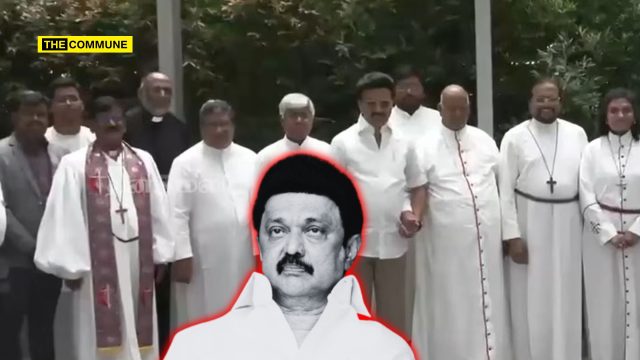
Lakhshya_Speaks: Meet Lakhshya Lakey Who Targets Brahmins And Other General Castes Under The Garb Of “Anti-Caste” Activism

He presents himself as an “anti-caste educator,” a TEDx speaker, and an IIM Indore graduate with a ‘mission to reform society’.

But behind the polished reels and podcast appearances, Lakhshya Lakey (aka @lakhshya_speaks) stands accused of running one of the most toxic, caste-obsessed campaigns against upper-caste women on Indian social media.

And now, the mask is slipping.

Instagram influencer Tulip Sharma has filed a formal cyber complaint against Lakey, exposing a pattern of harassment, casteist slurs, and deeply troubling personal attacks – all while he claims the mantle of social reformer.

The Catalyst: A Bharatnatyam Video Triggers Casteist Tirade

It began with a video posted by Lakey himself.

The self-styled “anti-caste educator” shared content suggesting that Bharatnatyam, a classical dance form with millennia of tradition, is “casteist.” The post immediately drew criticism from those who saw it as yet another instance of reducing India’s cultural heritage to narrow identity politics.

Tulip Sharma, like many others, commented on his post, offering a legitimate counter-perspective on Bharatnatyam and the Devadasi system.

But Lakey, true to form, had no interest in debate.

Instead of engaging with her points publicly, he slipped into her DMs and what followed was a textbook example of online harassment.

The conversation, now part of the cyber complaint, reveals a man who cannot tolerate even mild disagreement:

Screenshots of the alleged exchange have been widely circulated on social media and form part of the formal cyber complaint filed by Sharma. Lakhshya has, however, reportedly denied the authenticity of some of the screenshots, claiming he is being targeted and that the material has been misrepresented.

When Sharma questioned his contradictory statements where he claims to fight casteism while incessantly reducing every interaction to caste, she didn’t get reasoned discussion.

She got abuse.

Screenshots show Lakey immediately turning personal — and casteist. He began boasting about his “Brahmin girlfriends,” using them as trophies to demean a woman who dared question him, and how they were “prettier than Tulip.”

“My Brahmin gf sucks me off, problem?” – one of his messages allegedly read.

When called out, he doubled down: “4 Brahmin exes, all prettier than you.”

The pattern is the same: a self-proclaimed “anti-caste” activist reducing women to their caste identity and then using that identity as a weapon against them. All because she commented on his post.

Past posts attributed to Lakshya include controversial remarks linking vegetarianism to caste hierarchy, commentary on Brahmins in historical contexts, statements encouraging certain caste groups to reconsider their Hindu identity, and commentary on cases such as that of Umar Khalid.


Credits: OpIndia
Credits: OpIndia

This is the screen recording of his chat with Tulip Sharma.

And guess what, in another post he had claimed he was not brave enough to date outside the SC/ST community!

“I Will Annihilate Caste By Making Intercaste Babies”

Perhaps the most revealing and disturbing aspect of Lakey’s online conduct is his stated mission.

In exchanges with multiple women who questioned him, Lakey reportedly boasted: “I’m annihilating caste by making intercaste babies.”

The statement reveals a mindset that critics call profoundly regressive dressed in progressive clothing. Women, in this worldview, are not individuals with thoughts and agency. They are vessels for a political project; their wombs recruited to “annihilate caste” through reproduction.


View this post on Instagram


A post shared by Adv. Tulip Sharma (@_tulipsharma)

The Threat: “I’ll File An SC/ST Case On You”

Perhaps the most legally troubling aspect of Lakey’s conduct is his alleged threat to weaponize SC/ST Atrocities Act against those who question him.

When advocate Ashutosh Dubey pressed Lakey for evidence backing his claims, Lakey reportedly refused to provide any proof. Instead, he threatened to file an SC/ST case against his critics.

The implication is clear: disagree with me, and I’ll accuse you of casteism, consequences to your life and liberty be damned.

This is the ultimate perversion of laws meant to protect genuine victims of caste atrocities. When a man with 555,000 followers can threaten his critics with legal harassment, the law becomes not a shield for the vulnerable, but a sword for the powerful.

And Lakey knows exactly what he’s doing.

In exchanges referenced in OpIndia report, when asked to substantiate certain claims, Lakshya allegedly refused to provide documentary proof and instead warned critics of potential action under the SC/ST (Prevention of Atrocities) Act. The allegation has raised concerns among legal observers about the possible weaponisation of protective legislation.

The Dravidianist Connection 

Lakey frequently invokes Dravidianist anti-Hindu icon EV Ramasamy Naicker (hailed as ‘Periyar’ by his followers), and Ambedkar, as his ideological forebears. He presents himself as carrying forward their legacy.

The Dravidian movement had a deeply problematic relationship with women of upper castes. The Self-Respect Movement explicitly encouraged inter-caste marriages, but often with an undertone of “purifying” Brahmin women by marrying them into non-Brahmin families – to ‘annihilate caste’. Women were reduced to instruments of social reform – their bodies, their choices, their autonomy all secondary to the larger political project.

Sound familiar?

Lakey has perfected this exact framework for the Instagram age:

  • Borrow from Dravidianists the rhetoric of anti-caste struggle
  • Borrow from Dravidianists the fixation on Brahmin women as political projects

Add a modern twist – flex it in DMs when challenged by women.

The result? A man who is more Dravidianist than the Dravidianists.

Trivializing Kashmiri Pandit Genocide

The complaint also highlights Lakey’s disturbing pattern of trivializing the suffering of Kashmiri Pandits, a community ethnically cleansed from the Kashmir Valley in the 1990s.

In public exchanges captured in screenshots, when a user commented on his conduct, Lakey reportedly replied: “Kashmir Brahmano ka yehi halat tha” (This was the fate of Kashmiri Brahmins too).

The implication? That the genocide of an entire community is somehow analogous to, or even a justification for, online spats.

In another exchange, when warned that his conduct might backfire, he allegedly dismissed it with:

“Mujhe kuch nahi hoga, unlike your Kashmiri Pandit brethren” (Nothing will happen to me, unlike your Kashmiri Pandit brethren).

For a community still seeking justice and return to their homeland, such casual dismissal of their suffering has shocked even some of his former supporters.

The Real Casteist Agenda

Lakshya’s rants fracture society under Ambedkar’s name, sexualizing intercaste relations while targeting Brahmins online. True unity comes from dialogue, not DM threats and baby-making boasts.

Lakshya has however framed the backlash as an attempt to silence “anti-caste” voices comparing himself to the deceased Rohith Vemula whom the leftists portray as a Dalit but Telangana Police has confirmed that he was not. He maintains that he is being selectively targeted because of his ideological stance and has suggested that portions of the circulated chats are either doctored or taken out of context.

Subscribe to our channels on TelegramWhatsApp, and Instagram and get the best stories of the day delivered to you personally.