Home Blog Page 46

Missing 10-Year-Old Girl Lured With Chocolates, Murdered Near Coimbatore; Two Arrested

murder child coimbatore

A 10-year-old girl, who was reported missing on Thursday (21 May 2026) evening, was found dead in Kannampalayam tank close to her locality on the outskirts of Coimbatore city on Friday (22 May 2026). The police were on the lookout for two persons suspected of having been involved in the abduction and murder. They are also probing whether she was subjected to sexual assault.

The girl, a Class V student at a government school, went missing on Thursday evening while playing near her residence. Though relatives and neighbours searched for the girl, they could not trace her, following which they lodged a complaint at the Sulur police station, as reported in The Hindu.

The girl was found dead in the tank on Friday. The body has been shifted to a government hospital for post-mortem examination.

Coimbatore District Superintendent of Police Allatipalli Pavan Kumar Reddy visited the crime scene and formed special teams to trace the perpetrators.

Meanwhile, residents from the girl’s neighbourhood staged a road blockade on Trichy Road, in front of the Sulur police station, around 9 p.m. on Friday, demanding the arrest of the assailants. Traffic on the arterial road came to a halt for more than an hour due to the protest, following which the police diverted vehicles through an alternative route.

The police arrested two persons early on Saturday (23 May 2026) in connection with the abduction and murder of the girl.

Karthik (33) of Nagapattinam, who has been residing at Pallapalayam near Coimbatore, and his friend Mohanraj, were arrested for alleged involvement in the crime, Inspector General of Police (West Zone) R.V. Ramya Bharathi confirmed to The Hindu.

Further investigation in the case is on, said a communiqué issued by the Coimbatore District Police early on Saturday (23 May 2026).

Police sources said that the suspects were known to the girl’s family and they abducted the girl from her neighbourhood on the pretext of buying her chocolates on Thursday evening. The police identified the suspects based on visuals from surveillance cameras, as reported in The Hindu.

Meanwhile, the road blockade staged by residents from the girl’s neighbourhood on Trichy Road in front of Sulur police station from 9 p.m. on Friday went on till 5 a.m., Saturday. The police diverted the traffic along the arterial road through alternative routes.

IG Ramya Bharathi, Deputy Inspector General of Police (Coimbatore Range) P. Saminathan and Coimbatore District (Rural) Superintendent of Police Allatipalli Pavan Kumar Reddy camped at Sulur till Saturday morning and supervised the investigation by special teams under Deputy Superintendent of Police Karikal Pari Shankar. They also held talks with the protestors. Around 300 police personnel were deployed in the area.

Subscribe to our channels on WhatsAppTelegram, Instagram and YouTube to get the best stories of the day delivered to you personally.

School Student Reportedly Made To Sing In Praise Of Tamil Nadu Govt At TVK Minister Rajmohan’s Office

School Student Reportedly Made To Sing In Praise Of Tamil Nadu Govt At TVK Minister Rajmohan’s Office

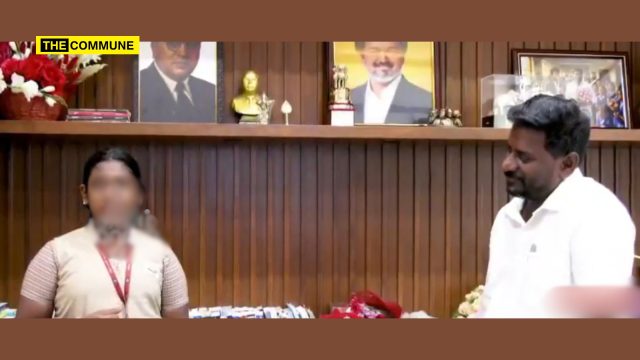
TVK School Education Minister Rajmohan has come under criticism on social media after a government school student was invited to his office in Chennai and made to sing a song praising the Tamil Nadu government and the minister.

The incident took place at the minister’s office, where a student from a school in Arumbakkam performed a song expressing gratitude to the Tamil Nadu government for opportunities provided to government school students.

During the interaction, the student sang:

“I am a model school student, aren’t I?
I will thank the Tamil Nadu government for giving me this opportunity.
I felt proud studying in a government school.
We will achieve victory in everything, victory everywhere.
Thank you.”

After the performance, Minister Rajmohan congratulated the student and praised her talents.

Responding to the student, the minister said, “Super. All the very best. May you continue to develop your unique talents further and excel in education as well. Brother’s wishes to you. All the best.”

Videos of the interaction later went viral on social media, triggering criticism from activists and social commentators, who accused the minister and the TVK government of encouraging personality glorification through school students.

Critics argued that elected representatives should focus on governance and improving the education system rather than promoting praise songs involving students inside ministerial offices.

Subscribe to our channels on WhatsAppTelegram, Instagram and YouTube to get the best stories of the day delivered to you personally.
Islamic Prayers Echo Inside Tamil Nadu Secretariat As IUML Minister Assumes Office; Would Hindu Rituals Have Been Treated The Same?

Islamic Prayers Echo Inside Tamil Nadu Secretariat As IUML Minister Assumes Office; Would Hindu Rituals Have Been Treated The Same?

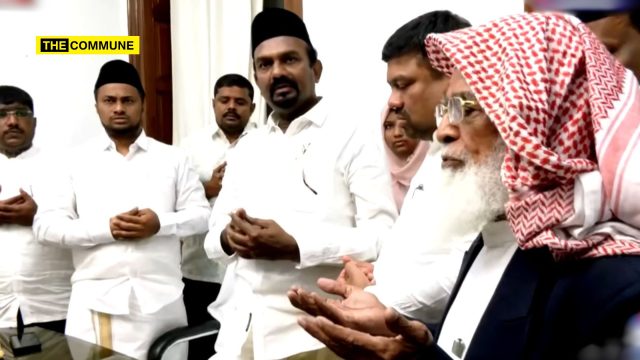
When IUML Minister A.M. Shahjahan took office at the Tamil Nadu Secretariat on 22 May 2026, Islamic prayers were recited loudly and clearly inside the building before he assumed his ministerial chair. Video evidence shows prayers being offered in an official government space.

Now imagine the exact inverse: a Hindu priest chanting shlokas inside the Secretariat before a Hindu minister took office. The reaction would have been instantaneous and volcanic. Every major news channel would have run primetime debates on “saffronisation of government.” Social media would have erupted with warnings about India sliding toward theocracy. Op-eds would have condemned it as a brazen violation of constitutional secularism. Civil society would have demanded immediate resignations.

That is the uncomfortable truth Tamil Nadu’s political class refuses to acknowledge: the standard for religious expression in state institutions changes depending on whose religion is being expressed. When it involves Hindu symbolism, the red lines are clear, bright, and ruthlessly enforced. When it involves minority faiths, those same lines blur, bend, or disappear entirely behind a fog of selective silence and strategic indifference.

The Secretariat is not a mosque, temple, or church. It is the administrative headquarters of a constitutional government that claims to be secular. Secular does not mean hostile to religion. It means the state itself remains equidistant from all faiths, neither favouring nor disfavouring any.

The TVK government that claims to be secular has now presided over two instances of religious ritual inside state institutions: first, JCD Prabhakar reciting Bible verses, and now Islamic prayers offered for IUML Minister Shahjahan at the Secretariat. Curiously, no Hindu minister or MLA has performed a similar puja or recited shlokas. The pattern seems ideological.

TVK’s own MLA Aadhav Arjuna explicitly stated the party’s goal is same as the DMK – to “eradicate Sanatana Dharma.” A TVK MLA Mustafa from Madurai Central echoed this position. So the game is transparent: secularism means accommodating every faith except Hinduism. Bible verses? Acceptable. Islamic prayers? Welcome. Hindu rituals? Eradication-worthy.

Remember, when Udhayanidhi Stalin repeated the call to eradicate Sanatana Dharma in the floor of the assembly, Chief Minister, ‘secular-in-chief’ looked on and smiled. He has not said anything so far against Aadhav Arjuna or his MLA Mustafa regarding the hate speech against Hindus, yet.

This is selective erasure marketed as progressivism. The Secretariat has become a stage for demonstrating which religions deserve public dignity and which must be confined to private invisibility. The rationalist legacy Tamil Nadu claims to uphold never meant privileging some faiths over others – it meant keeping all faiths out of state machinery.

Subscribe to our channels on WhatsAppTelegram, Instagram and YouTube to get the best stories of the day delivered to you personally.
TVK Minister Aadhav Arjuna Earlier Attacked Governor Over Singing Vande Mataram First, Vowed ‘It Won’t Be Followed In Future’, Now Says Governor Was Following Rules

Aadhav Arjuna: The Blabber Master Of TVK

A controversy over the order in which “Vande Mataram,” the National Anthem and the Tamil Thai Vaazhthu were played at Tamil Nadu government functions has now turned into an embarrassment for TVK minister Aadhav Arjuna, after his criticism of the Governor’s office appeared to ignore an already existing Union government circular mandating the protocol for events conducted under the Governor’s authority.

The issue first erupted on 10 May 2026, during the swearing-in ceremony of Chief Minister C Joseph Vijay and his cabinet, held under the leadership of Tamil Nadu Governor Rajendra Arlekar. During the event, “Vande Mataram” was played first, followed by the National Anthem and then the Tamil Thai Vaazhthu.

The sequence triggered sharp objections from sections of the opposition and the TVK’s Aadhav Arjuna publicly attacked the move on social media and portraying it as an insult to Tamil identity and state autonomy.

In a lengthy statement posted on X, Aadhav Arjuna wrote, “The Tamil Thai Vaazhthu song beginning with “Neerarum Kadaludutha…” carries more than a century of historical pride. As a continuation of the ideal that this song should “spread across the world,” the Tamil Nadu government officially declared it as the State Song. Such a prestigious Tamil Thai Vaazhthu is the song that is traditionally played first at government functions and other public events held in Tamil Nadu. At the conclusion of the event, the National Anthem is played. That has been the customary practice and the appropriate practice. The new government formed in Tamil Nadu under the leadership of the Tamilaga Vettri Kazhagam has no difference of opinion with this established practice. However, in today’s swearing-in ceremony of the Chief Minister and ministers held under the leadership of Tamil Nadu Governor Shri Rajendra Vishwanath Arlekar, first “Vande Mataram” was played, followed by the National Anthem, and only then the Tamil Thai Vaazhthu. This new practice is not appropriate for Tamil Nadu. In Tamil Nadu, the government formed under the leadership of the Tamilaga Vettri Kazhagam does not agree with Tamil Thai Vaazhthu being played as the third song. When we strongly conveyed our objections to the Governor’s office regarding this, we were informed that the Governor was obliged to act according to a new circular issued by the Union Government. Consequently, under unavoidable circumstances, Tamil Thai Vaazhthu was played as the third song. However, this new practice will not be followed in the future. Instead, as per the earlier practice, Tamil Thai Vaazhthu will be played at the beginning of functions, and the National Anthem will be played at the end. Not only in Tamil Nadu, but in every state across India, the respective state language invocation song must be played at the beginning of events. The Union Government should take appropriate steps in this regard. That is the collective feeling and united view of the people of Tamil Nadu. That is also our firm stand.

Truth alone shall triumph!
Long live Tamil!”

After declaring that the practice would not be continued, the same sequence of songs was repeated again during swearing-in functions on May 21 and May 22, following which Aadhav Arjuna issued what many viewed as a damage-control clarification while speaking to the media.

In his clarification, he admitted that the Governor had repeatedly informed the state government that he was merely following the Union Home Ministry circular.

Speaking to reporters, Aadhav Arjuna said, “The leader Kanimozhi madam posted a tweet yesterday. We have always maintained respect for her. She had spoken about the Tamil Thaai Vaazhthu. We had already given an explanation regarding this earlier.”

He further stated, “In that latest circular, it has been said that all over India ‘Vande Mataram’ should be sung first, and that circular has come to the Governor.”

Aadhav Arjuna also revealed that Chief Minister Joseph Vijay had personally urged the Governor during the swearing-in ceremony to place Tamil Thai Vaazhthu first because “Tamil always gets priority” for TVK.

According to him, the Governor refused to deviate from the Home Ministry protocol and insisted that events conducted under Raj Bhavan authority would continue to follow the circular.

Aadhav Arjuna further acknowledged that the same practice had earlier been followed during judicial swearing-in ceremonies even under the previous DMK government led by MK Stalin.

He stated, “Even earlier, when Thiru M. K. Stalin, the DMK leader, was the then Chief Minister and was holding office, during the swearing-in of judges at the Madras High Court, this same practice was followed by the Governor.”

Despite admitting the existence of the circular and its earlier implementation, Aadhav Arjuna continued to frame the issue as one concerning “state autonomy” and said TVK was consulting legal experts on whether the circular could be challenged in court.

He further declared, “At no time, under any circumstances, will we give up Tamil or the Tamil Thaai Vaazhthu. That is our lifeline.”

The episode exposed Aadhav Arjuna’s lack of awareness about established Raj Bhavan protocol and accused him of turning an already existing administrative procedure into a manufactured political controversy before later backtracking through a clarification.

Subscribe to our channels on WhatsAppTelegram, Instagram and YouTube to get the best stories of the day delivered to you personally.
Karnataka Congress Govt Withdraws Riot Cases Linked To 2022 Ladle Mashak Dargah Violence Involving Attempt To Murder Charges

Karnataka Congress Govt Withdraws Riot Cases Linked To 2022 Ladle Mashak Dargah Violence Involving Attempt To Murder Charges

The Karnataka Cabinet’s decision to withdraw criminal cases linked to the 2022 communal violence near the Ladle Mashak Dargah has triggered a major political controversy, with the opposition BJP accusing the Siddaramaiah-led Congress government of minority appeasement and attempting to quietly bury serious riot cases under the cover of protest-related case withdrawals, as reported in The Free Press Journal.

The controversy erupted after the Karnataka government approved the withdrawal of 52 criminal cases registered across the state in connection with protests, agitations and law-and-order incidents involving pro-Kannada organisations, farmers, Dalit activists and others. Among these were six to seven FIRs related to the communal clashes that took place in Aland town of Kalaburagi district in March 2022.

According to reports and cabinet records accessed by CNN-News18, the withdrawn dargah-related cases involved serious charges including rioting, attempt to murder, assault on police personnel and destruction of government property. More than 100 accused persons, including several individuals allegedly identified through video footage, are expected to benefit from the withdrawal.

The violence had erupted near the centuries-old dargah of Sufi saint Hazarat Shaikh Allauddin Ansari, which has long been at the centre of a religious dispute. A cylindrical-shaped stone within the dargah premises is referred to by some Hindu groups as the “Raghava Chaitanya Shivalinga.”

Tensions escalated in March 2022 after members of Sri Rama Sene announced plans to conduct a “purification puja” at the site on the eve of Maha Shivaratri. On the same day, members of the Muslim community planned a Shab-e-Barat procession in honour of the Sufi saint.

Police imposed prohibitory orders in the area and restricted Sri Rama Sene chief Pramod Muthalik from entering Aland. However, a procession led by then Kalaburagi MP Bhagwanth Khuba moved toward the dargah, after which large-scale violence broke out.

According to police records cited in media reports, a large mob allegedly armed with rods, swords, stones and other weapons gathered near the dargah premises and attacked police personnel deployed on bandobast duty. Cabinet documents reportedly stated that rioters targeted police officers with “murderous intent” while shouting religious slogans.

A Deputy Superintendent of Police and several constables were injured in the stone-pelting and clashes. One accused, identified as Akib Ansari in the records cited by CNN-News18, was allegedly accused of threatening police personnel during the violence.

Police had arrested around 165 persons, including 10 women, and registered multiple FIRs in connection with the incident.

Speaking after the Cabinet meeting, Karnataka Home Minister G. Parameshwara defended the decision and stated that the withdrawals were made following recommendations by a Cabinet sub-committee after examining the legal aspects of the cases.

He stated that the government had considered the pros and cons, obtained legal opinion and secured Cabinet approval before proceeding with the withdrawal. However, he declined to discuss specific details regarding the dargah-related cases.

The BJP strongly criticised the move, alleging that the Congress government had deliberately clubbed serious communal violence cases with protest-related cases to avoid public scrutiny.

BJP leaders accused the Siddaramaiah government of engaging in appeasement politics and argued that withdrawing cases involving serious charges against police attackers would send a dangerous message and weaken law enforcement.

The issue is also expected to trigger legal challenges, with reports suggesting that petitions could be moved before the Karnataka High Court questioning the legality of withdrawing cases involving grave offences while trials are still pending.

Subscribe to our channels on WhatsAppTelegram, Instagram and YouTube to get the best stories of the day delivered to you personally.
Former DMK Minister Sekar Babu Booked After Assault Complaint By TVK Candidate Sinora Ashok

TVK candidate Sinora ashok alleges threat, names DMK's Sekar Babu In Complaint

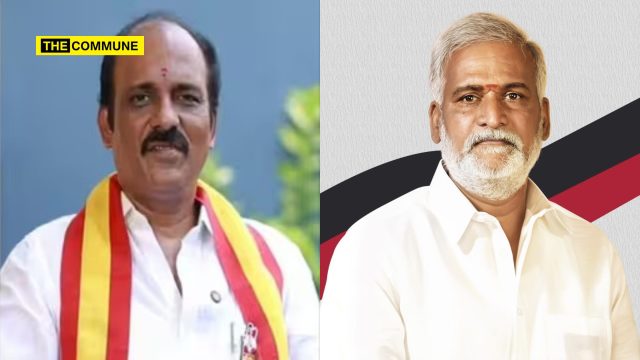
Former Tamil Nadu minister PK Sekar Babu has been booked under four sections by the Chennai City Police in connection with an alleged assault incident that took place on polling day during the Tamil Nadu Assembly elections, as reported in Dinamani.

According to police sources, a clash broke out on April 23 between supporters of Sekar Babu, who contested from the Harbour constituency, and supporters of TVK candidate Sinora Ashok.

Following the incident, Sinora Ashok and advocate Vijayakumar lodged a complaint at the North Beach Police Station in Chennai alleging that they were assaulted by Sekar Babu during the altercation.

Based on the complaint, police have now registered a case against the former minister under four sections.

Sekar Babu had won the Harbour Assembly constituency by defeating Sinora Ashok with a margin of 11,750 votes.

Subscribe to our channels on WhatsAppTelegram, Instagram and YouTube to get the best stories of the day delivered to you personally.
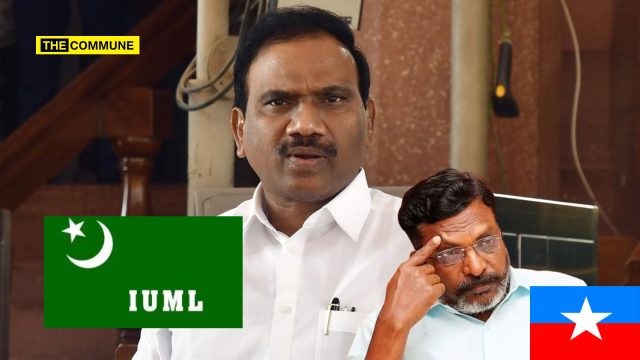
VCK Chief Thirumavalavan Called TVK An RSS Creation; Now Shares Power With Vijay

Odd Day - Vijay RSS Product, Even Day - He Is RSS Victim; Calling Out Thiruma And Dravidianists Double Talk

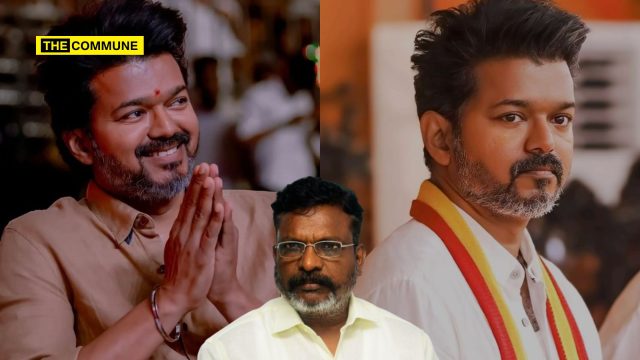
A few months ago, VCK chief Thirumavalavan thundered that Vijay was an RSS creation. The DMK ally in a speech said, “It has now been exposed that younger brother Seeman and younger brother Vijay are, today, children brought forth by the RSS. It has been exposed that they are children of the BJP.”

Today, VCK leader Vanni Arasu formally joined the TVK cabinet. He was sworn in as Minister for Social Justice in Vijay’s cabinet – the contrast between rhetoric and reality could not be starker.

At the height of the campaign and the hung‑assembly negotiations, Thirumavalavan publicly said he had “no disagreement” with the criticism that TVK is a product of the RSS, even as he simultaneously justified offering outside support in the name of stopping the BJP or to not let President rule take over in TN. Once VCK has a full cabinet berth in a TVK‑led government, this is no longer outside support or “issue‑based cooperation”; it is formal coalition participation, with ministerial responsibility and collective cabinet accountability.

The symbolism around Vanni Arasu’s portfolio makes the U‑turn even sharper. As Minister for Social Justice, he now oversees Adi Dravidar Welfare and Hill Tribes Welfare under a Chief Minister and a party his own leader characterised as ideologically tainted by the RSS. If TVK is indeed “RSS’s product,” as Thirumavalavan claimed, VCK is no longer a mere critic shouting from the sidelines; it is the foster child’s guardian of social justice, sitting at the same table and sharing power.

You cannot repeatedly endorse the line that TVK is an RSS product, reap the moral capital of that stance on stage and on social media, and then walk into the same cabinet without a serious public retraction or explanation.

If hypocrisy had a face, it could well be that of Thirumavalavan. And this latest development makes one ask a question – if TVK is truly RSS’s product, what does that make the party that just joined its government?

Subscribe to our channels on WhatsAppTelegram, Instagram and YouTube to get the best stories of the day delivered to you personally.
Mockery, Mobilisation And Misinformation: “Cockroach Janta Party” Is India’s Wake-Up Call On Digital Warfare

Mockery, Mobilisation And Misinformation: “Cockroach Janta Party” Is India’s Wake-Up Call On Digital Warfare

The viral rise of the “Cockroach Janta Party” is not merely a social media episode. It is a warning signal on digital influence operations, political mobilisation, foreign amplification and the targeted weakening of constitutional institutions.

India is today facing a new kind of national security challenge. It does not always come through borders, weapons, armed formations or conventional espionage. It increasingly enters through mobile screens, anonymous handles, meme pages, satire accounts, influencer networks and politically charged digital campaigns. These ecosystems do not merely spread opinion. In carefully designed circumstances, they can manufacture anger, weaken public trust, distort institutional legitimacy and create the impression of mass public revolt.

The Rise Of The “Cockroach Janta Party”

The recent rise of the so-called “Cockroach Janta Party,” founded by Abhijeet Dipke, must not be dismissed as a routine act of online mockery or political humour. It deserves to be examined as a serious case study in digital age political mobilisation, where satire, outrage, institutional criticism and algorithm-driven amplification can rapidly merge into a larger public-influence operation.

What makes the development more significant is the extraordinary speed at which the parody political movement gained visibility. Within days of its emergence, it reportedly crossed nearly 15 million Instagram followers, an unusual scale of growth even for established political organisations and public movements. Such rapid digital expansion raises legitimate questions about the nature of its amplification, the networks supporting its spread, and the forces shaping its political messaging.

No democracy should fear criticism. Citizens have the right to question governments, institutions and public authorities. But the line between democratic criticism and hostile information operation must be clearly understood. When a newly emerged digital handle grows at abnormal speed, targets a constitutional authority, converts a judicial clarification into a mass mobilisation weapon, and is surrounded by claims of foreign traction and political linkages, it becomes a matter for serious state level scrutiny.

Supreme Court Row And Attack On Institutional Legitimacy

The first and most serious issue is the attempt to weaken institutional legitimacy. The controversy began when remarks attributed to Hon’ble CJI Justice Surya Kant were widely circulated online without proper context. The CJI later clarified that his comments were misquoted and were aimed only at individuals using fake or bogus degrees, not at India’s youth. He also stated that India’s youth are the pillars of a developed India.

Despite this clarification, the distorted narrative continued, turning a judicial observation into a campaign against the Supreme Court and the Chief Justice. This makes the issue larger than criticism, it becomes an attempt to erode public faith in a key pillar of the Constitution.

The Supreme Court is not merely another public office. It is one of the central pillars of the Indian constitutional system. To criticise a judgment is democratic. To question judicial reasoning is legitimate. But to create a personalised, contemptuous, viral campaign against the office of the Chief Justice can have consequences far beyond humour or satire.

AAP Links And Questions Over Political Backing

The second issue is the reported political connection. Abhijeet Dipke, identified as the founder of the Cockroach Janta Party, had earlier association with the Aam Aadmi Party ecosystem and that old posts connected to AAP leader Manish Sisodia surfaced online.

India must ask: is this purely satire, or political communication disguised as satire? Is it organic youth anger, or structured mobilisation? Is it a public response to judicial language, or an attempt to weaponise institutional mistrust for political gain? These questions are not accusations. They are necessary questions in a democracy that takes information security seriously.

Foreign Amplification Concerns

The third major concern is the claim of foreign amplification. Social media posts have alleged that the handle’s audience is largely non-Indian, with Pakistan at 49%, the United States at 14%, Bangladesh at 14%, and India at only 9%. These figures are not independently verified yet. However, if even partly accurate, they raise serious questions about foreign influence in Indian political discourse and require immediate technical investigation by platforms and agencies.

The Government of India and appropriate investigative agencies must seek detailed information from digital platforms, including administrator locations, login history, audience geography, ad spend records, sudden follower spikes, bot like patterns, coordinated sharing networks, paid influencer activity and possible cross platform amplification. Without such technical verification, the truth will remain hidden between two extremes: those who call everything propaganda and those who call every investigation censorship.

Why India Cannot Ignore Digital Influence Operation

The fourth issue is the wider geopolitical pattern. Around the world, foreign information manipulation and interference are now recognised as threats to democratic institutions. International IDEA has noted that foreign information manipulation can exploit domestic vulnerabilities and polarisation, while research on information warfare has repeatedly shown that social media platforms allow influence campaigns to operate at scale and speed.

India cannot afford to be naive. Modern hostile activity does not always announce itself as foreign interference. It often uses domestic fault lines, local grievances and emotional triggers. Unemployment, youth anger, judicial language, political frustration and media distrust can all become raw material. A hostile ecosystem does not need to invent public anger. It only needs to identify it, amplify it, distort it and direct it against institutions.

The Bangladesh Warning

The fifth issue is the Bangladesh lesson. Bangladesh’s 2024 political crisis showed how digital mobilisation, public anger, disinformation, street unrest and institutional mistrust can combine into a dangerous national situation. Studies examining Bangladesh’s July 2024 uprising have highlighted the role of disinformation, social media analytics and digital battlefields in shaping protest mobilisation and political narratives. Council on Foreign Relations also noted how Bangladesh’s political and social fabric suffered severe damage during the protest crisis.

India is not Bangladesh. India’s constitutional system is deeper, its institutions are stronger, and its democratic experience is wider. But that is precisely why India must act early. Nations do not collapse suddenly. They are weakened slowly first through mistrust, then through delegitimisation, then through contempt for institutions, and finally through street level disorder justified as moral outrage. If the judiciary, Parliament, Election Commission, armed forces, investigating agencies and constitutional authorities are continuously portrayed as enemies of the people, then the ground is prepared for instability.

Free Speech Cannot Become A Shield For Destabilisation

This does not mean suppressing dissent. A mature republic must tolerate criticism. But it must not tolerate covert manipulation. Freedom of speech cannot become a shield for coordinated foreign interference. Satire cannot become a cover for institutional defamation. Political activism cannot become a route for foreign backed destabilisation. And digital platforms cannot be allowed to function as unregulated theatres of psychological operations.

Therefore, a structured investigation is necessary. It should not be driven by emotion, party loyalty or public anger. It must be procedural, evidence based and legally sound.

Call For Investigation

As a veteran and cyber security expert my recommendations are:

First, the Ministry of Home Affairs, Ministry of Electronics and Information Technology, and relevant cyber agencies should conduct a preliminary technical assessment of the account’s digital behaviour.

Second, platforms such as Meta and X must be asked to preserve and provide relevant data under due legal process.

Third, if foreign origin coordinated amplification is found, the matter should be escalated to national security agencies.

Fourth, if funding links, political direction or paid propaganda networks are discovered, they must be investigated under applicable laws.

Fifth, if contemptuous or defamatory content targeting the Supreme Court and the Chief Justice crosses legal boundaries, appropriate legal proceedings must be initiated.

Recommended Policy and Countermeasures

Create a National Digital Influence Cell: Monitor foreign amplification, bots, propaganda networks and attacks on constitutional institutions.

Demand Platform Transparency: Social media platforms must share data on admin location, audience geography, ad spends, follower spikes and coordinated activity.

Probe Toolkit and Foreign Links: Investigate political backing, proxy funding, paid promotion, foreign involvement and coordinated digital operations.

Protect Constitutional Institutions: Allow fair criticism, but act firmly against deliberate defamation of the Supreme Court, CJI, Armed Forces and Election Commission.

Build Rapid Counter Narratives: Issue quick clarifications, fact checks and public awareness campaigns before false narratives damage national trust.

The Cockroach Janta Party episode should therefore be treated as a red flag event. It may also reveal political orchestration or foreign amplification. Only investigation can establish the truth. But ignoring it would be irresponsible.

India must not wait for digital disorder to become street disorder. It must not wait for institutional mockery to become institutional collapse. It must not wait for foreign amplification to become foreign interference. The correct response is not panic. The correct response is investigation, exposure, regulation and democratic resilience.

India welcomes criticism, dissent and debate, but not hostile ecosystems hiding behind comedy or activism to weaken the Constitution. A sovereign republic must defend its pillars before they are shaken.

Lt. Col. N. Thiagarajan (Veteran) is a geopolitical analyst with a distinguished 28-year service background. 

Subscribe to our channels on WhatsAppTelegram, Instagram and YouTube to get the best stories of the day delivered to you personally.
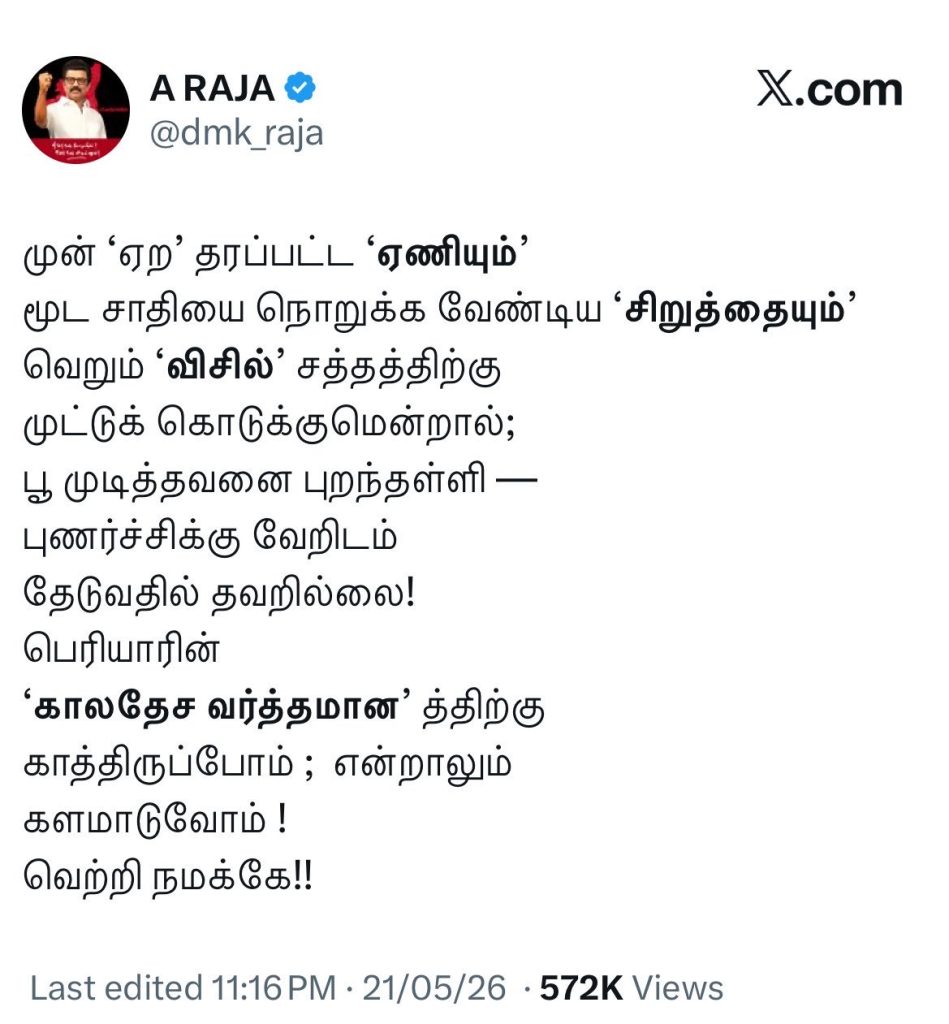
DMK MP A Raja Makes Vulgar, Misogynistic Post On X Targeting IUML & VCK Joining TVK Cabinet; Deletes Post After Backlash

DMK deputy general secretary and MP A. Raja has deleted a controversial social media post targeting the Viduthalai Chiruthaigal Katchi (VCK) and the Indian Union Muslim League (IUML) after facing widespread criticism over remarks that were seen as derogatory towards women.

The controversy erupted after VCK and IUML announced their decision to join the cabinet of the Tamil Nadu government led by Chief Minister C Joseph Vijay. Following the announcement, Raja posted strongly worded comments on social media criticising both parties for aligning with the ruling TVK government.

In one of the now-deleted posts, Raja used metaphorical language involving a “ladder” and a “leopard” while accusing the two parties of compromising their ideological positions for political power.

He wrote, “The ladder given to climb up before,
And the “panther” meant to smash blind casteism,
If they are going to prop up
A mere sound of a “whistle”;
Then, casting aside the one who wedded her,
There is nothing wrong
In searching for another place for copulation!

Though we shall wait
For Periyar’s “context of time, place, and circumstance”;
We shall enter the battlefield!
Victory is ours!”

The post quickly went viral and triggered backlash from social media users, including women, activists and political commentators, who alleged that the wording and comparisons used in the post carried insulting and demeaning connotations towards women.

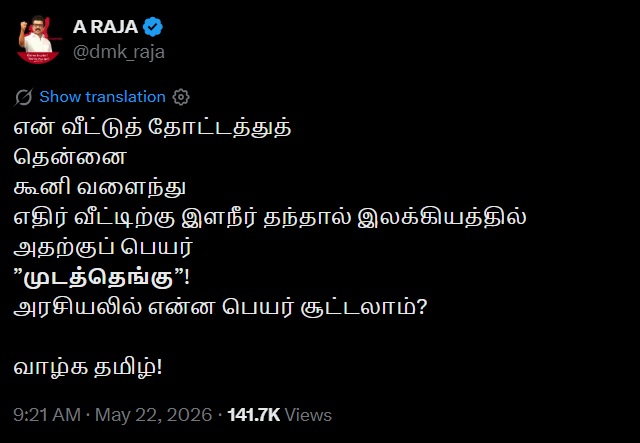
After criticism intensified online, Raja removed the post from his social media page. Raja subsequently shared another message asking what term should be used to describe the actions of the two parties, while stating that people themselves should decide.

He wrote, “If a coconut tree planted in my home garden
Bends low and hunches over
To give tender coconut water to the opposite house,
In classical literature, it is named
“Muda-Themgu” (The Crippled/Bent Coconut Tree)!
What name can we give it in politics?
Long live Tamil!”

In classical Tamil literature, Muda-Themgu (முடத்தெங்கு) refers to a coconut tree that sprouts on one person’s land but leans so far over the fence that all its shade, leaves, and fruits (tender coconuts) drop into the neighbor’s yard. The person who nurtured it gets nothing; the neighbor gets everything.

The latest post appeared to be an attempt to respond to the backlash that followed his earlier remarks.

Subscribe to our channels on WhatsAppTelegram, Instagram and YouTube to get the best stories of the day delivered to you personally.

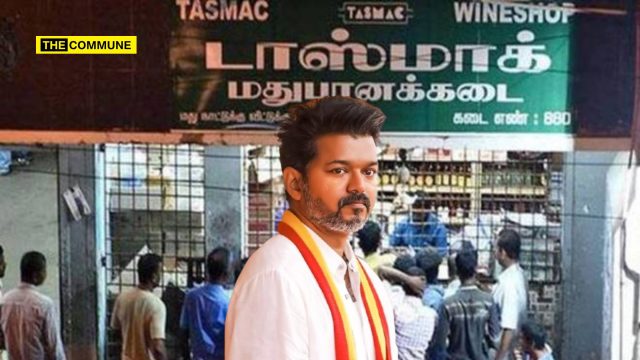
Joseph Vijay Govt’s 500-Metre Rule Creates Confusion, TASMAC Closure Plan Put On Hold

joseph Vijay Once Mocked “Bottle-Ku Pathu Rooba”; Now TASMAC Faces Fresh Extra Charge Allegations

The Tamil Nadu State Marketing Corporation (TASMAC) has temporarily paused the closure of 717 liquor outlets identified as operating within 500 metres of schools, places of worship and bus depots, following confusion over the exact distance of several shops from the restricted zones, as reported in The New Indian Express.

Soon after assuming office, the government led by Chief Minister C Joseph Vijay had ordered the immediate shutdown of TASMAC outlets functioning within the prohibited 500-metre radius. While around 150 shops were reportedly closed following the directive, the remaining closures have now been put on hold pending fresh verification.

Senior TASMAC officials told The New Indian Express that many of the outlets listed for closure had not undergone proper field-level inspection to determine whether they actually violated the prescribed distance norms. Officials stated that detailed measurements and verification exercises would now be carried out before any further action is taken.

During visits to areas including Velachery, Medavakkam, Thiruvanmiyur and Triplicane in Chennai, several TASMAC outlets were found to be functioning near temples, educational institutions and bus depots. However, authorities reportedly did not provide clarity on whether these outlets would ultimately be shut down or allowed to continue operations.

A district manager of TASMAC, speaking anonymously, stated that several liquor shops across Tamil Nadu were functioning within the restricted radius. The official further said that in some locations, local residents themselves had requested that the outlets be allowed to continue despite being within the prohibited distance.

Officials also acknowledged confusion in implementing the government order, stating that district authorities were not given sufficient time to conduct comprehensive ground inspections before preparing the closure list. As a result, district managers were said to have relied on available records and preliminary information while identifying shops for closure.

Meanwhile, concerns have emerged over the future of employees attached to the affected outlets. Trade unions warned that more than 1,000 workers could lose their jobs if the 717 outlets are permanently shut without rehabilitation or redeployment measures.

K Thiruselvan, general secretary of CITU (TASMAC), welcomed the government’s move to shut liquor outlets located near sensitive public spaces, but urged the administration to safeguard the livelihood of workers. He stated that the government had not yet provided any assurance regarding the redeployment of employees working in the affected shops and called for alternative postings in other departments.

T Dhanasekar, general secretary of the Tamil Nadu TASMAC Workers Association, also demanded job security for employees. He stated that TASMAC workers had been seeking government employee status and financial benefits for several years and expressed hope that the new government would address their long-pending demands.

Separately, in Mayiladuthurai district, TASMAC employees staged a two-hour protest by shutting 42 liquor outlets after police registered cases against staff members of three shops under the Prohibition Act for allegedly charging customers an additional ₹10 per bottle.

Subscribe to our channels on WhatsAppTelegram, Instagram and YouTube to get the best stories of the day delivered to you personally.