A 15-year-old Class 10 student was stabbed to death by a Class 9 student at Seventh-Day Adventist School in Ahmedabad on Tuesday night. The victim, who belonged to the Sindhi community, was rushed to a hospital but succumbed to his injuries.
The accused, a student from the ninth grade, belongs to the Muslim community. The incident has sparked widespread outrage among the victim’s family, members of the Sindhi community, Hindu organizations, and activists from the Akhil Bharatiya Vidyarthi Parishad (ABVP).
Alleged screenshots of the stabber’s chat going viral on social media reveal he showed no remorse for his actions.
According to reports, blood-soaked Nayan was lying in the school compound for more than 20 minutes but the school management did not even bother to call an ambulance.
Early Wednesday morning, a large crowd of community members gathered outside the school, leading to protests that escalated into vandalism on the school premises. Reports indicate that some school staff were also assaulted during the demonstrations.
Police deployed a significant force to restore order, and clashes were reported between protesters and law enforcement. The accused student has been taken into custody, and authorities are proceeding under juvenile laws.
In the wake of the tragedy, parents and Hindu organizations have filed complaints against the school’s principal and management, seeking accountability for the incident.
Police have launched a detailed investigation into the case, and further updates are awaited.
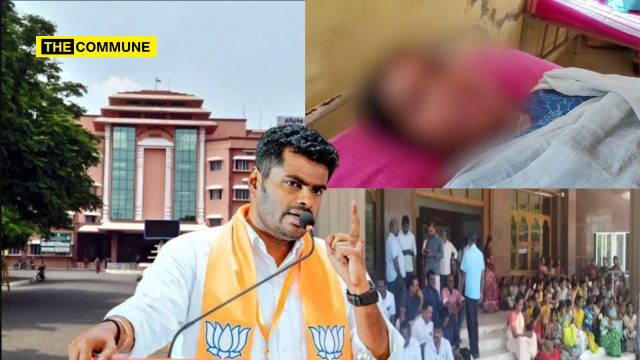
In yet another disturbing case, a woman Village Administrative Officer (VAO) was assaulted at her residence in Namakkal by members of the sand mafia. The attackers barged into her home but were restrained by neighbors after she cried out for help. She was later admitted to the hospital with injuries. Police have since confirmed the arrest of those involved.
According to reports, Sivagami had earlier received information about illegal sand smuggling in her jurisdiction and rushed to the spot to prevent the activity. Angered by her intervention, the smugglers alerted a man identified as Munjunur Srinivasan, who allegedly threatened the officer, declaring that he would continue sand mining and warning that she could be killed if she tried to stop them. Following the confrontation, Sivagami lodged a complaint with her Tahsildar.
Later that day, Srinivasan allegedly telephoned Sivagami’s husband, issuing fresh threats. He reportedly attempted to malign her character and warned that he would harm her if she did not “behave.” Hours later, he stormed into Sivagami’s residence, physically assaulted her by pulling her hair, pushing her, and kicking her in the chest. The attack left her with injuries to her hand, and she fainted due to high blood pressure before being rushed to the hospital.
Hearing the commotion, relatives and neighbors intervened, restrained Srinivasan, and handed him over to the police. The incident has sparked widespread condemnation across Tamil Nadu, highlighting once again the growing menace of the sand mafia and the vulnerability of government officers who take a stand against illegal mining.
This assault has drawn outrage across the state, as it comes amid a series of violent attacks in recent years on upright VAOs who attempted to curb illegal sand mining operations several of whom have even been brutally murdered in the line of duty.
From her hospital bed, VAO Sivagami narrated her ordeal, “My name is Sivagami. I work as a Village Administrative Officer (VAO) in Palamedu village, Thiruchengodu. Yesterday morning, while I was at work, I received information about illegal sand smuggling in my village. I went to the field and stopped them. The smugglers called Srinivasan from Munjunur and told him that the VAO has stopped them. He then threatened me, saying they would continue to smuggle sand and asked what I could do about it. He said, “I will do what I want. You can’t do anything to me. If you stop us, we will kill you by running you over with a vehicle.” We complained about this to our Tahsildar.
After I came home, Munjunur Srinivasan called my husband and said, “Your wife is not allowing me to dig out sand. I will kill her. Ask her to behave herself.” He knew he couldn’t do anything to me professionally, so he planned to devastate my personal life. He called my husband and spoke ill of me, trying to create a rift between my husband and me. He threatened my husband too. My husband informed me about this immediately and came home, fearing further consequences. As he expected, Munjunur Srinivasan came to our home and threatened us again. He held me by my hair and pushed me. He kicked me in the chest. My hand was injured. I fainted because of the high blood pressure. Then, I was admitted to the hospital. My relatives heard the commotion, caught him, and took him to the police station.”
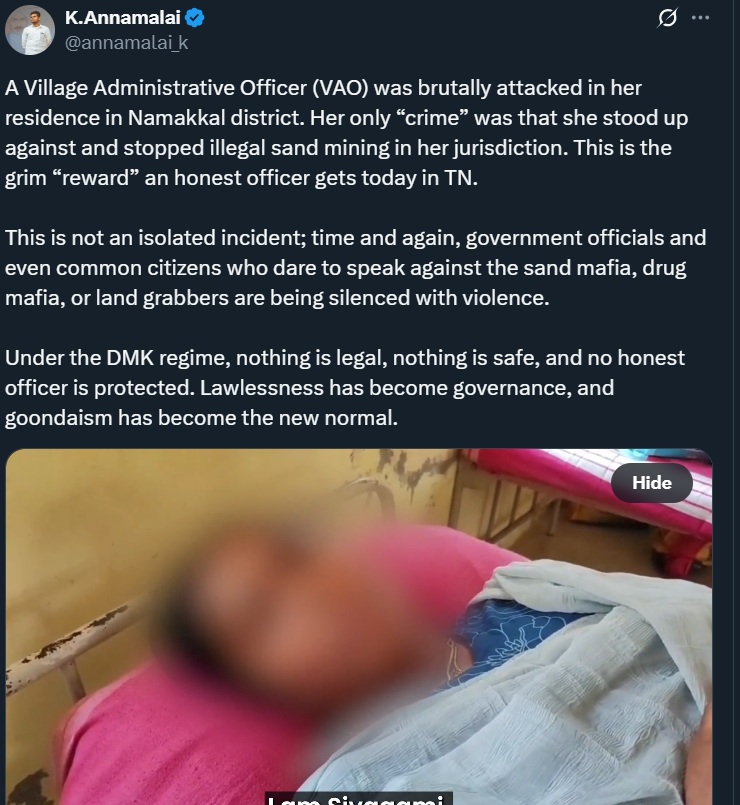
The incident has triggered a storm of criticism. Former Tamil Nadu BJP president K. Annamalai condemned the DMK government in a strongly worded statement, saying, “A Village Administrative Officer (VAO) was brutally attacked in her residence in Namakkal district. Her only “crime” was that she stood up against and stopped illegal sand mining in her jurisdiction. This is the grim “reward” an honest officer gets today in TN. This is not an isolated incident; time and again, government officials and even common citizens who dare to speak against the sand mafia, drug mafia, or land grabbers are being silenced with violence. Under the DMK regime, nothing is legal, nothing is safe, and no honest officer is protected. Lawlessness has become governance, and goondaism has become the new normal.”
Subscribe to our channels on Telegram, WhatsApp, and Instagram and get the best stories of the day delivered to you personally
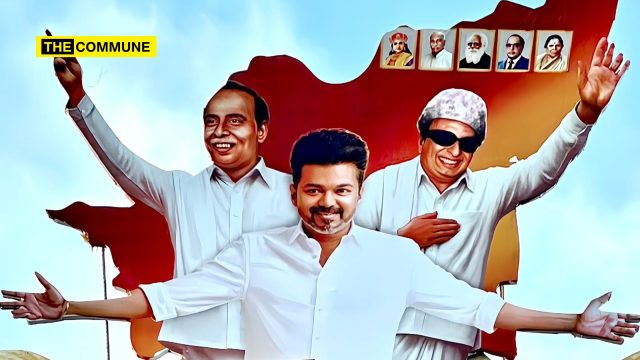
Part-time politician Vijay’s party, the Tamilaga Vettri Kazhagam (TVK), has sparked a fresh controversy by erecting banners featuring Vijay alongside images of late leaders Arignar Anna and M.G. Ramachandran at the party’s second state conference in Madurai, scheduled to take place on 21 August 2025.
The conference is being organized at a 506-acre site near the Eliyarpathi toll booth on the Madurai–Thoothukudi National Highway. Reports from Maalaimalar indicate that Vijay will hoist the party flag on a 100-foot pole during the event.
The inclusion of Vijay’s cut-out next to figures of such historic significance has sparked public debate, with questions about whether it is appropriate for an opposition leader’s image to be presented in this manner.
TVK Deputy General Secretary C.T.R. Nirmal Kumar defended the decision, calling Anna and M.G. Ramachandran “common leaders,” which he said justified featuring their images at the venue.
When asked about the absence of former DMDK leader Vijayakanth’s photograph a concern highlighted by a journalist citing Premalatha Vijayakanth, Nirmal Kumar clarified that “Vijayakanth’s photographs have not been used anywhere at the event.”
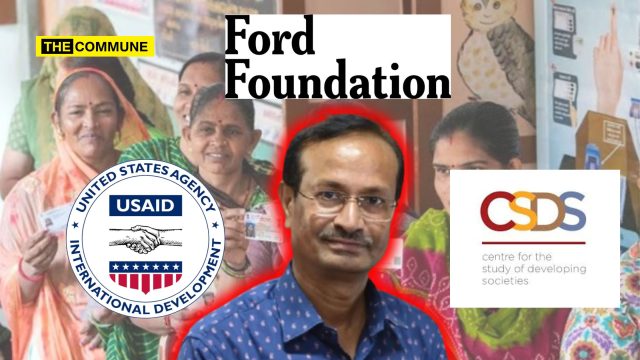
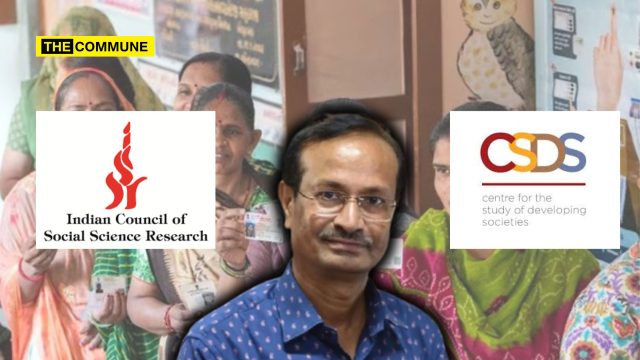
In a fiery televised exchange, prominent psephologist Sanjay Kumar, Co-Director of the Centre for the Study of Developing Societies (CSDS), admitted that his organization has accepted foreign funding from Western agencies, including the controversial Ford Foundation. The admission came under intense questioning from Republic TV’s Arnab Goswami, who was investigating how erroneous data from Kumar was used by the Congress party to allege systematic “vote theft” and discredit the Election Commission of India (ECI).
The broadcast revelation directly ties CSDS to a larger, recently exposed network of US-government-funded NGOs, specifically the Consortium for Elections and Political Process Strengthening (CEPPS), which had a $21 million program to influence “voter turnout” in India before it was abruptly cancelled and scrubbed from the internet.
“Yes, We Have Taken Foreign Funding”: The On-Air Admission
The confrontation began with Goswami challenging Kumar on his erroneous data analysis, which showed a discrepancy between votes cast and voter turnout in certain constituencies, a claim the ECI had already dismissed as “absurd” and based on a “miscalculation.” Kumar apologized, calling it a “big mistake” and not part of any conspiracy.
The interview then took a sharp turn when Goswami questioned the source of Kumar’s institutional funding.
Arnab Goswami:“Has the Ford Foundation given you money?”
Sanjay Kumar:“Long back… Yes, long back, we have.”
Arnab Goswami: “So you do receive foreign funding?”
Sanjay Kumar:“If there is a project which we are doing and if there is a funding for that project, we do get some funding for the project which we do.”
Goswami pressed further, listing other potential donors like the Hewlett Foundation, Dutch agencies, the Gates Foundation, and the International Development Research Center (IDRC) of Canada. While Kumar could not recall all, he confirmed receiving project-based grants from foreign entities.
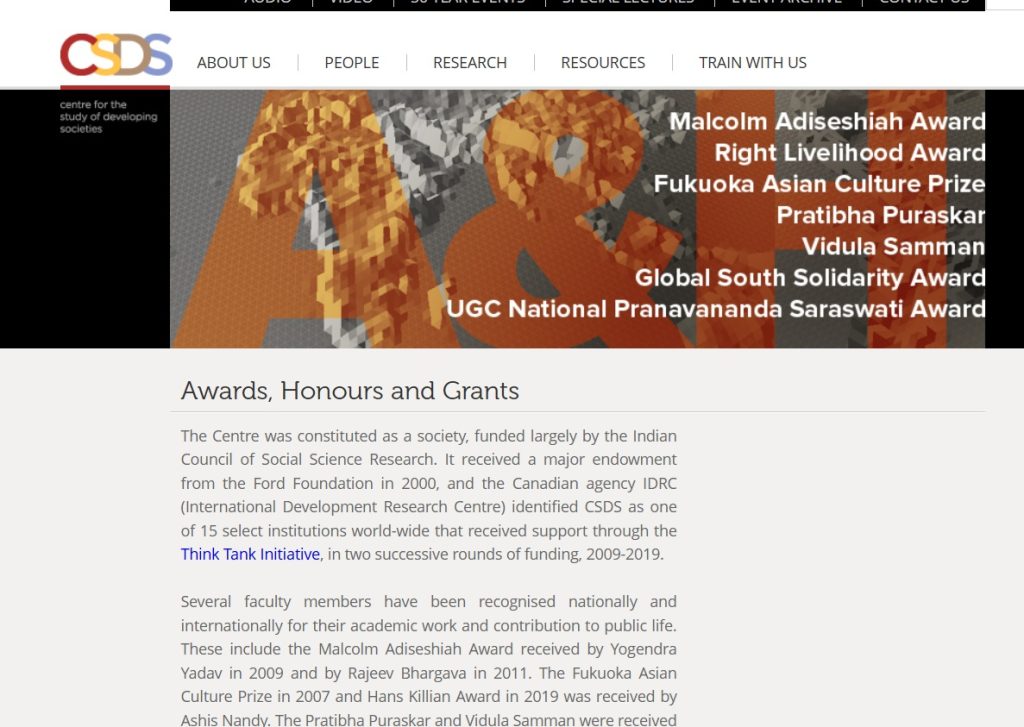
As claimed by Kumar on television, the CSDS website confirms the fact that they have received funding in the form of grants from Ford Foundation
The website reads, “The Centre was constituted as a society, funded largely by the Indian Council of Social Science Research. It received a major endowment from the Ford Foundation in 2000, and the Canadian agency IDRC (International Development Research Centre) identified CSDS as one of 15 select institutions world-wide that received support through the Think Tank Initiative, in two successive rounds of funding, 2009-2019.”
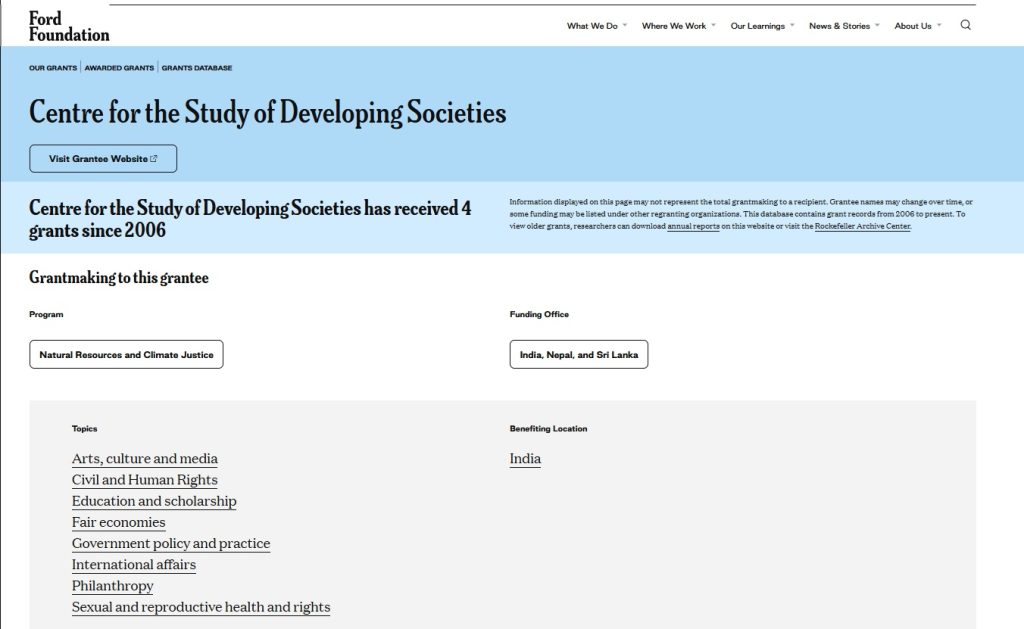
The Ford Foundation website states that Centre for the Study of Developing Societies has received 4 grants since 2006
Now let’s take a look at another funding received by CSDS that was reported earlier.
The CSDS-CEPPS-USAID Nexus: A Pattern of Foreign Influence
This on-air admission gives concrete, namesake evidence to a recent investigative report that exposed a deep-state plan to interfere in Indian elections. Our report during the USAID funding controversy details how:
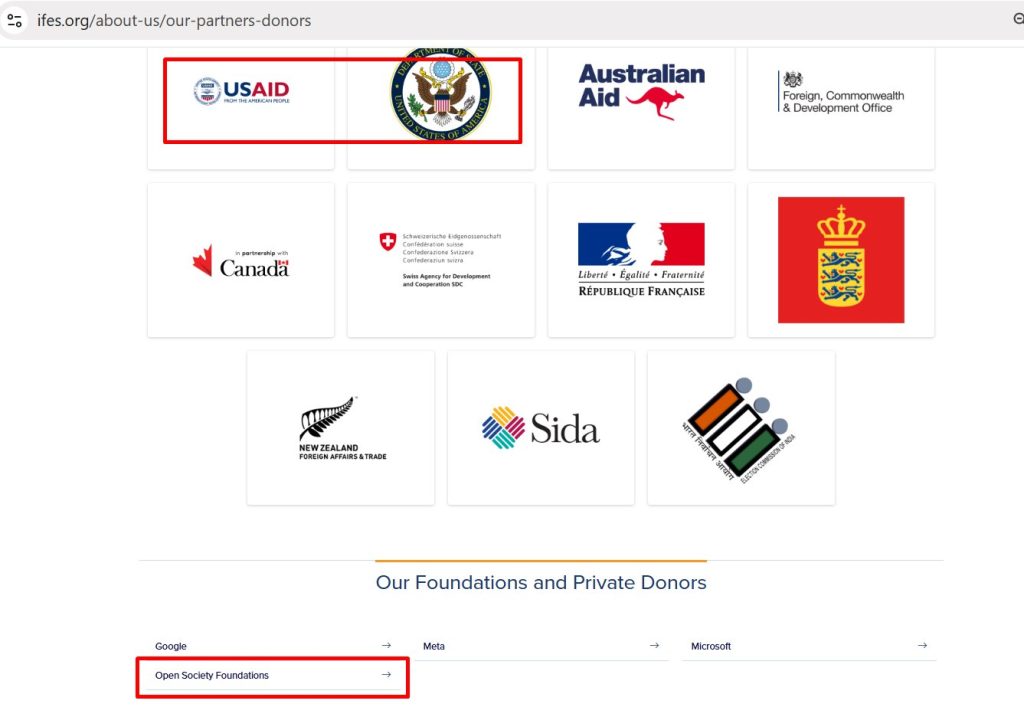
A $21 million USAID program, managed by CEPPS and funded by the U.S. Department of State, was created to influence “voter turnout” in India. The program was cancelled and its online presence scrubbed after being exposed.
USAID paid $21 million to influence Indian elections by targeting voter turnout, says Mike Benz.
The award was piped thru the NGO named "Consortium for Elections & Political Process Strengthening".
CEPPS is a consortium comprising major American political NGOs and is a long-time vehicle for channeling U.S. taxpayer money to influence elections globally. It has historically partnered with organizations in India.
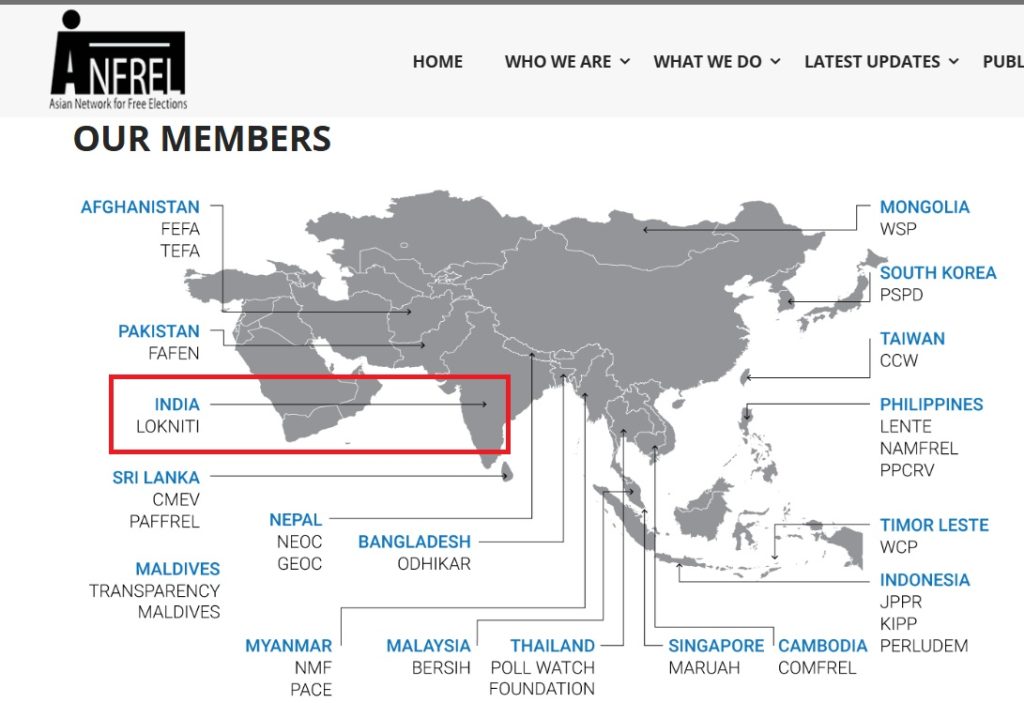
CSDS’s Lokniti programme is explicitly named as a “local partner” of CEPPS’s “Advancing Electoral Democracy in Asia” initiative. The same initiative partners with organizations like Bangladesh’s Odhikar.org, which has accused the Sheikh Hasina government of killings.
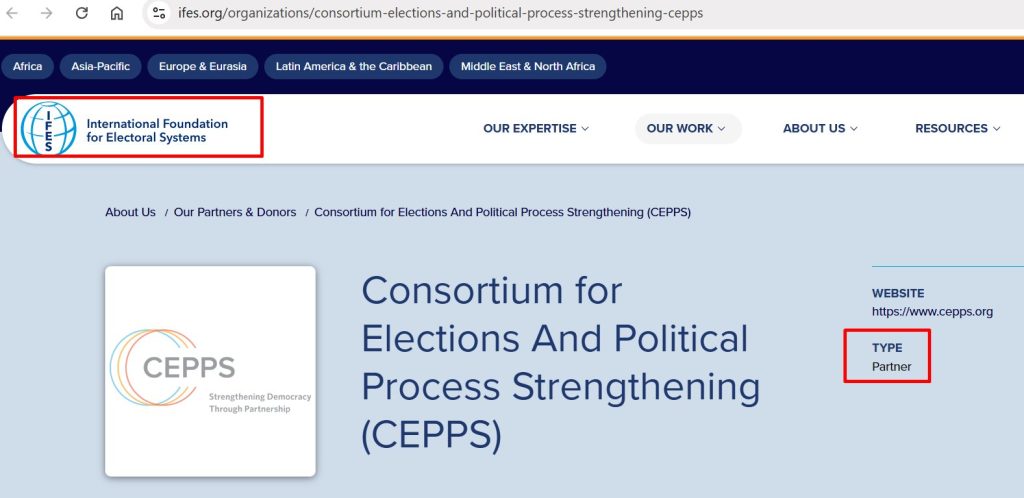
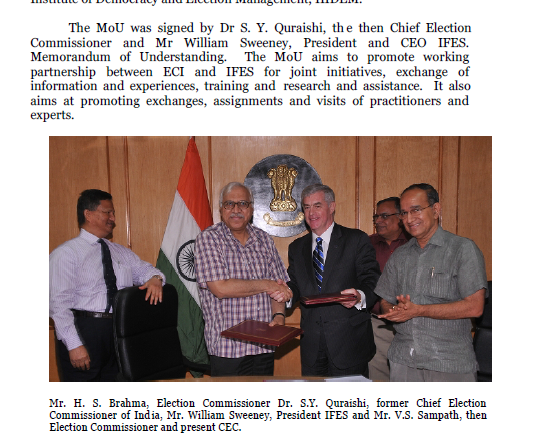
The investigation also revealed a 2012 MoU between the Election Commission of India (under then-CEC S.Y. Quraishi) and the International Foundation for Electoral Systems (IFES), a core member of CEPPS.
This MoU allowed for the exchange of data and research; a relationship critics say could provide foreign actors with a “gold mine” of sensitive Indian voter data.
Political Fallout: Erroneous Data and a Coordinated Narrative
The timing of Kumar’s data error is seen by many as suspicious. His incorrect figures were immediately seized upon by Congress leaders to build a narrative of a compromised election and “vote chori” (vote theft), creating significant political tension.
While Kumar has apologized and deleted the tweet, he agreed that the Congress party, which amplified his faulty data, should also issue an apology. He stated, “I think Congress party should have also said that this data… which they have used is wrong because they have used my data.”
Subscribe to our channels on Telegram, WhatsApp, and Instagram and get the best stories of the day delivered to you personally.
In a move set to reshape India’s digital entertainment landscape, the Modi government has introduced the Promotion and Regulation of Online Gaming Bill, 2025, paving the way for a blanket ban on online money games, including all betting and gambling services hosted electronically. The bill marks a decisive intervention in an industry that has exploded in popularity, drawing over 450 million Indian users into real-money gaming platforms, and has become a lightning rod for social and economic alarm.
🚨 BREAKING: “There is a political depth of feeling across the aisle,” said a government official familiar with the drafting of the online gaming bill. “The political class is getting its reading from the ground, and they feel strongly about the societal harm and debt spiral.”… https://t.co/hf0X7f8dZapic.twitter.com/RwxGgZyBY1
While employment generated by online gaming platforms is notable, policymakers argue that the number of jobs, estimated in the low thousands, pales in comparison to the “distress across households” now sweeping the nation because of gambling-induced debt and addiction. “There is a political depth of feeling across the aisle,” said a government official familiar with the drafting of the bill to MoneyControl. “The political class is getting its reading from the ground, and they feel strongly about societal harm and debt spiral.” State after state has attempted piecemeal bans, but these have been rendered toothless in the face of digital borderlessness and offshore operators, motivating calls for strong central control.
Jobs Vs. Social Harm: The Stark Divide
The government acknowledges the sector’s employment potential, especially in e-sports, educational, and social gaming segments. However, the bill’s architects maintain that this opportunity does not justify the rampant harm inflicted by real-money gaming apps. “There is a lot of money sloshing around, much of it targeting vulnerable and lower-income groups,” one official told reporters, pointing to aggressive, celebrity-driven marketing and opaque algorithms designed to maximize user losses.
Platforms often exploit addictive psychological mechanisms, leading to compulsive gambling, financial ruin, and severe mental health impacts. Reports link real-money gaming services to a surge in family breakdown, suicide attempts, and an overall erosion of public trust. “This has become a cause of distress across households,” noted the official.
Central Government Steps In
State-level bans have offered little protection, with offshore websites and payment processors routinely routing bets beyond local regulators’ reach. “State bans have been ineffective, which only reinforces the need for stronger central regulation,” said a senior official, reflecting the urgency behind the new legislation.
The bill envisions the creation of a national regulatory authority to distinguish between permissible games (like e-sports and educational software) and money games, and to police compliance and advertising. It categorically prohibits offering, promoting, facilitating, or advertising any online money gaming services, and makes financial transactions towards gambling platforms illegal, even criminally punishable with jail time and steep fines.
Foreign Investment: Stopping the Wrong Kind of FDI
Another sore point is foreign direct investment. With global investors flocking to Indian gaming startups, officials worry about an influx of “unproductive FDI”. “We need clarity on what kind of foreign investment and FDI we want in this space. This is not productive FDI. The industry is making outsized profits by preying on the Indian population,” a government source warned.
Not Just Regulation: Protecting Vulnerable Indians
The Promotion and Regulation of Online Gaming Bill aims to preserve the creative and competitive promise of India’s gaming sector, e-sports, educational and social games, while putting an end to what officials call the “predatory” real-money gaming segment. “Millions of Indians, especially youth and vulnerable groups, are being systematically targeted,” said an official. “The government cannot let a few thousand jobs come at the cost of societal welfare and financial security.”
With its sweeping scope and tough enforcement provisions, the bill sends an unambiguous message – when it comes to the social costs of online gambling, the Modi government is prepared to act.
Subscribe to our channels on Telegram, WhatsApp, and Instagram and get the best stories of the day delivered to you personally.
The Indian Council of Social Science Research (ICSSR), an autonomous body under the Ministry of Education, has issued a show cause notice to the Centre for the Study of Developing Societies (CSDS) following what it described as a “gross violation” of grant-in-aid rules in connection with false electoral roll data circulated by CSDS fellow Sanjay Kumar.
In a statement on 19 August, ICSSR said that Kumar’s claims on Maharashtra’s electoral rolls, which were subsequently retracted, amounted to data manipulation and had been used to question the credibility of the Election Commission of India (ECI). The council stated that the incident had caused disrespect to both the institute and the electoral process.
It has come to the notice of ICSSR that an individual holding responsible position at CSDS, an ICSSR-funded research institute, has made media statements that had to be retracted subsequently citing glitches in data analysis regarding elections in Maharashtra.
Futher, the…
— Indian Council of Social Science Research (ICSSR) (@icssr) August 19, 2025
ICSSR said the matter involved “biased interpretation” of the Sample Survey on Electors Register (SIR) exercise conducted by the ECI. It added that the act had undermined the sanctity of the Commission, which it described as a high constitutional body responsible for conducting free and fair elections in the country.
The controversy began on 17 August 2025 when Sanjay Kumar posted figures on social media suggesting abnormal changes in Maharashtra’s electoral rolls between the 2024 Lok Sabha and Assembly elections. He claimed that constituencies such as Nashik West and Hingna had recorded growths of over 40 per cent in voter numbers, while Ramtek and Deolali had seen sharp declines.
The data was amplified by Congress spokesperson Pawan Khera, who questioned the credibility of the ECI and alleged large-scale discrepancies. However, on 19 August 2025, Kumar apologised and retracted his claims, stating that his team had “misread rows” while comparing datasets. He said the post had been deleted and that there was no intent to misinform.
Official data from the ECI showed that the figures presented by Kumar were inaccurate. For example, Nashik West recorded a 6 per cent rise in electorate size between the two rolls, compared to the 47 per cent increase he had cited. Hingna recorded an increase of 6 per cent, while Ramtek and Deolali both showed small rises rather than the sharp declines claimed.
ICSSR said that the issue went beyond a technical error and was a breach of grant rules applicable to institutes receiving government funding. It added that the matter would be examined further following the notice to CSDS.
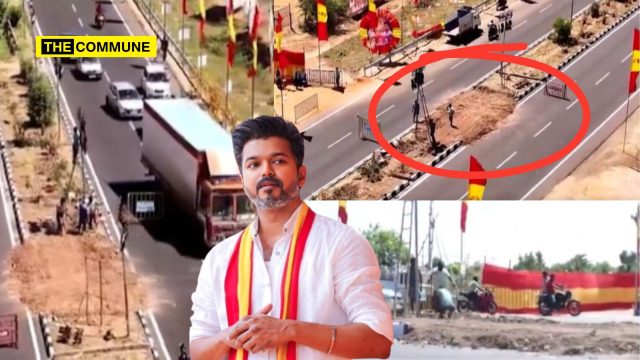
Controversy continues to trail actor-politician Vijay’s Tamilaga Vettri Kazhagam (TVK), with the party’s upcoming state conference in Madurai once again drawing criticism. From disputed flex boards to oversized flagpoles, TVK has repeatedly landed in the spotlight, and now fresh concerns have emerged over the removal of NH road dividers to create VIP entryways for the event.
The second state conference of TVK is scheduled for 21 August 2025 in Madurai. Ahead of the gathering, reports have surfaced that several roads, despite already having designated parking routes, have been damaged or altered to accommodate the arrangements.
To manage the anticipated traffic surge, the Madurai District Police has announced major diversions and alternate routes:
Parking – 1
Vehicles from Kanyakumari, Tirunelveli, and Tenkasi districts must pass through Kovilpatti, Aruppukottai, Kariyapatti, and Aviyur.
Those from Thoothukudi and Virudhunagar should take Aruppukottai–Kariyapatti–Aviyur.
Vehicles from Ramanathapuram should move via Parthibanur, Narikudi, Tiruchuzhi, Aruppukottai, Kariyapatti, and Aviyur.
Vehicles from Thanjavur, Nagapattinam, Thiruvarur, Mayiladuthurai, Pudukottai, and Sivaganga must take the Sivaganga–Thiruppuvanam–A. Mukkulam–Meenakshipuram–Aviyur stretch.
Parking – 1A
Vehicles from western districts such as Coimbatore, Tiruppur, Erode, Salem, Namakkal, Karur, Dharmapuri, and Krishnagiri should proceed via Dindigul, Pandiyarajapuram, Nagamalai Pudukkottai, Kappalur Overpass, Melakottai, and Koodakovil.
Vehicles from Theni should arrive through Andipatti Kanavai, Usilampatti, Sekkanoorani, Nagamalai Pudukkottai, Kappalur, and Koodakovil.
Parking – 2 & 3
Vehicles from Chennai, Villupuram, Vellore, Cuddalore, Kallakurichi, Kanchipuram, Tiruvallur, and Tiruvannamalai via Trichy should take the Viralimalai–Melur–Viraganur roundabout–Aruppukottai junction–Parapati route.
Routes for heavy vehicles
Heavy vehicles have been directed to bypass Madurai through a network of alternative highways. Those coming from Chennai and the northern districts heading to southern regions such as Virudhunagar, Thoothukudi, Nellai, Tenkasi, and Kumari must take the Trichy–Manapparai–Dindigul–Thirumangalam highway. Conversely, vehicles from southern districts bound for northern Tamil Nadu are required to reroute via Thirumangalam, Dindigul, and Trichy. Similarly, multiple alternate routes have been mapped out for heavy vehicles from Theni, Sivaganga, Ramanathapuram, and western districts to minimize congestion in and around Madurai.
Public transport routes
General public vehicles coming from other districts towards Madurai, or further on to Virudhunagar, Thoothukudi, Nellai, Tenkasi, and Kumari, must take either the four-lane Ramanathapuram highway via Viraganur–Thirubhuvanam–Narikudi–Tiruchuzhi–Aruppukottai, or proceed through the Kappalur flyover–Thirumangalam–Kallikudi–Kariyapatti–Aruppukottai.
Guidelines for party members
Police have also urged TVK cadres and affiliated political groups not to arrive on two-wheelers, citing safety concerns and the potential for traffic blockages. Additionally, vehicles have been advised to avoid the Aruppukottai junction–Parapati stretch on the national highway and instead make use of alternative roads.
Subscribe to our channels on Telegram, WhatsApp, and Instagram and get the best stories of the day delivered to you personally
The DMK has once again taken a U-turn, now insisting that ideology should take precedence over linguistic or regional identity, a position that directly contradicts its earlier stance where it frequently invoked Tamil pride as a decisive factor in politics.
This position was highlighted in a bid to support the NDA’s Vice-Presidential nominee, C.P. Radhakrishnan, despite his Tamil background. DMK spokesperson T.K.S. Elangovan reiterated that the party does not extend support merely because a candidate happens to be Tamil, stressing that political beliefs and policy positions matter far more than ethnicity.
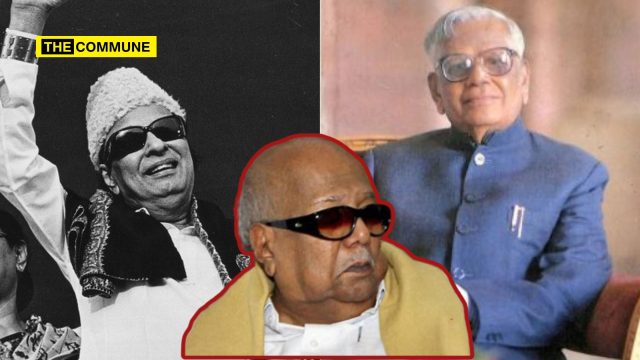
This is not the first instance of DMK dismissing the “Tamilian” factor when it doesn’t suit their political agenda. History offers a parallel in 1987, during the Presidential election, when R. Venkataraman, a distinguished Tamil leader, was nominated. Back then, AIADMK founder and Chief Minister M.G. Ramachandran (MGR) pointedly remarked that “not supporting a Tamilian is their stand” in reference to DMK’s reluctance. DMK patriarch M. Karunanidhi responded by downplaying Tamil identity, stating that “it is important to see what he has done for Tamil people rather than whether he is Tamil.”
MGR, however, had his own reasons for backing Venkataraman, viewing him as not only a Tamil but also a statesman with significant contributions to both the state and the nation.
Who is R. Venkataraman?
Ramaswamy Venkataraman, born in Rajamadam village of Thanjavur district, began his career as a lawyer at the Madras High Court and later at the Supreme Court of India. He was an active participant in the independence struggle, including the Quit India Movement, and later served as a member of the Constituent Assembly and the provisional government. His political career spanned both state and national levels. In Tamil Nadu, he worked under Chief Ministers K. Kamaraj and M. Bhaktavatsalam, handling portfolios like Industries, Labour, and Transport. At the national level, he was elected to the Lok Sabha four times and held key positions such as Union Finance Minister, Defence Minister, Vice President, and eventually the President of India between 1987 and 1992.
Venkataraman is often remembered as the architect of Tamil Nadu’s industrial growth. As Industries Minister in the 1950s and 60s, he spearheaded the establishment of the state’s first industrial estates at Guindy and was instrumental in attracting major public sector undertakings such as the Integral Coach Factory, Neyveli Lignite Corporation, and the Heavy Vehicles Factory. He also encouraged private sector investment, paving the way for companies like Ashok Leyland, Hindustan Motors, TVS Group, and Enfield to set up operations in Tamil Nadu. These initiatives earned him recognition as the father of the state’s industrialization.
At the Centre, his contributions were equally significant. As Finance Minister in the early 1980s, he introduced reforms that promoted economic growth and savings while negotiating a major loan package with the International Monetary Fund. He also oversaw the creation of the National Bank for Agriculture and Rural Development (NABARD). Later, as Defence Minister, he prioritized modernization of India’s armed forces, encouraging diversification of equipment sources and laying the foundation for the Integrated Guided Missile Development Programme, which would eventually produce indigenous systems like Prithvi and Agni. His election as Vice President in 1984 and his role in ensuring stability after the assassination of Indira Gandhi demonstrated his ability to act as a steadying influence during uncertain times. As President of India from 1987 to 1992, he worked with four different prime ministers Rajiv Gandhi, V.P. Singh, Chandra Shekhar, and P.V. Narasimha Rao during the dawn of coalition politics, navigating a turbulent phase in Indian democracy.
Venkataraman’s career stands as a reminder that leadership cannot be reduced to questions of identity alone. While he was undeniably a proud Tamilian, his life’s work reflected a vision that placed nation-building and institutional development above narrow politics. For Karunanidhi, this reinforced the argument that ideology and public service mattered more than linguistic pride. For MGR, supporting Venkataraman was a recognition of his stature as a statesman. Both positions, though opposed politically, underlined the fact that Venkataraman’s contribution transcended the limits of Tamil identity and became part of India’s national legacy.
R. Venkataraman was not only a freedom fighter who actively participated in the Quit India Movement, but also a visionary statesman who transformed Tamil Nadu’s industrial landscape.
As the Industries Minister of Tamil Nadu in 1957, he was instrumental in setting up industrial… https://t.co/PnntTMUBKC
The sensational allegations of “illegal mass burials” at Dharmasthala Temple have taken a dramatic turn with the main complainant retracting his claims before the Special Investigation Team (SIT), admitting that he was coerced by a gang into making false statements.
The Confession: A Scripted Lie
The former sanitation worker, whose July 3 testimony before a magistrate ignited a national firestorm, has now provided a detailed confession to the Special Investigation Team (SIT). He stated that a gang approached him in Chennai in December 2023.
“They asked me how many bodies I had buried when I worked in Dharmasthala. I told them the truth: that I had legally buried the bodies of pilgrims who came for salvation, through the police and gram panchayat,” the complainant stated. “But the gang insisted that I should say that the bodies were buried illegally. They pressured me… they changed my mind.”
The complainant revealed that the gang brought him to Karnataka, trained him on what to say in court, and even provided him with the skull and bone fragments he submitted as evidence which forensic reports later confirmed belonged to a man who died 30 years ago. He further confessed that he was instructed to coordinate his false testimony with another complainant, Sujatha Bhat, who had filed a missing person report for her daughter.
The SIT has since confirmed that the skull and bone fragments were of men who had died decades earlier, undermining the complainant’s earlier claims. Excavations at 17 sites identified by him yielded no evidence of mass graves. At one site, partial skeletal remains were found but were confirmed to be male, dating back 30 years.
Political Finger-Pointing
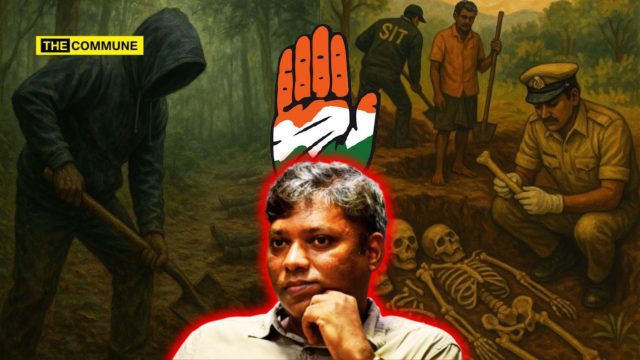
As the case crumbles, political attention has turned to identifying the “gang” behind the conspiracy. BJP MLA from Udupi, Yashpal Suvarna, and Independent MLA G. Janardhan Reddy have publicly named Congress MP Sasikanth Senthil as the key conspirator. They allege Senthil, who served as Dakshina Kannada Deputy Commissioner, orchestrated the plot using leftist and Islamist networks he cultivated during his administrative tenure.
The MLAs have pointed to Deputy CM D.K. Shivakumar’s own previous remark about a “larger conspiracy” and are now demanding the SIT have the courage to probe Senthil’s involvement, questioning if his status as a sitting Congress MP will grant him immunity.
Who Is Sasikanth Senthil?
Senthil, who resigned from the IAS in 2019 citing opposition to Article 370 abrogation and CAA, later joined the Congress and rose quickly within the party. He was elected from Tiruvallur (Tamil Nadu) in the 2024 Lok Sabha polls and is seen as a close aide of Rahul Gandhi.
However, his tenure as Dakshina Kannada Deputy Commissioner has been clouded by allegations of corruption and favoritism. He was accused of creating sand mining cartels, manipulating the government’s “Sand Bazar” app to benefit select groups, and granting tenders to blacklisted firms in exchange for kickbacks. Critics also accuse him of fostering ties with leftist and Islamist organisations like PFI and SDPI while serving in the district.
These past allegations have resurfaced amid claims that he used his political network to engineer the Dharmasthala controversy in order to discredit a Hindu religious institution with deep influence in Karnataka.
Subscribe to our channels on Telegram, WhatsApp, and Instagram and get the best stories of the day delivered to you personally.
The DMK, which talks big of “Tamil pride” and accuses the Union government of undermining the language through the promotion of Hindi, has once again taken a clean U-turn. When it came to supporting NDA’s Vice-Presidential candidate C.P. Radhakrishnan, a Tamil by birth, the party refused, claiming ideology must prevail over linguistic identity. DMK spokesperson T.K.S. Elangovan stated, “We will give preference only to ideology. We cannot support Radhakrishnan merely because he is Tamil. What matters are his ideologies.”
DMK’s History Of Voting Against Tamilians To Highest Offices
This is not the first instance of DMK dismissing the “Tamilian” factor when it doesn’t suit their political agenda. Let’s take a look at the inglorious history of the DMK which claims it stands for Tamils, while voting against Tamilians becoming President or Vice President.
When Karunanidhi Questioned R. Venkatraman’s Credentials
History offers a parallel in 1987, during the Presidential election, when R. Venkataraman, a distinguished Tamil leader, was nominated. Back then, AIADMK founder and Chief Minister M.G. Ramachandran (MGR) pointedly remarked that “not supporting a Tamilian is their stand” in reference to DMK’s reluctance. DMK patriarch M. Karunanidhi responded by downplaying Tamil identity, stating that “it is important to see what he has done for Tamil people rather than whether he is Tamil.”
Ironically, R. Venkataraman’s record showed remarkable contributions to Tamil Nadu. A freedom fighter who played a role in the Quit India Movement, he went on to spearhead the state’s industrialisation. As Industries Minister in 1957, he established industrial estates such as Guindy, brought in major national investments, and was instrumental in the founding of the Integral Coach Factory (ICF) and Neyveli Lignite Corporation (NLC). Under his leadership, automobile giants like Ashok Leyland and Hindustan Motors set up base in Tamil Nadu laying the foundation for the state’s emergence as India’s automobile hub. To question “what he has done for Tamil Nadu” is either historical ignorance or deliberate distortion.
R. Venkataraman was not only a freedom fighter who actively participated in the Quit India Movement, but also a visionary statesman who transformed Tamil Nadu’s industrial landscape.
As the Industries Minister of Tamil Nadu in 1957, he was instrumental in setting up industrial… https://t.co/PnntTMUBKC
When Karunanidhi Abused Abdul Kalam When He was Chosen in 2012
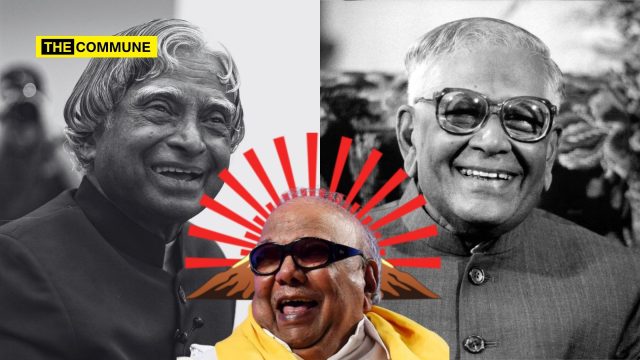
When the NDA proposed Dr A.P.J. Abdul Kalam as its candidate for the 2012 Presidential election, the DMK then an ally of the UPA dismissed the idea and reaffirmed its backing for the Congress nominee. Party chief M. Karunanidhi even mocked the suggestion, remarking, “Kalam in Tamil also means chaos (Kalagam). Anyhow, chaos has broken out in the Presidential election.”
Despite the buzz created by TMC leader Mamata Banerjee’s push for Kalam, Karunanidhi made it clear that the DMK would stand by its earlier commitment. “We are firm on what we had said. Defence Minister A K Antony who is said to be a honest man met me (last month) on behalf of Congress. I had extended my support to the message he had brought from (Congress chief) Sonia Gandhi,” he said, stressing that the party’s stance remained unchanged.
He explained that Defence Minister A.K. Antony, whom he described as an honest man, had visited him on behalf of the Congress a month earlier. During that meeting, Antony conveyed a message from Congress president Sonia Gandhi, and Karunanidhi confirmed that the DMK had pledged support to the Congress candidate at that time. Asked whether the Presidential election outcome would influence the next Lok Sabha polls, Karunanidhi declined to speculate.
Thus, the DMK’s approach is consistent: when it suits their narrative, “Tamil” is placed above everything else; but when it does not, the identity card is quietly shelved. It remains a textbook example of selective rhetoric.
Subscribe to our channels on Telegram, WhatsApp, and Instagram and get the best stories of the day delivered to you personally