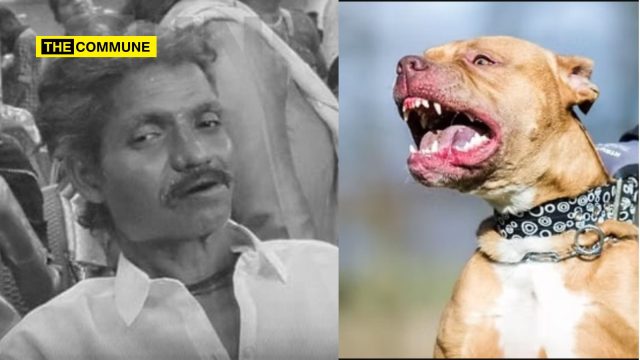
In yet another tragic case of a fatal dog attack in Chennai, a 55-year-old resident, Karunakaran, died after being mauled by a pit bull near his neighbour’s house in Jafferkhanpet on 19 August 2025. Witnesses, including his family and neighbours, were left shocked as he collapsed and died instantly during the attack.
According to Karunakaran’s sister, Kannima, the residents had repeatedly warned the authorities about the danger posed by the animal. She recalled that a formal complaint had been lodged with the police several months earlier. “The owner, Poongodi, is directly responsible for my brother’s death. Despite owning a bigger house elsewhere, she moved into this small house alone and insisted the dog was needed for her safety, citing disputes with her sons. When R6 police officials came to inspect after our complaint, she refused to relocate the dog and managed to avoid action through political backing. If the authorities had acted then, this tragedy could have been prevented,” Kannima alleged.
His niece, K. Padmavathi, recounted how the incident unfolded. “The dog was always aggressive. Around 2:30 p.m., we heard Poongodi shouting for help as the animal turned on her. My uncle rushed forward to save her, but the dog attacked him viciously, biting him in the genital area and refusing to release him. He collapsed immediately, and none of us could overpower the dog,” she said.
Chennai Corporation’s veterinary team later arrived with nets and managed to capture the pit bull. Meanwhile, corporation workers disinfected the street after discovering bloodstains and tissue remains scattered near the site of the attack.
Poongodi, who also sustained injuries, has been admitted to a hospital. Since the animal could not be restrained by locals or police, GCC Ward 139 councillor P. Subramani called in the civic veterinary unit, which secured the dog around 4 p.m. and transported it to the Kannamapet shelter.
The incident has sparked demands from residents urging the civic body to enforce strict controls on breeding and keeping of dangerous dog breeds in residential areas. Police officials confirmed that a negligence case has been registered against Poongodi and that she will be arrested once discharged from the hospital.
Meanwhile, senior civic officials noted that discussions are already underway on whether regulations should be introduced to control the ownership and breeding of ferocious dog breeds within Chennai city.
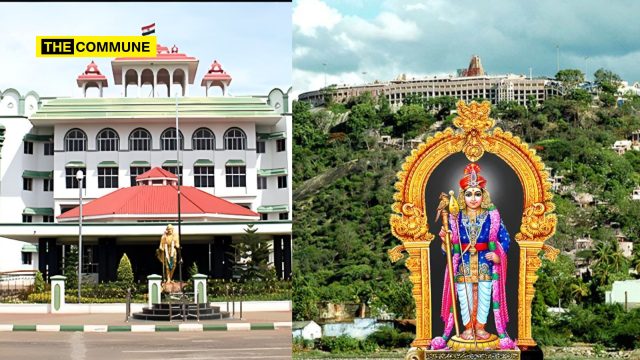
The Madurai Bench of the Madras High Court has quashed a DMK government order permitting the construction of a wedding hall using temple funds, citing misuse of religious resources.
The verdict came in response to a petition filed by Hindu Tamilar Katchi president Rama Ravikumar of Madurai. According to his petition, during the 2024 Tamil Nadu Assembly’s discussion on the Hindu Religious & Charitable Endowments (HR & CE) Department’s budget, the state government announced plans to build wedding halls in 27 temples, with an allocated budget of ₹85 crore. Subsequently, official orders were issued to implement the proposal.
One such project involved constructing a wedding hall costing ₹6 crore on a 2.94-acre plot owned by the Palani Thandayuthapani Swamy Temple, located in Pothanpuli village. The petitioner argued that temple funds must be used strictly for religious purposes, temple maintenance, and the benefit of devotees, as per existing regulations. Therefore, he requested that the court nullify the government’s order and halt the proposed construction using temple finances.
In addition to this case, Ram Ravikumar filed separate petitions against similar constructions in Kallimandhaiam, Andipatti, and Uttamapalayam, all allegedly planned using the same temple’s funds. BJP district functionaries Pandithurai and Senthilkumar also challenged the use of funds from the Dindigul Abhiramiamman Temple and the Thadikombu Soundararaja Perumal Temple for constructing wedding halls.
The bench comprising Justices S.M. Subramaniam and G. Arul Murugan presided over the matter. In their ruling, the judges emphasized that temples, being important cultural and religious institutions, must be safeguarded. They stated that temple funds should be used solely for religious activities, temple-related infrastructure, and the welfare of devotees. The court further noted that using these funds to build commercial venues, including wedding halls that could be rented out for use by people of other religions, is inconsistent with the objectives of a charitable trust.
Based on these considerations, the court cancelled the government order concerning the construction of a wedding hall using temple funds.
In a related matter involving the proposed use of temple funds for constructing commercial buildings, medical colleges, and educational institutions such as arts and science colleges and polytechnics, the court directed the government counsel to furnish a copy of the relevant government order to the petitioner. The hearing for this case was adjourned to 25 August.
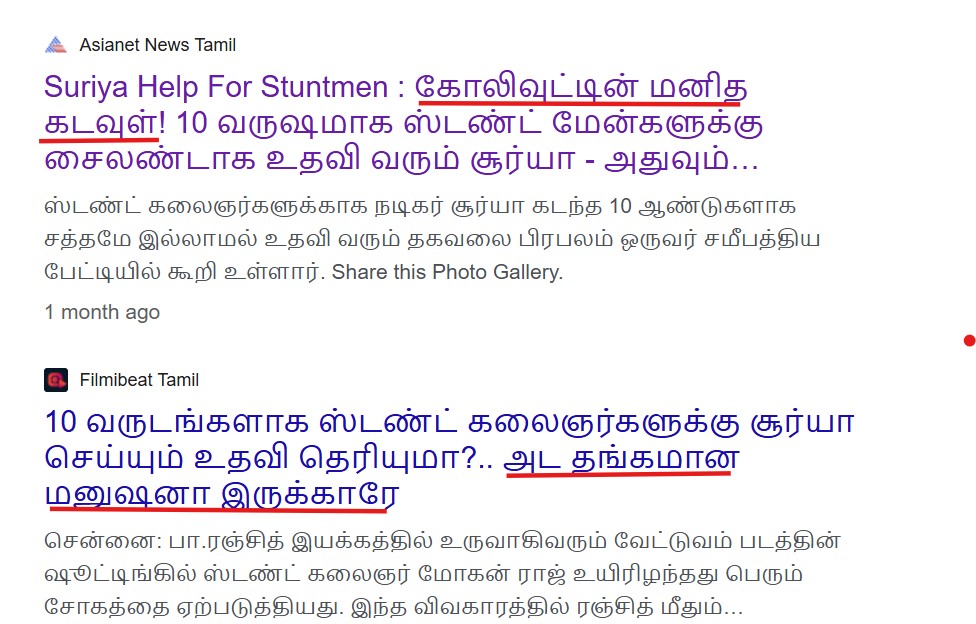
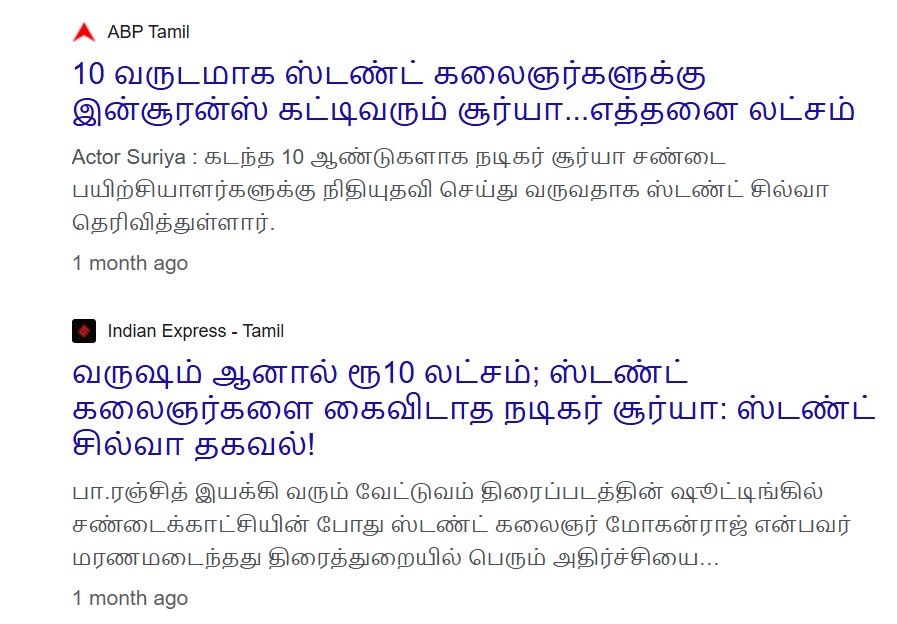
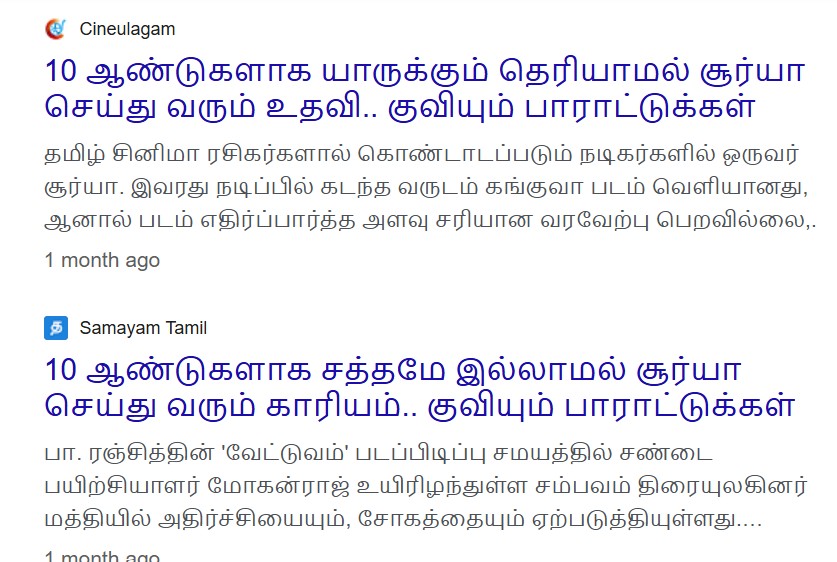
In the wake of stuntman Mohanraj’s tragic death during a fight scene, the conversation around mandatory insurance for stunt performers has resurfaced and with it, a sudden surge in praise for Tamil actor Suriya. Tamil media outlets and Dravidianist actor fans have been quick to portray him as a Kollywood savior of stuntmen, crediting him with silently funding insurance for years. But a closer look reveals the narrative might be more manufactured than sincere.
Veteran filmmaker and actor Chitra Lakshmanan recently addressed this very claim on his Q&A show on YouTube. When asked whether it was true that Suriya had been consistently paying insurance premiums for stunt artists, Lakshmanan bluntly refuted it, “The news that Suriya is continuously providing insurance for stunt artists is not true. He used to give the Stunt Artists’ Union 2 lakh rupees annually until a few years ago, but it is not known if he is still giving that 2 lakh rupees.”
Adding to the confusion, popular stunt choreographer Stunt Silva gave a contrasting account in an interview with Behindwoods. He claimed that Suriya, through his Agaram Foundation, has been arranging insurance for stunt performers for over a decade, contributing ₹10 lakh per year and praised Suriya for not publicizing this act, portraying it as proof of his character.
The conflicting reports raise an obvious question: What is the truth?
More importantly, why this sudden media blitz around Suriya? The praise from Dravidianist circles, especially DMK first family-owned outlets like Sun News seems well-timed to ignore. There have already been whispers that the DMK is grooming Suriya or someone from his family for a future political role, potentially even in the upcoming elections.
Whether or not this is the case, one thing is clear: praise, especially in emotionally charged moments like a stuntman’s death, must be grounded in verifiable fact — not crafted narratives. If Suriya has contributed meaningfully to the welfare of stunt performers, let it be acknowledged. But hype without transparency only invites skepticism and rightly so.
Subscribe to our channels on Telegram, WhatsApp, and Instagram and get the best stories of the day delivered to you personally.
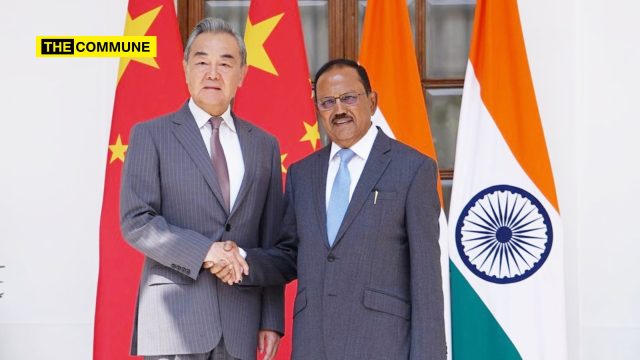
In a significant diplomatic engagement aimed at stabilising bilateral ties and advancing the long-pending boundary resolution, National Security Advisor Ajit Doval hosted Chinese Foreign Minister Wang Yi for the 24th round of the Special Representatives’ dialogue on the India-China Boundary Question.
The talks, held on 19 August, followed Wang Yi’s two-day official visit to India, during which he also met External Affairs Minister S. Jaishankar and Prime Minister Narendra Modi. The dialogue marked a renewed phase of engagement between the two Asian powers, building on the leader-level consensus reached during the Kazan summit in October 2024.
Both sides acknowledged that peace and tranquillity have largely prevailed along the Line of Actual Control (LAC) since the 23rd round of talks, and emphasised the need to sustain this momentum to foster broader bilateral cooperation. National Security Advisor Doval and Wang Yi agreed on a five-point framework to deepen coordination and manage the complex boundary issue. First, they reaffirmed the importance of viewing the boundary question through a political lens, aiming for a fair and mutually acceptable settlement in line with the 2005 Agreement on Political Parameters and Guiding Principles.
Second, an Expert Group will be established under the Working Mechanism for Consultation and Coordination (WMCC) to explore “Early Harvest” opportunities in boundary delimitation – targeting areas where consensus may be more readily achievable. Third, a dedicated Working Group will be formed under the WMCC to enhance border management protocols and ensure sustained peace along the frontier. Fourth, the two sides agreed to expand the General Level Mechanism (GLM) beyond the Western Sector to include the Eastern and Middle Sectors, with an early meeting planned for the Western Sector to review progress and operationalise new measures.
Finally, both nations committed to using existing diplomatic and military-level mechanisms to initiate discussions on de-escalation, beginning with the formulation of guiding principles and modalities. The talks were described as candid and constructive, reflecting a shared intent to move beyond past setbacks including the Galwan Valley clashes of 2020 and rebuild trust through structured dialogue. The next round of Special Representatives’ talks is expected to be held in China in 2026.
-IANS
Subscribe to our channels on Telegram, WhatsApp, and Instagram and get the best stories of the day delivered to you personally.
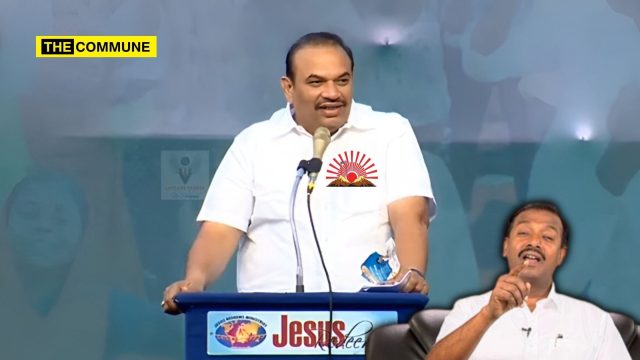
In a calculated attempt to consolidate the Christian minority vote bank, DMK MLA from Trichy, Inigo S Irudayaraj, delivered a speech laced with misleading data, selective outrage, and outright falsehoods at a “Youth Uprising Camp” organized by controversial pastor Mohan C Lazarus well known for his anti-Hindu rhetoric and alleged mass conversion operations.
Addressing the gathering, Irudayaraj began by painting a bleak and exaggerated picture of Christian persecution in India, asserting that minorities “have no security” and are “under attack.” He cited census figures to downplay concerns over religious conversions, claiming that Christians made up 2.3% of the population in both 1951 and 2011. “How can 2.3% convert the 97% majority?” he scoffed, conveniently ignoring numerous documented cases of coerced or incentivized conversions, which are criminalized under Indian law.
He said, “In this country, especially in democratic India, we do not have security. The situation of our votes being divided persists. There is a belief among fascist forces that Christian people can be suppressed and oppressed, and today, these forces have attacked us. For example, in 1951, India’s population was only 36 crores, but according to the 2011 census, it was 146 crores. In 1951, Christians constituted only 2.3% of the population in this country. Even in 2011, with 146 crore people, Christians still remained at 2.3%: not even one percent increase. However, ‘Sanghis’ call us a ‘conversion group’. They don’t stop there. How can we, who are 2.3%, convert them, who are 97%? Religious conversion is not about asking people to join our religion. It is only when they change their minds and accept Jesus Christ, the Son of God, that they can come here. They cannot just come easily. But what do they say? They always make the same accusation. Furthermore, converting religion is an individual’s personal right, Who has given this to us? by the Indian Constitution. Article 25 B of the Constitution states that anyone can change their religion whenever they want. Yet, ‘Sanghis’ keep calling us a ‘conversion group’.”
More alarmingly, Irudayaraj falsely claimed that the Unlawful Activities (Prevention) Act (UAPA) a law designed to counter terrorism was being weaponized against Christians in BJP-ruled states. “Today, across India, how are we being suppressed and oppressed? the BJP rules in all states from Arunachal Pradesh to Uttar Pradesh. In all these states, severe laws like the anti-conversion law have been imposed. Moreover, they are imposing the UAPA (Unlawful Activities (Prevention) Act), which is meant for terrorists and those acting against the nation, on us. Please do not forget this. They consider us terrorists, alleging that we are converting people. Based on this, there have been numerous violent incidents orchestrated by other religious fundamentalist gangs. Recently, in Maharashtra, Schaefer Javin Jacob and Stephen Vijay Kadam from California, USA, were arrested under the same law on false charges of attempting religious conversion in Maharashtra state. As you all know, a while ago, two sisters were arrested in Chhattisgarh. For what? For allegedly converting people. The whole nation rose up, and everyone fought against it. As a result, they were released a week later. Many Christians like them have been arrested and imprisoned without a fair trial. Do not forget this. Christians are being discriminated against in education and employment opportunities. Christian churches, homes, and commercial complexes are being attacked.”
What Is The Truth?
Contrary to Irudayaraj’s claims, the American nationals in Maharashtra were booked under the Foreigners Act and Bharatiya Nyaya Sanhita, and the nuns in Chhattisgarh were charged under the Freedom of Religion Act, 1968 a state-specific anti-conversion law. No UAPA was invoked. While religious freedom is equal to all, but forced or fraudulent conversions violate constitutional safeguards and are subject to state-level anti-conversion laws – laws that have been upheld in various courts.
Still, he pressed on with his fearmongering, stating that Christian churches and homes were under constant threat and that Christian individuals were being routinely imprisoned without fair trials again without any verifiable evidence.
In one of his most inflammatory claims, Irudayaraj declared, “On average, two Christians are attacked in this country every day. This is a situation where an average of two Christians is attacked daily. For such a situation, we should truly pray and leave it to the judgment of Jesus Christ, the Son of God. Today, in the BJP-ruled state of Gujarat, 6,500 Christian women have been victims of sexual assault incidents. If a complaint is filed about this, what should happen? They should be arrested, and action should be taken. But instead, the transport police in Gujarat have put up posters saying, ‘Stay home to avoid sexual assault’. What kind of situation is this? They’ve put up posters telling people not to come out and to stay indoors.”
This figure appears to be a twisted version of a discredited AAP claim, which referred to all women, not Christian women specifically. According to the NCRB 2022 data, Gujarat reported 610 rape complaints, not 6,500 as Irudayaraj claimed.
To add to his list of falsehoods, the DMK MLA also criticized the central government for scrapping the Maulana Azad National Fellowship (MANF), calling it a direct attack on educational opportunities for minorities. However, the Union Government clarified that scholarships for SCs, OBCs, and minorities continue under broader UGC and CSIR fellowship schemes. The MANF was discontinued due to redundancy and overlap, not communal bias.
This pattern of half-truths and distortions seems aimed at deliberately manufacturing a sense of victimhood among Christians not to defend their rights, but to provoke distrust, deepen polarization, and serve the DMK’s electoral strategy.
Irudayaraj’s speech is not just another case of political rhetoric it represents a dangerous cocktail of misinformation, communal manipulation, and irresponsible politicking. At a time when India needs unity and facts, this kind of targeted propaganda only fans the flames of division.
Subscribe to our channels on Telegram, WhatsApp, and Instagram and get the best stories of the day delivered to you personally.
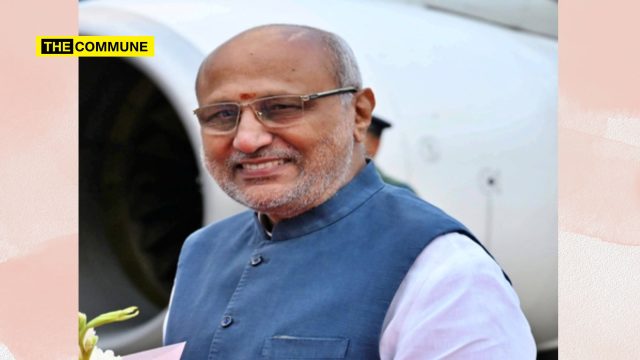
The National Democratic Alliance (NDA) candidate for the Vice Presidential election, CP Radhakrishnan, is set to file his nomination on 20 August 2025 at 11 a.m. Prime Minister Narendra Modi will be the lead proposer in the first set of nomination papers.
The nomination will be filed in four sets, each carrying the signatures of 20 proposers and 20 seconders. While the first set will have PM Modi’s signature as the chief proposer, the remaining sets will include signatures from Union ministers and senior NDA leaders, reflecting a broad consensus across the alliance. Around 160 members of the NDA, including ministers and MPs, are expected to be present during the filing of the nomination papers at Parliament House.
The decision to nominate CP Radhakrishnan was taken unanimously during a key meeting of NDA floor leaders held at the residence of Union Minister Pralhad Joshi. Senior NDA ally and Union Minister Jitan Ram Manjhi confirmed the unanimous support, stating that all leaders present pledged their full backing for Radhakrishnan’s candidature. Earlier on Sunday, Prime Minister Modi lauded CP Radhakrishnan’s contributions in public life, describing him as a leader with “humility, intellect, and grassroots connect.”
In a message posted on X, PM Modi said, “In his long years in public life, Thiru CP Radhakrishnan Ji has distinguished himself with his dedication, humility, and intellect. He has always focused on community service and empowering the marginalised. I am glad that the NDA family has decided to nominate him as the Vice-Presidential candidate of our alliance.” Radhakrishnan, a senior BJP leader and current Governor of Meghalaya, has had an extensive political and administrative career. He has served as a Member of Parliament from Tamil Nadu, and is known for his legislative acumen and commitment to social empowerment. The Vice Presidential election is scheduled to be held next month, and with the NDA’s numerical advantage in Parliament, Radhakrishnan is widely expected to win.
-IANS
Subscribe to our channels on Telegram, WhatsApp, and Instagram and get the best stories of the day delivered to you personally.
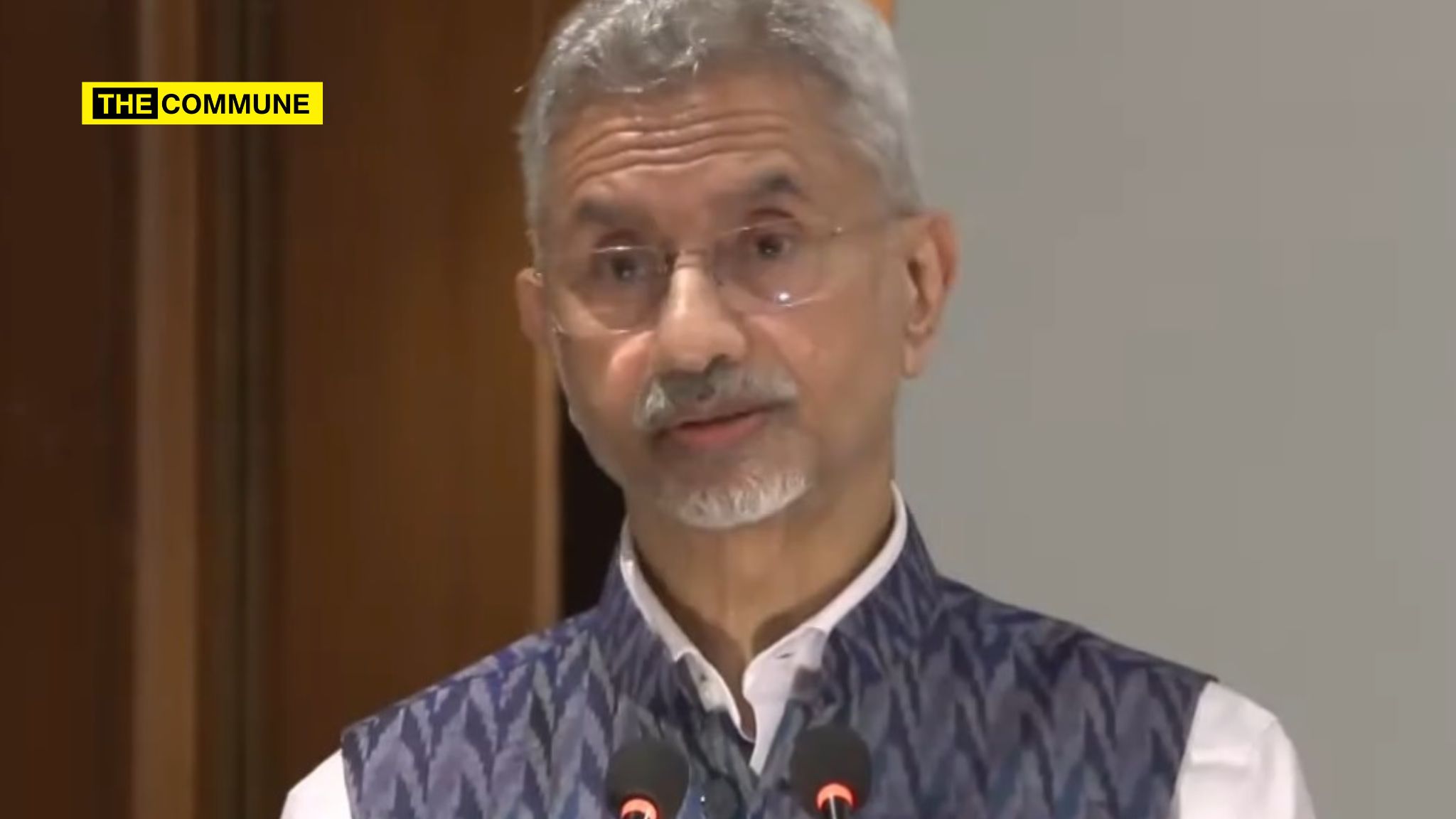
External Affairs Minister S. Jaishankar will co-chair the 26th Session of the India-Russia Inter-Governmental Commission on Trade, Economic, Scientific, Technological and Cultural Cooperation (IRIGC-TEC) in Moscow on 20 August 2025.
The session, aimed at further deepening bilateral relations, is a key engagement in his ongoing three-day official visit to Russia from 19 to 21 August. The External Affairs Minister is also scheduled to address the India-Russia Business Forum, where both sides will explore avenues to bolster trade and investment ties. Jaishankar’s visit comes at the invitation of Denis Manturov, the First Deputy Prime Minister of the Russian Federation. The Ministry of External Affairs (MEA) noted the strategic significance of the visit. “Dr. S. Jaishankar will undertake an official visit to Russia on 19-21 August 2025 to co-chair the 26th Session of the India-Russia Inter-Governmental Commission on Trade, Economic, Scientific, Technological and Cultural Cooperation (IRIGC-TEC) scheduled for 20 August 2025,” the MEA said in a statement. “The visit aims to further strengthen the longstanding and time-tested India-Russia Special and Privileged Strategic Partnership,” the statement further said.
During his stay, Jaishankar will also hold bilateral talks with Russian Foreign Minister Sergey Lavrov. The meeting marks a continuation of frequent high-level exchanges between the two countries. The two leaders had previously met on the sidelines of the Shanghai Cooperation Organisation (SCO) Foreign Ministers’ meeting on 15 July, as well as during the recent BRICS Summit. Earlier this year, Foreign Secretary Vikram Misri also visited Moscow for Foreign Office Consultations with Russian Deputy Foreign Minister Andrey Rudenko, underscoring the consistent diplomatic momentum between New Delhi and Moscow. The visit precedes a potential high-level interaction, as Russian President Vladimir Putin is expected to visit India following an invitation from Prime Minister Narendra Modi.
-IANS
Subscribe to our channels on Telegram, WhatsApp, and Instagram and get the best stories of the day delivered to you personally.
In a bombshell investigative report, Suvarna News has uncovered a complex and shocking conspiracy behind the Dharmasthala “mass burial” case, alleging that key evidence was fabricated to fuel a narrative of mass burials and a missing person.
Sujatha Bhat’s Claims
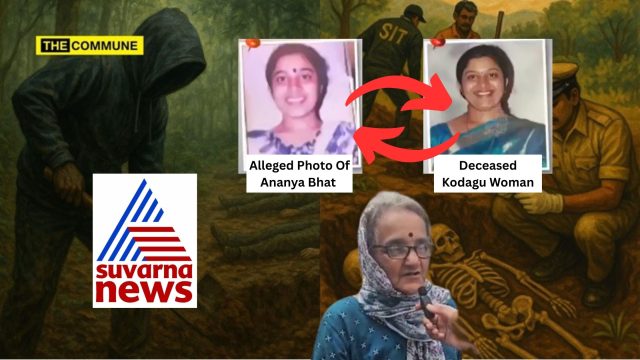
The expose centers on Sujatha Bhat, a central figure who claimed her daughter, Ananya Bhat, went missing from Dharmasthala in 2003 while studying MBBS. The channel’s investigation alleges that the photograph presented by Sujatha as her “missing daughter” is, in fact, a stolen image of a deceased woman from Kodagu, manipulated to mislead the public and authorities.
We had earlier reported on Suvarna News’ investigation on the untrustworthy claims made by Sujatha Bhat. Bhat alleged her daughter, Ananya Bhat, was raped and murdered in 2003 and buried at Dharmasthala, triggering a ₹50-lakh SIT excavation that recovered only one skull and a few bones.
Suvarna News found no record of Bhat’s alleged CBI employment in Kolkata, no admission of “Ananya” in Kasturba Medical College, and no documentary proof of the daughter’s existence, including school or identity records. Neighbours in Shivamogga recalled Bhat living with Prabhakar Baliga and having no children. Police have also questioned her 22-year delay in filing a complaint and lack of corroboration. It was claimed that Bhat had gone missing after making the allegations, but she released a video denying she was missing. In the video however, she avoided addressing these contradictions, leaving the SIT frustrated with her non-cooperation.
In the ongoing investigation by Suvarna News, a lot more inconsistencies and possibly fraud have been discovered.
The Fabricated Photograph
According to Suvarna News report, their investigation began to unravel when inconsistencies emerged in Sujatha Bhat’s story. Under pressure to produce evidence, the group behind the narrative, which allegedly includes YouTuber Sameer MD, held a secret meeting.
The plan, as reported by the channel, was to find a photograph of a woman who looked Hindu, had died long ago, and had no immediate family alive to identify her, ensuring it would be untraceable by reverse image search tools like Google Lens.
Suvarna News traced Sujatha Bhat’s recent history to a live-in relationship with a Bengaluru-based ex-BL employee named Ranga Prasad in Kengeri. The investigation revealed that Ranga Prasad’s daughter-in-law, Vasanthi, a nurse from Kodagu, had died in 2007 under unnatural circumstances. Her husband, Shrivatsa, passed away in 2015. The couple had reportedly parted ways years earlier due to a troubled marriage.
The channel alleged that Sujatha Bhat stole an old college-day photograph of Vasanthi from Ranga Prasad’s home. In the clandestine meeting, which Sameer MD reportedly attended, the decision was made to use this photo. To further the deception, a blue bindi (vermillion mark) was crudely drawn on the photograph to make Vasanthi appear more recognizably Hindu before it was released to the public as Ananya Bhat.
Another shocking expose by Suvarna News on conspiracy in the #DharmasthalaCase. They have exposed the lies of pics of Ananya Bhat released by Sujatha Bhat
– The photo released by Sujatha Bhat claiming to be Ananya Bhat turns out to be of Kodagu based women Vasanthi who died in… pic.twitter.com/xzgNjT8wup
Following the expose, Sujatha Bhat gave a series of interviews that, according to the report, further exposed the inconsistencies in her story. During one such interview on Public TV, she made several claims that contradict previous statements and known facts:
Date of Birth: When asked, she stated Ananya was born in 1983 after a long pause, which conflicts with her earlier claim of marrying Anil Bhat in 1988.
The Photograph: She insisted the photo was of Ananya, retrieved after a long search following a house fire, and denied any knowledge of Vasanthi, despite allegedly having a relationship with Vasanthi’s father-in-law.
An Elaborate Backstory: Bhat spun a new tale, claiming her family had thrown her infant daughter into a river because they disapproved of her marriage. She said a couple named Arvind and Vimala from Mangalore rescued and raised the child until she was reunited with her years later.
Contradictions on Employment and Residence: Her account of working for the CBI and her daughter’s upbringing in Kolkata conflicted with her previous international media interviews and earlier local news reports from 2003, where she was quoted as saying she had no children.
After the expose of Sujatha Bhat gives a very dodgy interview to different Kannada news media which exposes herself. One of the very poor attempts by her to cover up is here in Public TV. In bold have earlier claims and my critic.
The Dharmasthala “mass burial” controversy took a new turn, with BJP leaders accusing Congress MP and former IAS officer Sasikanth Senthil of being the mastermind behind what they call a conspiracy to defame the temple. Udupi MLA Yashpal Suvarna and Independent MLA G. Janardhan Reddy alleged that Senthil, who once served as Mangaluru DC, orchestrated the drama through the so-called “masked man” who handed a skull to police. They questioned whether the SIT would investigate him given his political clout and closeness to the CM.
Senthil, who resigned from the IAS in 2019 citing opposition to Article 370 abrogation and CAA, joined Congress in 2020, later becoming a key strategist in Tamil Nadu and Karnataka. Elected from Tiruvallur in 2024, he faces past allegations of corruption, manipulation of sand mining permits, and favoritism toward leftist and Islamist groups during his tenure as DC, raising demands for a deeper probe.
Subscribe to our channels on Telegram, WhatsApp, and Instagram and get the best stories of the day delivered to you personally.
A fresh wave of bomb threats has hit the national capital as multiple schools in Delhi received threatening emails early Wednesday morning, prompting immediate emergency responses from the Delhi Police and Fire Services.
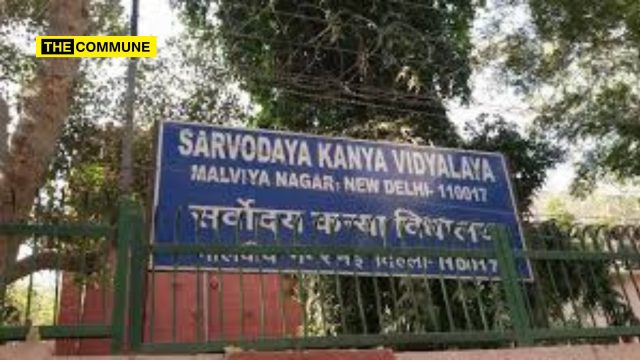
According to officials, two schools, SKV Malviya Nagar and Andhra School, Prasad Nagar, received bomb threat emails around 7:40 a.m. and 7:42 a.m., respectively. The Delhi Fire Services (DFS) confirmed that these emails triggered the swift deployment of search teams, bomb disposal squads, and police units to the concerned locations. Police and other cooperating agencies are on-site, and comprehensive search operations are currently underway.
The DFS also warned of the possibility that more schools may have been targeted, suggesting a broader investigation is being pursued. The situation has once again raised alarm among students, parents, and school staff, coming just days after a similar incident. On August 18, Delhi Public School (DPS) Dwarka had to be evacuated following a bomb threat call received around 7:00 a.m. In that case too, authorities responded immediately, and bomb squads conducted a thorough search. Fortunately, the threat turned out to be a hoax.
The latest scare also brings back chilling memories of an incident last month, when over 50 schools across Delhi received similar email threats. Those messages caused widespread panic, forcing several institutions to shift to online classes and prompting city-wide emergency operations involving dog squads, fire brigades, and bomb disposal teams. All of those threats were later deemed non-credible. In each of these cases, evacuation and on-site verification remain the standard protocol, ensuring the safety of students and staff before normal operations are resumed.
The Delhi Police are currently investigating the origin of the latest emails, while cybercrime units are working to trace the sender or group responsible for what appears to be a recurring pattern of disruption. Authorities are urging the public to remain calm but vigilant, as the safety of children and school communities remains the highest priority.
-IANS
Subscribe to our channels on Telegram, WhatsApp, and Instagram and get the best stories of the day delivered to you personally.
The National Investigation Agency (NIA) is carrying out searches at five locations in Tamil Nadu’s Dindigul district in connection with the 2019 murder of Ramalingam, a former Pattali Makkal Katchi (PMK) functionary.
Ramalingam, a native of Papanasam in Thanjavur district, was killed on 5 February 2019, after he opposed alleged religious conversion activities involving members of Islamic organisations such as the Popular Front of India (PFI) and the Social Democratic Party of India (SDPI) in Thiruvidaimarudur. Following the murder, the case was handed over to the NIA, which has since arrested 12 individuals linked to the incident.
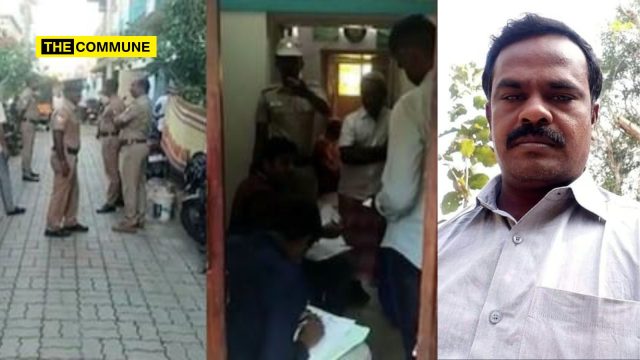
According to initial reports, the latest searches are being conducted at five places across Dindigul district, including Begampur, Ottanchatram, Nilakottai, Dindigul town, and Kodaikanal. Security has been tightened in the areas as a precautionary measure. In Begampur, the NIA officials began searches around 6 a.m. at the residence of Sheikh Abdullah, an SDPI member residing in Jinna Nagar. Three NIA officers carried out the operation, supported by local police personnel to ensure security during the raid. Similarly, another team of investigators carried out searches at the house of a man identified as Yusuf in Ottanchatram from early morning.
Sources said this round of searches comes months after raids were conducted in Kodaikanal, and investigators are following leads suggesting continued links of some individuals to extremist organisations. The operation, spread across multiple sensitive locations, has created tension in the region, with residents gathering outside the search sites to monitor developments.
The NIA is investigating whether the arrested individuals had broader networks extending beyond Thanjavur and whether support systems for radical activities were still operational in parts of southern Tamil Nadu. Officials have not released further details on whether new arrests have been made in the latest raids. The 2019 murder of Ramalingam had triggered widespread political outrage in Tamil Nadu, with several parties condemning the killing as an attempt to silence dissent against forced conversions. The ongoing NIA action indicates that the agency is still pursuing the case with a focus on dismantling any organisational structures that might have facilitated the crime.
-IANS
Subscribe to our channels on Telegram, WhatsApp, and Instagram and get the best stories of the day delivered to you personally.