Home Blog Page 390

Crucial Buddhist Summit Begins In McLeodganj, Dalai Lama Likely To Mention Reincarnation Process

A three-day Buddhist religious conference began on Wednesday in McLeodganj, a small and quaint hill station in the suburbs of the northern hill town of Dharamsala in Himachal Pradesh, with a video statement from Tibetan spiritual leader the Dalai Lama, who is turning 90 on July 6, that could mention the process for selecting his next reincarnation, while Beijing tries to replace centuries-old Tibetan identity and culture.

The followers believe the message is expected to address the politically sensitive issue of the succession for the Dalai Lama lineage at the 15th Tibetan Religious Conference, where Buddhist leaders, including heads and representatives of all four major schools of Tibetan Buddhism — Gelug, Kagyu, Nyingma, and Sakya — will meet.

The next Dalai Lama, the 15th incarnation, will be an unbroken lineage that has lasted some 500 years, free from any external interference. Who is the Dalai Lama? The current Dalai Lama, Tenzin Gyatso, was born in 1935 to a farming family in a small hamlet in Taktser, Amdo, in northeastern Tibet. He was recognised as the reincarnation of the 13th Dalai Lama at the age of two.

As per Tibetan tradition, the reincarnation of a Lama, especially the Dalai Lama, is recognised, not appointed. It’s a sacred process involving visions, signs, and deep spiritual rituals. Only the Dalai Lama has the legitimate authority to identify his successor.

Attending celebrations in honour of his 90th birthday, the Dalai Lama on June 30 told the congregation that “Although I am now 90 years old, I am physically healthy and well. All these years, I’ve worked for the good of Tibetans and the Dharma. I’ve also established links with people around the world and engaged in useful discussions with scientists. My life has been worthwhile. I’ve visited many other countries and met all kinds of people. I feel my life as a human being has been of benefit to the people of the world, and I dedicate the rest of my life to the benefit of others.”

The Nobel Peace Laureate favoured a “framework” for the future of the Dalai Lama institution, emphasising the urgent need to safeguard its sacred spiritual authority.

“As far as the institution of the Dalai Lama is concerned, there will be a framework for it to continue. I was born in Dhomey and moved to Lhasa, where I was able to study. As I already said, I think I have been able to serve the Dharma and sentient beings, and I am determined to continue to do so,” the revered leader of Tibetan Buddhism, who is in good health, added.

Sixty-six years ago, the 14th Dalai Lama, disguised as a soldier, left Norbulingka Palace in Tibet, a Third Pole, and escaped into exile in India after his challenging 14-day journey. Since then, the longest, most respectable staying guest of the Indian government, who often says he’s enjoying every possible liberty, has been toeing a path of promoting human values, religious harmony, besides preserving Tibetan language and culture, the heritage received from the masters of India’s Nalanda University.

The Dalai Lama, with a retinue of soldiers and cabinet ministers, escaped into exile on March 17, 1959, after China crushed an uprising in Tibet. Globetrotting the Dalai Lama, who’s considered a living Buddha of compassion, in his latest book, ‘In Voice for the Voiceless’, offers insights into his decades-long dealings with China.

In the book, the Dalai Lama, a reincarnation of past Dalai Lamas, reminds the world of Tibet’s unresolved struggle for freedom and the hardship his people continue to face in their homeland. The book captures his extraordinary life, uncovering what it means to lose your home to a repressive invader and build a life in exile; dealing with the existential crisis of a nation, its people, and its culture and religion; and envisioning the path forward.

He was 16 years old when Communist China invaded Tibet in 1950, only 19 when he had his first meeting with Chairman Mao in Beijing, and 25 when he was forced to escape to India and became a leader in exile. On reaching India after a treacherous journey, the Dalai Lama first took up residence for about a year in Mussoorie in Uttarakhand.

On March 10, 1960, just before moving to Dharamsala, a town perched on the upper reaches of north India’s Kangra Valley, the Dalai Lama had said: “For those of us in exile, I said that our priority must be resettlement and the continuity of our cultural traditions. We, Tibetans, would eventually prevail in regaining freedom for Tibet.” Currently, India is home to around 1,00,000 Tibetans and the government-in-exile.

–IANS

Subscribe to our channels on TelegramWhatsApp, and Instagram and get the best stories of the day delivered to you personally.

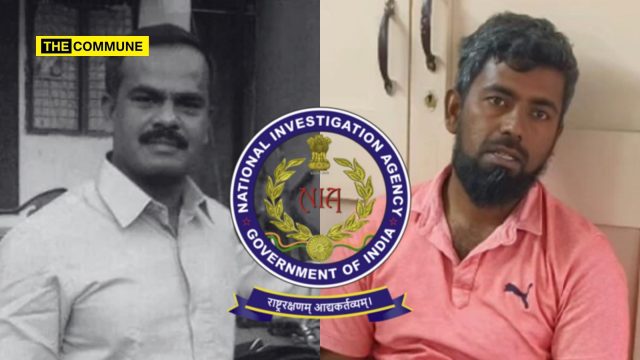
1998 Coimbatore Blast Terrorist And Bomb-Making Expert Abubacker Siddique Arrested In Andhra After 30 Years

Image Source: India TV

A joint operation involving the Intelligence Bureau, special police unit from Coimbatore, and Andhra Pradesh police successfully located and apprehended Abubacker Siddique, a fugitive linked to the 1998 Coimbatore bombings, on 30 June 2025 in the Annamayya district near Kadapa.

Siddique, aged 60 and described as a bomb-making expert with connections to the banned extremist group Al Ummah, had remained in hiding since the blasts.

Alongside him, another fugitive—identified as Mohammed Ali (also known as Yunus or Mansoor)—was arrested. Both men were under surveillance for years, with a reward of ₹5 lakh posted for Siddique’s apprehension.

Upon his arrest, Siddique claimed mistaken identity, but officials confirmed his identity using decades-old photographs and took him into custody for questioning by the Anti-Terror Squad.

Siddique is accused of orchestrating multiple high-profile terror incidents dating from the mid-1990s onward, including the 1995 blasts at the Hindu Munnani office in Chennai’s Chintadripet area, the Nagore parcel bomb that killed a man named Thangam, the serial bombings across southern India in 1999, and an attempted pipe bomb targeting L.K. Advani’s convoy in Madurai.

Known as a master bomb-maker, he is alleged to have trained several Al Ummah operatives.

The arrest marks a major breakthrough in long-standing counterterrorism efforts. Authorities expect that Siddique’s capture will assist ongoing investigations into terrorist activities across Tamil Nadu and neighboring regions. Both Siddique and Ali were presented before a Chennai court on July 1 and remanded to judicial custody.

Subscribe to our channels on TelegramWhatsApp, and Instagram and get the best stories of the day delivered to you personally.

Madras High Court Slams Dravidian Model DMK Govt Police Over Ajithkumar Custodial Death Case

madurai bench of madras high court tamil nadu police dravidian model police ajithkumar custodial death

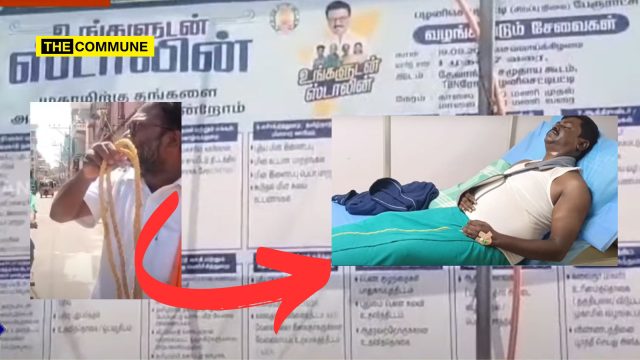
The Madras High Court’s Madurai Bench on Tuesday strongly criticised the Tamil Nadu government over its handling of the alleged custodial death of Ajith Kumar, a 27-year-old temple security guard from Sivaganga. The court termed the government’s response “insufficient” and raised a series of pointed questions over procedural lapses and delay in investigation.

Ajith Kumar was picked up by police on 27 June 2025 in connection with a jewellery theft complaint and was found dead the following day. The post-mortem report revealed 18 injuries on his body, suggesting custodial torture. Five police personnel have been arrested and remanded to judicial custody till 15 July 2025. The state government has also transferred Superintendent of Police IPS Ashish Rawat, replacing him with IPS G Chandeesh.

During Tuesday’s hearing, the High Court questioned why an FIR was not registered at the time the initial complaint of jewellery theft was made—the very complaint that led to Ajith’s detention.

The government counsel responded that a preliminary enquiry was needed before an FIR could be registered, but the court expressed dissatisfaction with this explanation.

The bench demanded clarity on several aspects of the investigation. It asked under whose authority the probe was transferred to a special investigation team, and why the post-mortem report had not yet been submitted to the magistrate. “Is the government working for the people or not?” the court asked bluntly, further questioning the decision to transfer the SP instead of suspending him.

The court directed the Director General of Police (DGP) to clarify who had authorised the formation of the special investigation team and raised concerns about a possible cover-up. It also questioned whether steps were taken to shield the accused officers from CCTV surveillance, and who had permitted the movement of Ajith across various locations over two days.

“Who handed over Ajith to the special team? Who gave permission to take him around various locations for two days? Why wasn’t the autopsy report immediately handed over to the magistrate?” the bench asked.

The judges also said they would await Ajith’s medical report to verify allegations raised by his family that chilli powder was used during torture.

The court ordered Sakthiswaran, a temple staffer who recorded a video allegedly showing Ajith being assaulted by police, to appear for the next hearing at 3 PM.

Chief Minister MK Stalin has said action is expected against a senior official as well, amid rising public pressure over the incident.

(With inputs from India Today)

Subscribe to our channels on Telegram, WhatsApp, and Instagram and get the best stories of the day delivered to you personally.

Chennai: Armed Police Sub-Inspector Booked Under POCSO For Alleged Sexual Assault Of 8-Year-Old Girl, Official Denies Charges

chennai police-sub inspector pocso

A shocking case of alleged sexual assault has emerged in Nungambakkam, Chennai, where an 8-year-old girl was reportedly abused by an Armed Police Sub-Inspector (SI) after being administered an anesthetic injection. The accused, identified as SI Raji, is currently under investigation, and a case has been registered under the Protection of Children from Sexual Offences (POCSO) Act.

According to the complaint filed by the girl’s family, the incident occurred when the child was playing near her home in Nungambakkam two nights ago. She suddenly went missing, prompting her father and grandmother to search the neighborhood. After inquiries, they learned that the girl was at the residence of SI Raji, who lives on Erikkarai Street.

Upon arriving at Raji’s house, the family found the girl unconscious. When she regained consciousness, she reportedly told her family that the sub-inspector had “misbehaved with her.” The parents alleged in their complaint that Raji had sexually assaulted the girl after injecting her with an anesthetic.

The family attempted to file a formal complaint at the Nungambakkam police station, but officers initially refused to register it. This led to protests by the girl’s relatives outside the station late on the night of 30 June 2025. After intervention, the police assured action and sent the family for medical examination.

The victim was later admitted to Kilpauk Government Hospital for further evaluation. Meanwhile, SI Raji was taken to the Aiyaram Vilukku All Women’s Police Station for questioning.

During interrogation, Raji denied the allegations, claiming that the girl’s family was fabricating the story as retaliation. He stated, “Since the girl’s parents have been harassing her, I warned them that I would report the matter to the Child Welfare Committee. To take revenge, they are spreading false accusations.”

Authorities are conducting a thorough probe into the incident, including medical tests and witness statements. A POCSO case has been officially registered, and further legal action will depend on the findings.

(With inputs from One India Tamil)

Subscribe to our channels on Telegram, WhatsApp, and Instagram and get the best stories of the day delivered to you personally.
Surrey: 42-Year-Old LGBTQ+ Group Co-founder Stephen Ireland Jailed For Raping 12-Year-Old Boy

Stephen Ireland, the 42-year-old co-founder of Pride in Surrey, has been sentenced to 24 years in prison with an additional six years on extended licence for a series of grave sexual offences involving children for raping a 12-year-old boy he met on the dating app Grindr. The sentencing took place at Guildford Crown Court on Monday, where the court heard disturbing details of Ireland’s abuse of a 12-year-old boy and his broader pattern of predatory behaviour.

His partner, David Sutton, 27, was jailed for four-and-a-half years for related child sexual offences.

Ireland, who co-founded the LGBTQ+ organisation in 2018, was convicted of raping the child — referred to in court as Child A — at the flat he shared with his then-partner and co-defendant, David Sutton, 27, in Addlestone, Surrey, on April 19, 2024.

The court was told that Ireland had contacted the child via the dating app Grindr. The boy, who had been reported missing at the time, later told police that he had been taken to Ireland’s flat, where the two engaged in sexual activity, smoked a bong laced with methamphetamine, and watched pornography.

Presiding Judge Patricia Lees said Ireland had “taken advantage” of a highly vulnerable child, noting that his senior role in an LGBTQ+ youth organisation made his actions particularly egregious.

“Any responsible adult would have quickly appreciated that this was a child who had likely been sexually groomed by men before — and should have acted to protect, not exploit, him,” she said.

The court heard that although the boy initially claimed to be 17, he later told Ireland he was 13. Ireland responded, “OK – we just have to keep it a secret.” In follow-up Telegram messages, Ireland described the boy’s age as “naughty and kinky” and offered a threesome, sending the child images of himself and Sutton.

The prosecution revealed that Ireland and Sutton exchanged sexual messages about the boy and that Ireland had sent Sutton a photo of the child, describing him as a “14-year-old baby” who “wants to play with men’s bodies.”

Both men were found guilty earlier this year of a wide range of child sexual offences. This included voyeurism, arranging commission of a child sex offence, making and distributing indecent photographs of children, and possession of prohibited images. In one incident from March 2024, Ireland watched live video footage of Sutton having sex with a 16-year-old boy who was unaware he was being recorded. Ireland sent Sutton instructions during the act via text, stating, “He doesn’t know I’m here.”

The court was also told that in 2022, Ireland and Sutton discussed acquiring a 13-year-old boy as a “gift” for Sutton’s 25th birthday. Both were also convicted of voyeurism after Ireland secretly filmed Sutton having sex with a 16-year-old boy in their flat.

Judge Lees described the pair as feeding “off one another in your perversions.” Ireland received 24 years plus six on extended license for multiple offenses, including rape, child sexual exploitation, and possession of extreme pornography. Sutton was sentenced for voyeurism and distributing indecent images.

Ireland’s lawyer argued he did not exploit his LGBTQ+ advocacy role, but the judge emphasized his betrayal of trust. Surrey Police confirmed both men attempted to destroy evidence after their arrest.

(With inputs from Independent)

Subscribe to our channels on Telegram, WhatsApp, and Instagram and get the best stories of the day delivered to you personally.
GOD India Trust’s Udyog 2025 To Spotlight Purpose-Driven Careers With Eminent Speakers In Chennai

udyog 2025 god india trust

The Global Organisation for Divinity (GOD) India Trust is set to host the 8th edition of its flagship youth initiative Udyog on Saturday, 19 July 2025, at Narada Gana Sabha, Chennai. With the theme “Work to Become, Not to Acquire,” the event aims to inspire high school and college students to pursue careers rooted in purpose and identity rather than material acquisition.

Udyog 2025 will feature a distinguished lineup of speakers from across the fields of classical arts, sports, defence technology, aviation, and cultural research. The event is free and open to pre-registered students aged 14 and above.

Among the keynote speakers is Padma Bhushan awardee Sri V.P. Dhananjayan, acclaimed Bharatanatyam maestro and founder of Bharatakalanjali, who will speak on “More Than Just Dance: Finding Yourself through Bharatanatyam.”

Khel Ratna recipient and five-time Olympian Sharath Kamal, India’s most decorated table tennis player, will deliver a session titled “Paddle, Passion, Perseverance: A Champion’s Path,” sharing his journey from Chennai to the global sports arena.

Dr. Shivaraman Ramaswamy, Co-founder of Big Bang Boom Solutions and a defence tech innovator recently awarded a ₹200+ crore contract under India’s iDEX program, will present on “From Idea to Impact: Serving the Nation through Defence Tech.”

Captain Pradeep Krishnan, commercial pilot and popular content creator, will offer insights into balancing aviation and creativity in “From Cockpit to Content: Living the Dream in Style.”

The event will also feature Dr. D.K. Hari and Dr. D.K. Hema Hari, founders of Bharath Gyan, known for their extensive research on Indian civilization. Their session, “Sanskriti to Sankalpa: Youth as Torchbearers of Bhārat’s Legacy,” will encourage young minds to engage with India’s civilizational knowledge and contribute meaningfully to society.

Organizers said the event is designed to help students navigate the evolving career landscape by learning from professionals who have transcended conventional success metrics. “It’s about becoming, not just acquiring,” said a representative from GOD India Trust.

Pre-registration is mandatory, with the last date to register being 15 July 2025. Seating will begin at 8:00 AM and doors will close by 9:00 AM on the day of the event. Lunch will be provided after the conclusion of the program.

For registration, students may contact: +91 96000 17125, 98413 07152, or 96771 32840.
Venue: Narada Gana Sabha, Chennai.
Timing: 9:00 AM to 12:00 Noon.

Udyog 2025 is part of a broader effort by GOD India Trust to expose youth to meaningful opportunities and role models across disciplines.

Subscribe to our channels on Telegram, WhatsApp, and Instagram and get the best stories of the day delivered to you personally.

NIA Finds Links To Banned Terror Outfit PFI In Bajrang Dal Leader Suhas Shetty’s Murder Case

nia finds pfi link suhas shetty murder case

The National Investigation Agency (NIA), which took over the investigation into the murder of Bajrang Dal leader Suhas Shetty in June 2025, has uncovered links between the accused and the banned radical Islamist outfit Popular Front of India (PFI), officials said.

Shetty was killed on 1 May 2025 near Kinnipadavu Cross under Bajpe police station limits in Mangaluru. He was travelling with five associates when two vehicles intercepted them, and a group of men fatally attacked him with sharp weapons. The incident, captured on CCTV, led to the arrest of 12 individuals by Mangaluru City Police.

The Ministry of Home Affairs transferred the case to the NIA following demands by the Bharatiya Janata Party (BJP) and the victim’s family, who alleged that the Congress-led Karnataka government was mishandling the investigation. Suhas Shetty’s mother, Sulochana Shetty, had also demanded a central agency probe.

After taking charge in June 2025, the NIA began a detailed investigation and soon found that several of the arrested men had direct links to the PFI. Officials said financial records revealed that the accused received funding from both domestic and overseas sources, and bank account transactions are now being closely examined.

According to preliminary findings, the murder had been planned three months in advance. In January 2025, accused Adil Mehroof allegedly gave ₹3 lakh to Abdul Safwan’s group to carry out the attack. Safwan is said to have tracked Shetty’s movements for over two weeks and conducted surveillance of his routine locations. A backup plan was also reportedly prepared in case the original attempt failed.

Information about Shetty’s location and companions on the day of the murder was allegedly shared by accused Azhar Kalavar. The assailants used two vehicles, a Swift car and a pickup truck, to execute the plan.

Suhas Shetty, who had five criminal cases against him, including murder and robbery, was the main accused in the July 2022 killing of Mohammed Fazil, a 23-year-old MBA graduate from Surathkal. Fazil’s murder was allegedly carried out as a retaliatory act for the earlier killing of BJP youth leader Praveen Nettaru.

The NIA is also probing whether funds used in Shetty’s killing came from the ₹25 lakh compensation awarded to Adil Mehroof’s family by the Karnataka government after Fazil’s death.

The 12 arrested in the case include Adil Mehroof, Abdul Safwan, Niyaz, Mohammed Mussammir, Kalandar Shafi, Mohammed Rizwan, M. Nagaraj, Ranjith, Azhar Kalavar, Naushad, Abdul Khader, and Abdul Razak. The first arrests were made on 3 May 2025, with further arrests on 15 May 2025 and 3 June 2025.

(With inputs from OpIndia)

Subscribe to our channels on Telegram, WhatsApp, and Instagram and get the best stories of the day delivered to you personally.

According To The Wire ₹25,000 In 1991 = ₹25,000 In 2025

the wire inflation economics maths crackonomics

Leftists and economics/basic mathematics can never go hand in hand – here’s yet another proof of this fact. First it was Newslaundry which confused “Purchasing Power Parity” (PPP) with “Public Private Partnership” (PPP) while discussing India’s GDP rankings in a video on their YouTube channel. Now it is the turn of their counterpart The Wire.

In a video from their series “Crackonomics” titled “Is Our Banking Model Failing Aam Aadmi?” that raised “critical concerns about India’s banking system” and its alleged tilt away from the common man, one specific segment was fallacious.

The segment claims small loans to poor borrowers declined sharply from 94% in 1991 to just 15% in 2025.

The anchor says, “Then comes the matter of loans, since 1991 the number of small loans has been falling. Thomas Franco, former general secretary of All India Bank Officers Confederation, told how the decrease in small loans is a matter of concern. In 1991, loans up to Rs 25,000 were being given to 94% borrowers and their outstanding was 22%, meaning these small loans were usually recovered easily and did not become bad debt. Also, loans up to Rs 2 lakh were being given to 99% borrowers. Overall, the doors of banks were open for the common man. Then comes the year 2001 when the number of loans up to Rs 25,000 decreased to 71.7% while the borrowers were repaying them on time, only 7% were outstanding. By 2014, loans of Rs 25,000 or less were reduced to just 23.5% and loans up to Rs 2 lakh also came down to 78.4%. Now in 2025, loans up to Rs 25,000 have reduced to just 15.3% and their outstanding amount is just 0.2% of the total outstanding amount. Overall, the money given to the poor man is decreasing.”

Now let us tell you why this is wrong or based on a wrong understanding.

While the video argues that loans of ₹25,000 or less accounted for 94% of borrowers in 1991, dropping to 71.7% in 2001, 23.5% in 2014, and finally just 15.3% in 2025. However, what it fails to acknowledge is that ₹25,000 in 1991 had significantly more purchasing power than it does today.

Using conservative inflation estimates (6–8% annually), ₹25,000 in 1991 would be roughly equivalent to ₹2.5 to ₹3 lakh in 2025. This means that a ₹25,000 loan today is no longer “small” in the same way—it is microscopic.

Without accounting for inflation or economic growth, the video makes an apples-to-oranges comparison that creates an illusion of decline where there may be none—or at least, not to the dramatic extent claimed.

If the video aimed to honestly track how banking access for the poor has changed, it should have:

  • Adjusted the loan threshold for inflation, comparing loans under ₹2.5–3 lakh today with ₹25,000 loans in 1991.
  • Tracked the real value of small-ticket lending using inflation-adjusted brackets.
  • Examined how many borrowers in 2025 are getting loans up to ₹3 lakh, rather than rigidly sticking to the ₹25,000 cut-off.

With such a methodology, we would get a clearer picture of whether access to credit for the poor has genuinely shrunk—or just evolved in size as the economy matured.

Another way of looking at this issue is to understand how things have changed over the years.

Yes, regular banks have reduced tiny-ticket lending (≤₹25,000), but not because the poor are getting less credit. Instead, the market has shifted to:

Microfinance Institutions (MFIs): MFIs now serve 10 crore+ borrowers with loans of ₹10,000–₹50,000. Interest rates are higher (18–24%), but approval is faster than banks.

Government Schemes such as PM Mudra Yojana, PM Svanidhi

Mudra Yojana: Since its launch in April 2015, the Pradhan Mantri Mudra Yojana (PMMY) has sanctioned over 52 crore loans worth ₹32.61 lakh crore. 

PM SVANidhi: Launched in 2020, the scheme offers collateral-free loans of ₹10,000–₹50,000 to street vendors with a 7% interest subsidy and ₹100 monthly cashback for digital transactions. It aims to formalize vendors, boost digital adoption, and support their economic mobility, recognizing their vital role in the urban informal economy.

Fintech & Digital Lenders: Apps like PayTM, PhonePe, and KreditBee offer instant small loans (₹10,000–₹3 lakhs).

The claim that “loans to the poor have collapsed” is misleading because it ignores inflation (₹25,000 today is far less valuable) and also the available alternatives (MFIs, govt schemes, fintech).

The truth is that the poor have more credit options than ever—just not all from traditional banks. The real debate should be about fair interest rates and regulating MFIs, not a false “banks vs. poor” narrative.

Subscribe to our channels on Telegram, WhatsApp, and Instagram and get the best stories of the day delivered to you personally.

DMK Leader, Police Accused Of Offering ₹50 Lakh Hush Money To Family Of Custodial Death Victim, Says Polimer News Report

custodial death tamil nadu ajith kumar hush money 50 lakh

The Madurai Bench of the Madras High Court was rocked by sensational allegations during the hearing of a custodial death case involving a 27-year-old security guard. The petitioner’s counsel claimed that local DMK functionaries and police officials attempted to settle the matter by offering ₹50 lakh to the victim’s family which the family refused to accept.

The case pertains to the death of Ajithkumar, a security guard from Sivagangai district, who died under suspicious circumstances while in police custody on 28 June 2025. According to the petition, Ajithkumar was taken for questioning regarding a complaint about a missing jewellery – from a car he had parked for the devotees visiting the temple where he worked as a guard. What began as an “unnatural death” case was later reclassified as murder following public outrage.

During today’s hearing before Justice S.M. Subramaniam, the petitioner’s side made several grave accusations. They alleged that Sengaichingamaran, a DMK member and husband of a local panchayat president, along with Thirubhuvanam DMK City Secretary Kaleeswaran and a Deputy Superintendent of Police, negotiated with the victim’s family. The purported offer of ₹50 lakh was meant to dissuade the family from pursuing legal action.

The petitioner further claimed serious procedural violations in the case. They stated that Ajithkumar’s mother and brother were denied proper access to view his body before the postmortem examination. Additional allegations included deliberate delays in investigating the custodial death and failure to take action against the responsible police officials.

Government counsel, representing the police, countered these claims by maintaining that proper procedures were followed. They asserted that the case was promptly registered and that Ajithkumar had died due to a heart attack during questioning. The counsel also denied any wrongdoing in the conduct of the postmortem examination.

Justice Subramaniam expressed deep concern over the circumstances of the death, particularly questioning how a healthy young man could die during routine interrogation. The court emphasized the need for a thorough and transparent investigation into both the custodial death and the alleged monetary settlement attempt.

This case has drawn significant attention amid growing scrutiny of police procedures in Tamil Nadu, where custodial deaths have become a contentious issue. The court has adjourned the matter for further hearing, with directions to ensure a comprehensive investigation.

Subscribe to our channels on Telegram, WhatsApp, and Instagram and get the best stories of the day delivered to you personally.

Defamation Case Filed By TVK Chief Vijay’s Uncle Xavier Britto Against YouTuber Maridhas Dismissed Over Non-Appearance

Loyola College Under ED Radar? Maridhas Warns Donors Amid Mounting Corruption Allegations On TVK Vijay's Uncle Xavier Britto

A criminal defamation petition filed by actor Vijay’s uncle and businessman Xavier Britto against YouTuber and political commentator Maridhas has been dismissed by the IX Metropolitan Magistrate Court in Chennai, after the complainant repeatedly failed to appear for hearings.

The case was scheduled for multiple hearings, but the court record shows that there was no representation from the complainant’s side and the sworn statement had not been filed. On 27 June 2025, the magistrate noted the continued absence of the complainant and dismissed the petition accordingly.

The legal notice was initially filed in November 2024 by Xavier Britto, who had taken objection to allegations made by Maridhas in a series of YouTube videos and social media posts. Maridhas had accused Britto and others of being part of an alleged “Loyola syndicate” that purportedly wielded influence through the Society of Jesus and was involved in irregular financial dealings, including benami transactions and corruption purportedly benefiting actor Vijay’s family.

Britto, a prominent industrialist and close family member of the Tamilaga Vettri Kazhagam chief Vijay, had issued a legal notice on 8 November 2024, through his counsel in response to Maridhas’ videos. However, despite initiating legal action, the complainant did not follow through with procedural requirements in court, leading to the dismissal.

Maridhas had publicly responded on his official X (formerly Twitter) account on 22 November 2024, stating that he would continue his exposé series.

Subscribe to our channels on Telegram, WhatsApp, and Instagram and get the best stories of the day delivered to you personally.