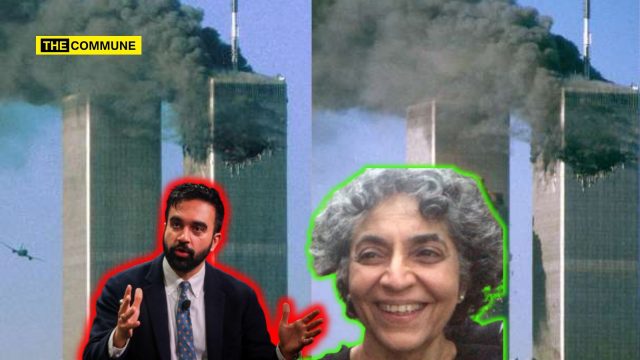
New York City Mayoral candidate Zohran Mamdani seems to be trying to milk his identity as a Muslim whenever he speaks to the Muslim community during his campaign.
Mamdani has come under scrutiny following questions about a personal story he shared while addressing Muslim voters. Mamdani, the Democratic nominee, made the remarks outside a Bronx Mosque, where he spoke about what he described as “indignities” faced by Muslims in New York after the September 11 attacks.
Zohran is in the Bronx today, outside a mosque. He’s delivering a major address on Islamophobia in the mayoral race. He tears up as he recalls his aunt who said she stopped taking the subway after 9/11 because she wore a hijab and feared discrimination. pic.twitter.com/B39hXKkIzR
Surrounded by Muslim community leaders, Mamdani said, “I want to speak to the Muslims of New York City.” In the next few seconds, in what seems like pretence to shed a few tears, he then spoke of the “memory of his aunt”, who stopped taking the subway after September 11. He said, “I want to speak to the memory of my aunt, who stopped taking the subway after September 11 because she did not feel safe in her hijab.” He also recounted allegedly being advised to conceal his religious identity when he first entered politics, describing these experiences as shared lessons among Muslim New Yorkers. Mamdani added that “over these last few days, these lessons have become the closing messages of Andrew Cuomo, Curtis Sliwa, and Eric Adams.”
Zohran through tears: “My aunt stopped taking the subway after 9/11 because she did not feel safe in her hijab.”
However, an examination of Mamdani’s family history appears to contradict the details of his story.
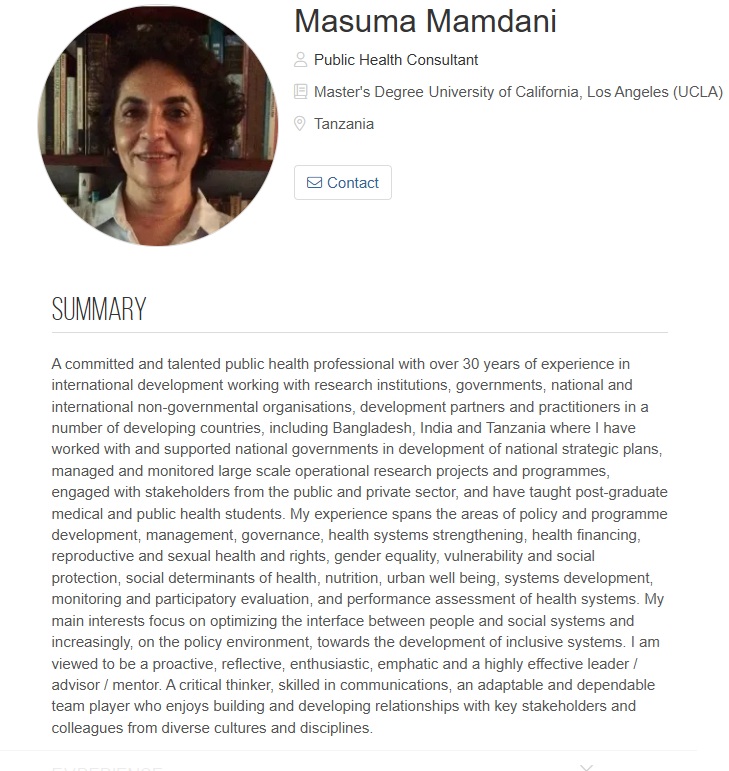
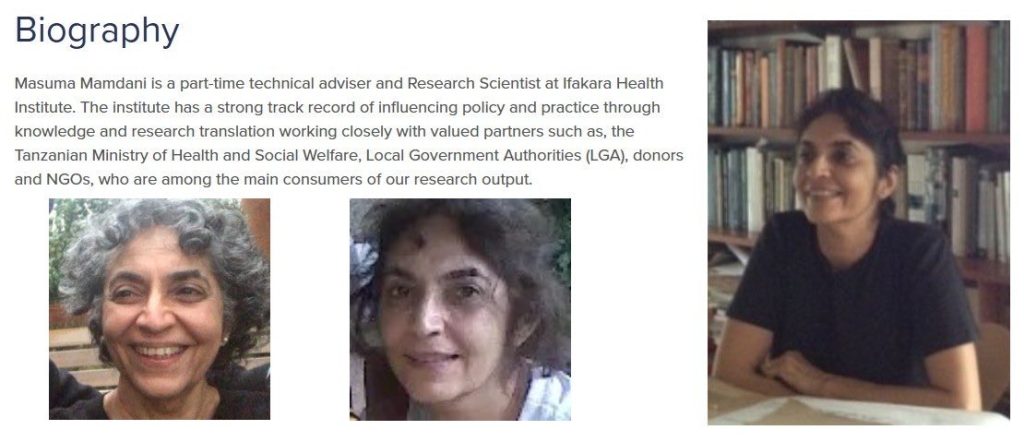
Ater extensive review, it appears Zohran Mamdani has three aunts – two of whom are Hindu (from his mother’s side), making the hijab reference inapplicable, while the only Muslim aunt, according to public records and biographical information, is not known to wear a hijab and has never been a resident of New York City.
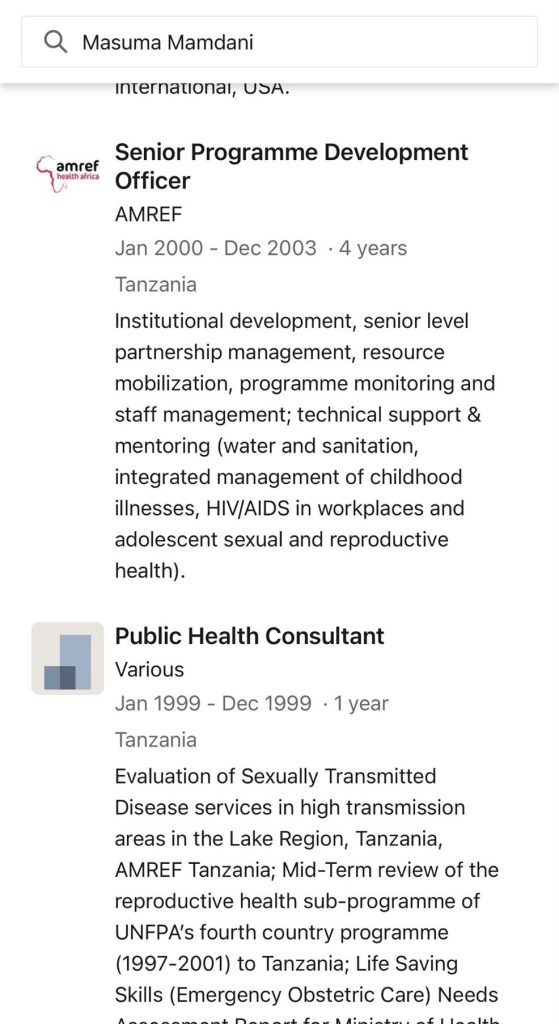
Further reporting indicates that during the period in question, his aunt was living in Tanzania. Records show she resided there from January 2000 until at least December 2003, meaning she was not in New York City before, during, or after the 9/11 attacks.
The fact-checking investigation concludes that the individual Mamdani referred to as his aunt “who was scared of taking the bus wearing her hijab” is a person who, according to available information, does not wear the hijab and was not living in the United States at the time.
Image Source: X
Zohran Mamdani’s aunt neither wears a hijab nor lived in NYC before, during, or after 9/11.
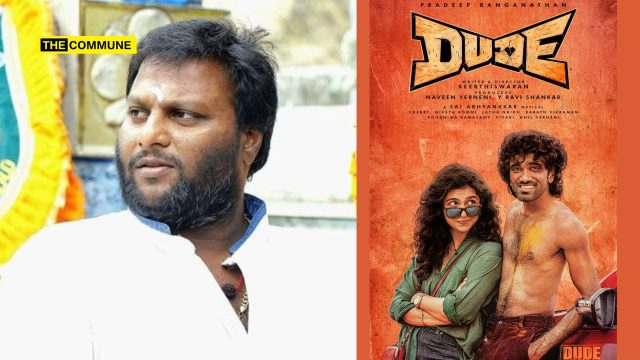
Filmmaker Mohan G Kshatriyan, known for his films like Draupathi, Bakasuran, Rudra Thandavam, has expressed concern over the themes portrayed in the recent Tamil film Dude. Speaking to Tamil Janam, Mohan said that while open discussion on ideas and philosophies is essential, certain justifications shown in cinema could send misleading messages to younger audiences.
He said, “You can talk about any philosophy – about Periyar, or about Scholar Annadurai. You can discuss their principles; you can internalize those and have conversations about them. Everyone has the right to deliberate on ideas, that right cannot be denied. So, there’s nothing wrong in having these discussions. But what’s interesting about this particular film is, when such characters are created in the movie, usually the film keeps it negative or doesn’t provide justification. But the director here is quite a young guy – perhaps at his age, he doesn’t fully grasp the gravity. He’s actually justified the story he’s presented.”
Explaining the theme of the film, he said, “Essentially, two people fall in love from a very young age. It’s a blood relation, like cousins. At one point, when their love isn’t accepted, immediately the girl finds another lover within six months. When the wedding is about to happen with the new lover, she tells this to the hero. To unite with her old lover, she arranges a fake wedding with the new lover, and the interval of the film comes after that. Up to that point, the movie was very good. The screenplay remained engaging throughout. But in the second half, there’s a subject that seems extremely unpleasant; it’s hard to see how this is possible in real life. Pradeep Ranganathan is a really good actor; he created sympathy for the character and kept us invested in the film. It makes you want that character do whatever is necessary to achieve this goal. But if you look closely, after the child from the new relationship is born and the marriage is over, the hero puts his initials and gives permission for the girl and the new husband to live together in his house. This is repulsive. It’s hard for families watching this film in theaters, not to frown.”
Expressing his thoughts, he said, “The point of this interview is to say: If your children watched this film on their own, it’s important that you have a healthy debate with them. What did they take away from the movie? What mindset are they going to carry for the next 10 or 20 years? Again, I want to stress – they justify this strange notion of sacrificing your own life for your lover to let them live with someone else. That’s what’s justified in the film, which is a very wrong idea to pass on to the next generation. So, if parents see their kids watched the movie alone, have a discussion. Or better, watch the movie together, see these problematic themes, and open up a discussion; take it as a good opportunity for dialogue. That’s how this movie should be watched. The director’s justification is incorrect. There are many Tamil movies that have sparked such debates, like “Andha Ezhu Naatkal” and in most of K. Balachander’s films. In those films, the hero’s character would be portrayed as a villain, and the heroine’s character as a flawed or problematic one. They highlight that such things should not happen in society. But here, the hero and the director just go ahead with whatever they please. In today’s times, after losing phone contact for six months, just meeting at a wedding and discussing these things is not realistic, but that’s the director’s viewpoint.”
He further added, “There’s also a storyline where, after an abortion, it’s declared that the child will not be born again; this is just something the director put in for the narrative. There’s another plot thread about going abroad which was very forced. It’s pushing things as progressive, but it’s not something you can readily accept. Ultimately, it’s up to the audience to decide; I’m sharing my own views. To parents: if your kids watch this film, have a good discussion with them, it’ll be beneficial for you. And about the creators of the film—if something similar happened in their own families, think about what decisions they would make. Can you accept this if it happened to your family? So “Dude” has been well received, and has sparked major discussion among people. Through Sarathkumar’s character, the film addresses honor killings, which is very welcome. If, say, there was no love between the hero and heroine, and he sacrificed for them to be together, maybe it could be accepted. But if there was actual romantic feeling, it is disgraceful. So, the film has created a discussion. I urge parents and children to use this as a chance for healthy debate and understanding.”
Subscribe to our channels on WhatsApp, Telegram,Instagram and YouTube to get the best stories of the day delivered to you personally.
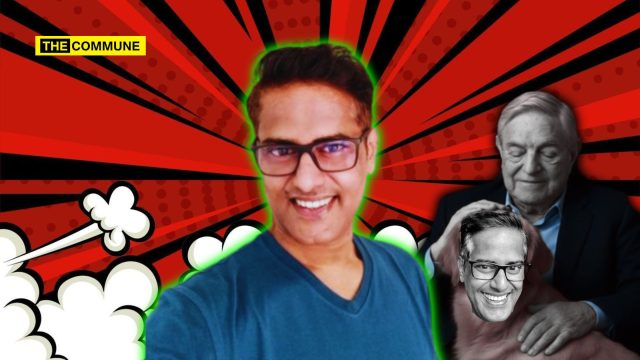
Ravi Nair, the self-proclaimed “independent investigative journalist” whose byline graces the trash of leftist propaganda outlets like The Wire and NewsClick, is nothing more than a serial peddler of half-baked hit pieces designed to sabotage India’s economic rise. With a track record of recycling debunked conspiracy theories and cozying up to foreign short-sellers, Nair has built a cottage industry out of anti-Modi, anti-Adani bile, all while dodging accountability through anonymous sourcing and courtroom theatrics. His latest fiasco—a co-authored Washington Post screed on October 24, 2025, alleging a $3.9 billion LIC bailout for Adani—has been eviscerated as “false, baseless, and far from the truth” by LIC itself, exposing Nair as the useful idiot in a deep-state echo chamber.
This isn’t Nair’s first circus — just another act to satiate his obsession with bashing Adani and Modi, all while putting Indians’ money at risk.
The Anatomy Of A Hack: Nair’s Descent Into Defamation
Nair’s modus operandi is as predictable as it is pathetic: latch onto unverified “documents” from shadowy sources, sprinkle in colonial-era tropes of “crony capitalism,” and serve it up to Western outlets hungry for India-bashing narratives. Take his February 2025 Guardian piece, where he peddled baseless claims about Adani’s border projects, only to get slapped with a defamation suit by the Adani Group in September 2025 for that very article, plus his Frontline ramblings and social media rants.
The suit accuses him of “strategic litigation against public interest journalism,” but let’s call it what it is: a desperate bid by Adani to muzzle a gadfly whose “investigations” wouldn’t pass muster in a high-school debate club.
Undeterred, Nair doubled down with the WaPo bomb, claiming government-orchestrated LIC investments to “signal confidence” in Adani amid U.S. charges—a narrative so flimsy it ignores LIC’s diversified ₹13 lakh crore portfolio (where Adani is a measly 4.5%) and its ₹48,151 crore FY25 profit.
Nair inflated a routine ₹5,000 crore bond subscription into a mega-scandal, proving he’s more joker than journalist.
This isn’t reporting; it’s a Soros-scripted circus. Nair’s fingerprints are all over OCCRP hit jobs, funded by Soros and Rockefeller, which fueled Rahul Gandhi’s parliamentary tantrums and Mahua Moitra’s rants, only to collapse under Supreme Court scrutiny in 2024. The SC slammed such claims as “lacking adequate research” and reliant on “unsubstantiated third-party reports,” with OCCRP’s “sources” looping back to Prashant Bhushan-linked NGOs in a laughable conflict-of-interest farce. Even the U.S. government dismissed Hindenburg’s (and by extension, Nair’s) allegations, approving a $553 million Adani loan for Sri Lanka in 2023.
Ties to the Ecosystem of Enablers: From The Wire to Australian NGOs
Nair’s ecosystem stinks of foreign meddling. He’s a fixture at The Wire, that leftist swamp where editorializing passes for news—a tactic called out as far back as 2017 for its manipulative spin. He’s been exposed for spreading lies about the Rafale Deal, undermining India’s defense upgrades with zero evidence.
Then there’s AdaniWatch.org, an Australian NGO-backed smear factory that parrots Nair’s every dud, funded by the same murky networks as OCCRP. His work aligns perfectly with short-sellers’ dreams—Hindenburg’s $100 billion market wipeout in 2023, hyped by Nair’s midnight tweets and Gandhi’s foreign jaunts, crushed retail investors while the big boys shorted and cashed out.
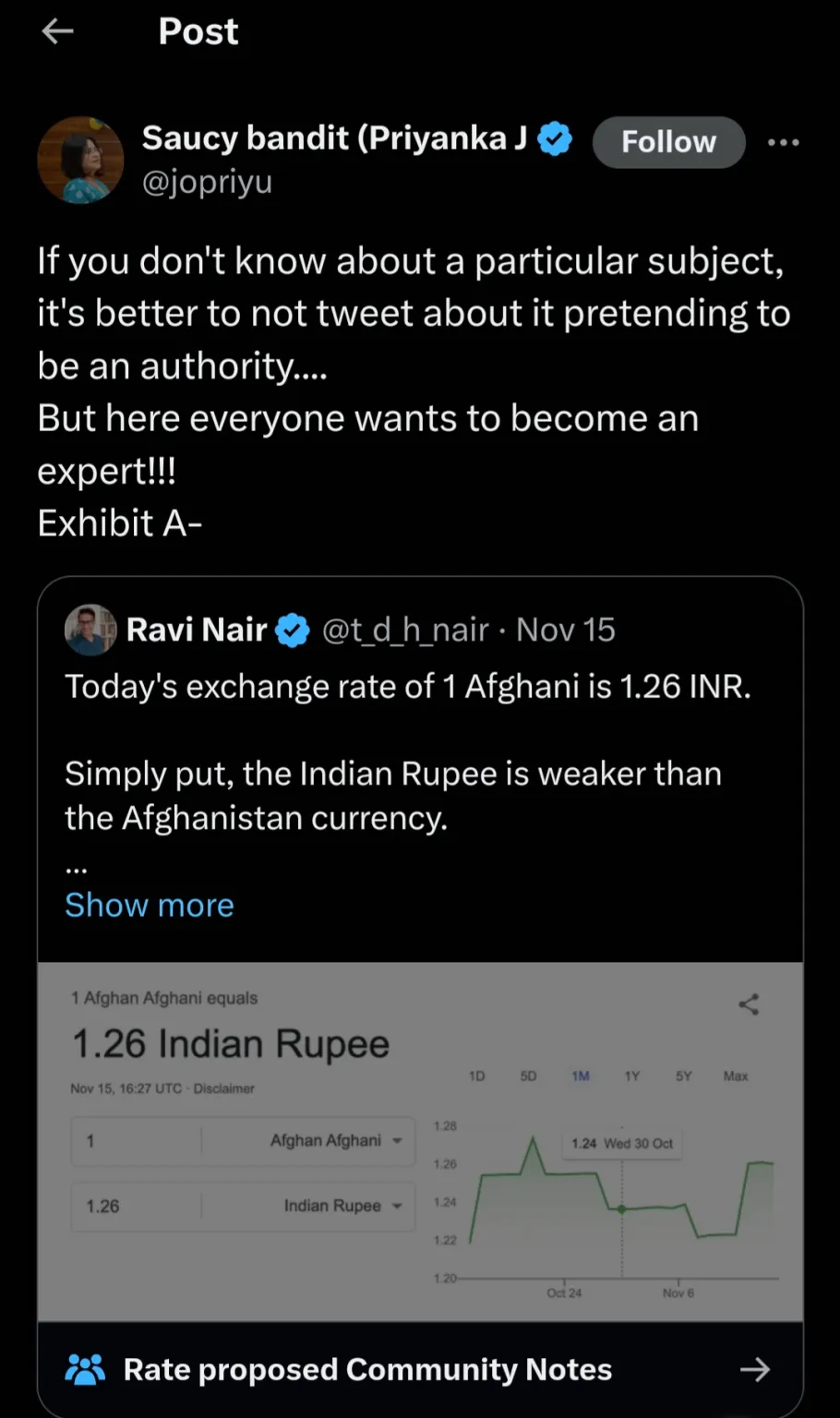
His low-IQ antics extend beyond Adani. In November 2024, Nair compared Afghanistan’s afghani to the Indian rupee to “insinuate” India’s economy is weaker—a brain-dead swipe that made him a laughingstock online.
Earlier, in April 2024, the Election Commission schooled him for EVM conspiracy-mongering, debunking his claim that VVPATs “communicate” with control units to rig votes.
Only CU can give ‘Commands’ to VVPAT & BU and they will provide ‘Response’ to CU. This is Master-Slave bus architecture.
Communication can either be a ’Command’ or ‘Response’.
Do not get confused between ‘Command’ & ‘Communication’ & interchange terms 🤨
— Election Commission of India (@ECISVEEP) April 14, 2024
As people on social media say, he’s a “Tier3 useful idiot” in a chain from Soros to Rahul Gandhi.
Legacy of a Loser
Nair’s “achievements”? A string of SLAPP suits, Supreme Court smackdowns, and social media pile-ons that leave him looking like a court jester in India’s press freedom circus. The Committee to Protect Journalists whines about his “harassment,” but even they can’t polish this fraud.
A 2022 arrest warrant for Adani defamation was just the start.
LIC should sue Nair into oblivion for his lies. In a nation where LIC’s 14 crore policyholders thrive on prudent investments, Nair’s poison pen risks their savings for clicks and clout in D.C.’s anti-India salons.
Ravi Nair isn’t a journalist; he’s a deep-state lapdog, a Hindenburg hype man, and a one-man wrecking crew for India’s markets. His ink, dipped in the venom of vested interests, aims to keep India down. It’s time for the courts, LIC, and Adani to serve him a defamation dosa he can’t tweet his way out of. India deserves better than this clown in a byline.
Vallavaraayan is a political writer.
Subscribe to our channels on WhatsApp, Telegram,Instagram and YouTube to get the best stories of the day delivered to you personally.
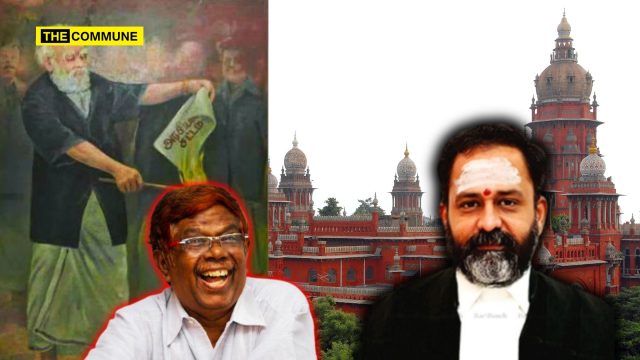
Justice K. Chandru has again taken the public pulpit—this time at Valluvar Kottam, Chennai—to accuse Justice G.R. Swaminathan (GRSJ) of “betraying” his judicial oath by speaking “against the Constitution” at an RSS event. The report places the speech on October 22, 2025, names the organisers (VCK Advocates’ Wing and Samathuva Vazkarinyar Sangam), and records the core charge: that GRSJ called India’s Constitution a “copied” product of the 1935 Act.
Before the moral thunder, the facts. There is a verified instance of GRSJ making a continuity claim: at a Think India symposium on January 5, 2025, he said “70% of the Constitution was based on the Government of India Act, 1935.” That phrasing is overbroad, but it is not invented and it came in a talk where he also stressed judicial fidelity to the constitutional text.
Now the paradox that refuses to go away. Chandru venerates Periyar – the Dravidian patriarch whose movement literature openly celebrates a Constitution-burning agitation. That is the movement’s own description: “Constitution Burning Movement was one of the landmark movements led by Thanthai Periyar in Tamil Nadu,” a unique protest where the text itself was torched to dramatise grievance. Later accounts even quote Periyar’s declared willingness “to burn the Constitution” if caste-entrenching practices continued.
So what exactly is the standard? If a judge’s hard (even crude) historical claim about colonial lineage amounts to “betrayal,” where does public, performative constitution-burning sit on that moral scale – heroism or heresy? It cannot be both at once. Dravidian political ecosystem continues to place Periyar on a pedestal.
On substance, the “copy of 1935” line is inaccurate if taken literally. India did carry forward administrative scaffolding from the Government of India Act, 1935 – legislative lists, gubernatorial machinery, PSC/CAG lineage yet it broke decisively on first principles: sovereignty grounded in “We, the People,” justiciable fundamental rights, universal adult franchise, and judicial review. That is why B.R. Ambedkar answered the “you copied 1935” taunt without apology: “I make no apologies… There is nothing to be ashamed of in borrowing… What I am sorry about is that the provisions taken… relate mostly to the details of administration.” (Constituent Assembly, November 4, 1948.) The fair rendering, then, is simple: continuity of machinery; transformation of the state’s soul. By that yardstick, GRSJ’s “70%” is an overstatement, not apostasy.
There is also the elementary question of forum and tone. Judges speak through judgments; retirees, if they must speak, ought to lower the temperature. The spectacle of post-retirement political evangelism has drawn public censure far beyond this episode; Law Commission member Hitesh Jain’s warning “more and more retired judges are openly behaving like political activists” captures the concern. Chandru’s latest broadside exemplifies the problem: a retired judge, garlanded by an ecosystem that canonises Periyar’s bonfires, branding a sitting judge a traitor for a contestable reading of constitutional history.
Set aside the biopic (Jai Bhim movie)-fuelled celebrity and state patronage: none of that licenses partisan thunder. When a retired judge brands a sitting judge a “betrayer,” the burden is to argue on facts and principle—not to sermonise from a Periyar-praising pulpit. The obligation is even-handedness; the record here is selective indignation.
Shailendar Karthikeyan is the Editor of Nyayavimarsha.
Subscribe to our channels on WhatsApp, Telegram,Instagram and YouTube to get the best stories of the day delivered to you personally.
The Legal Rights Protection Forum (LRPF) has filed a formal complaint with the Ministry of Home Affairs (MHA) alleging large-scale violations of Indian visa norms and the Foreigners Act, 1946, by foreign nationals associated with the Believers Loveworld Trust and Christ Embassy, both linked to Nigerian preacher Pastor Chris Oyakhilome.
In a letter addressed to the Deputy Secretary (Visa) of the MHA’s Foreigners Division, LRPF has alleged that foreign nationals tied to the Believers Loveworld Trust—a Pune-based entity affiliated with Christ Embassy—are engaging in unauthorized evangelical and fundraising activities across India under the guise of leadership and media initiatives. Copies of the complaint were also sent to the Foreigners Regional Registration Officers (FRRO) in Mumbai and Hyderabad, as well as the Commissioner of Police, Pune.
Alleged Visa Violations Through “Leadership Conference”
The complaint draws attention to a four-day “Christian Leaders and Higher Life Conference” scheduled to be held from November 25 to 27, 2025, at the Lal Bahadur Stadium in Hyderabad, featuring Pastor Chris Oyakhilome. According to LRPF, the event—promoted as a conference for Christian ministers and leaders across India—charges a registration fee of ₹2,000 and seeks public donations via its website.
The LRPF alleges that the event is essentially an evangelical gathering disguised as a leadership program, and that the involvement of foreign nationals in such activities violates Indian visa regulations that prohibit religious propagation by non-citizens.
Entities And Individuals Named
The Believers Loveworld Trust was registered in Pune in 2017 (Registration No. E-0007891), with Ms. Glory Chiwetal Mokeme, a foreign national, listed as its president. The Trust is also registered with the government’s NGO Darpan portal but reportedly lacks full disclosure of trustees or office bearers.
The complaint also names LoveWorld India Broadcasting Network Pvt. Ltd., a private company registered in Pune since 2014, which lists Ms. Ose Oyakhilome and Ms. Chiwetal Mokeme—both foreign nationals—as directors, along with an Indian citizen, Mr. Isaac Agarwal Shyam.
According to LRPF, both these entities appear to be part of a network facilitating religious propagation and fundraising operations under the guise of media and charitable work. The organization’s website openly states that its “mandate” is to impact India and Asia with the gospel of Jesus Christ through faith-based programmes, suggesting overt evangelical intent.
Connections To Global Christ Embassy Network
Pastor Chris Oyakhilome, the founder of the global Believers’ Loveworld Inc. headquartered in Lagos, Nigeria, is a well-known televangelist whose ministry operates across continents. The complaint notes that Ms. Ose Oyakhilome is the head pastor of Christ Embassy Loveworld USA Churches and director of Loveworld Networks USA, while Ms. Mokeme is reportedly married to Pastor Chuks Mokeme, another foreign national active in India’s evangelical network.
LRPF claims this closely linked family network of foreign pastors and business entities has established multiple legal fronts in India to carry out proselytization, fundraising, and religious events in violation of visa norms.
Citing Precedent Cases
The complaint draws parallels to earlier incidents, such as the arrest of American national James Watson by Maharashtra Police for participating in Christian evangelical activities while on a business visa. It urges the MHA to verify the visa categories of the aforementioned foreign nationals and investigate whether their stay and activities in India comply with existing legal provisions.
Call For Enforcement And FCRA Review
LRPF has requested the MHA to coordinate with the Enforcement Directorate (ED) and other agencies to probe potential violations of the Foreign Contribution Regulation Act (FCRA) and possible financial irregularities. Supporting documents—including NGO Darpan profiles, corporate filings, and event details—were attached to the complaint.
The Forum urged the government to take immediate cognizance and initiate appropriate legal and administrative action to prevent further misuse of Indian visas and laws by foreign missionary networks operating through business and charitable fronts.
Lodged complaint with @HMOIndia and @CPPuneCity seeking action against the network of foreign pastors running LoveWorld India Broadcasting Network Pvt Ltd and Believers LoveWorld Trust in Pune, engaging in Christian evangelism under the guise of business & media activities. pic.twitter.com/qZXyImc3mK
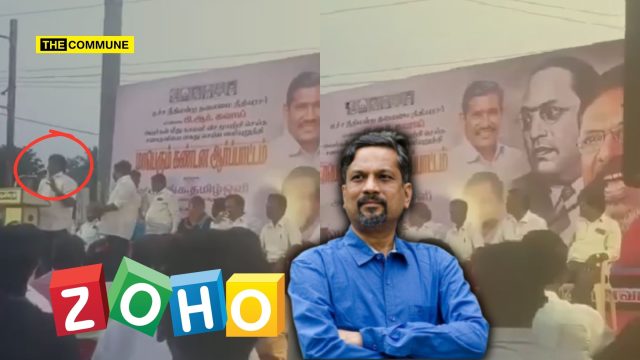
In a shameful display of toxic abusive politics, a goon from the Viduthalai Chiruthaigal Katchi (VCK) has hurled vile abuse at Zoho founder Sridhar Vembu — addressing him repeatedly as “that dog” — simply for trying to help uplift the poorest through philanthropic support for temple-building in Dalit communities.
At a VCK meeting presided by Thirumavalavan’s close aide Vanni Arasu, one VCK cadre on stage said “Acting in favour of BJP, that dog! That dog named Sridhar Vembu has started a direct attack on our “ezhuchi thamizhar” (revolutionary Tamil referring to his VCK head Thirumavalavan). In slums where we (Dalits) are strong and in majority, in areas where our cheetahs (VCK cadres) are there, he’s saying he’ll build temples and splurging money – 5 lakhs, 4 lakhs, 2 lakhs in people’s accounts. That Zoho, which has around 24000 crores as assets, its head Sridhar Vembu is entering our area by saying that he’ll build temples. Please don’t take that money.”
He further went on to say “For him, there is another dog, a scoundrel dog. Through that dog, he’s sending money. Don’t fall prey to that. Today, the person who is getting money, don’t think that you received money, he’s just coming and going, we’ll just put some 50 votes. Such situation should not come. These BJP people are spoiling the nation today.”
The VCK goon’s language — referring to Vembu as a “dog,” calling his associates “scoundrel dogs,” has been called out by many on social media.
Zoho நிறுவனர் மற்றும் அரட்டை செயலியை கொண்டு வந்த நாய் ஸ்ரீதர் வேம்புவை உள்ளே விடாதீங்க -விசிக பொறுக்கி
“சிறுத்தையா இருப்பவன் மேல குறைந்தபட்சம் 5 வழக்கு இருக்கனும்” என கேவலமா வழி நடத்தும் திருமாவின் கட்சிக்காரனுக்கு மக்களுக்கு நல்லது செய்யவங்களை கண்டால் எரிய தான் செய்யும்🤧 pic.twitter.com/GzK8TJt3UW— Sanghi Prince 🚩 (@SanghiPrince) October 26, 2025
Sridhar Vembu’s Actual Intentions
Sridhar Vembu, one of India’s most visionary entrepreneurs, has consistently spoken about the need for “Dharmic Capitalism” — channeling the success of enterprise toward sustainable development, rural education, and yes: the support of temple-building modeled on ancient Tamil kings, as a celebration of the region’s heritage.
Who, except blinkered political opportunists, could object to using private wealth to rebuild the social and spiritual fabric in villages long neglected by both government and self-serving activists? Vembu’s focus on local empowerment and inclusion stands in stark contrast to the negative, divisive rhetoric pushed by rabid Dravidianist VCK elements.
Subscribe to our channels on WhatsApp, Telegram,Instagram and YouTube to get the best stories of the day delivered to you personally.
On 15 October 2025, in Beed, Maharashtra, Petrus Gaikwad, Superintendent of Beed District Jail, was accused of denying food and water to inmates, physically assaulting them, and allegedly pressuring them to convert to Christianity.
Following these allegations, the Maharashtra Prison Department transferred Gaikwad to Nagpur Central Prison as Deputy Superintendent on “administrative grounds.”
This report compiles nine major incidents between 2015 and 2025 in which government-aided officers or employees were accused of luring or pressuring economically disadvantaged individuals to adopt Christianity.
#1 Jail Superintendent Accused of Inmate Coercion (15 October 2025)
In Beed, Maharashtra, Petrus Gaikwad, the Superintendent of Beed District Jail, was accused of denying food and water to inmates, physically assaulting them, and pressuring them to convert to Christianity. A local MLA further alleged that Gaikwad replaced national symbols on jail walls with Bible verses. Following the allegations, the Maharashtra Prison Department transferred Gaikwad to Nagpur Central Prison as a Deputy Superintendent on “administrative grounds.” The officer had previously faced controversy in Jaigaon prison following the death of a Dalit inmate under his supervision.
#2 Dausa Church Prayer Meeting Sparks Clash (29 June 2025)
A prayer meeting at the Agaye Fellowship Church in Dausa, Rajasthan, led to a clash after allegations surfaced that it was aimed at converting around 100 Hindu attendees. The accused included two Rajasthan government officials—an Assistant Accounts Officer and a Block Development Officer, both named Verma—along with Pastor Thomas George. When activists arrived to protest, a heated argument escalated into a physical altercation inside the church. Local residents claimed the group had been systematically converting people for over a decade. Dausa police confirmed that the government officials would be questioned.
#3 Schoolgirls Taken for Prayers Without Consent (02 May 2025)
In Pollachi, Tamil Nadu, a government nurse named Bhavani, a pastor, and a van driver were accused of taking approximately 40 schoolgirls from a government school without parental consent. The children were transported to an illegal prayer hall where they were allegedly forced to kneel and participate in Christian prayers, being told that “Jesus is the only God.” Upon discovering the situation, parents confronted the accused, leading to a physical altercation. Although the children were returned and a complaint was lodged, the police had not registered an FIR at the time of reporting.
#4 Government Teacher Arrested for Conversion Meeting (16 March 2025)
In Singrauli district, Madhya Pradesh, police raided a conversion meeting in Karsua Raja village, finding over 50 villagers in attendance. A government school teacher, Kamlesh Saket, and another individual, Arbind Saket, were accused of organizing the gathering and encouraging those present to convert to Christianity. The police intervention came after receiving a tip-off about the ongoing activities. Several Bibles and religious books were seized from the scene. Following the raid, the Mada police arrested both accused individuals.
#5 IPS Officer’s Religious Promotion Goes Viral (15 February 2025)
Kerala IPS officer Manoj Abraham, who serves as the Director of the Vigilance and Anti-Corruption Bureau, faced scrutiny after his participation in a Christian event went viral on social media. Posts highlighted that the senior police official was promoting Christianity while holding a significant government post, suggesting a potential conflict of interest. The incident sparked debate online about the conduct of public servants and their engagement in religious promotion. No official action was reported in connection with the incident.
Kerala Christian Manoj Abraham is an IPS officer who is Director of the Vigilance and Anti Corruption Bureau. He can be seen promoting Christianity. pic.twitter.com/6JrDZdlT1W
#6 ‘Negative Energy’ Prayer in Govt Office (11 November 2023)
Bindu, the District Child Development Officer in Thrissur, Kerala, organized a special one-minute prayer session before office hours to “remove negative energy.” The session allegedly forced staff, including contract employees, to participate, with one contract employee instructed to wear formal Christian attire. The office head stated the prayer was prompted by unusual office events, including employee resignations. The incident prompted higher authorities to order an inquiry, with the Deputy Collector instructed to investigate and submit a report to clarify the facts.
#7 Police Officer Proselytizes at Sikh Shrine (30 August 2023)
A Punjab Police officer was at the center of controversy after a video surfaced showing him performing what were described as Christian religious activities inside the Shri Darbar Sahib complex in Amritsar. The video depicted the officer holding an elderly man’s stomach, placing a hand on his head, and instructing him to touch his feet, while also gesturing to two boys. The officer was accused of promoting Christianity and criticizing authorities for inaction on conversion. The officer later claimed the video was filmed at a different location. No disciplinary action was reported.
#8 SC Commission Chairman Accused of Encouraging Conversions (05 November 2022)
Victor Prasad, the Chairman of the Andhra Pradesh State Scheduled Caste Commission, was accused of encouraging church planting and religious conversions. He was also alleged to have directed the Bapatla District SP to invoke the SC/ST Prevention of Atrocities Act against those opposing an unauthorized church’s construction. Further accusations included derogatory social media posts about Mahatma Gandhi and instructing district authorities to install statues of Dr. B.R. Ambedkar in defiance of court and government orders. No official action was reported against him.
#9 IAS Officer Warned Over Preaching Activities (30 January 2015)
The Tamil Nadu government issued a warning to IAS officer C. Umashankar, directing him to cease his “preaching and propagating activities” over concerns they could cause communal disharmony. The officer, who described himself as a “disciple of Jesus,” had conducted over 850 prayer meetings since 2008. While some groups accused him of attempted conversions, Umashankar denied these allegations, stating he only preached within Christian churches. The government’s instruction was based on the potential for his actions to incite communal tension.
Subscribe to our channels on WhatsApp, Telegram,Instagram and YouTube to get the best stories of the day delivered to you personally.
A recent episode of The News Minute’s “South Central” podcast, which positioned itself as a nuanced discussion on Hindutva, instead revealed a deep-seated bias and a troubling reliance on stereotypes from its panelists. The conversation, featuring academic V Geeta and ‘journalists’ Dhanya Rajendran, Anisha Sheth, and Sudipto Mondal, was less an analysis and more an exhibition of the very intellectual laziness and prejudice they claim to oppose.
For the section on RSS marches in Karnataka, the main guest Geeta was invited to spew her form of venom at Hindus and the RSS.
Selective Outrage: The Authoritarian Blind Spot
Geeta correctly identifies that fascism has two aspects: an authoritarian state apparatus and an ideology that builds consensus. She brilliantly uses the example of J Jayalalithaa’s rule in Tamil Nadu to illustrate an authoritarian state without the Hindutva ideology, citing the muzzling of the media and the crippling of democratic institutions. She says, “But Tamil Nadu has seen the reign of J Jayalalithaa. And we must not forget those years. Those years were the most authoritarian years in the history of Tamil Nadu. The different segments of time that she served as Chief Minister of the state. You’ll see how she systematically crippled all democratic institutions, including the media. I still remember the time KP Sunil of The Week was in the eye of a storm for having written something very critical about her. Then the government hit back, and over a period of time, Sunil found himself landing a job in Jaya TV. So, I mean, it’s a very interesting sort of approach that she had, not very dissimilar to what we see happening around us today.”
She further adds, “And I mean, I can quote so many things at point: every feature that you see that is part of the way the government at the centre functions today in muzzling speeches, cracking down on dissent, in defining what is legitimate and what is not. All of this has been precedence in Jayalalithaa-ruled Tamil Nadu, in NTR-ruled Andhra Pradesh, and Telangana in the past. Why I’m saying this is, fascism need not always be aligned with an ideology; it has two aspects, right? Hindutva has two aspects: one is an authoritarian state apparatus which goes all the way down and is seen as a good thing by sections of the population. And then an ideology which wants to draw more and more people into this consensus.”
This critical lens mysteriously vanishes when discussing the current DMK government under M.K. Stalin. She says, “Now in Tamil Nadu, you may not have the ideology, but you have the constituents of an authoritarian state, which has been put in place by Jayalalithaa during her several years in power in the state. And I don’t think that the DMK has rolled back those measures fully. And in some ways, they’ve layered them with a veneer of democratic practice, in some instances, they’ve sort of not worked with those constituents. I mean, their attitude toward the media is still relatively more open than in most parts of the country, but the fact is that you have these authoritarian resources at hand.”
She finds Stalin’s government “more open to the media” but her mouth is glued shut when people are arrested in Tamil Nadu for exercising freedom of speech! Where is her critique of the Stalin government’s treatment of netizens who get arrested for speaking against DMK? There have been multiple instances of police complaints and arrests of journalists and social media users for posts critical of the government. The recent example being the arrest of a septuagenarian YouTuber for a critical video regarding the recent Karur stampede or the filing of cases against journalists for their reporting.
Where is her condemnation of the state’s overreach in silencing dissent? By her own definition, the “authoritarian state apparatus” is alive and well in Tamil Nadu. Yet, she offers the DMK a free pass, merely saying they have layered Jayalalithaa’s measures with “a veneer of democratic practice.” This is a staggering failure to apply her own analytical framework consistently. If she condemns authoritarianism under the BJP and JJ, her silence on the DMK is a politically motivated omission.
The “Saffronization” Bogeyman Vs. The “Dravidian” Sanctity
Geeta expresses shock at the “saffronization” of Pondicherry University and private schools, framing it as an RSS infiltration. She describes the “Brahmanical Hindu ways” of elite Chennai schools as a problem.
Herein we see the Hypocrisy and logical fallacy of this so-called “academic”. What is the fundamental difference between “saffronization” and the long-standing “Dravidianization” of Tamil Nadu’s institutions?
For decades, Tamil Nadu’s government machinery, textbooks, and public discourse have been steeped in Dravidian ideology. If promoting a particular political and social ideology in educational spaces is wrong, then both are culpable. To label one as “infiltration” and the other as a “sense of place” is a classic case of partisan framing.
She claims the RSS’s script is “50 years old” and “banal.” Is the Dravidian movement’s script, which constantly recycles anti-Brahmin, anti-North Indian, and anti-Hindi rhetoric, any fresher or more nuanced? Both movements rely on historical grievances and identity politics. To mock one for its repetitive nature while giving the other a pass is intellectually dishonest.
The False Equivalence And The Lathi Anecdote
The discussion on the RSS’s use of the lathi (staff) is revealing. Geeta dismisses the idea of comparing an RSS march to a religious event but fails to provide a coherent reason why a lathi in a shakha is inherently more threatening than other symbols.
The lathi has been a traditional Indian staff used for centuries as a walking aid, in martial arts like Silambam, and by ascetics. To singularly assign it a malevolent, “weaponized” meaning only in the context of the RSS is a deliberate misrepresentation.
By this logic, should the swords carried in religious processions during festivals like Muharram also be uniformly banned from public spaces? If not, the focus on the RSS’s lathi is not about the object itself, but about the organization wielding it.
The “Circular Banality” Critique That Boomerangs
Geeta’s most potent point is her analysis of Hindutva’s “circular banality” – its reliance on endless repetition of the same themes (Love Jihad, Temple freeing) because it cannot admit historical change.
It is her own hypocrisy that undermines her entire argument. Does the Dravidian political space not suffer from the same ailment? How many elections have been fought and won on the same, tired tropes of “Hindi imposition,” “Brahminical domination,” and “protecting Tamil pride”? The Dravidian model’s political script is just as repetitive and reliant on stoking historical and social divisions.
When Geeta says, “We’re stuck in the circular banality more than them,” she accidentally stumbles upon the truth. The “secular-left” opposition, of which she is a part, has failed to create a new, forward-looking language. It remains trapped in a reactive mode, forever defining itself in opposition to Hindutva and thus, as she correctly fears, “fighting the battle on their terms.”
To be a truly critical public intellectual, one must be an equal-opportunity critic. V Geeta’s analysis fails this test. Her scholarship is weaponized against one side of the political spectrum while providing intellectual cover for the other. It was yet another episode of the four people making ‘banal’ comments inside their echo chamber.
Subscribe to our channels on WhatsApp, Telegram,Instagram and YouTube to get the best stories of the day delivered to you personally.
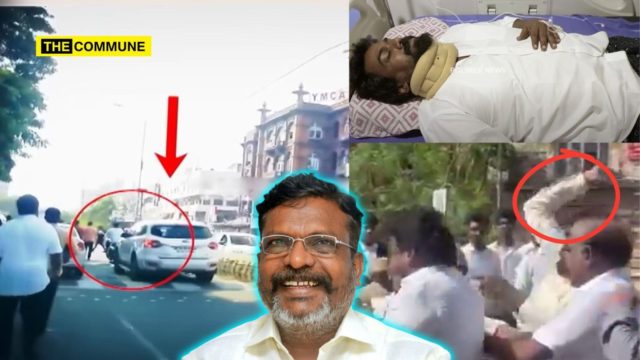
Recently released CCTV footage by Polimer News has thrown light on a dramatic incident that unfolded at the Chennai Bar Council, following a car collision reportedly involving politician Thirumavalavan and members of the VCK (Viduthalai Chiruthaigal Katchi) party.
The video begins outside the Bar Council building, where a group of men, identified as VCK members, are seen in white shirts and traditional attire, chasing lawyer Rajeev Gandhi. They enter the premises in a hurry and pursue him through the corridors, creating an atmosphere of tension and panic. The footage continues inside a room filled with desks and chairs where the confrontation leads to a brief scuffle.
The incident was reportedly sparked by a car crash involving Thirumavalavan and lawyer Rajeev Gandhi. Following the accident, the situation escalated when VCK members, angered by the event, confronted the lawyer at the Bar Council. The released video highlights the moments from the exterior approach to the internal pursuit and ensuing altercation, providing a clear narrative of the sequence of events.
“நாக்கை மடித்துக்கொண்டு கன்னத்தில் அறைந்த வி.சி.கவினர்”… திருமாவளவன் கார் மோதிய விவகாரத்தில் வழக்கறிஞர் ராஜீவ் காந்தியை வி.சி.கவினர் கும்பலாக துரத்திகொண்டு பார் கவுன்சிலுக்குள் சென்றபின் நடந்தது என்ன? – வெளியான பரபரப்பு சி.சி.டி.வி காட்சிகள்#Chennai | #VCK | #Thirumavalavan |… pic.twitter.com/PBMcfiyBd5
The altercation took place when lawyer Rajiv Gandhi, who was riding his scooter near the High Court premises, came into contact with Thirumavalavan’s car. Video footage from the scene shows a group of VCK members surrounding and attacking the lawyer after the collision.
Rajiv Gandhi later filed a complaint alleging that he was assaulted by VCK cadres at the instigation of Thirumavalavan. His scooter was also damaged during the scuffle.
Rajiv Gandhi was admitted to a private hospital for treatment. His family has alleged that since the night of the incident, the lawyer has received over 500 threatening phone calls, and his personal phone number was circulated online by VCK supporters who allegedly encouraged further harassment.
Following public outrage, Thirumavalavan released a video claiming that the incident was an attempt to provoke him. According to his account, the lawyer deliberately tried to block his car and instigate a confrontation.
However, the lawyer’s brother refuted this version, stating that the available footage clearly shows Thirumavalavan’s vehicle hitting Rajiv Gandhi’s scooter. He said Rajiv merely approached the car to question the driver about the collision when he was attacked by VCK men.
Despite video evidence showing the VCK vehicle hitting the scooter, Thirumavalavan maintains that the episode was orchestrated to provoke him. The VCK chief alleged a “planned conspiracy” behind the episode, blaming members of the Rashtriya Swayamsevak Sangh (RSS) and the Bharatiya Janata Party (BJP) for orchestrating it.
He justified his party cadre thrashing the motorist saying “He got beaten up because he stared and not because they knew which caste he belonged to. Are you so arrogant and self-conceited? So they beat him up because he arrogantly stared. They gave him 4 knocks, did not even beat him up well. (crowd cheers). That man pretends to have fainted and has chest pain. What a drama.”
Subscribe to our channels on WhatsApp, Telegram,Instagram and YouTube to get the best stories of the day delivered to you personally.
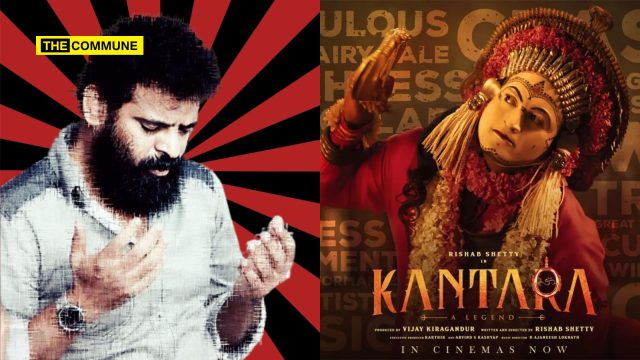
In a provocative speech at the Bison Success Meet, director Ameer Sultan—currently under investigation over drug trafficking allegations linked to the Jaffer Sadiq case—sparked controversy for his pointed remarks on religious and supernatural cinema, seemingly mocking films like Kantara.
During his address, Ameer Sultan challenged journalists who questioned the social impact of director Mari Selvaraj’s hard-hitting films. He scoffed at critics who accused such works of creating divisions in society, calling the notion absurd. Ameer pointed out society’s double standards: while movies about invisible gods and non-existent ghosts (alluding to spiritual blockbusters like Kantara) are celebrated, films about caste—the harsh, visible reality that torments millions—face backlash.
“Nobody has seen god, but if you make a film about it, people celebrate. Ghosts don’t even exist, but humans are worse than ghosts. Ghosts flee in daylight, afraid of humans,” he quipped. Ameer questioned why movies confronting real-life pain and caste injustice should be suppressed, while fantastical narratives receive the public’s adulation.
Given how Kantara became a cultural phenomenon for its rooted portrayal of bhakti, Bhoota Kola, and the spiritual connection between man and nature, Ameer’s comment was viewed as a typical Dravidianist swipe — mocking India’s indigenous belief systems while glorifying divisive identity politics.
This is what Ameer Sultan spoke at the Bison Success Meet: “These journalists are asking Mari one question repeated – Why are you making these kind of films? They say that you’re trying to create problems within in society. I saw how ridiculous such questions were. A God who is invisible, and a ghost that never exists – many films are coming about them and is achieving victory. Nobody has seen god. But if you take a film about it, people are celebrating. Ghost, it doesn’t even exist. I think man is worse than a ghost. That’s why you see that these ghosts come at night. Because during the day it is afraid of humans. Films are being made on these. But the caste that we see in front of our eyes, its ill effects, pain and torture, and someone saying that such films should not be taken is what I feel absurd.”
Who Is Ameer?
Ameer Sultan, a Tamil filmmaker known for his Islamist-Dravidianist leanings, has faced growing scrutiny over his close ties with Jaffer Sadiq, a former DMK NRI Wing official accused of running an international drug-trafficking network. Dubbed Sadiq’s “bestie,” Ameer was named in an ED chargesheet alleging money laundering through films and was summoned by the NCB in April 2024 in connection with the smuggling of pseudoephedrine worth ₹2,000 crore. In October 2024, a special court summoned both Ameer and Sadiq as part of the ongoing money-laundering case. More recently, Ameer was accused of participating in a coordinated smear campaign against Justice G. R. Swaminathan, aligning with the DMK’s broader ideological ecosystem.
At a forum hosted by the Dravidianist YouTube channel “The Debate,” filmmaker Ameer attacked Sanatana Dharma and Brahmins, claiming as a Muslim he stood outside the caste system. He accused “Aryans” of creating caste, linked honor killings to Hindu epics, and praised DMK as Tamil Nadu’s positive force. His comments included sweeping generalizations, targeting practices like Vinayagar Chaturthi as dominated by “intermediate castes” while alleging Brahmins remain aloof. He also quoted EV Ramasamy Naicker (hailed as ‘Periyar’ by his followers) saying “Islam is the best medicine to eliminate racial discrimination.”
Subscribe to our channels on WhatsApp, Telegram,Instagram and YouTube to get the best stories of the day delivered to you personally.